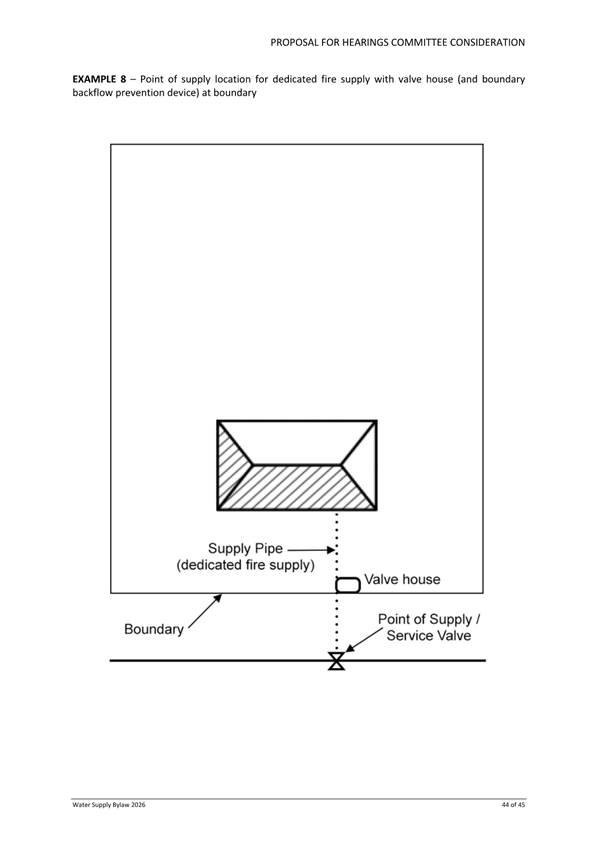
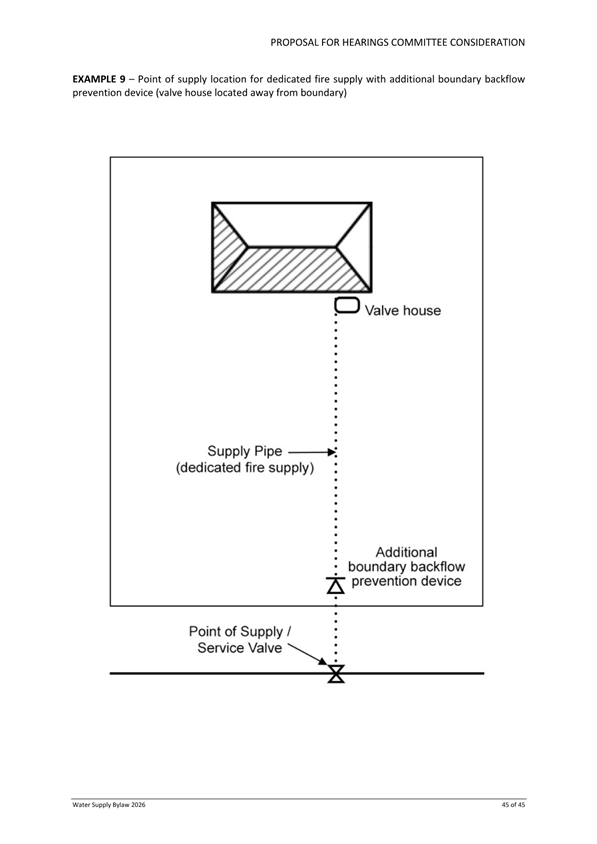
|

|
Consultation Hearings
22 May 2026
|
Part
A Reports
Summary of Consultation on proposed
Water Supply Bylaw 2026 and Staff Recommendations on Matters Raised
Department: 3 Waters
EXECUTIVE SUMMARY
1 This
report provides a summary of the submissions and feedback received during
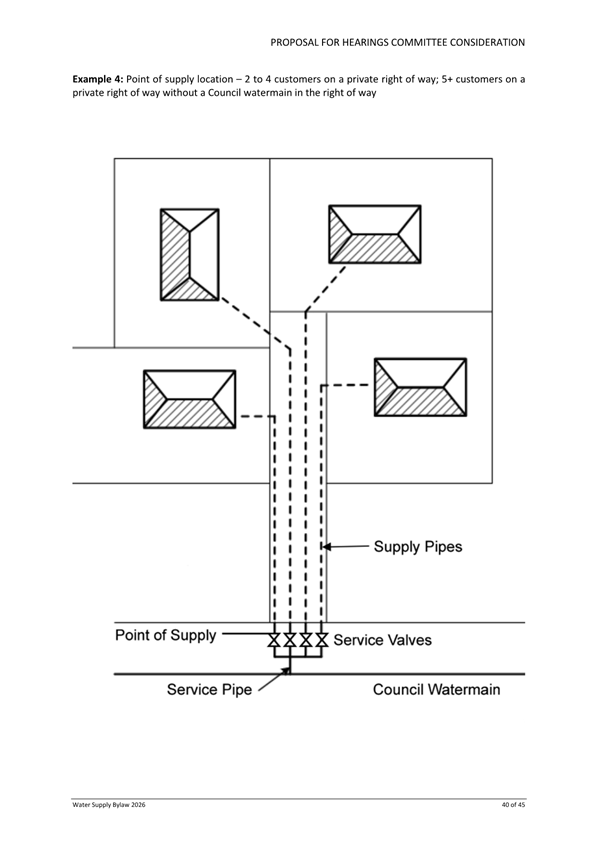
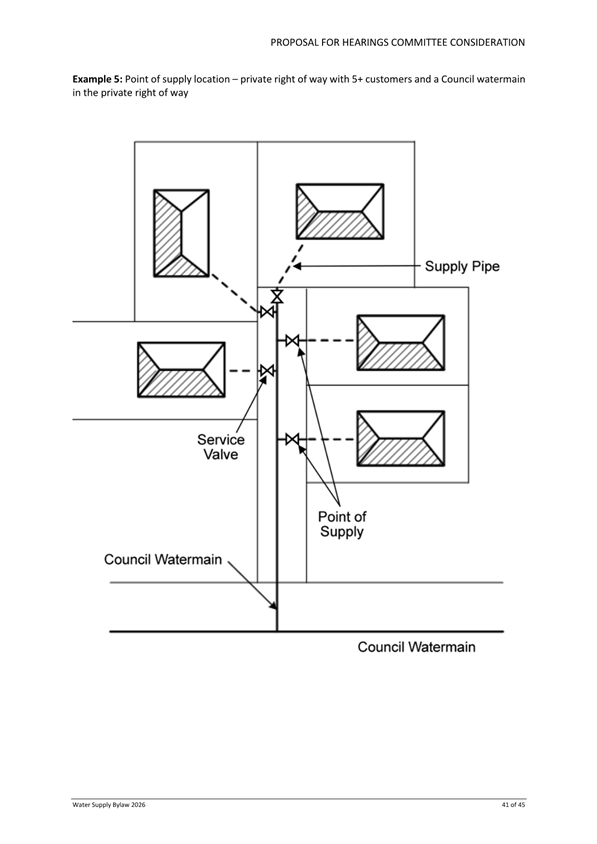
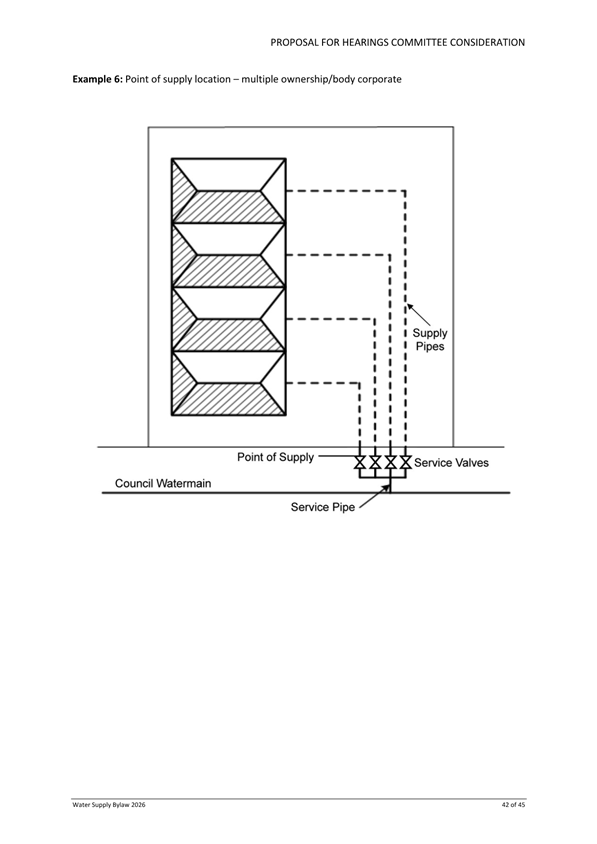
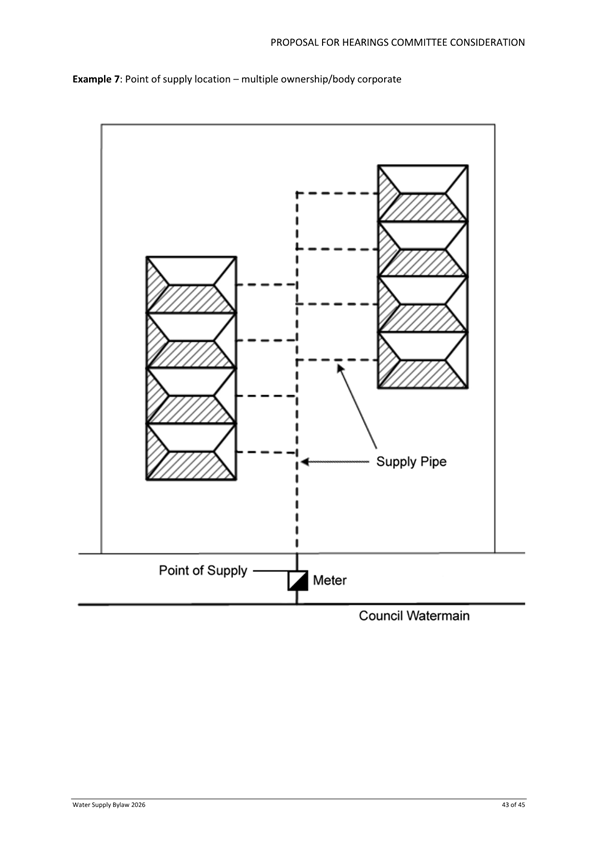
consultation on the proposed Water Supply Bylaw 2026 (proposed Bylaw) and
provides staff analysis and recommendations related to the matters raised by
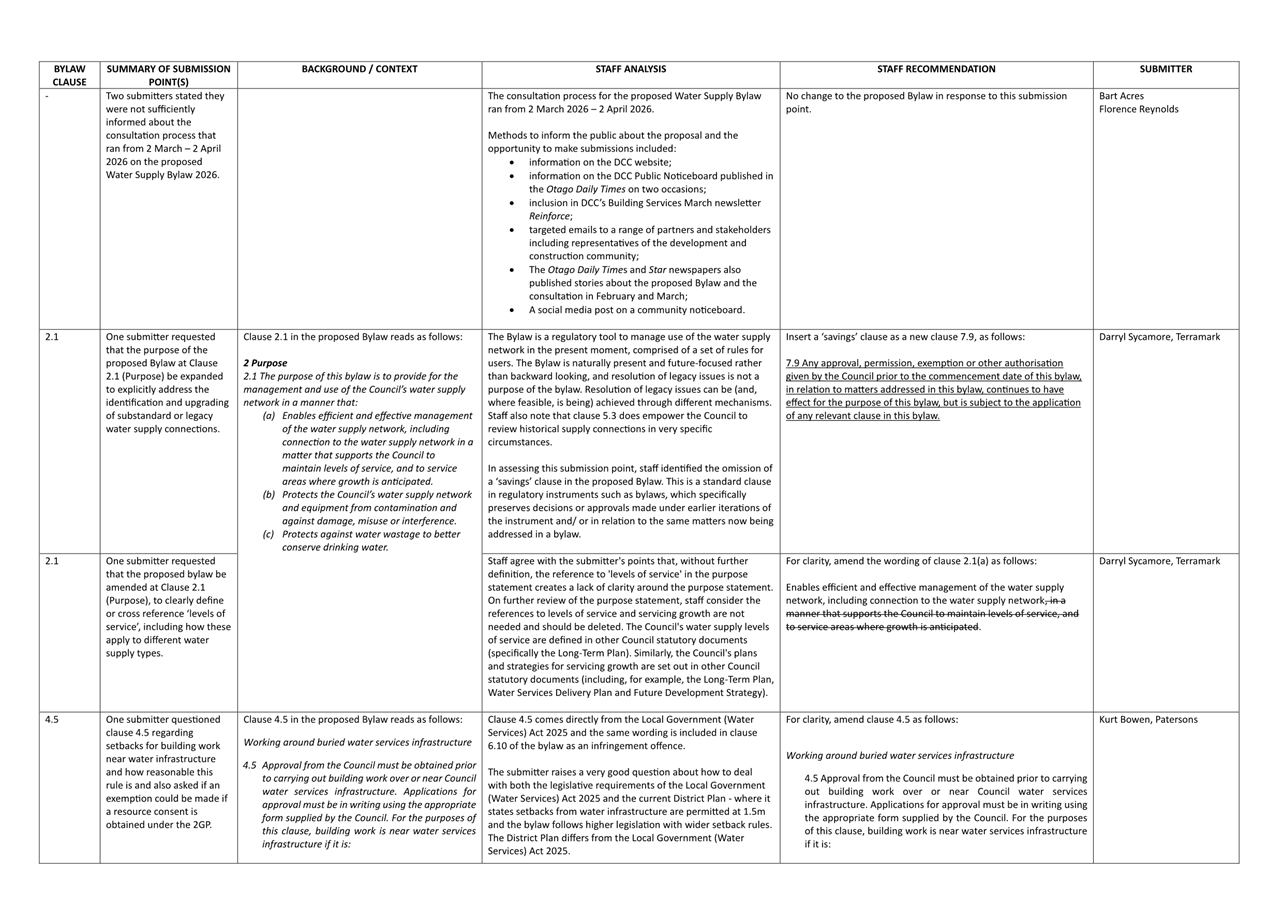
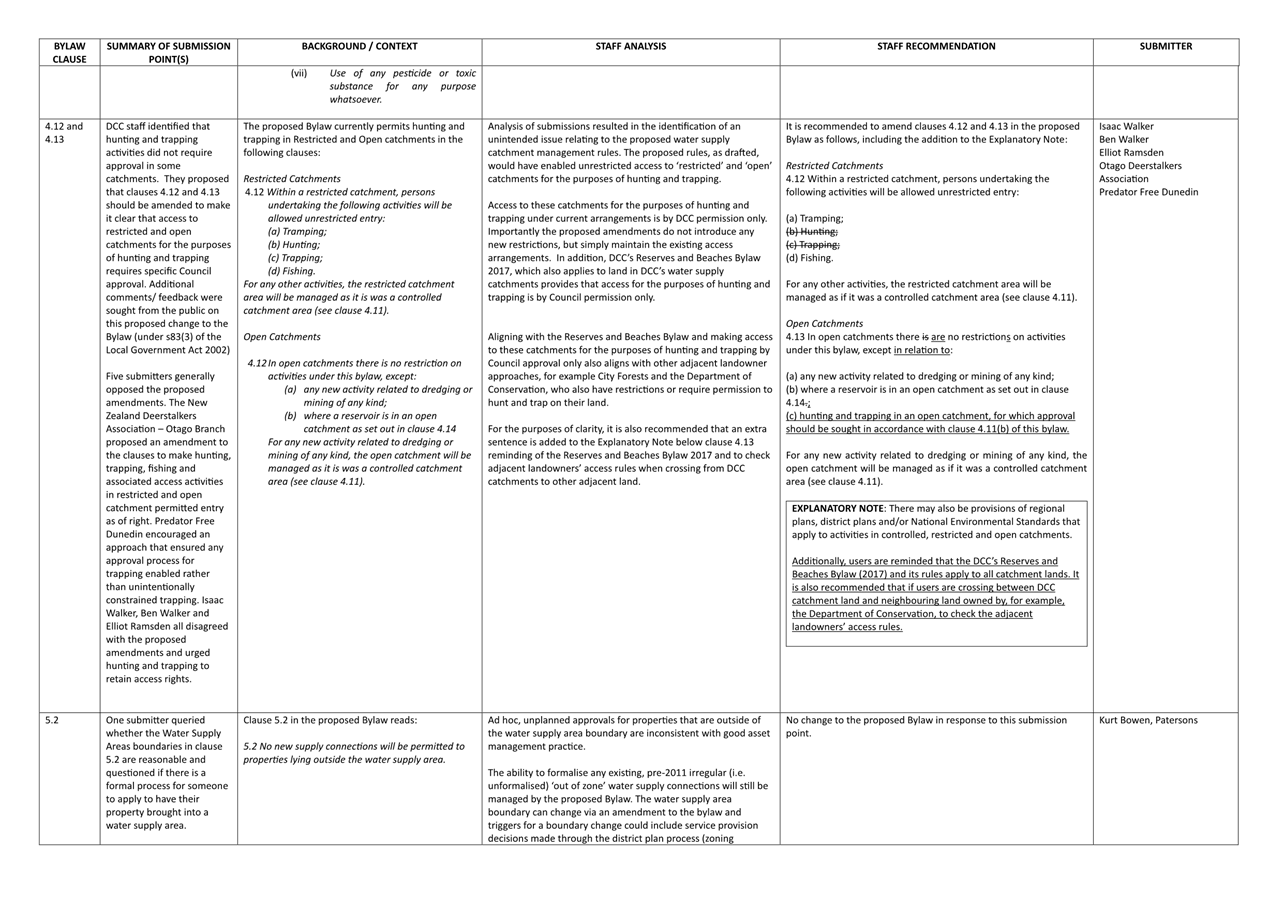
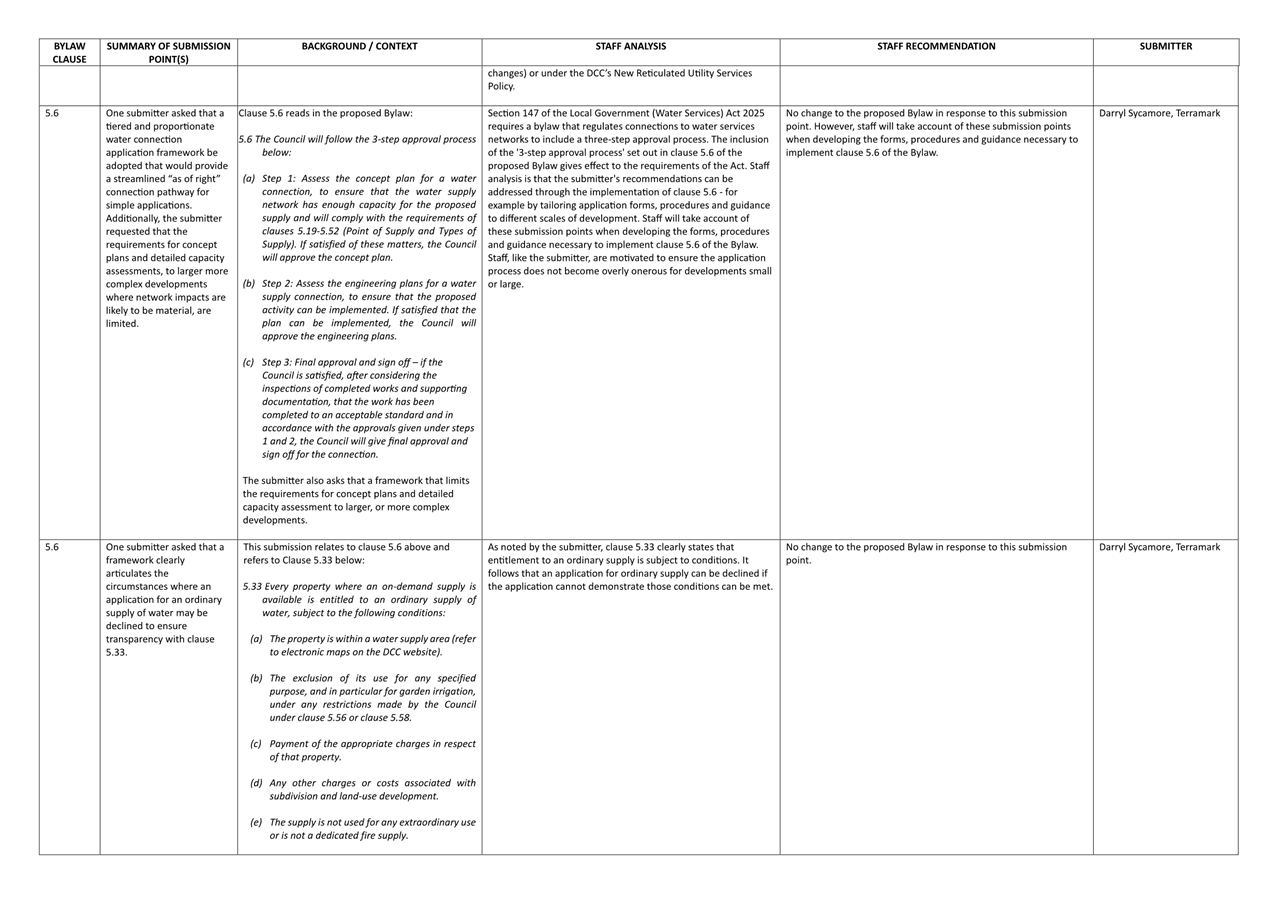
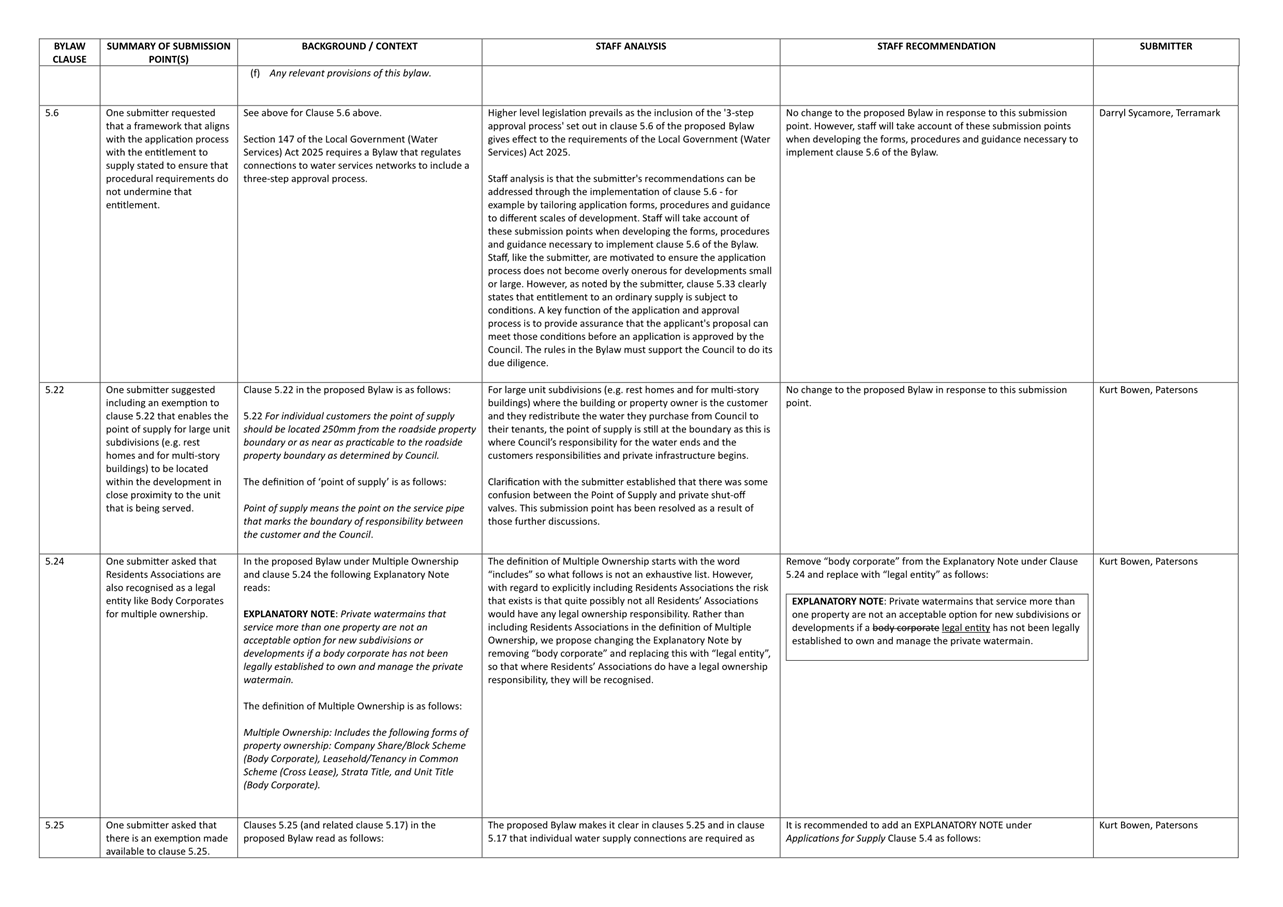
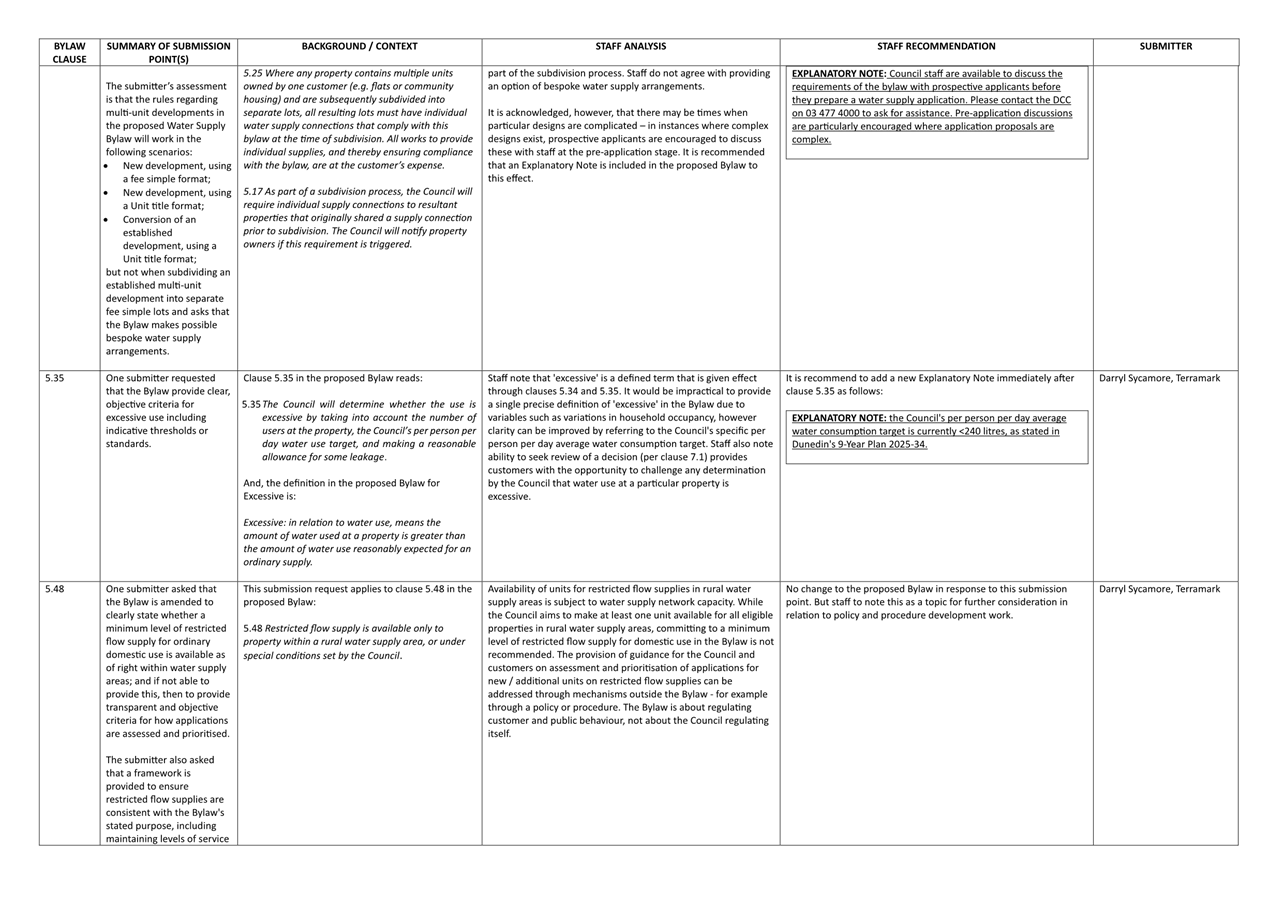
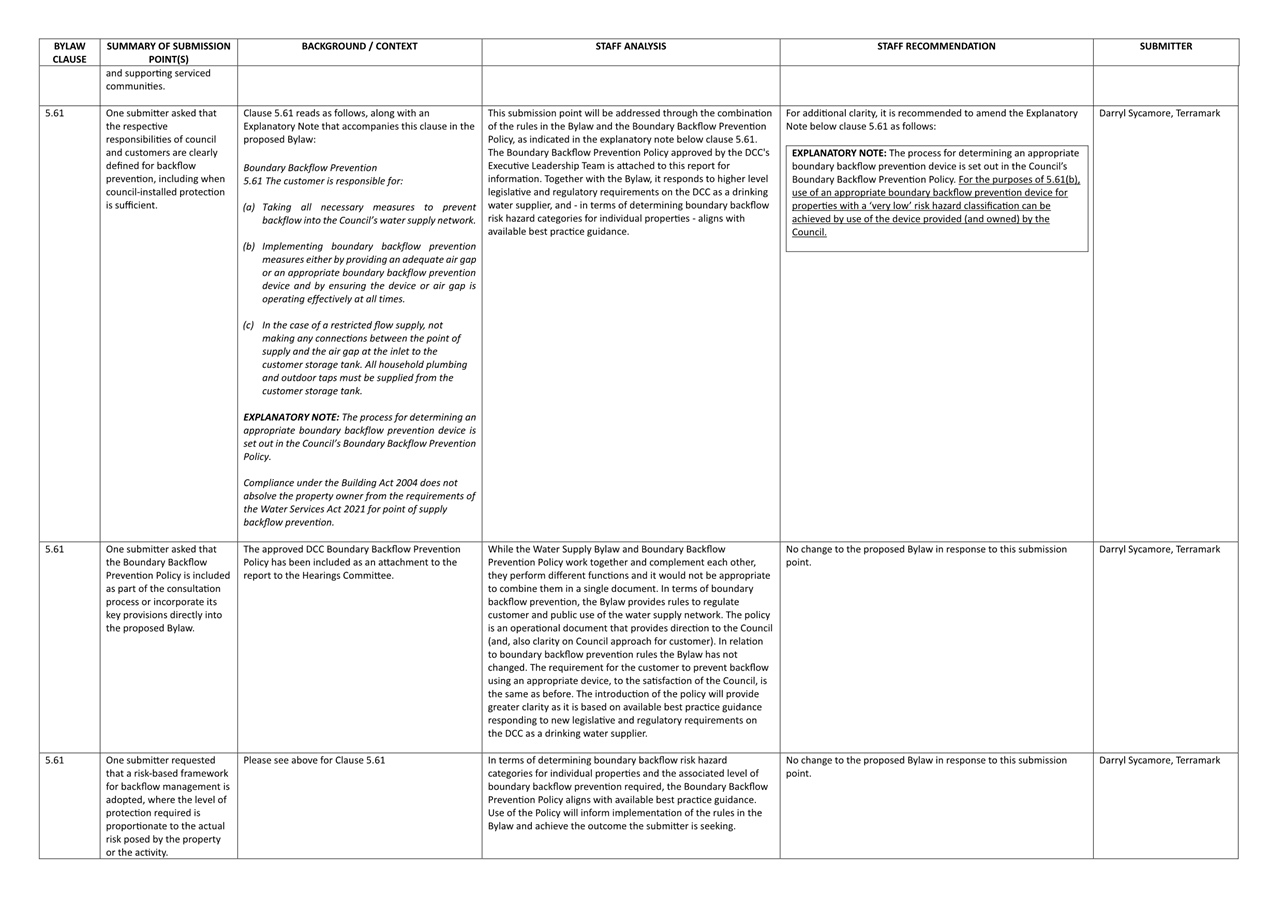
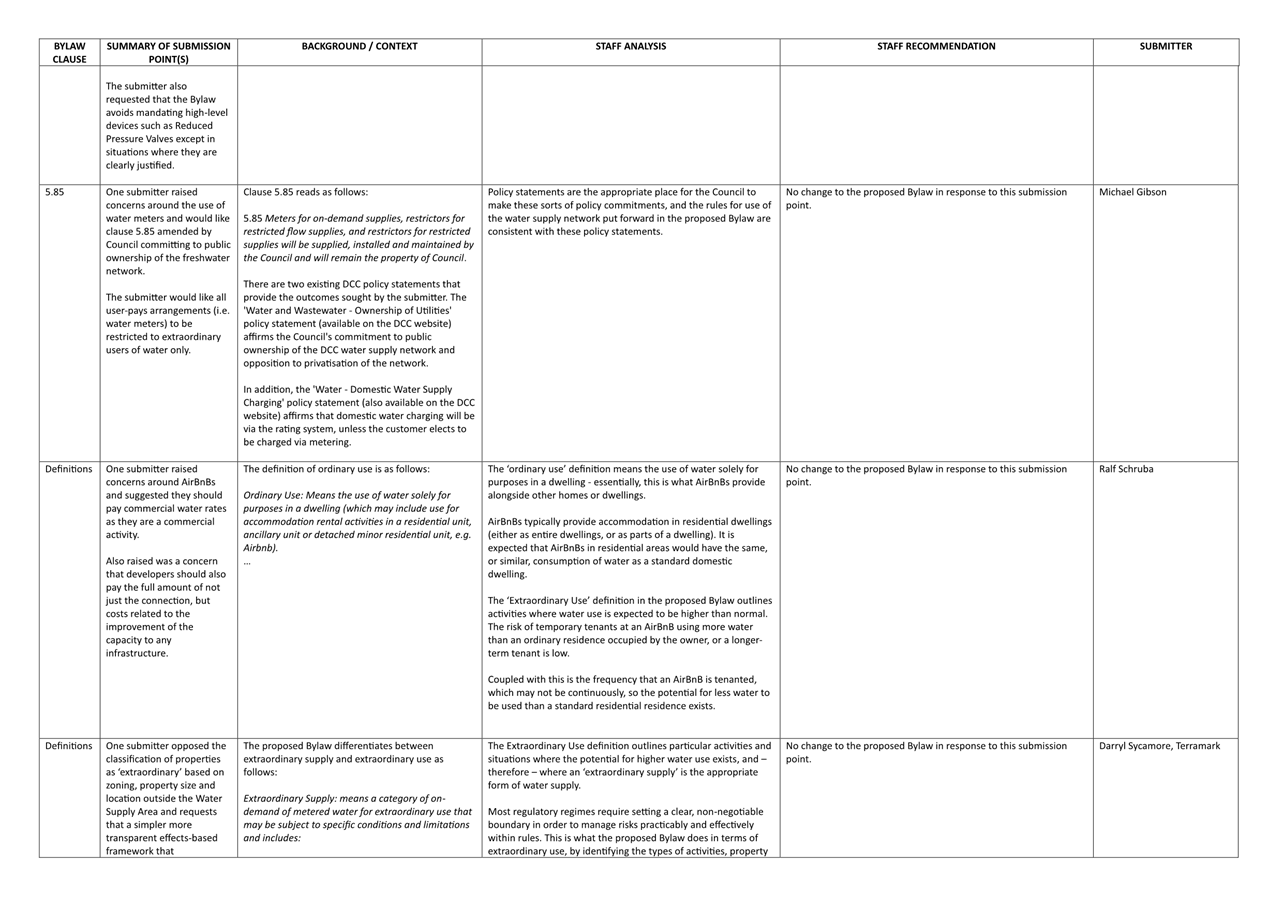
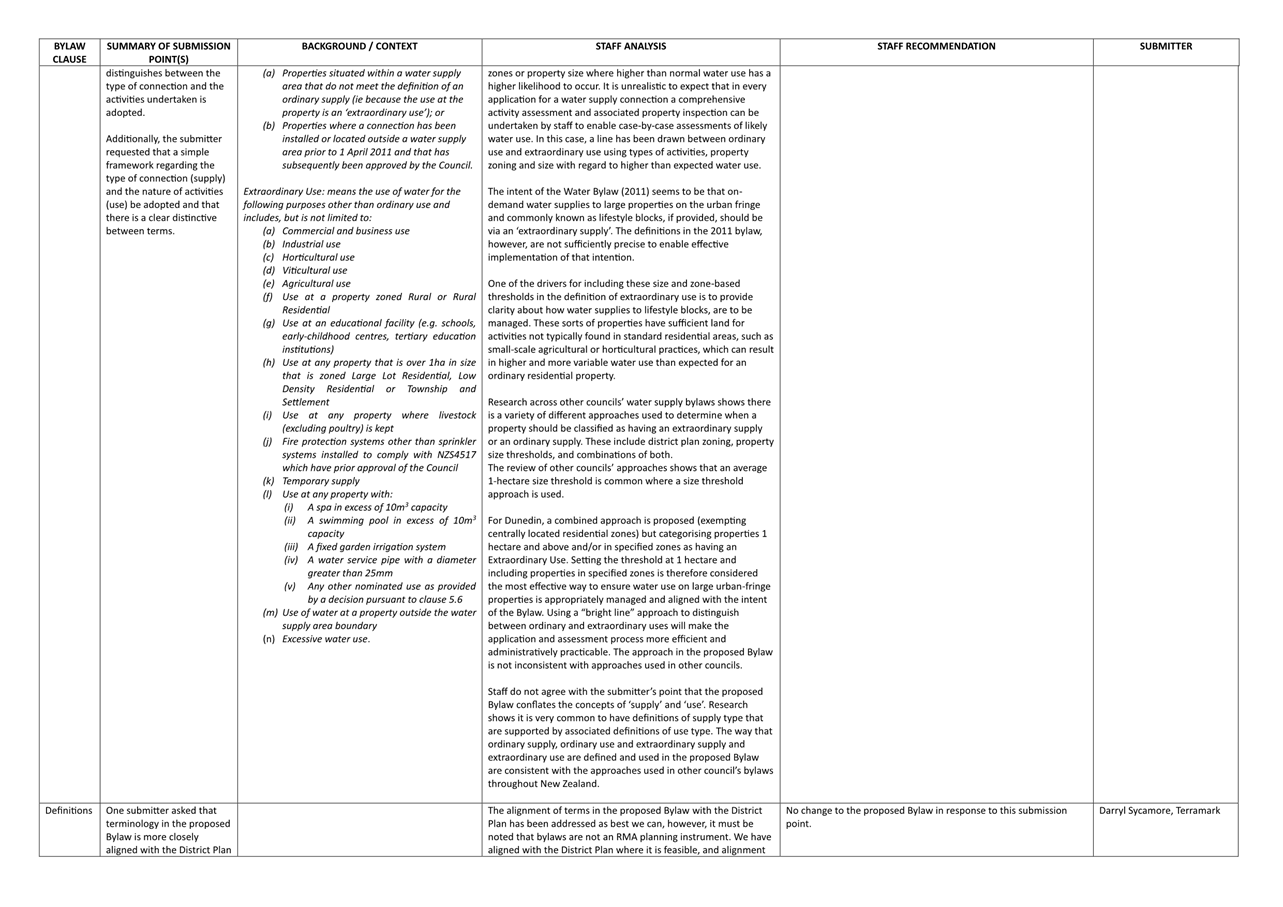
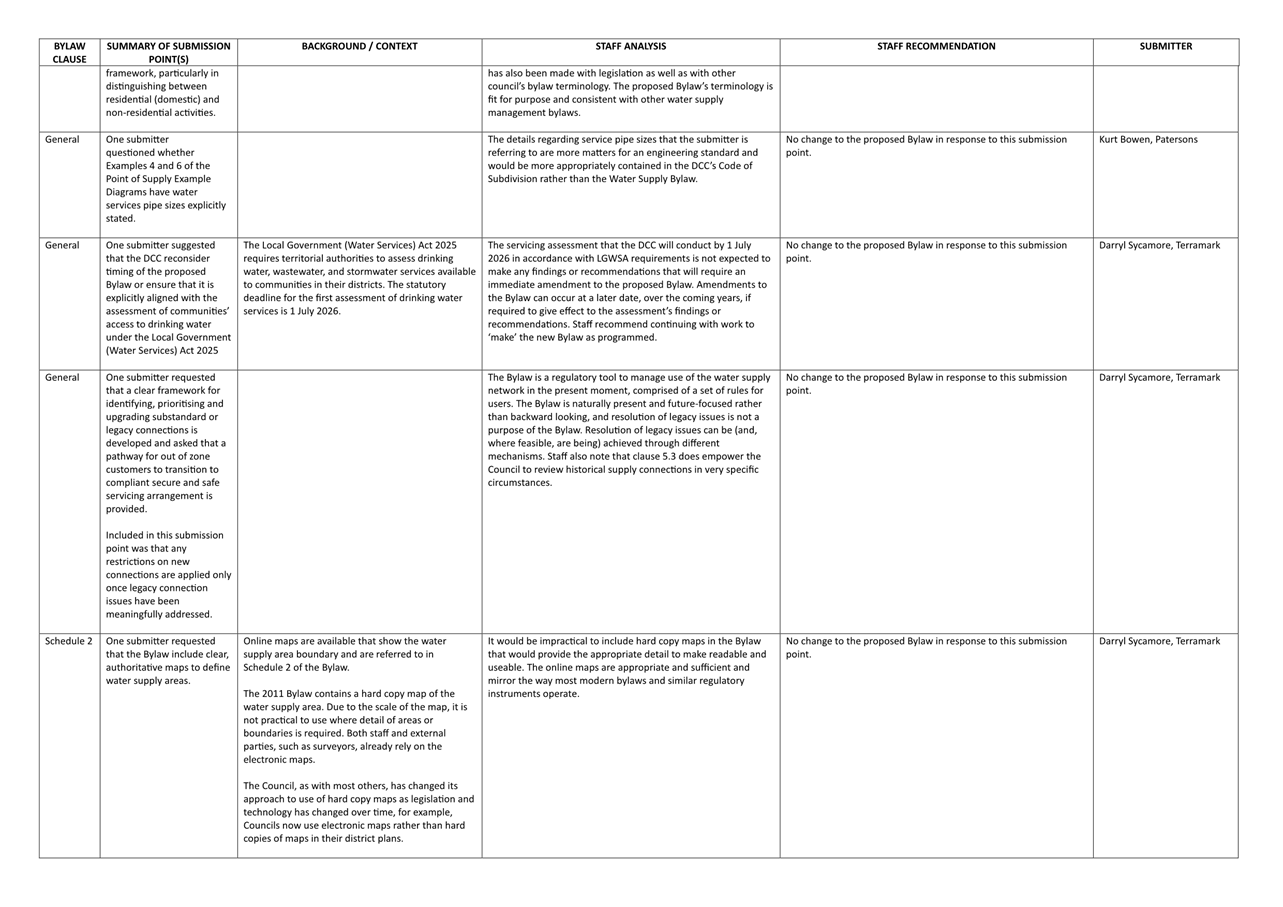
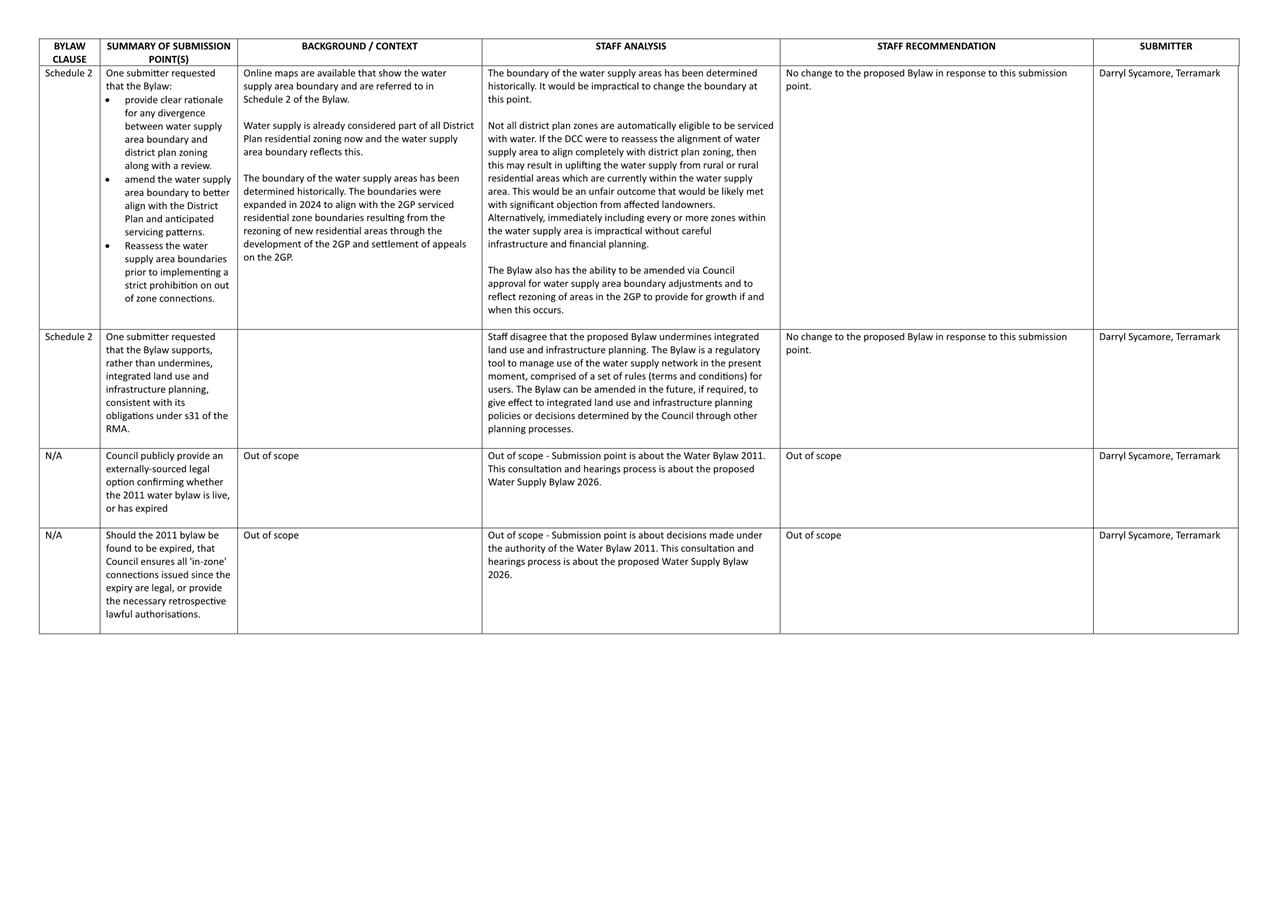
submitters. Attachment A provides the full summary of submissions and
associated staff analysis and recommendations. The full original submissions
can be viewed at Proposed
Water Supply Bylaw 2026 - Dunedin City Council.
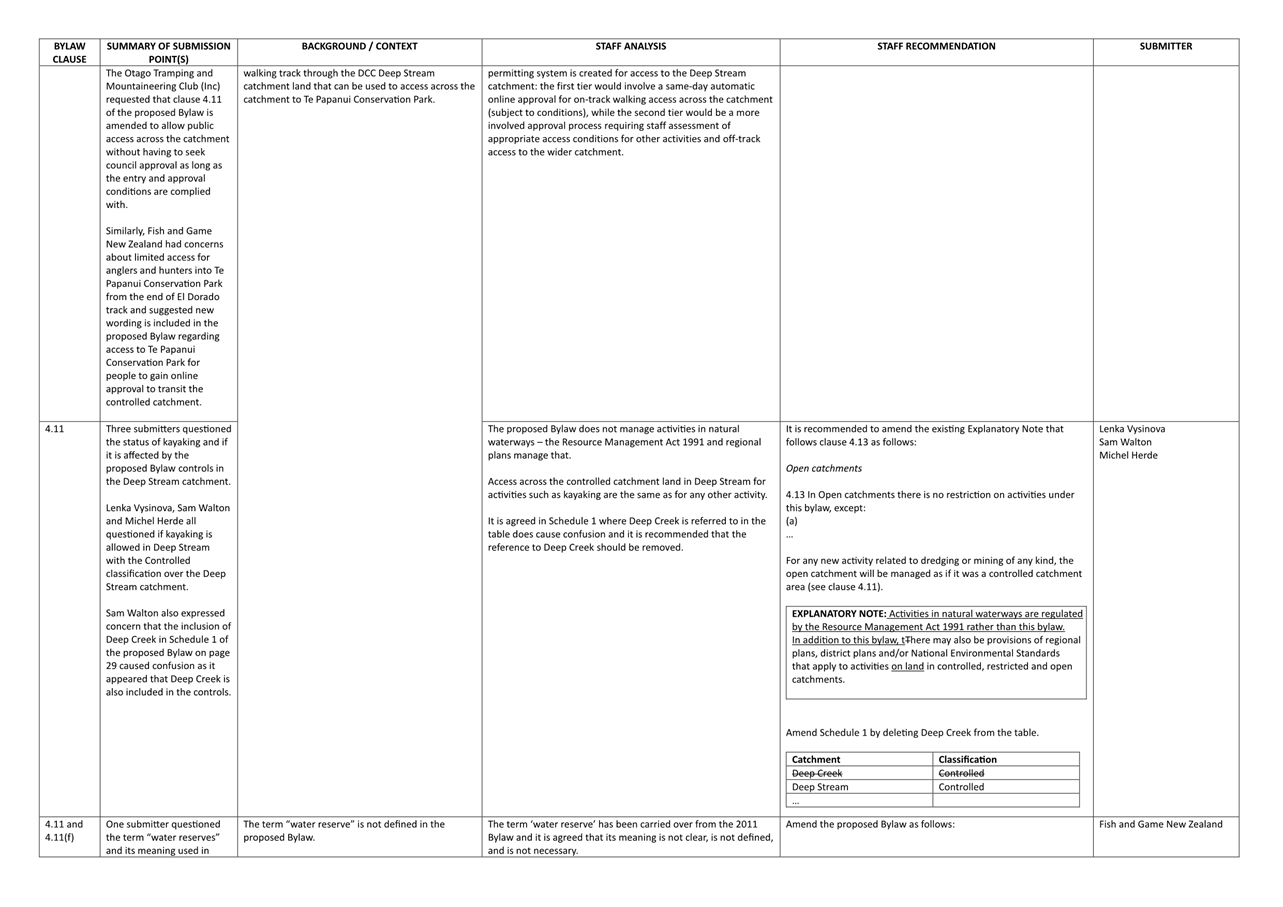
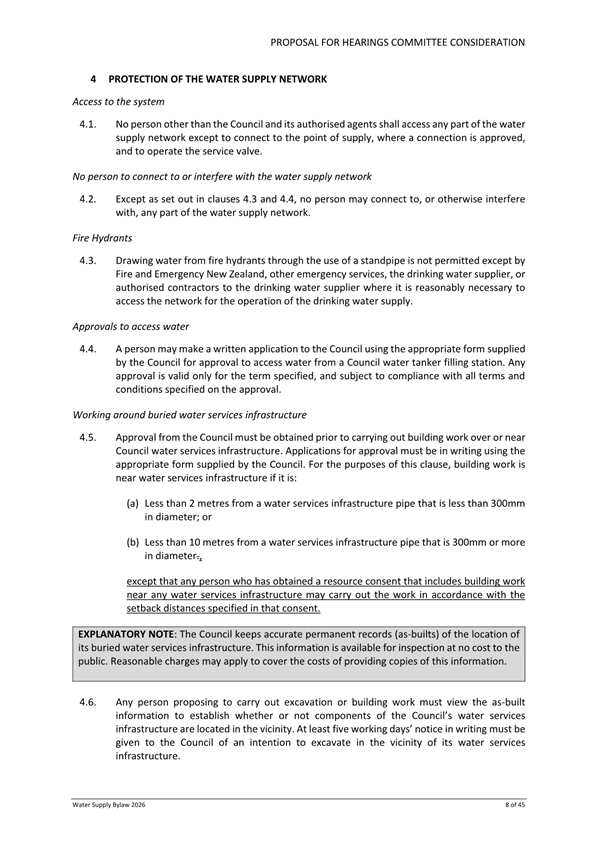
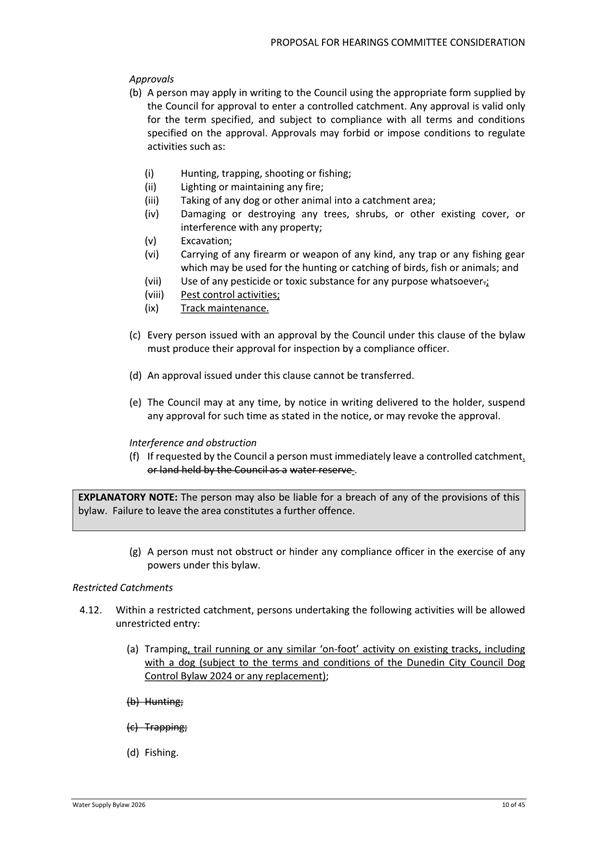
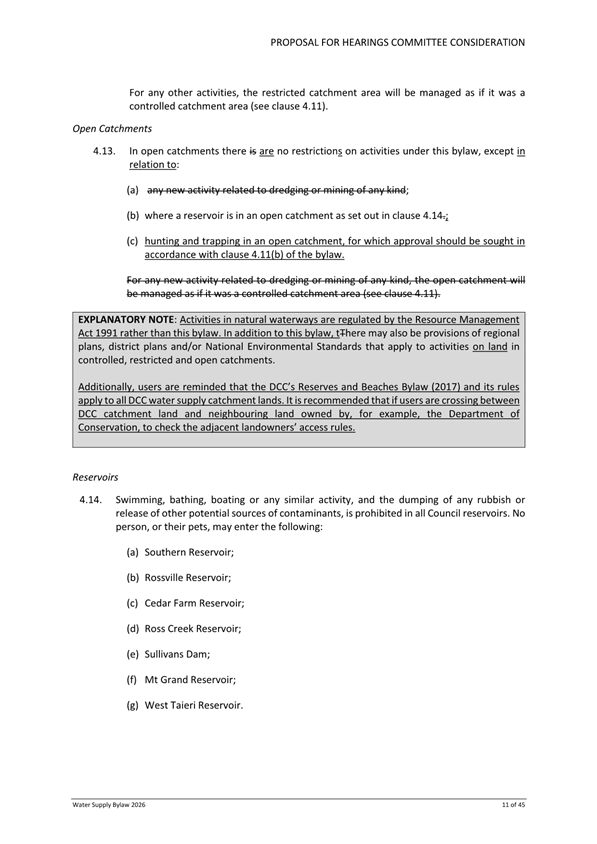
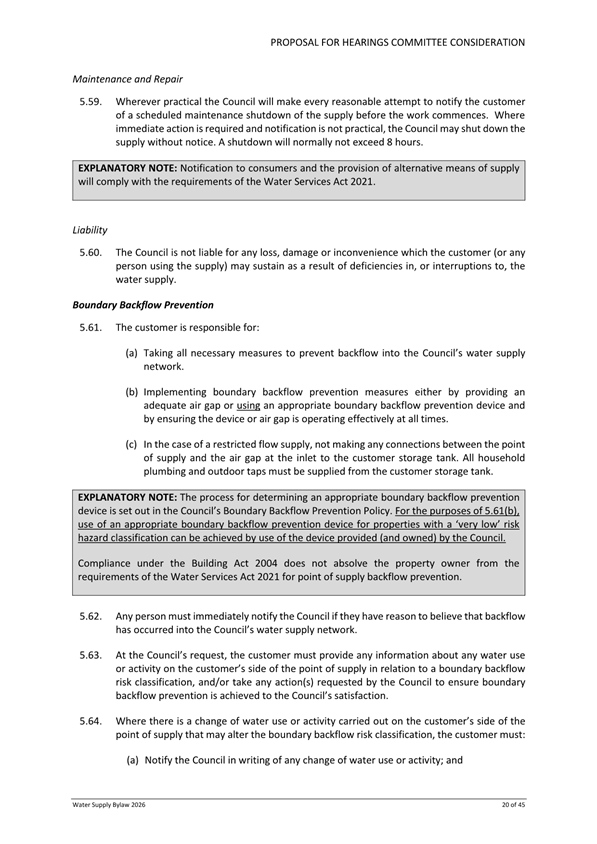
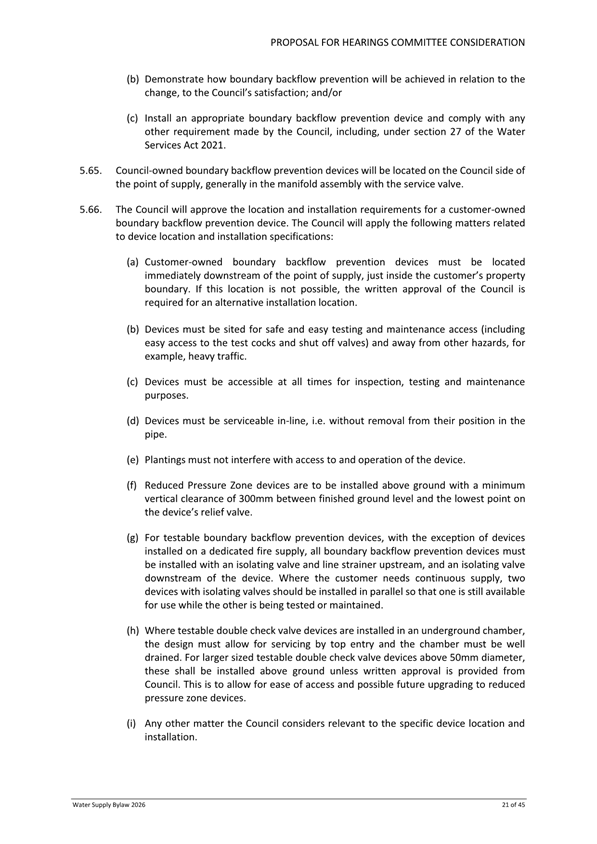
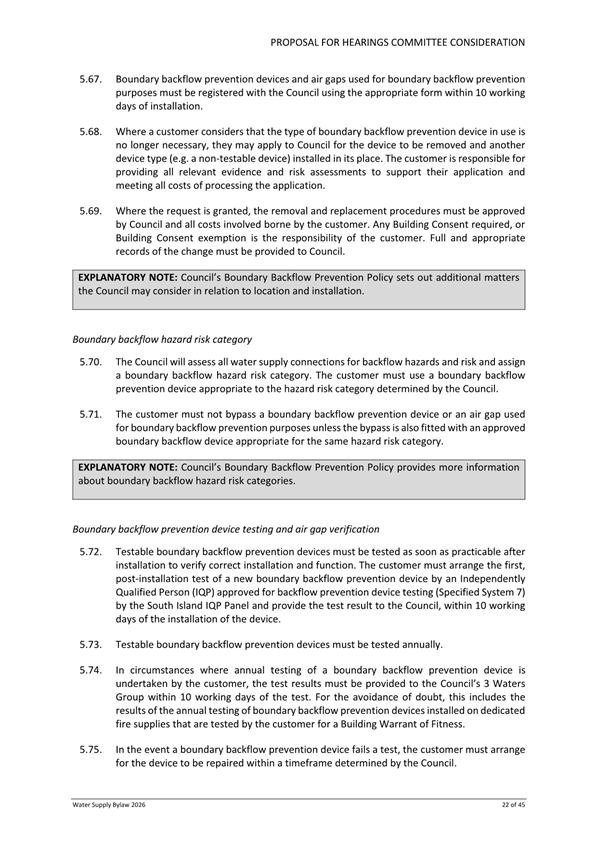
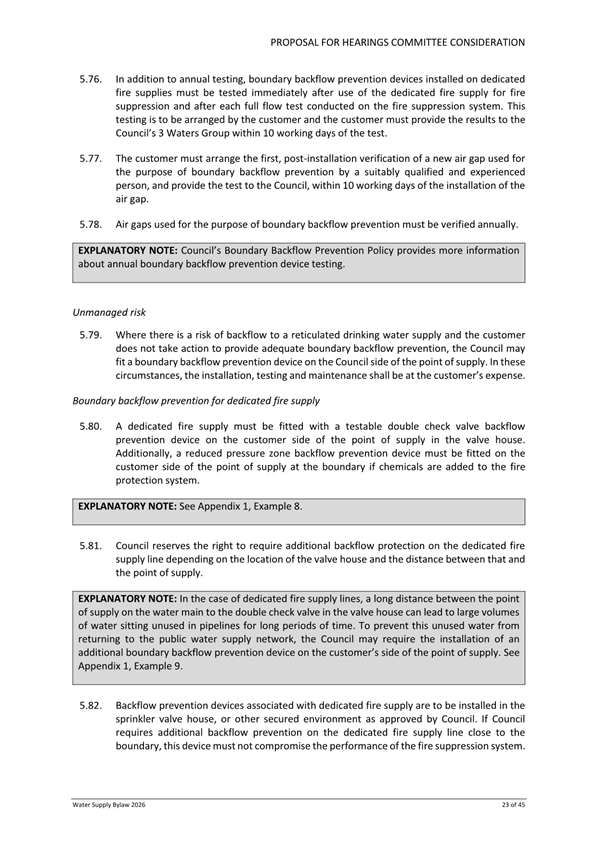
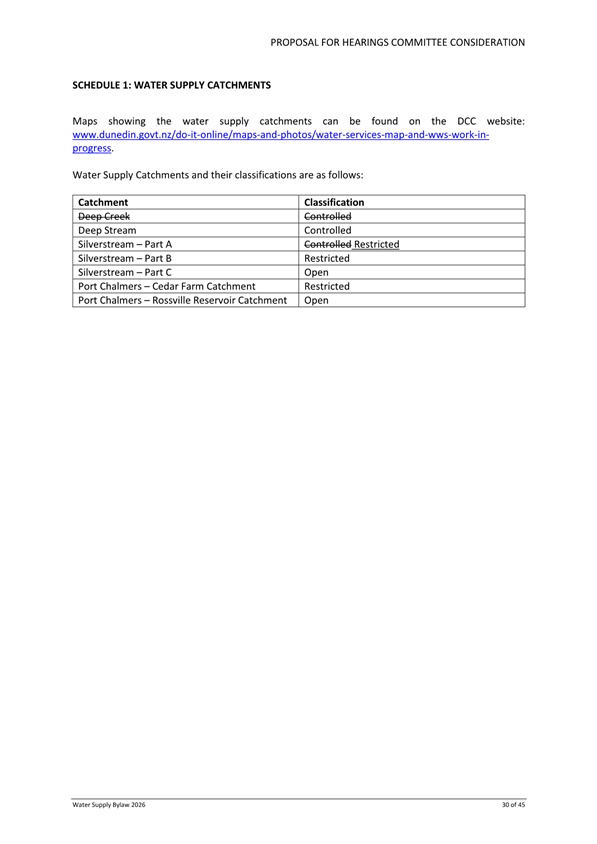
2 The
purpose of this report is to assist the Hearings Committee with its deliberations
on the proposed Bylaw and the formulation of recommendations it will make to
the Council.
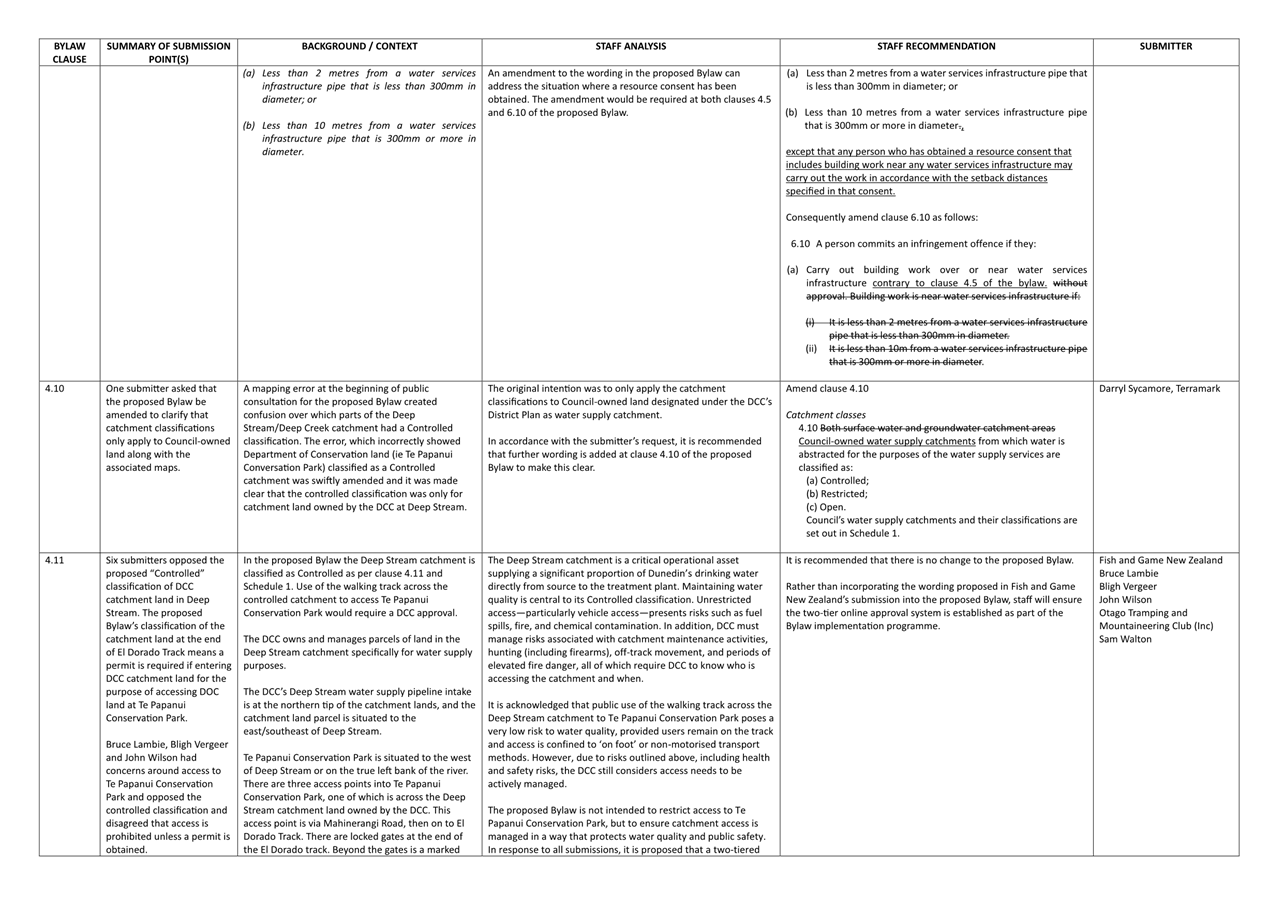
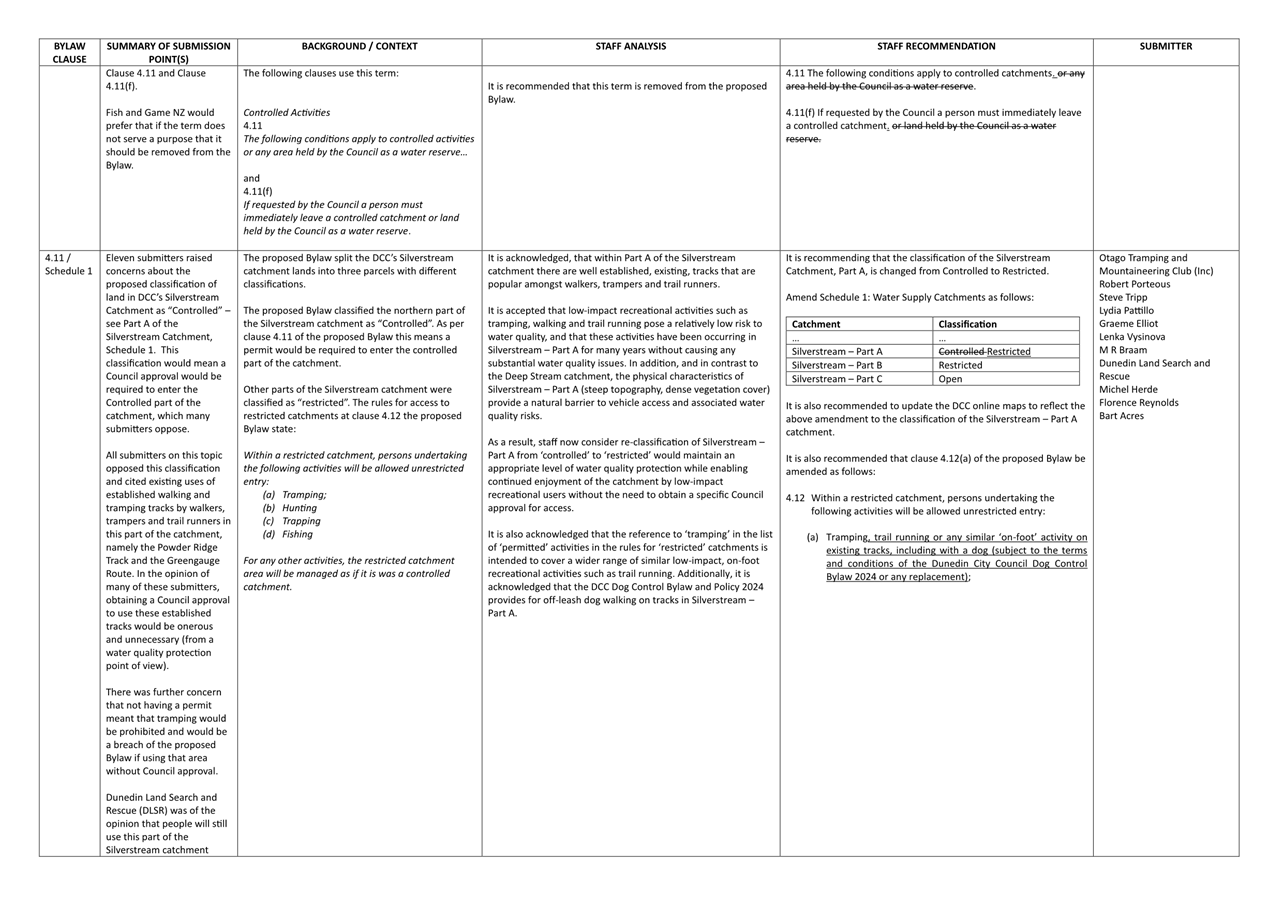
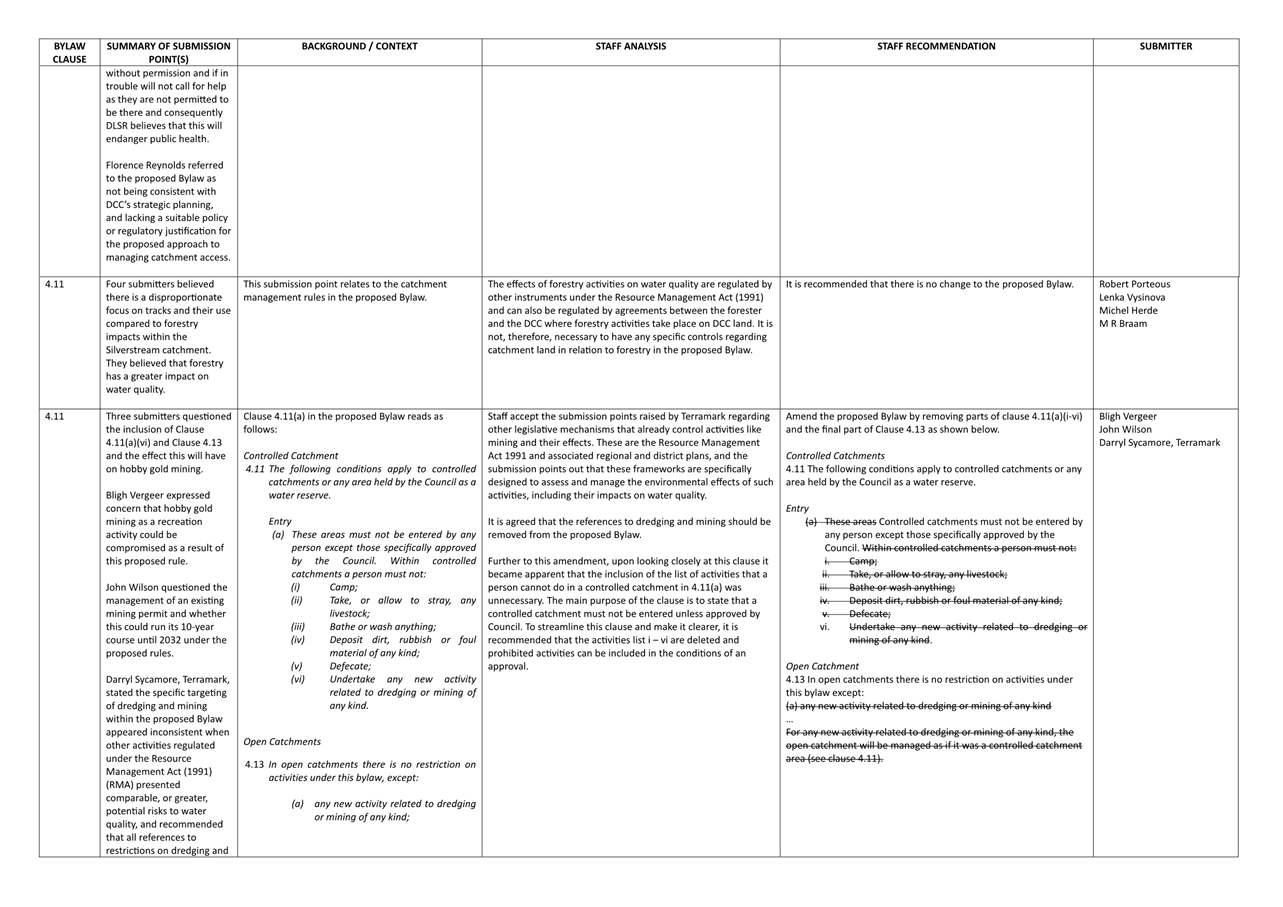
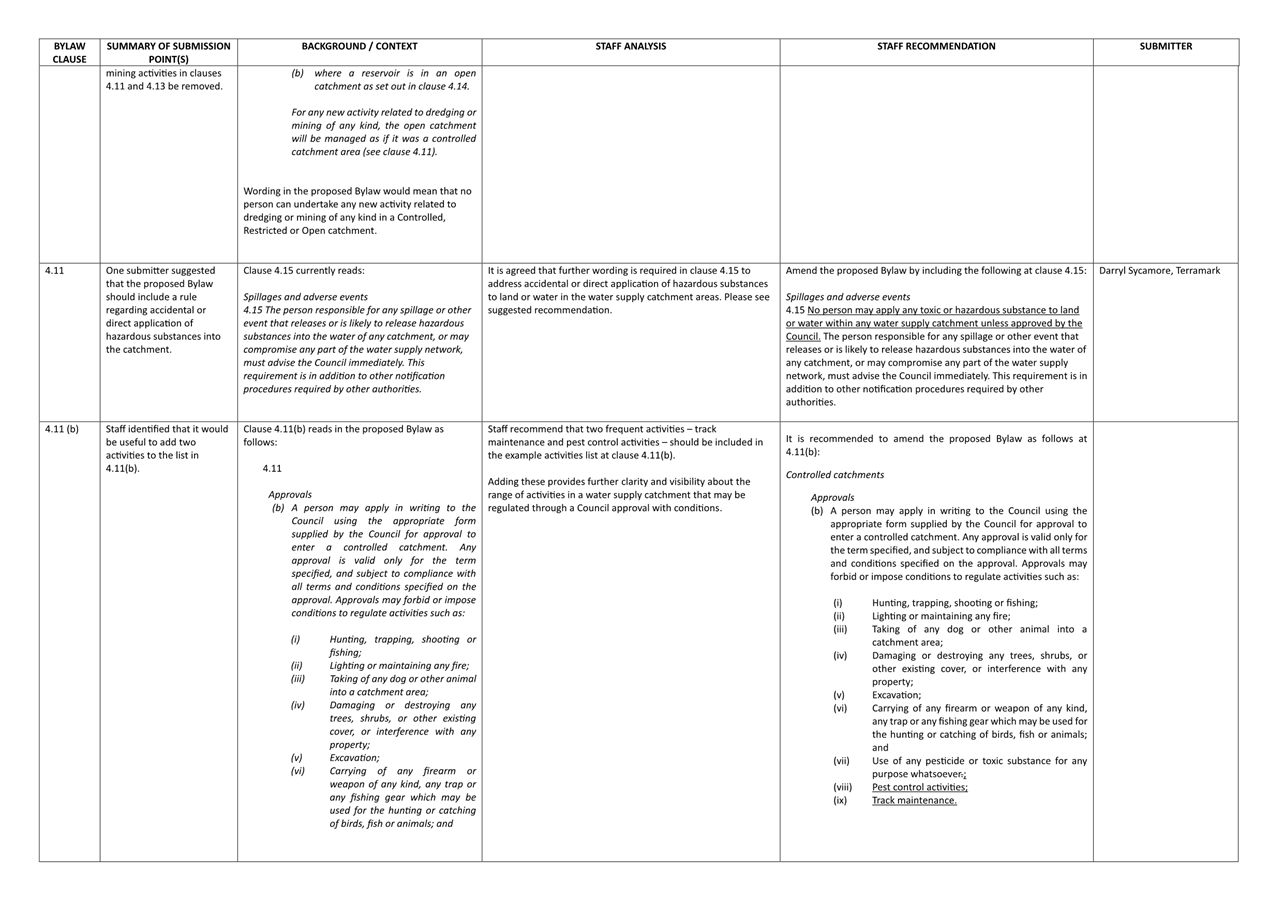
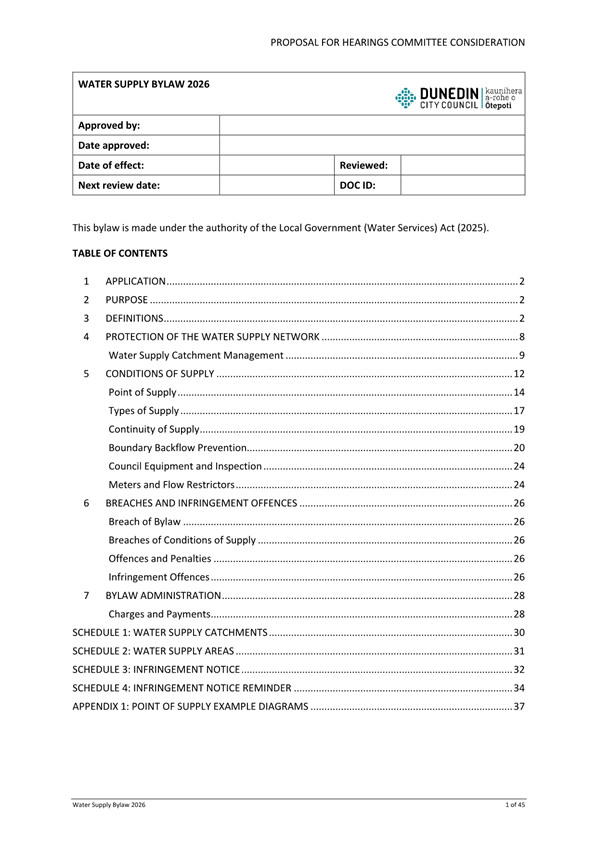
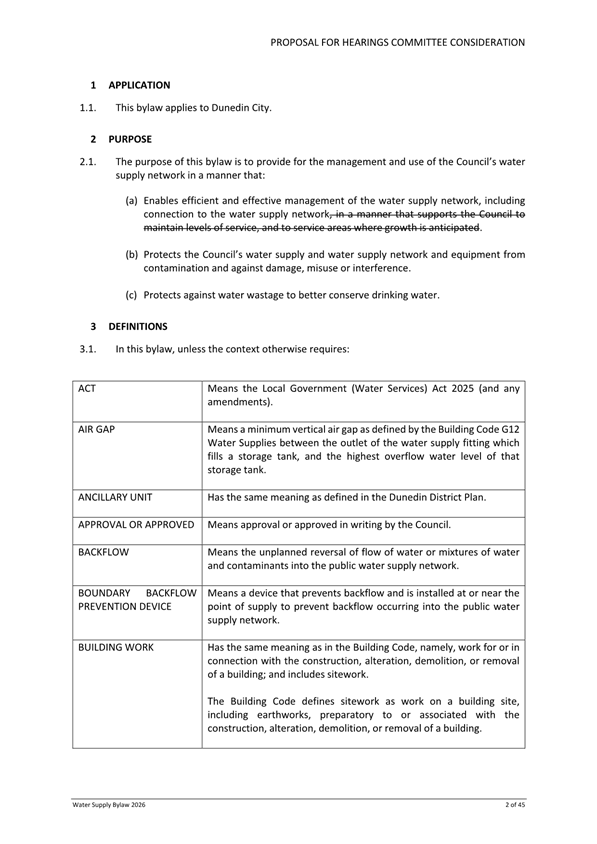
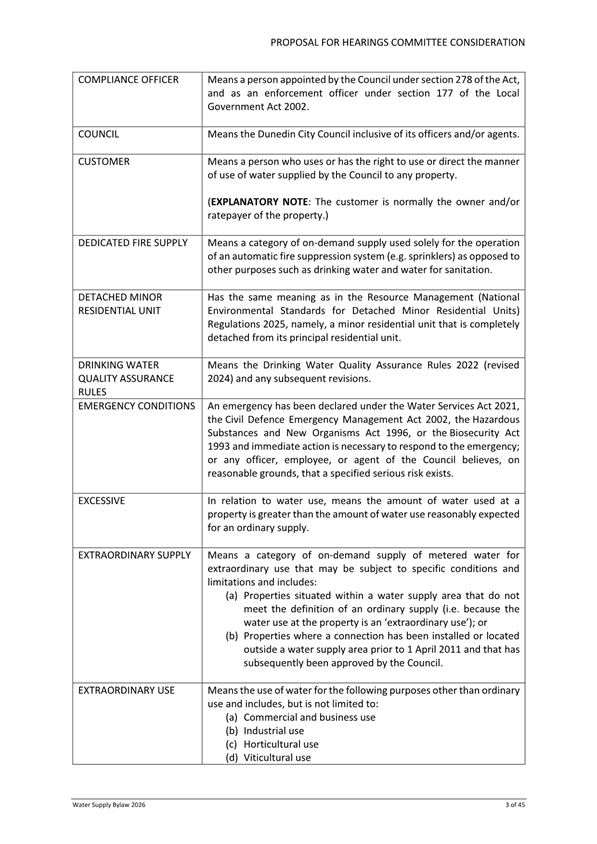
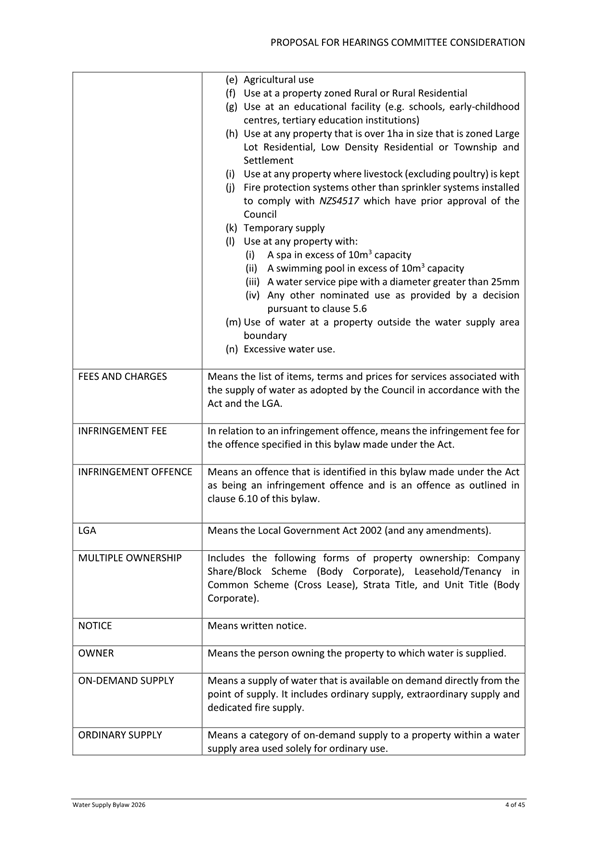
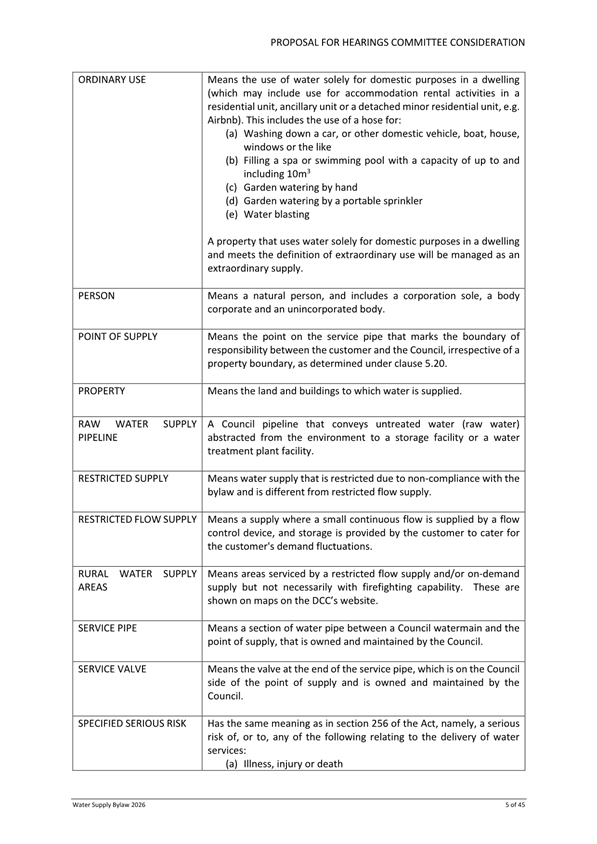
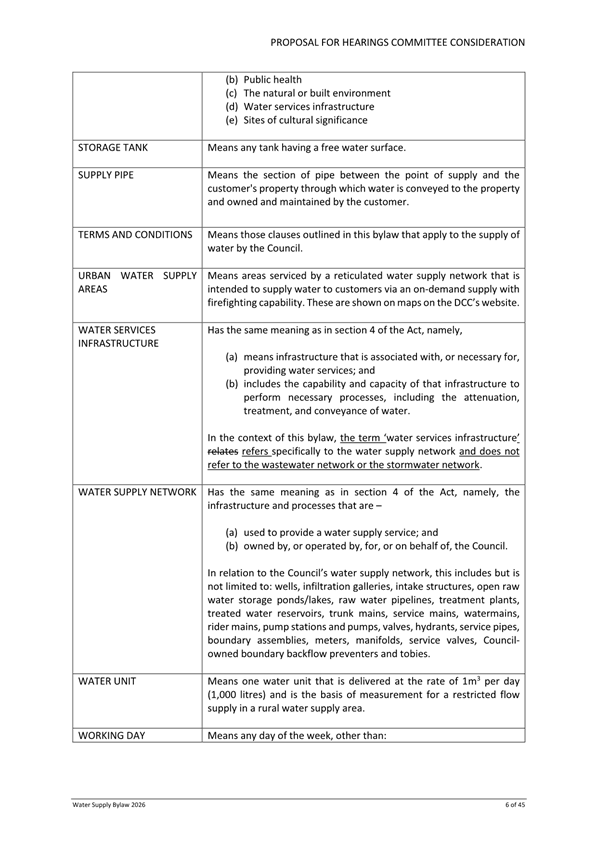
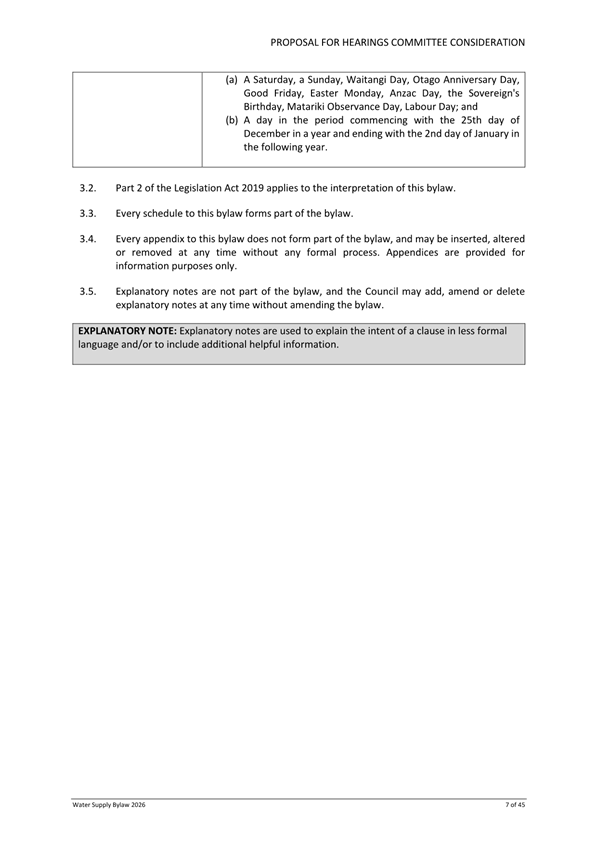
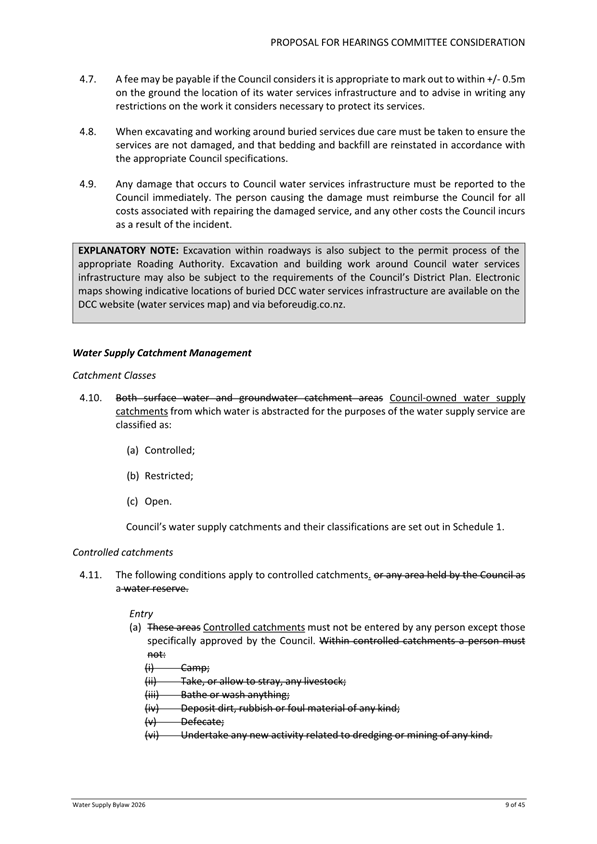
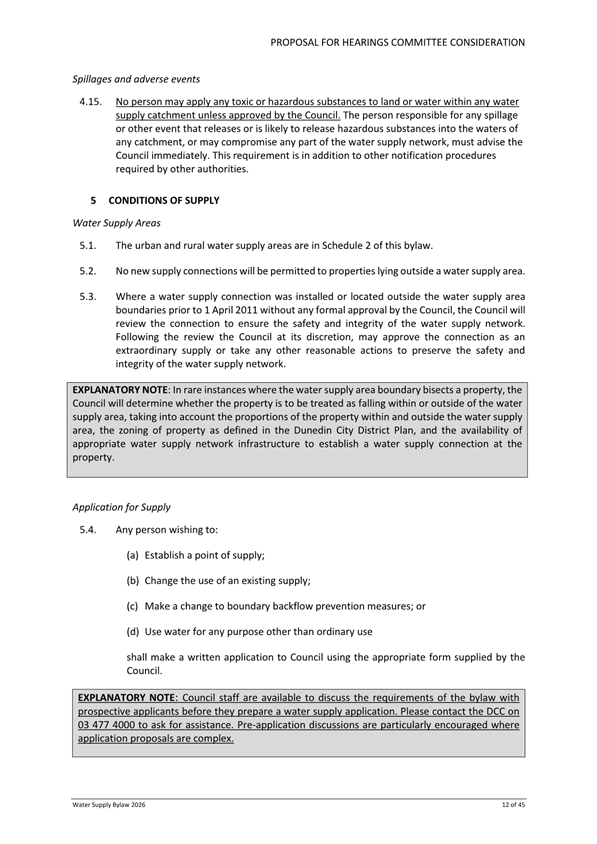
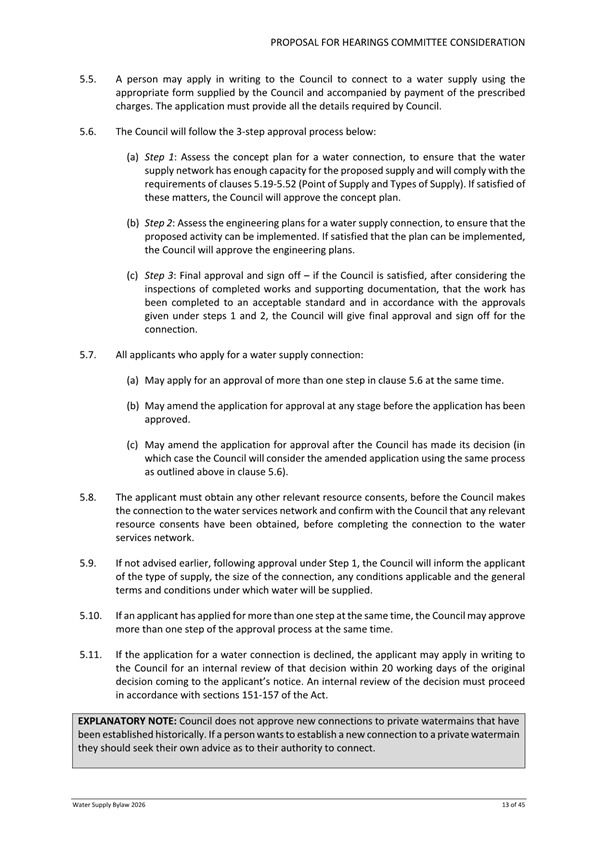
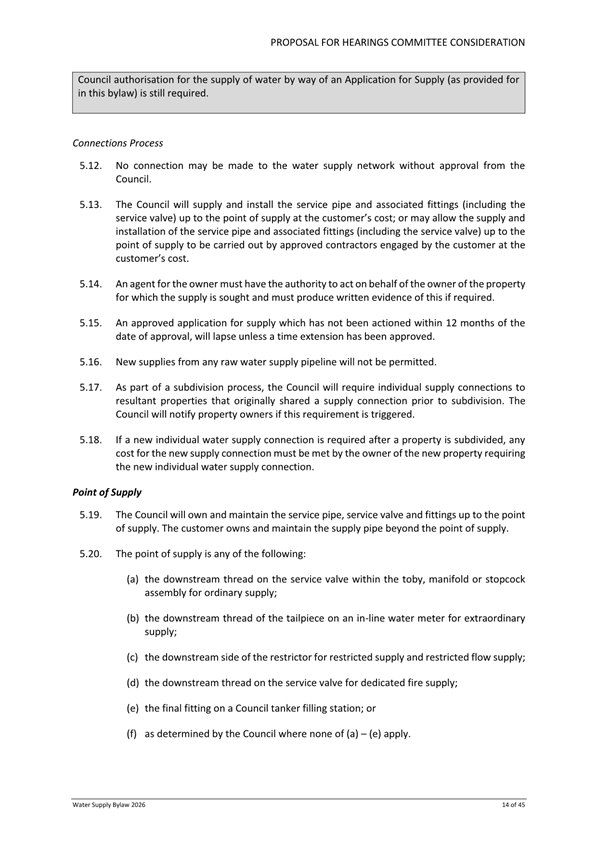
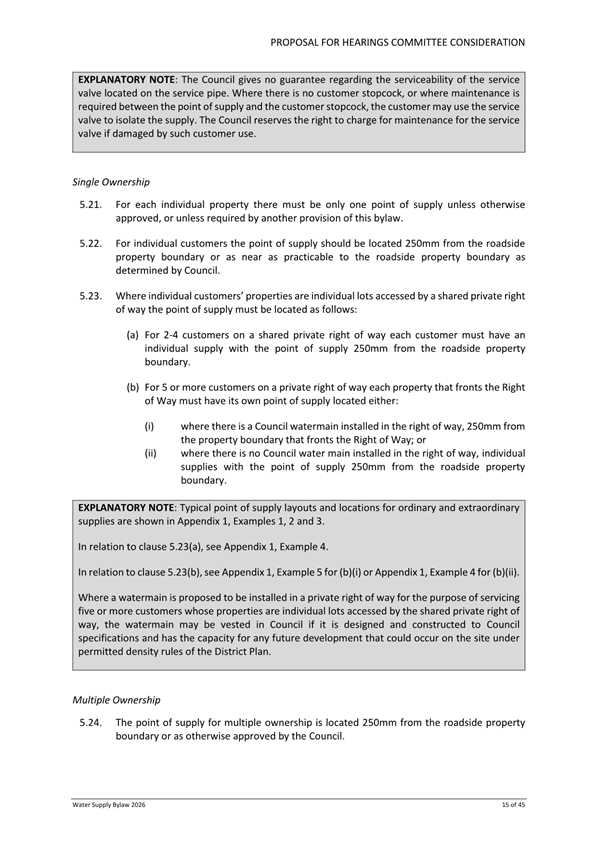
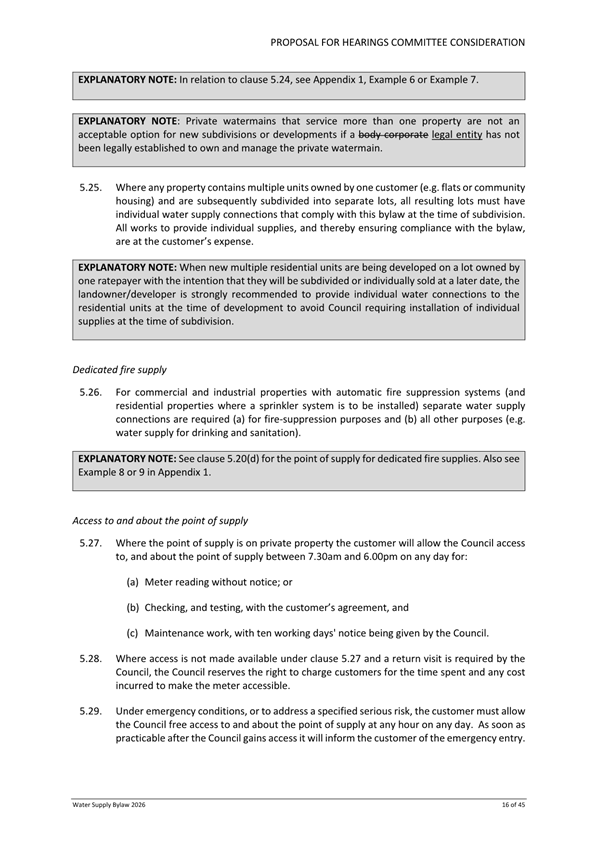
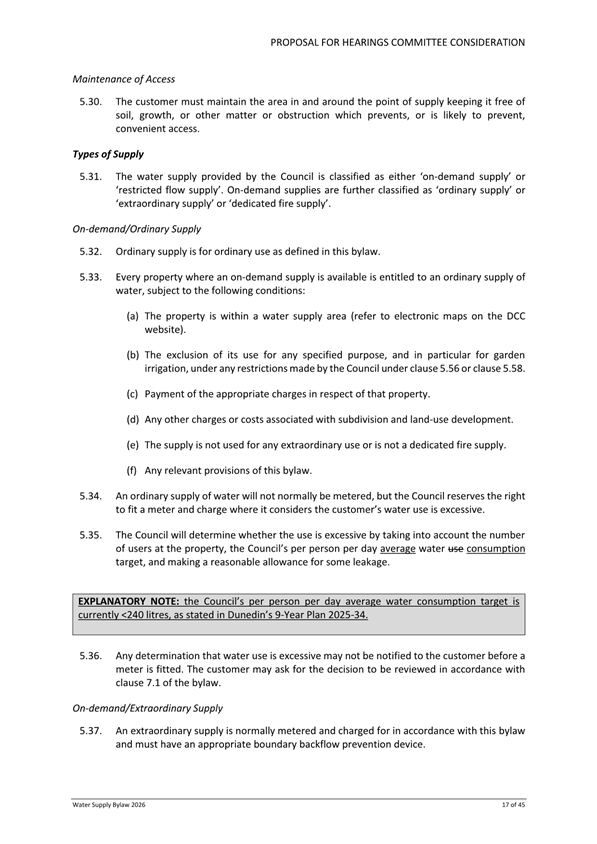
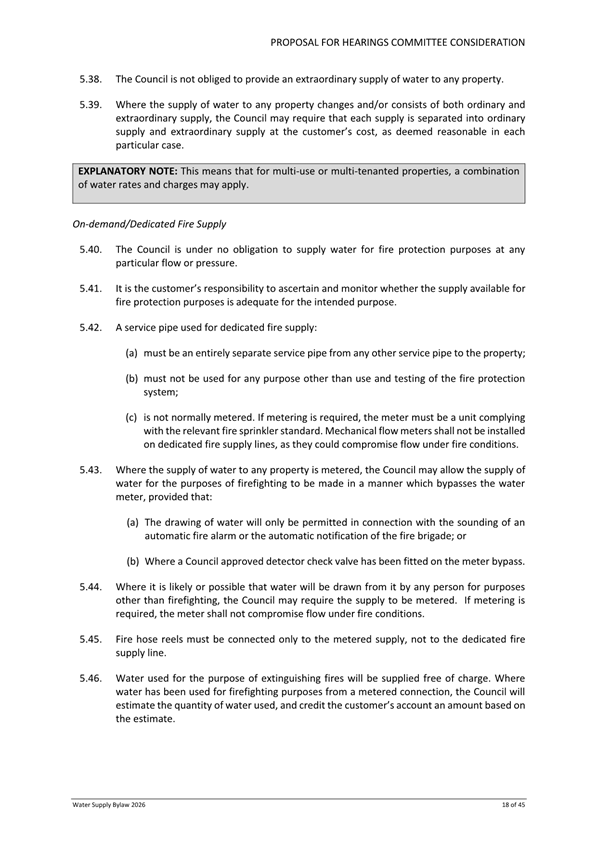
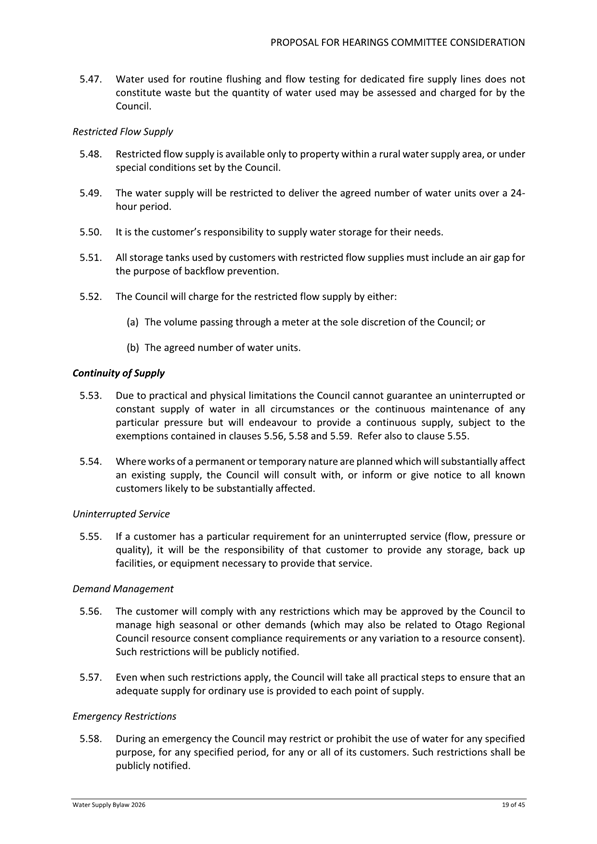
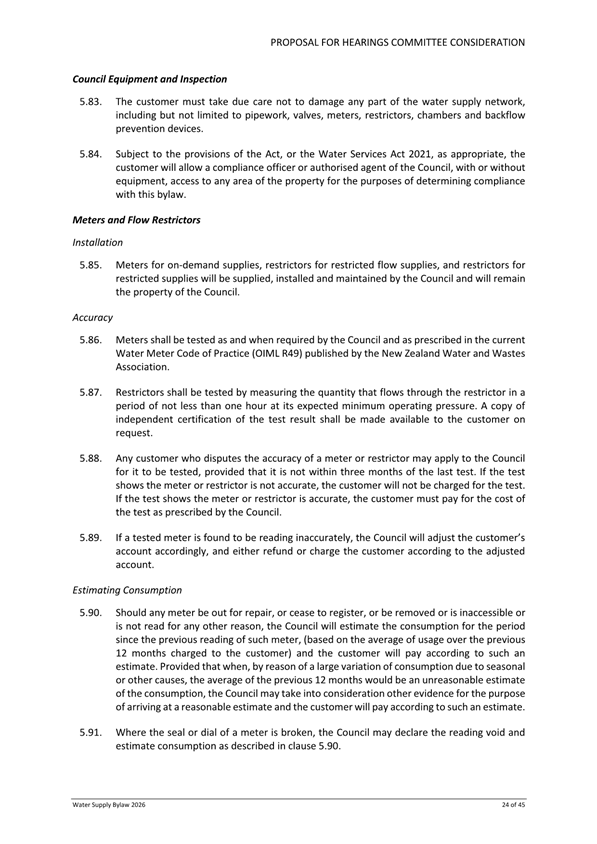
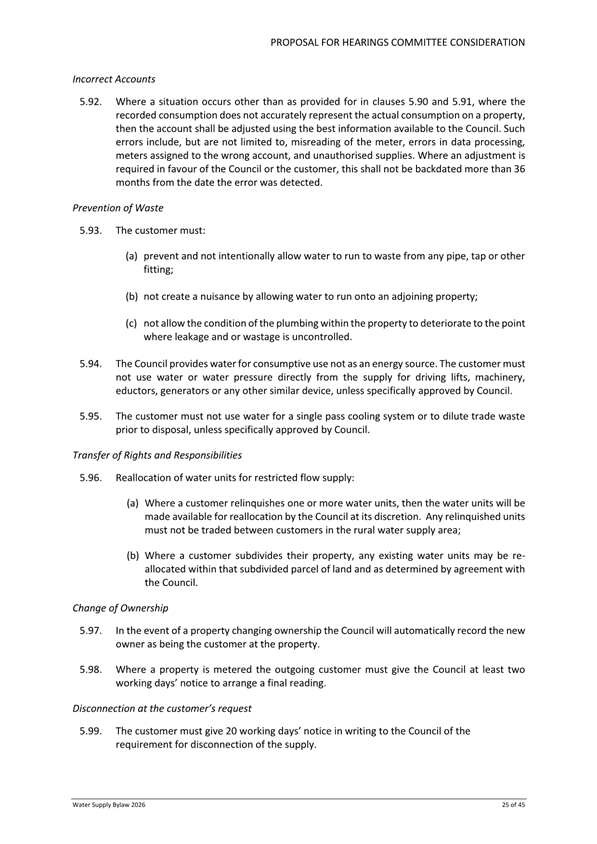
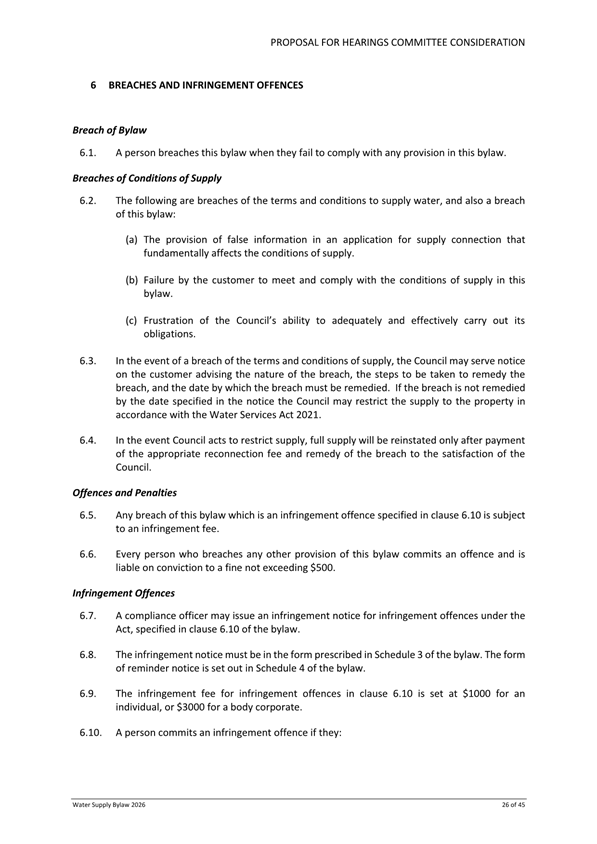
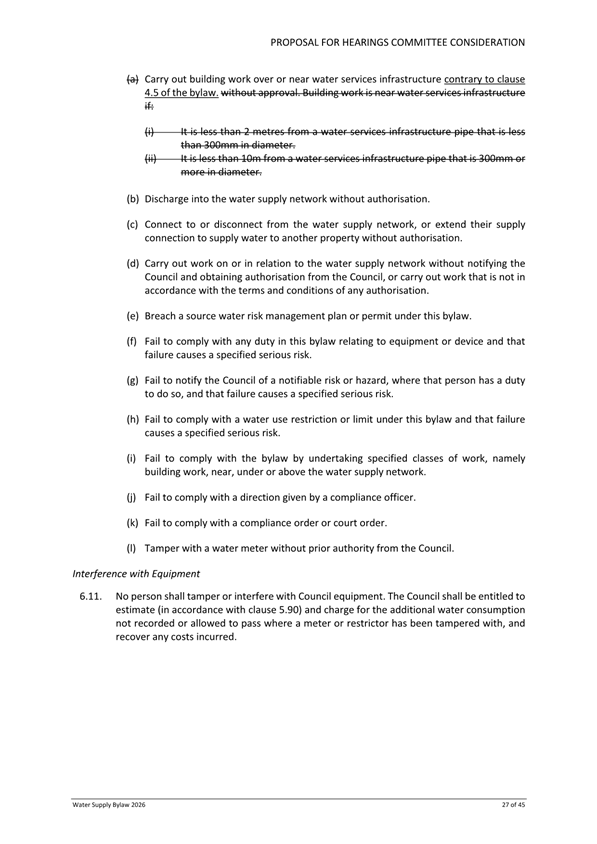
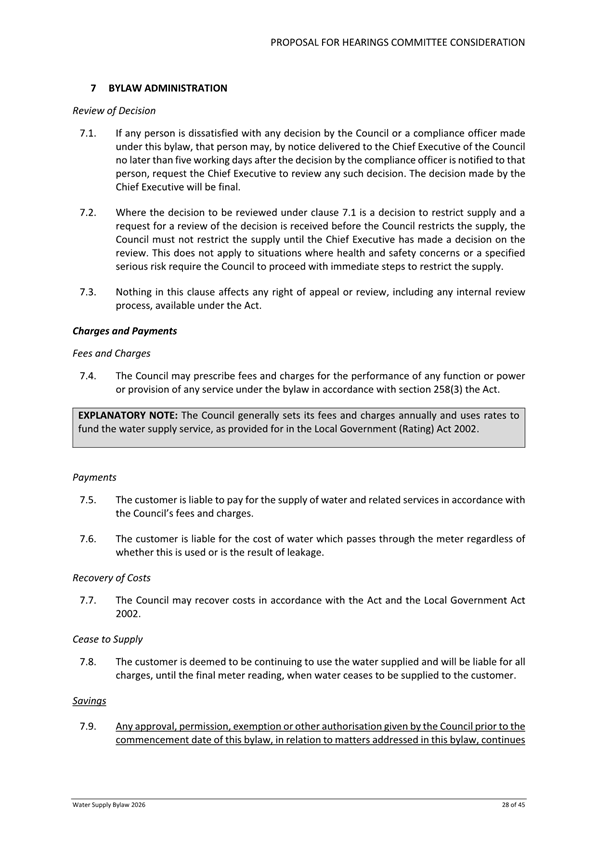
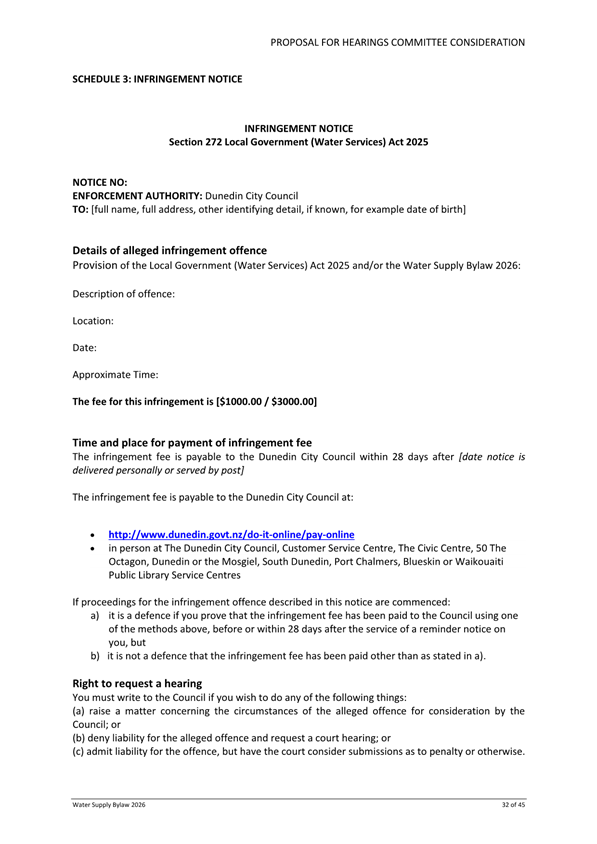
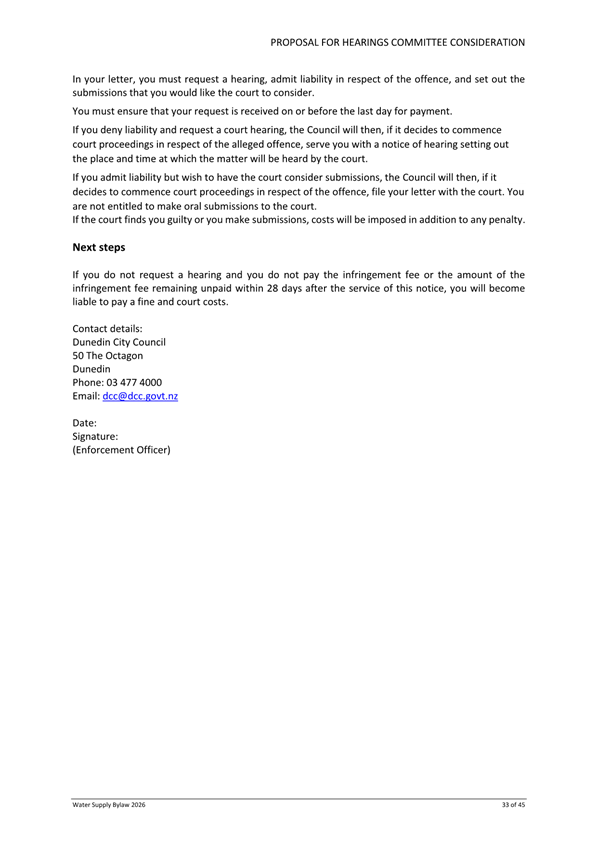
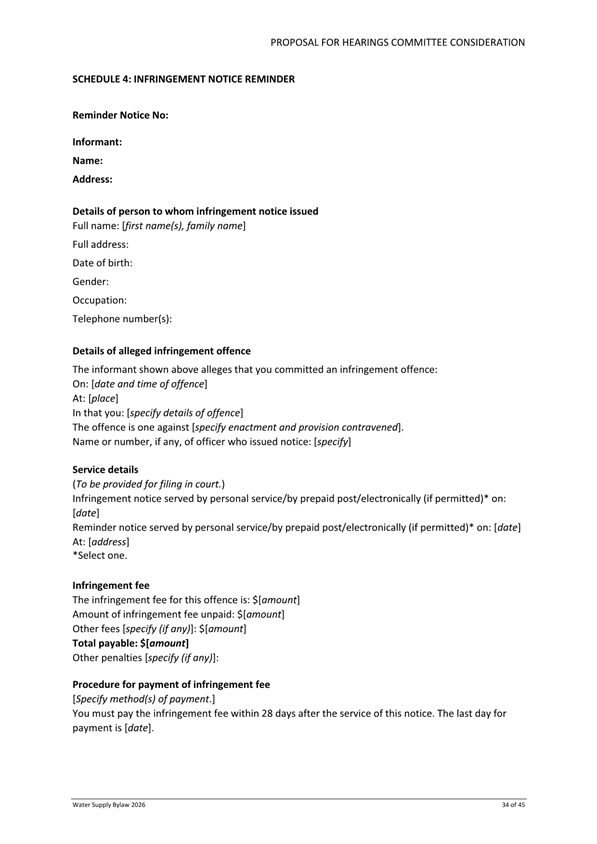
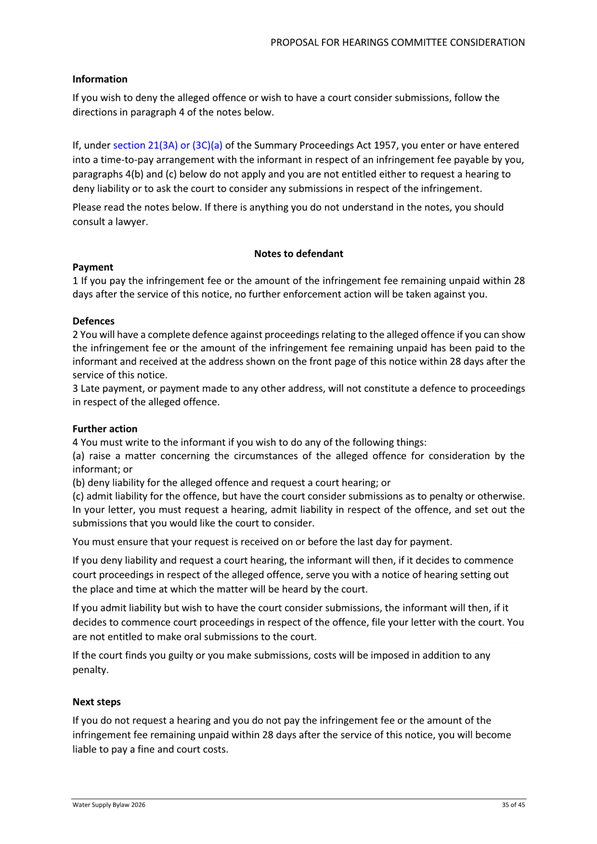
3 At
its 24 February meeting Council approved a statement of proposal and draft
proposed Water Supply Bylaw 2026 for consultation purposes.
4 Consultation
ran for one month from 2 March to 2 April 2026 and 18 submissions were received
(and four late submissions came thereafter). Additional
consultation on a specific amendment to the proposed Bylaw ran from 29 April -
10 May 2026 and a further five submissions were received. In
total, 27 submissions were received on the proposed Water Supply Bylaw
2026.
5 Submitters
raised a range of topics, with key issues of concern relating to:
· Section
4 of the proposed Bylaw – Protection of the Water Supply Network –
in particular water supply catchment management rules (this topic generated the
highest number of submissions.
· Section
5 of the proposed Bylaw – Conditions of Supply – in particular:
i) Water
supply area boundaries;
ii) Application
for supply;
iii) Point of
supply;
iv) Types of supply;
v) Boundary
backflow prevention rules.
6 Two
matters were raised by one submitter that are out of scope.
7 Nine
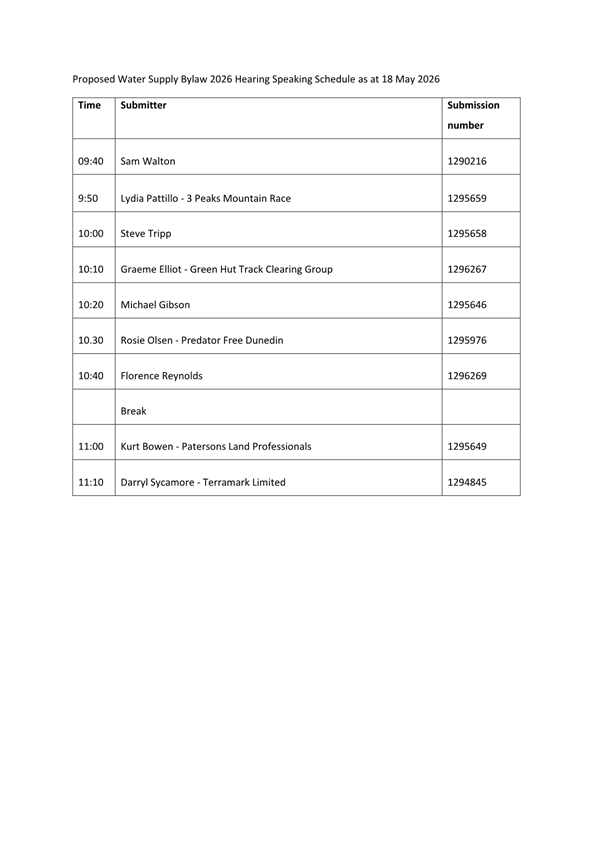
submitters indicated they wished to be heard.
RECOMMENDATIONS
That the Committee:
a) Decides whether to
accept four late submissions.
b) Considers the
submissions and associated staff analysis and recommendations and deliberates
on the amendments to the proposed Water Supply Bylaw 2026 requested by
submitters both in written submissions and during the hearing.
c) Makes recommendations
to the Council on amendments to the proposed Water Supply Bylaw 2026.
BACKGROUND
The Dunedin City Council (DCC) Water Supply System
8 The
DCC water supply serves over 45,000 properties, and comprises around 210 km2
of catchment area, 21 consented water abstraction points, 9 water supply dams,
62 treated water reservoirs, over 1,700km of pipeline, 21 pumping stations and
6 water treatment plants. It is important that the Council manages use of the
DCC water supply network to protect public health and safety and to manage the network
efficiently.
9 The
DCC’s activities as a drinking water supplier are directed by and
regulated under national-level legislation and regulations, including the Local
Government (Water Services) Act 2025 (LGWSA), the Water Services Act 2021, the
Water Services (Drinking Water Standards for New Zealand) Regulations 2022 and
the Drinking Water Quality Assurance Rules 2022 (revised 2024).
10 The DCC and
other council water service providers across New Zealand use bylaws to set
local rules to regulate use of their water supply networks by customers and the
general public. This is to protect the networks themselves, to protect the
health and safety of those who use the networks, and to support councils to
take the necessary actions to fulfil their duties and obligations under
national-level legislation and regulations. DCC’s most recent bylaw
regulating water supply is the Water Bylaw 2011; that was made under the former
bylaw-making powers in the Local Government Act 2002. The Council must
now use the LGWSA to make water supply bylaws.
Proposed
Water Supply Bylaw 2026: background and purpose
11 A water
supply bylaw enables a territorial authority to establish and enforce rules and
requirements to protect the water supply network against damage, misuse,
interference, or contamination that can pose a risk to public health and safety.
12 The DCC and
other territorial authorities in New Zealand use bylaws to manage use of their
individual water supply networks. Under the present law, a bylaw is the
most feasible way to efficiently and effectively manage the use of the water
supply network.
13 Dunedin’s
existing local rules for managing the use of the DCC water supply network have
been in place for many years and need updating to:
a) Align
with the provisions of the LGWSA and the Water Services Act 2021 (and
associated standards and compliance rules);
b) Improve
clarity regarding water supply areas, control of catchment land, layout and
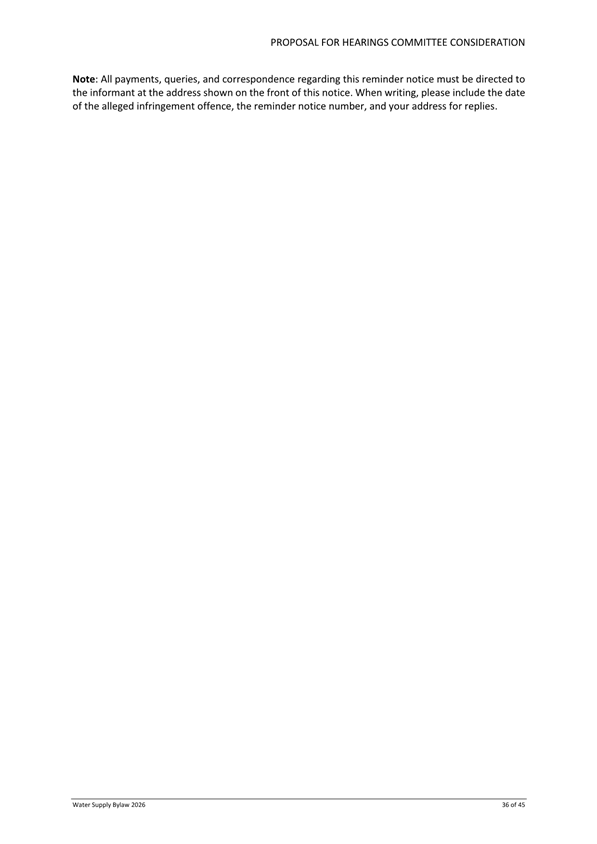
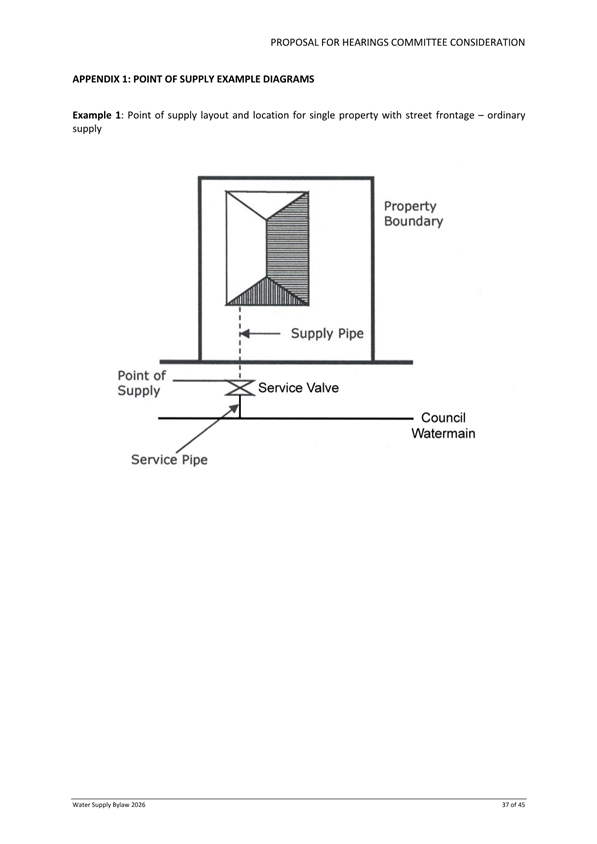
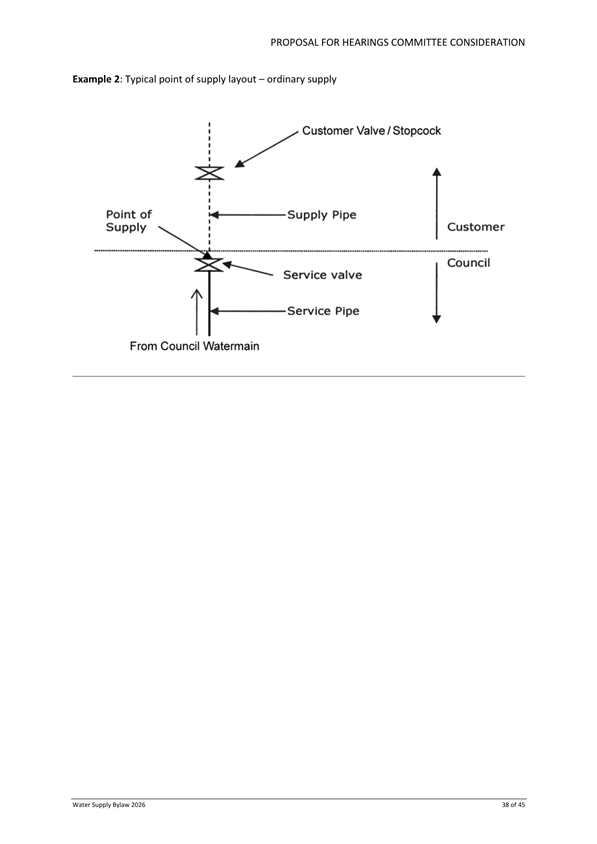
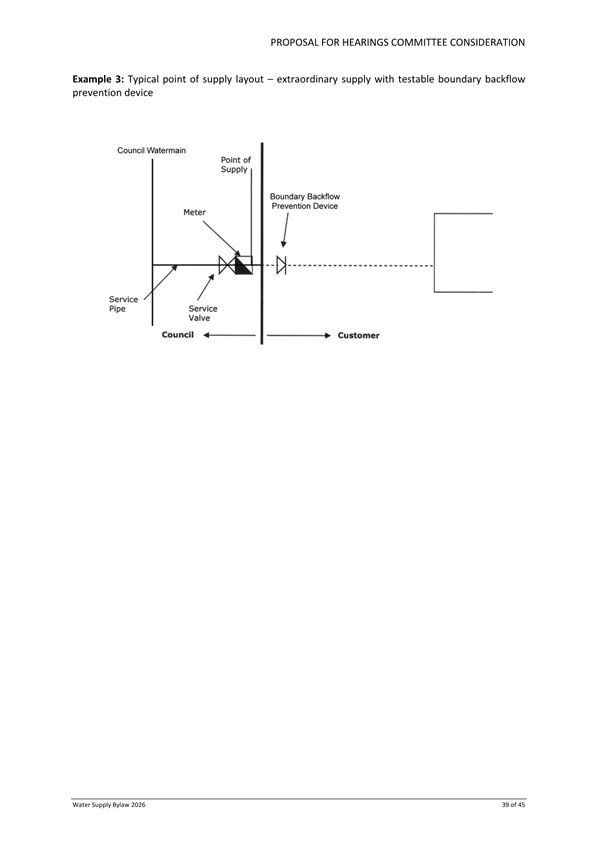
location of points of supply, meter, boundary backflow prevention requirements
and compliance enforcement.
Consultation
on the proposed Water Supply Bylaw
14 At its 24
February 2026 meeting Council approved a Statement of Proposal and draft
proposed Water Supply Bylaw 2026 for public consultation purposes.
15 Public
consultation followed for one month, beginning on 2 March 2026 and closing on 2
April 2026. Methods to inform the public about the proposal and the opportunity
to make submissions included information on the DCC website, information on the
DCC Public Noticeboard published in the Otago Daily Times on two
occasions, inclusion in DCC’s Building Services March newsletter Reinforce,
and targeted emails to a range of partners and stakeholders including
representatives of the development and construction community. Paper copies of
the Statement of Proposal and the proposed Bylaw were also made available in
all DCC libraries and service centres. The Otago Daily Times and Star
newspapers also published stories about the proposed Bylaw and the consultation
in February and March. There was also a social media post on a community
noticeboard.
16 The public
could submit on the proposed Bylaw via an online form on the DCC’s
website, or via email. The online form asked whether submitters supported the
proposed Bylaw, supported but with amendments, opposed or were neutral. The
consultation documents available included the Statement of Proposal, and a full
text draft of the proposed Water Supply Bylaw 2026.
17 Throughout
this consultation period 22 submissions were received in total comprised of:
· 18
submissions were received during the consultation period;
· Four
late submissions were received;
· Two
submissions were from other DCC departments and subsequently have been
withdrawn (and therefore these are not included in Attachment A);
· None
of the submissions support the proposed Bylaw without any changes; nine support
the proposed Bylaw with amendments, three do not support the proposed Bylaw,
and seven did not specify any support action;
· Nine
submitters wanted to be heard;
· 12
submissions were received via the online form. Ten submissions were received
via email.
18 Two of the
four late submissions that were received after the closing date of 2 April 2026
stated that they were not made sufficiently aware of the proposed Water Supply
Bylaw 2026 or its consultation.
19 During the
analysis of the submissions, staff identified between the proposed Water Supply Bylaw 2026, and the
current access arrangements/DCC’s Reserves and Beaches Bylaw 2017, with
regard to the management of hunting and trapping in the water supply
catchments. The proposed Water Supply Bylaw as drafted and consulted on
referred to both “restricted” and “open catchments”
being unrestricted for the purposes of hunting and trapping. However, both the
current arrangements in the catchments and the Reserves and Beaches Bylaw 2017,
which also applies to water catchment land, makes hunting and trapping by
permission only.
20 To ensure a
transparent and fair process, consultation was reopened to allow an opportunity
for feedback on these specific amendments prior to the submissions hearing, in
accordance with section 83(3) of the Local Government Act 2002.
Given the proposed amendment only related to two clauses in the proposed Bylaw,
the reopened consultation was for a short period of time and was made clear to
the public that only submissions regarding changes to clauses 4.12 and 4.13
would be accepted. The proposed amendments that were consulted on were as
follows:
· Remove
‘hunting’ and ‘trapping’ from clause 4.12
(‘restricted’ catchments);
· Expand
clause 4.13 (‘open’ catchments) to make clear that DCC approval is
required for the purposes of hunting and trapping in open catchments.
21 The
additional consultation ran from 29 April 2026 and closed on 10 May 2026.
Methods to inform the public included information on the DCC website, social
media posts, an email to all 18 initial submitters (plus four late submitters),
and an email to groups identified as representing the interests of hunters and
trappers in Otago. Once again, submitters were able to provide their written
feedback via an online form, email, post or hand delivery. Submitters were
asked to indicate whether they supported, supported with amendments, or opposed
the proposed amendments to clauses 4.12 and 4.13.
22 Five
submissions were received regarding the proposed amendment to clauses 4.12 and
4.13 relating to access for hunting and trapping during the additional
consultation period. Four of these submissions opposed the amendment and
one was neutral. Three submissions were via the online form and two submissions
were via email. The consultation documents made available included consultation
material for the dates of 29 April – 10 May 2026 and proposed wording
amendments to clauses 4.12 and 4.13.
DISCUSSION
23 A summary
of the key points from all submissions along with staff analysis and
recommended changes to the proposed Water Supply Bylaw 2026 are in the table in
Attachment A. A marked-up version of the proposed Water Supply Bylaw 2026
showing all recommendations (with strikethrough and underline) is Attachment B.
24 Submission
topics, with key issues of concern relate to:
· Section
4 of the proposed Bylaw – Protection of the Water Supply Network –
in particular water supply catchment management rules. Access
arrangements and types of activities permitted in both Deep Stream and
Silverstream catchments were raised. Changes to address submission points are
recommended along with detailed analysis in Attachment A.
· Section
5 of the proposed Bylaw – Conditions of Supply – in particular:
· Water
supply area boundaries – submissions queried the water supply area
boundary and asked if any formal process is to be included for properties
outside the boundary. No changes to the bylaw are recommended in relation to
this topic. For analysis, please see Attachment A.
· Application
for supply – submissions questioned the three-step application process
that is based on new legislative requirements. No changes to the bylaw are
recommended in relation to this topic. For analysis, please see Attachment A.
· Point
of supply/Types of supply – submissions were varied across these
sections. Some minor changes are recommended to the proposed Bylaw. For
analysis and recommendations please see Attachment A.
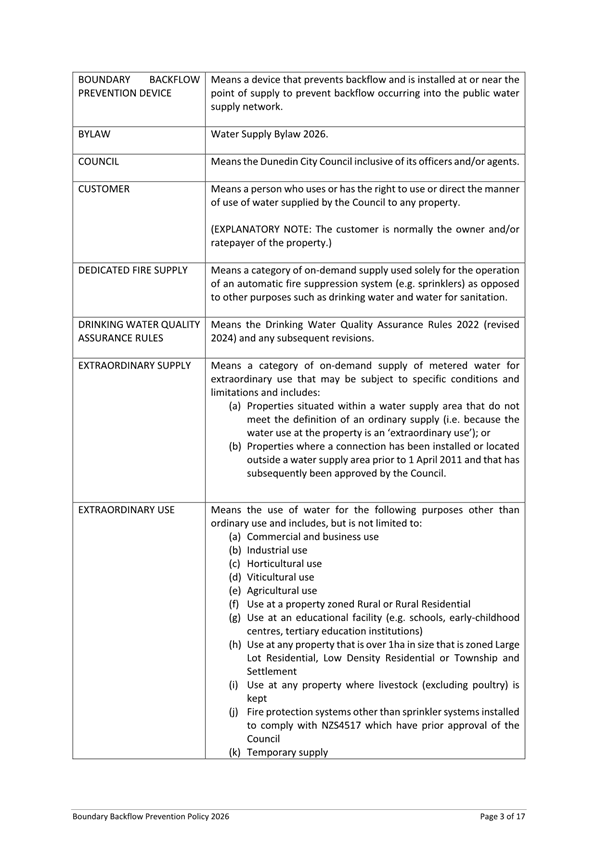
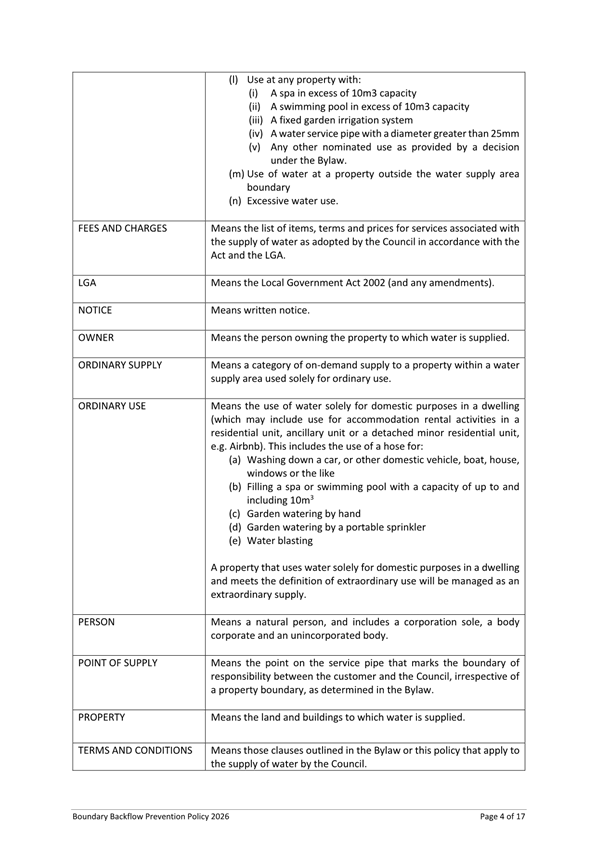
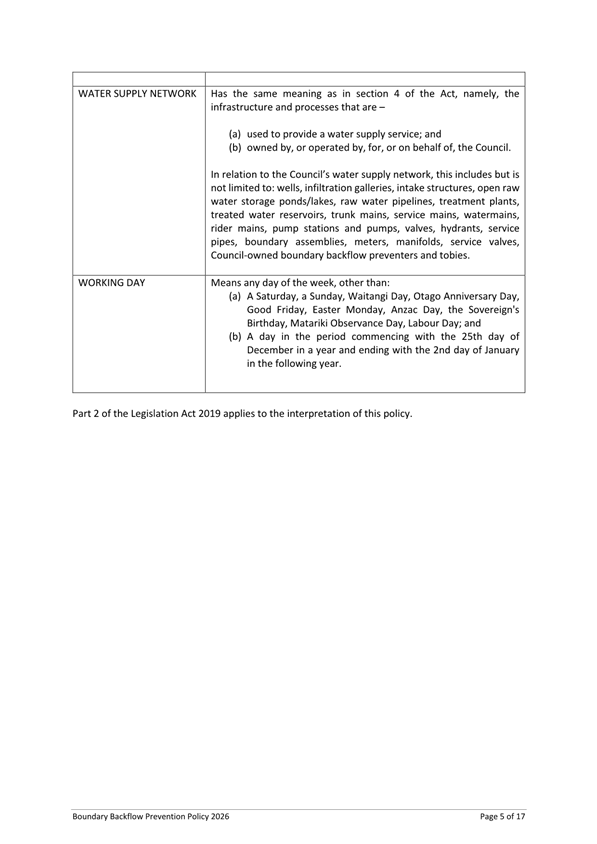
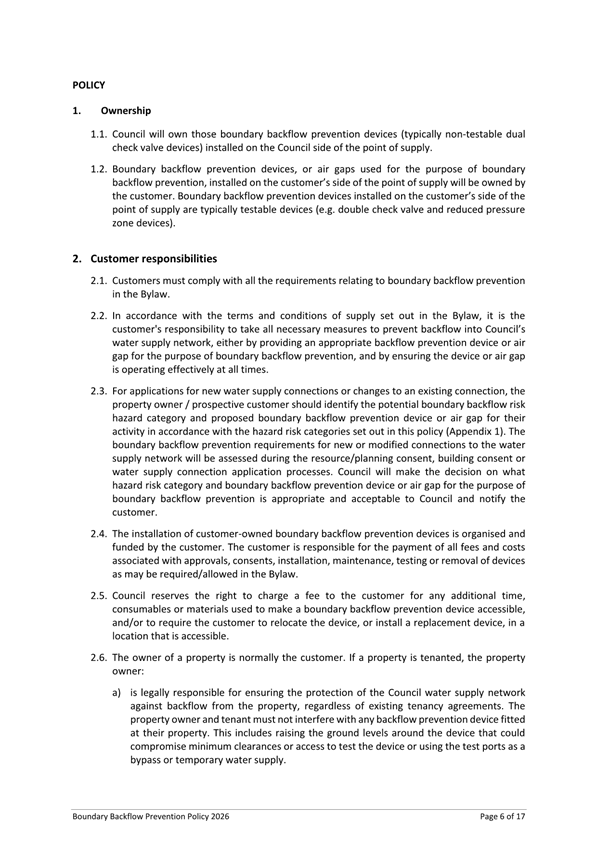
· Boundary
backflow prevention rules – submitters questioned some matters relating
to boundary backflow prevention rules resulting in recommended changes to the
proposed Bylaw. Please see Attachment A for analysis and recommendations. The
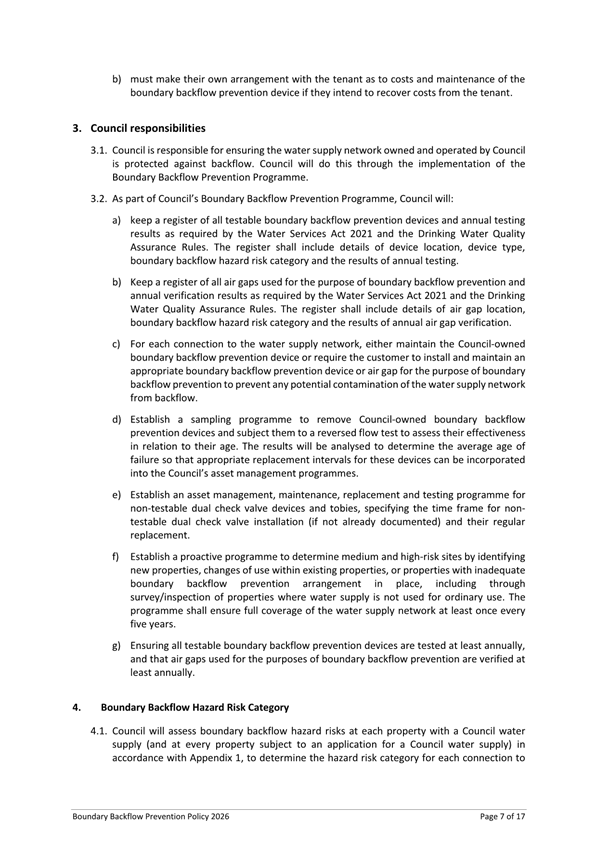
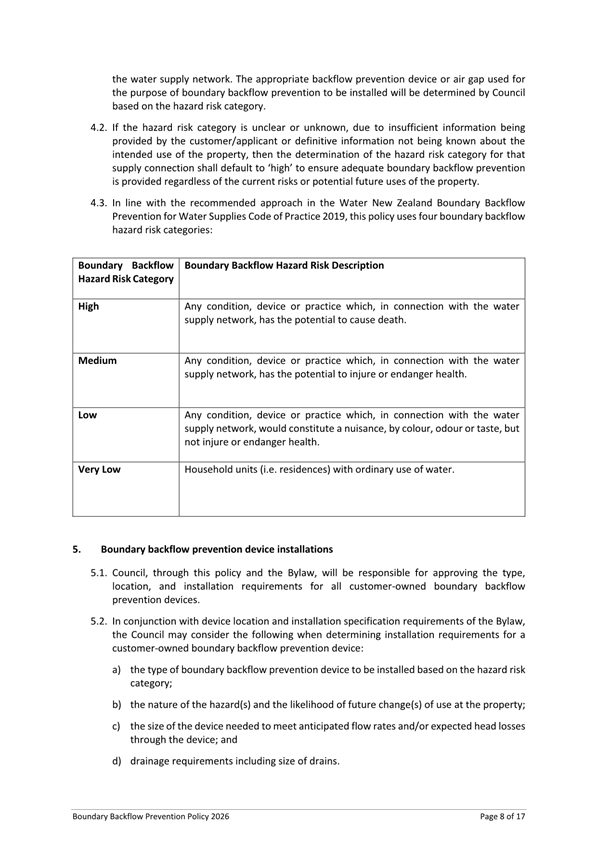
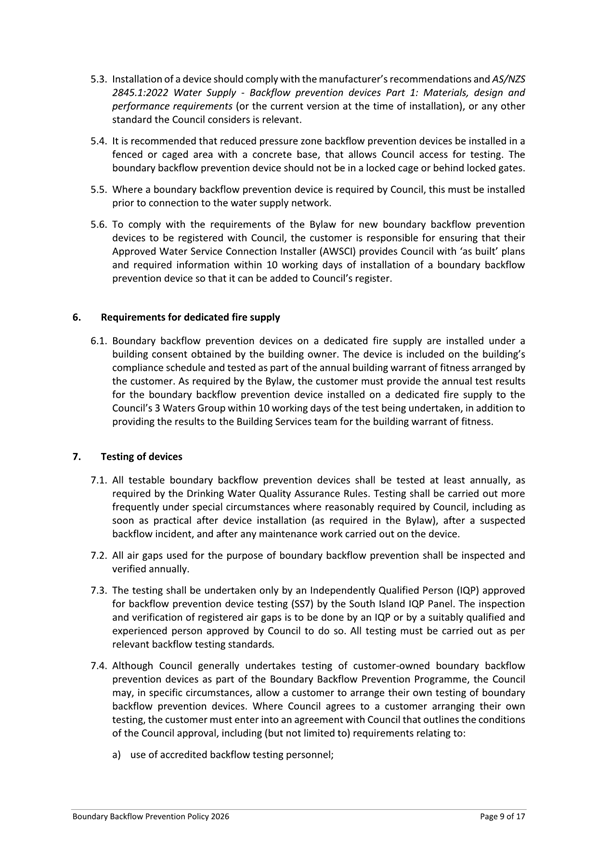
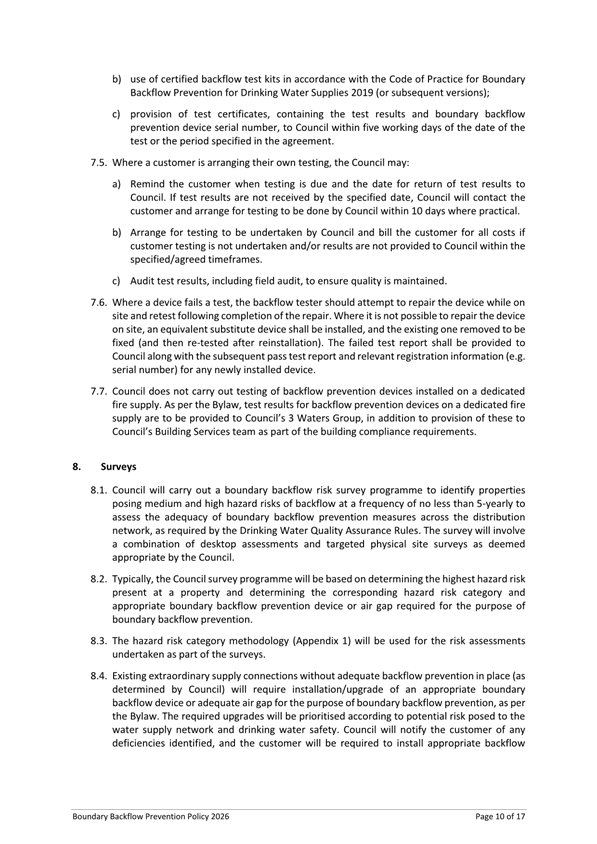
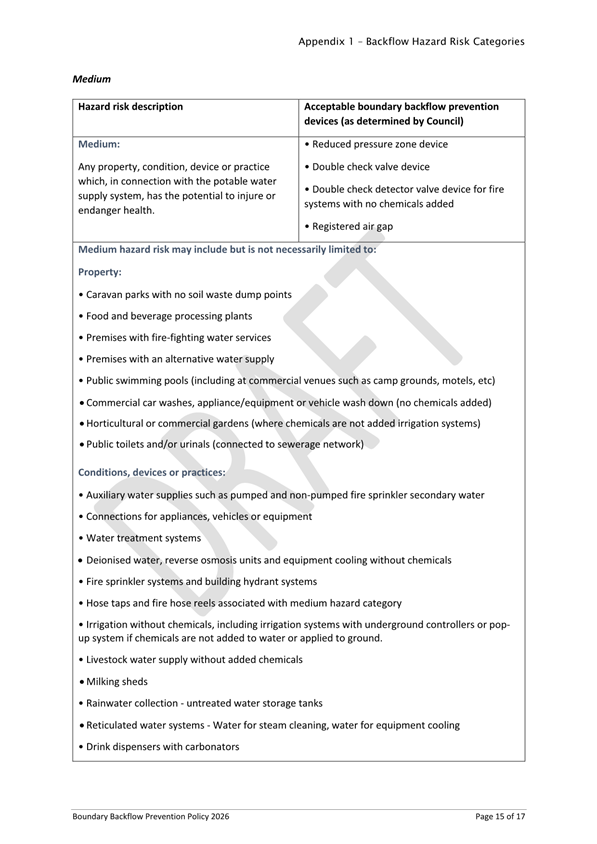
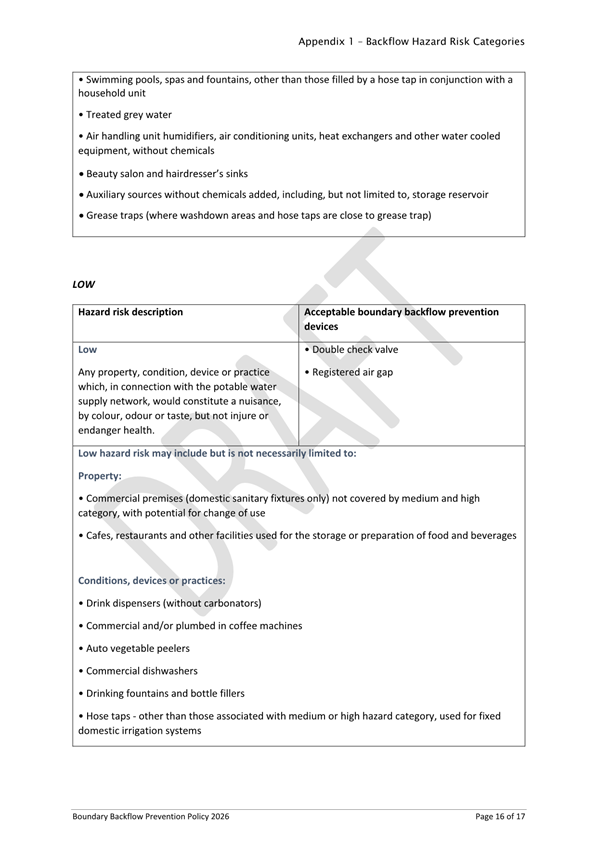
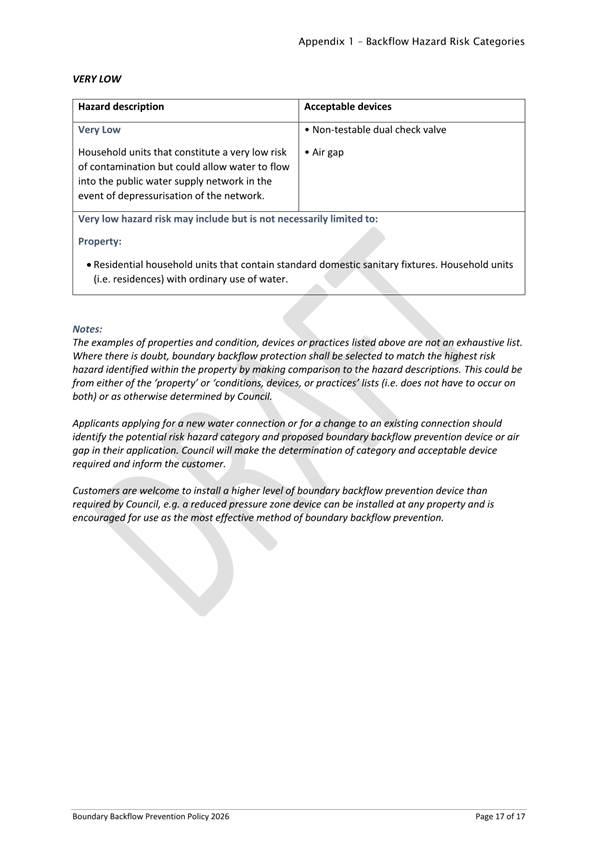
Boundary Backflow Prevention Policy is also attached for reference and
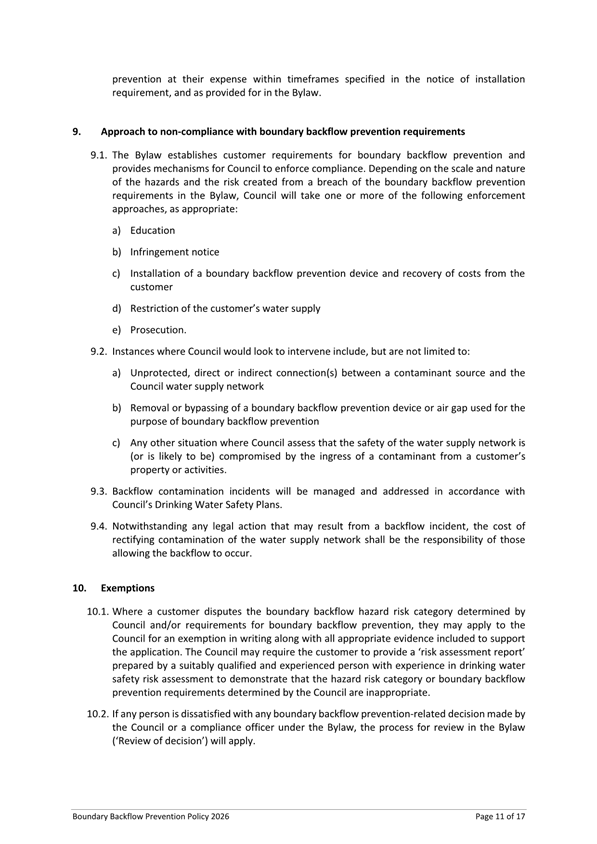
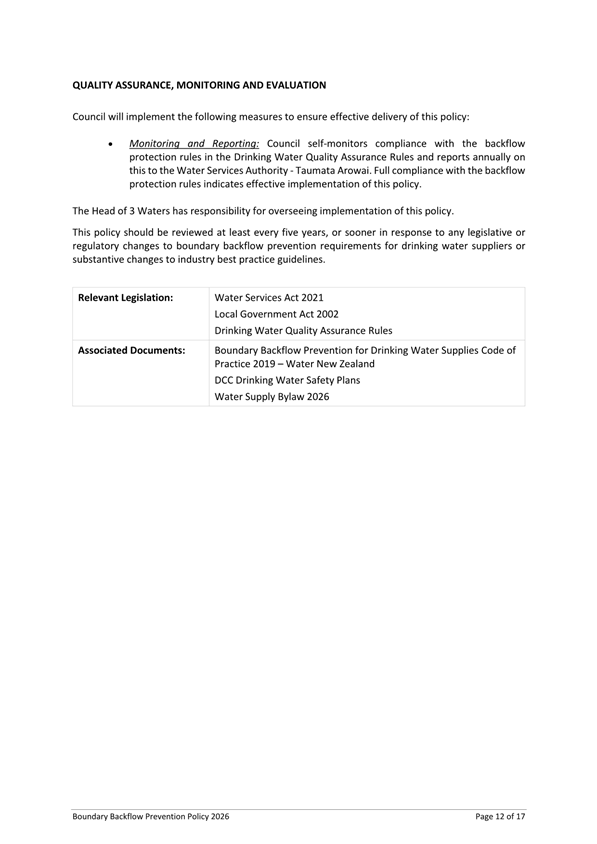
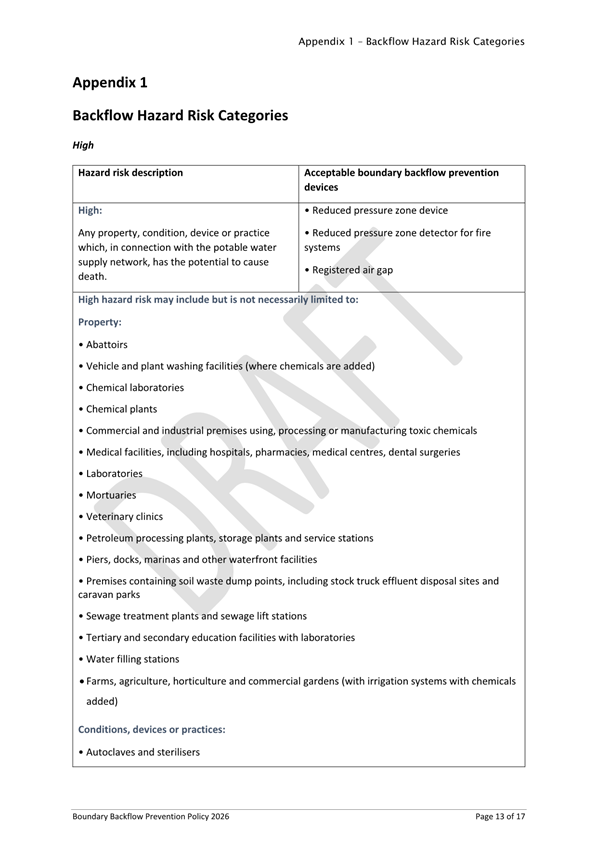
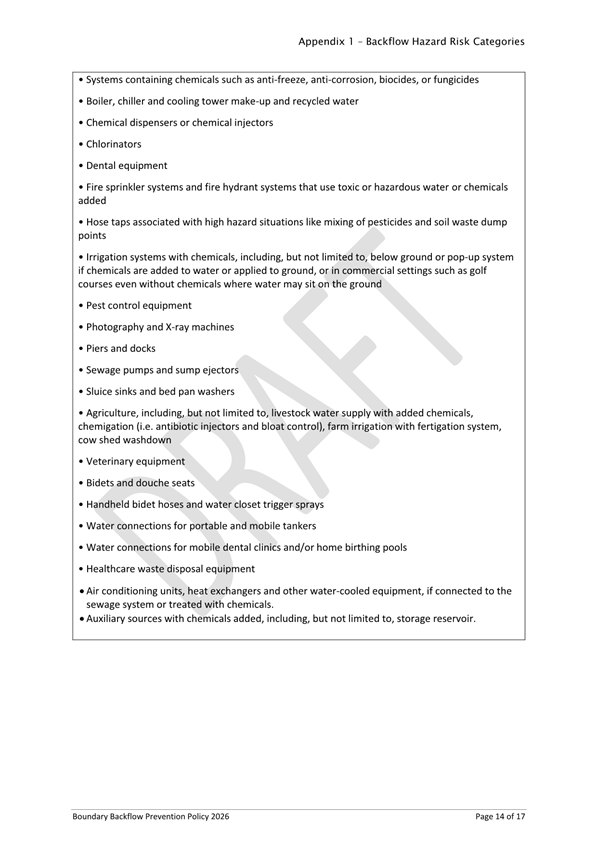
information at Attachment C.
Out of Scope
Submission Matters
25 Submissions
raised regarding the water Bylaw 2011 were assessed as out of scope and were
not considered further.
OPTIONS
Option One – Proceed to make recommendations to the
Council based on proposed amendments in this report.
26 The Hearings
Committee may choose to make recommendations to the Council to address matters
raised by submitters based on the advice provided in this report. This would be
subject to any minor amendments the Committee determines are necessary in
response to matters raised by submitters at the hearing, or as agreed by the Committee
during deliberations.
Advantages
· A
recommendation to Council could be made promptly.
Disadvantages
· Does
not allow for further work on bylaw amendments.
Option Two – Request that staff provide further
advice and draft amendments to address additional matters raised in submissions
beyond what is recommended in this report.
27 Should the
Hearings Committee consider there are outstanding matters of concern raised by
submitters that are not satisfactorily addressed by advice provided in this
report, or during the hearing process, the Committee may request that staff
further evaluate those concerns and develop additional recommended responses.
Advantages
· Any
outstanding concerns will be considered.
Disadvantages
· May
delay a recommendation to Council.
NEXT STEPS
28 Next steps
are for the Hearings Committee to consider the written and verbal submissions
and the associated staff analysis and advice, and to determine its
recommendations to the Council on any amendments to the content of the proposed
Bylaw.
Signatories
|
Author:
|
Katherine Quill - Policy Analyst
|
|
Authoriser:
|
Scott Campbell - Regulation and Policy Team Leader
Jared Oliver - Planning Manager
David Ward - General Manager, 3 Waters, Property and Urban
Development
|
Attachments
|
|
Title
|
Page
|
|
⇩a
|
Summary of Submission
Table
|
15
|
|
⇩b
|
Proposed Marked-Up
Version Water Supply Bylaw 2026
|
31
|
|
⇩c
|
Boundary Backflow
Prevention Policy 2026
|
76
|
|
SUMMARY OF CONSIDERATIONS
|
|
Fit with purpose of Local Government
This decision enables democratic local
decision making and action by, and on behalf of communities.
|
|
Fit with strategic framework
|
|
Contributes
|
Detracts
|
Not applicable
|
|
Social Wellbeing Strategy
|
☐
|
☐
|
✔
|
|
Economic Development Strategy
|
☐
|
☐
|
✔
|
|
Environment Strategy
|
☐
|
☐
|
✔
|
|
Arts and Culture Strategy
|
☐
|
☐
|
✔
|
|
3 Waters Strategy
|
✔
|
☐
|
☐
|
|
Future Development Strategy
|
☐
|
☐
|
✔
|
|
Integrated Transport Strategy
|
☐
|
☐
|
✔
|
|
Parks and Recreation Strategy
|
☐
|
☐
|
✔
|
|
Other strategic projects/policies/plans
|
☐
|
☐
|
✔
|
This report has been prepared with reference to
Dunedin’s strategic framework.
|
|
Māori Impact Statement
There are no specific impacts for Māori related to this
report and the decisions sought. Aukaha were advised of the public
consultation process. No submissions from Aukaha or rūnaka were
received.
|
|
Sustainability
The proposed Bylaw is intended to enable the DCC to manage
use of the water supply system in a manner that supports the long-term
sustainability of the water supply system and the environment.
|
|
LTP/Annual Plan / Financial Strategy /Infrastructure
Strategy
This report and the recommended decisions have no
immediate direct implications for these plans and strategies. However, the
proposed Bylaw is intended to enable the DCC to manage use of the water
supply system in a manner that supports the DCC to achieve the objectives set
out in these plans and strategies.
|
|
Financial considerations
There are no known
specific financial implications related to this report and
the recommended decisions. The costs of immediate implementation of the
proposed Bylaw (if subsequently adopted) can be met from existing budgets.
Additional funding (if required) for longer-term implementation activities
would be sought through budgets included in the first Water Services Strategy
in 2027.
|
|
Significance
This report and the recommended decisions have been
assessed as low significance in terms of the Council’s Significance and
Engagement Policy.
|
|
Engagement – external
It is noted these decisions are part of the Special
Consultative Procedure and result from external consultation being
undertaken.
|
|
Engagement - internal
3 Waters staff have engaged with other departments as part
of the analysis of submissions and formulation of staff recommendations.
|
|
Risks: Legal / Health and Safety etc.
There are no risks to this summary report for
consideration or the recommended amendments.
|
|
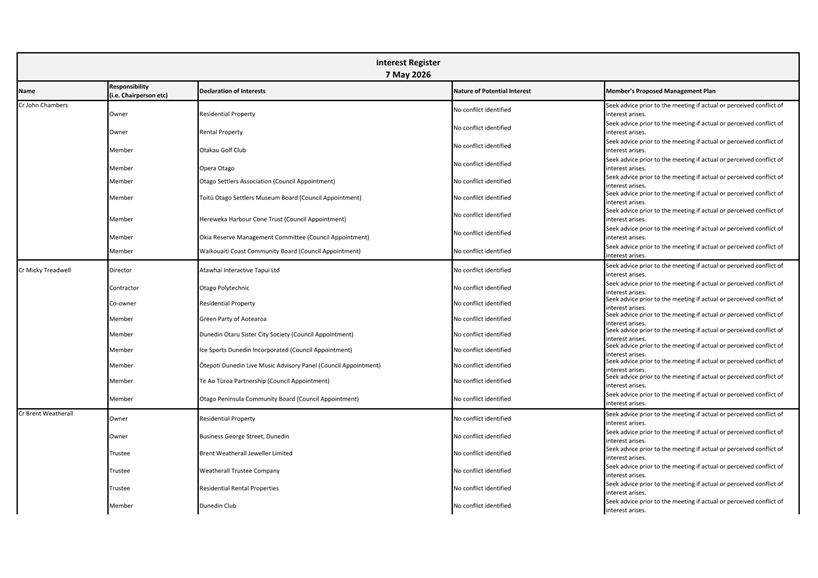
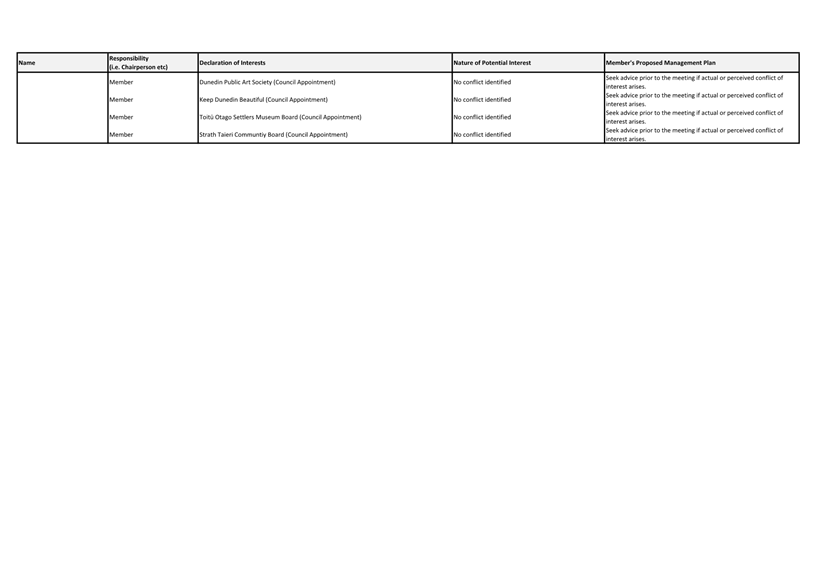
Conflict of Interest
No conflicts of interest have been identified as a result
of submissions or recommended amendments to the proposed Water Supply Bylaw
2026.
|
|
Community Boards
No implications for Community Boards have been identified
as a result of submissions or recommended amendments to the proposed Water
Supply Bylaw 2026.
|