Notice of Meeting:
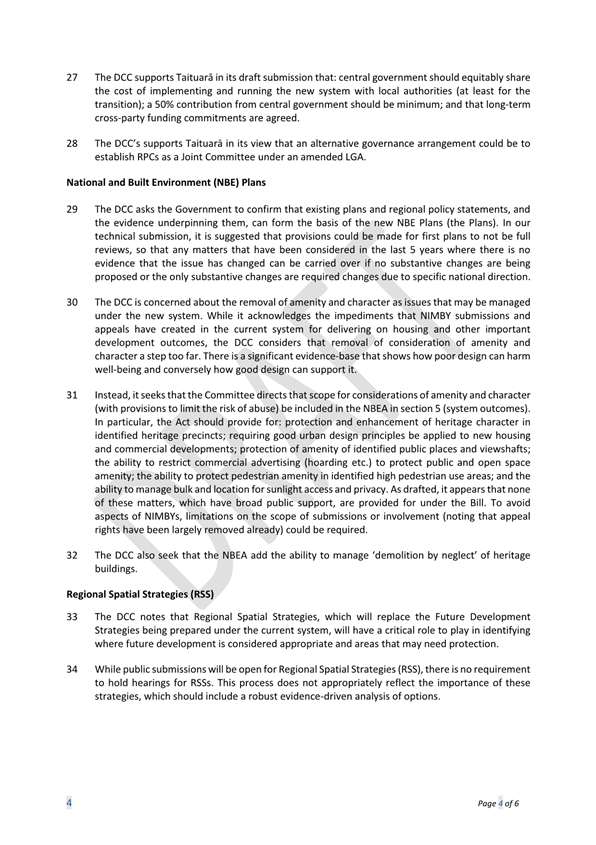
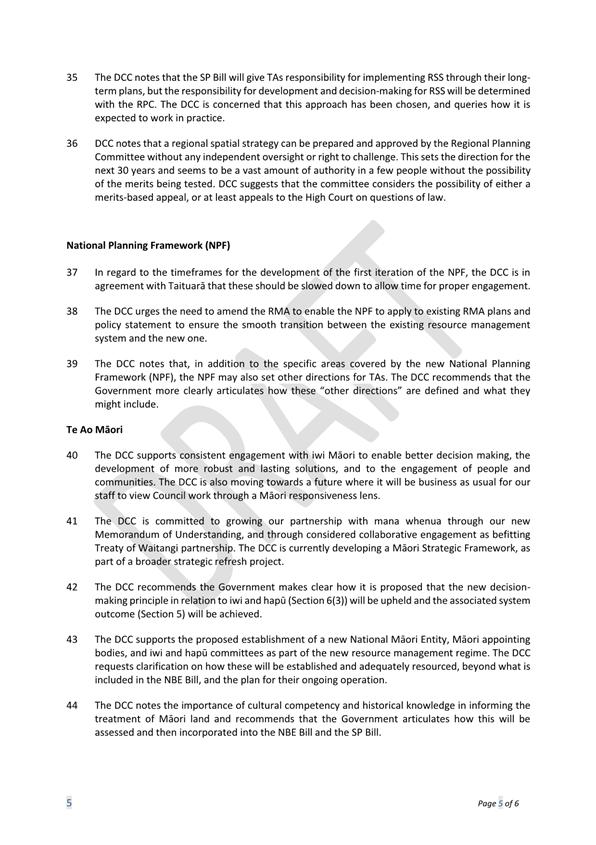
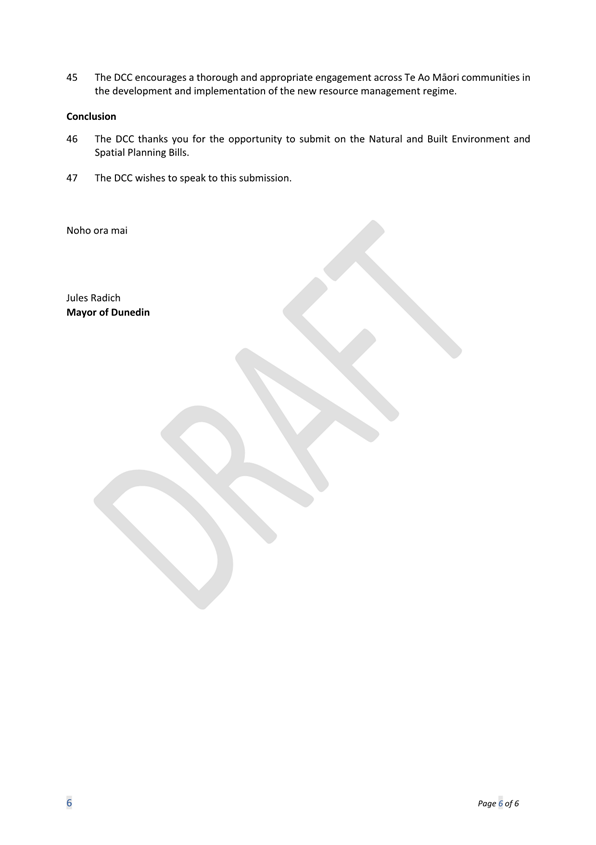
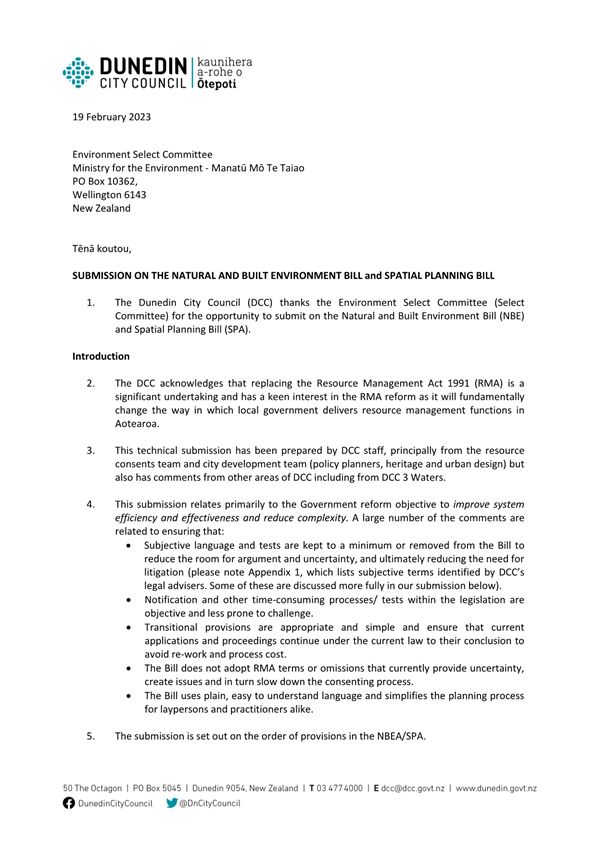
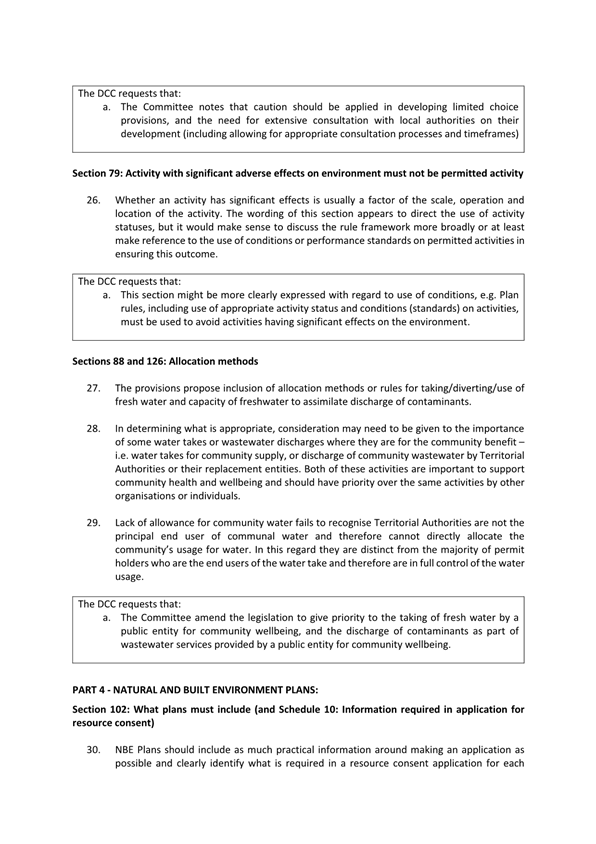
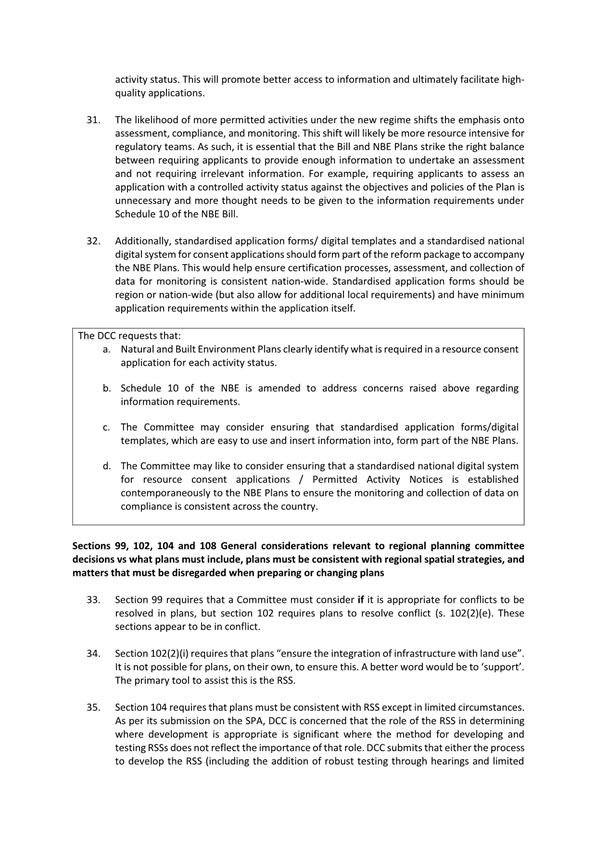
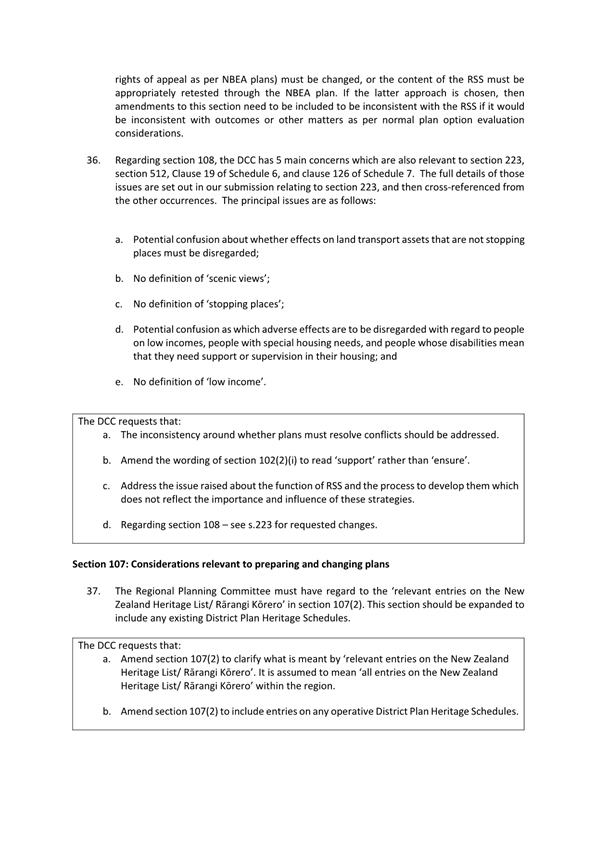
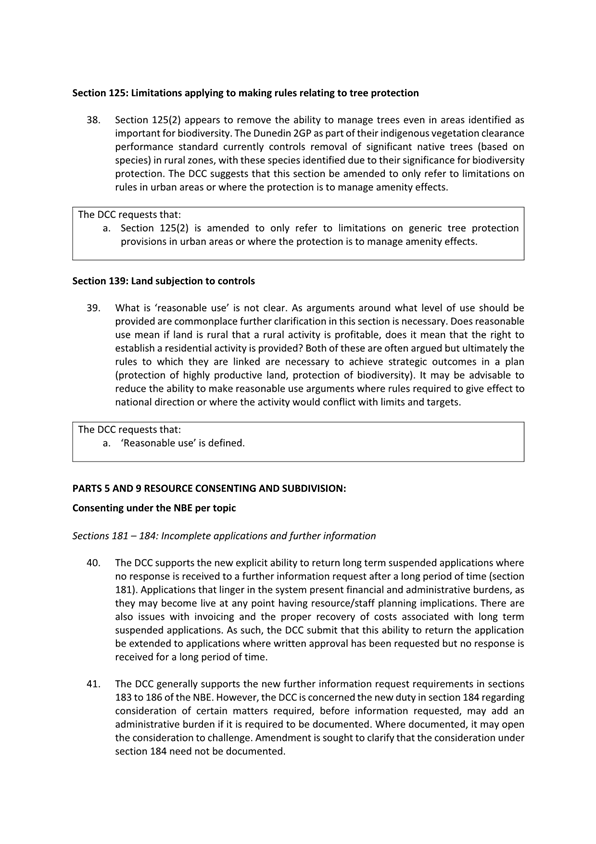
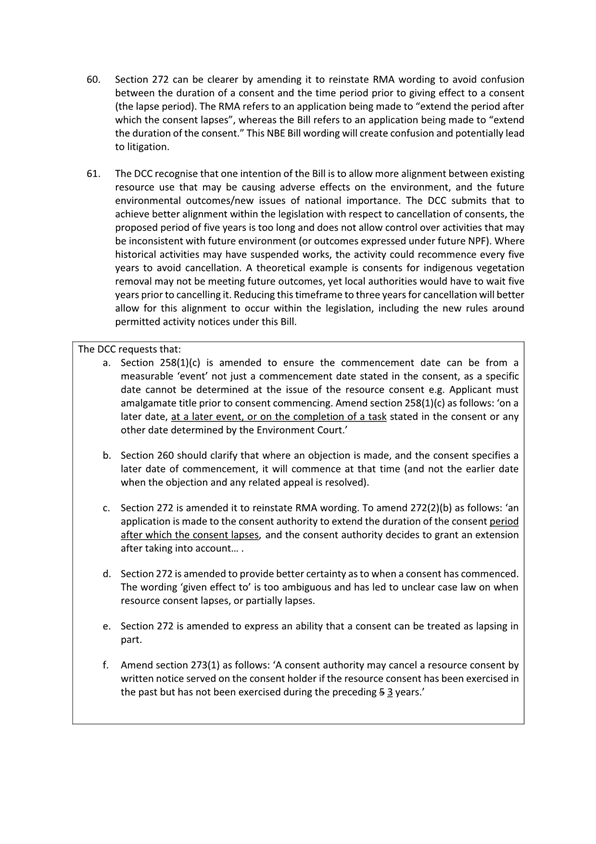
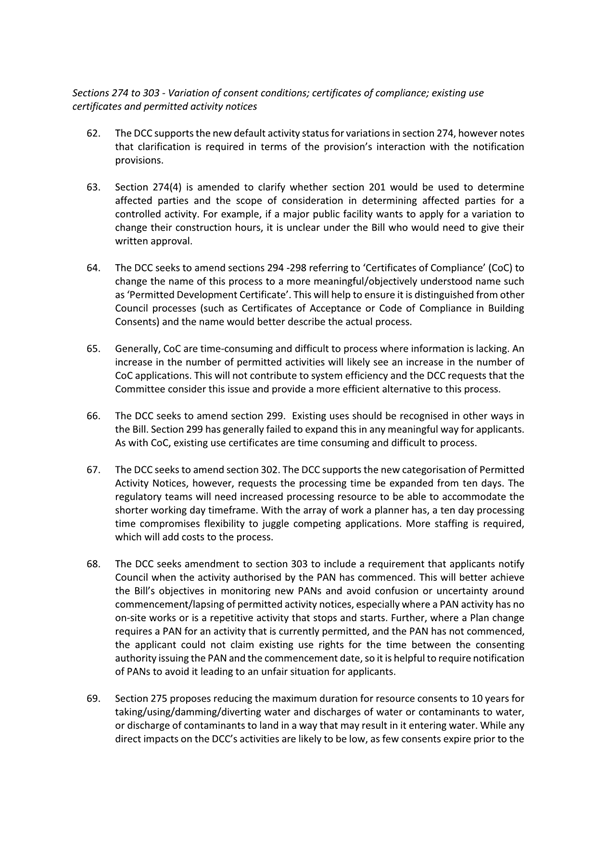
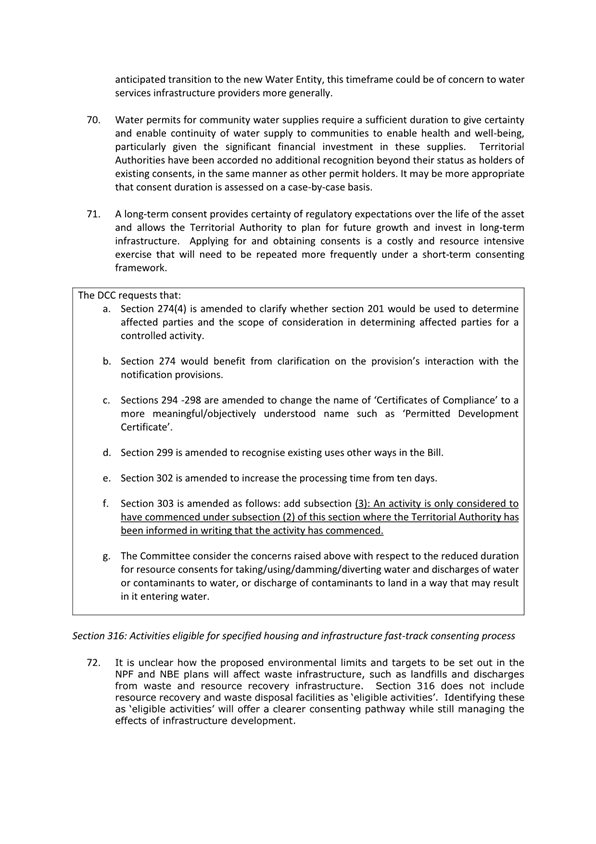
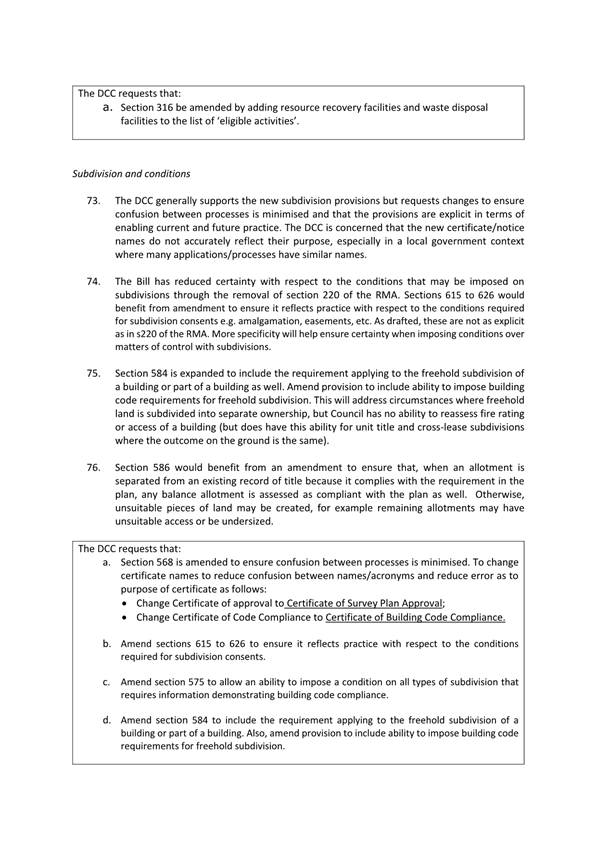
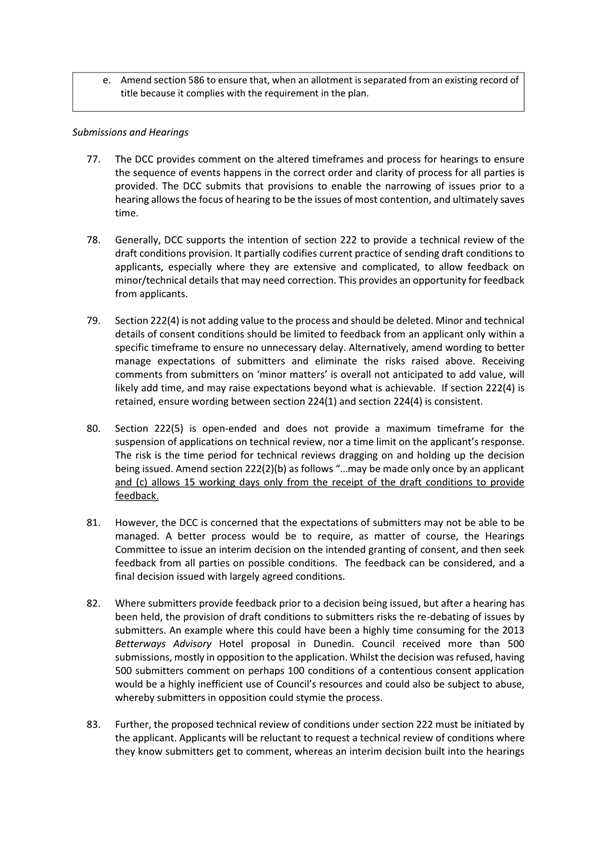
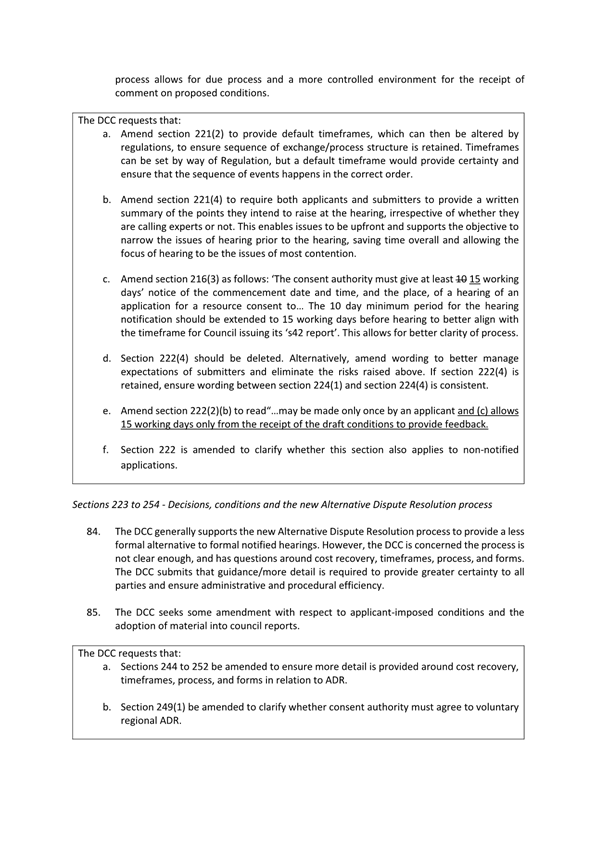
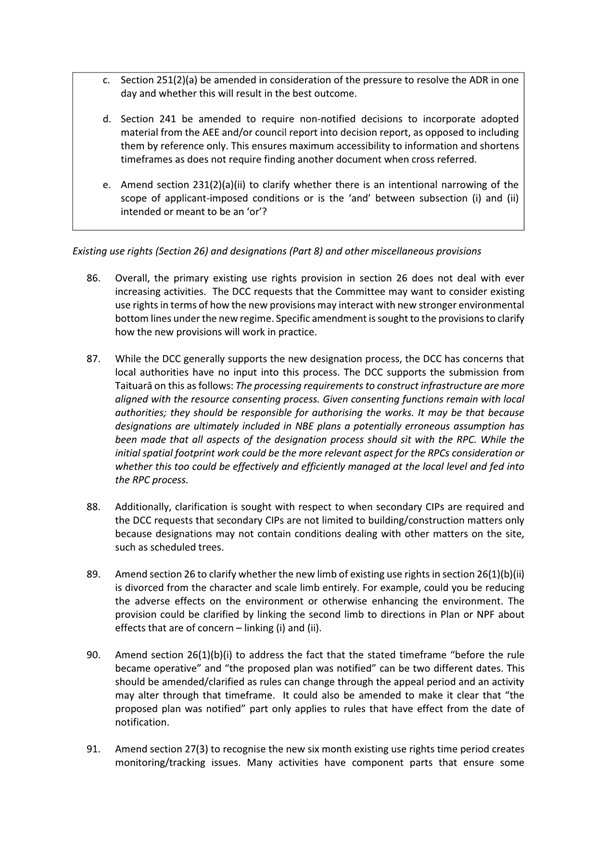
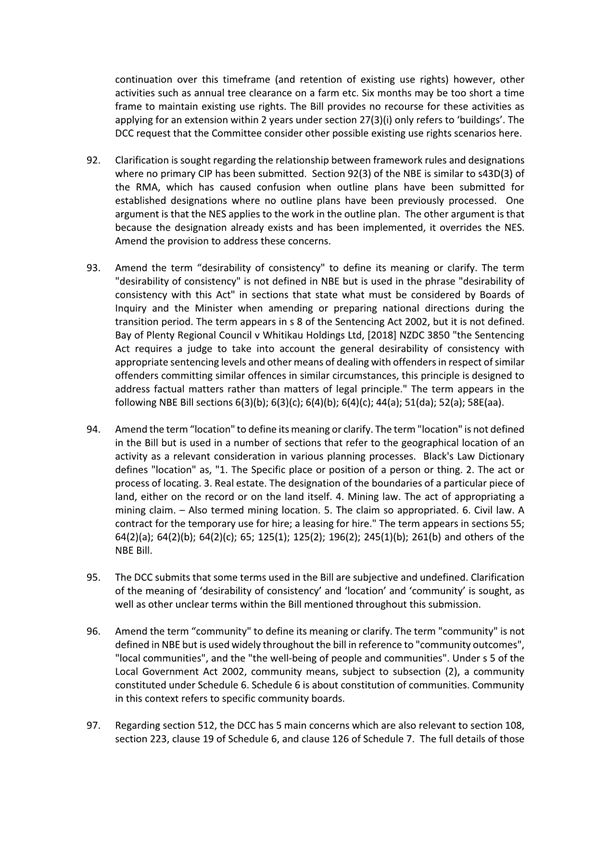
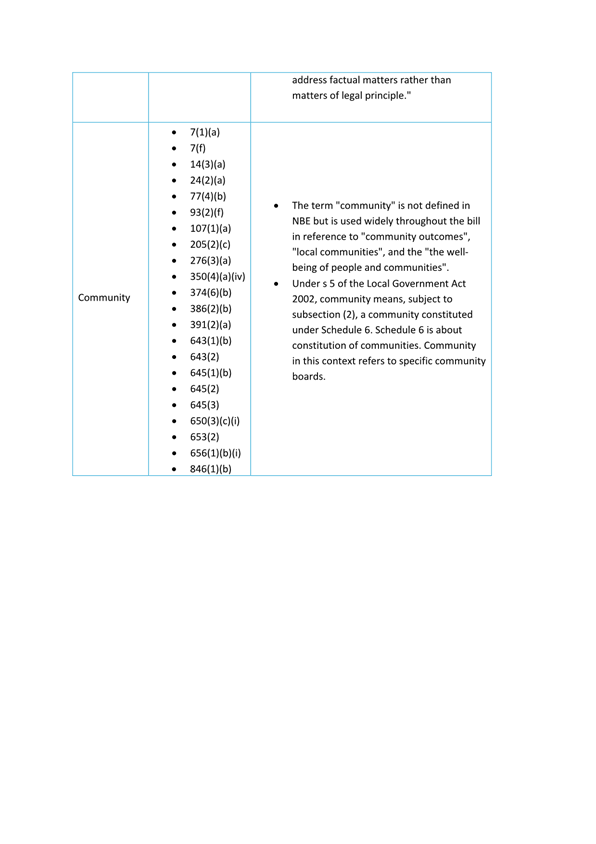
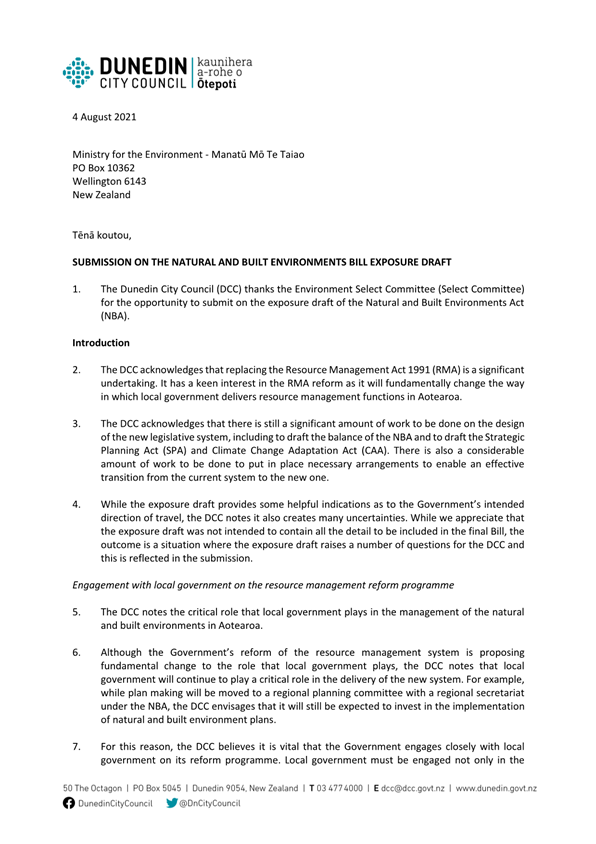
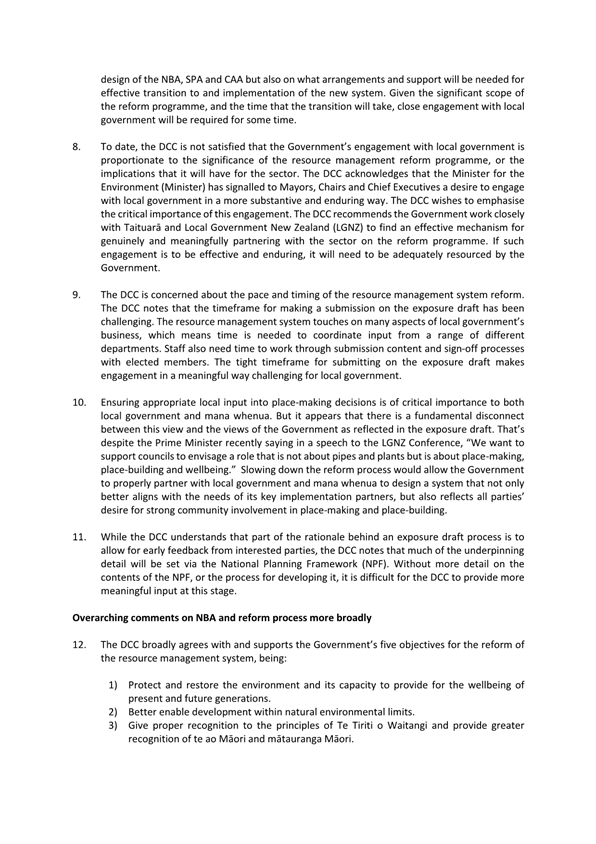
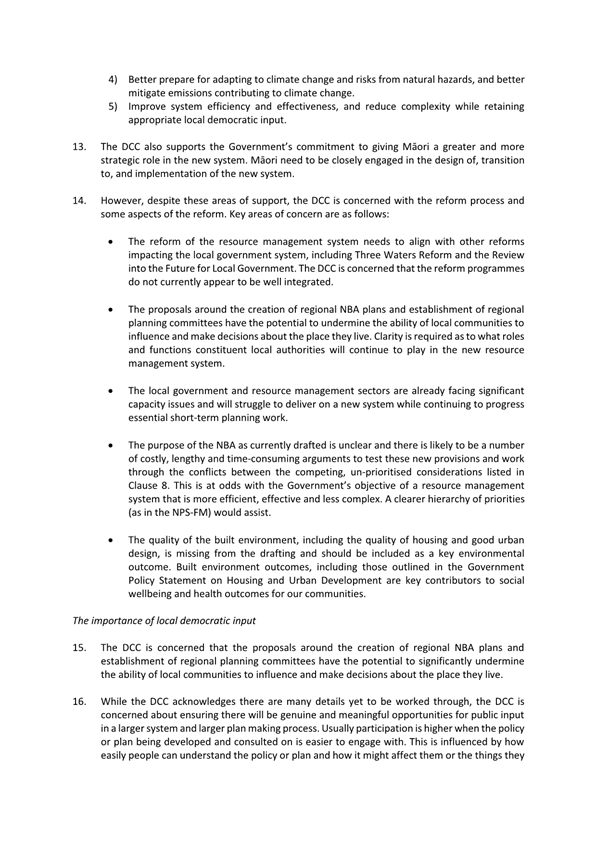
I hereby give notice that an ordinary meeting of the
Strategy & Engagement Committee will be held on:
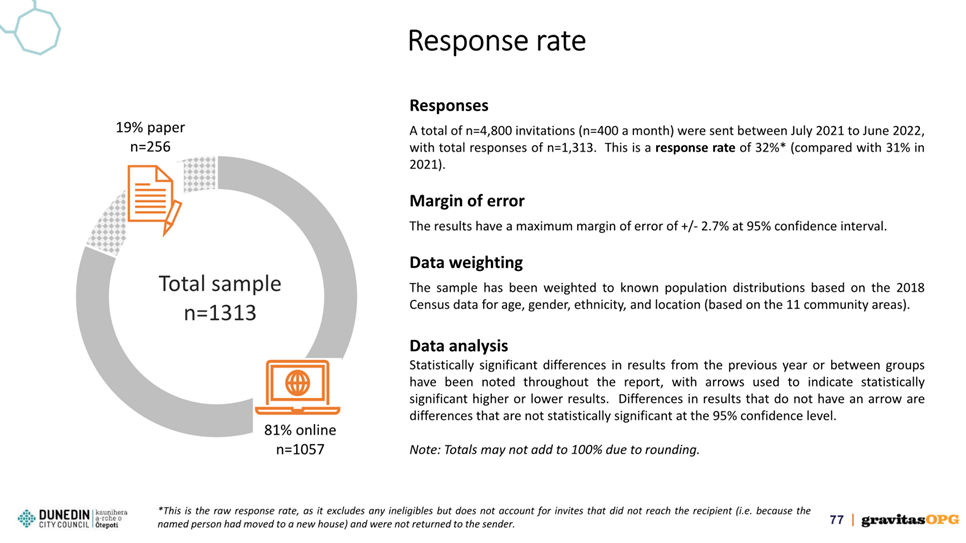
Date: Monday
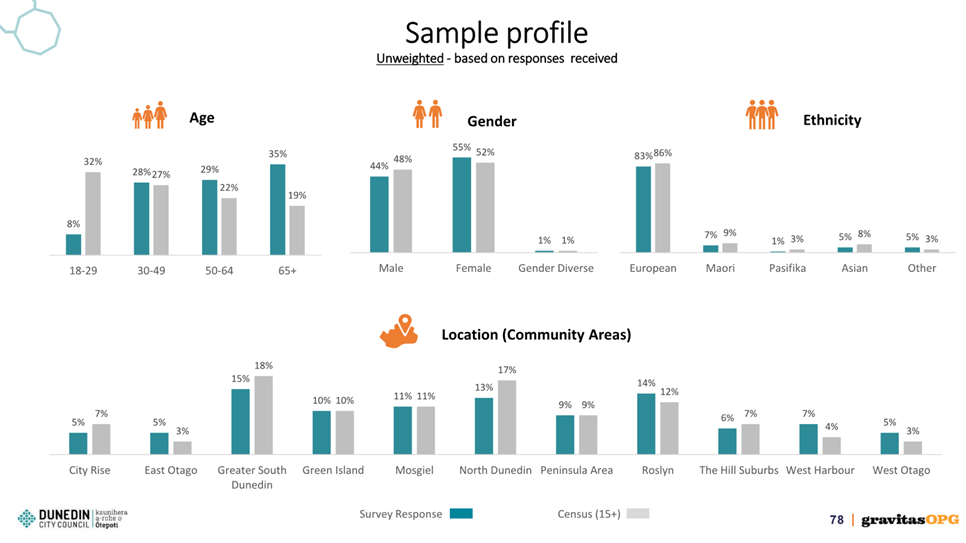
13 February 2023
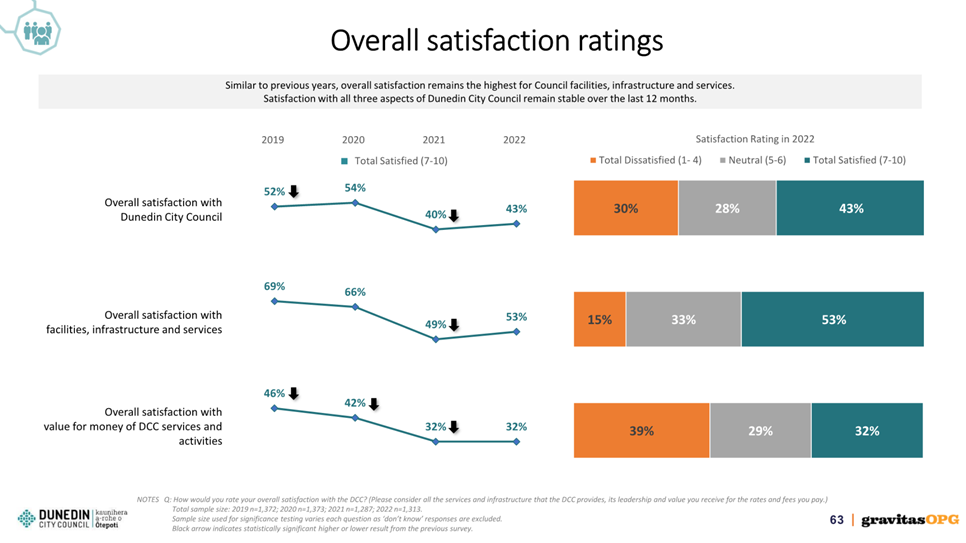
Time: 1.00
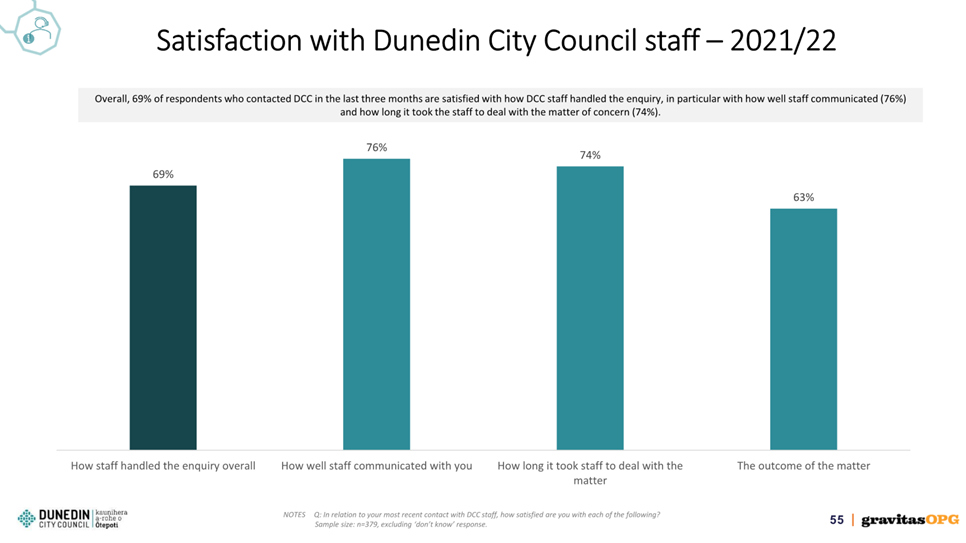
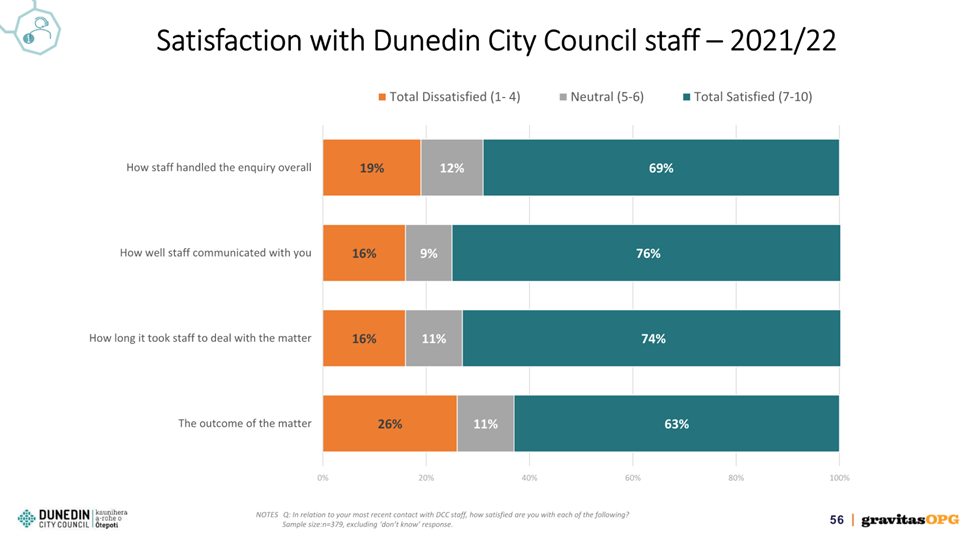
pm
Venue: Council
Chambers, Dunedin Public Art Gallery, The Octagon, Dunedin
Sandy Graham
Strategy, Planning & Engagement Committee
PUBLIC AGENDA
|
Chairperson
|
Cr Sophie Barker
|
|
|
Deputy Chairperson
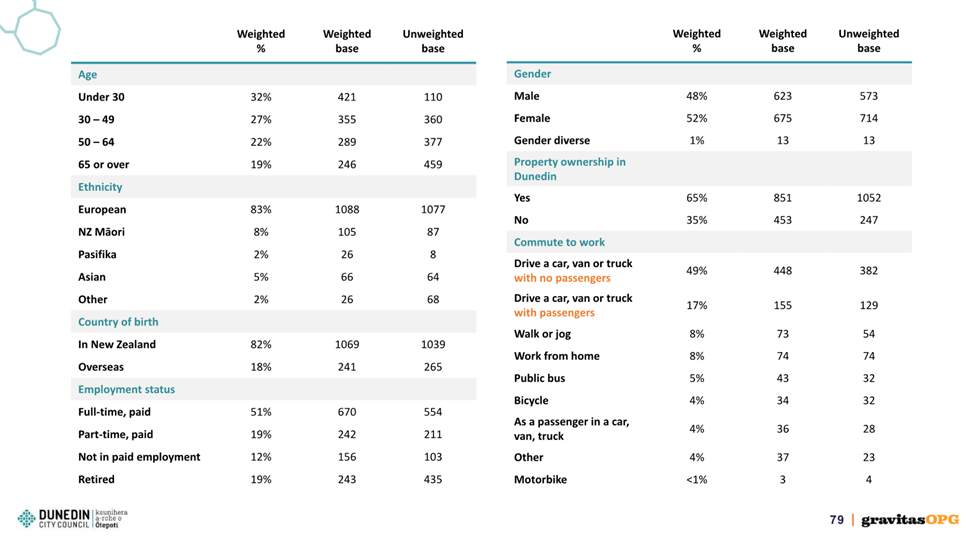
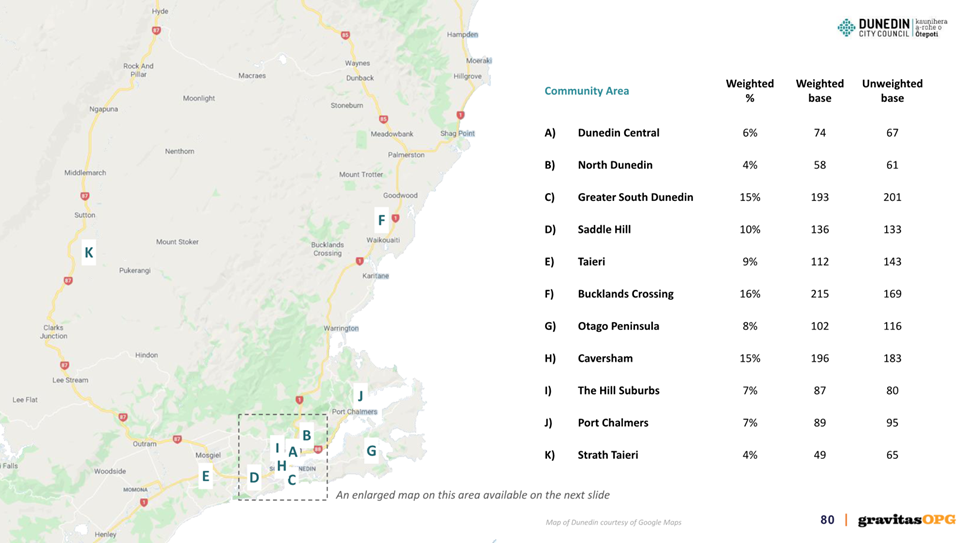
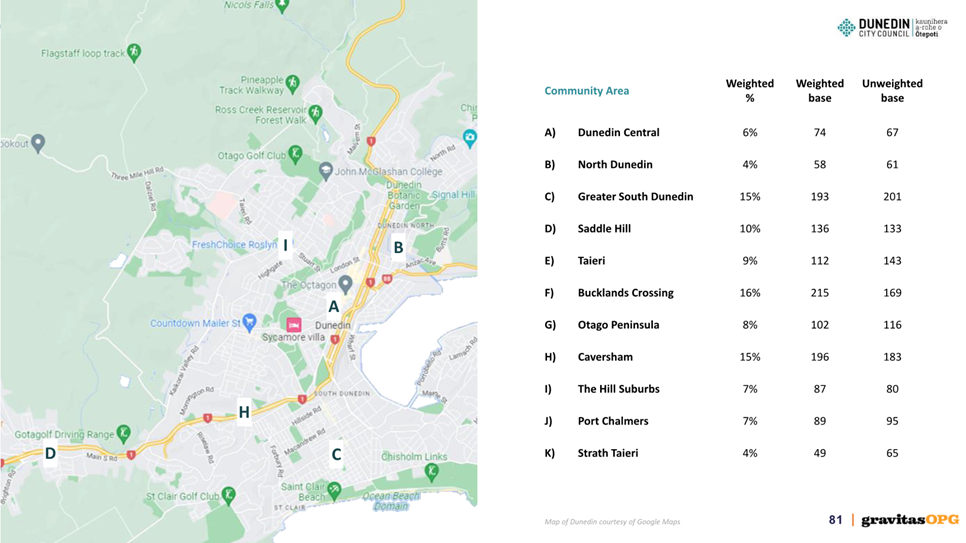
|
Cr Kevin Gilbert
|
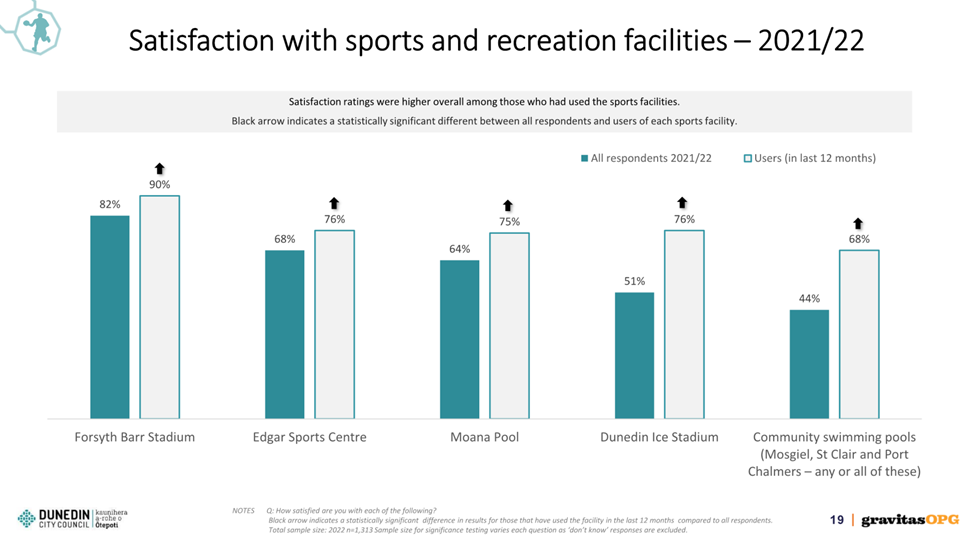
|
|
Members
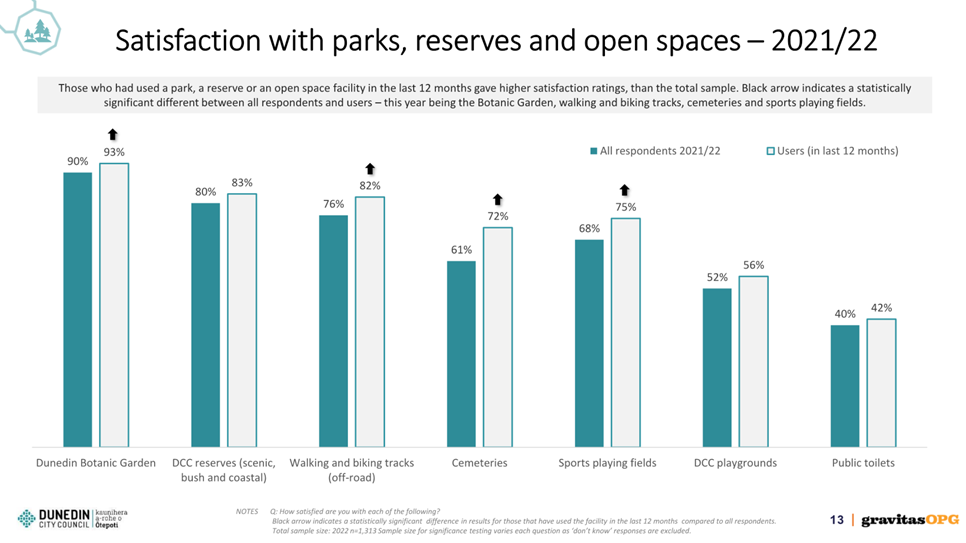
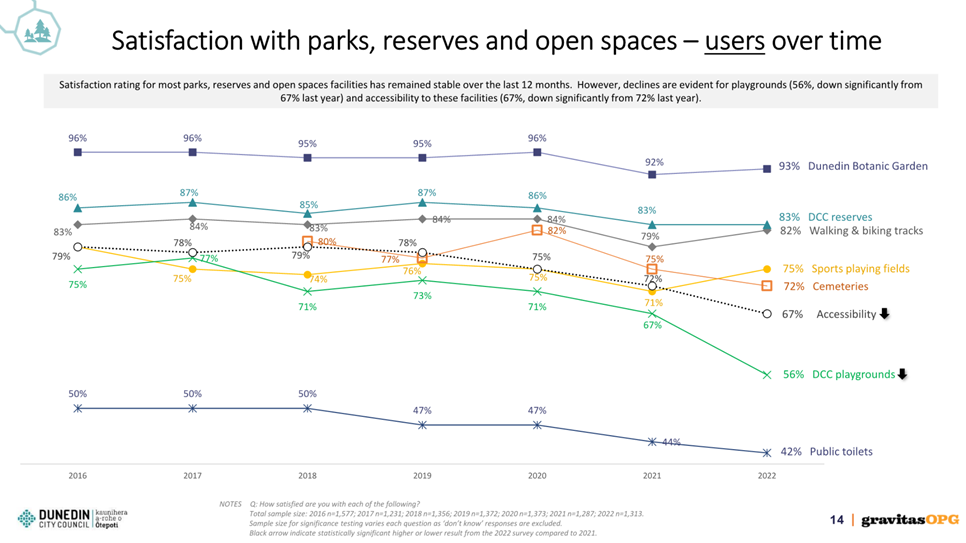
|
Cr Bill Acklin
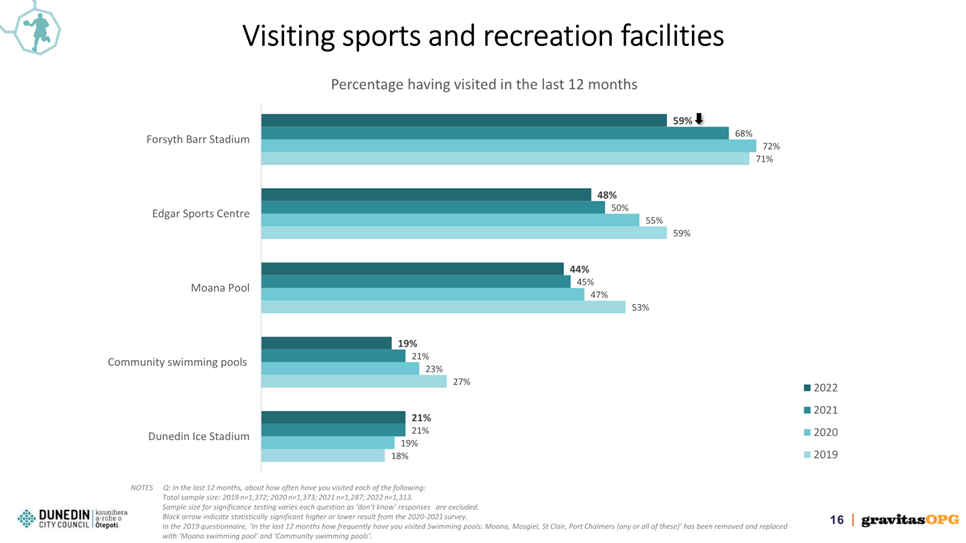
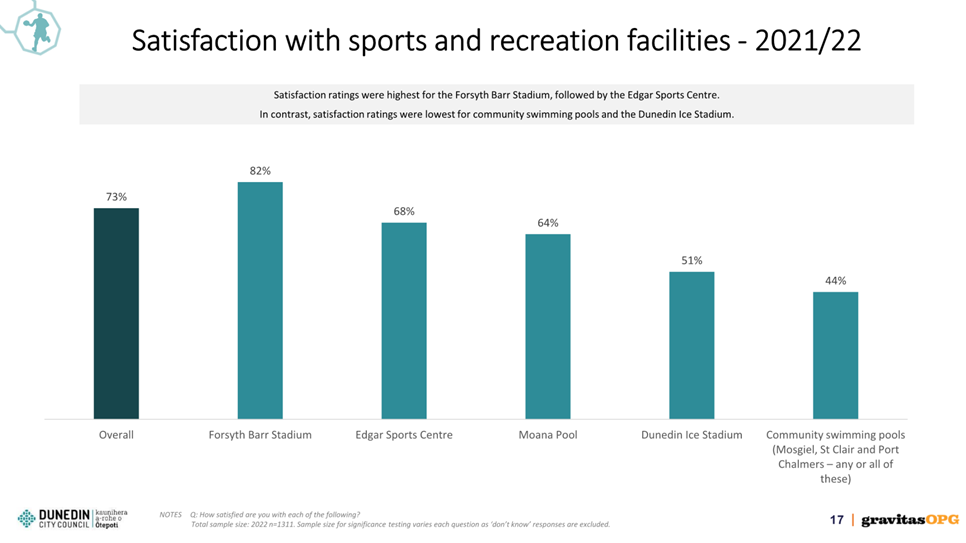
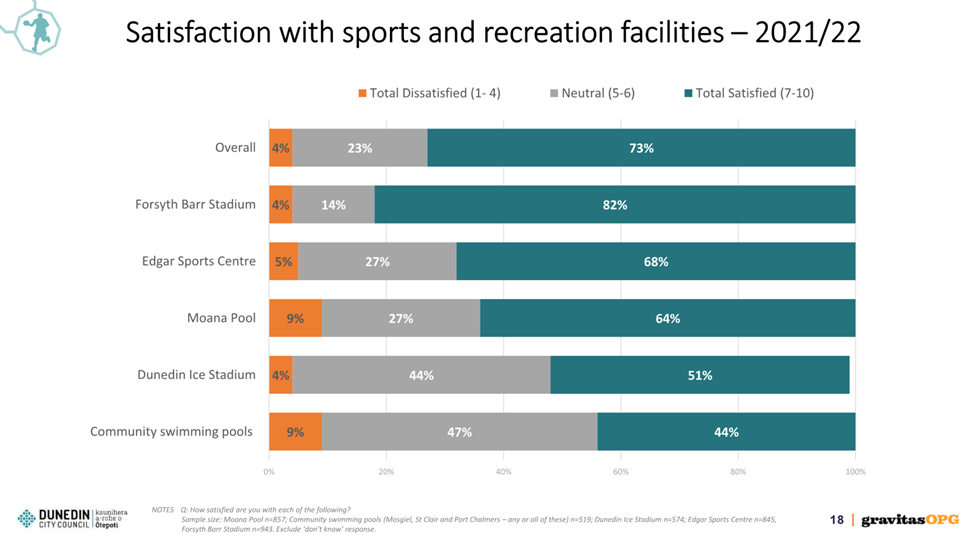
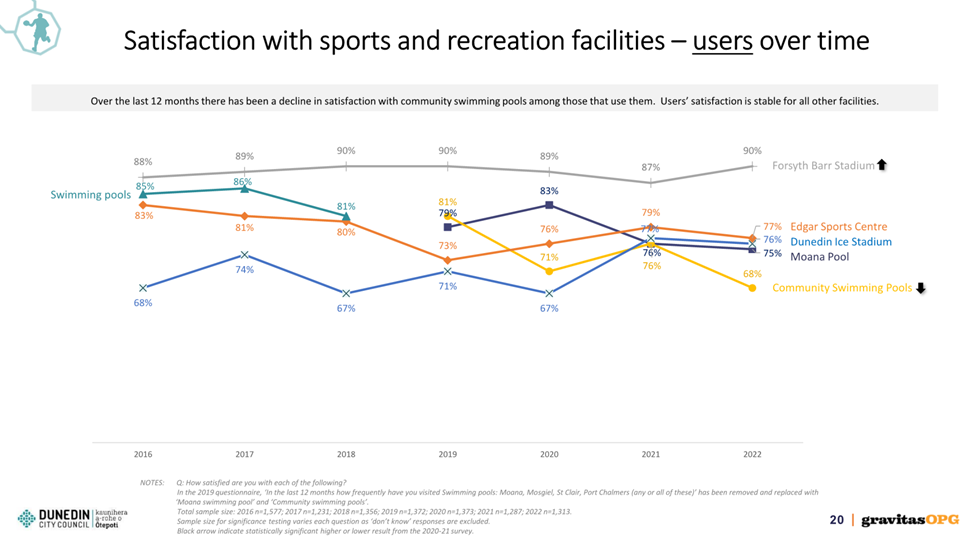
|
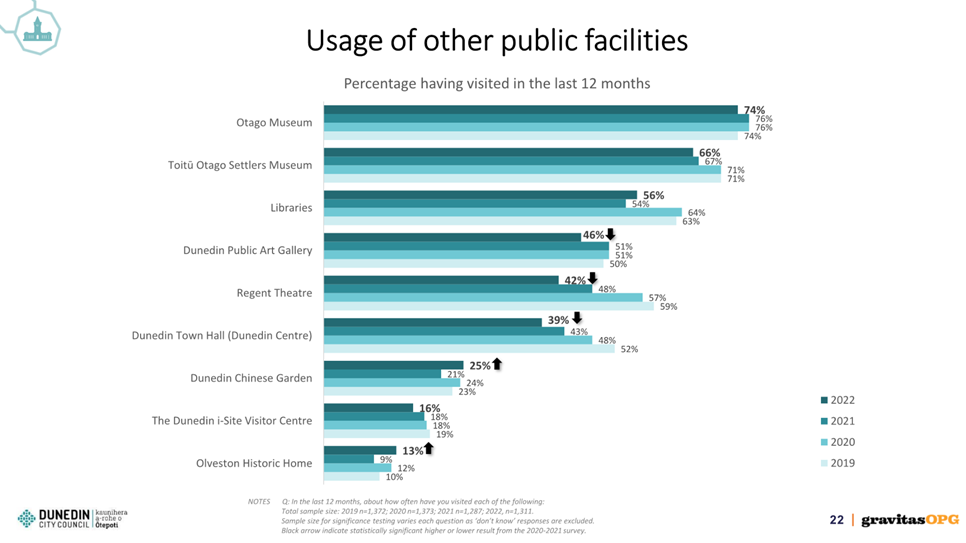
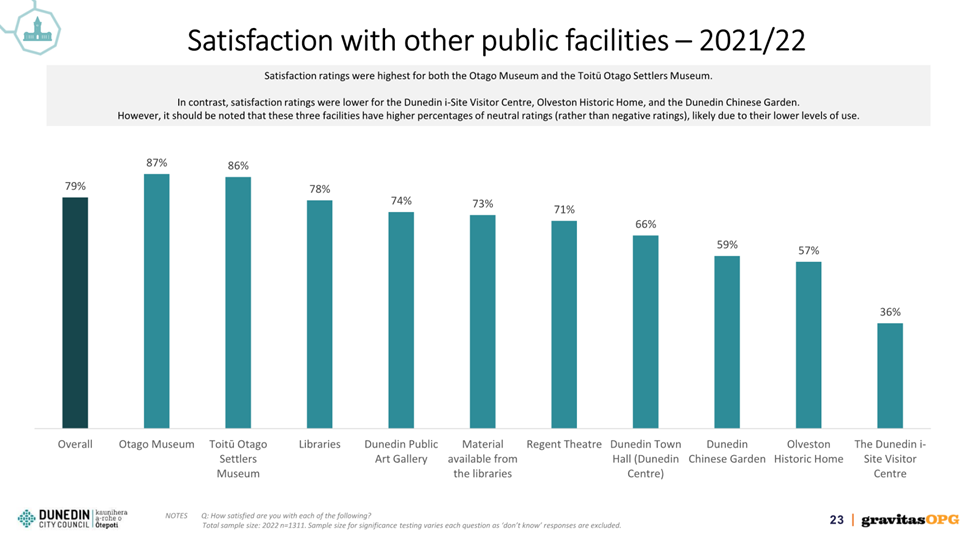
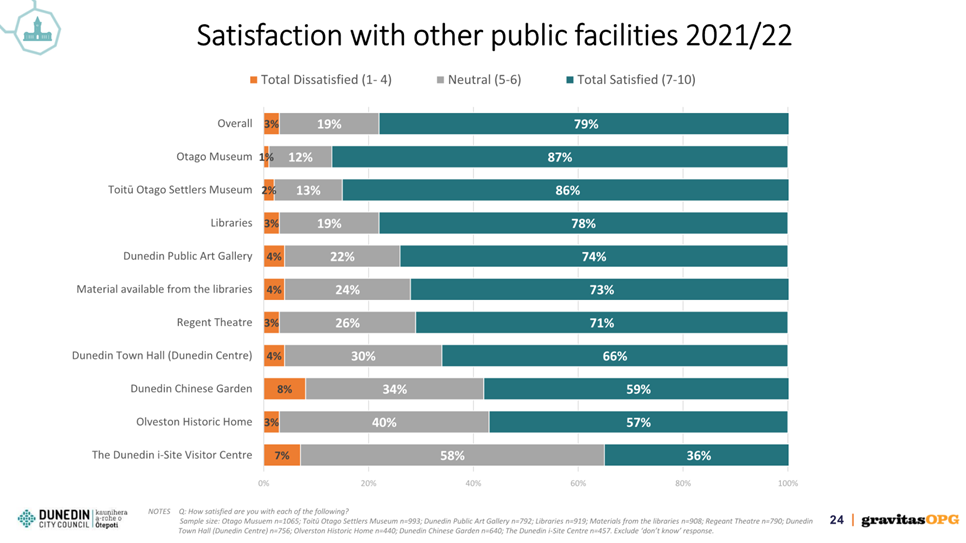
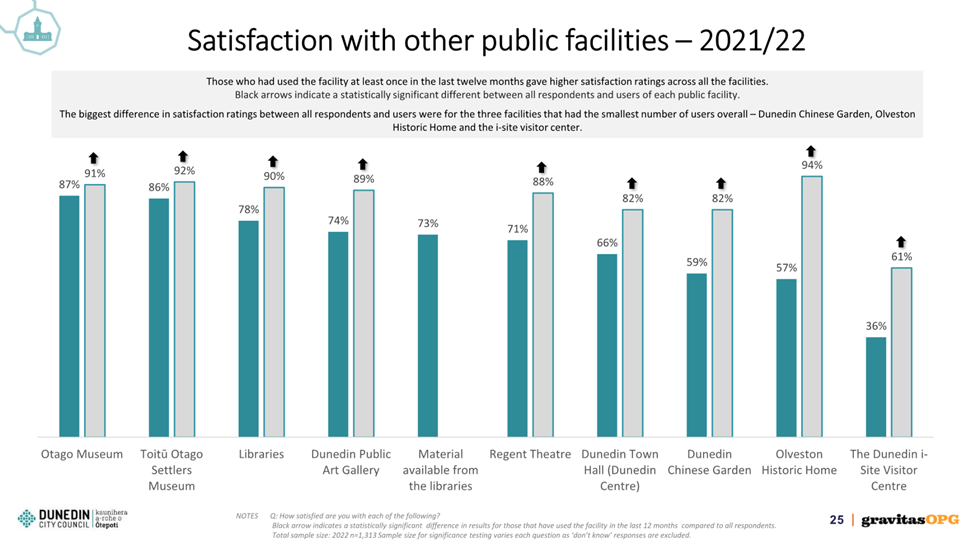
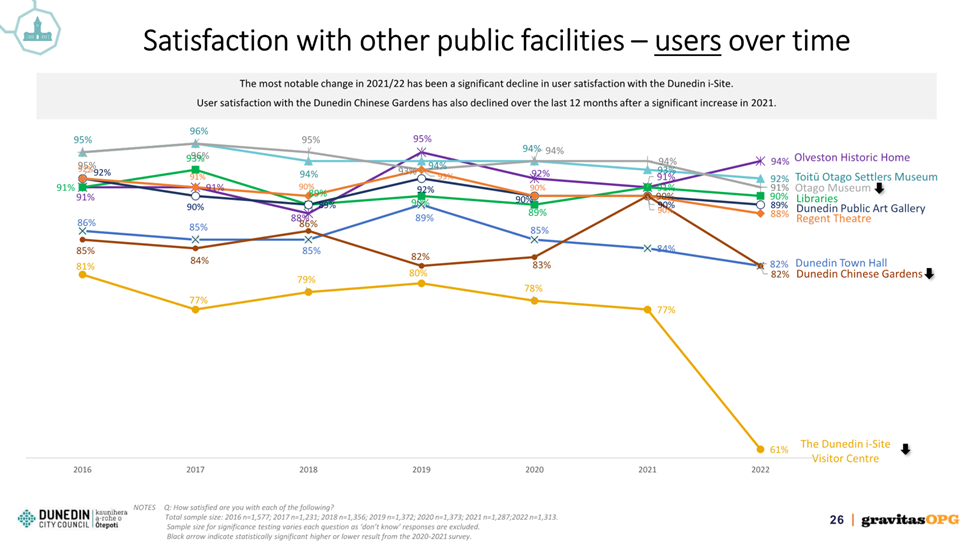
Cr David Benson-Pope
|
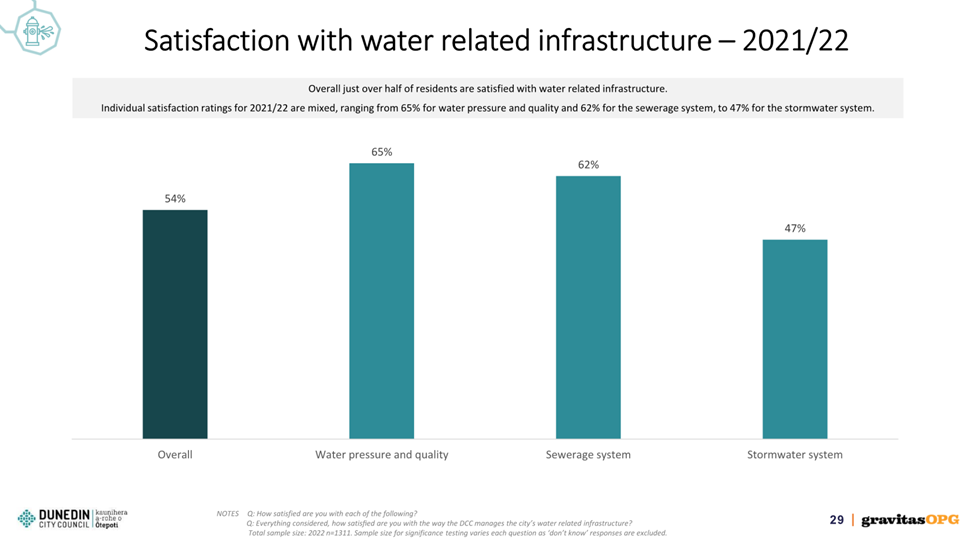
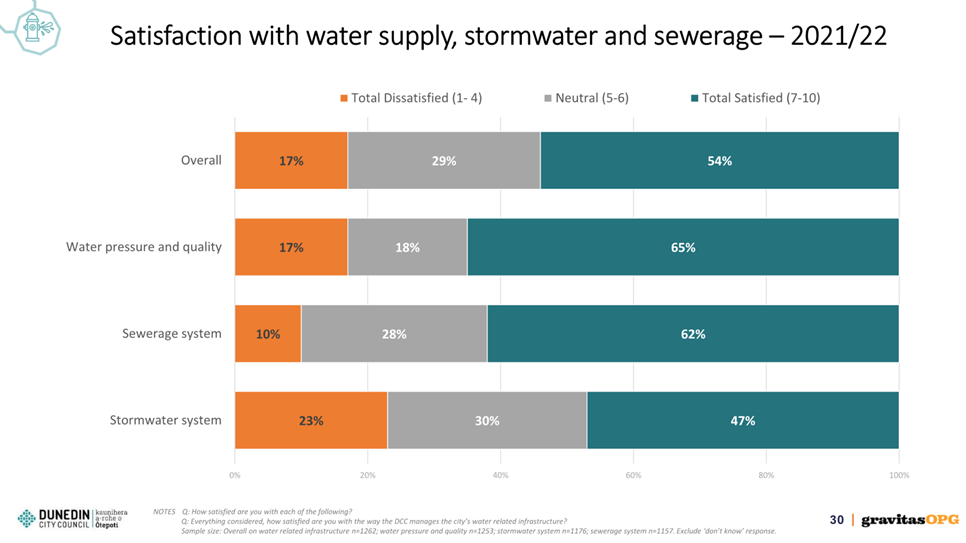
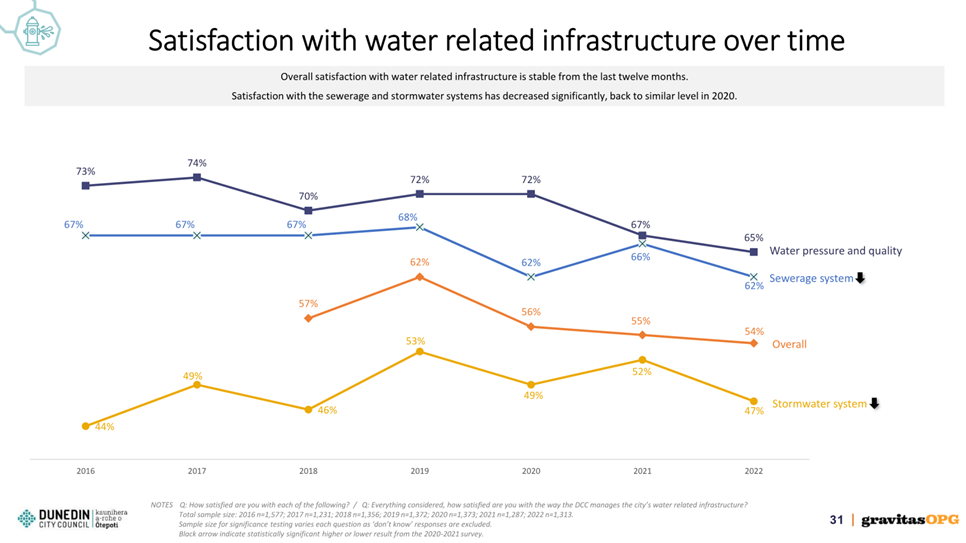
|
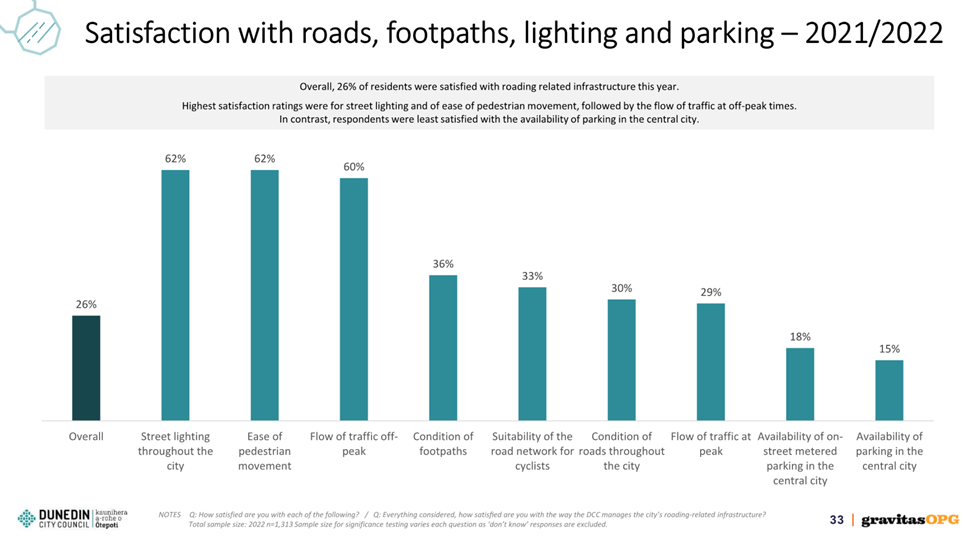
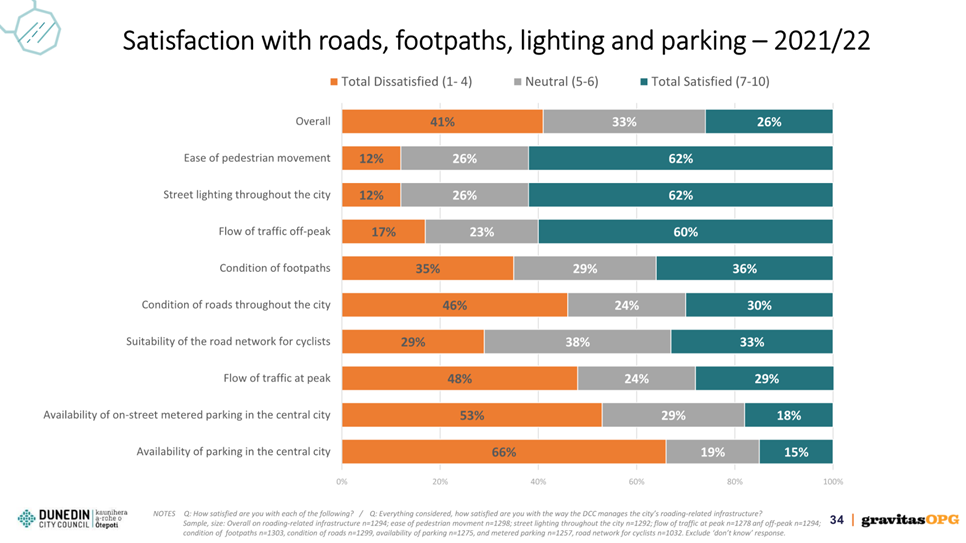
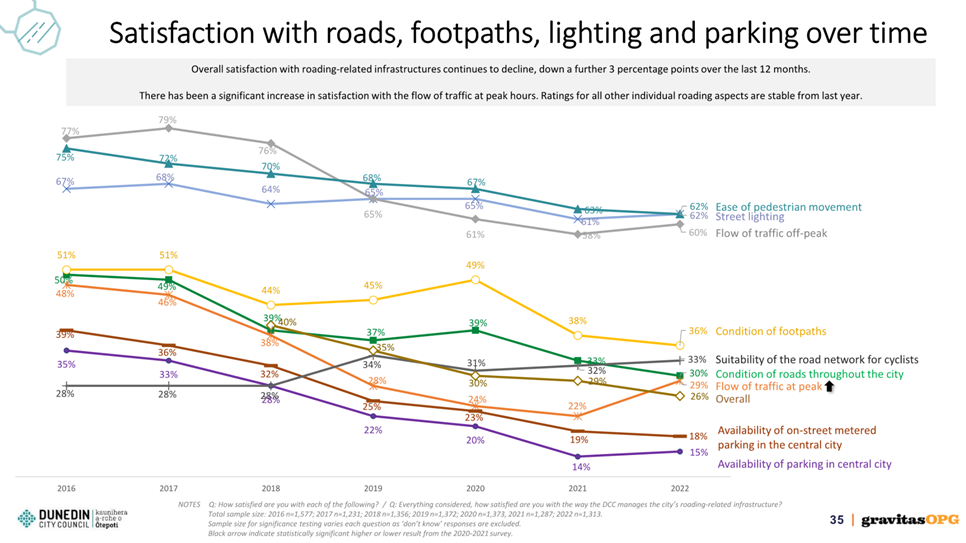
|
Mr Matapura Ellison
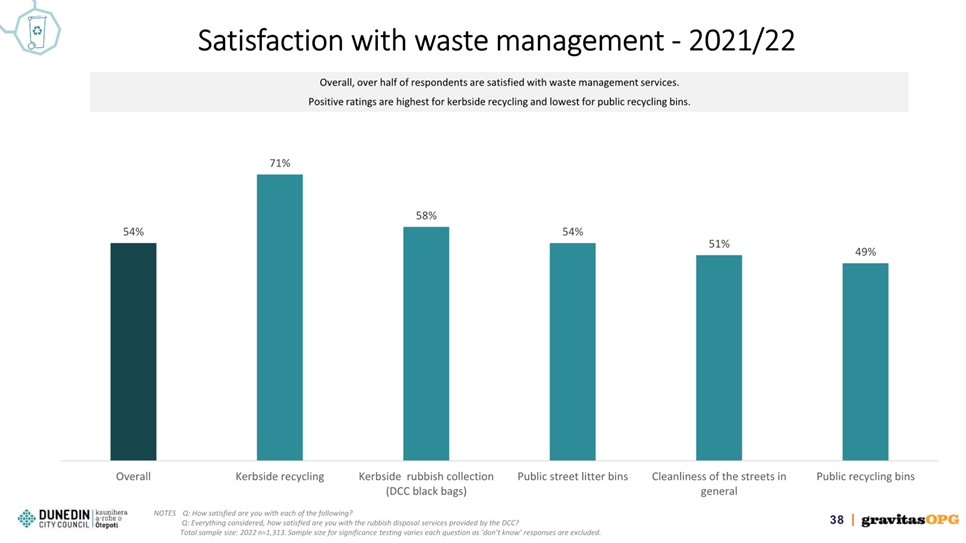
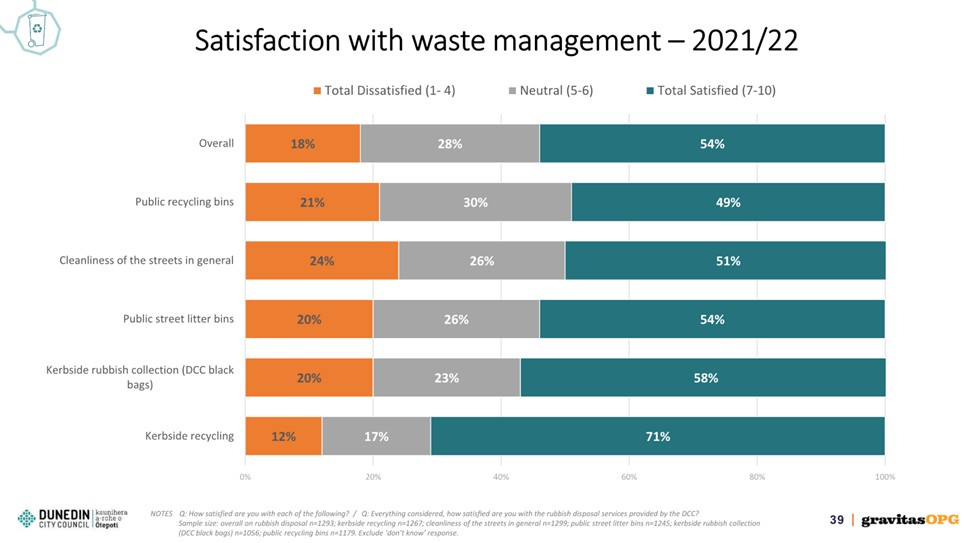
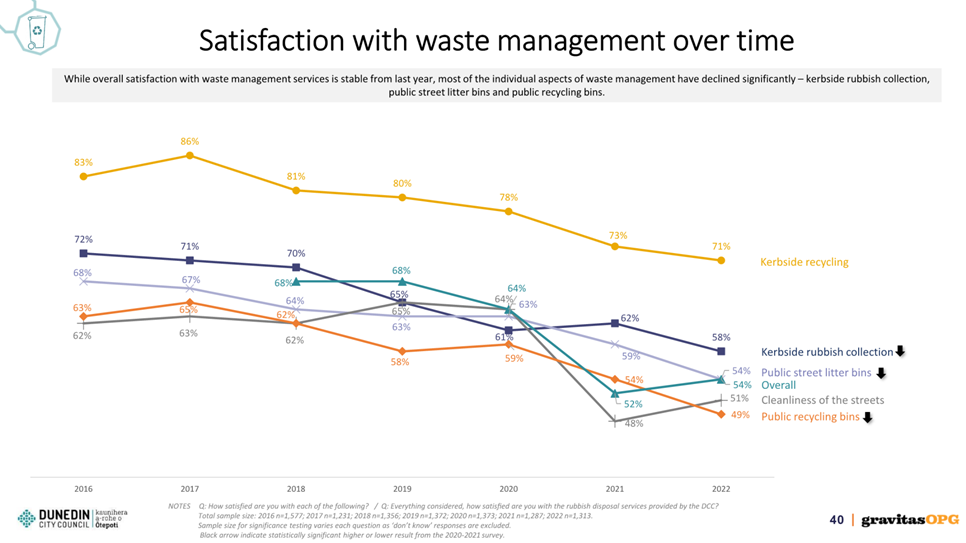
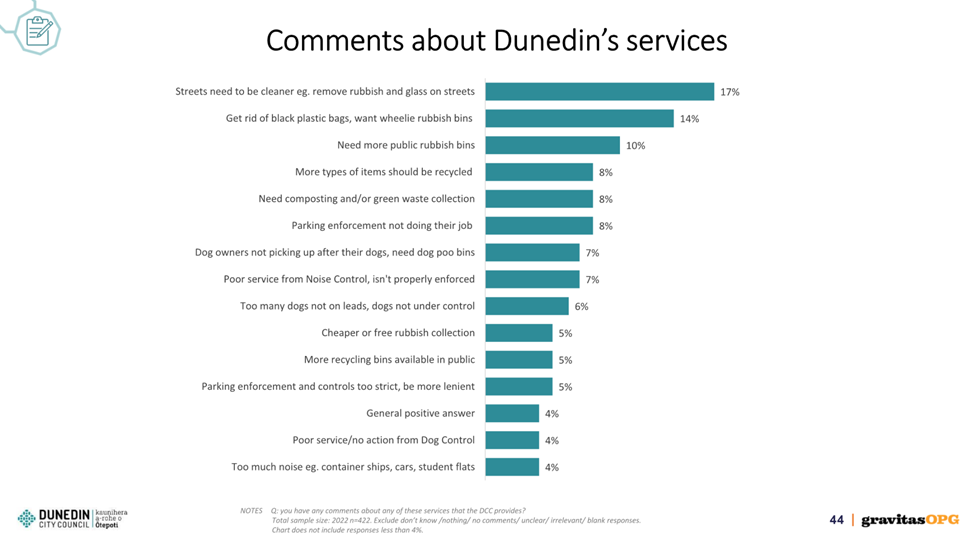
|
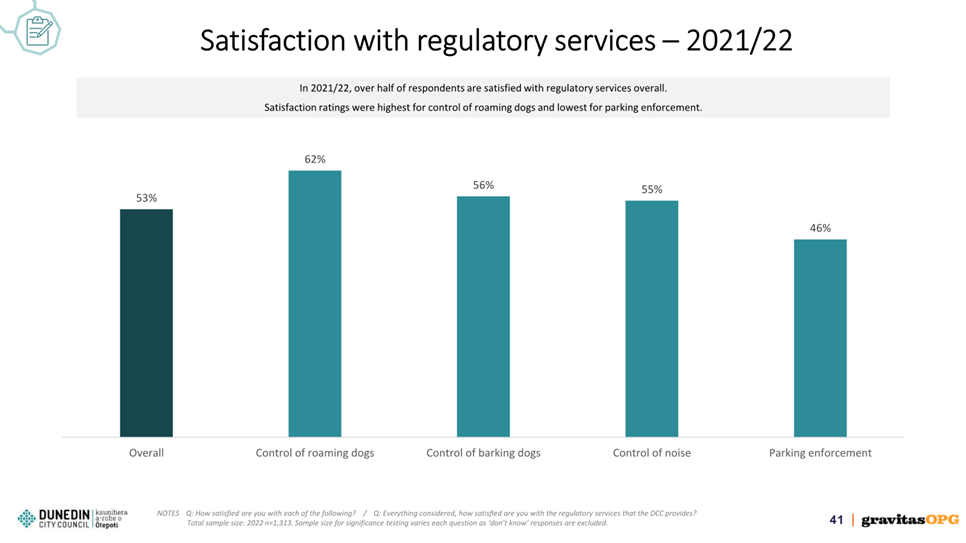
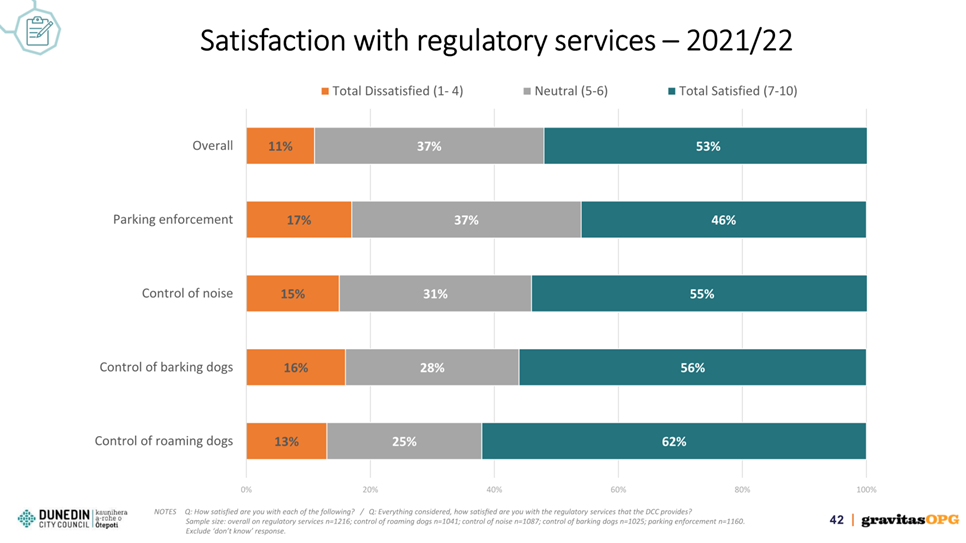
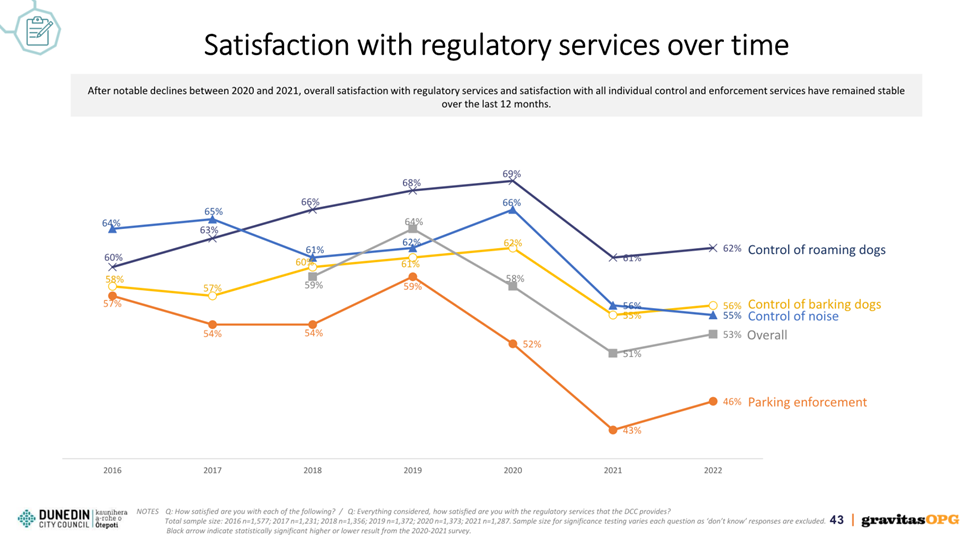
Cr Christine Garey
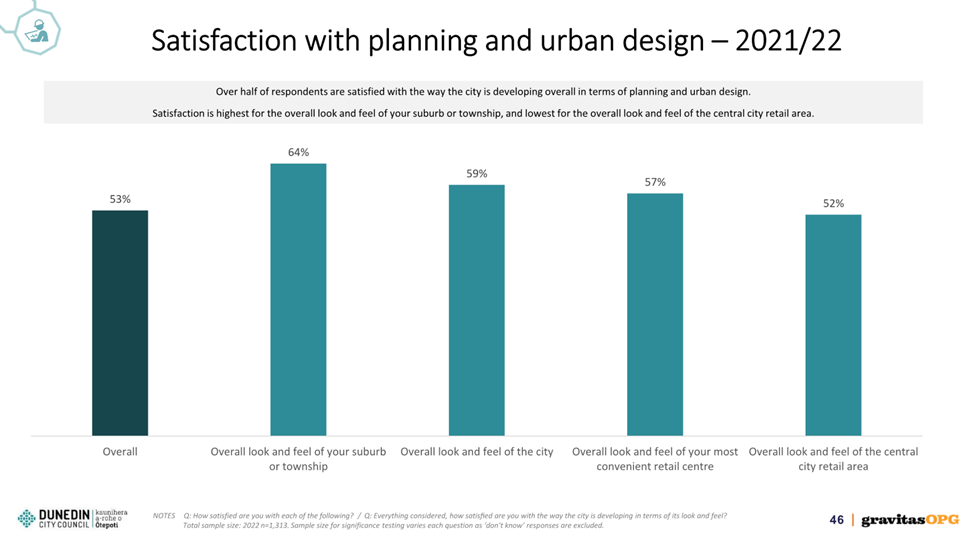
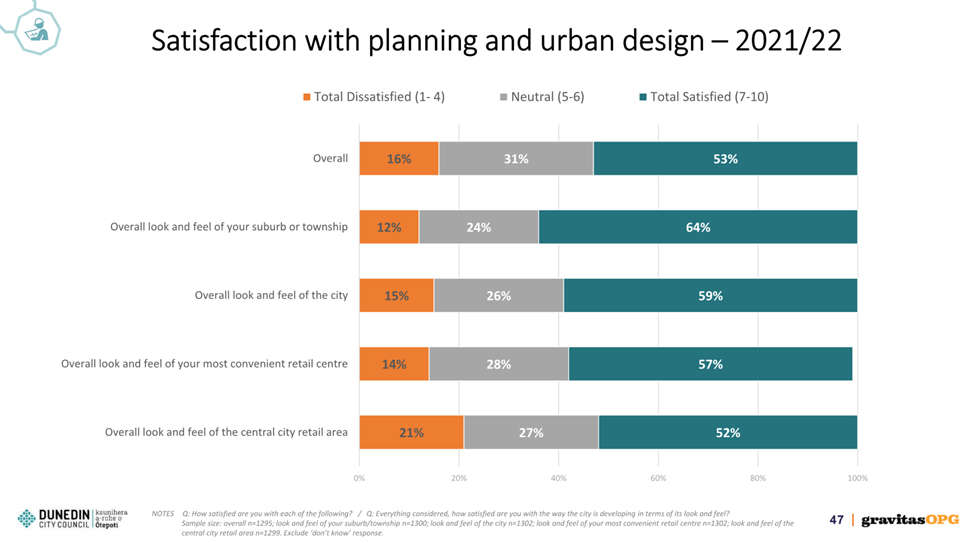
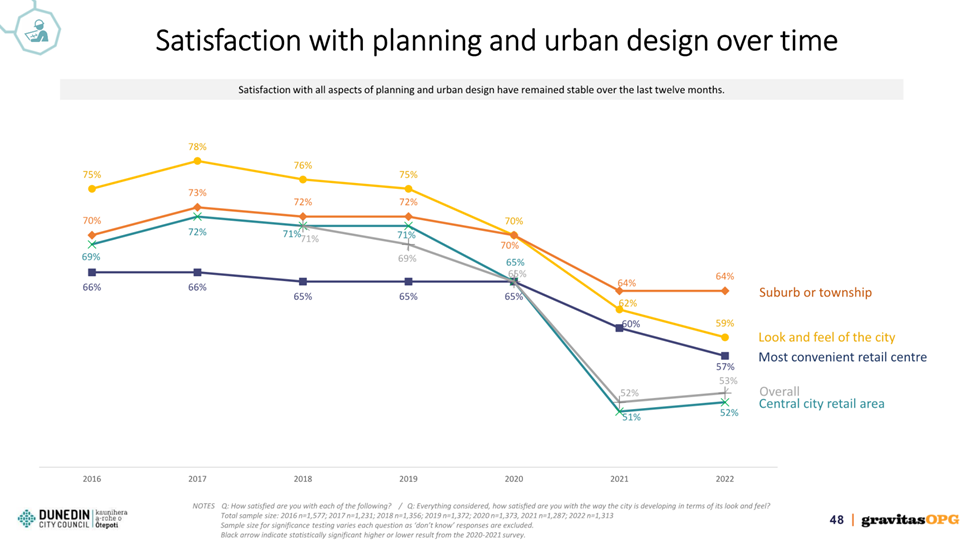
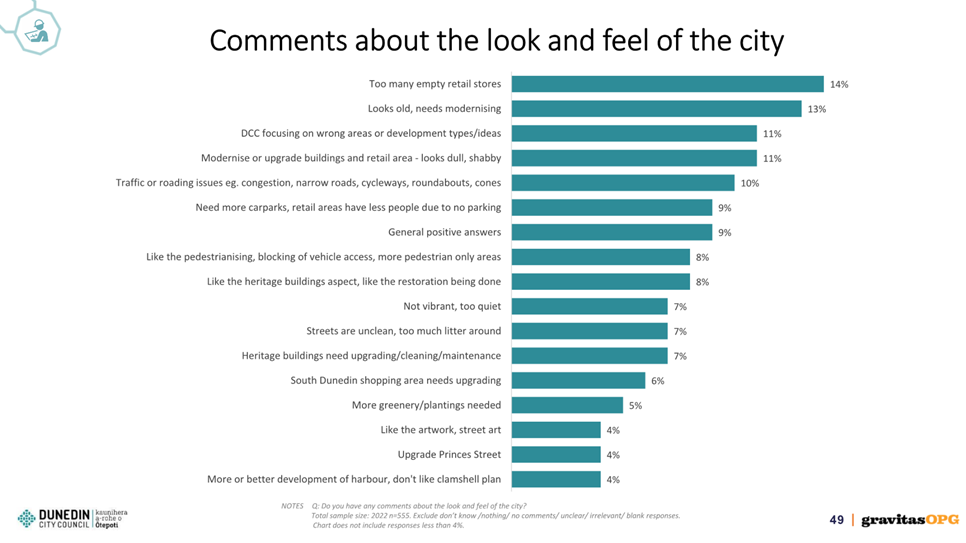
|
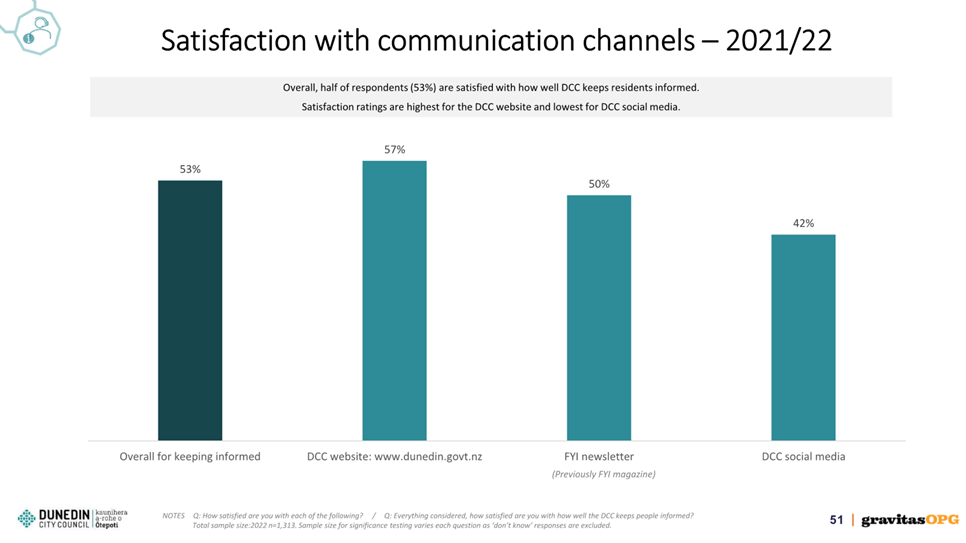
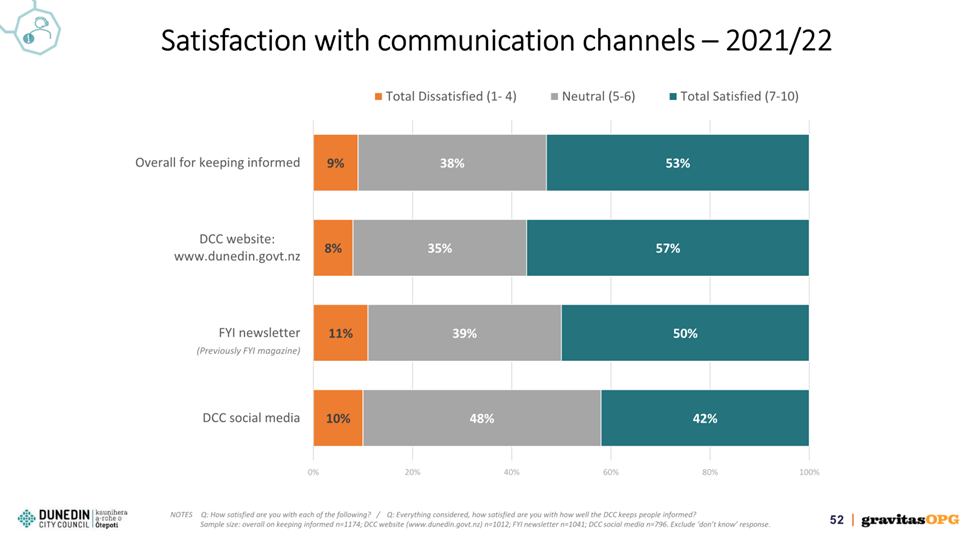
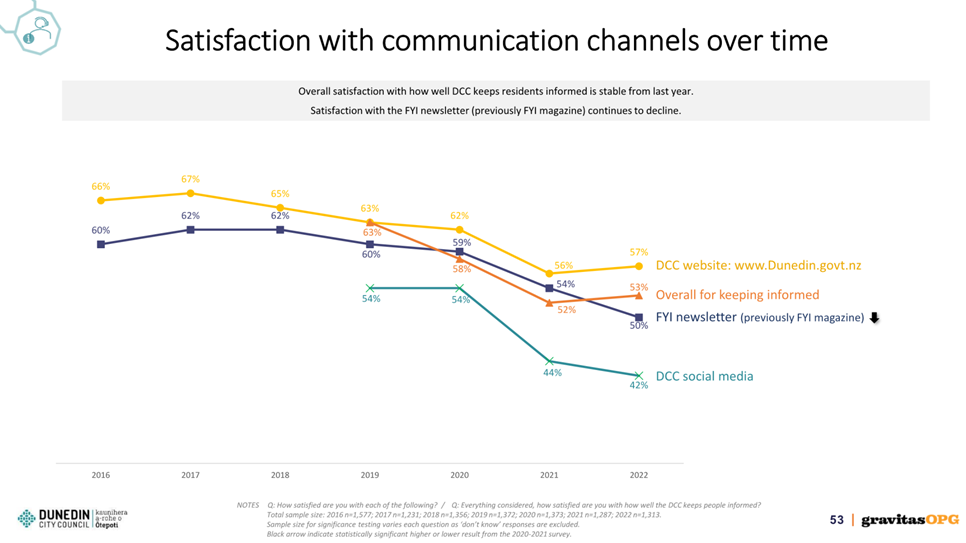
|
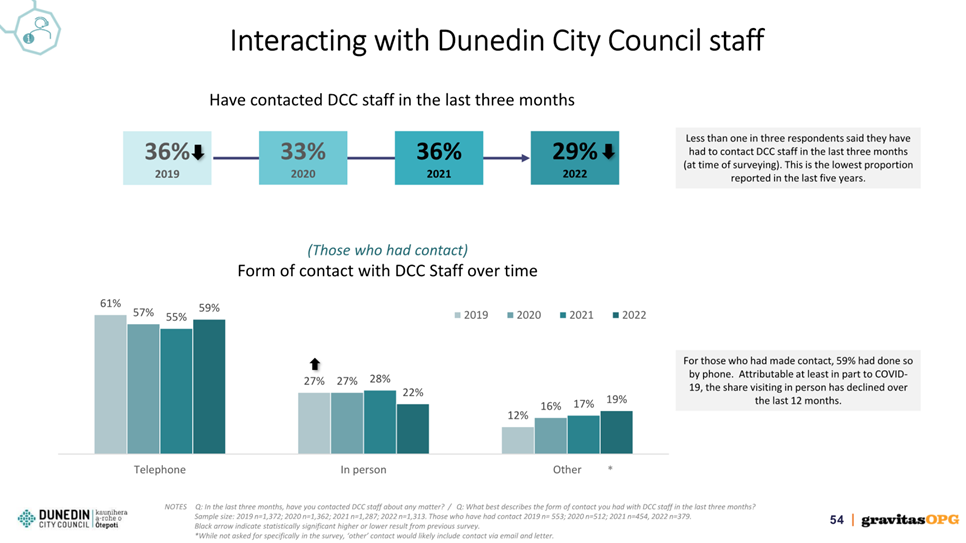
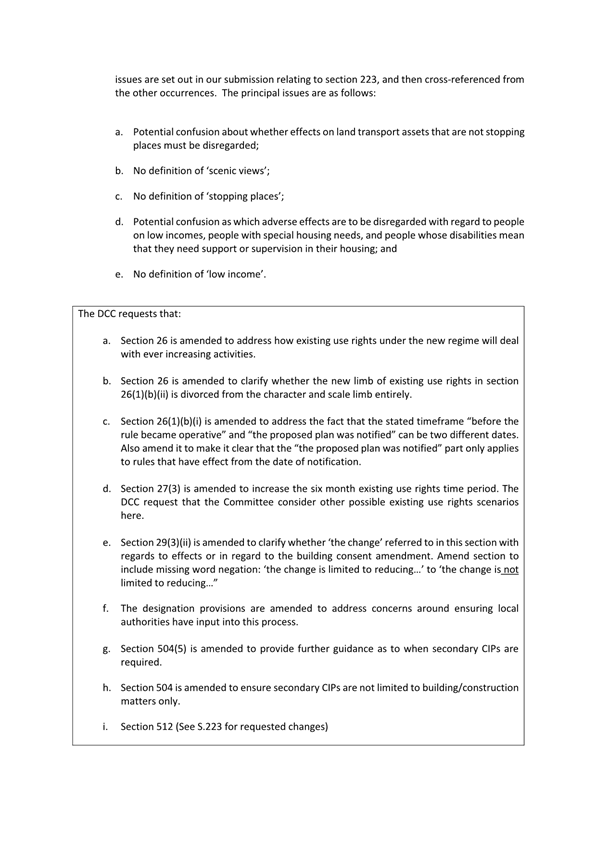
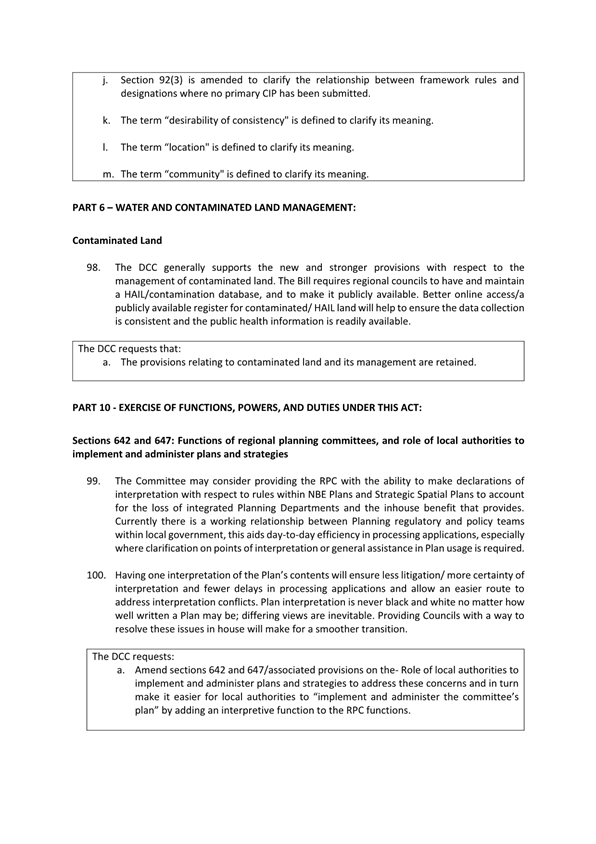
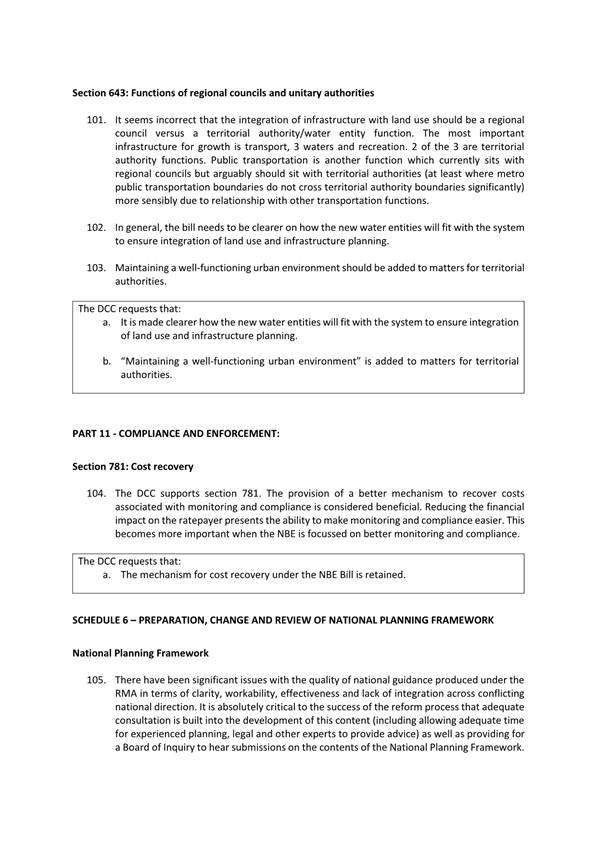
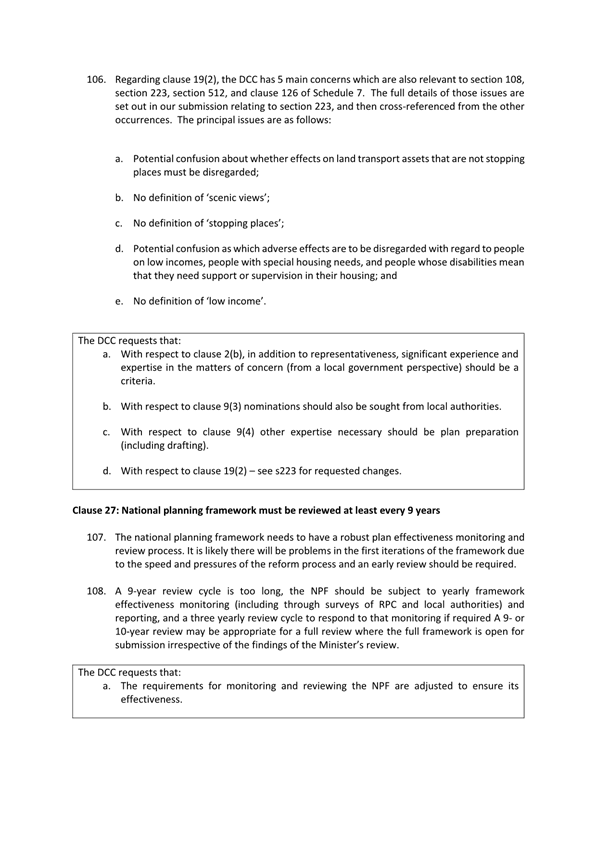
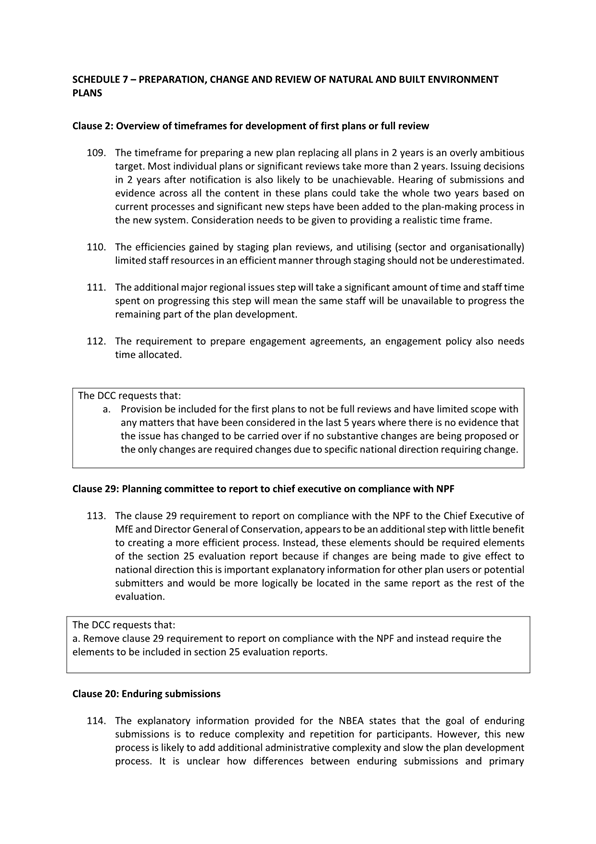
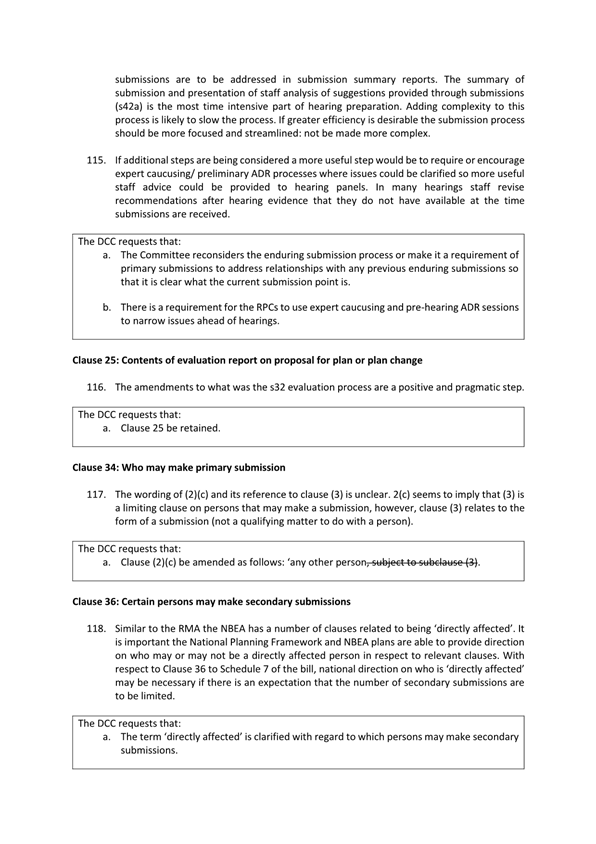
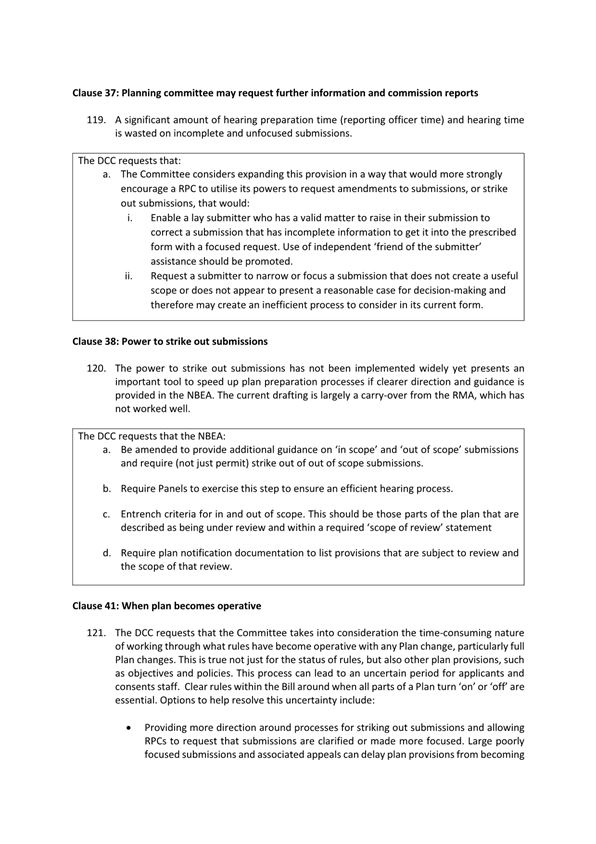
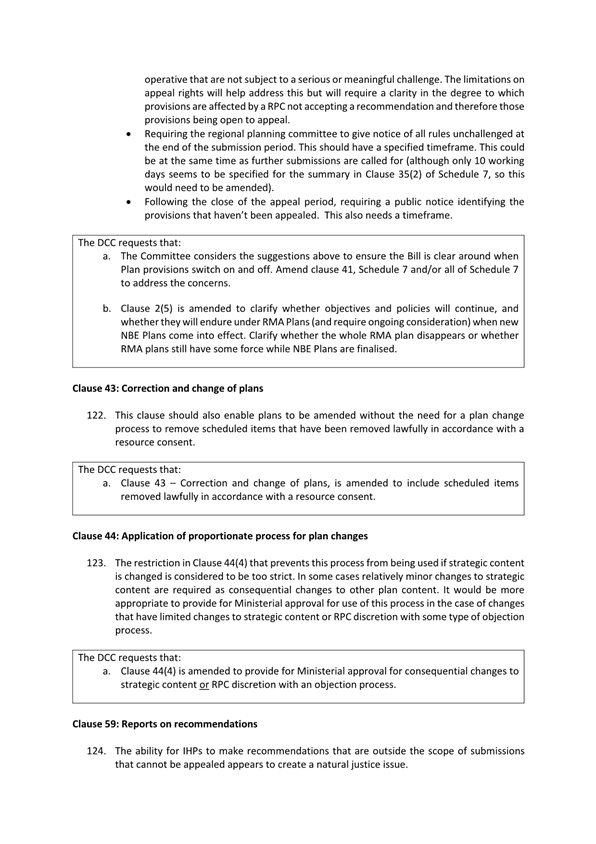
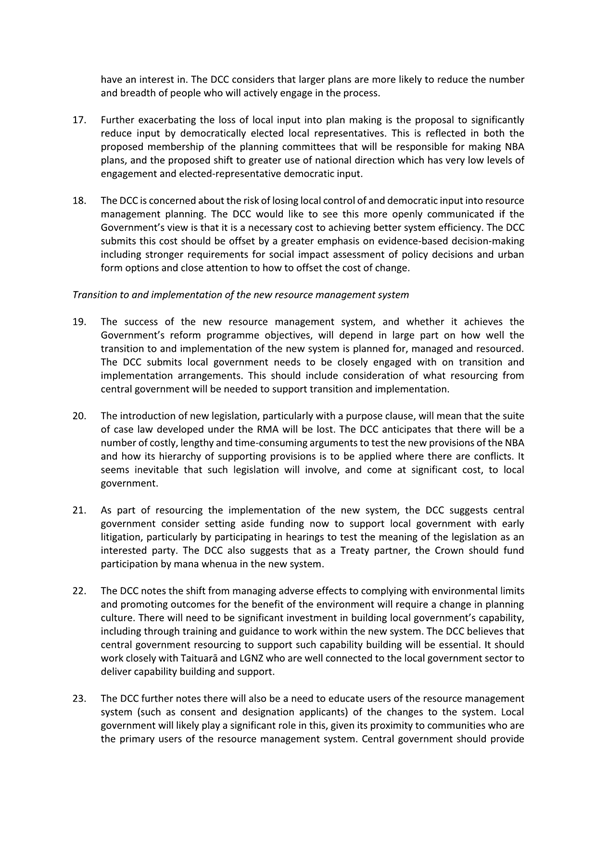
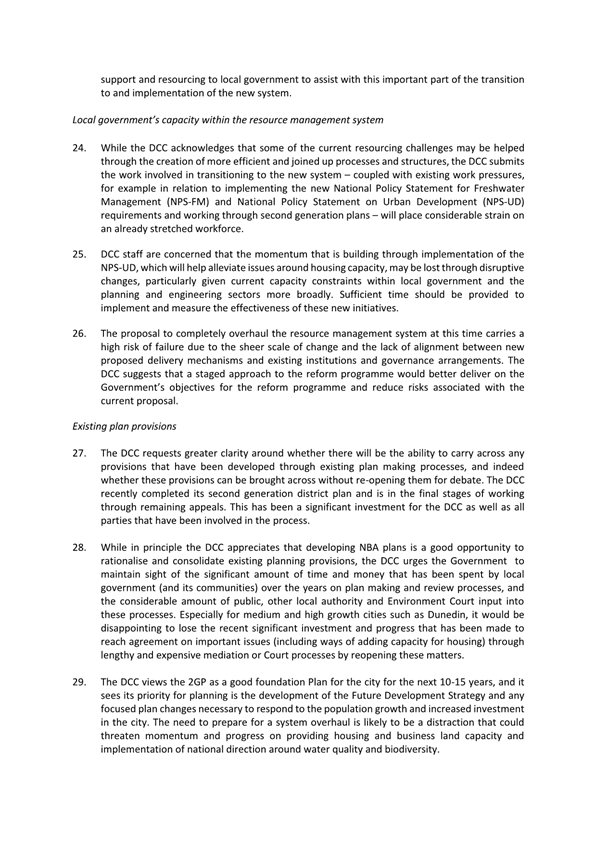
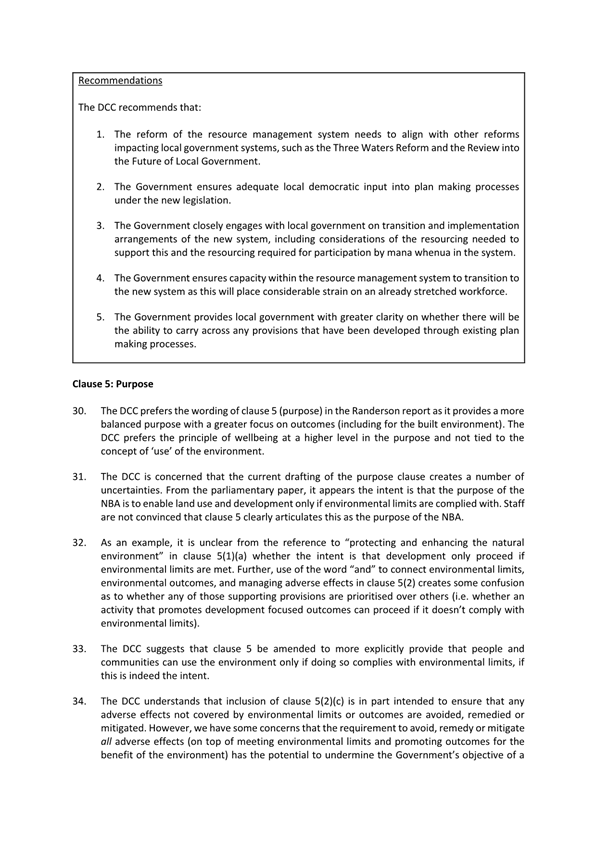
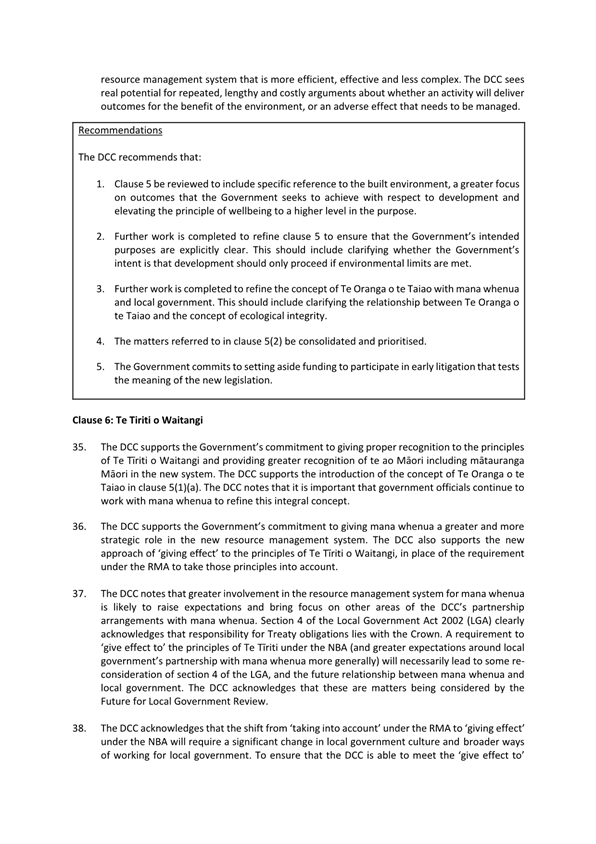
|
Cr Carmen Houlahan
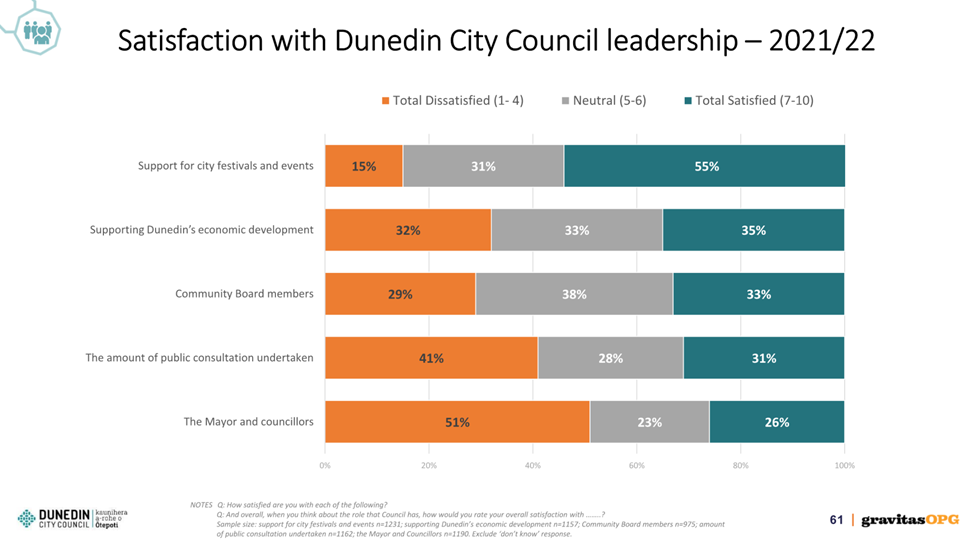
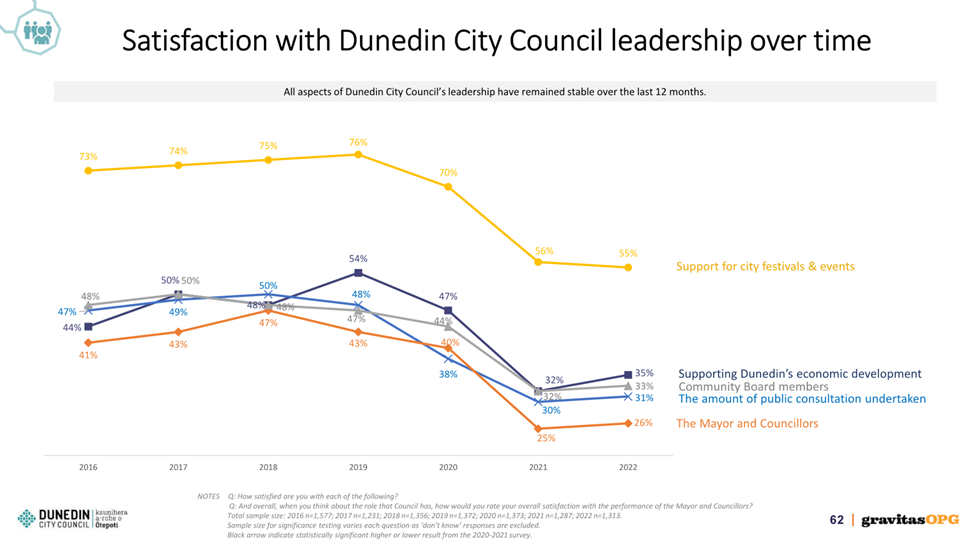
|
Cr Marie Laufiso
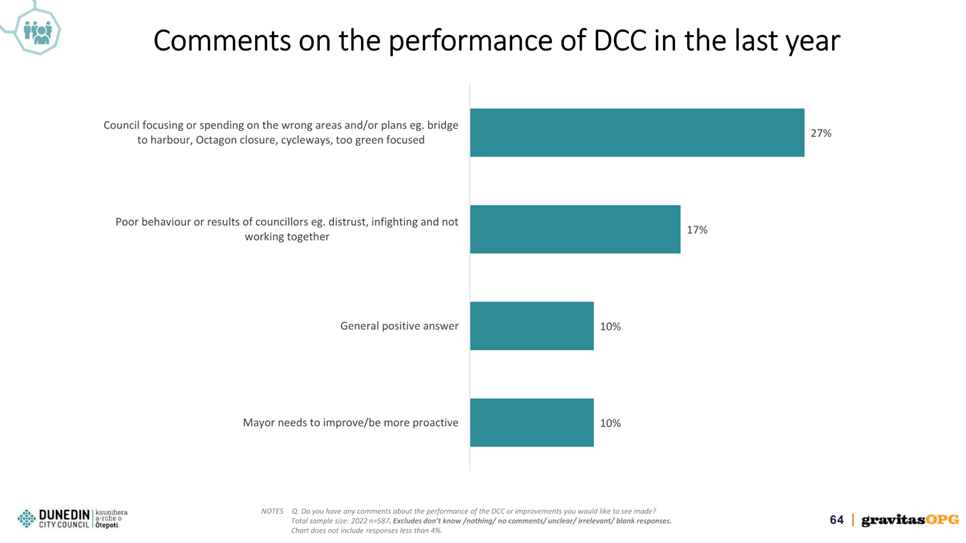
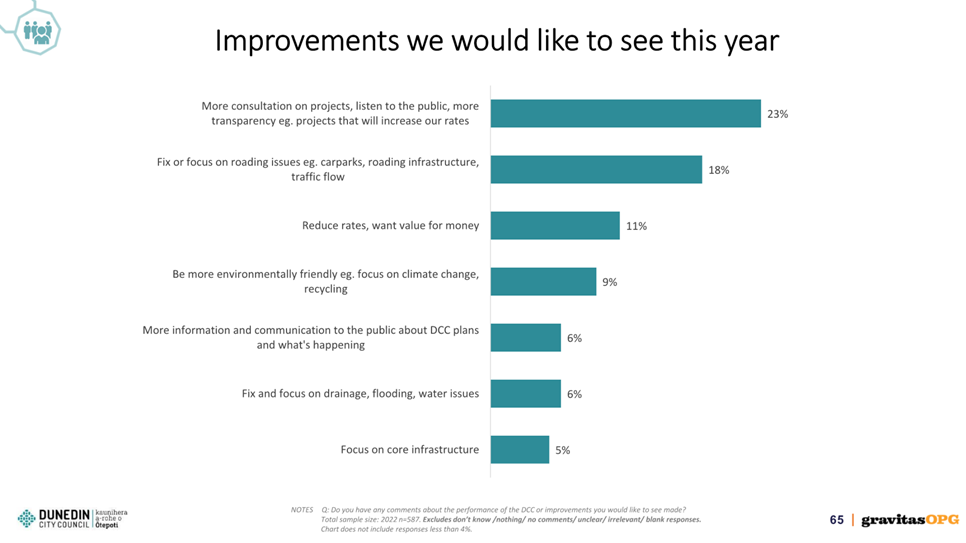
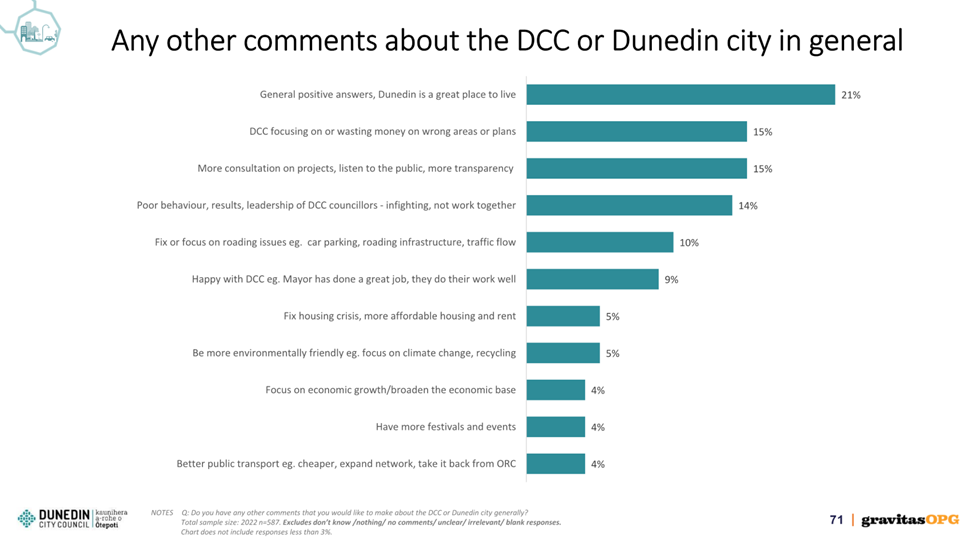
|
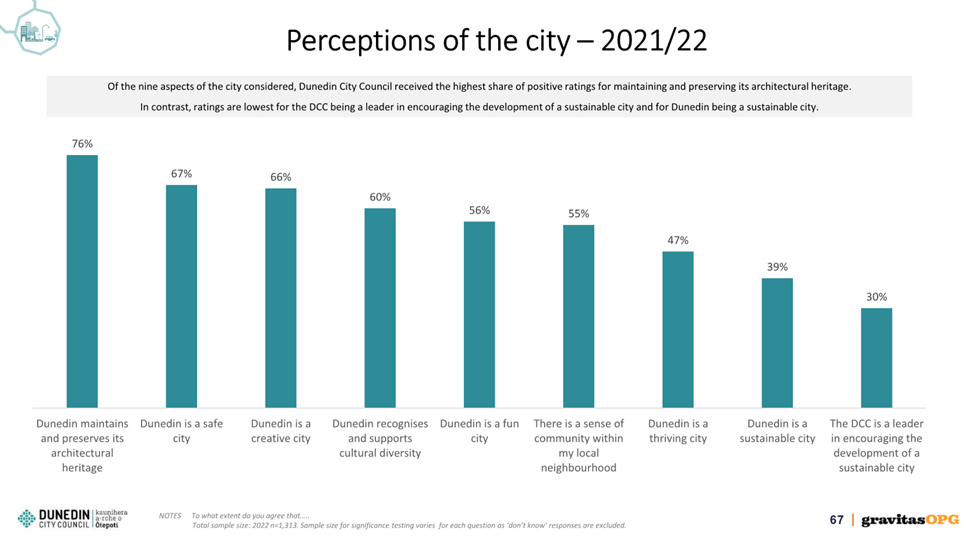
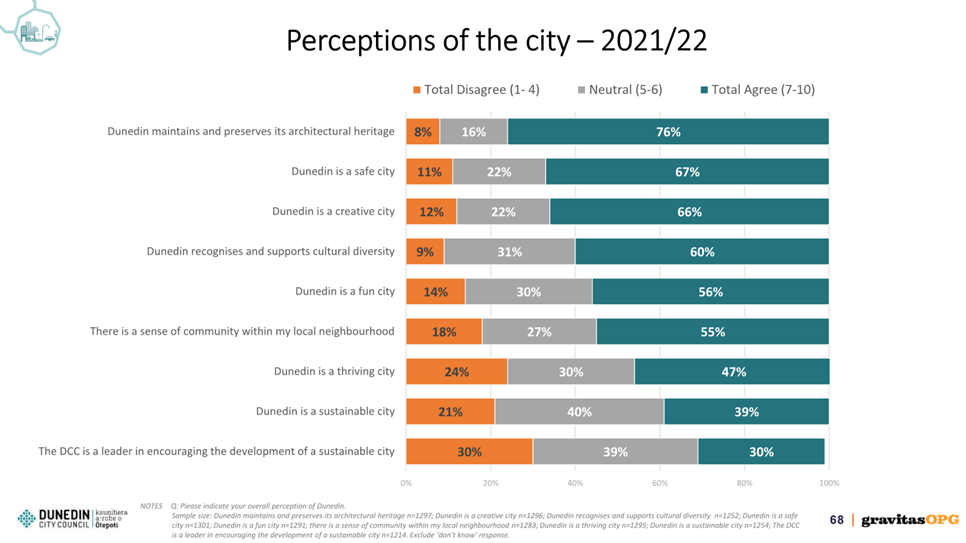
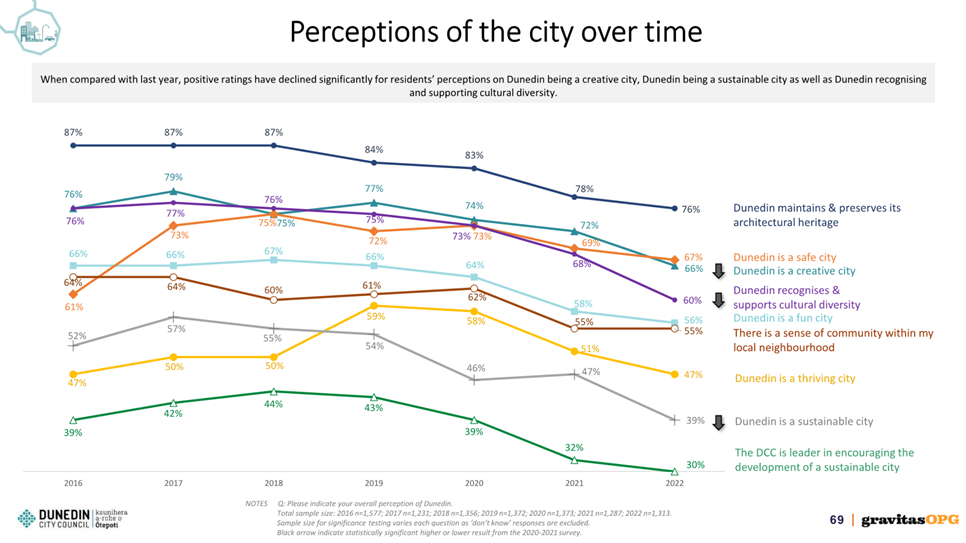
|
|
Cr Cherry Lucas
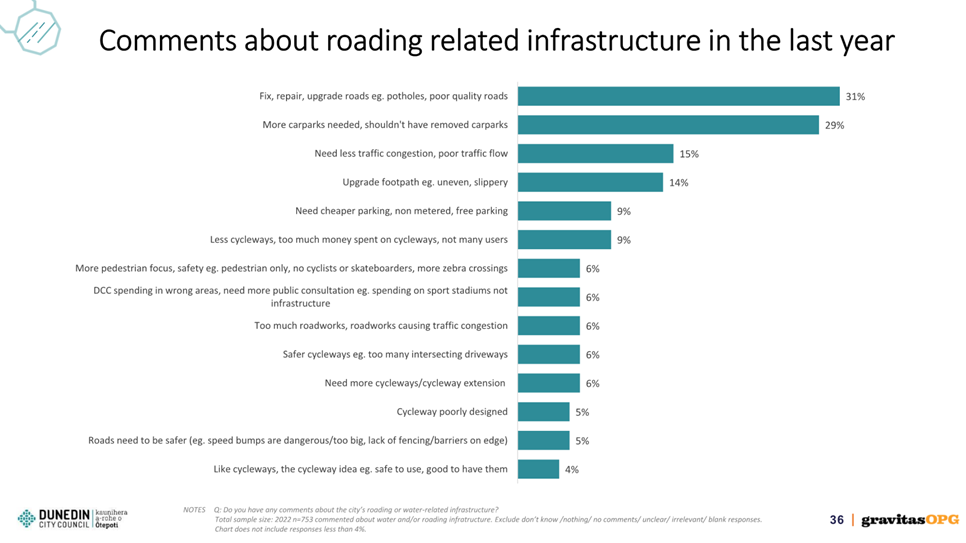
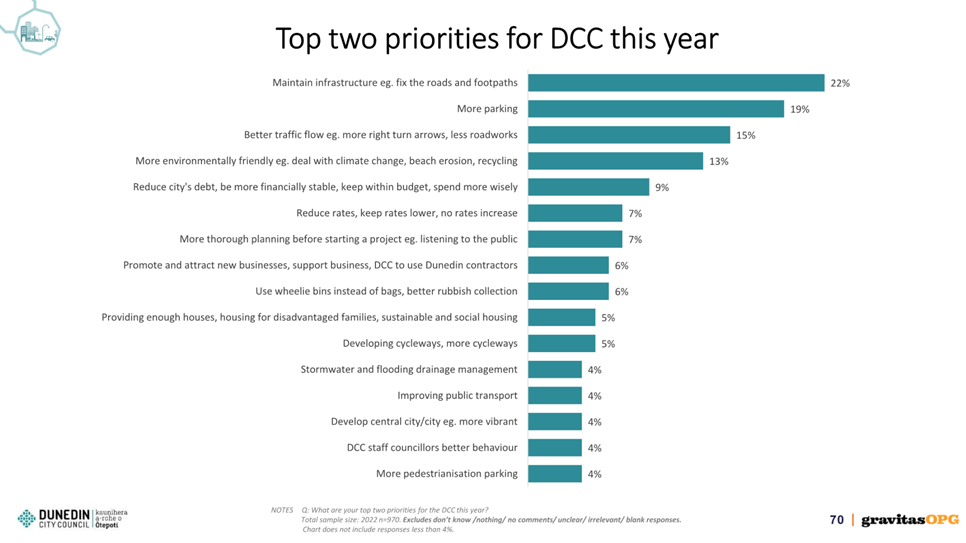
|
Cr Mandy Mayhem
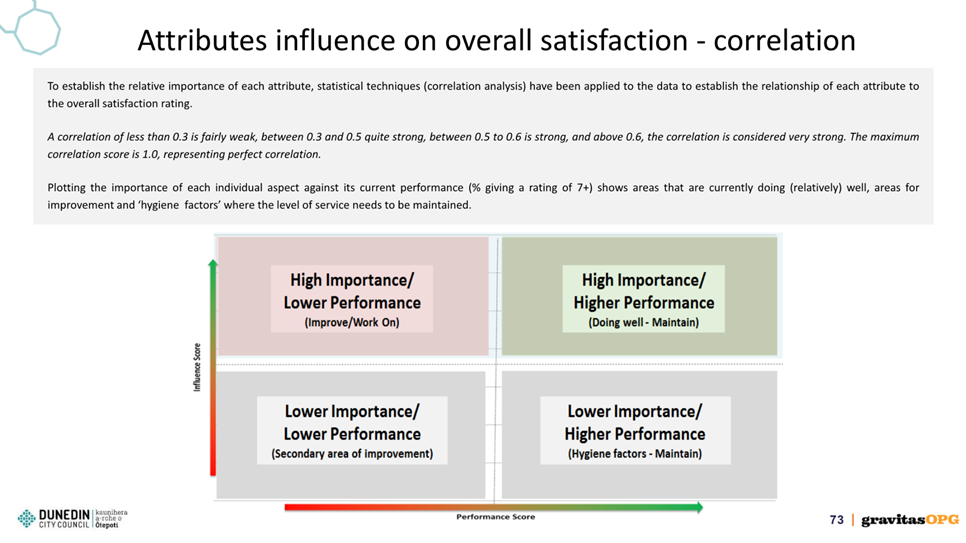
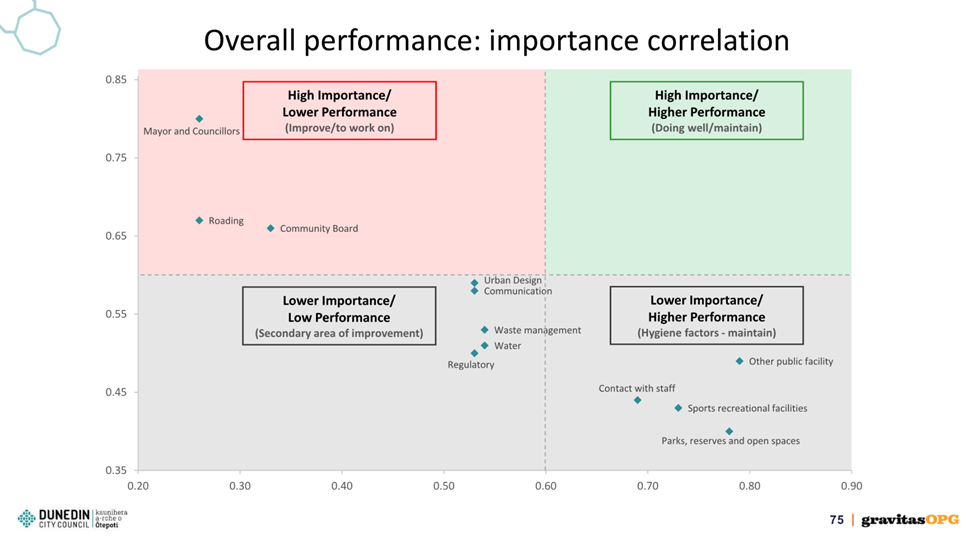
|
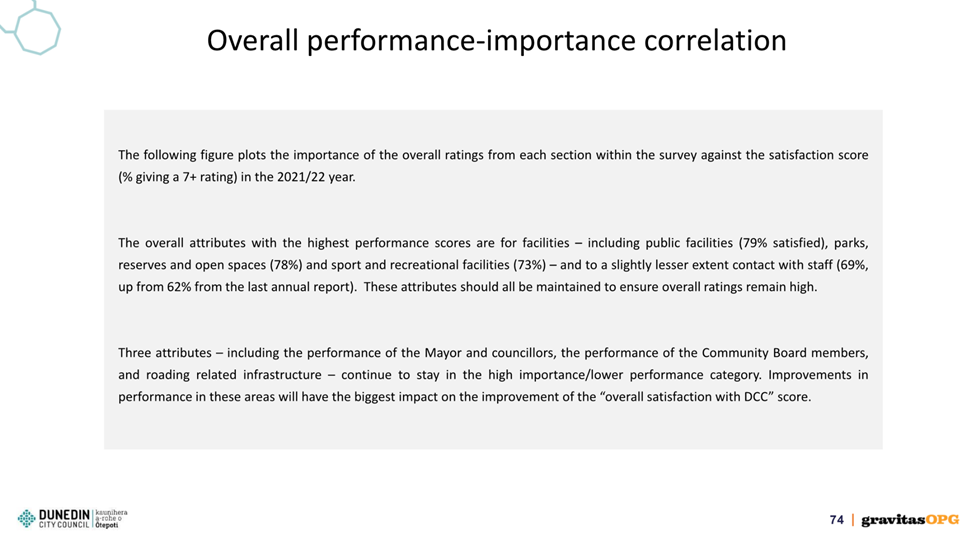
|
|
Cr Jim O'Malley
|
Ms Megan Potiki
|
|
|
Mayor Jules Radich
|
Cr Lee Vandervis
|
|
|
Cr Steve Walker
|
Cr Brent Weatherall
|
|
|
Cr Andrew Whiley
|
|
Senior Officer Jeanette
Wikaira, Manahautū - General Manager Māori, Partnerships and Policy
Governance Support Officer Wendy
Collard
Wendy Collard
Governance Support Officer
Telephone: 03 477 4000
wendy.collard@dcc.govt.nz
www.dunedin.govt.nz
Note: Reports
and recommendations contained in this agenda are not to be considered as
Council policy until adopted.
|

|
Strategy, Planning &
Engagement Committee
13 February 2023
|
ITEM TABLE OF CONTENTS PAGE
1 Karakia
Timatanga 4
The
meeting will open with a Karakia Timatanga
2 Public
Forum 4
3 Apologies 4
4 Declaration
of Interest 5
Part
A Reports (Committee has power to decide these matters)
5 Strategy,
Planning and Engagement Committee Forward Work Programme 15
6 Resident's
Opinion Survey Results 2021/2022 20
7 Submission
on the Natural and Built Environment Bill and the Spatial Planning Bill 112
8 Herbicides
for Vegetation Control 180
9 Karakia
Whakamutunga
The meeting will close with a Karakia Whakamutunga.
|

|
Strategy, Planning &
Engagement Committee
13 February 2023
|
1 Karakia Timatanga
The
meeting will be opened with a karakia timatanga.
2 Public
Forum
At the close of the agenda no
requests for public forum had been received.
3 Apologies
Apologies have been received from
Cr Mandy Mayhem and Mr Matapura Ellison.
That the Committee:
Accepts the apologies from
Cr Mandy Mayhem and Mr Matapura Ellison.
|

|
Strategy & Engagement Committee
13 February 2023
|
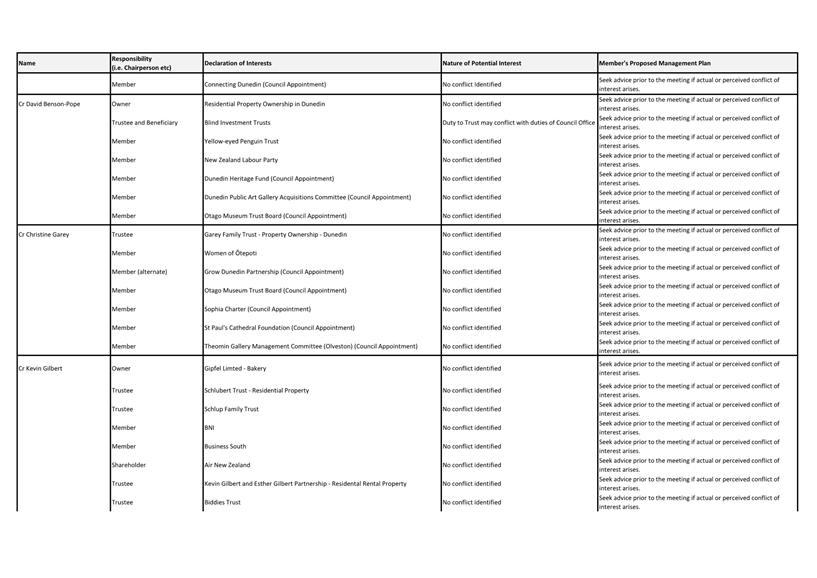
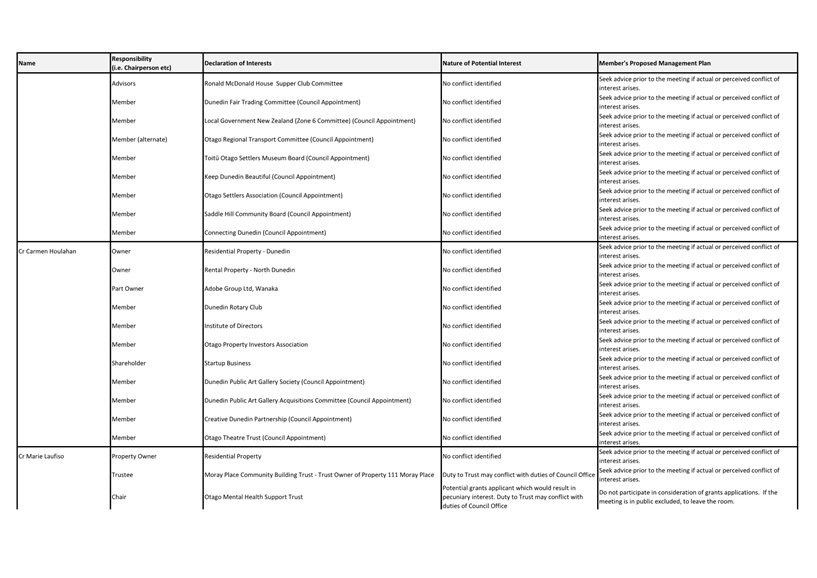
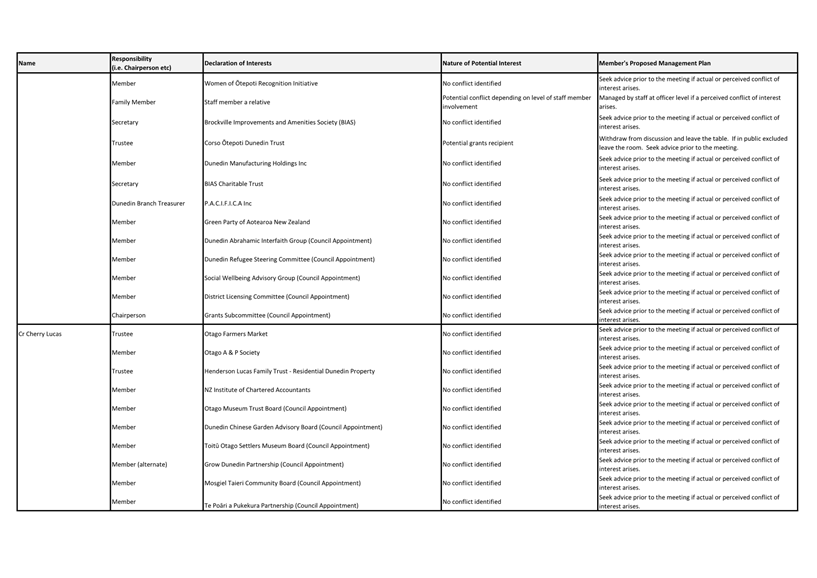
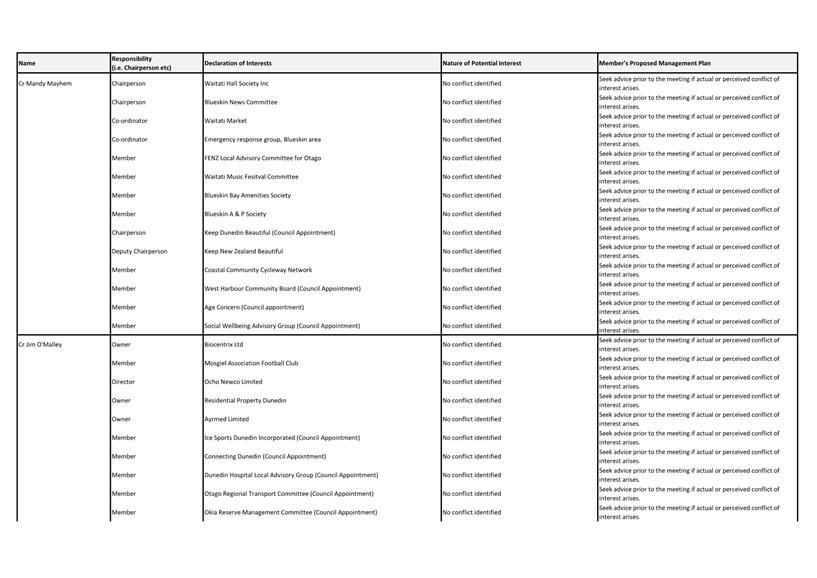
Declaration of Interest
EXECUTIVE SUMMARY
1. Members
are reminded of the need to stand aside from decision-making when a conflict
arises between their role as an elected or appointed representative and any
private or other external interest they might have.
2. Elected
and appointed members are reminded to update their register of
interests as soon as practicable, including amending the register at this
meeting if necessary.
|
RECOMMENDATIONS
That the Committee:
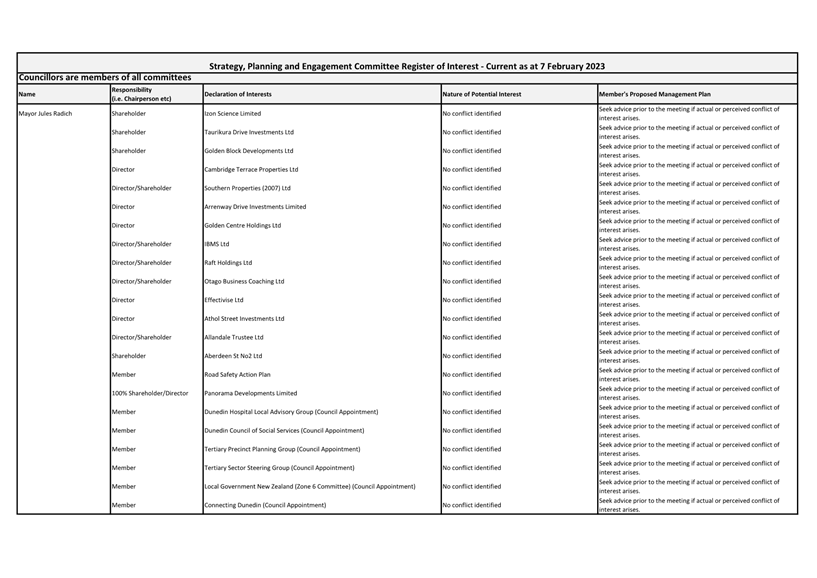
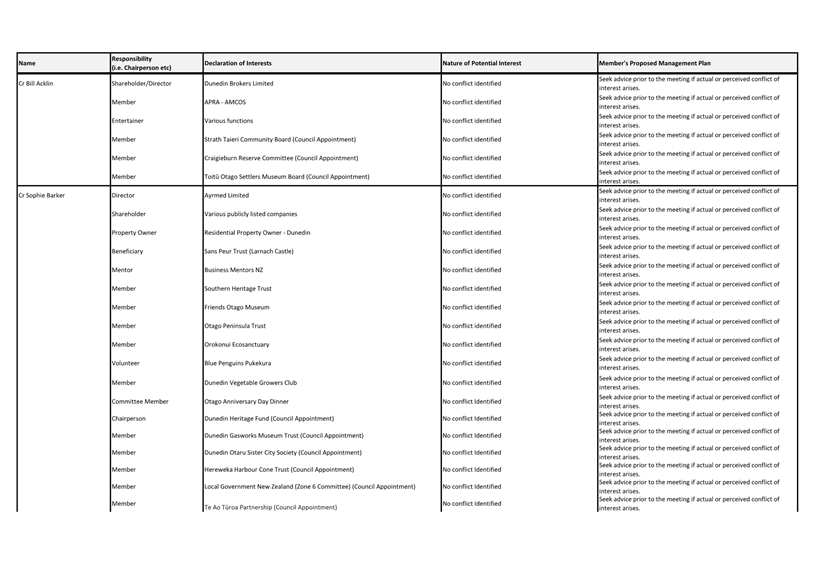
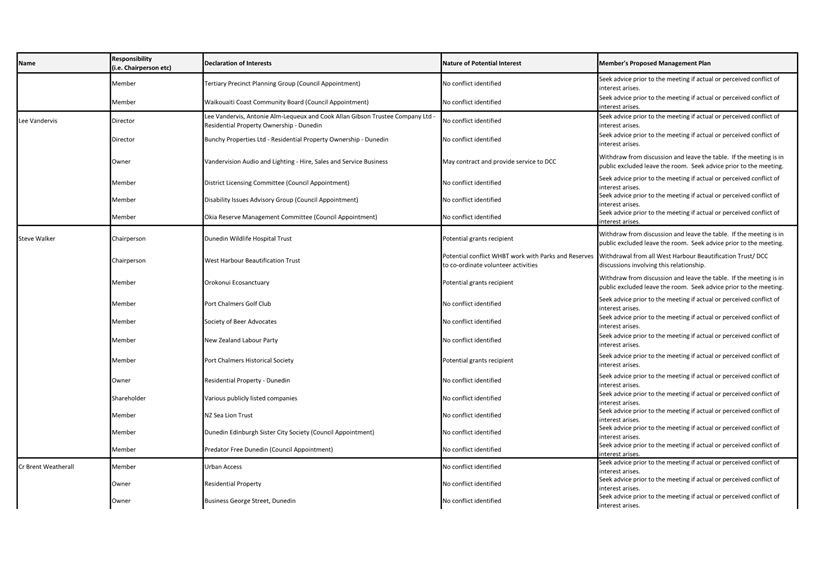
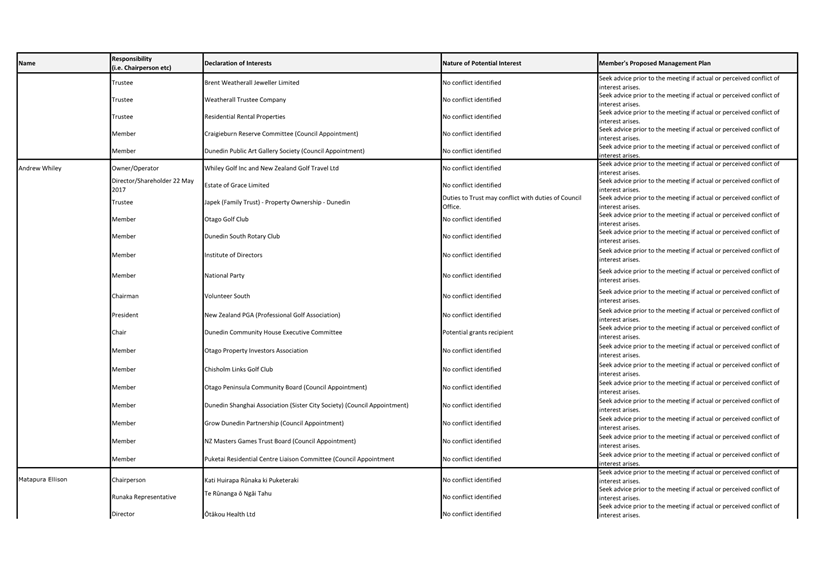
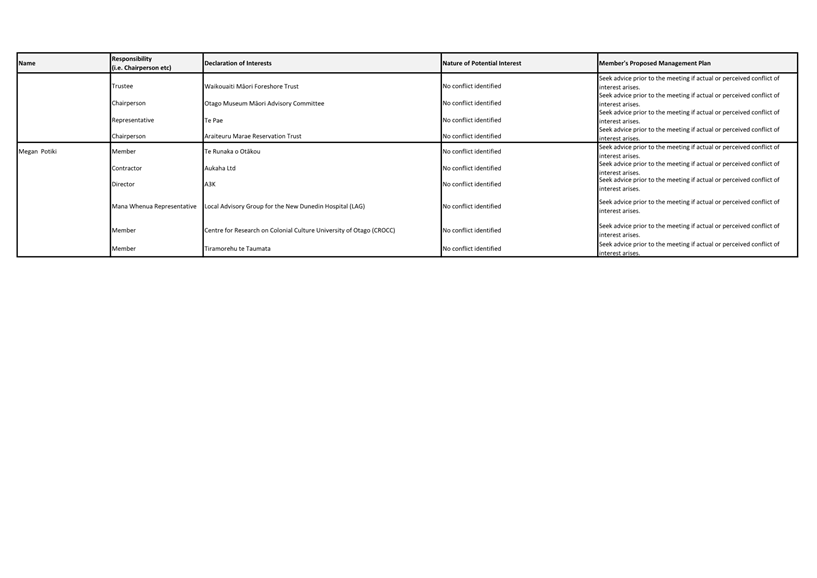
a) Notes/Amends if necessary the Elected or Independent
Members' Interest Register attached as Attachment A; and
b) Confirms/Amends the proposed management plan for
Elected or Independent Members' Interests.
|
Attachments
|
|
Title
|
Page
|
|
⇩a
|
Members' Interest
Register
|
6
|
|

|
Strategy & Engagement Committee
13 February 2023
|
|

|
Strategy & Engagement Committee
13 February 2023
|
Part
A Reports
Strategy, Planning and Engagement Committee
Forward Work Programme
Department: Civic
EXECUTIVE SUMMARY
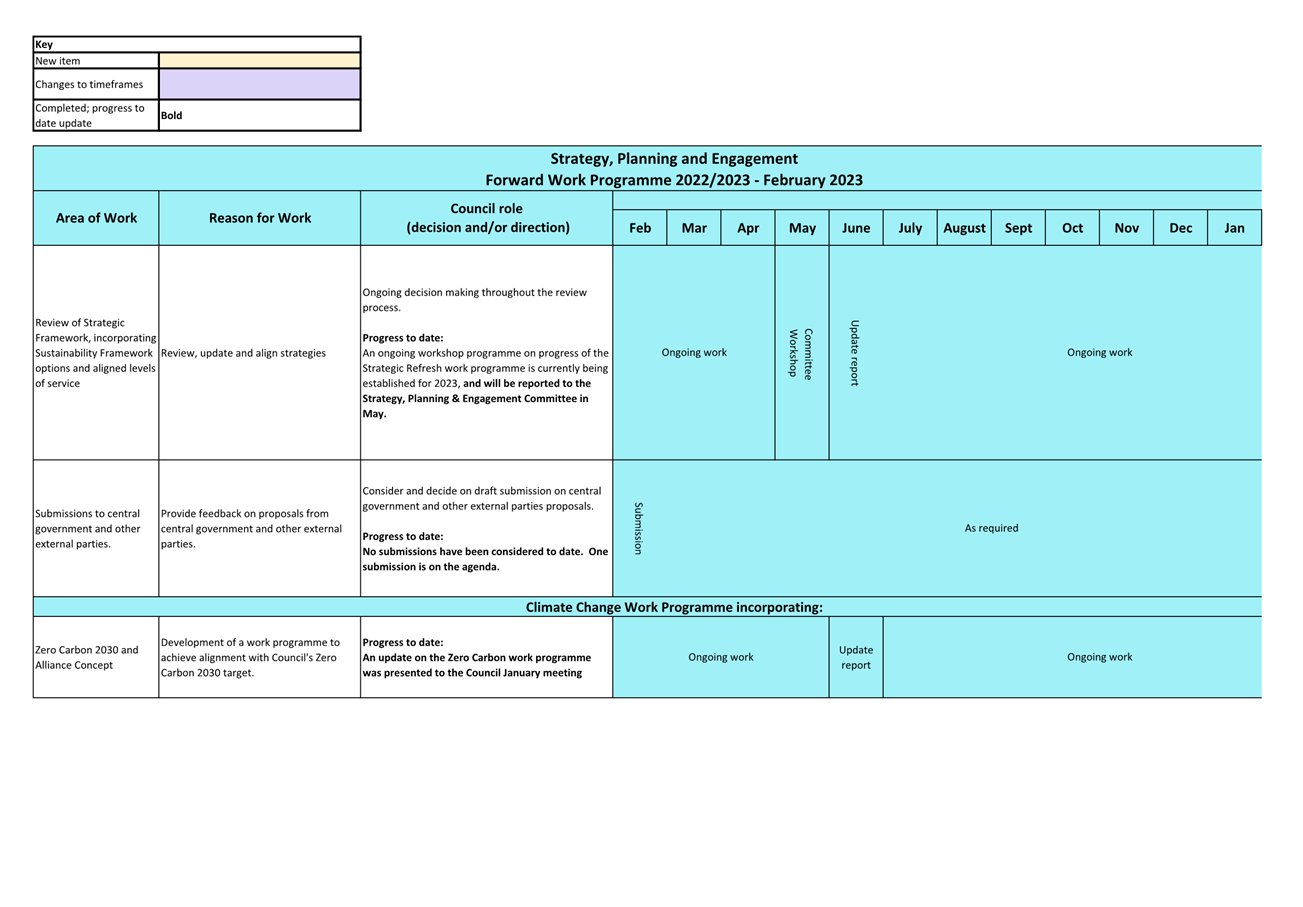
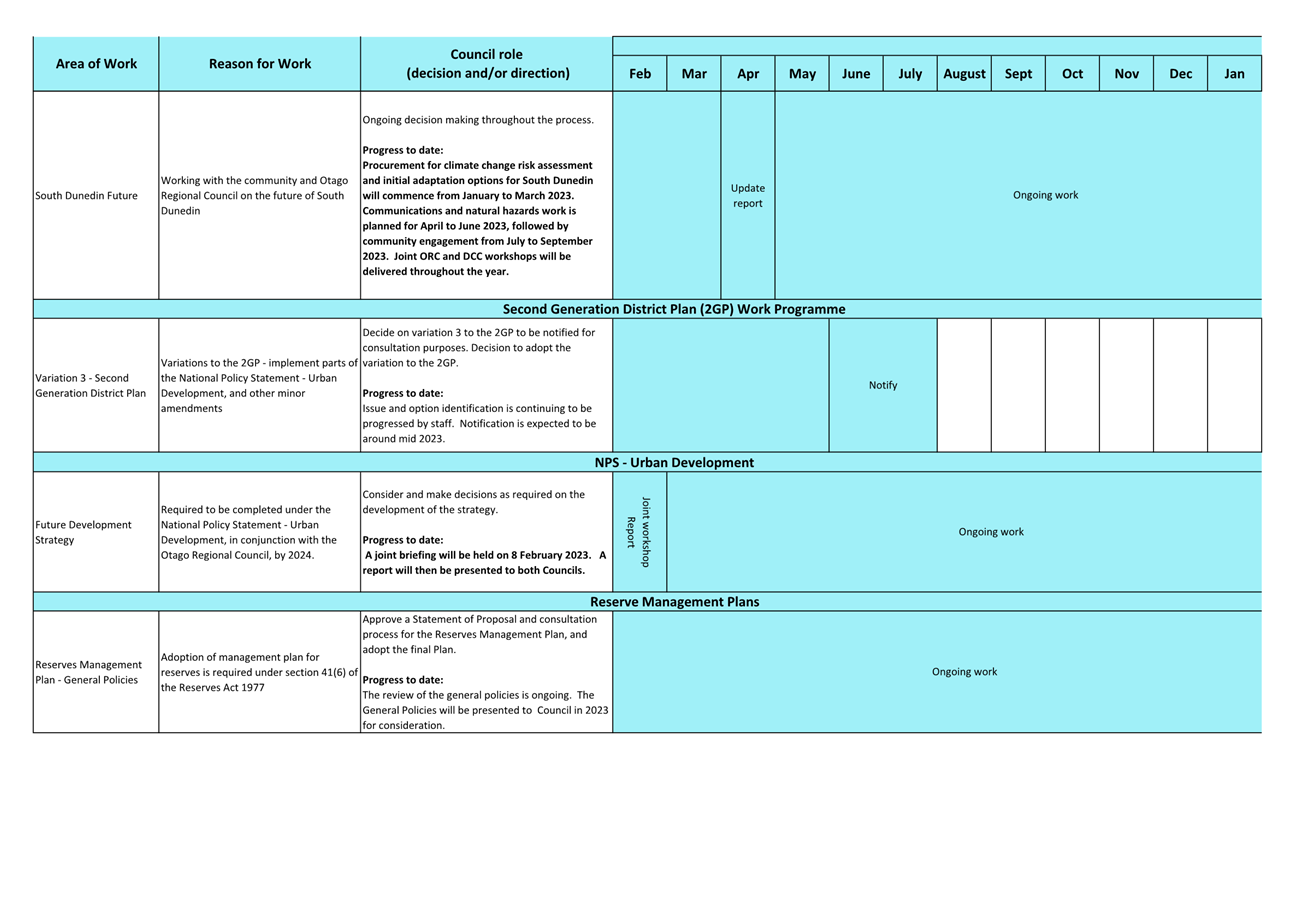
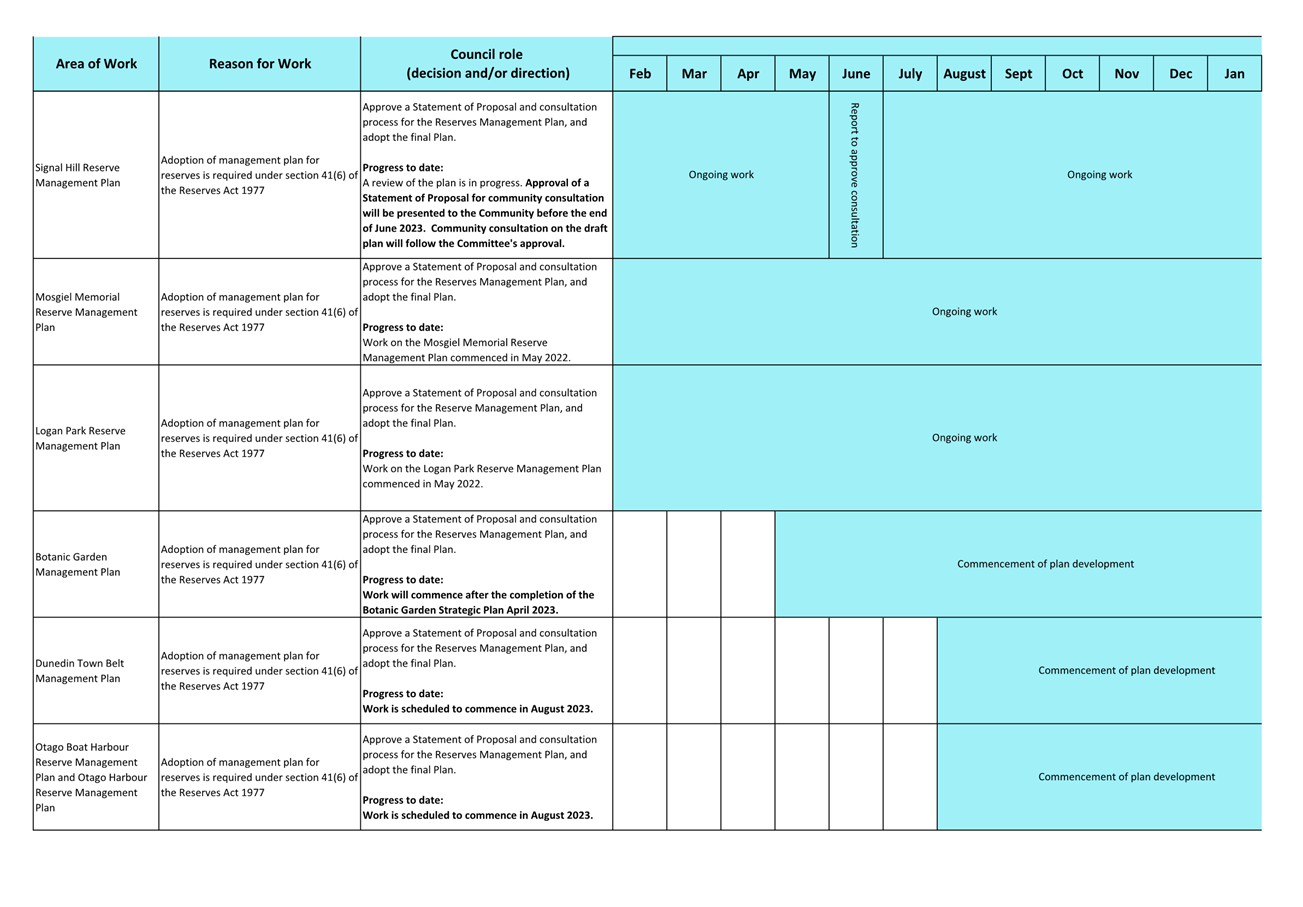
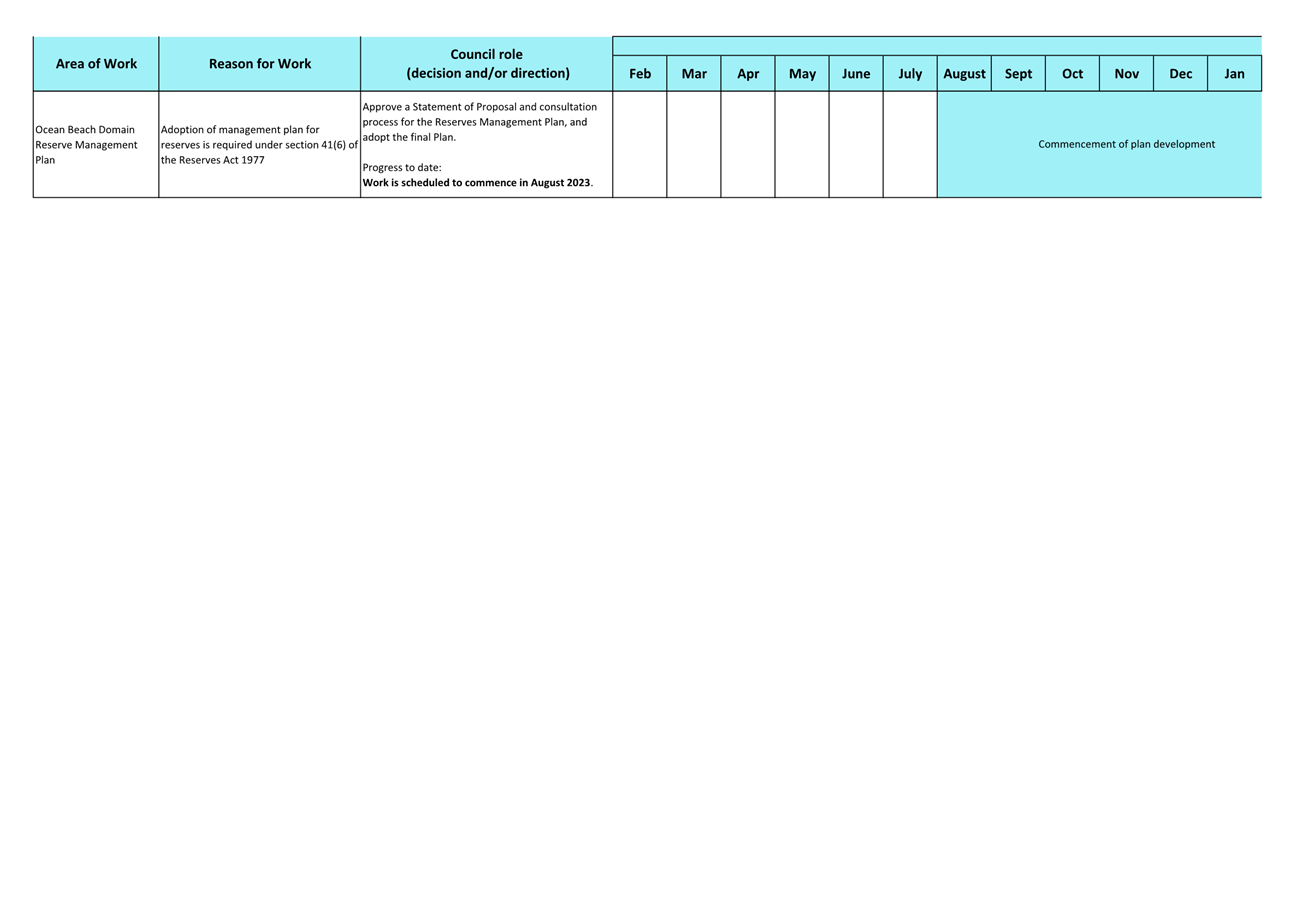
1 The
purpose of this report is to provide a regular update of the Strategy, Planning
and Engagement Committee forward work programme to show areas of activity,
progress and expected timeframes for decision making across a range of areas of
work. (Attachment A).
2 As
this is an administrative report only, there are no options or Summary of
Considerations.
|
RECOMMENDATIONS
That the Committee:
a) Notes the Strategy, Planning and Engagement Committee
forward work programme as shown in Attachment A.
|
DISCUSSION
3 The
forward work programme will be a regular agenda item which shows areas of
activity, progress and expected timeframes for decision making across a range
of areas of work.
4 As
an update report, purple highlights show changes to timeframes. New items
added to the schedule will be highlighted in yellow. Items that have been
completed or updated are shown as bold.
Signatories
|
Author:
|
Wendy Collard - Governance Support Officer
|
|
Authoriser:
|
Jeanette Wikaira - Manahautū (General Manager
Māori Partnerships and Policy
|
Attachments
|
|
Title
|
Page
|
|
⇩a
|
Forward Work Programme
|
16
|
|

|
Strategy & Engagement Committee
13 February 2023
|
|

|
Strategy & Engagement Committee
13 February 2023
|
Resident's Opinion Survey Results 2021/2022
Department: Corporate Policy
EXECUTIVE SUMMARY
1 This
report provides a summary of the annual results of the 2021/22 Residents’
Opinion Survey (ROS) (Attachment A). The 2021/22 survey was conducted during
the previous triennium over the 12 months from 1 July 2021 to 30 June 2022 by
an independent research company, called GravitasOPG.
2 The
Dunedin City Council (DCC) has commissioned a ROS every year since 1994 to
gauge residents’ satisfaction and engagement with a wide range of DCC
services and facilities. The annual results of the ROS, as a full report, has
been formally reported to Council since 2020.
3 The
2021/22 survey received a total of 1,313 responses out of 4,800 survey
invitations, based on a random sample of residents aged 18 years and over from
the electoral roll. Participation is voluntary.
4 Some
groups of residents are more likely to respond to the ROS than others. It is
recognised that younger people (18-29 years) have been noticeably
underrepresented in the ROS, while residents over 50 years provide the majority
of responses. However, due to the limited access to the electoral roll for the
purpose of the ROS, the DCC cannot target particular groups in sampling
efforts.
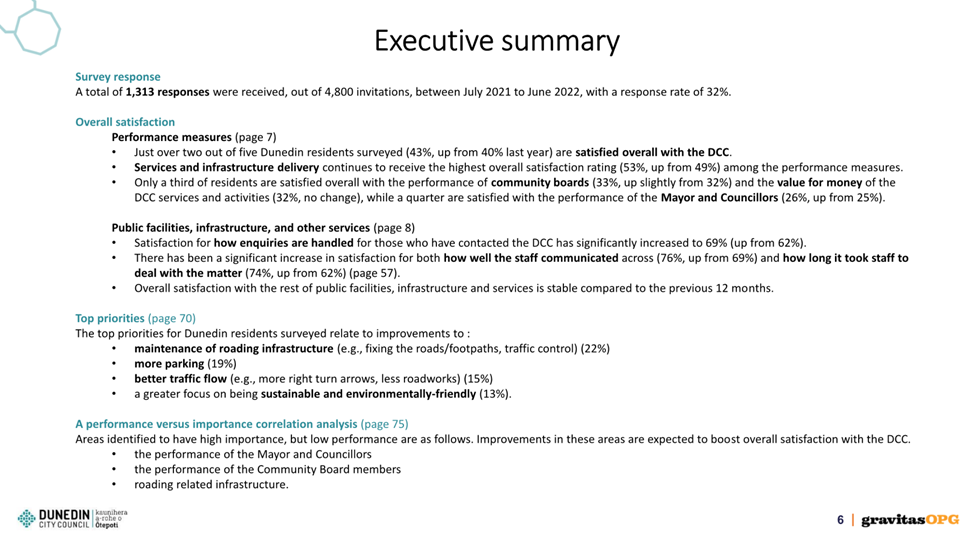
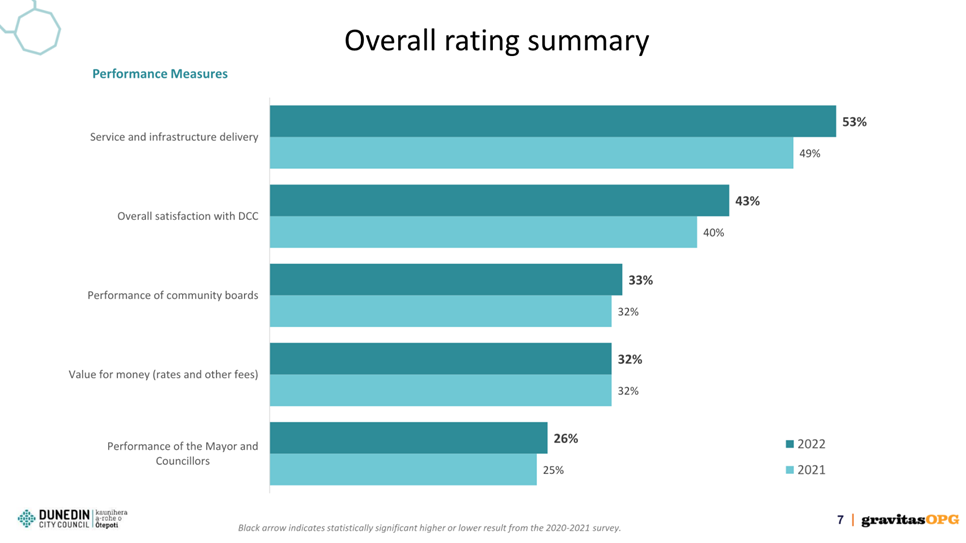
5 Overall
satisfaction with the DCC slightly increased to 43% (from 40% in 2020/21). A
third of respondents were satisfied with the performance of Community Boards
(33%) and the value for money of the DCC services and activities (32%), whereas
a quarter were satisfied with the performance of the Mayor and Councillors
(26%). These ratings are all consistent with the previous year.
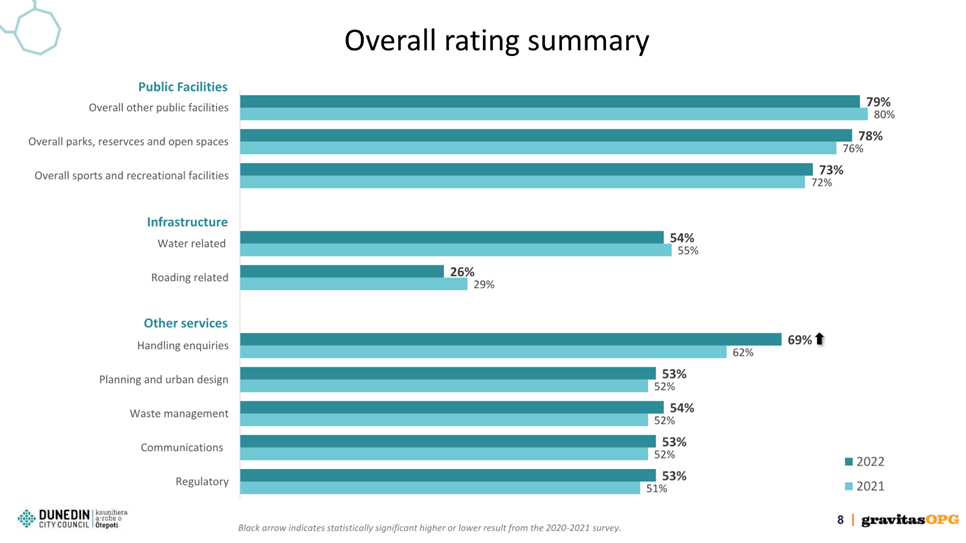
6 There
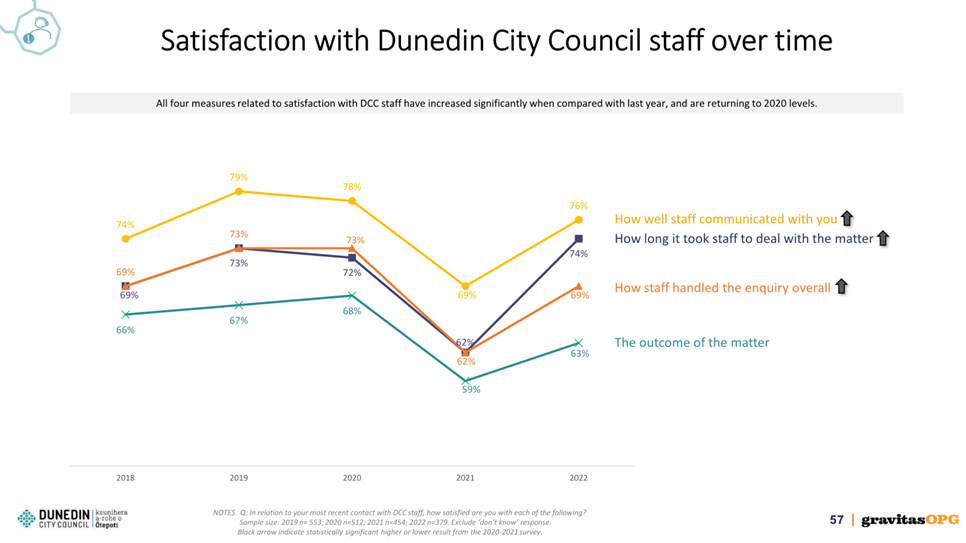
was a significant increase in satisfaction with DCC staff relating to three
aspects of customer services, returning to 2019/20 levels. They are: ‘how
well staff communicated with you’ (76%, up from 69%), ‘how long it
took staff to deal with the matter (74%, up from 62%), and ‘how staff
handled the enquiry overall’ (69%, up from 62%).
7 The
ROS results are currently used to inform 40 Levels of Service (LoS) performance
measures that are set out in the 10 Year Plan 2021-2031. Work is underway to review
data obtained through the ROS as part of the review of LoS statements and
measures. The LoS review aims to use performance-based quantitative measures
rather than residents’ satisfaction-based measures to demonstrate
performance across the DCC’s services.
8 The
ROS review is also informed by the wider Strategic Refresh work programme,
including the City Portrait, development of the four wellbeing strategies, and
the Māori Strategic Framework. Defining the role and purpose of the ROS
will be better determined as the Strategic Refresh develops, and more clarity
is obtained on data requirements for future monitoring and reporting.
9 The
current five-year contract with GravitasOPG expires in August 2024 with the
delivery of a 2023/24 survey (ending 30 June 2024). Staff are meeting with
GravitasOPG to discuss the feasibility of implementing any improvements or
change to the current ROS for the final year of the contract.
|
RECOMMENDATIONS
That the Committee:
a) Notes the annual results of the 2021/22 Resident’s
Opinion Survey
b) Notes the review of the ROS is underway, and the rationale
for the ROS will be informed by the wider Strategic Refresh work programme.
|
BACKGROUND
The purpose and use of a
Residents’ Opinion Survey at the DCC
10 The
ROS is a monitoring tool utilised by the DCC to gauge residents’
satisfaction and engagement with a wide range of DCC services and facilities.
It has been commissioned by the DCC every year since 1994 and provides an
annual snapshot of residents’ satisfaction. Residents’ opinion
surveys are a common tool utilised by other Councils across the country to
monitor residents’ satisfaction.
11 Since
2016, the ROS has been conducted on a monthly, rather than annual basis, to
provide for analysis of seasonal trends throughout the year. Gravitas Research
& Strategy Limited was selected in 2019 to conduct the ROS following a
public procurement process. They have since rebranded to GravitasOPG after
being acquired by Big Picture Marketing Strategy & Research Ltd, a New
Zealand owned and operated marketing insights and research company. The 2021/22
survey was year three of a five-year contract with GravitasOPG.
12 All
ROS reports from 2006 onwards are available publicly on the DCC website. The
ROS results are released every year, and most recently since 2020, reported
directly to Council via a report.
13 The
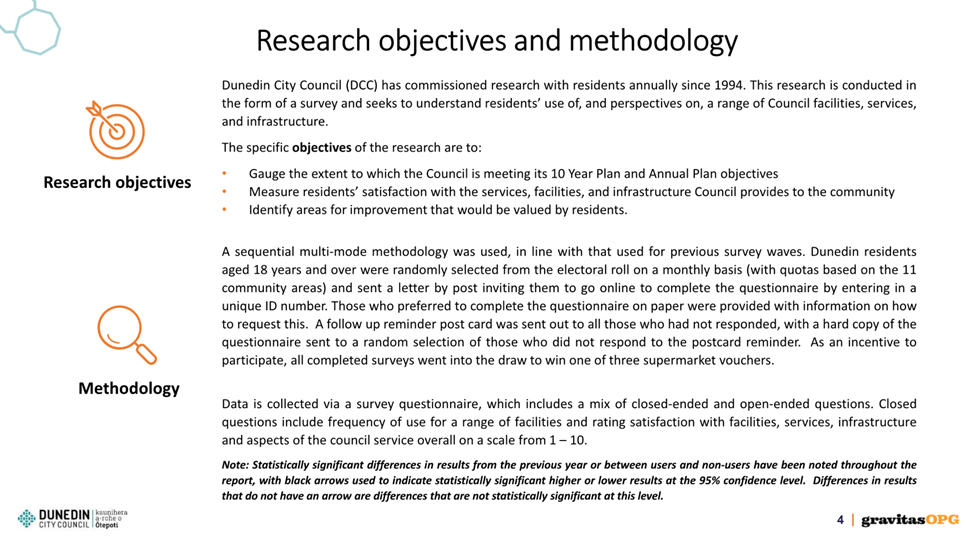
aim of the ROS is to provide statistically representative results on
residents’ satisfaction with DCC services and facilities and perceptions
of Council performance.
14 The
objectives of the ROS are to:
· gauge
the extent to which Council is meeting its 10 Year Plan and Annual Plan
objectives
· measure
resident’s satisfaction with the services, facilities and infrastructure
Council provides to the community
· identify
areas for improvement that would be valued by residents.
15 The
results of the ROS are used to inform 40 Levels of Service (LoS) performance
measures that are set out in the 10 Year Plan 2021-2031. Council’s 10
year plan sets out the activities undertaken by Council. Each activity has LoS
that describe what Council will provide to the community, along with measures
and targets used to assess the level of achievement in delivering those
activities. These statements, measures and targets are Council’s performance
framework. Council reports on how it is achieving its LoS through its Annual
Report and quarterly activity reporting.
Review of the existing ROS
as part of the LoS and other data
16 Currently
staff are undertaking a Strategic Framework Refresh, as part of this project, a
review of the LoS statements and measures is underway. The focus of the LoS
review is to evaluate the effectiveness of DCC’s existing performance
framework and existing suite of survey tools used to measure performance and
monitor wellbeing, including the ROS and Quality of Life Survey (QoLS). The
review looks to move from residents’ satisfaction-based measures obtained
mainly through the ROS to performance-based quantitative measures.
17 The
LoS review will also assess the best way to gauge community satisfaction of
Council services and performance. It will also consider whether the right
questions are being asked for the information that the DCC requires to monitor
and improve service delivery to the community.
18 The
ROS is one of a suite of survey tools the DCC utilises to measure performance
and monitor wellbeing. Other tools utilised by the DCC include the QoLS, The
People’s Panel, Stakeholder Satisfaction Surveys, The Visitor Centre
Survey and other visitor surveys, Community Housing Tenant Survey, and the
Travel Time Survey. Of the suite of survey tools, the ROS and the QoLS are the
two main surveys that the DCC currently utilises for performance and wellbeing
measurement.
DISCUSSION
ROS
methodology
19 The
ROS is based on a sample of randomly selected residents aged 18 years and over
from the electoral roll, with a target sample size of 1,200 residents each
year. Participation is voluntary. Some groups of residents are more likely to
respond to the ROS than others, and it is recognised that younger people (18-29
years) have been noticeably underrepresented in the ROS. However, due to the
limited access to the electoral roll for the purpose of the ROS, the DCC cannot
target particular groups in sampling efforts.
20 The
results are weighted to known population distributions based on the 2018 Census
data for age, gender, ethnicity and location to reduce sample bias due to the
aforementioned differential response rate.
21 The
ROS 2021/22 was conducted over 12 months from 1 July 2021 to 30 June 2022. A
total of 4,800 survey invitations were sent over the survey period, and 1,313
responses were received. A response rate of 32% was achieved, compared with 31%
in 2020/21. The survey results have a margin of error of +/-2.7%.
Summary
of findings
22 The
Residents’ Opinion Survey 2022 report (the report) has been prepared by
GravitasOPG in consultation with Corporate Policy.
23 The
report uses black arrows to indicate statistically significant differences in
results compared to the previous year’s results, or between users and
non-users of facilities.
24 Below
is a high-level snapshot of the ROS 2021/22 report.
a) Services/facilities
respondents (users in last 12 months) are most satisfied with:
· Olveston
Historic Home (94%)
· Dunedin
Botanic Garden (93%)
· Toitū
Otago Settlers Museum (92%)
· Otago
Museum (91%)
· Libraries
(90%)
· Forsyth
Barr Stadium (90%)
b) Services/facilities
respondents are least satisfied with:
· Availability
of parking in the central city (15%)
· Availability
of on-street metred parking in the central city (18%)
· Flow
of traffic at peak (29%)
· Conditions
of roads throughout the city (30%)
· Suitability
of the road network for cyclists (32%)
c) Largest increases in
satisfaction in 2021/22 from 2020/21
· How
long it took staff to deal with a matter (up 12 points to 74%)
· How
well staff communicated with individuals (up 7 points to 76%)
· How
staff handled an enquiry overall (up 7 points to 69%)
· Flow
of traffic at peak (up 7 points to 29%)
d) Largest decreases in
satisfaction in 2021/22 from 2020/21 (users in last 12 months)
· The
Dunedin i-Site Visitor Centre (down 16 points to 61%)
· DCC
playgrounds (down 11 points to 56%)
· Community
swimming pools (down 8 points to 68%)
· Dunedin
Chinese Garden (8 points to 82%)
25 Summaries
for each of the activities represented in the survey are provided below.
Public
Facilities
Parks,
Reserves and Open Spaces
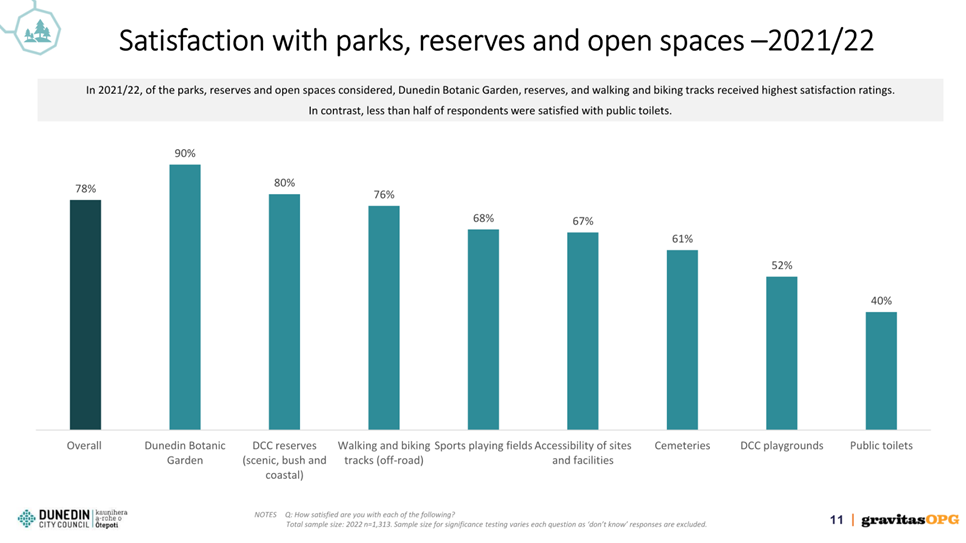
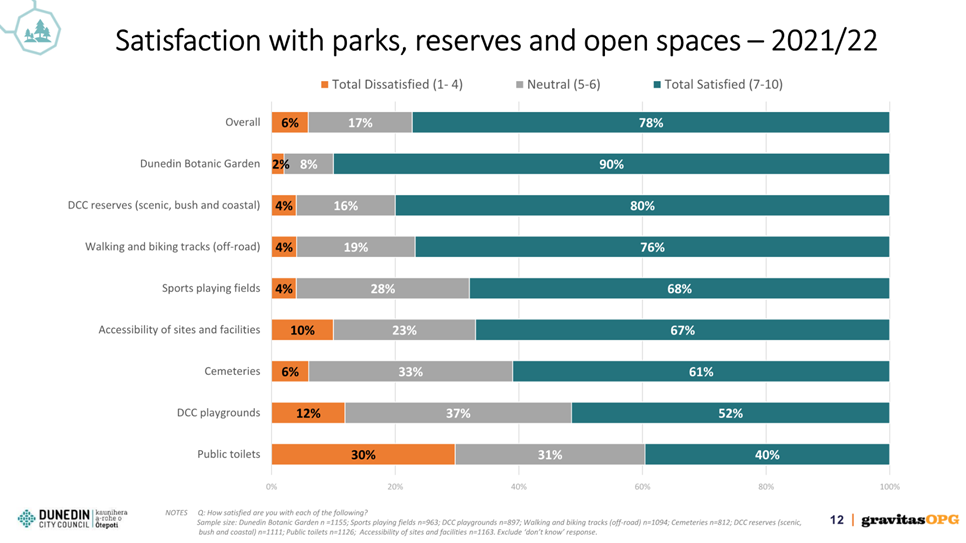
26 Satisfaction
rating for most parks, reserves and open spaces facilities remained stable over
the last 12 months. However, declines were evident for playgrounds (56%, down
significantly from 67% last year) and accessibility to these facilities (67%,
down significantly from 72% last year).
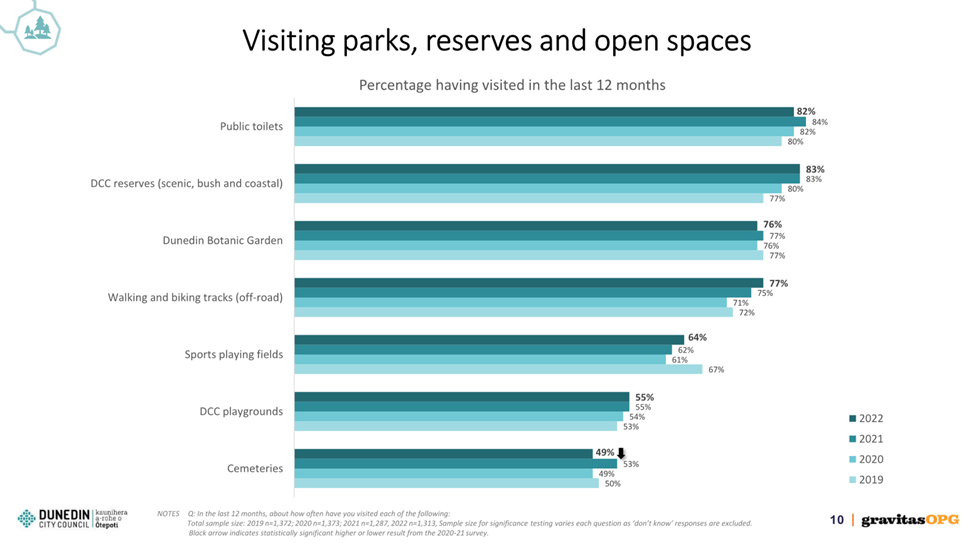
27 There
was not much change in visitation of parks, reserves, and open spaces, except
for cemeteries, which saw a significant decrease of 4%.
Sports
and Recreation Facilities
28 There
was a significant increase in user satisfaction with Forsyth Barr Stadium (90%,
up from 87%), whereas user satisfaction with community swimming pools decreased
significantly (68%, down from 76%). Users’ satisfaction was stable for
all other facilities, including Edgar Sports Centre (77%), Dunedin Ice Stadium
(76%), and Moana Pool (75%).
Other
Public Facilities
29 Four
public facilities received high user satisfaction ratings of above 90%,
including Olveston Historic Home (94%), Toitū Otago Settlers Museum (92%),
Otago Museum (91%) and Libraries (90%) although the ratings were lower than the
previous year for all these facilities, except for Olveston Historic Home,
which saw an increase of 3%.
30 There
was a decline in user satisfaction with the Dunedin i-Site Visitor Centre (61%,
down from 77%) and the Dunedin Chinese Gardens (82%, down from 90%).
Infrastructure
Water
related Infrastructure
31 After
a significant decline in 2019/2020, the percentage of respondents satisfied
with water infrastructure was stable, with just over half of respondents were
overall satisfied with water related infrastructure (54%). Satisfaction with
the sewerage and stormwater systems decreased significantly (62% and 47%,
respectively), back to similar levels in 2019/2020.
Roading,
footpaths, lighting and parking
32 Overall
satisfaction with roads, footpaths, lighting and parking continued to decline
over the last 12 months, with only 26% of respondents satisfied. Respondents
were least satisfied with the availability of parking in the central city, with
66% dissatisfied, 19% neutral and only 15% satisfied. Just over half of
respondents (53%) were also dissatisfied with availability of on-street metered
parking, with only 18% satisfied. Issues with the roading related
infrastructures were also featured as top two priorities for the DCC to address
this year.
33 Satisfaction
with the flow of traffic at peak hours increased significantly (29%, up from
22%). Highest satisfaction ratings were recorded for street lighting (62%) and
ease of pedestrian movement (62%), followed by the flow of traffic at off-peak
times (60%).
Services
Waste
Management
34 Overall
satisfaction with waste management services marginally increased (54%, up from
52%). However, satisfaction with most of the individual aspects of waste
management declined significantly, including kerbside rubbish collection (58%,
down from 62%), public street litter bins (54%, down from 59%), and public
recycling bins (49%, down from 54%). Most common topics from respondents’
comments included ‘streets need more cleaning’, ‘get rid of
black plastic bags’, and ‘need more public rubbish bins’.
Regulatory
Services
35 Over
half of respondents (53%) were satisfied overall with regulatory services, with
all individual aspects remained stable. Satisfaction ratings were the highest
for control of roaming dogs (62%) and the lowest for parking enforcement (46%).
Most common topics from respondents’ comments included ‘parking
enforcement not doing their job’, ‘dog owners not picking up after
their dog’, and ‘poor service from noise control’.
Planning
and Urban Design
36 Overall
satisfaction with planning and urban design remained stable (53%). Satisfaction
with look and feel of the city and most convenient retail centre continued to
show a declining trend, further down to 59% and 57%, respectively.
Respondents’ comments noted ‘too many empty retail stores’,
‘looks old, needs modernising’, and ‘DCC focusing on wrong
areas/or development types’.
Communications, Contact and Information
37 Overall
satisfaction with how well the DCC keeps residents informed and the DCC website
remained stable (53%) after two consecutive years of decline. Satisfaction with
the DCC FYI newsletter continued to decline and further dropped to 50%,
compared to 54% in 2020/21.
38 The
percentage of respondents who contacted DCC staff in the last three months
significantly declined to 29%. Almost 60% of these interactions were done by
telephone, compared to 55% in 2020/21.
39 Satisfaction
with DCC staff increased across all four measures and returned to 2019/20
levels. Overall, 69% of respondents who contacted the DCC in the last three
months were satisfied with how DCC staff handled the enquiry, compared with 62%
in 2020/21. A significant increase was also seen in satisfaction with
‘how well staff communicated’ (76%, up from 69%) and ‘how
long it took the staff to deal with the matter of concern’ (74%, up from
62%).
Leadership
and Overall Satisfaction
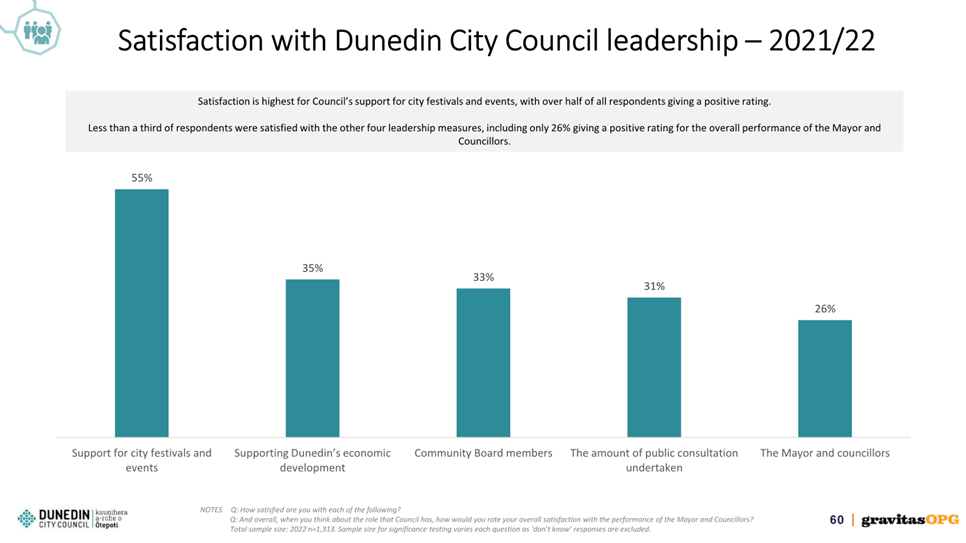
40 Satisfaction
with all aspects of DCC leadership remained stable but below 2019/20 levels,
including the DCC’s support for city festivals and events (55%) and
economic development (35%) along with satisfaction with the Mayor and
Councillors (26%) and Community Board members (33%) and satisfaction with the
amount of public consultation undertaken (31%).
41 Overall
satisfaction with the DCC marginally increased to 43% from 40% in the previous
year. There was a similar patter with a slight increase in satisfaction with
facilities, infrastructure, and services (53%, up from 49%). Just over a third
of respondents (32%) were satisfied with overall value for money of DCC
services and activities, while 29% were neutral and 39% were dissatisfied.
42 Respondents
commenting about Council performance cited issues with focusing on the wrong
areas and/or plans, and on more consultation on projects, and fix or focus on
roading issues.
Perceptions
of Dunedin
43 When
compared with 2020/21, positive ratings declined for residents’
perceptions of the majority of measures (Dunedin maintains and preserves its
architectural heritage, Dunedin is a safe city, Dunedin is a creative city,
Dunedin recognises and supports cultural diversity, Dunedin is a fun city,
Dunedin is a thriving city, Dunedin is a sustainable city, the DCC is a leader
in encouraging the development of a sustainable city).
44 There
was a significant decline for Dunedin being a creative city (66%, down from
72%), Dunedin recognising and supporting cultural diversity (60%, down from
68%), and Dunedin being a sustainable city (39%, down from 47%).
45 Of
the nine aspects of the city considered, the highest positive rating was
recorded for Dunedin maintains and preserves its architectural heritage (76%).
In contrast, ratings were the lowest for the DCC being a leader in encouraging
the development of a sustainable city (30%) and for Dunedin being a sustainable
city (39%).
Top
two priorities for the DCC
46 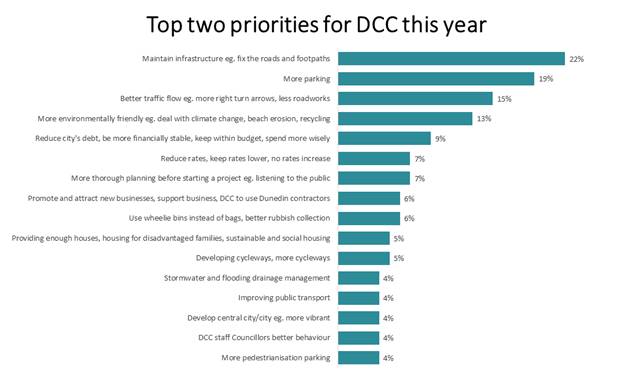 Survey
respondents provided their top two priorities for the DCC to address this year.
The top two priorities featured in the responses include maintaining
infrastructure (e.g., fix the roads and footpaths) and more parking. Other
priorities include better traffic flow (e.g., more right turn arrows, less
roadworks), more environmentally friendly initiatives, and reducing city debt.
It should be noted that there were conflicting comments about roadwork (i.e.,
fix the roads and less roadworks).
Survey
respondents provided their top two priorities for the DCC to address this year.
The top two priorities featured in the responses include maintaining
infrastructure (e.g., fix the roads and footpaths) and more parking. Other
priorities include better traffic flow (e.g., more right turn arrows, less
roadworks), more environmentally friendly initiatives, and reducing city debt.
It should be noted that there were conflicting comments about roadwork (i.e.,
fix the roads and less roadworks).
47 The
top priorities provided in the response were almost identical to the last year,
however better traffic flow was more prominent than more environmentally
friendly initiatives and reducing city debt. A summary of the comments is
provided below and on page 70 of Attachment A.
Correlation
analysis
48 A
performance versus importance correlation analysis was undertaken by
GravitasOPG, since the 2019/20 year (see pages 72-75 of Attachment A). This
analysis considers the relative importance of each measure in the survey to the
overall satisfaction rating.
49 The
performance of Mayor and Councillors, Community Boards and roading-related
infrastructure were identified as areas that are of high importance but lower
performance in 2021/22. This reflects last year’s analysis where the same
areas were also noted for improvement. These areas strongly influenced
residents’ overall satisfaction ratings.
Summary
50 Just
over two out of five respondents (43%) were satisfied overall with the DCC in
2021/22, an increase from last year’s result of 40%. Areas identified to
have the biggest impact on the improvement of the overall satisfaction with the
DCC include: the performance of the Mayor and Councillors, the performance of
the Community Board members, and roading-related infrastructure.
51 A
significant increase was observed in satisfaction with DCC staff relating to
three aspects of customer services, returning to 2019/20 levels. They are:
‘how well staff communicated with you’ (76%, up from 69%),
‘how long it took staff to deal with the matter (74%, up from 62%), and
‘how staff handled the enquiry overall’ (69%, up from 62%).
52 While
the ROS provides the opportunity to get a sense of what Dunedin City residents
think and feel about DCC services and facilities and perceptions of Council
performance, the results reflect a snapshot of residents’ perceptions
(i.e., about 1% of the city population) at one point in time. There are many
factors that contribute to individual’s perceptions, and it cannot be
assumed that all opinions of Dunedin residents have been captured via this
survey methodology. Further research would be necessary to provide a more
in-depth and comprehensive understanding of the reasons behind particular
results and perceptions.
53 Staff
are currently undertaking a review of data obtained through the ROS as part of
the review and update of LoS statements and measures, which looks to shift from
residents’ satisfaction-based measures (i.e., ROS) to performance-based
quantitative measures.
54 The
rationale or need for the ROS will be further reviewed and contextualised as
the wider Strategic Refresh develops, and more clarity is obtained on data requirements
for future monitoring and reporting to ensure alignment with the updated
strategic priorities.
OPTIONS
55 There
are no options as this is a report for noting.
NEXT STEPS
56 The
2021/22 ROS results report (Attachment A) will be uploaded onto the DCC
website. GravitasOPG will continue to deliver the ROS monthly for the 2022/23
survey, ending 30 June 2023.
57 The
review of the ROS will continue as part of the redevelopment of the LoS and
other data as part of the Strategic Refresh. The rationale or need for the ROS
will be reviewed and informed by the development of the wider Strategic
Refresh, including the City Portrait, the four wellbeings, and the Māori
Strategic Framework.
58 The
LoS review and the continuous improvement approach to embedding change across
the Council’s performance framework will assist in on-going monitoring
and evaluation to ensure survey tools are fit for purpose to fulfil data
requirements and are aligned with the Strategic Refresh.
59 Councillors
and staff will inform this work through a series of workshops and reports in
2023.
60 Staff
are mindful that the current five-year contract with GravitasOPG will not end
until the delivery of a 2023/24 survey, ending 30 June 2024. Staff are meeting
with GravitasOPG to see if it is feasible to implement any improvements or
change to the current ROS for the last year of the contract.
Signatories
|
Author:
|
Gina Huakau - Corporate Policy Manager
|
|
Authoriser:
|
Jeanette Wikaira - Manahautū (General Manager
Māori Partnerships and Policy
|
Attachments
|
|
Title
|
Page
|
|
⇩a
|
Residents' Opinion
Survey Results Report 2021-2022
|
31
|
|
SUMMARY OF CONSIDERATIONS
|
|
Fit with purpose
of Local Government
The ROS enables democratic local decision
making and action by, and on behalf of communities
|
|
Fit with strategic
framework
|
|
Contributes
|
Detracts
|
Not applicable
|
|
Social Wellbeing Strategy
|
☒
|
☐
|
☐
|
|
Economic Development Strategy
|
☒
|
☐
|
☐
|
|
Environment Strategy
|
☒
|
☐
|
☐
|
|
Arts and Culture Strategy
|
☒
|
☐
|
☐
|
|
3 Waters Strategy
|
☒
|
☐
|
☐
|
|
Spatial Plan
|
☒
|
☐
|
☐
|
|
Integrated Transport Strategy
|
☒
|
☐
|
☐
|
|
Parks and Recreation Strategy
|
☒
|
☐
|
☐
|
|
Other strategic projects/policies/plans
|
☒
|
☐
|
☐
|
The ROS contributes to all
aspects of the strategic framework as it gauges resident’s opinions on
DCC services and performance.
|
|
Māori Impact
Statement
The current ROS does not qualify to receive Māori descent
electoral roll data under section 112 of the Electoral Act 1993. This data
would enable more accurate representation of Māori in the ROS through
targeted sampling.
Where response rates are not
proportional to the Ōtepoti population for Māori the results are weighted to known population
distributions based on the 2018 Census data to reduce sample bias.
|
|
Sustainability
The ROS asks about
residents’ perception of Dunedin as a sustainable city, and whether the
DCC is a leader in encouraging the development of a sustainable city.
|
|
LTP/Annual Plan /
Financial Strategy /Infrastructure Strategy
The ROS asks about
resident’s satisfaction with the ‘value for money’ of the
services provided by the DCC.
|
|
Financial
considerations
There are no direct financial considerations.
|
|
Significance
The significance of this report
is low, in terms of Council’s Significance and Engagement policy, as it
is for noting only.
|
|
Engagement –
external
The ROS is a form of external
engagement.
|
|
Engagement -
internal
ROS results are available to management and staff monthly,
and some results have been reported to Council committees quarterly.
Reporting of ROS results will be considered as part of future work on non-financial
reporting, levels of service and strategic framework refresh.
|
|
Risks: Legal /
Health and Safety etc.
There are no known risks.
|
|
Conflict of
Interest
There are no known conflicts of interest.
|
|
Community Boards
ROS result breakdowns are available at a community level,
which includes Community Board areas.
|
|
|
Strategy & Engagement Committee
13 February 2023
|
|

|
Strategy & Engagement Committee
13 February 2023
|
Submission on the Natural and Built
Environment Bill and the Spatial Planning Bill
Department: Corporate Policy and City Development
EXECUTIVE SUMMARY
1 This
report seeks approval of a draft Dunedin City Council (DCC) submission to the
Government’s Environment Committee on the Natural and Built Environment
(NBE) and the Spatial Planning (SP) Bills. As the NBE and SP Bills are
interrelated, the DCC addresses both of these in a single cover submission
(Attachment A), with a supplementary technical submission (Attachment B) that
refers to each bill individually.
2 The
DCC previously submitted on the “Natural and
Built Environments Act Exposure Draft” in August 2021 (Attachment C).
3 The
Government intends to repeal the Resource Management Act 1991 (RMA) and replace
it with three new Acts: the Natural and Built Environment Act, the Spatial
Planning Act — which are the subject of this submission — and the
Climate Adaptation Act, which is expected to be introduced in mid-2023.
4 Submissions
close on 19 February 2023.
|
RECOMMENDATIONS
That the Committee:
a) Approves the DCC submission, with any amendments,
on “the Natural and Built Environment Bill and the Spatial Planning
Bill”.
b) Authorises the Mayor or his delegate to speak to
the submission at hearings.
c) Authorises the Chief Executive to make any minor
editorial amendments to the submission.
|
BACKGROUND
5 The
Government’s reform of the Resource Management system is guided by five
key objectives, intended to:
· protect
and where necessary restore the natural environment, including its capacity to
provide for the wellbeing of present and future generations
· better
enable development within environmental biophysical limits including a
significant improvement in housing supply, affordability and choice, and timely
provision of appropriate infrastructure, including social infrastructure
· give
effect to the principles of Te Tiriti of Waitangi to provide greater
recognition of Te Ao Māori, including mātauranga Māori
· better
prepare for adapting to climate change and risks from natural hazards as well
as mitigating the emissions that contribute to climate change
· improve
system efficiency and effectiveness, and reduce complexity, while retaining
appropriate local democratic input.
6 The NBE is the cornerstone of the new
resource management system, which replaces the RMA. The NBE Bill directs the
development of NBE plans (one per region) which will replace all the current
district plans, regional plans and the regional policy statement in that
region.
7 The development of the RSS is the
responsibility of the Regional Planning Committee.
8 The
purpose of the NBE Bill is to enable the use, development, and protection of
the environment in a way that:
· supports
the well-being of present generations without compromising the well-being of
future generations
· promotes
outcomes for the benefit of the environment
· complies
with environmental limits and their associated targets
· manages
adverse effects.
9 The
NBE Bill is also intended to recognise and uphold “te Oranga o te
Taiao”, which is described in the Bill as a “te ao Māori concept that speaks to the health of
the natural environment, the essential relationship between the health of the
natural environment and its capacity to sustain life, and the
interconnectedness of all parts of the environment”.
10 The NBE Bill includes a new
decision-making principle in relation to iwi and hapū, to ensure the
recognition and provision for the responsibility and mana of each iwi and
hapū to protect and sustain the health and well-being of te taiao in
accordance with the kawa, tikanga (including kaitiakitanga), and
mātauranga in their area of interest.
11 Section 5 of the NBE Bill lists
“system outcomes” that the National Planning Framework and all
plans must provide for. These cover the following concepts:
· protection
or restoration of the ecological integrity, mana and mauri of various aspects
of the natural environment and outstanding natural features, landscapes and the
natural character of the coastal environment
· reduction
of greenhouse gas emissions and removal of greenhouse gases from the atmosphere
· Risk
from natura hazards and climate-change
· well-functioning
urban and rural areas that are responsive to changing needs of people and
communities and that promote use and development of land; supply of land for
development; housing choice and affordability; and an adaptable and resilient
urban form with good accessibility to social, economic, and cultural
opportunities
· the
availability of highly productive land for primary production
· recognition
of the relationship of iwi and hapū with their taonga
· protection
of protected customary rights
· conservation
of cultural heritage
· enhanced
public access to and along the coastal marine area, lakes, and rivers
· the
ongoing and timely provision of infrastructure services to support well-being.
12 The
NBE Bill includes directions around the role of a new National Planning
Framework (NPF), a central
government regulatory instrument that replaces the current suite of National
Policy Standards and National Planning Standards. The NPF is intended to
provide consistent direction from central government on topics of national
significance or where national consistency is seen as desirable. It can set
direction for both regional spatial strategies (RSSs) and NBE plans.
The NPF will set (either directly or require the
following content to be included in NBE plans):
· environmental
limits and targets
· direction
on system outcomes
· direction
to help resolve conflicts between outcomes
· strategic
directions
· management
units
· how
monitoring must be undertaken
· direction
on non-commercial housing and papakāinga on Māori land, enabling
development capacity well ahead of expected demand, enabling infrastructure and
development corridors, and enabling renewable electricity generation and its
transmission.
13 The NPF may also
set other directions for Territorial Authorities (TAs).
14 The NPF will be developed with public
submissions to a Board of Inquiry.
15 While the NBE plans are developed by the
Regional Planning Committee, the existing councils will be required to
implement the new NBE plans, in terms of administering the resource consent process
and undertaking monitoring and enforcement actions.
Spatial Planning Bill (SP Bill)
16 The purpose of the SP Bill is to direct
the development of Regional Spatial Strategies (RSS), which appear to replace
the current Future Development Strategy requirement and which NBEA plans must
be consistent with. Similar to the NBE plans, development of the RSS is the
responsibility of the Regional Planning Committee.
17 The RSS must:
· Set
the strategic direction for the use, development, protection, restoration and
enhancement of the environment for the region for a time-span of not less than
30 years
· Provide
for integrated management
· Support
the efficient and effective management of the environment; and
· Give
effect to national planning framework.
18 RSSs
will include:
· A
vision and objectives for the region’s development and change
· priority
actions to achieve the vision and objectives
· provide strategic direction on a long list
of matters set out in section 17 an 18, including:
- areas that are appropriate for urban
development and change, including existing, planned, or potential urban centres
of scale
- areas that are appropriate for developing,
using, or extracting natural resources, including generating power
- areas that are appropriate to be reserved
for rural use or where there is expected to be significant change in the type
of rural use
- areas of the coastal marine area that are
appropriate for development,
- areas that may require protection
- major existing, planned or potential
infrastructure
- areas that are vulnerable to significant
risks from natural hazards, and measures for reducing those risk and increasing
resilience
- Areas that are vulnerable to the effects
of climate change both now and in the future and measures to address those
effects including major new infrastructure and areas suitable for land use
change.
19 Public submissions will be open for RSS,
but there is no requirement to hold hearings or for Panels with the power to
seek or consider evidence. There are also no appeal rights.
20 Councils will be responsible for
implementing the RSS through their Long-Term Plans.
Regional Planning Committees (RPCs)
21 As
outlined above the responsibility for developing NBE plans and SP regional
spatial strategies sits with proposed new Regional Planning Committees (RPC).
One RPC is to be established in each region, comprising representation from
local government, hapū iwi and Māori, and central government (though
central government members only participate in relation to RSS).
22 The
membership and structure of RPCs is to be decided on a region-by-region basis.
They will be an independent statutory committee, with no prior authority or
ratification required, and subject to modified provisions under the Local
Government Official Information and Meetings Act 1987 (LGOIMA).
23 The local authorities in the region must agree which
council should as the “host authority” for the RPC. If they cannot
agree it defaults to the regional council. The host council must house and
provide support to the RPC but the RPC is independent from the host council.
The RPC will be supported by a secretariat. All costs of the RPC are jointly
funded by all councils, with funding agreements to be negotiated amongst
councils in the region.
24 The RPC must appoint its own Director and the director
becomes the employer of the rest of the secretariat.
25 The
RPC membership must comprise:
· at least six members, but there is no
upper limit
· each council has a least one seat
· two members must be from Māori
appointing bodies
· one member will be appointed by the
Environment Minister, in relation to RSS only.
Māori involvement and participation
In addition to Māori representation on RPCs:
26 The
NBE Bill establishes an independent National Māori Entity (the Entity),
consisting of seven members.
27 The purpose of the Entity is to monitor and assess the cumulative effect of the
exercise of functions, powers, and duties under the NBE and SP Acts in giving
effect to the principles of te Tiriti o Waitangi, by anyone acting under the
NBE and SP Acts, including local authorities and unitary authorities.
28 Iwi and hapū in each region will be required to
form a committee for the purpose of agreeing with local authorities the
composition arrangements of the RPC, and leading the process to determine the
one or more Māori appointing bodies for the RPC.
29 RPCs
must form Engagement Agreements by inviting the following groups to enter into
one or more agreements: iwi
authorities, and groups that represent hapū whose area of interest
includes any part of the region; customary marine title groups whose customary
marine title area includes any part of the region, under the Marine and Coastal
Area (Takutai Moana) Act 2011; and finally, other Māori groups with interests in the region, if
the RPC considers it useful.
30 The NBE Bill enables Māori to be involved in
monitoring of environmental limits and targets, through representation on a
review panel as part of the NPF.
Consenting
31 Councils will continue to be the consent authorities
for consents, certificates and registering for activities.
32 Existing consent types in the RMA will remain
unchanged: land use, subdivision, coastal permits, water permits, and discharge
permits.
33 The NBE Bill reduces the current consent categories to
four, which are described as follows:
· permitted: activities where positive and
adverse effects, including cumulative effects, are known
· controlled: activities where potential
positive and adverse effects, including cumulative effects, are generally known
but tailored management of effects is required. Councils will have limited
discretion to decline
· discretionary: activities that are less
appropriate, have effects that are less known or go beyond regional boundaries,
and/or were unanticipated at the time of plan development. Councils will have a
broad discretion to seek information and the ability to decline
· prohibited: activities that do not meet
outcomes and/or breach limits; no applications will be allowed..
34 The NBE Bill sets out five consenting pathways:
ordinary pathway, direct referral, affected application pathway, fast track
consenting process, and proposals of national significance.
35 Matters that must be considered in the consenting
process will include: whether and to what extent the activity contributes to
any relevant outcomes, limits, targets, and policies in a plan, a RSS, or the
NPF; the state of the future environment; and prior non-compliance.
Compliance, monitoring and enforcement
36 At a high-level, structural and broad
changes to how the resource management regime monitors and enforce compliance
include:
· an increase in monitoring and enforcement
obligations
· national direction on monitoring provided
through the National Planning Framework
· a requirement for regional monitoring and
reporting categories
· local, regional and national reporting
requirements
· a monitoring function for the National
Māori Entity.
37 The NBE Bill includes an increased set of enforcement
tools, including monetary benefit orders, adverse publicity orders, and
enforceable undertakings.
Discussion
DCC submission
38 The
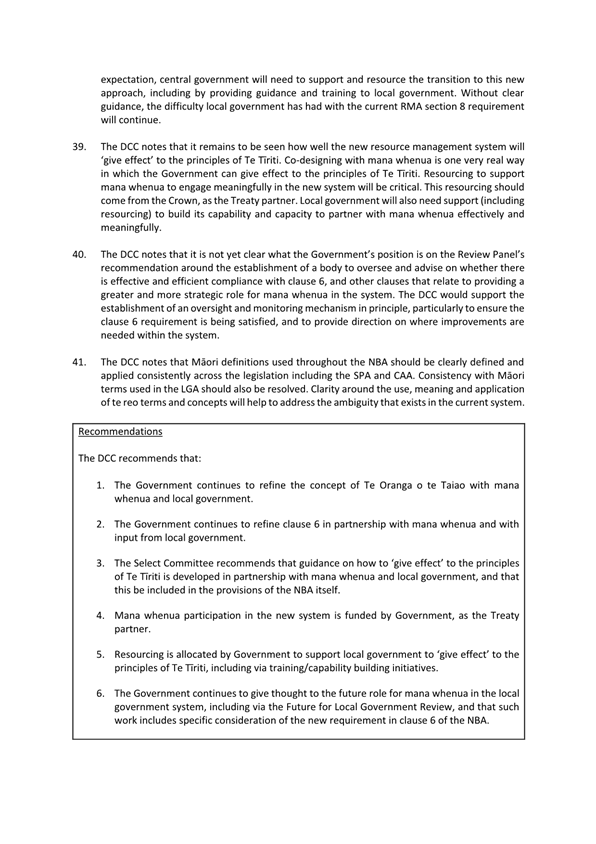
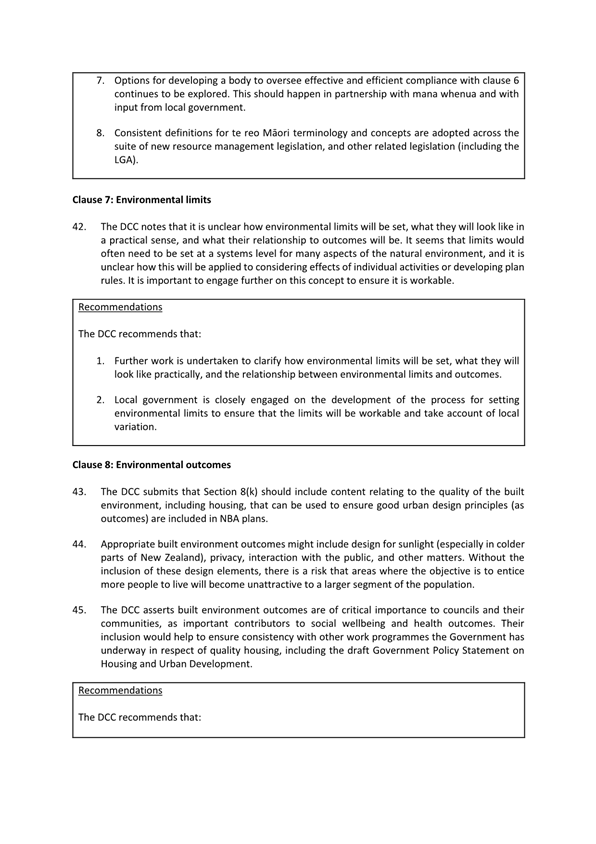
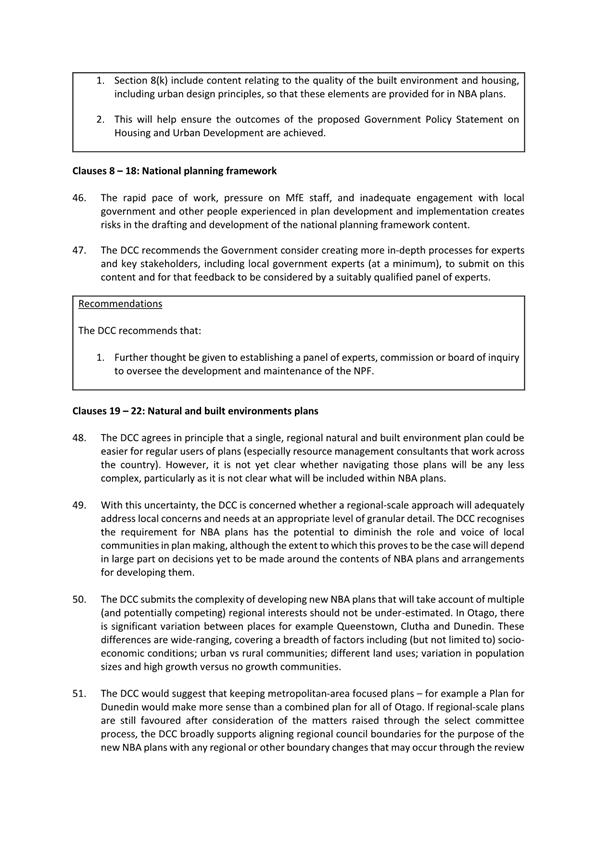
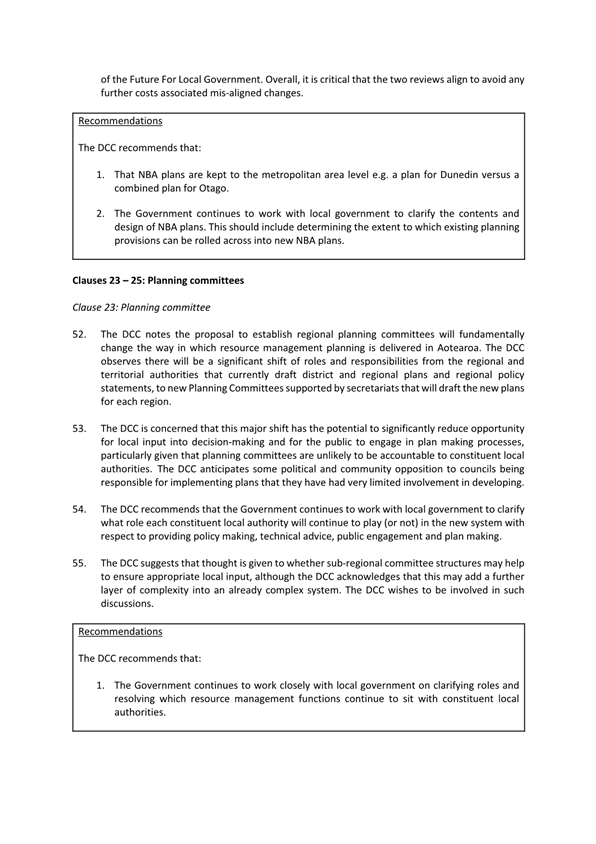
draft DCC submission broadly supports the objectives of the reforms and
highlights a number of positive changes but also outlines areas of concern and
makes a number of suggestions. Some of the key matters of concern are:
a) The pace of
reform and the need to take the time to get it right and to align it with the
review and reform of local government, and allow time for the Climate
Adaptation Act to be developed
b) The costs of
implementing the reform, and the need for central government to provide
adequate funding to implement the new system, including to part fund the
development of new plans (especially given the recent costs to local ratepayers
of developing second generation plans)
c) The lack of
clarity on transitioning between the systems and the desire to reduce the cost
and frustrations that may arise through transition
d) loss of local
influence over plan making (and place outcomes) and the significantly increased
role for central government, which creates the risk of ‘moving goal
posts’ with changes of Government
e) the role of RSSs
in determining the appropriateness of future development, without proportionate
processes to robustly evaluate options
f) lack of
alignment with other reforms, particularly the review and reform of local
government, which is intended to set out the desired future structure,
functions, and funding for local government
g) removal of the
ability to manage the environment for amenity, character or design
considerations
h) timeframes for
the development of the first iteration of NBE plans, which appear unworkable
given the scale of these plans.
i) uncertainty
around how the proposed National Māori Entity will be established and
adequately resourced.
46 The
DCC submission was informed by the content of the draft Taituarā (formerly
SOLGM) submission, to which DCC staff also contributed, and input from the City
Development, Resource Consents, Corporate Policy and 3 Waters teams.
OPTIONS
Option
One – Recommended Option - Approve the DCC submission, with any
amendments, on the Natural and Built Environment Bill and the Spatial Planning
Bill
47 Approve
the DCC submission, with any amendments, on the NBE Bill and the SP Bill.
Advantages
· Opportunity
to show support in principle for the aims of the NBE Bill and the SP Bill.
· Opportunity
to provide feedback on topics relevant to the DCC’s strategic and
operational work, including zero carbon goals.
· Opportunity
to provide feedback and request clarification around some areas of the draft
legislation that may impact on Ōtepoti Dunedin when the legislation is in
place.
Disadvantages
· There
are no identified disadvantages for this option.
Option
Two – Do not approve the DCC submission on the Natural and Built
Environment Bill and the Spatial Planning Bill
48 Do
not approve the DCC
submission on the NBE Bill and the SP Bill.
Advantages
· There
are no identified advantages to this option.
Disadvantages
· Missed
opportunity to provide feedback on topics relevant to the DCC’s strategic
and operational work.
· Missed
opportunity to request clarification around some areas of the draft legislation
that may impact on Ōtepoti Dunedin when the legislation is in place.
NEXT STEPS
49 If
the Council approves the draft submission, it will be sent to the Environment
Committee for consideration.
Signatories
|
Author:
|
Gina Huakau - Corporate Policy Manager
Anna Johnson - City Development Manager
|
|
Authoriser:
|
Jeanette Wikaira - Manahautū (General Manager Māori
Partnerships and Policy
Simon Drew - General Manager Infrastructure and
Development
|
Attachments
|
|
Title
|
Page
|
|
⇩a
|
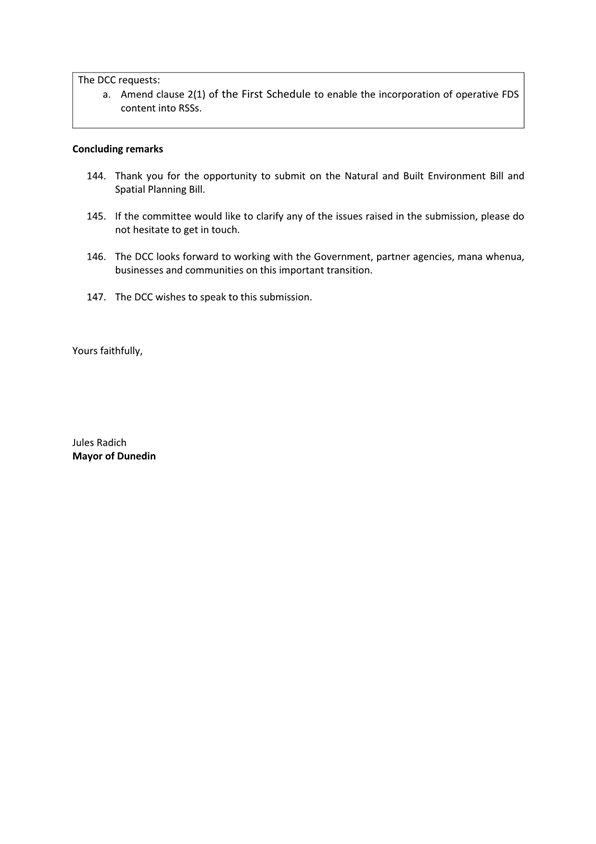
Draft DCC Submission on
the Natural and Built Environments Bill and the Spatial Planning Bill
|
123
|
|
⇩b
|
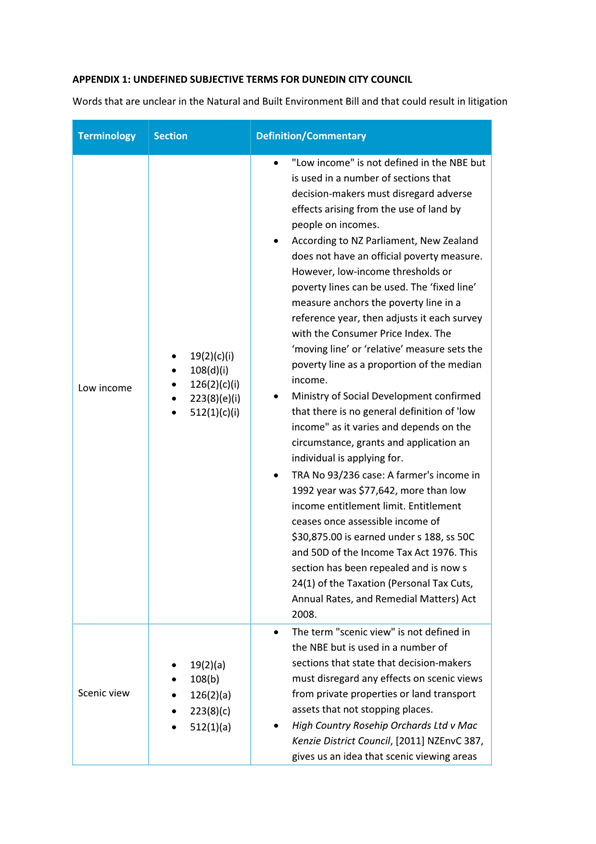
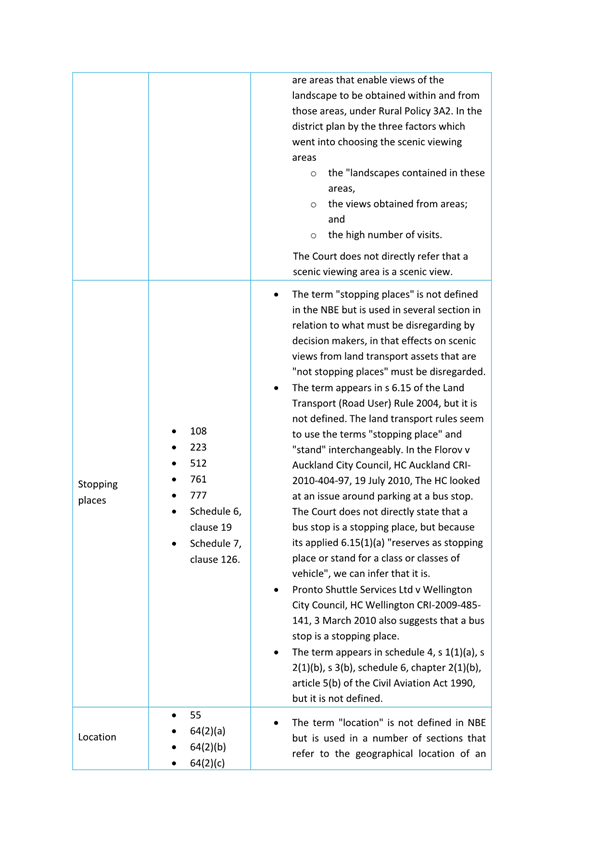
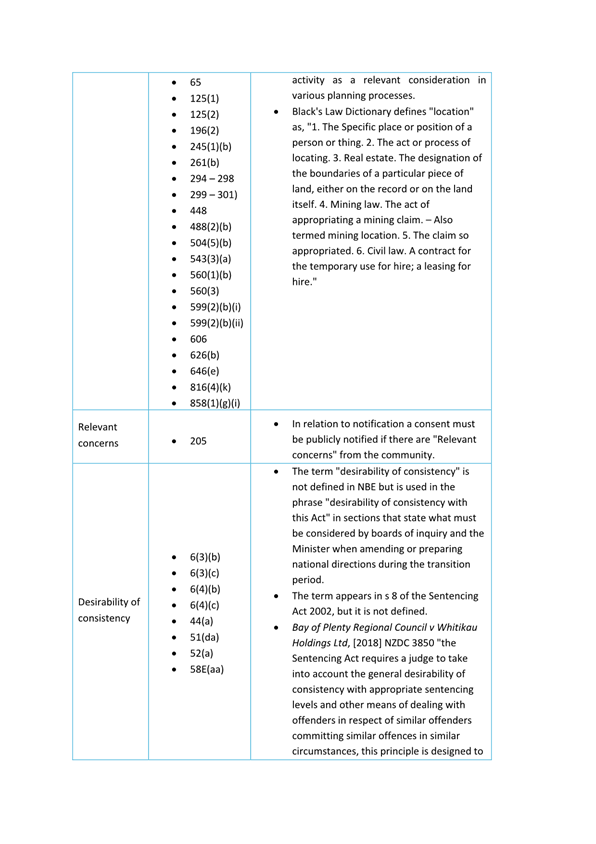
Draft DCC Technical
Submission on the Natural and Built Environments and the Spatial Planning
Bill
|
129
|
|
⇩c
|
August 2021 DCC
Submission on the Natural and Built Environments Bill Exposure Draft
|
167
|
|
SUMMARY OF CONSIDERATIONS
|
|
Fit with purpose
of Local Government
This decision promotes the environmental
well-being of communities in the present and for the future.
|
|
Fit with strategic
framework
|
|
Contributes
|
Detracts
|
Not applicable
|
|
Social Wellbeing Strategy
|
☐
|
☐
|
☒
|
|
Economic Development Strategy
|
☐
|
☐
|
☒
|
|
Environment Strategy
|
☒
|
☐
|
☐
|
|
Arts and Culture Strategy
|
☐
|
☐
|
☒
|
|
3 Waters Strategy
|
☒
|
☐
|
☐
|
|
Spatial Plan
|
☒
|
☐
|
☐
|
|
Integrated Transport Strategy
|
☐
|
☐
|
☒
|
|
Parks and Recreation Strategy
|
☒
|
☐
|
☐
|
|
Other strategic projects/policies/plans
|
☒
|
☐
|
☐
|
- Te
Ao Tūroa – The Natural World, Dunedin’s Environment Strategy
2016-2026 (Goals: Dunedin is resilient and carbon zero; Dunedin has a healthy
environment; Dunedin people care for the natural world).
- Spatial
Plan (A liveable city; An environmentally sustainable and resilient city).
- 3
Waters Strategy (We will adopt an integrated approach to management of the
three waters and embrace the concept of kaitiakitaka; Prioritising energy
efficient technology).
- Parks
and Recreation Strategy (Increasing awareness of our impact on the natural
environment; Greater environmental sustainability and protection; Restoring
sand enhancing our native biodiversity, ecosystems and habitats; Restoring
and enhancing our coastline and waterway; Partnering with Kāi Tahu to
co-manage reserve land vested in mana whenua).
- Zero
Carbon Policy: how the Natural and Built Environment and Spatial Planning
Acts and the resulting National Planning Framework are drafted will affect
how climate mitigation and adaptation considerations are able to be
incorporated into resource management decisions. This submission recommends
strengthening the links between these legislative tools and the Emissions
Reduction Plan and National Adaptation Plan to help achieve emission reduction
goals and consider impacts of climate change in planning decisions.
|
|
Māori Impact
Statement
Within
the NBE Bill, Māori are involved in the decision-making process as
follows: - at
least two members of each Regional Planning Committee (RPC);
- an
independent National Māori Entity, consisting of seven members;
- Iwi
and hapū in each region will be required to form a committee to
determine the Māori appointing bodies for the RPCs;
- RPCs
must form Engagement Agreements by inviting the following groups to enter
into one or more agreements: iwi authorities, and groups that represent
hapū, whose area of interest includes any part of the region; customary
marine title groups; and other Māori groups with interests in the
region;
- Māori
representation on a targets and limits review panel.
The NBE Bill is underpinned by “te Oranga o te
Taiao”, which is described in the Bill as a “te ao Māori concept that speaks to the health
of the natural environment, the essential relationship between the health of
the natural environment and its capacity to sustain life, and the
interconnectedness of all parts of the environment”.
This Bill includes a new decision-making principle in
relation to iwi and hapū to ensure the recognition and provision for the
responsibility and mana of each iwi and hapū to protect and sustain the
health and well-being of te taiao in accordance with the kawa, tikanga
(including kaitiakitanga), and mātauranga in their area of interest.
|
|
Sustainability
The resource management reform programme will have
significant impacts on the ability to make decisions on sustainable resource
use. The NBE and SP Bills move away from language around sustainability and
instead aims to enable development within natural environmental limits. The
reforms aim protect and restore the environment and its capacity to provide
for the wellbeing of present and future generations. This submission makes
some suggestions for how the Bills could be strengthened to help meet these
objectives.
|
|
LTP/Annual Plan /
Financial Strategy /Infrastructure Strategy
There are no implications for current levels of service
and/or performance measures.
|
|
Financial
considerations
There are no financial implications.
|
|
Significance
This decision is considered low in terms of the
Council’s Significance and Engagement Policy.
|
|
Engagement –
external
Due to timeframe constraints, there has been no external
engagement in the preparation of the cover submission.
|
|
Engagement -
internal
This cover submission has been prepared in consultation
with the City Development, Resource Consents, and Zero Carbon teams.
|
|
Risks: Legal /
Health and Safety etcs
There are no identified risks.
|
|
Conflict of
Interest
There is no Conflict of Interest.
|
|
Community Boards
There are no implications for Community Boards.
|
|
|
Strategy & Engagement Committee
13 February 2023
|
|
|
Strategy & Engagement Committee
13 February 2023
|
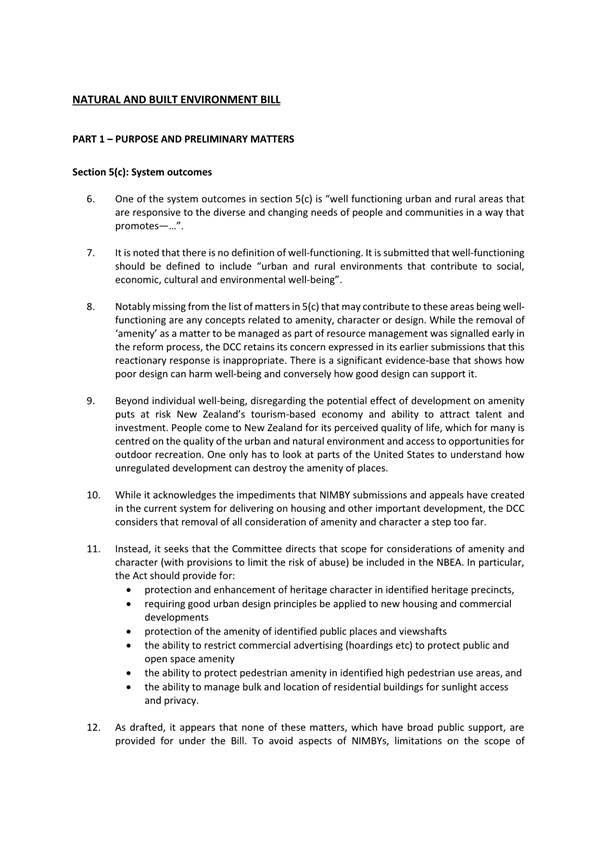
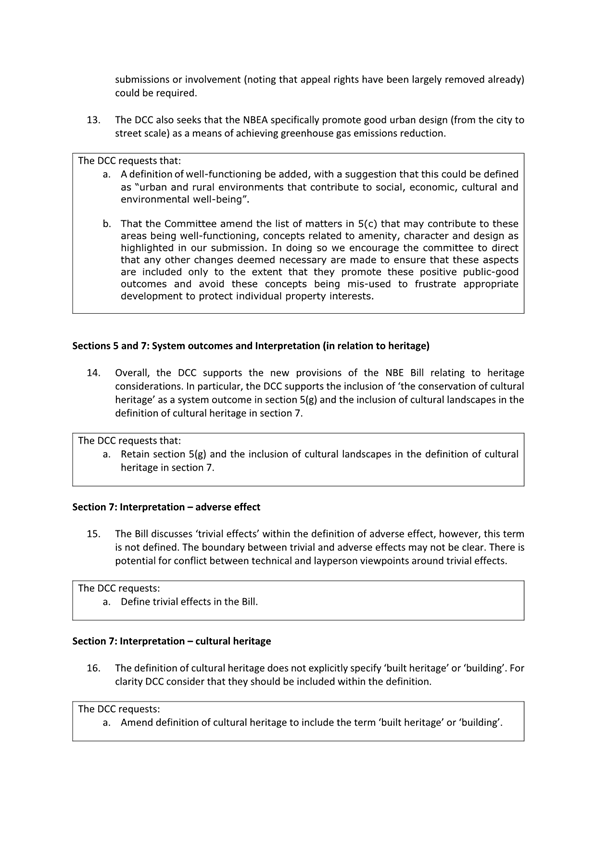
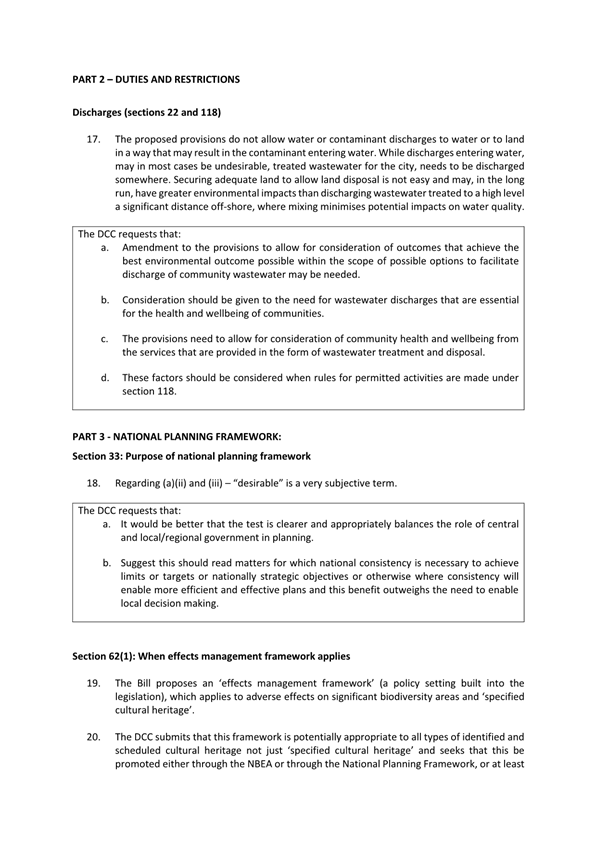
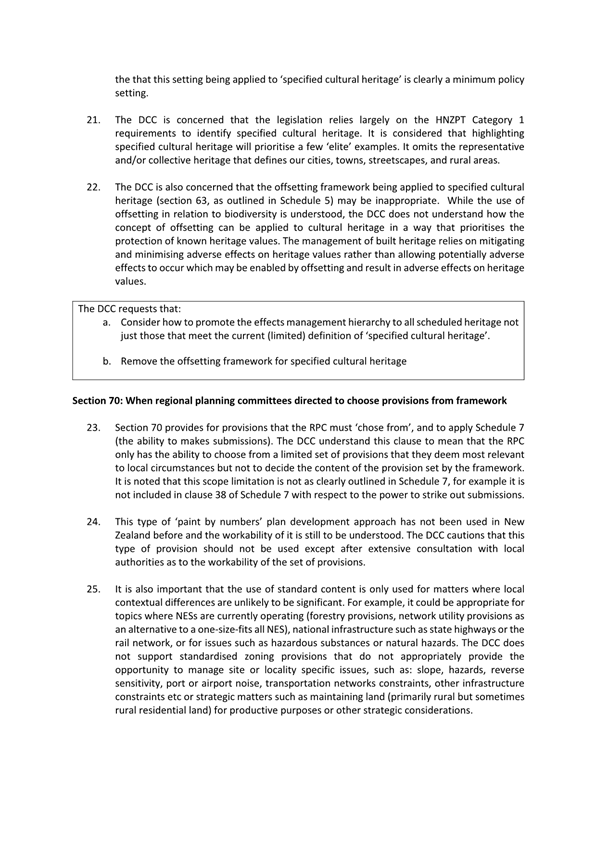
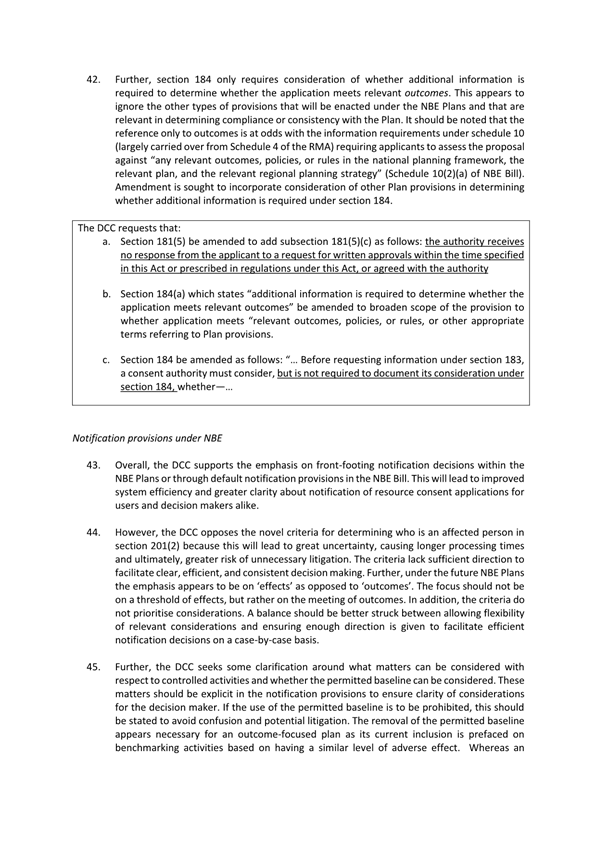
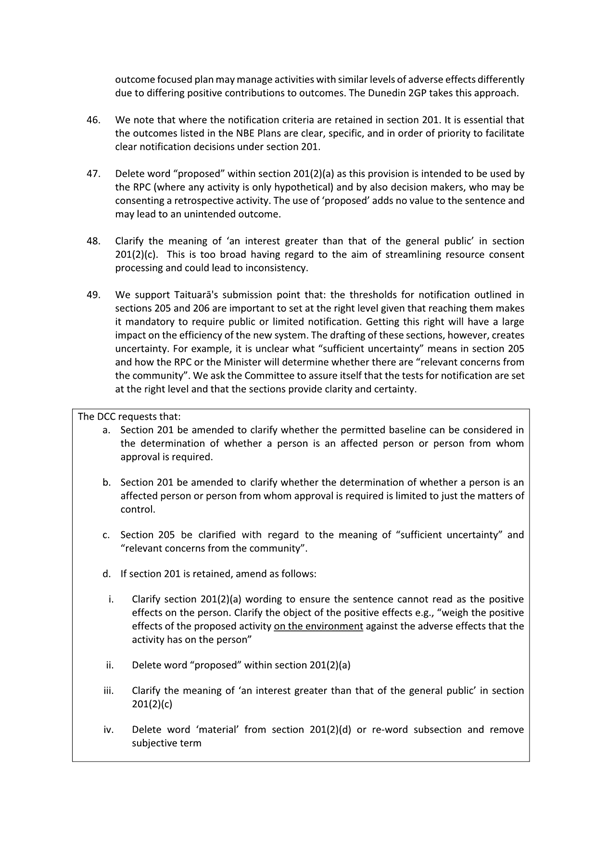
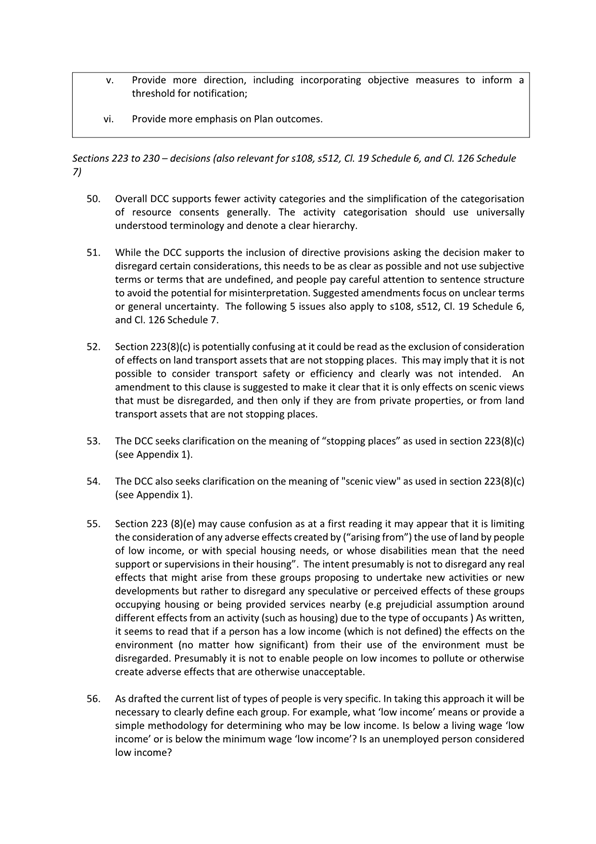
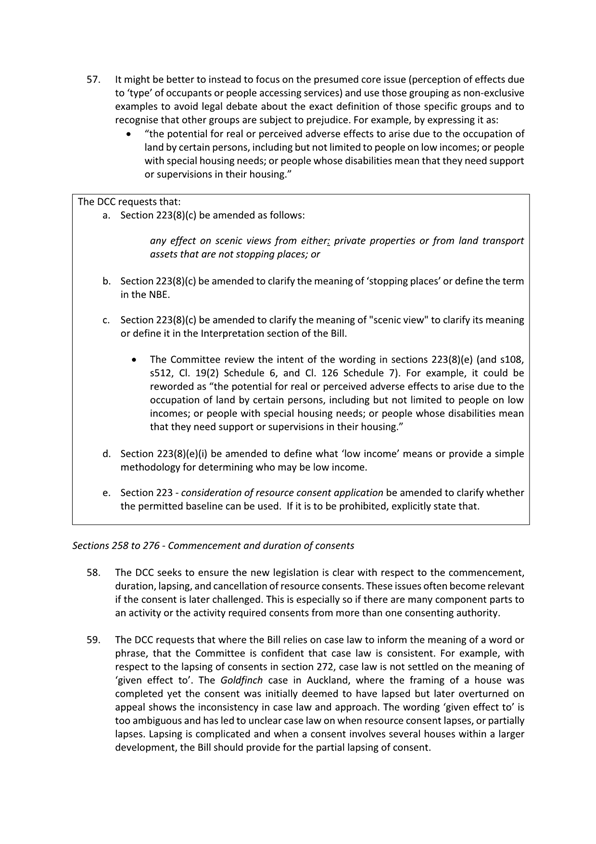
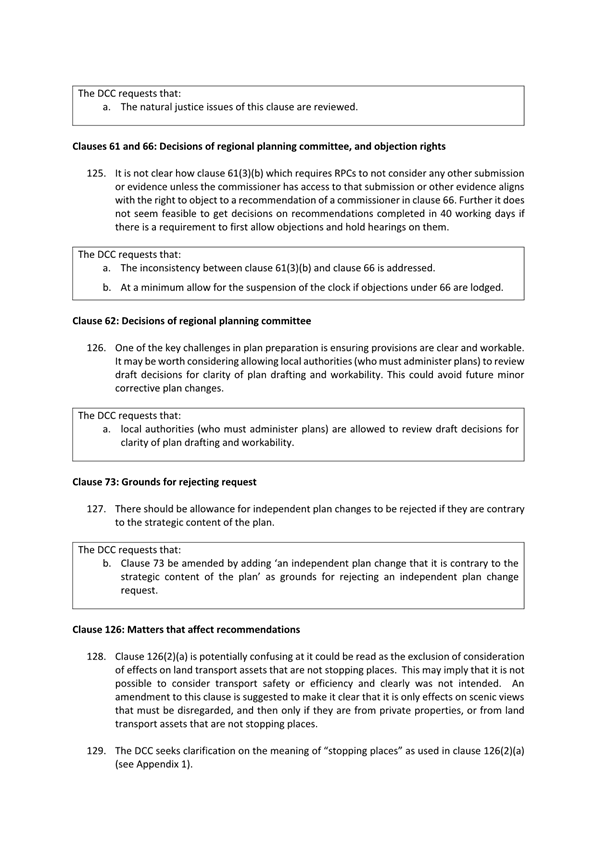
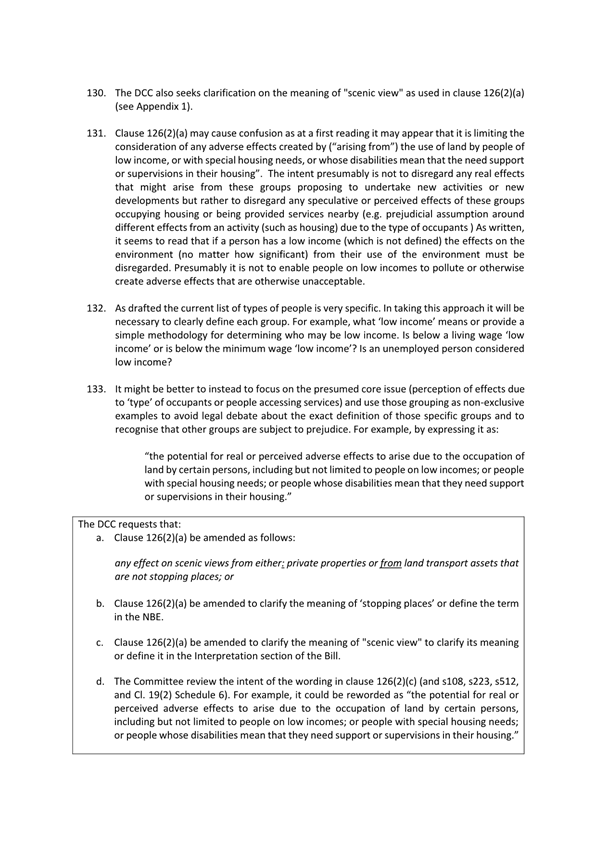
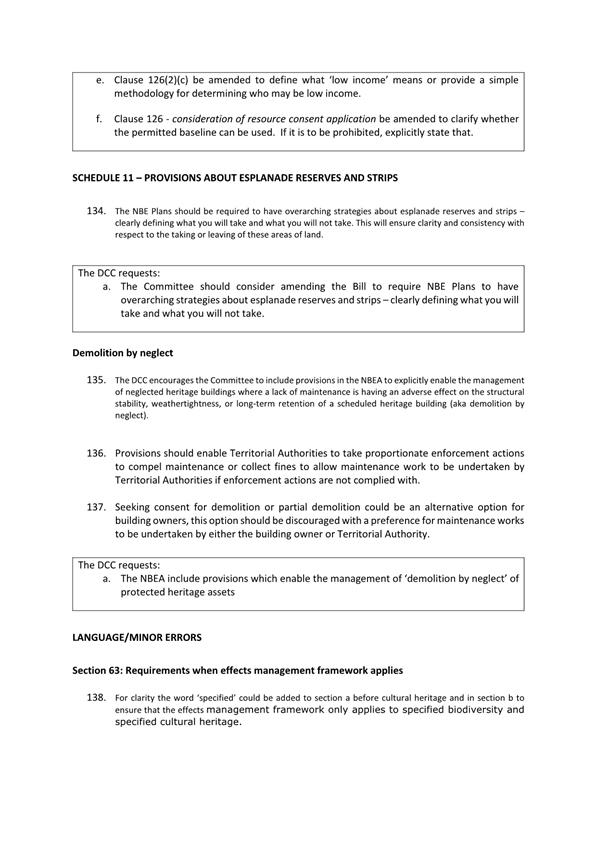
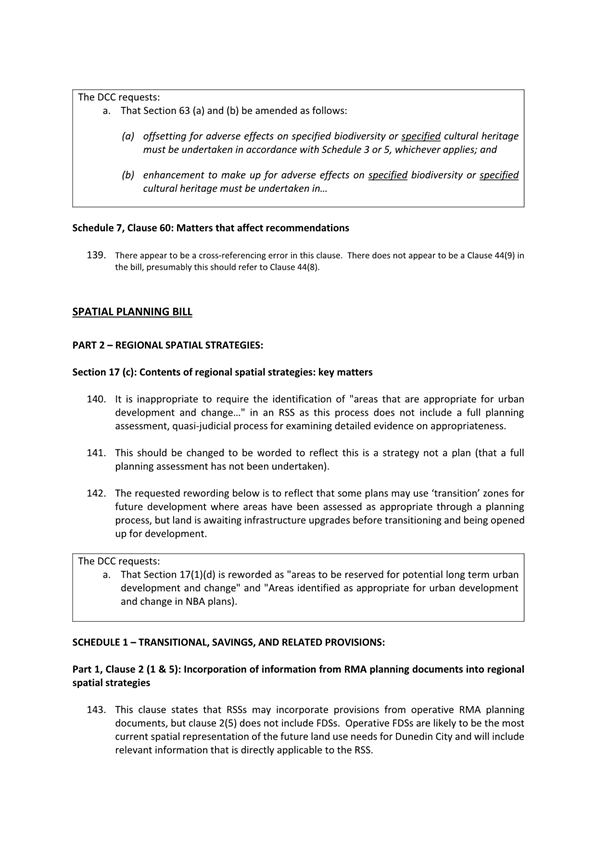
|

|
Strategy & Engagement Committee
13 February 2023
|
|

|
Strategy & Engagement Committee
13 February 2023
|
Herbicides for Vegetation Control
Department: Transport
EXECUTIVE SUMMARY
1 This
report responds to the resolution of the Planning and Environment Committee on
6 July 2022 that requested a review of the use of
herbicides, especially those containing glyphosate, for weed and vegetation
control in Council operations, and what alternative vegetation control methods
exist.
2 The report also presents the findings of a staff literature
review on the health or other risks associated with herbicide
use.
|
RECOMMENDATIONS
That the Committee:
a) Notes the Herbicides for Vegetation Control Report.
|
background
3 This
report responds to the resolution from the Planning and Environment Committee
on 6 July 2022 where the Committee resolved:
Moved (Cr David Benson-Pope/Cr Steve
Walker):
That the Committee:
Requests that staff review the use, by
Council departments and contractors, of herbicides (especially those containing
glyphosate) for weed and vegetation control and report on any health or other
risk and alternative products, where they exist.
Motion carried (PLA/2022/011)
DISCUSSION
Herbicide Use
4 The
Dunedin City Council (DCC) is responsible for weed and vegetation control
within road corridors, parks, reserves, cemeteries, landfills, around 3 Waters
infrastructure and DCC property.
5 Herbicide
sprays are the primary method used by DCC Contractors to control undesirable
weeds and vegetation.
6 Herbicides
can be known by brand names, common names and chemical names. DCC contractors
use many various product brands, and some may not be listed in the table below.
Different branded products regularly contain other additives (often
proprietary) to improve the product effectiveness. Contractors may also use
additives to improve the sprays’ effectiveness for certain weed types.
7 The
table below identifies the main herbicides used by DCC contractors.
|
Common name
|
Typical Brand Names
|
General Uses
|
Approximate Yearly Volume of Usage (undiluted
litres)
|
|
Glyphosate1
|
· Roundup
· KiwiGarden
· Yates
· WeedMaster
· Orion
· NuFarm
|
Broad
control of all weeds, primarily using sprays. Used on road shoulders, unlined
surface water channels, lawn edges, kerb and channel, around buildings,
footpaths.
|
Transport: 3,500
Parks and Recreation: 1,625
Three Waters: 30
Property: 28
|
|
Picloram2
|
· Tordon
· Triumph
· Vigilant
· Ken-Zon
|
Spraying
for pest plants, noxious weeds, woody weeds.
Gel
form, with brush applicators used for tree stumps/limbs to prevent regrowth.
|
Transport: 100
Parks and Recreation: 125
Three Waters: <5
Property: <2
|
|
Benzalkonium Chloride3
|
· MossBoss
· Surrender
· Moss and Mould Sorted Commercial
|
Spraying
to control moss and lichen.
|
<10
combined
|
Herbicide chemical names
1 N-(Phosphonomethyl) glycine
2 4-Amino-3,5,6-trichloro-2-pyridinecarboxylic
acid
3 Alkyldimethylbenzyl-ammonium
chloride
8 Glyphosate
is the most widely used herbicide in the world, including in New Zealand.
Herbicide Risks
9 The
following information on herbicide risks is based on a staff literature
review. Staff are not offering expert advice in this area and have not
consulted with toxicology or other experts in preparing the information for the
Committee. Information from the staff literature review relevant to the
Committee resolution, in chronological order, is as follows:
10 The
World Health Organisation International Agency for Research on Cancer (IARC)
classified glyphosate as “probably carcinogenic to humans” in 2015.
The report states “this was based on ‘limited’ evidence of
cancer in humans (from real-world exposures that actually occurred) and
‘sufficient’ evidence of cancer in experimental animals (from
studies of ‘pure’ glyphosate)”.
11 The
New Zealand Environmental Protection Authority published a ‘Review of the
Evidence Relating to Glyphosate and Carcinogenicity’ in August 2016. It
concluded “glyphosate is unlikely to be genotoxic or carcinogenic to
humans and does not require classification under HSNO [Hazardous Substances and
New Organisms Act 1996] as a carcinogen or mutagen”. Since the August
2016 publication, the EPA has not changed this position.
12 The
toxicology risks of glyphosate came to prominence in 2018 and 2019 when
American juries began awarding compensatory and punitive damages against
Monsanto (the manufacturer of Roundup, which contains glyphosate) for failing
to warn consumers that exposure to Roundup weed killer causes cancer. The
cases are still in appeal by Monsanto.
13 Following
the Monsanto lawsuits, a number of countries, states and districts across the
world have either banned or attempted to restrict the use of glyphosate. A list
of these can be reviewed via the link: https://www.wisnerbaum.com/toxic-tort-law/monsanto-roundup-lawsuit/where-is-glyphosate-banned-/.
14 In
respect to Christchurch City Council’s use of glyphosate, in 2020,
University of Canterbury Professor of Toxicology Ian Shaw noted “for
glyphosate to potentially cause cancer, which has been reported overseas,
repeat doses over a long period of time would be needed and the risk of this
was small”. A paper by Professor Shaw on Roundup, published in the
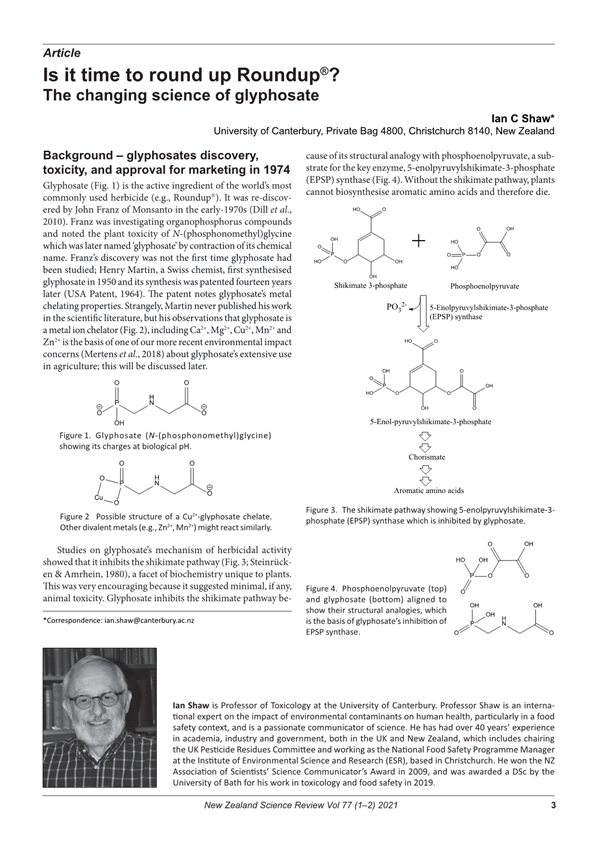
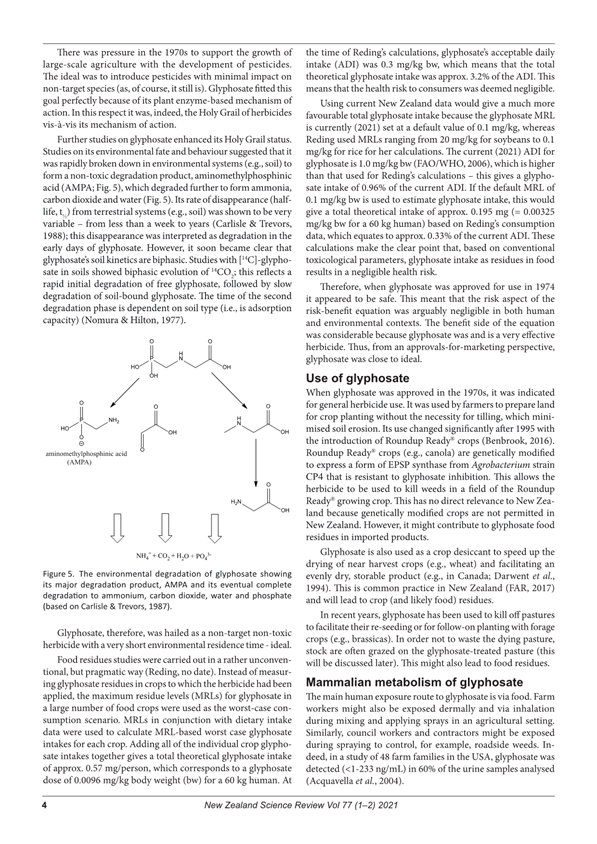
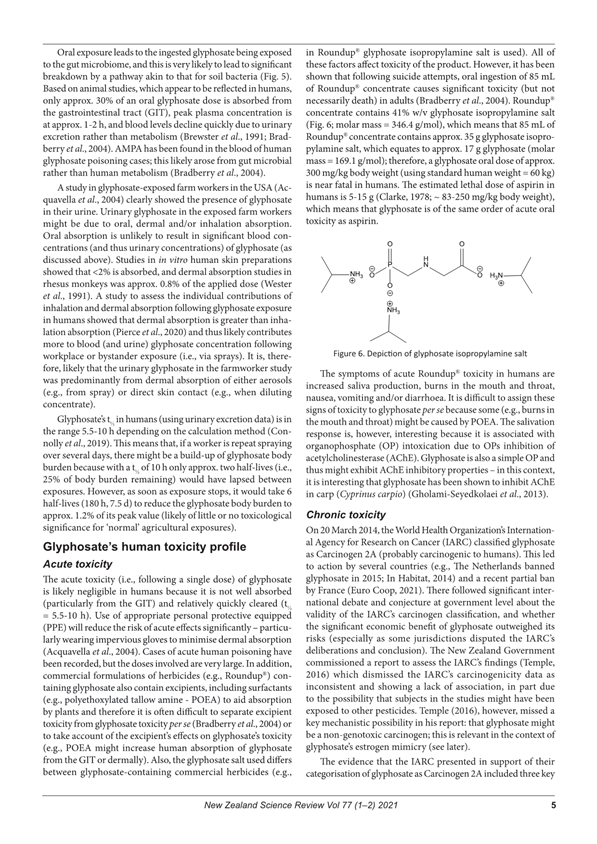
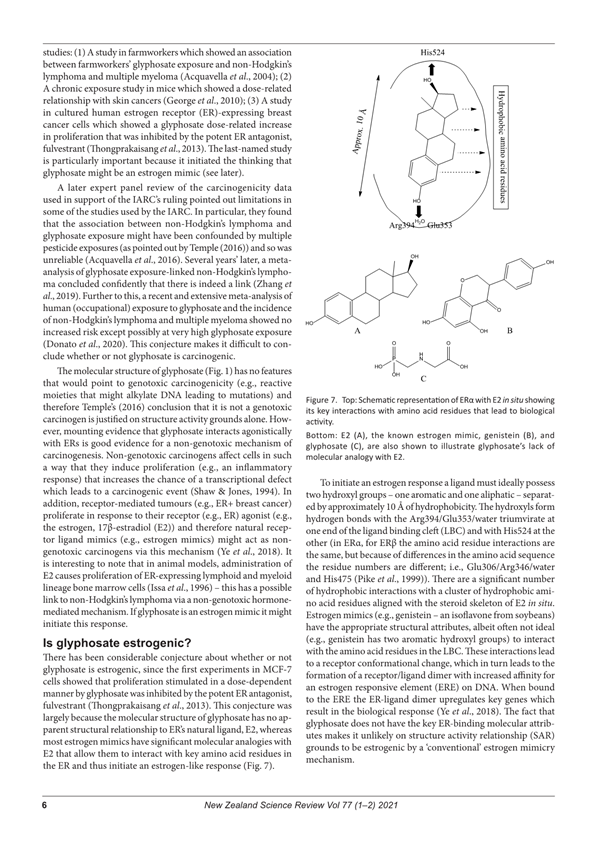
NZ Science Review Journal, is included as Attachment A.
15 The
EPA has recently published (May 2022) a Glyphosate in Aotearoa New Zealand
Summary Report following a call for information on the herbicide. The EPA
Summary Report is a first step in the EPA’s process to review the
classification of the herbicide. The Summary Report can be reviewed via
the link: https://www.epa.govt.nz/assets/Uploads/Documents/Hazardous-Substances/Glyphosate-call-for-information/Glyphosate-call-for-information-summary-report-may22.pdf
Herbicide Application
16 As
noted above, glyphosate is the most widely used herbicide in the world.
The EPA considers the product to be safe if applied in the accordance with
regulations and guidelines.
17 Industry
and DCC staff experience show herbicides to be the most effective method for
controlling weed and vegetation growth.
18 All
herbicide use by DCC contractors is in accordance with product Safety Data
Sheets and New Zealand Environmental Protection Agency (EPA) regulations and
guidelines.
19 Contractors
prepare and adhere to Safe Operating Procedures (SOPs), which identify the
controls and procedures for the safe application of herbicides. The SOPs refer
to all relevant resources, including personal protective equipment to be used,
appropriate application rates, and other procedures to be used by staff, which
are based on regulations and industry best-practise. When using herbicides, DCC
Contractors take a precautionary approach to manage the associated risks.
20 SOPs
also manage ‘spray-drift’ risk ensuring that herbicide spraying only
occurs in appropriate weather conditions to prevent contact with vegetation
that should not be sprayed.
21 The
New Zealand Agrichemical Education Trust (under the brand Growsafe) is a
not-for-profit organisation promoting the safe, responsible and effective use
of agrichemicals. Training and qualifications are provided through Growsafe. In
addition to complying with EPA regulations and guidelines, DCC require its
Contractors to be certified by Growsafe, and that all Growsafe standards are
adhered to.
Alternative Methods
22 Alternative
weed and vegetation control methods include:
a) Manual
pulling of weeds
DCC contractors use this more labour-intensive alternative
in garden areas and parks where spraying could affect desirable plants. This
method is less cost effective where large areas of vegetation control are
needed (such as road verges, surface water channels, edges, etc). Physical
health risks from manual handling are a consideration with this method.
b) Mechanical
removal using tractor attachments, weed eaters, chainsaws, mowers etc
Contractors routinely use these methods for vegetation
control where the preference is to cut rather than kill. In comparison to
spraying, a much greater frequency of treatment is required. These activities
are used in amenity areas such as parks, road verges and sports fields where
spraying (weed killing) is not a suitable control method.
c) Bark
nuggets or wood mulch
This method used to prevent vegetation growth is already
widely used in Parks and Recreation areas as soil coverage for gardens, and
around trees.
d) Thermal
means such as steam, hot water, electrochemical and fire
These methods have been trialled by DCC to control roadside
vegetation but have proven to be less effective as the application frequency
needs to be two to four times more often than herbicide sprays. The
equipment also requires the carting of a heating system and the requirement to
carry a large volume of water. Some of these methods can also kill worms and
insects.
e) Organic
herbicides
These are products that have organic and natural properties,
that are used in the same way as chemical herbicides. These sprays can be made
from pine oils, fatty acids, salt and vinegar. Some of the products such as
salt or vinegar can alter soil PH and be harmful to insects. Some products have
very strong odours. All products are proven by industry experience to be less
effective than glyphosate products.
f) Alternative
chemical herbicides
The NZ EPA 2016 report lists the seven frequently used
herbicides after glyphosate. Based on the public feedback the EPA
concluded “responders did not identify any one herbicide that is as safe,
effective, and affordable as glyphosate and that could replace all its
uses”.
23 DCC
has undertaken trials of alternative weed control methods in the past, as have
other local authorities, including Christchurch City Council. Staff are
not aware of any reports that summarise the costs, effectiveness and
environmental benefits of these trials. Discussions with Christchurch City
Council staff, industry professionals and experience from DCC trials indicates
that herbicides are the most cost effective method for controlling weed and
vegetation growth.
NEXT STEPS
24 The
New Zealand Environmental Protection Authority is the regulator of chemicals
and hazardous substances in New Zealand. DCC and its contractors will continue
to comply with all EPA regulations and guidance.
25 Council
departments will continue to use herbicides, taking a precautionary approach to
it’s use, for weed and vegetation control.
Signatories
|
Author:
|
Ben Hogan - Transport Delivery Manager
|
|
Authoriser:
|
Jeanine Benson - Group Manager Transport
Simon Drew - General Manager Infrastructure and
Development
|
Attachments
|
|
Title
|
Page
|
|
⇩a
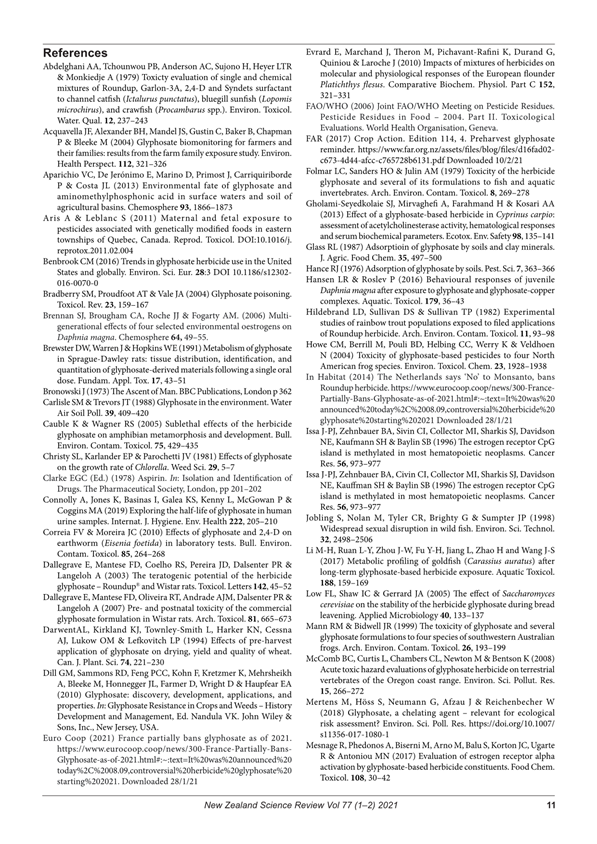
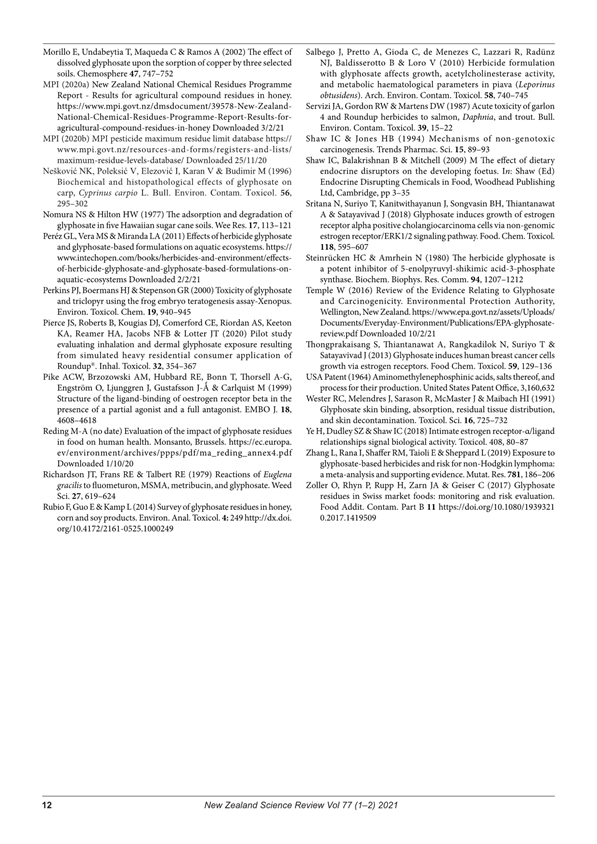
|
Is it time to round up
Roundup?
|
187
|
|
SUMMARY OF CONSIDERATIONS
|
|
Fit with purpose
of Local Government
This decision enables democratic local decision
making and action by, and on behalf of communities.
|
|
Fit with strategic
framework
|
|
Contributes
|
Detracts
|
Not applicable
|
|
Social Wellbeing Strategy
|
☐
|
☐
|
☒
|
|
Economic Development Strategy
|
☐
|
☐
|
☒
|
|
Environment Strategy
|
☐
|
☐
|
☒
|
|
Arts and Culture Strategy
|
☐
|
☐
|
☒
|
|
3 Waters Strategy
|
☐
|
☐
|
☒
|
|
Spatial Plan
|
☐
|
☐
|
☒
|
|
Integrated Transport Strategy
|
☐
|
☐
|
☒
|
|
Parks and Recreation Strategy
|
☐
|
☐
|
☒
|
|
Other strategic projects/policies/plans
|
☐
|
☐
|
☒
|
Herbicide is used in Council operational
activities and does not contribute to DCC Strategies.
|
|
Māori Impact
Statement
Staff have not discussed the use of
herbicides in Council operations with Mana whenua.
|
|
Sustainability
Staff are not aware of any sustainability
implications with the use of herbicides in Council operations.
|
|
LTP/Annual Plan /
Financial Strategy /Infrastructure Strategy
There are no known implications of noting this report.
|
|
Financial
considerations
There are no known implications of noting this report.
|
|
Significance
The report is considered low in terms of the
Council’s Significance and Engagement Policy.
|
|
Engagement –
external
Staff discussed vegetation control experience with
Christchurch City Council during the development of this report.
|
|
Engagement -
internal
Parks and Recreation, 3-Waters, Property, Transport and
Council contractors were consulted with in the development of this report.
|
|
Risks: Legal /
Health and Safety etc.
The potential health risks of glyphosate, and their
controls, are outlined in this report.
|
|
Conflict of
Interest
There are no known conflicts of interest.
|
|
Community Boards
The use of herbicides and the effectiveness of vegetation
control methods will be of interest to all parts of the city, including those
areas covered by Community Boards.
|
|
|
Strategy & Engagement Committee
13 February 2023
|