Notice of Meeting:
I hereby give notice that an ordinary meeting of the
Strategy, Planning & Engagement Committee will be held on:
Date: Wednesday
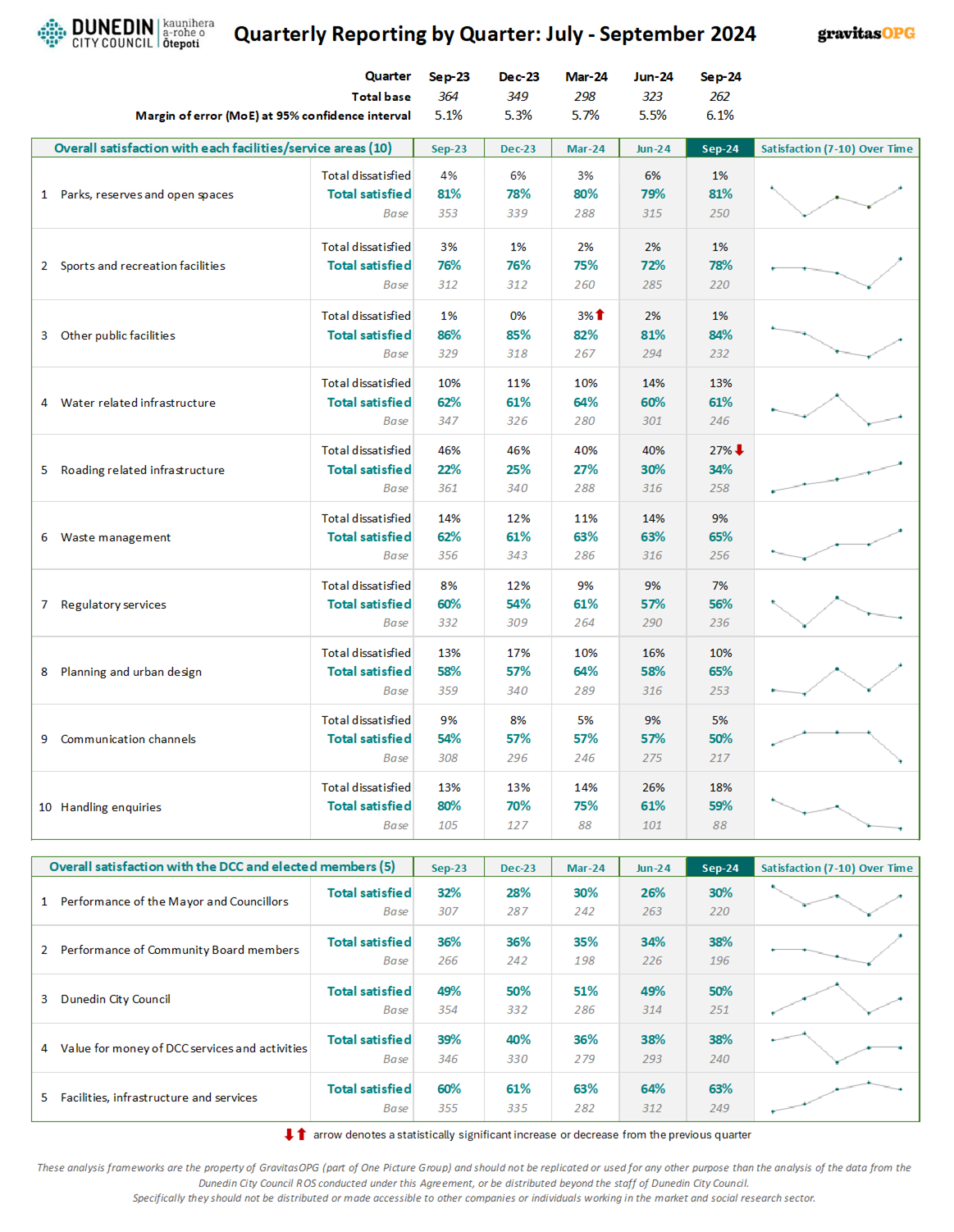
16 October 2024
Time: 10:00am
Venue: Council
Chambers, Dunedin Public Art Gallery, The Octagon, Dunedin
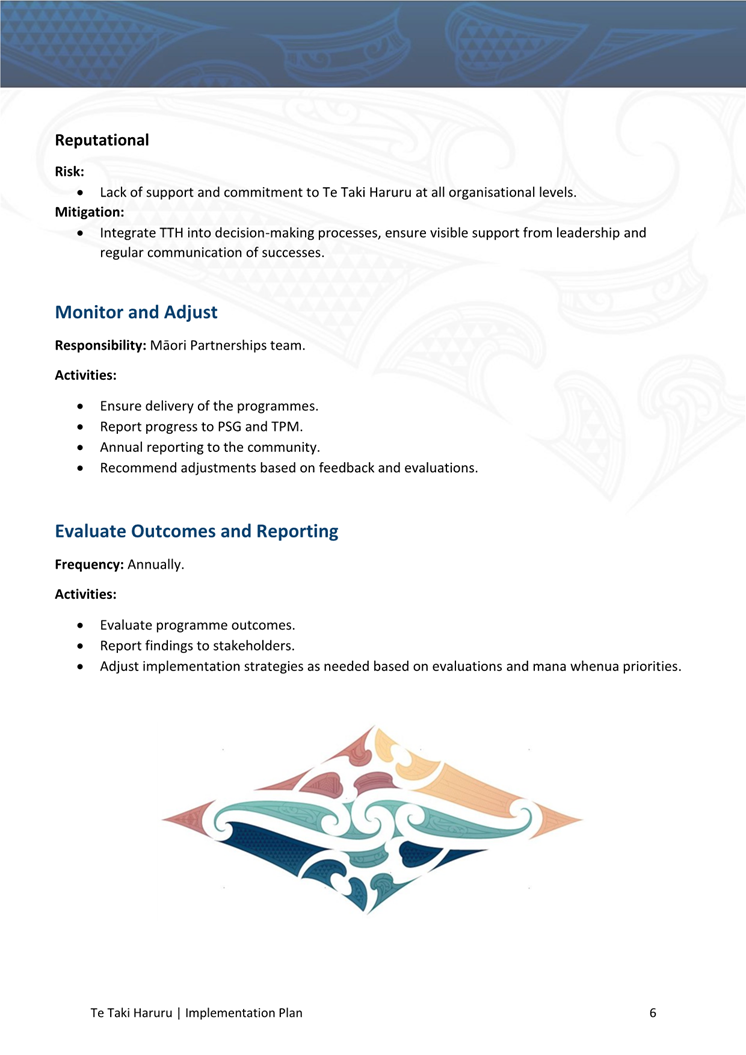
Sandy Graham
Strategy, Planning & Engagement Committee
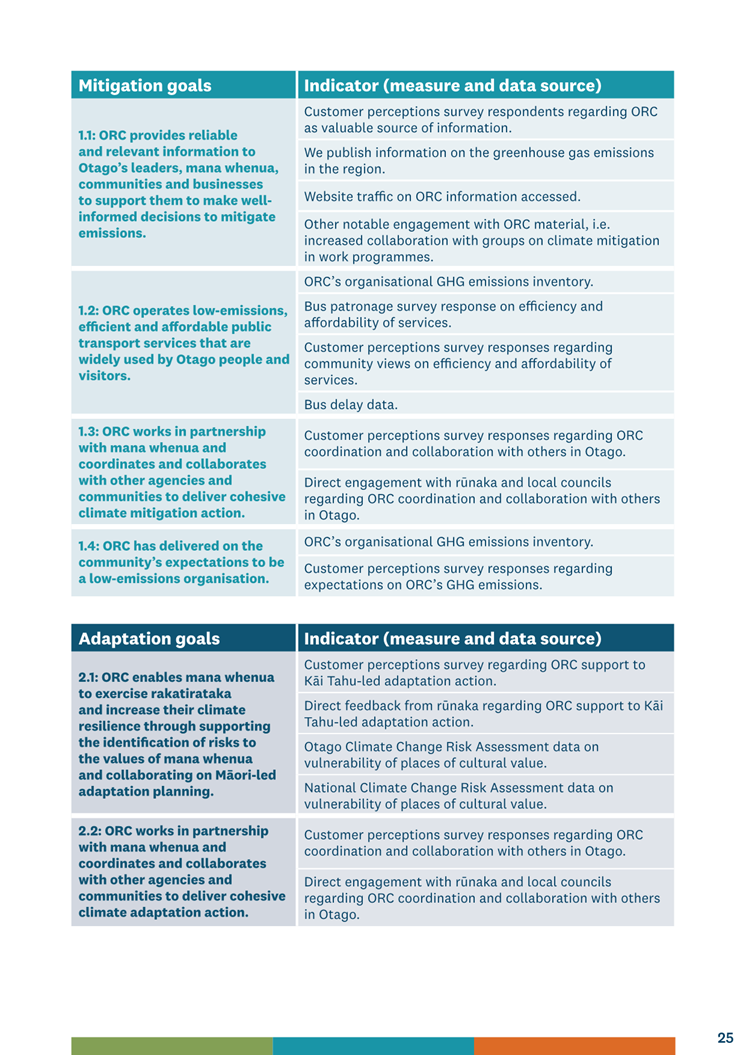
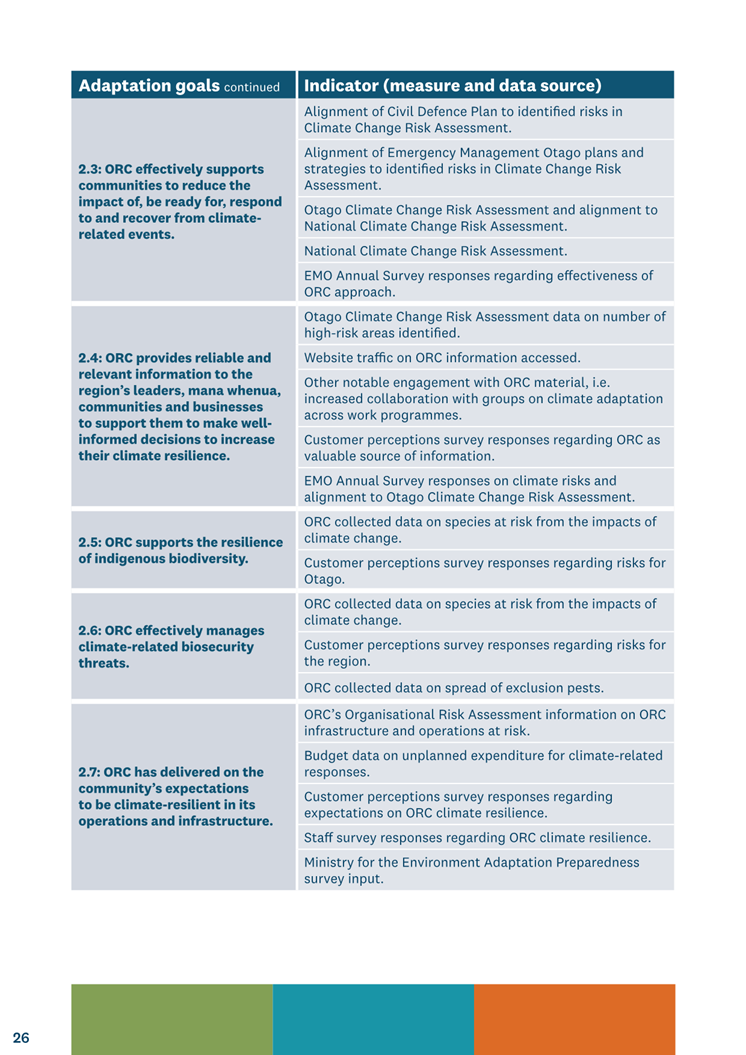
PUBLIC AGENDA
|
Chairperson
|
Cr Sophie Barker
|
|
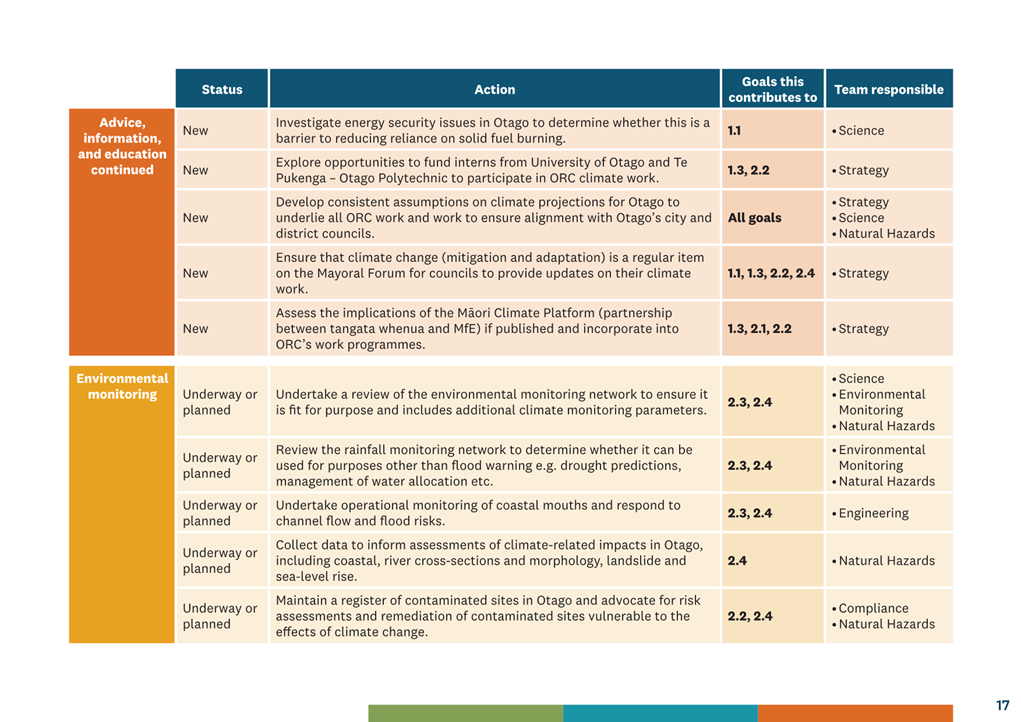
|
Deputy Chairperson
|
Cr Kevin Gilbert
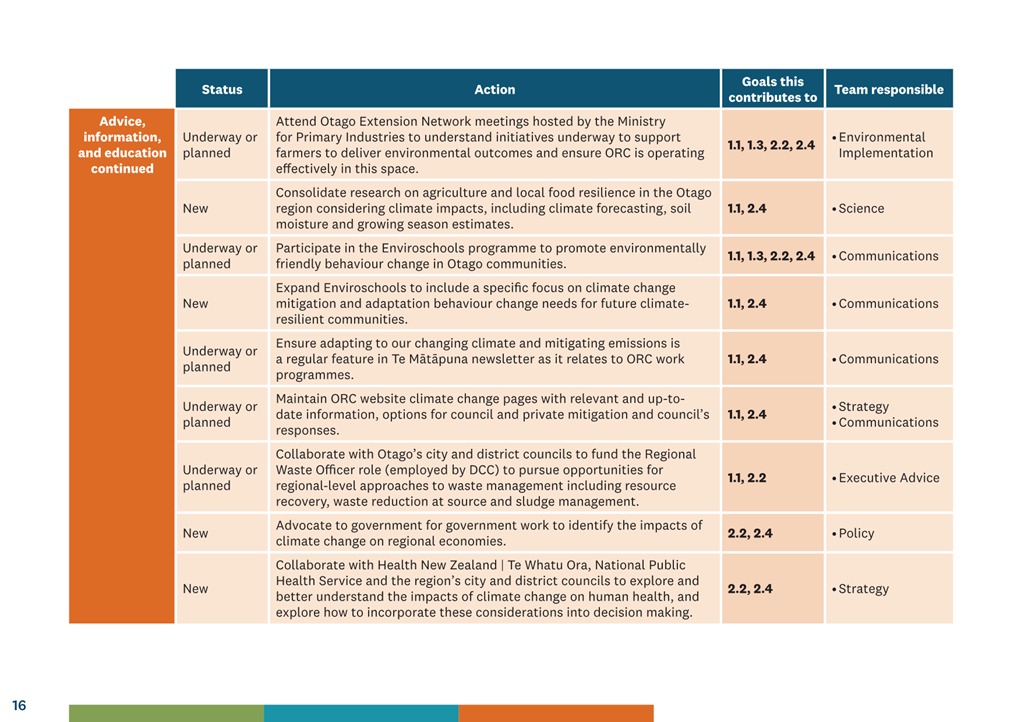
|
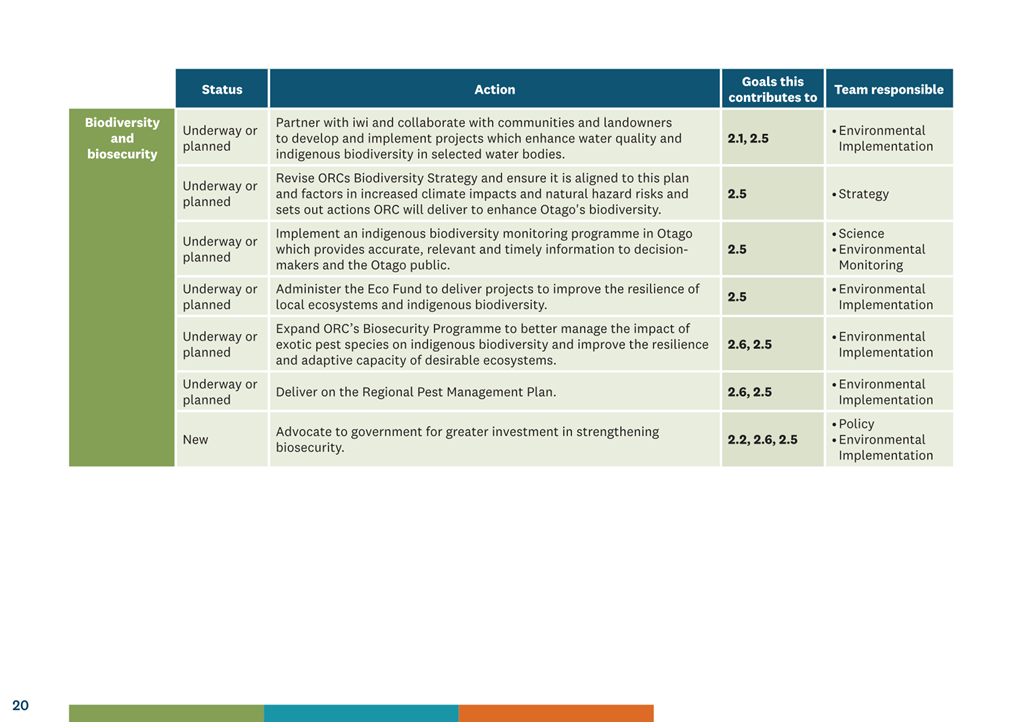
|
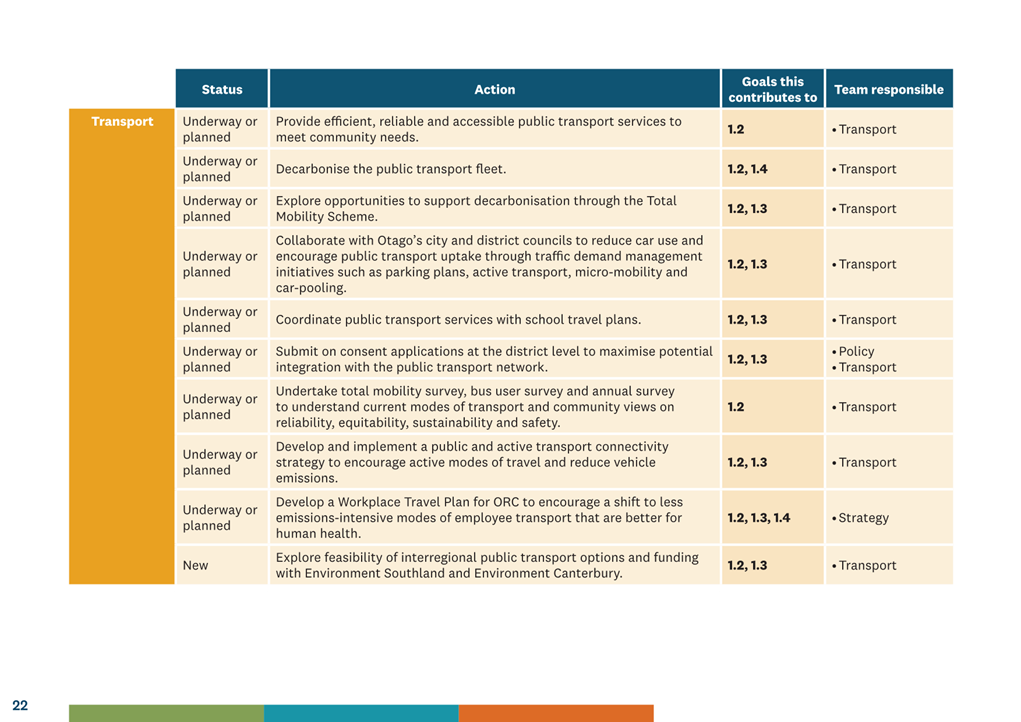
|
Members
|
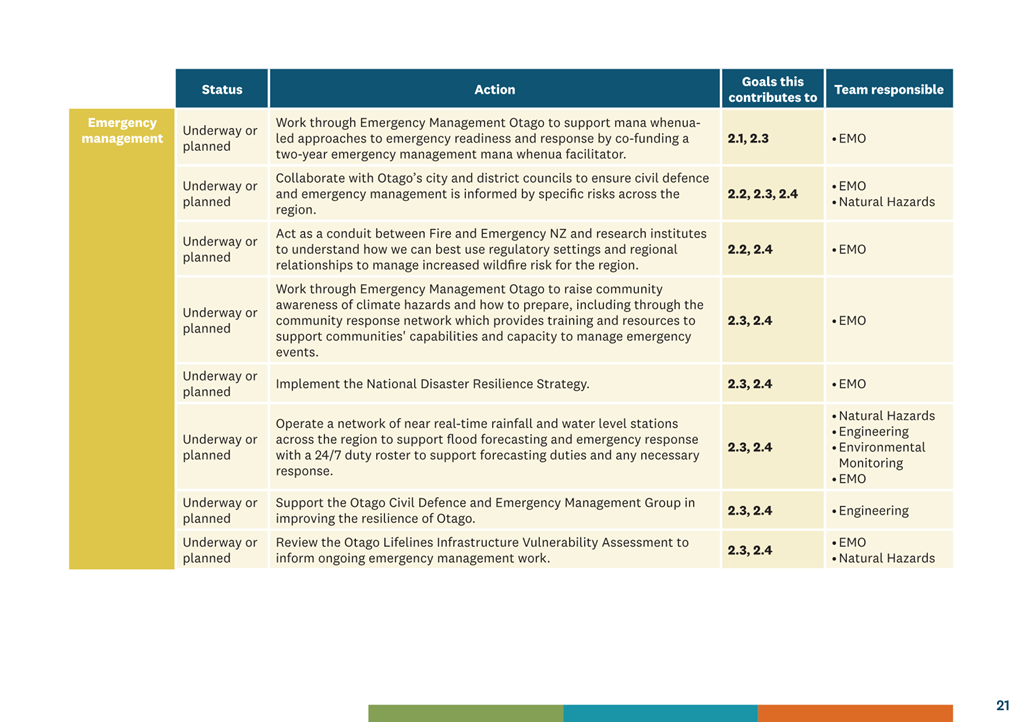
Cr Bill Acklin
|
Cr David Benson-Pope
|
|
|
Mr Matapura Ellison
|
Cr Christine Garey
|
|
|
Cr Carmen Houlahan
|
Cr Marie Laufiso
|
|
|
Cr Cherry Lucas
|
Cr Mandy Mayhem
|
|
|
Cr Jim O'Malley
|
Ms Megan Potiki
|
|
|
Mayor Jules Radich
|
Cr Lee Vandervis
|
|
|
Cr Steve Walker
|
Cr Brent Weatherall
|
|
|
Cr Andrew Whiley
|
|
Senior Officer Nicola
Morand, Manahautū (General Manager Māori Partnerships and Policy)
Governance Support Officer Wendy
Collard
Wendy Collard
Governance Support Officer
Telephone: 03 477 4000
governance.support@dcc.govt.nz
www.dunedin.govt.nz
Note: Reports
and recommendations contained in this agenda are not to be considered as
Council policy until adopted.
|

|
Strategy, Planning &
Engagement Committee
16 October 2024
|
ITEM TABLE OF CONTENTS PAGE
1 Opening 4
2 Public
Forum 4
3 Apologies 4
4 Confirmation
of Agenda 4
5 Declaration
of Interest 5
6 Confirmation
of Minutes 15
6.1 Strategy, Planning &
Engagement Committee meeting - 20 August 2024 15
Part
A Reports (Committee has power to decide these matters)
7 Actions
from Resolutions of Strategy, Planning and Engagement Committee Meetings 23
8 Strategy,
Planning and Engagement Committee Forward Work Programme 27
9 Strategy,
Planning and Engagement Committee Activity Report 37
10 Strategic
Refresh Advisory Panel - Quarterly Update Report 42
11 Te
Taki Haruru Implementation Plan 47
12 Residents'
Opinion Survey Quarterly Update: July-September 2024 119
13 Submission
on the Otago Regional Council's Strategic Climate Action Plan 127
14 Growth
and economic significant forecasting assumptions - 9 year plan 2025-34 167
15 Reserve
Management Plan Review Schedule 183
16 Notice
of Intent: Draft Mosgiel Recreation Area Reserve Management Plan 193
17 Items
for Consideration by the Chair 245
18 Karakia
Whakamutunga
The meeting will close with a Karakia Whakamutunga.
|

|
Strategy, Planning &
Engagement Committee
16 October 2024
|
1 Opening
The meeting will open
the meeting with a Karakia Timatanga.
2 Public
Forum
At the close of the agenda no
requests for public forum had been received.
3 Apologies
At the close of the agenda no
apologies had been received.
4 Confirmation
of agenda
Note:
Any additions must be approved by resolution with an explanation as to why they
cannot be delayed until a future meeting.
|

|
Strategy, Planning & Engagement
Committee
16 October 2024
|
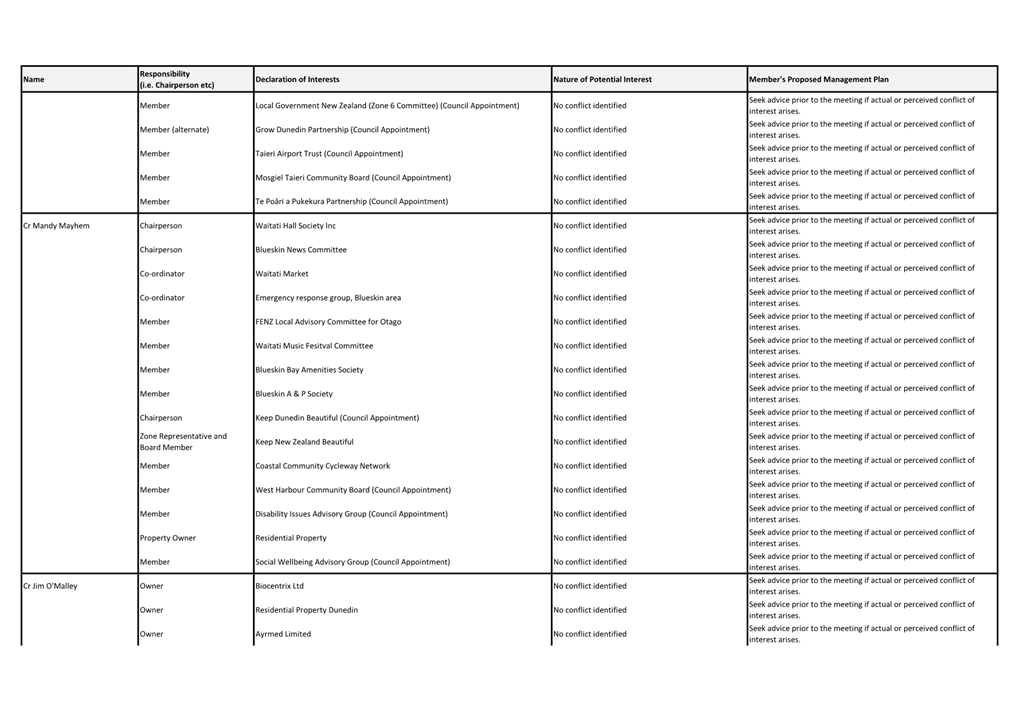
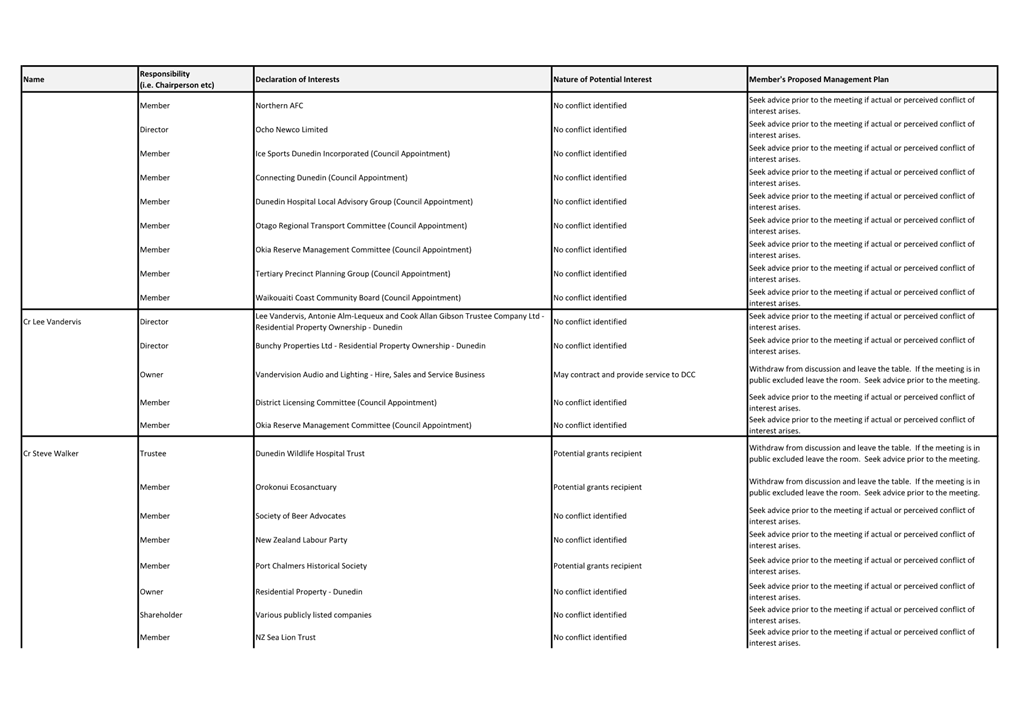
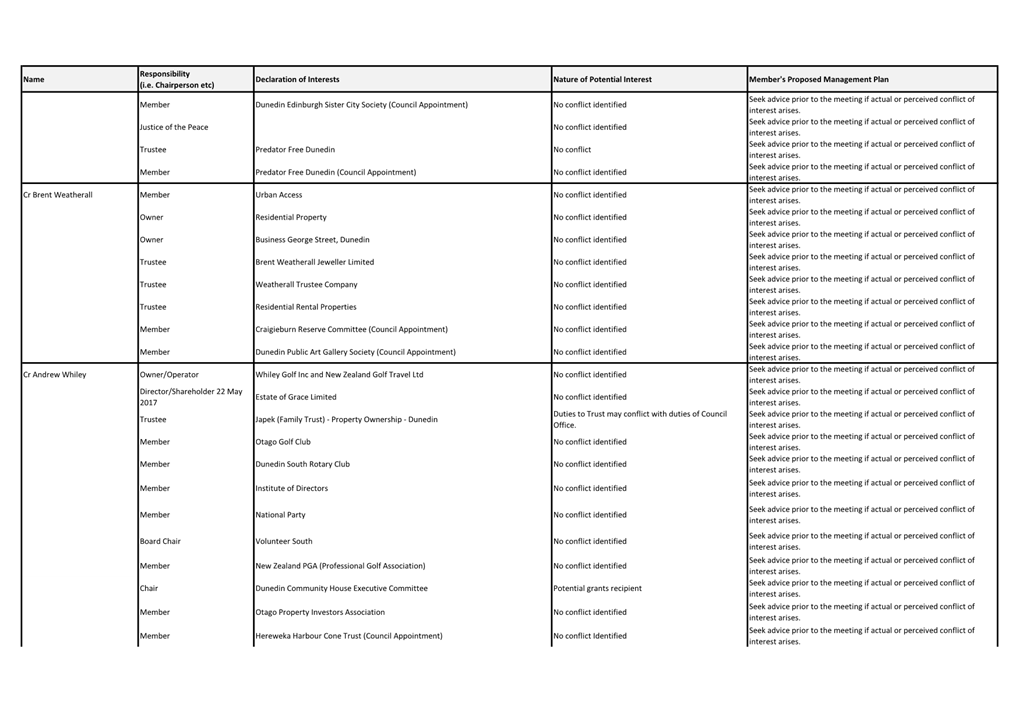
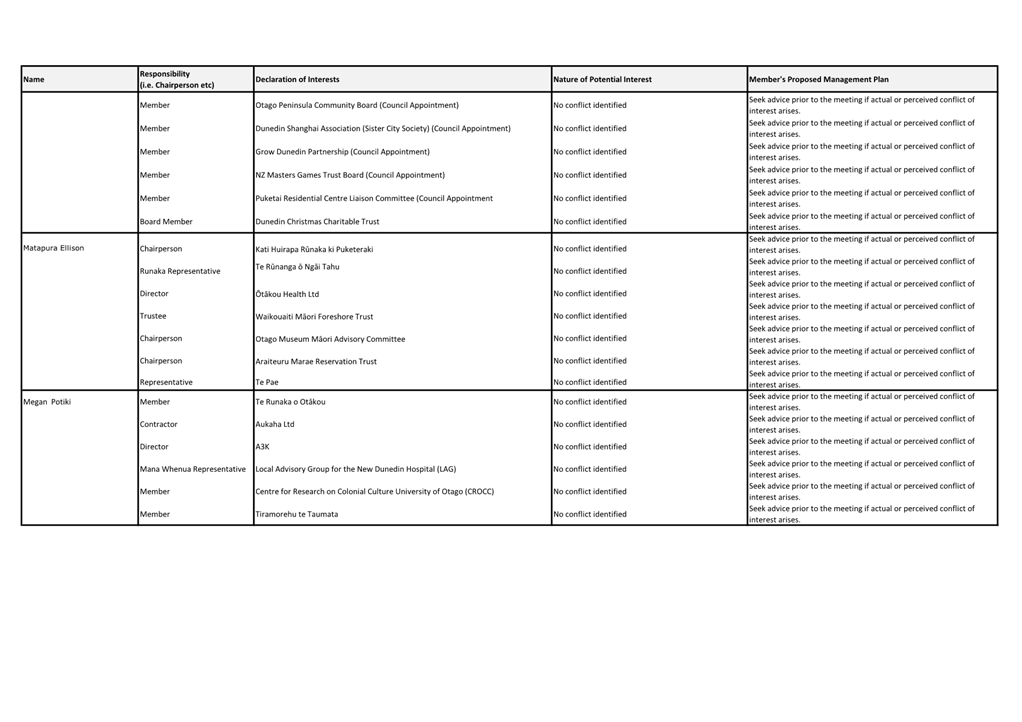
Declaration of Interest
EXECUTIVE SUMMARY
1. Members are
reminded of the need to stand aside from decision-making when a conflict arises
between their role as an elected representative and any private or other
external interest they might have.
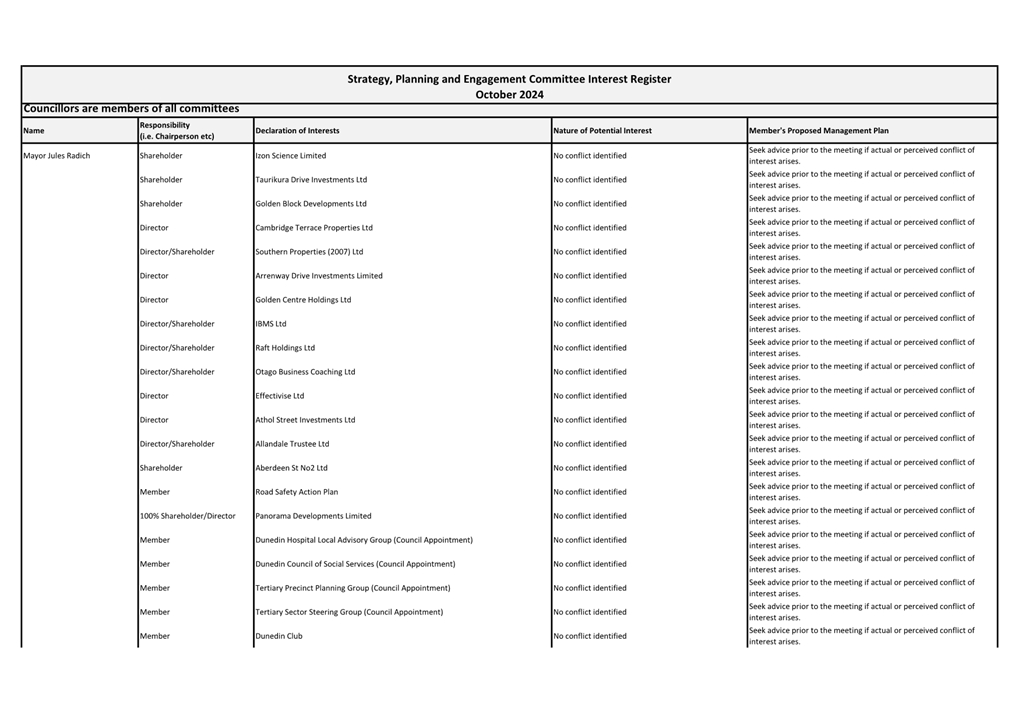
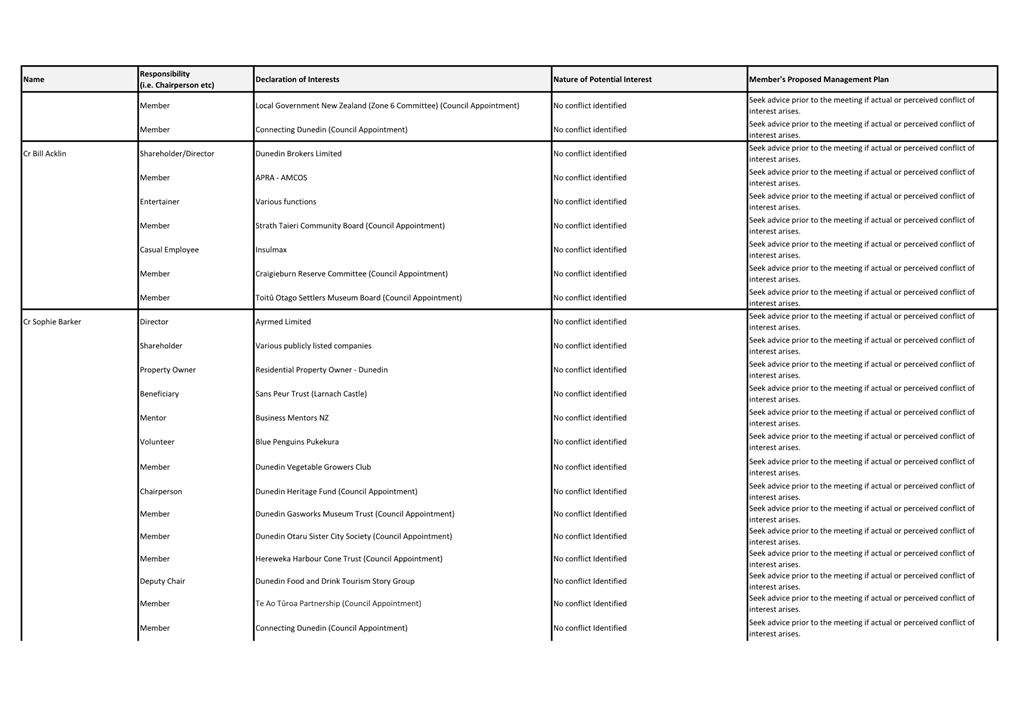
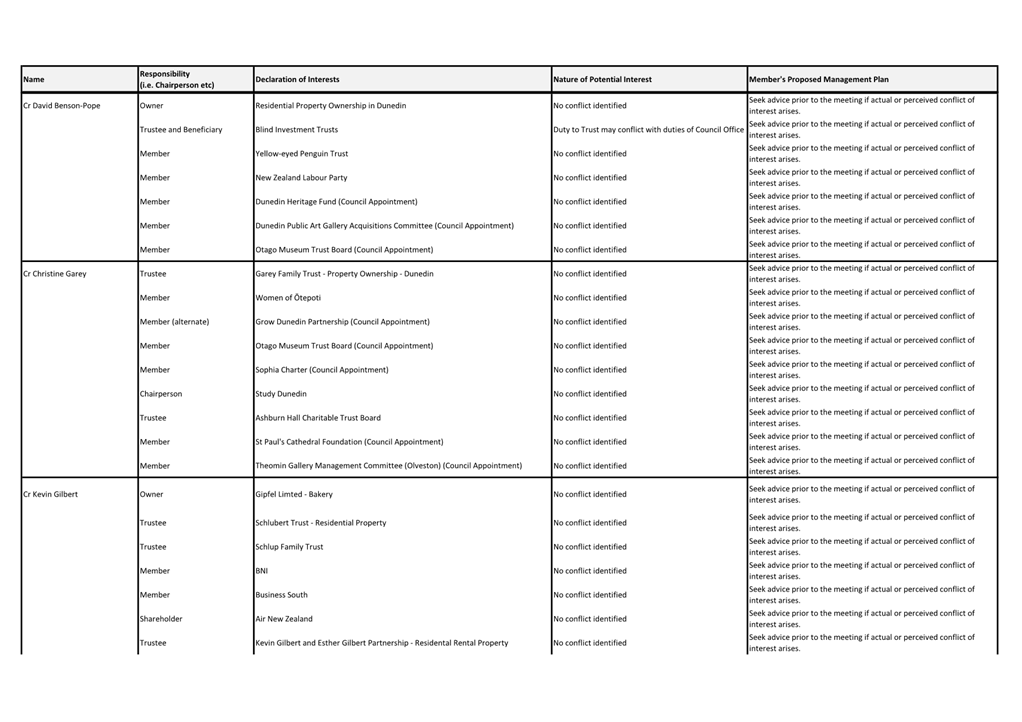
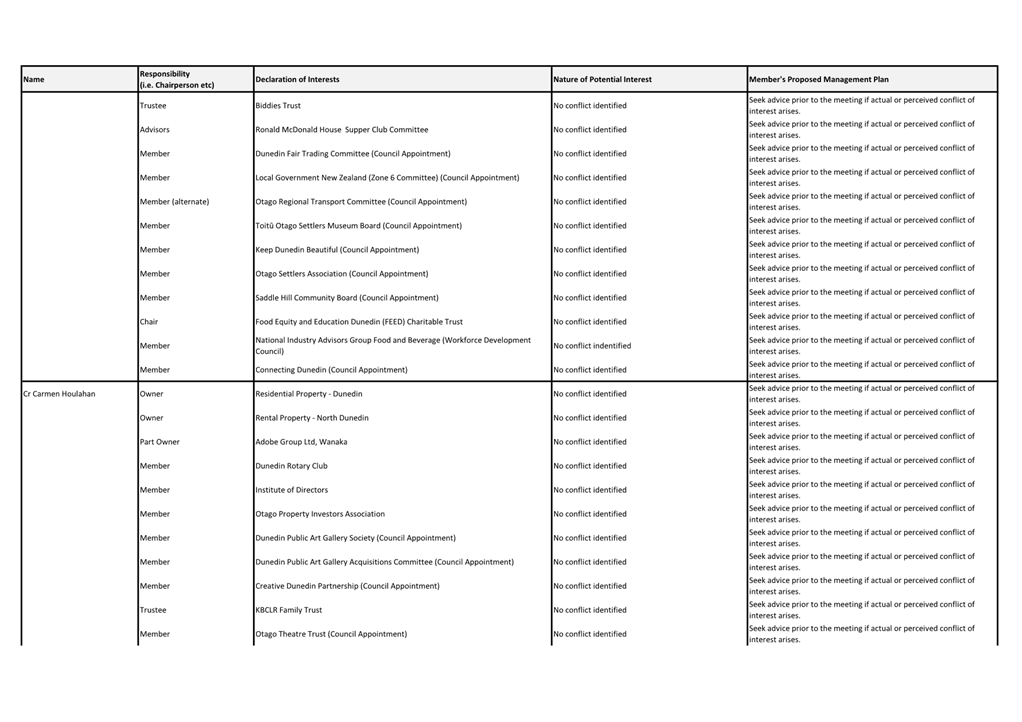
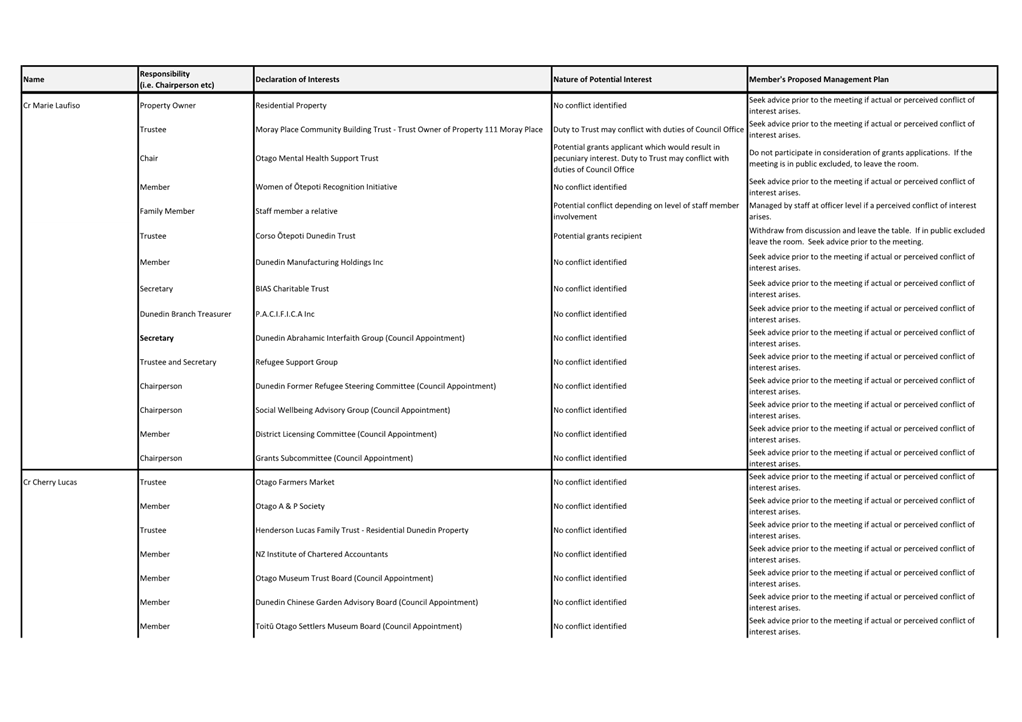
2. Elected members are reminded to update their register of interests as soon as
practicable, including amending the register at this meeting if necessary.
RECOMMENDATIONS
That the Committee:
a) Notes/Amends if
necessary the Elected Members' Interest Register attached as Attachment A; and
b) Confirms/Amends the
proposed management plan for Elected Members' Interests.
Attachments
|
|
Title
|
Page
|
|
⇩a
|
Members' Register of
Interests
|
6
|
|
|
Strategy, Planning & Engagement
Committee
16 October 2024
|
|

|
Strategy, Planning & Engagement
Committee
16 October 2024
|
Confirmation
of Minutes
Strategy,
Planning & Engagement Committee meeting - 20 August 2024
RECOMMENDATIONS
That the Committee:
a) Confirms the minutes
of the Strategy, Planning & Engagement Committee meeting held on 20 August
2024 as a correct record.
Attachments
|
|
Title
|
Page
|
|
A⇩
|
Minutes of Strategy,
Planning & Engagement Committee meeting held on 20 August 2024
|
16
|
|

|
Strategy,
Planning & Engagement Committee
16 October 2024
|

Strategy, Planning & Engagement Committee
MINUTES
Minutes of an ordinary
meeting of the Strategy, Planning & Engagement Committee held in the Council
Chambers, Dunedin Public Art Gallery, The Octagon, Dunedin on Tuesday 20 August
2024, commencing at 10:00am
PRESENT
|
Chairperson
|
Cr Sophie Barker
|
|
|
Deputy Chairperson
|
Cr Kevin Gilbert
|
|
|
Members
|
Cr Bill Acklin
|
Cr David Benson-Pope
|
|
|
Cr Christine Garey
|
Cr Carmen Houlahan
|
|
|
Cr Marie Laufiso
|
Cr Cherry Lucas
|
|
|
Cr Mandy Mayhem
|
Cr Jim O'Malley
|
|
|
Mayor Jules Radich
|
Cr Lee Vandervis
|
|
|
Cr Brent Weatherall
|
Cr Andrew Whiley
|
|
IN ATTENDANCE
|
Nicola Morand (Manahautū -
General Manager Policy and Partnerships), Jeanette Wikaira (General Manager
Arts, Cultural and Recreation), Scott MacLean (General Manager Climate and
City Growth), Florence Reynolds (Manager, Zero Carbon), Rory McLean (Senior
Policy Analyst, Zero Carbon), Dr Anna Johnson (City Development Manager),
Emma Christmas (Team Leader Planning), Mark Mawdsley (Team Leader City
Planning Advisory Services), Health Ellis (Group Manager, Parks and
Recreation), Katie Eglesfield (Parks and Recreation Planner) and Clare
Sullivan (Manager Governance)
|
Governance Support Officer Rebecca
Murray
1 karakia
timatanga
Cr Sophie Barker opened the meeting with a Karakia
Timatanga.
2 Public
Forum
There was no Public Forum.
|
3 Apologies
|
|
|
An apology was received by Cr Steve Walker.
|
|
|
Moved (Cr Sophie Barker/Cr Kevin Gilbert):
That the Committee:
Accepts the apology from
Cr Steve Walker.
Motion
carried (SPECC/2024/030)
|
|
4 Confirmation
of agenda
|
|
|
Moved (Cr Sophie Barker/Cr Kevin Gilbert):
That the Committee:
Confirms the agenda
without addition or alteration.
Motion
carried (SPECC/2024/031)
|
5 Declarations
of interest
Members were
reminded of the need to stand aside from decision-making when a conflict arose
between their role as an elected representative and any private or other
external interest they might have.
|
|
Moved (Cr Sophie Barker/Cr Kevin Gilbert):
That the Committee:
a) Notes the Elected Members' Interest Register; and
b) Confirms the proposed management plan for
Elected Members' Interests.
Motion
carried (SPECC/2024/032)
|
|
|
Cr Lee Vandervis entered the meeting at 10.03 am.
|
6 Confirmation
of Minutes
|
6.1 Strategy,
Planning & Engagement Committee meeting - 19 June 2024
|
|
|
Moved (Cr Sophie Barker/Cr Kevin Gilbert):
That the Committee:
Confirms the public part of the minutes of the
Strategy, Planning & Engagement Committee meeting held on 19 June 2024 as
a correct record.
Motion
carried (SPECC/2024/033)
|
Part
A Reports
|
7 Strategy,
Planning and Engagement Committee Forward Work Programme
|
|
|
A report from Civic provided
an update on the Strategy, Planning and Engagement Committee forward work
programme which showed areas of activity, progress and expected timeframes
for decision making across a range of areas of work.
The Manahautū - General
Manager Policy and Partnerships (Nicola Morand) spoke to the report and
responded to questions.
Cr Carmen Houlahan entered the meeting at 10.04 am.
|
|
|
Moved (Cr Sophie Barker/Cr Kevin Gilbert):
That the Committee:
Notes the
Strategy, Planning and Engagement Committee forward work programme.
Motion
carried (SPECC/2024/034)
|
|
8 DCC
Submission on New Zealand’s second emissions reduction plan
|
|
|
A report from Sustainability
Group sought approval of a draft Dunedin City Council (DCC) submission to the
Ministry for the Environment (MfE) on New Zealand’s draft second
emissions reduction plan discussion document (the ERP2).
The General Manager Climate and City Growth (Scott
MacLean), the Manager Zero Carbon (Florence Reynolds) and the Senior Policy
Analyst (Zero Carbon) (Rory McLean) spoke to the report and responded to
questions.
|
|
|
Moved (Cr Sophie Barker/Cr Kevin Gilbert):
That the Committee:
Adjourns the meeting for
5 minutes.
Motion carried
|
|
|
The meeting adjourned at 10.10 am and reconvened at 10.17
am.
|
|
|
Moved (Cr Christine Garey/Cr David Benson-Pope):
That the Committee:
Amends paragraph
24 by adding the following sentence:
- The Council considers that any changes
to speed limits should be evidence-based.
Division
The
Committee voted by division
For: Crs
David Benson-Pope, Christine Garey, Kevin Gilbert, Carmen Houlahan, Marie
Laufiso, Cherry Lucas, Mandy Mayhem, Jim O'Malley, Brent Weatherall, Sophie
Barker and Mayor Jules Radich (11).
Against: Crs
Bill Acklin, Lee Vandervis and Andrew Whiley (3).
Abstained: Nil
The division was declared CARRIED by 11 votes to 3
Motion
carried (SPECC/2024/035)
|
|
|
|
|
|
Moved (Cr Sophie Barker/Cr Mandy Mayhem):
That the Committee:
a) Approves the draft DCC submission, with any amendments,
on New Zealand’s second emissions reduction plan discussion document.
b) Authorises the Chief Executive to make any minor
editorial changes to the submission if required.
Motion
carried (SPECC/2024/036)
|
|
9 Initiation
of Multi-unit Development and Heritage Plan Change to the 2GP
|
|
|
A report from City
Development sought approval to initiate a change to the Second Generation
District Plan (2GP). It noted that the change (Plan Change 2) would
include amendments to the heritage provisions in the 2GP and the provisions
that manage the design of residential multi-unit developments.
The General Manager 3 Waters and Transition (Dave Ward),
City Development Manager (Dr Anna Johnson) and the Team Leader Planning (Emma
Christmas) and Team Leader City Planning Advisory Services (Mark Mawdsley)
spoke to the report and responded to questions.
|
|
|
Moved (Cr Kevin Gilbert/Cr Mandy Mayhem):
That the Committee:
a) Approves the initiation of Plan Change 2, which
will propose changes to the heritage and multi-unit development design
provisions of the District Plan (2GP).
Motion
carried (SPECC/2024/037) with Crs Lee Vandervis and Carmen Houlahan
recording their vote against.
|
|
10 Notice
of Intent- Town Belt Reserve Management Plan Draft
|
|
|
A
report from Parks sought approval to commence the public consultation
process required by section 41(6) of the Reserves Act 1977, and approval of
the Statement of Proposal to replace the original plan with the proposed
Draft Dunedin Town Belt Recreation Reserve Management Plan (the Draft Plan).
The General Manager Arts Culture and Recreation (Jeanette
Wikaira), the Group Manager, Parks and Recreation (Heath Ellis) and the Parks
and Recreation Planner (Katie Eglesfield) spoke to the report and responded
to questions.
Cr Carmen Houlahan left the meeting at 11.18 am and
returned to the meeting at 11.20 am.
|
|
|
Moved (Cr Sophie Barker/Cr Kevin
Gilbert):
That the Committee:
a) Approves the Statement of Proposal, Draft Dunedin
Town Belt
Reserve Management Plan and
Public Submission Form and the commencement of the public consultation
process required by section 41(6) of the Reserves Act 1977.
b) Notes that the Hearings Committee will hear submissions
and, following the hearing of submissions, will make a recommendation to the Strategy, Planning and Engagement Committee under a
covering report from staff. If there are no requests to be heard, then staff
will report back directly to the Strategy, Planning and Engagement Committee
on the outcome of the public consultation.
c) Notes that the Chairperson of the Hearings Committee may
appoint members if required.
Motion
carried (SPECC/2024/038) with Cr Lee Vandervis recording his vote
against.
|
|
11 Notice
of Intent - Otago Harbour Reserves Management Plan Draft
|
|
|
A report from Parks sought
approval to commence the public notification process required by 41(6) of the
Reserves Act 1977, and approval of the Statement of Proposal to replace the
original plan with proposed Draft Otago Harbour Reserves Management Plan (the
Draft Plan).
The General Manager Arts Culture and Recreation (Jeanette
Wikaira), the Group Manager, Parks and Recreation (Heath Ellis) and the Parks
and Recreation Planner (Katie Eglesfield) spoke to the report and responded
to questions.
|
|
|
Moved (Cr Christine Garey/Cr Marie Laufiso):
That the Committee:
a) Approves the Statement of Proposal, Draft Otago Harbour
Reserves Management Plan and Public Submission Form and the commencement of
the public consultation process required by section 41(6) of the Reserves Act
1977.
b) Notes that the Hearings Committee will hear submissions
and, following the hearing of submissions, will make a recommendation to the
Strategy, Planning and Engagement Committee under a covering report from
staff. If there are no requests to be heard, then staff will report back
directly to the Strategy, Planning and Engagement Committee on the outcome of
the public consultation.
c) Notes that the Chairperson of the Hearings Committee may
appoint members if required.
Motion
carried (SPECC/2024/039)
|
|
12 Items
for Consideration by the Chair
|
|
|
Items for consideration by the Chair:
Crs Jim O’Malley and David Benson-Pope requested the
following:
Investigate the issue of and come up with a resolution to
the breaching of the hard surfaces rule.
|
|
13 Karakia
Whakamutunga
|
|
|
Cr Sophie Barker closed the
meeting with a Karakia Whakamutunga.
|
The meeting concluded at 12.21 pm.
..............................................
CHAIRPERSON
|

|
Strategy, Planning & Engagement
Committee
16 October 2024
|
Part
A Reports
Actions from Resolutions of Strategy, Planning and
Engagement Committee Meetings
Department: Civic
EXECUTIVE SUMMARY
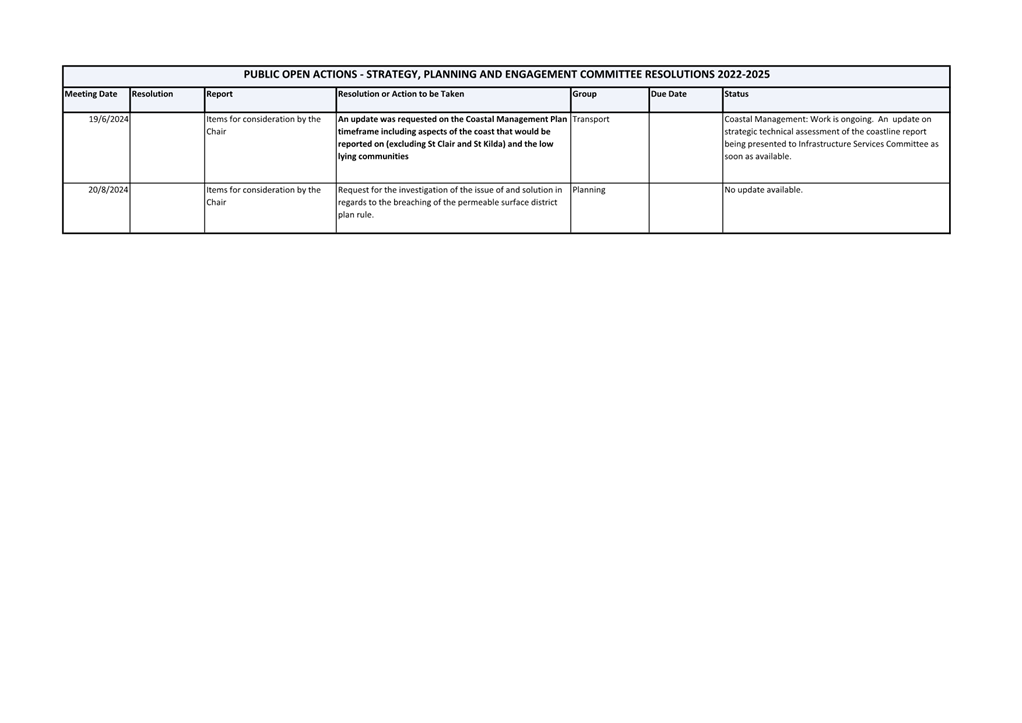
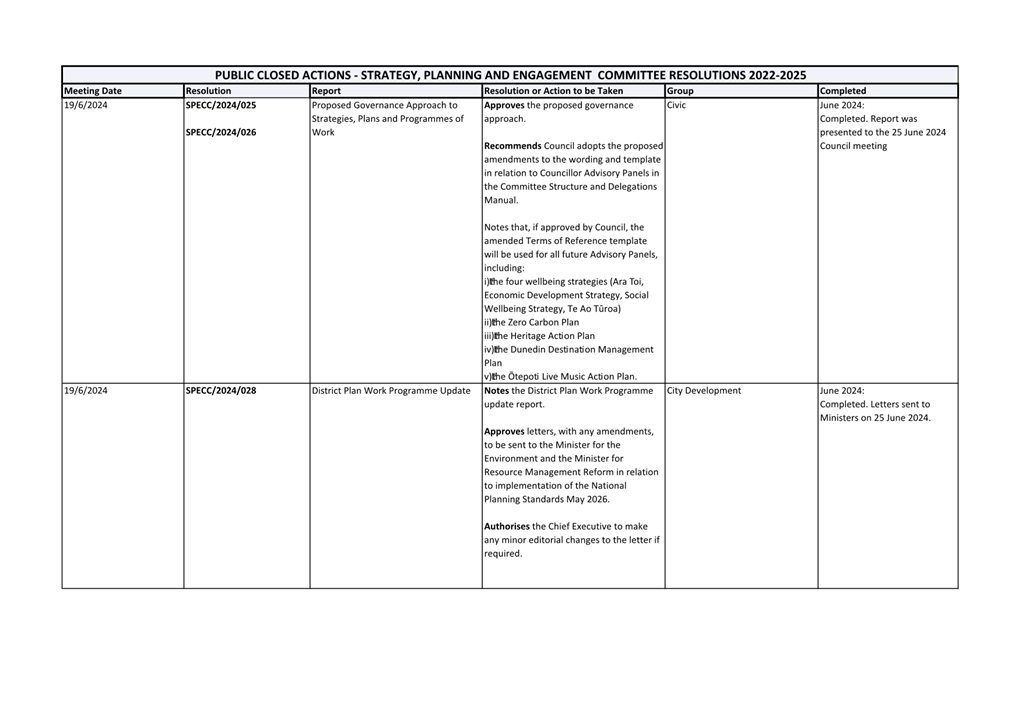
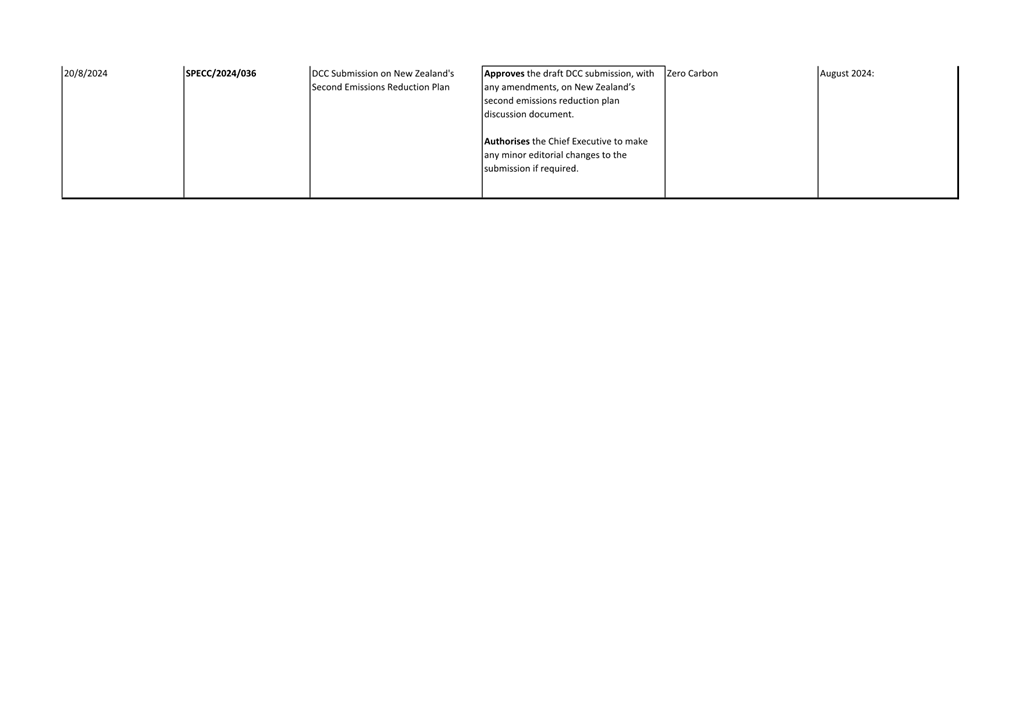
1 The
purpose of this report is to detail the open and completed actions from
resolutions of Strategy, Planning and Engagement Committee meetings from the
start of the triennium in October 2022 (Attachments A and B).
2 As
this is an administrative report only, there are no options or Summary of
Considerations.
RECOMMENDATIONS
That the Committee:
a) Notes the Open and
Completed Actions from resolutions of Strategy, Planning and Engagement
Committee meetings shown in Attachments A and B.
DISCUSSION
3 This
report provides an update on resolutions that are being actioned since the last
Strategy, Planning and Engagement Committee meeting.
Signatories
|
Author:
|
Wendy Collard - Governance Support Officer
|
|
Authoriser:
|
Nicola Morand - Manahautū (General Manager Policy and
Partnerships)
|
Attachments
|
|
Title
|
Page
|
|
⇩a
|
Action List - Open
|
24
|
|
⇩b
|
Action List - Completed
|
25
|
|

|
Strategy, Planning & Engagement
Committee
16 October 2024
|
|

|
Strategy, Planning & Engagement
Committee
16 October 2024
|
|

|
Strategy, Planning & Engagement
Committee
16 October 2024
|
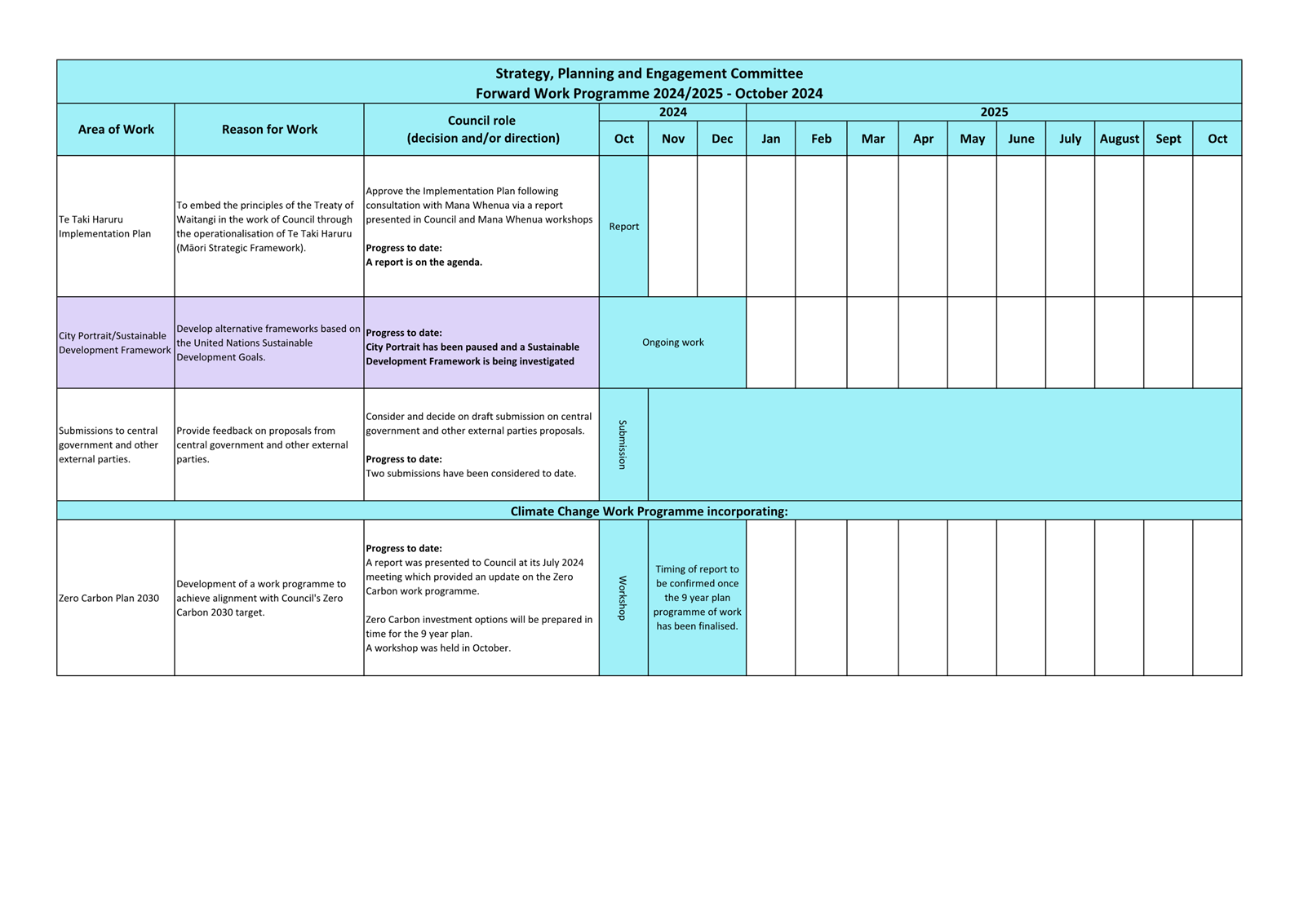
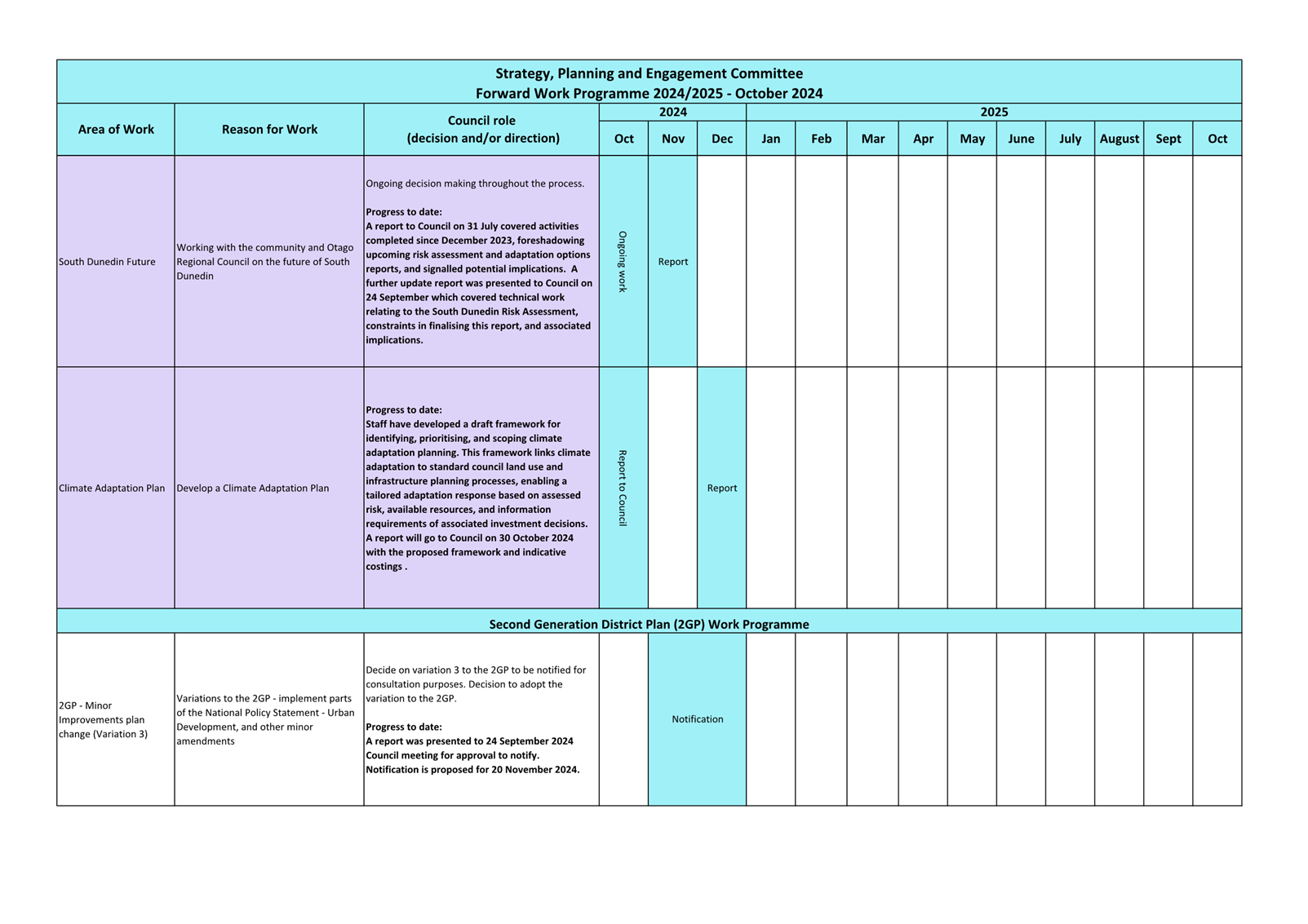
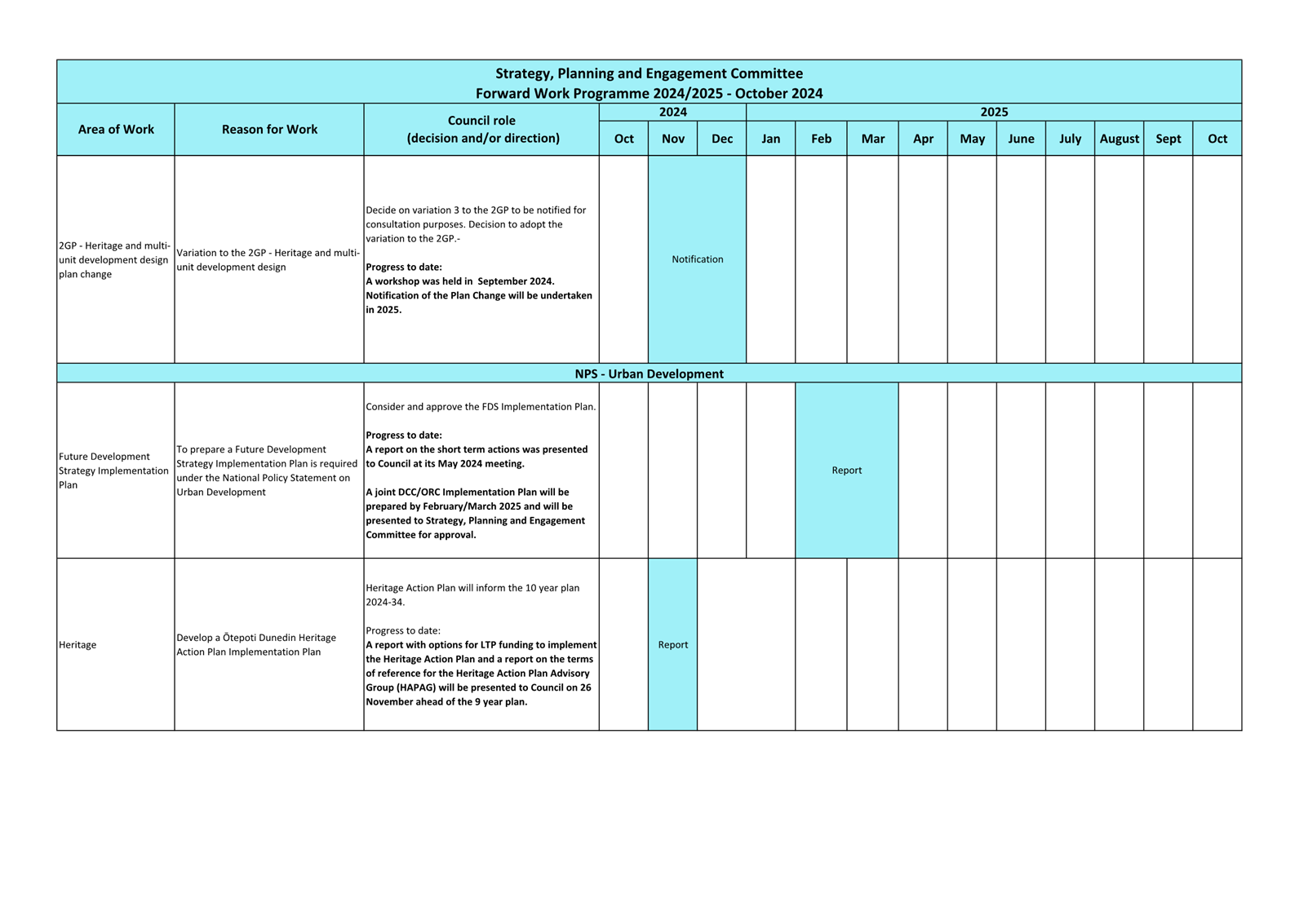
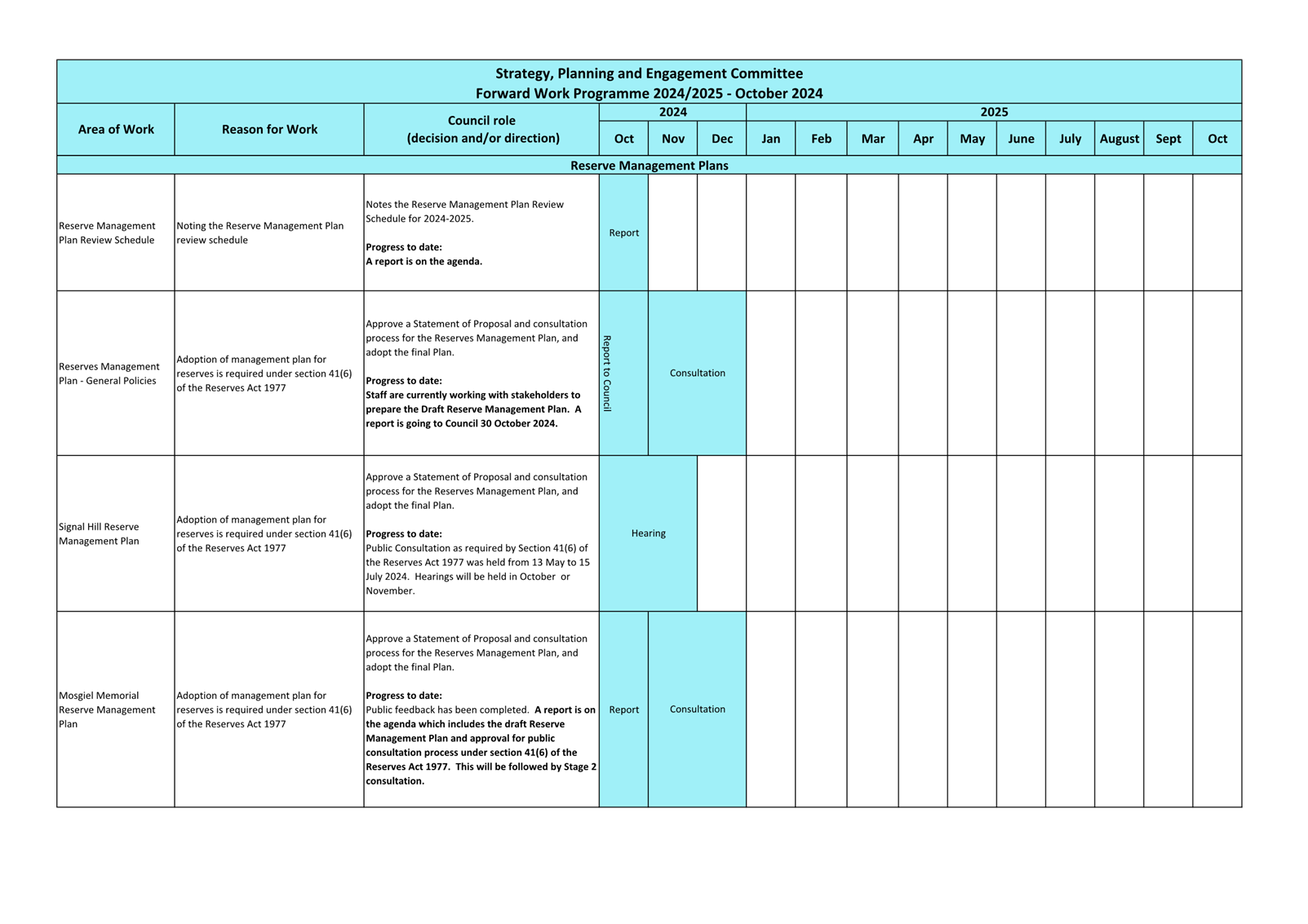
Strategy, Planning and Engagement Committee Forward Work
Programme
Department: Civic
EXECUTIVE SUMMARY
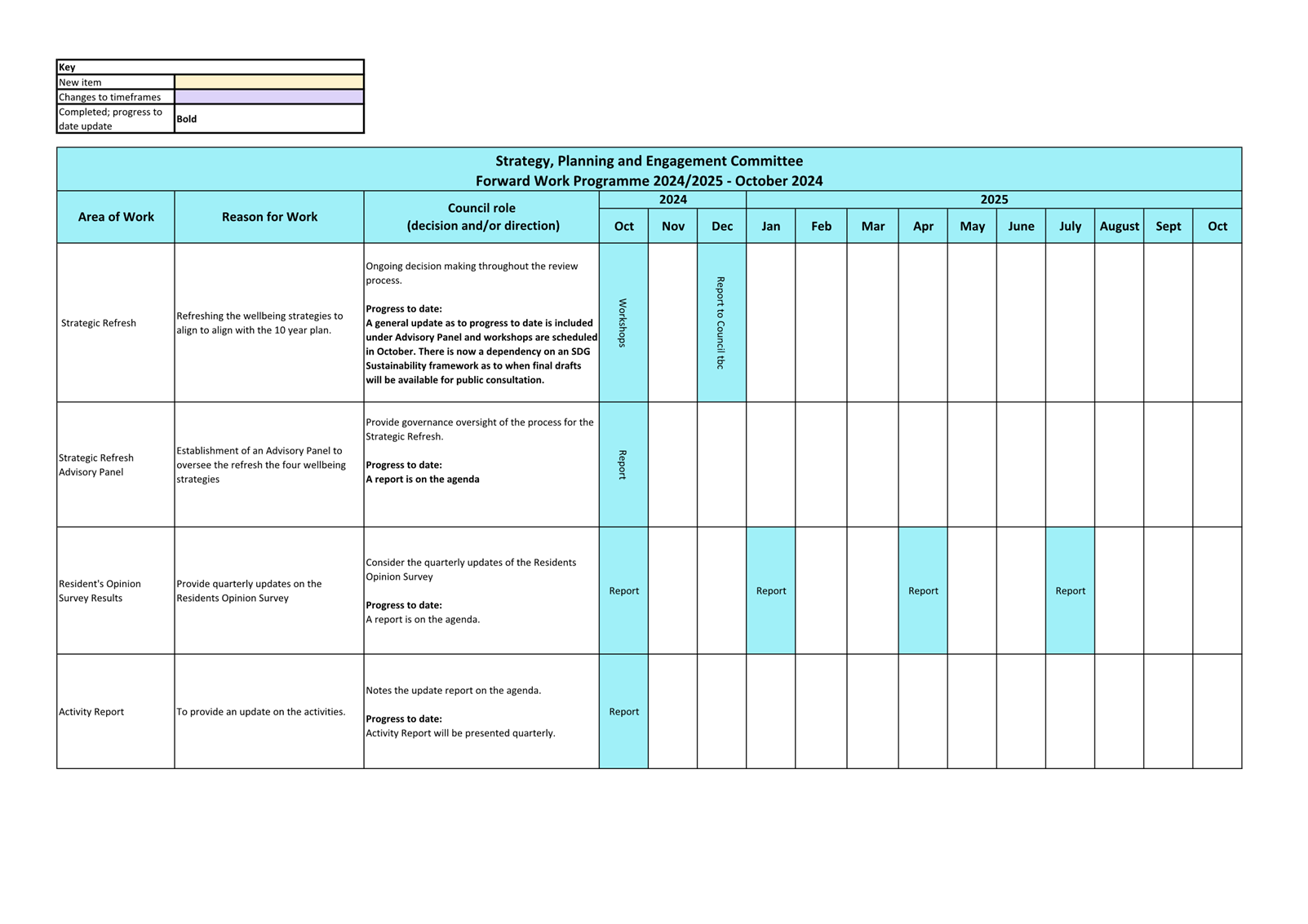
1 The
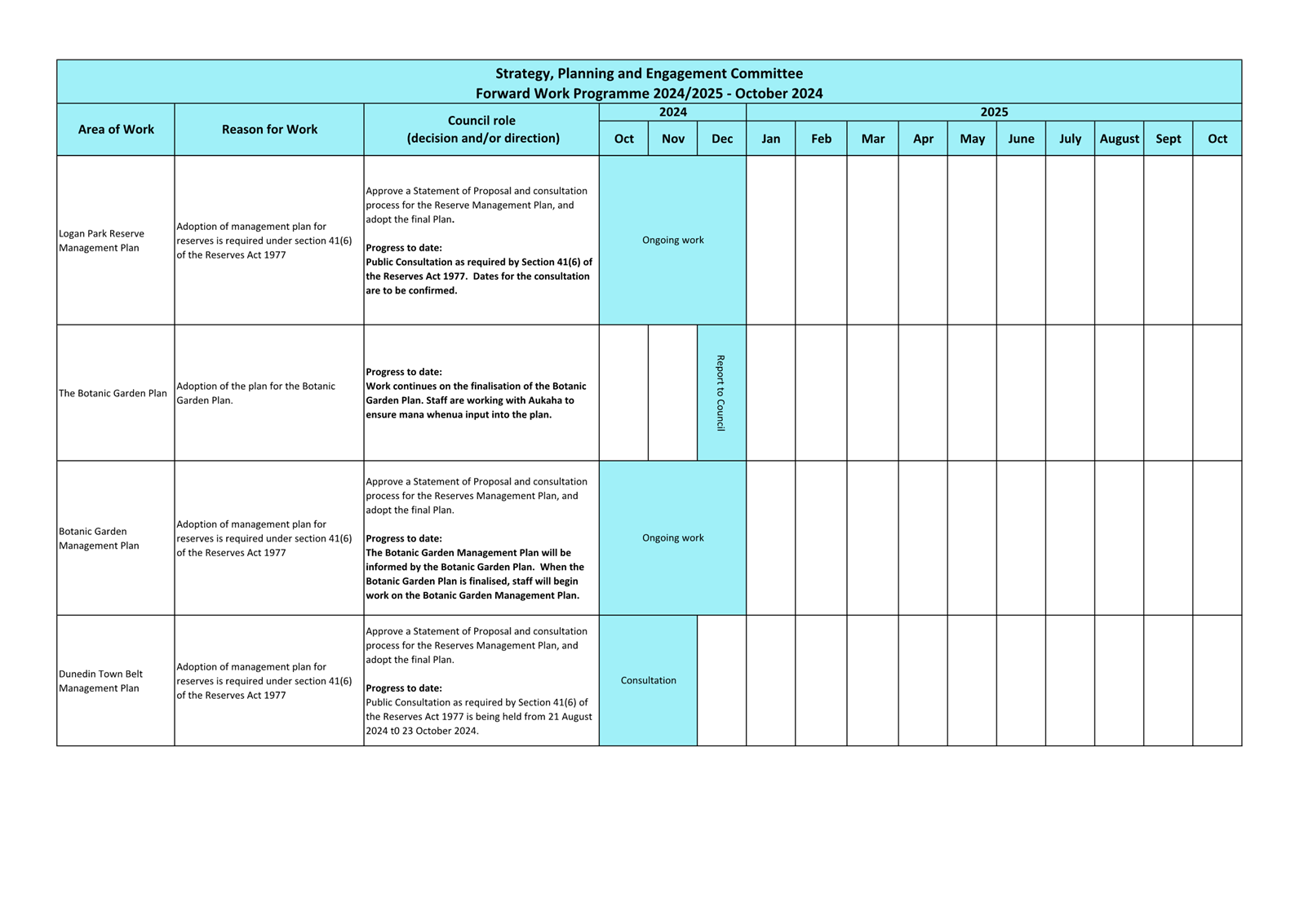
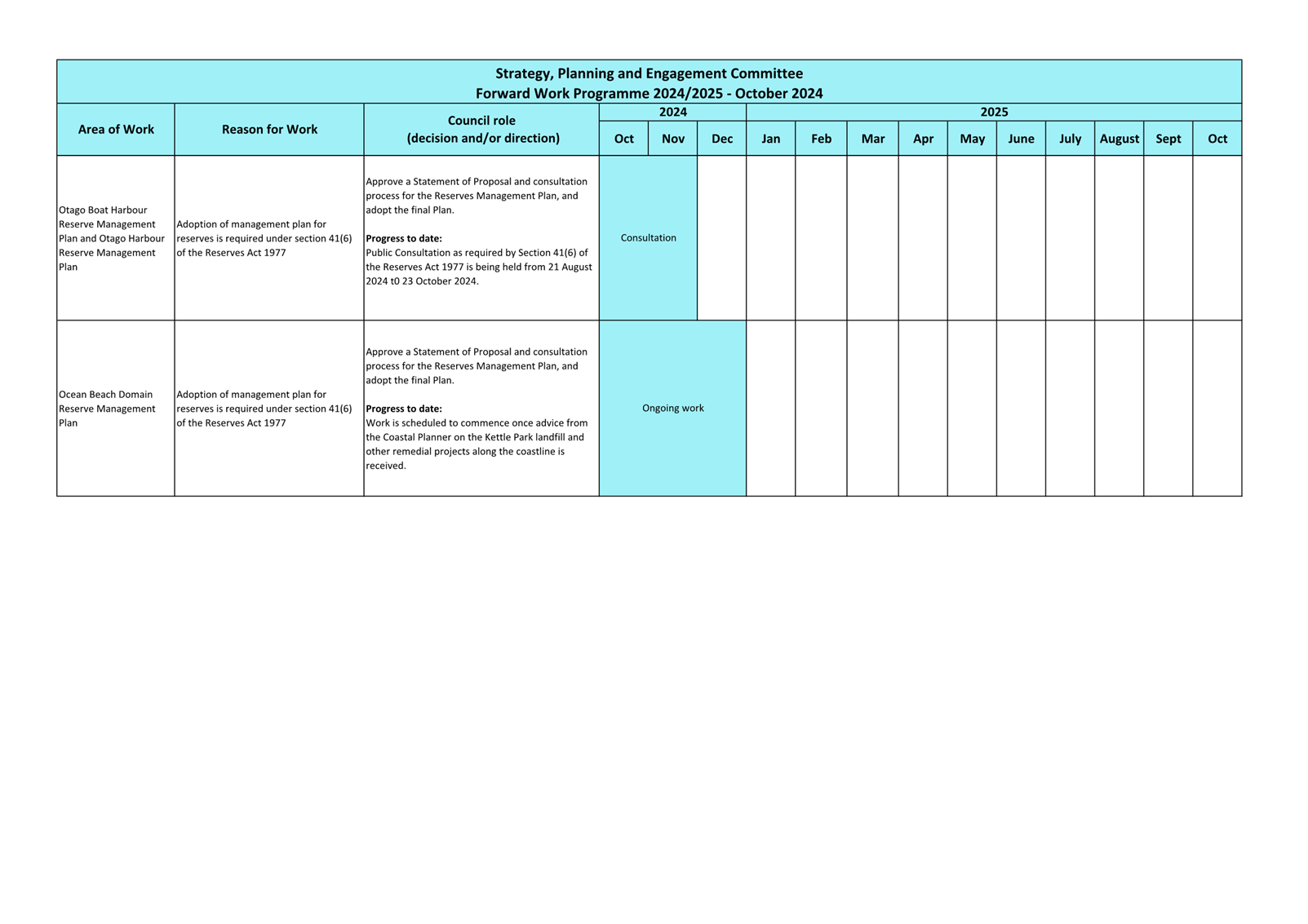
purpose of this report is to provide a regular update of the Strategy, Planning
and Engagement Committee forward work programme to show areas of activity,
progress and expected timeframes for decision making across a range of areas of
work (Attachment A).
2 As
this is an administrative report only, there are no options or Summary of
Considerations.
RECOMMENDATIONS
That the Committee:
a) Notes the Strategy,
Planning and Engagement Committee forward work programme as shown in Attachment
A.
DISCUSSION
3 The
forward work programme will be a regular agenda item which shows areas of
activity, progress and expected timeframes for decision making across a range
of areas of work.
4 As
an update report, purple highlights show changes to timeframes. New items
added to the schedule will be highlighted in yellow. Items that have been
completed or updated are shown as bold.
Signatories
|
Author:
|
Wendy Collard - Governance Support Officer
|
|
Authoriser:
|
Nicola Morand - Manahautū (General Manager Policy and
Partnerships)
|
Attachments
|
|
Title
|
Page
|
|
⇩a
|
Forward Work Programme
|
29
|
|

|
Strategy, Planning & Engagement
Committee
16 October 2024
|
|

|
Strategy, Planning & Engagement
Committee
16 October 2024
|
Strategy, Planning and Engagement Committee Activity Report
Department: Corporate Policy
EXECUTIVE SUMMARY
1 This
report provides an update on progress towards projects, plans and strategies
that sit within the forward work programme of the Strategy, Planning and
Engagement Committee for the period 1 June to 31 August 2024.
2 As
this is an administrative report only, there are no options or Summary of
Considerations.
RECOMMENDATIONS
That the Committee:
a) Notes the updates of
activities.
3 This
activity report provides updates on the following strategy, planning and
engagement work areas for the period June to August 2024.
· City
Portrait
· Citywide
Climate Adaptation Plan
· Reserves
Management Plans
· SDG
Sustainability Framework
· Second
Generation District Plan (2GP)
· Future
Development Strategy (Implementation Plan)
· Heritage
Action Plan
· South
Dunedin Futures
· Strategic
Refresh
· St Kilda/St Clair
Coastal Plan
· Te
Taki Haruru
· Zero
Carbon
City Portrait
4 City
Portrait is paused
in favour of an alternative SDG sustainability framework.
Citywide Climate
Adaptation Plan
5 Staff
have developed a proposed approach to establishing a citywide adaptation
framework and plan for Dunedin. The proposed framework includes four key
stages: (i) natural hazard assessment; (ii) risk assessment; (iii) adaptation
planning; and (iv) adaptation action. The key elements of each stage are then
summarised to form a citywide adaptation plan, which would capture important
information relating to the current and future environment, the risks presented
to Dunedin, adaptation planning processes associated with those risks, and
actions being taken in response.
6 The
proposed framework seeks to utilise existing council systems and processes,
complementing these with some additional adaptation-focussed activities where
required, timed to feed into council planning and budgeting cycles. Initial
design work suggests the proposed citywide adaptation framework and plan could
be delivered largely from within existing resources, with some supplementary
resources required on a cyclical basis (e.g. risk assessment every six years).
Further details will be discussed with Councillors at upcoming workshops (once
these have been rescheduled).
Reserves Management Plans
7 Logan
Park MP. Draft Management Plan written. Originally to go out for
second stage of engagement 13 May to 15 July 2024 but currently on hold.
8 General
Policies. First stage of engagement completed. Draft Reserves
Management Plan being written. Report to Council in October meeting requesting
permission to enter stage 2 of engagement.
9 Mosgiel
Memorial Gardens RMP. First stage of engagement completed. Draft
Reserve Management Plan being written. Report to SPEC October meeting
requesting permission to enter stage 2 of engagement.
10 Botanic
Garden Plan. Workshop completed with Councillors. Adjustments to
Plan based on workshop recommendations, currently liaising with mana
whenua. Date to be confirmed.
SDG Sustainability
Framework
11 Early exploration and
research on SDG frameworks is underway. An update report will be provided to
Council in December.
Second
Generation District Plan (2GP)
Appeals/
Making 2GP Operative Plan
12 Councillor O’Malley has delegated
authority to agree to any mediated resolutions on behalf of the Council. 98% of
the 2GP appeal points, and 13 of the 16 appeals made on Variation 2, have been
resolved or withdrawn. There are six remaining appeals in total. Of these:
reconvened mediation for one will take place on 31 October; an Environment
Court hearing for one will take place on 11 December; parties are currently
finalising an agreed resolution for one appeal; and for the remaining three
appeals, DCC is in post-mediation discussions with parties to try to reach an
agreed resolution.
13 Council made the decision to make the
District Plan (2GP) partially operative on 18 August.
Minor
improvements Plan Change (Plan Change 1)
14 Plan Change 1 – Minor improvements
to the 2GP has been approved for notification on 20 November 2024. The
submission period will run from 20 November until 18 December 2024. A
submission summary will be published in early to mid-2025. Following the
release of the submission summary, submitters may make “further
submissions” to support or oppose the submissions made during the initial
submission period. Hearings will be held for any submitters who wish to
speak to their submissions or further submissions in 2025. Decisions on submissions
will be made by a Hearing Panel.
Heritage and Multi-unit Development Plan Change (Plan
Change 2)
15 Plan Change 2 - Heritage and Multi-unit
Development was initiated by SPEC on 20 August 2024 and Councillors were
engaged as part of the initial issues and options phase through a workshop on 2
September 2024. Staff are now working on preferred options and a further
workshop is likely to occur as part of this process.
16 Key stakeholders and mana whenua are being
engaged as part of the plan change, including through a heritage stakeholder
group. A stakeholder group for the multi-unit component will begin later in the
programme.
17 Staff will seek approval from Council or
SPEC to formally notify the change to start the submission and hearing process.
Timing to be confirmed, but likely to be in mid to late 2025.
Future work programme
18 The next plan change topics in the work
programme are business land and native reserves. These plan changes are
required under the NPS-UD (to address the shortfall in industrial land) and an
appeal resolution agreement respectively. Initial plan review on one or both of
these will start in 2025.
Future
Development Strategy (Implementation Plan)
19 A report on FDS Implementation and
implications for the 9 year plan will be presented to Council on 26 November
2024. The final FDS implementation plan, which is being jointly developed
with the Otago Regional Council, will be provided to Council or SPEC after
decisions are made on the 9 year plan.
Heritage
Action Plan
20 The Heritage Action Plan was adopted by
Council, with recommended changes, on 12 December 2023 and an update report on
the Heritage Action Plan and associated implementation plan was presented to
SPEC in June.
21 A report with options for 9 year plan funding
to implement the Heritage Action Plan and a report on the terms of reference
for the Heritage Action Plan Advisory Group (HAPAG) will be presented to
Council on 26 November ahead of the 9 year plan.
22 It is proposed to prepare the
Implementation Plan after funding decisions are made through the LTP given the
level of uncertainty around budgets and interim decisions to remove some
heritage budgets.
South
Dunedin Futures
23 A
full update report on South Dunedin Future was provided to Council on 24
September. Staff are currently assessing the potential impacts on the programme
of the 3-4 October weather event and further advice will be provided in due
course.
Strategic
Refresh
24 An update report is included on the
agenda.
St
Kilda/St Clair Coastal Plan
25 Due
to staff shortages, no update available this month but work is ongoing, a
verbal update can be provided as required.
Te
Taki Haruru
26 A separate report is
included in the agenda.
Zero
Carbon
Reducing Dunedin City’s emissions
27 The Zero Carbon Plan
Advisory Panel has been established and the first meeting held.
28 The 2024/25 Zero
Carbon Implementation Plan has been considered by Council, the Zero Carbon Plan
Advisory Panel, and is subsequently being refined.
29 Zero Carbon Alliance
key representatives have continued to meet and advance their collaborative work
programme.
30 Technical and policy work on
sequestration options is underway, alongside the Otago Regional Council and
other Otago territorial authorities.
31 Submissions on the
Government’s second Emissions Reduction Plan and Draft Minerals Strategy
were prepared.
32 Work on Phase 1 pilot follow-up
and review and Phase 2 planning for the SME support programme has continued.
Further information will be provided to Council in October.
Reducing DCC’s emissions
33 DCC’s emissions are
monitored and regularly reported. Audit for the 2023/24 year is currently
underway.
34 An updated emissions reduction plan for the period 2023/24 -
2030/31 was developed, adopted by ELT, and presented to Council for noting.
This is closely related to the Zero Carbon Plan, with over 85% of actions in
the EMRP also listed in the indicative Zero Carbon implementation actions.
Implementing
the Zero Carbon Policy – embedding emissions reduction into DCC business-
as-usual
35 Audit New Zealand has had a focus
on climate change for 2023/24 Annual Reports. The Zero Carbon team has
supported Finance in meeting Audit New Zealand’s expectations.
36 Work is underway to enable the
Office of the Auditor General’s expectations about climate change in Long
Term Plans to be delivered through the 9 Year Plan. More information will be
provided to Council as part of the Climate Change Significant Forecasting
Assumptions report.
37 Testing of Zero Carbon aspects of
the Sustainable Project Management Framework is underway.
38 Zero Carbon support of other lead
teams with key projects and policy reviews continues e.g., Waste Futures, 3
Waters strategic planning, Parks and Recreation policy reviews. Zero Carbon is
also involved in project considering incentives across the DCC.
Signatories
|
Authoriser:
|
Nicola Morand - Manahautū (General Manager Policy and
Partnerships)
|
Attachments
There are no attachments for
this report.
|

|
Strategy, Planning & Engagement
Committee
16 October 2024
|
Strategic Refresh Advisory Panel -
Quarterly Update Report
Department: Corporate
Policy
EXECUTIVE SUMMARY
1 This
report is on the Strategy, Planning and Engagement Committee’s forward
work programme, and provides an update since June 2024 (quarterly report).
2 This
report informs Councillors of the activity undertaken by the Strategic Refresh
Advisory Panel and outlines the next steps.
RECOMMENDATIONS
That the Committee:
a) Notes the Strategic
Refresh Advisory Panel – Quarterly Update Report
BACKGROUND
3 On
13 February 2024 the Strategy, Planning and Engagement Committee (SPEC)
approved to establish the Strategic Refresh Advisory Panel (the Panel), to
oversee the process of refreshing the Dunedin City Council’s (DCC) four
wellbeing strategies (Ara Toi, Economic Development Strategy, Social Wellbeing
Strategy and Te Ao Tūroa).
Moved (Cr
Sophie Barker / Cr Cherry Lucas):
That the
Committee:
a) Establishes
the Strategic Refresh Advisory panel to oversee the process of refreshing the
DCC’s four wellbeing strategies with terms of reference as outlined in
Attachment A.
b) Appoints
Councillor Cherry Lucas as Chairperson of the Panel and Councillors Carmen
Houlihan, Andrew Whiley, Marie Laufiso and Sophie Barker as members of the
Panel.
Motion carried (SPEC/2024/001)
with Cr Garey recording her vote against.
4 This
report is the second quarterly report as detailed in SPEC’s forward work
programme.
DISCUSSION
5 Since
the last quarterly update, the Panel has met two times on, 12 June 2024 and 19
July 2024.
6 Key
topics discussed included:
a) Shared
reflections from the May 2024 meetings with members of advisory and partnership
groups associated with each wellbeing strategy.
b) Confirmation
that each strategy will have their own process for refreshing, but before they
are submitted to Council in December 2024, the Panel will review them as a
group to ensure there is strong alignment and consistency.
c) Alignment
is integral for the community outcomes as these impact on long term plan and
reporting. A memo detailing the alignment approach has been shared with the
Panel.
d) Advisory
groups for the wellbeing strategies will be refreshed, but the timing is yet to
be determined. This will be led by Councillors.
e) Use
of a methodology framework, presently referred to as ‘monitoring
map’, to illustrate the flow of logic from the city’s vision,
overarching commitments, strategic outcomes, through to activity groups, long
term plans, annual plans and levels of service.
f) Separating
implementation plans from the strategies to enable Council to be adaptive to
community needs when measuring progress and reporting through annual and long
term plans.
g) Public
consultation on refreshed wellbeing strategies will occur alongside of 9 year
plan (9YP) consultation.
7 Councillor
workshops for each of the four wellbeing strategies are scheduled for October
2024.
8 On
26 September 2024, Council decided to cease development of the City Portrait to
the community engagement stage and requested staff to develop alternative
framework for consideration based on the United Nations Sustainable Development
Goals.
Moved (Cr
Kevin Gilbert / Cr Sophie Barker)
That the
Council:
a) Decides
to cease development of the City Portrait to the community engagement stage.
b) Requests
staff to develop alternative frameworks for consideration, based on the
United Nations Sustainable Development Goals
c) Notes
that staff would provide an update report on progress by December 2024
9 For
the Strategic Refresh work to be finalised by December 2024 as scheduled, there
is a dependency on having a sustainability framework in place. This is crucial
as the commitment of sustainability, together with the Treaty commitment,
underpins the DCC’s strategic framework, guiding decision-making in a
consistent manner.
10 Corporate
Policy will provide an option report on the sustainability framework to Council
in October 2024 so the Strategic Refresh can keep to the timeline.
11 Once
the refreshed strategies are approved, and advisory groups are set; the next
steps are to draft implementation plans in collaboration with partners and
stakeholders to establish reporting measures that align with DCC’s levels
of service.
OPTIONS
12 There
are no options, as this report is for noting.
NEXT STEPS
13 Work
to refine the draft strategies will continue following Council workshops on the
10th and 22nd of October 2024.
14 If
the new Sustainability Framework has been agreed prior to December 2024, the refreshed
wellbeing strategies will be presented to Council on 10 December 2024 for
approval for public consultation as part of 9YP consultation.
15 If
the new Sustainability Framework has not been agreed, direction will be sought
from Council whether to delay public consultation until a later date.
Signatories
|
Author:
|
Nadia Wesley-Smith - Corporate Policy
Manager - Acting
|
|
Authoriser:
|
Nicola Morand - Manahautū (General
Manager Policy and Partnerships)
|
Attachments
There are no
attachments for this report.
|
SUMMARY OF
CONSIDERATIONS
|
|
Fit with purpose of Local Government
This decision enables democratic local
decision making and action by, and on behalf of communities.
This decision promotes the social,
economic, environmental, and cultural well-being of communities in the
present and for the future.
|
|
Fit with strategic framework
|
|
Contributes
|
Detracts
|
Not applicable
|
|
Social Wellbeing Strategy
|
✔
|
☐
|
☐
|
|
Economic Development Strategy
|
✔
|
☐
|
☐
|
|
Environment Strategy
|
✔
|
☐
|
☐
|
|
Arts and Culture Strategy
|
✔
|
☐
|
☐
|
|
3 Waters Strategy
|
☐
|
☐
|
✔
|
|
Future Development Strategy
|
☐
|
☐
|
✔
|
|
Integrated Transport Strategy
|
☐
|
☐
|
✔
|
|
Parks and Recreation Strategy
|
☐
|
☐
|
✔
|
|
Other strategic projects/policies/plans
|
✔
|
☐
|
☐
|
The refresh of the DCC’s four
well-being strategies is a critical piece of work that is overseen by the
Panel.
|
|
Māori Impact Statement
Alignment of the four well-being
strategies with Te Taki Haruru is integral to this work.
|
|
Sustainability
Alignment of the four well-being
strategies with Council’s commitment to sustainability is integral to
this work.
|
|
LTP/Annual Plan / Financial Strategy
/Infrastructure Strategy
Having updated and refreshed four
well-being strategies will help with the DCC’s preparation for its
9-year plan and annual plan.
|
|
Financial considerations
There are no financial implications
associated with this quarterly report.
|
|
Significance
There are no significant matters
associated with this quarterly report
|
|
Engagement – external
Members of the former and current
advisory and partnership groups associated with each of the four well-being
strategies were met with.
|
|
Engagement - internal
Lead staff from Enterprise Dunedin, South
Dunedin Futures, Ara Toi and Community Partnerships have worked alongside
Policy in the last quarter to progress each strategy.
|
|
Risks: Legal / Health and Safety etc.
There are no known risks associated with
this report, and no request for decisions on the matters outlined in this
report.
|
|
Conflict of Interest
There are no conflicts of interest.
|
|
Community Boards
There are no implications for Community
Boards associated with the matters outlined in this report.
|
|

|
Strategy, Planning & Engagement
Committee
16 October 2024
|
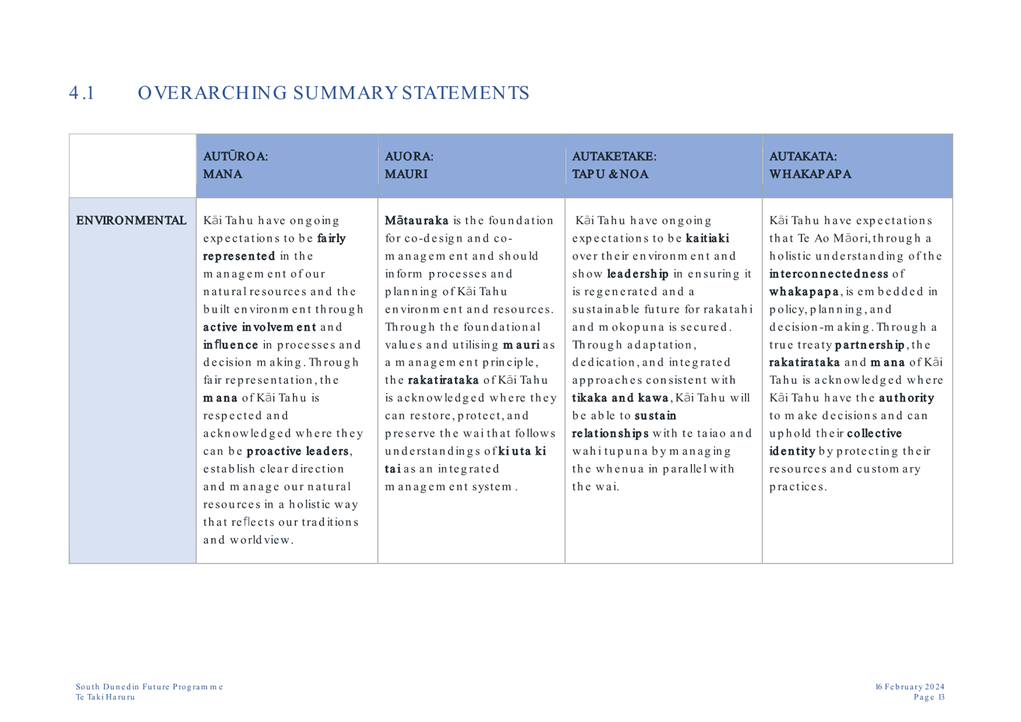
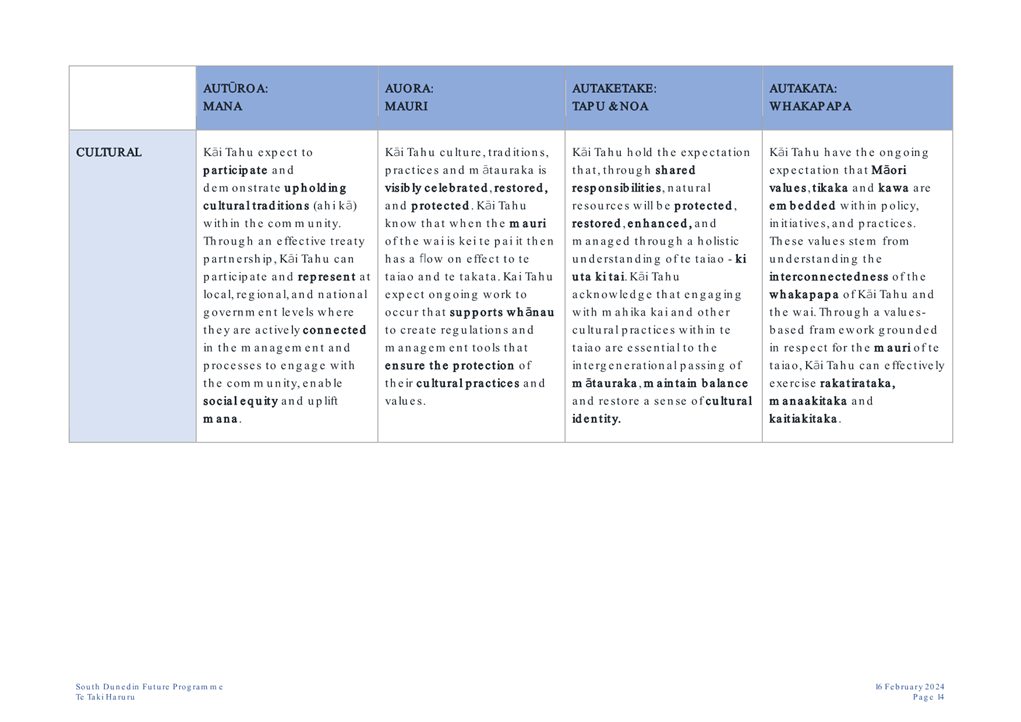
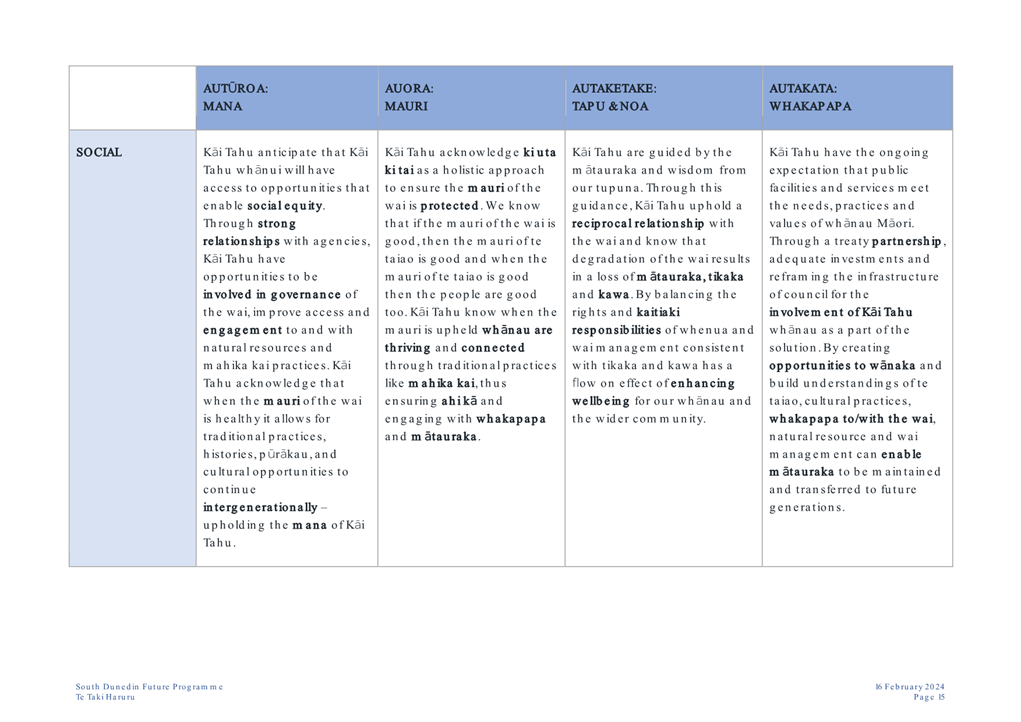
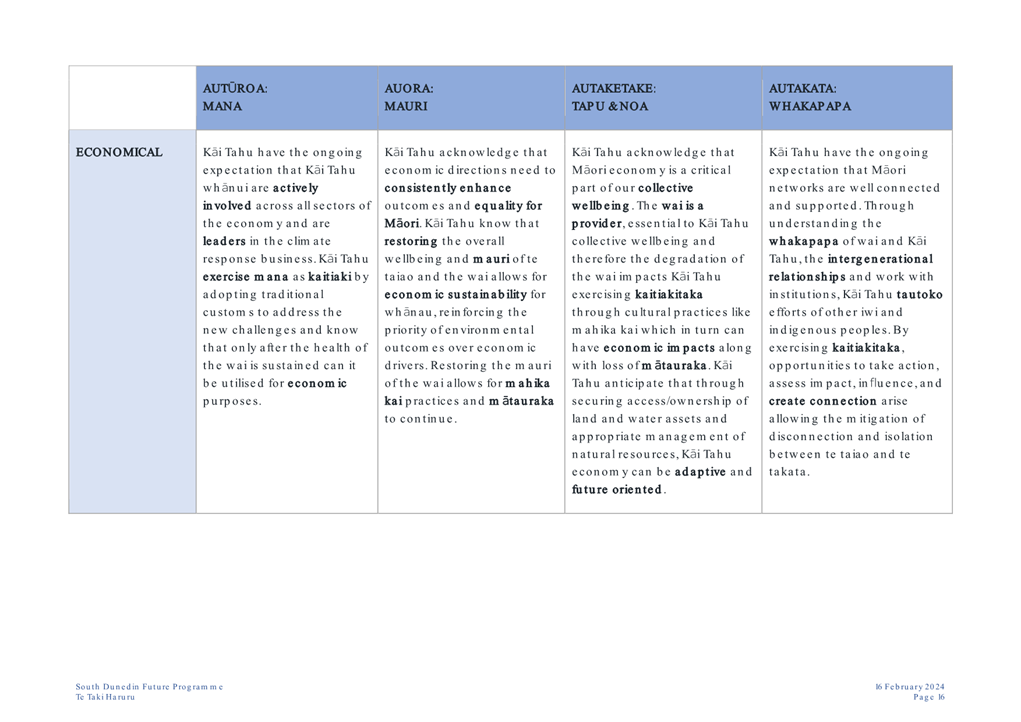
Te Taki Haruru Implementation Plan
Department: Māori, Partnerships and Policy and Corporate
Policy
EXECUTIVE SUMMARY
1 The
purpose of this report is to seek approval by Council to implement Te Taki
Haruru – the DCC’s Māori Strategic Framework.
2 The
report provides:
· an overview of the
three main programmes to be implemented and give effect to Te Taki Haruru.
· an outline of the
proposed approach to governance and operations.
3 The
implementation of Te Taki Haruru ensures the DCC meets its Treaty of Waitangi
(the Treaty) obligations under the Local Government Act 2002 (LGA).
RECOMMENDATIONS
That the Committee:
a) Approves the
implementation plan for Te Taki Haruru.
b) Notes the next steps.
BACKGROUND
4 Te
Taki Haruru is the Māori Strategic Framework for the DCC. It was created
through collaboration between Māori Partnerships and mana whenua in
Ōtepoti Dunedin to ensure the DCC is meeting its obligations to the Treaty
under the LGA.
5 Te
Taki Haruru was presented to Te Pae Māori on 17 July 2023, where it
approved the principles, values, statements of intent and directions that
together make up Te Taki Haruru.
6 Following
the approval from Te Pae Māori, Te Taki Haruru was presented within a
report to Council on 25 September 2023. The Council resolved the following:
Moved
(Mayor Jules Radich/Cr Mandy Mayhem):
That the
Council
a) Adopts
Te Taki Haruru- Māori Strategic Framework 2023.
b) Delegates
authority to the Chief Executive Officer to incorporate minor editorial
amendments.
c) Notes
that the next steps include:
i) finalising
the design and production of a public facing version of Te Taki Haruru-
Māori Strategic Framework.
ii) finalising
the implementation plan to that will sit alongside Te Taki Haruru.
Motion
carried (CNL/2023/222)
DISCUSSION
7 Te
Taki Haruru is proposed to be governed at a strategic level by Te Pae
Māori.
8 Te
Taki Haruru will be implemented through three key programmes that will be
overseen on an operational level by the Manahautū, delegated staff, and a
Project Steering Group (PSG) which is yet to be determined.
9 Te
Taki Haruru will aid the DCC to meet its Treaty obligations through three
operational programmes. These three programmes are:
a) Tū
Kotahi – the Māori Cultural Capability Framework. This programme
is designed for DCC staff to gain an understanding of the Treaty it applies in
Ōtepoti Dunedin and local government context.
b) Tū
Ake – the main Operational Framework for Te Taki Haruru. This
programme works with DCC staff to create a positive shift in the day-to-day
business by applying Te Taki Haruru to their work. It ensures that new and
under-review strategies/policies/plans are underpinned by Te Taki Haruru with
identifiable indicators of success.
c) Tū
Hono – the Māori Engagement Framework. This is a supplementary
programme supporting DCC staff in fulfilling their Treaty commitments beyond
Tū Kotahi and Tū Ake by providing resources on the processes for
engaging with mana whenua. These resources will give DCC staff the confidence
to know when and how to engage with mana whenua directly.
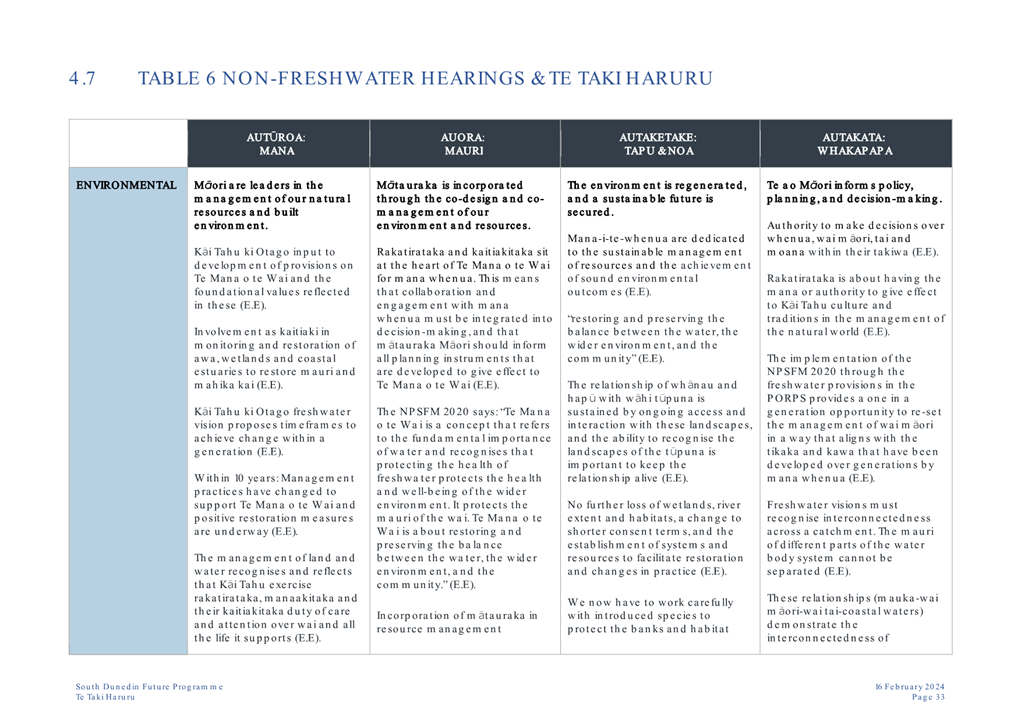
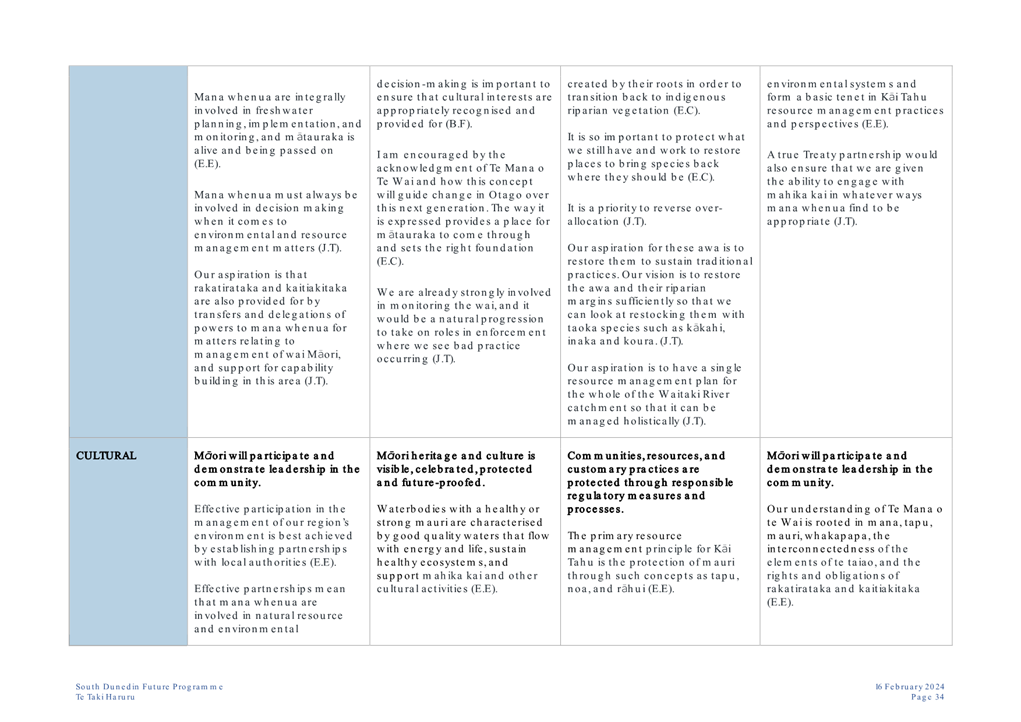
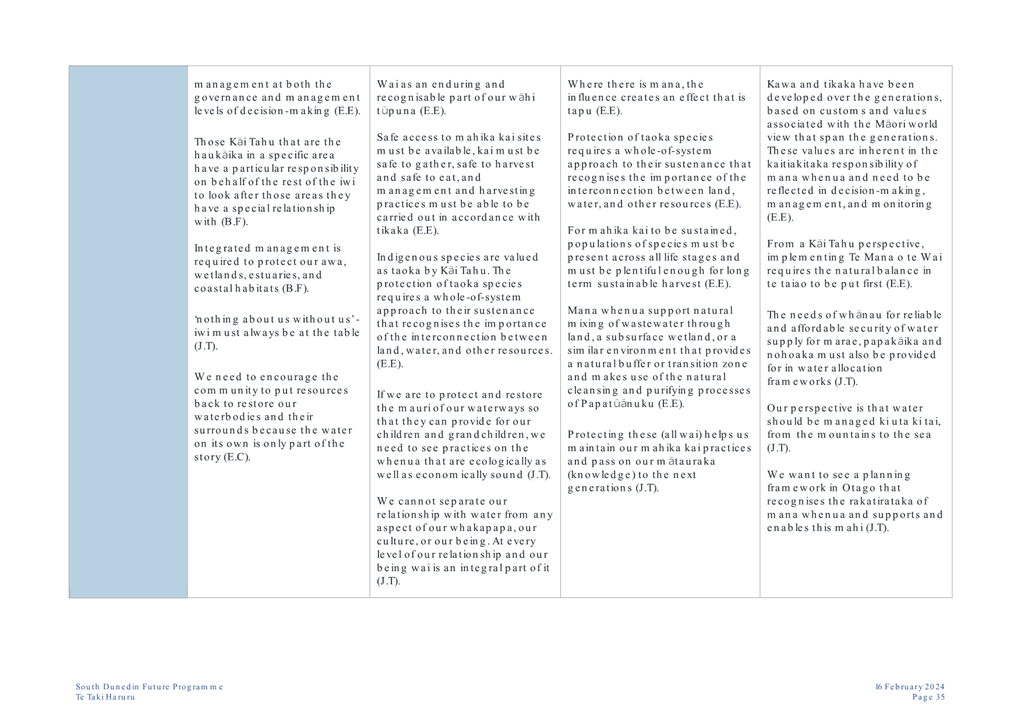
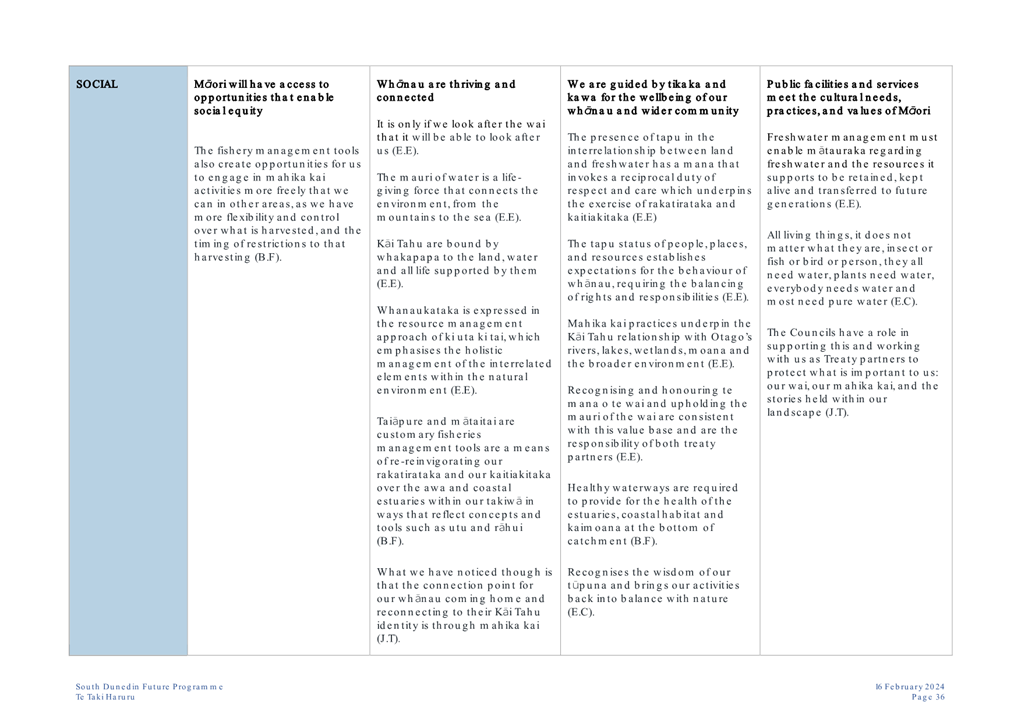
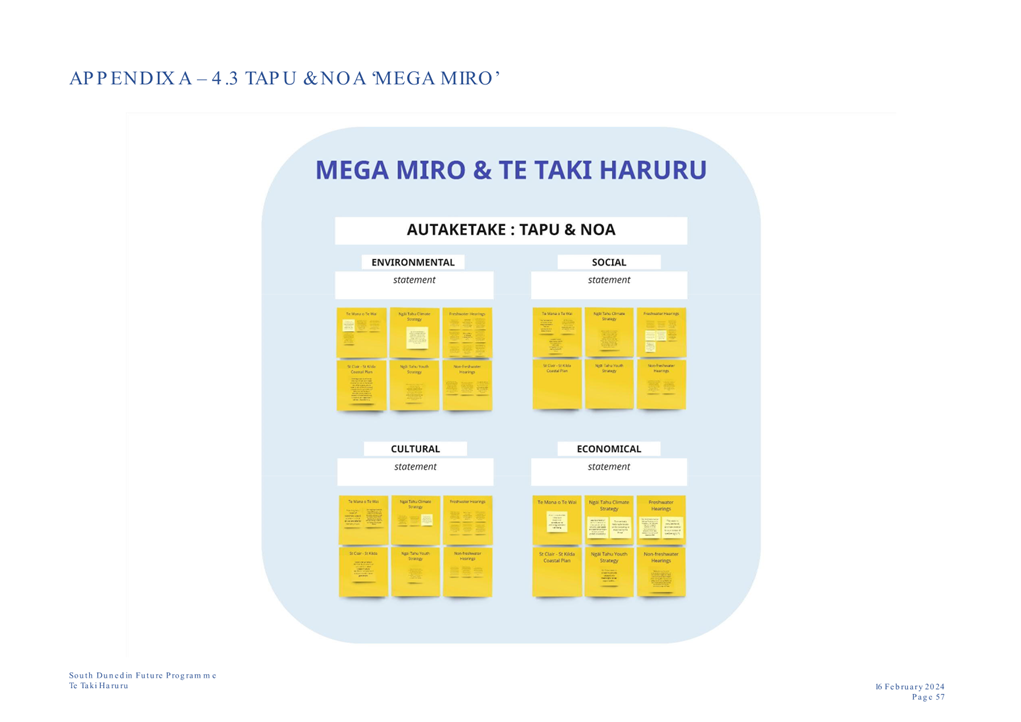
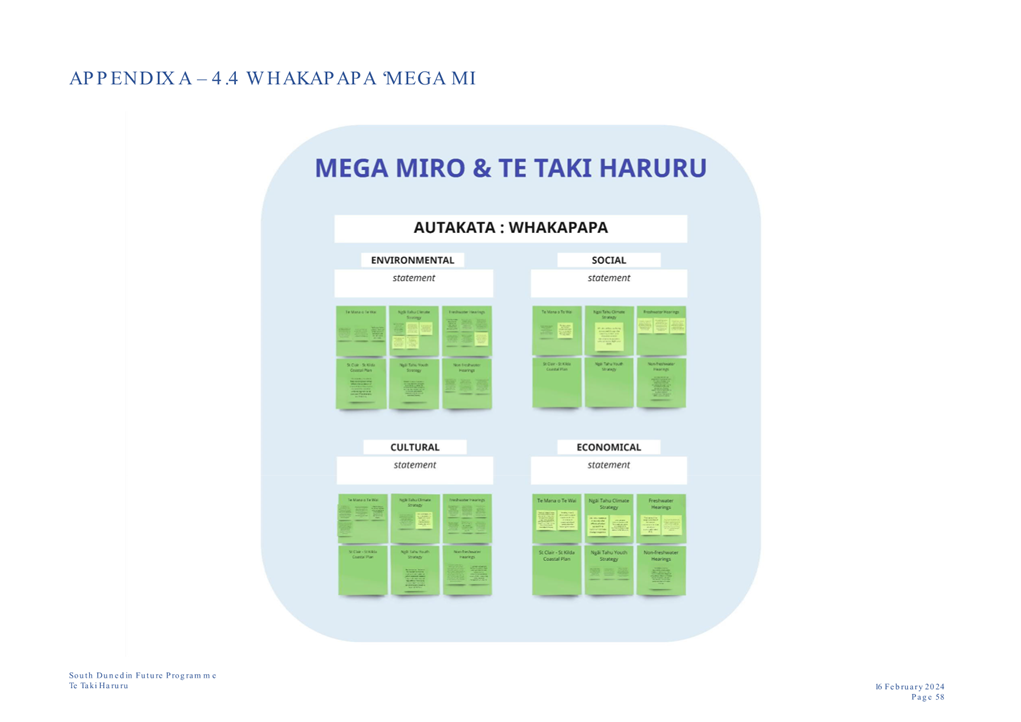
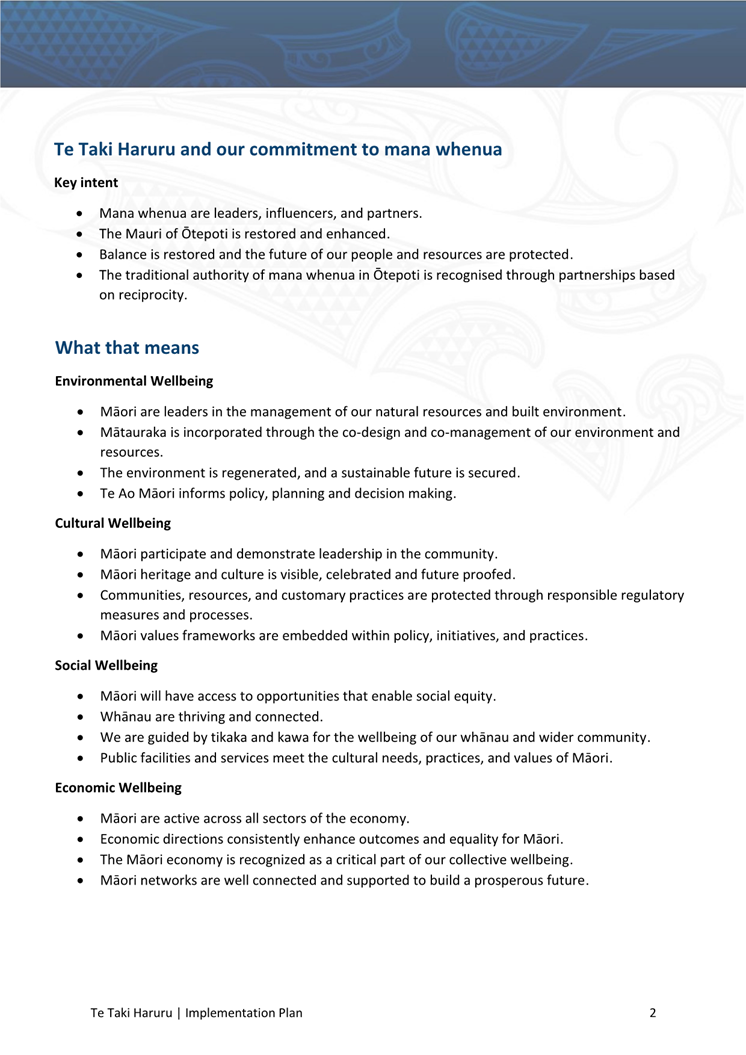
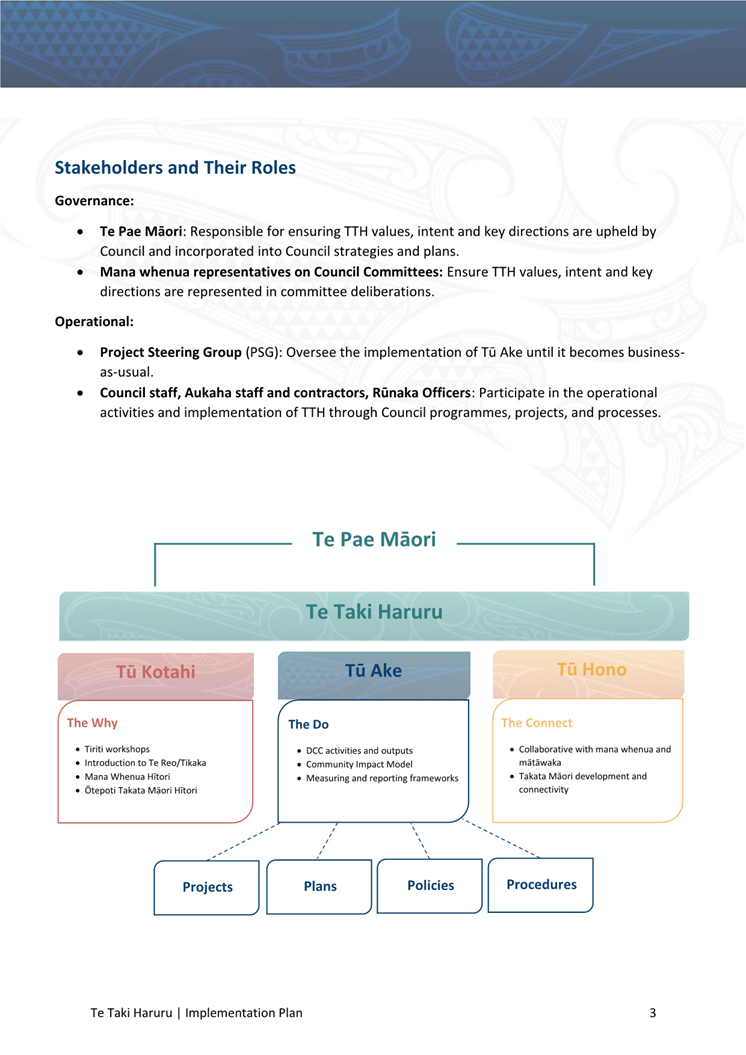
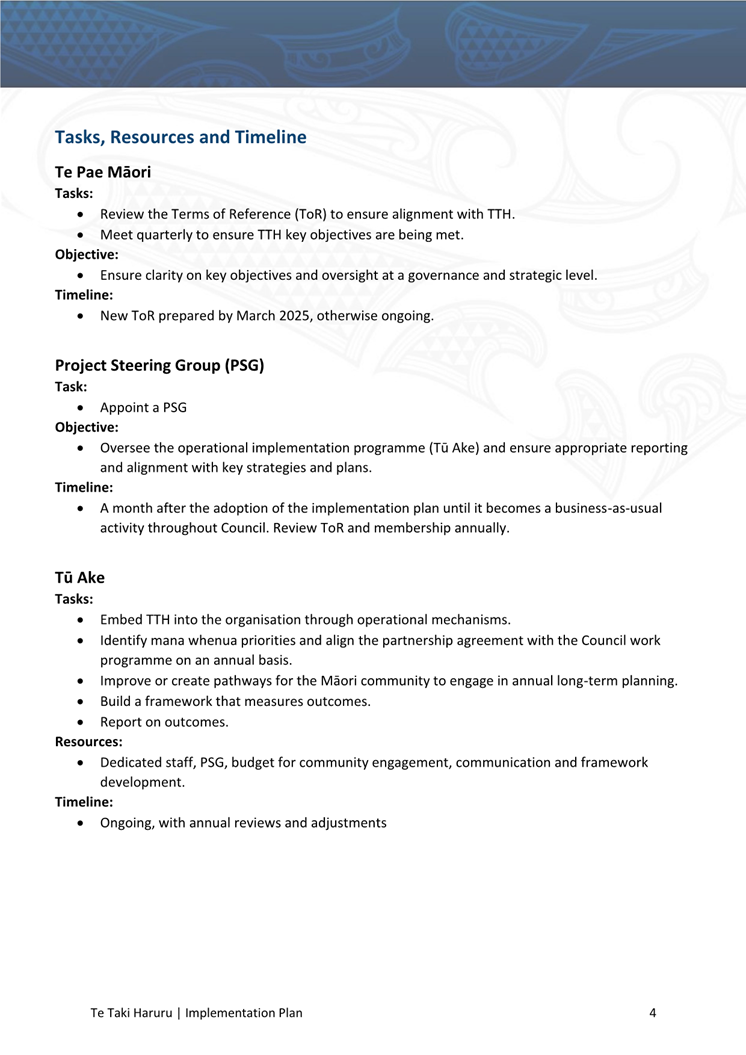
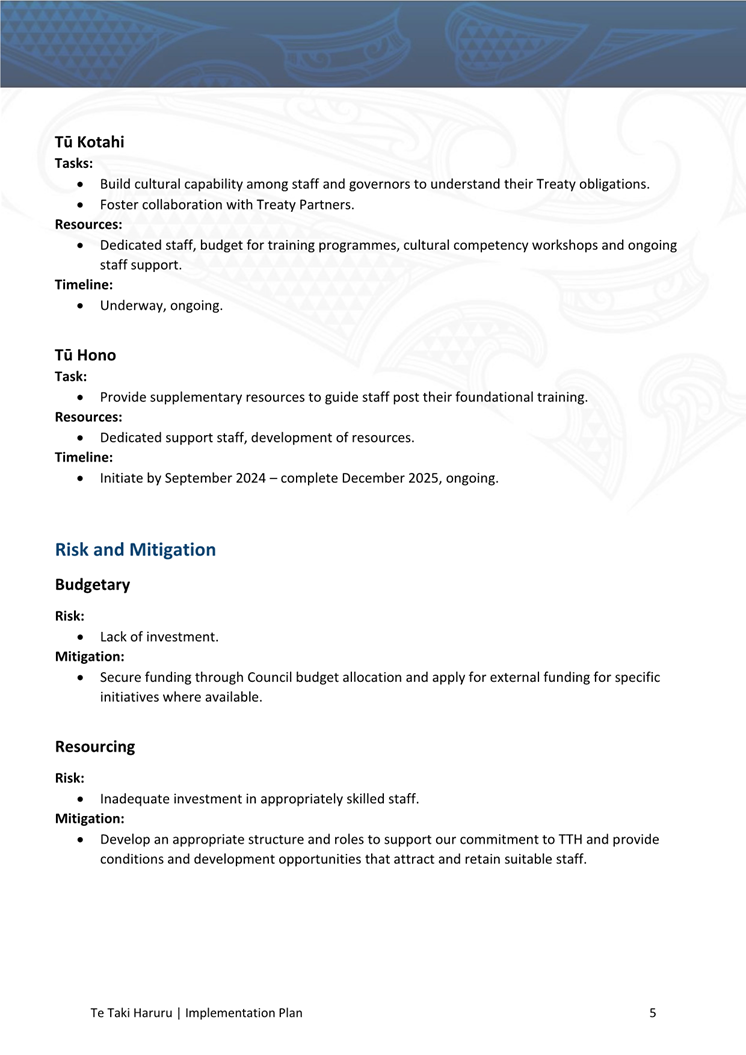
10 Figure 1
summarises Te Taki Haruru governance and implementation plan.
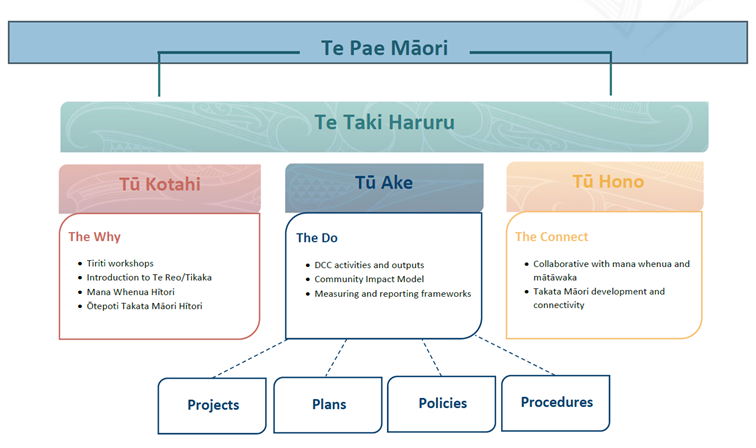
Figure
1. Te Taki Haruru governance and implementation plan at a glance.
11 It is
recommended that DCC staff complete learning through each of the programmes,
providing a holistic approach to the understanding of te ao Māori, as it
applies to their work and to the Council’s obligation to the Treaty.
12 Staff will then
develop relevant indicators of success for their focus areas that will align
with Te Taki Haruru, the four refreshed wellbeing strategies, and Levels of
Service (LoS).
13 Examples of this
process successfully occurring are projects such as the George Street upgrade,
South Dunedin Library, and South Dunedin Futures (SDF). Te Taki Haruru and SDF
report can be found in Attachment A.
14 It is suggested
that by embedding Te Taki Haruru in the priorities of Council, the DCC will be
able to better meet its treaty obligations at an operational and strategic
level as well as through governance and decision-making mechanisms.
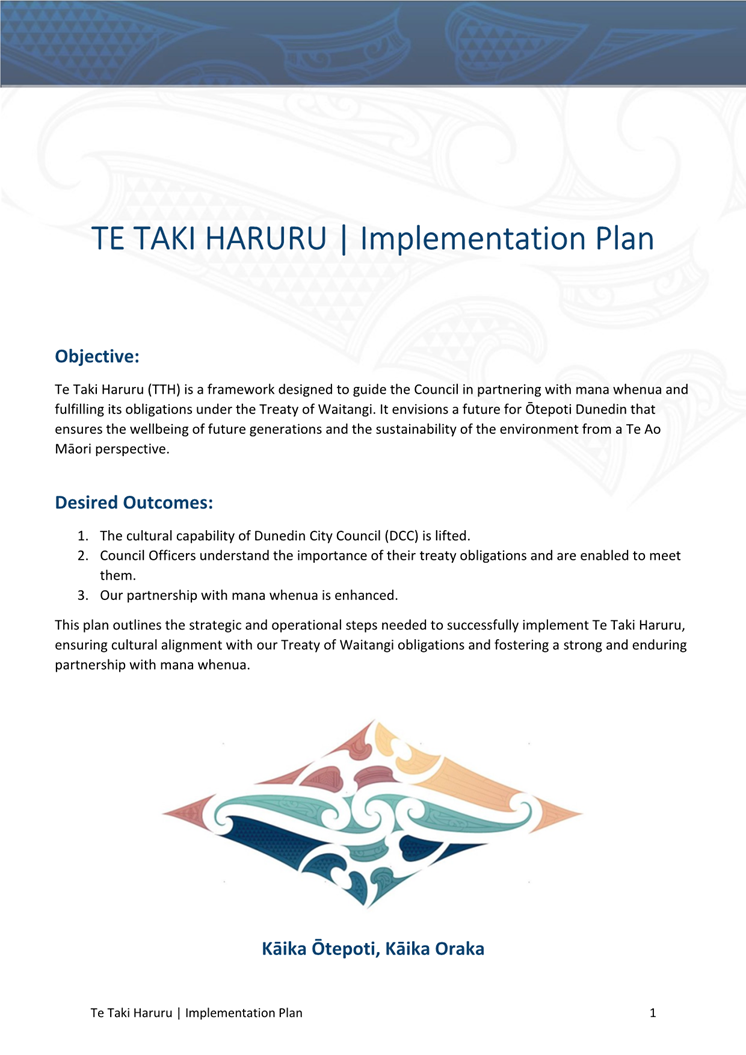
15 The proposed
implementation of Te Taki Haruru is outlined in Attachment B and
provides an overview of stakeholders and their roles, tasks, resources, and
timelines.
OPTIONS
16 The following two
options are provided for consideration.
Option One – Recommended Option – Approve the
implementation plan for Te Taki Haruru
17 Under this
option, Council approves to implement and embed Te Taki Haruru at an
operational level.
Advantages
· Enables the DCC to
better meet its treaty obligations under the LGA.
· Opportunity to
further strengthen the relationship between the DCC and mana whenua.
· Provides a way for
DCC staff to complete their work in a more holistic way that, not only benefits
Māori, but all communities of Ōtepoti Dunedin.
Disadvantages
· Cost for hiring
external consultant to provide support for the first DCC team to complete the
Tū Ake programme.
Option Two – Do not approve the implementation plan
for Te Taki Haruru
18 Under this
option, Council does not approve for Te Taki Haruru to be implemented and
embedded at an operational level.
Advantages
· No cost to Council
for hiring external consultant.
Disadvantages
· Missed opportunity
for the DCC to better meet its Treaty obligations.
· Missed opportunity
to strengthen the relationship between the DCC and mana whenua.
· Missed opportunity
to strengthen staff cultural capability to best benefit all communities in
Ōtepoti Dunedin.
· Risk of not
fulfilling the DCC commitments under the LGA.
NEXT STEPS
19 If Council
approves the implementation plan for Te Taki Haruru staff will:
· establish the
Project Steering Group (PSG).
· develop a detailed
operational delivery plan for Tū Ake – the main Operational
Programme for Te Taki Haruru and commence implementation, under the guidance of
PSG.
· continue to
deliver Tū Kotahi – the Māori Cultural Capability Framework and
offer it across the different departments at the DCC.
· provide reporting
and updates through Te Pae Māori and Council Committees as required.
20 The Terms of
Reference (ToR) for Te Pae Māori will be reviewed to ensure alignment with
Te Taki Haruru. A revised ToR will be provided to Te Pae Māori for
consideration and approval.
21 If Council does
not approve to operationalise Te Taki Haruru, staff will discontinue work to
embed the Treaty at an operational level.
Signatories
|
Author:
|
Jesse Matheson - Kaitātari Māori | Policy
Analyst Māori
Rula Talahma - Senior Policy Analyst
|
|
Authoriser:
|
Nicola Morand - Manahautū (General Manager Policy and
Partnerships)
|
Attachments
|
|
Title
|
Page
|
|
⇩a
|
Te Taki Haruru and SDF
Report
|
54
|
|
⇩b
|
Proposed Te Taki Haruru
Implementation Plan
|
113
|
|
SUMMARY OF CONSIDERATIONS
|
|
Fit with purpose of Local Government
The implementation of Te Taki Haruru and
embedding it on an operational level provides an opportunity for the
principles and values of mana whenua, found within Te Taki Haruru, to be actively woven throughout the workplan of all teams across
the DCC. This decision enables democratic local decision making and action
by, and on behalf of, communities. This decision promotes the social,
economic, environmental, and cultural wellbeing of communities in the present
and for the future.
|
|
Fit with strategic framework
|
|
Contributes
|
Detracts
|
Not applicable
|
|
Social Wellbeing Strategy
|
✔
|
☐
|
☐
|
|
Economic Development Strategy
|
✔
|
☐
|
☐
|
|
Environment Strategy
|
✔
|
☐
|
☐
|
|
Arts and Culture Strategy
|
✔
|
☐
|
☐
|
|
3 Waters Strategy
|
✔
|
☐
|
☐
|
|
Spatial Plan
|
✔
|
☐
|
☐
|
|
Integrated Transport Strategy
|
✔
|
☐
|
☐
|
|
Parks and Recreation Strategy
|
✔
|
☐
|
☐
|
|
Other strategic projects/policies/plans
|
✔
|
☐
|
☐
|
The decision to implement Te Taki Haruru on an operational
level directly relates to all areas of the DCC’s Strategic Framework
and its eight strategies, as it relates to increasing the cultural capability
of all staff so that the DCC, as a collective, meets its Treaty obligations.
|
|
Māori Impact Statement
A workshop was organised with mana whenua from both Te
Rūnanga o Ōtākou and Kāti Huirapa Rūnaka ki
Puketeraki, where members from both rūnaka supported this proposed
implementation plan. Further support for this plan was given by members from
Āraiteuru Marae at a workshop with Māori Partnerships.
|
|
Sustainability
This report and Implementation Plan is in line with the
DCC’s overarching commitment to sustainability. The alignment with the
sustainability commitment of the strategic framework will strengthen the
relationship with mana whenua and mātāwaka by ensuring their needs
and goals are considered in the work across all departments at the DCC. It
also provides an opportunity for staff from different workstreams to explore
and utilise mātauraka Māori (Māori knowledge) on
sustainability in their work.
|
|
LTP/Annual Plan / Financial Strategy /Infrastructure
Strategy
The implementation of and embedding Te Taki Haruru into
new and under-review strategies/ policies/plans is expected to bring greater
clarity to how the commitment to the Treaty is fulfilled across current and
future corporate planning functions. The implementation of the adopted Te
Taki Haruru – Māori Strategic Framework will offer an opportunity
to inform the next Long-Term Plan (9 Year Plan).
|
|
Financial considerations
The financial investment in the
delivery of this plan required to embed Te Taki Haruru into the everyday work
at the DCC will be met within existing Annual Plan/ Long-term Plan budgets.
|
|
Significance
The decision to implement Te Taki Haruru is considered to
be of low significance in terms of the Significance and Engagement Policy
(minimum impact on the existing LoS, current and future generational needs,
and low cost of implementation). The decision to adopt the Māori
Strategic Framework was made in 2023, and the implementation will be
consistent with other strategies and policies.
|
|
Engagement – external
Mana whenua and mātāwaka Māori have been
engaged with throughout the development of the Te Taki Haruru implementation
plan and have expressed their support for this plan.
|
|
Engagement - internal
Councillors have had the opportunity to attend a workshop
regarding Tū Ake – the Operational Framework for Te Taki Haruru.
The procurement team have been approached as the recommended pilot by mana
whenua (supported by mātāwaka Māori) to first complete Tū
Ake.
|
|
Risks: Legal / Health and Safety etc.
There are no known legal or Health and Safety risks.
|
|
Conflict of Interest
There are no known conflicts of interest.
|
|
Community Boards
The Implementation Plan is expected to offer clarity and
positively change the way the DCC conducts its business-as-usual practices to
meet its obligations to the Treaty. This change for the DCC may also have a
ripple effect and carry over to support Community Boards in their work with
local communities to ensure their work reflects the DCC’s commitment to
the Treaty.
|
|
|
Strategy, Planning & Engagement
Committee
16 October 2024
|
|

|
Strategy, Planning & Engagement
Committee
16 October 2024
|
|
|
Strategy, Planning & Engagement
Committee
16 October 2024
|
Residents' Opinion Survey Quarterly Update: July-September
2024
Department: Corporate Policy
EXECUTIVE SUMMARY
1 This
report provides a summary of the Residents’ Opinion Survey (ROS)
quarterly results (the Quarterly results) (Attachment A).
2 The
Quarterly results show a comparison between the June-August 2024 quarter
July-September 2024 quarter.
3 The
Quarterly results show quarter-on-quarter changes in:
· residents’
overall satisfaction and dissatisfaction with 10 DCC services / facilities
areas
· residents’
overall satisfaction with five aspects of the DCC and elected members.
4 The
level of overall dissatisfaction with ‘Roading related
infrastructure’ significantly decreased from 40% to 27% - the lowest
since the quarterly update in August 2023. Although the granular analysis is
out of the scope of the quarterly reporting, it could be speculated that this
change might be attributed to less road work disruptions as a result of the
completion of the Retail Quarter Upgrade Project in May 2024.
RECOMMENDATIONS
That the Committee:
a) Notes the Residents’
Opinion Survey quarterly results for the period of July-September 2024.
BACKGROUND
5 The
ROS is a monitoring tool utilised by the DCC to collect statistically reliable
results on residents’ satisfaction with DCC services and facilities and
perceptions of Council performance. It has been commissioned by the DCC every
year since 1994 in varying forms and provides an annual snapshot.
6 On
13 February 2023, the Strategy, Planning and Engagement Committee (the
Committee) requested quarterly updates on the ROS.
7 The
Quarterly results have been prepared by GravitasOPG in consultation with
Corporate Policy.
8 The
contract with GravitasOPG has been renewed for the 2024/25 financial year to
allow seamless provision of ROS results in the current format while the review
of LoS is being finalised as part of the 9YP.
9 The
contract includes the following four quarterly results:
· October 2024 (for
July-September 2024 quarter)
· January 2025 (for
October-December 2024 quarter)
· April 2025 (for
January-March 2025 quarter)
· July 2025 (for
April-June 2025 quarter).
DISCUSSION
The ROS methodology and quarterly sample size
10 The annual ROS is
based on a sample of randomly selected residents aged 18 years and over from
the electoral roll, with a target sample size of 1,200 residents each year.
Participation is voluntary.
11 The sample size
for the January-March 2024 quarter was 262, ranging from 88 to 258 across 15
questions. This is the smallest quarterly sample size in all of the quarterly
updates. The wide range of sample sizes could be due to any of the following three
reasons:
· The answer was
‘’Don’t know”, which was not included in the analysis.
· A question was
left unanswered, regardless of whether it was on purpose or an oversight.
· The question
‘10. Handling enquiries’ was only asked if a respondent indicated
in the previous question that they had contacted with DCC staff in the last
three months.
12 The samples are
weighted to known population distributions based on the 2018 Census data for
age, gender, ethnicity, and location. This is to reduce sample bias. Like the
ROS annual results, the Quarterly results are statistically tested. The results
have a margin of error of +/- 6.1%, larger than +/- 5.7% of the previous January-March
quarter period due to the smaller sample size. It is important to note that the
Quarterly results have a greater margin of error because of its much smaller
sample sizes, compared to around +/- 2.7% for annual results.
13 In this Quarterly
results, statistically significant differences from the previous quarter are
now denoted with a red arrow.
14 Caution is needed
when considering any other increase or decrease in satisfaction ratings that
are not statistically significant, as they are not reliable.
Clarification
on terms
15 ‘Statistically
significant’ means a result is unlikely due to a random chance in
sampling and is likely due to some factor of interest (e.g., a meaningful
change that requires attention).
16 It is helpful to
understand that there is a strong relationship between determining what is
statistically significant, the sample size and margin of error. As the sample
size increases, the margin of error (i.e., uncertainty) decreases. This is why,
in a large sample size, a small percentage change could be deemed as
significant because the level of uncertainty (margin of error) is small. The
change (even if it is small) is deemed significant as the change is likely due
to a factor of interest. On the other hand, in a smaller sample size, a large
change may fail to be deemed significant due to a greater level of uncertainty.
Finding of
ROS quarterly results: July-September 2024 quarter
17 There was a
statistically significant decrease in overall dissatisfaction with ‘Roading
related infrastructure’, which include those listed below.
· Availability of
on-street metered parking in the central city
· Availability of
parking in the central city
· Condition of
footpaths
· Condition of roads
· Ease of pedestrian
movement
· Flow of traffic
– off-peak times
· Flow of traffic
– peak times
· Street lighting
throughout the city
· Suitability of the
road network for cyclists.
18 Although the
analysis and reporting of quarterly data are not set up to examine to which
aspects of the roading related infrastructure this significant change is
attributed, it could be speculated that this change might be attributed to less
road work disruptions as a result of the completion of the Retail Quarter
Upgrade Project in May 2024.
19 Monthly raw
results (i.e., not statistically tested) showed general decreasing trends with
the level of dissatisfaction from June to August 2024 with the following
aspects:
· Flow of traffic
– peak times (by 5 points)
· Condition of
footpaths (by 5 points)
· Condition of roads
(by 4 points).
20 There was a
general indication of increasing trends for overall satisfaction with seven of
the 10 DCC services / facilities areas (unchanged since the last quarter
update) and of decreasing trends for three areas (up, from two).
21 As for overall
satisfaction with the five aspects of the DCC and elected members, three showed
an increasing trend, while one showed a decreasing trend with one unchanged.
OPTIONS
22 There are no
options as this report is for noting.
NEXT STEPS
23 Staff will work
with GravitasOPG to provide the Committee with the next quarterly update report
at its meeting in January 2025.
Signatories
|
Author:
|
Junichi Sugishita - Senior Policy Analyst
|
|
Authoriser:
|
Nicola Morand - Manahautū (General Manager Policy and
Partnerships)
|
Attachments
|
|
Title
|
Page
|
|
⇩a
|
Dunedin Residents'
Opinion Survey Quarterly Results Table July-September 2024
|
125
|
|
SUMMARY OF CONSIDERATIONS
|
|
Fit with purpose of Local Government
The ROS supports democratic local
decision making and action by, and on behalf of communities.
|
|
Fit with strategic framework
|
|
Contributes
|
Detracts
|
Not applicable
|
|
Social Wellbeing Strategy
|
✔
|
☐
|
☐
|
|
Economic Development Strategy
|
✔
|
☐
|
☐
|
|
Environment Strategy
|
✔
|
☐
|
☐
|
|
Arts and Culture Strategy
|
✔
|
☐
|
☐
|
|
3 Waters Strategy
|
✔
|
☐
|
☐
|
|
Future Development Strategy
|
✔
|
☐
|
☐
|
|
Integrated Transport Strategy
|
✔
|
☐
|
☐
|
|
Parks and Recreation Strategy
|
✔
|
☐
|
☐
|
|
Other strategic projects/policies/plans
|
✔
|
☐
|
☐
|
The ROS contributes to all aspects of the strategic
framework as it gauges residents’ satisfaction with DCC services and
performance.
|
|
Māori Impact Statement
The current ROS does not qualify to receive Māori
decent electoral roll data under section 112 of the Electoral Act 1993. Where
response rates are not proportional to the Ōtepoti Dunedin population
for Māori, the results are weighted to known population distributions
based on the 2018 Census data to reduce sample size.
|
|
Sustainability
The ROS asks about residents’ perception of
Ōtepoti Dunedin as a sustainable city, and whether the DCC is leader in
encouraging the development of a sustainable city.
|
|
LTP/Annual Plan / Financial Strategy /Infrastructure
Strategy
The ROS asks about residents’ satisfaction with the
‘value for money’ of the services provided by the DCC.
|
|
Financial considerations
There are no direct financial considerations.
|
|
Significance
The significance of this report is low, in terms of
Council’s Significance and Engagement Policy, as it is for noting only.
|
|
Engagement – external
The ROS is a form of external engagement.
|
|
Engagement - internal
The ROS results are available to management and staff
monthly. Reporting of the ROS results will be considered as part of future
work on non-financial reporting, levels of service, and Strategic Framework
Refresh.
|
|
Risks: Legal / Health and Safety etc.
There are no known risks.
|
|
Conflict of Interest
There are no known conflicts of interest.
|
|
Community Boards
The ROS asks about overall satisfaction with performance
of Community Board members.
|
|

|
Strategy, Planning & Engagement
Committee
16 October 2024
|
|

|
Strategy, Planning & Engagement
Committee
16 October 2024
|
Submission on the Otago Regional Council's Strategic
Climate Action Plan
Department: Corporate Policy
EXECUTIVE SUMMARY
1 This
report seeks approval of a draft Dunedin City Council (DCC) submission
(Attachment A) to the Otago Regional Council (ORC) on its Strategic Climate
Action Plan (the SCAP). The consultation document is attached as Attachment B.
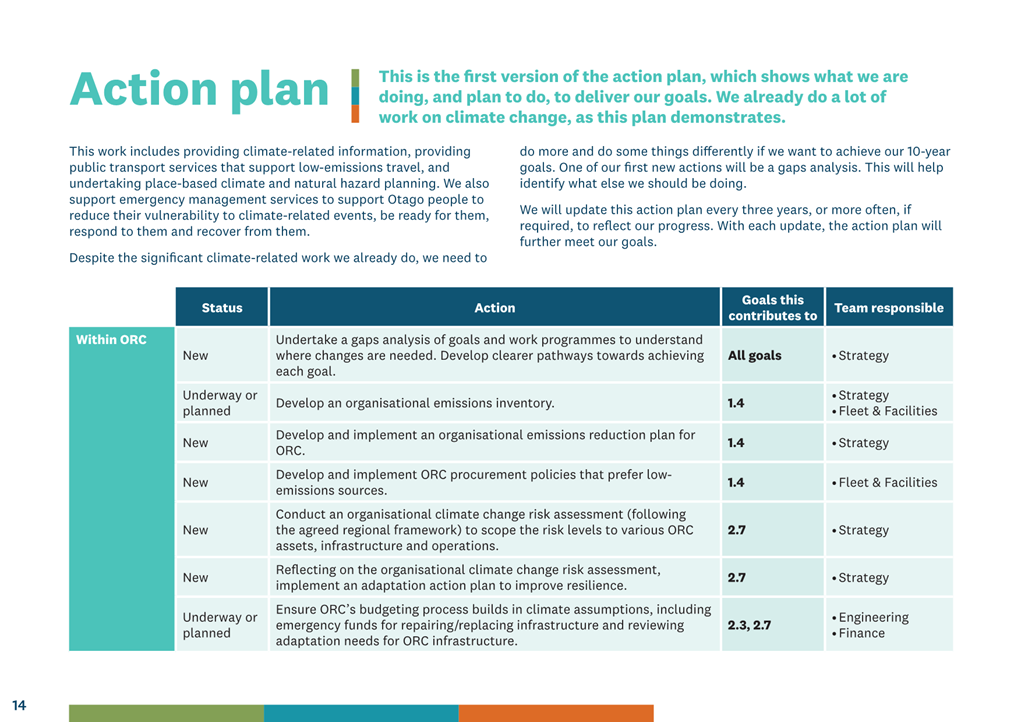
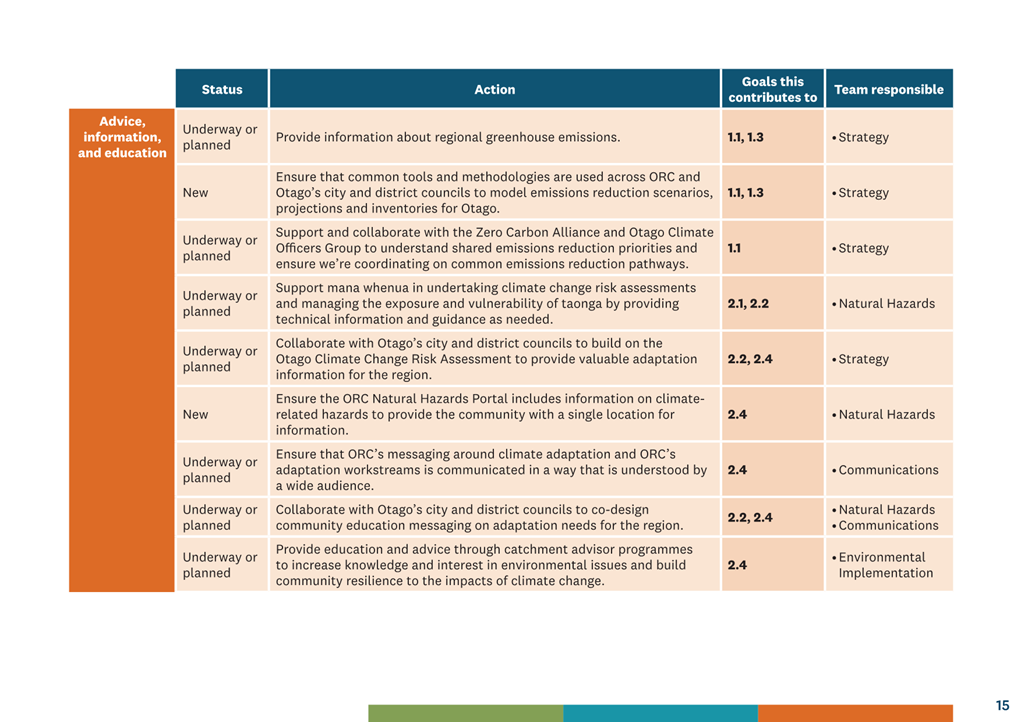
2 The stated purpose of the SCAP is to set a long-term
vision, with some 10-year climate action goals, and provide a plan of action
for the ORC to collaborate with other organisations, businesses and communities
from across Otago to best achieve these goals. The aim of the SCAP is to
support the ORC’s role in promoting the social, cultural, economic, and
environmental wellbeing of Otago communities, taking a sustainable development
approach.
3 The SCAP includes some of the actions the ORC is already
undertaking or planning, as well as new climate change actions.
4 This is the first version of the SCAP. The ORC intends to
collate and analyse the feedback received during the consultation and make
appropriate revisions. The final version of the SCAP will go to its Council for
adoption before Christmas 2024, accompanied by a report summarising the
feedback received and changes made accordingly.
5 The consultation closing date was 6 October 2024. The DCC
received an extension to submit until 17 October 2024.
RECOMMENDATIONS
That the Committee:
a) Approves the draft
Dunedin City Council submission to Otago Regional Council on its Strategic
Climate Action Plan 2024-2034.
b) Approves the Chief
Executive to make any minor editorial amendments to the submission.
c) Notes that the Mayor
or delegate would speak to any hearings in regard to the submission.
BACKGROUND
6 This
is the first plan specific to climate action developed by the ORC. It connects
with a number of other ORC plans and strategies which relate to its climate-
and environment-focused work, including transport, biodiversity and
biosecurity, and the Land and Water Regional Plan.
7 The
DCC has submitted to previous ORC consultations on climate and
environmental-focused plans and policies. Most recently, in September 2024, it submitted
on the ORC’s Air Quality Management Review.
DISCUSSION
8 The
SCAP is organised under overarching two goals: Otago is a low-emissions region
and Otago is climate-resilient in its ecosystems, communities, and businesses.
9 Beneath
the overarching goals in the SCAP, further goals and related actions are
organised as two components: climate mitigation (items in the SCAP beginning
with a 1) and climate adaptation (items beginning with a 2).
10 The draft DCC
submission focuses on:
· the
ORC’s coordination and advocacy role as the regional council
· emissions
reduction goals
· mana
whenua
· working
with communities
· biodiversity
and biosecurity
· public
transport
· civil
defence and emergency management
· how
progress of the SCAP will be tracked.
The DCC
submission
11 The
draft DCC submission was prepared by Corporate Policy with input from the
Māori Partnerships, Zero Carbon, Transport, City Development and South
Dunedin Future teams.
12 Overall,
the DCC submits in support of the SCAP’s intentions, actions, and the
ORC’s approach to achieving the goals of the SCAP.
13 The
DCC submission encourages the ORC to be as specific as possible about its
intended actions, to help partners and the community – including city and
district councils – to plan complementary actions and avoid duplication.
14 The DCC notes that the SCAP:
· lacks
clarity on anticipated delivery timeframes (across all actions)
· includes
limited detail on intended delivery mechanisms (for many actions)
· is
unclear about the emissions sources that will be targeted (for a smaller number
of actions).
15 The DCC supports
actions to ensure that climate change (mitigation and adaptation) is a regular
item on the Mayoral Forum for councils to provide updates on their climate
work.
16 The DCC would
like information about the role of the Treaty of Waitangi in the SCAP, as this
is not included in the consultation information.
17 The DCC notes
with interest a new action to assess the
implications of the Māori Climate Platform (a partnership between tangata
whenua and the Ministry for the Environment), if published and incorporated
into ORC’s work programmes.
18 While broadly supporting the spirit of the four mitigation
goals, the DCC submits that the 10-year delivery timeframe should be
reconsidered and urges the ORC to pursue emissions reduction as fast as
possible.
19 The
DCC supports the focus on community level action in the SCAP, but notes in its
submission that there is a need for this goal to be more specific about the
type of emissions reducing action that the ORC intends to prioritise.
20 The DCC
submission commends the ORC’s want and need to partner with mana whenua,
which is clearly demonstrated in the SCAP, and that mana whenua provided
feedback to the ORC regarding climate change which has been used in the
development of the SCAP.
21 The
DCC supports new actions focused on education, including: exploring
opportunities to fund interns from University of Otago and Te Pūkenga
– Otago Polytechnic to participate in ORC climate work; and expanding the
Enviroschools programme, which the DCC currently coordinates across 35 schools
in Ōtepoti Dunedin, to include a specific focus on climate change.
22 The DCC submission notes that
there is a need for a proactive regional strategy that promotes improved
biodiversity, resilience, and amenity/recreation value wherever possible. The
DCC encourages the ORC to consider its role as a regulator and partner/funder
in support of these outcomes.
23 Overall,
the DCC supports the public transport goal and actions included in the SCAP. The DCC sees the provision of effective public transport
services as critical to enabling greater transport choices for Ōtepoti
Dunedin residents, reducing transport emissions, and meeting the DCC’s Zero
Carbon Plan 2030 target for 18% of all trips within Ōtepoti Dunedin to
be by public transport by 2030.
24 The DCC encourages the inclusion of specific actions
setting out how the ORC will improve the frequency and geographic reach of
public transport services, to make these services a convenient and attractive
option for larger numbers of residents and visitors.
25 The DCC encourages the ORC to also include an action in the
SCAP to explore the feasibility of intraregional public transport options,
between inland and coastal Otago.
26 The DCC’s
submission notes that its Civil Defence Emergency Management activity
contributes to its commitment to being a sustainable and resilient city, and
that this involves working closely with the ORC.
27 In regard to
tracking progress of the SCAP, the Key Performance Indicators (KPIs) in the
ORC’s Long-Term Plan (LTP) do not appear to be strong drivers of climate
change action. The DCC submits that when tracking progress on the SCAP, the
KPIs cannot be relied upon to reflect real climate action progress.
28 The DCC submits
that reference to outcomes in level two of the reporting framework of the SCAP
needs to be clarified as to whether these are outcomes from the LTP or some
other outcomes of this SCAP which need to be specified.
29 The DCC
submission suggests adding specific targets to the indicators so progress can
be assessed. The submission notes that many of the indicators are vague and
progress will not be able to be usefully monitored as they stand.
OPTIONS
Option One – Recommended Option – Approve the
draft submission
30 Under this
option, Council approves the draft DCC submission to the ORC on its Strategic
Climate Action Plan 2024-2034, with any agreed amendments.
Advantages
· Opportunity
for active engagement in the development of the ORC’s Strategic Climate
Action Plan 2024-2034
· Opportunity
to participate in climate action initiatives that benefit ecosystems,
communities, and businesses in Ōtepoti Dunedin and the wider Otago region
· Opportunity
to promote and integrate the DCC’s climate mitigation and adaptation
initiatives as part of the climate action planning in the wider Otago region
· Opportunity
to support and promote the role mana whenua play in climate action initiatives
in Ōtepoti Dunedin.
Disadvantages
· There
are no identified disadvantages for this option.
Option Two – Do not approve the draft submission
31 Under this
option, the DCC will not submit to the ORC on its Strategic Climate Action Plan
2024-2034.
Advantages
· There
are no identified advantages for this option.
Disadvantages.
· Missed
opportunity for active engagement in the development of the ORC’s
Strategic Climate Action Plan 2024-2034
· Missed
opportunity to participate in climate action initiatives that benefit
ecosystems, communities, and businesses in Ōtepoti Dunedin and the wider
Otago region
· Missed
opportunity to promote and integrate the DCC’s climate mitigation and
adaptation initiatives as part of the climate action planning in the wider
Otago region
· Missed
opportunity to support and promote the role mana whenua plays in climate action
initiatives in Ōtepoti Dunedin.
NEXT STEPS
32 If Council
approves the draft submission, it will be sent to the ORC for consideration by
17 October 2024.
Signatories
|
Author:
|
Danielle Tolson - Policy Analyst
|
|
Authoriser:
|
Junichi Sugishita - Senior Policy Analyst
Jinty MacTavish - Principal Policy Advisor Sustainability
Scott MacLean - General Manager, Climate and City Growth
|
Attachments
|
|
Title
|
Page
|
|
⇩a
|
Draft Dunedin City
Council submission on the Otago Regional Council's Strategic Climate Action
Plan 2024 - 2034
|
134
|
|
⇩b
|
Otago Regional Council
Strategic Climate Action Plan 2024-2034 consultation document
|
141
|
|
SUMMARY OF CONSIDERATIONS
|
|
Fit with purpose of Local Government
This decision promotes the social,
economic, environmental, and cultural well-being of communities in the
present and for the future.
|
|
Fit with strategic framework
|
|
Contributes
|
Detracts
|
Not applicable
|
|
Social Wellbeing Strategy
|
✔
|
☐
|
☐
|
|
Economic Development Strategy
|
✔
|
☐
|
☐
|
|
Environment Strategy
|
✔
|
☐
|
☐
|
|
Arts and Culture Strategy
|
✔
|
☐
|
☐
|
|
3 Waters Strategy
|
✔
|
☐
|
☐
|
|
Future Development Strategy
|
✔
|
☐
|
☐
|
|
Integrated Transport Strategy
|
✔
|
☐
|
☐
|
|
Parks and Recreation Strategy
|
✔
|
☐
|
☐
|
|
Other strategic projects/policies/plans
|
✔
|
☐
|
☐
|
This topic is intrinsically linked to the DCC’s Zero
Carbon Plan 2030 and the South Dunedin Future programme, which the DCC
undertakes in partnership with the ORC.
|
|
Māori Impact Statement
Te Taki Haruru, the
DCC’s Māori Strategic Framework, includes principles of
Autaketake, Auora, and Autūroa, which are concerned with looking after
the environment and our natural resources.
The
SCAP clearly demonstrates the ORC’s want and need to partner with mana
whenua, and
mana whenua provided
feedback to the ORC regarding climate change which has been used in the
development of the SCAP. The DCC submission notes that this is mana and
mātauraka enhancing.
In its submission, the DCC notes the risk of sea-level
rises as this is of particular concern to Puketeraki and Ōtākou
marae in not only the areas themselves, but also accessing these
areas. Sea-level rising is likely to have a dramatic effect on mahika kai
practices, access to marae and papakāika, restricting movement of those
within the marae/papakāika areas, and limiting tourism opportunities in
and around these areas too, for example the Albatross Colony.
The DCC notes with interest a new action to assess
the implications of the Māori Climate Platform, if published, and
incorporated into ORC’s work programmes.
Regarding Civil Defence and
Emergency Management, the DCC submission notes that marae/rūnaka play a
key role in the event of an emergency, such as acting as emergency shelters
if/when needed.
|
|
Sustainability
There are potential implications for sustainability in
regard to how the final version of this Plan is implemented. Actions
undertaken by the ORC will also potentially impact on work undertaken by the
DCC through its policies, plans, and work programmes, and its planned
adoption of Sustainable Development Goals.
|
|
LTP/Annual Plan / Financial Strategy /Infrastructure
Strategy
There are no implications for levels of
service/performance measures.
|
|
Financial considerations
There are no financial implications.
|
|
Significance
This decision is considered low in terms of the
Council’s Significance and Engagement Policy.
|
|
Engagement – external
There has been no external engagement.
|
|
Engagement - internal
This submission has been prepared with input from the Māori
Partnerships, Zero Carbon, Transport, City Development, South Dunedin Future,
and Corporate Policy teams.
|
|
Risks: Legal / Health and Safety etc.
There are no identified risks.
|
|
Conflict of Interest
There is no known conflict of interest.
|
|
Community Boards
There are implications for Community Boards as actions in
the SCAP occur in Community Board areas.
|
|

|
Strategy, Planning & Engagement
Committee
16 October 2024
|
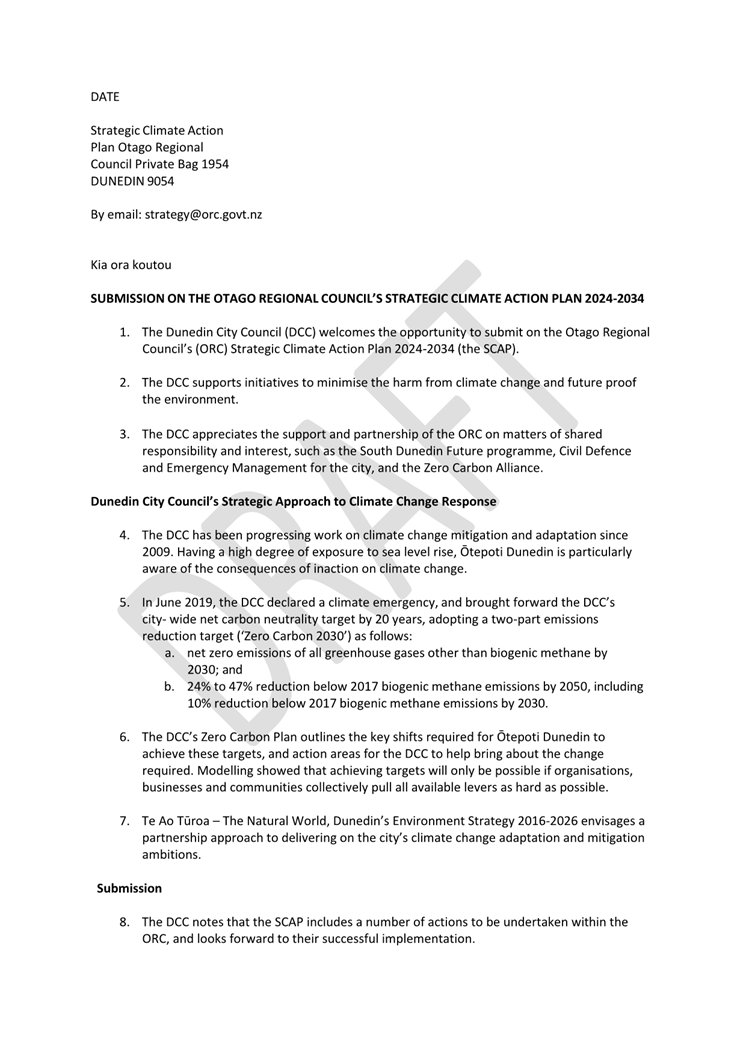
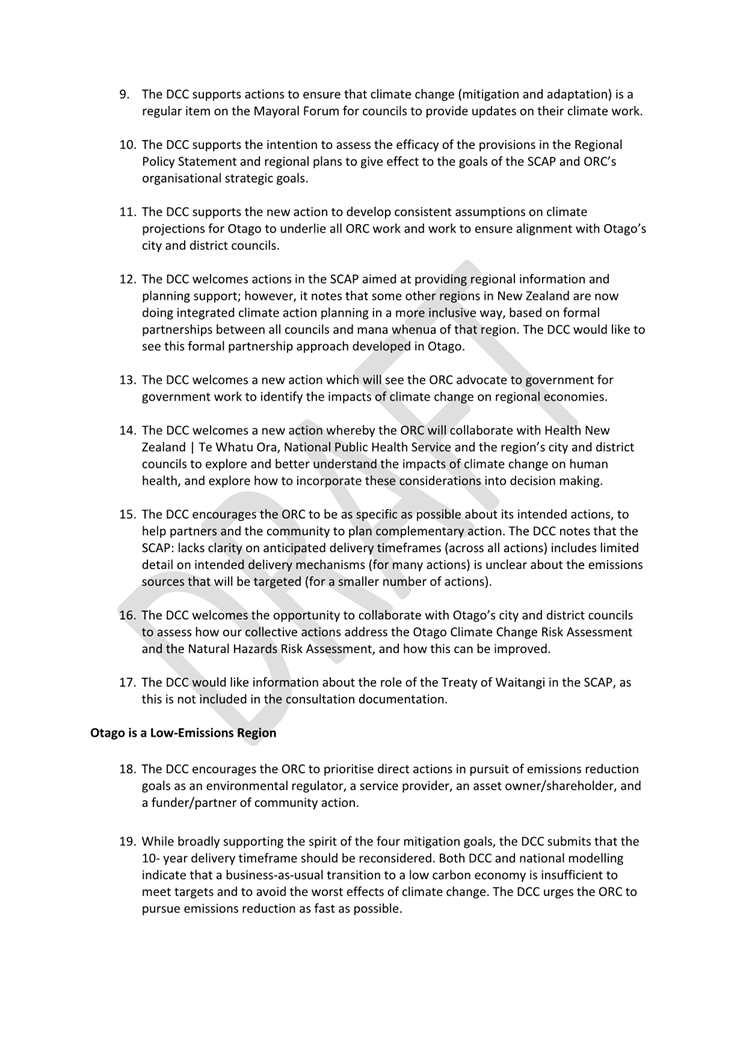

|

|
Strategy, Planning & Engagement
Committee
16 October 2024
|
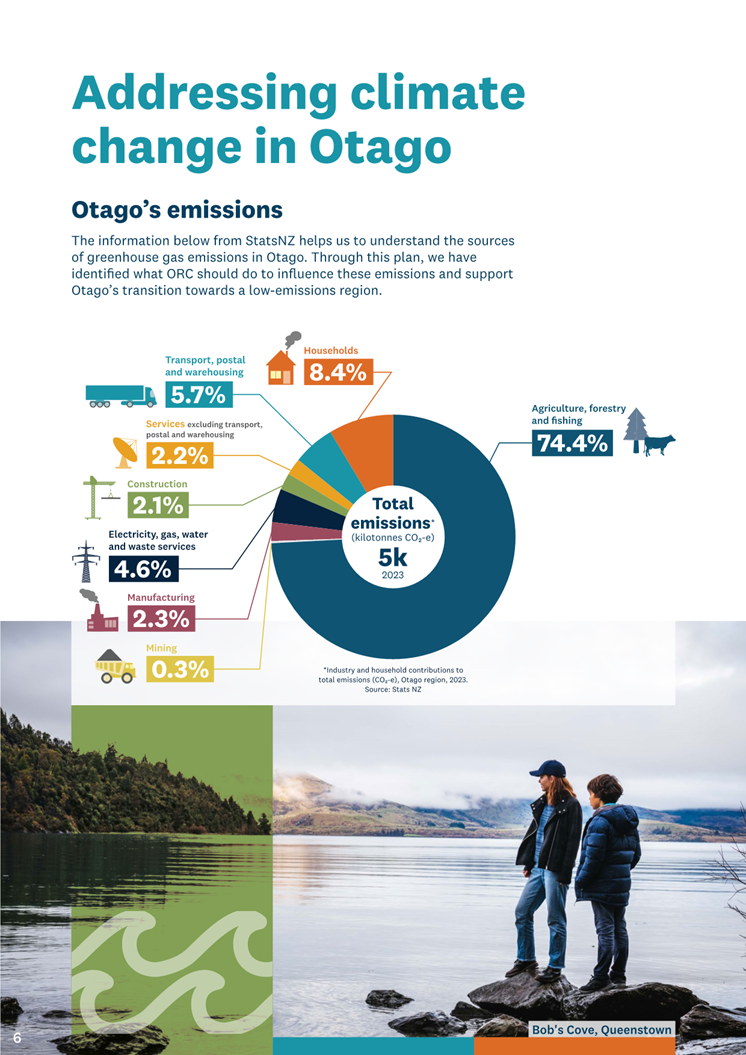
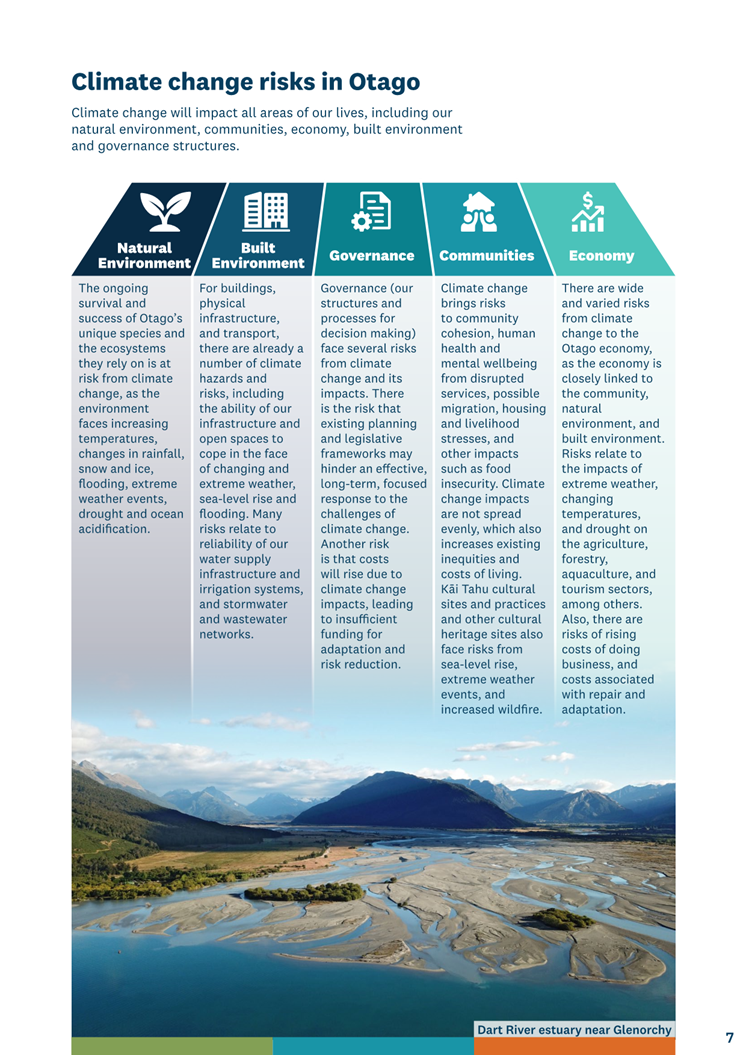
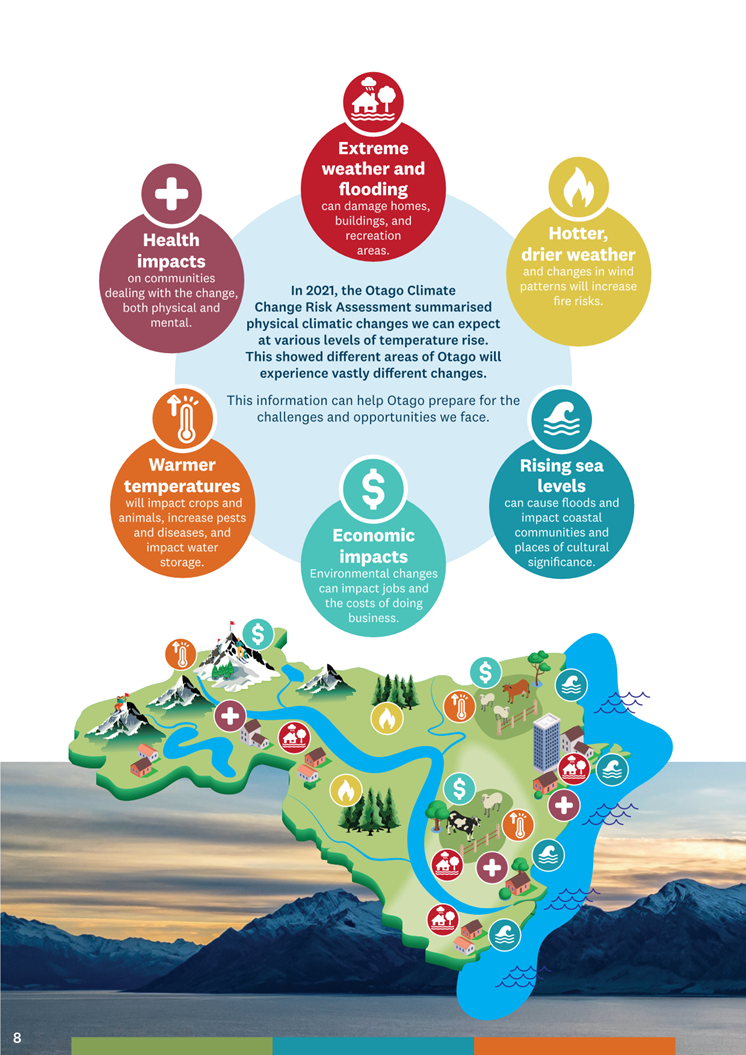
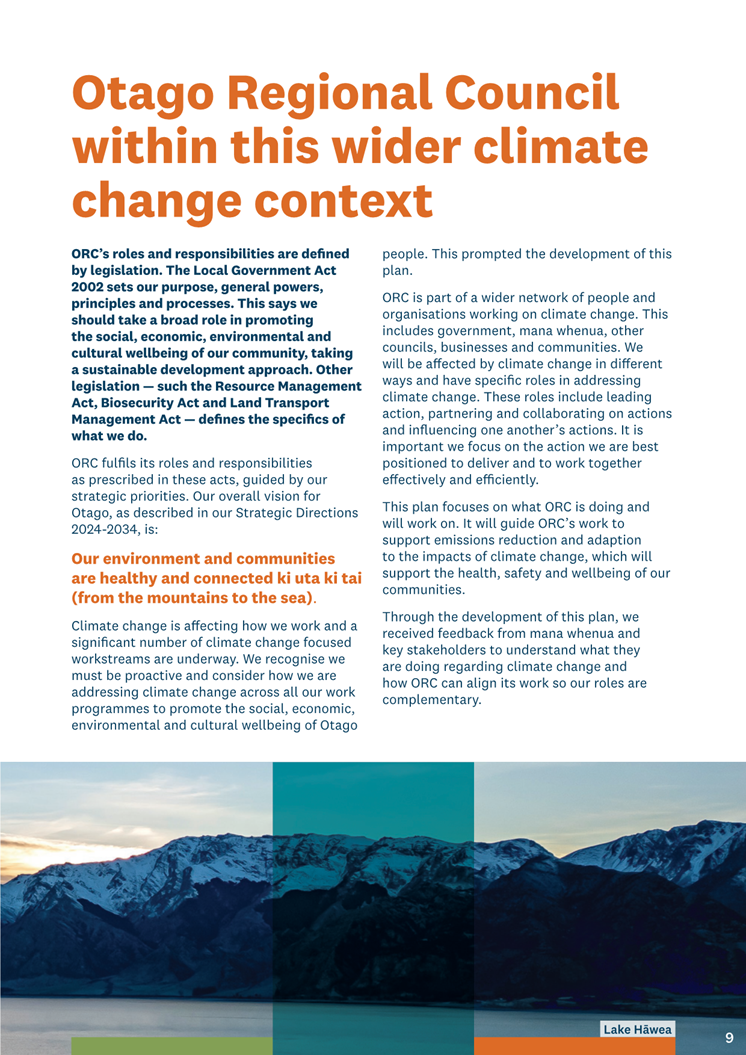
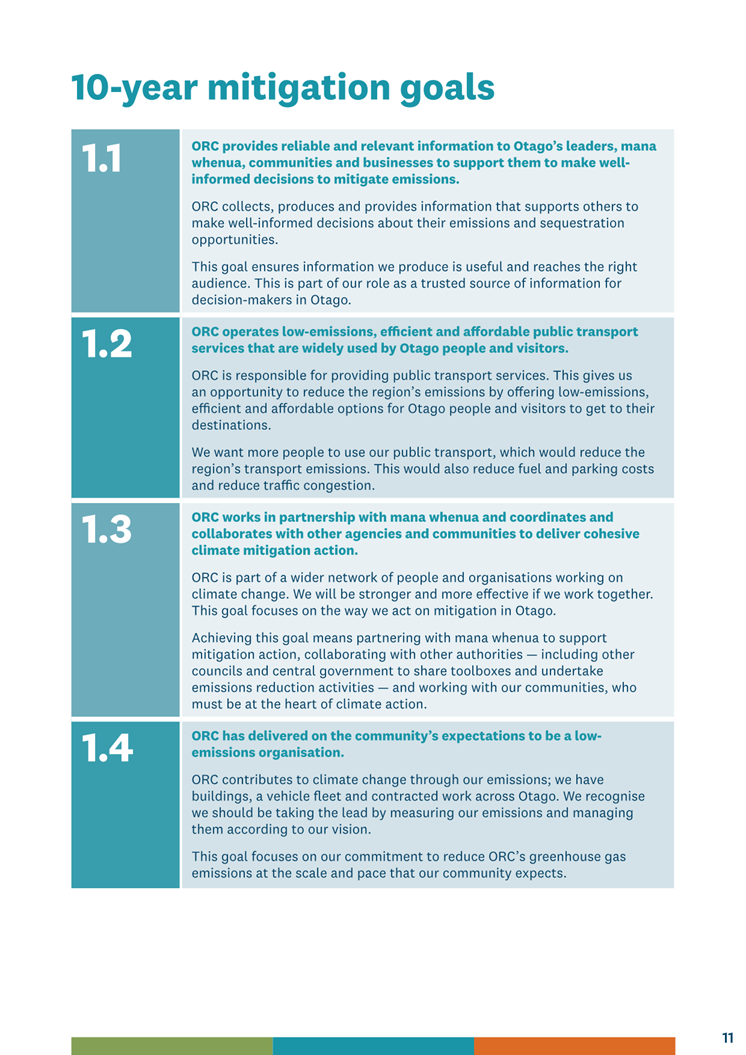
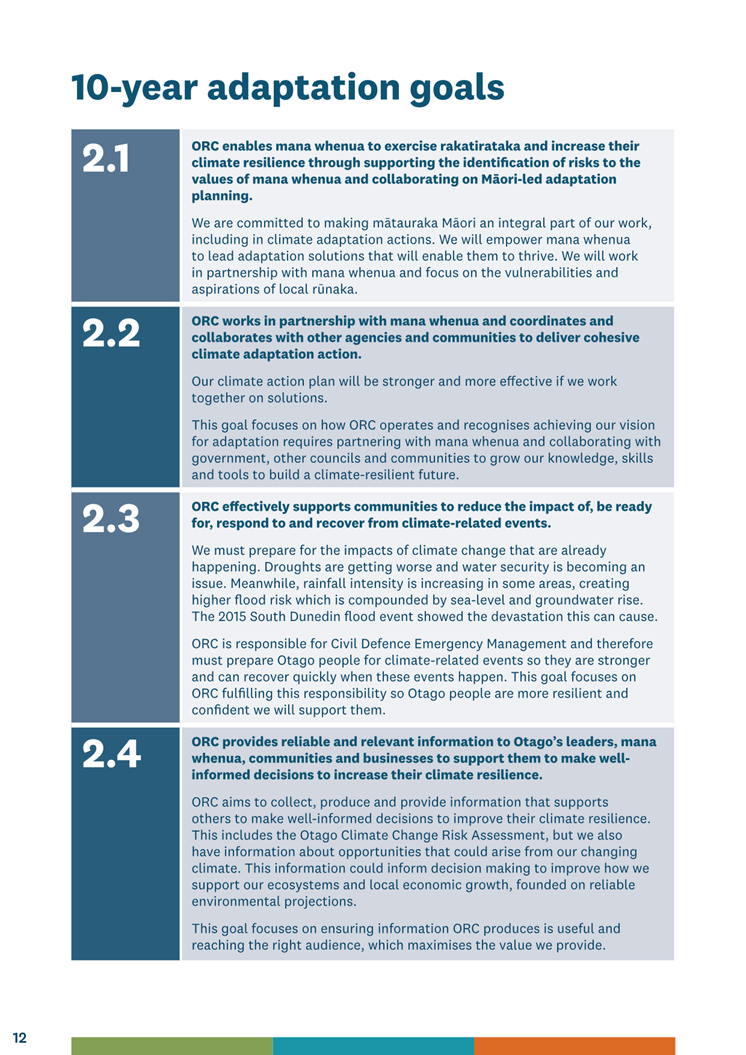
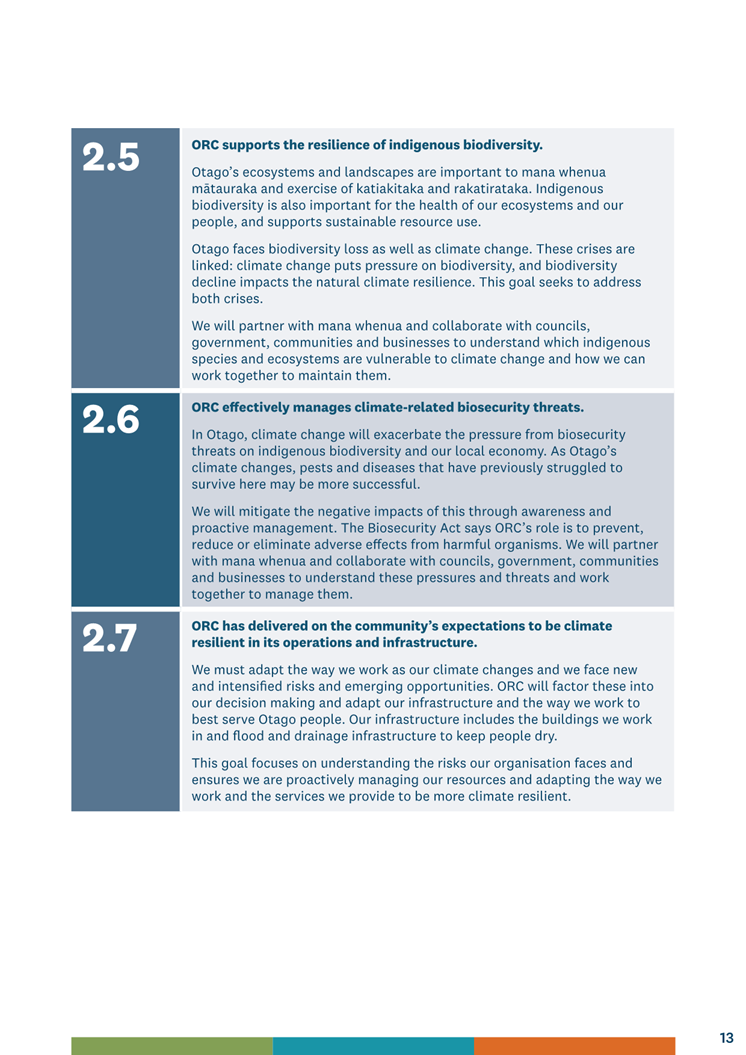
|

|
Strategy, Planning & Engagement
Committee
16 October 2024
|
Growth and economic significant
forecasting assumptions - 9 year plan 2025-34
Department: City
Development and Enterprise Dunedin
EXECUTIVE SUMMARY
1 The
purpose of this report is to seek Council approval of the significant
forecasting assumptions (SFAs) supporting information that has been developed
for the 9-year plan 2025-34 (the 9-year plan).
2 The
SFAs have been developed by City Development and Enterprise Dunedin.
RECOMMENDATIONS
That the Committee:
a) Approves, for the
purposes of developing the 9-year plan 2025-34, and consulting with the
community the significant forecasting assumptions in Attachment A.
BACKGROUND
3 The
Local Government Act 2002 (LGA) requires all local authorities to develop a
Long Term Plan. Schedule 10 of the LGA specifies the minimum information
and content in the Long Term Plan; this includes SFAs. The Council
adopted the SFAs for the 10-year plan on 25 September 2023. The SFAs have
since been updated to reflect more recent information.
DISCUSSION
Growth Projections
4 The
DCC growth projections are used for a range of forward planning activities
including infrastructure planning, spatial planning, the Development
Contributions Policy and the City Profile.
5 Statistics
New Zealand (SNZ) produces population projections every two years. The
projections are derived from analysing historical, current and likely future
trends in births, deaths and migration. The projections are not
predictions, but indications of likely future change based on specific
assumptions. Given the inherent uncertainty about the future, SNZ provide three
growth scenarios: low, medium and high based on different assumptions.
6 SNZ
released the latest projections for population growth and demographic changes
for all local authorities in December 2022. The projections for Dunedin
are shown in table 1 below.
|
7 Growth
scenario
|
Year ending 30 June
|
|
2018
|
2023
|
2028
|
2033
|
2038
|
2043
|
2048
|
|
Low
|
131,200
|
128,000
|
127,000
|
125,400
|
123,100
|
120,400
|
117,200
|
|
Medium
|
131,200
|
131,100
|
133,300
|
135,000
|
136,200
|
137,000
|
137,600
|
|
High
|
131,200
|
134,200
|
139,600
|
144,700
|
149,500
|
154,100
|
158,500
|
Table 1: Subnational population projections
2018(base) – 2048 update released 12 December 2022 (Source: Statistics
New Zealand)
7 Since
the 2022 SNZ projections were issued, the following new information has been
released:
a) In
October 2023, SNZ released the 2023 provisional population estimate for Dunedin
of 134,600. This provisional result, if confirmed, would place Dunedin just
above the high growth projection rate for the year ending June 2023.
b) The
publishing of Census data will help determine the accuracy of the population
estimate for 2023. While initial results have been released, it is not until
the post enumeration survey has been released that we can directly compare
population estimates with census data. The post enumeration survey will
be released as a summary in December 2024 with a full release of Census data
including population estimates in 2025. However, as a guide, Infometrics
(an economic consultancy firm) has determined that sub-national population
estimates across the country have been “typically less than plus or minus
1% at the territorial authority level” once Census data is considered.
For Dunedin, this could mean that the final population estimate could fall in
between the medium and high population growth rate or above the high population
growth rate (as shown in table 1).
c) Predicting
population growth has become increasingly challenging due to New
Zealand’s changing levels of migration over the past decade. Overall,
New Zealand has been experiencing high net migration over the past two years,
which followed records lows during border closures due to Covid-19. For the
year to June 2023, New Zealand had provisional net migration of 108,582.
This dropped in the year to June 2024 to 71,710. While this is lower than peak
migration in 2023, migration in 2024 is still higher than the average net
migration of 56,532 between 2014 and 2020. As international migration was
a major source of population growth in Dunedin’s 2023 provisional population
estimate and the level of international migration has been unpredictable over
the last five years (as shown in graph 1), this will create a high degree of
uncertainty with any population projections used for the 9-year
plan.
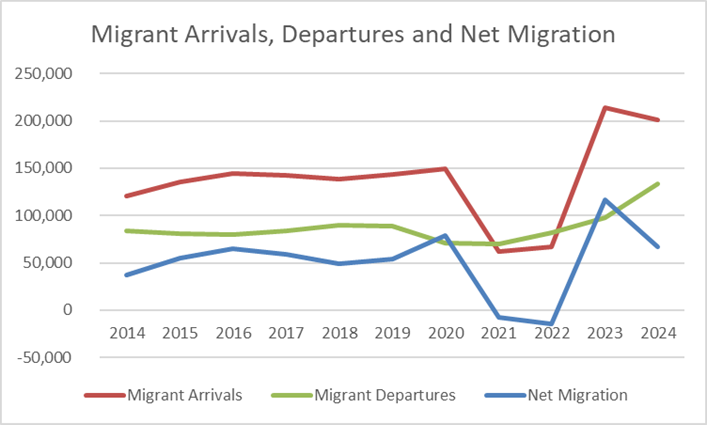
Graph
1: International Migration in New Zealand 2014-2024 (Source: SNZ)
8 Last
year, the Council adopted a composite high-medium growth scenario for the 10-year
plan in response to very high net migration levels in 2023. Given the
changes since the 2022 SNZ projections were issued (as outlined in paragraph 7),
and the risks of underestimating growth in Dunedin, this high-medium growth scenario
is again recommended to be used. This presumes that Dunedin’s growth rate
follows the high growth rate over the first ten years (2024-34) and the medium
growth rate over the following twenty years (2034-54).
9 Graph
2 shows the high-medium growth scenario (blue line) compared to the SNZ
population projections in table 1.
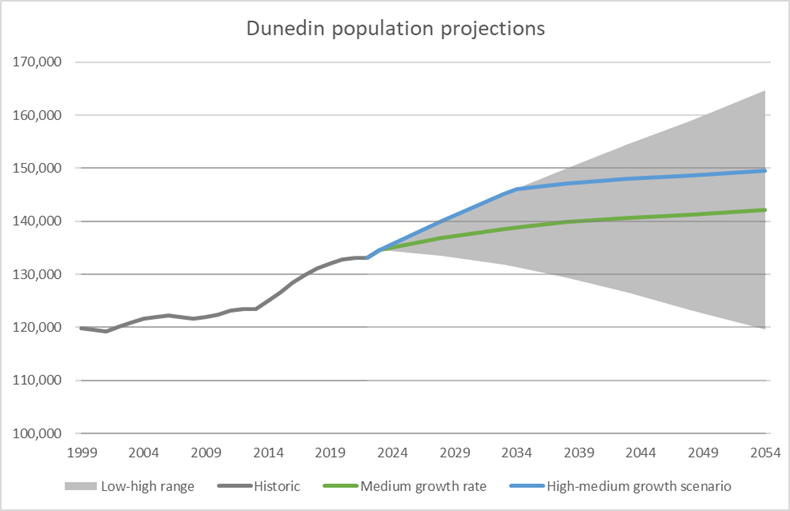
Graph 2:
Dunedin population estimates and projections (Source: Statistics New Zealand
and DCC)
10 The
risks of overestimating growth include inefficient use of funds by providing
new or upgraded infrastructure to areas that are under-developed over the short
term and an associated under-recovery of costs. Growth costs are generally
divided by the expected number of new homes to calculate development
contribution fees. This means an over-estimate of growth will result in actual
revenue received through development contributions being less than projected
revenue.
11 The
risks of underestimating growth include inadequate provision of Council
services and a potential follow-on impact on the attractiveness of Dunedin to
new residents and visitors.
Economic Projections
12 Economic
projections have been informed by Infometrics and recently released datasets.
While the Dunedin economy has continued to show resilience in the post Covid-19,
wider inflationary and interest rate pressure exist in the national
economy.
13 These
are expected to continue to influence the local Dunedin economy. There is a
risk that the lower economic growth and sustained inflation and interest rates
will impact on household consumption, investment and spend.
14 Infometrics
project domestic and international visitors are expected to recovery steadily,
with forecast annual visitors reaching 1.878m by June 2024 and 2.539m by 2034.
Financial projections
15 Operational
SFAs, including financial assumptions such as inflation will be presented to Council
for approval later this year.
Legislative and reform assumptions
16 A
report on assumptions relating to legislation and reform will be presented to
Council later this year.
Climate-related projections
17 SFAs
related to climate will be presented to Council for approval in a separate
report.
OPTIONS
Option One – Supporting
documentation is approved. Recommended Option
18 Council
approves the supporting documentation for development of, and inclusion in, the
9-year plan.
Advantages
· The documentation will be used to further inform the development of
the 9-year plan.
Disadvantages
· There are no identified disadvantages.
Option Two – Supporting
documentation is not approved
19 Council
does not approve the supporting documentation and requires further work be
undertaken to amend as necessary.
Advantages
· There are no identified advantages.
Disadvantages
· Further work would be required to amend the supporting
documentation, which would put additional pressure on meeting timeframes for development
of the 9-year plan.
NEXT STEPS
20 If
approved, the supporting documentation will be included in, and used to support
the development of the 9-year plan.
Signatories
|
Author:
|
Cameron Wood - Team Leader Strategy,
Monitoring and Research
Fraser Liggett - Economic Development
Programme Manager
|
|
Authoriser:
|
Dr Anna Johnson - City Development
Manager
David Ward - General Manager, 3 Waters
and Transition
Nicola Morand - Manahautū (General
Manager Policy and Partnerships)
|
Attachments
|
|
Title
|
Page
|
|
⇩a
|
Growth
and Economic Significant Forecasting Assumptions
|
175
|
|
SUMMARY OF
CONSIDERATIONS
|
|
Fit with purpose of Local Government
This decision enables democratic local
decision making and action by, and on behalf of communities, and promotes the
social, economic, environmental and cultural wellbeing of the Dunedin
communities, taking a sustainable development approach.
|
|
Fit with strategic framework
|
|
Contributes
|
Detracts
|
Not applicable
|
|
Social Wellbeing Strategy
|
✔
|
☐
|
☐
|
|
Economic Development Strategy
|
✔
|
☐
|
☐
|
|
Environment Strategy
|
✔
|
☐
|
☐
|
|
Arts and Culture Strategy
|
✔
|
☐
|
☐
|
|
3 Waters Strategy
|
✔
|
☐
|
☐
|
|
Future Development Strategy
|
✔
|
☐
|
☐
|
|
Integrated Transport Strategy
|
✔
|
☐
|
☐
|
|
Parks and Recreation Strategy
|
✔
|
☐
|
☐
|
|
Other strategic projects/policies/plans
|
✔
|
☐
|
☐
|
The 9-year plan contributes to all of the
objectives and priorities of the strategic framework as it describes the
Council’s activities, the community outcomes, and provides a long term
focus for decision making and coordination of the Council’s resources,
as well as a basis for community accountability.
|
|
Māori Impact Statement
The adoption of the Māori Strategic
Framework signals Council’s commitment to mana whenua and to its
obligations under the Treaty of Waitangi. Mana whenua and Māori will be involved
in pre-engagement and have an opportunity to engage with the 9-year plan
consultation process through a series of planned hui.
|
|
Sustainability
As part of the 9-year plan, several
pieces of work are underway to give effect to Council’s commitment to
sustainability, including work on the city portrait, Sustainable Development
Goals, the Zero Carbon policy and the adoption of the Māori Strategic
Framework.
|
|
LTP/Annual Plan / Financial Strategy
/Infrastructure Strategy
This report provides an update on the
development of the 9-year plan. The 9-year plan project includes specific
workstreams that will review Council’s financial and infrastructure
strategies to ensure they are appropriate for the future.
|
|
Financial considerations
Financial considerations (including
financial sustainability) will be key considerations in the development of
the 9-year plan.
|
|
Significance
The 9-year plan will include community
engagement and public consultation. Pre-engagement initiatives are being
planned.
|
|
Engagement – external
The 9-year plan presents an opportunity
for Council to engage fully with the community across a range of issues.
|
|
Engagement - internal
Staff from across council are involved in
the development of the 9-year plan.
|
|
Risks: Legal / Health and Safety etc.
There are legal, reputational, financial
and strategic risk if the 9-year plan is not well executed, or the public do
not trust that the Council is showing good governance, prudent strategic and
operational leadership.
|
|
Conflict of Interest
There are no known conflicts of interest.
|
|
Community Boards
Community Boards will be engaged and
consulted with as part of the 9-year plan.
|
|

|
Strategy, Planning & Engagement Committee
16 October 2024
|
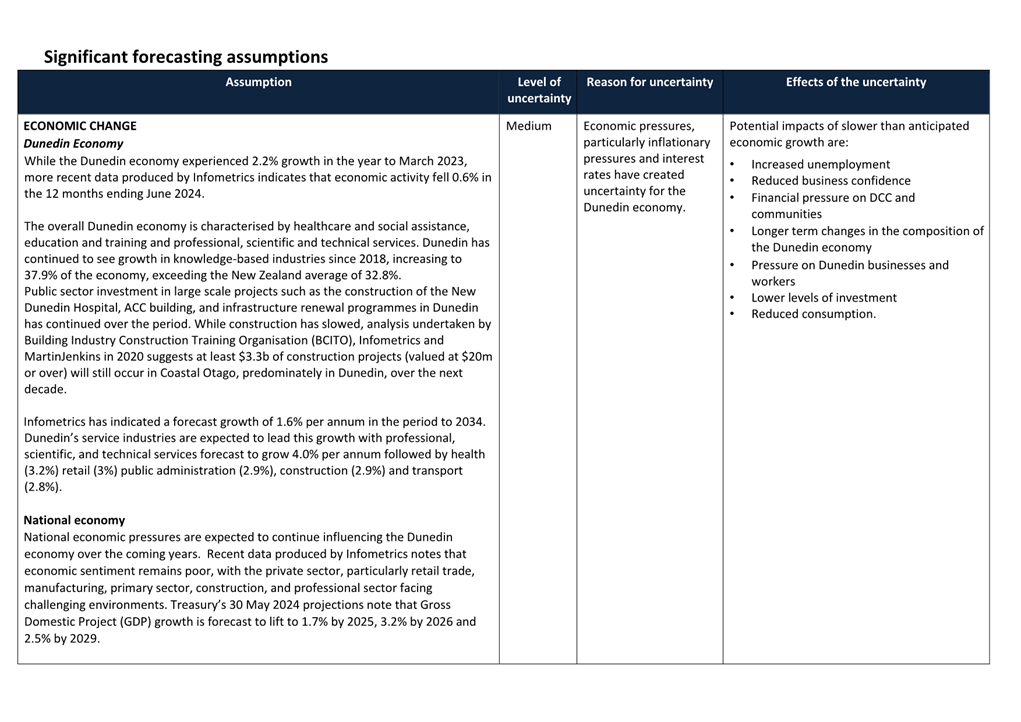
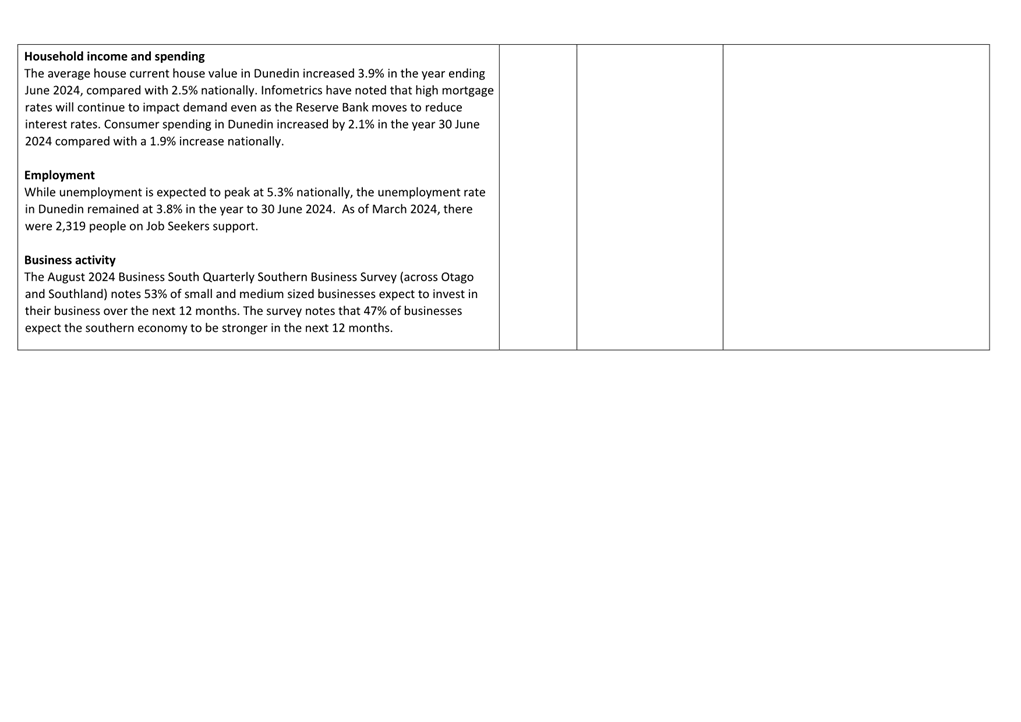
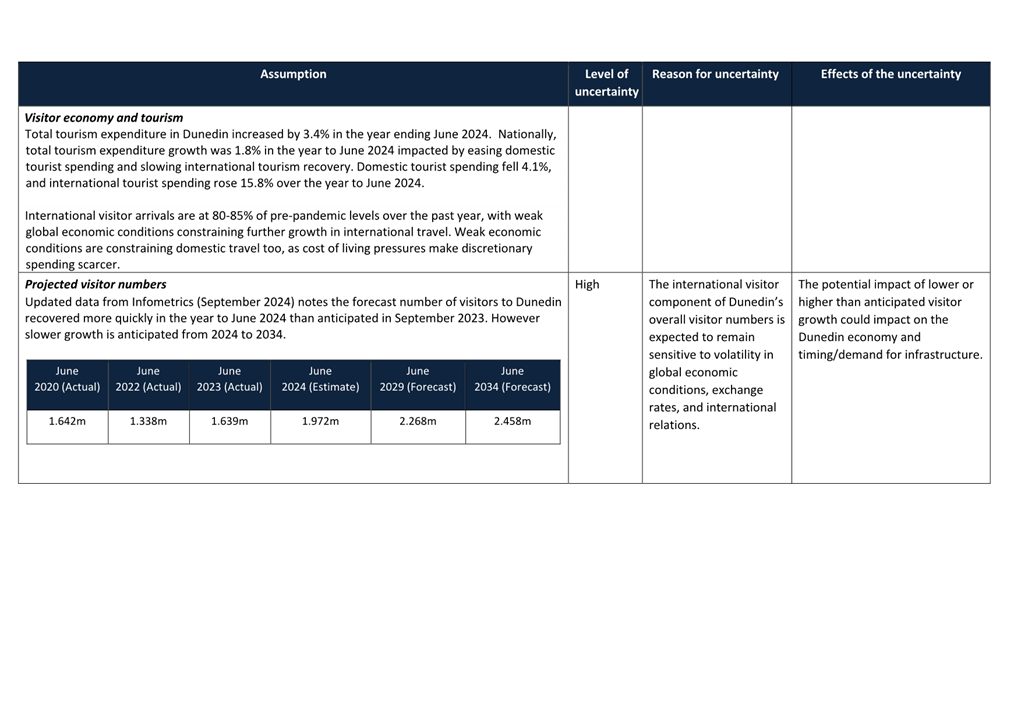
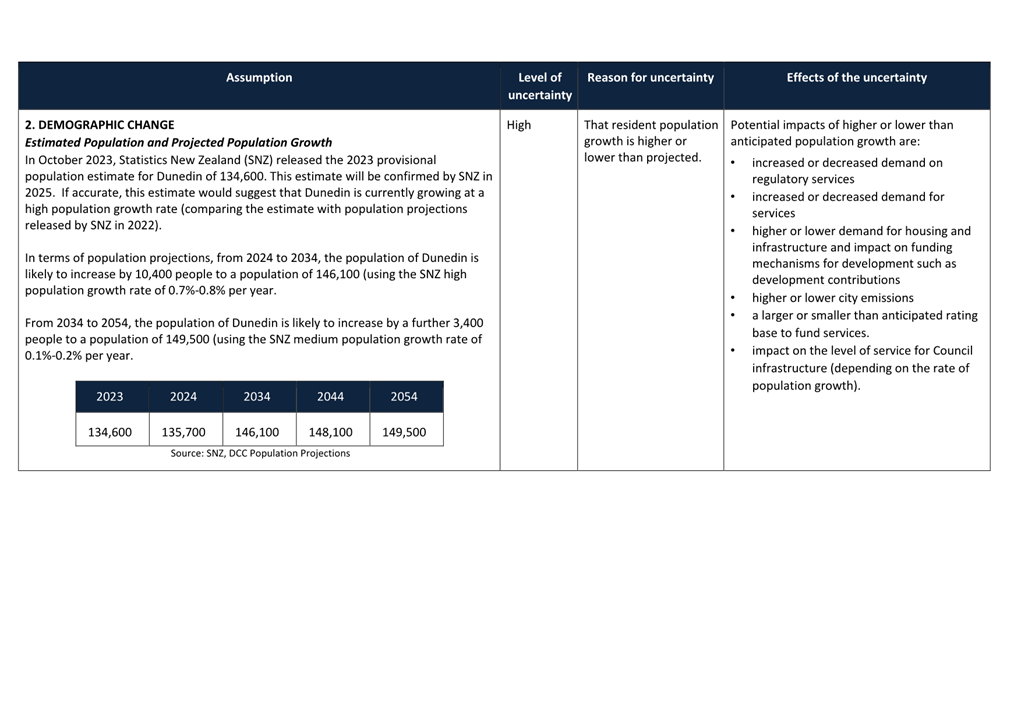
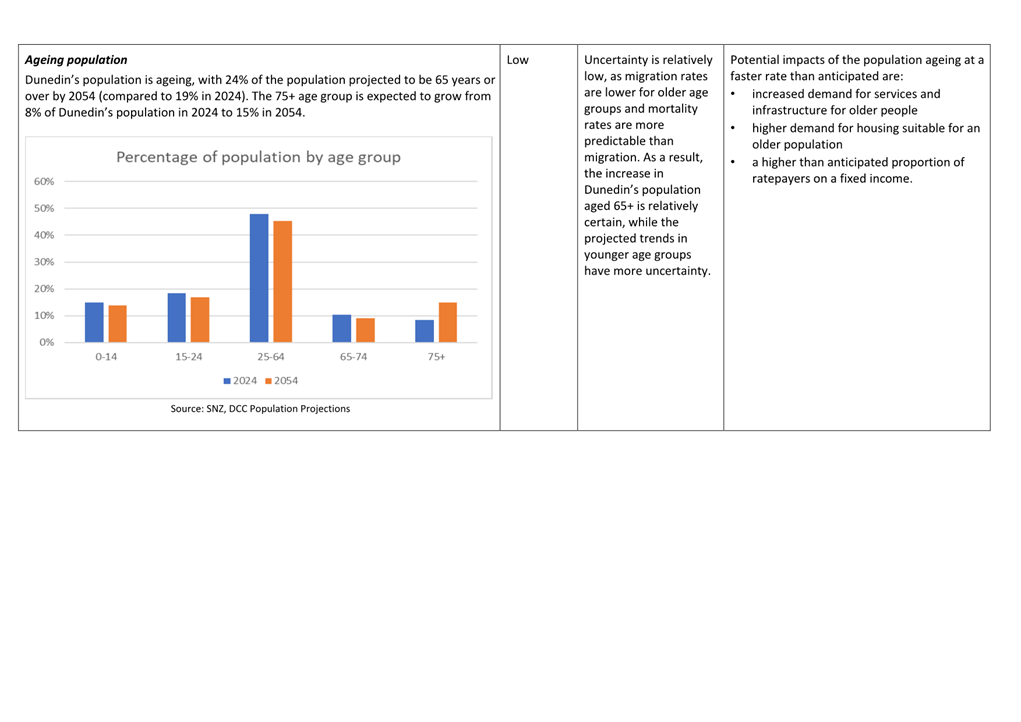
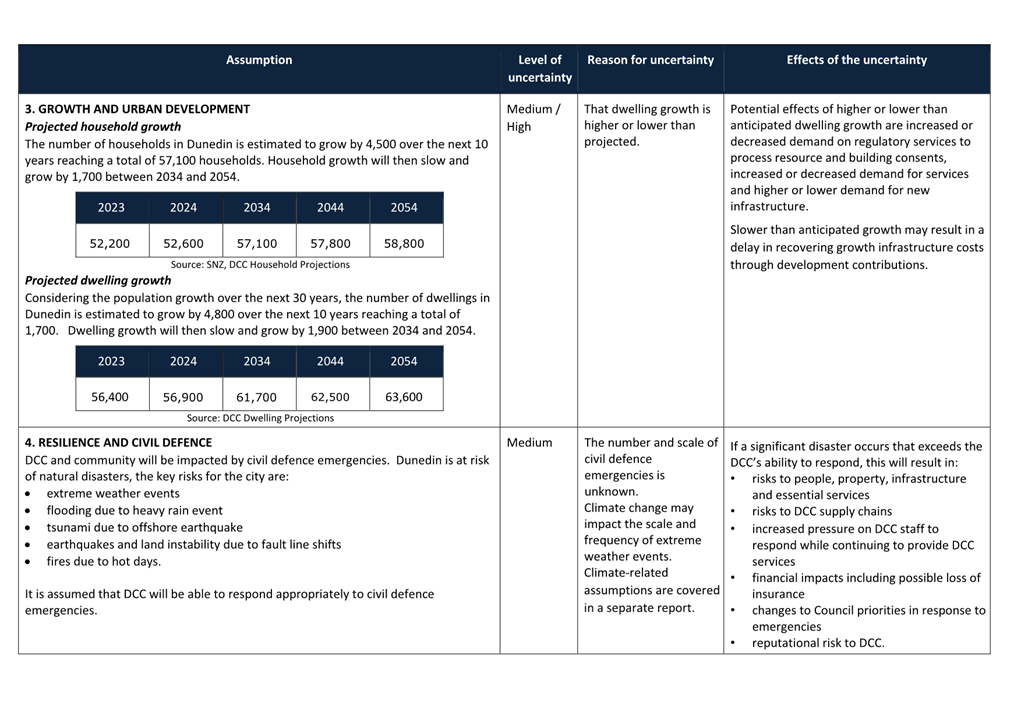
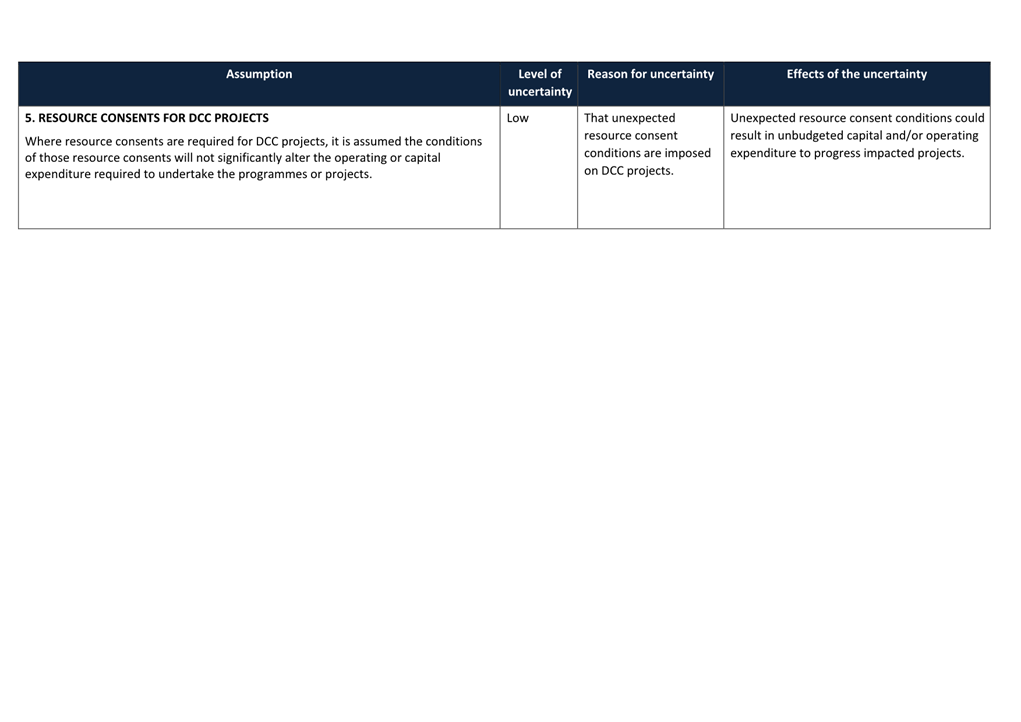
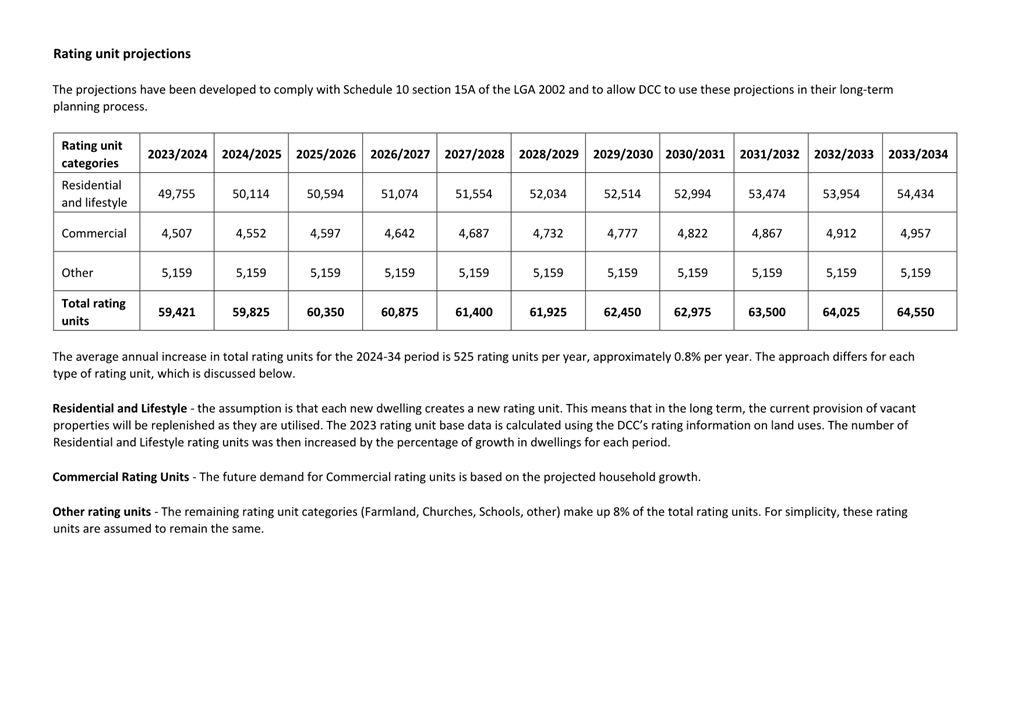
|
|
Strategy, Planning & Engagement
Committee
16 October 2024
|
Reserve Management Plan Review
Schedule
Department: Parks and Recreation
EXECUTIVE SUMMARY
1 This
report presents a forward work programme for the review of all reserve
management plans (RMPs) that are administered by Dunedin City Council (DCC) as
administering body under the Reserves Act 1977 (the Act).
2 The
Act requires DCC as the administering body to keep RMPs under review so that
the RMPs are adapted to changing circumstances or in accordance with increased
knowledge.
3 The
process of reviewing the DCC’s RMPs has commenced, with the Truby King
Reserve Management Plan being approved and adopted by Council in
June 2021. A further six RMPs are currently in the process of either
being newly written or reviewed. Following review of the existing RMPS
and the creation of three new RMPs, DCC staff anticipate there will be 17 operative
DCC RMPs.
4 Factors
that have influenced the order of priority for the review of RMPs includes the
age of the current RMP, change in circumstances and trends since any original
plans were written, and any alignment required with the Parks and Recreation
Strategy.
5 The
Reserve Management Plan Schedule was presented to SPEC in June 2023. The
attached Reserve Management Plan schedule shows the review priorities in the
same order with updated timelines.
RECOMMENDATIONS
That the Committee:
a) Approves the attached
Reserve Management Plan Schedule.
BACKGROUND
6 DCC
is the administering body appointed to control and manage reserves under the
Act within the city to ensure the use, enjoyment, development, maintenance,
protection and preservation, as the case may require of the reserve for the
purpose for which it is classified.
7 Section
41 of the Act requires the administering body to prepare and approve RMPs for
the reserves under its control, management, or administration (except local
purpose reserves).
8 The
purpose of a RMP is to provide for and ensure the use, enjoyment, maintenance,
protection, and preservation as the case may require, and to the extent that
resources permit, the development of the reserve for the purpose which it is
classified.
9 DCC
currently has 17 RMPs, Attachment A has a list of operative plans, and the
proposed review schedule.
10 The Act requires
review of RMPs by the administering body to keep RMPs adapted to changing
circumstances, or in accordance with increased knowledge.
11 Where a reserve
is vested in a local authority, or a local authority is appointed to control or
manage a reserve, the local authority can approve RMPs for those
reserves.
12 DCC follows the
process under sections 41(5) and 41(6) of the Act for preparing and reviewing
RMPS. This process usually involves a two-stage public notification and
consultation process as well as a hearing if there are submitters who wish to
be heard.
13 RMPs may be
prepared for individual reserves or groups of reserves. These RMPs that cover
more than one reserve are called Omnibus RMPs.
14 An example of an
omnibus RMP is the Hill Reserves Management Plan, that applies to 13 Council
reserves on the first line of hills surrounding the urban core of Dunedin
City. This is to ensure consistency in terms of management of these
reserves.
15 There
are currently three groups/types that make up the DCC suite of RMPs.
These are:
· General
Policies;
· Omnibus; and
· Individual
Reserve Management Plans.
16 This provides a
streamlined approach to reserve management planning (providing a coherent
overview of all reserves managed by Council) and reduces repetition and
duplication of costs.
17 This is achieved
through having a Reserves Management Plan General Policies document to cover
day to day decisions about reserves, with RMPs for individual or groups of
reserves where greater planning detail is required.
18 The previous
Reserve Management Plan Schedule was presented to SPEC in June 2023.
Moved (Cr Sophie Barker/Cr Bill
Acklin):
That the Committee:
a) Notes
the Reserve Management Plan review schedule.
Motion carried
(SPECC/2023/023)
DISCUSSION
19 Given
review of RMPs is required under the Act, DCC has commenced the review
process. The proposed plan is to retain the current suite of general
policies, omnibus, and individual RMPs. This structure allows a
consistent approach to the day-to-day decisions about management of these
reserves.
20 The Truby King
Reserve Management Plan review was approved and adopted by Council in June
2021. This commenced the DCC review process of RMPs.
21 The review of the
Signal Hill Reserve Management Plan, Reserves Management Plan General Policies,
Dunedin Town Belt Reserve Management Plan and the Otago Harbour Reserves
Management Plan are also now underway.
22 The Otago Boat Harbour
Recreation Reserves Management Plan has been incorporated into the Otago
Harbour Reserves Management Plan omnibus, as historic land ownership issues,
which prevented inclusion of this in the original omnibus have now been
resolved.
23 A further two new
plans have been prepared. These are the Logan Park Management Plan and
Mosgiel Recreation Area Reserve Management Plan.
24 Logan Park is not
a gazetted reserve under the Act. However, the process that is required
to create and review reserve management plans under the Act is being used to
create the Logan Park Management Plan.
25 Staff will take a
consistent approach in RMP review methodology, which will involve early
engagement with iwi, community boards, and community stakeholder groups.
26 The work
programme envisages that several RMP reviews will be in progress at any given
time, and staff estimate that each RMP will take approximately 12 months to
review. Timelines will vary slightly dependant on the reserve and other
engagement activities underway by Council throughout the year.
27 Factors that have
influenced the order of priority for the review of RMPs include the age of the
current RMP, changes in circumstances, and trends since any original plans were
written, and any alignment required with the Parks and Recreation Strategy.
28 As part of the
review process, staff will investigate whether some RMPs could be incorporated
into omnibus plans. For example:
a) The
Waikouaiti Domain Reserve Management Plan 1986 may be incorporated into the
Coastal Dunes Reserve Management Plan omnibus.
b) The
Caversham Valley Forest Management Plan 1986 may be incorporated into the Hill
Reserves Management Plan.
29 Any decisions
regarding the incorporation of management plans into omnibus reserve management
plans will be subject to the public consultation process. However, staff
have scheduled the review of some individual RMPs so that the potential for
incorporation can be fully considered.
30 In some cases,
review and management plan implementation has been delayed allowing for completion
of related work that could impact the management plan itself:
a) Review
of the Botanic Garden Management Plan has been delayed until the Botanic Garden
Plan has been adopted by Council.
b) Review
of the Ocean Beach Reserve Management Plan has been delayed while investigative
work is completed on the historic landfill beneath Kettle Park.
c) Review
of the Sports Ground Management Plan has been delayed until the DCC Sports
Facilities Review is complete.
d) The
timing of an Octagon Reserve Management Plan will be aligned with the Central City
Plan.
31 Following review
of existing RMPs and creation of [three] new plans, staff anticipate there will
be 17operative RMPs.
32 There are some
documents that have been identified as “Statements of Management Intent”.
These documents do not appear to be RMPs as they have not been through the
statutory process required for RMPs. However, because they may relate to
land that is held under the Act, the Reserves Management Plan – General
Policies 2005 may apply to them.
33 Examples of such
documents include: Aramoana Reserves (1998), Kew Park (1999) and Craigieburn
Reserve Management Guidelines (1996). These documents are being
considered as part of the review process for the Reserves Management Plan
– General Policies 2005, and the omnibus RMPs.
34 Legal advice on the
creation of new and replacement of current RMPs has been sought to ensure that
staff follow appropriate statutory processes.
OPTIONS
Option One – Recommended Option: Council approves the
attached Reserve Management Plan Schedule.
35 The Council
approves the attached Reserve Management Plan Schedule.
Advantages
· Staff will
continue with the current schedule to review RMPs based on age and currently
available information relating to the management of the reserves.
Disadvantages
· The
schedule may need to change if new circumstances or trends emerge.
Option Two –
36 The Council approves
the attached Reserve Management Plan Schedule with amendments that
reprioritises the timing of RMP reviews to create a new Reserve Management Plan
Schedule.
Advantages
· Council
has input into the scheduling of RMP reviews.
Disadvantages
· The
schedule may need to change if new circumstances or trends emerge.
NEXT STEPS
37 Staff will
implement the reserve management plan review schedule.
Signatories
|
Author:
|
John Brenkley - Planning and Partnerships Manager
|
|
Authoriser:
|
Heath Ellis - Acting Group Manager Parks and Recreation
Jeanette Wikaira - General Manager Arts, Culture and
Recreation
|
Attachments
|
|
Title
|
Page
|
|
⇩a
|
List of Operative Plans
and Proposed Review Schedule.
|
190
|
|
SUMMARY OF CONSIDERATIONS
|
|
Fit with purpose of Local Government
This decision enables democratic local
decision making and action by, and on behalf of communities.
|
|
Fit with strategic framework
|
|
Contributes
|
Detracts
|
Not applicable
|
|
Social Wellbeing Strategy
|
✔
|
☐
|
☐
|
|
Economic Development Strategy
|
☐
|
☐
|
✔
|
|
Environment Strategy
|
✔
|
☐
|
☐
|
|
Arts and Culture Strategy
|
☐
|
☐
|
✔
|
|
3 Waters Strategy
|
☐
|
☐
|
✔
|
|
Future Development Strategy
|
✔
|
☐
|
☐
|
|
Integrated Transport Strategy
|
☐
|
☐
|
✔
|
|
Parks and Recreation Strategy
|
✔
|
☐
|
☐
|
|
Other strategic projects/policies/plans
|
☐
|
☐
|
✔
|
The city’s parks and reserves contribute to the
wellbeing of the community. Reserve management plans provide
opportunities to work with other departments to consider linkages and
connections in terms of movement and association. The public
consultation process for preparing a new reserve management plan enables the
community to provide input into the management of reserves. Reserve
management plans are also an opportunity to evaluate biodiversity and
ecological values and support improvements to the environment.
|
|
Māori Impact Statement
Mana whenua, through Aukaha, will be invited to advise on
the review and drafting of the RMPs. The reviews will allow for
recognition and mana whenua cultural identity, values, and narratives.
|
|
Sustainability
The RMP review process provides an opportunity to ensure
reserve management practices are in alignment with environmental objectives,
including biodiversity, climate change adaptation and carbon reduction goals.
|
|
LTP/Annual Plan / Financial Strategy /Infrastructure
Strategy
There are no implications on the plans and strategies for
preparing and engaging on reserve management plans, but upon their adoption,
projects may be generated which may have implications on the future
operational and capital budgets.
|
|
Financial considerations
The RMP reviews will be funded from within existing PARS
budgets.
|
|
Significance
This report is considered of low significance in terms of
the Council's Significance and Engagement Policy.
|
|
Engagement – external
The Reserves Act 1977 requires DCC to consult with the
public when a reserve management plan is being created or reviewed.
|
|
Engagement - internal
The In-House Legal team has provided guidance on this
report and the process required under the Reserves Act 1977.
|
|
Risks: Legal / Health and Safety etc.
Legal risks will be appropriately managed through ensuring
that the process required by section 41 of the Reserves Act 1977 is properly
followed.
|
|
Conflict of Interest
There are no identified conflicts of interest.
|
|
Community Boards
Community Board will have an interest in the policies
which affect the management of reserves within their administrative
areas. Community Boards will be invited to provide feedback input
during review and drafting of RMPs.
|
|
|
Strategy, Planning & Engagement
Committee
16 October 2024
|
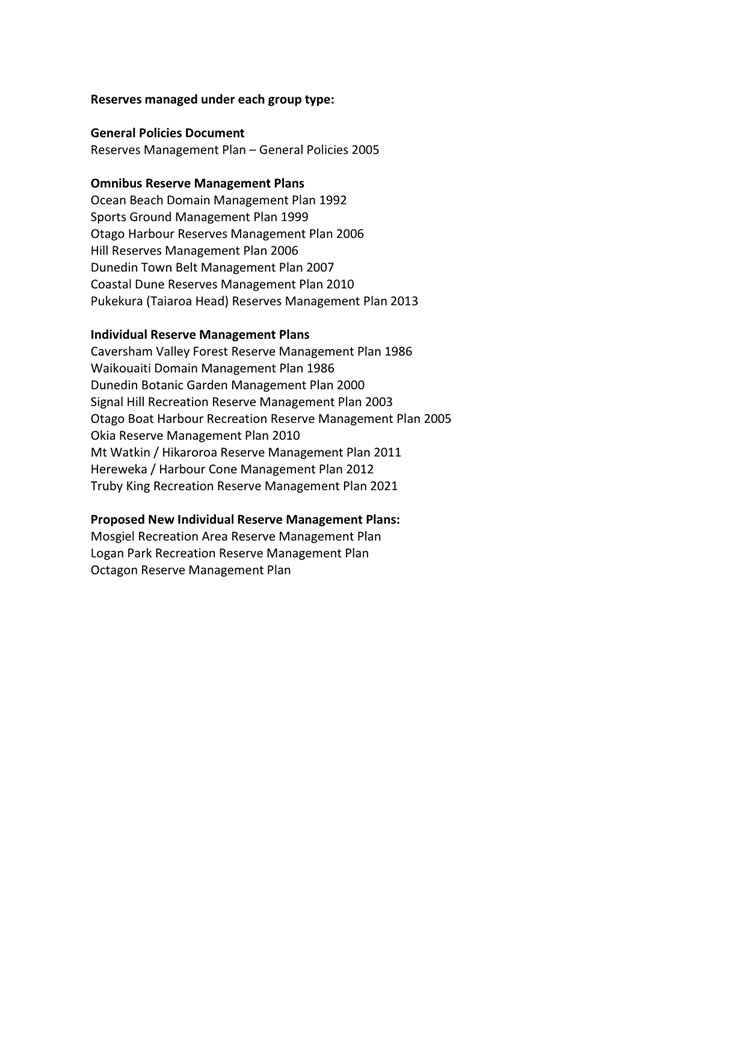
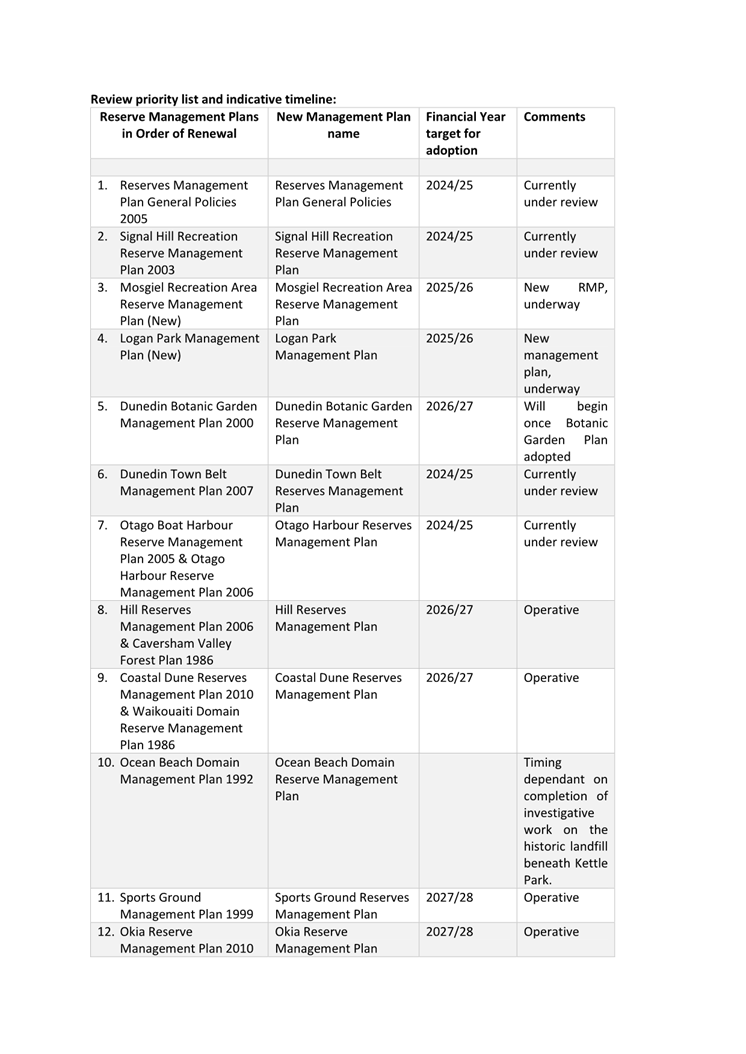
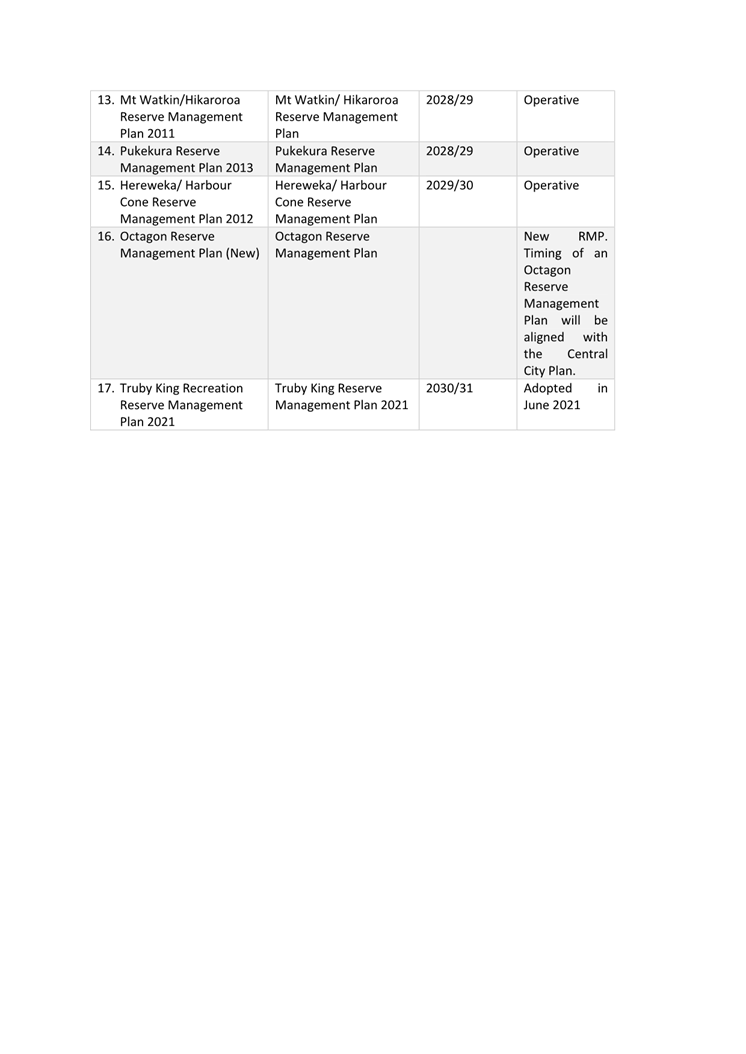
|
|
Strategy, Planning & Engagement
Committee
16 October 2024
|
Notice of Intent: Draft Mosgiel Recreation Area Reserve
Management Plan
Department: Parks and Recreation
EXECUTIVE SUMMARY
1 The
Mosgiel Recreation Area includes the following reserves Mosgiel Memorial Park,
Mosgiel Memorial Gardens, Peter Johnstone Park (including Murray Street
Playground) and the Silverstream Bank Reserves. These reserves do not currently
have a site-specific reserve management plan and are managed entirely under the
General Policies Reserve Management Plan and the Sports Ground Management Plan.
2 As
required under the Reserves Act 1977 (the Act) a draft reserve management plan
has been developed for consultation purposes.
3 This
report seeks approval to commence the public consultation process required by
Section 41(6) of the Act.
RECOMMENDATIONS
That the Committee:
a) Approves the Statement
of Proposal, including the draft Mosgiel Recreation Area Reserve Management
Plan and public submission form.
b) Authorises the
commencement of the public consultation process required by Section 41(6)
of the Reserves Act 1977 in relation to the Statement of Proposal.
c) Notes that the
Hearings Committee will consider submissions on the draft Mosgiel Recreation
Area Reserve Management Plan and then make a recommendation to the Strategy,
Planning and Engagement Committee under a covering report from staff.
BACKGROUND
4 The
creation of a reserve management plan for the Mosgiel Recreation Area which
includes Mosgiel Memorial Gardens, Mosgiel Memorial Sportsground and Peter
Johnstone Park was identified in the Workplan for Reserve Management Plan
Review 2019 – 2027. The workplan was presented to the Planning and
Environment Committee on 17 November 2020. The Committee resolved the
following:
Moved (Cr Steve Walker / Cr
Marie Laufiso)
That the Committee:
Notes the
reserve management plan review forward workplan.
Motion carried
(PLA/2020/035)
The Reserves Act 1977
5 The
Act requires management plans for all council administered reserves. It
is a requirement under the Act to consult with the public when a reserve management
plan is being created or reviewed.
6 The
purpose of a reserve management plan is identified in Section 41(3) of the Act
as to “provide for and ensure the use, enjoyment, maintenance,
protection, and preservation, as the case may require, and, to the extent that
the administering body’s resources permit, the development, as
appropriate, of the reserve for the purposes for which it is classified.”
7 Section
41(6) of the Act sets out the process and requirements for public notice and
consultation on the draft Plan.
8 Public
consultation for making and reviewing reserve management plans is carried out
in two stages. The first stage was completed following public notice in
November 2020. This report relates to the second stage of consultation
under Section 41(6) of the Act.
9 Under
the Act, the reserve management plan must be prepared by the administering body
in draft form and give public notice stating that the draft Plan is available
for inspection at a place and at times specified in the notice. The
notice calls on persons and organisations interested to lodge with the
administering body written objections to or suggestions on the draft Plan before
a specified date, being not less than two (2) months after the date of
publication of the notice.
10 The Act specifies
that the notice must be published in a local newspaper and in such other
newspaper, (if any) as the council decides. As well as the public notice
in a local newspaper, there will be a media release for the wider media outlets.
The project will be listed as a consultation project on the DCC website.
11 The Statement of
Proposal is included as Attachment A. The Statement of Proposal has a
copy of the draft Plan, the 2003 Plan and the public submission form as
attachments.
12 Every person or
organisation who submits on the draft Plan who asks to be heard will have the
opportunity to appear before Council’s Hearings Committee. The
Hearings Committee will hear and consider submissions and then make a
recommendation back to the Strategy, Planning and Engagement Committee.
Mosgiel
Recreation Area
13 In 2019 the
Council designated Peter Johnstone Park (Reid Avenue), Mosgiel Memorial
Sportsground (Gordon Road) and Te Puna o Whakaehu (215 Gordon Road) as the
Mosgiel Recreation Area to provide for a range of recreation and community
uses.
14 The Mosgiel Recreation
Area is defined as Mosgiel Memorial Gardens, Mosgiel Memorial Sportsground, and
Peter Johnstone Park.
15 In addition to
the reserves and facilities included in the Mosgiel Recreation Area
Designation, it is proposed to include the Silverstream Bank Reserve within
this site-specific reserve management plan. The Silverstream Bank Reserve
is immediately adjacent to both reserves and provides a pedestrian and cycle
route from the surrounding residential area to the reserve.
16 The reserves that
make up the Mosgiel Recreation Area Designation and the Silverstream Bank
Reserve are currently managed under the General Policies Reserve Management
Plan and the Sports Ground Management Plan. Throughout the process of
creating the Mosgiel Recreation Area Designation it became clear that a
site-specific reserve management plan would be appropriate to provide a
co-ordinated approach to the protection, management, and operation of the
included reserves.
17 The draft Plan
was prepared with full consideration of the feedback received both from the
statutory submission period and feedback received through engagement workshops
and meetings.
DISCUSSION
Draft Mosgiel Recreation Area Reserve Management Plan
18 Currently the
reserves within the Mosgiel Recreation Area are managed under the Reserve
Management Plan – General Policies and the Sports Ground Management
Plan. These plans are not site specific to the reserves in the Mosgiel
Recreation Area they consider the general management and maintenance of all Dunedin’s
reserves and sports grounds
19 The
draft Plan was prepared based on submissions to the earlier consultation and
input from a working party that comprised of the following organisations and
representatives:
· Mosgiel
Taieri Community Board
· Sport
Otago
· Living
Well
20 The
draft Plan considers the following:
· It formally
recognises the importance of the reserves within the Recreation Area, to Mana
Whenua, the Mosgiel community and many stakeholders.
· It is based
on specific actions which are proposed to support the management and
development of the Reserve. The proposed actions include a Reserve
Spatial Plan, a Marketing Plan, an Ecological Assessment, a Revegetation
Landscape Plan, a Maintenance and Management Plan, an Interpretation/Narrative
Plan, and a Playground Plan.
· It
acknowledges the recreational, landscape and biodiversity values of the
reserve. There will be a focus on improving the ecology of
Whakaehu/Silverstream by re-establishment of suitable native vegetation and the
management of pest and predator species. The draft Plan attempts to
balance the recreational use of the reserves for which they are classified
while taking the opportunity to improve the ecology and biodiversity within the
reserves to build resilience.
21 The draft Plan
has a range of proposed projects and matters to consider that will recognise
the values of the reserve while encouraging both active and passive recreation
alongside habitat restoration. An implementation plan will be developed
once the final draft has been prepared for adoption.
22 In accordance
with the Act, the draft Plan must be publicly consulted on.
OPTIONS
Option One – Recommended Option: Approve the
Statement of Proposal, the draft Plan and public consultation of the draft Plan
24 The Council
approves the Statement of Proposal, including the draft Plan and the public
submission form for the purposes of a public consultation process, as required
by Section 41(6) of the Act.
Advantages
· Staff can
begin the public consultation process, as required by Section 41(6) of the Act,
allowing the public to provide submissions on the draft Plan.
· An
up-to-date reserve management plan will ensure that management and operation of
this reserve is in keeping with current trends and best practice.
Disadvantages
· There
are associated costs for DCC involved in the public consultation process
required by Section 41(6) of the Act.
Option Two – Status Quo:The Reserve continues to be
managed under the
25 The Council does
not approve the Statement of Proposal, the draft Plan and public submission
form and does not initiate a public consultation process.
Advantages
· The
budget and time associated with community engagement would not be required.
Disadvantages
· The
reserve would continue to be managed by the Reserve Management Plan General
Policies and Sportsgrounds Management Plan, any work to date will become less
relevant with the passing of time and expectations from stakeholders will go
unmet. This may constrain future development of the reserve.
NEXT STEPS
26 If approved,
staff will follow the public consultation process required by Section 41(6) of
the Act.
27 Staff will work
with Communications and Marketing staff to ensure the consultation period does
not over burden the community or impact on other Council consultation
priorities, such as the 9 Year Plan.
28 The Hearings
Committee will hear and consider submissions on the draft Plan and will make
recommendations to the Strategic, Planning and Engagement Committee (including
any recommended amendments to the draft Plan).
29 An implementation
plan will be prepared to accompany the Mosgiel Recreation Area Reserve Management
Plan when adopted. The implementation plan will be developed following
this round of public consultation.
Signatories
|
Author:
|
Elizabeth Schonwald - Parks and Recreation Planner
|
|
Authoriser:
|
John Brenkley - Planning and Partnerships Manager
Heath Ellis - Acting Group Manager Parks and Recreation
Jeanette Wikaira - General Manager Arts, Culture and
Recreation
|
Attachments
|
|
Title
|
Page
|
|
⇩a
|
Statement of Proposal
for the Draft Mosgiel Recreation Area Reserve Management Plan
|
200
|
|
SUMMARY OF CONSIDERATIONS
|
|
Fit with purpose of Local Government
This decision enables democratic local
decision making and action by, and on behalf of communities; and promotes the
social and environmental well-being of communities in the present and for the
future.
|
|
Fit with strategic framework
|
|
Contributes
|
Detracts
|
Not applicable
|
|
Social Wellbeing Strategy
|
✔
|
☐
|
☐
|
|
Economic Development Strategy
|
☐
|
☐
|
✔
|
|
Environment Strategy
|
✔
|
☐
|
☐
|
|
Arts and Culture Strategy
|
☐
|
☐
|
✔
|
|
3 Waters Strategy
|
☐
|
☐
|
✔
|
|
Future Development Strategy
|
✔
|
☐
|
☐
|
|
Integrated Transport Strategy
|
✔
|
☐
|
☐
|
|
Parks and Recreation Strategy
|
✔
|
☐
|
☐
|
|
Other strategic projects/policies/plans
|
✔
|
☐
|
☐
|
The city’s parks and reserves contribute to the
wellbeing of the community. Reserve management plans provide
opportunities to work with other departments to consider linkages and
connections in terms of movement and association. The public
consultation process for preparing a new reserve management plan enables the
community to provide input into the management of reserves. Reserve
management plans are also an opportunity to evaluate biodiversity and
ecological values and support improvements to the environment.
|
|
Māori Impact Statement
Mana whenua, through Aukaha have been invited to advise on
this project. The development of reserve management plans gives the
opportunity for mana whenua to tell the cultural narrative relative to place.
|
|
Sustainability
Sustainability and the Council’s Zero Carbon Policy
is to be considered through the process of this project and will inform the
management and operation of the reserve.
|
|
LTP/Annual Plan / Financial Strategy /Infrastructure
Strategy
There are no implications on the plans and strategies for
preparing and engaging on reserve management plans.
|
|
Financial considerations
Community engagement on the draft and any revisions or
amendments to it prior to it being adopted can be resourced from within the
existing Parks and Recreation Services operating budget for 2024/25 year.
|
|
Significance
The draft Plan is considered low in terms of the
Council’s Significance and Engagement Policy.
|
|
Engagement – external
The Reserves Act 1977 requires DCC to consult with the
public when a reserve management plan is being created or reviewed.
|
|
Engagement - internal
Parks and Recreation Services staff will work closely with
other departments (Legal, Transport, 3 Waters, Community Development and
Events) with the creation of reserve management plans.
|
|
Risks: Legal / Health and Safety etc.
This report has been reviewed by Council’s In-House
Legal team.
|
|
Conflict of Interest
There are no known conflicts of interest.
|
|
Community Boards
Mosgiel-Taieri Community Board have an interest in the
creation of this reserve management plan. At its meeting of 29 March
2023, the Board were informed of the intention to seek Council approval to
prepare a management plan for the Mosgiel Recreation Area and that they would
be formally engaged to input into the reserve management plan once Council
approval had been granted.
|
|

|
Strategy, Planning & Engagement
Committee
16 October 2024
|

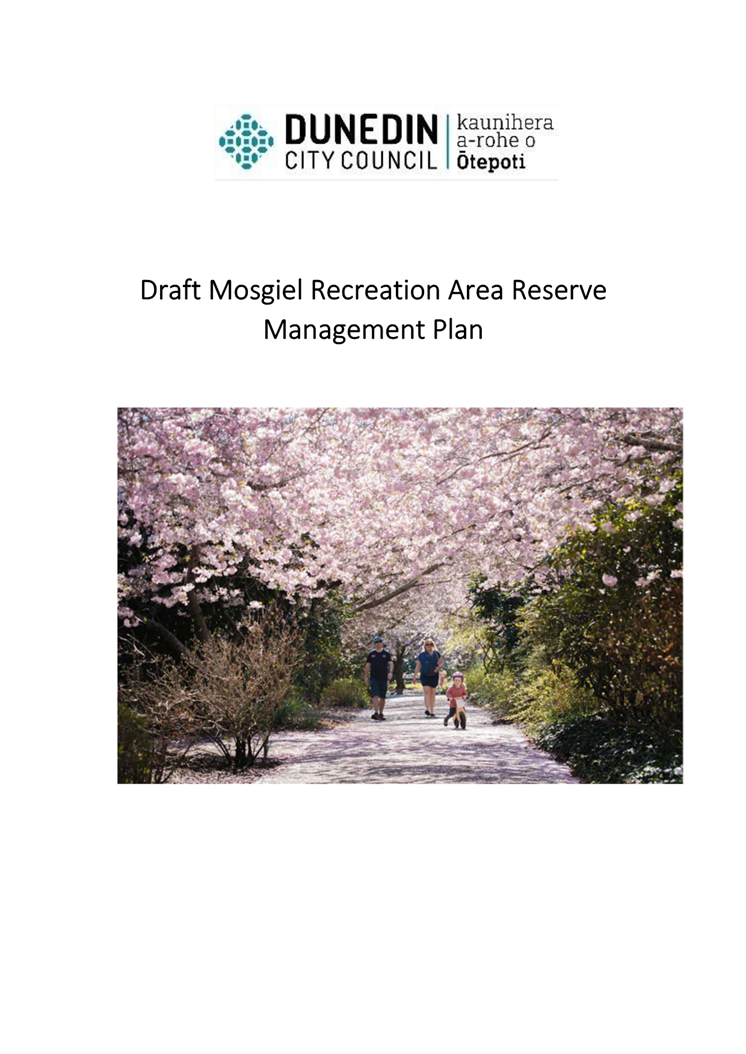
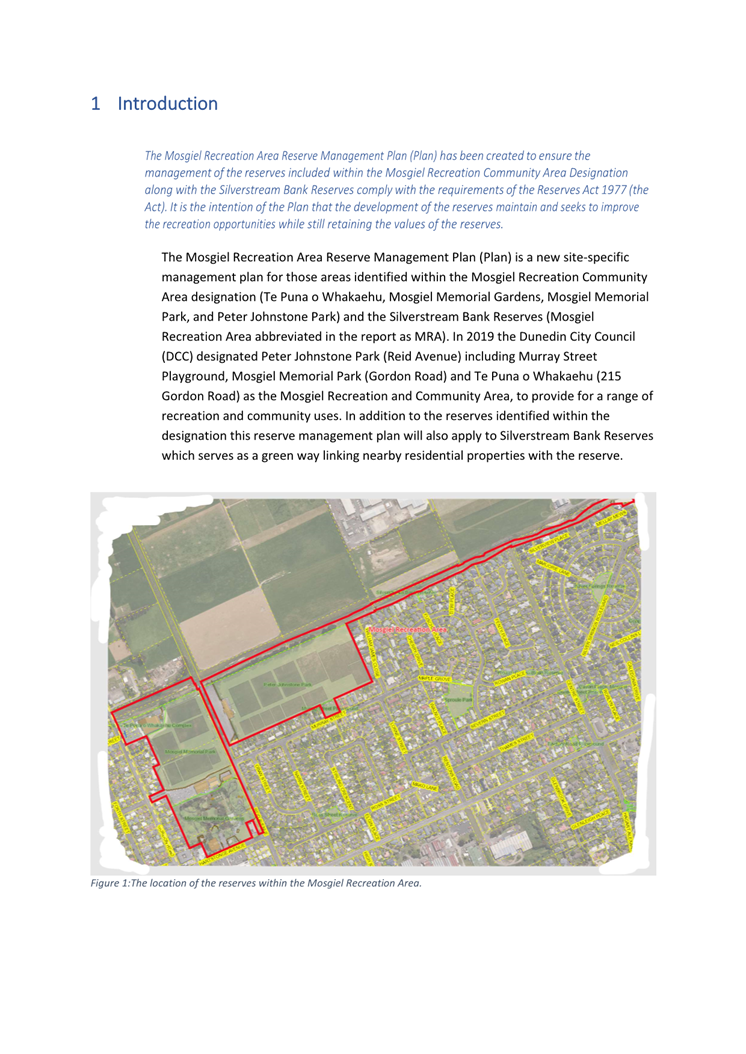
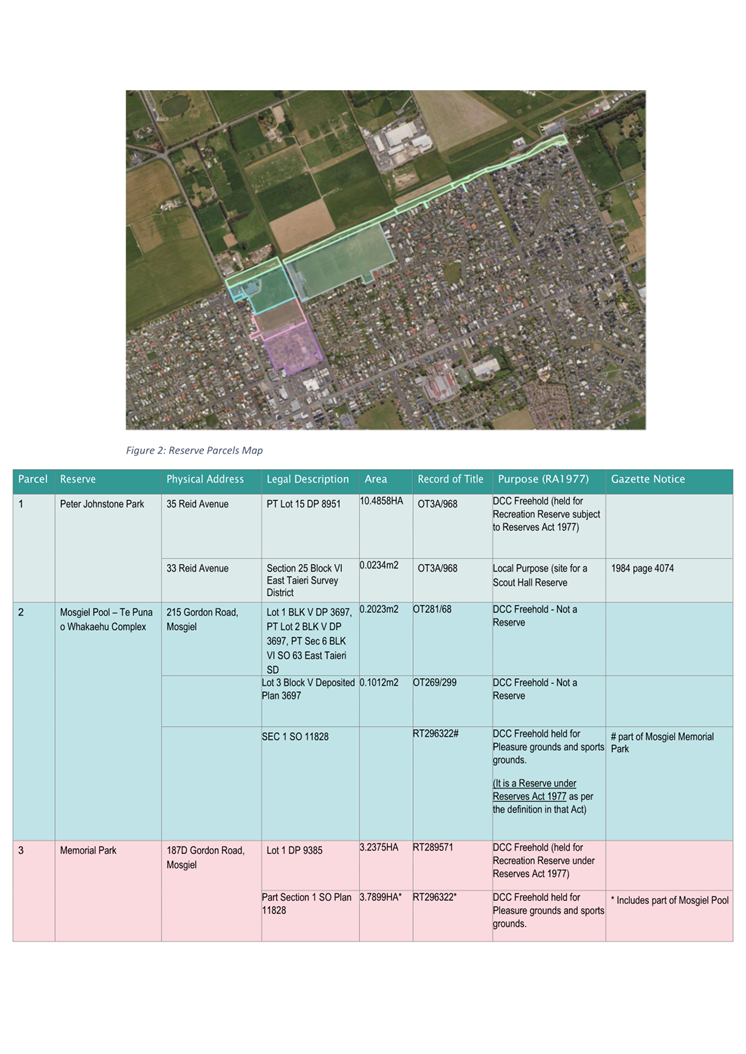
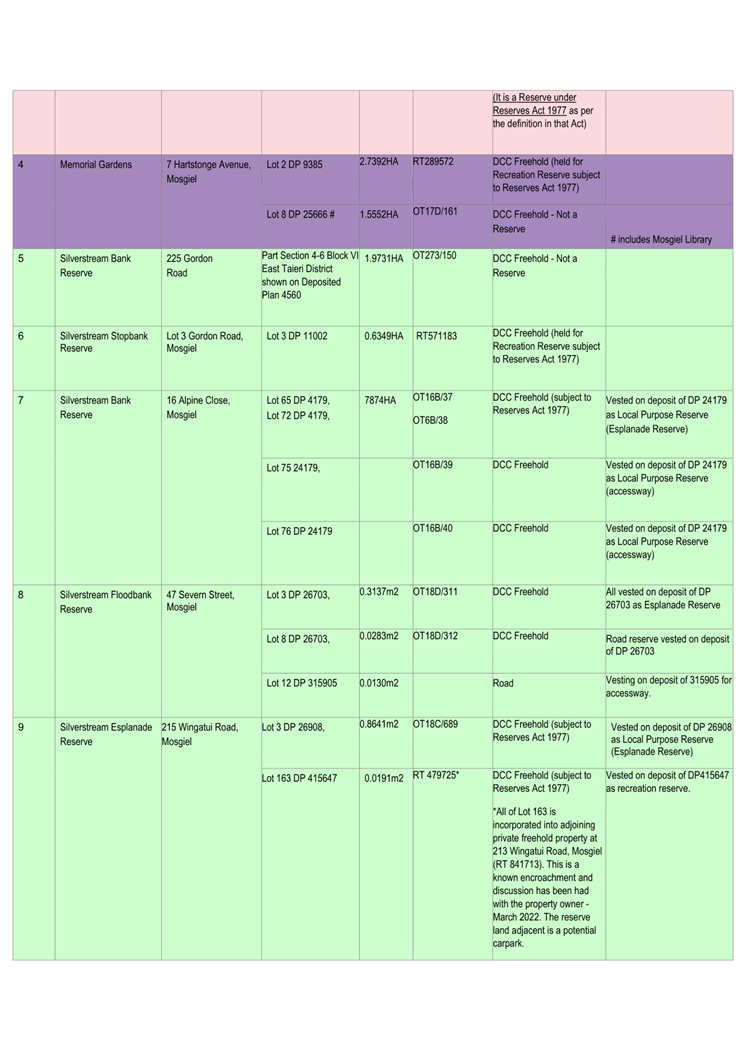
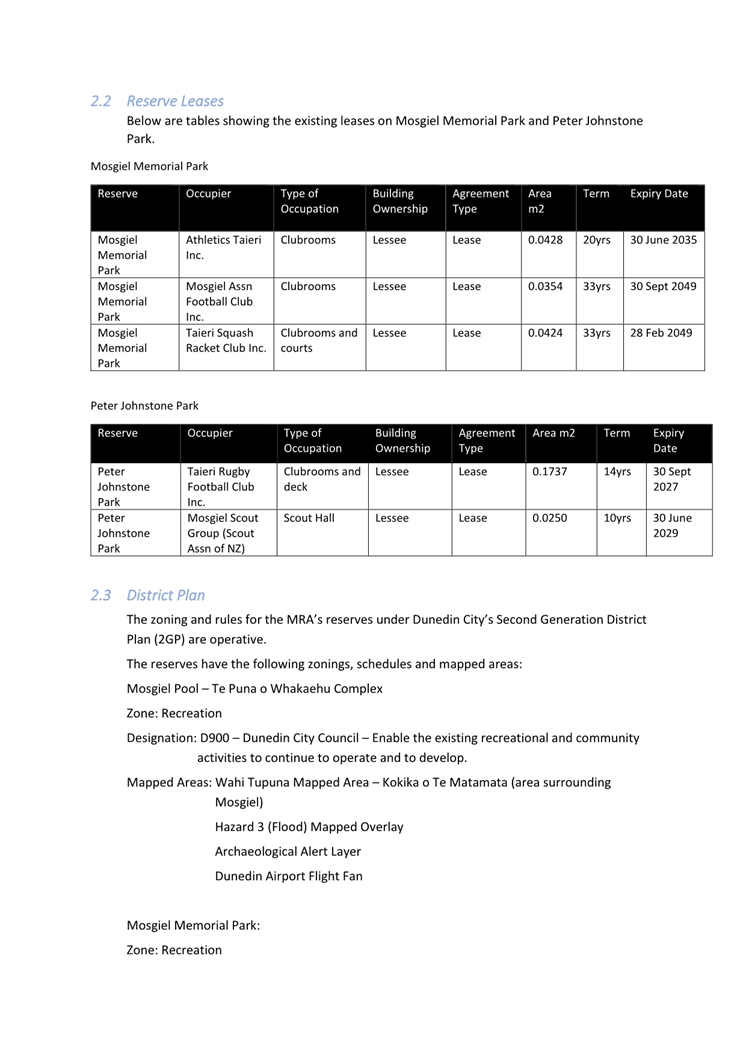
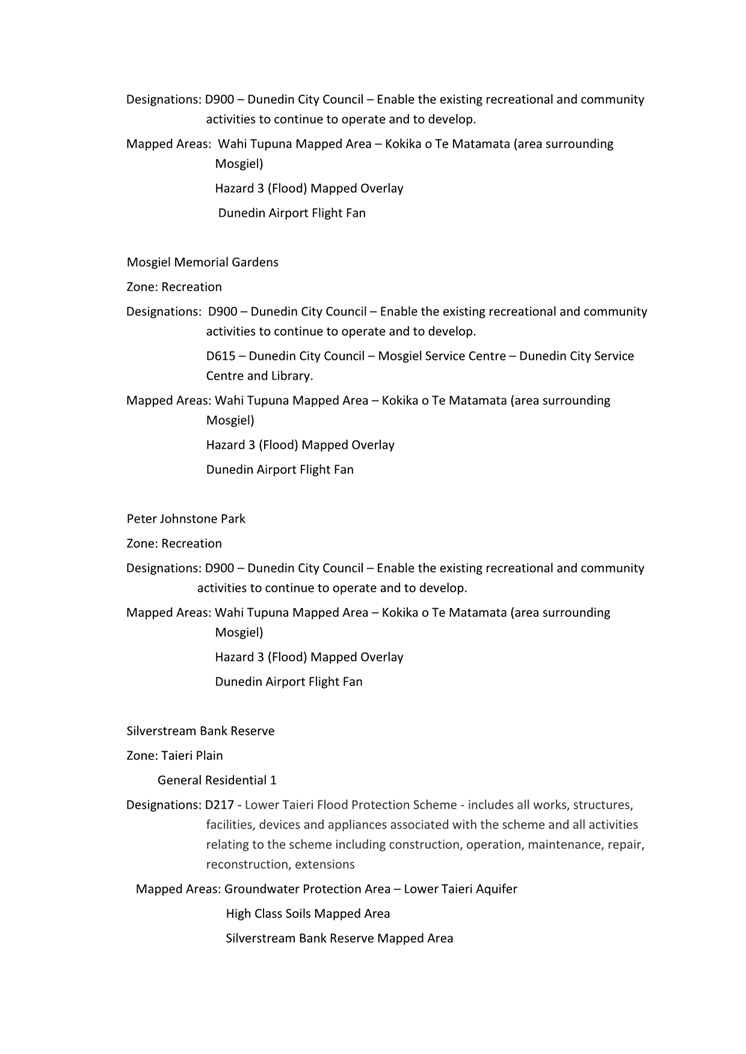
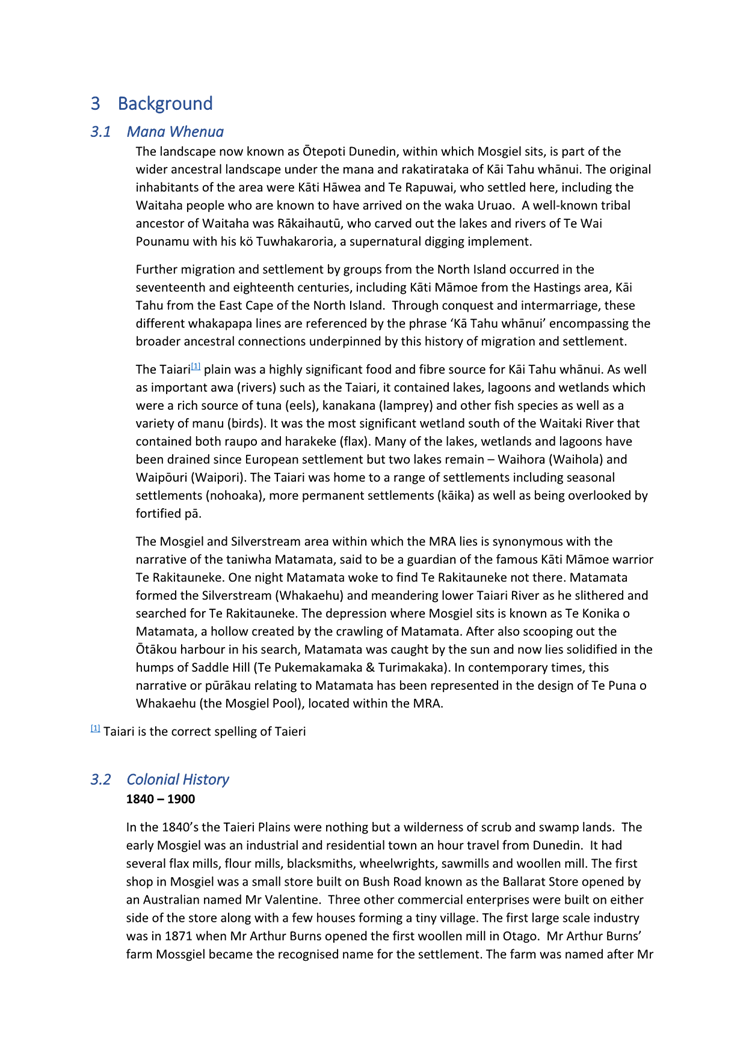
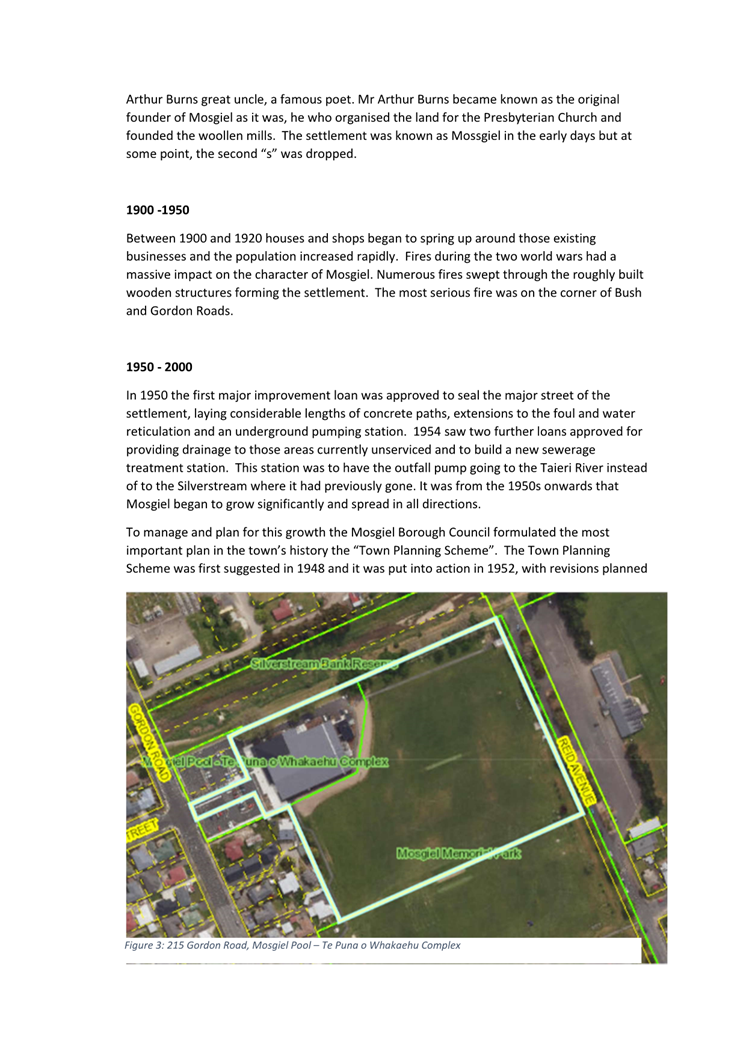
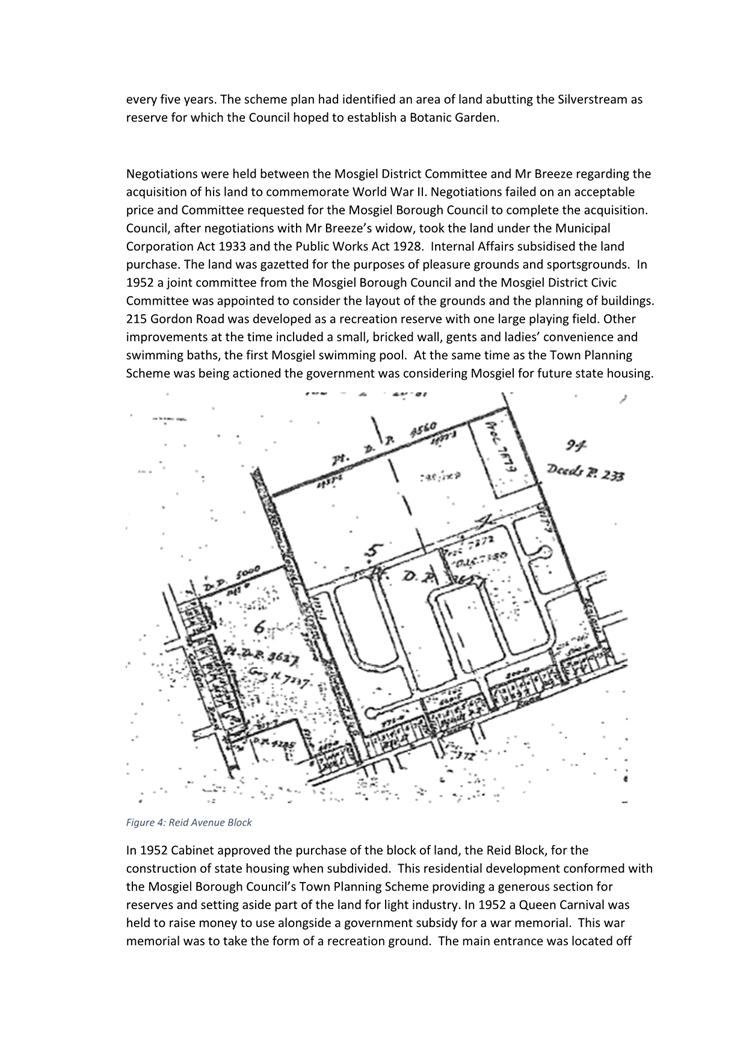
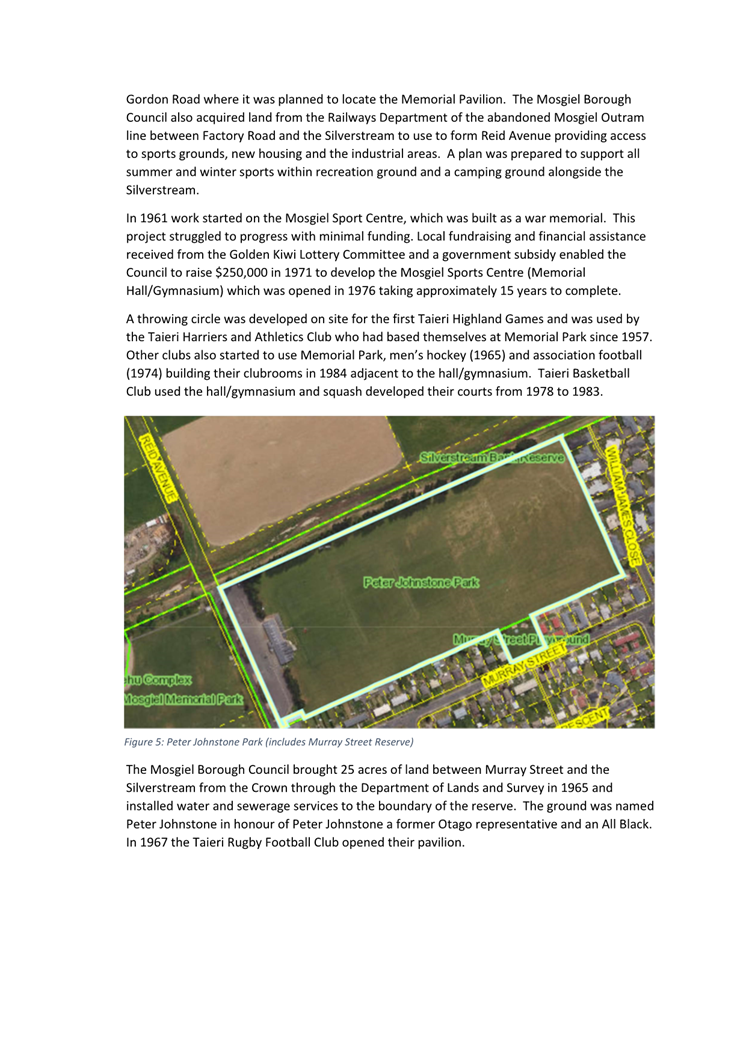
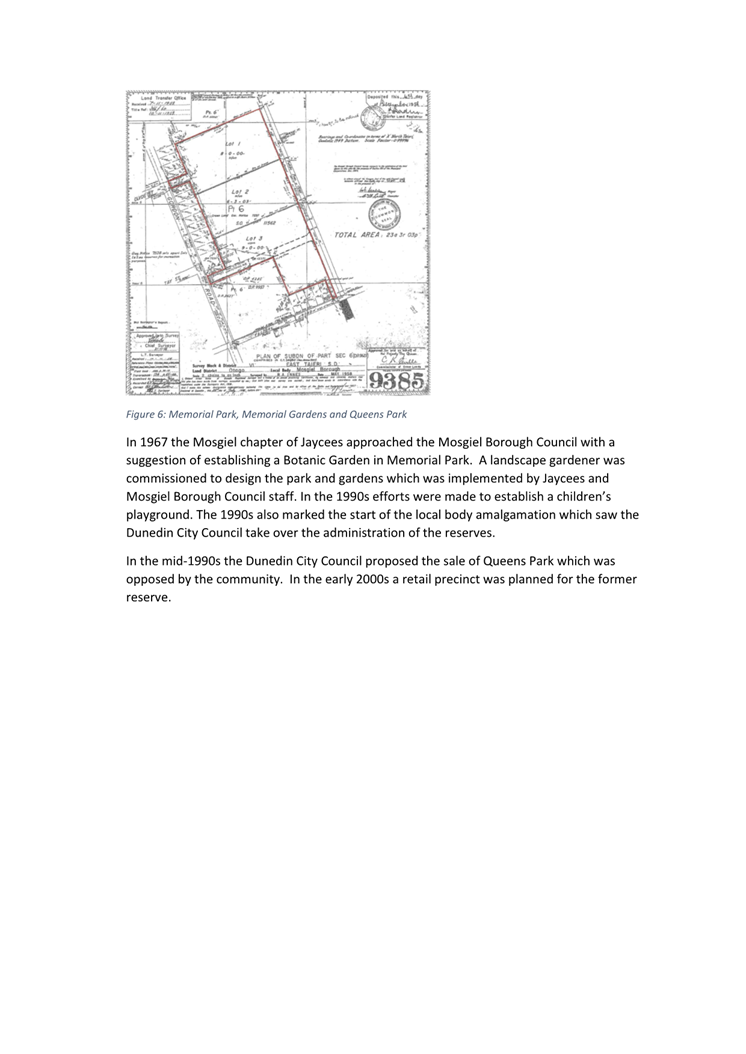
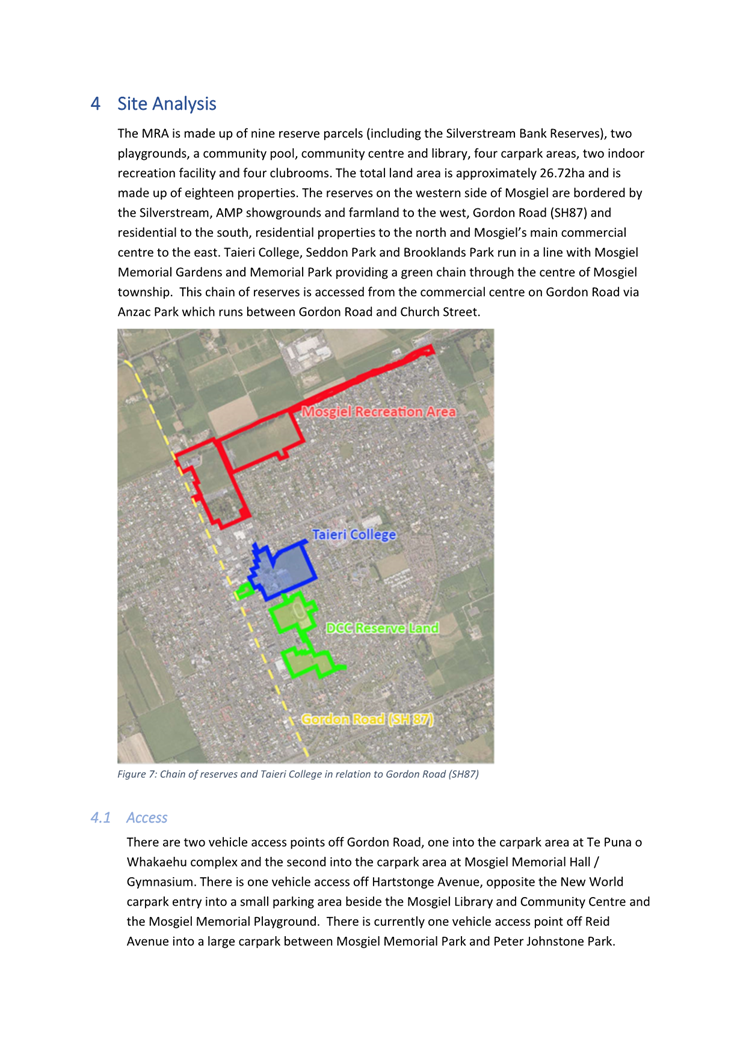
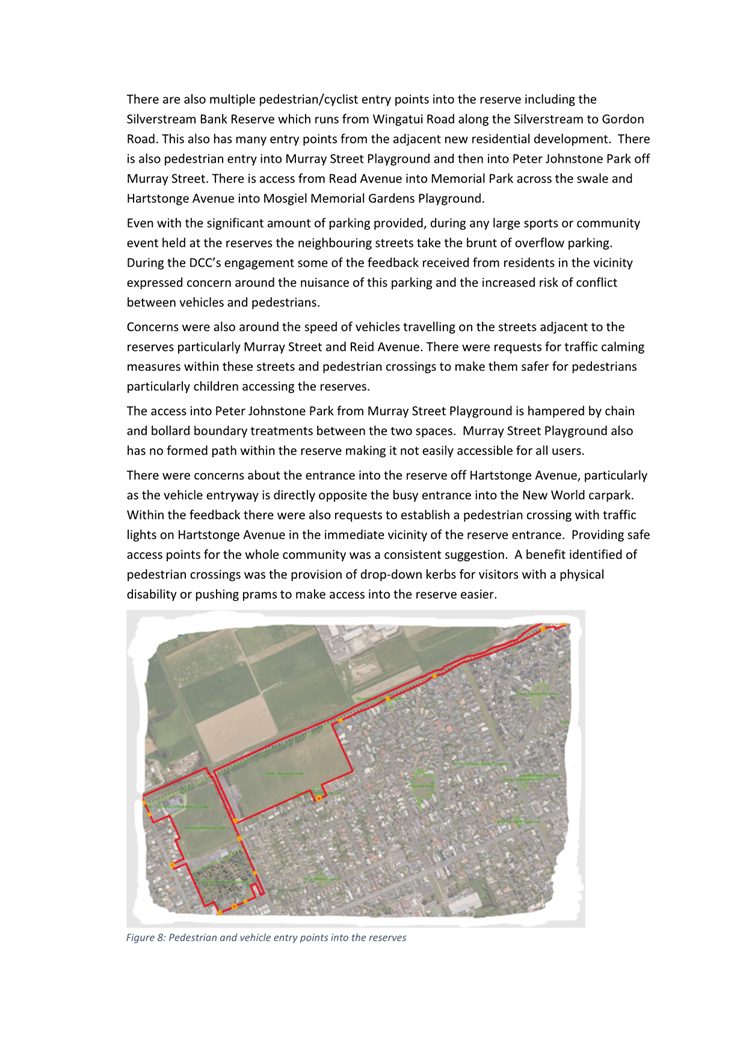
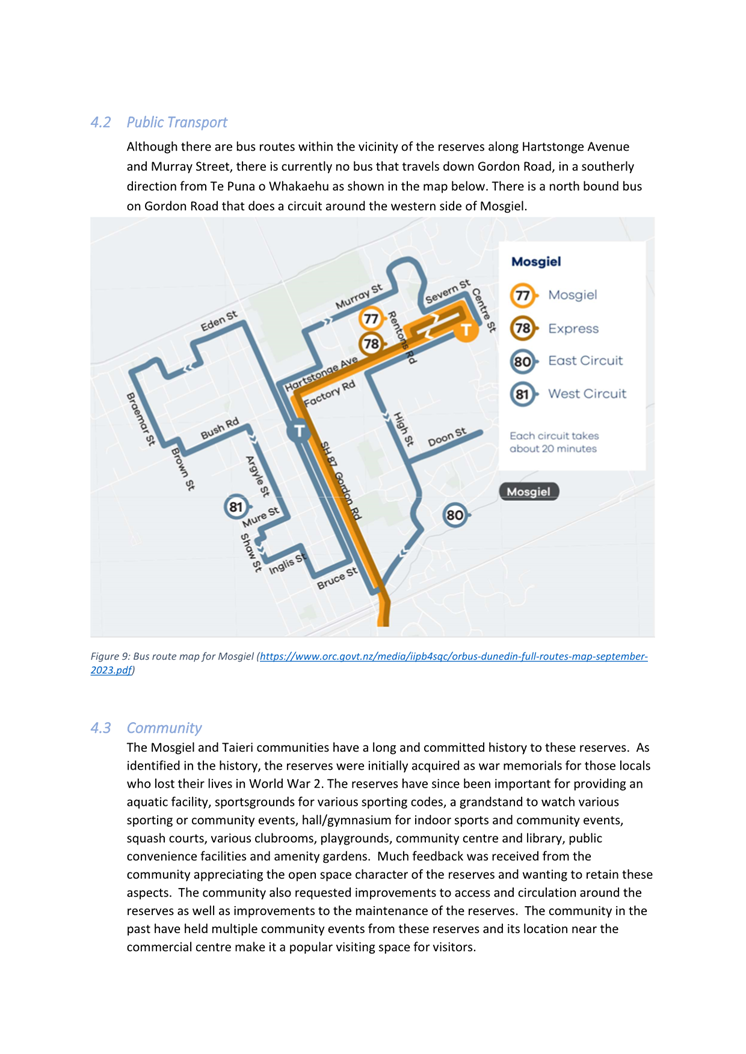
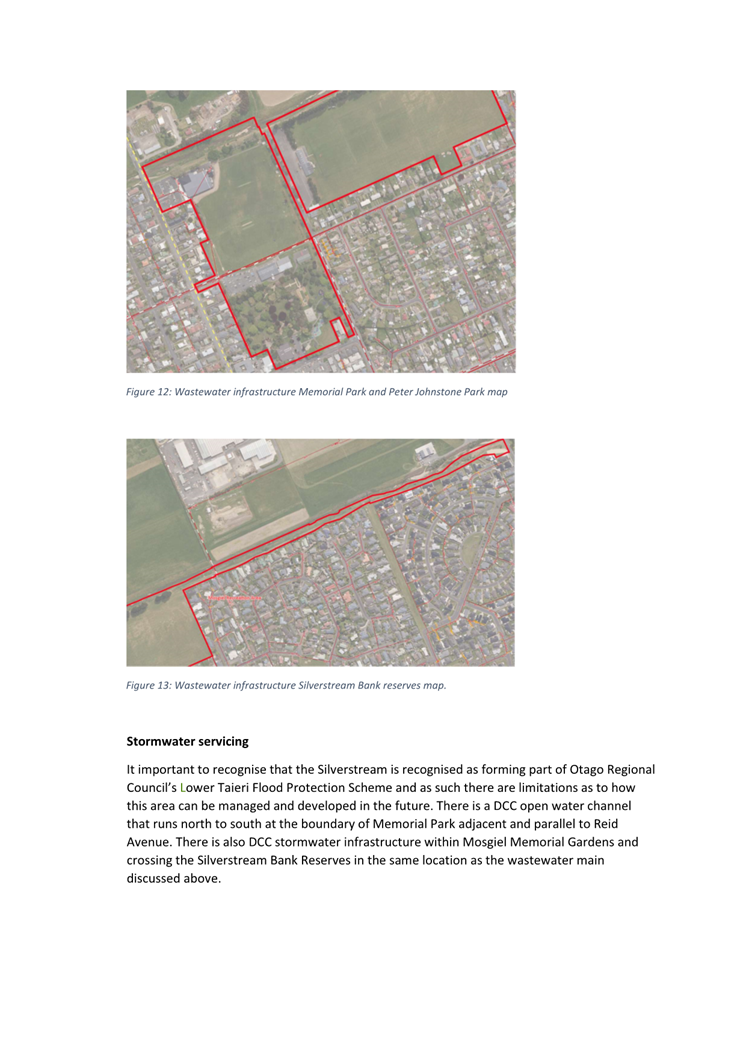
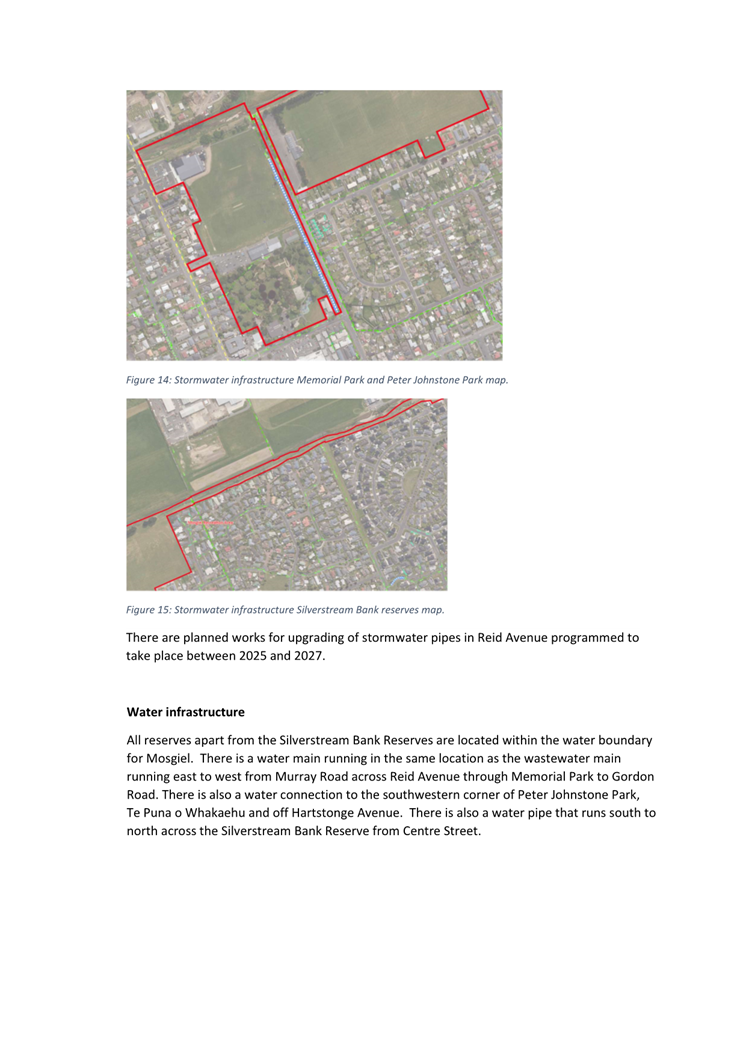
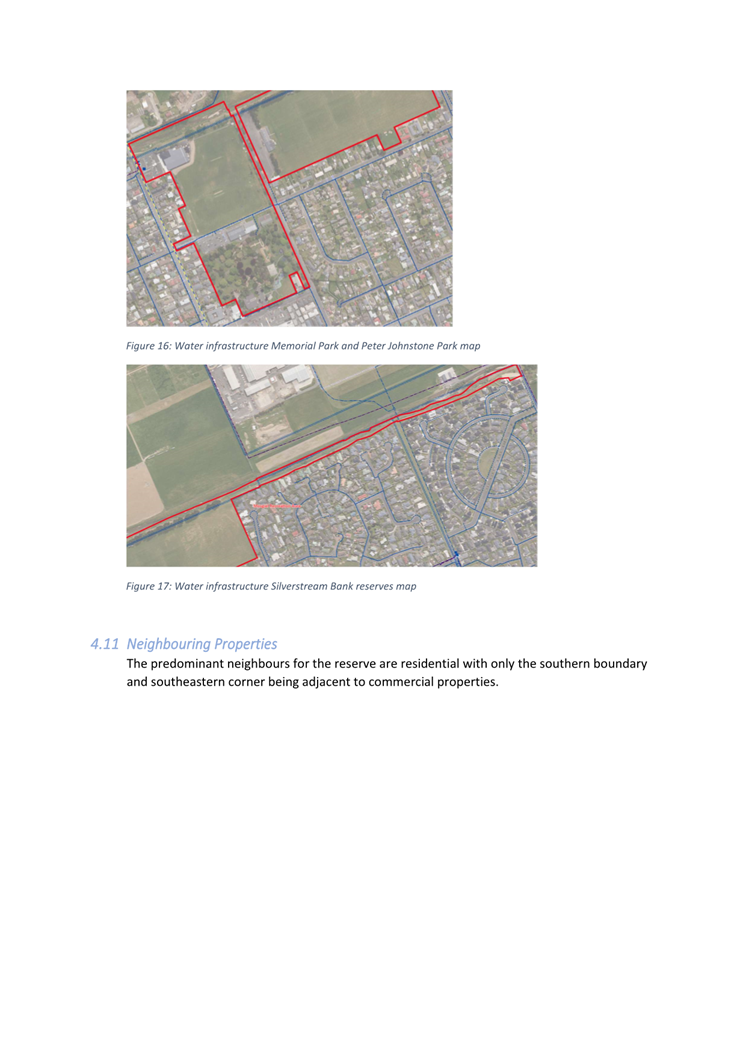
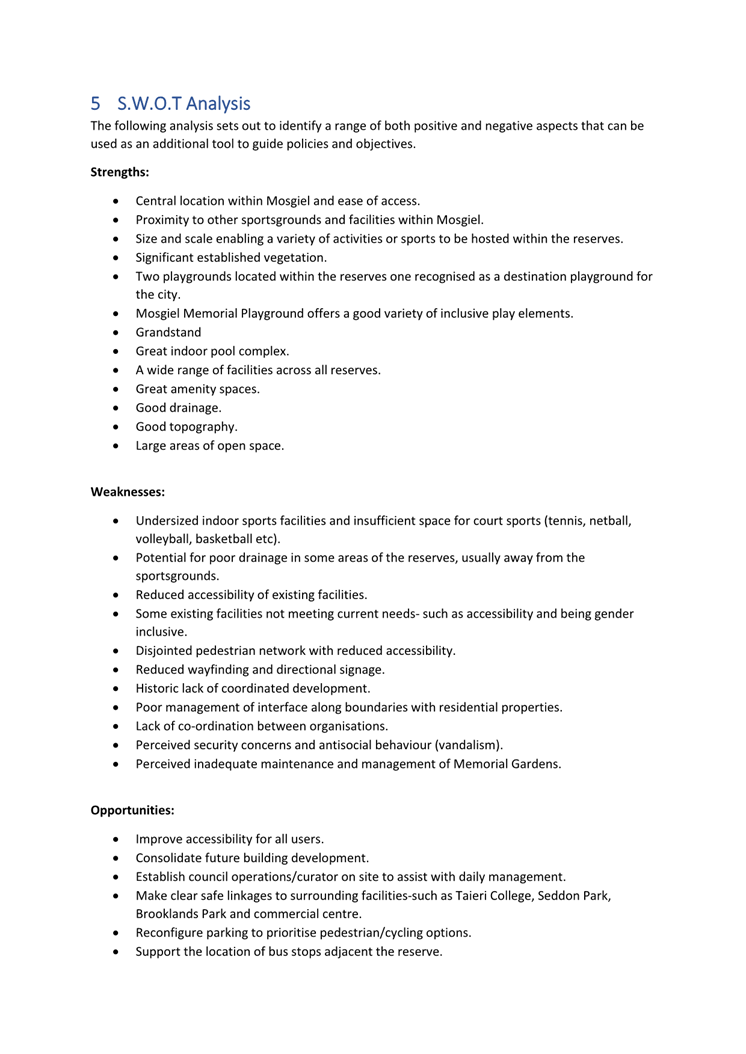
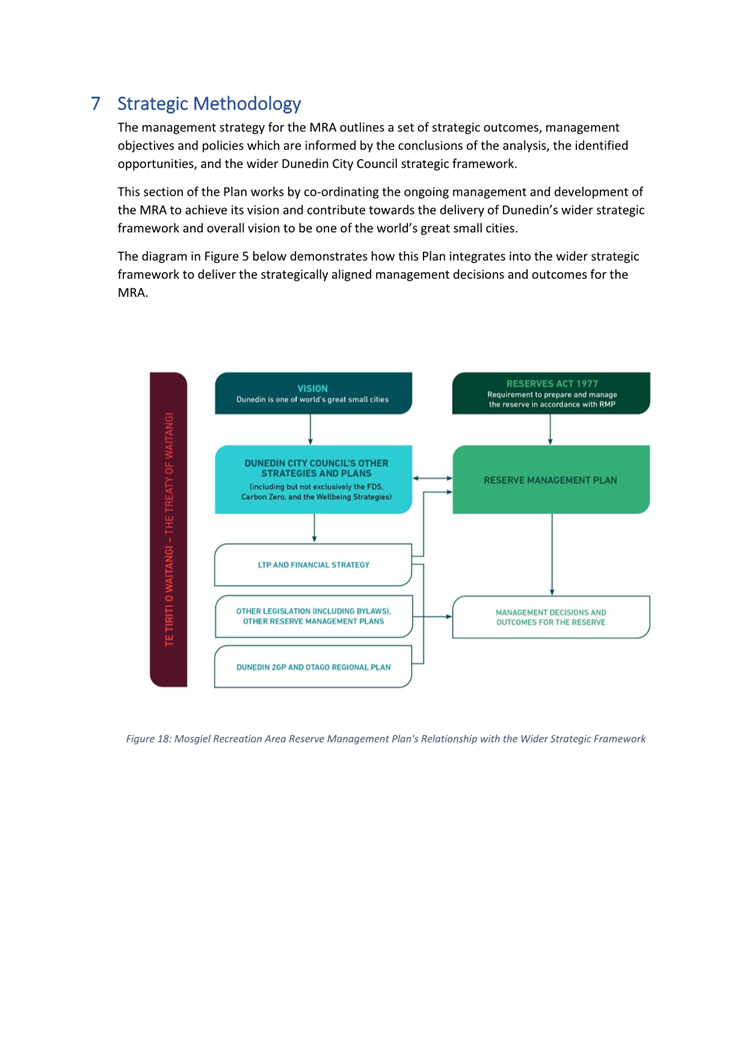
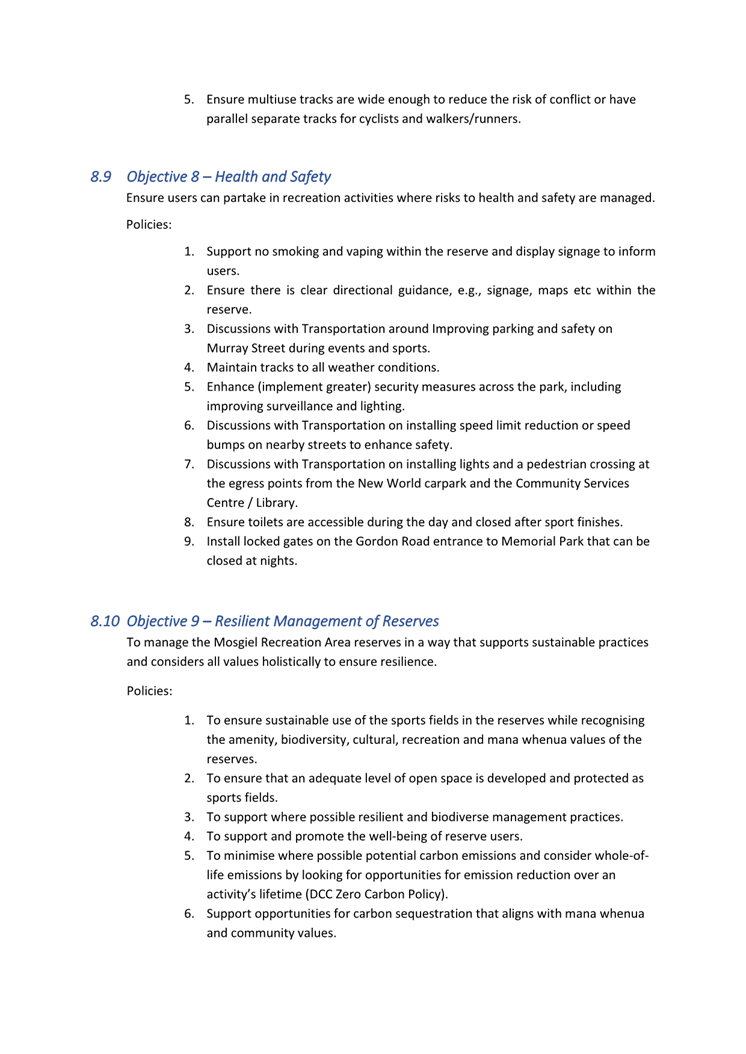
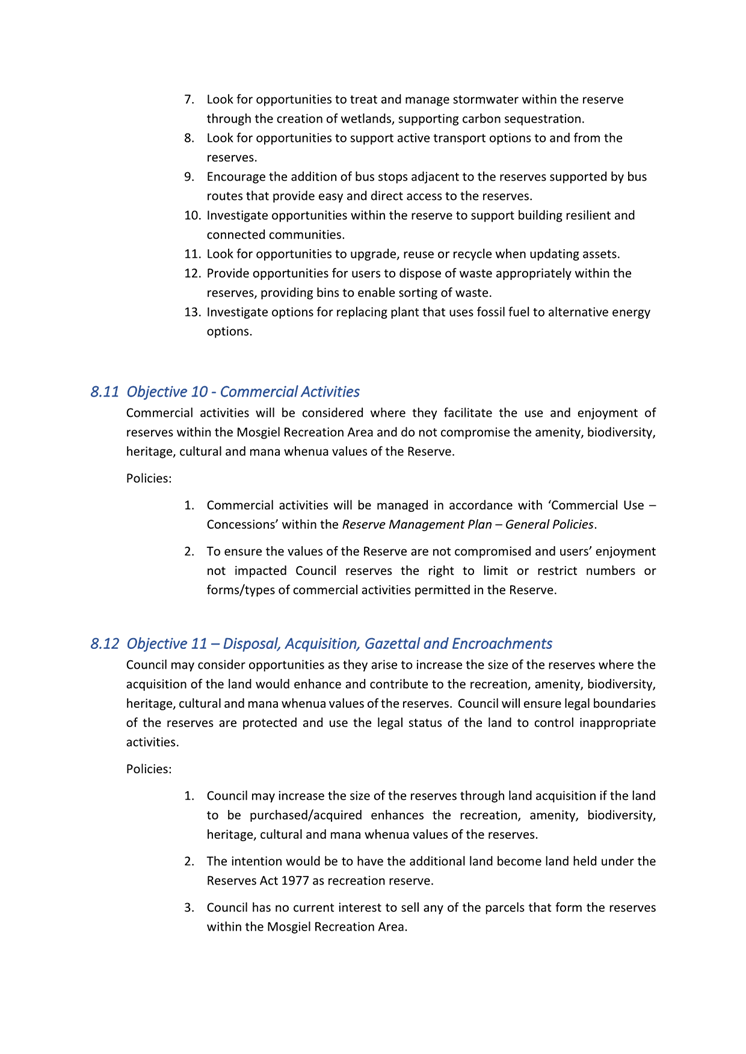

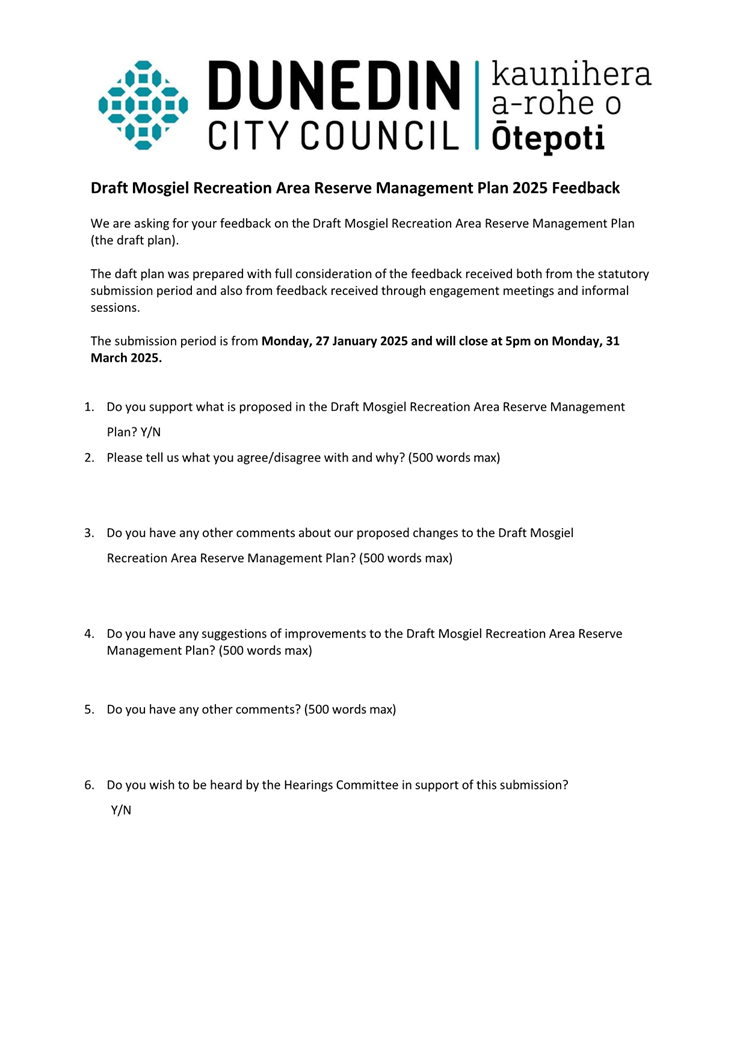
|

|
Strategy, Planning & Engagement
Committee
16 October 2024
|
Items for Consideration by the Chair
Any items for
consideration by the Chair.
Attachments
There are no attachments for this report.