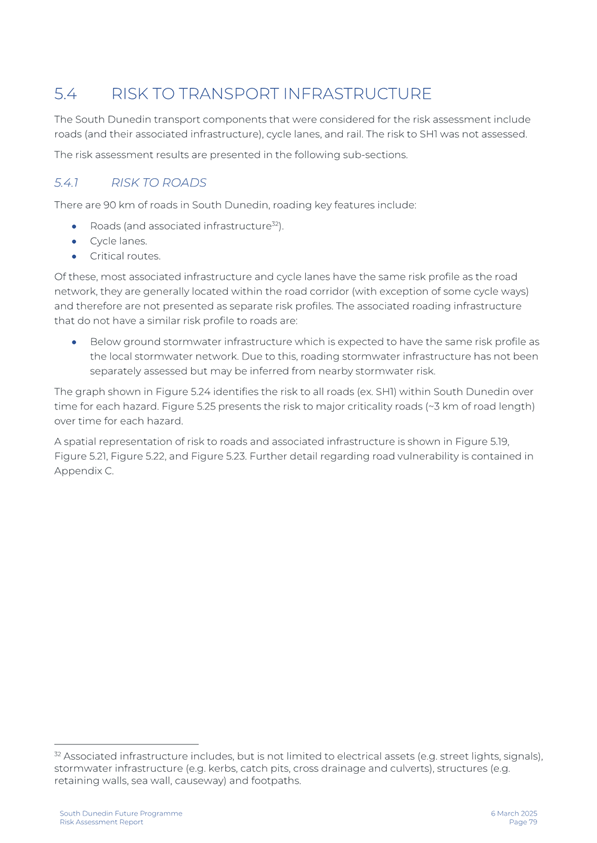
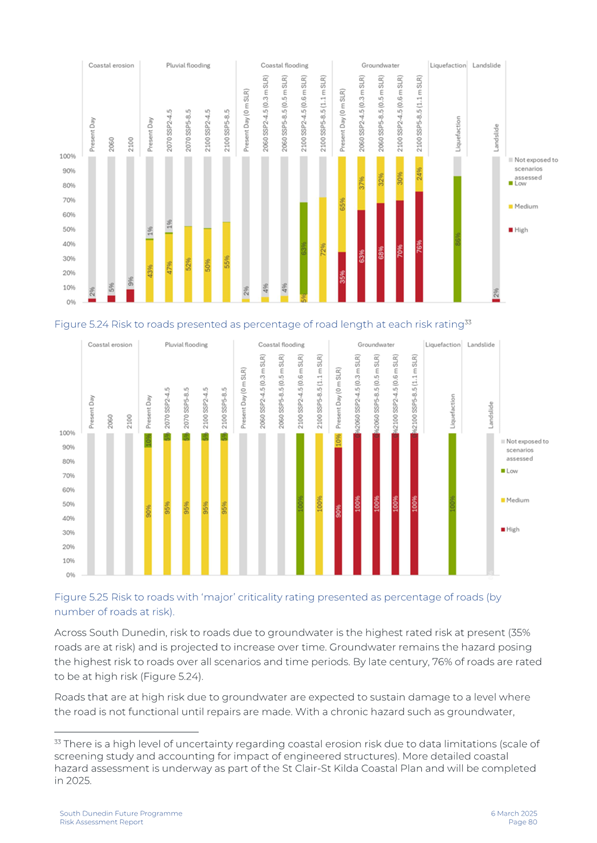
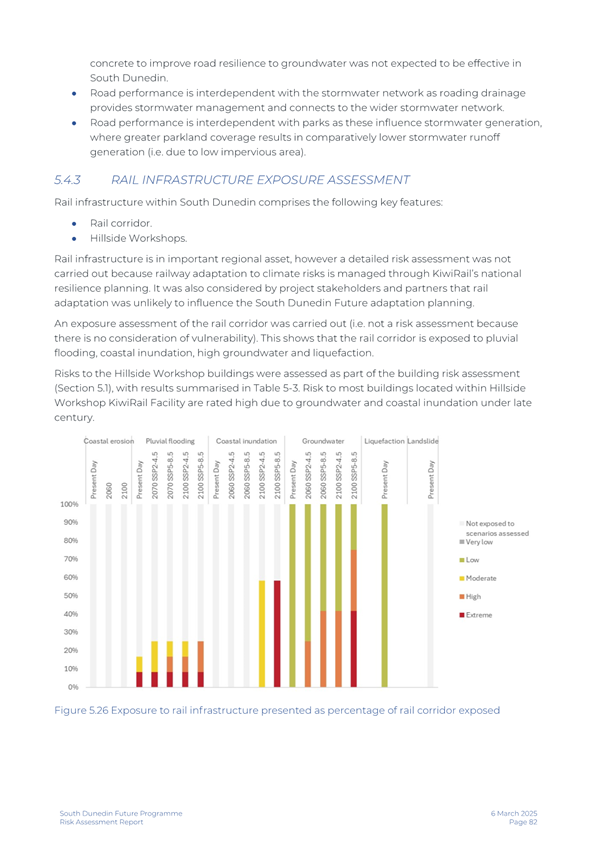
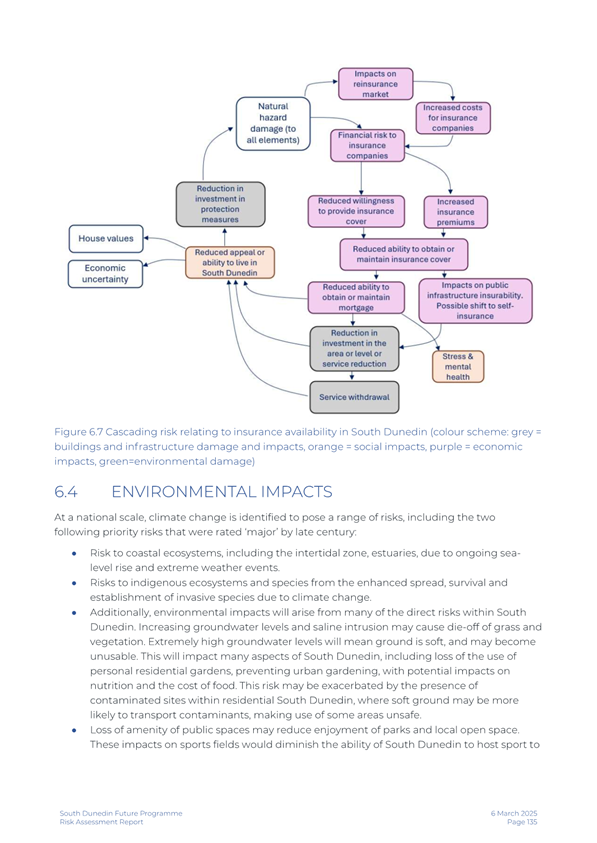
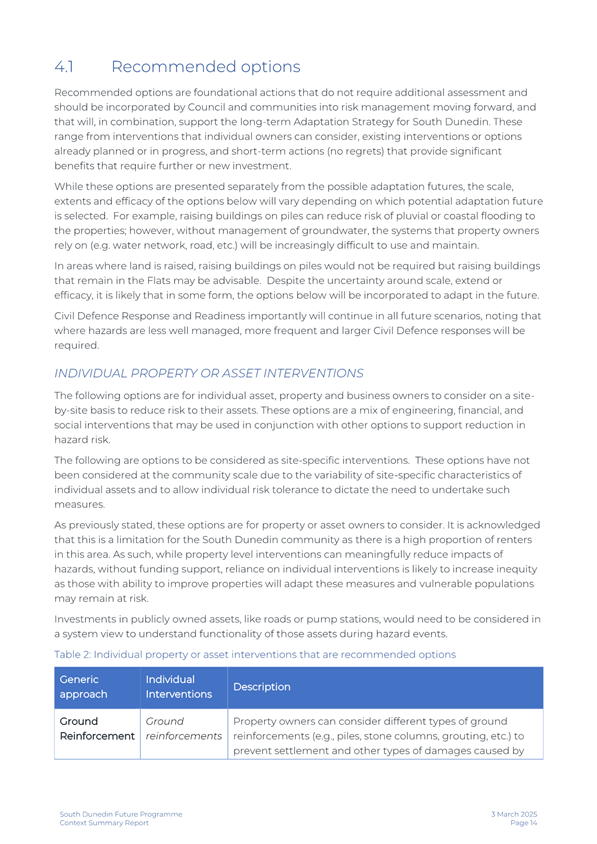
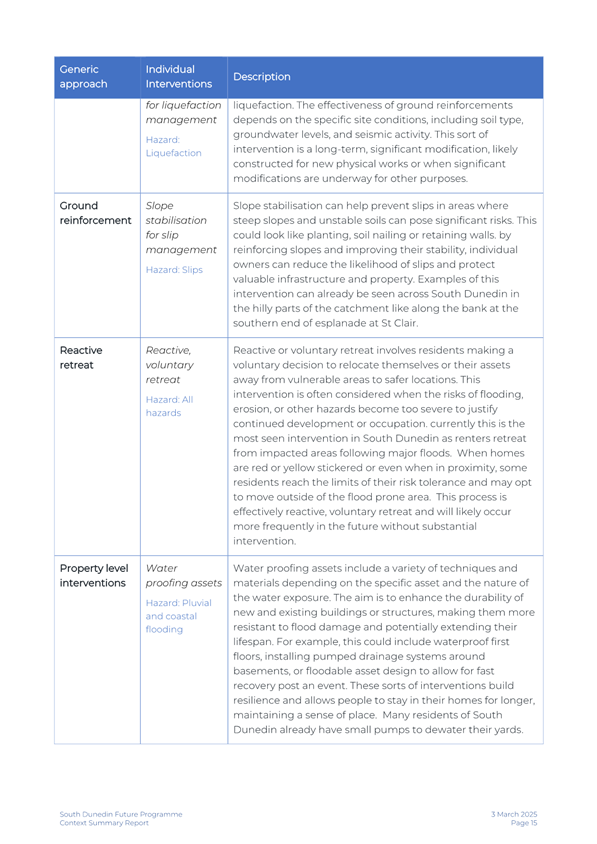
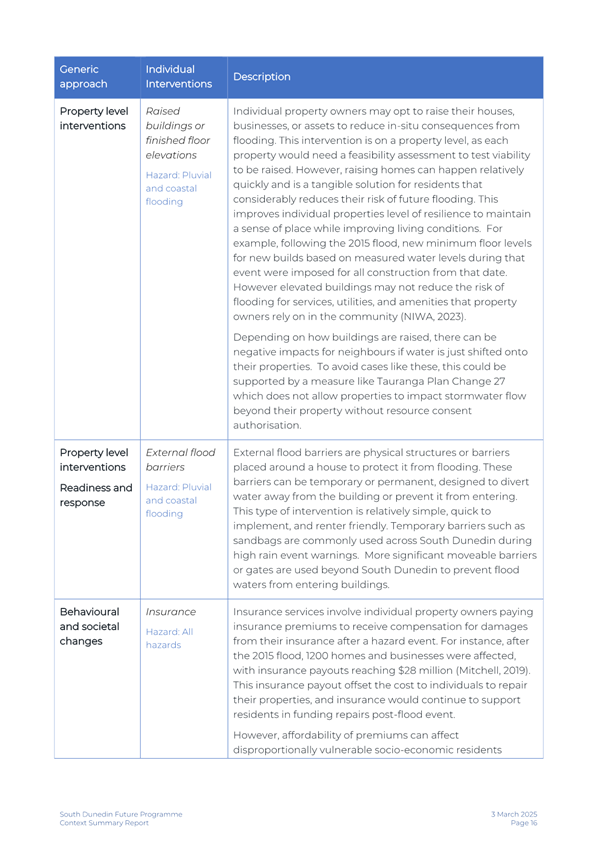
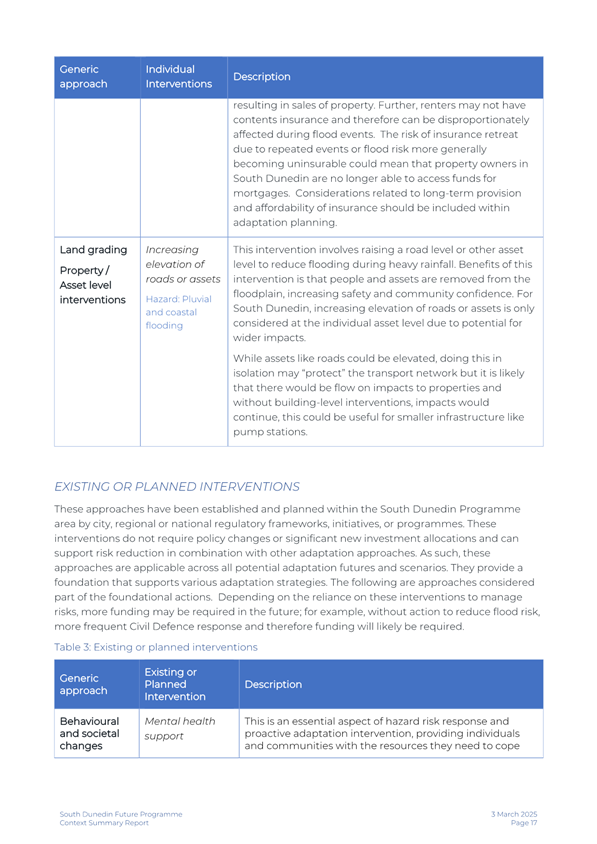
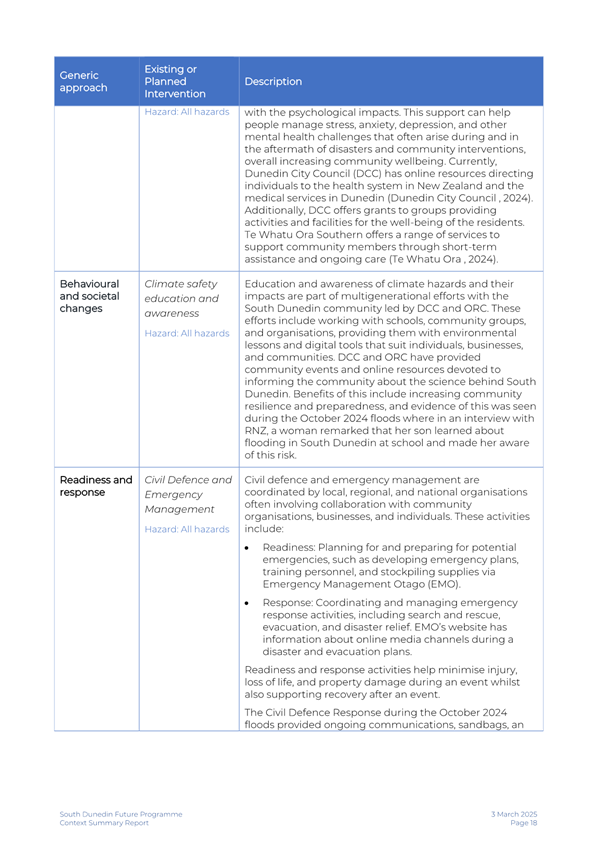
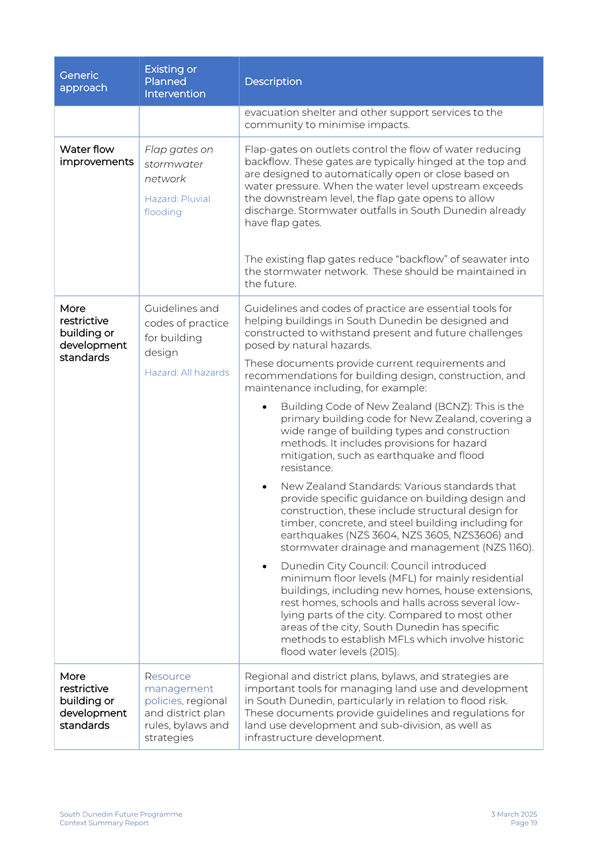
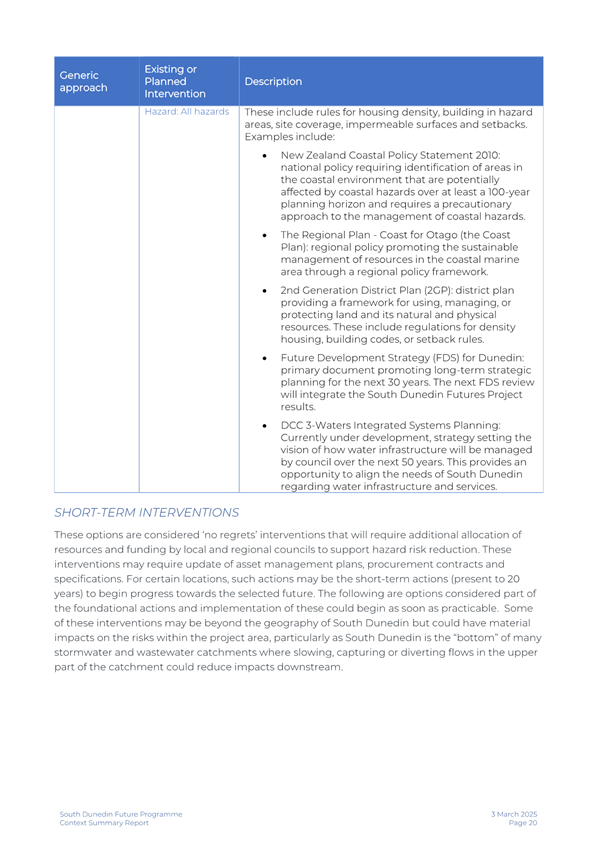
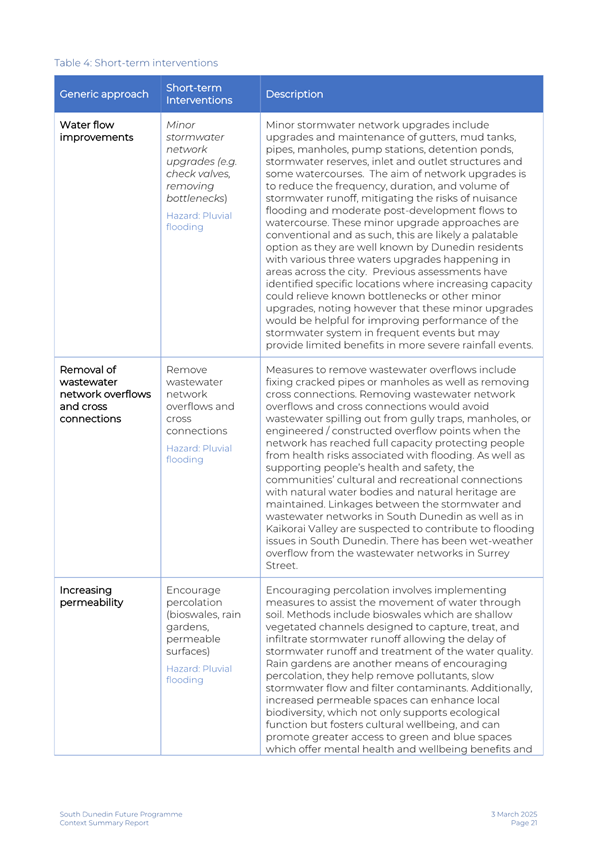
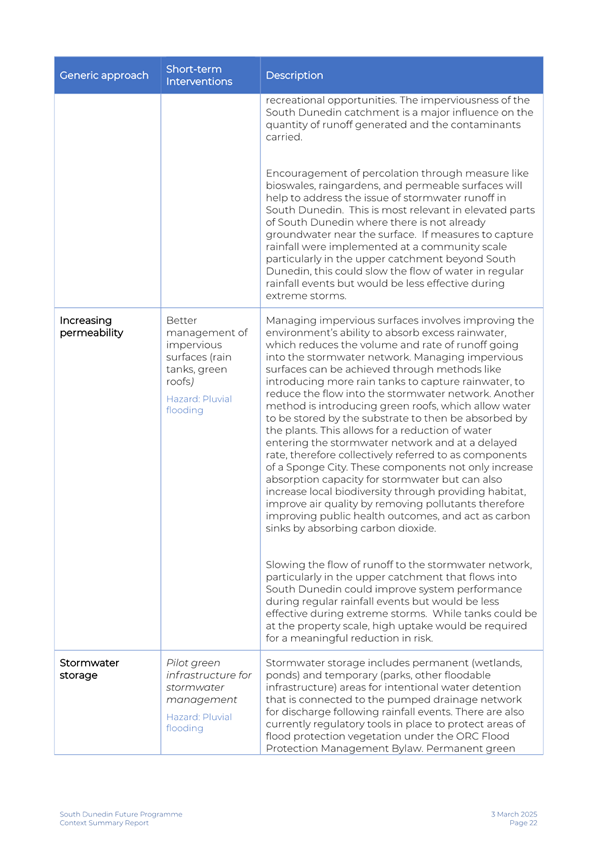
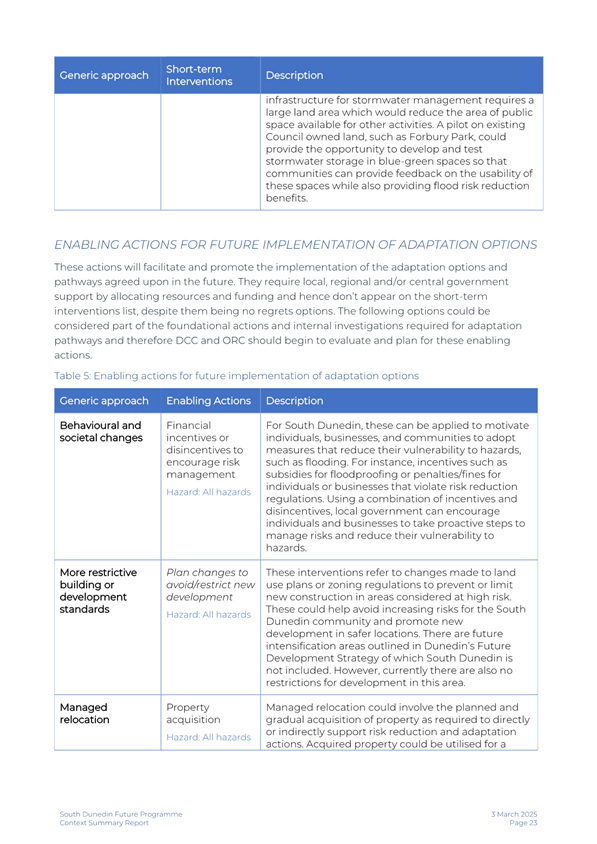
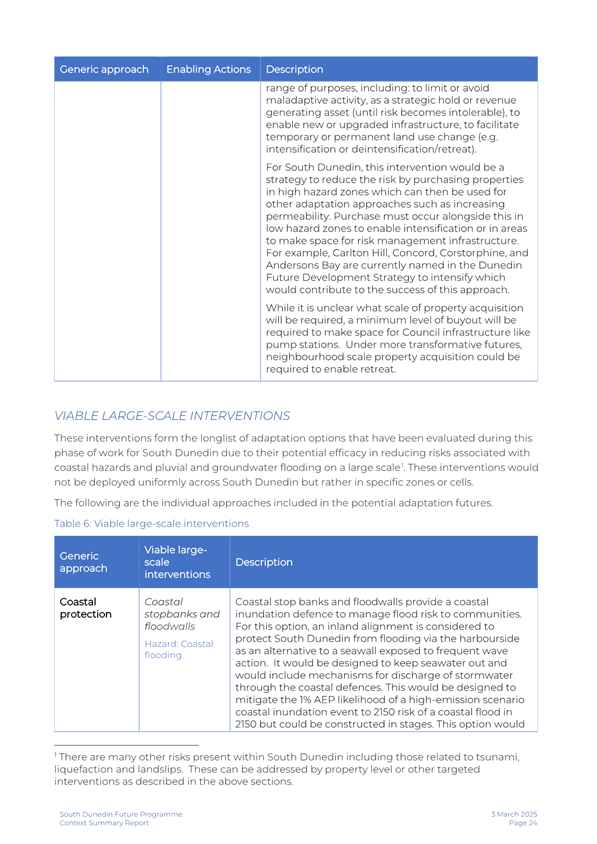
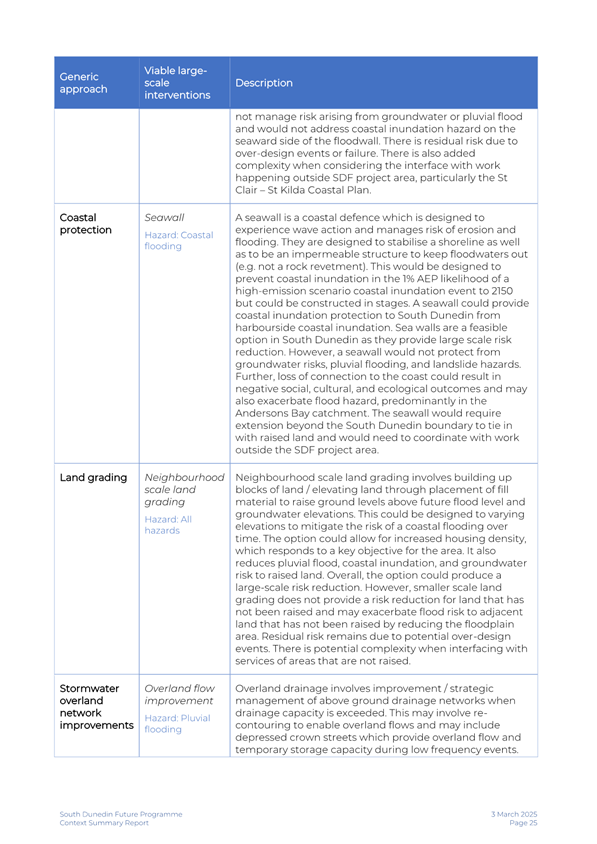
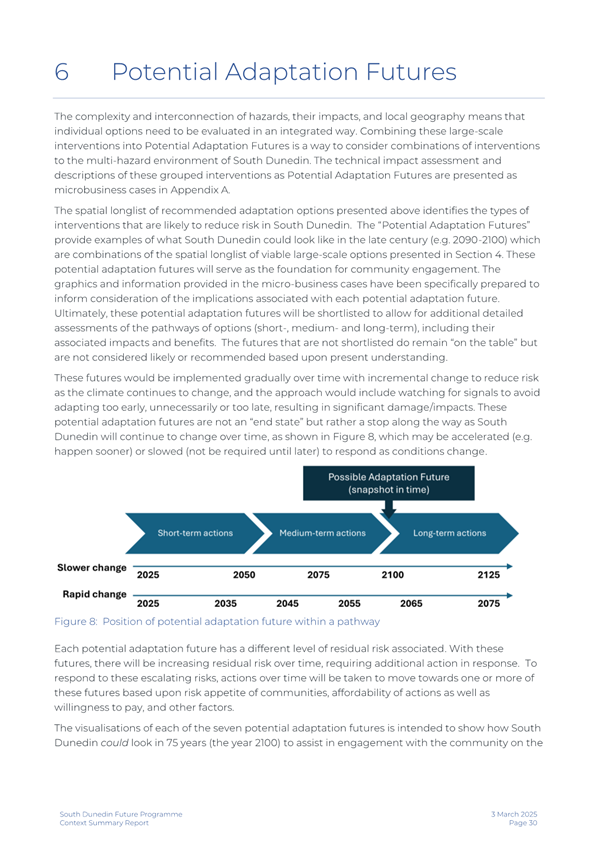
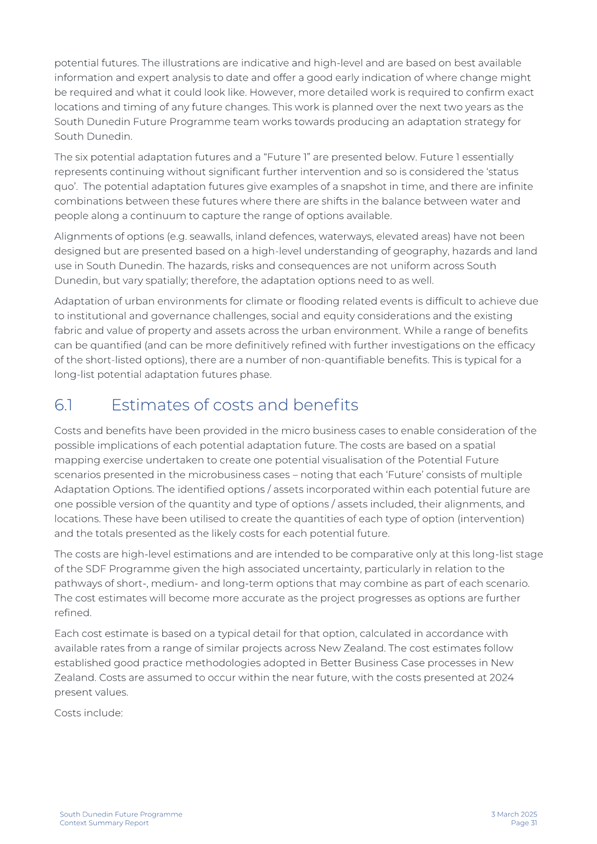
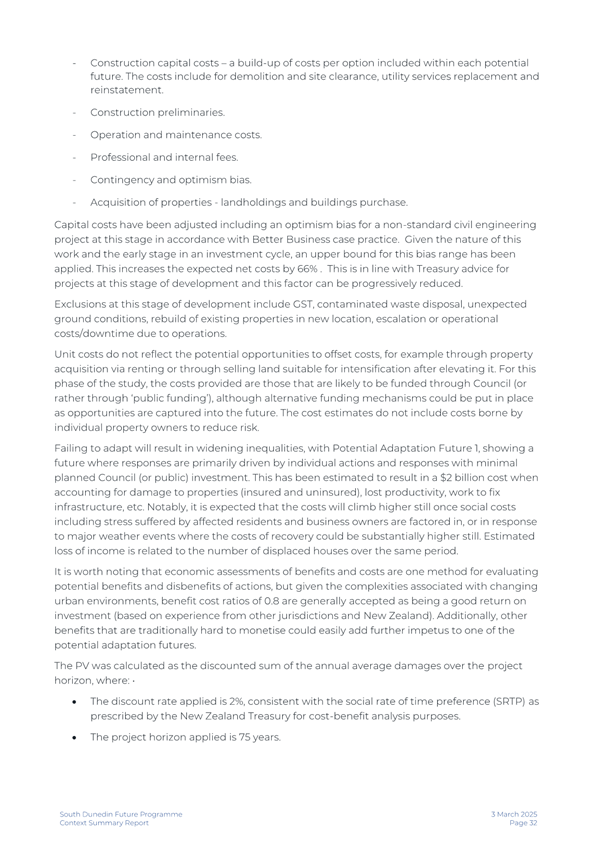
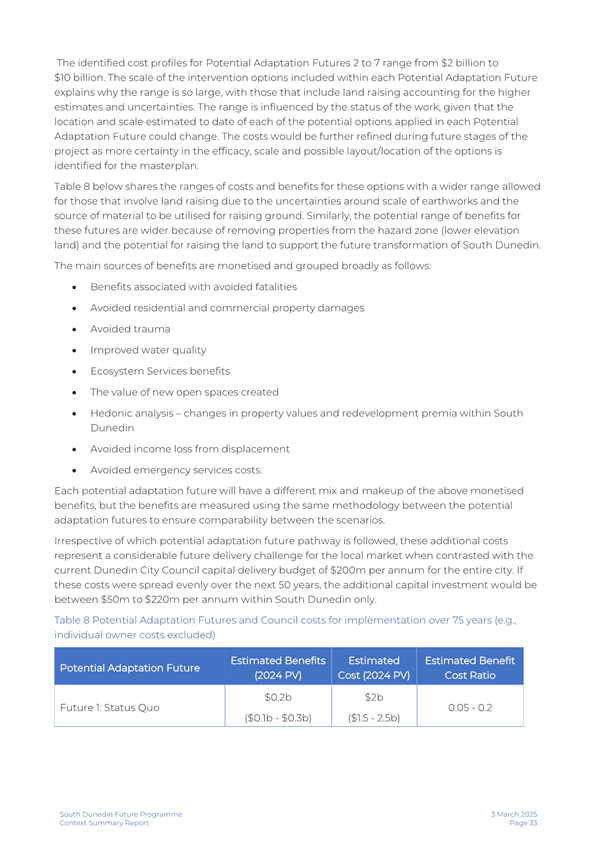
|

|
Council
18 March 2025
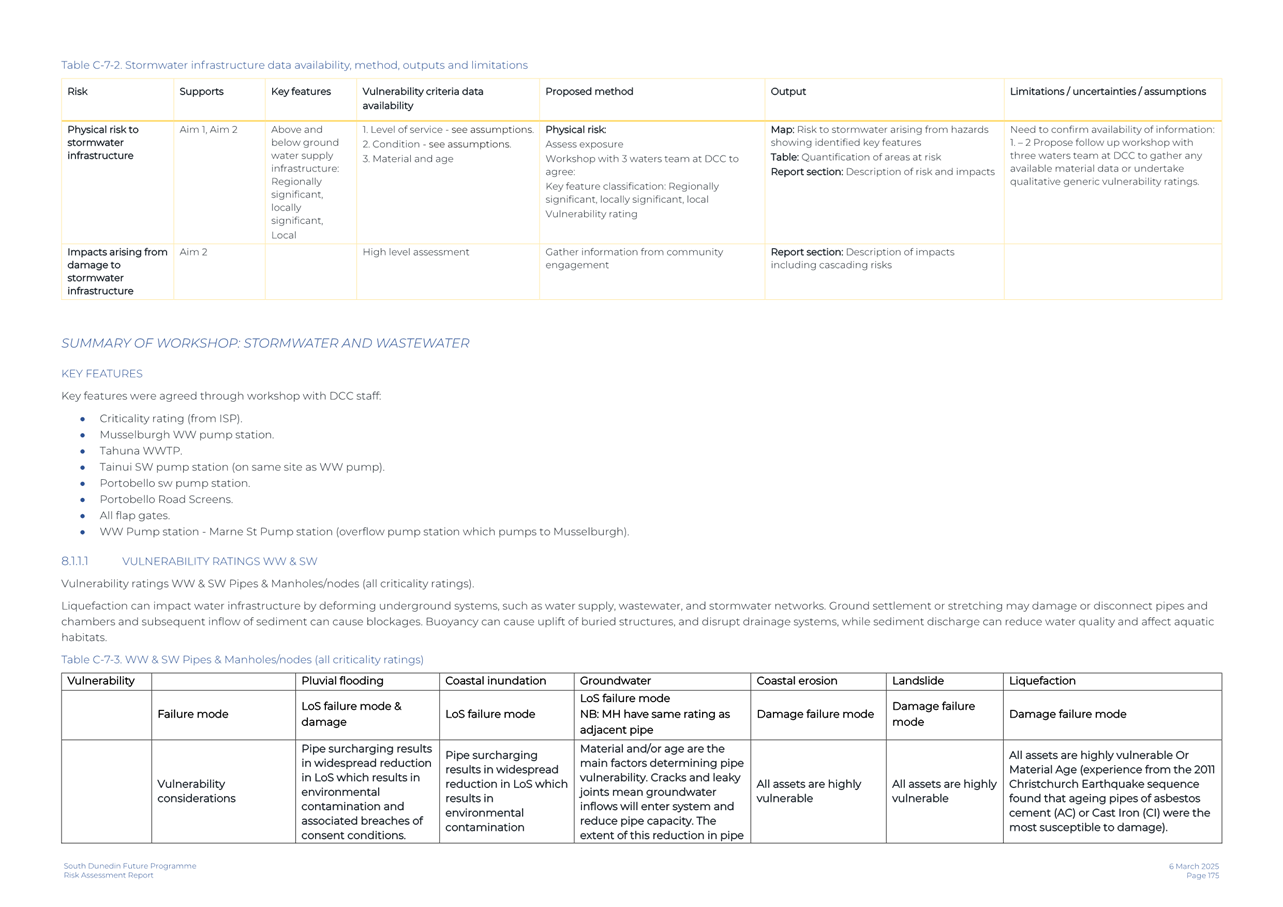
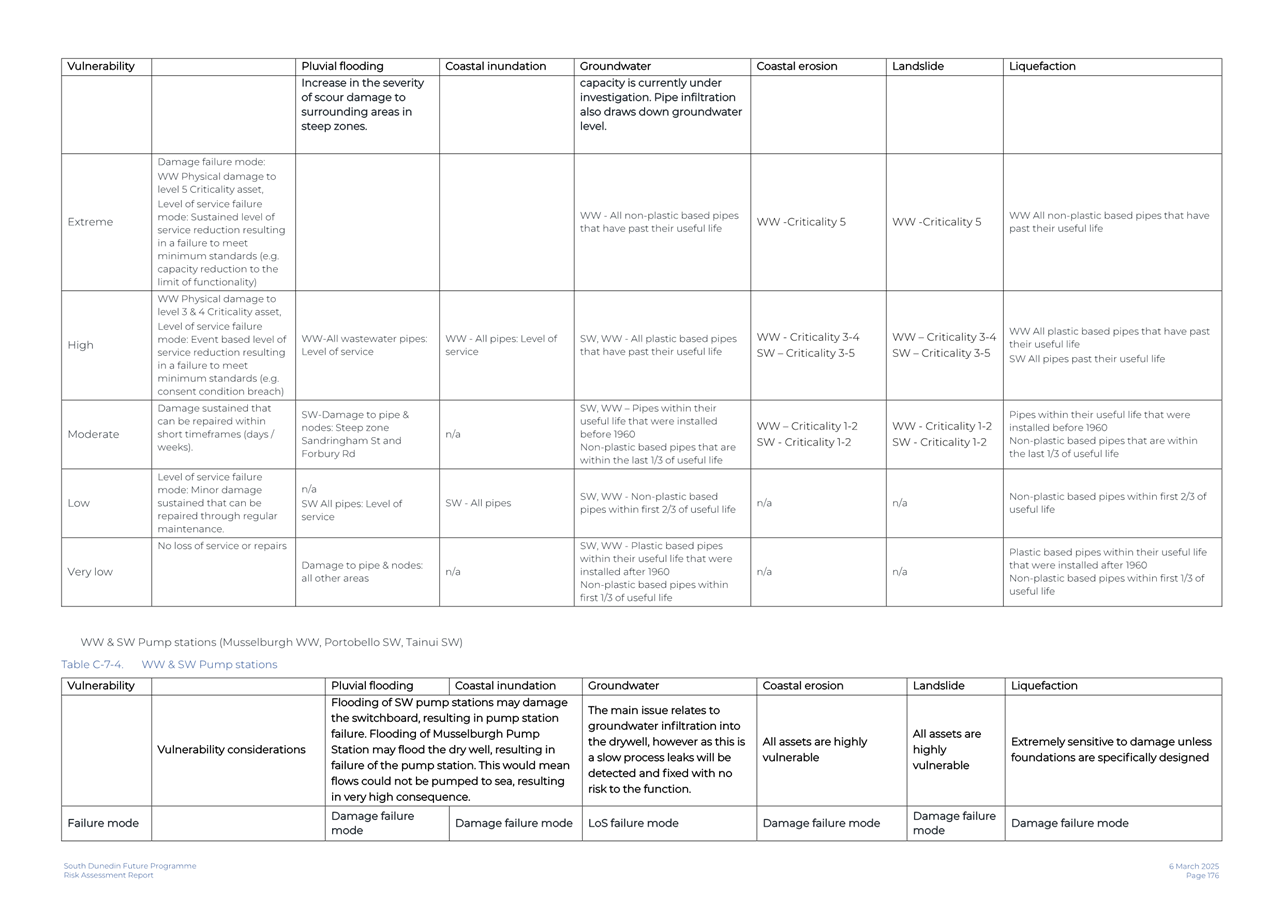
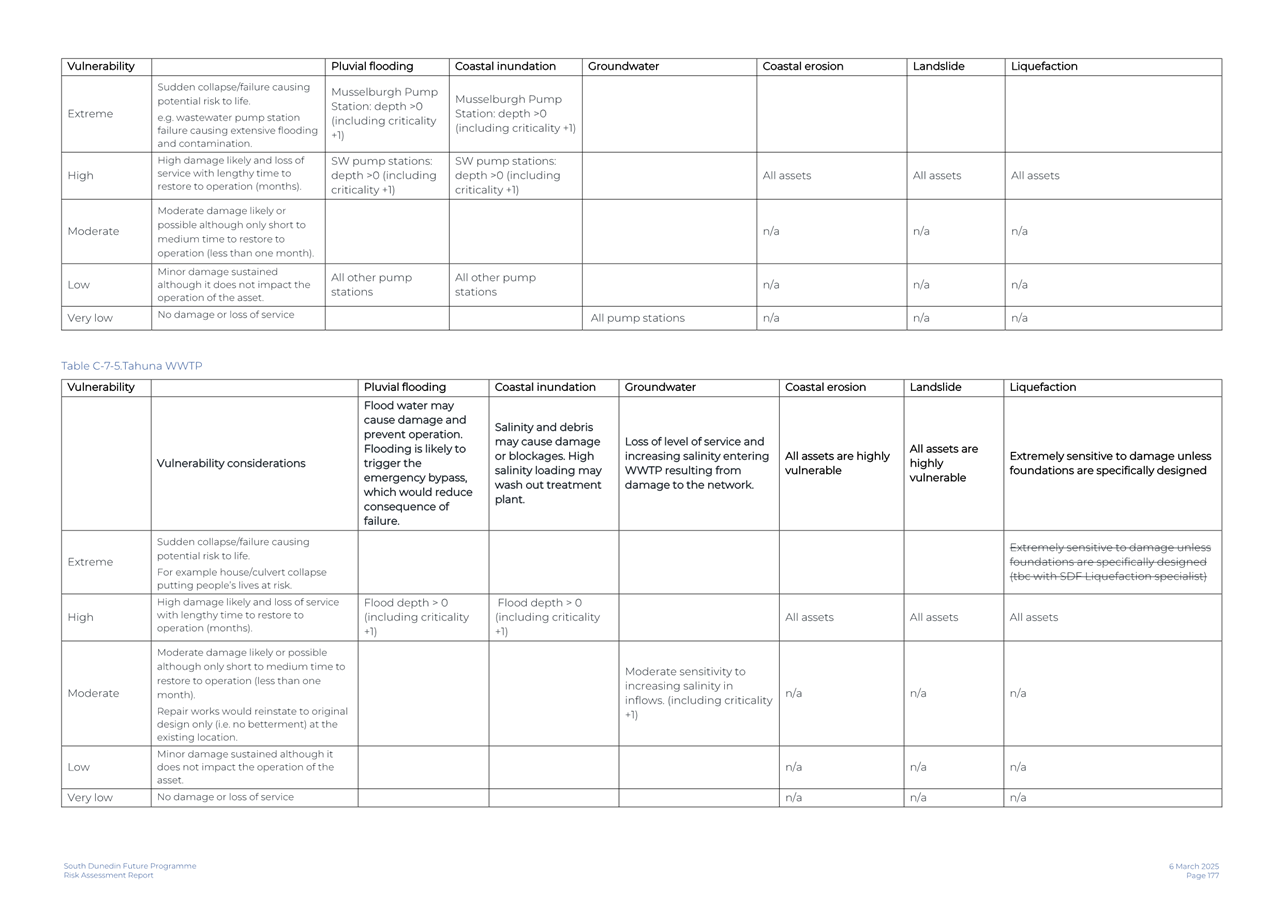
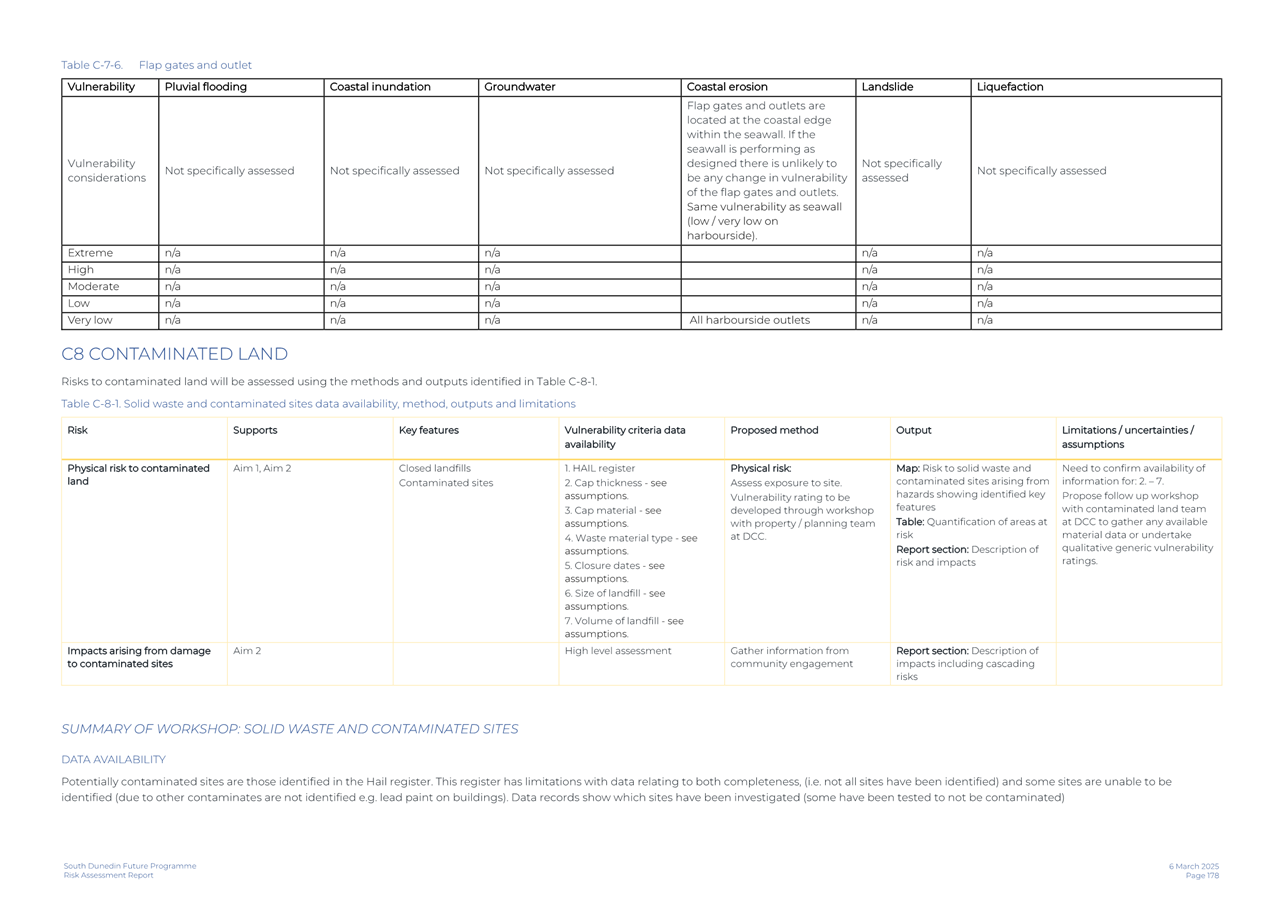
|
South Dunedin Future - Risk Assessment & Potential
Adaptation Futures
Department: Climate and City Growth
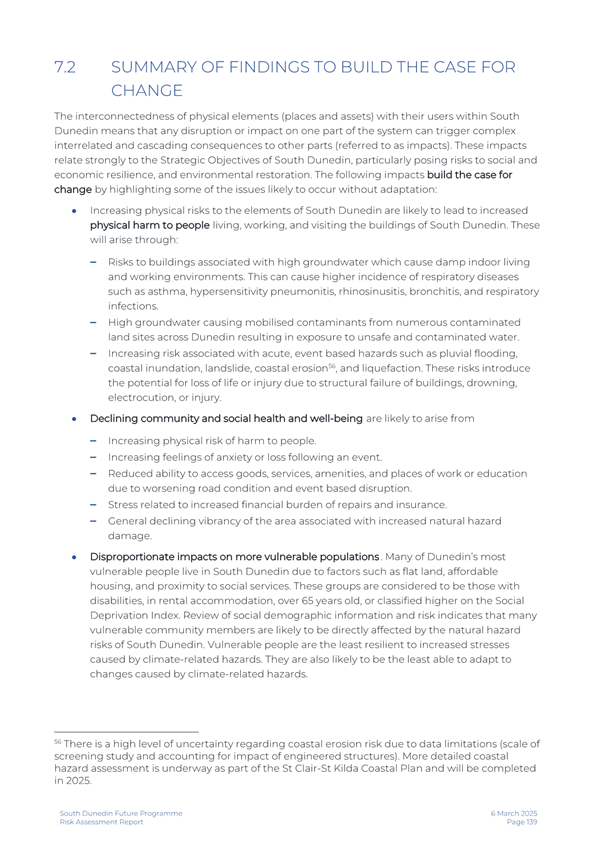
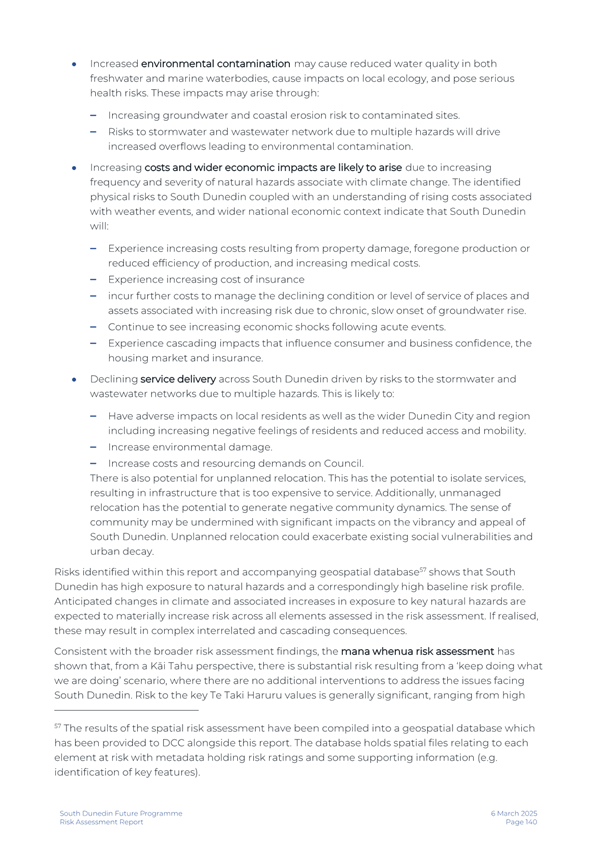
EXECUTIVE SUMMARY
1 The
purpose of the paper is to present technical reports relating to the Risk
Assessment and Potential Adaptation Futures for South Dunedin, and to seek
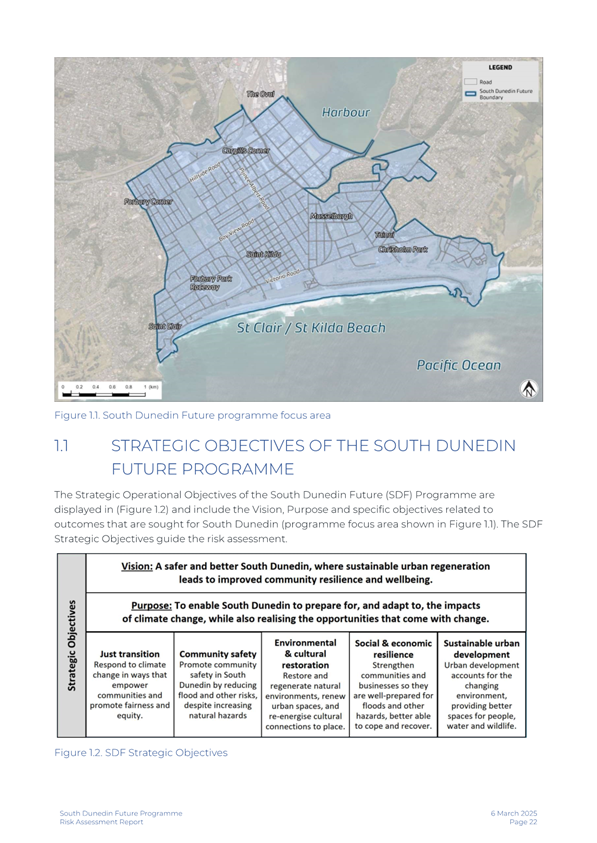
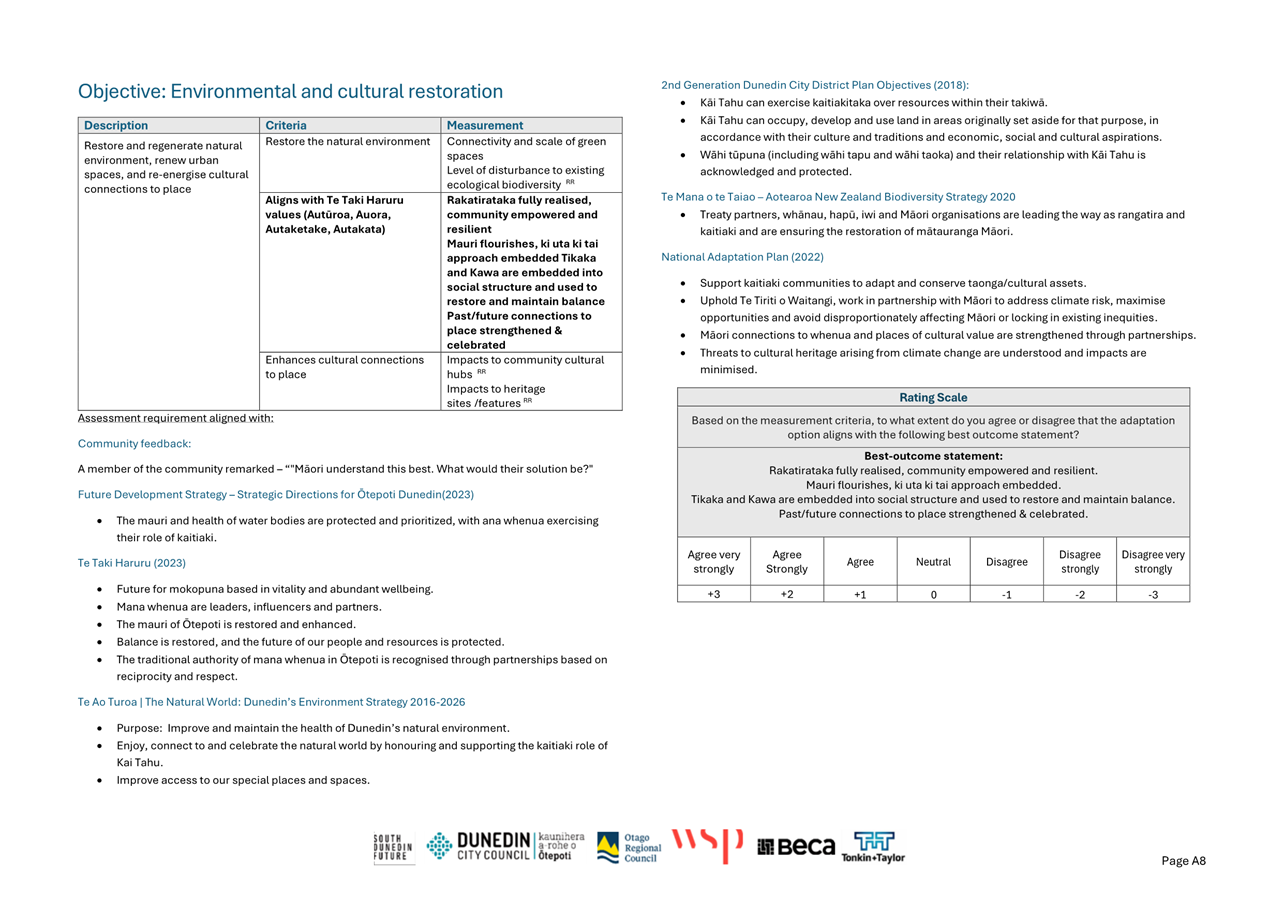
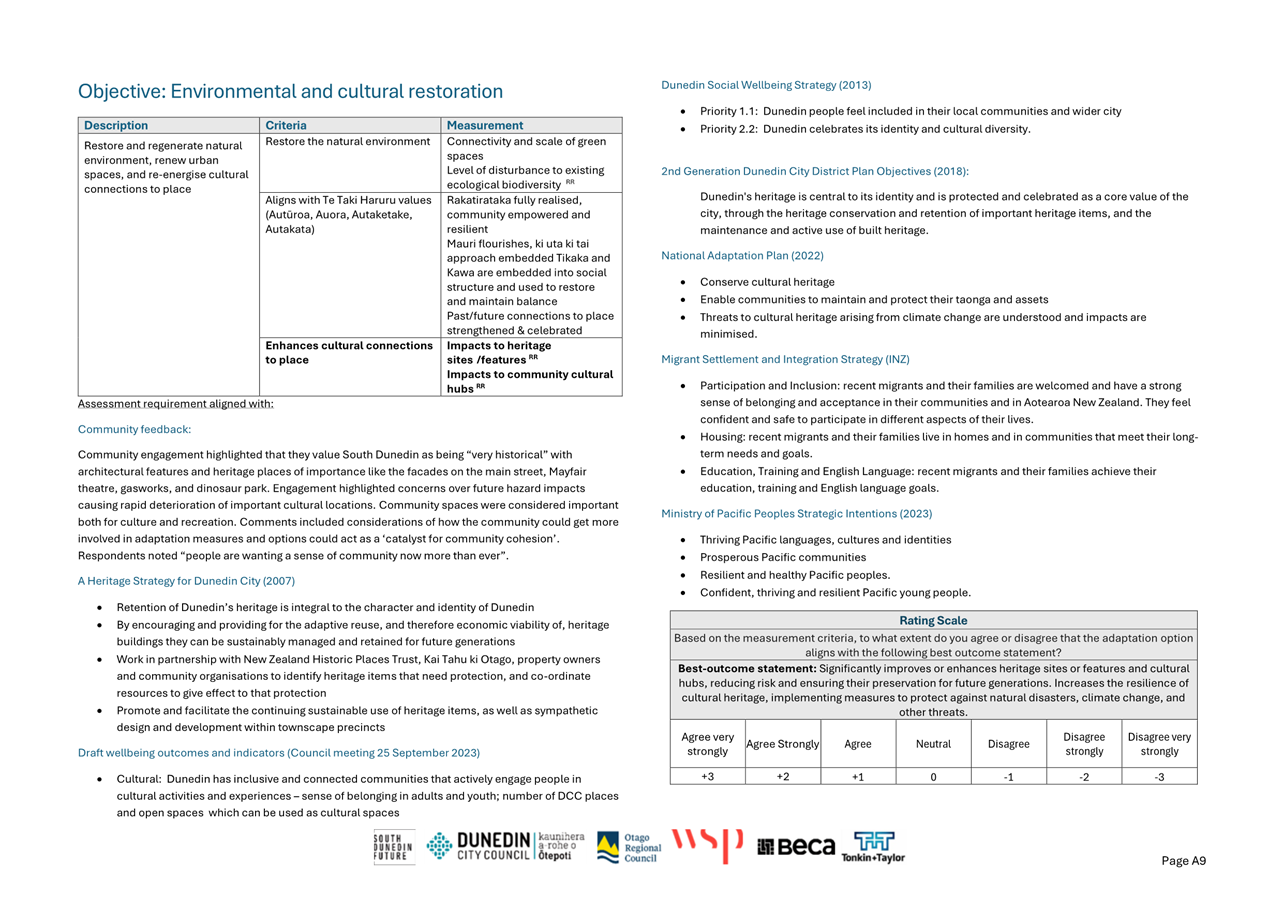
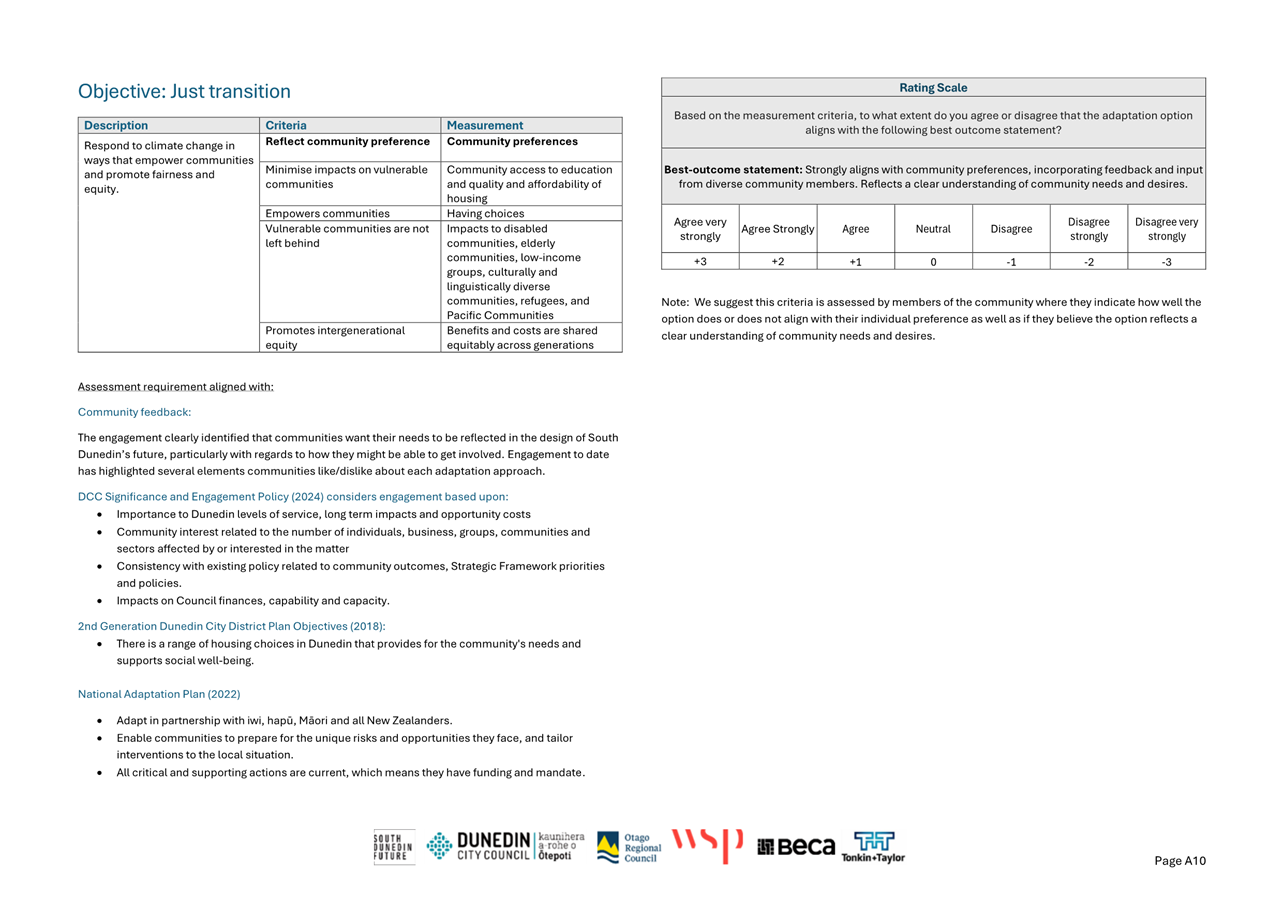
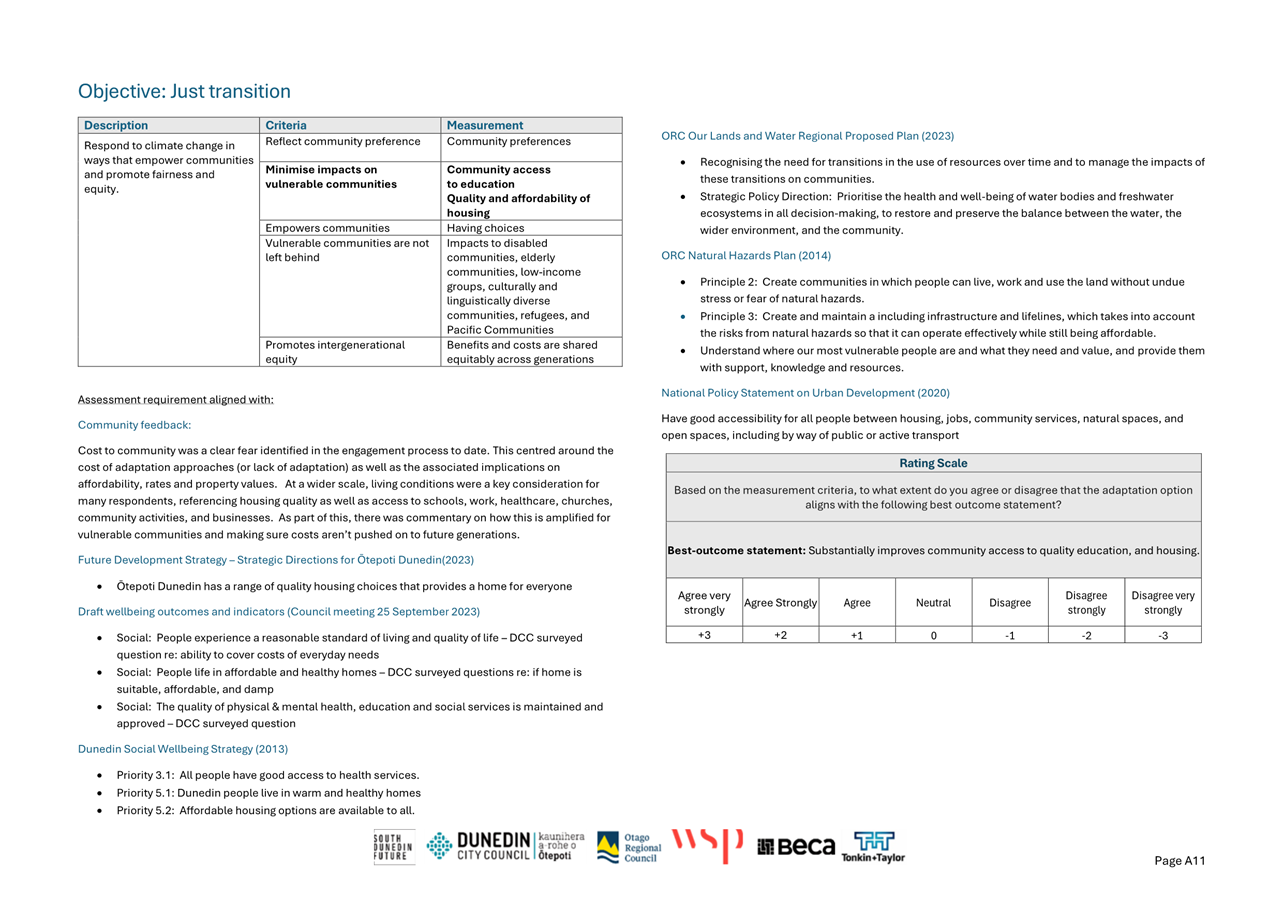
Council endorsement to engage with affected communities and other stakeholders.
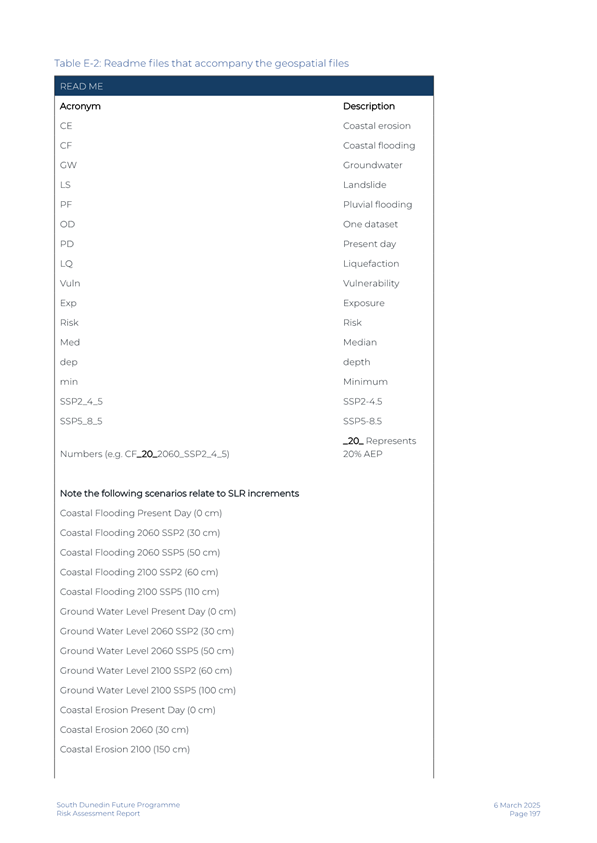
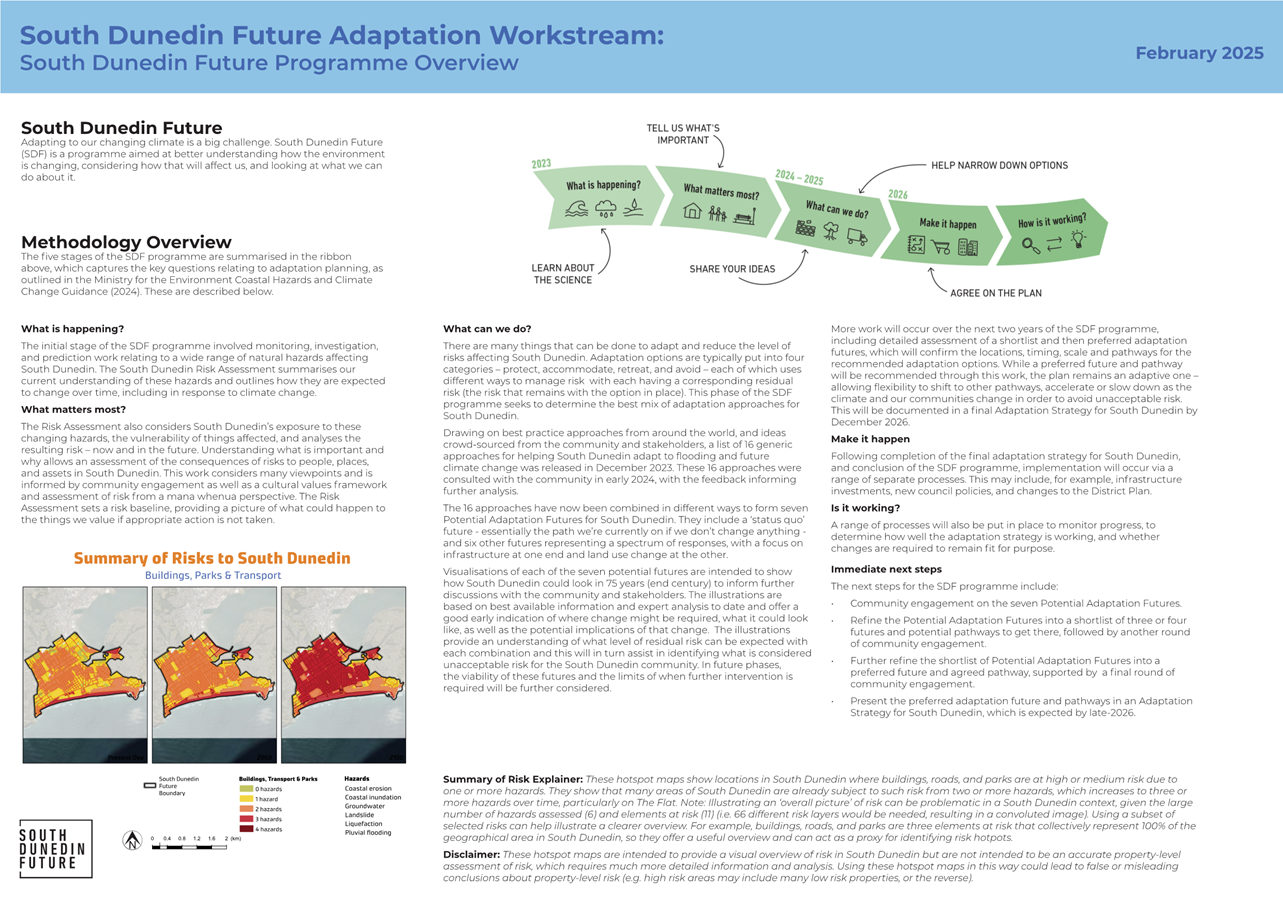
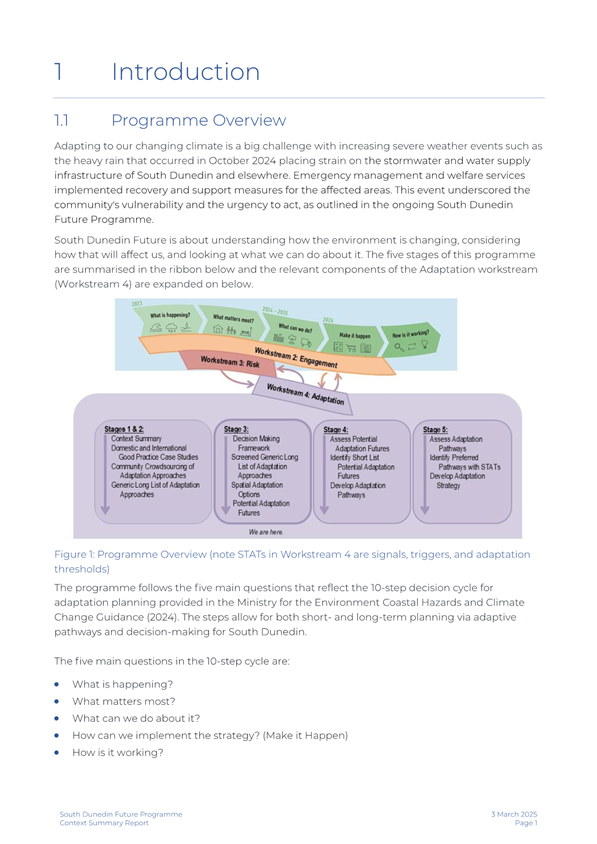
2 The
South Dunedin Future (SDF) programme is a joint initiative between the Dunedin
City Council (DCC) and Otago Regional Council (ORC) to develop a climate change
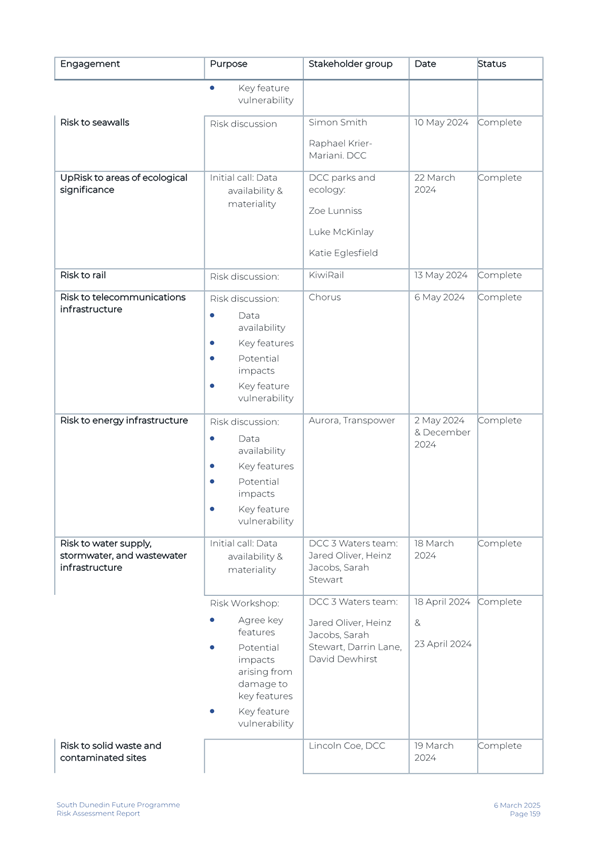
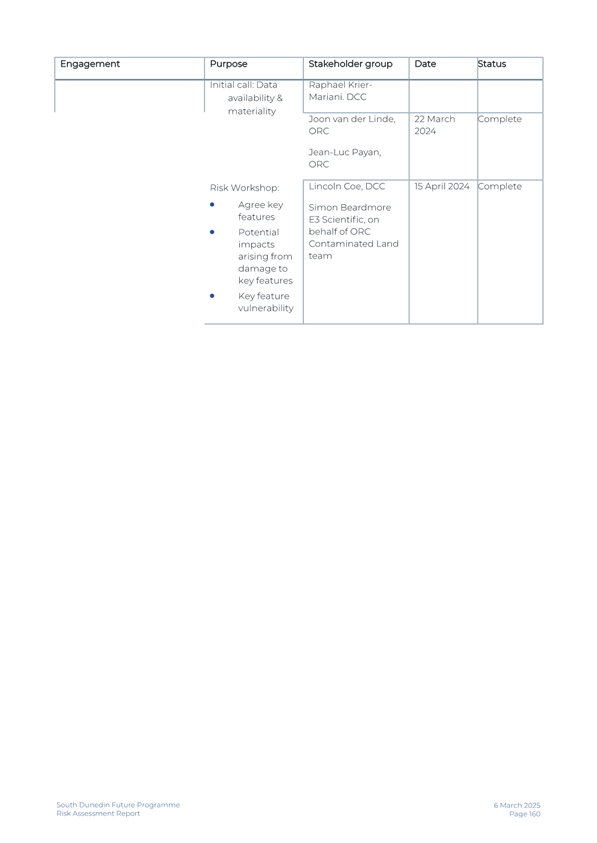
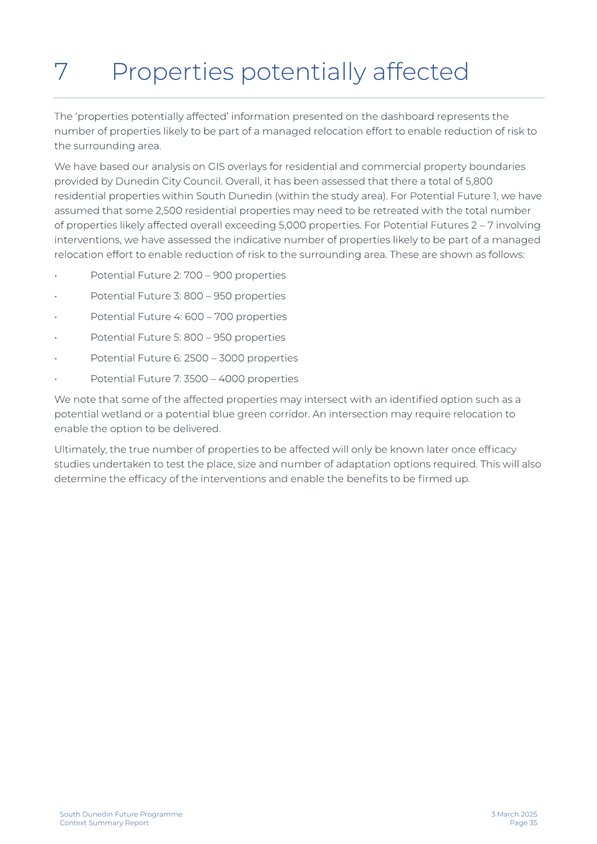
adaptation plan for South Dunedin. The programme vision
is “a safer and better South Dunedin, where sustainable urban
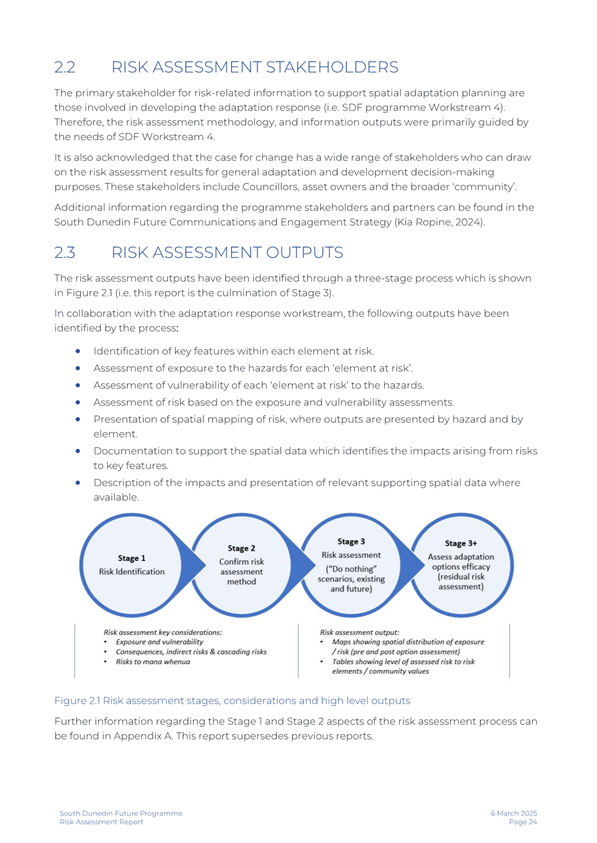
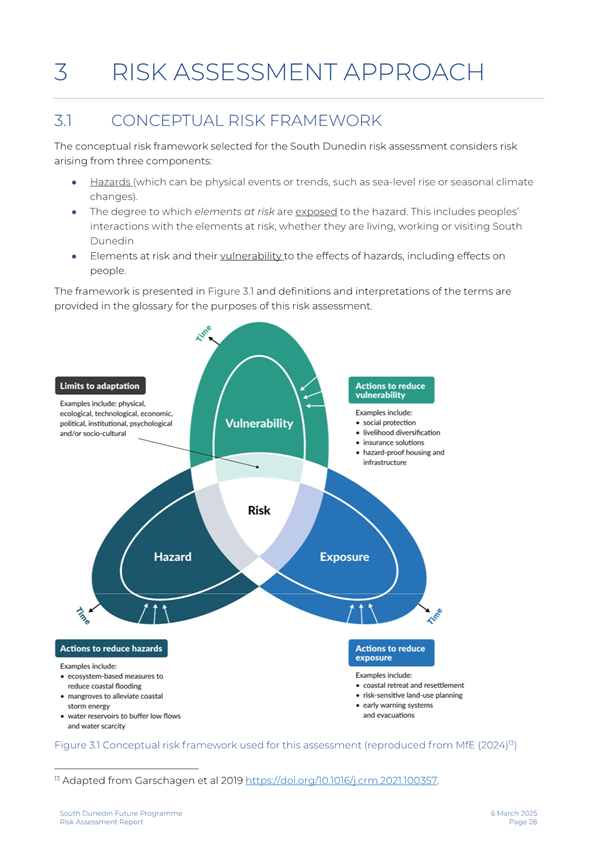
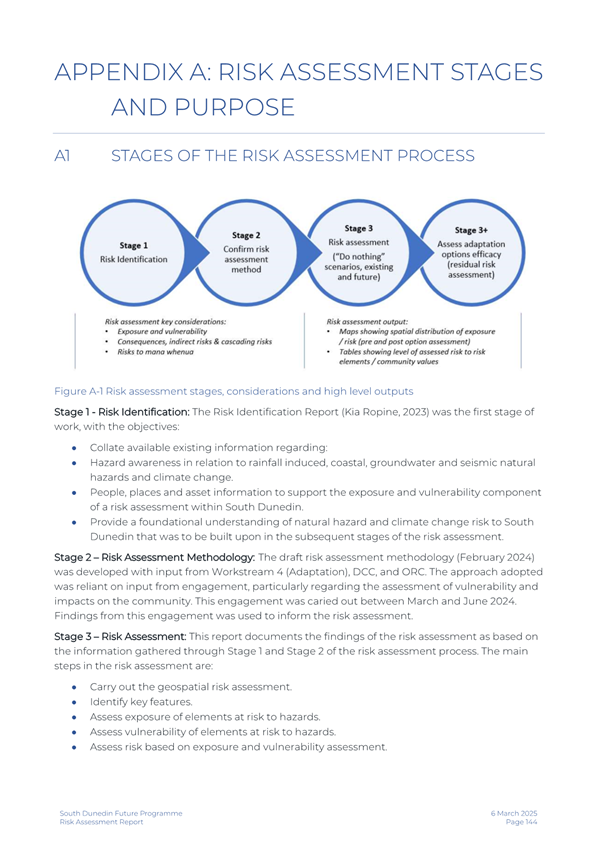
regeneration leads to improved community resilience and wellbeing”.
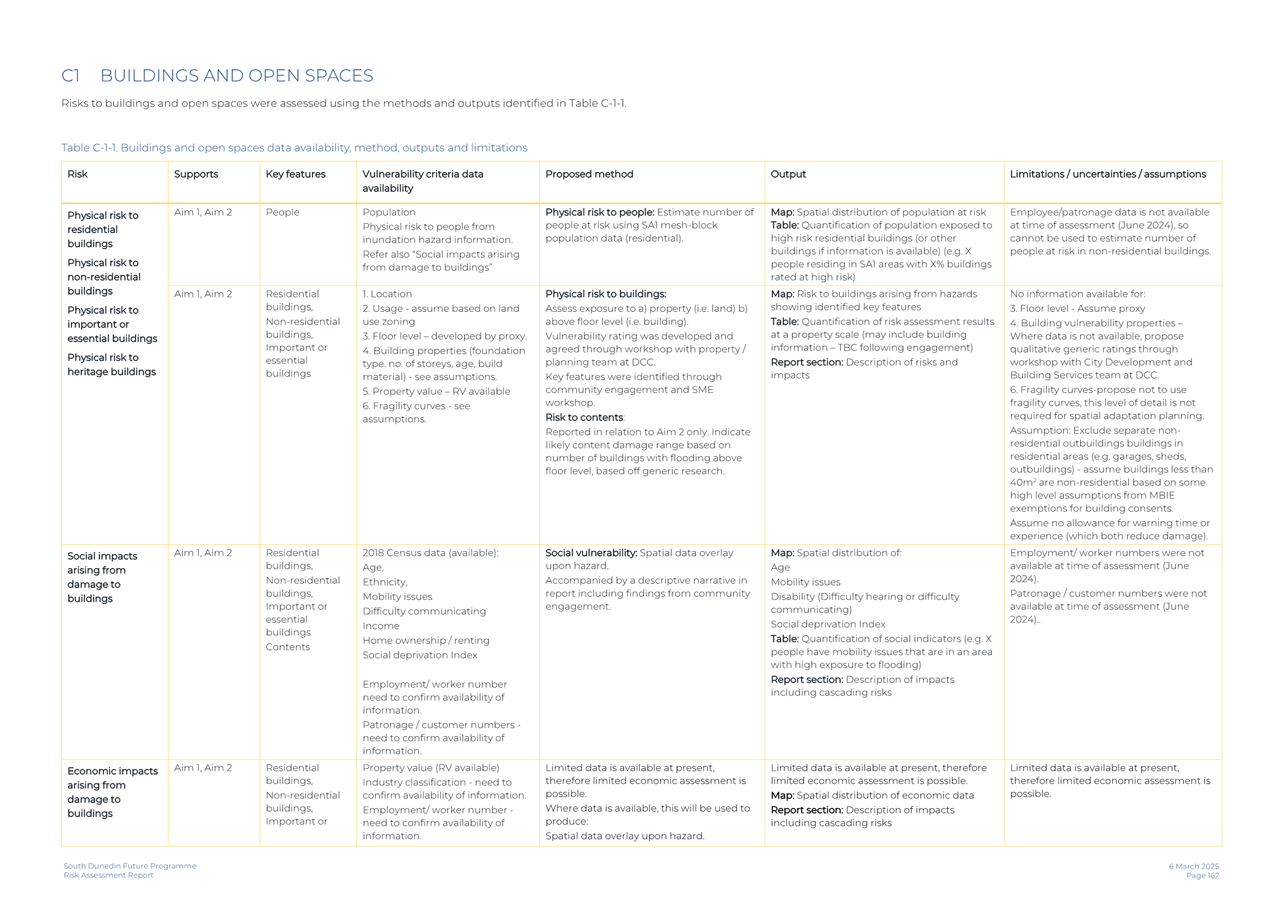
The programme remains on track to deliver the final climate adaptation plan by
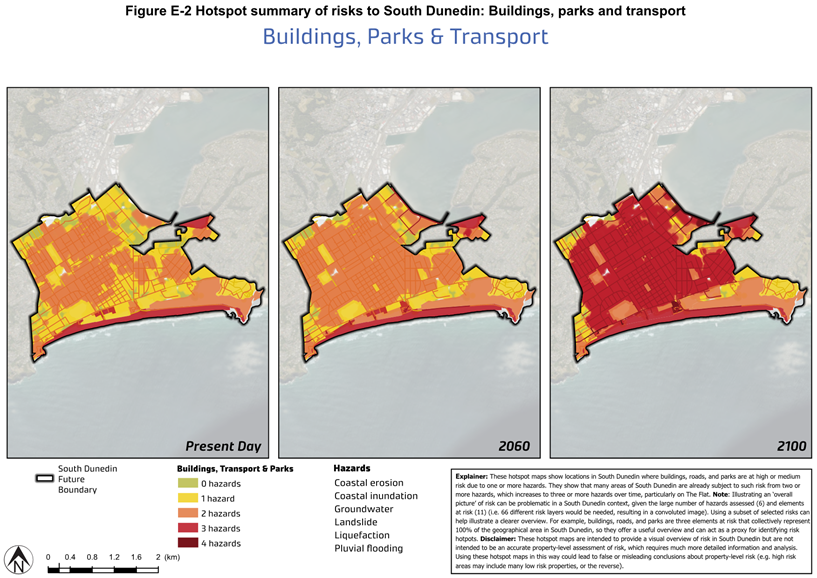
the end of 2026.
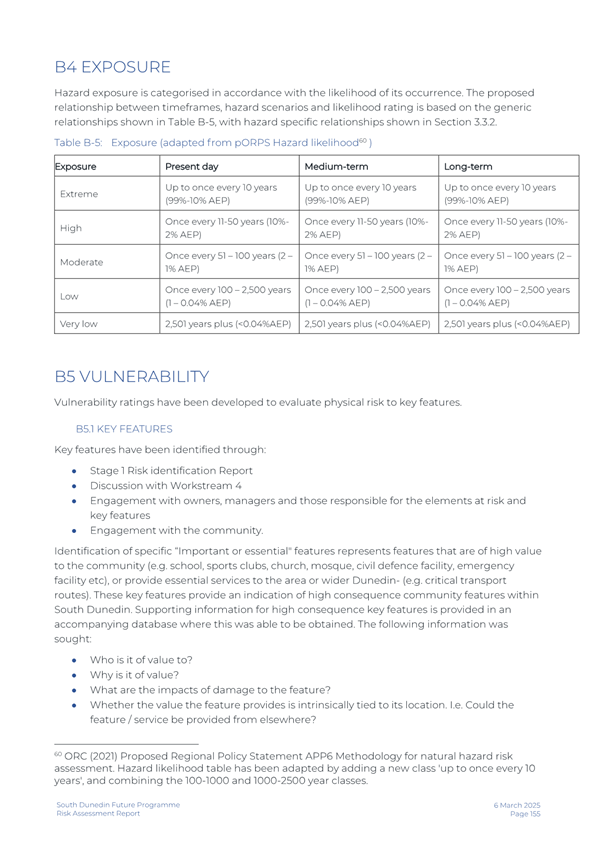
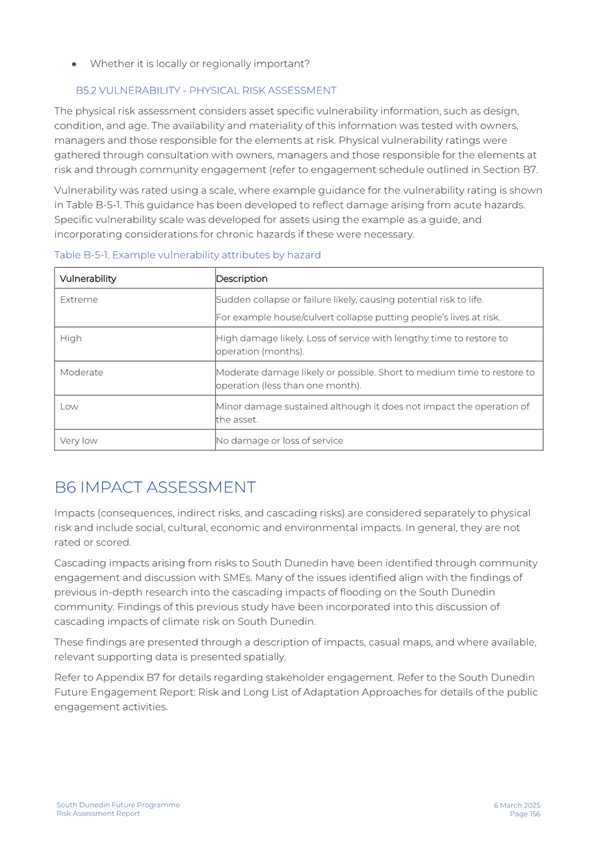
3 The
attached technical reports represent a major milestone for the SDF programme
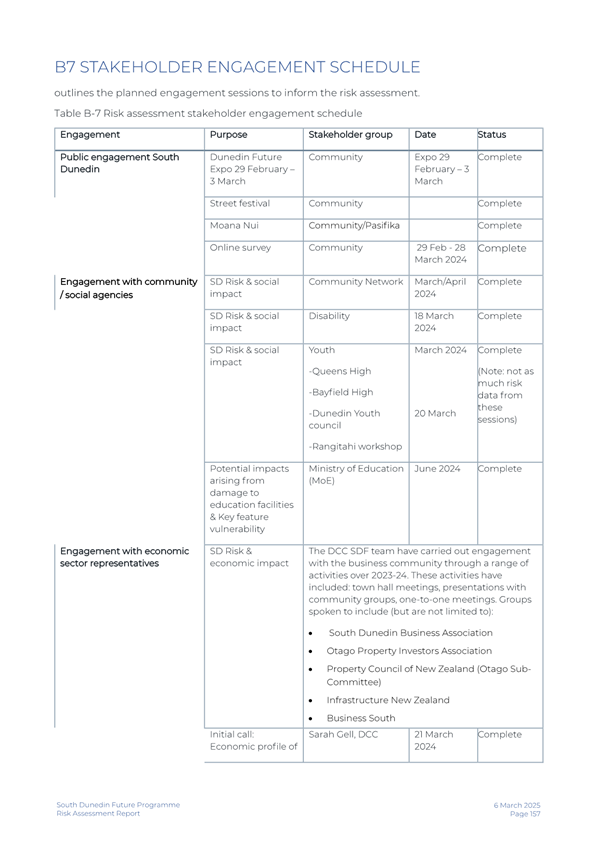
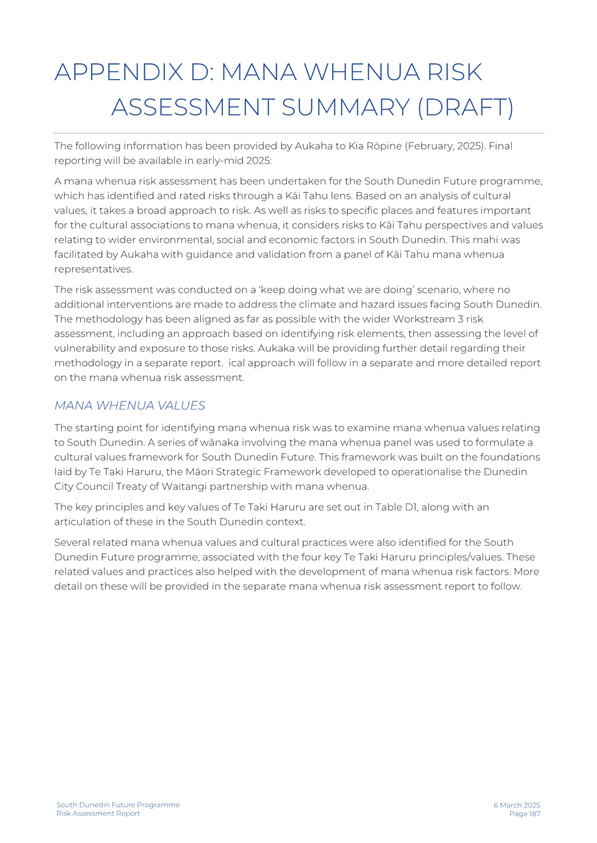
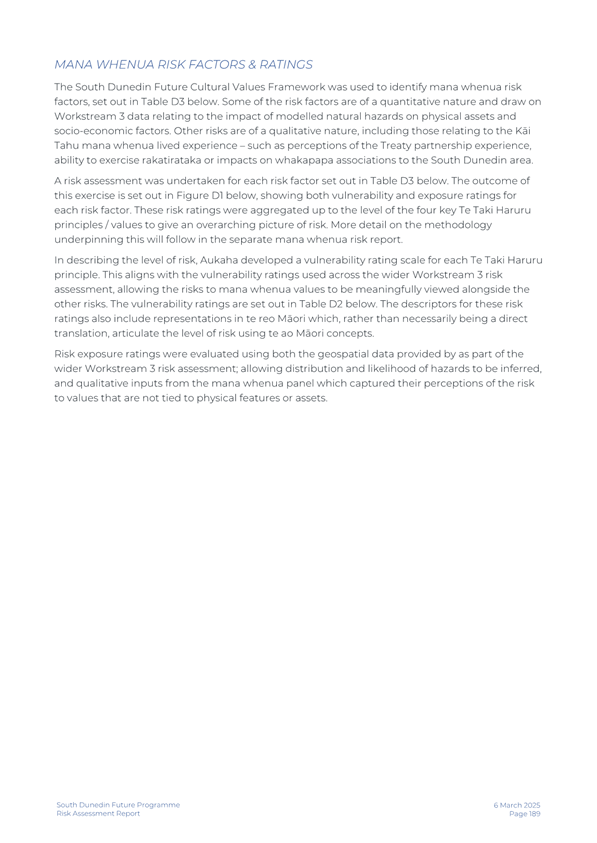
and a significant step in the process of developing a climate adaptation plan
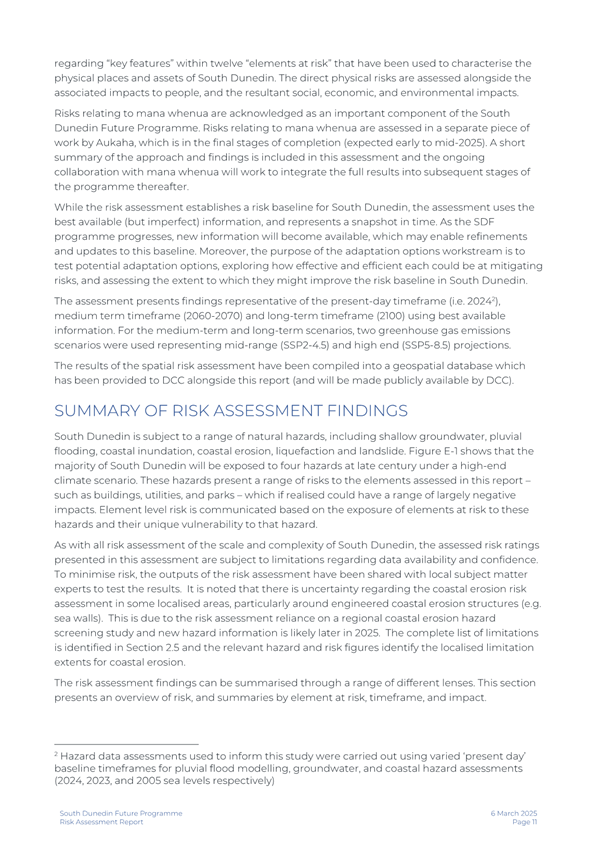
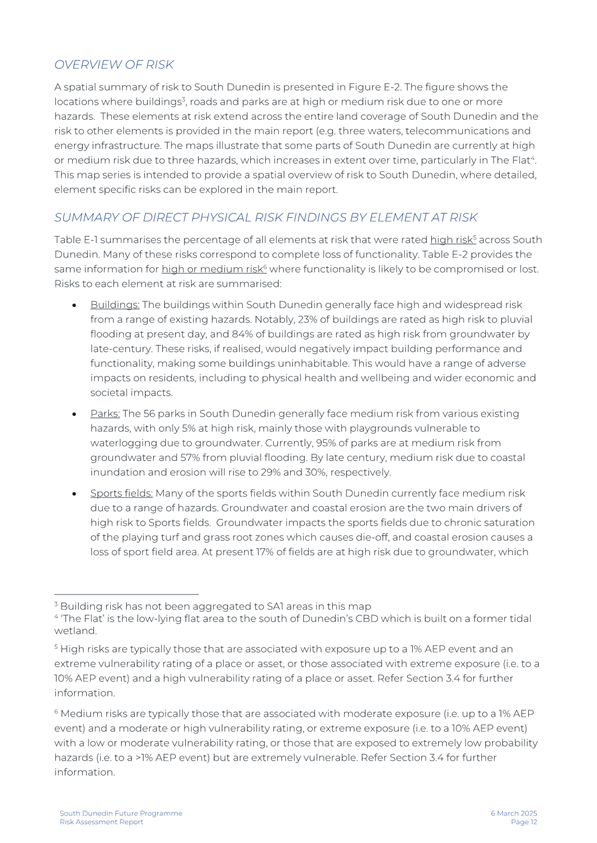
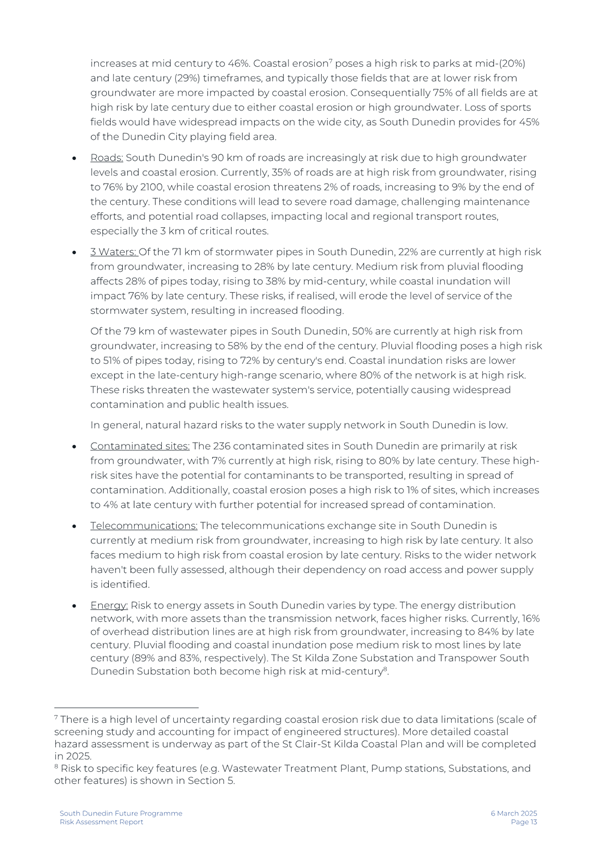
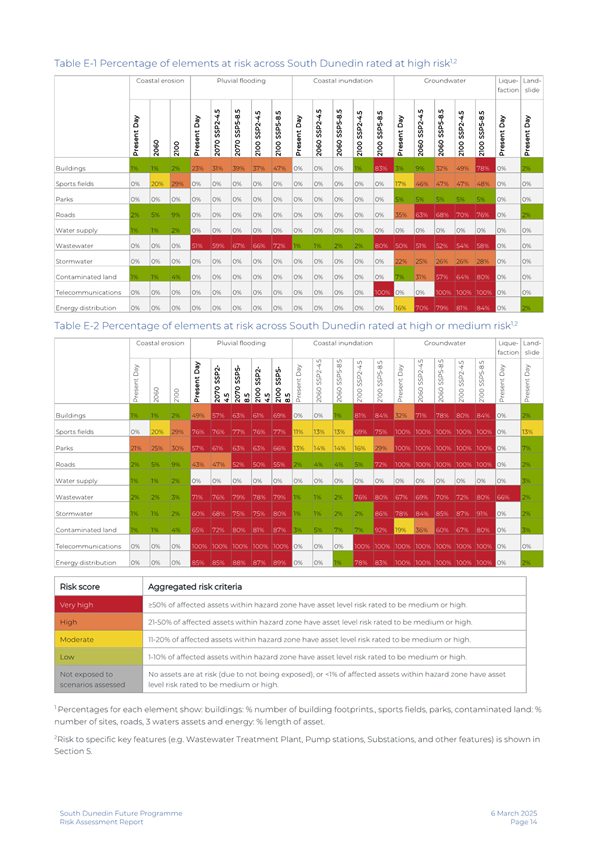
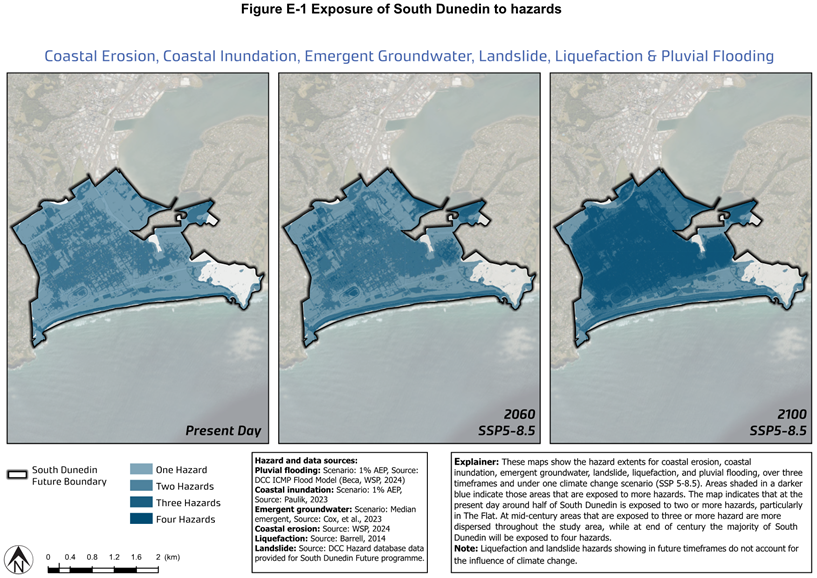
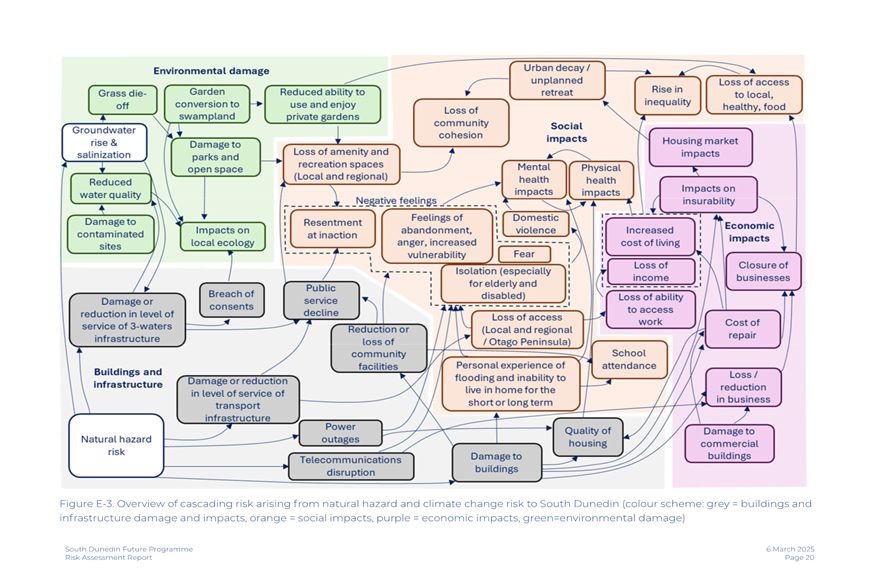
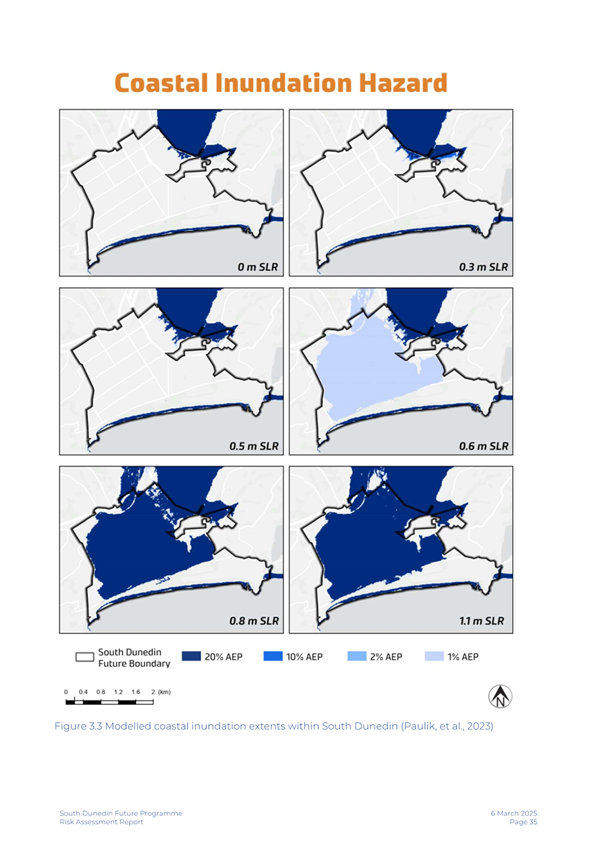
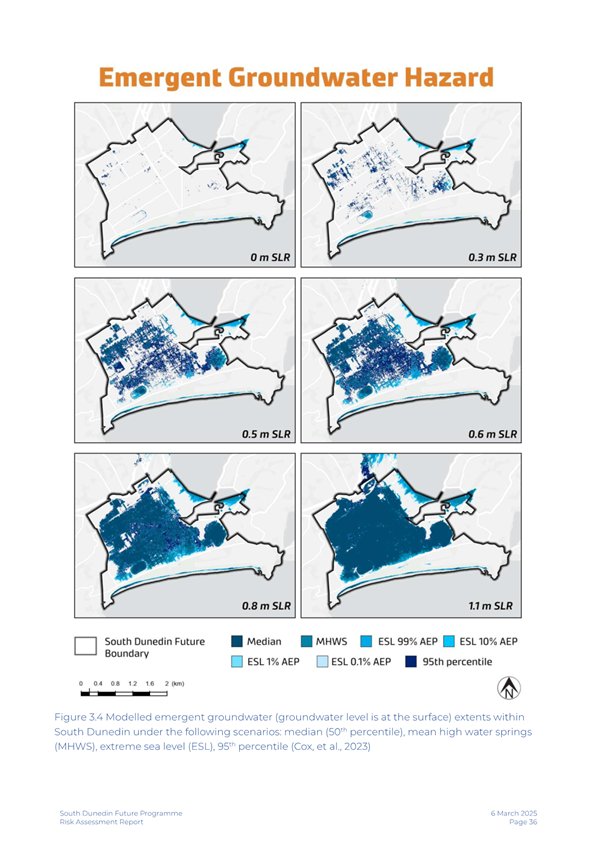
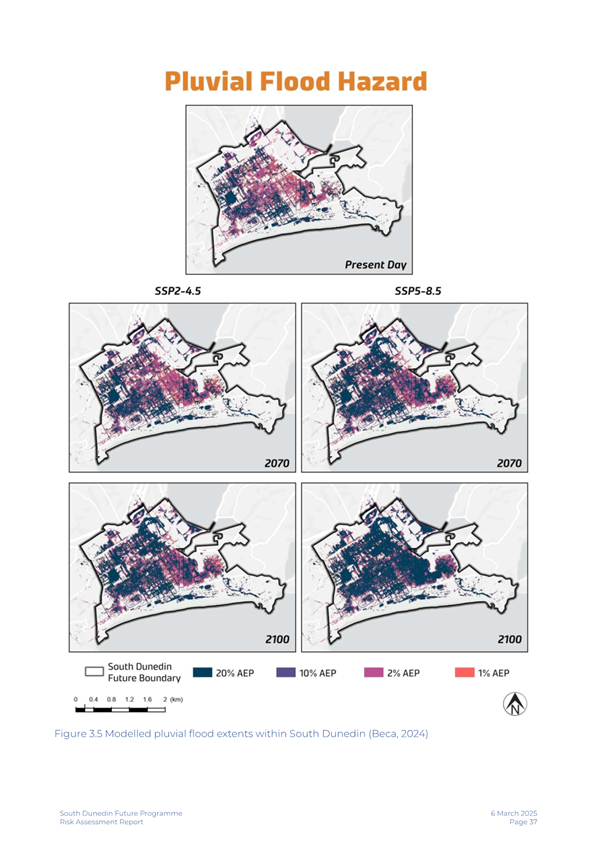
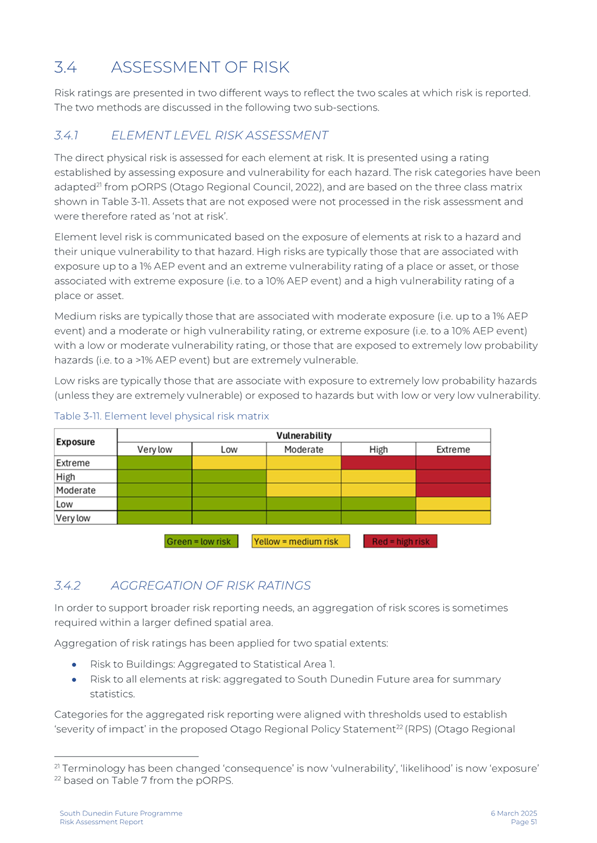
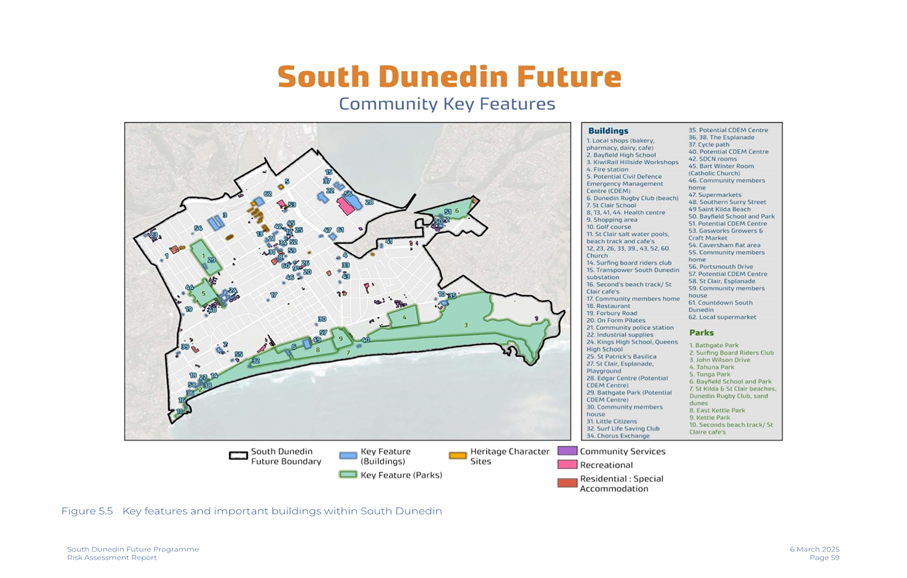
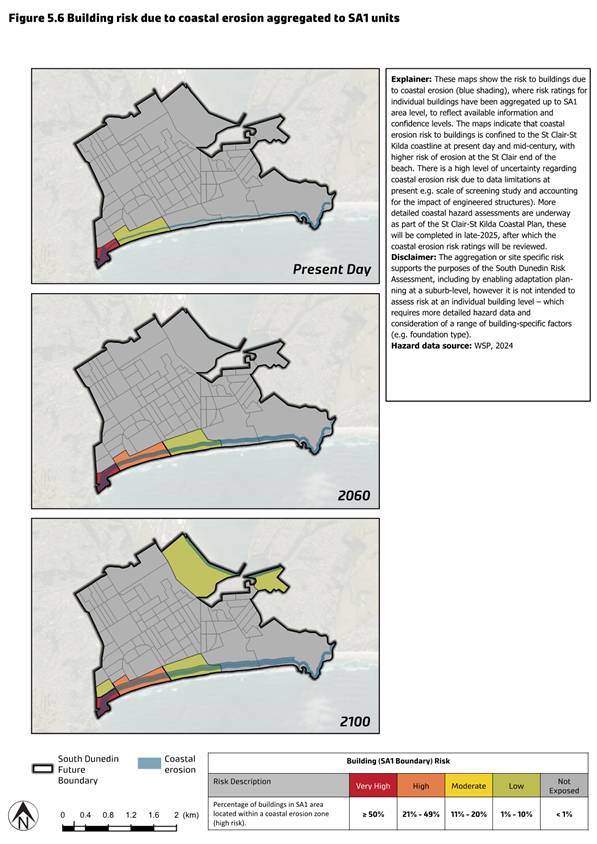
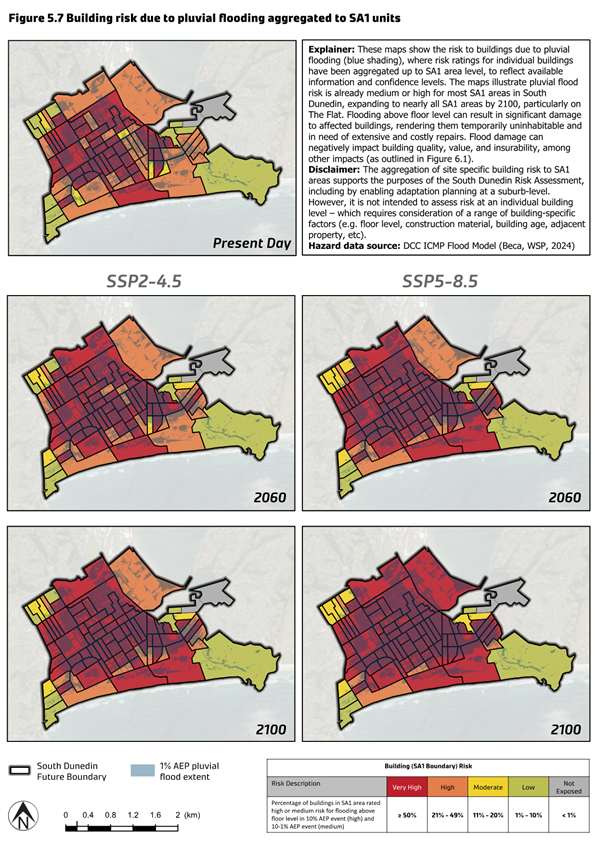
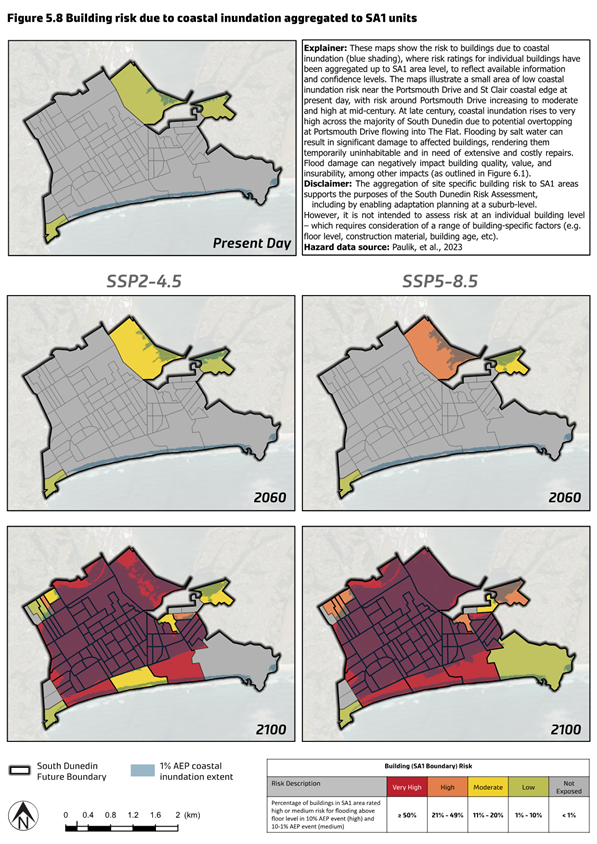
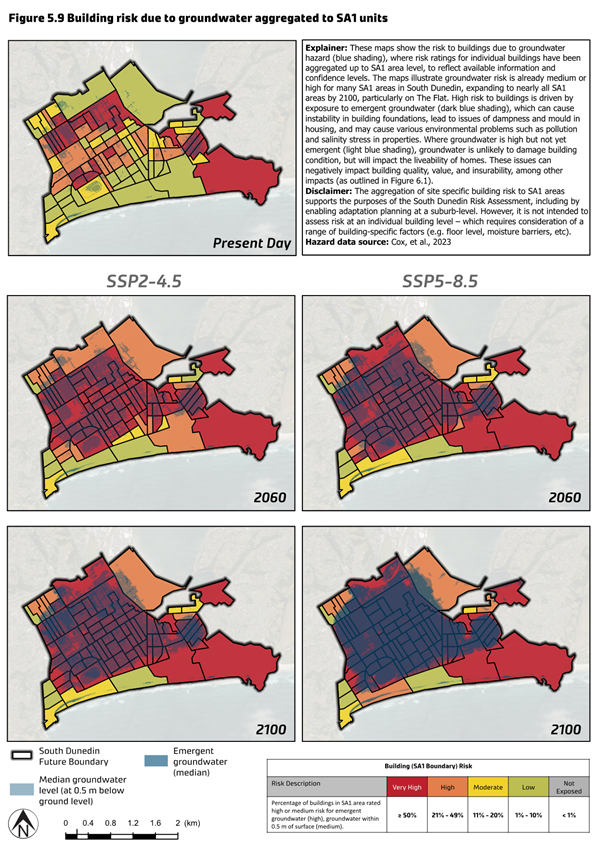
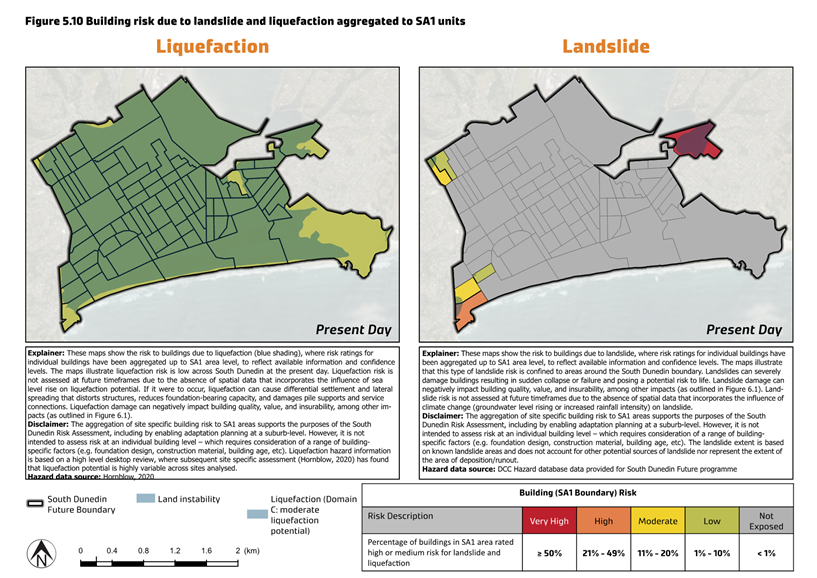
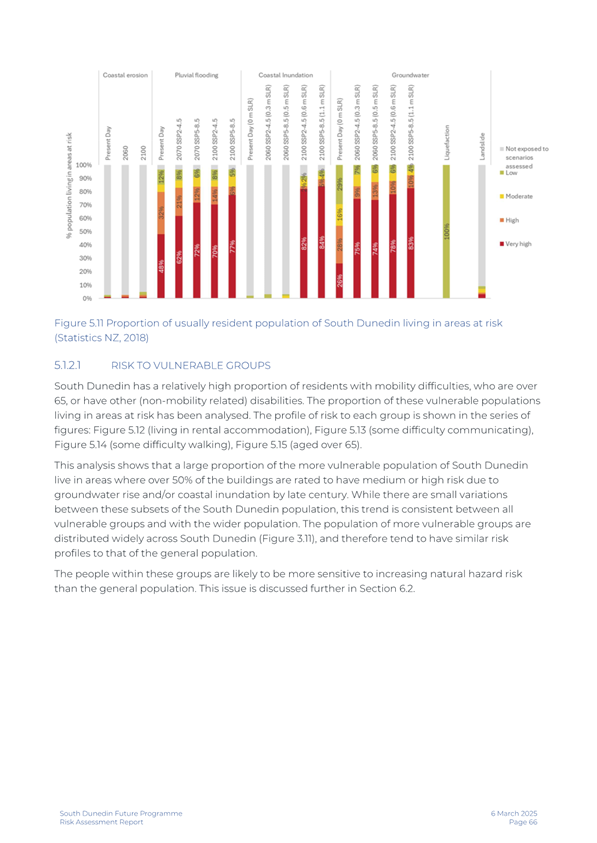
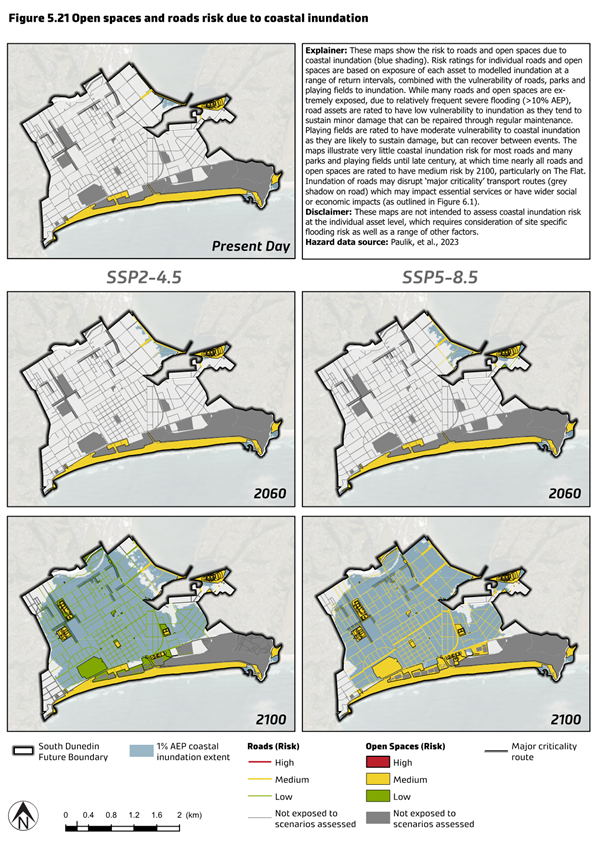
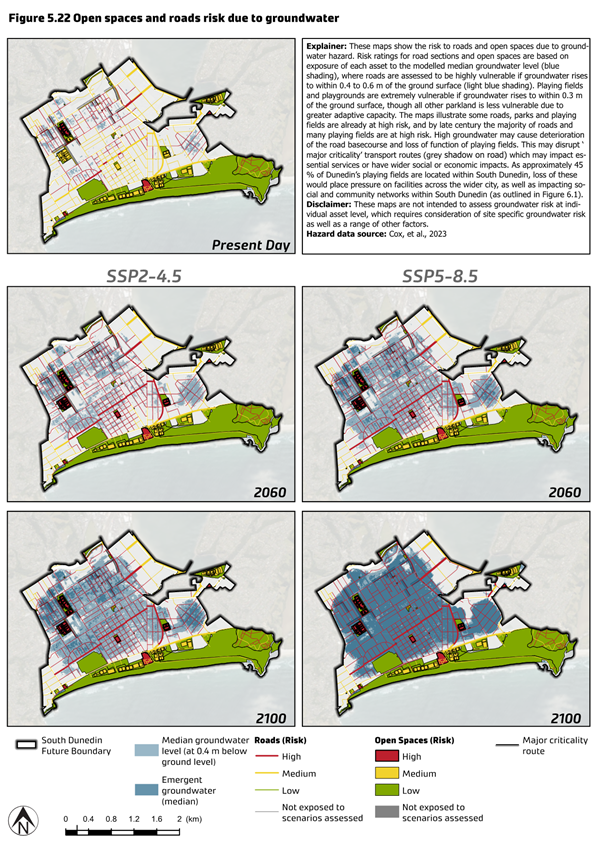
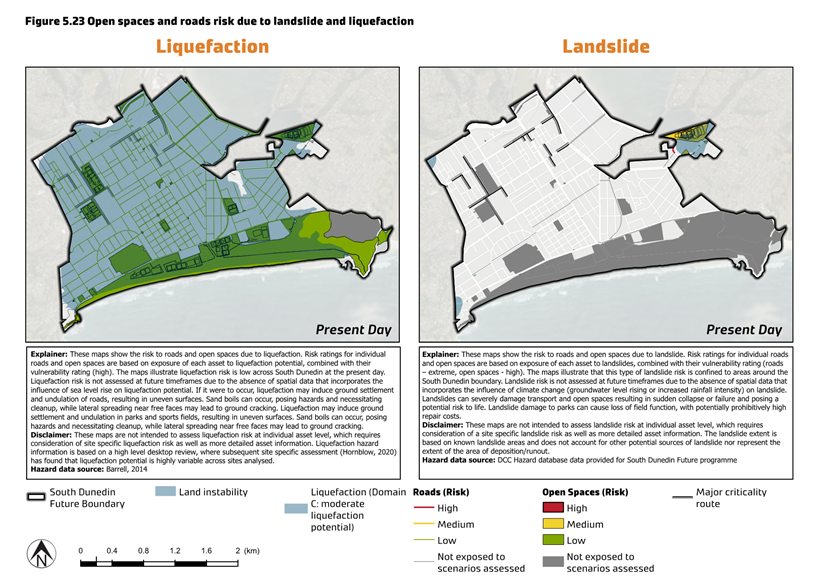
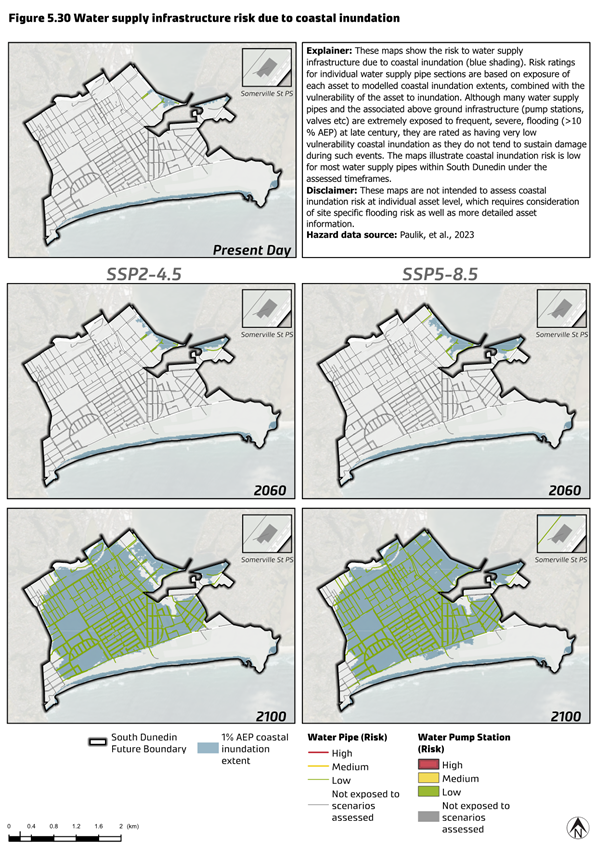
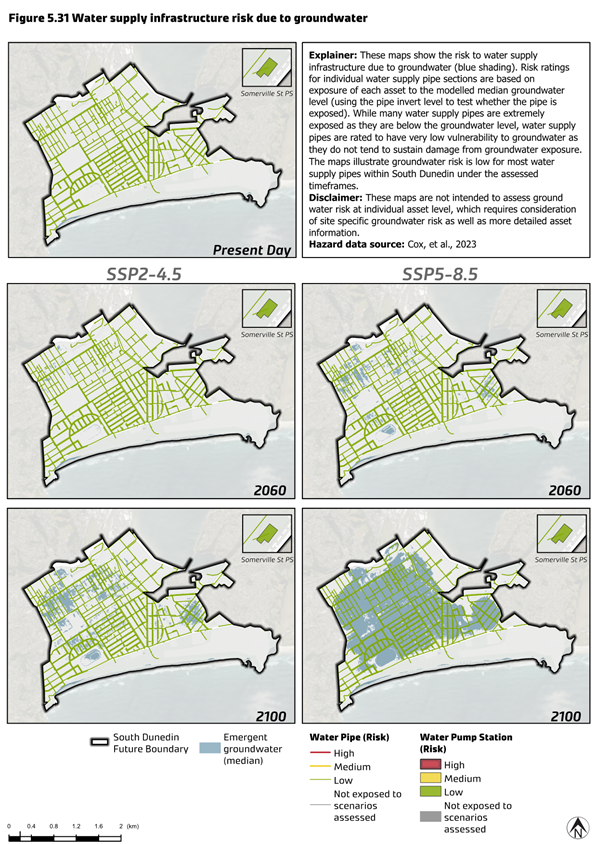
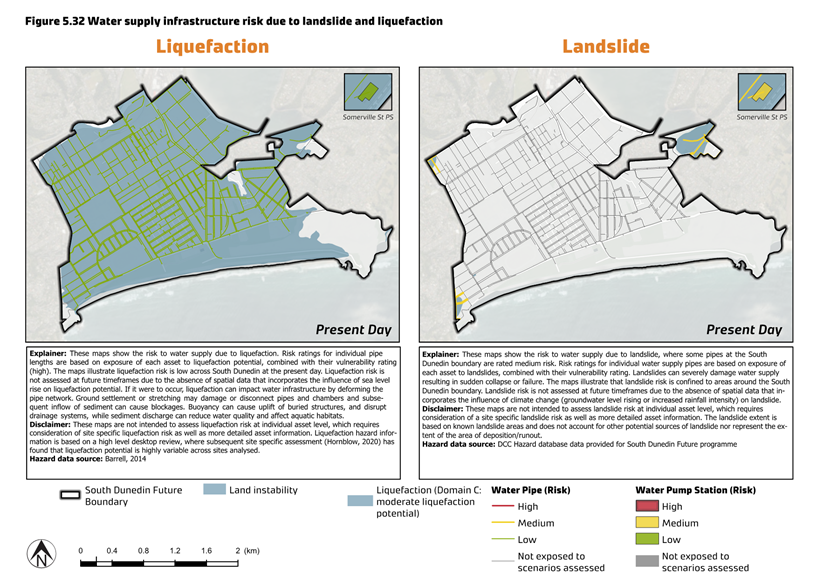
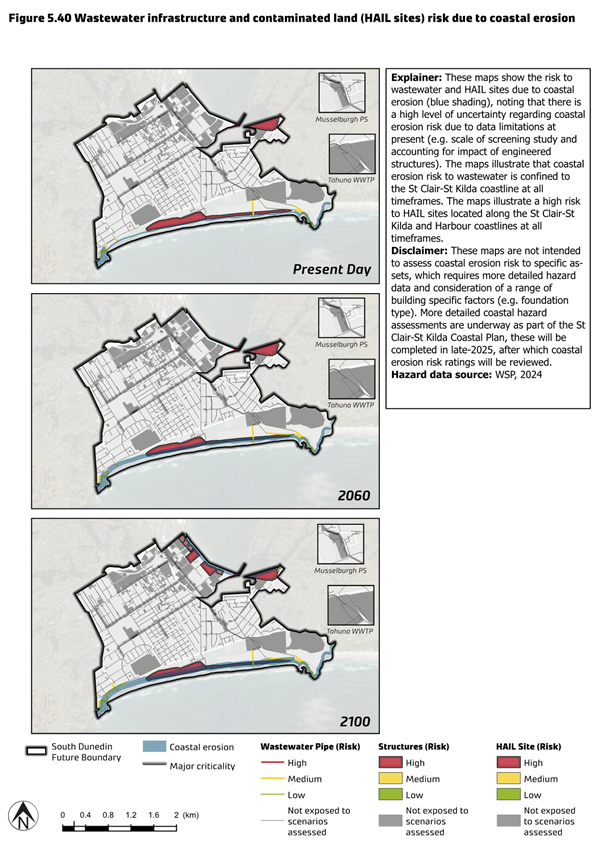
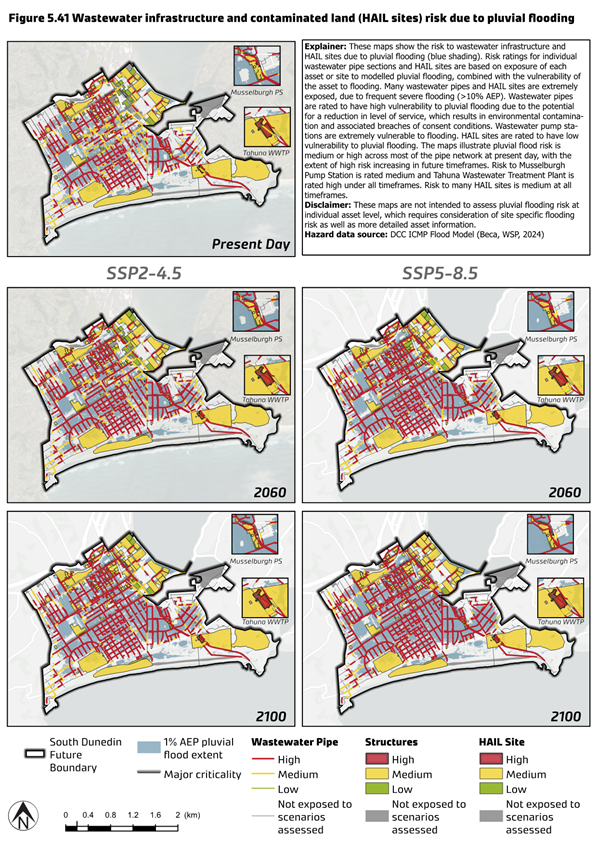
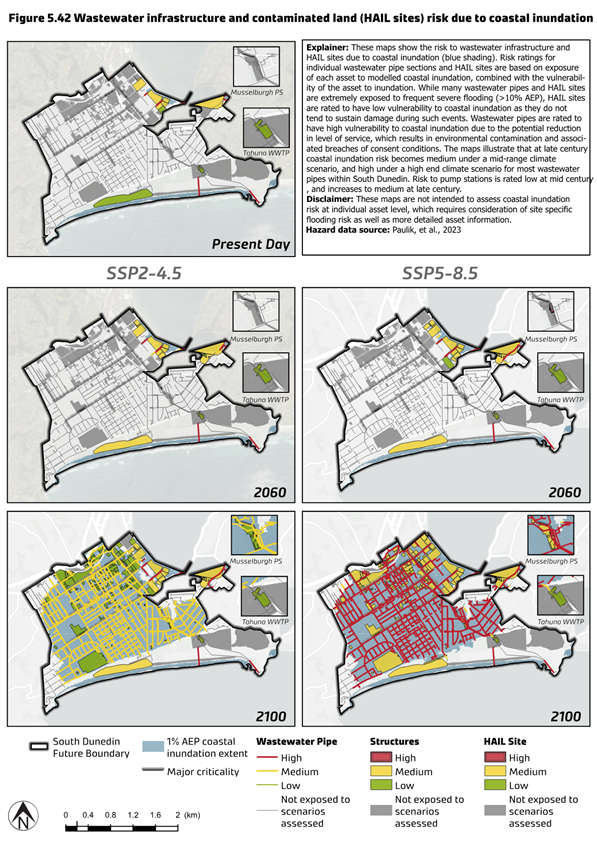
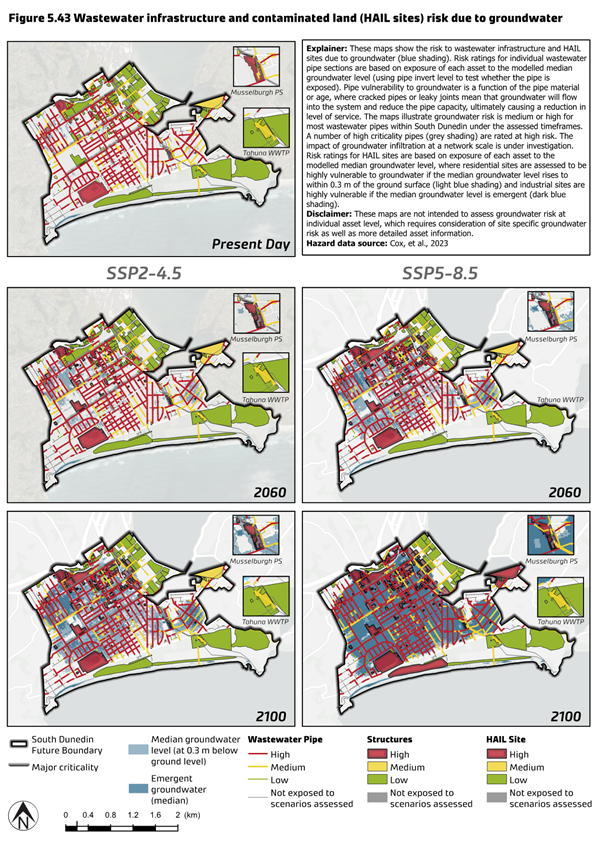
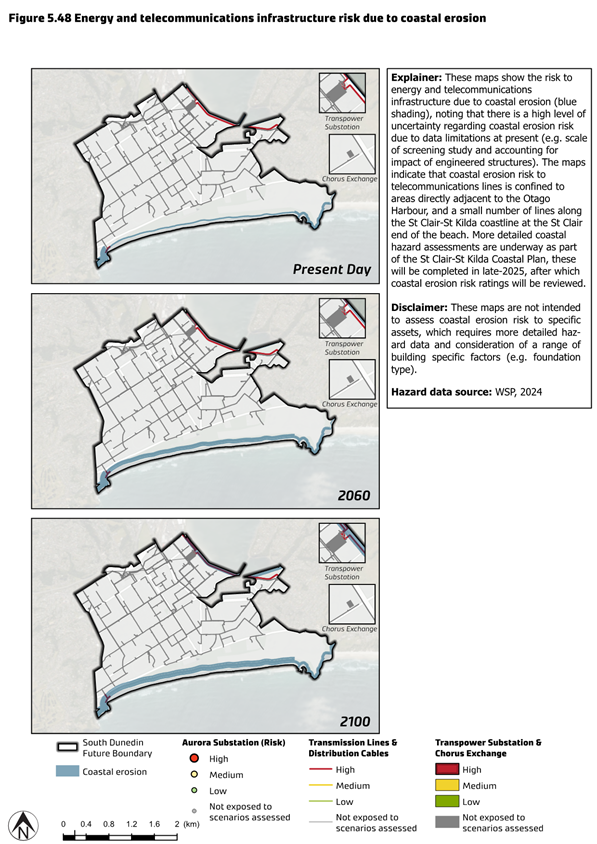
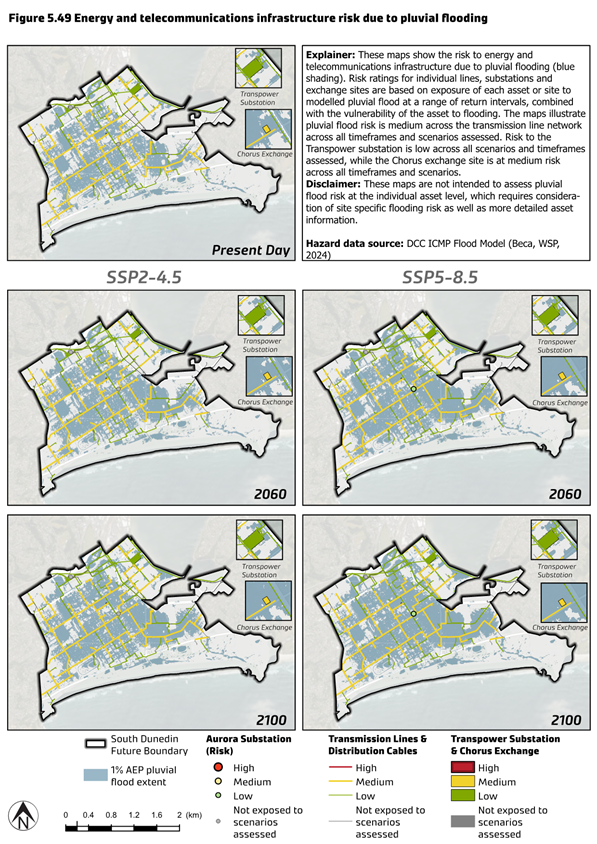
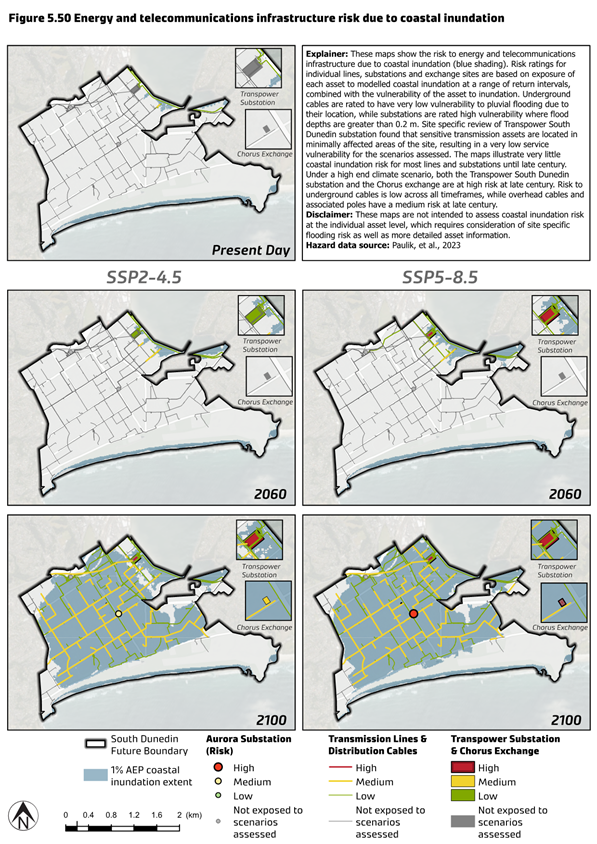
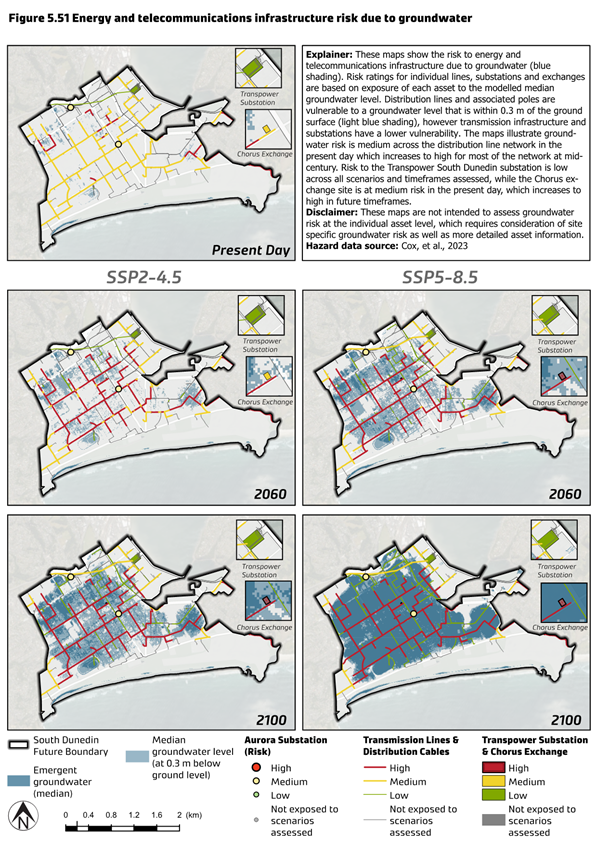
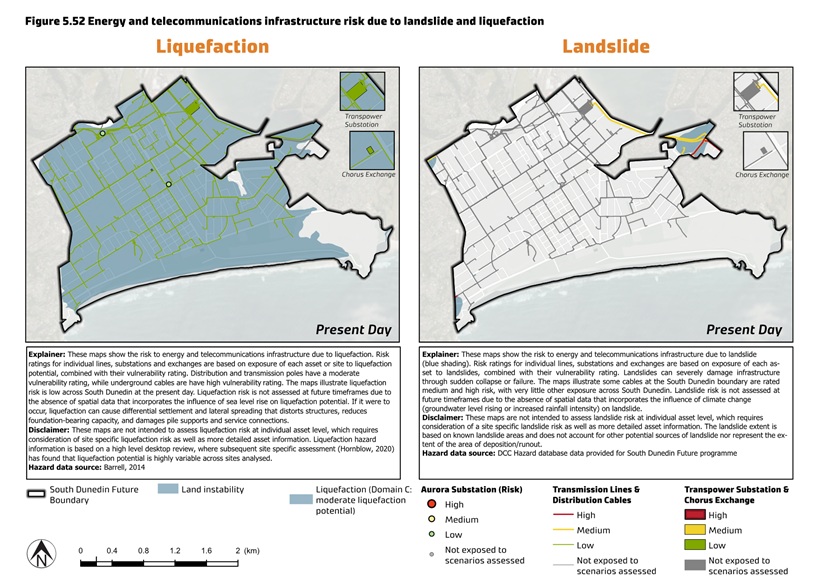
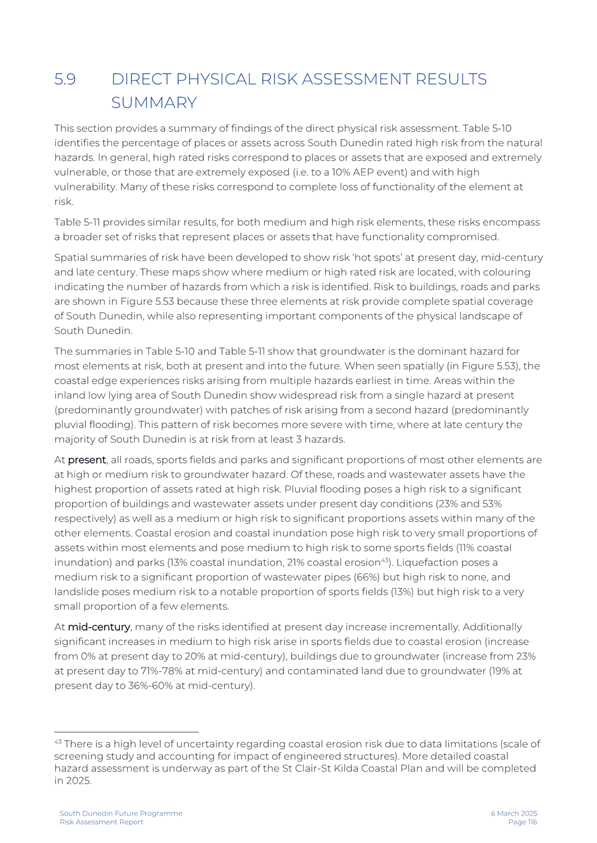
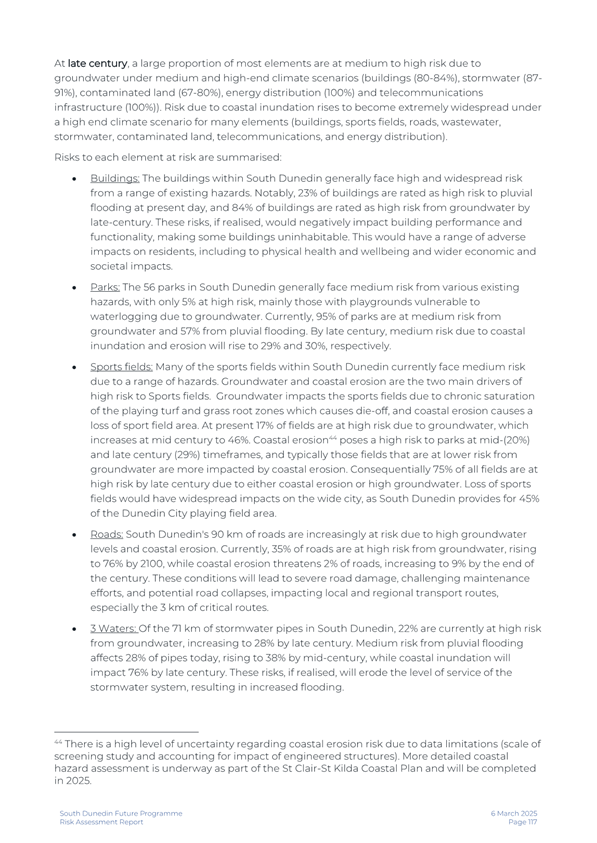
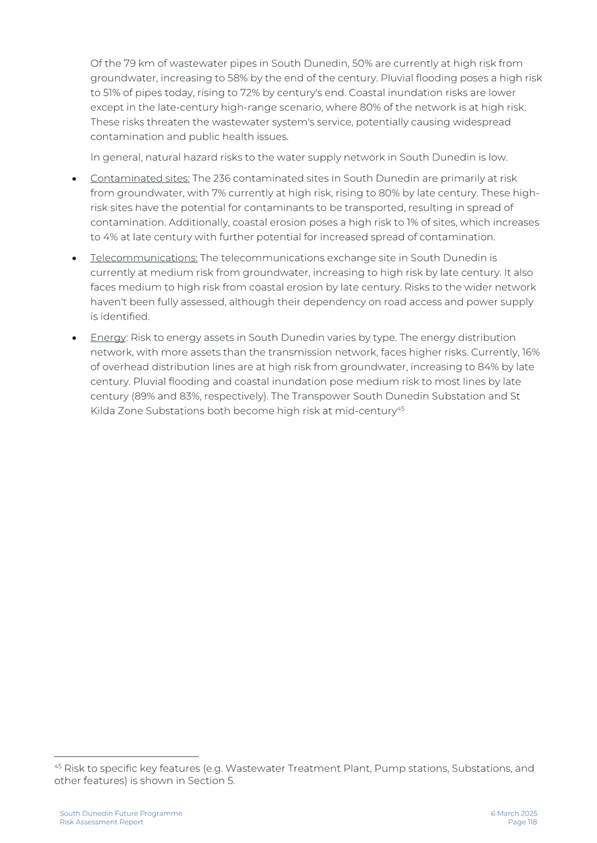
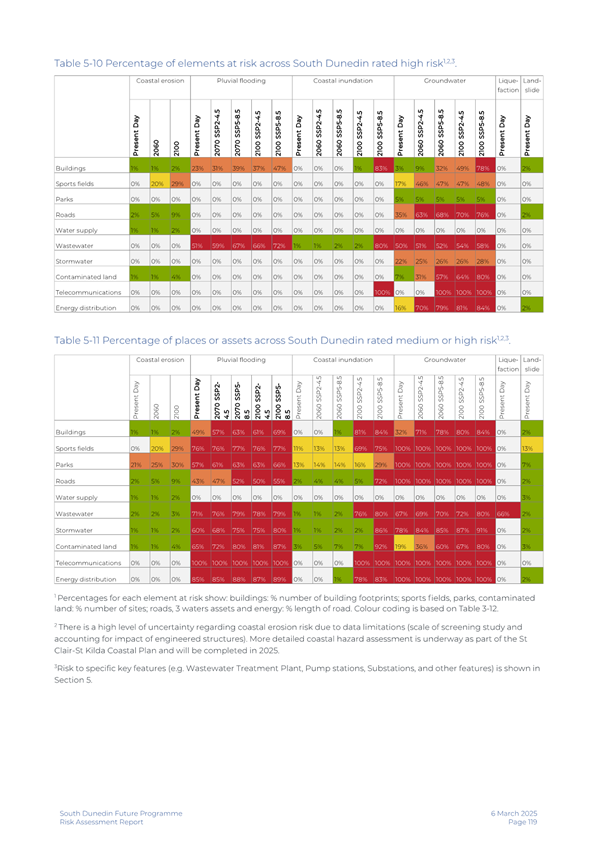
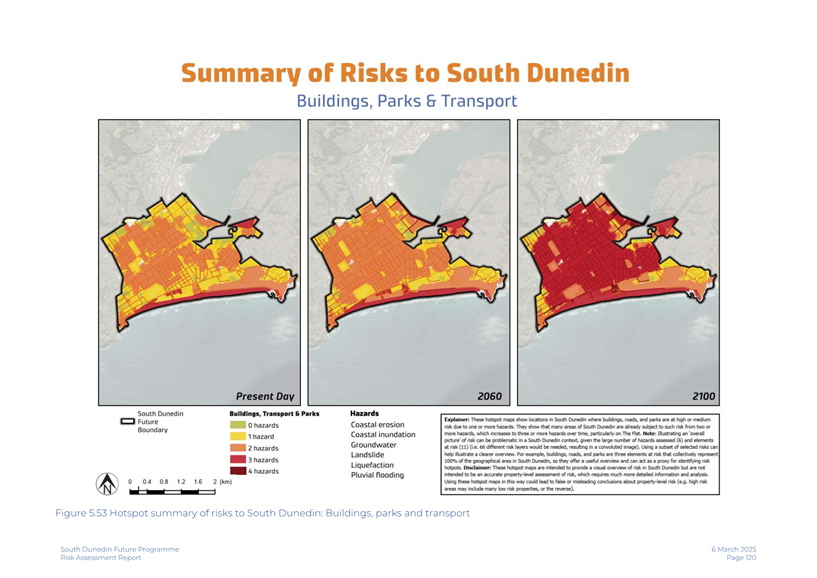
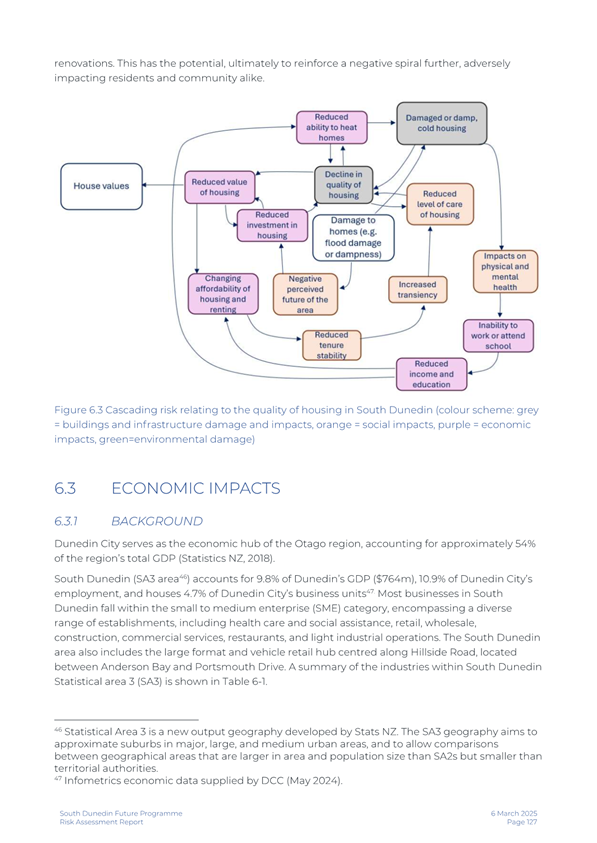
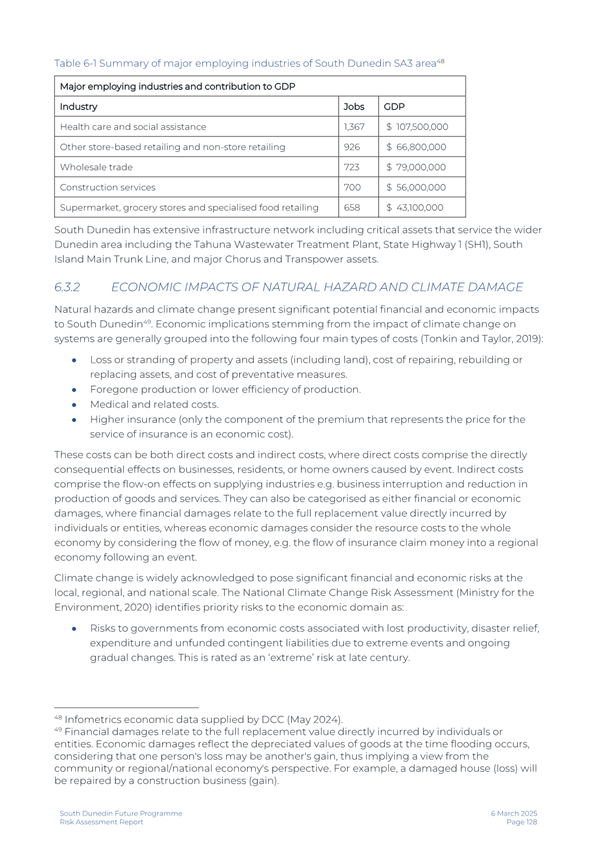
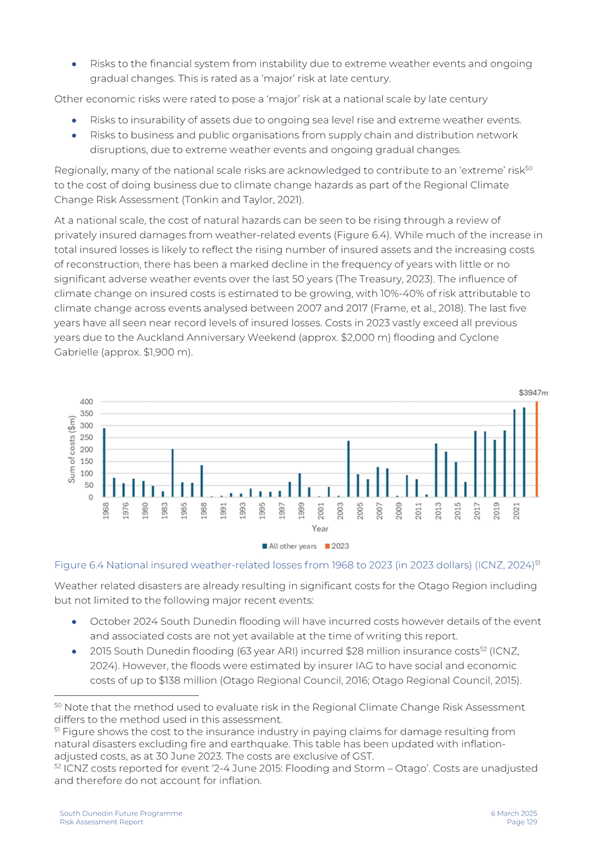
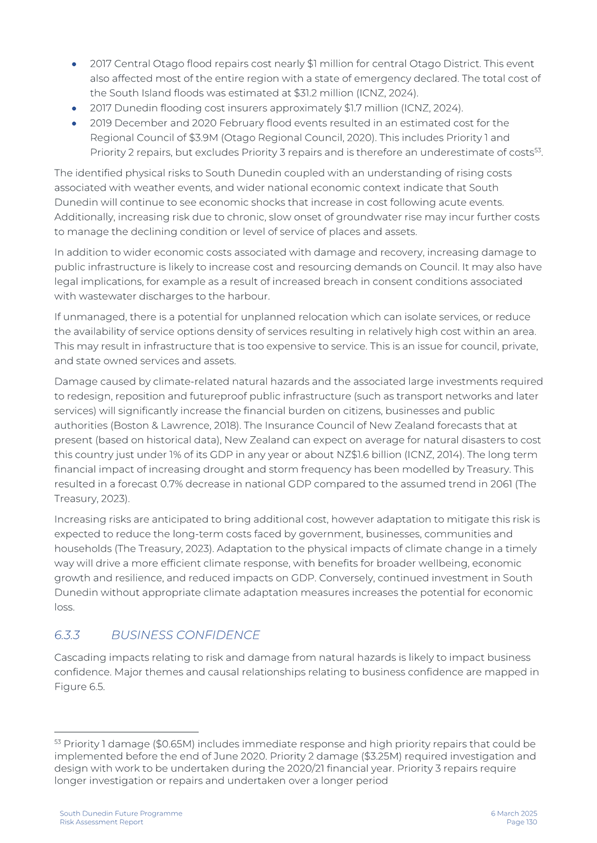
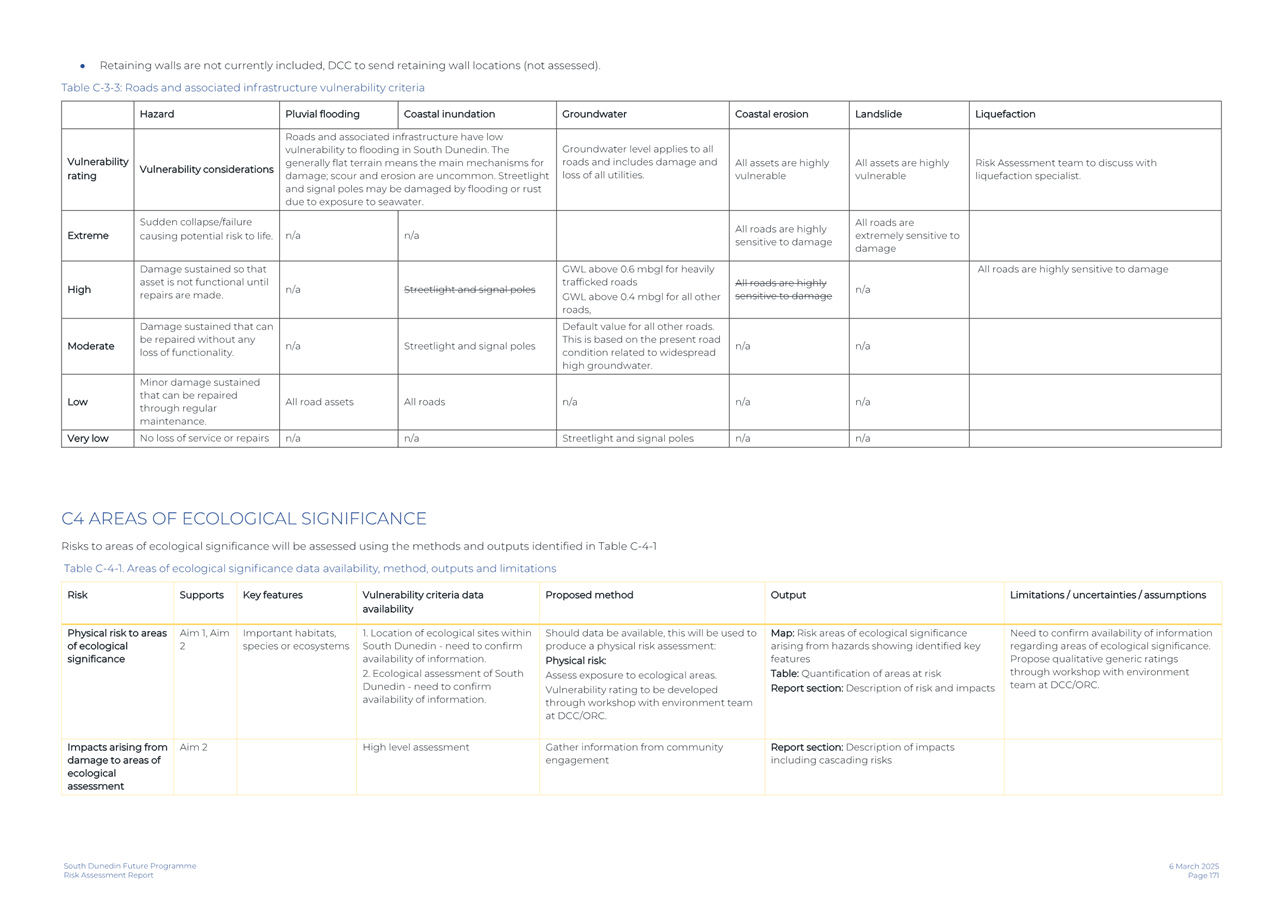
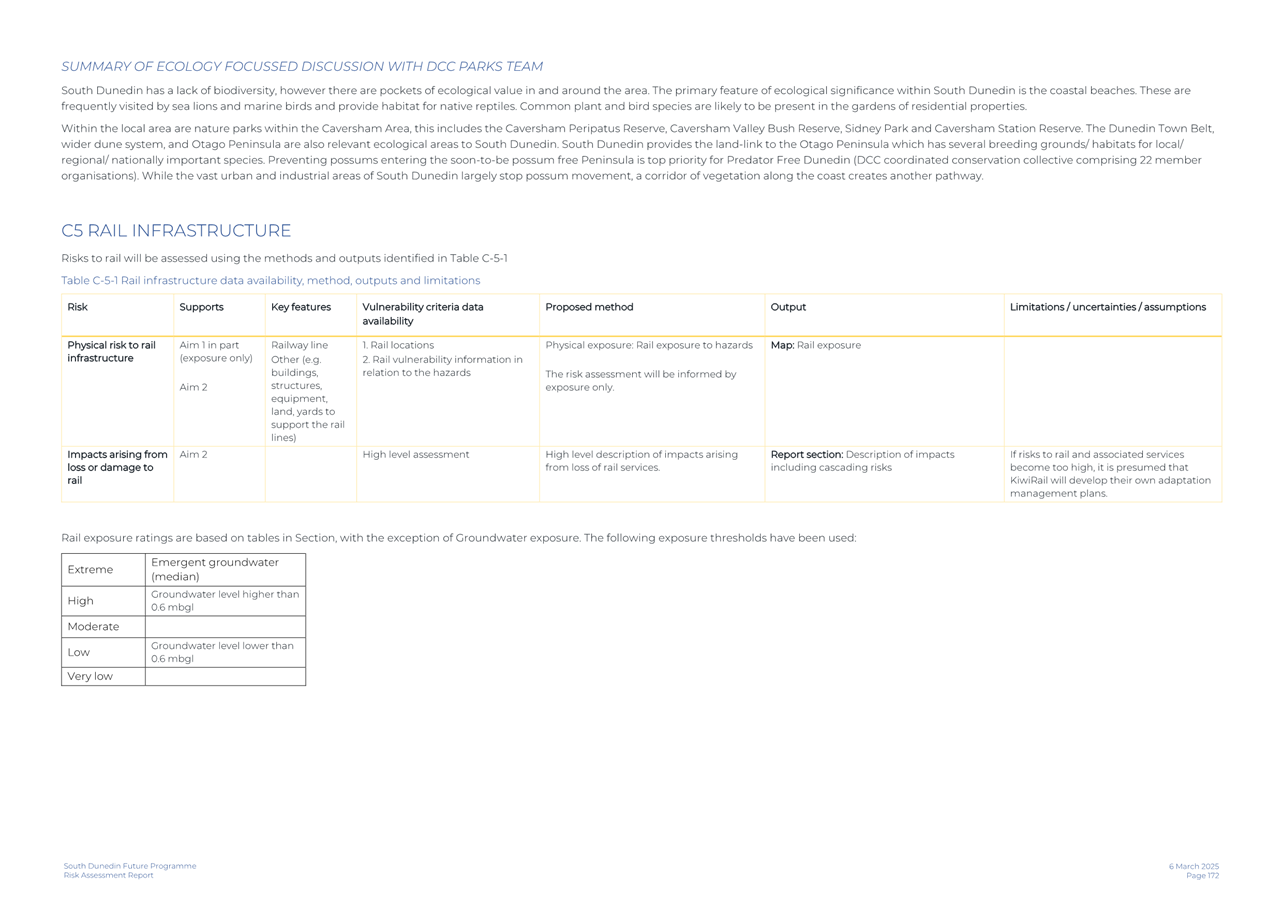
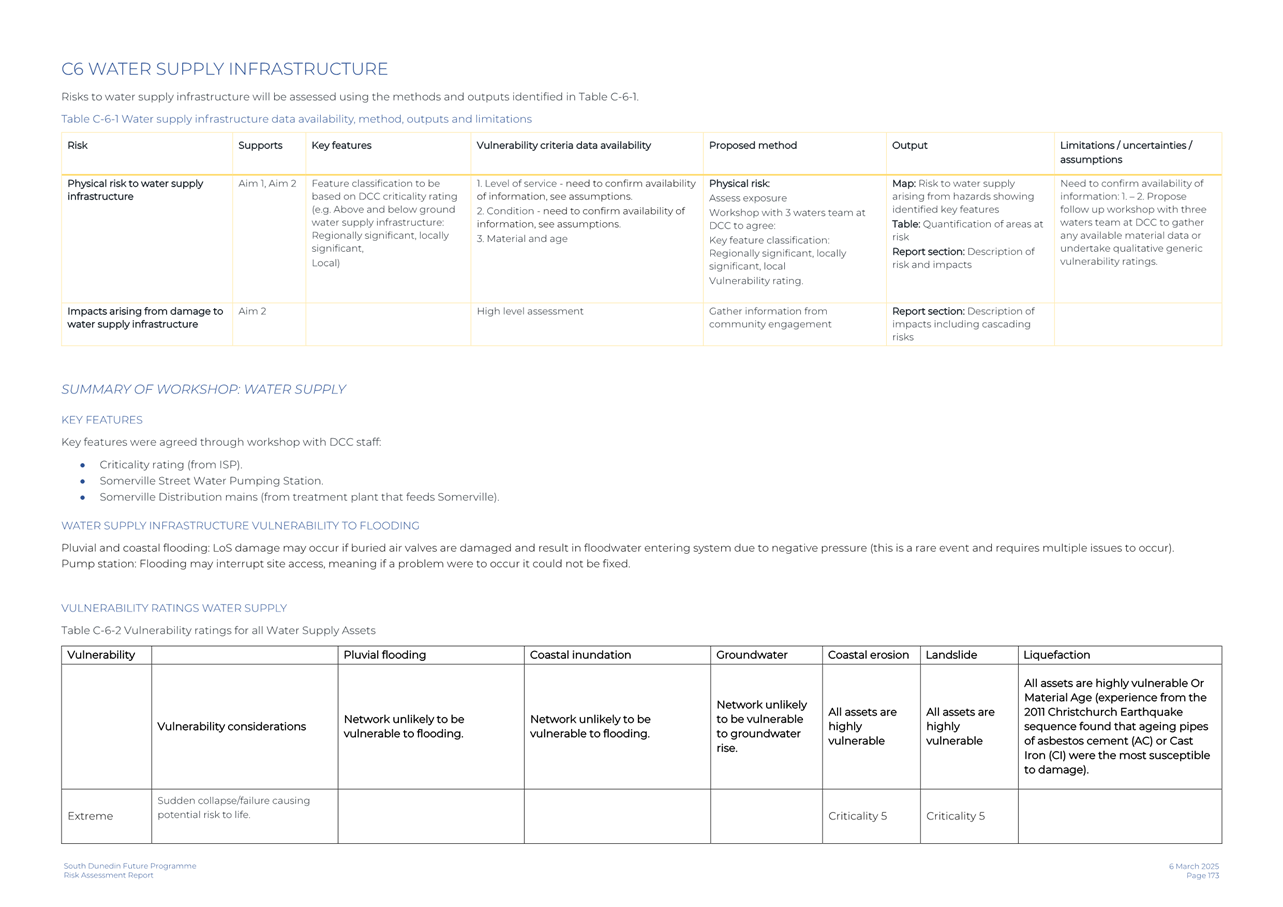
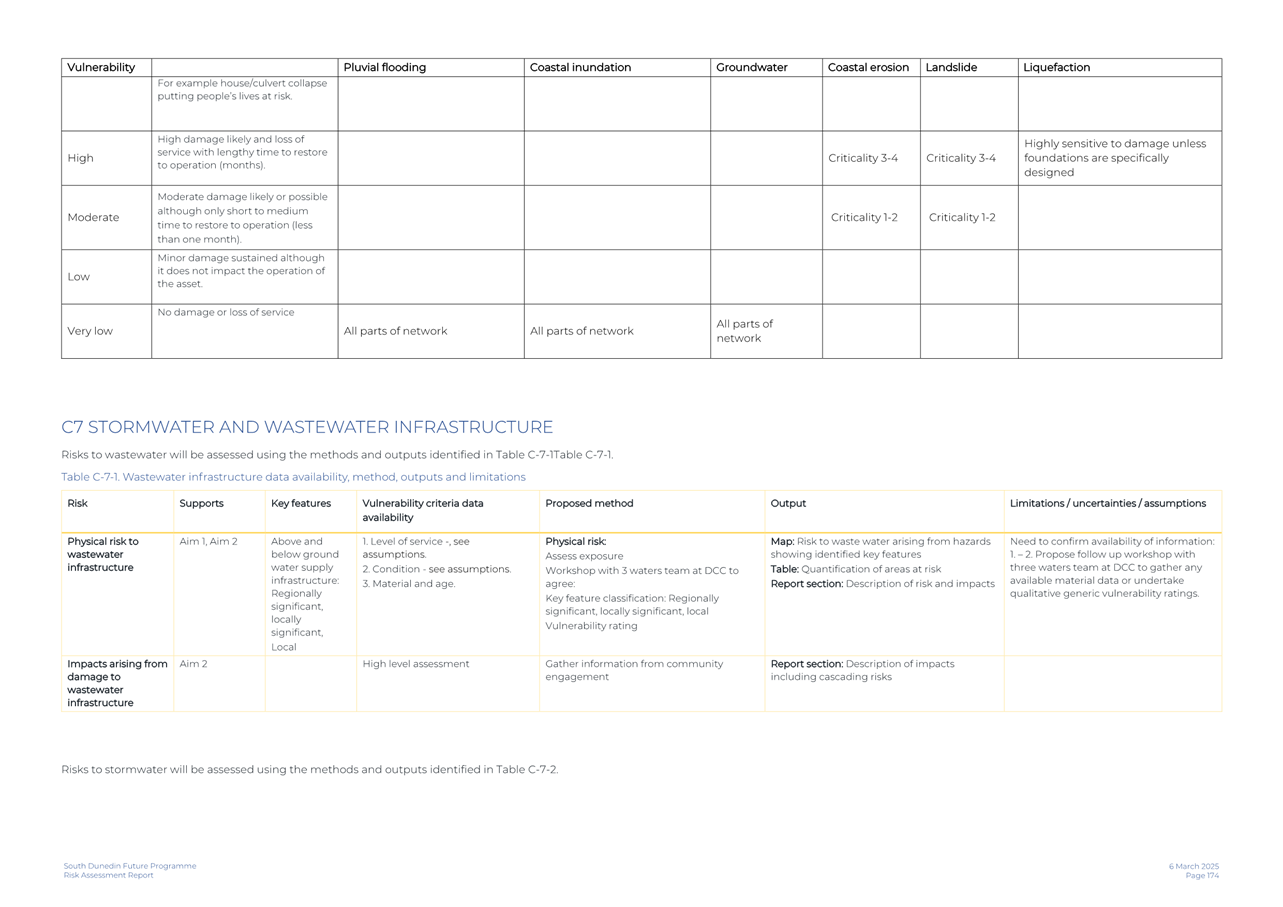
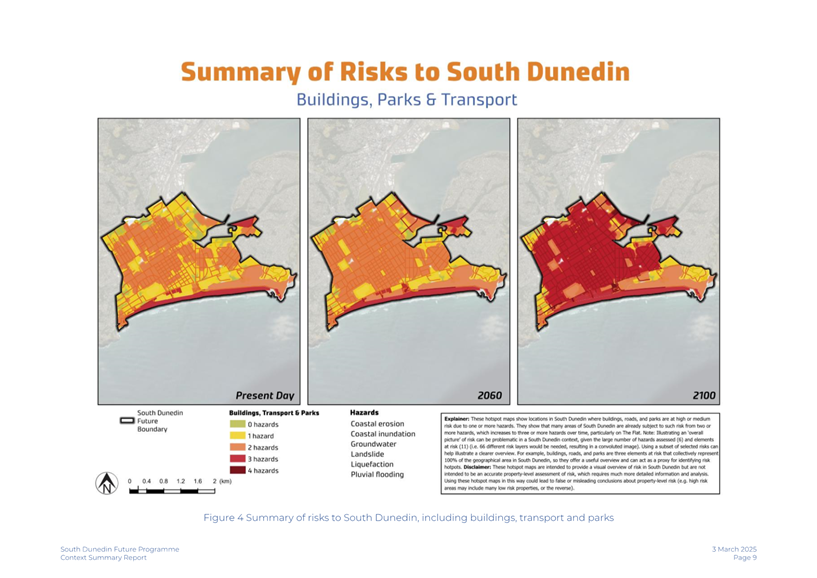
for South Dunedin. The risk assessment essentially seeks to define the
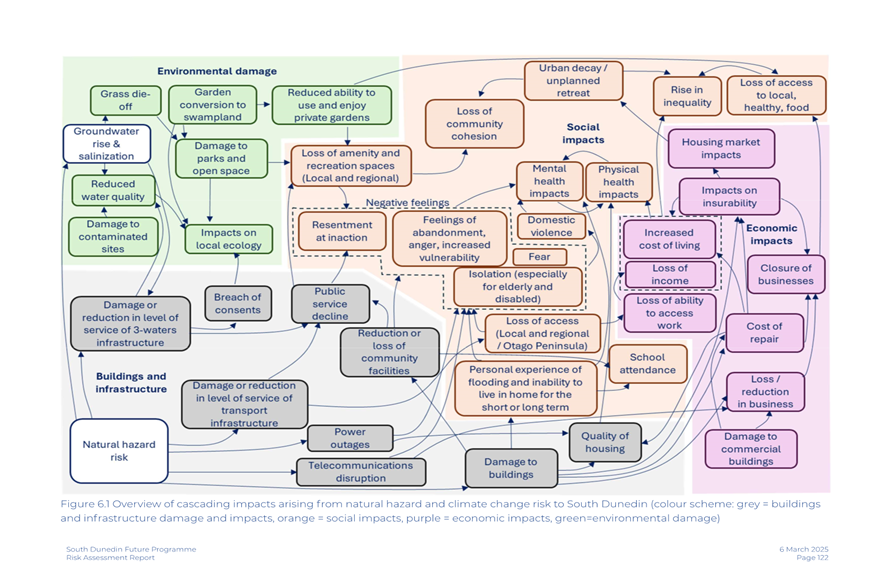
challenges facing South Dunedin and the adaptation futures reports respond by
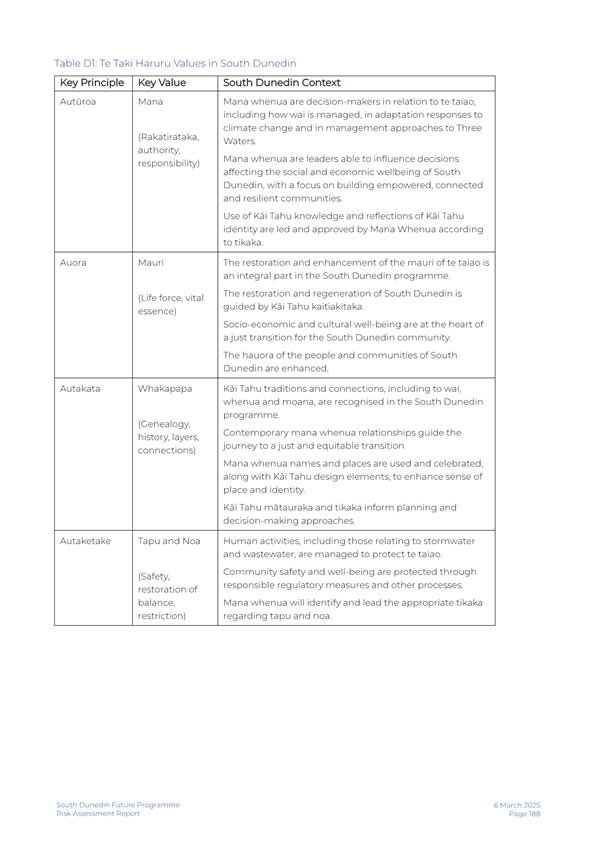
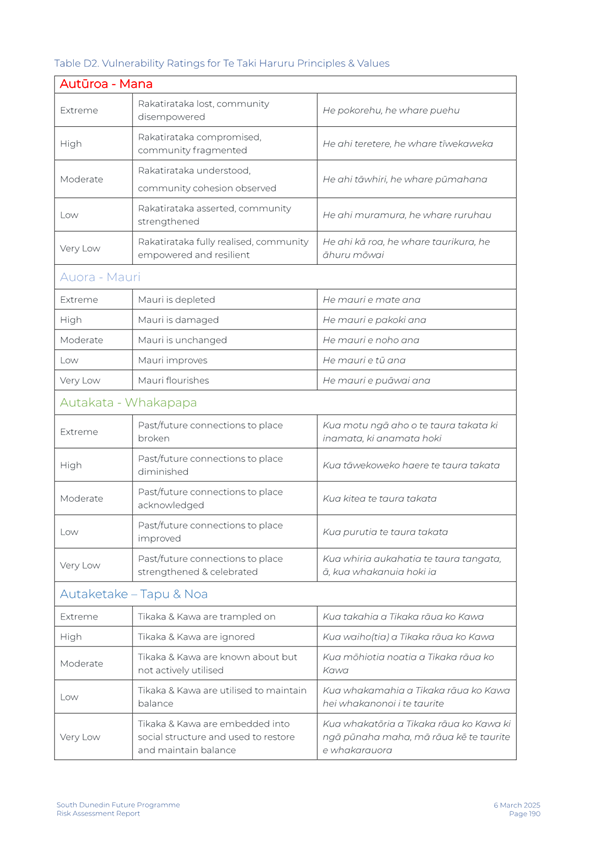
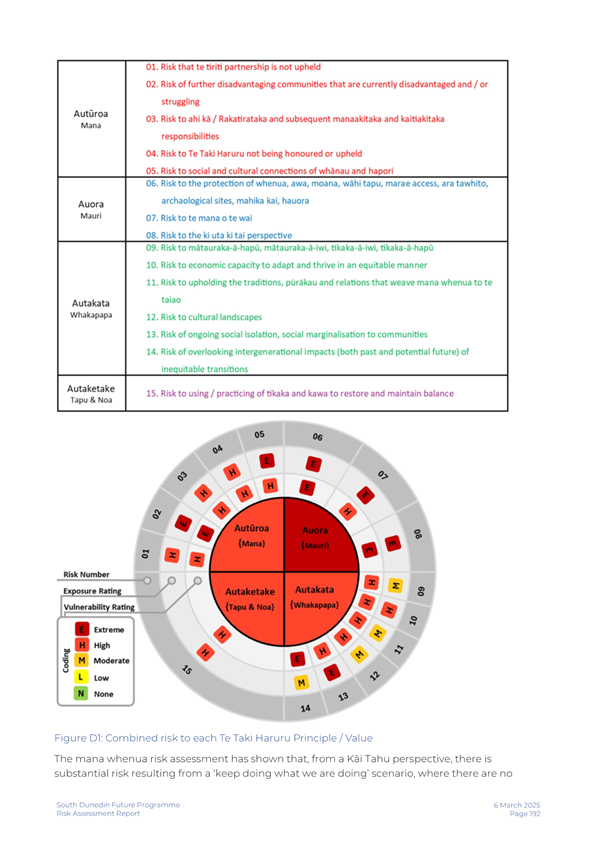
outlining a range of potential solutions. Read together, the reports present an
initial picture of the potential future – or futures – for South
Dunedin.
4 The
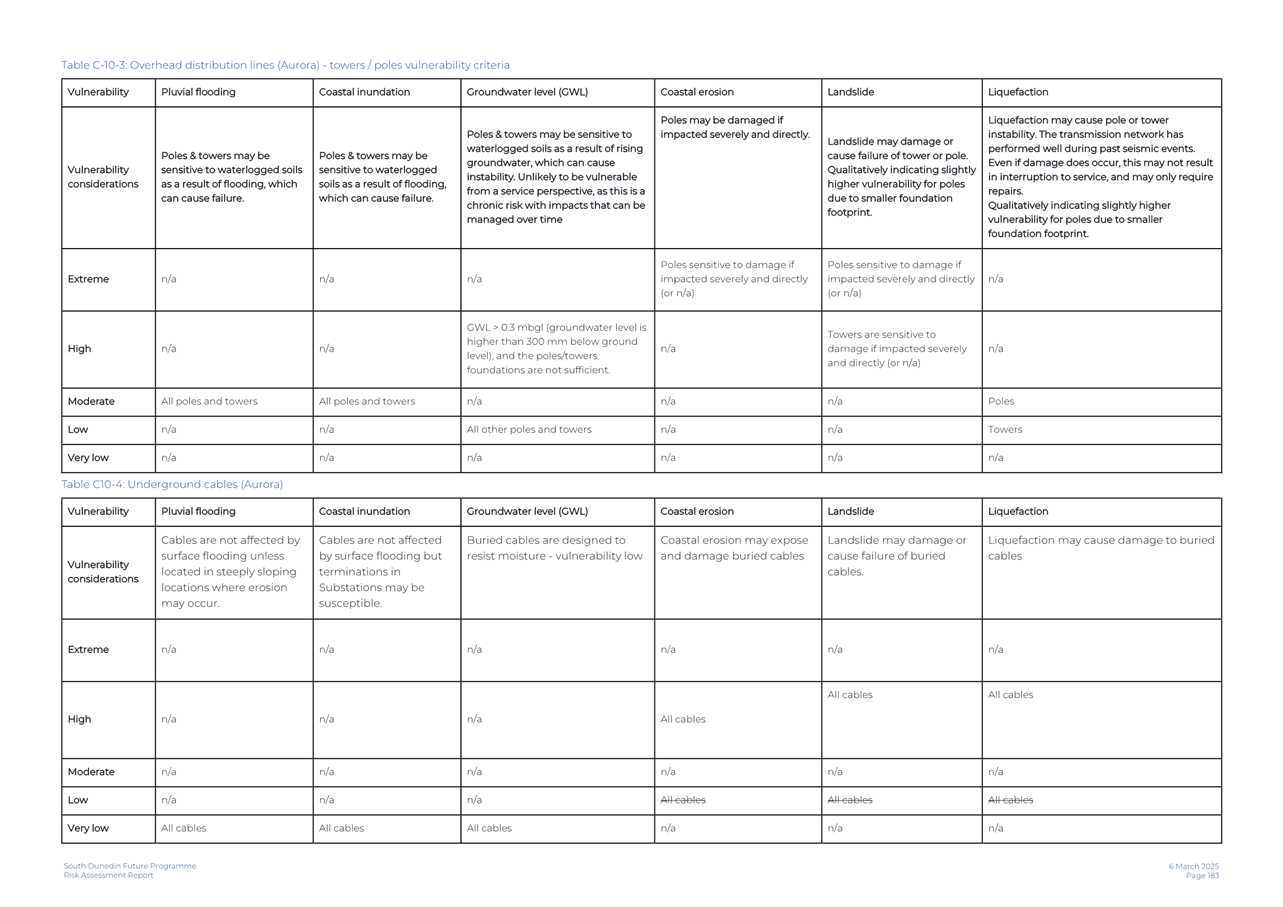
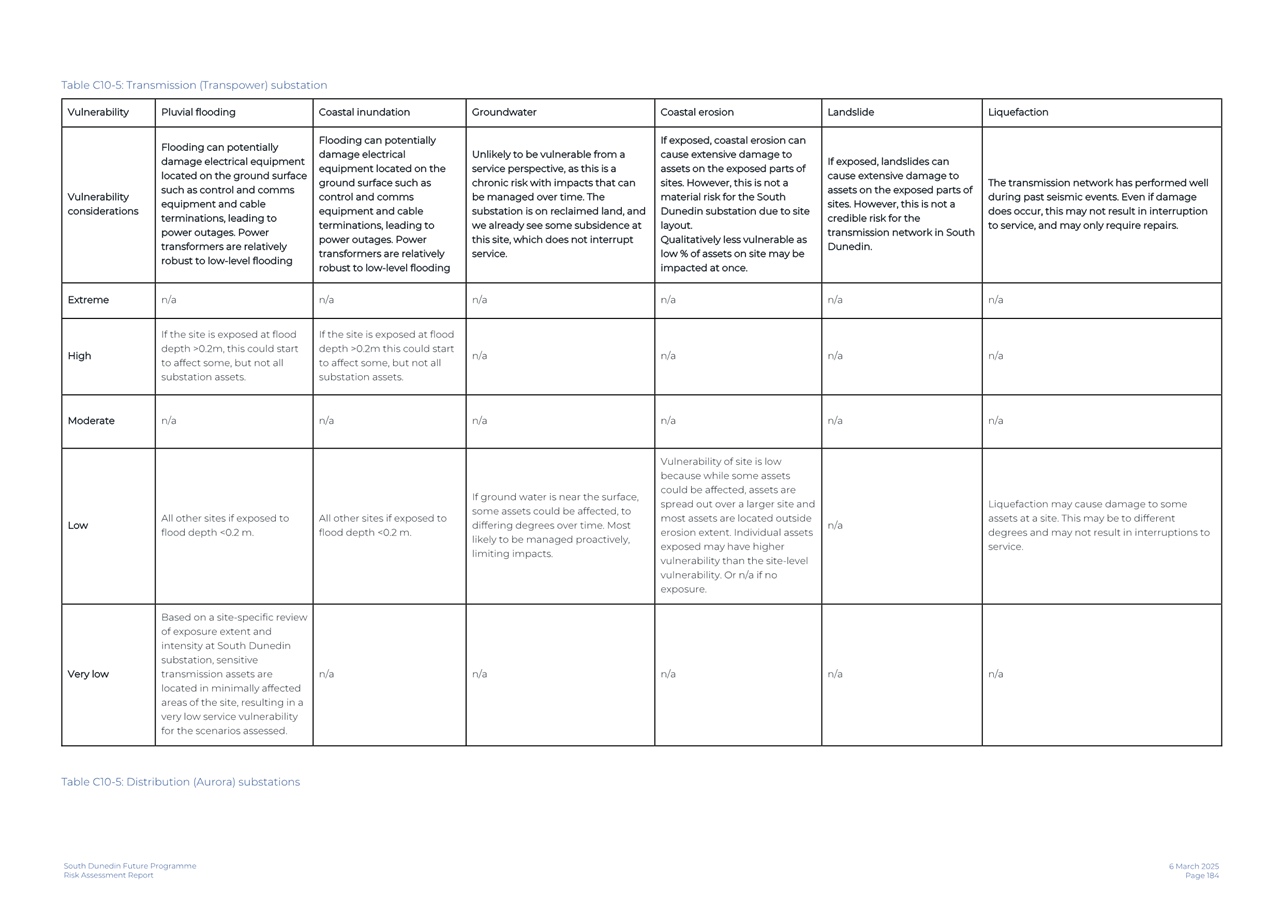
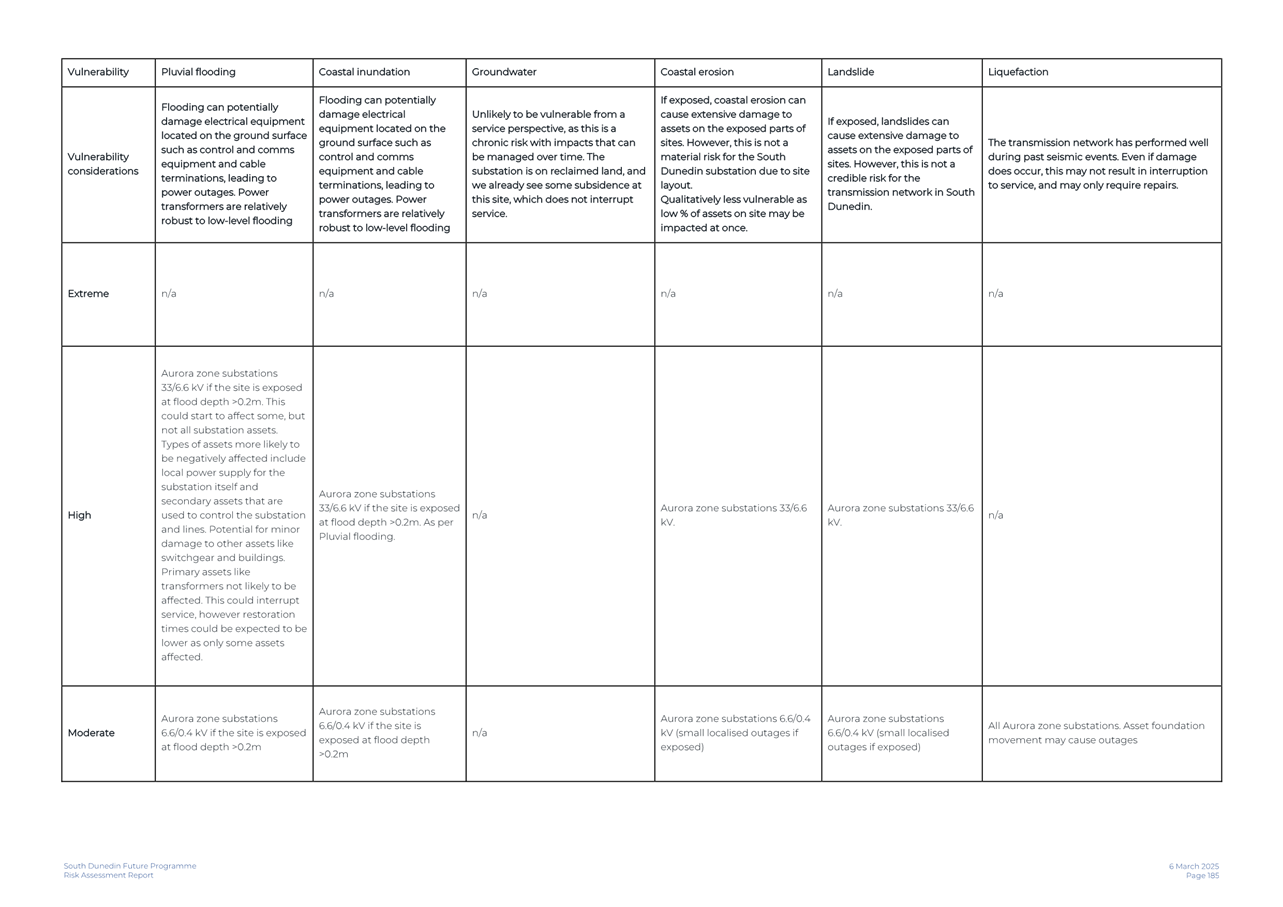
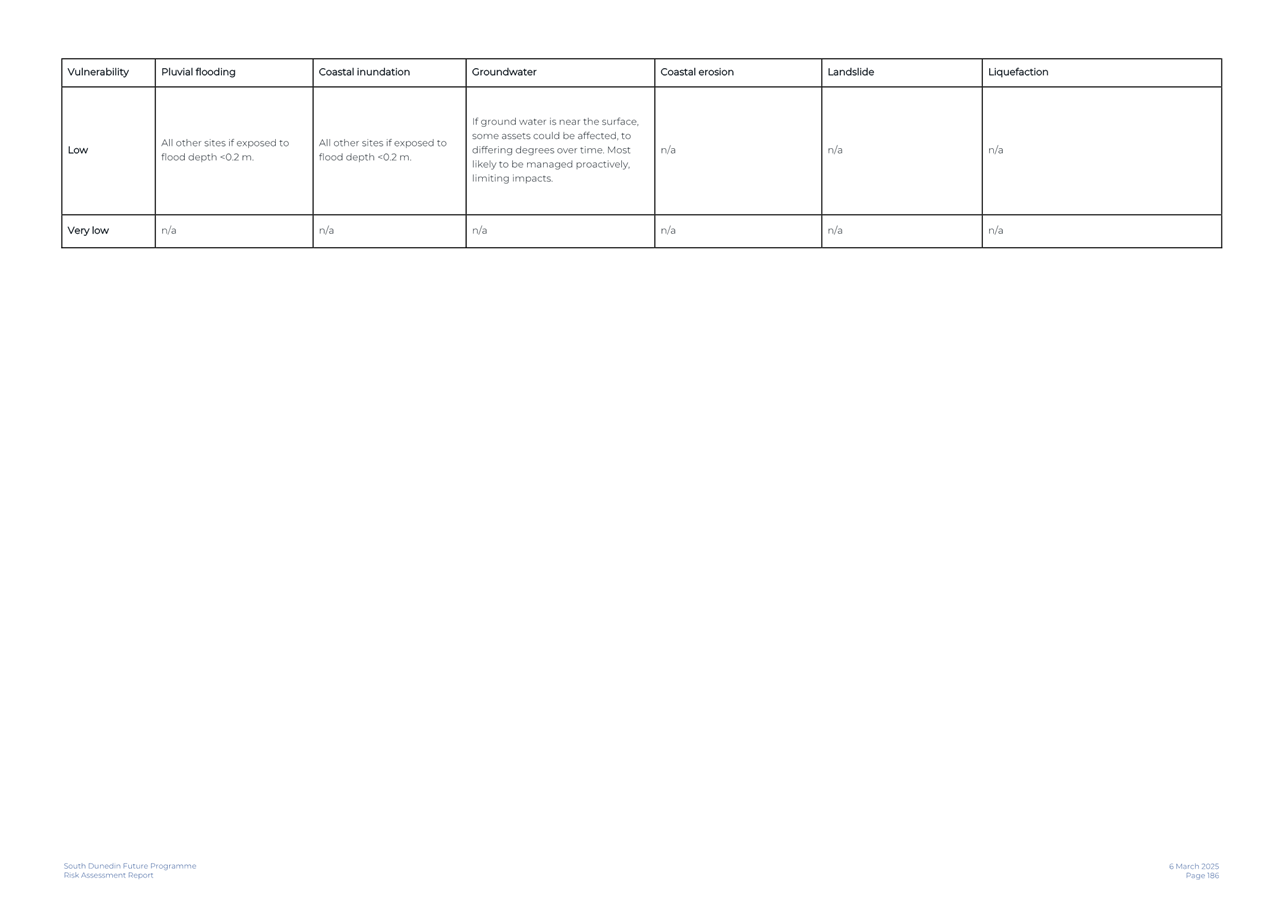
risk assessment identifies, classifies, and prioritises risk across South
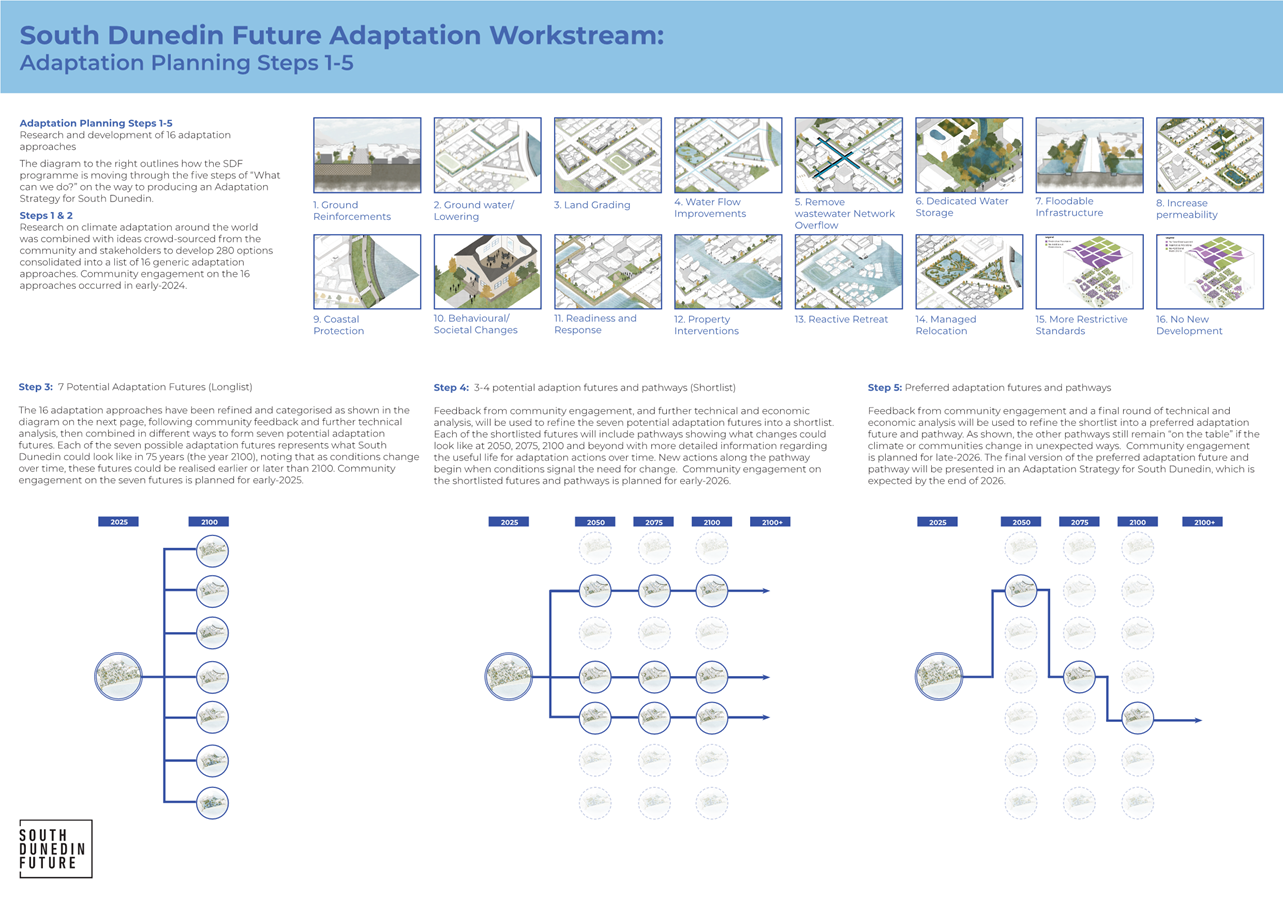
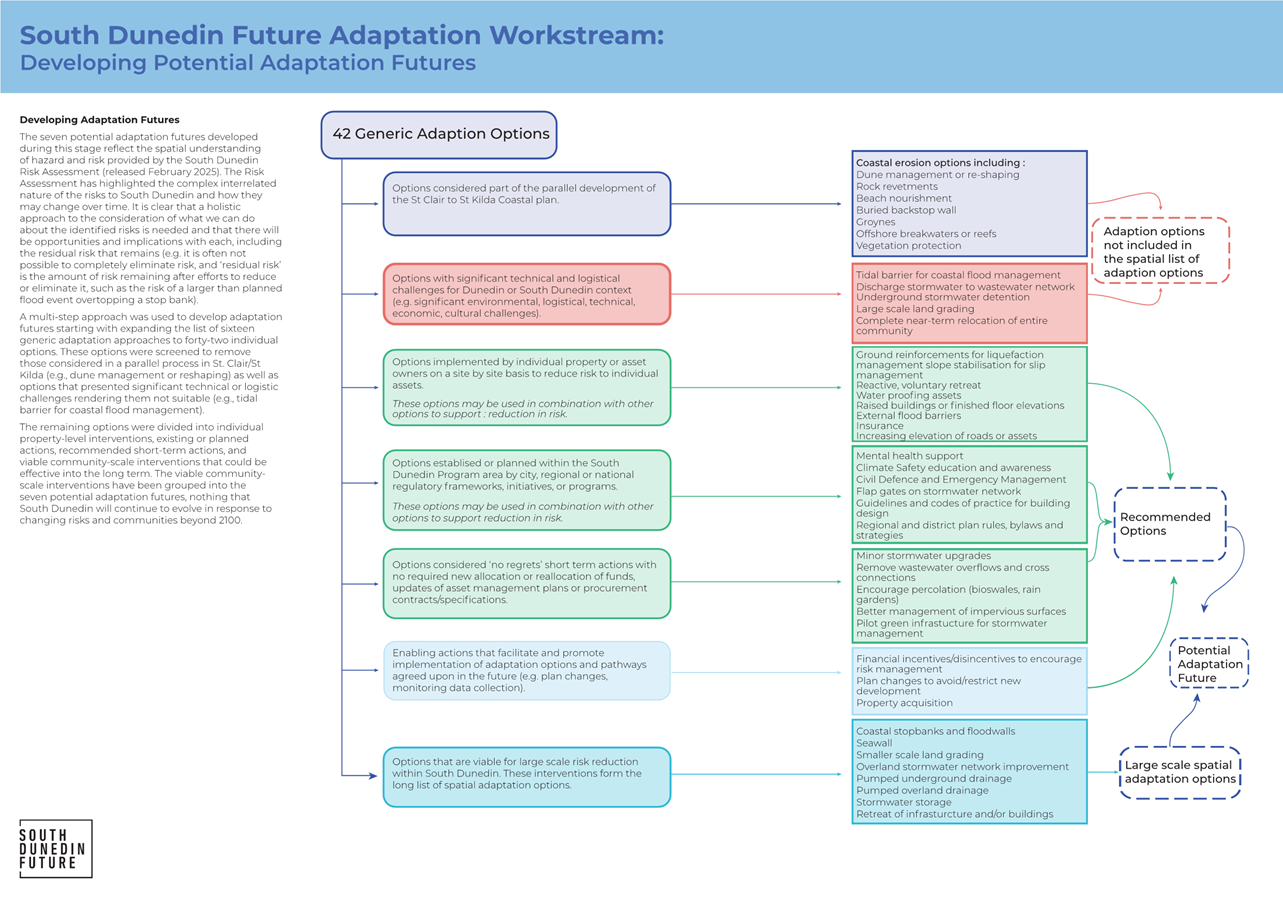
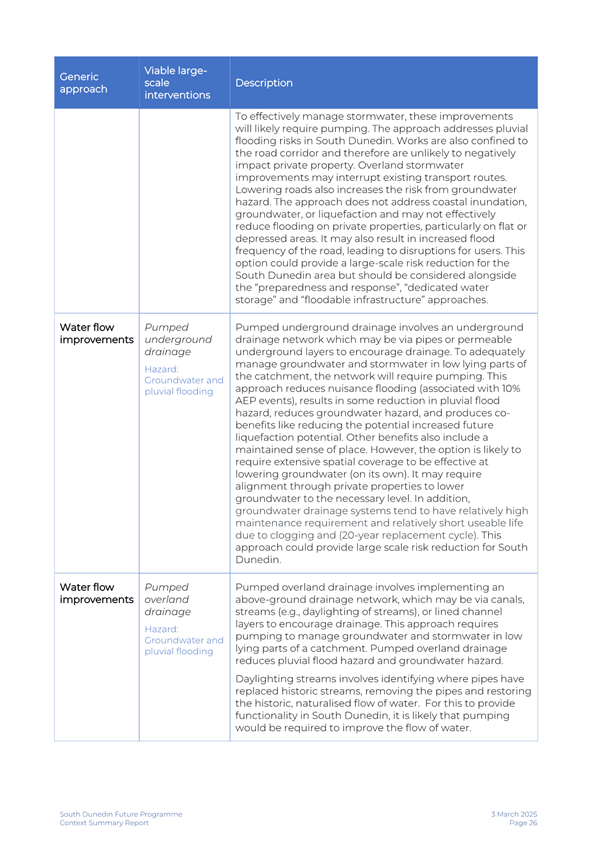
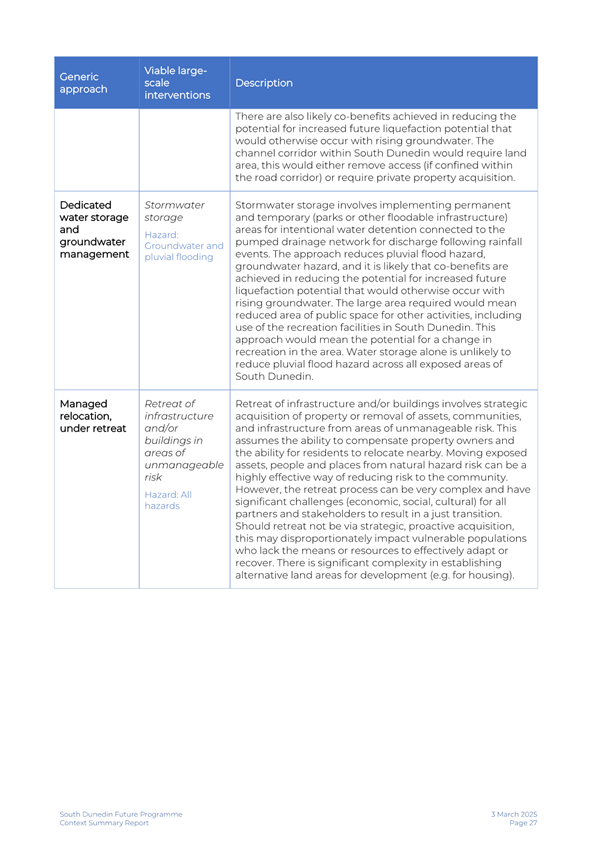
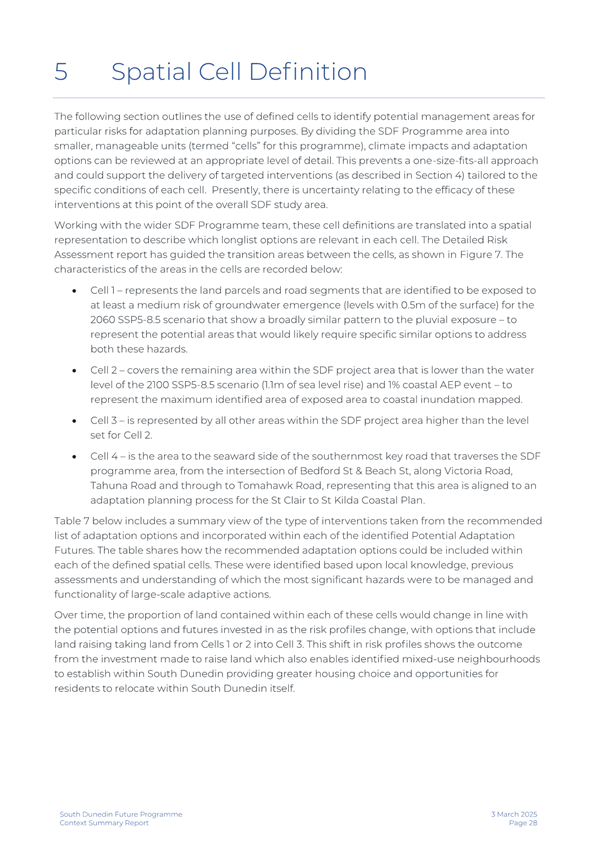
Dunedin by assessing hazard likelihood, exposure, and vulnerability, before
assigning corresponding risk scores. The impacts of these risks, should they be
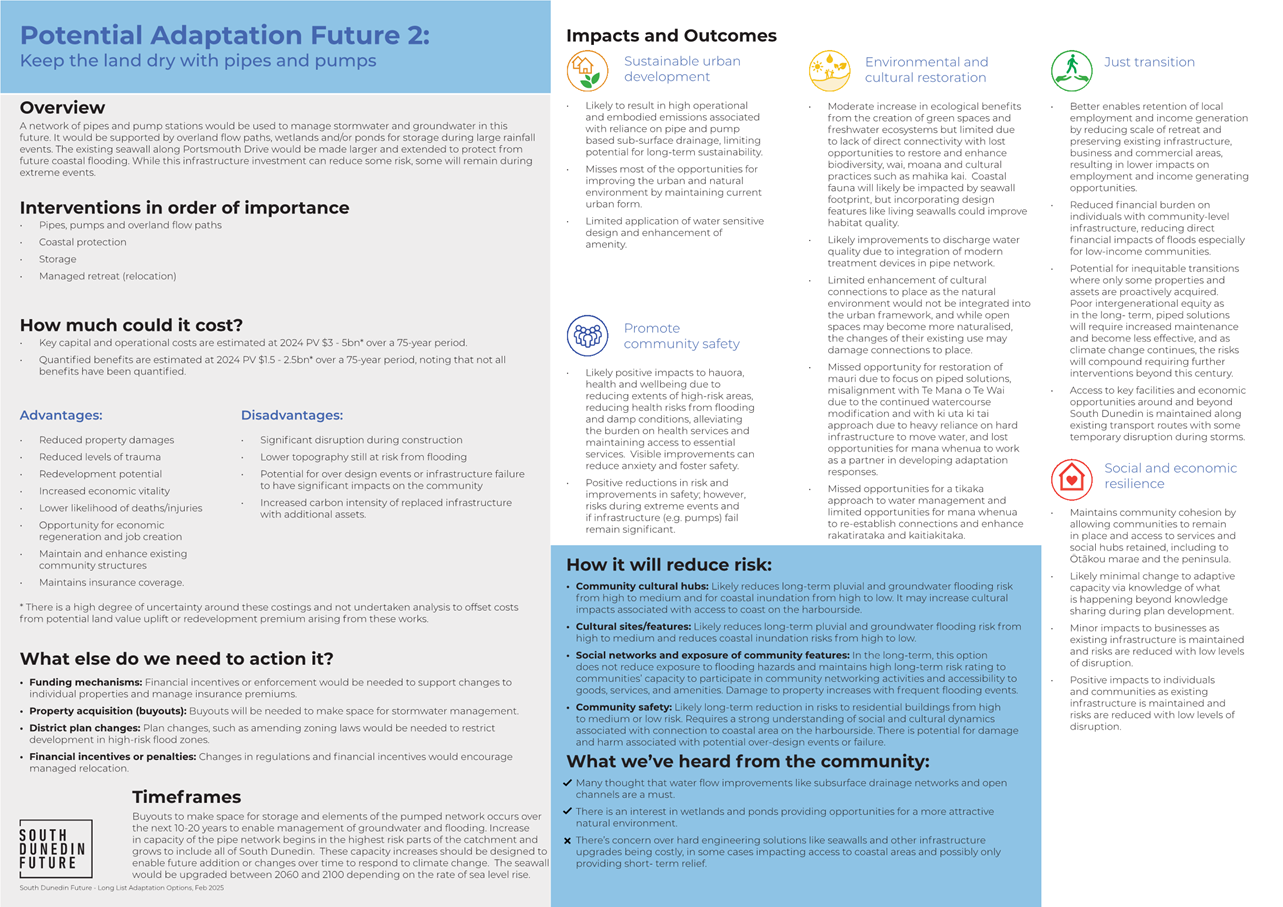
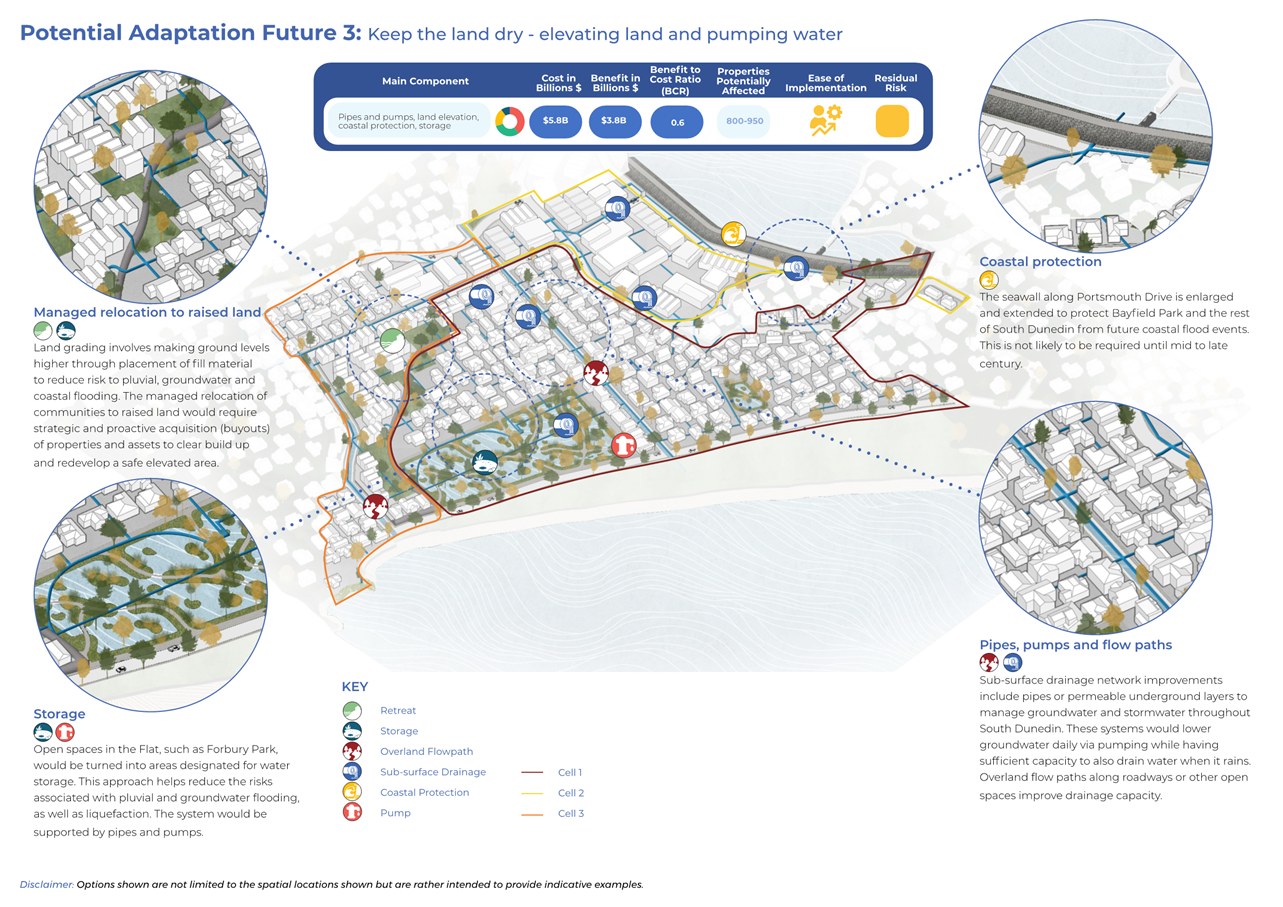
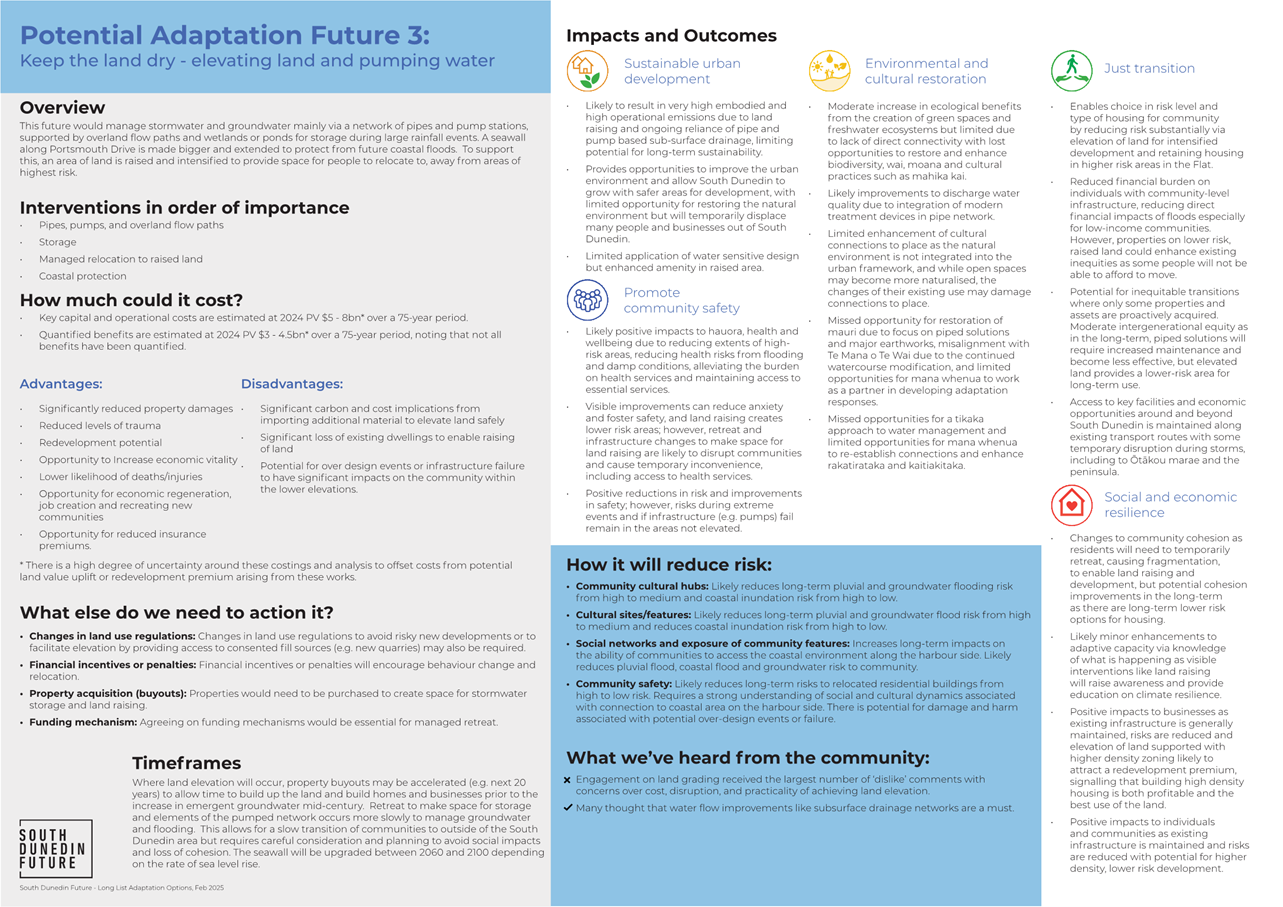
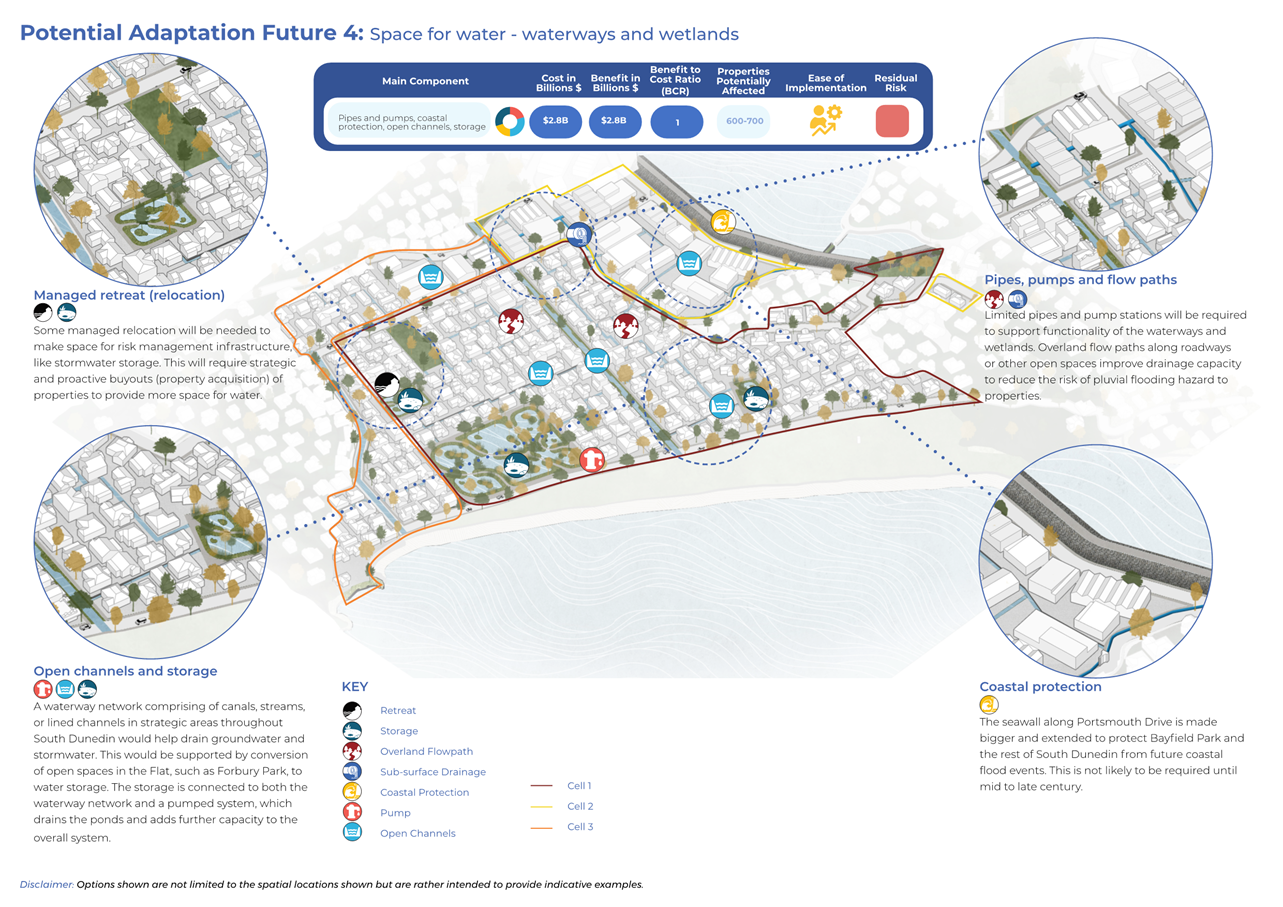
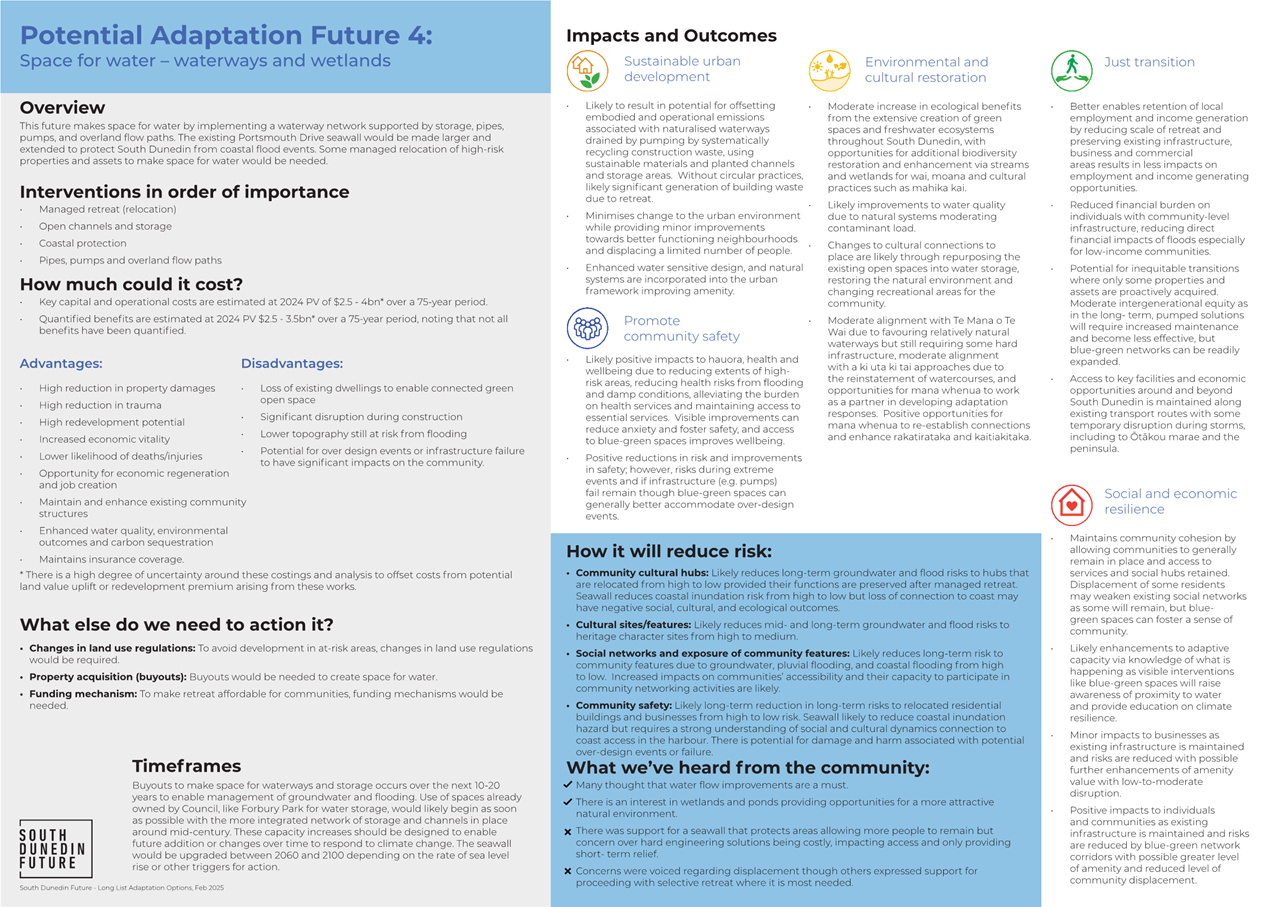
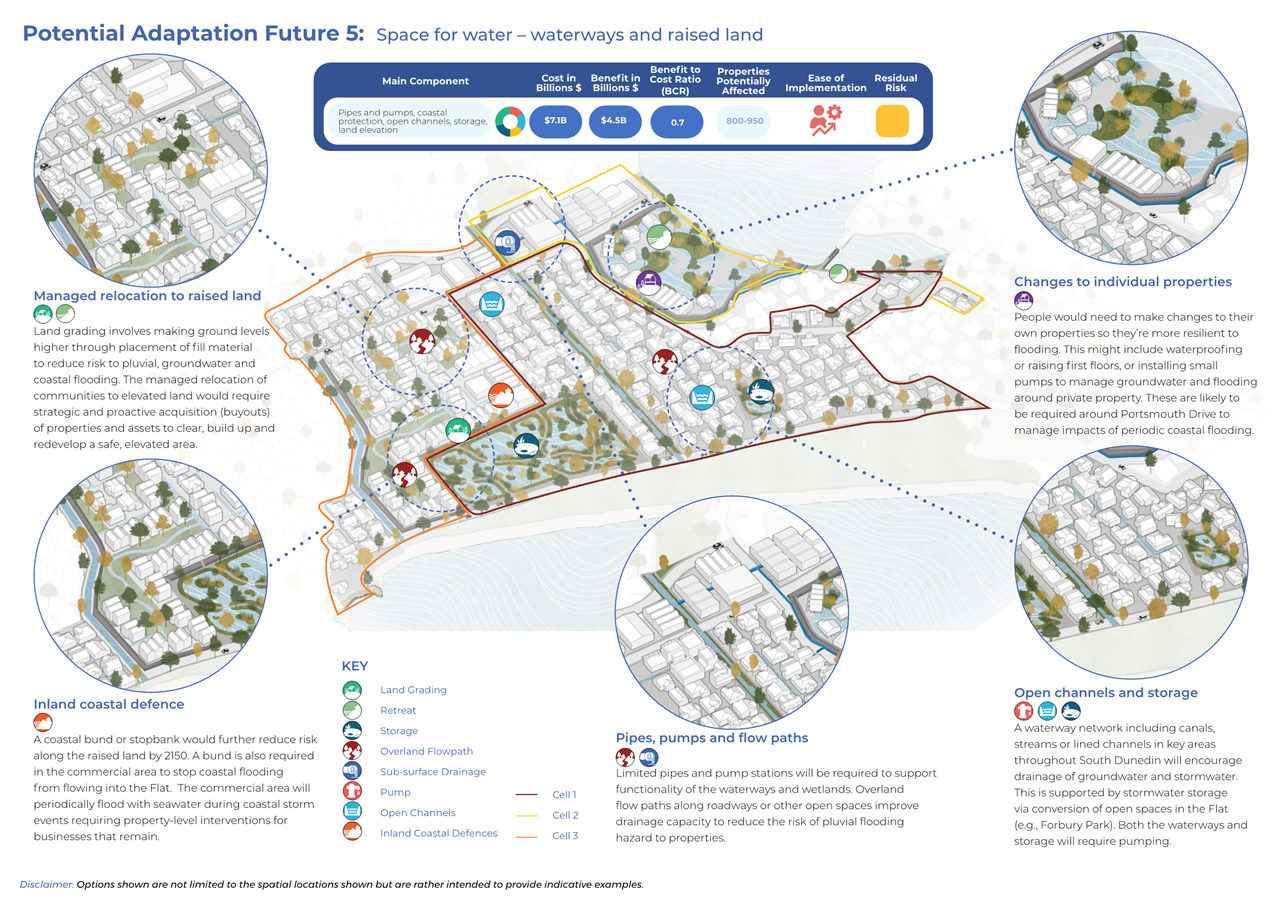
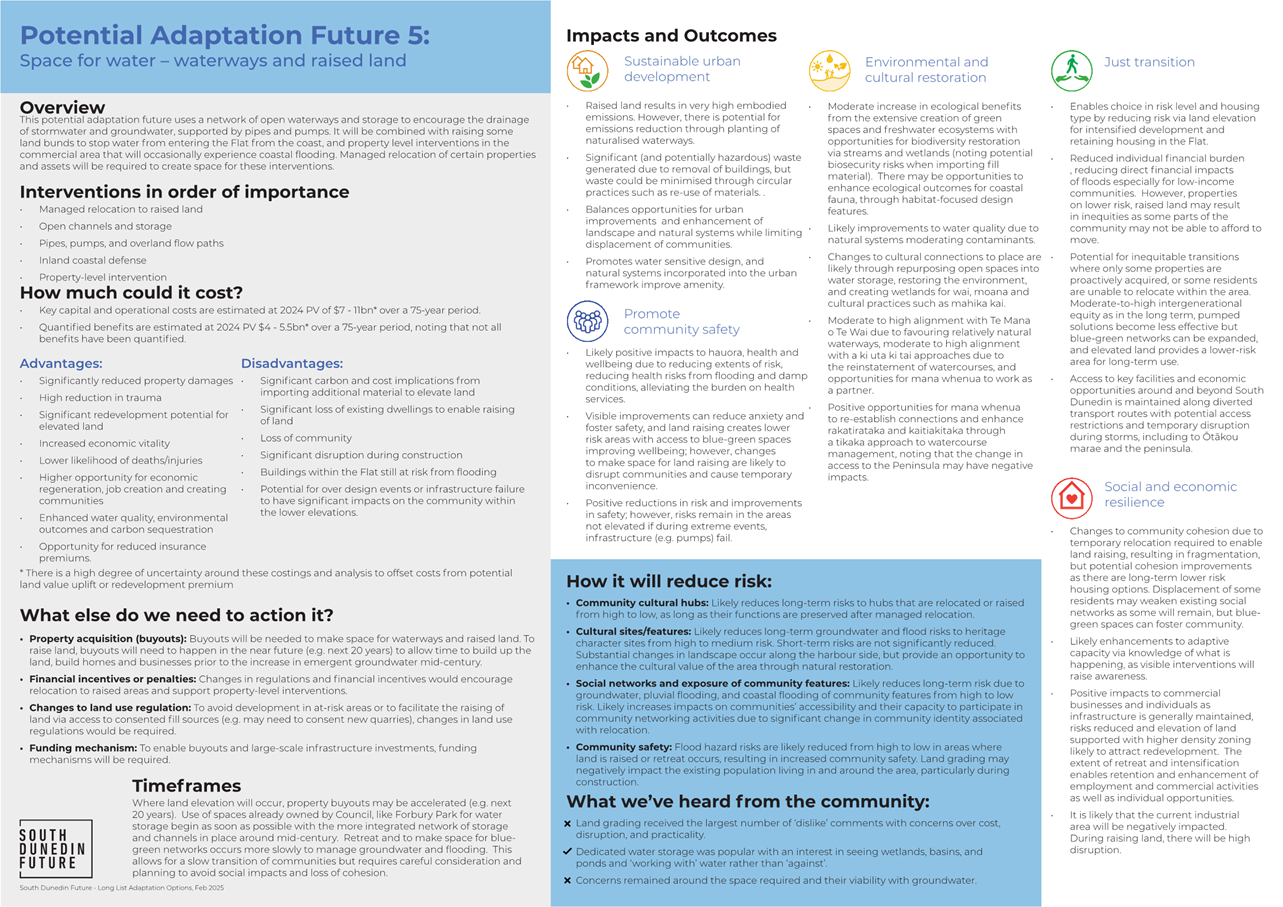
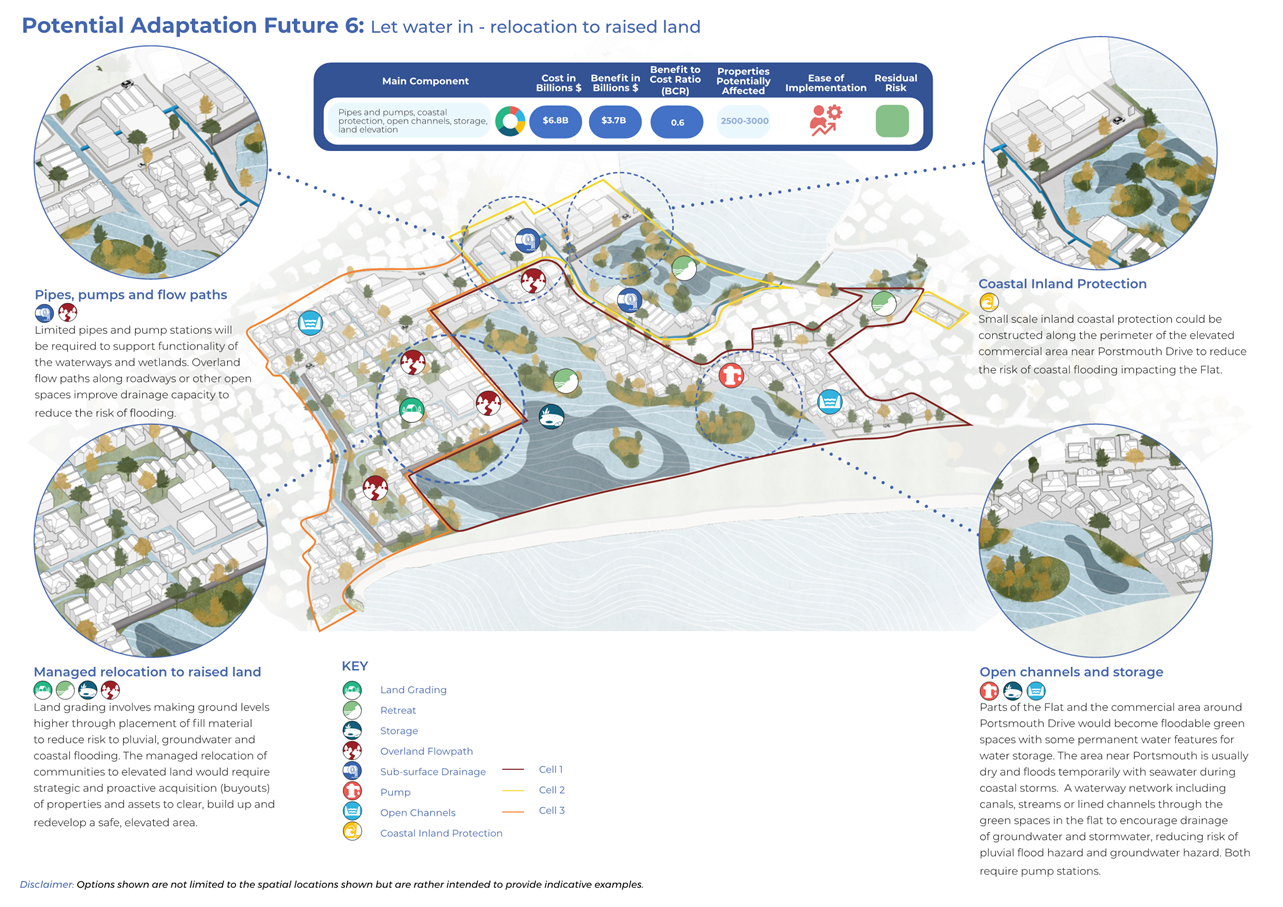
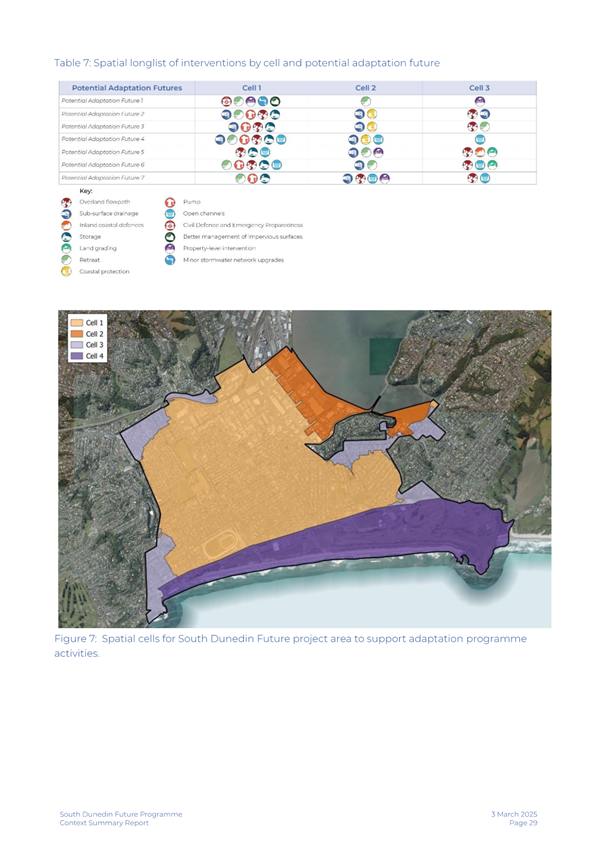
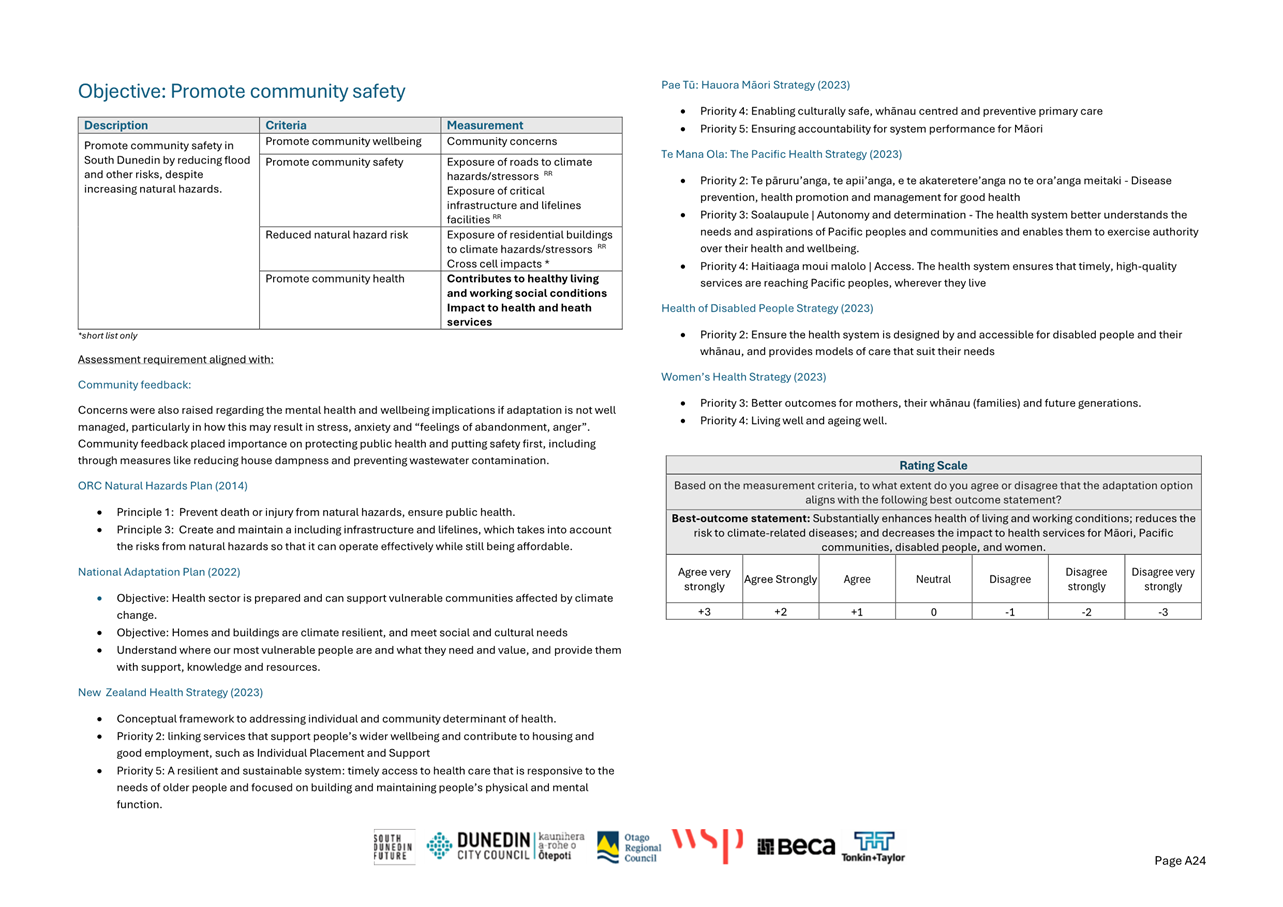
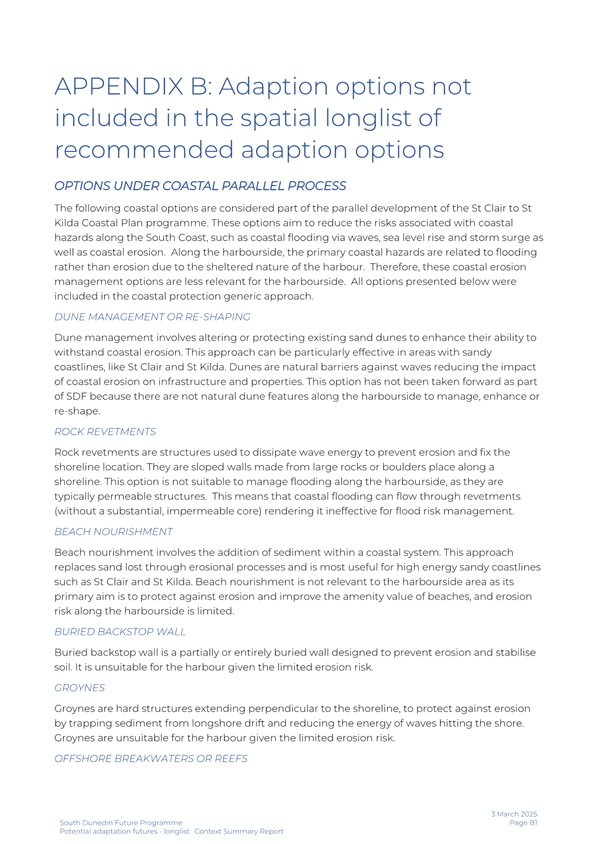
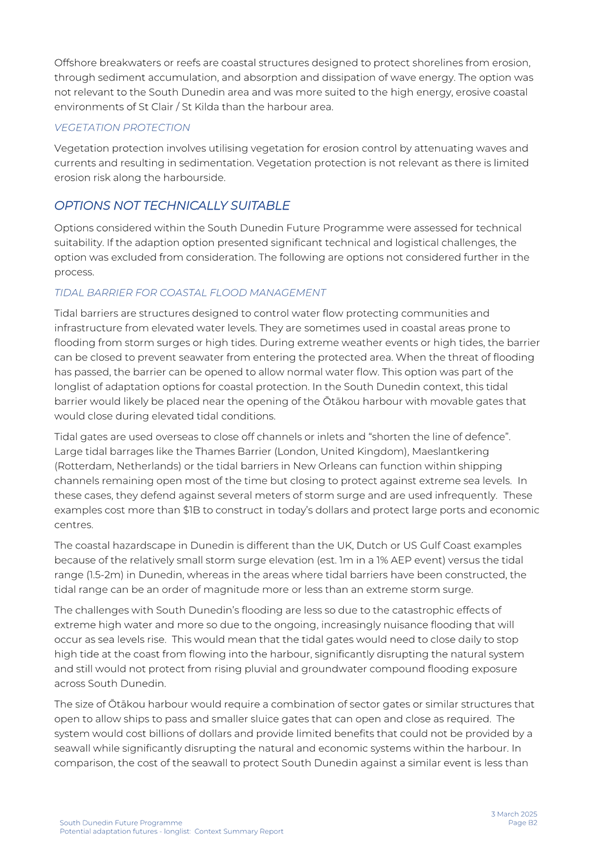
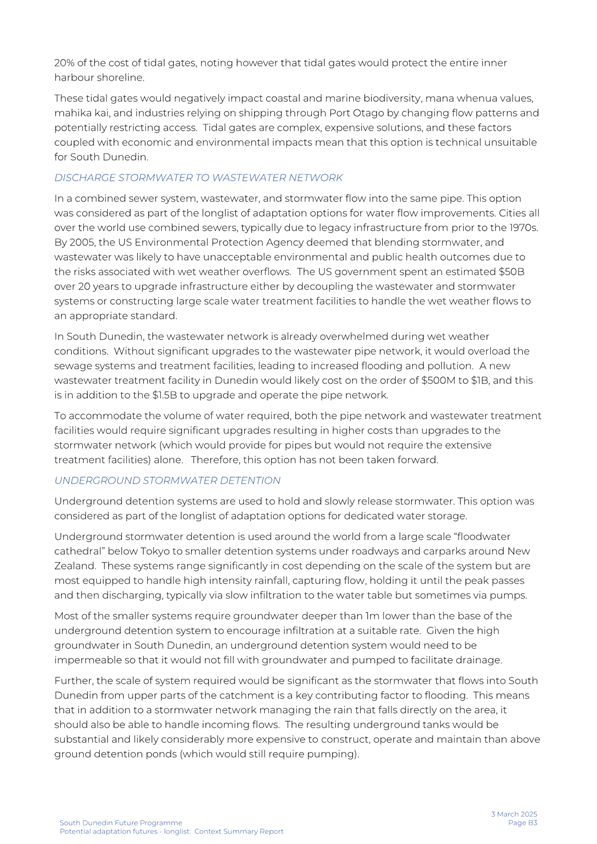
realised, are also described.
5 The
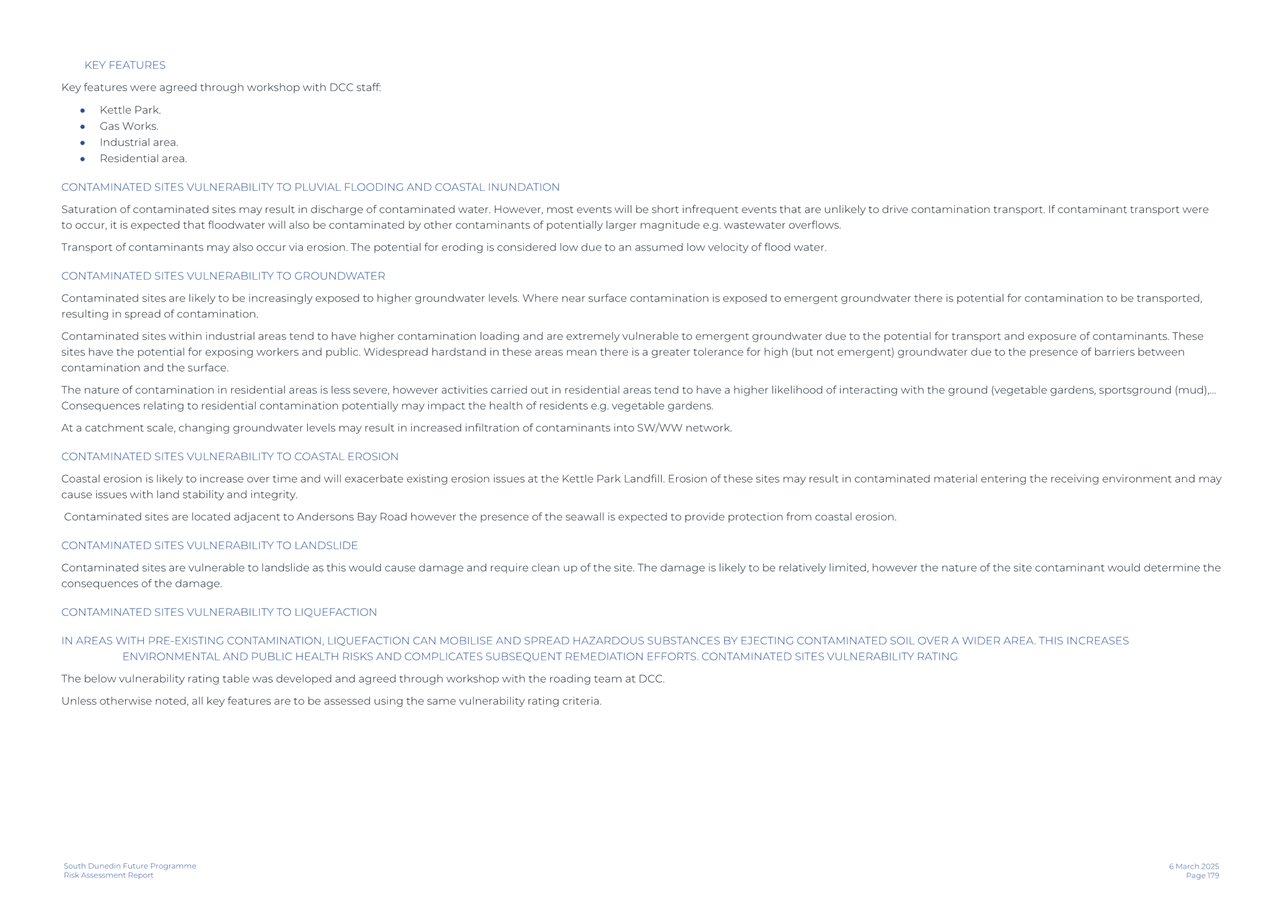
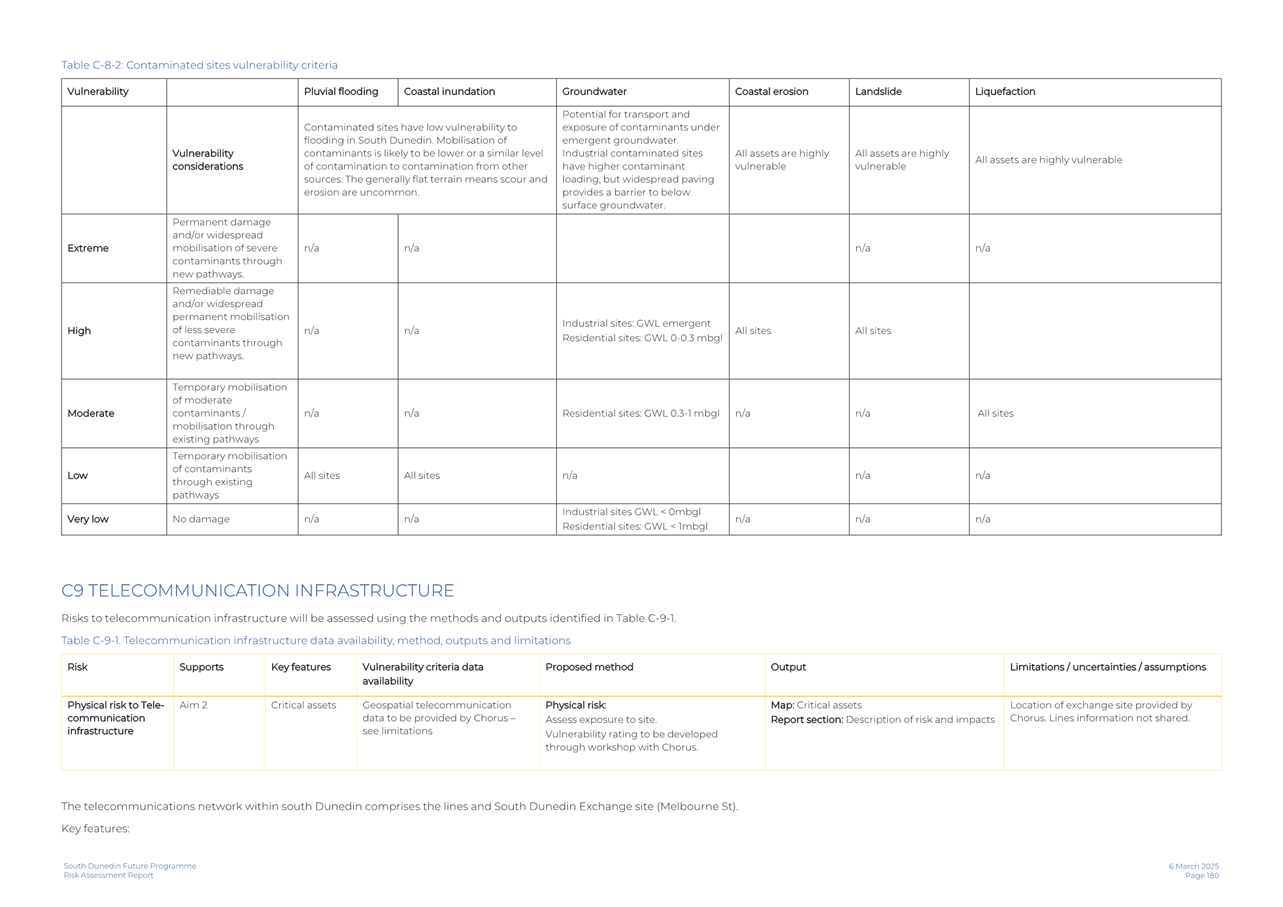
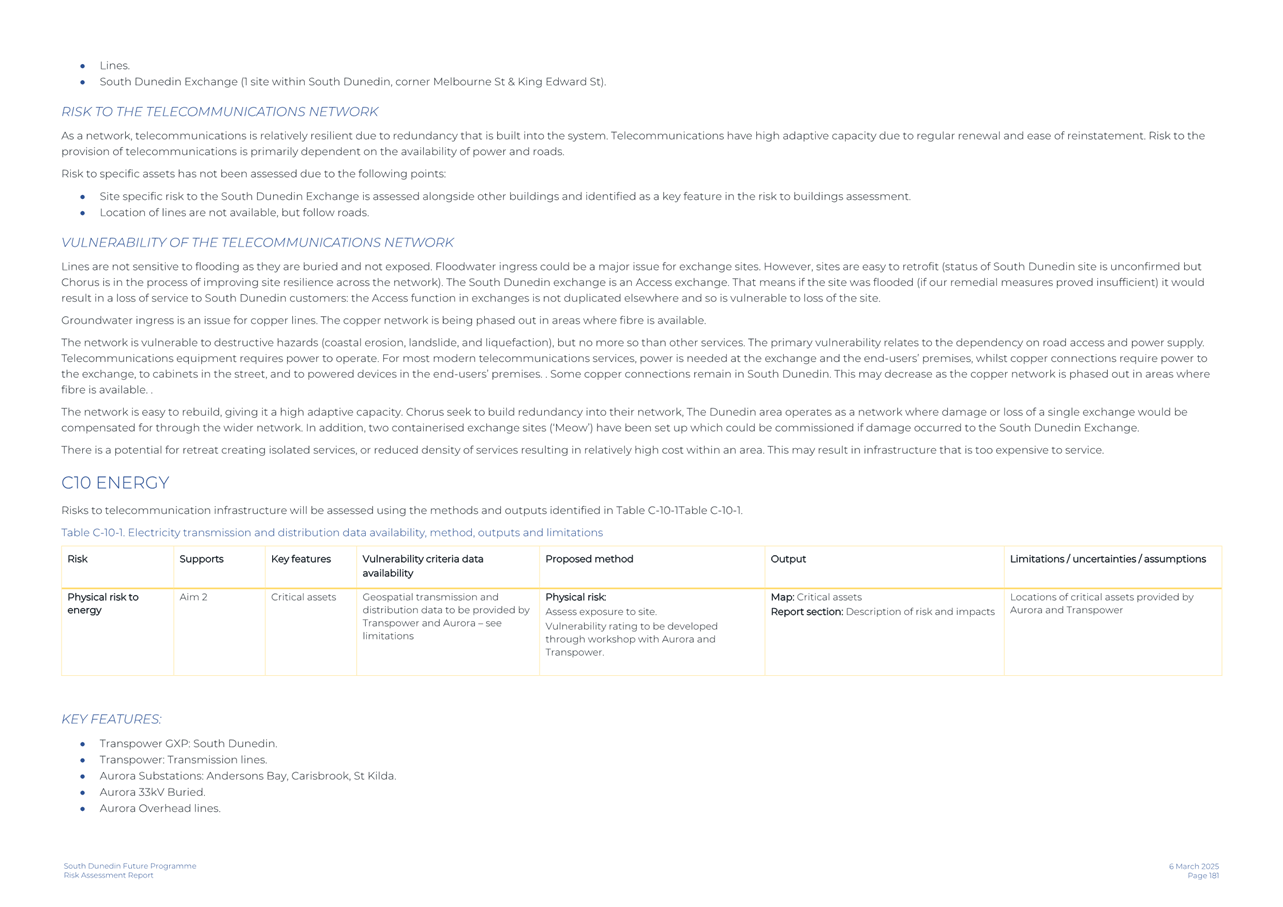
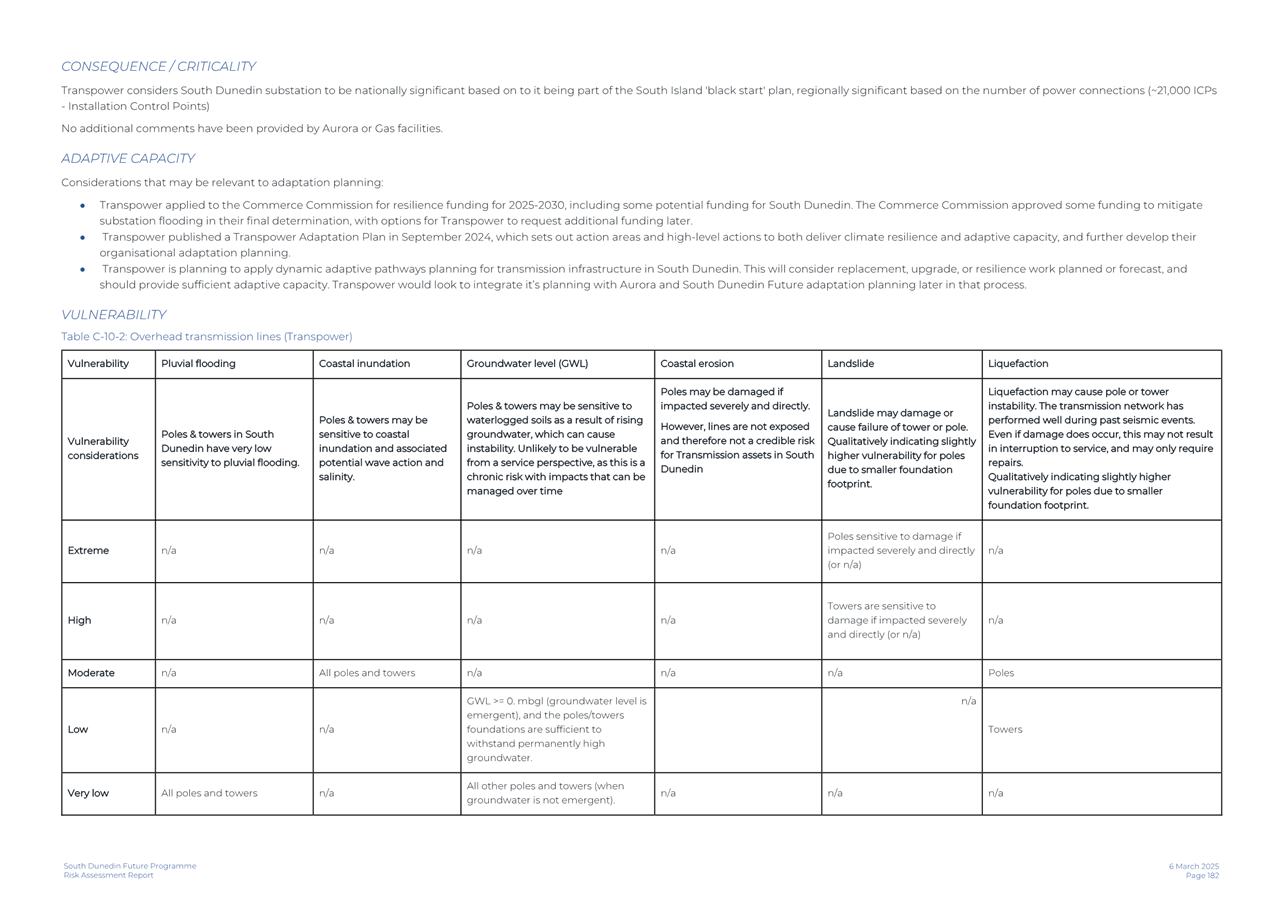
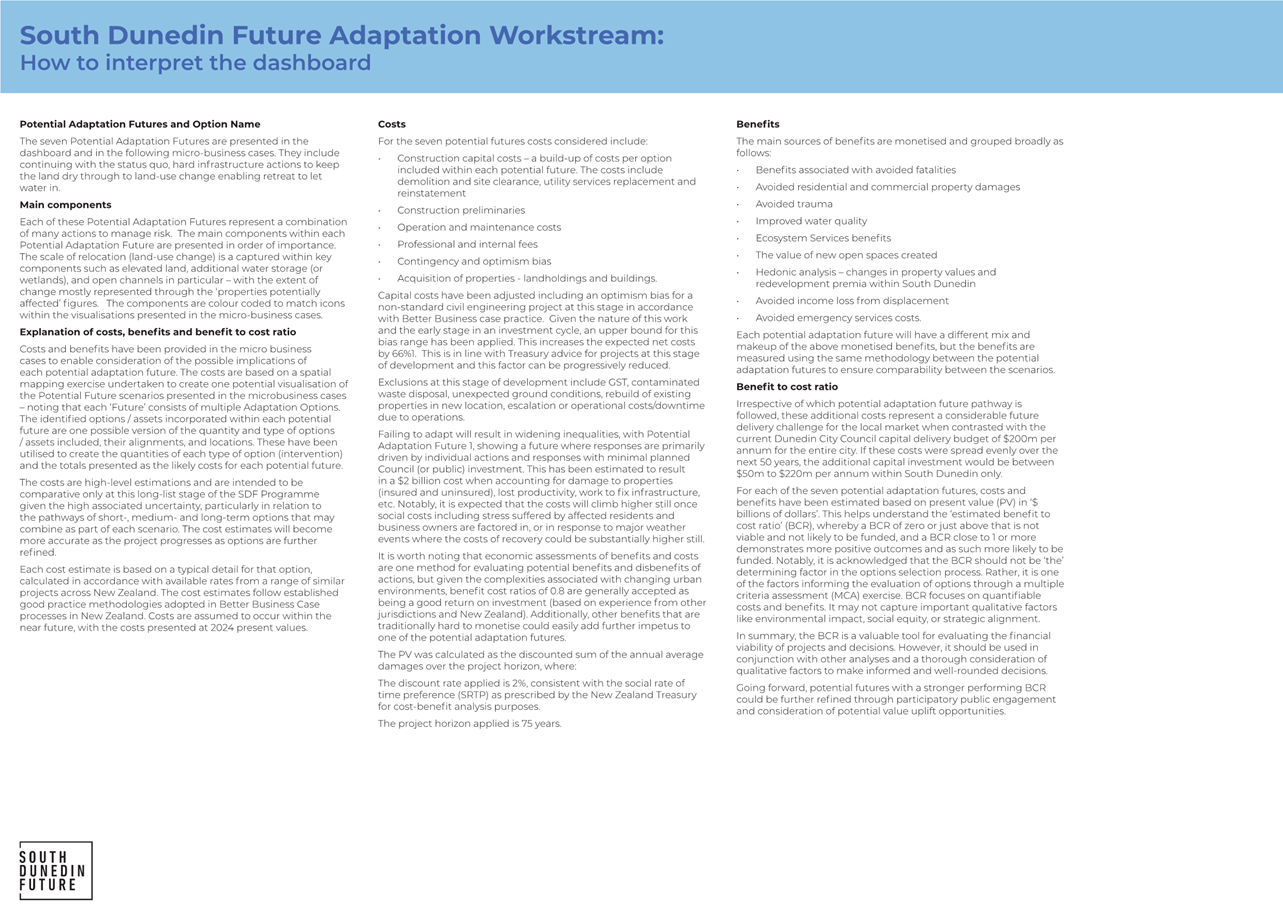
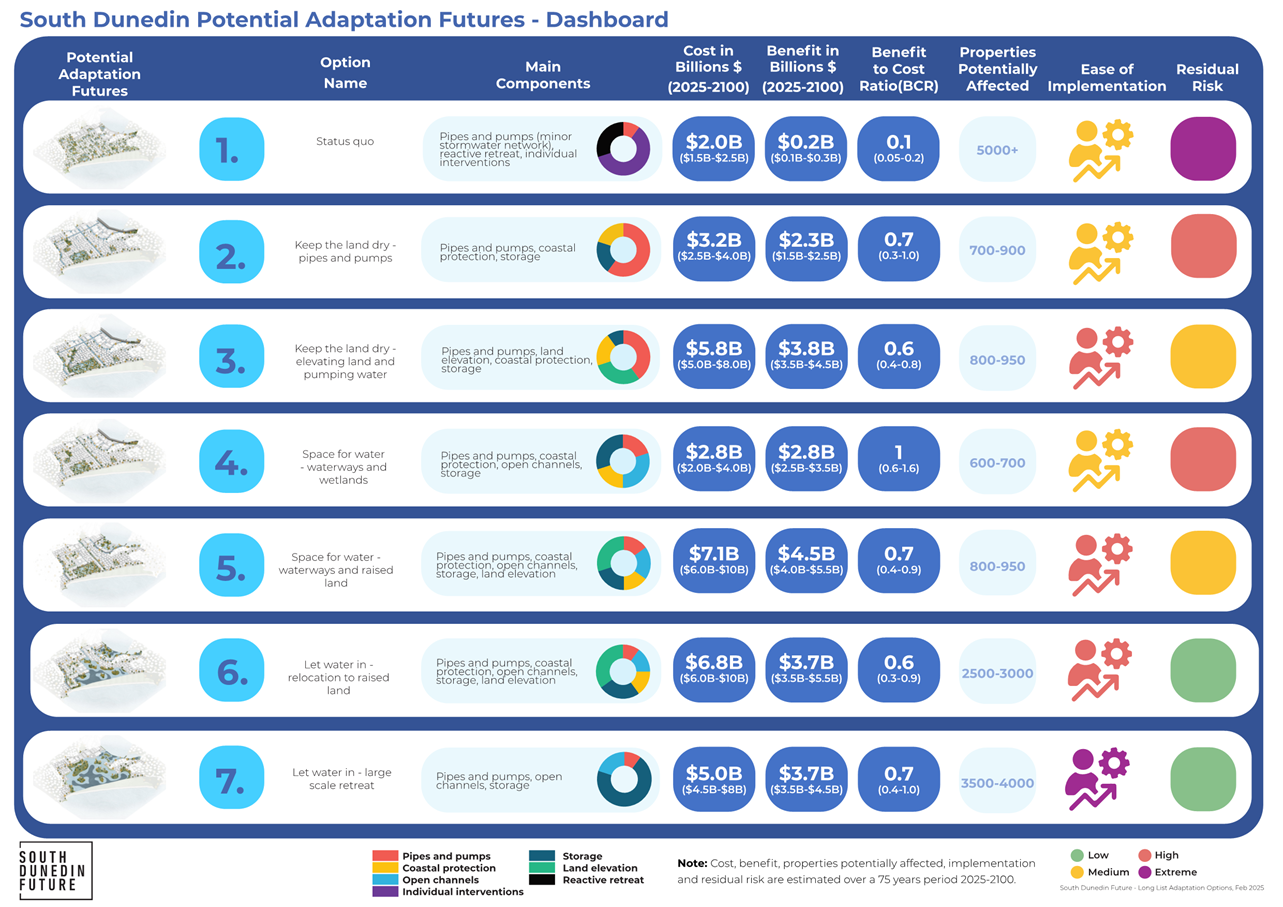
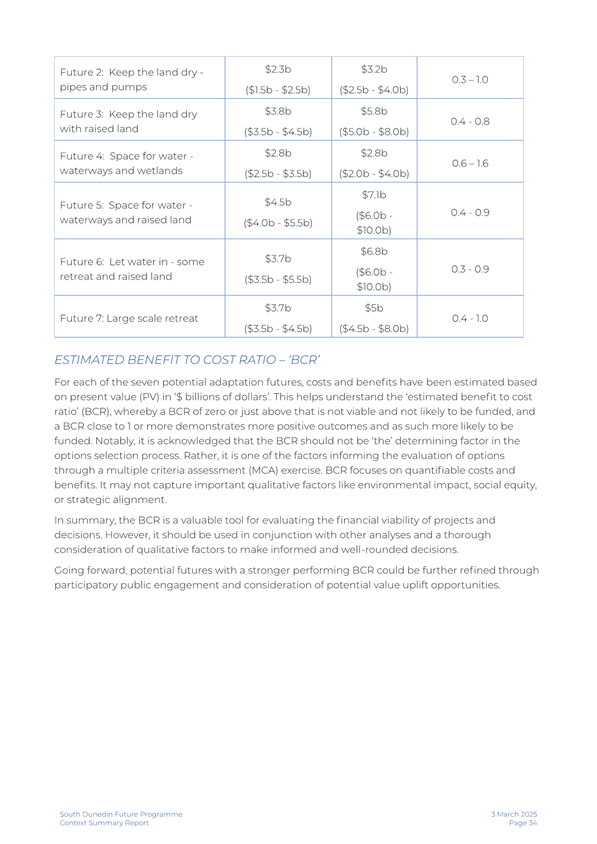
risk assessment shows that South Dunedin has high exposure to natural hazards
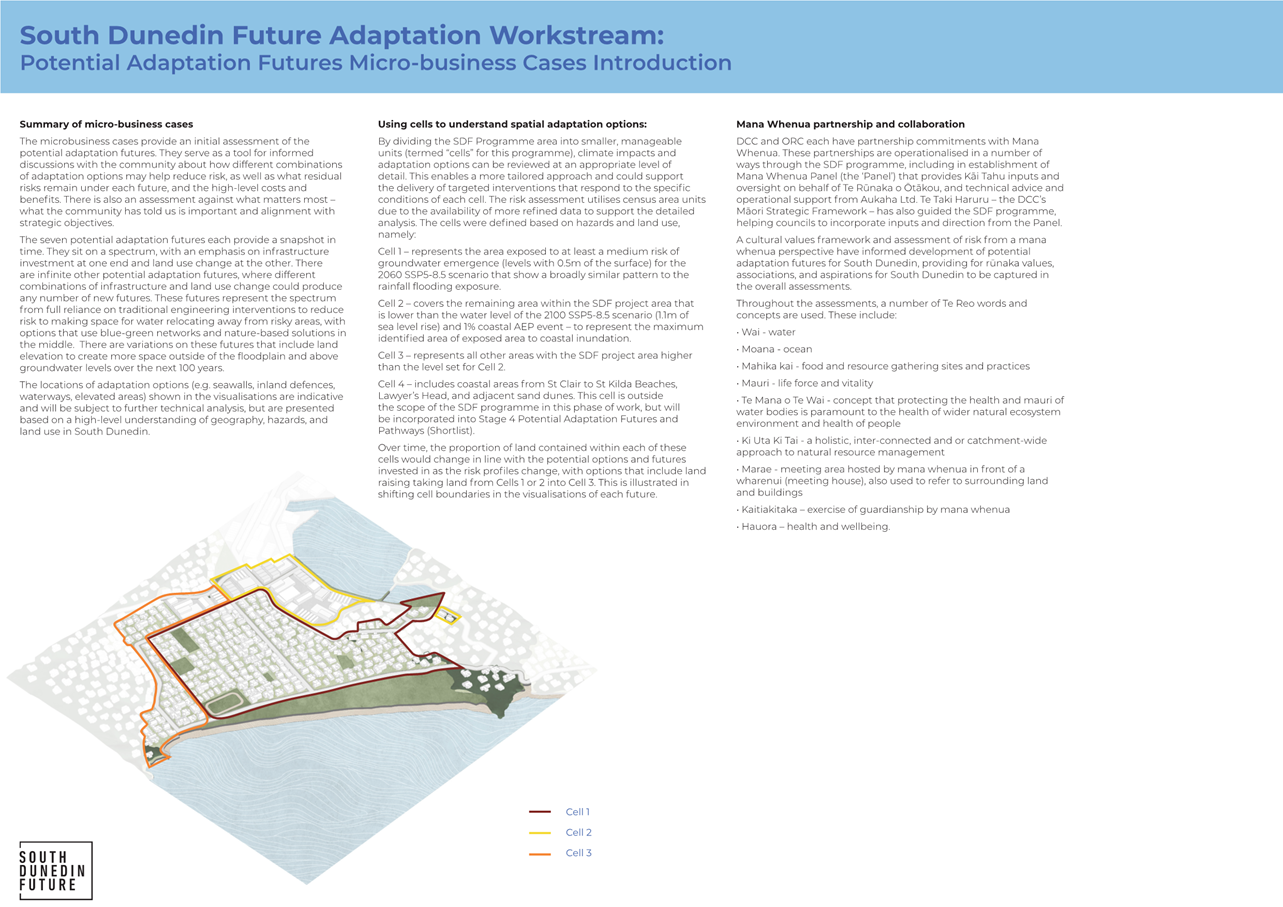
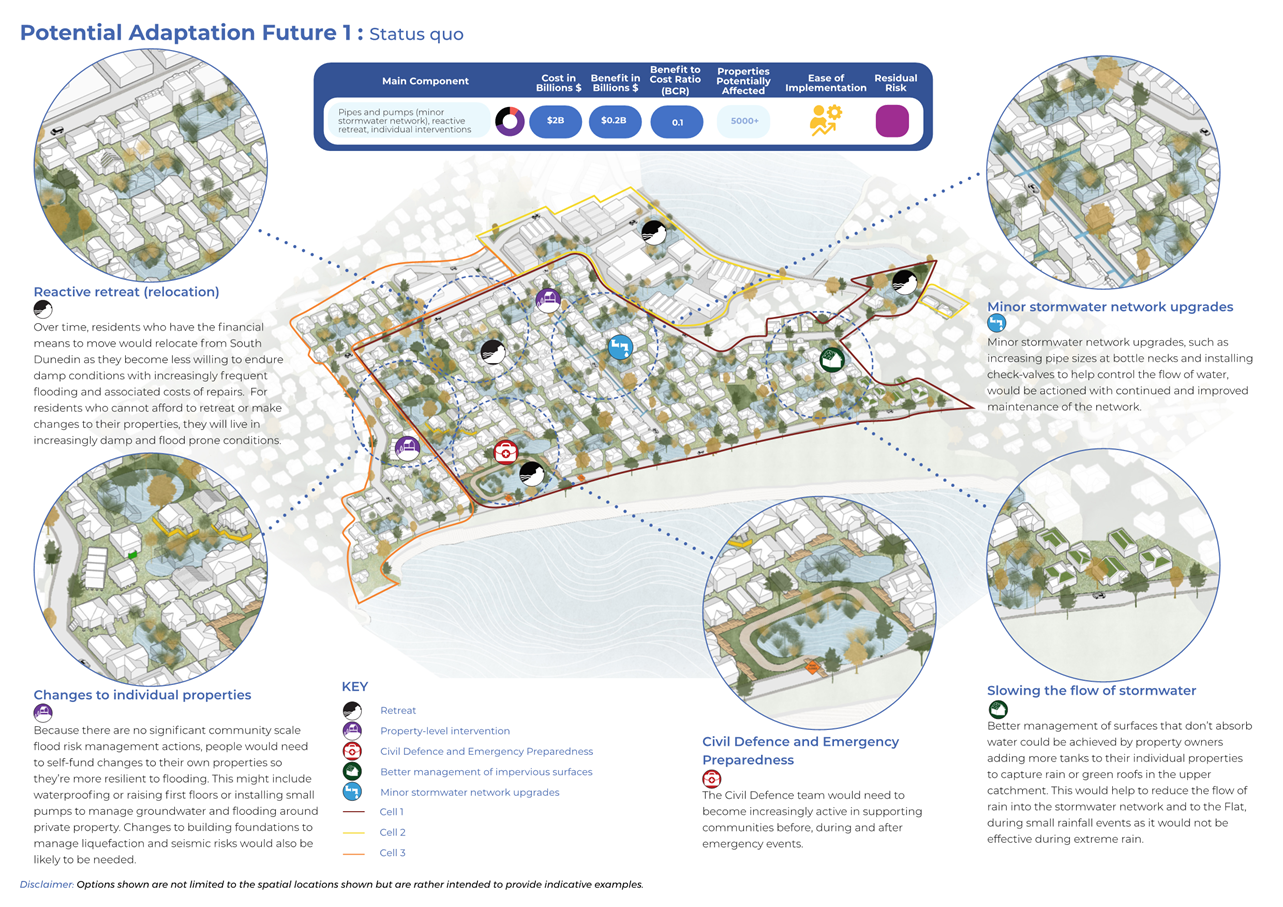
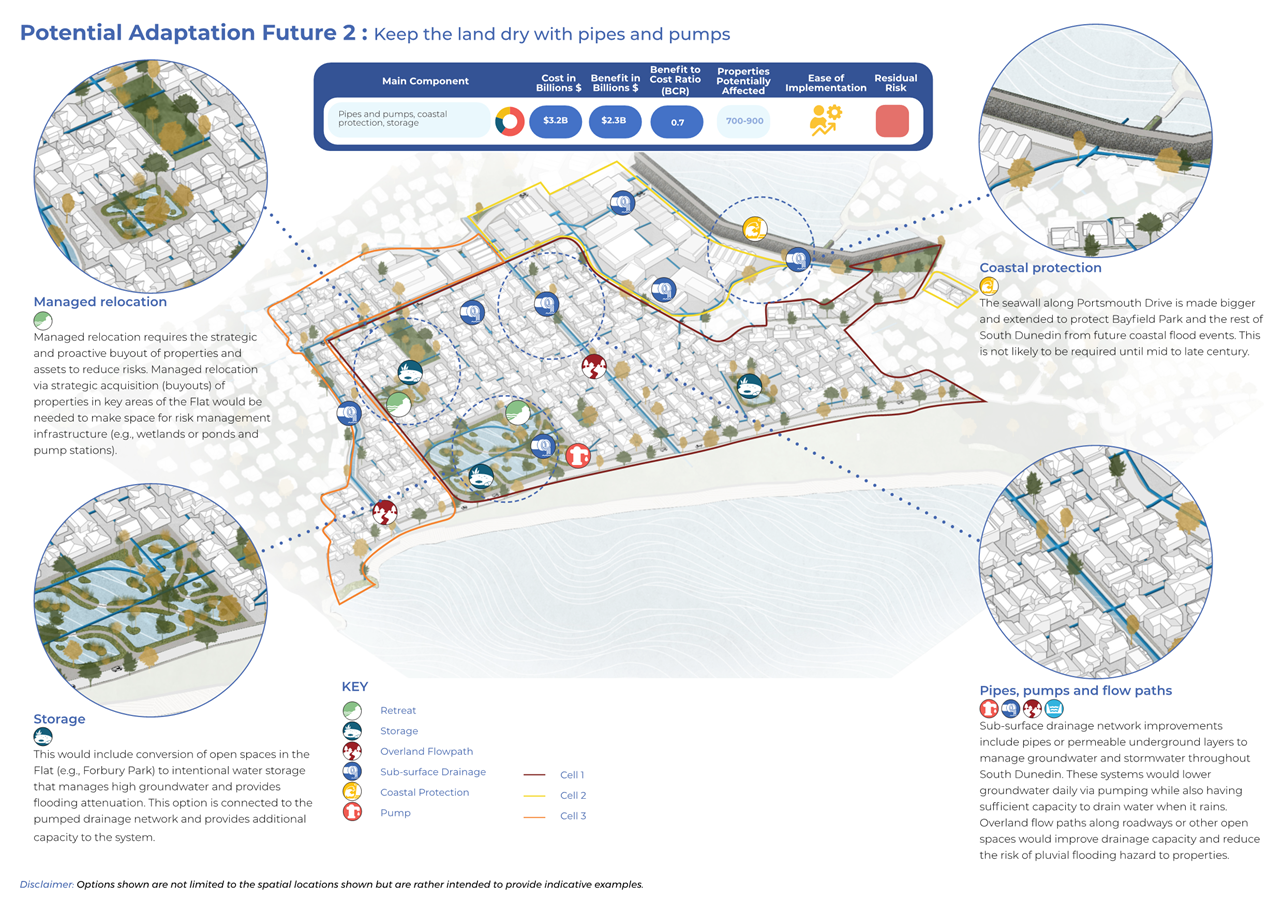
and a correspondingly high-risk profile at present day. Anticipated changes in
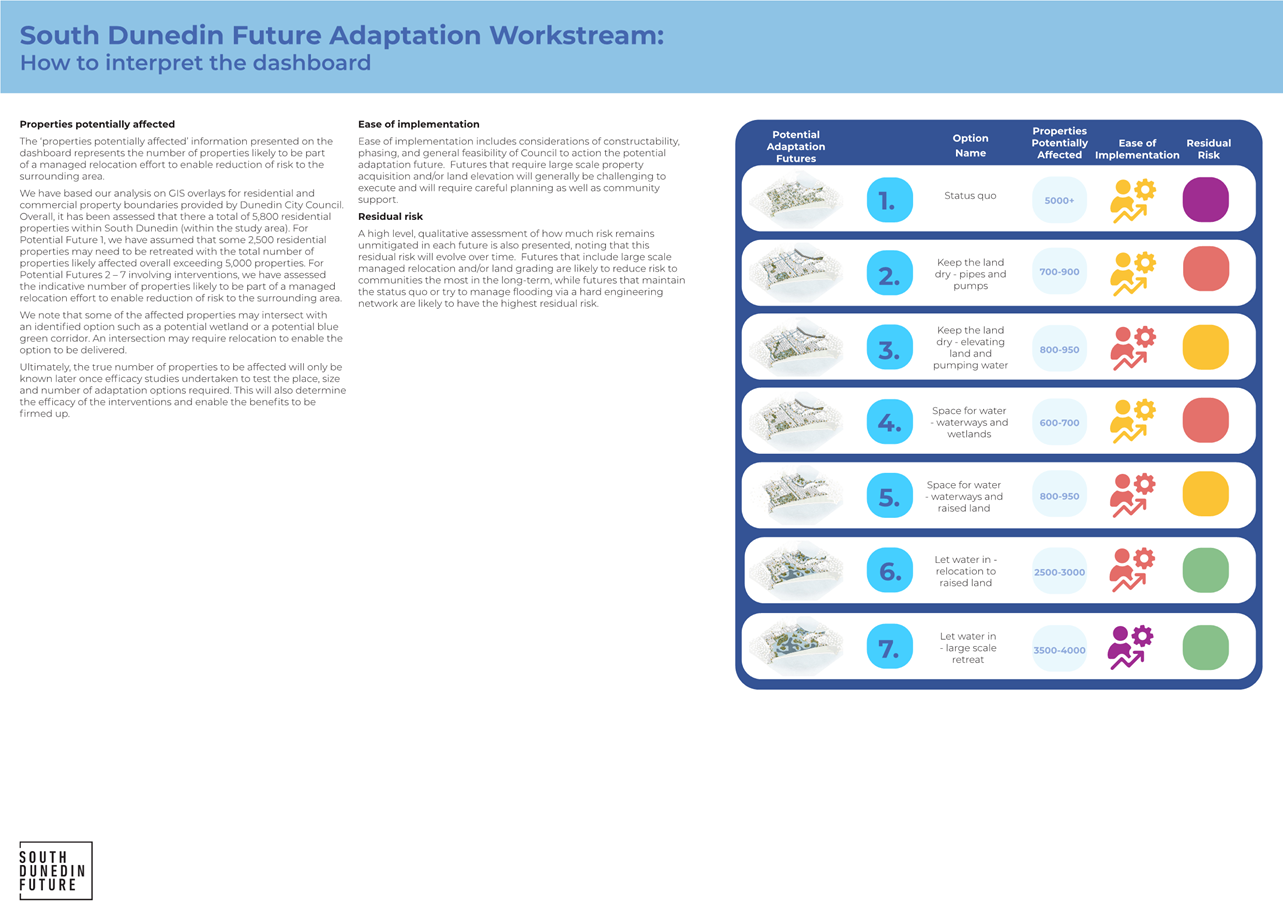
climate, and associated increases in exposure to natural hazards, are expected
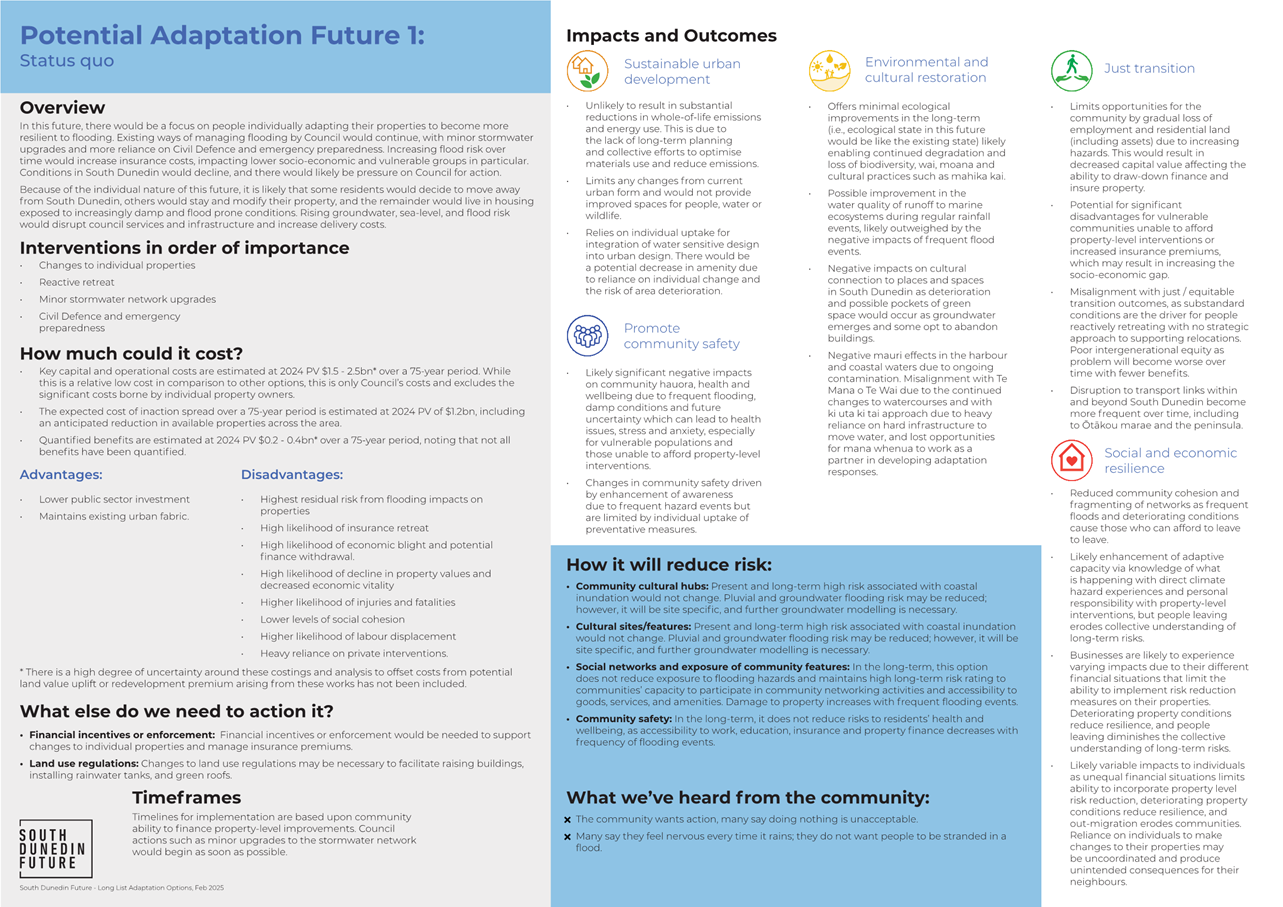
to materially increase risk to South Dunedin’s buildings, infrastructure,
and communities over coming decades. Adverse consequences are expected to increase
to a point where much of the key infrastructure, functions, and services
experience declining functionality, loss of service, or complete failure. These
risks will have significant adverse effects on the South Dunedin community, wider
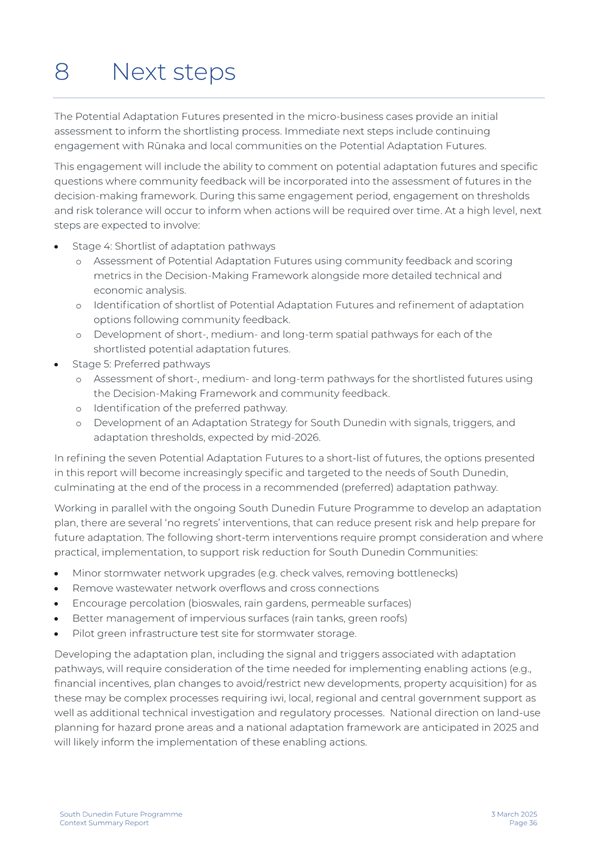
Dunedin city, and the economy unless suitable risk mitigation is employed. This presents a compelling case for change, based on the
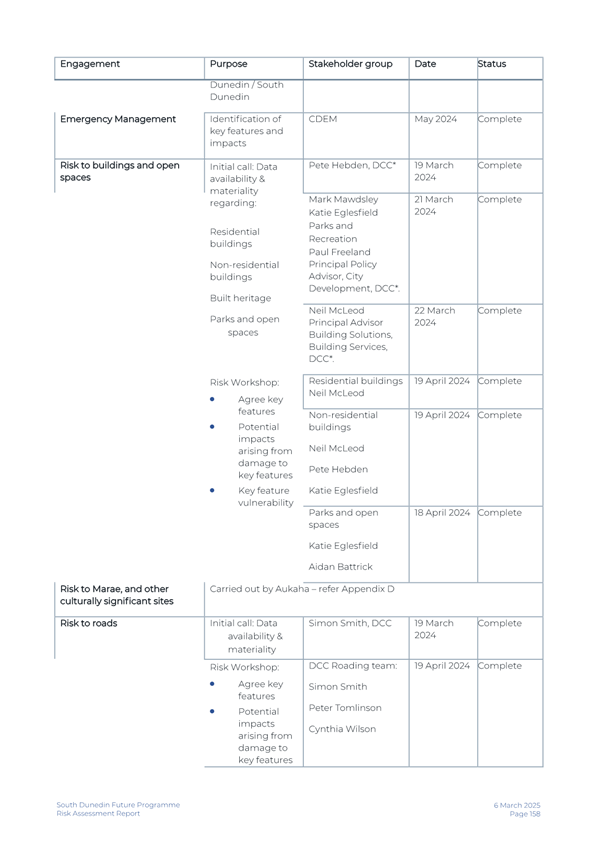
adverse impacts described, and their misalignment with the vision, purpose, and
objectives of the SDF programme.
6 A
mana whenua risk assessment has been undertaken for the SDF programme, which
has identified and rated risks through a Kāi Tahu lens. This assessment
has shown that, from a Kāi Tahu perspective, there is substantial risk
resulting from a ‘keep doing what we are doing’ scenario, if there
are no additional interventions to address the issues facing South Dunedin.
Risk to the values identified in Te Taki Haruru (DCC’s Māori
Strategic Framework) is generally significant, ranging from high risk (mana,
whakapapa, tapu & noa) to extreme risk (mauri).
7 The
adaptation futures report responds to the risk assessment by outlining the
options available for managing and mitigating the risks faced by South Dunedin.
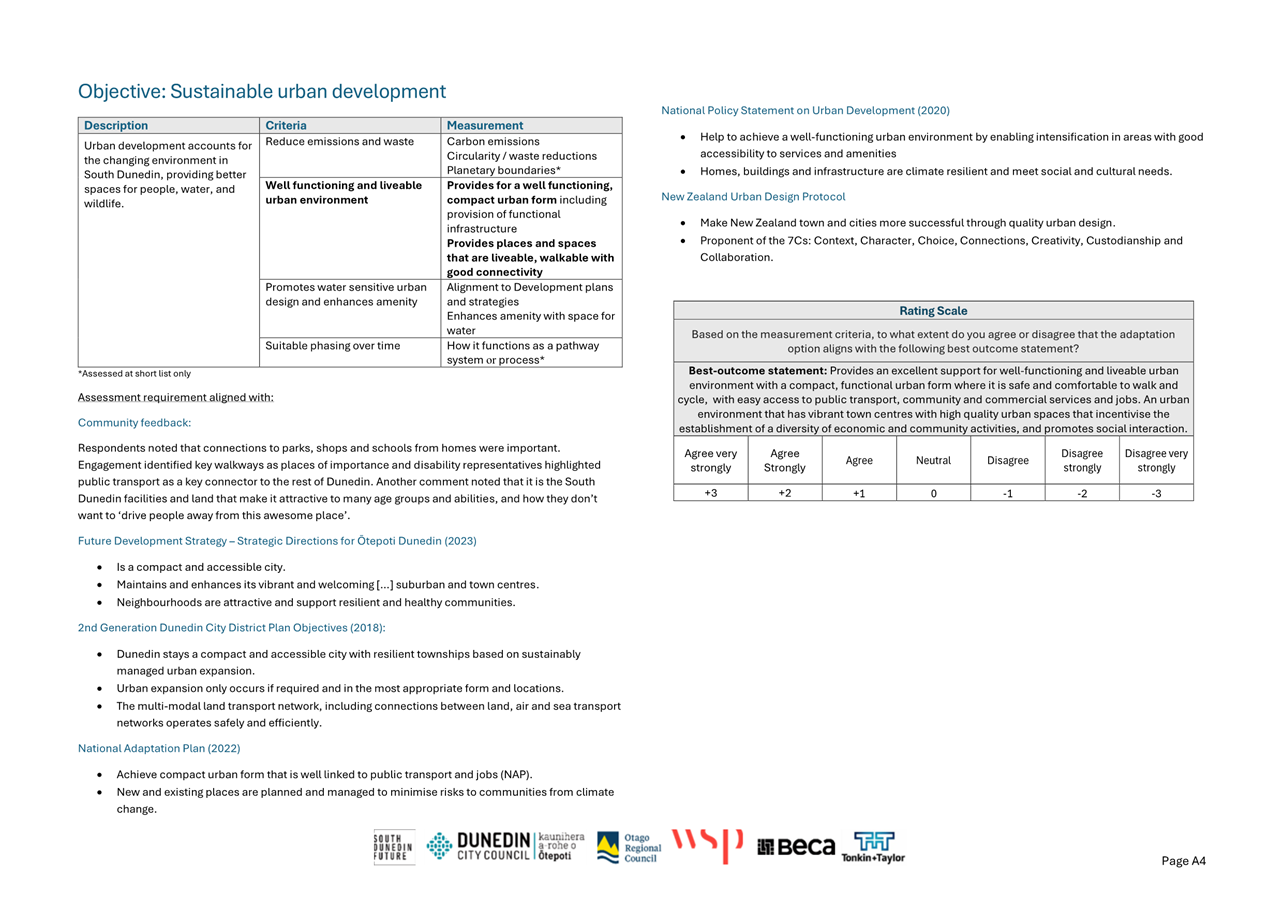
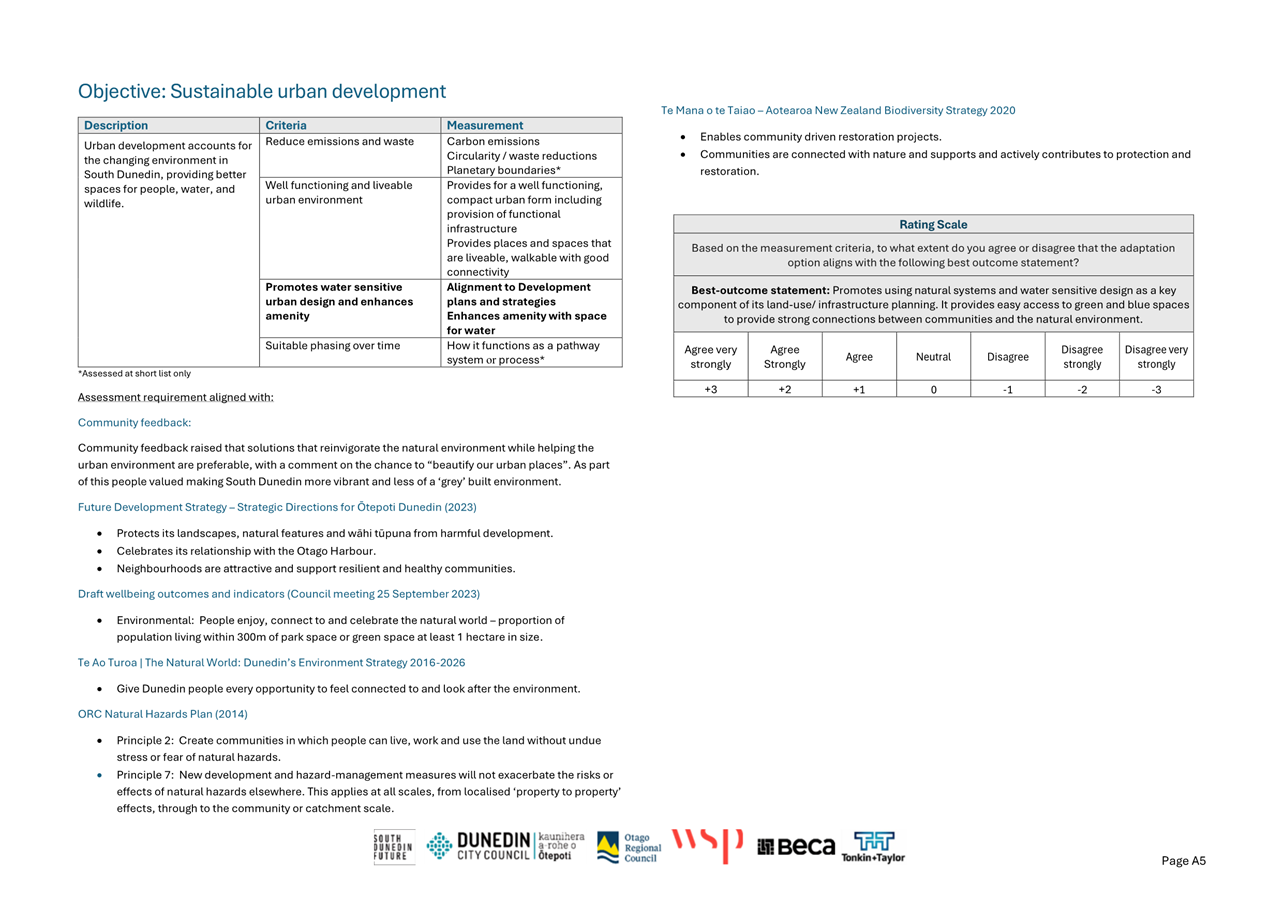
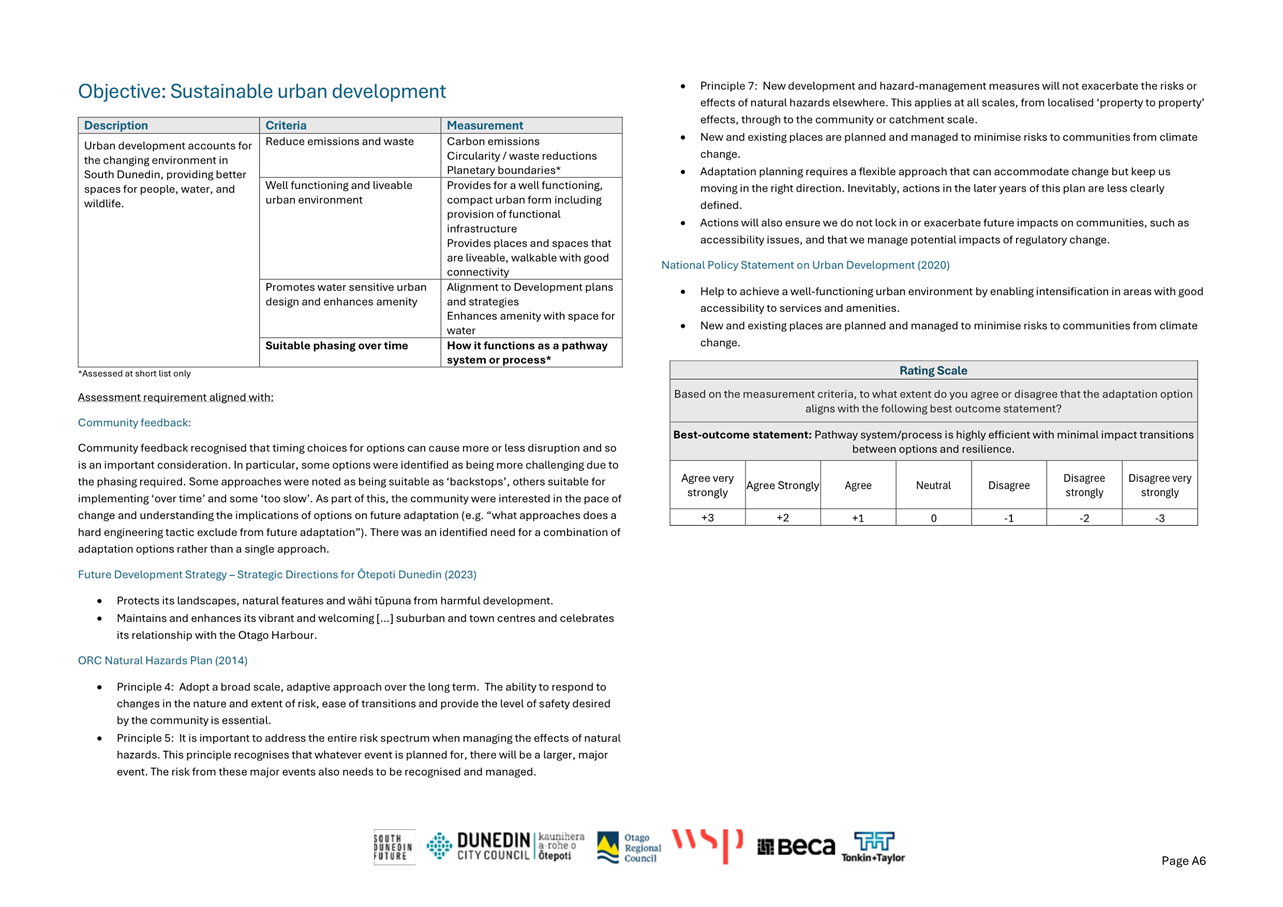
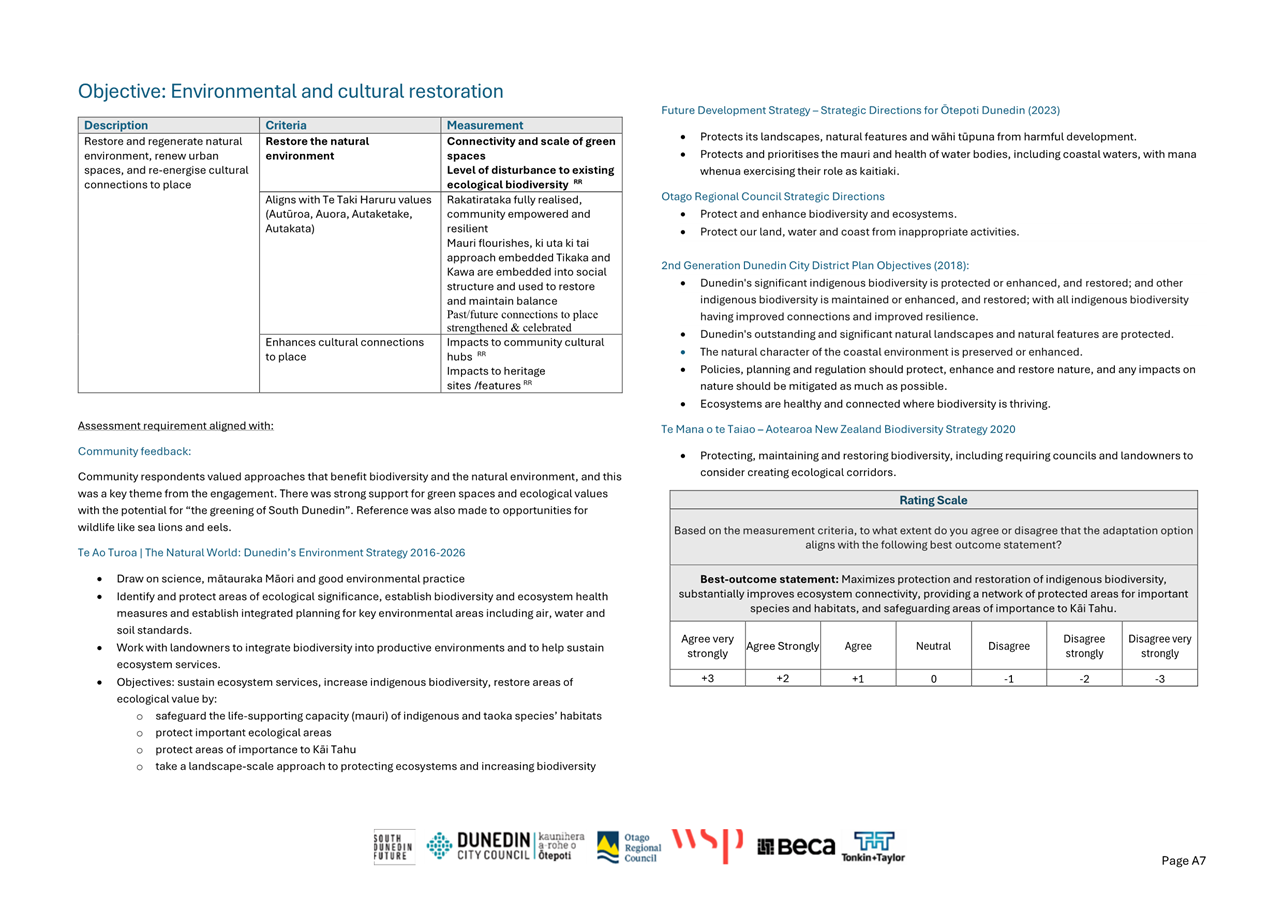
Various adaptation options and approaches are combined into seven potential
adaptation futures, a status quo and six further futures each of which sit on a
spectrum of ‘fight and flight’, with an emphasis on infrastructure at
one end and land use change (including managed retreat) at the other. The
report describes the key characteristics of each potential future, explores the
pros and cons, and provides high-level costs and visualisations of what South
Dunedin could look like in 75 years’ time (in 2100).
8 The
adaptation futures report shows that there is no single future for South
Dunedin where all problems are solved cheaply or easily, rather many viable
futures, each with unique characteristics and trade-offs. Of the seven futures
presented, the status quo is likely to lead to the worst outcomes, with high
costs relative to very limited benefits, the largest number of properties
affected, and highest residual risk. The other six potential futures represent
improved outcomes, but with different cost-benefit ratios, and varying numbers
of affected properties, ease of implementation, and residual risk. The report
essentially illustrates that creating a safer and better future for South
Dunedin will come down to a balance of trade-offs and include choices about the
scale and rate of change, the affordability of different options, and the
acceptable level of ongoing risk.
9 This
stage of the SDF programme is intended to illustrate those choices and to
explore the trade-offs with affected communities and other stakeholders.
Subsequent stages of the programme will combine that feedback with further
technical and economic analysis, refine potential adaptation futures to a
preferred future and pathway, before presenting this in a final adaptation plan
for South Dunedin by December 2026.
10 At present,
Councils have committed to completing the SDF programme, including remaining
technical work, economic analysis, and community engagement. Councils have not,
at this time, committed to supporting any particular course of action that
might be recommended by the SDF programme – including those relating to
strategic land use planning or infrastructure investment. Such decisions, and
the roles and responsibilities of respective Councils in implementing them,
would be subject to further Council consideration, including in the context of
strategic and financial decisions associated with long term plan processes.
RECOMMENDATIONS
That the Council:
a) Notes the background
of the South Dunedin Future programme and work undertaken since the previous
update report to Council on 24 September 2025.
b) Notes the contents of
the South Dunedin Risk Assessment report, which identifies, classifies, and
prioritises risk across the area by assessing exposure to natural hazards,
vulnerability to those hazards, and likelihood of occurring, before assigning
corresponding risk scores. The impacts of these risks, should they be realised,
are also described.
c) Notes a mana whenua
risk assessment has been undertaken for South Dunedin, which has identified and
rated risks through a Kāi Tahu lens, based on an analysis of cultural
values.
d) Notes the South
Dunedin Risk Assessment has undergone technical peer review, and where
technical issues remain outstanding, these are acknowledged in the report or
will be addressed in subsequent stages of the SDF programme.
e) Endorses the attached South
Dunedin Risk Assessment report for the purposes of community engagement.
f) Notes the South
Dunedin Risk Assessment report may be updated in future, to account for new
natural hazard information or in response to updated risk analysis, including
that which may result from adaptation planning work.
g) Notes the contents the
7 Potential Adaptation Futures for South Dunedin and
Context Summary reports, which respond to the risk assessment by outlining
the options available for managing and mitigating the risks faced by South
Dunedin, including the key characteristics, costs, benefits, and trade-offs
involved.
h) Notes the 7 Potential
Adaptation Futures for South Dunedin and Context Summary reports have undergone
technical peer review, and where technical issues remain outstanding, these are
acknowledged in the reports or will be addressed in subsequent stages of the
SDF programme.
i) Endorses the attached
7 Potential Adaptation Futures for South Dunedin and Context Summary reports
for the purposes of community engagement.
j) Notes that there are
two further stages of adaptation planning under the South Dunedin Future
programme, through which further technical and economic analysis will support
development of a shortlist of potential adaptation futures and then the
preferred adaptation future and pathway for South Dunedin. This work will be
presented as a final adaptation plan for South Dunedin.
k) Notes the next stage
of the South Dunedin Future programme involves engaging with the community on
the findings and implications of the South Dunedin Risk Assessment and the key
characteristics of the 7 Potential Adaptation Futures for South Dunedin.
l) Approves the SDF
programme team undertaking engagement with partners, stakeholders and affected
communities on the basis of the South Dunedin Risk Assessment, 7 Potential
Adaptation Futures of South Dunedin and Context Summary reports.
BACKGROUND
11 The South
Dunedin Future (SDF) programme is a joint initiative between the Dunedin City
Council (DCC) and Otago Regional Council (ORC) to develop a climate change
adaptation plan for South Dunedin. A programme plan, which outlined the
high-level approach for delivering the SDF programme was approved by DCC and
ORC Council Committees in July 2022 (refer Part A
Item 9, Planning & Environment Committee, 6 July 2022).
12 The SDF programme
vision is “a safer and better South Dunedin, where sustainable urban
regeneration leads to improved community resilience and wellbeing”.
The purpose of the programme is to enable South Dunedin to prepare for, and
adapt to, the impacts of climate change, while also realising the opportunities
that come with change. Broader strategic objectives of the programme relate to
just transition, community safety, environmental and cultural restoration,
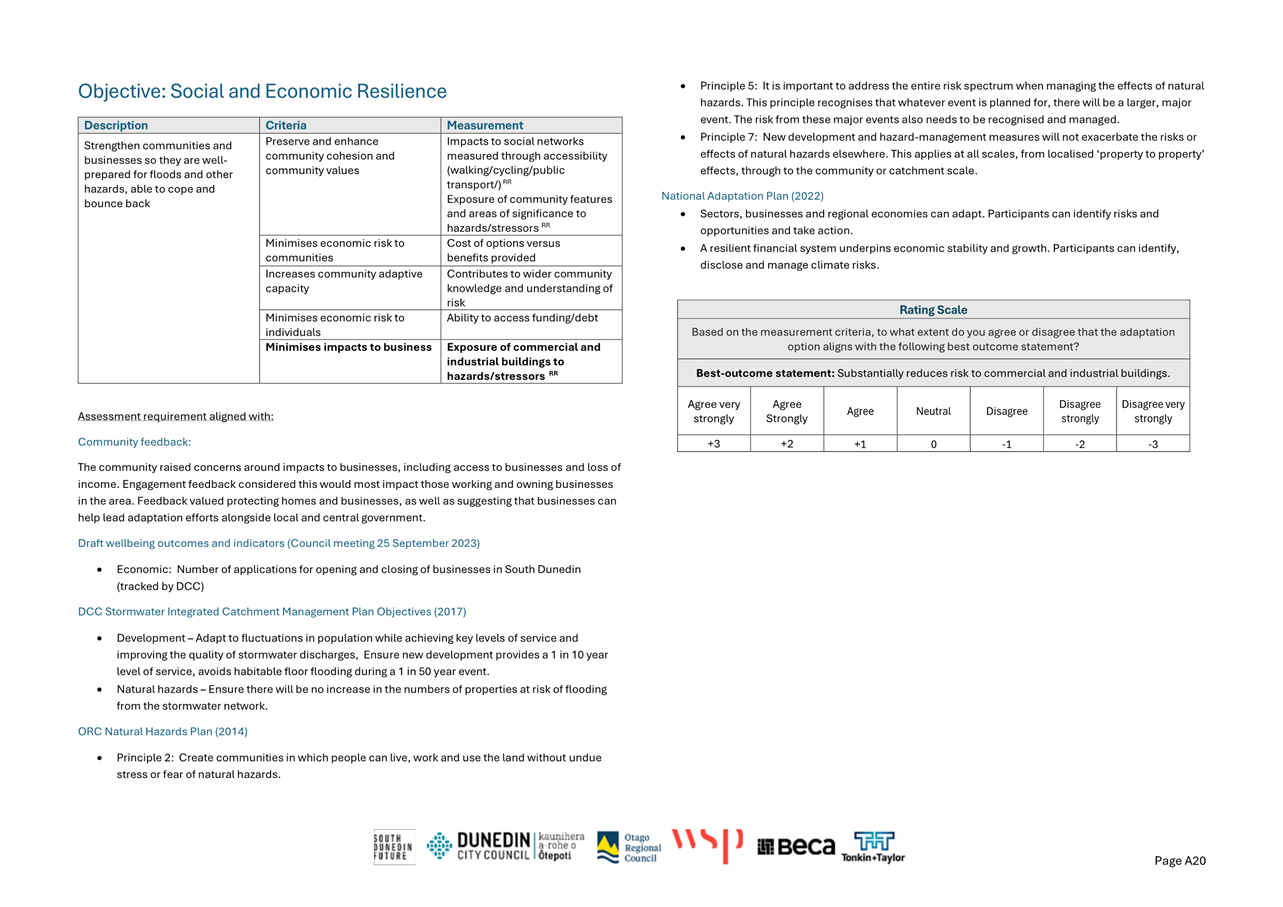
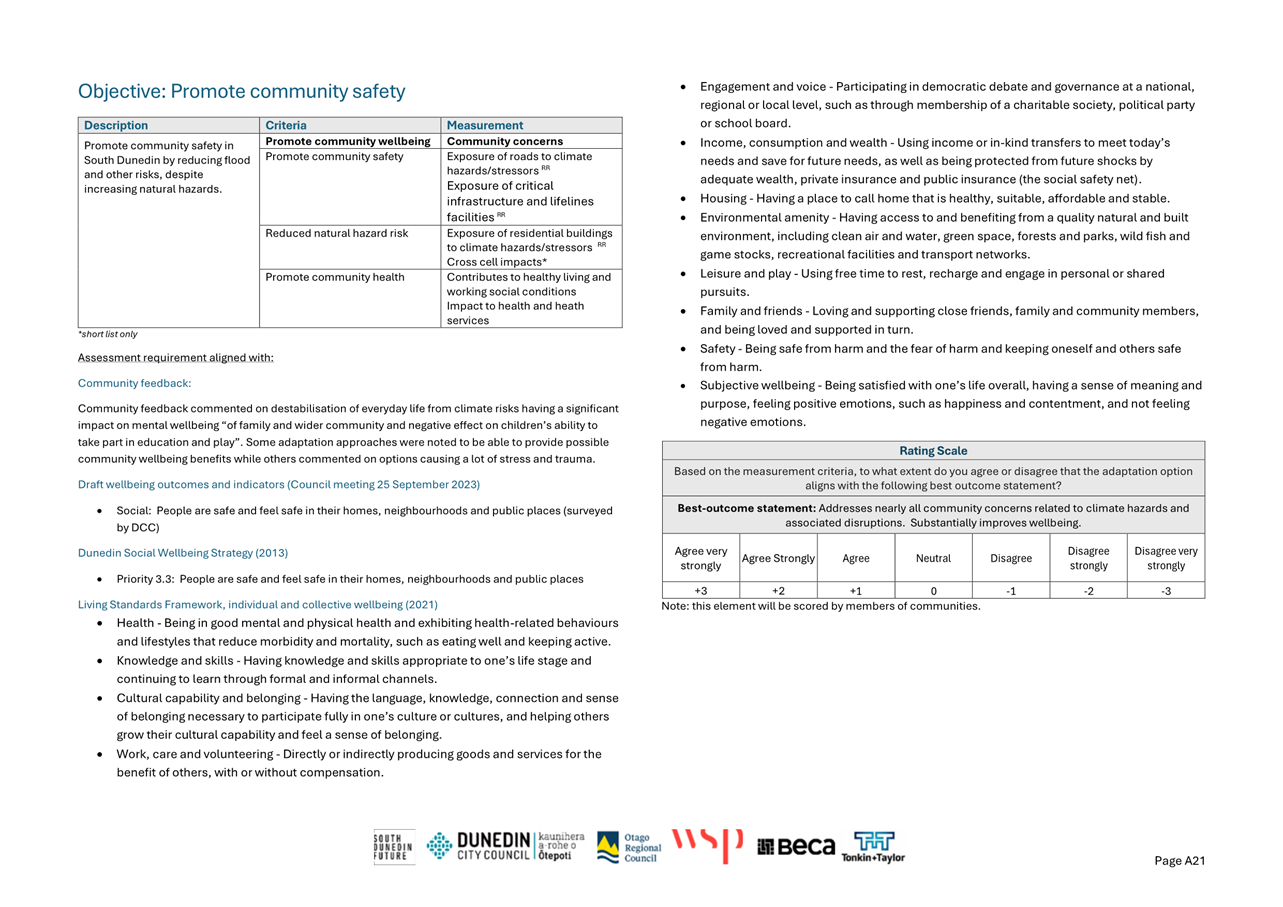
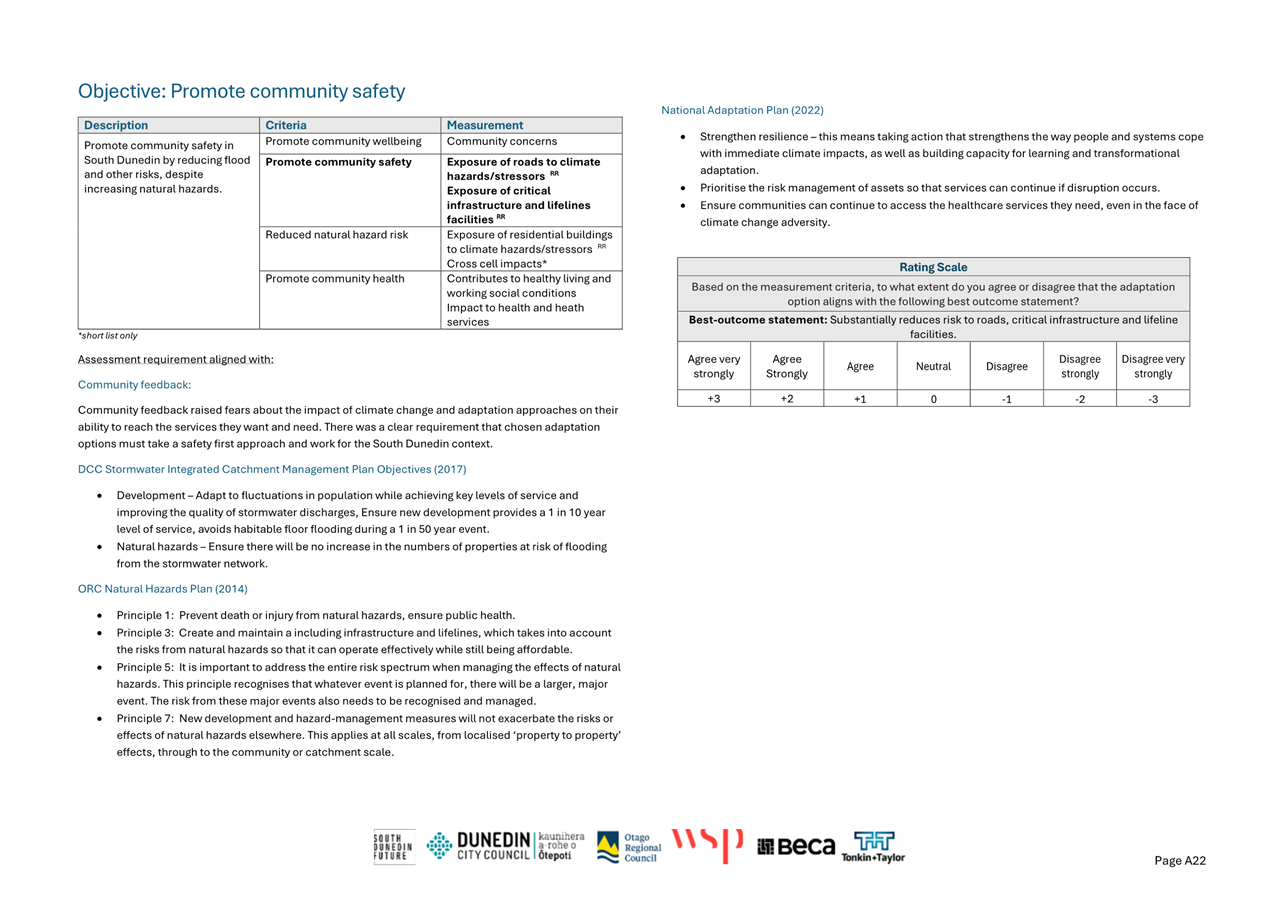
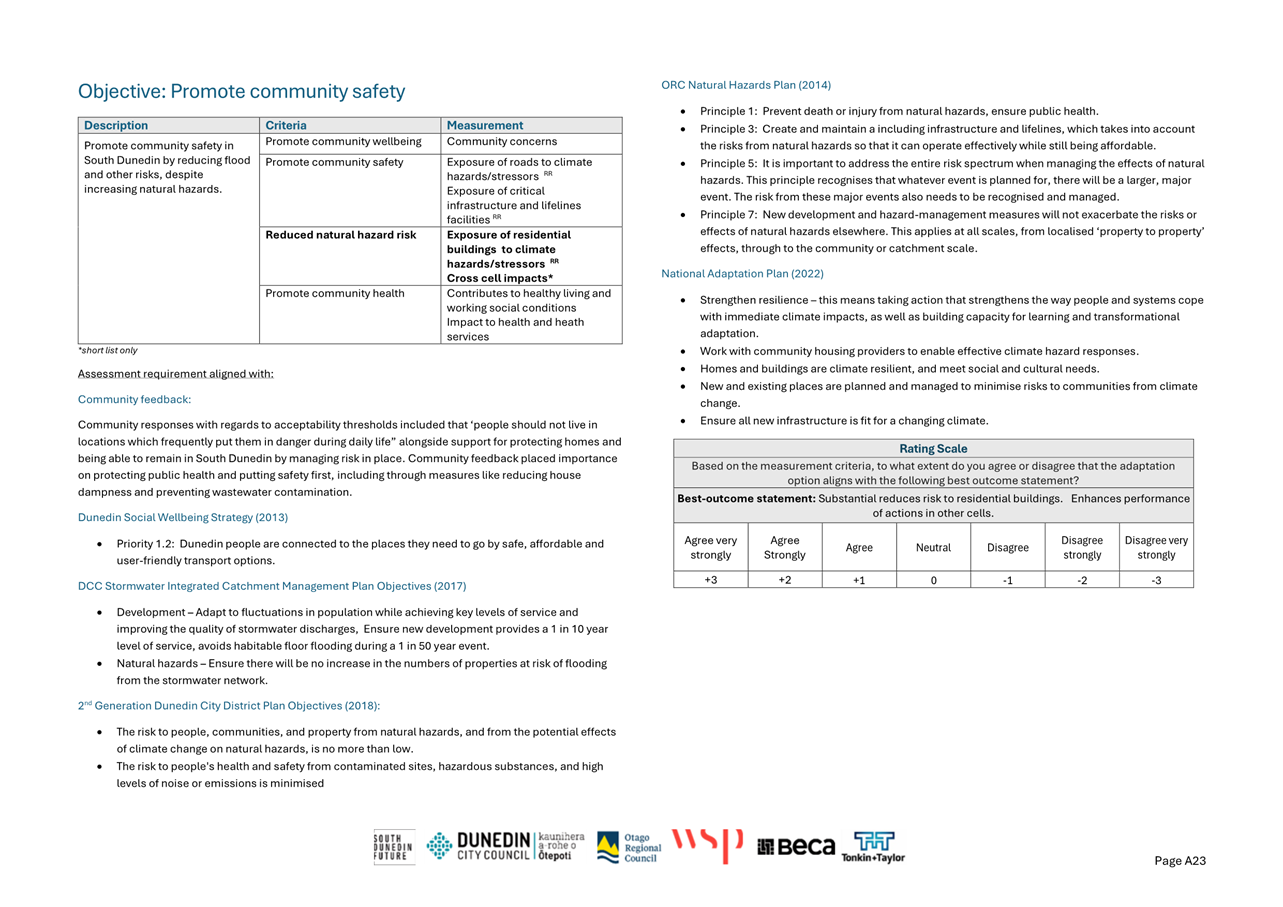
social and economic resilience, and sustainable urban development (refer Item 10, DCC Council Meeting, 28 November 2023).
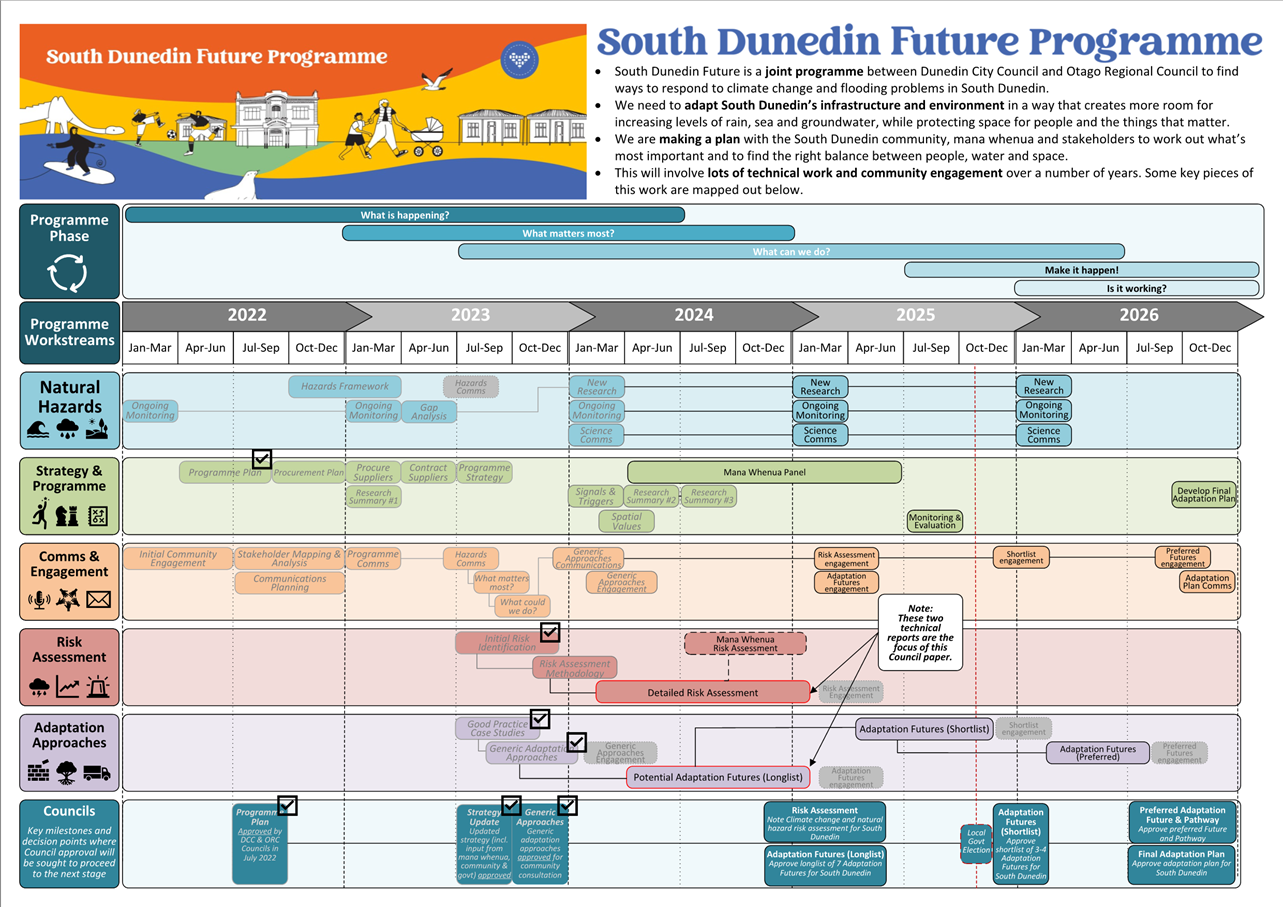
13 The SDF
programme has been broken into five phases, five workstreams, and a number of
programme actions. The workstreams include: (i) natural hazards; (ii) strategy
and programme management; (iii) communications and community engagement; (iv)
risk assessment; and (v) adaptation planning. This breakdown has been explained
more fully in previous Council papers and workshops, but is also illustrated in
the A3 SDF Programme Overview (Attachment A).
External
technical assistance
14 The SDF
programme involves detailed technical work, economic analysis, and extensive
community engagement over multiple years. External technical assistance has
been sourced to support delivery of the SDF programme. In July 2023, following
an open tender process, DCC contracted a consultant group comprising
engineering, planning, and environmental services firms WSP, BECA and Tonkin
& Taylor (collectively known as ‘Kia Rōpine’), to support
delivery of the SDF programme over the next three years (2023/24 to 2025/26).
15 In August
2023, DCC also contracted a second consultant group comprising engineering,
planning and environmental services firms Jacobs New Zealand Ltd, Royal
HaskoningDHV and Bell Adapt Ltd, to undertake technical peer review of the risk
assessment and adaptation planning workstreams.
Recent SDF
programme activities
16 The
following key activities have been undertaken by or in support of the SDF
Programme since the most recent update report to Councils
(refer Item 10, Council Meeting, 24 September 2024):
· Filling
of information gaps and data limitations required for the South Dunedin Risk
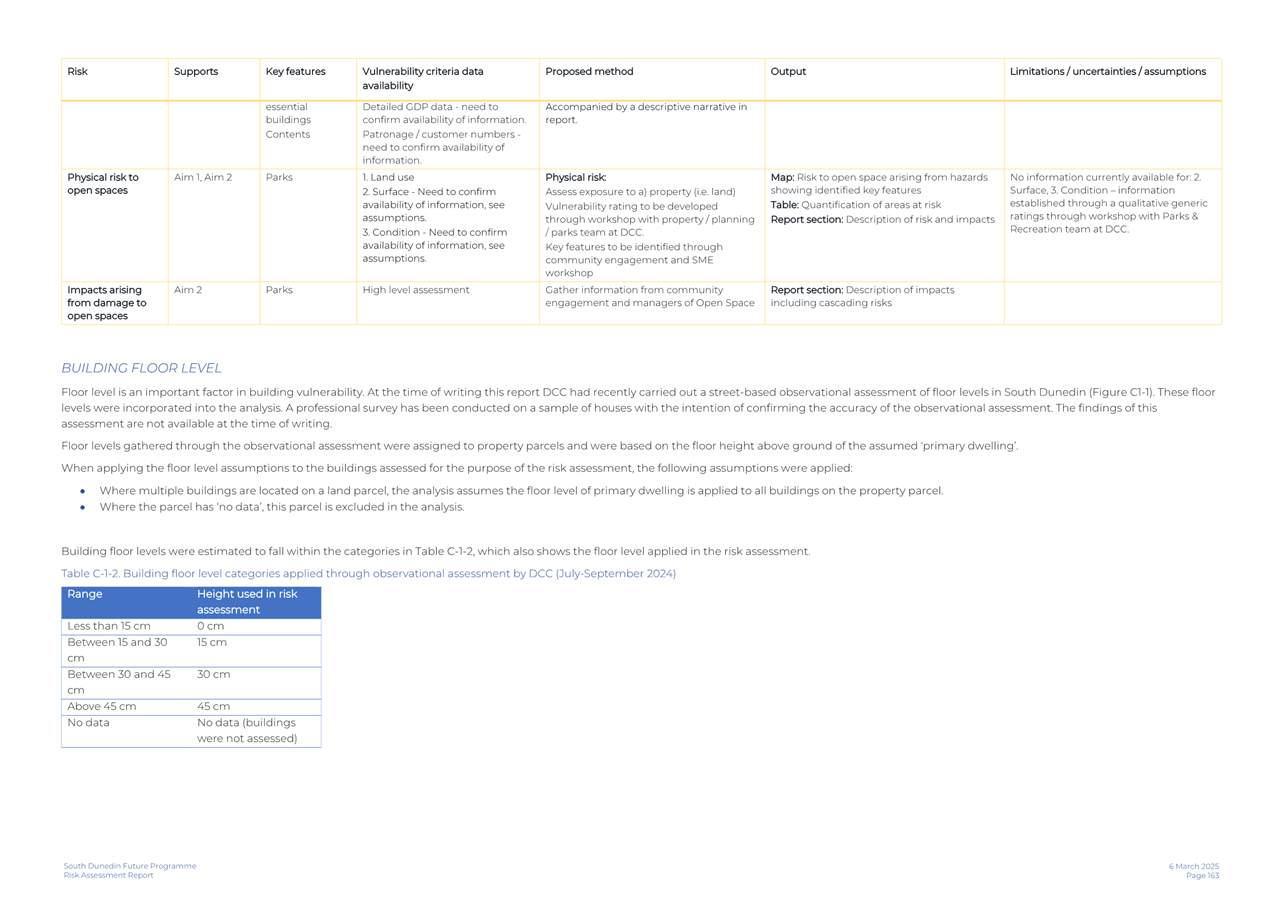
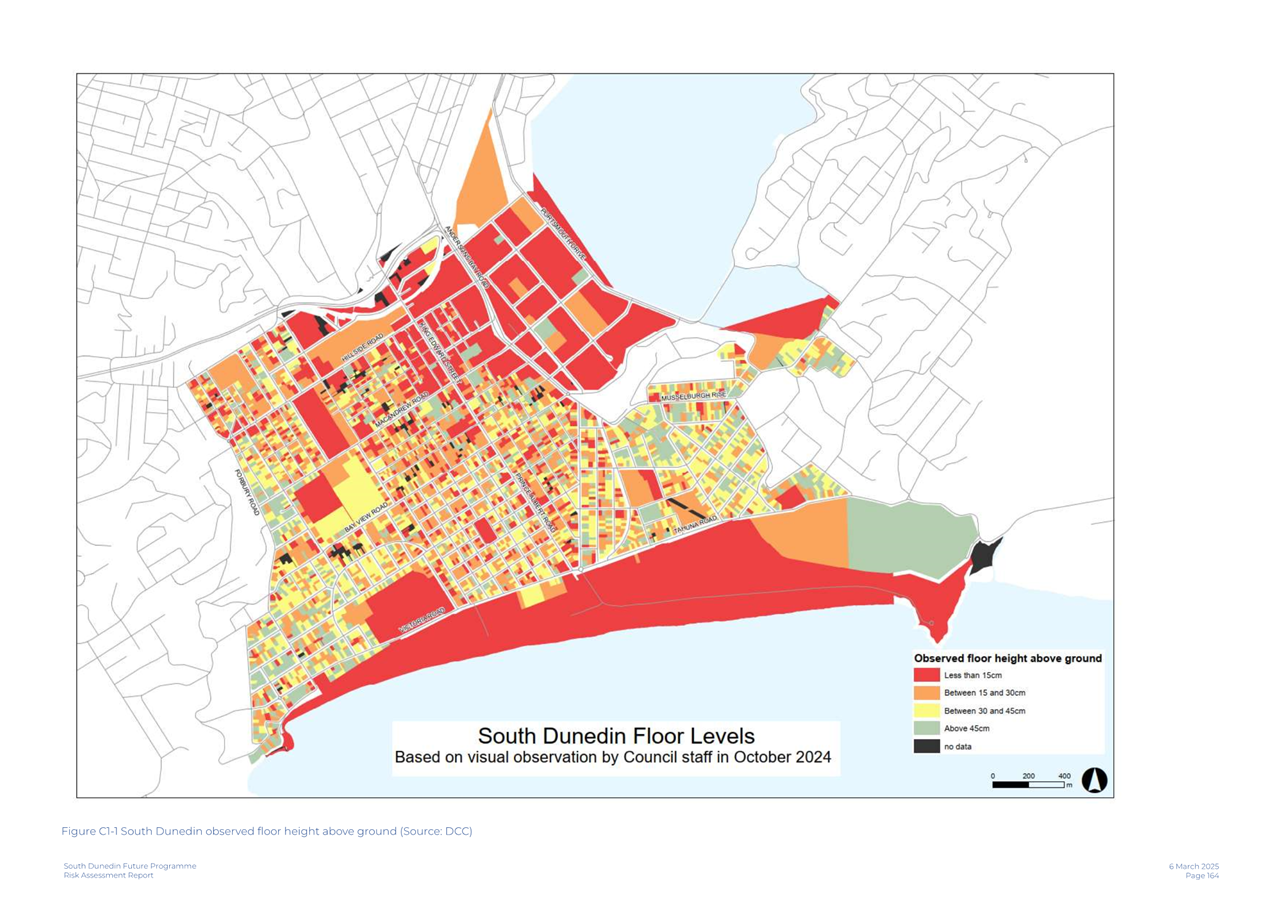
Assessment, including floor level information for South Dunedin properties and
development of a new 3 Waters flood model.
· Supporting
the response, recovery, and analysis of the 3-4 October 2024 heavy rainfall and
flooding event that affected much of South Dunedin.
· Working
to finalise the technical reports attached to this council paper, including the
South Dunedin Risk Assessment, 7 Potential Adaptation Futures for South Dunedin
and supporting Context Summary Report.
· Engaging
with a wide range of SDF programme partners, stakeholders, and affected
communities, including (but not limited to): central government agencies, other
councils, banks, insurers, community groups, and mana whenua representatives.
· Completing
an initial analysis of the potential property implications associated with the
various adaptation options being explored under the SDF programme, and in
particular the implications of managed relocation or retreat.
DISCUSSION
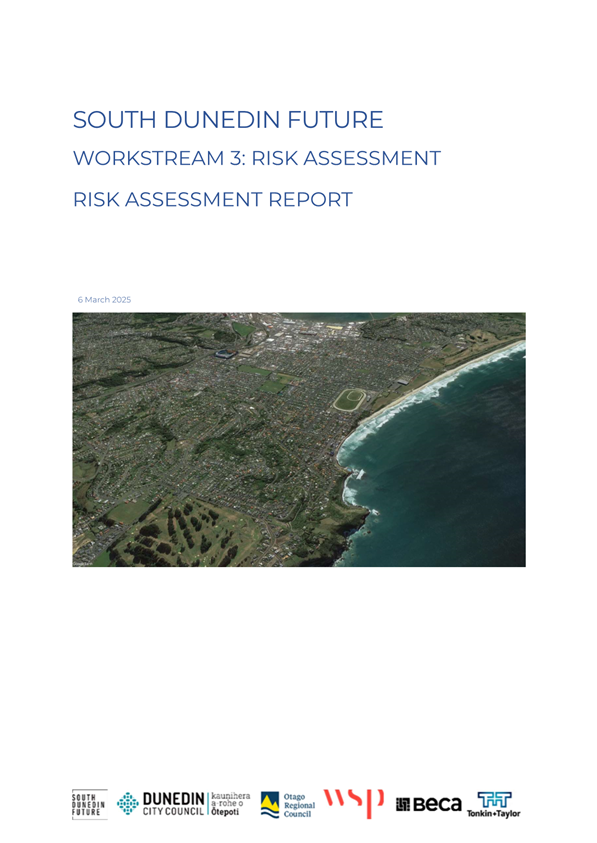
17 The two key
outputs from this stage of the SDF programme are the South Dunedin Risk
Assessment (Attachment B) and 7 Potential Adaptation Futures (Attachment C)
reports. The risk assessment essentially seeks to define the challenges facing
South Dunedin and the adaptation futures report responds by outlining a range
of potential solutions. Read together, the reports present an initial picture
of the potential future – or futures – for South Dunedin.
Risk
Assessment
18 The risk
assessment has been delivered in three stages: (i) risk identification, (ii)
risk assessment methodology; and (iii) undertaking detailed risk assessment
against “do nothing” scenarios at present and in future. The
approach aligns with guidance from the Ministry for the Environment (MfE) and
Intergovernmental Panel on Climate Change (IPCC), and where appropriate draws
on the ORC’s Regional Policy Statement (RPS) methodology for aggregated
risk.
19 Principles
for the risk assessment included making best use of available data, ensuring
effort is proportional to outcome, and identifying risks and opportunities that
may require or justify further inquiry. There are inherent limitations and
sources of uncertainty regarding the risk assessment, due to the scope, scale,
and complexity of what it needs to cover. Additionally, data gaps relating to
exposure, hazard, and vulnerability introduce limitations and sources of
uncertainty. These limitations are noted in the report.
20 Importantly,
the risk assessment is intended to support suburb-level adaptation planning
undertaken by the SDF programme, including dialogue with affected stakeholders
about the options for mitigating and adapting to identified risks. The risk
assessment is not intended to provide a detailed property-level assessment of
risk and using the report in this way could lead to false or misleading
conclusions (e.g. high-risk areas may include low-risk properties, or the
reverse).
South Dunedin
Risk Assessment
21 The South
Dunedin Risk Assessment identifies, classifies, and prioritises risk across the
area by assessing exposure to natural hazards, vulnerability to those hazards,
and likelihood of occurring, before assigning corresponding risk scores. The
impacts of these risks, should they be realised, are also described.
22 The purpose
of the Risk Assessment is to “assess the potential for elements at risk
(people, places, assets) to be negatively affected by pluvial flooding, coastal
(inundation and erosion), groundwater, landslide, and liquefaction natural
hazards in South Dunedin. To support this purpose, the two primary aims of the
risk assessment are to:
a) outline
the “case for change” in response to current and increasing natural
hazard risks, by providing an overview of risk and developing a risk baseline
to illustrate the implications of a “status quo” or “do
nothing” scenario; and
b) support
spatial adaptation planning, including by identifying which key features are
most at risk, where and when adaptation may be required to reduce risk, and by
establishing a baseline against which potential risk mitigations (i.e.
adaptation options) can be assessed.
23 A mana
whenua risk assessment has been undertaken for the SDF programme, which has
identified and rated risks through a Kāi Tahu lens. Based on an analysis
of cultural values, it takes a broad approach to risk. As well as risks to specific
places and features important for the cultural associations to mana whenua, it
considers risks to Kāi Tahu perspectives and values relating to wider
environmental, social, and economic factors in South Dunedin. This mahi was
facilitated by Aukaha with guidance and validation from a panel of Kāi
Tahu mana whenua representatives.
Key findings
24 The risk
assessment shows that South Dunedin has high exposure to natural hazards,
including chronic and gradual onset hazards like sea level rise and shallow groundwater,
as well as event-based hazards such as pluvial flooding and liquefaction. South
Dunedin has a correspondingly high risk profile at present day. Anticipated
changes in climate, and associated increases in exposure to natural hazards,
are expected to materially increase risk to South Dunedin’s buildings,
infrastructure, and communities over coming decades.
25 Adverse
consequences are expected to increase to a point where much of the key
infrastructure, functions, and services experience declining functionality,
loss of service, or complete failure. These risks will have significant adverse
effects on the South Dunedin community, wider Dunedin city, and the economy
unless suitable risk mitigation is employed. This presents a compelling case
for change, based on the adverse effects described, and the misalignment with
the SDF programme vision, purpose, and objectives noted above.
26 The mana
whenua risk assessment has shown that, from a Kāi Tahu perspective, there
is substantial risk resulting from a ‘keep doing what we are doing’
scenario, where there are no additional interventions to address the issues
facing South Dunedin. Risk to the values identified in Te Taki Haruru
(DCC’s Māori Strategic Framework) is generally significant, ranging
from high risk (mana, whakapapa, tapu & noa) to extreme risk (mauri). In
the view of mana whenua, these results support the case for change in response
to the natural hazards and climate risks described in the broader risk
assessment.
Technical
peer review
27 The risk
assessment has been developed by Tonkin & Taylor (supported by WSP and
BECA) and has undergone technical peer review by Jacobs (supported by Royal
HaskoningDHV). The peer review process has been robust, extensive, and has led
to many refinements to the report. However, not all outstanding technical
issues have been resolved, and remaining issues are: (i) acknowledged as data
gaps, assumptions, limitations, or with disclaimers; (ii) matters that will be
addressed in subsequent stages of the technical work; or (iii) subject to
difference of professional opinion (i.e. the experts have agreed to disagree).
Risk
assessment – next steps
28 The next
steps with the South Dunedin Risk Assessment include engaging the community on
the key findings and associated implications to promote a broad understanding
and support more informed discussions about potential risk mitigations (i.e.
potential adaptation futures).
29 The risk
assessment sets a baseline using existing information and ‘business as
usual’ risk mitigations (i.e. current mitigations continue, with no
step-change in approach). Subsequent stages of the SDF programme will assess
the effectiveness of various adaptation futures, options, and projects in terms
of their impact on reducing risk in different areas over time. This may result
in revisions to the risk baseline for South Dunedin.
Adaptation Planning
30 The primary
output from the SDF programme is a climate adaptation plan for South Dunedin.
Developing options for adapting to the locked-in and anticipated impacts of
climate change and the associated natural hazards on South Dunedin, and weaving
these together into potential futures and a consolidated adaptation plan, is a
complex and iterative process.
31 The SDF
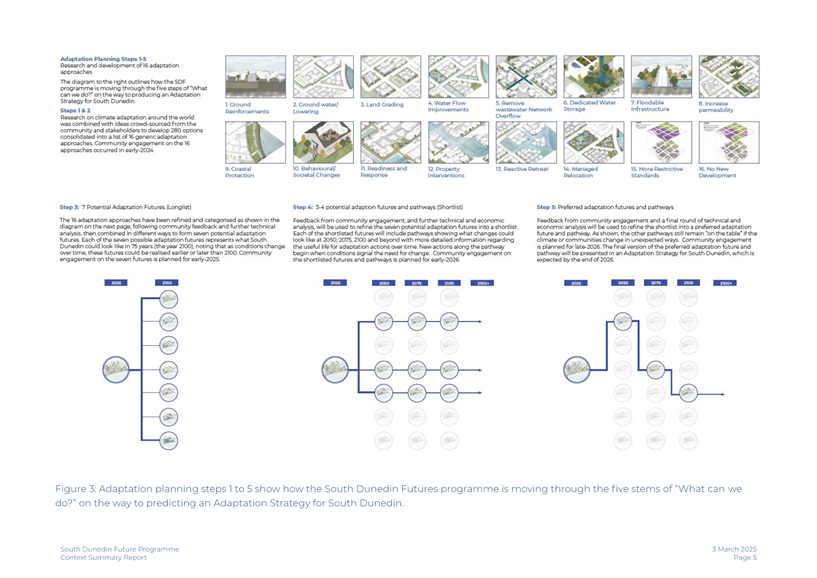
programme adaptation planning workstream is delivered in five stages: (i)
domestic and international good practice review; (ii) longlist of generic
adaptation approaches; (iii) longlist of 7 potential adaptation futures; (iv)
shortlist of potential adaptation futures and pathways; (v) preferred adaptation
future and pathway.
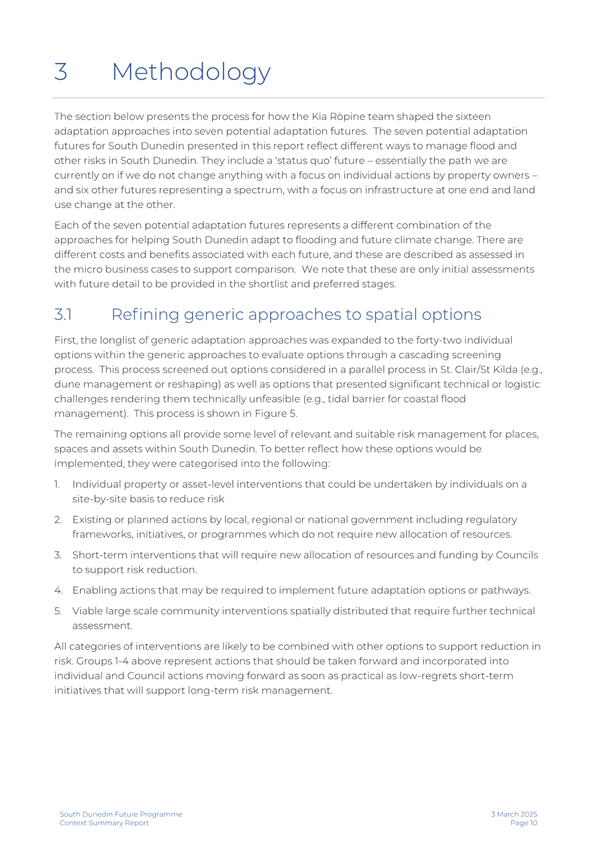
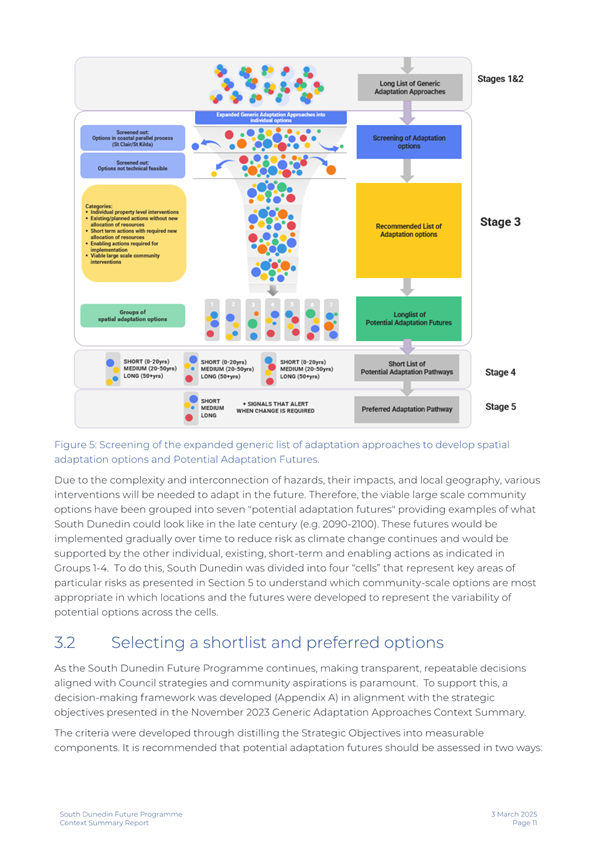
· Stage
1 – Domestic and international good practice review (completed, December
2023): Included researching and showcasing a selection of relevant and
innovative adaptation approaches of relevance to South Dunedin, both in New
Zealand an internationally.
· Stage
2 – Longlist of generic adaptation approaches (completed, December 2023):
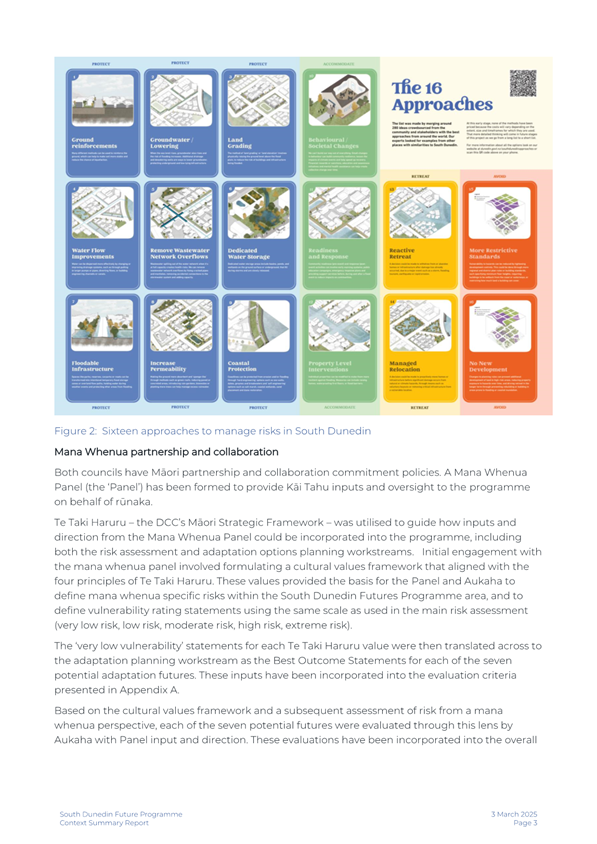
Included identifying a list of 16 generic adaptation approaches that could
reasonably be expected to mitigate the impacts of natural hazard and climate
risks in South Dunedin.
· Stage
3 – Potential adaptation futures for South Dunedin (Longlist): Combines
the adaptation approaches in different ways to form seven potential adaptation
futures for South Dunedin, describing key characteristics, costs, benefits, and
visualisations at 2100.
· Stage
4 – Potential adaptation futures and pathways for South Dunedin (Shortlist):
Refines the seven potential adaptation futures to a shortlist of 3-4 futures,
adding more technical and economic detail, and determining pathways to get
there including key changes at 25-year intervals out to 2100 and beyond.
· Stage
5 – Preferred adaptation future and pathway: Further refines the shortlisted
futures and pathways, adding more technical and economic detail, and
determining a preferred adaptation future and pathway. This would form the
basis of the final climate adaptation plan for South Dunedin.
32 The focus
of this paper is Stage 3, which includes the 7 Potential adaptation futures for
South Dunedin (Attachment C) and supporting Context Summary Report (Attachment
D).
7 Potential
Adaptation Futures and Context Summary Report
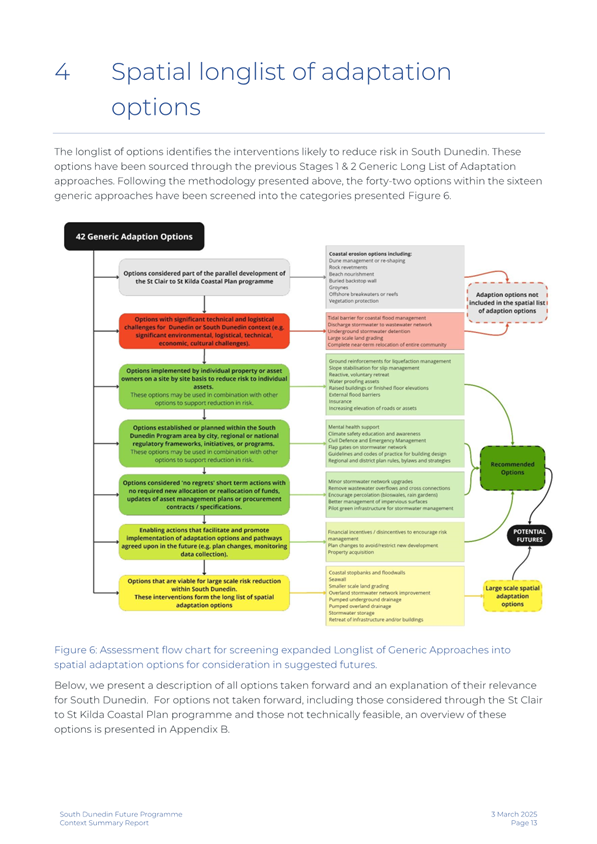
33 The
adaptation futures report responds to the risk assessment by outlining the
options available for managing and mitigating the risks faced by South Dunedin.
Various adaptation options and approaches are combined into seven Potential
Adaptation Futures, each of which sits on a spectrum of ‘fight and
flight’, with an emphasis on infrastructure at one end and land use
change (including managed retreat) at the other. The report describes the key
characteristics of each potential future, explores the pros and cons, and
provides visualisations of what South Dunedin could look like in 75
years’ time (in 2100). The futures proposed are a product of extensive
technical work and community engagement and the methodology used to develop
them is described in the attached Context Summary Report.
34 This stage
of the adaptation planning workstream has focused on the viability of
potential adaptation options, assessing which options could be combined in
different ways to reduce risk in South Dunedin. Planning and analysis is still
high-level, with a range of assumptions and remaining uncertainties, which are
described in the reports. Subsequent stages of the SDF programme will undertake
more detailed analysis to explore the efficacy of selected adaptation
options, assessing how well they work, and what size, location, and duration
would be required to best reduce risk.
35 The reports
provide high-level cost estimations for each of the seven potential adaptation
futures. The costing estimates follow established good practice methodologies
adopted for Better Business Case processes in New Zealand and are calculated
against available rates for similar projects. The costs do however include a
range of assumptions and are provided primarily to enable comparison between
the futures and to benchmark the potential costs against DCC’s current
capital programme of around $200 million per annum. Potential benefits of each
future are also described with similar estimates for their economic value,
enabling a cost-benefit ratio to also be calculated. Finally, costs represent
the estimated total cost of implementing the corresponding future, and
depending on specifics, would be spread across a range of stakeholders (i.e.
figures do not represent costs only to councils). This economic analysis will
be further refined in subsequent stages of the SDF programme.
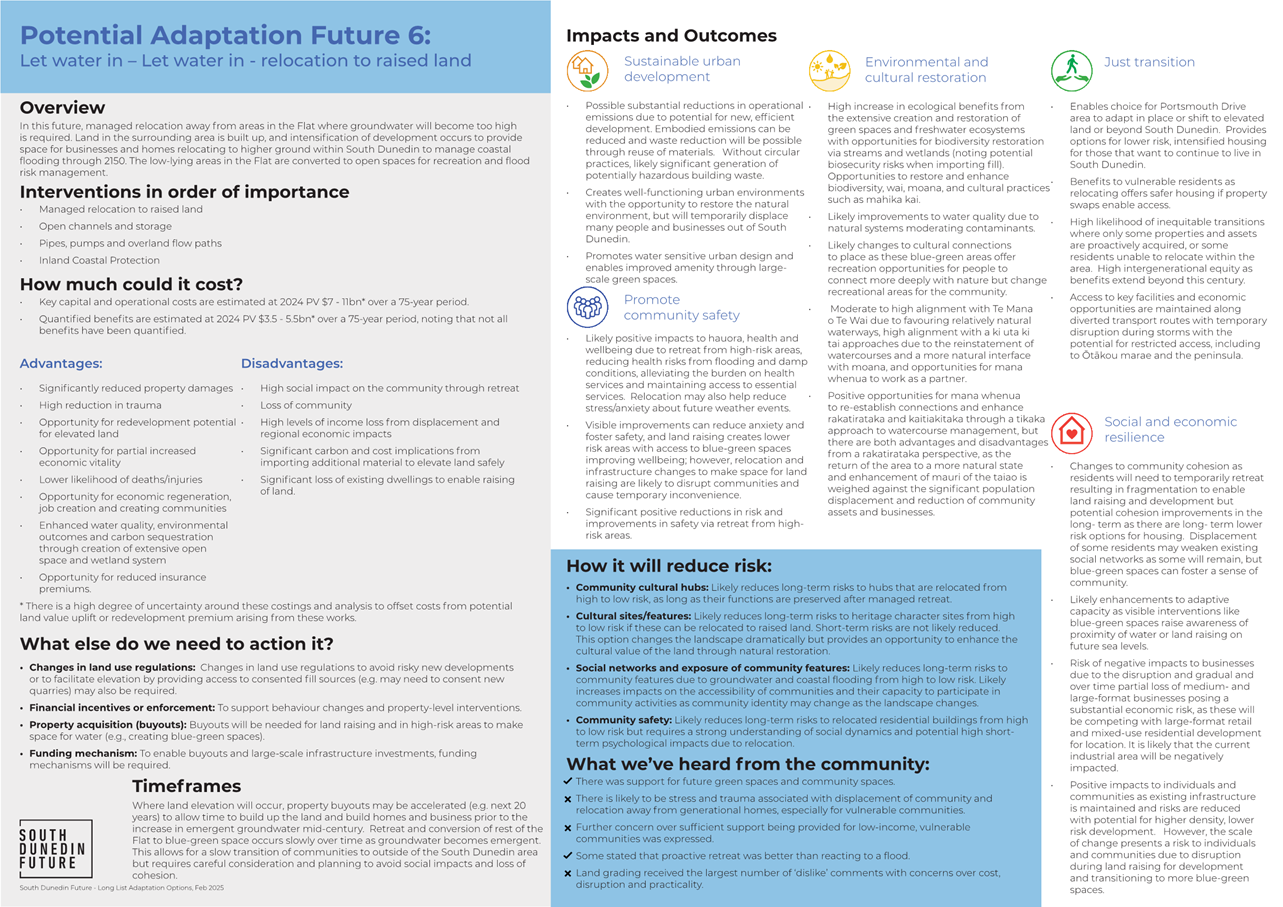
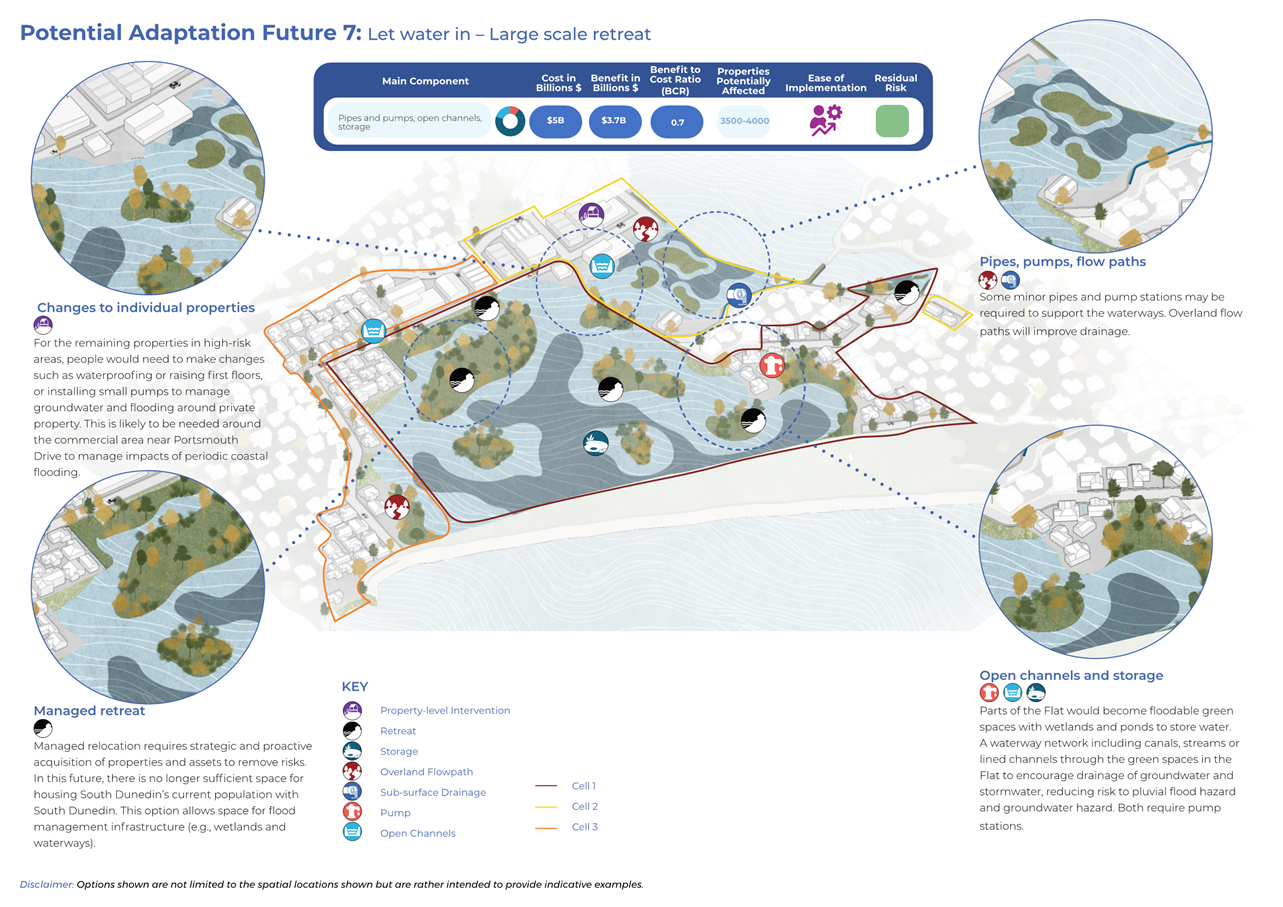
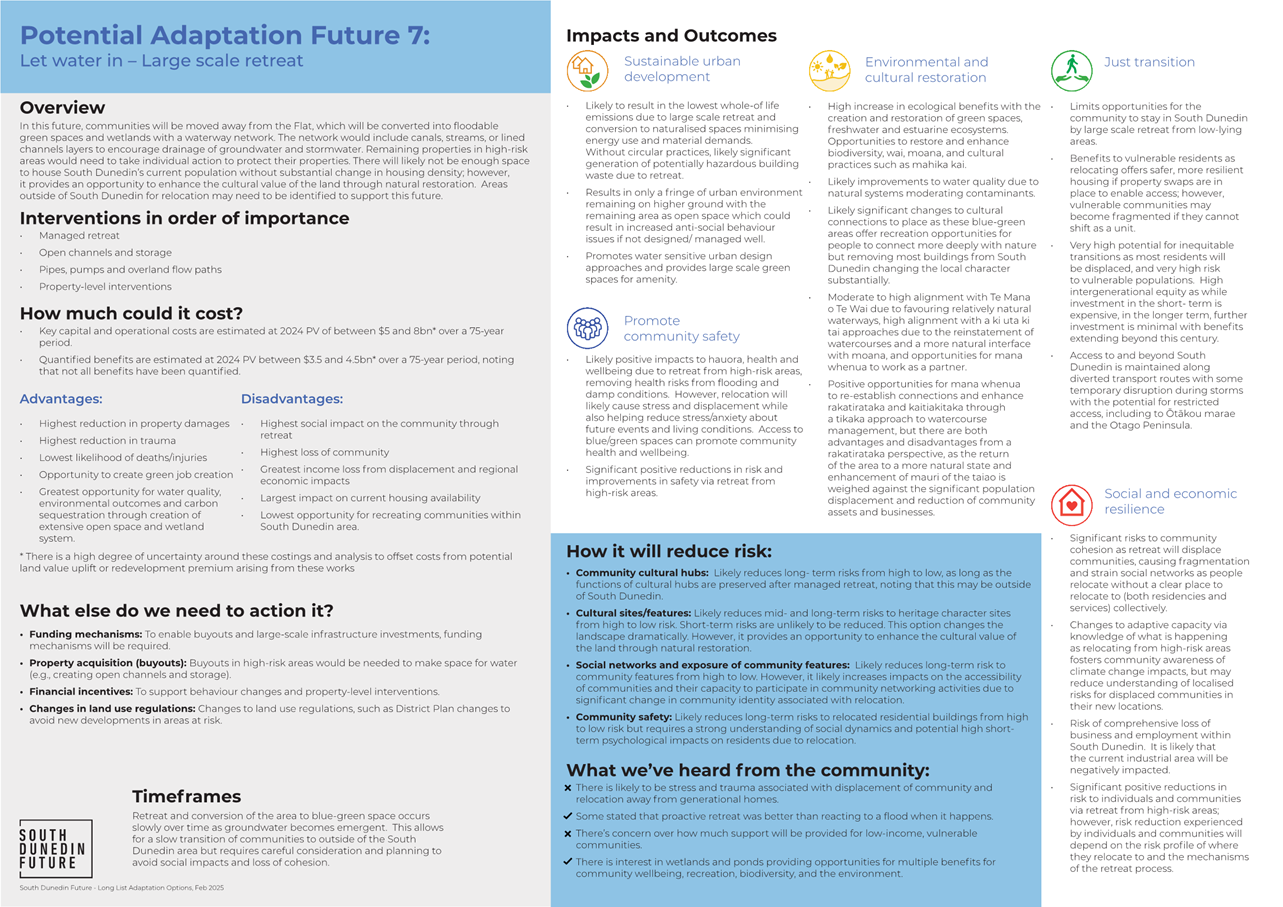
36 Each of the
seven potential adaptation futures includes a visualisation of what South
Dunedin could look like in 75 years’ time (2100). These are intended for
illustrative purposes, and show the types of changes anticipated, in the
general areas of South Dunedin they are expected to occur, based on available
information and current analysis. The actual scope and location of
infrastructure investments and land use changes that might result from the SDF
programme are yet to be determined. These would be subject to more detailed
adaptation planning in subsequent stages of the programme and any resulting
processes to implement the adaptation plan for South Dunedin (e.g. design of
infrastructure projects, changes to the District Plan, etc.).
Key findings
37 The
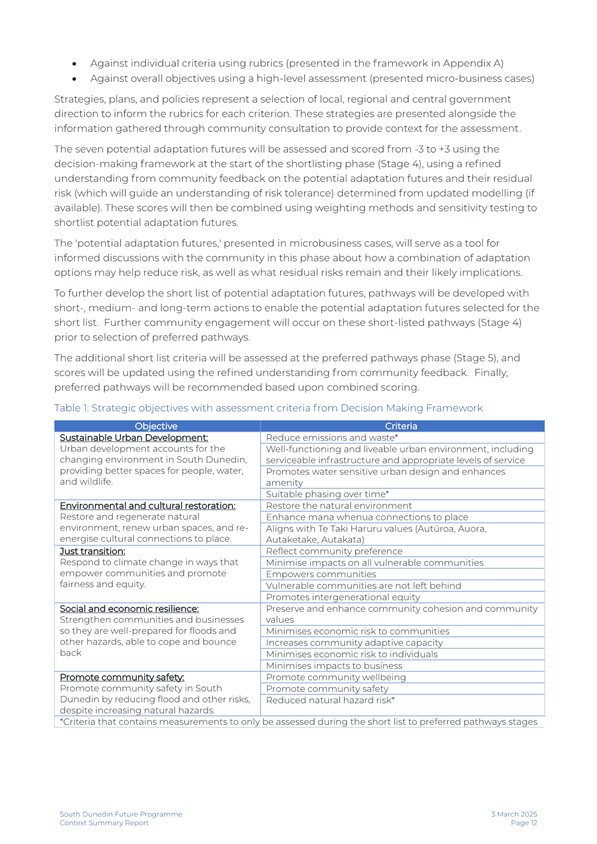
potential adaptation futures report presents seven futures for South Dunedin,
which include a status quo future, where current approaches are continued, and
six other futures spanning a spectrum of ‘fight and flight’, with an
emphasis on infrastructure at one end and land use change (including managed
retreat) at the other. The seven futures are listed in the table below:
|
#
|
Potential Adaptation Future
|
|
1
|
Status quo – largely individual property
actions
|
|
2
|
Keep land dry – pipes and pumps
|
|
3
|
Keep and dry – raised land and pumping water
|
|
4
|
Space for water – waterways and wetlands
|
|
5
|
Space for water – waterways and raised land
|
|
6
|
Let water in – relocation to raised land
|
|
7
|
Let water in – large scale retreat
|
38 The status
quo future is likely to lead to the worst outcomes, with high costs relative to
very limited benefits, the largest number of properties affected, and highest
residual risk. The status quo approach is not well aligned to the objectives of
the SDF programme and relies primarily on individual property interventions, so
costs may also fall mostly to individuals or represent loses resulting from
floods and other events.
39 Of the
remaining six potential adaptation futures, the report shows that there is no
single future for South Dunedin where all problems are solved cheaply and
easily, rather there are many viable futures, each with unique characteristics
and trade-offs. Potential futures two through seven all represent improved
outcomes over the status quo, but with different cost-benefit ratios, and
varying numbers of affected properties, ease of implementation, and residual
risk. The futures have varying alignment with the objectives of the SDF
programme, and these are described in the quantitative and qualitative
assessments that accompany each future.
40 The report
essentially illustrates that creating a safer and better future for South
Dunedin will come down to a balance of trade-offs and include choices about the
scale and rate of change, the size of investment we can afford, and the level
of risk we are prepared to live with. These are questions that will be explored
during community engagement work and interrogated through more detail technical
and economic analysis in subsequent stages of the SDF programme.
Technical
peer review
41 The adaptation
futures reports have been developed by BECA (supported by WSP and Tonkin &
Taylor) and have undergone technical peer review by Jacobs (supported by Bell
Adapt Ltd). The peer review process has been robust, extensive, and has led to
many refinements to the reports. However, not all outstanding technical issues
have been resolved, and remaining issues are: (i) acknowledged as data gaps,
assumptions, limitations, or with disclaimers; (ii) matters that will be
addressed in subsequent stages of the technical work; or (iii) subject to
difference of professional opinion (i.e. the experts have agreed to disagree).
Adaptation
planning – next steps
42 The next
steps with the seven Potential Adaptation Futures include engaging the
community on the key characteristics and associated implications of each
future, in order to support a broad understanding, enable more informed
discussion, and collect data on community views – particularly in
relation to the choices and trade-offs associated with each future.
43 Stage 4 of
the adaptation planning work will then seek to combine community feedback with
additional technical and economic analysis, to refine the potential adaptation
futures to a shortlist and determine pathways to get there. This work would
lead into subsequent stages of the SDF programme, which are described above and
illustrated in Attachment A.
Communications
and community engagement
44 A
communications and community engagement plan has been developed to support
effective council interactions with partners, stakeholders, and affected
communities in relation to the risk assessment and adaptation planning work
described above. This includes briefings and co-development of key messaging
with selected central government agencies, local institutions, community
groups, mana whenua, and other interested parties – such as banks and
insurers – whose views and responses are likely to be of interest to
affected communities. Advanced briefing of media has also been undertaken. The
intent of this work is to promote clear and consistent messaging, support
informed dialogue, and to reduce uncertainty and speculation.
OPTIONS
45 The SDF
Programme Plan provides for various stage gates at the conclusion of each stage
of technical work, where Council approval is sought to proceed to community
engagement. Two options are outlined below which involve either proceeding with
the SDF programme as scheduled, or delaying the programme to undertake
additional work as may be directed by Council. The respective advantages and
disadvantages of each option are described.
Option One – Proceed to community engagement
(Recommended Option)
Impact assessment
46 This option
includes proceeding as outlined in the SDF programme plan and according to the
high-level scheduled in Attachment A. It would involve Council noting the South
Dunedin Risk Assessment, 7 Potential Adaptation Futures and Context Summary
Reports, then endorsing the reports for the purpose of community engagement and
approving the SDF programme team undertaking engagement with partners,
stakeholders, and affected communities on the basis of these reports.
Debt
· No
debt funding is required for this option.
Rates
· There
are no impacts on rates for this option as costs are already included in the
SDF programme budget.
Zero carbon
· No
impact on city emissions.
Advantages
· Enables
the SDF programme to remain on schedule and budget.
· Fulfils
commitment to partners, stakeholders, and affected communities to complete risk
assessment and current stage adaptation planning work for South Dunedin within
agreed timeframes.
· Enables
councils to actively facilitate a dialogue with partners, stakeholders, and
affected communities on the risks facing the area and potential adaptation
options.
· Enables
staff and consultant teams to direct effort to subsequent stages of the SDF
programme, including more detailed technical and economic analysis.
Disadvantages
· Requires
proceeding with imperfect information and despite a range of information gaps,
assumptions, and uncertainties, each of which carries a degree of risk.
Option Two – Undertake further technical and economic
analysis
Impact assessment
47 This option
would involve Council requesting further technical or economic work on the risk
assessment or potential adaptation futures, before seeking Council approval to
undertake planned engagement with partners, stakeholders, and affected
communities.
Debt
· No
debt funding is required for this option.
Rates
· Additional
rate funding would likely be required for this option, as further work at this
stage of the SDF programme is not included in the current SDF programme budget.
Actual costs would need to be determined based on the scope and timing of
additional work.
Zero carbon
· No
impact on city emissions.
Advantages
· Undertaking
additional work could enable filling some existing information gaps and
resolving some outstanding technical issues or remaining uncertainties, increasing
confidence levels and potentially helping to mitigate risks to the SDF
programme at a later stage.
Disadvantages
· Additional
delays would disrupt the SDF Programme schedule, may require additional budget,
and could generate criticism from partners, stakeholders, and affected
communities who may prefer earlier release of the risk assessment and
adaptation planning work.
· Undertaking
more detailed technical and economic analysis at this stage of the programme
could be perceived as ‘skipping’ community engagement and moving
straight to the next stage of technical work.
· While
further technical or economic work may fill information gaps and resolve some
remaining technical issues or uncertainties, the nature and complexity of the
subject matter is such that there will always be gaps and uncertainties.
NEXT STEPS
48 Subject to
Council decisions, next steps include:
· Commencing
communications and community engagement activities relating to the South
Dunedin Risk Assessment and 7 Potential Adaptation Futures for South Dunedin.
These activities are planned to commence in late-March and extend through to
mid-May, and will involve a mix of in-person and online engagement with
stakeholder groups and the general public, as well as web-, print-, and social
media-based communications.
· Designing
and commencing Stage 4 of the adaptation planning work, including developing
the shortlist of potential adaptation futures and pathways for South Dunedin.
This will include analysis of community feedback on the longlist of potential
futures, and more detailed technical and economic work, to refine this list
down to 3-4 futures. This work is expected to be undertaken between May-October
2025, with a view to presenting to Council in late-2025 or early-2026.
49 Subsequent
stages of the SDF programme will repeat the cycle of community engagement and
technical and economic analysis, refining potential adaptation futures to a
preferred future and pathway, before presenting this in a final adaptation plan
for South Dunedin by December 2026.
50 At present,
Councils have committed to completing the SDF programme, including remaining
technical work, economic analysis, and community engagement. Councils have not,
at this time, committed to supporting any particular course of action that
might be recommended by the SDF programme – including those relating to
strategic land use planning and infrastructure investment. Such decisions, and
the roles and responsibilities of respective Councils in implementing them,
would be subject to further Council consideration, including in the context of
strategic and financial decisions associated with long term plan processes.
Signatories
|
Author:
|
Jonathan Rowe - Programme Manager, South Dunedin Future
|
|
Authoriser:
|
Scott MacLean - General Manager, Climate and City Growth
David Ward - General Manager, 3 Waters and Transition
|
Attachments
|
|
Title
|
Page
|
|
⇩a
|
A3 South Dunedin Future
Programme Overview
|
37
|
|
⇩b
|
South Dunedin Risk
Assessment
|
39
|
|
⇩c
|
7 Potential Adaptation
Futures for South Dunedin
|
239
|
|
⇩d
|
Potential Adaptation
Futures for South Dunedin - Context Summary Report
|
261
|
|
SUMMARY OF CONSIDERATIONS
|
|
Fit with purpose of Local Government
This decision enables democratic local
decision making and action by, and on behalf of communities.
This decision promotes the social,
economic, environmental and cultural well-being of communities in the present
and for the future.
|
|
Fit with strategic framework
|
|
Contributes
|
Detracts
|
Not applicable
|
|
Social Wellbeing Strategy
|
✔
|
☐
|
☐
|
|
Economic Development Strategy
|
✔
|
☐
|
☐
|
|
Environment Strategy
|
✔
|
☐
|
☐
|
|
Arts and Culture Strategy
|
✔
|
☐
|
☐
|
|
3 Waters Strategy
|
✔
|
☐
|
☐
|
|
Future Development Strategy
|
✔
|
☐
|
☐
|
|
Integrated Transport Strategy
|
✔
|
☐
|
☐
|
|
Parks and Recreation Strategy
|
✔
|
☐
|
☐
|
|
Other strategic projects/policies/plans
|
✔
|
☐
|
☐
|
The SDF Programme is a horizontal initiative, working
across a range of strategies, groups, and budgets.
|
|
Māori Impact Statement
Accurately reflecting and integrating the principles of
the Treaty of Waitangi, and Crown’s partnership with Māori, is a
central element of the SDF Programme. This is described in the report.
|
|
Sustainability
Sustainability will be a central component of the SDF
Programme as it seeks to develop climate change adaptation options for South
Dunedin over short-, medium- and long-term timeframes. This work will be
integrated with the wider climate change work programme, including aligning
with DCC’s Emissions Management and Reduction Plan 2022 and Zero Carbon
Plan 2023.
|
|
Zero carbon
Adapting
to the impacts of climate change in South Dunedin has the potential to
materially increase or decrease both city-wide and DCC emissions, depending
on the adaptation option selected. The criteria for assessing each adaptation
option includes carbon emissions and waste, meaning options that act to
reduce emissions will receive more positive assessments (for that specific
criteria).
|
|
LTP/Annual Plan / Financial Strategy /Infrastructure
Strategy
The SDF programme has dedicated resourcing in the current
10-year plan (2021-2031). The draft 9-year plan (2025-2034) includes funding
for the SDF programme, and selected activities that are expected to result,
including mid-scale and medium-term investments in 3 waters infrastructure
(for example). It is anticipated that the adaptation plan for South Dunedin,
scheduled for completion in December 2026, will inform a range of strategic
land use-, finance-, and infrastructure-related decisions for South Dunedin
as part of future 10-year planning processes.
|
|
Financial considerations
The cost of the recommended option is fully budgeted for
within the existing SDF programme budget.
|
|
Significance
This issue is considered high in terms of the
Council’s Significance and Engagement Policy. Community engagement will
be a central element of the SDF Programme, and extensive engagement is
planned in future stages, in accordance programme plan and with relevance
council polices.
|
|
Engagement – external
Extensive external engagement has been undertaken with a
range of partners, stakeholders, and affected communities on the topics
covered in this paper. Mana whenua have partnered with SDF throughout the
development of the programme. Engagement has included (but is not limited
to): central government Ministers, departments, state owned enterprises,
crown research institutes; members of parliament; private sector
organisations and industry groups; community groups and affected communities.
|
|
Engagement - internal
A
large number of internal individuals, teams, and departments across DCC and
ORC have been engaged in development of the SDF programme strategy and
related work described in this report.
|
|
Risks: Legal / Health and Safety etc.
Legal
advice relating to the South Dunedin Risk Assessment has been provided by Simpson Grierson (DCC).
There are no anticipated health and
safety risks associated with this report. Risks relating to the SDF Programme
are described in this report.
|
|
Conflict of Interest
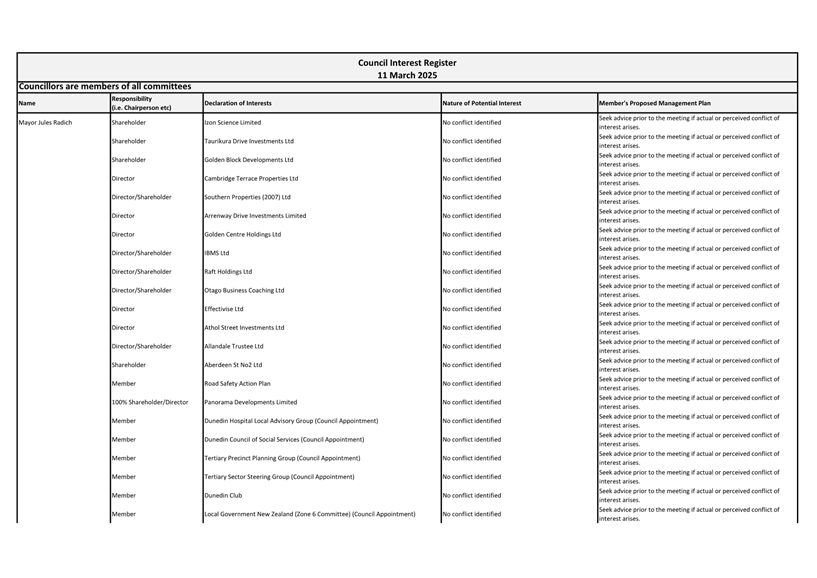
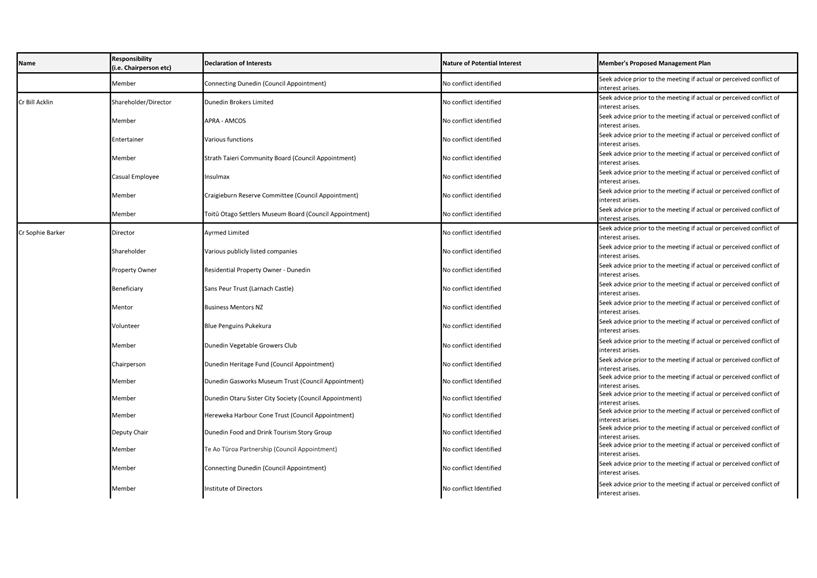
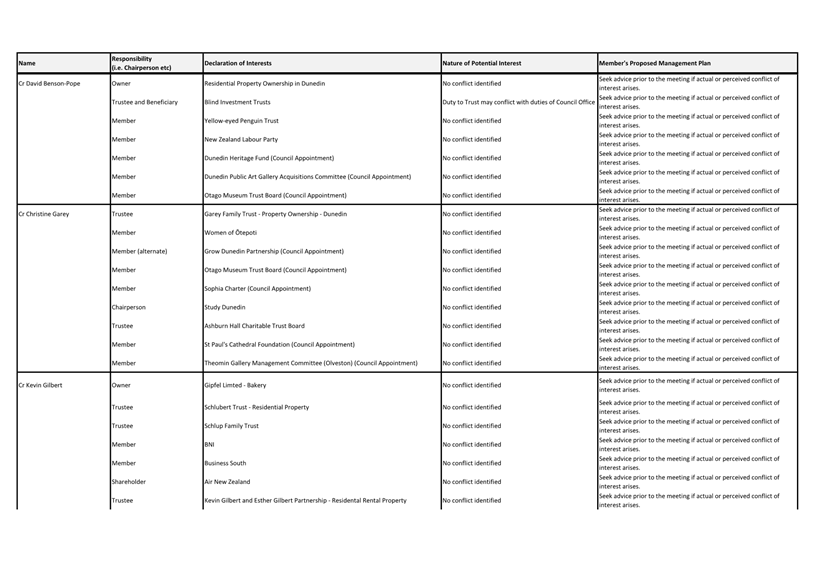
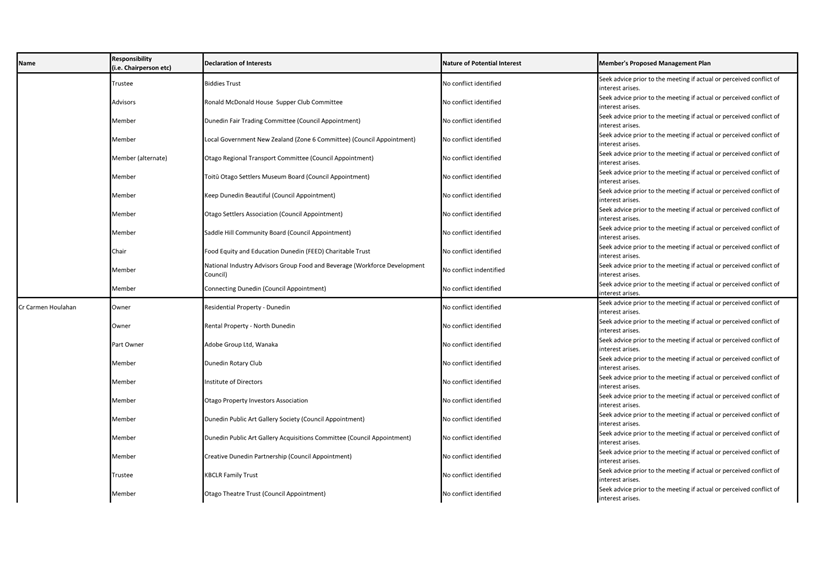
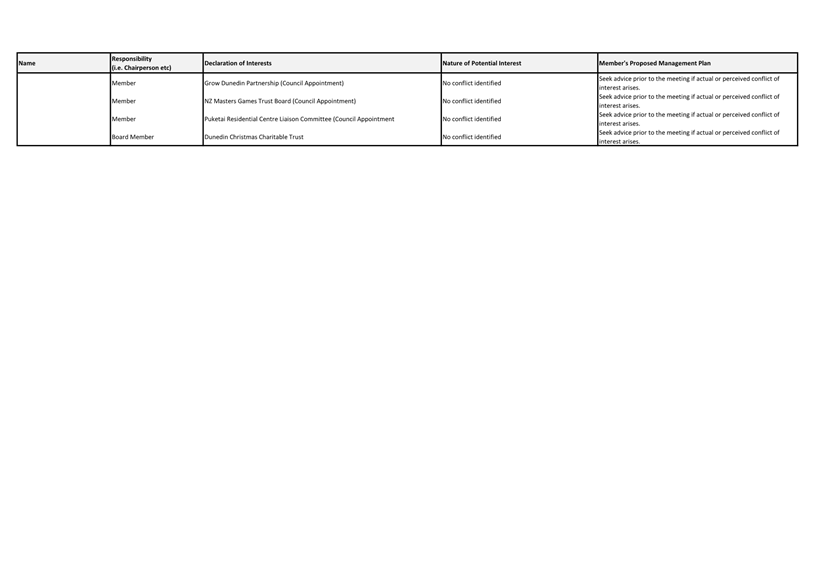
There are no conflicts of interest identified.
|
|
Community Boards
Community Boards have not been directly involved with the
development of this report; however all Community Boards have an interest in
climate adaptation.
|