|

|
Council
12 August 2025
|
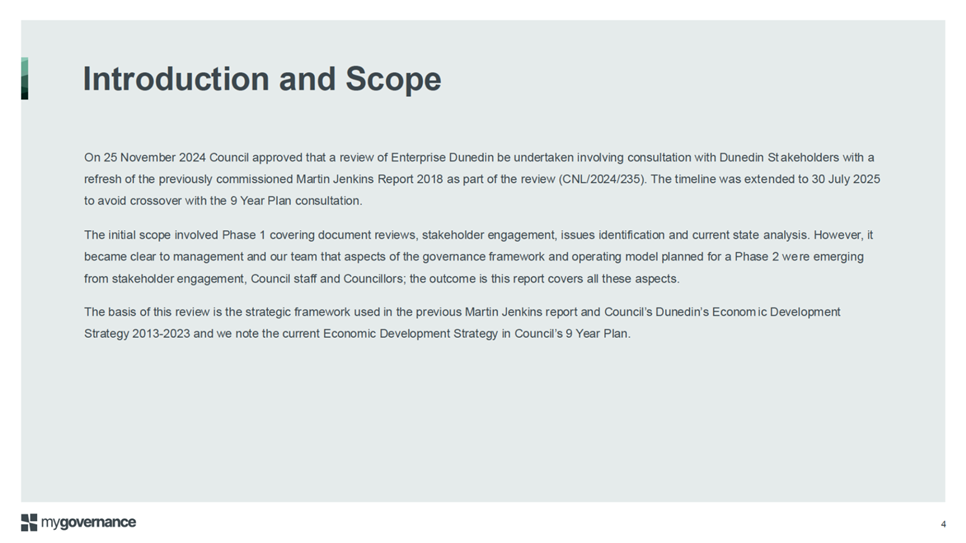
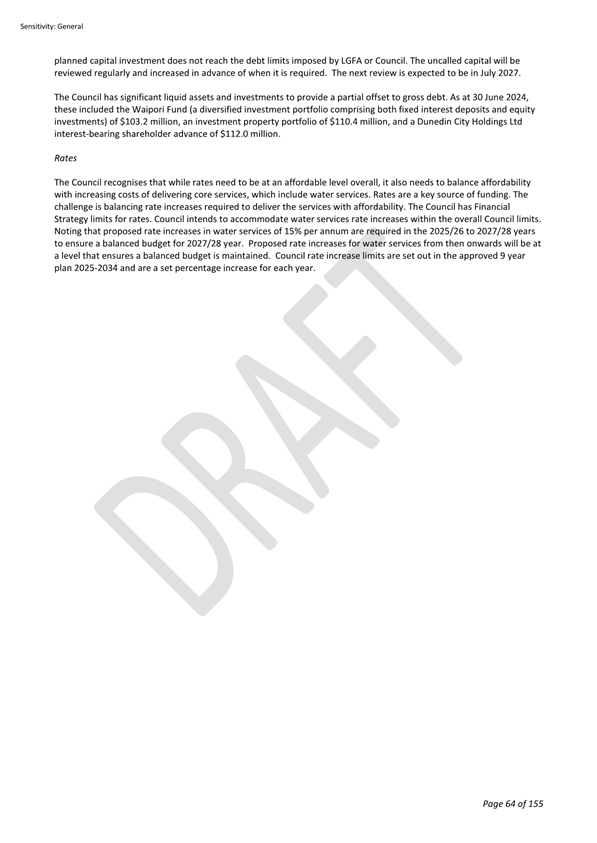
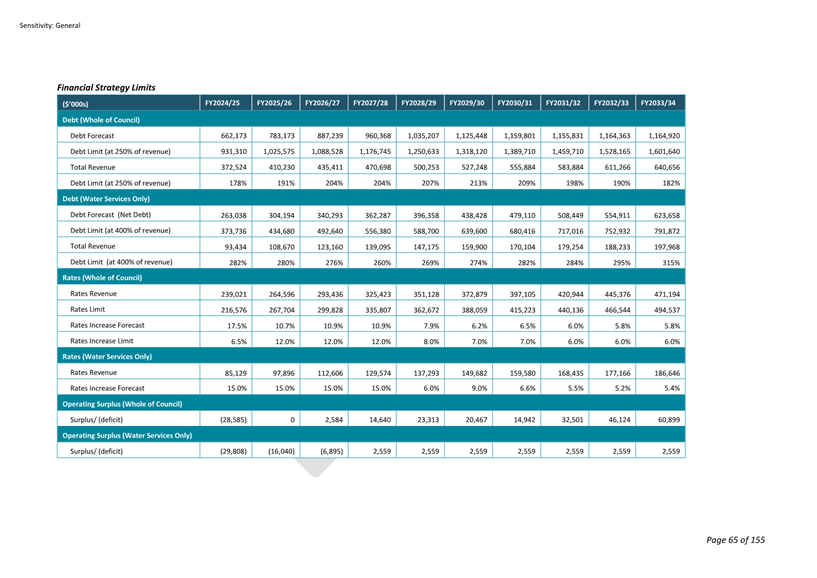
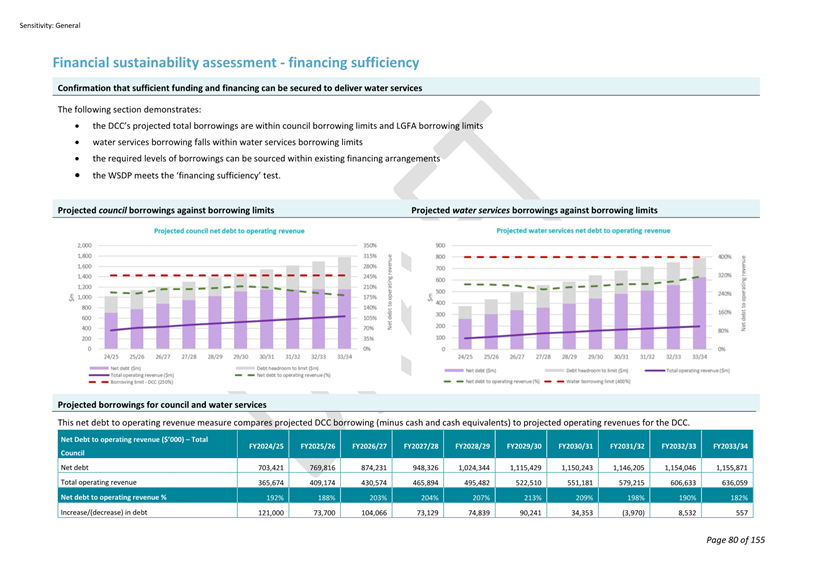
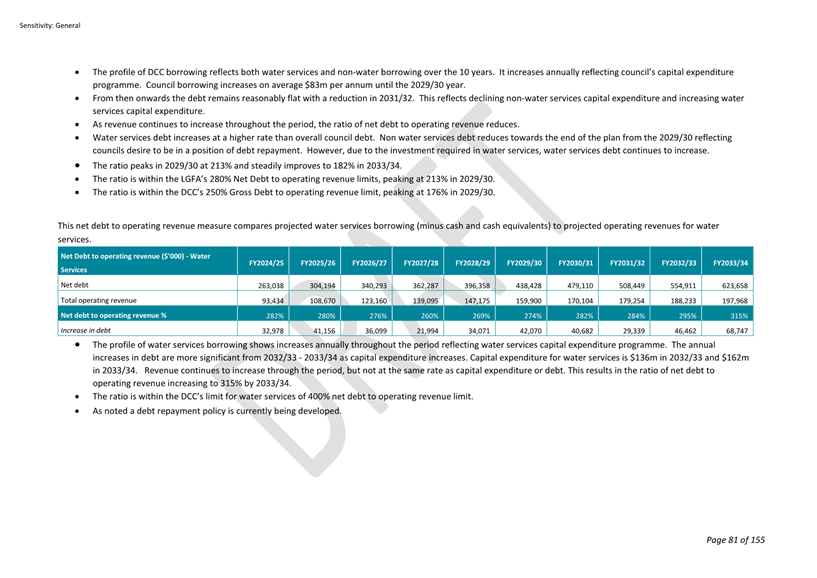
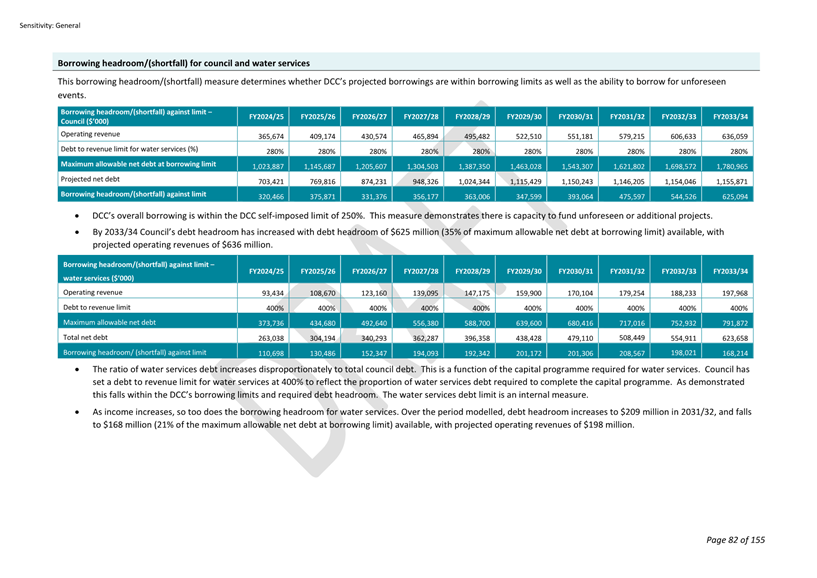
Reports
Enterprise Dunedin "MyGovernance" Review Report
Department: Corporate Policy and Enterprise Dunedin
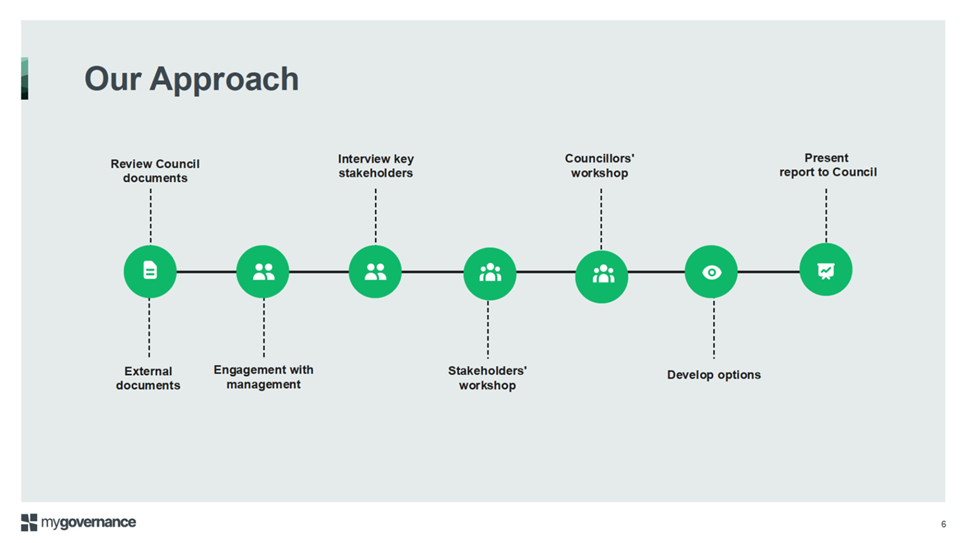
EXECUTIVE SUMMARY
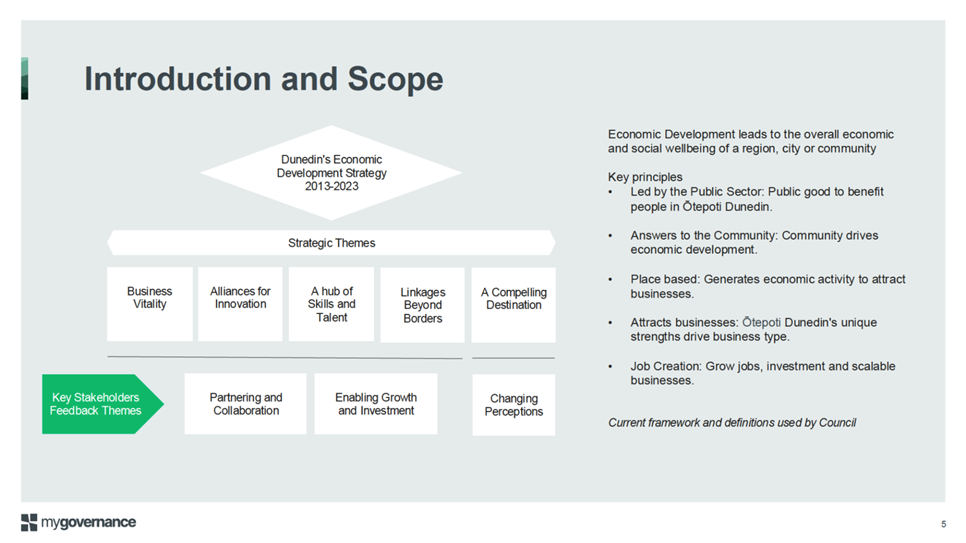
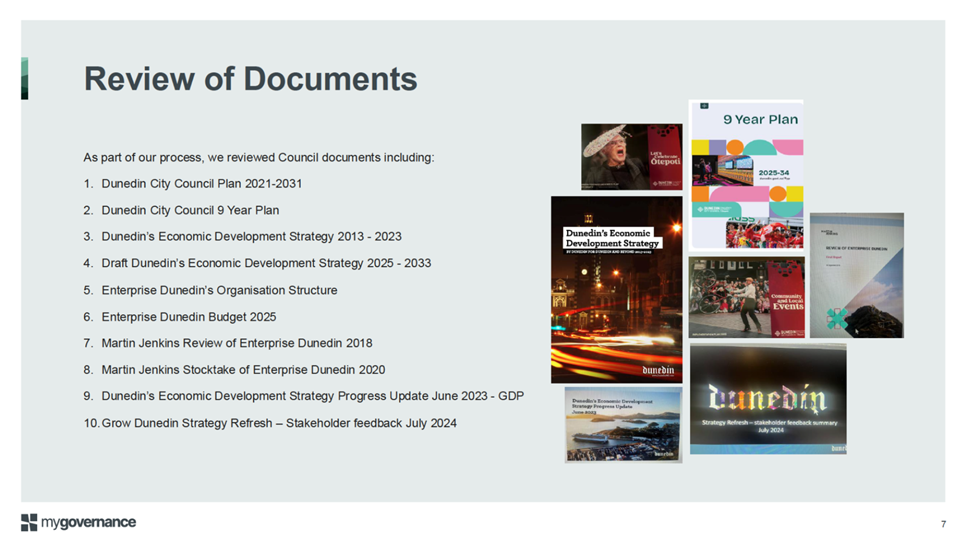
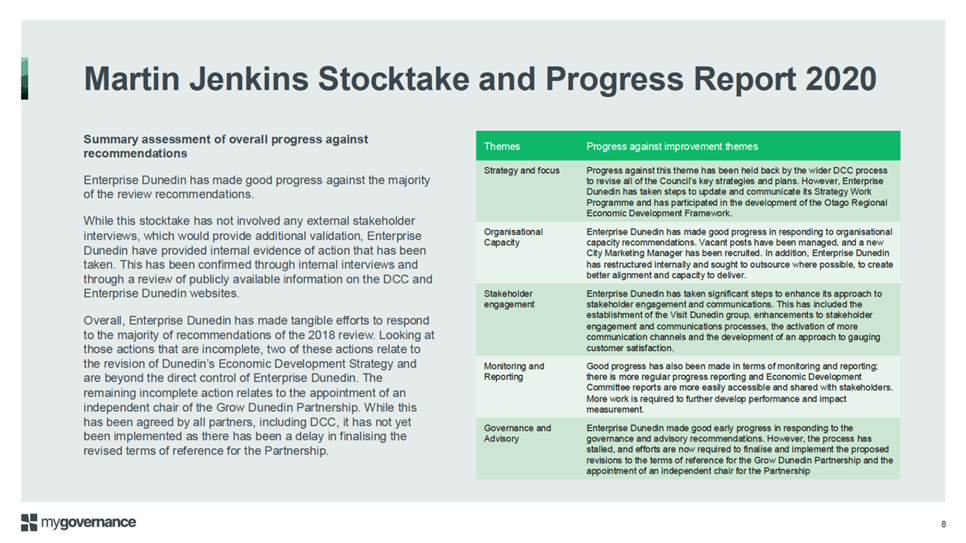
1 This
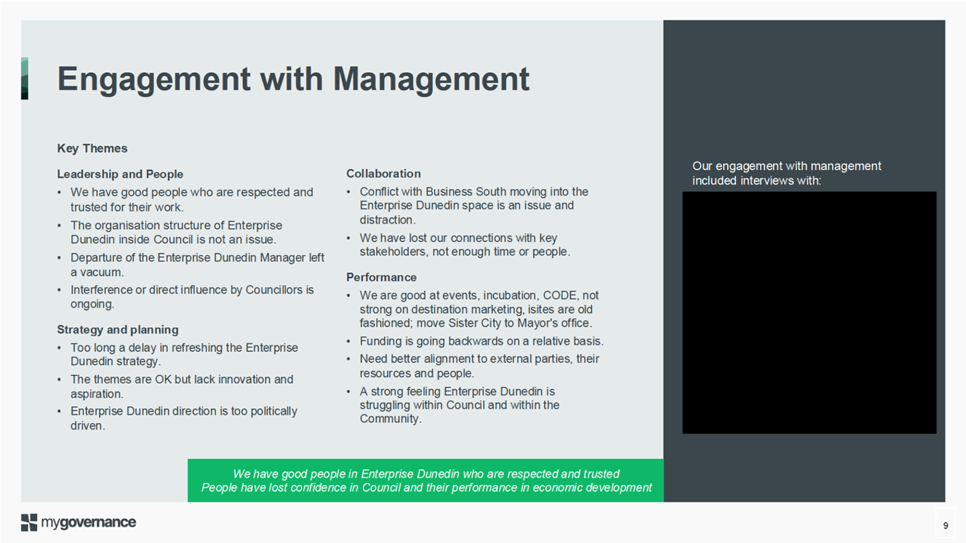
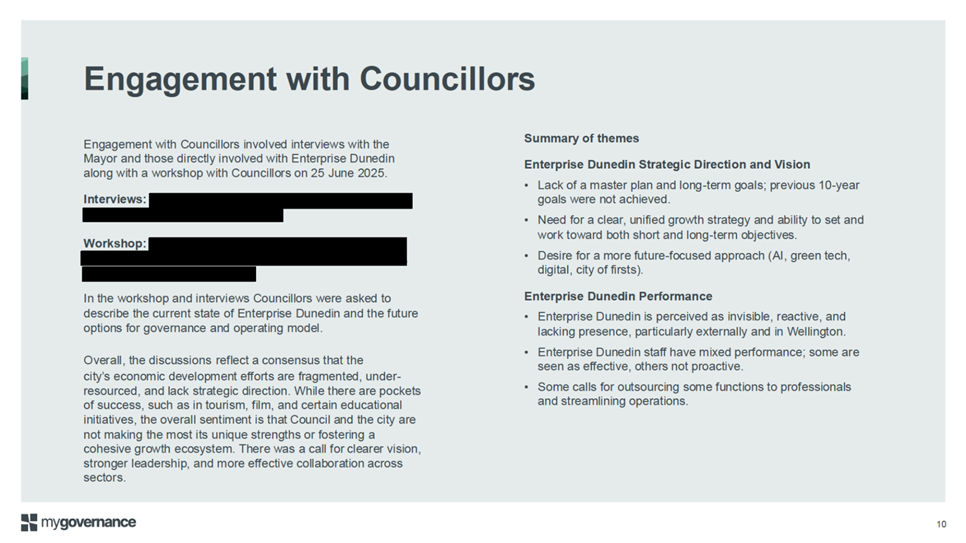
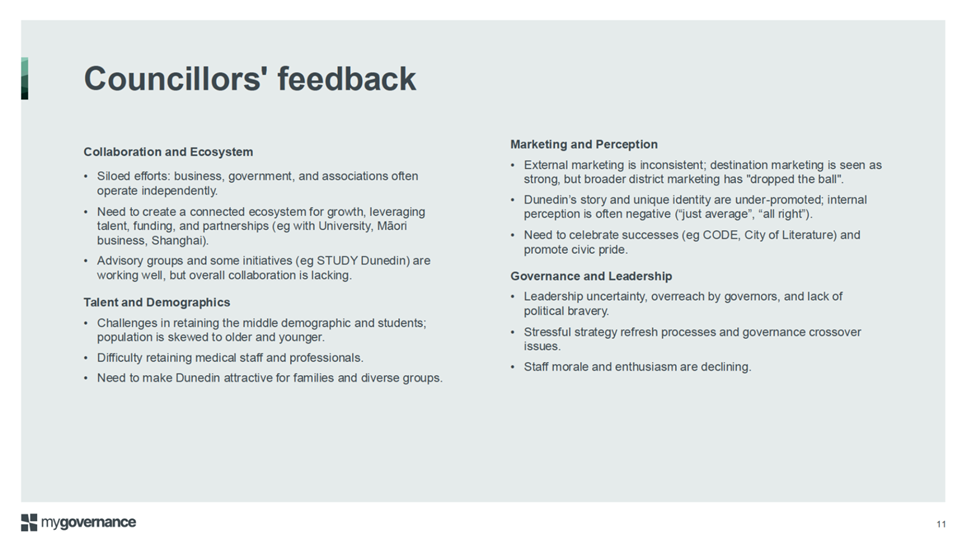
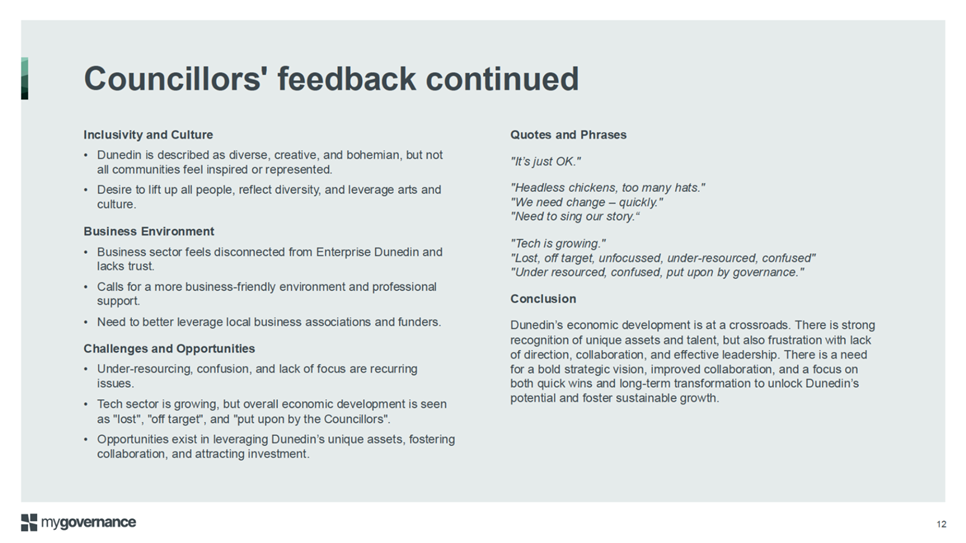
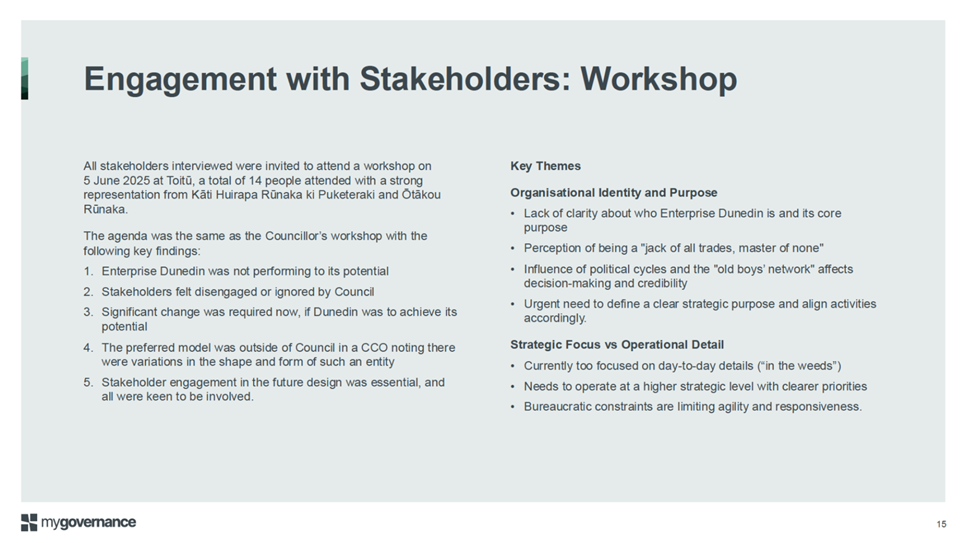
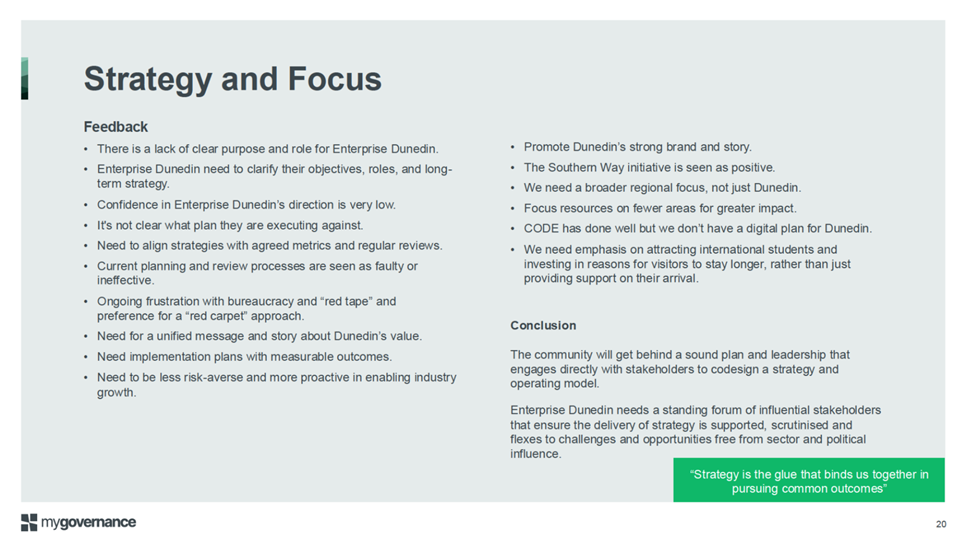
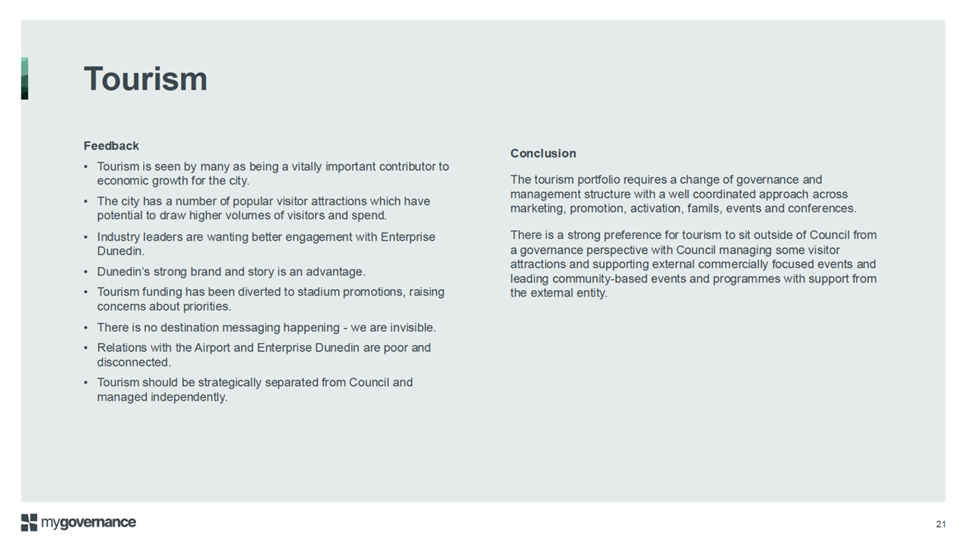
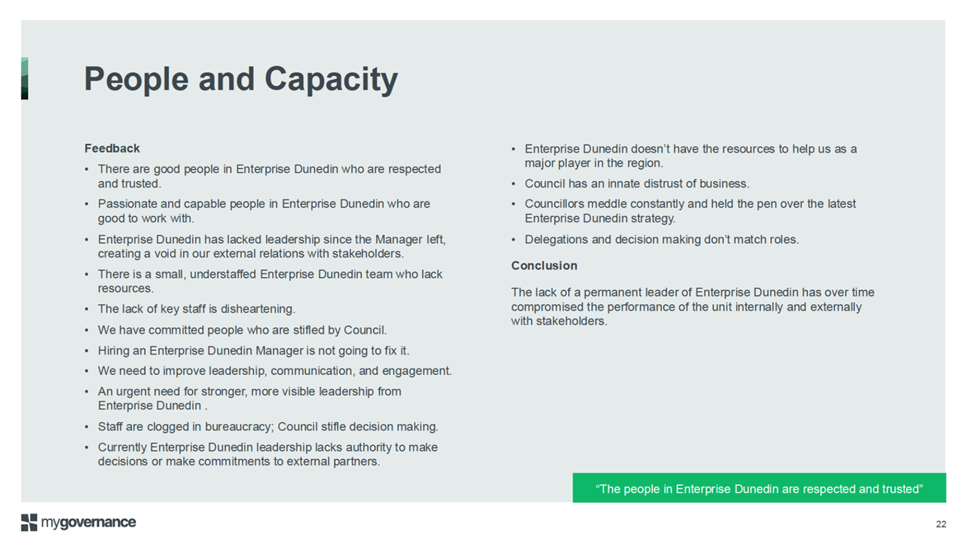
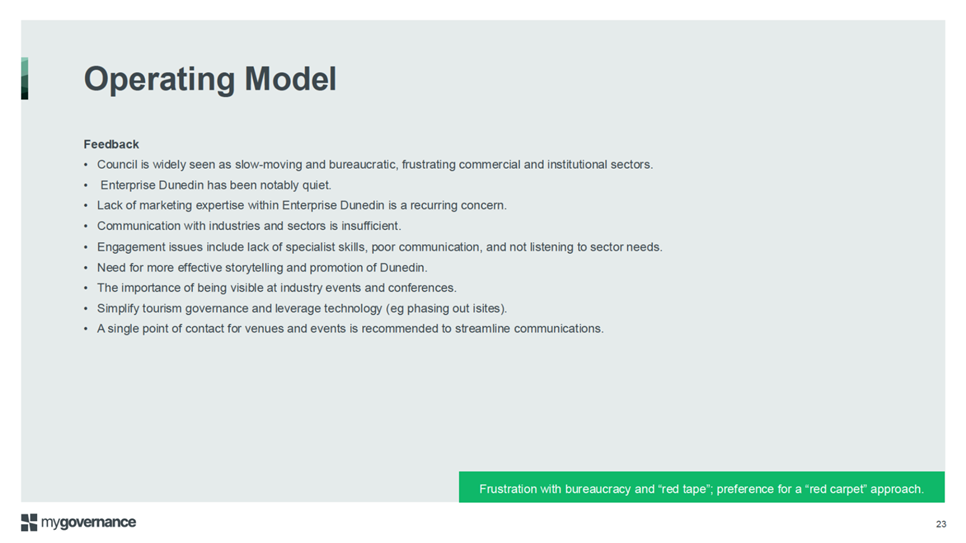
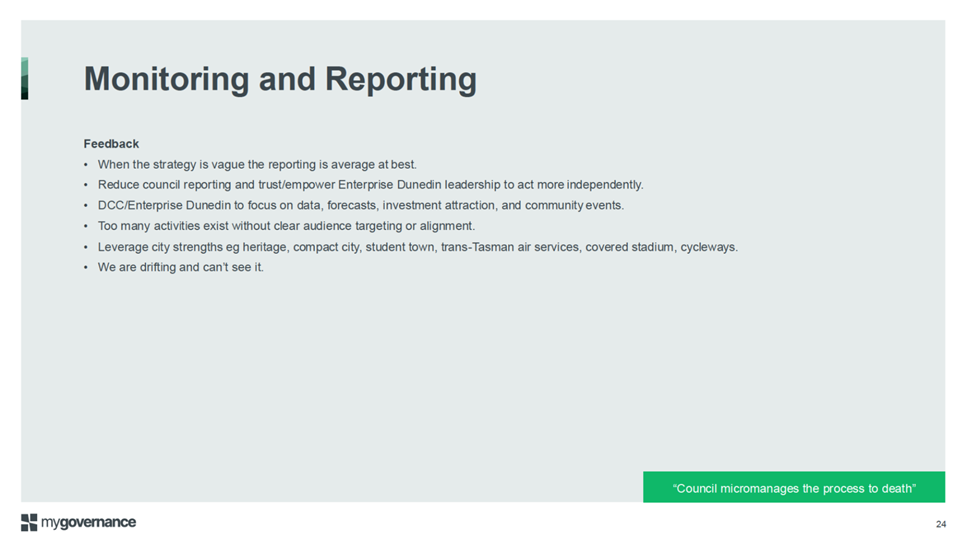
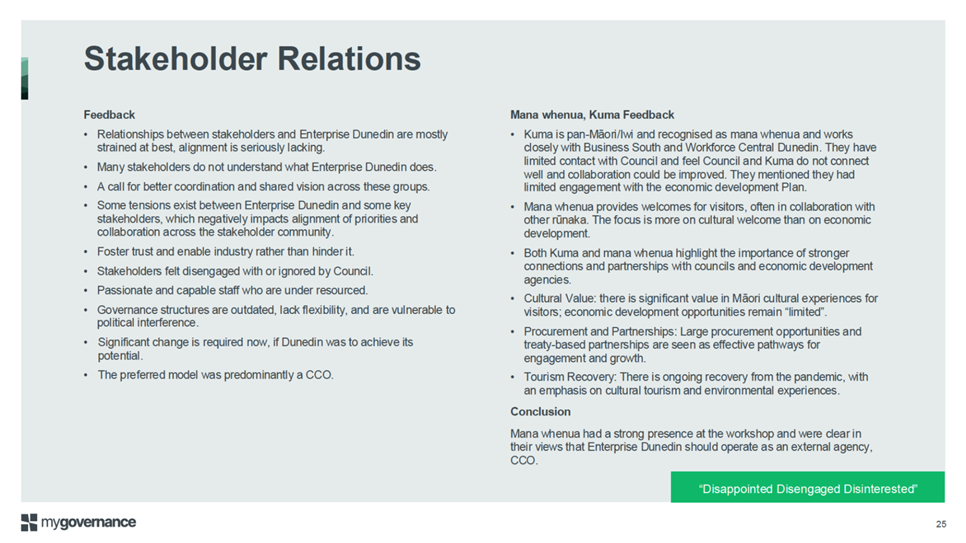
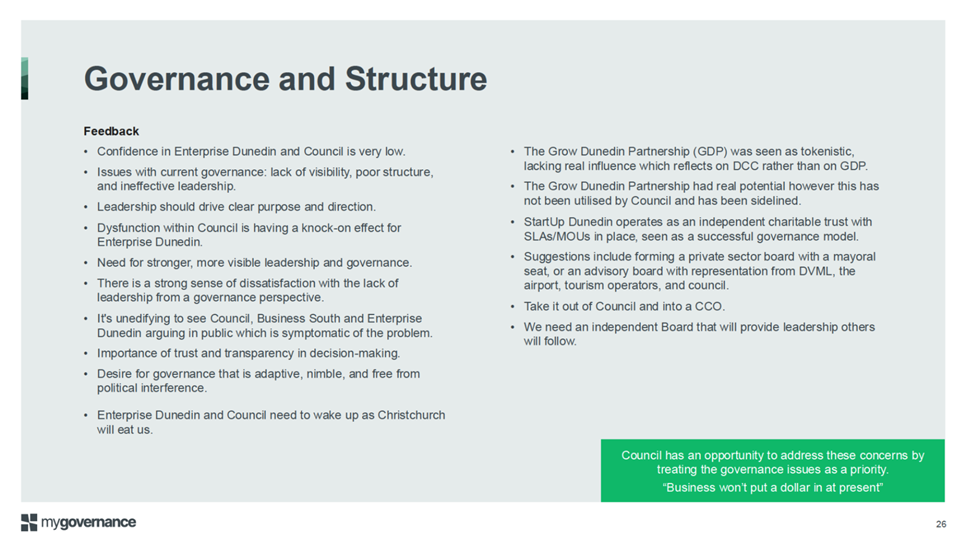
report presents the findings of the review by MyGovernance of Enterprise
Dunedin as detailed in the separate attachment in the non-public section of the
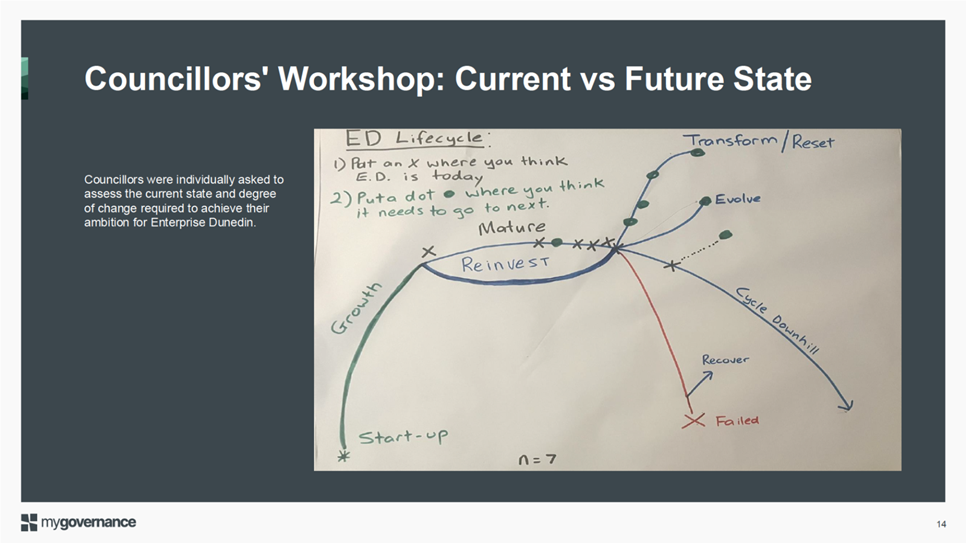
meeting.
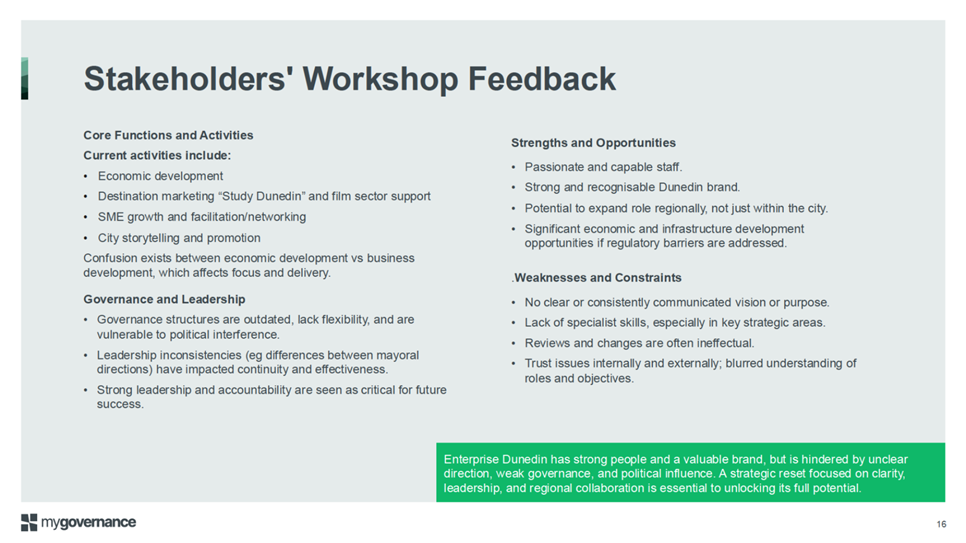
2 The
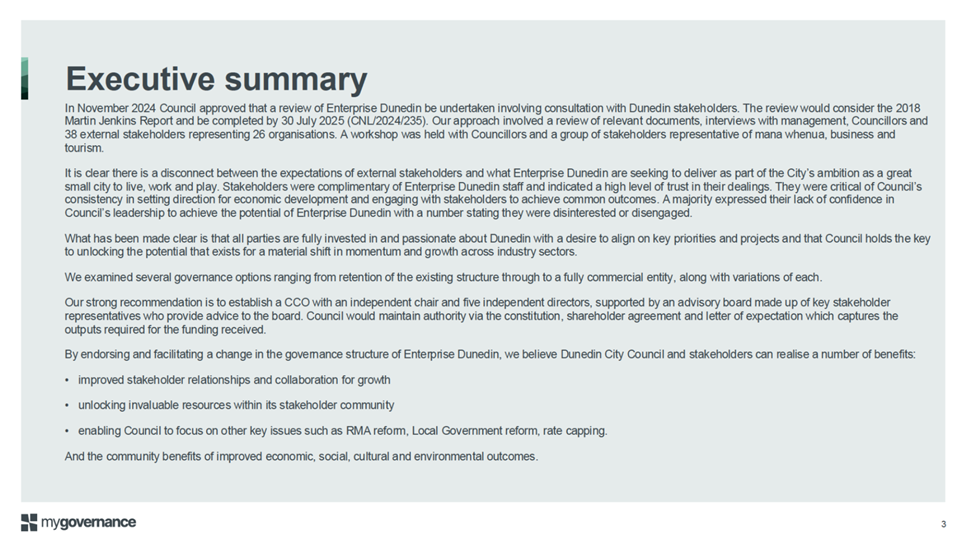
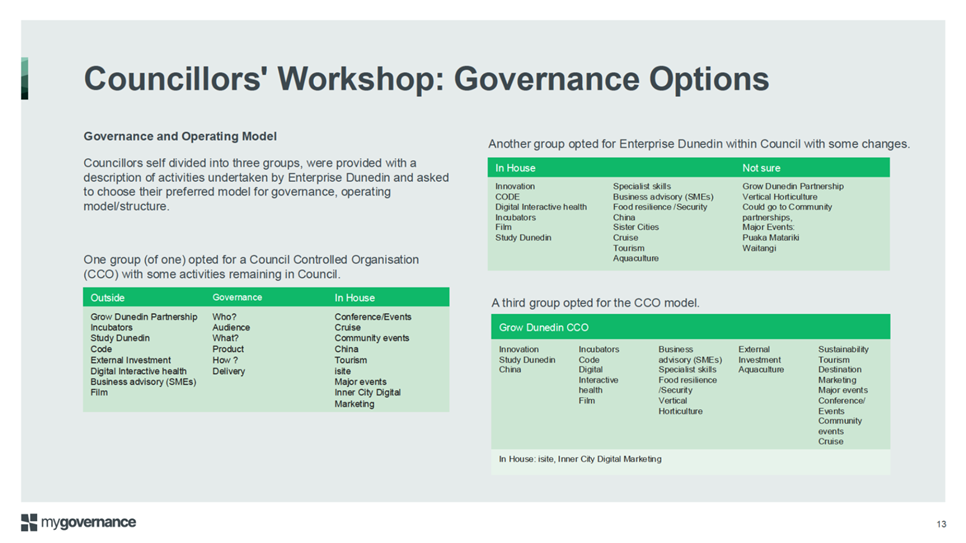
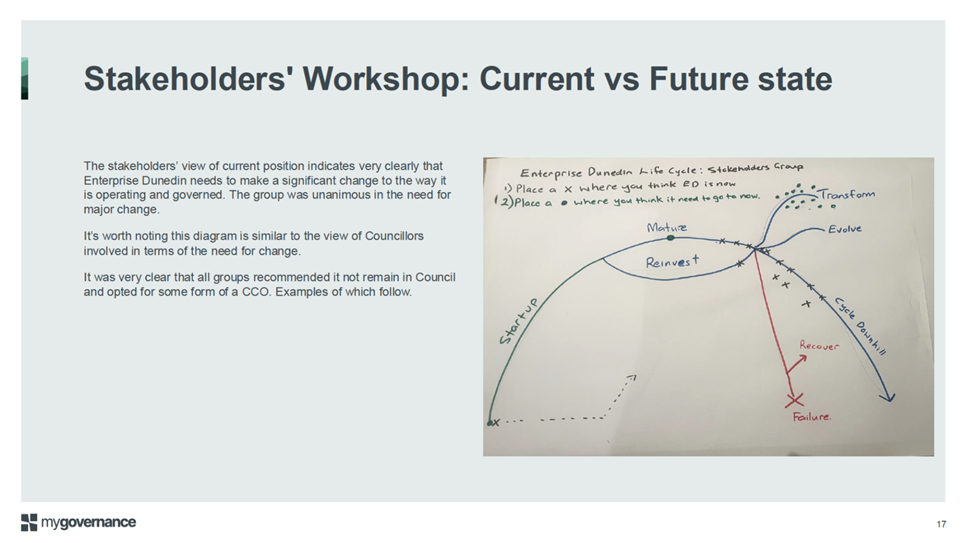
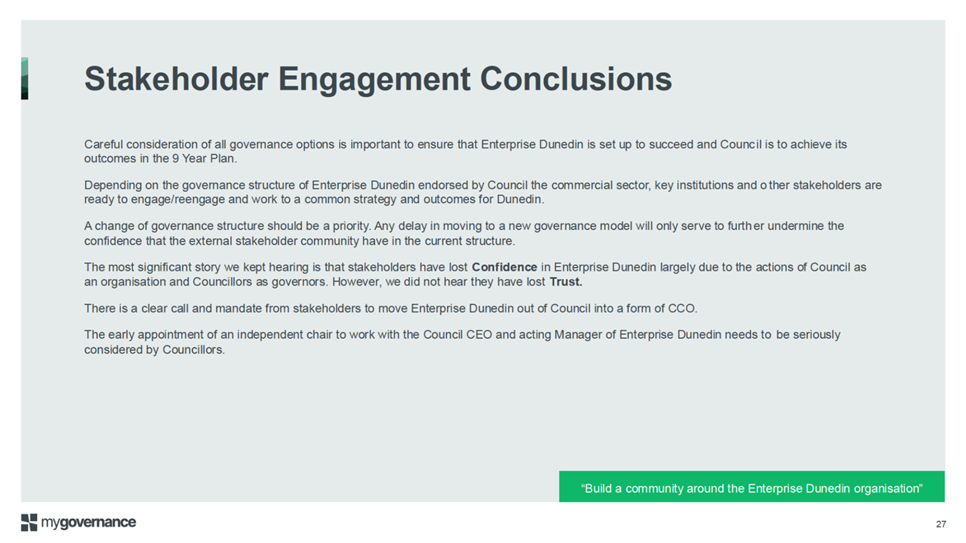
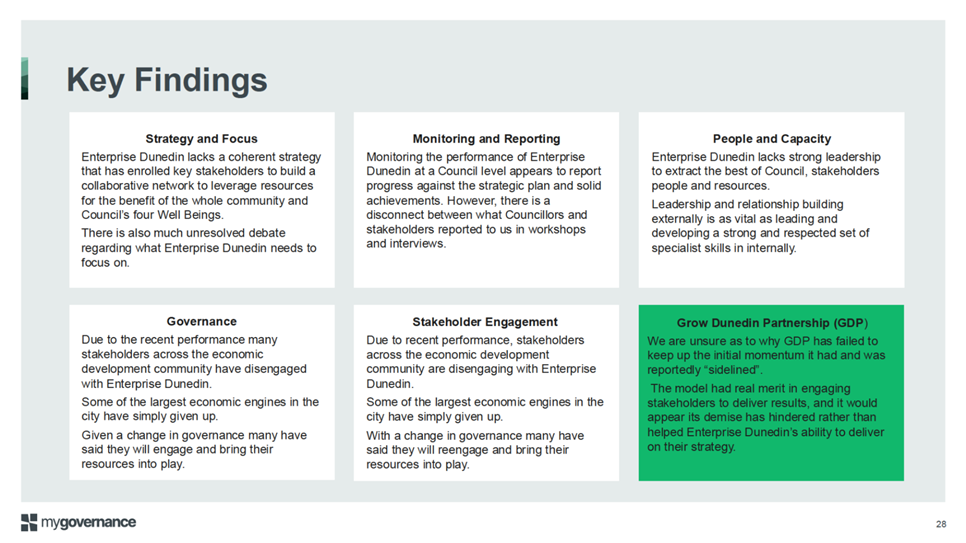
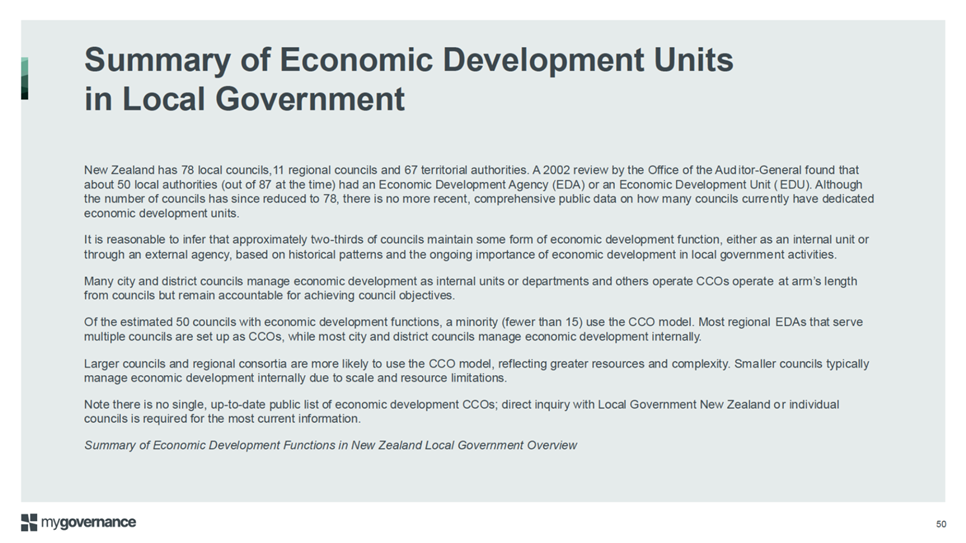
report summarises key stakeholder feedback and outlines seven potential
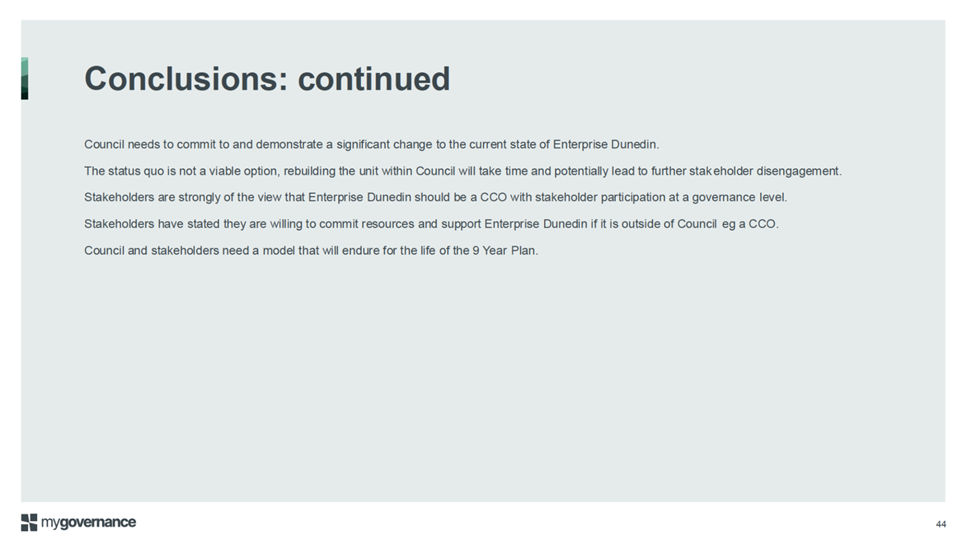
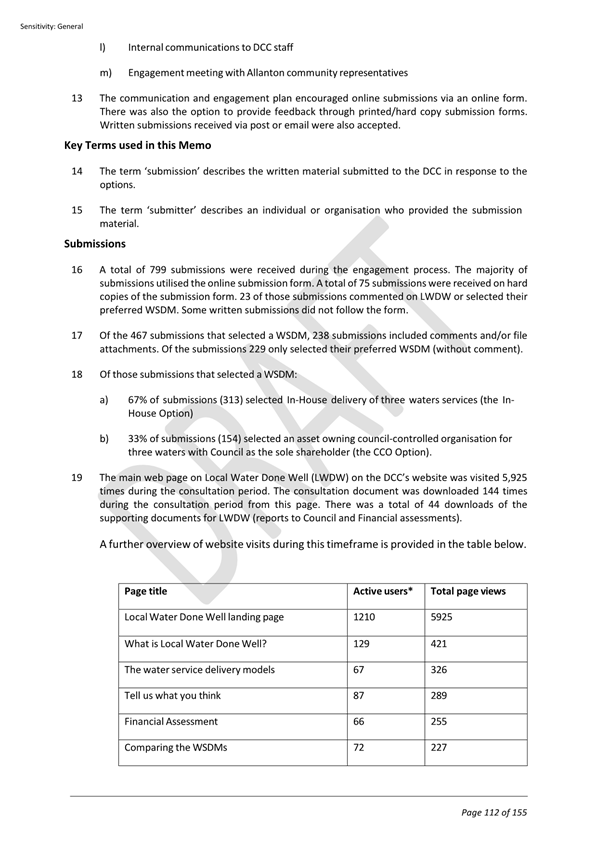
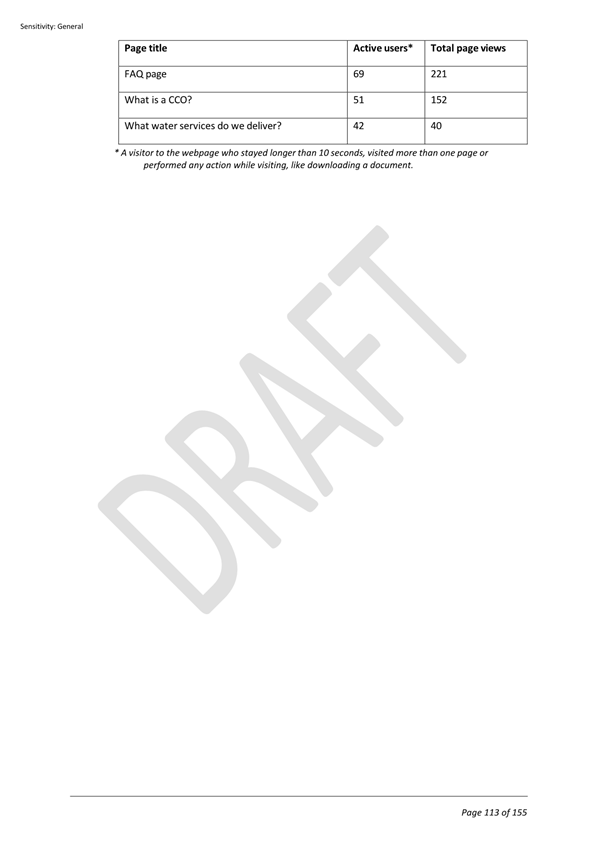
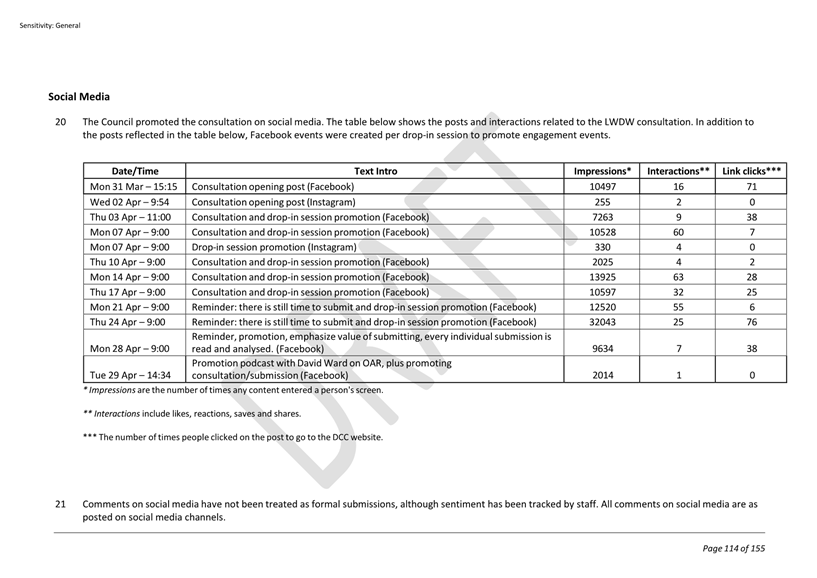
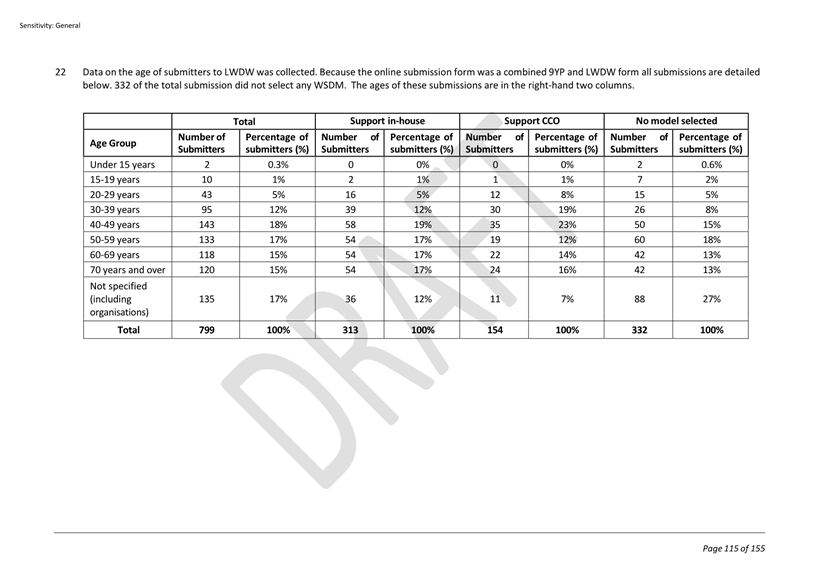
delivery options for the future of Economic Development services.
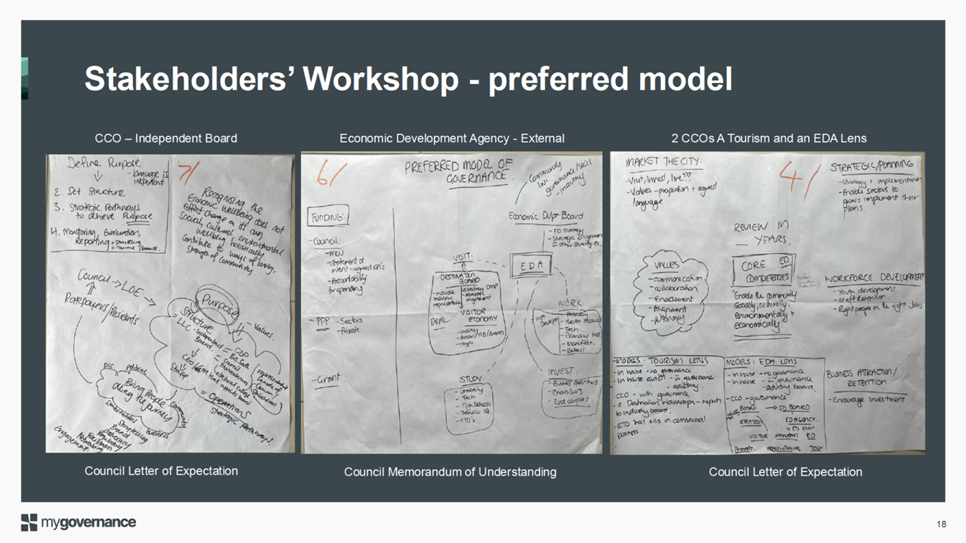
3 Based
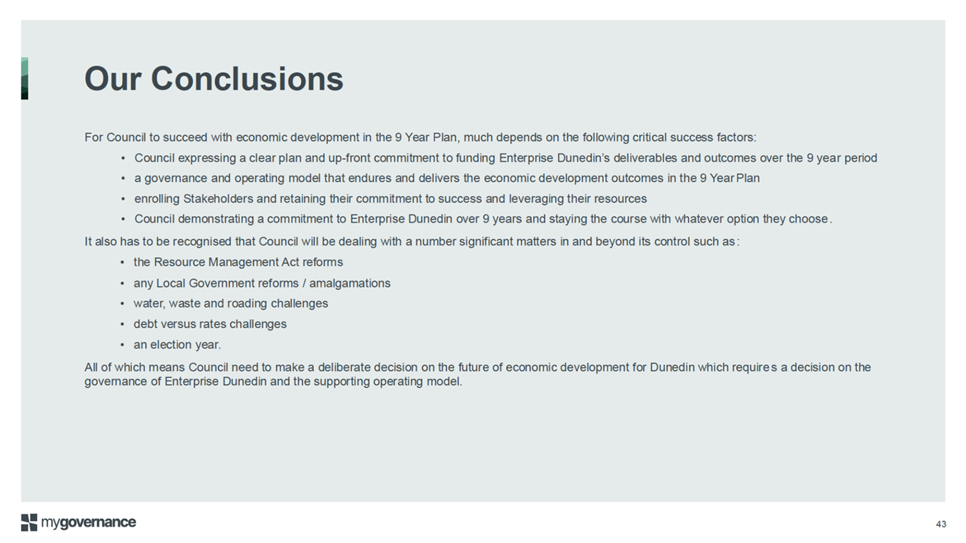
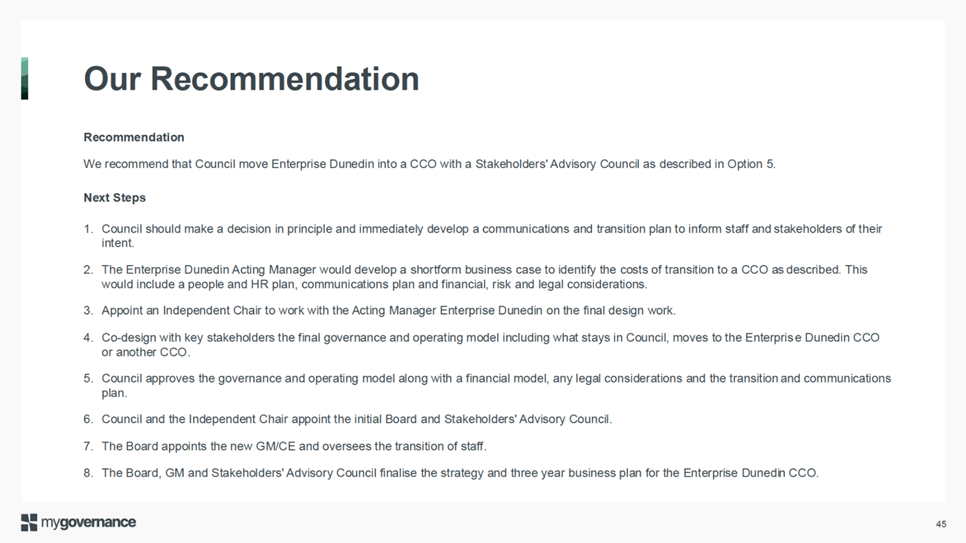
on this feedback and analysis, MyGovernance has recommended that
Enterprise Dunedin be disestablished as an internal unit of Council and that a
new Council-Controlled Organisation (CCO) be established, supported by a
Stakeholders’ Advisory Group.
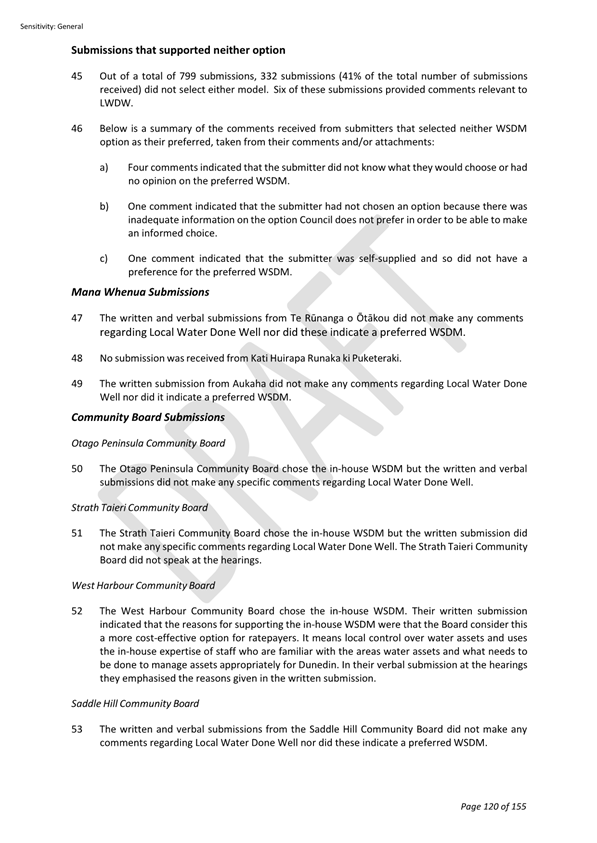
4 A
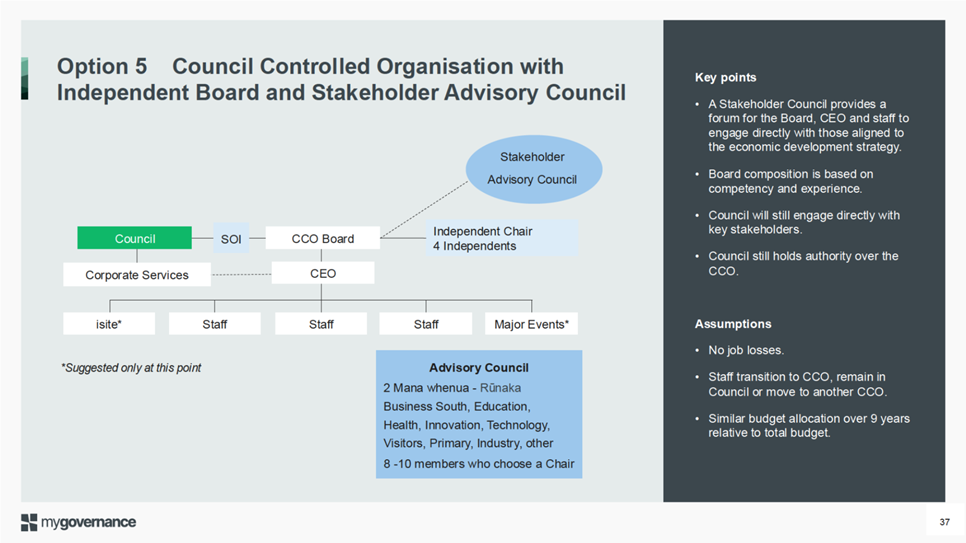
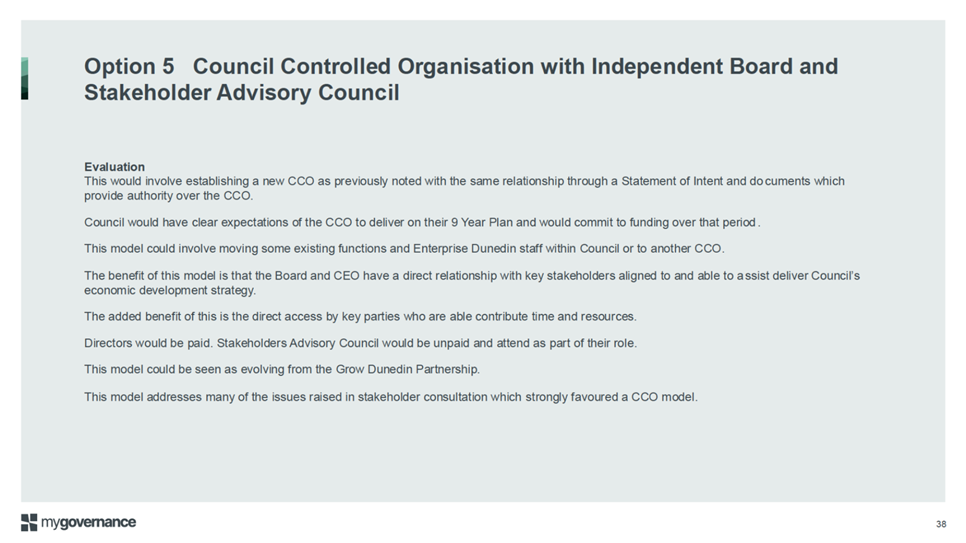
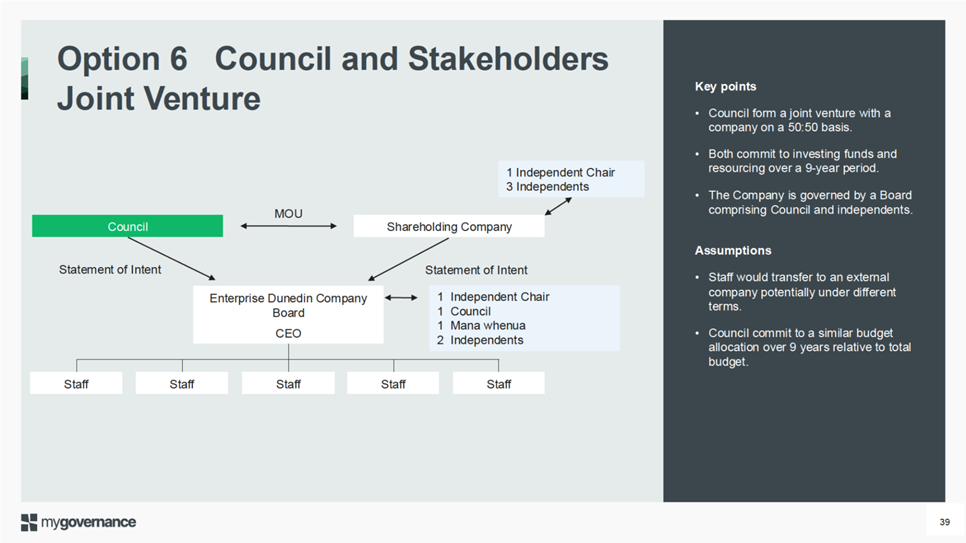
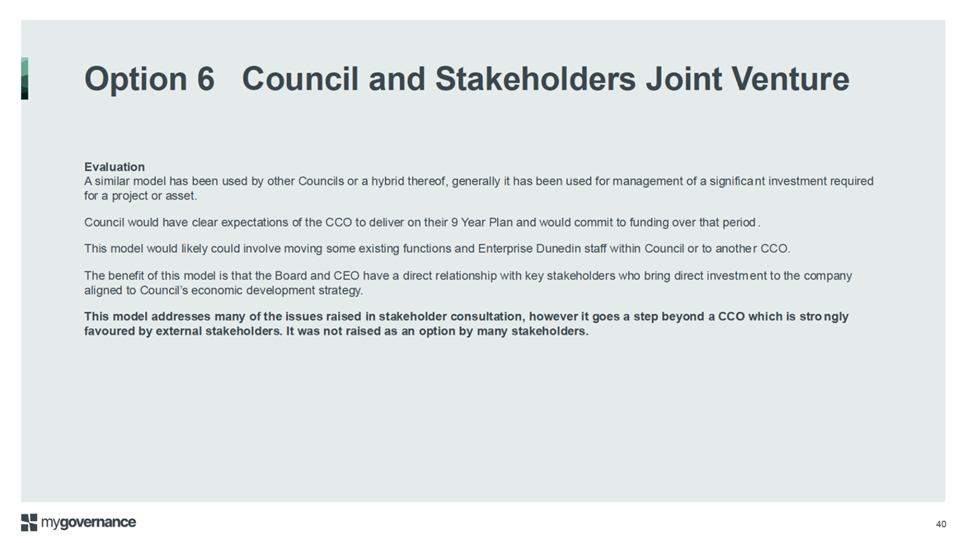
proposal to establish a CCO would require Council to consider its consultation
obligations under Section 82 of the Local Government Act 2002. Further
advice on consultation requirements will be provided in the subsequent report
to Council, once the number of potential options has been narrowed.
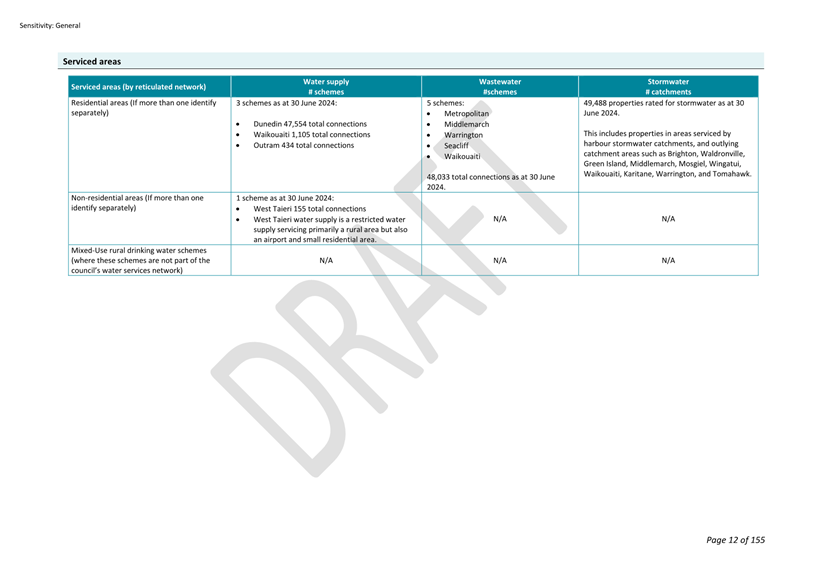
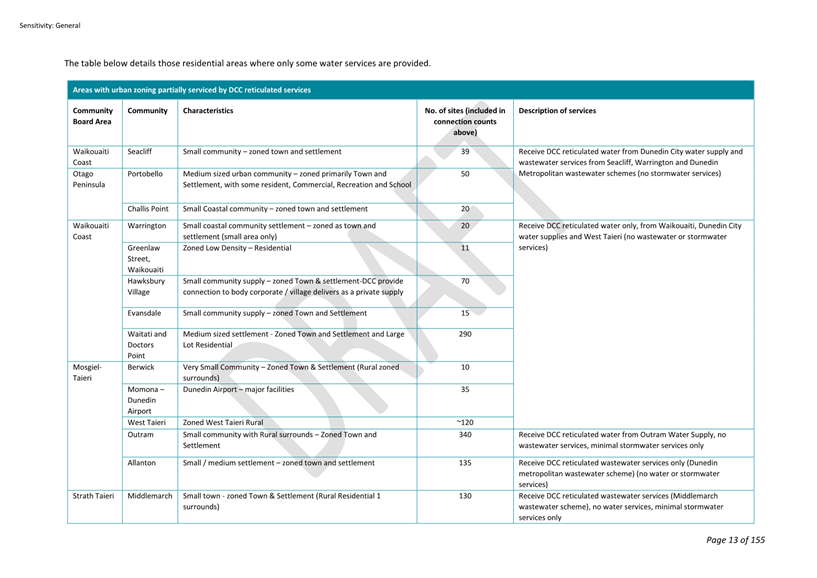
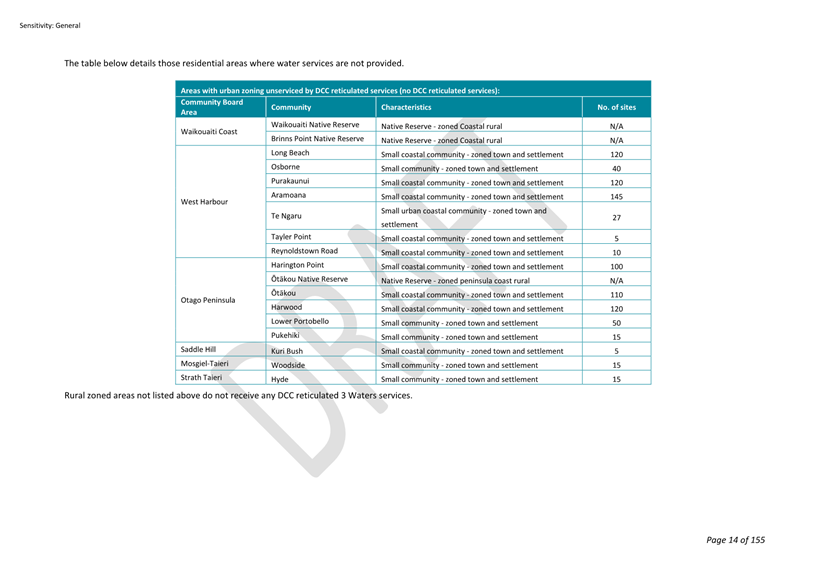
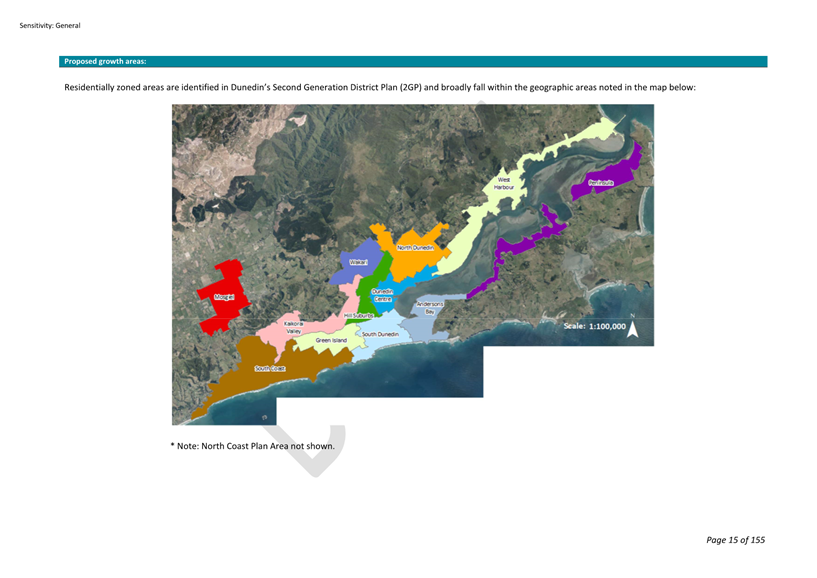
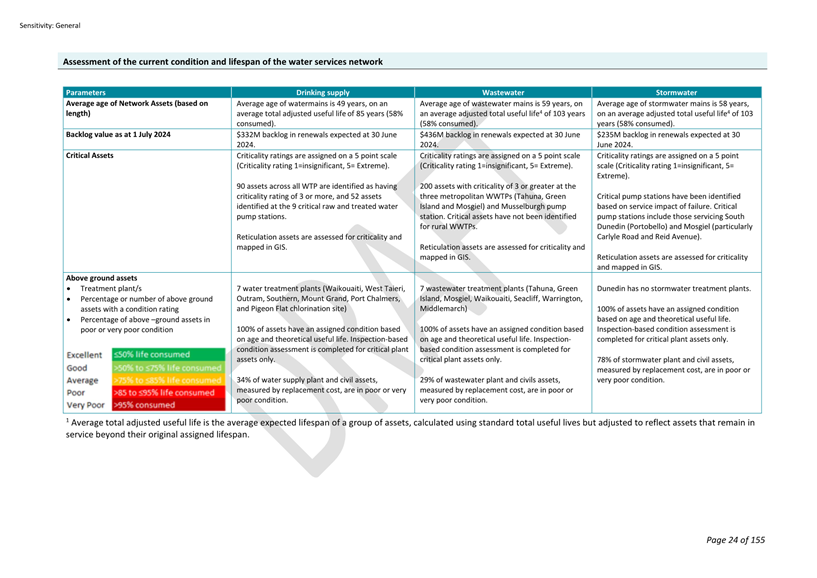
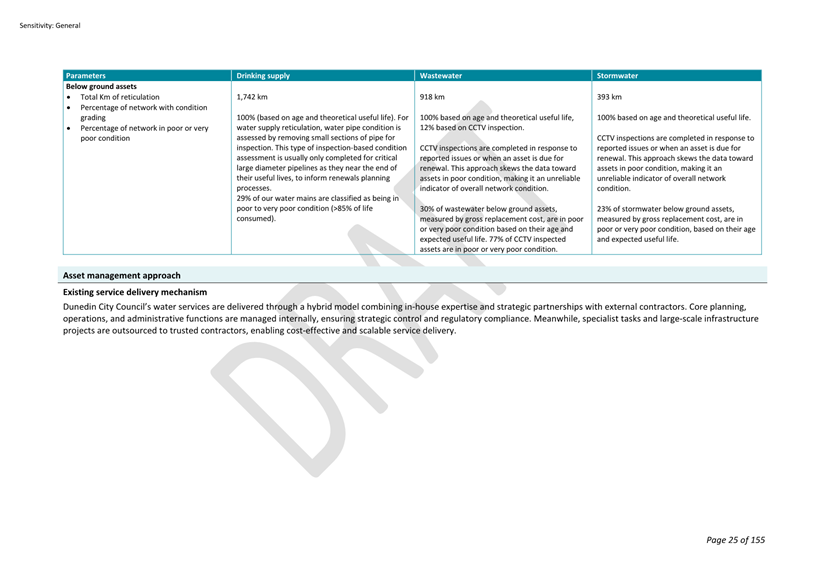
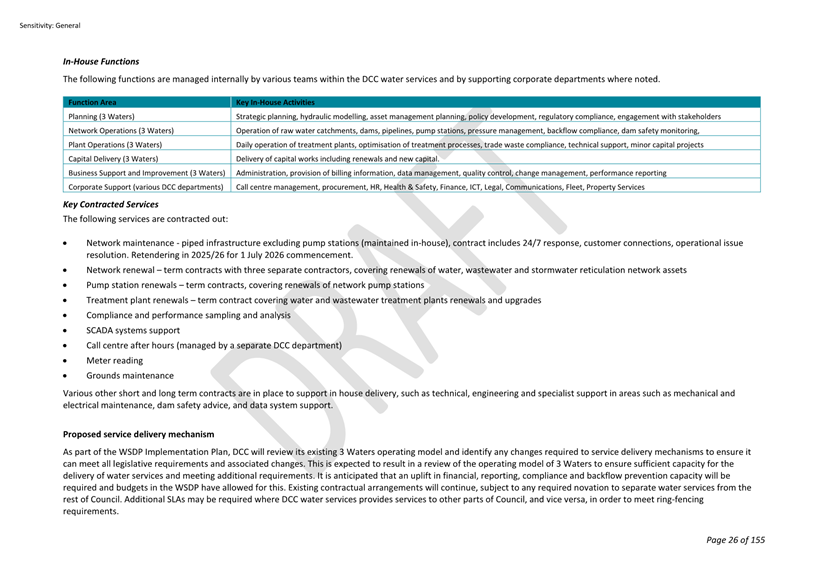
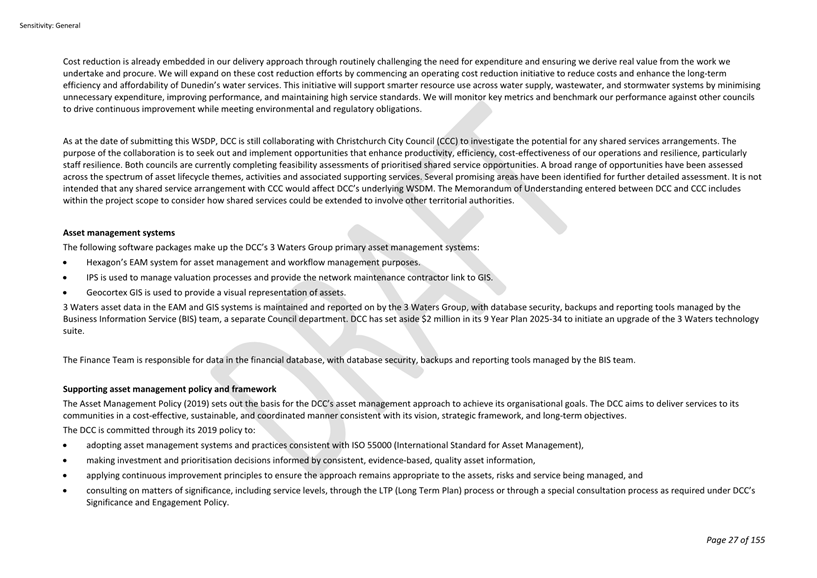
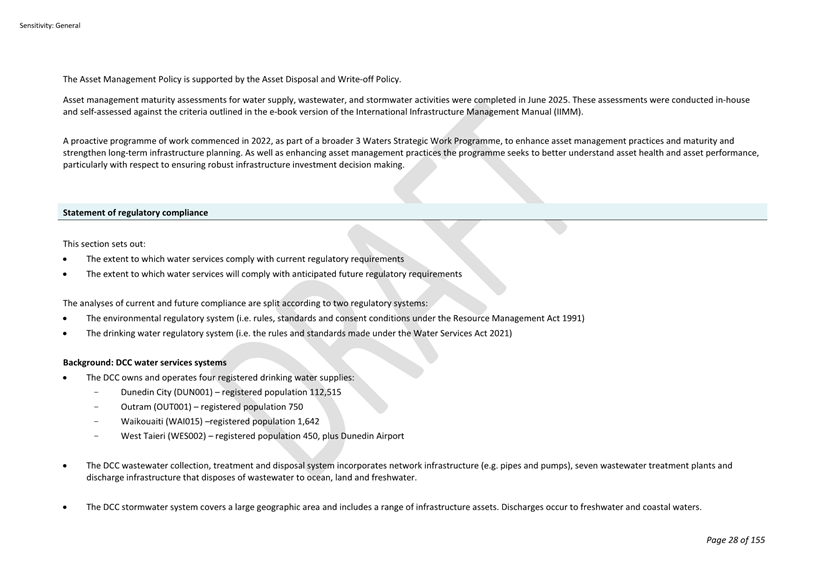
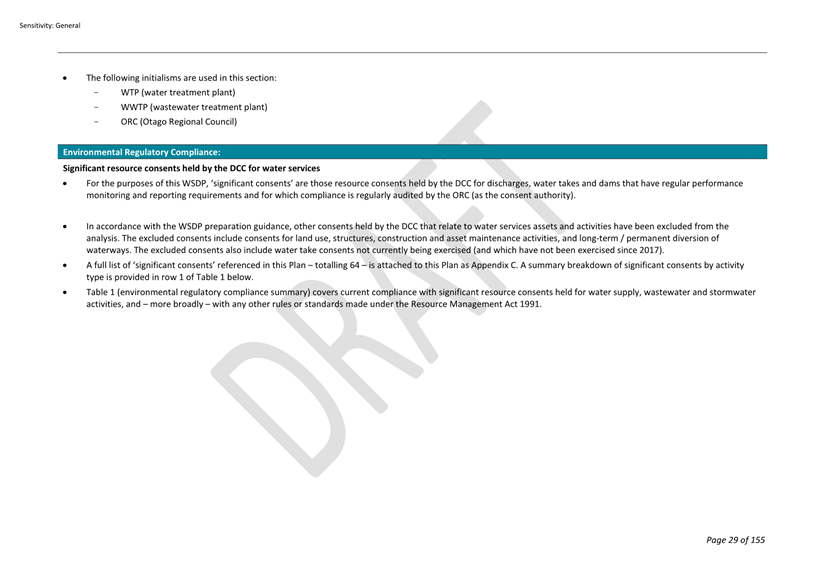
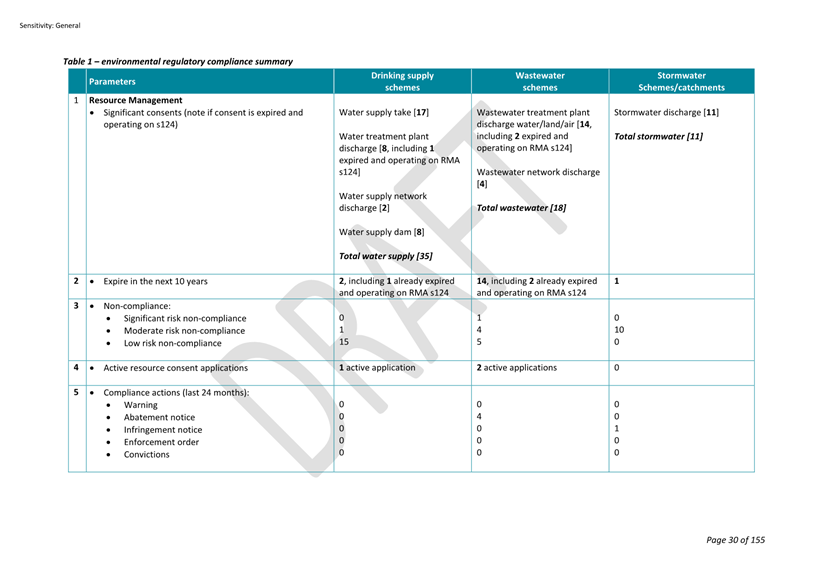
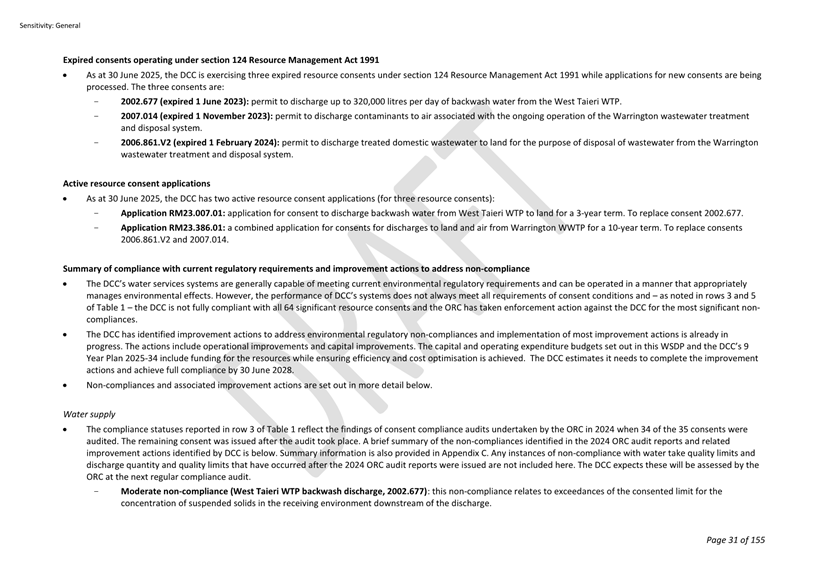
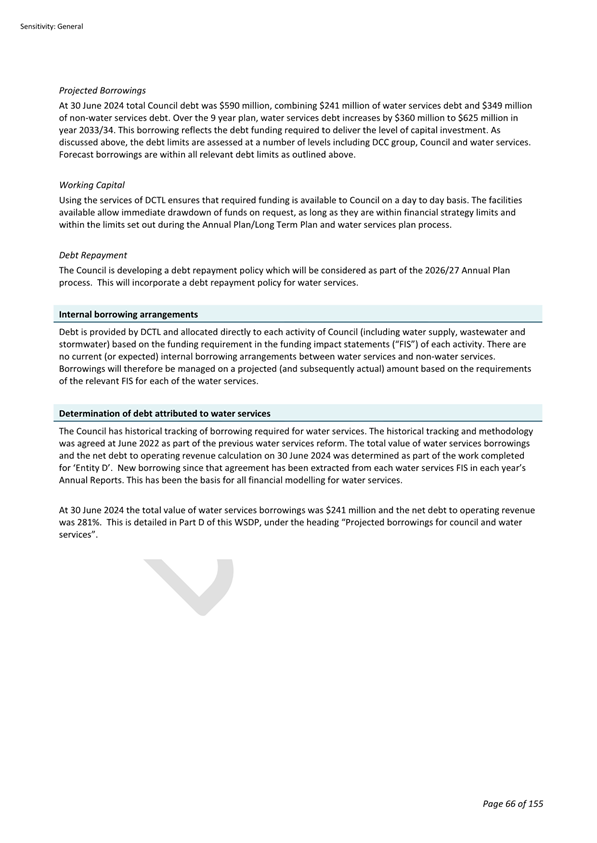
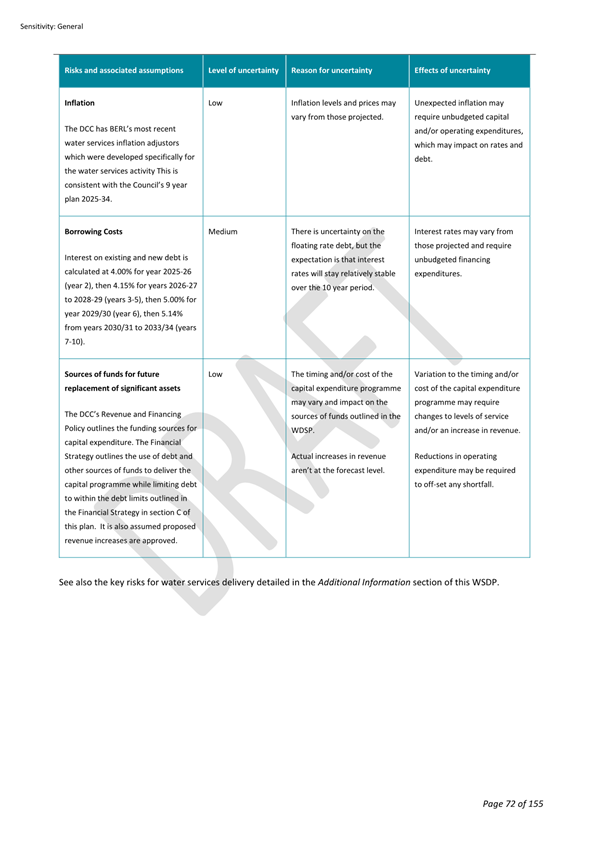
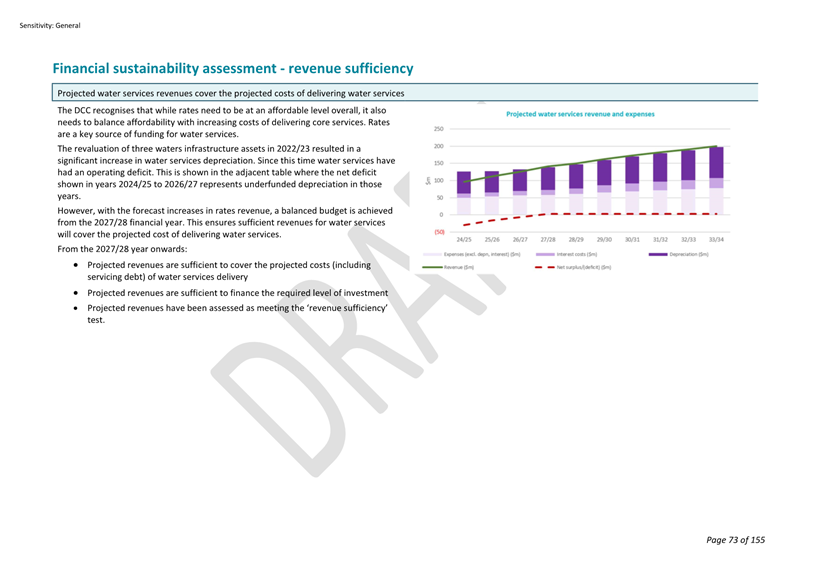
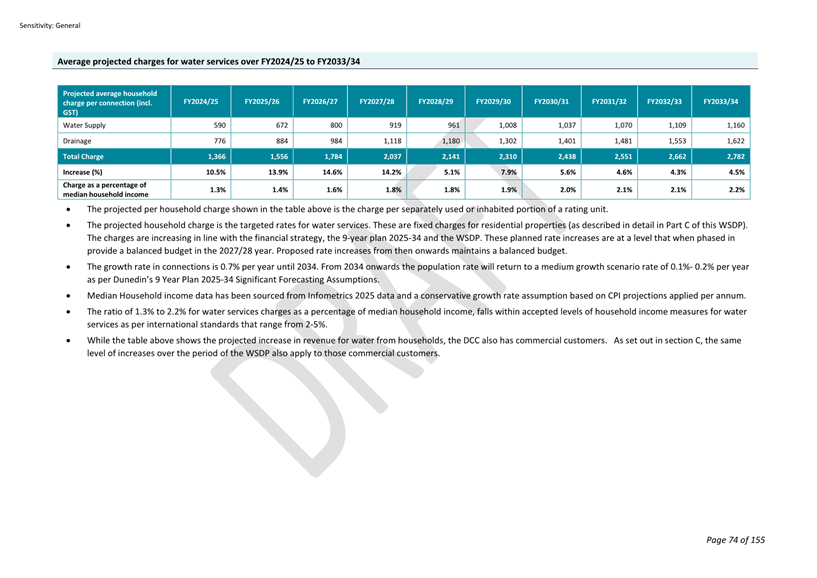
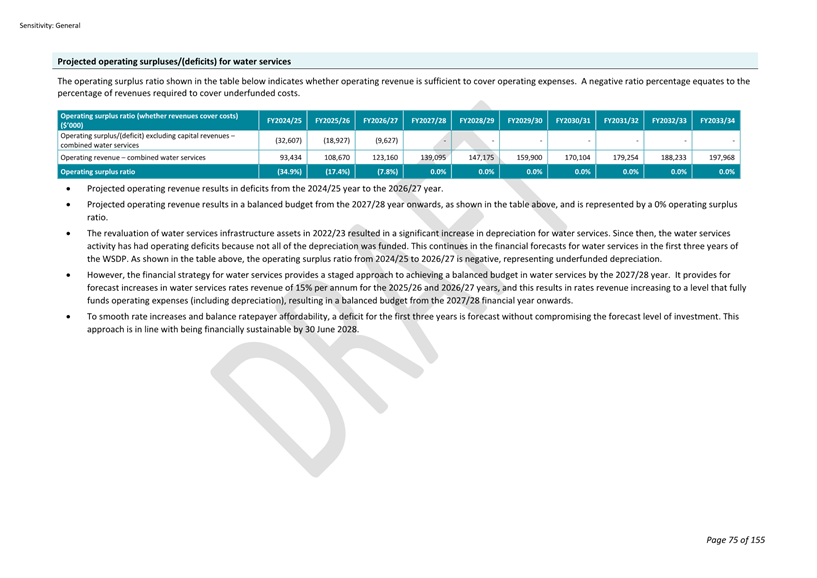
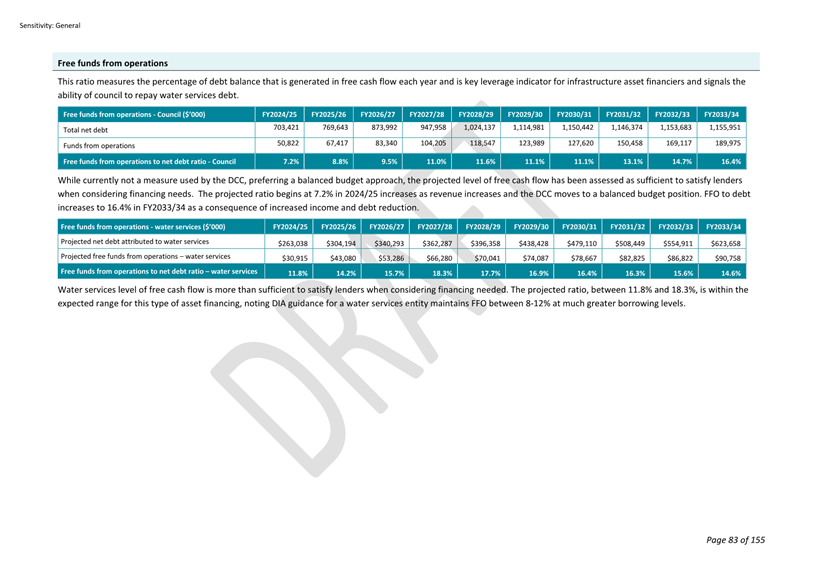
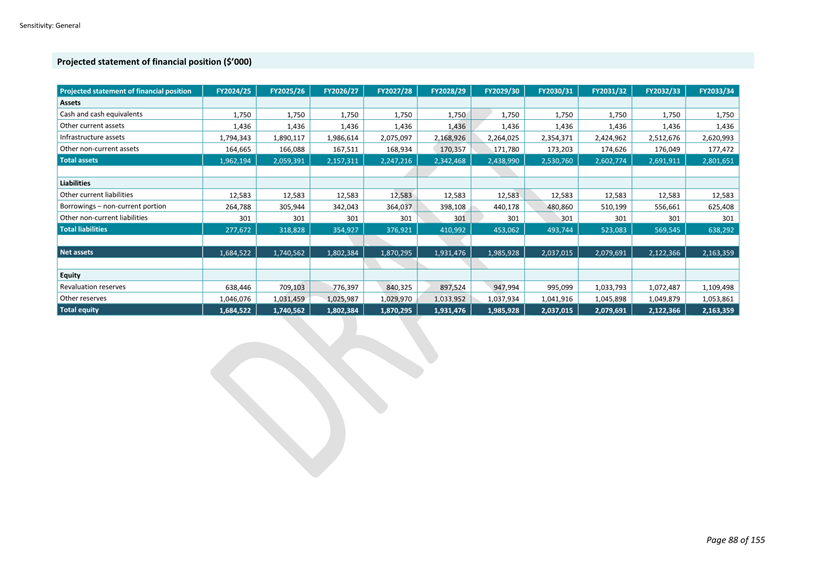
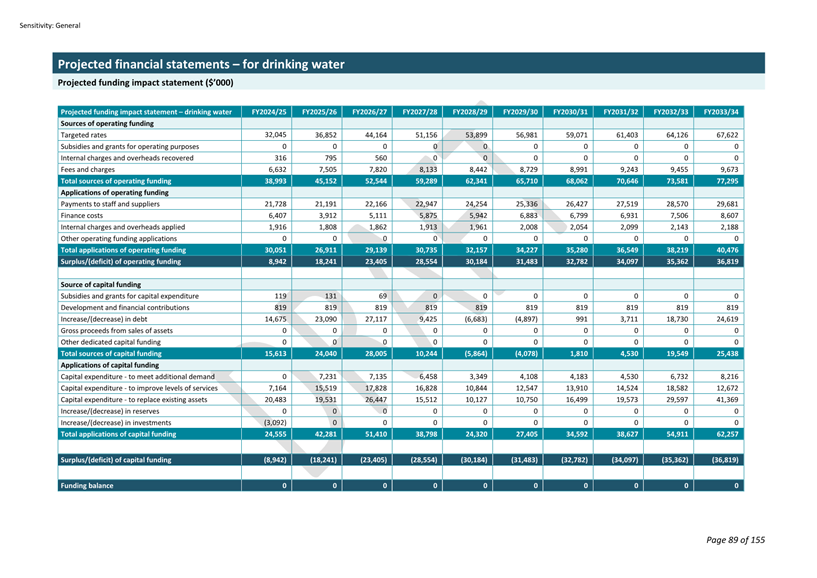
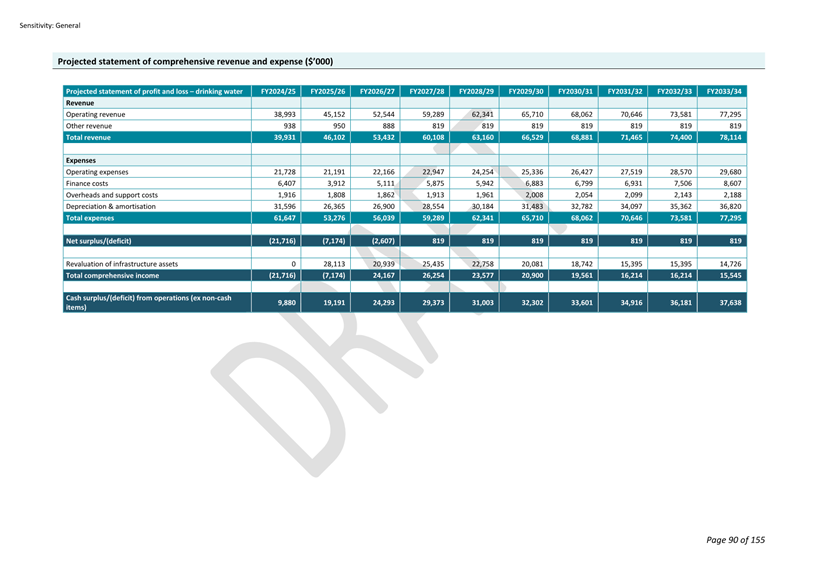
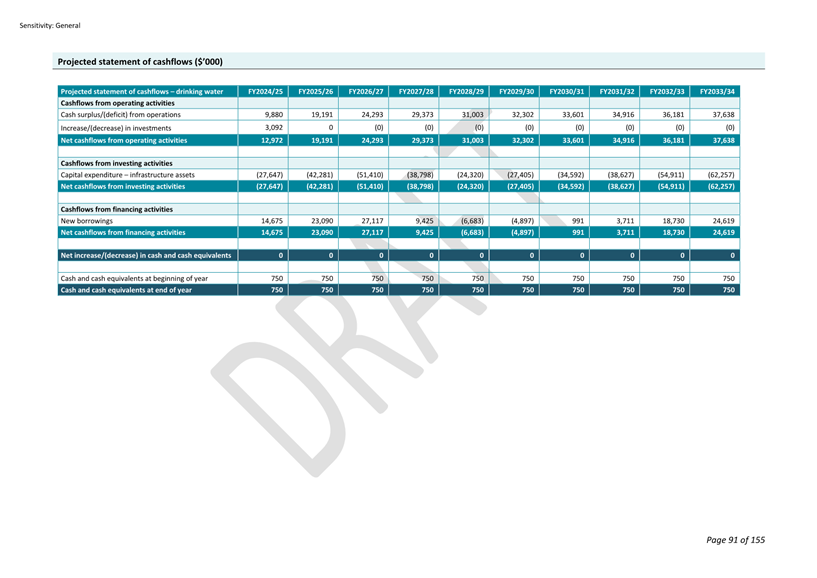
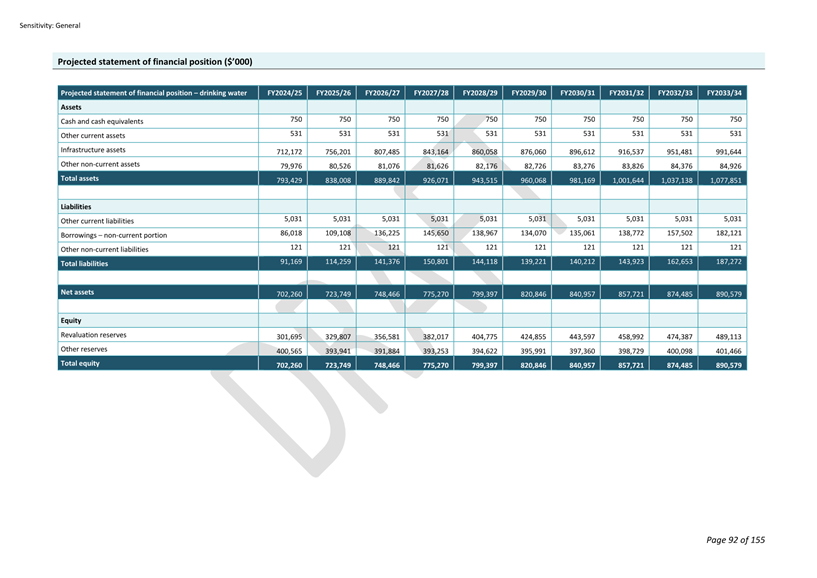
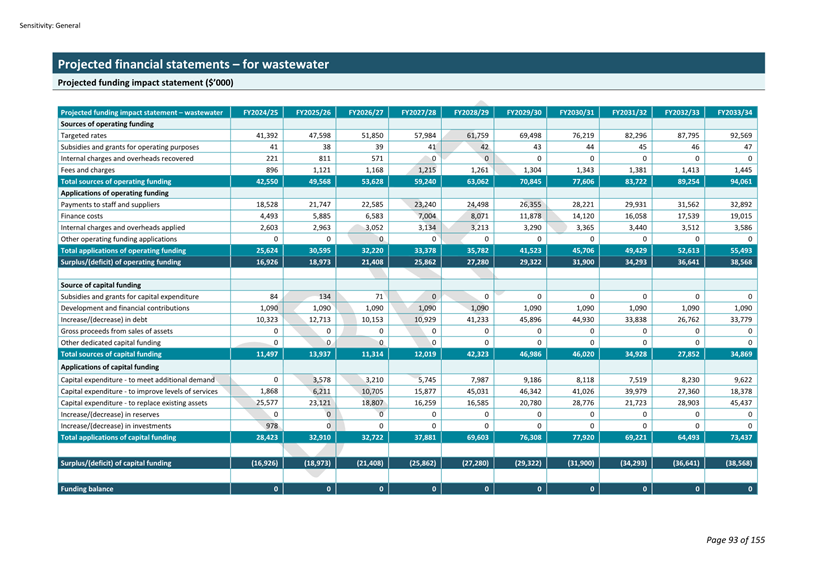
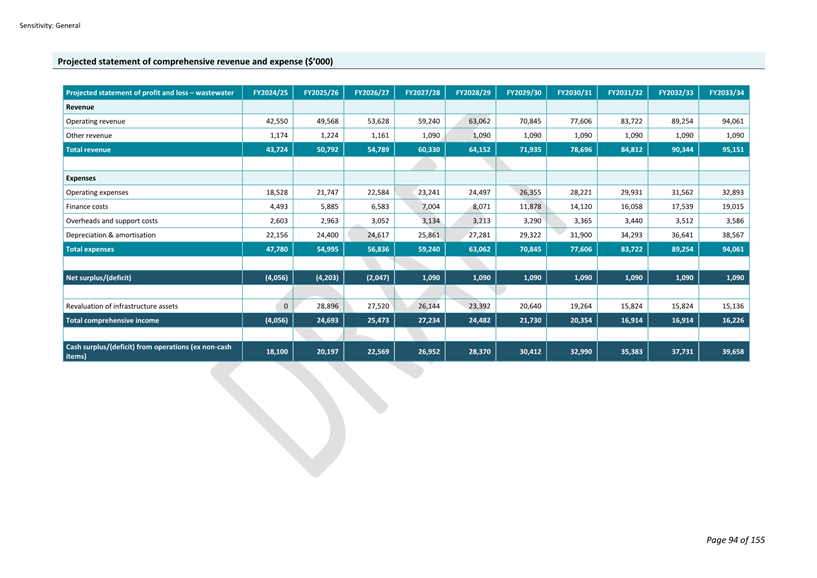
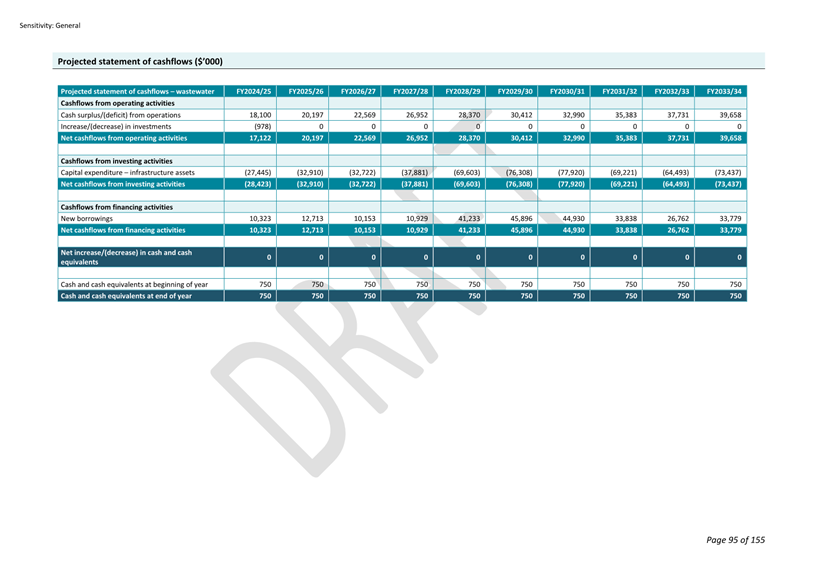
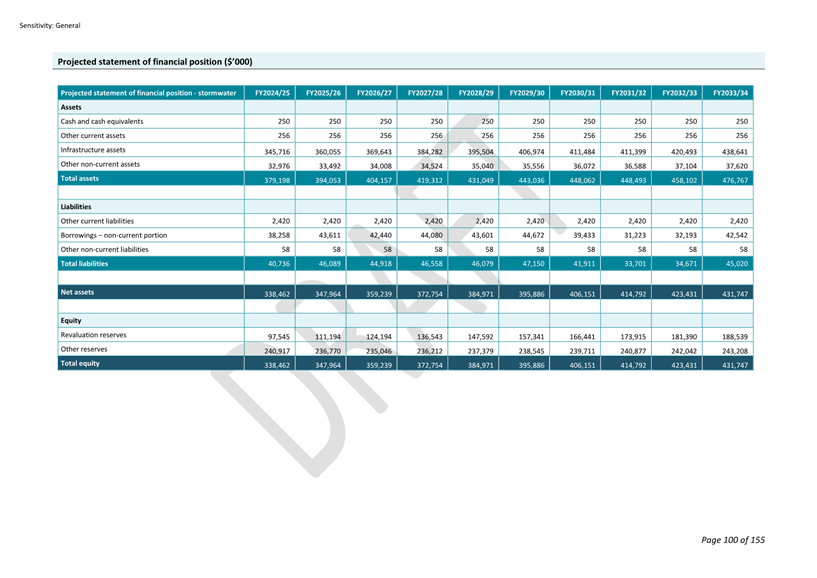
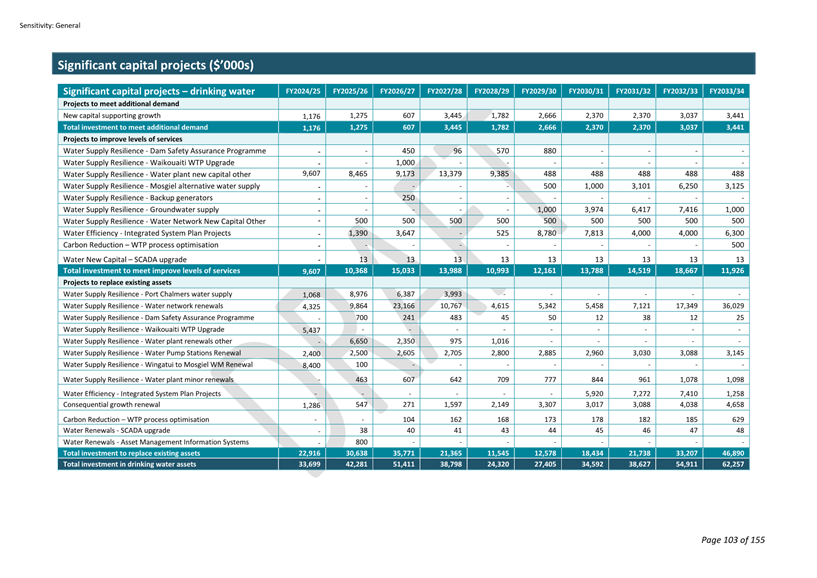
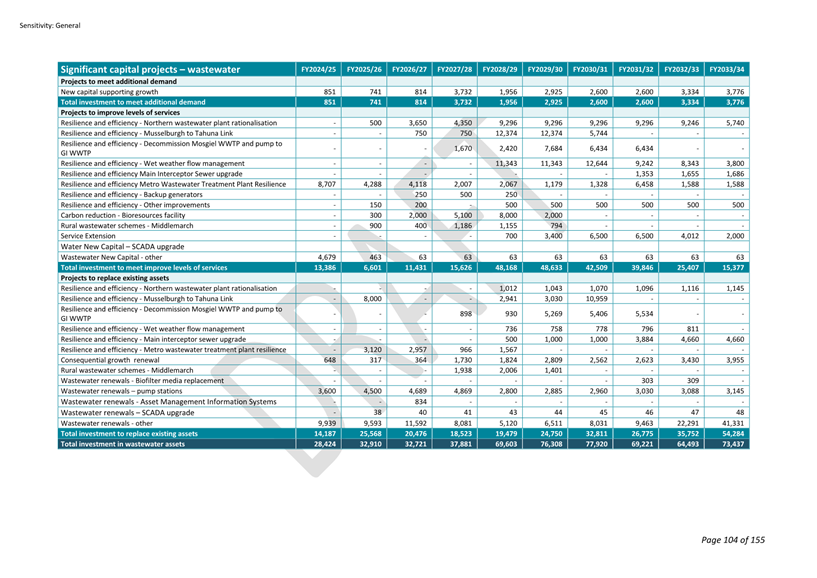
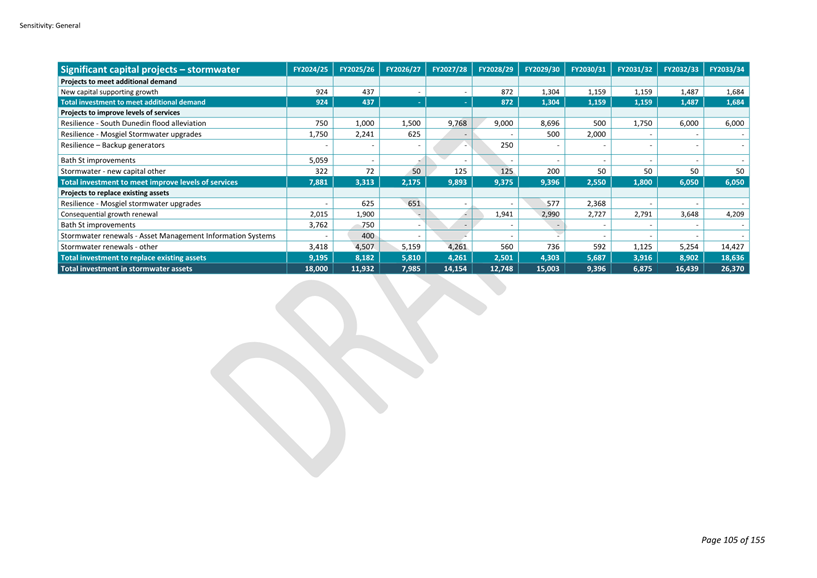
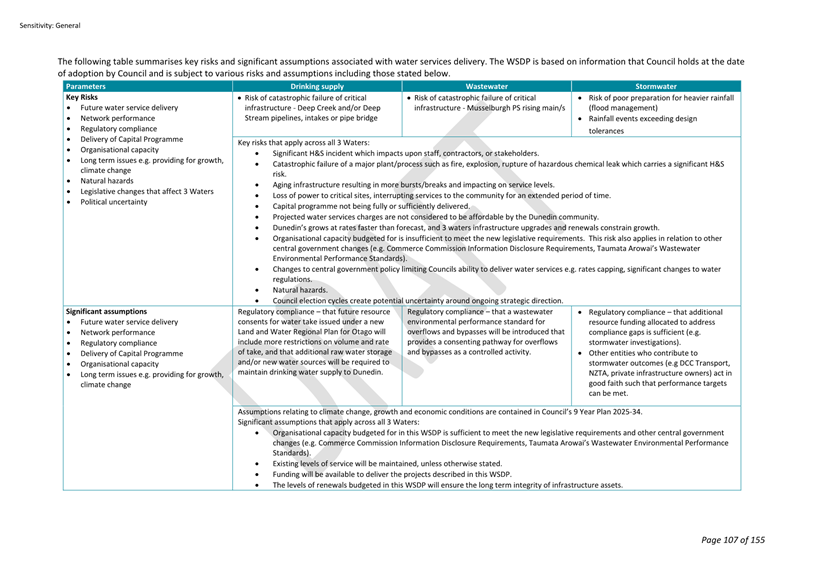
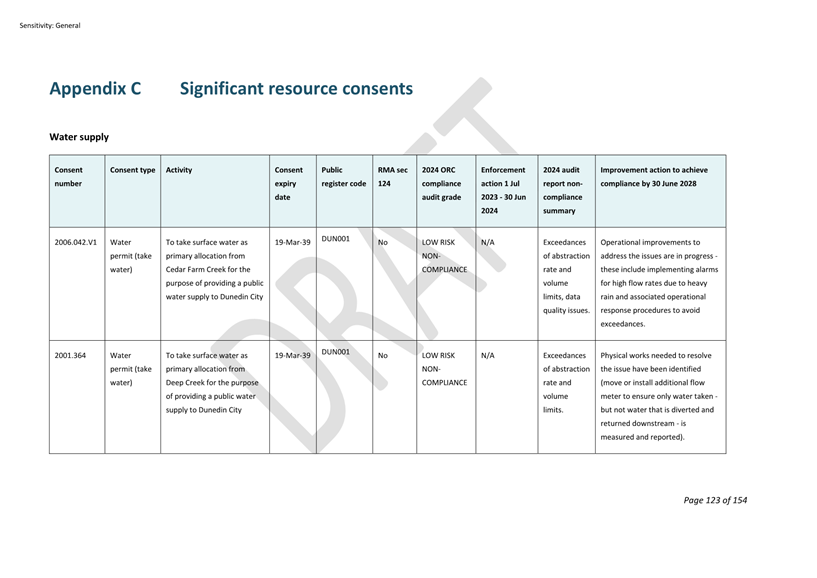
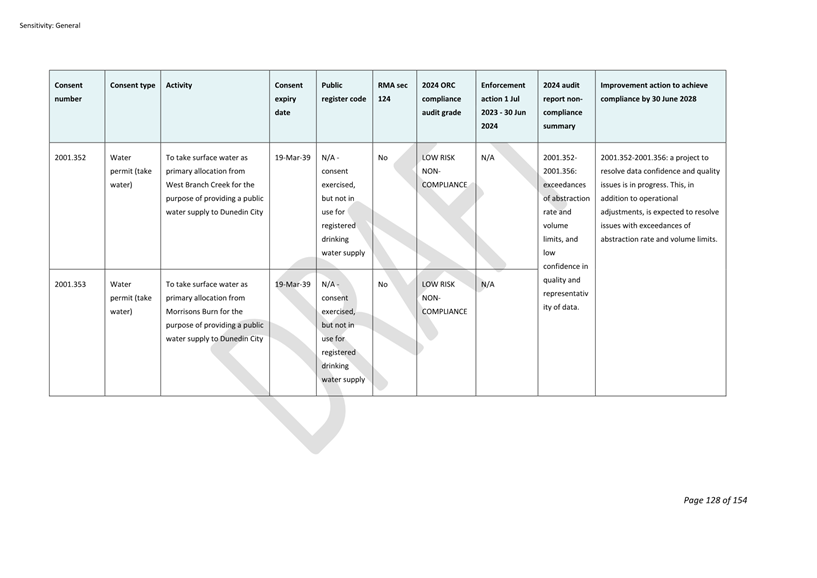
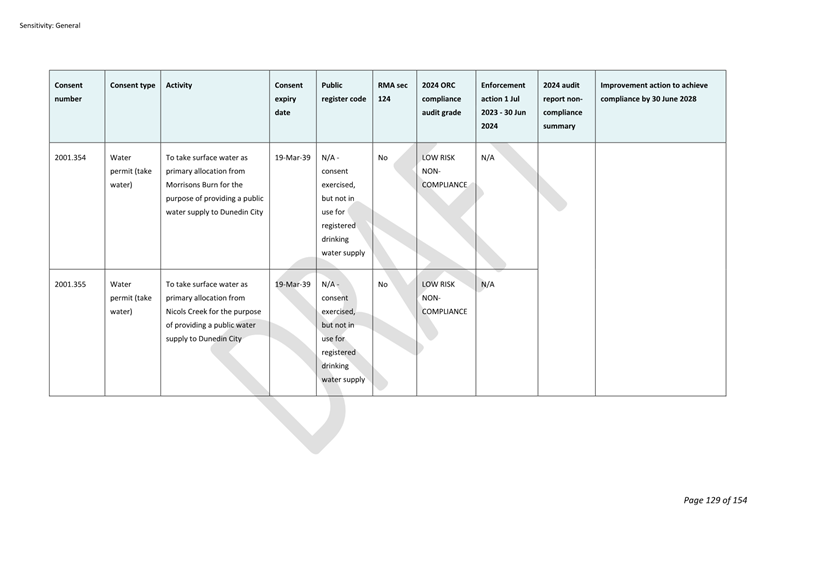
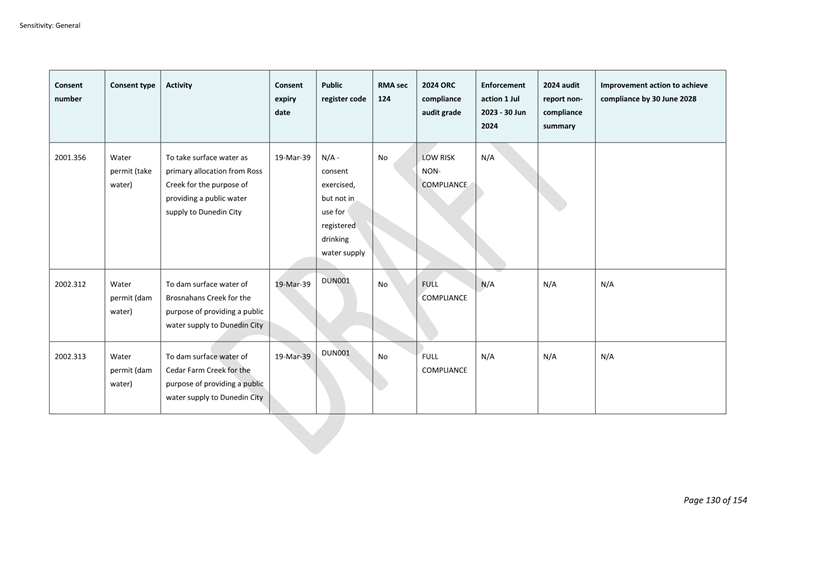
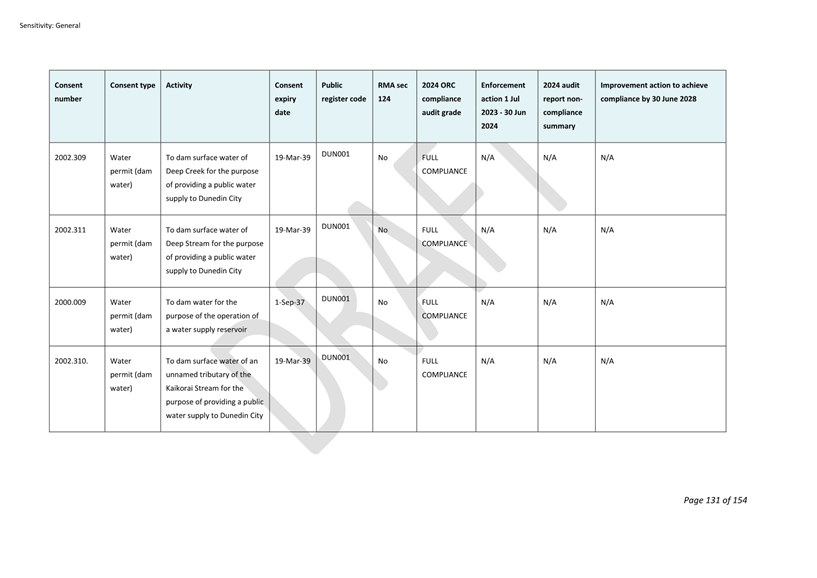
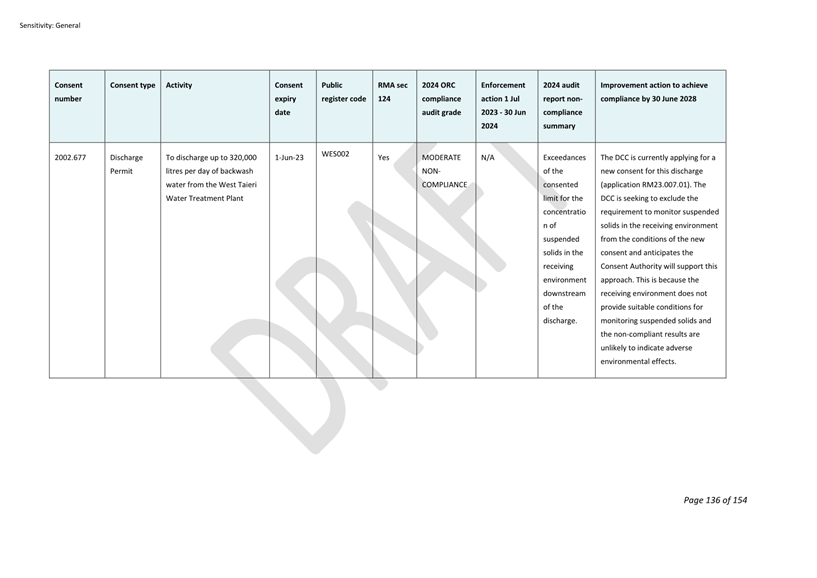
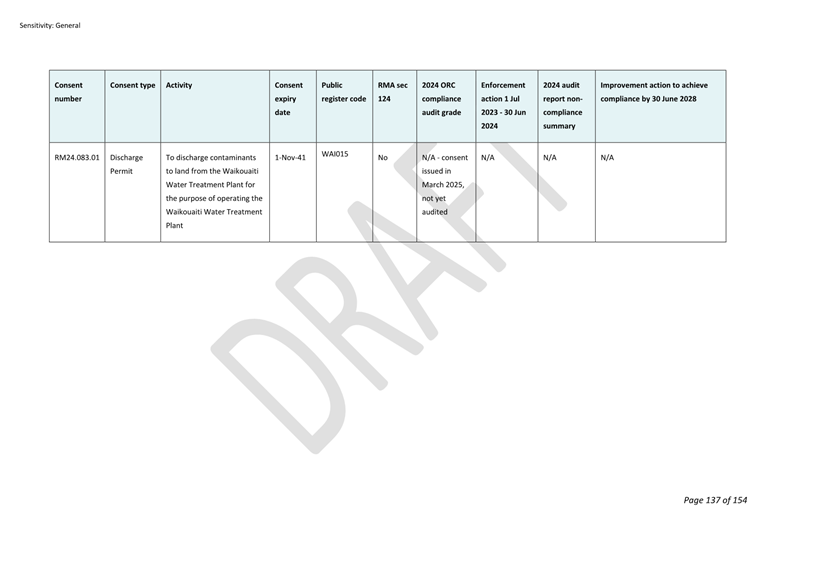
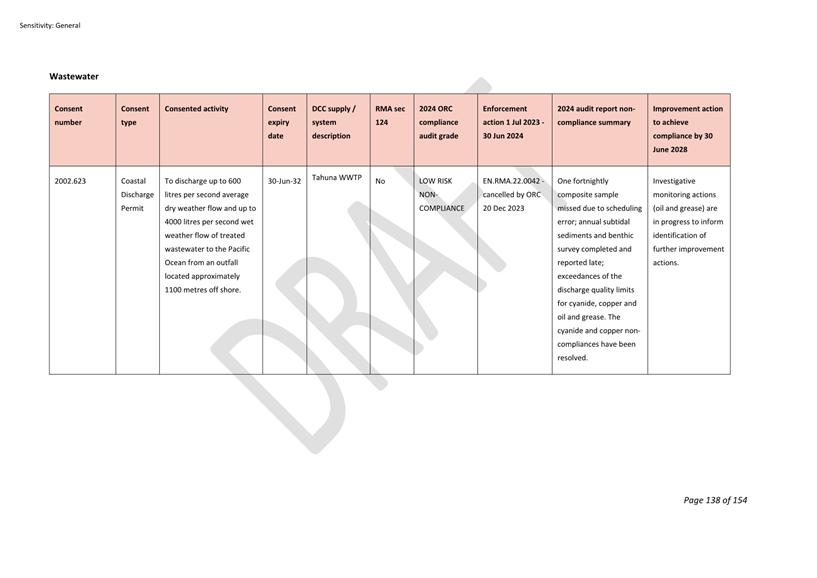
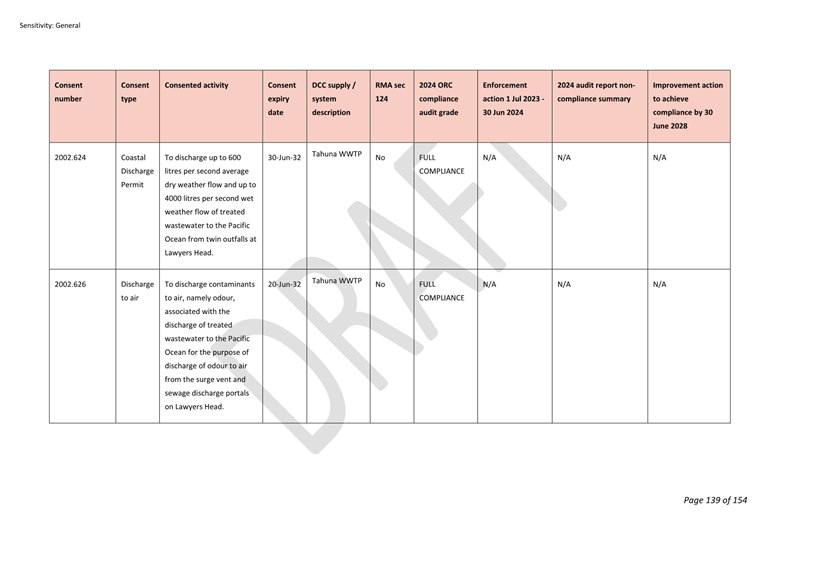
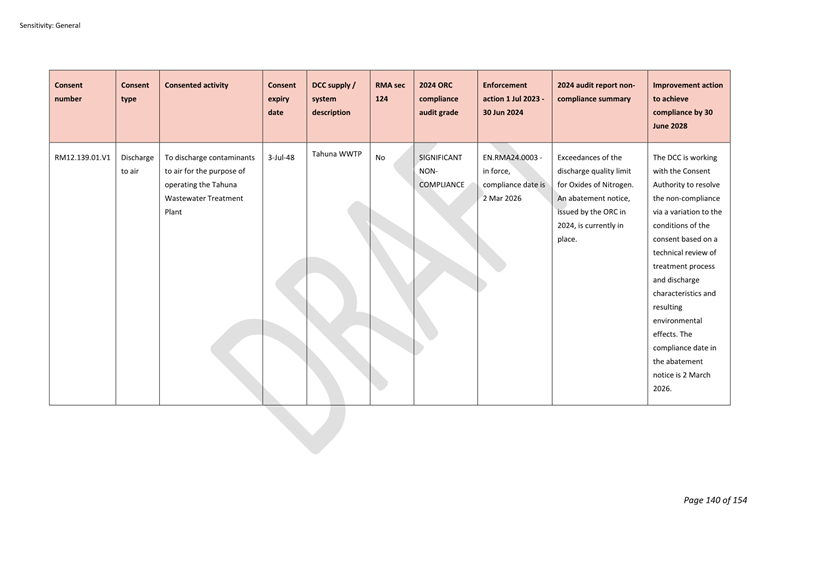
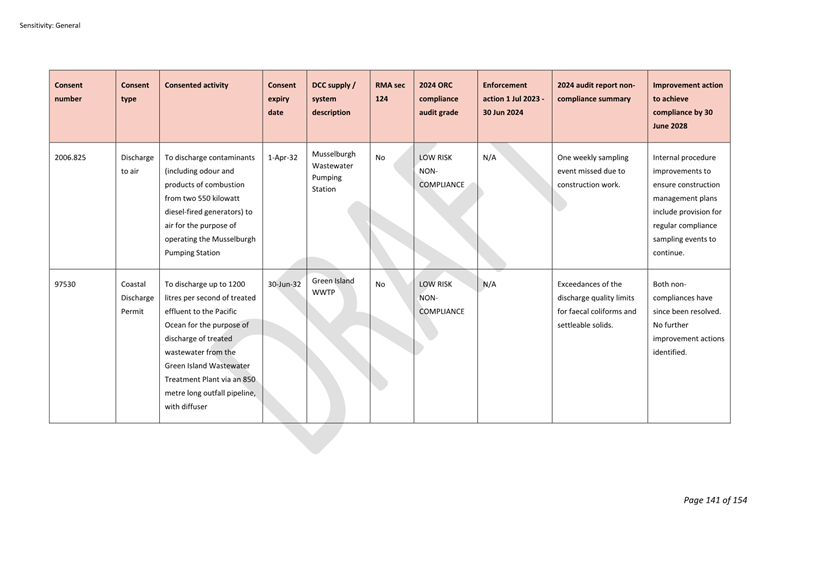
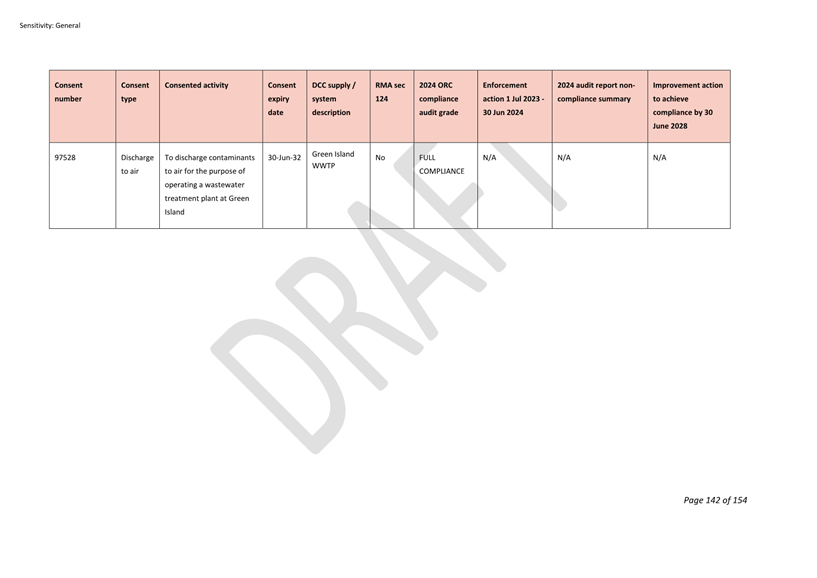
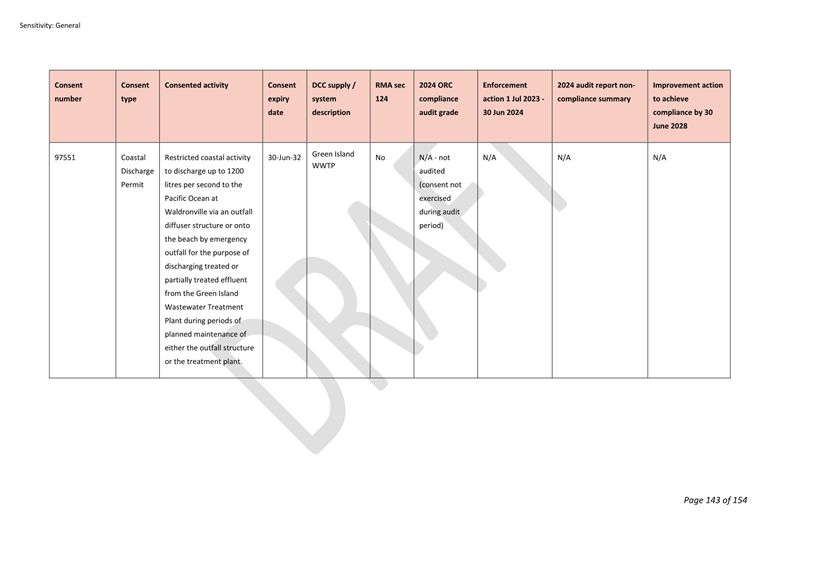
RECOMMENDATIONS
That the Council:
a) Considers the
MyGovernance Review Report and its overview of options.
b) Decides which options
(if any) staff should progress to impact assessments and development of
business cases.
c) Notes that a report on
the impact assessment and business cases will be presented to a Council meeting
on or before December 2025
BACKGROUND
5 On
25 November 2024 Council approved that a review of Enterprise Dunedin be
undertaken.
Moved
(Cr Andrew Whiley/Cr Sophie Barker):
That the Council:
a) Directs
the CEO to review the operation of Enterprise Dunedin.
Division
The
Council voted by division
For: Crs
Bill Acklin, Sophie Barker, Kevin Gilbert, Cherry Lucas, Mandy Mayhem, Jim O'Malley,
Lee Vandervis, Steve Walker, Brent Weatherall and Andrew Whiley (10).
Against: Crs
David Benson-Pope, Christine Garey, Carmen Houlahan and Marie Laufiso (4).
Abstained: Nil
The
division was declared CARRIED by 10 votes to 4.
Motion
carried (CNL/2024/235)
Moved
(Cr Andrew Whiley/Cr Sophie Barker)
That
the Council:
b) Consults
with Dunedin stakeholders with a refresh of the previously commissioned 2018 Martin Jenkins Report as part of the
Enterprise Dunedin review.
c) Presents
a report back to Council by 30 June 2025.
Division
The
Council voted by division
For: Crs
Bill Acklin, Sophie Barker, Kevin Gilbert, Cherry Lucas, Mandy Mayhem, Jim
O'Malley, Steve Walker, Brent Weatherall and Andrew Whiley (9).
Against: Crs
David Benson-Pope, Christine Garey, Carmen Houlahan, Marie Laufiso and Lee
Vandervis (5).
Abstained: Nil
The
division was declared CARRIED by 9 votes to 5.
Motion
carried (CNL/2024/236)
6 Following
the Council resolution, DCC auditors advised that the timeline for the report
should be extended until 31 July 2025 to avoid crossover with the 9 year plan 2025-2034
consultation. This was agreed by the Chair of the Economic Development
Committee and the CEO.
7 The
consultancy firm MyGovernance was engaged to lead the review.
DISCUSSION
8 A
review of Enterprise Dunedin has been undertaken through a comprehensive and
structured process.
9 A
review of strategic documents, including previous economic development
strategies, and other relevant reports, was completed to ensure alignment with
Council’s strategic intent and priorities.
10 Interviews
were conducted with a wide range of stakeholders, including Councillors,
Council staff, industry leaders, and partner organisations. This engagement
provided valuable insights into stakeholder expectations, challenges, and
opportunities.
11 Based
on feedback and analysis, critical issues impacting the performance and future
direction of Enterprise Dunedin were identified. These include structural,
strategic, and operational matters that require consideration.
12 A
facilitated workshop brought together a broad group of stakeholders across
sectors to test key themes and priorities, and to build a shared understanding
of future opportunities for Enterprise Dunedin.
13 An
organisational assessment was also completed to evaluate the current state of
Enterprise Dunedin, identifying key strengths, areas for improvement, and
external opportunities to enhance its impact.
14 The
findings from all aspects of the review have been synthesised into the report. MyGovernance
has also developed options for Council’s consideration and has made a
recommendation on the options.
15 The
report highlights that a change in how Enterprise Dunedin operates is expected
and required as an outcome of this review to restore stakeholder confidence.
Consultant
Recommendation
16 The
option recommended by MyGovernance is that Enterprise Dunedin cease
being an internal function of DCC. Instead, it proposes that Economic
Development be delivered by a CCO, supported by the Board and a Stakeholders’
Advisory Group.
17 MyGovernance
have proposed a series of next steps. If Council are to progress their
preferred options of a CCO.
Process requirements
18 Section
56 of the Local Government Act 2002 records that:
Consultation required before council-controlled
organisation established
(1) Before
a local authority may establish or become a shareholder in a
council-controlled organisation, the local authority must undertake
consultation in accordance with section 82.
(2) The consultation required
in subsection (1) may be undertaken as part of another proposal or as part of a
long-term plan.
19 Council
would therefore need to consider the nature and significance of any proposed
changes when deciding how to consult.
Timing
20 While
there is no legal barrier to initiating changes before the election, timing
is such that Council would not be able to develop options and consultation
material (if required) in advance of the election. For that reason, staff are
seeking Council’s guidance on which of the options to progress to a
high-level business cases to support any community consultation post the
election.
Staff
Impact and Internal Process Considerations
21 It
is important to note that the content of the report and future decisions may
have implications for individual staff members and the structure or delivery of
internal functions. Management has taken appropriate steps to engage with staff
and will ensure that any necessary support is provided as the process
progresses.
OPTIONS
Delivery
Options
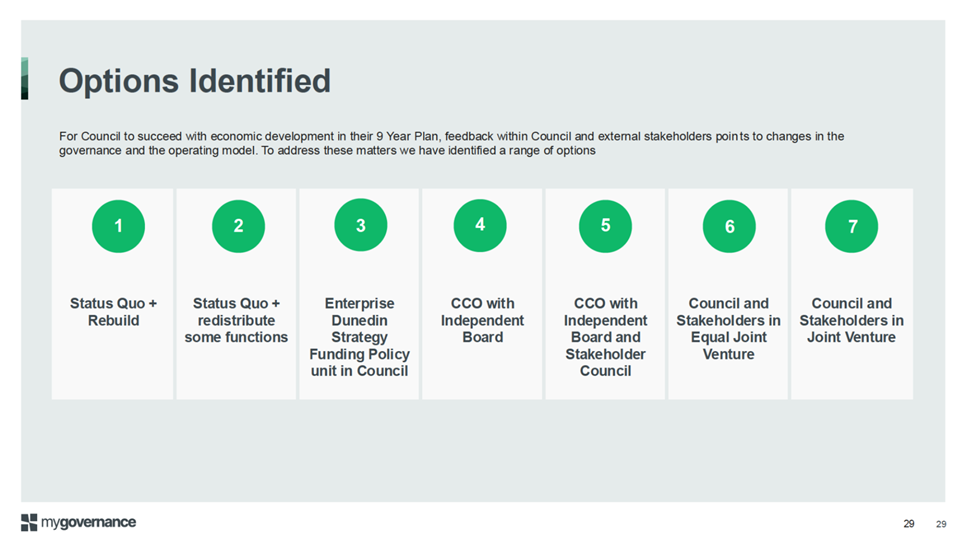
22 MyGovernance
has provided a high-level overview of seven options as follows:
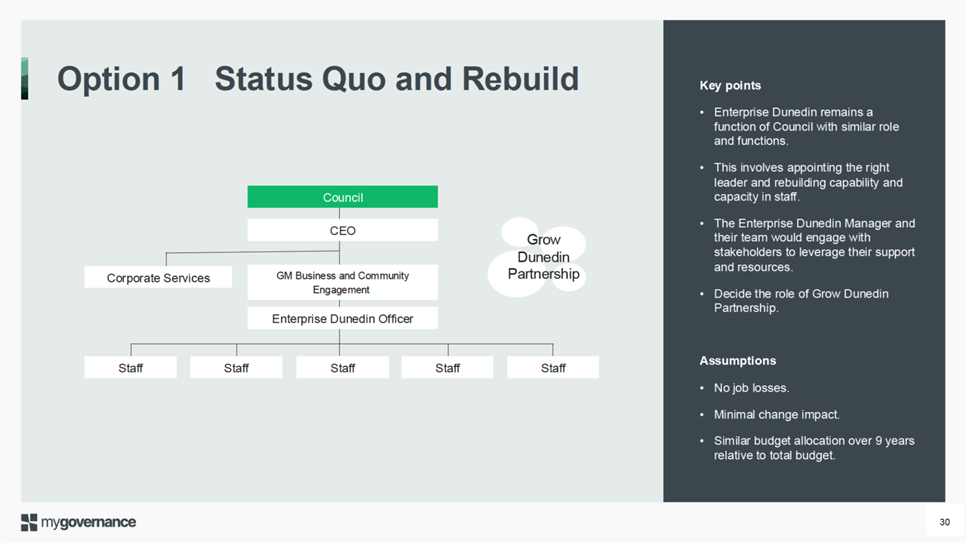
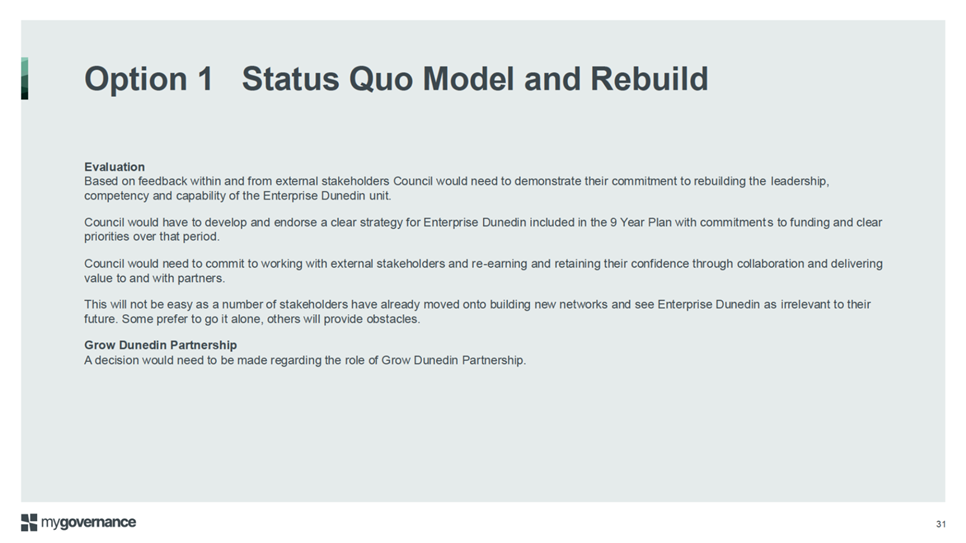
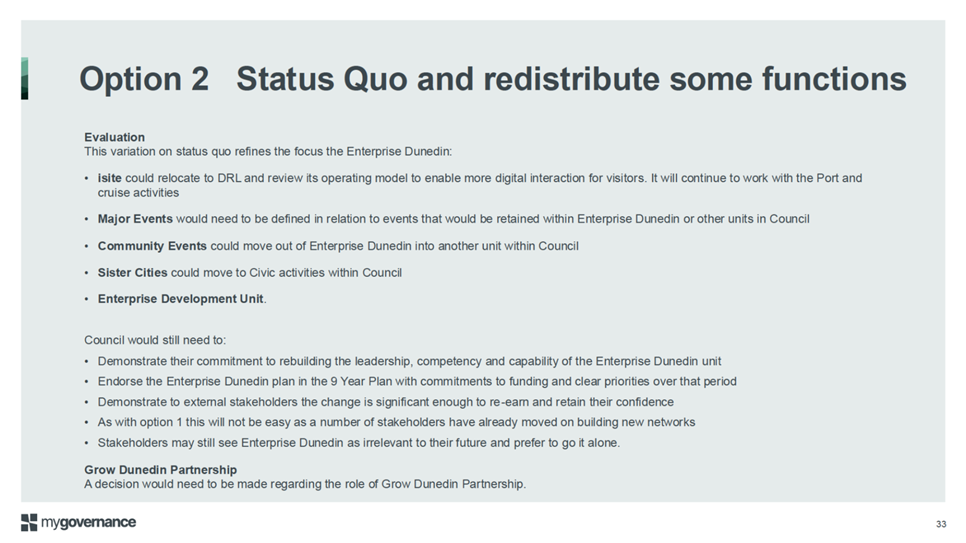
Option 1 – Enhance the Status Quo
Keep the
current structure but improve coordination and services within it.
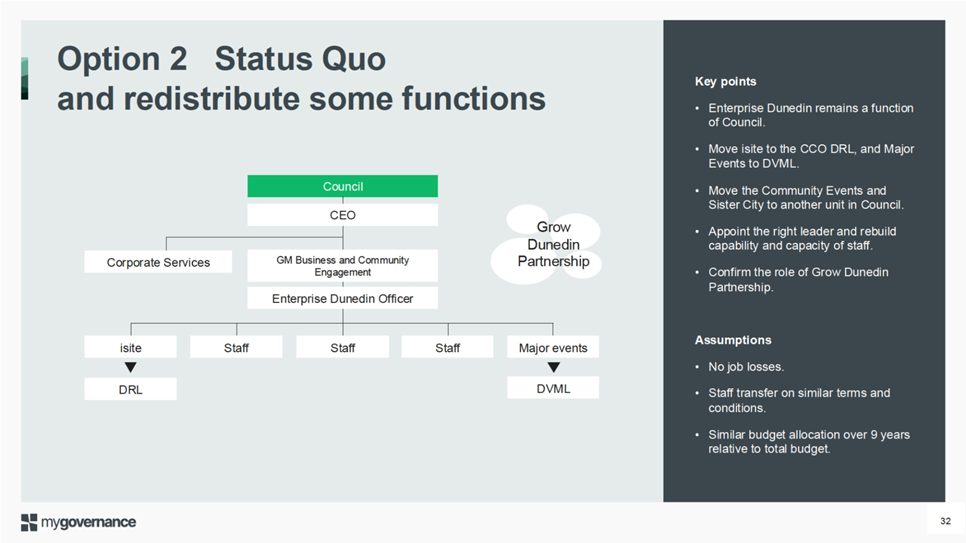
Option
2 – Enhanced Status Quo and Internal Redistribution
Strengthen the current setup and shift some functions within
Council for better alignment.
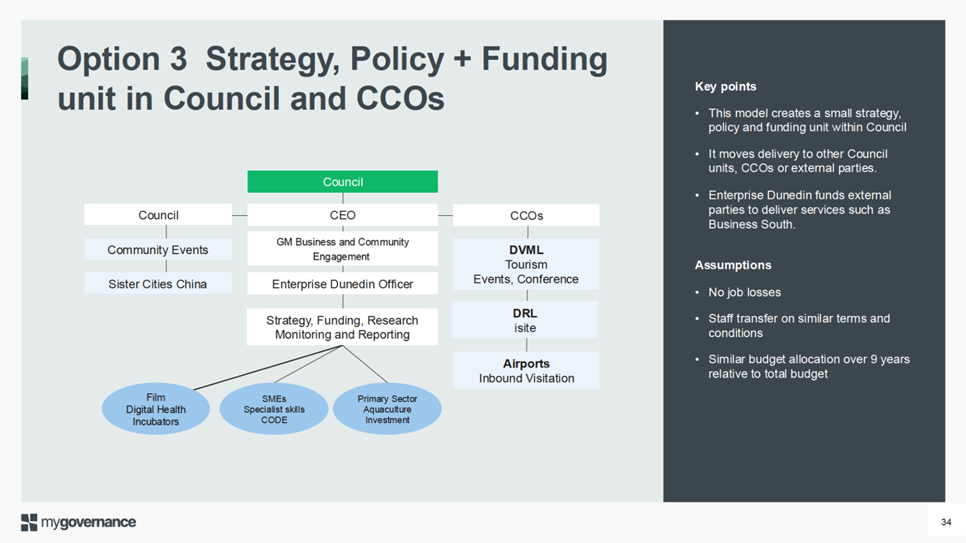
Options
3 – Hybrid Delivery
Create a dedicated strategy, funding and policy unit within
Council, with delivery by CCOs or external partners.
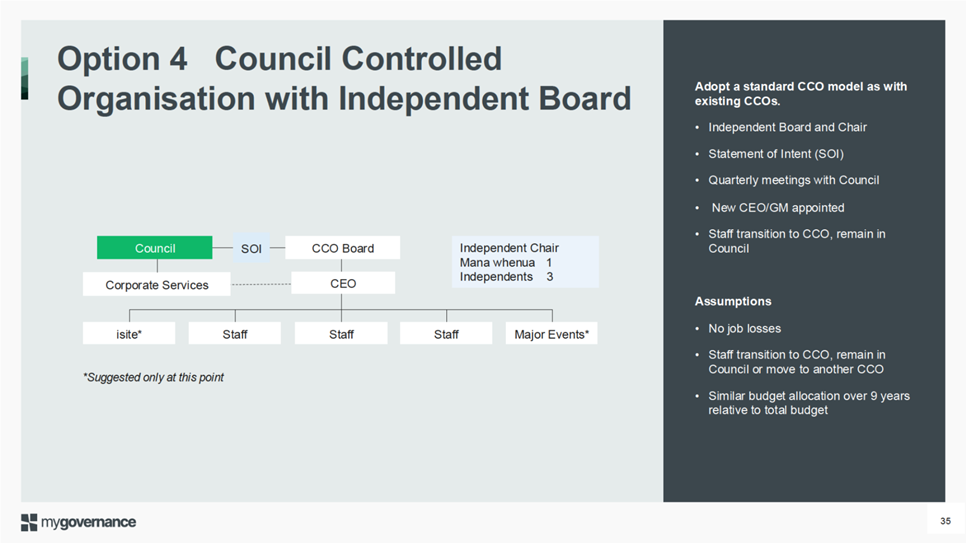
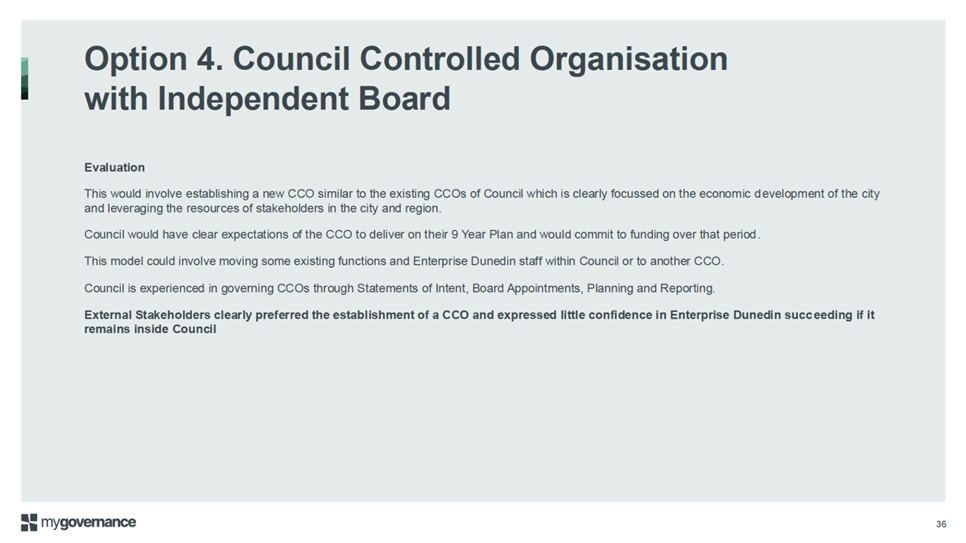
Option
4 – Independent CCO
Establish
a CCO with an independent governance board.
Option
5 – CCO + Advisory Group
Same as
option 4 but with a formal advisory group representing stakeholders.
Option
6 – Joint Venture – Council led
Create a
company co-owned by Council and selected stakeholders sharing governance.
Option
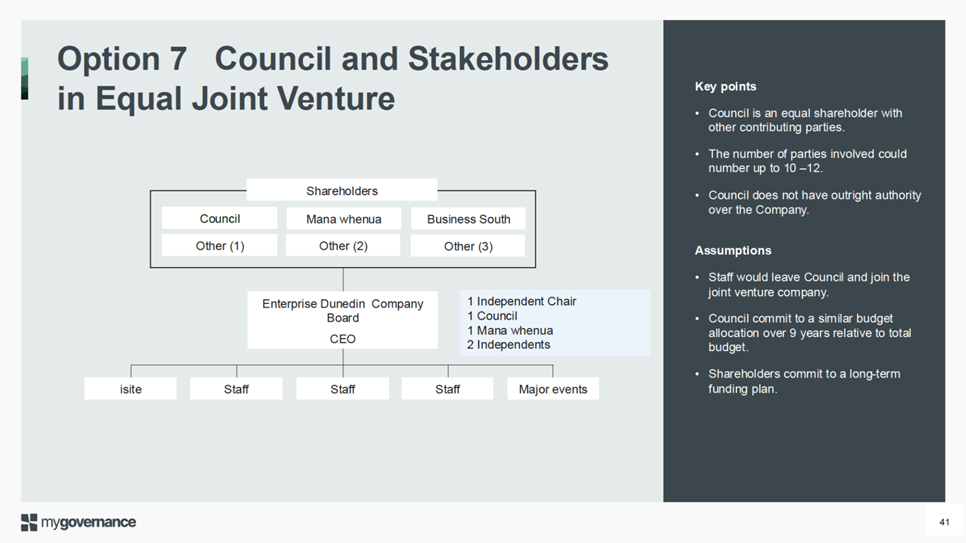
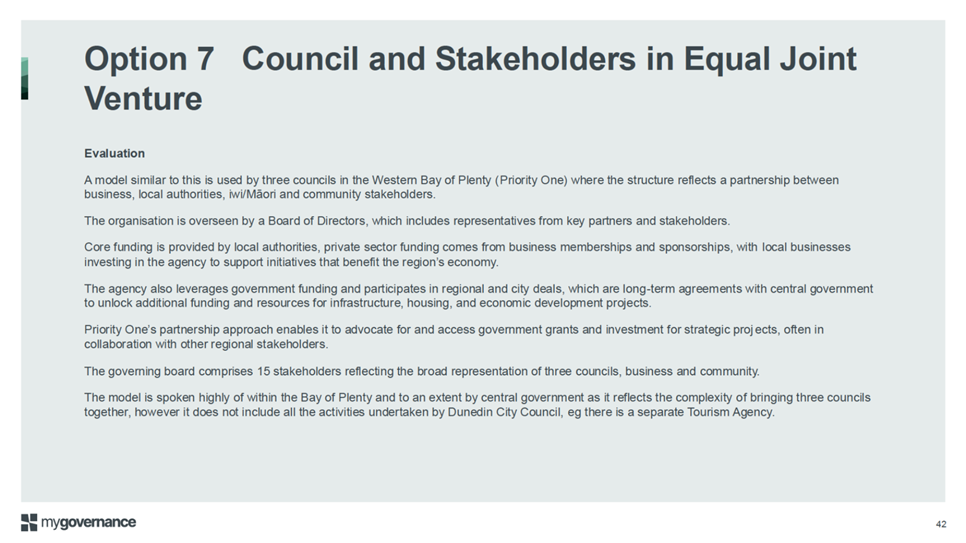
7 – Equal Joint Venture
Form a company jointly owned and equally governed by Council
and a broad range of stakeholders.
Staff require guidance from Council as to which, if any, of
these options should b e further assessed and developed into high level
business cases.
NEXT STEPS
23 Once
Council have provided direction of its preferred options next steps will
include:
a) Preparations
of an impact assessment outlining the legal, financial, staffing, consultation,
operational and strategic implications of the selected option(s), including
timeframes.
b) Business
case modelling of the option(s).
c) Reporting
back to Council in late 2025 for a decision on its preferred option and then if
required, on the timing of public consultation.
Signatories
|
Author:
|
Nicola Morand - Manahautū (General Manager Policy and
Partnerships)
Mike Costelloe - Manager Enterprise Dunedin
|
|
Authoriser:
|
Sandy Graham - Chief Executive Officer
|
Attachments
|
|
Title
|
Page
|
|
⇩a
|
Dunedin City Council
Review of Enterprise Dunedin
|
11
|
|
SUMMARY OF CONSIDERATIONS
|
|
Fit with purpose of Local Government
This decision enables democratic local
decision making and action by, and on behalf of communities.
This decision will promote primarily the
economic wellbeing of communities and contribute to the other three
wellbeings.
|
|
Fit with strategic framework
|
|
Contributes
|
Detracts
|
Not applicable
|
|
Social Wellbeing Strategy
|
✔
|
☐
|
☐
|
|
Economic Development Strategy
|
✔
|
☐
|
☐
|
|
Environment Strategy
|
✔
|
☐
|
☐
|
|
Arts and Culture Strategy
|
✔
|
☐
|
☐
|
|
3 Waters Strategy
|
☐
|
☐
|
✔
|
|
Future Development Strategy
|
☐
|
☐
|
✔
|
|
Integrated Transport Strategy
|
☐
|
☐
|
✔
|
|
Parks and Recreation Strategy
|
☐
|
☐
|
✔
|
|
Other strategic projects/policies/plans
|
✔
|
☐
|
☐
|
The key strategy is the Economic Development Strategy
which contributes to all four wellbeing strategies.
|
|
Māori Impact Statement
Mana whenua are a partner and have been engaged as part of
the review process with stakeholders. Te Taki Haruru as a strategic framework
guiding Council will be considered as part of the review process.
|
|
Sustainability
No Implications.
|
|
Zero carbon
No known implications.
|
|
LTP/Annual Plan / Financial Strategy /Infrastructure Strategy
Implications will be dependent on any decisions made by
Council following the review report.
|
|
Financial considerations
The cost will be dependent on the outcome so financial
implications are not yet known.
|
|
Significance
The Enterprise Dunedin unit is a separate activity in the
9-Year Plan called “Vibrant Economy” with an annual operating
budget for 2025/2026 of $11.7 million. It is therefore considered a
significant activity for Council. Any proposed significant changes to the
activity would therefore require public consultation.
|
|
Engagement – external
A wide range of stakeholders have been engaged for this
review, including mana whenua, business, education, tourism and hospitality
sectors. The full list of stakeholders has been provided under separate
cover in the non public part of the agenda as interviewees participated and
commented on the basis of confidentiality.
|
|
Engagement - internal
Councillors and staff have been engaged throughout the
process.
|
|
Risks: Legal / Health and Safety etc.
Full implications are not yet known, however there is an
immediate risk of internal implications and employment sensitivities should
the delivery of internal functions be removed from Council. Depending on the
decision, DCC will enable appropriate engagement with staff and ensure
employment obligations are met and supported.
|
|
Conflict of Interest
No known conflicts of interest.
|
|
|
|
Community Boards
There was no specific engagement with community boards as
part of the MyGovernance review. Depending on the next steps Council
takes, community boards may be involved in future consultation.
|
|

|
Council
12 August 2025
|
Local Water Done Well - Water Services Delivery Plan
Department: Finance and 3 Waters
EXECUTIVE SUMMARY
1 Council
is required to prepare a Water Services Delivery Plan (WSDP) under the Local
Government (Water Services Preliminary Arrangements) Act 2024 (Preliminary
Act).
2 The
Preliminary Act requires the WSDP to be adopted by resolution and submitted to
the Secretary for Local Government by 3 September 2025.
3 Staff
have prepared a draft DCC WSDP. This report recommends the Council adopts the
draft DCC WSDP attached to this report as Attachment A.
4 The
draft DCC WSDP has been prepared in accordance with the Preliminary Act and
Department of Internal Affairs (DIA) requirements. It gives effect to
Council’s decision, following consultation, to retain water services
in-house. It aligns directly with Council’s 9 Year Plan 2025-34 (9YP),
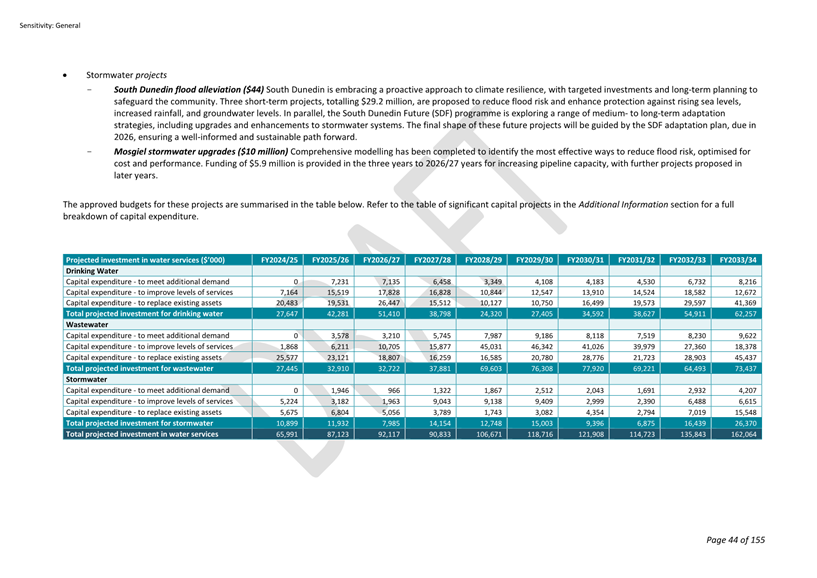
with calculations in the draft WSDP being based on the 9YP budgets.
5 DIA
requires territorial authorities to specify a borrowing limit for water
services as well as for the territorial authority overall. In DCC’s
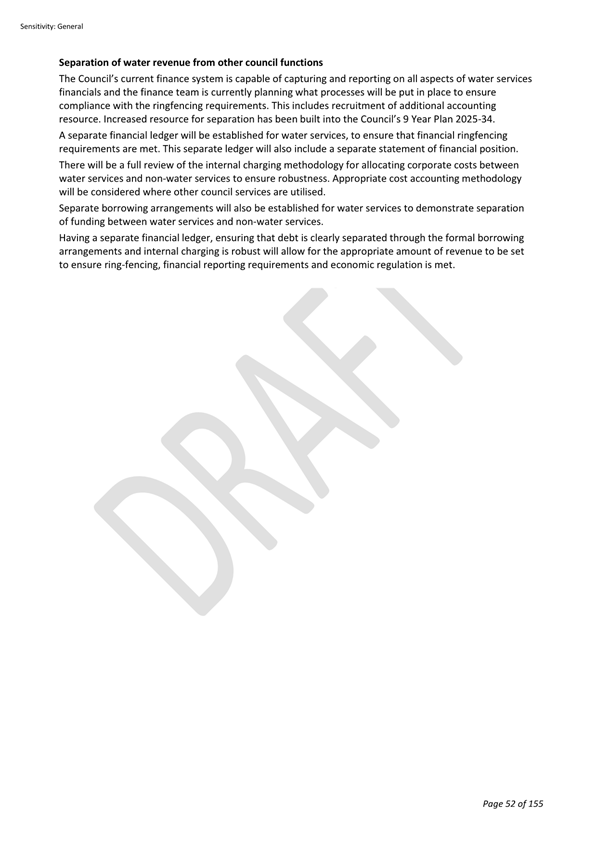
draft WSDP, staff have included a borrowing limit of 400% of water revenue.
This reflects the borrowing required in the 9 Year Plan 2025-34 for water services,
while allowing headroom for unforeseen events, if required. The 400% ratio of
debt to revenue does not change DCC’s overall borrowing limits.
RECOMMENDATIONS
That the Council:
a) Adopts the draft
Dunedin City Council Water Services Delivery Plan at Attachment A, with any
amendments.
b) Authorises the Chief
Executive to make any minor editorial amendments to the Water Services Delivery
Plan prior to submitting the Water Services Delivery Plan to the Secretary for
Local Government.
c) Notes that the Chief
Executive will certify the draft Dunedin City Council Water Services Delivery
Plan at Attachment A, subject to Council adopting it by resolution as required
by the Local Government (Water Services Preliminary Arrangements) Act 2024.
BACKGROUND
WSDP requirements
6 The
Preliminary Act requires territorial authorities to prepare a WSDP. The WSDP
must be adopted by resolution and submitted to the Secretary for Local
Government by 3 September 2025.
7 The
purpose of a WSDP is to identify the current state of the territorial
authority’s water services and to demonstrate publicly the territorial
authority’s commitment to deliver water services in a way that:
a) meets
all relevant regulatory quality standards for water services;
b) is
financially sustainable;
c) meets
all drinking water quality standards; and
d) supports
housing growth and urban development, as specified in the territorial
authority’s long-term plan.
8 The
Preliminary Act requires a WSDP to cover a period of not less than 10
consecutive financial years, starting with the 2024/25 financial year.
9 The
Preliminary Act sets out the requirements for the scope and content of the
WSDP. Content requirements are at section
13, and include:
a) information
about the current state of the council’s water services;
b) the
proposed model or arrangements for delivering water services;
c) a
summary of consultation undertaken as part of deciding on the proposed model
for water services delivery;
d) information
on revenue and financing arrangements;
e) projected
financial statements for water services;
f) a
financial sustainability assessment; and
g) an
implementation plan that sets out the action the council will take to ensure
delivery of water services will be financially sustainable by 30 June 2028.
10 The
Preliminary Act also requires the WSDP to include an assurance statement from
the council’s Chief Executive that the WSDP complies with the Preliminary
Act and that the information in the WSDP is true and accurate.
11 In 2024,
the DIA provided a WSDP template and associated guidance to assist councils to
prepare WSDPs. The DIA WSDP template and guidance can be viewed online:
a) https://www.dia.govt.nz/diawebsite.nsf/Files/Water-Services-Policy/$file/Water-Services-Delivery-Plan_template.docx
(DIA WSDP template and associated guidance notes)
b) https://www.dia.govt.nz/diawebsite.nsf/Files/Water-Services-Policy/$file/Guidance-for-preparing-Water-Services-Delivery-Plans-September-2024.pdf
(DIA Guidance for Preparing Water Services Delivery Plans)
12 Failure to
adopt and submit a WSDP by 3 September 2025 may result in the Minister of Local
Government taking action in accordance with the powers provided in the
Preliminary Act. This includes the potential for the Minister to appoint a
Crown Facilitator and/or Crown Water Services Specialist. It also allows the
Minister to exercise any of the powers under Part 10 of the Local Government
Act 2002.
13 Council is
required by law to give effect to the proposals or undertakings specified in
the WSDP.
14 Once a WSDP
has been accepted by the Secretary for Local Government, there are limited
grounds for amending the WSDP. In essence, the proposed amendments would need
to:
a) be
significant and necessary due to exceptional circumstances;
b) relate to a
change of model or arrangements for delivering water; and
c) be
made by 3 September 2026.
DCC decision
on water services delivery model
15 In
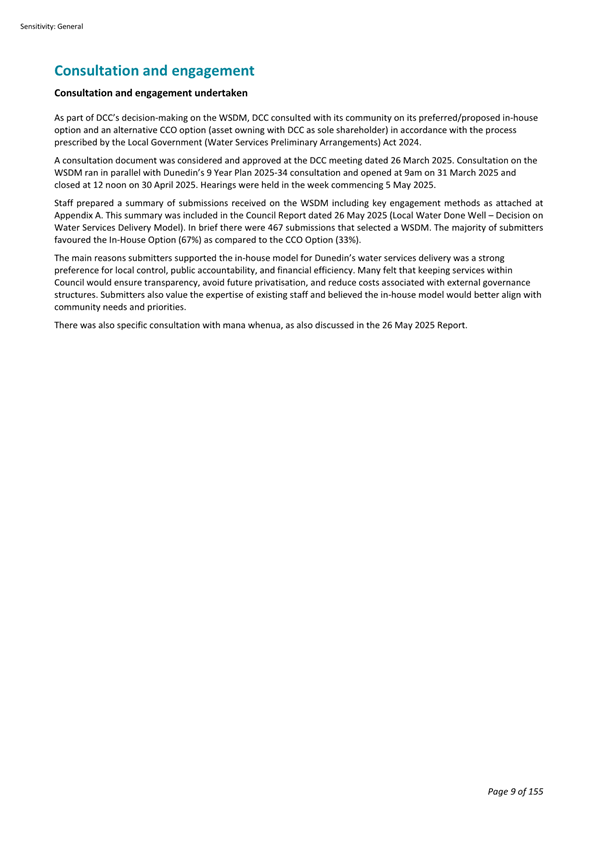
accordance with the requirements of the Preliminary Act, the DCC consulted the
community on two potential water services delivery model options. Consultation
ran in parallel with the 9 Year Plan consultation and opened at 9am on 31 March
2025 and closed at 12 noon on 30 April 2025. Hearings were held in the week
commencing 5 May 2025.
16 On 26 May
2025, Council approved the in-house delivery of three waters services as the
water services delivery model for Dunedin (refer CNL/2025/119).
Other Local Water Done Well legislation
17 On 3 July
2025, Parliament’s Finance and Expenditure Select Committee reported back
to Parliament on the Local Government (Water Services) Bill, which sets out the
enduring settings for water services delivery in New Zealand. The Select
Committee recommended a number of changes to address issues raised during
public consultation on the Bill earlier in 2025. The Bill progressed through
its second reading in Parliament in mid-July and is expected to be enacted in
August 2025.
18 As part of
enacting the Local Government (Water Services) Bill, it appears that there will
be an Amendment Paper presented by the Minister for Local Government so that
Parliament can consider whether to add in a requirement for a WSDP every five
years if the water services provider is using an in-house model.
19 The Local
Government (Water Services) Bill will require Council to prepare a Water
Services Strategy every three years and a Water Services Annual Budget in the
intervening years.
DISCUSSION
Development of draft DCC WSDP
20 The draft
DCC WSDP at Attachment A has been developed by staff from 3 Waters, Finance and
Legal Services and subjected to an internal review process.
21 Staff used
the WSDP template and associated guidance provided by the DIA to develop the
draft DCC WSDP. The DIA template (and, consequently, the draft DCC WSDP)
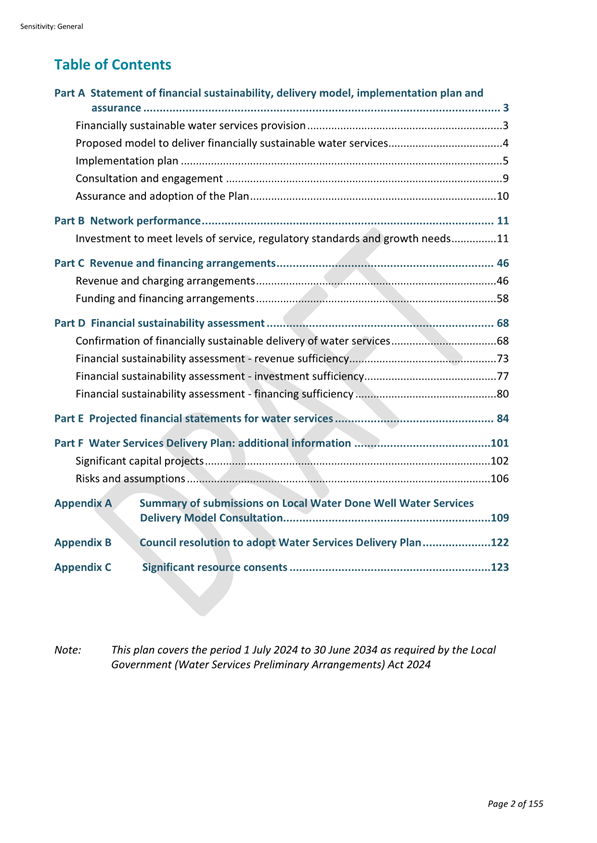
presents information in six parts:
a) Part
A: statement of financial sustainability, delivery model, implementation plan
and assurance
b) Part B: network
performance
c) Part
C: revenue and financing arrangements
d) Part D: financial
sustainability assessment
e) Part E:
projected financial statements for water services
f) Part
F: Additional information.
22 A
Councillor briefing session on the development of the draft DCC WSDP was held
on 4 June 2025.
23 The 9 Year
Plan 2025-34 and the draft DCC WSDP are aligned and inform one another. As
such, the 9 Year Plan was a key source of information for the development of
the draft DCC WSDP. Other key information inputs to the draft DCC WSDP included
the following reports to Council (and associated Council resolutions):
a) Local
Water Done Well – Decision on water models for consultation, 26 February
2025
b) Local Water
Done Well – Decision on Water Services Delivery Model, 26 May 2025
24 Early draft
versions of the draft DCC WSDP were submitted to DIA for review in May and June
2025. DIA feedback has been addressed by staff and is reflected in the draft
DCC WSDP attached to this report at Attachment A.
Content of
draft DCC WSDP
25 The draft
DCC WSDP is an extensive document and this report does not summarise all of its
content. Elected members will need to read the WSDP to understand the full
breadth of the WSDP.
26 Sub-paragraphs
(a)-(f) below identify selected content items for the Council’s
attention. These are highlighted because they relate to information or analysis
not already explicit in the 9 Year Plan 2025-34 or other DCC publications.
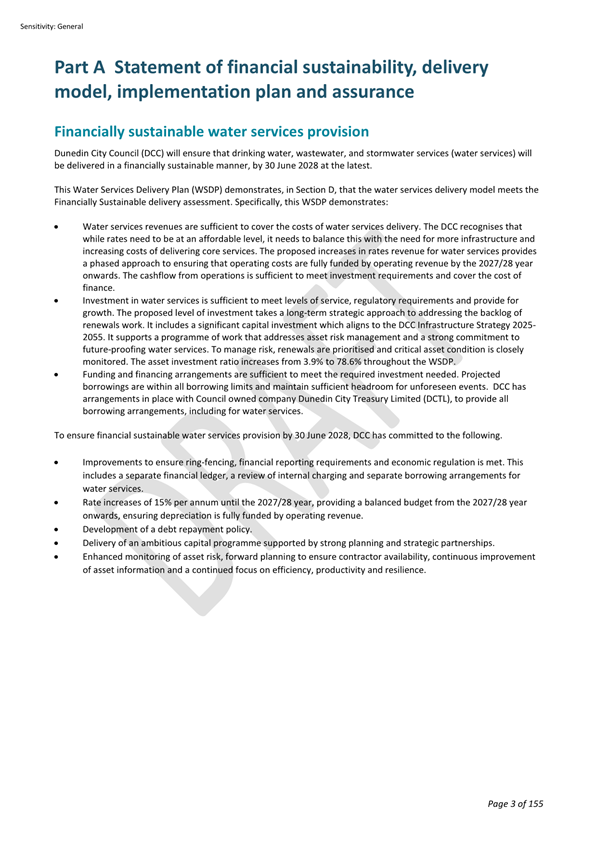
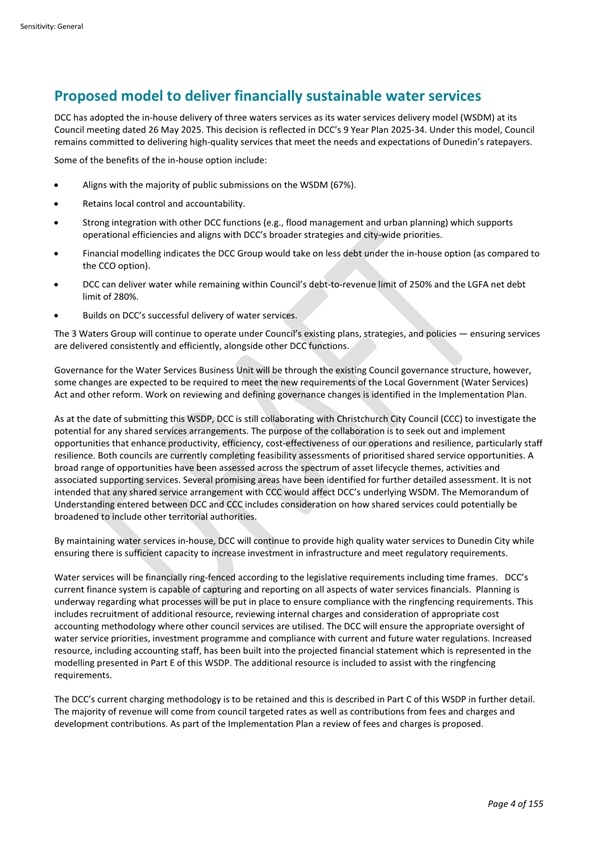
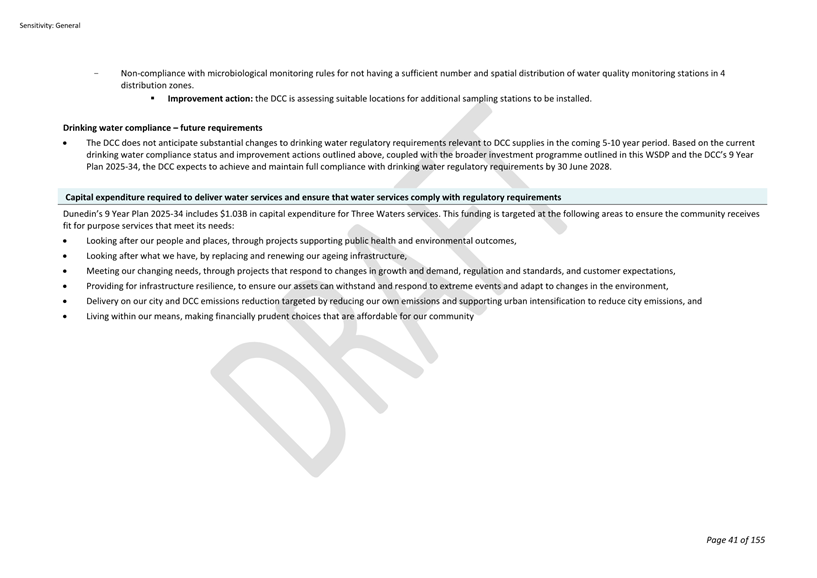
a) Part
A: statement of financial sustainability, delivery model, implementation plan
and assurance:
i) Financial
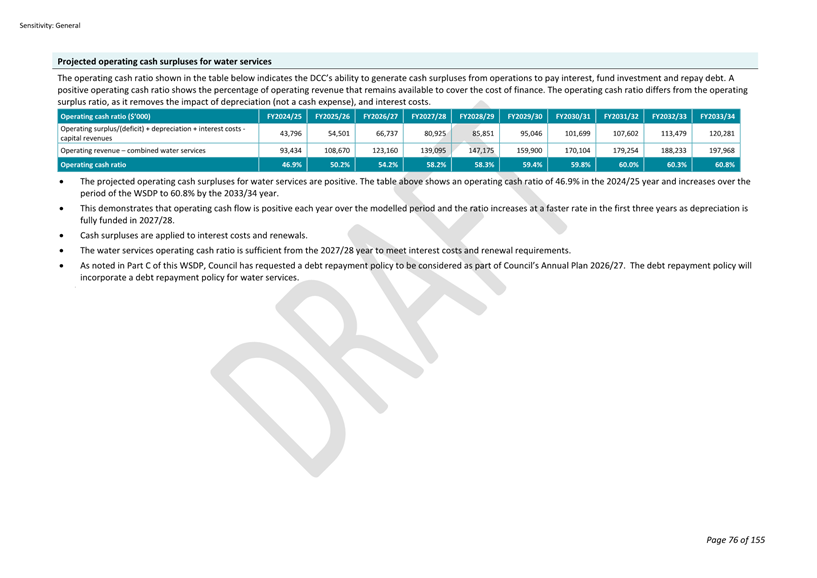
sustainability assessment: this section of the draft DCC WSDP indicates
that with projected rates rises, DCC is able to achieve financially sustainable
water services in year 4 (2027/28) of the WSDP and by 30 June 2028 at the
latest, as required by the Preliminary Act.
ii) Water
Services Delivery Model: this section of the draft DCC WSDP summarises the
in-house model the Council resolved to adopt on 26 May 2025, following public consultation
on water services delivery model options earlier in the year.
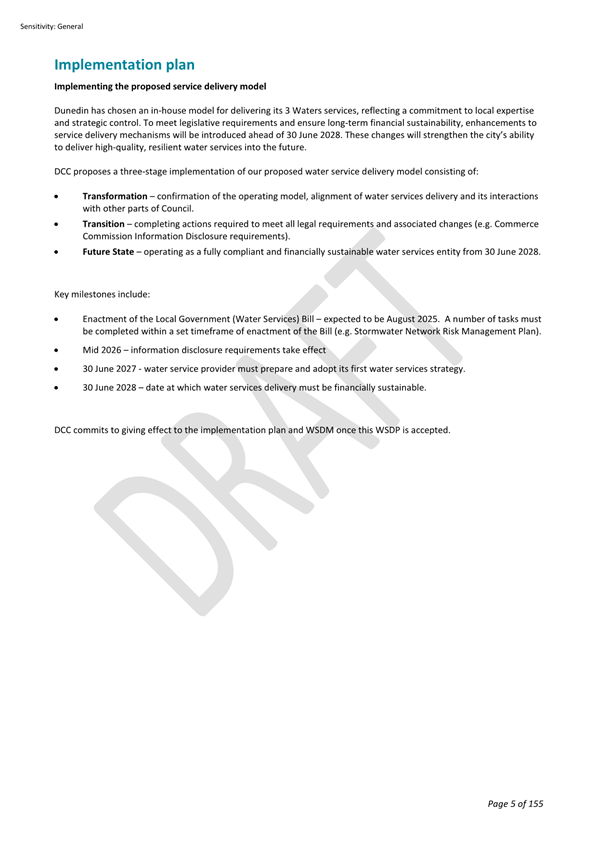
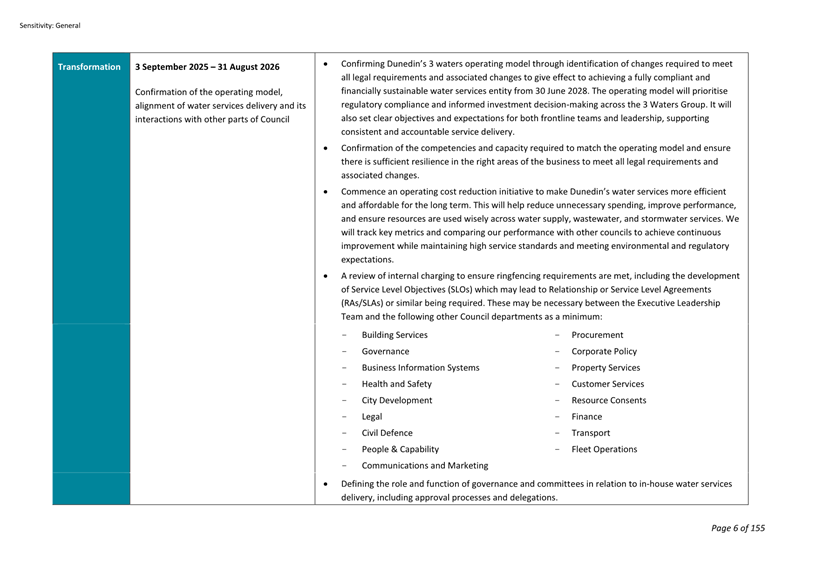
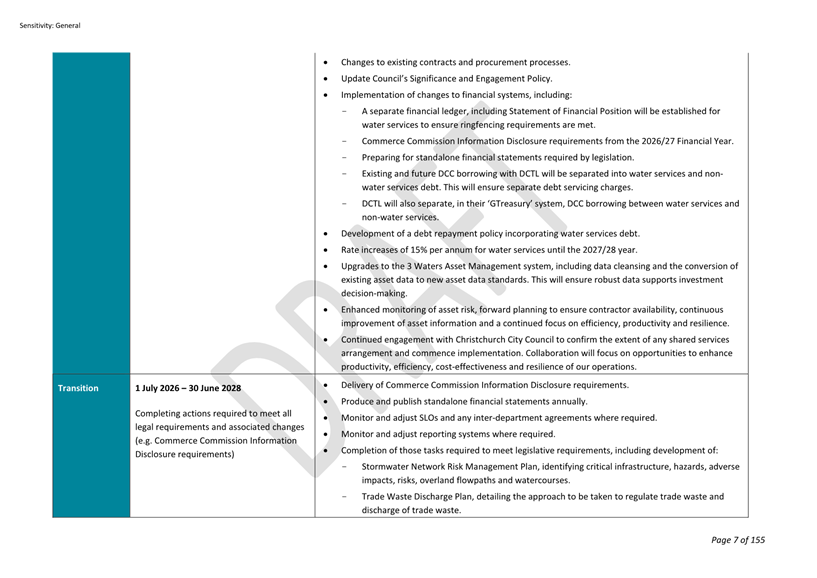
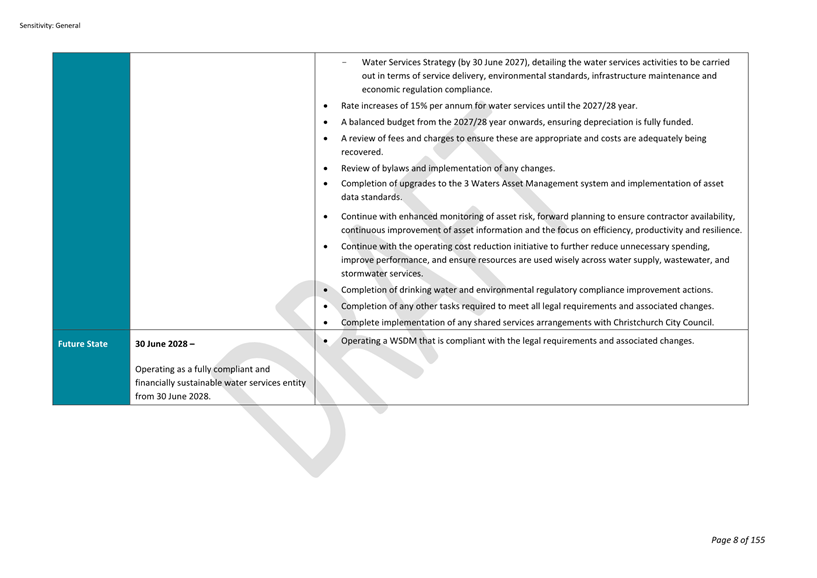
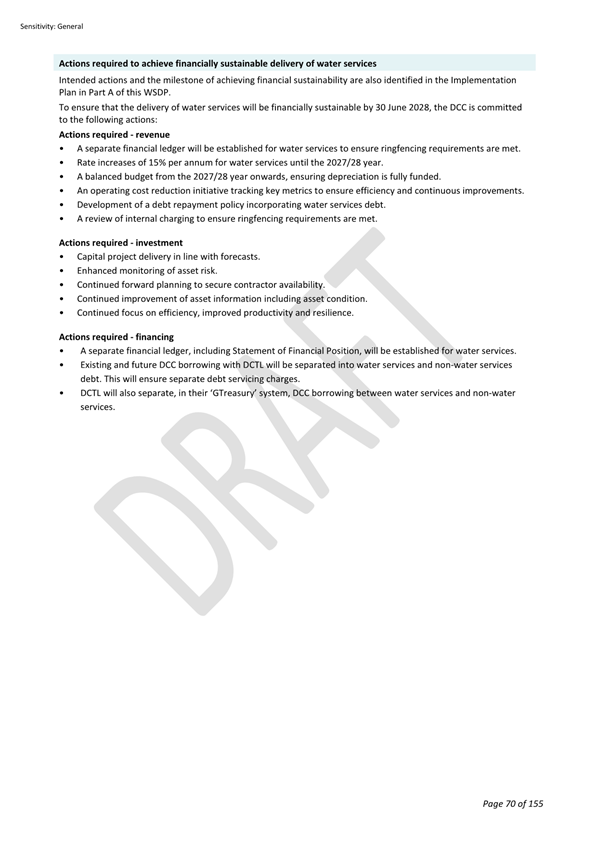
iii) Implementation
plan: this section of the draft DCC WSDP sets out a three-stage plan for implementation
of the in-house model. It identifies the key activities to be undertaken within
each stage and the expected timeframes. It also includes a statement that DCC
commits to giving effect to the implementation plan once the DCC WSDP is
accepted by the Secretary for Local Government.
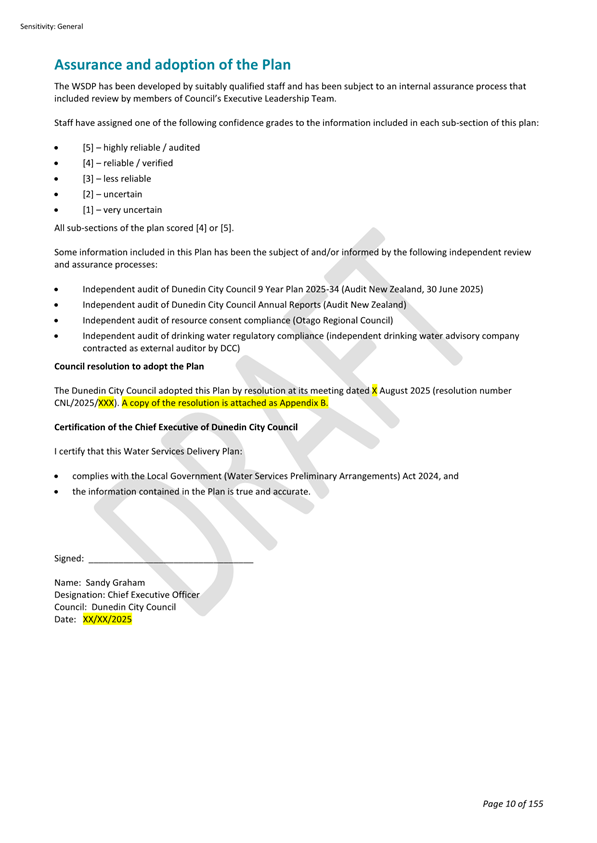
iv) Assurance and
adoption: this section is where the Council’s adoption and the Chief
Executive’s certification of the DCC WSDP will be documented. Please see paragraphs
27-30 below for more discussion related to the assurance and adoption section
of the draft DCC WSDP.
b) Part B:
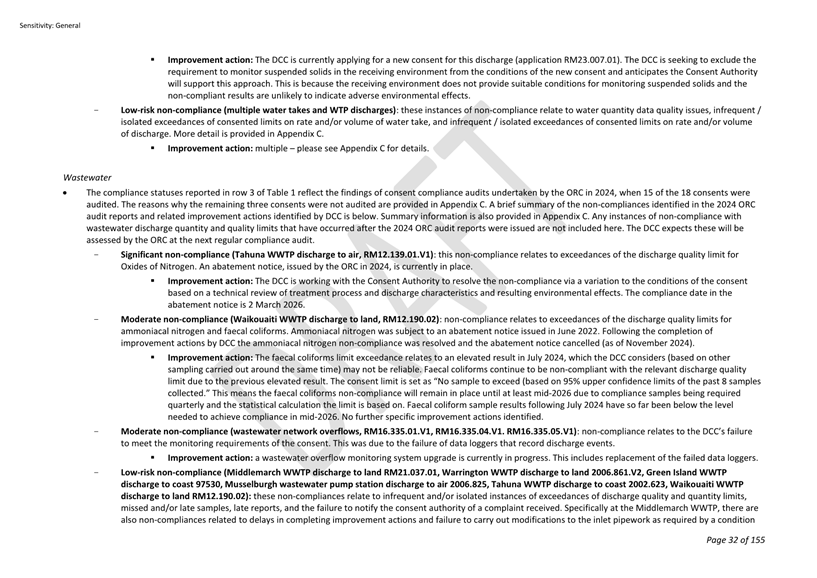
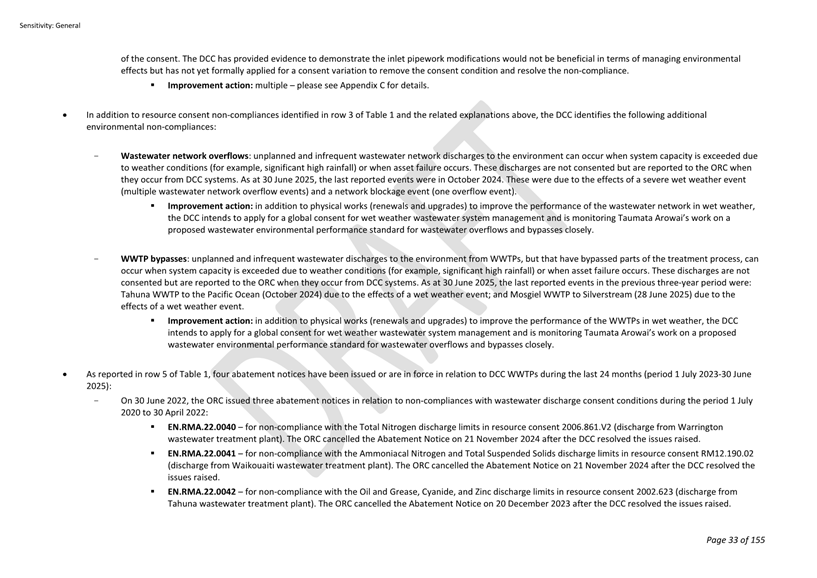
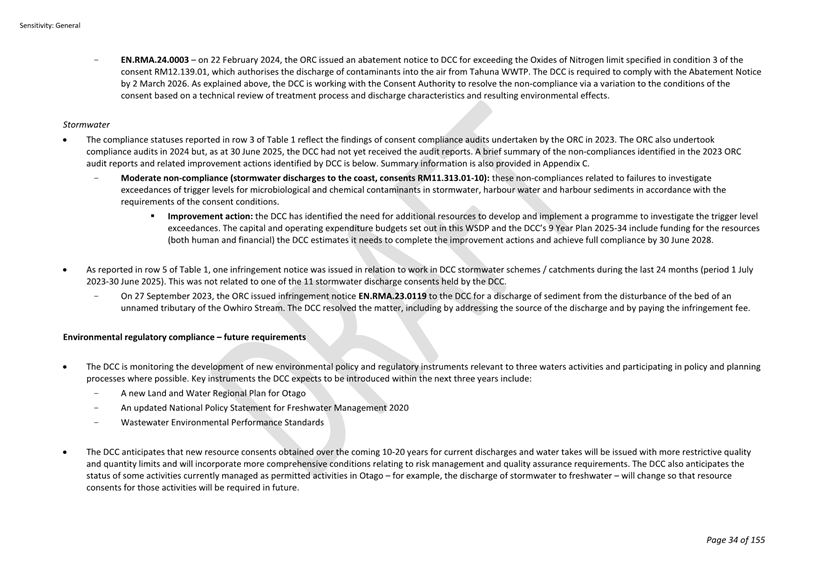
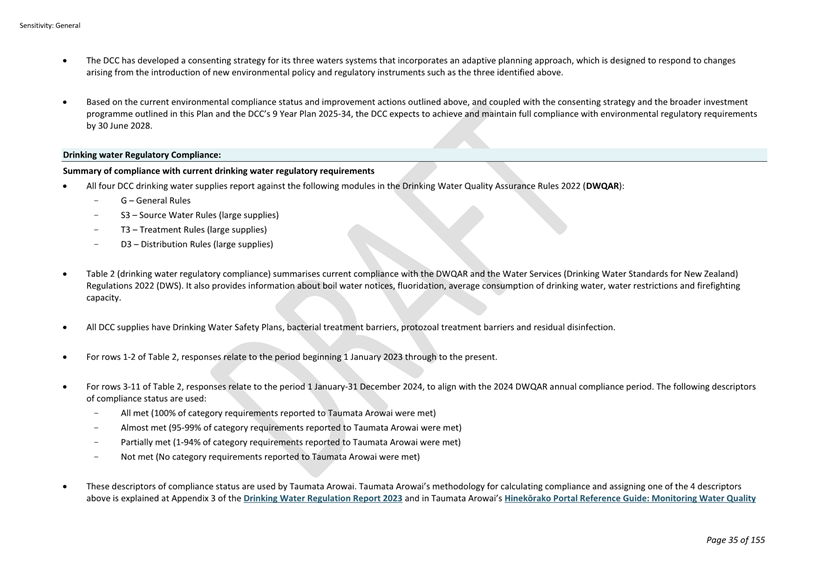
network performance:
i) Regulatory
compliance statement: this section of the draft DCC WSDP provides
detail on drinking water and environmental regulatory compliance. The level of
detail required is higher than usual performance reporting in DCC Annual
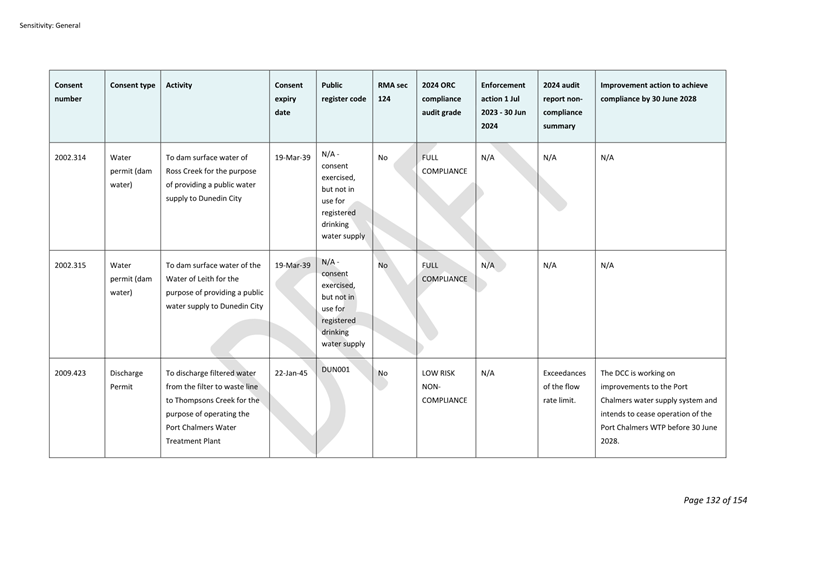
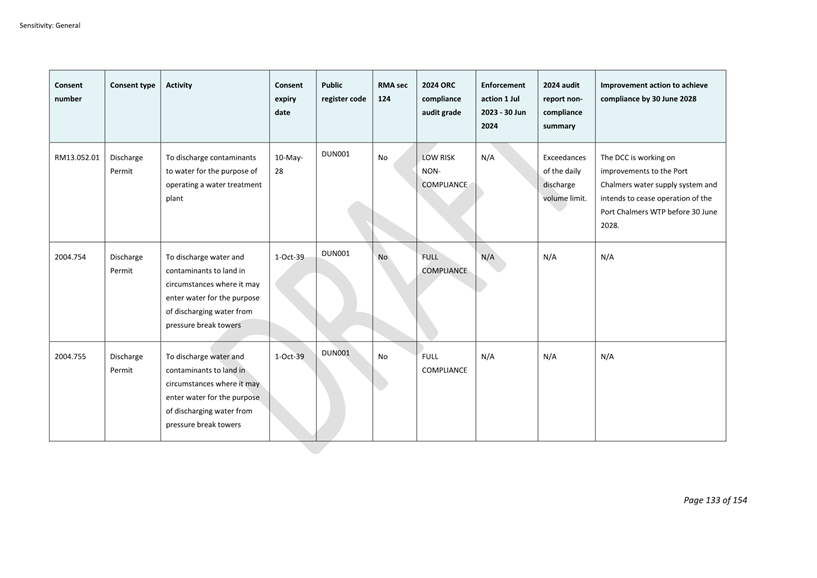
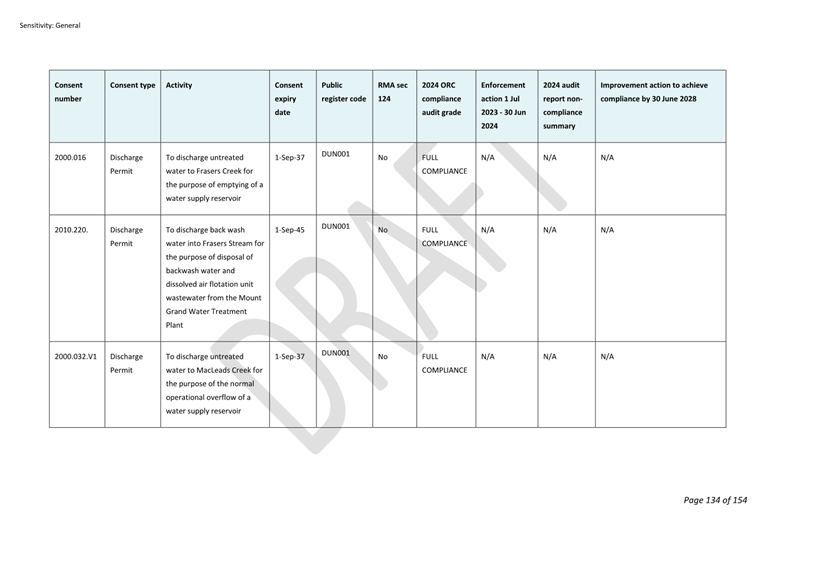
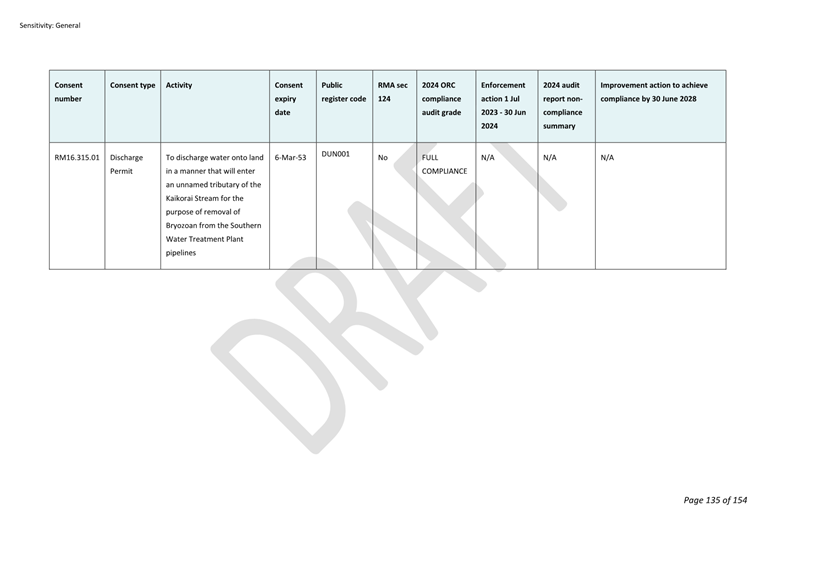
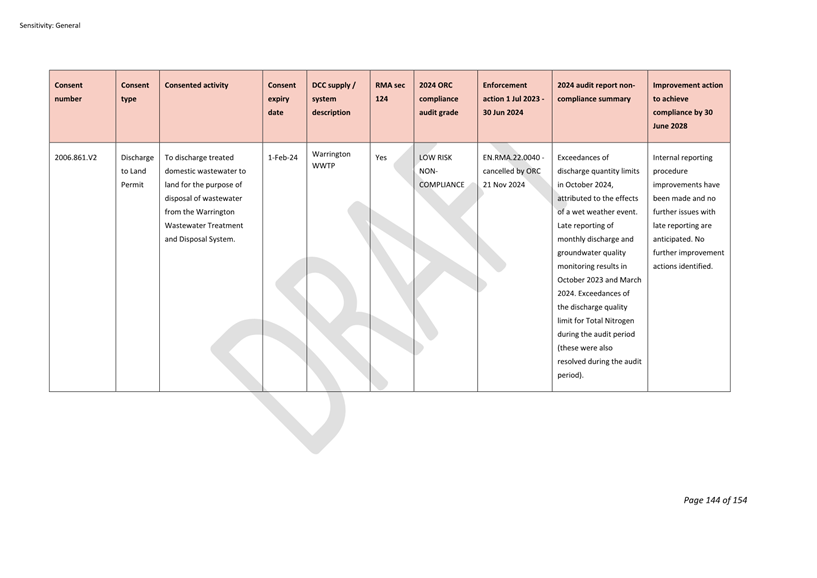
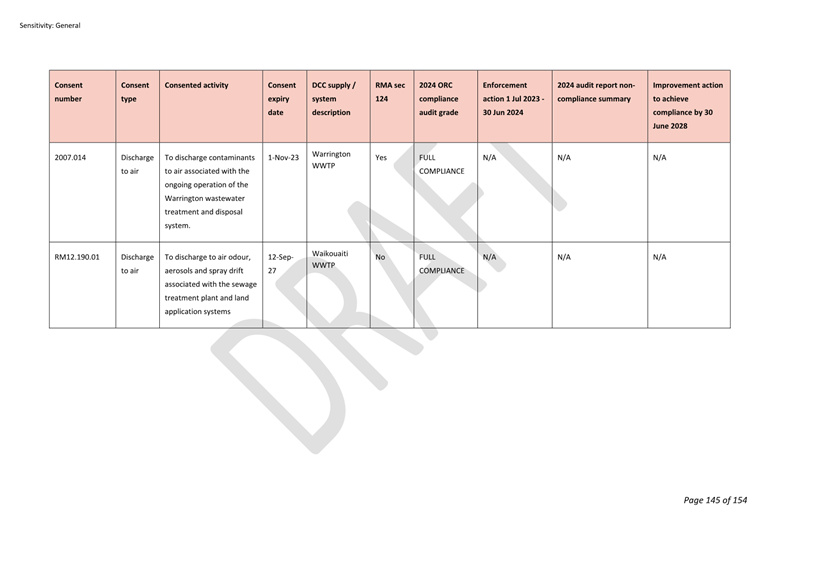
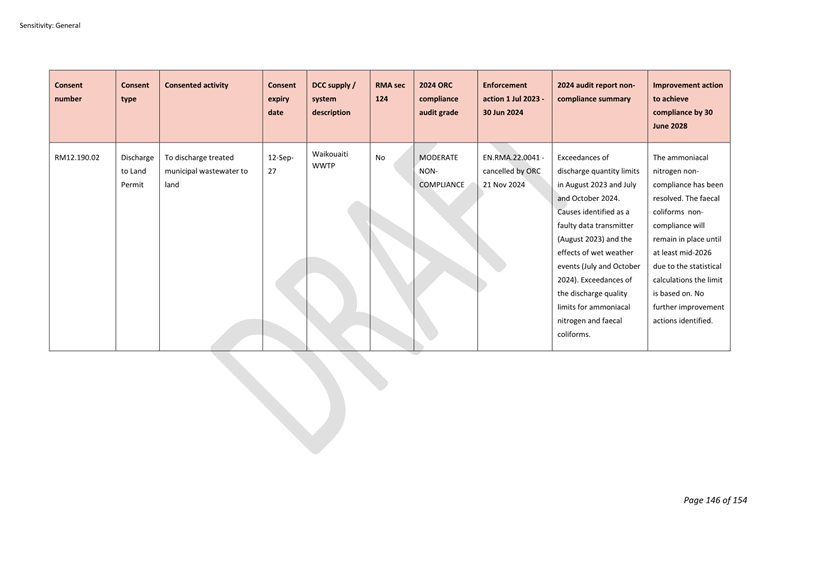
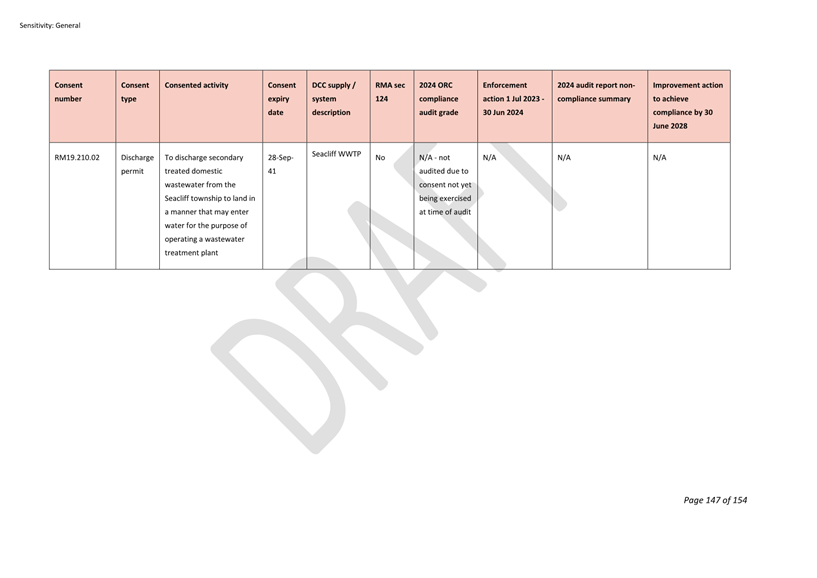
Reports. It identifies current DCC non-compliances with drinking water rules
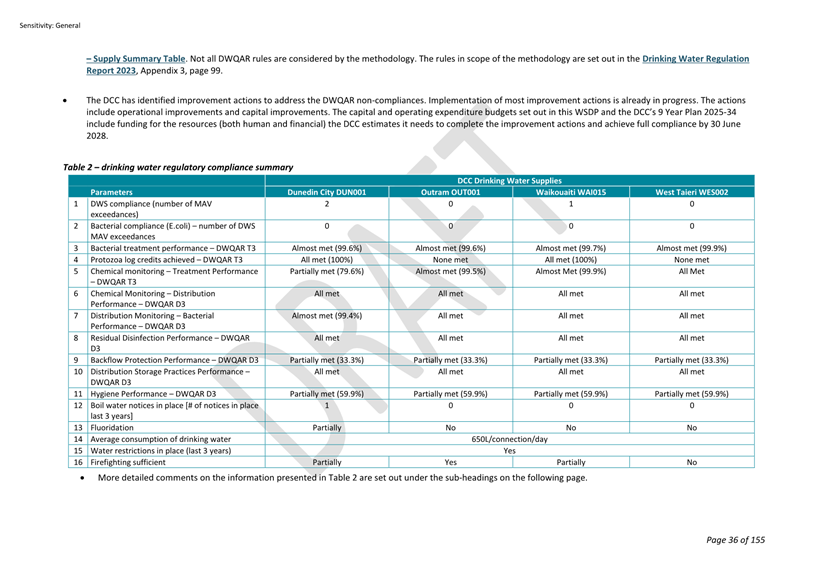
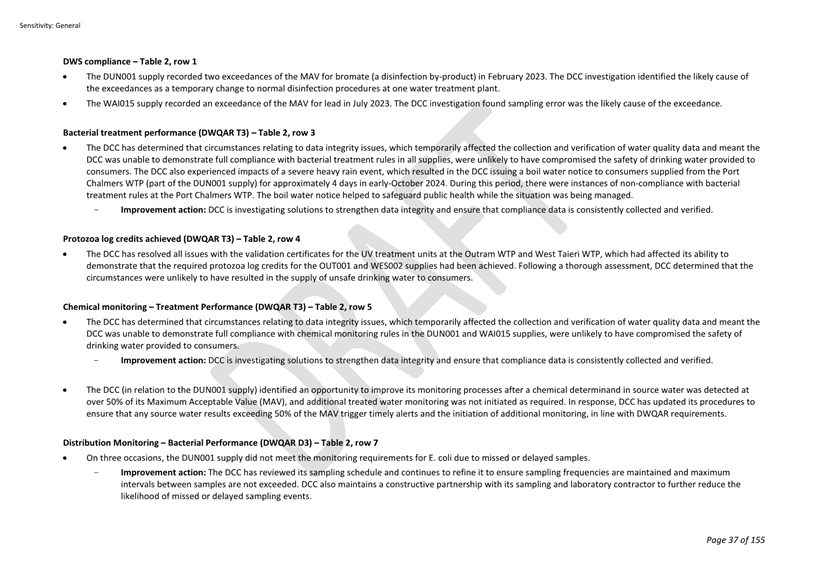
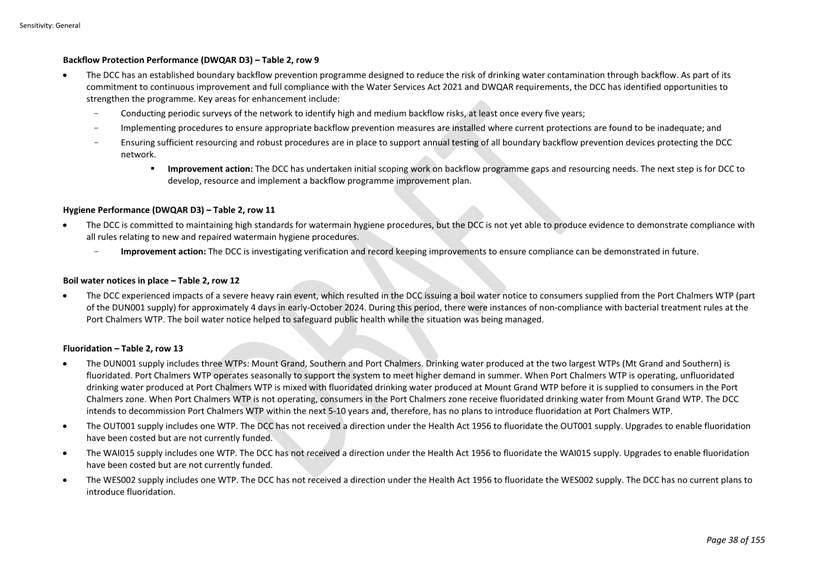
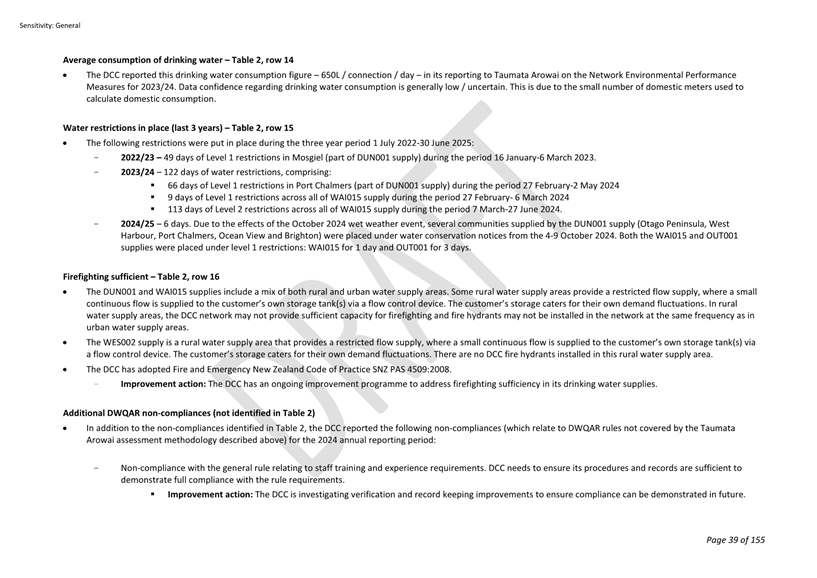
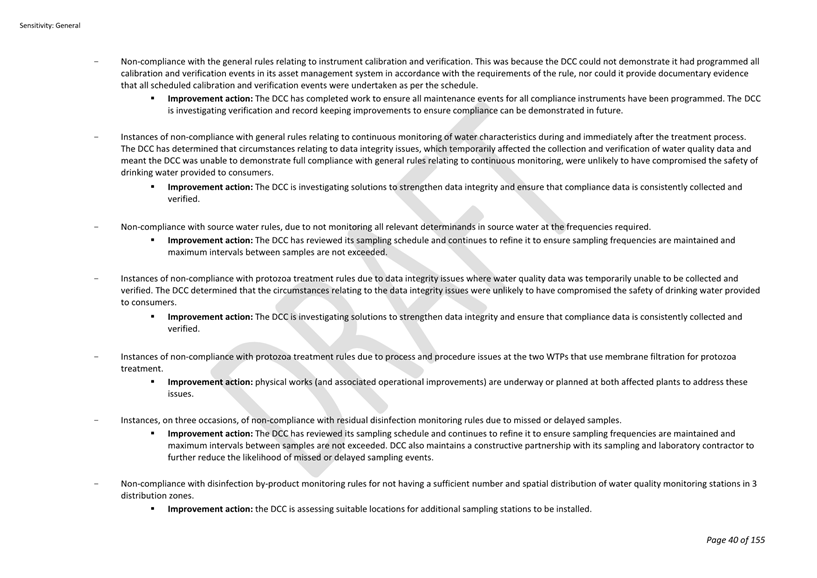
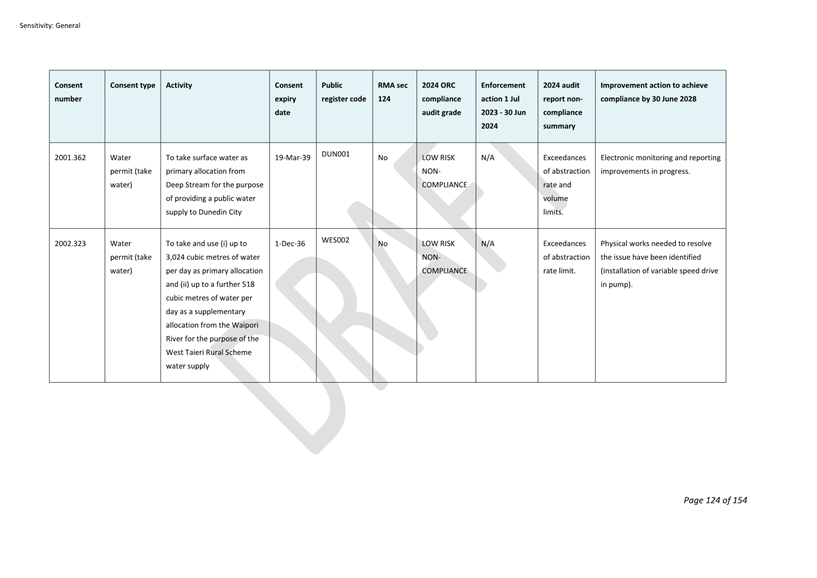
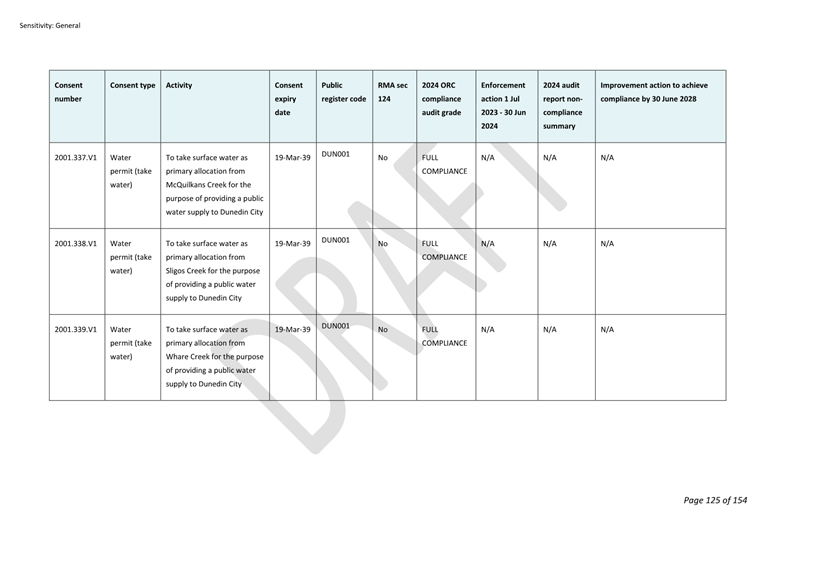
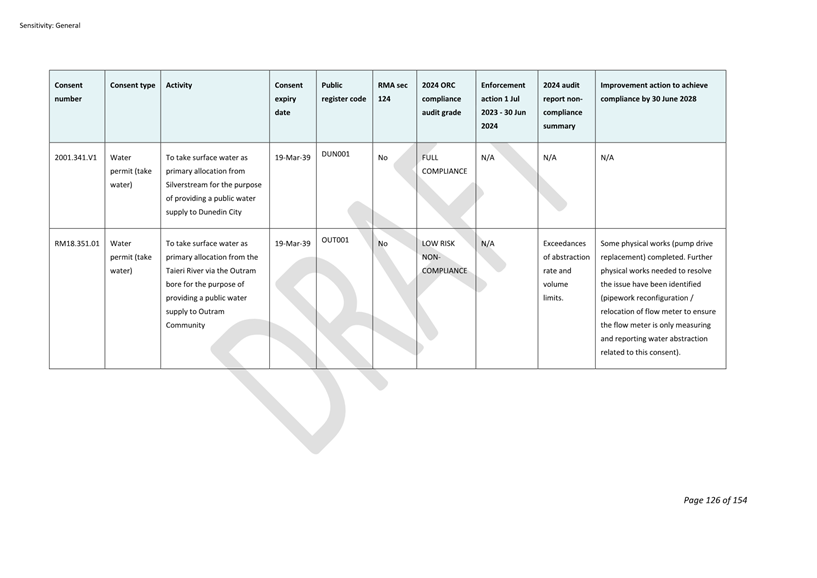
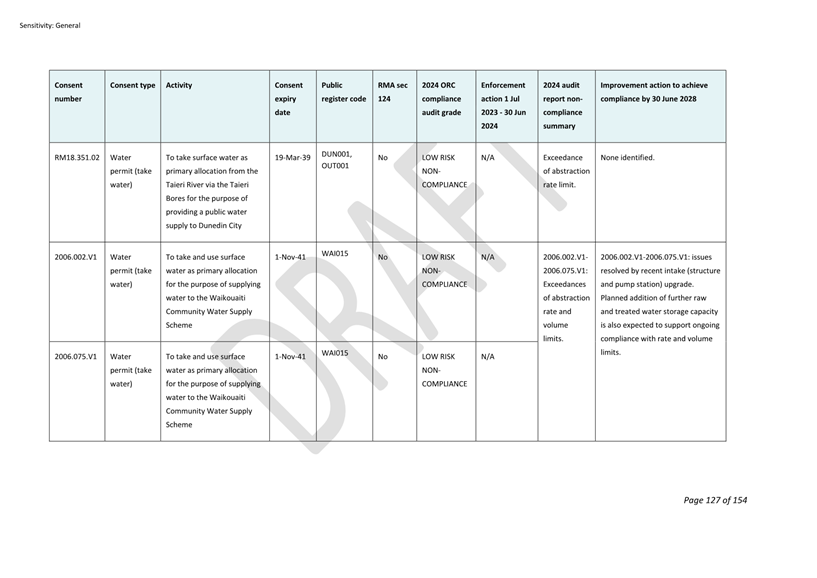
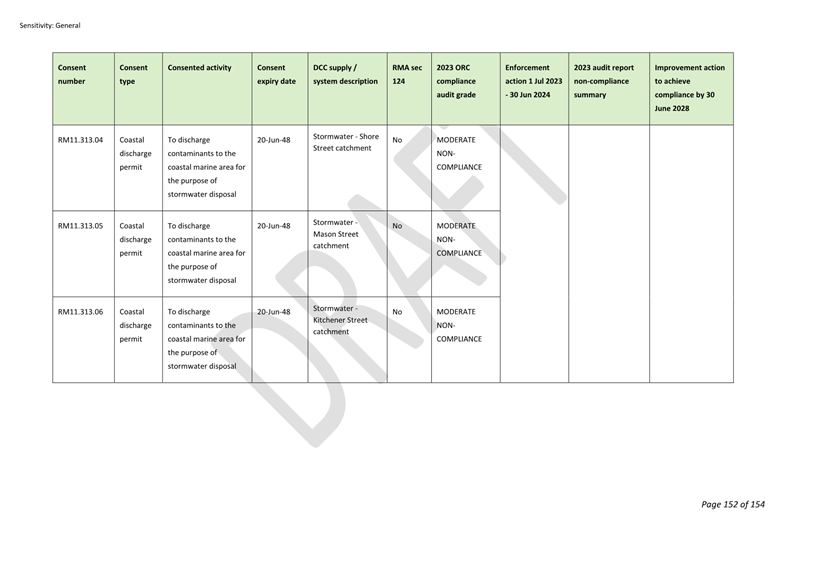
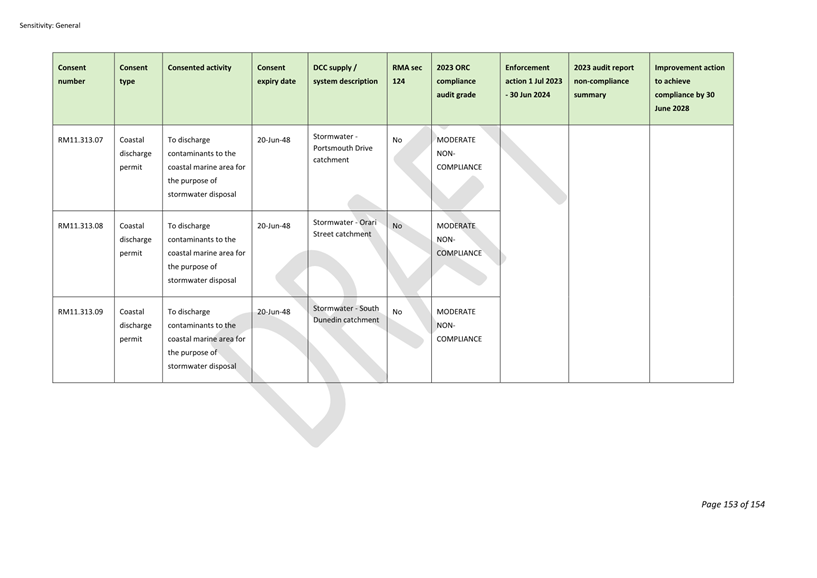
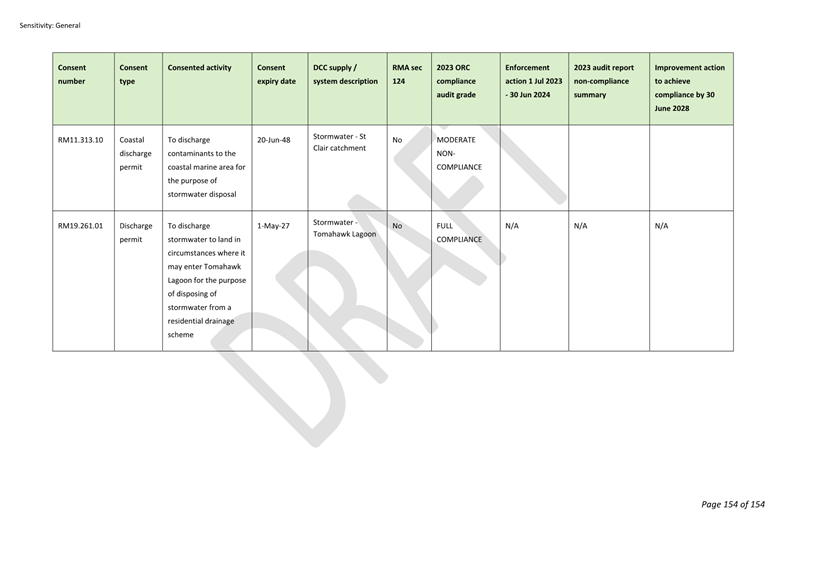
and resource consent conditions across a range of sites. DCC 3 Waters is
currently working through the improvement actions identified in the draft DCC
WSDP to address these non-compliances.
c) Part
C: revenue and financing arrangements:
i) Customer
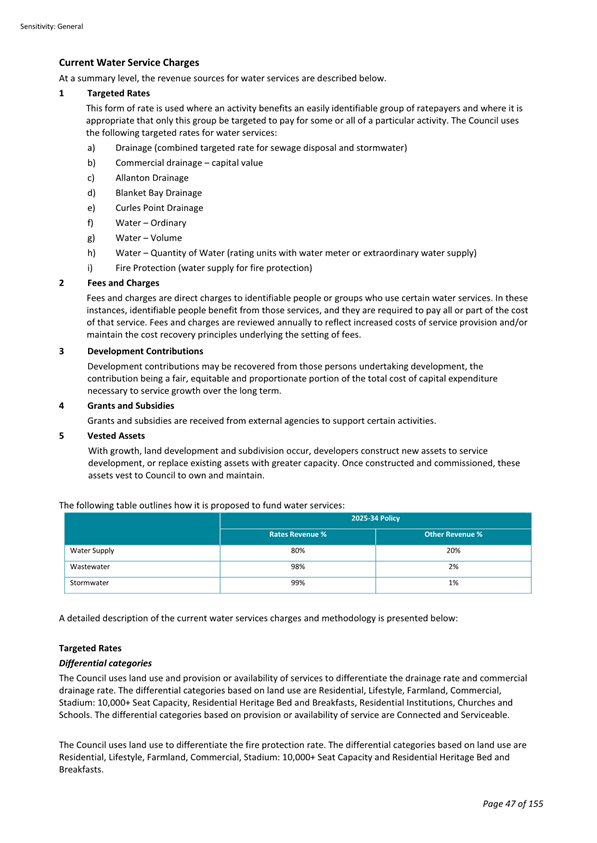
charging arrangements: this section of the draft DCC WSDP reflects current
DCC water services charging models. These include rates-based charging for
ordinary domestic water supply and for wastewater and stormwater drainage, and
use-based (metered) charging for non-domestic water supplies. This section also
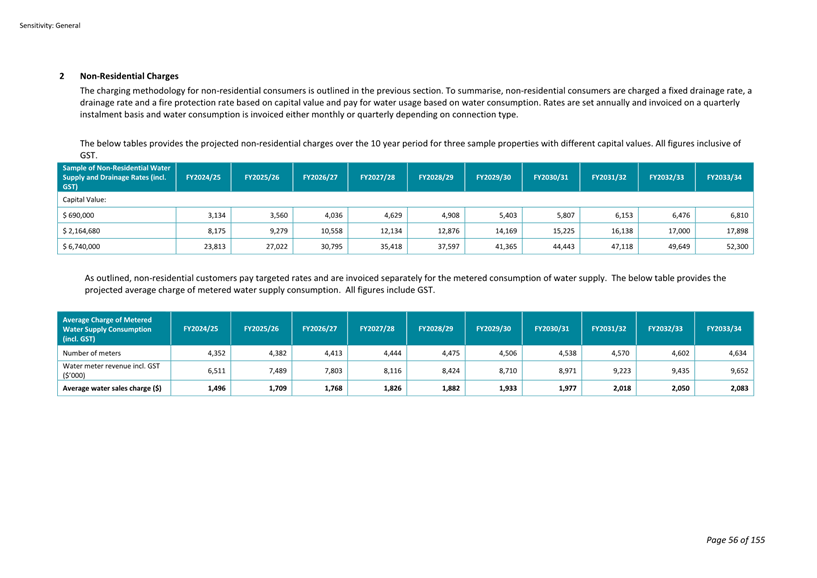
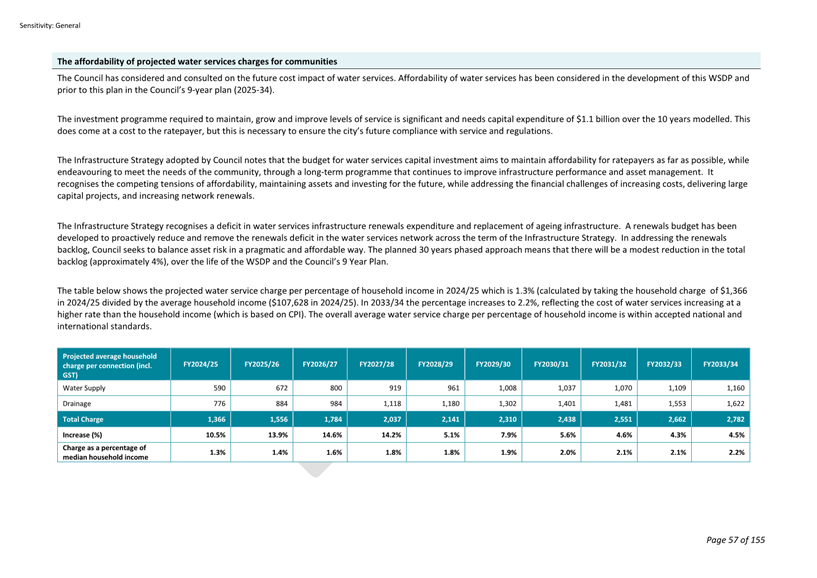
provides the average charge per connection which has been updated since the
DCC’s Local Water Done Well consultation document. The updates reflect
changes adopted as part of the 9 Year Plan 2025-34 following public
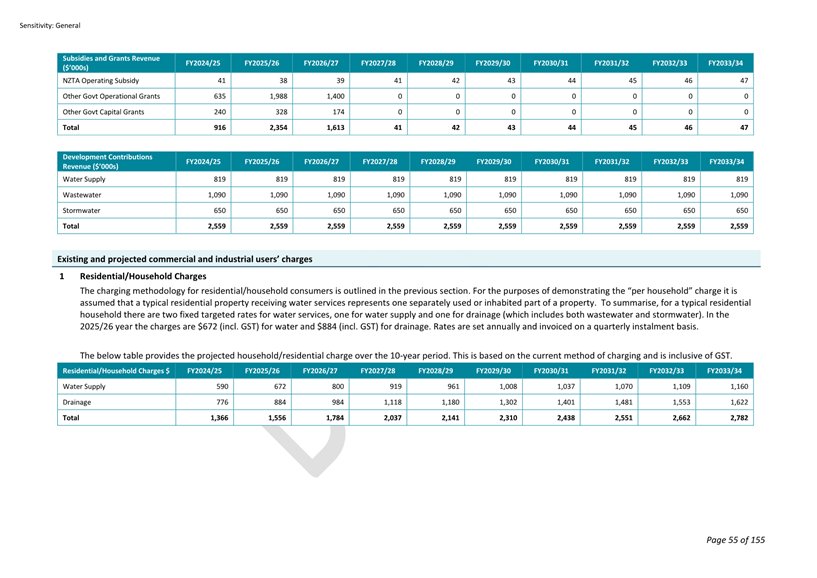
consultation and Council deliberations. The draft DCC WSDP shows household
connection charges increasing from $1,366 in 2024/25 to $2,782 in 2033/34.
ii) Borrowing
limit: DIA requires territorial authorities to specify a borrowing limit
for water services as well as for the territorial authority overall. Staff
recommend that DCC’s WSDP include a borrowing limit of 400% of water
revenue. This percentage reflects the borrowing required in the 9 Year Plan
2025-34 for water services, while allowing headroom unforeseen events, if
required. The 400% ratio of debt to revenue does not change DCC’s overall
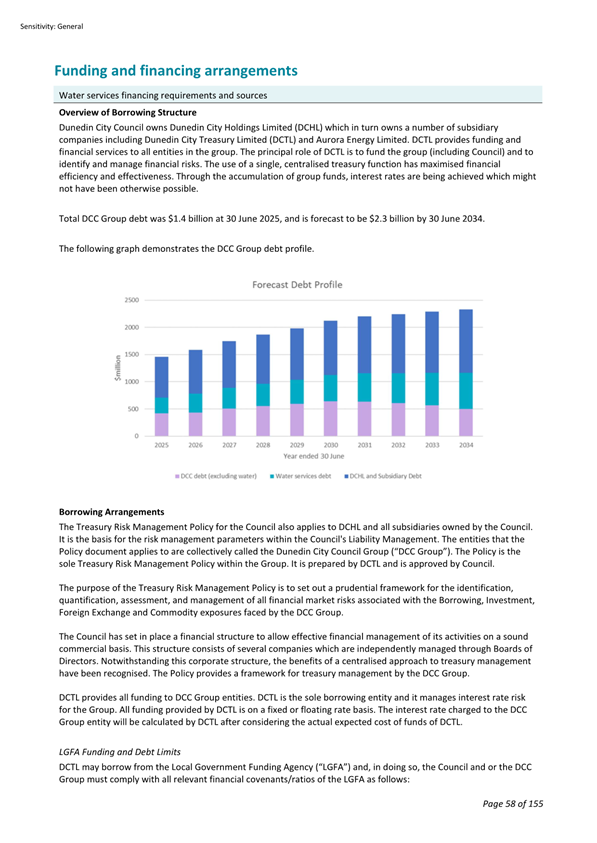
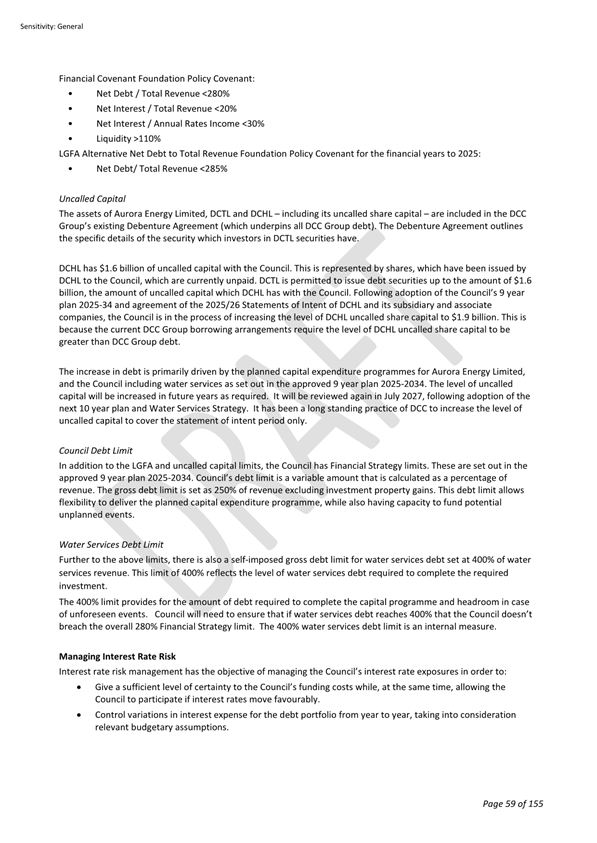
borrowing limits as it will be an internal limit within the overall limits. DCC
will still be required to remain within Council’s debt-to-revenue limit
of 250% and the LGFA net debt limit of 280%.
d) Part D:
financial sustainability assessment:
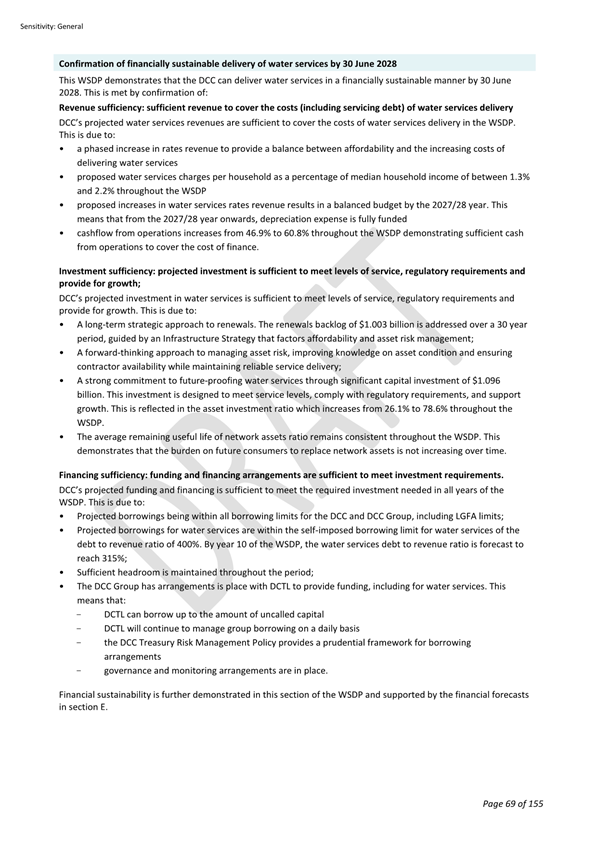
i) Financial
sustainability assessment: this section of the draft DCC WSDP demonstrates
that the DCC can deliver water services in a financially sustainable manner by
30 June 2028.
ii) Revenue
sufficiency: this section of the draft DCC WSDP reports that
following a phased increase in rates revenue to provide a balanced budget,
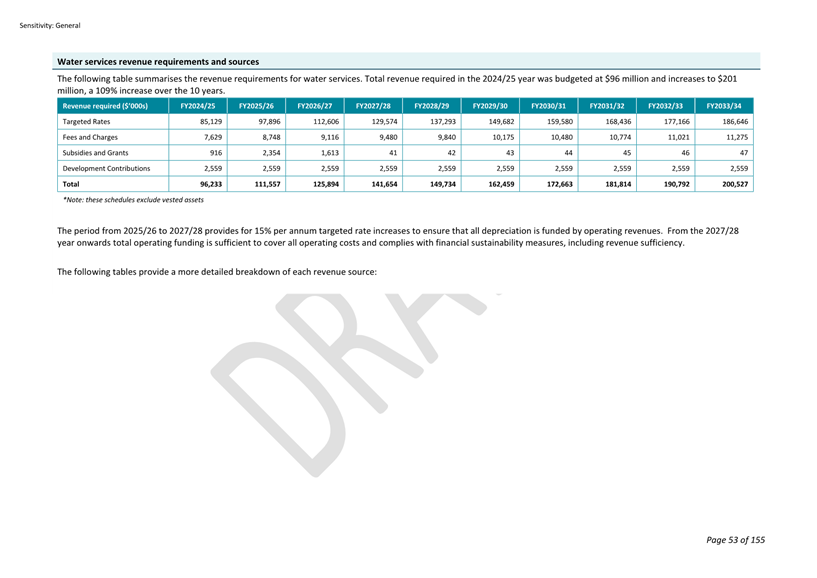
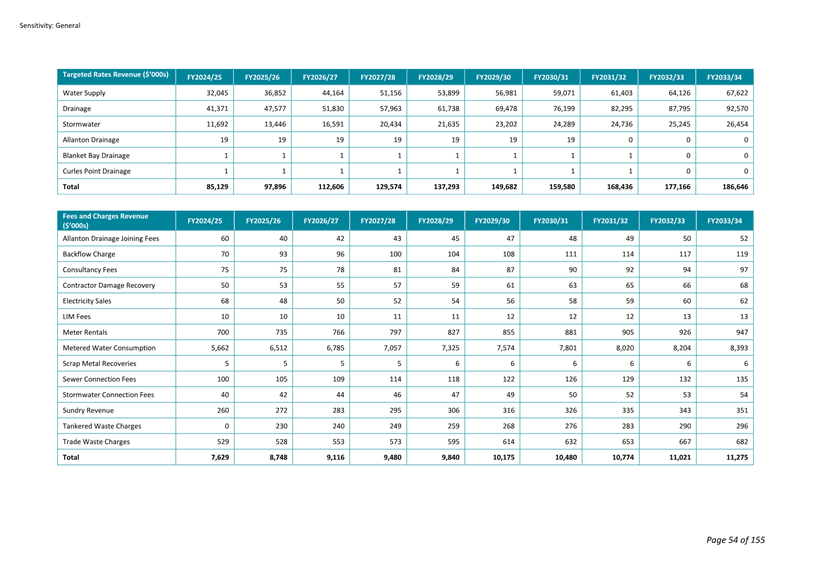
DCC’s projected water services revenues are sufficient to cover the costs
of water services delivery in the WSDP.
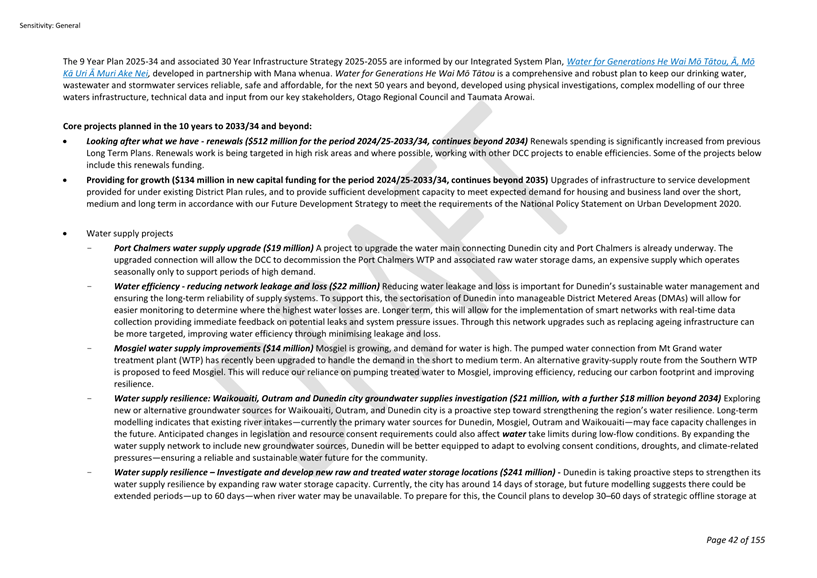
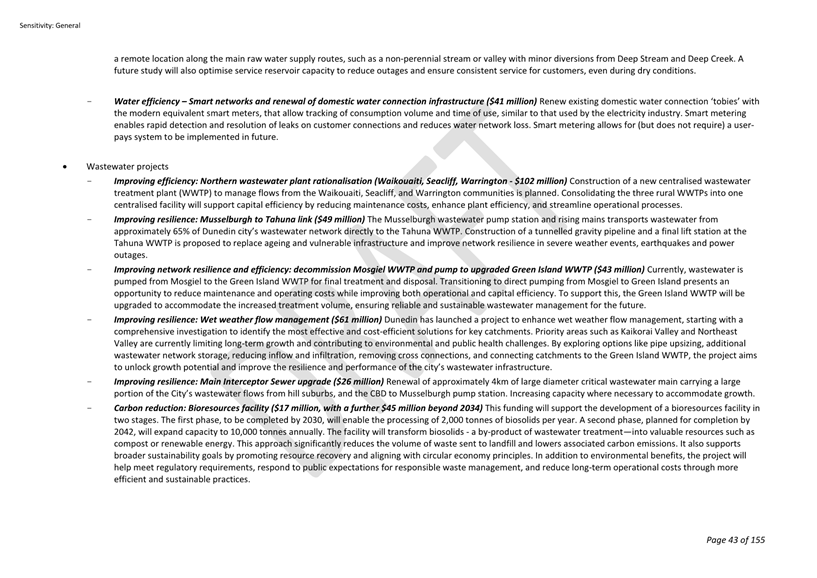
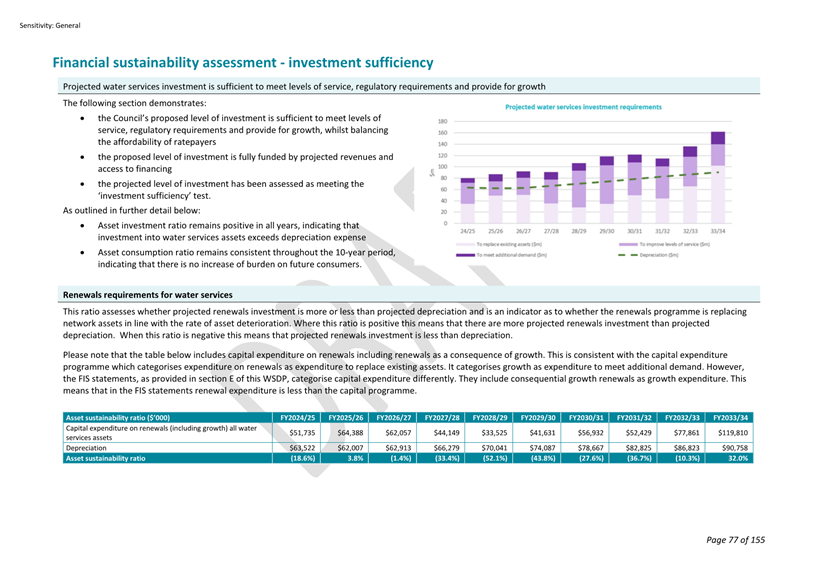
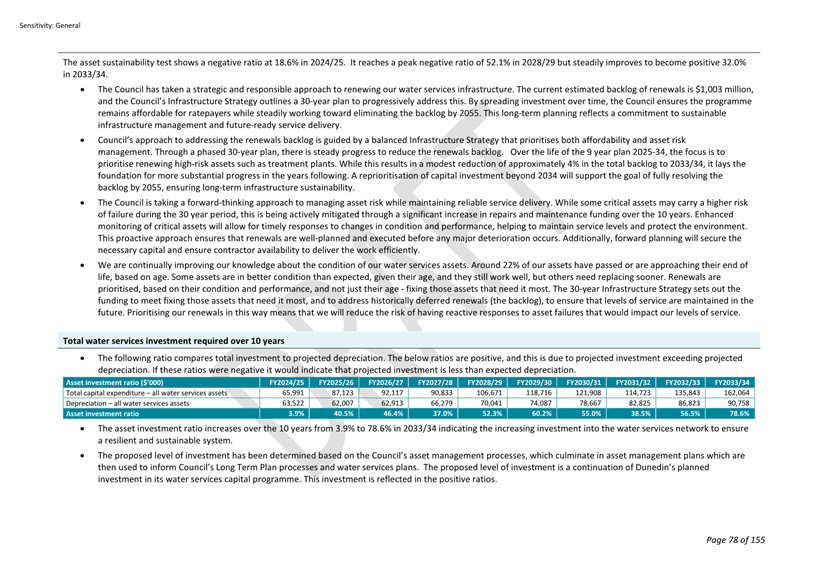
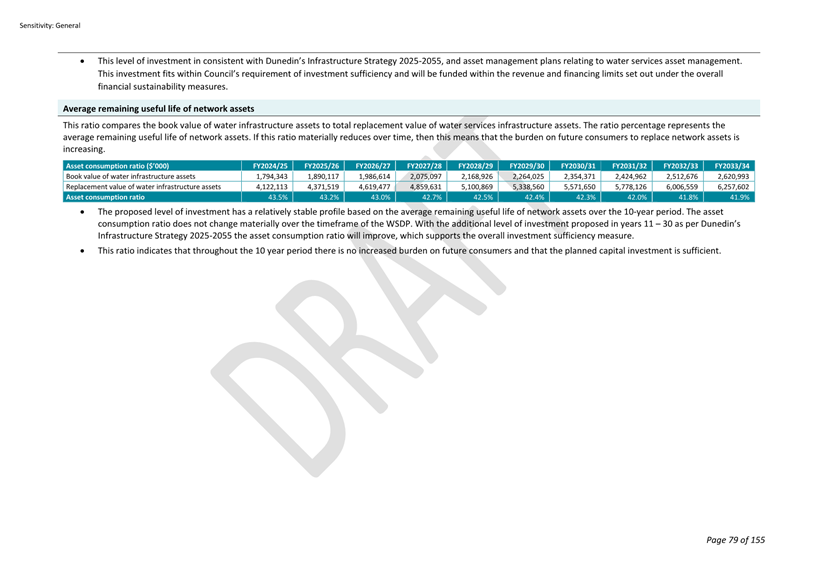
iii) Investment
sufficiency: this section of the draft DCC WSDP reports that with
the significant capital investment and risk/asset management practices in place, DCC’s projected investment in water
services is sufficient to meet levels of service, regulatory requirements and
provide for growth. A long-term strategic approach results in the renewals
backlog being addressed across a 30-year period and delivers a programme of
works that is affordable to ratepayers.
iv) Financing
sufficiency: this section of the draft DCC WSDP reports that DCC’s
projected funding and financing is sufficient to meet the required investment
needed in all years of the WSDP. Projected borrowing is within all borrowing
limits, including LGFA limits.
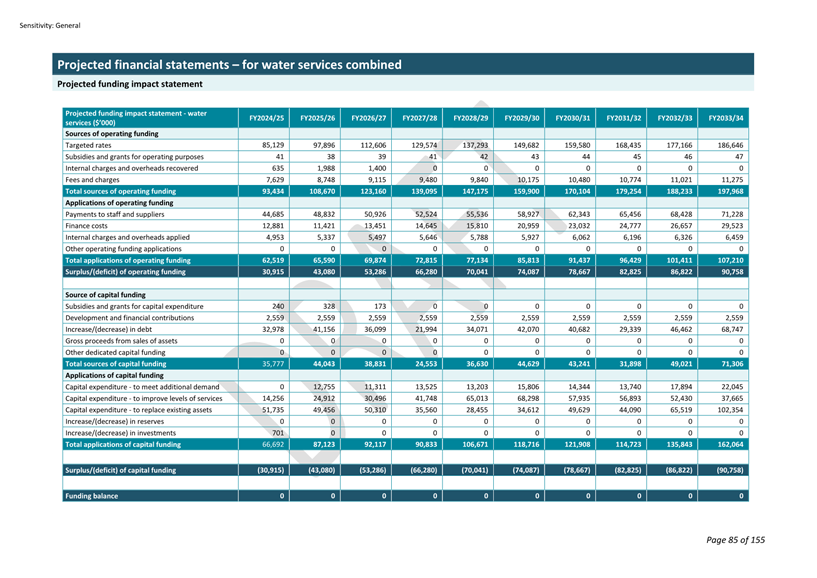
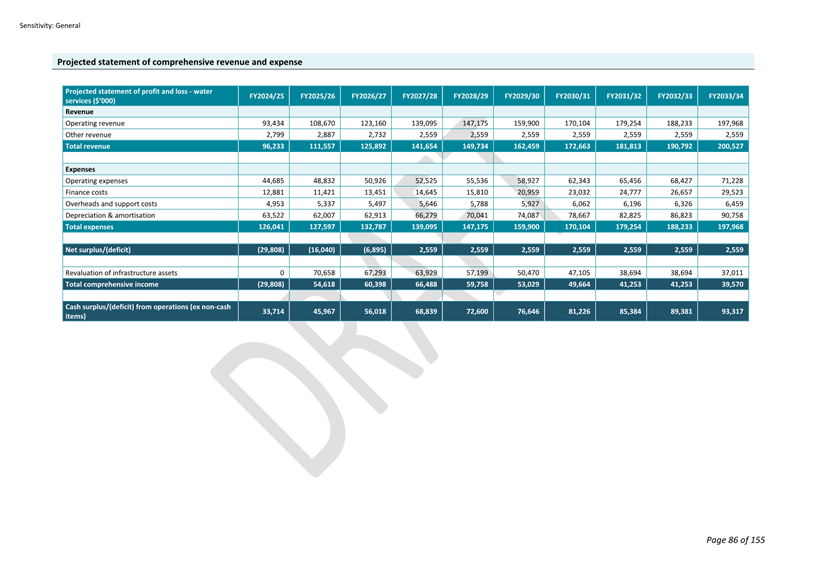
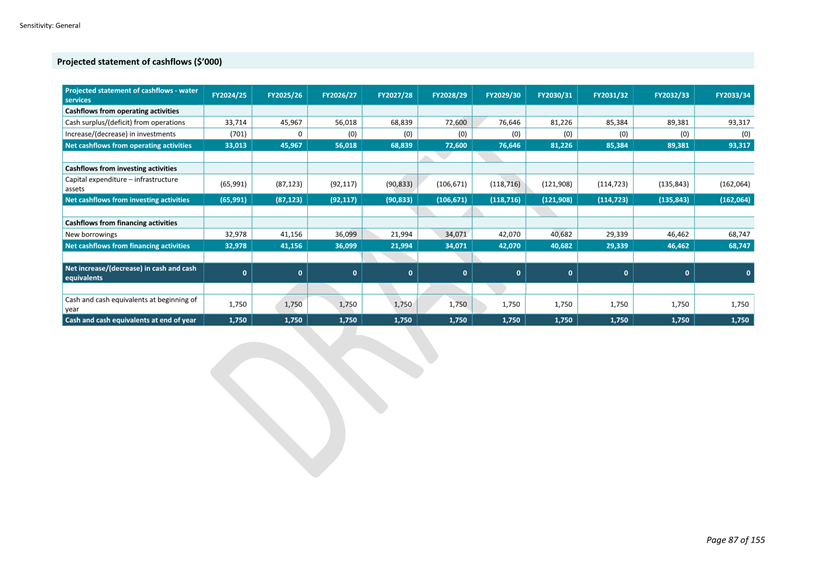
e) Part E:
projected financial statements for water services
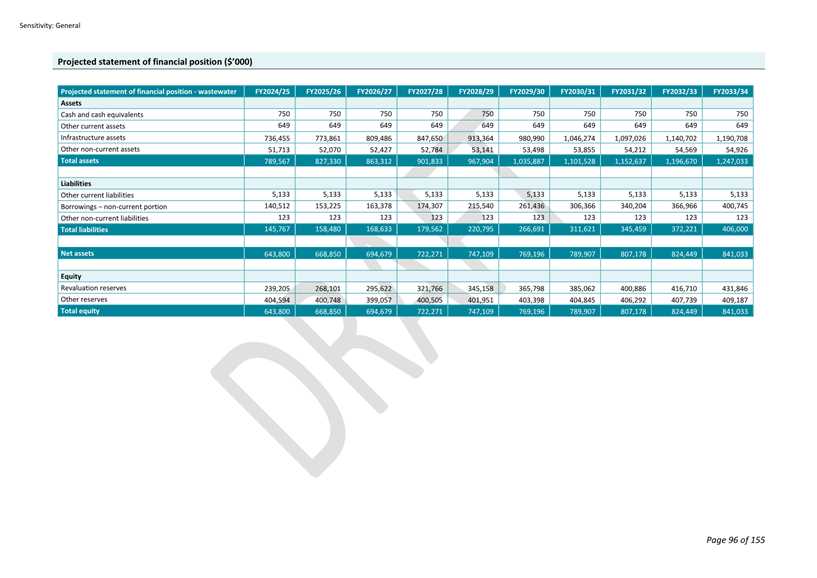
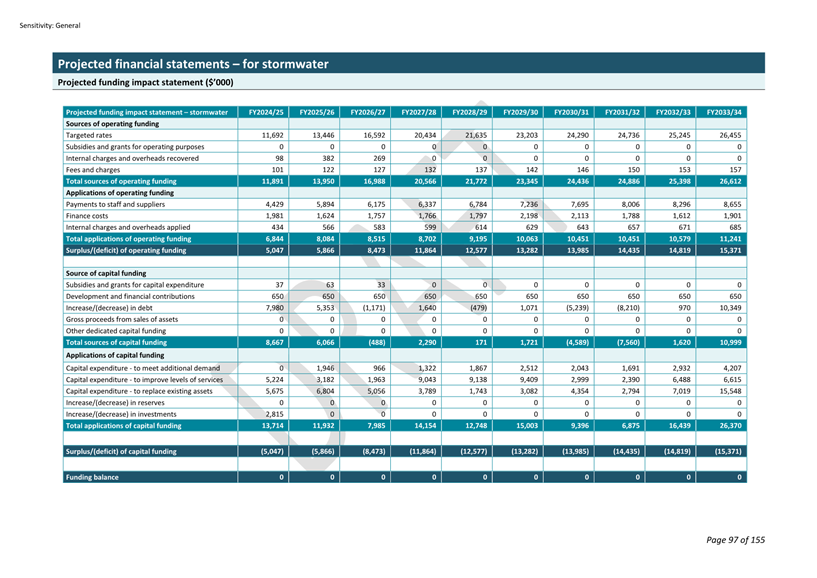
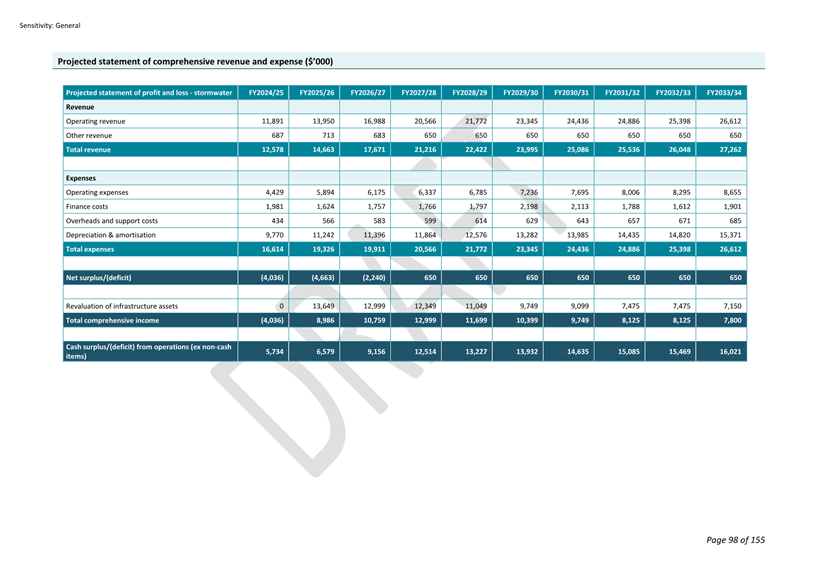
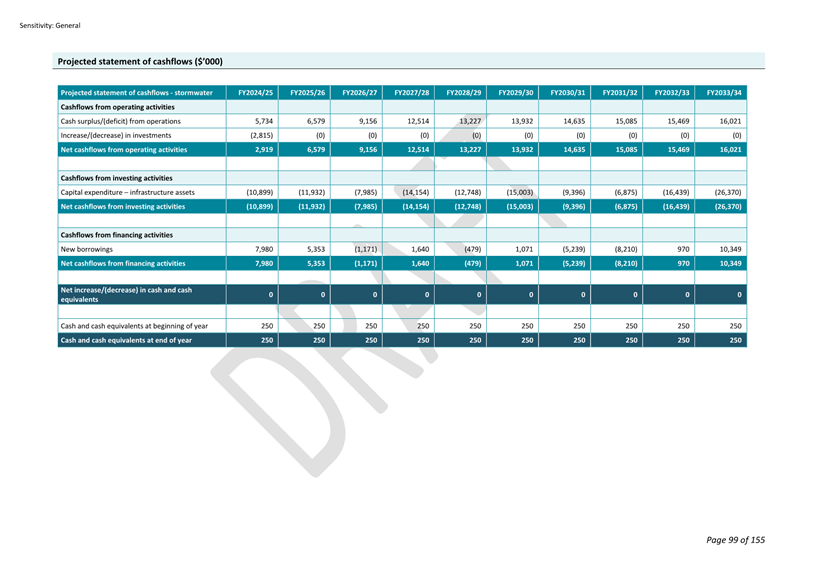
i) Financial
projections for water services: the projected financial statements included
in this section of the draft DCC WSDP are informed by the projected financial
statements in the 9 Year Plan 2025-34 and by financial modelling undertaken by
DCC for the purpose of assessing water services delivery model options and
developing the draft DCC WSDP.
f) Additional
information:
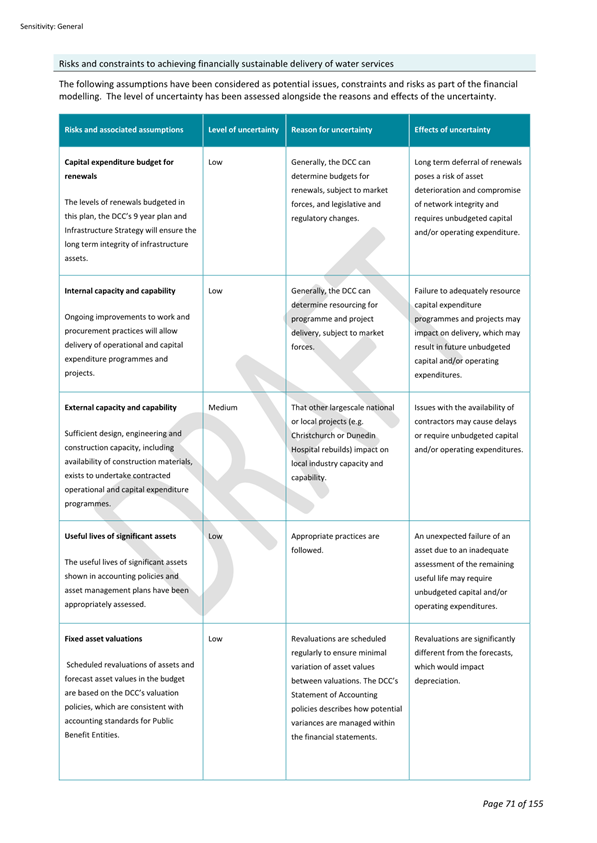
i) Risks
and assumptions: this section of the draft DCC WSDP includes critical risks
and selected high risks related to water services delivery summarised from the
DCC risk register. This section is also informed by the significant forecasting
assumptions and the infrastructure strategy included in the 9 Year Plan
2025-34.
Assurance and
Chief Executive certification
27 Staff have completed
an assessment of the draft DCC WSDP against the requirements of the Preliminary
Act, and believe that the draft DCC WSDP complies with the requirements of the
Preliminary Act.
28 Staff have
also completed a confidence assessment for the information included in each
section of the draft DCC WSDP, and are satisfied that the information is
reliable given it is based on audited or verified information.
29 Based on
all currently available information, the Chief Executive is satisfied the draft
DCC WSDP complies with the Preliminary Act and that the information contained
in the draft DCC WSDP is true and accurate. The Chief Executive will certify
the draft DCC WSDP at Attachment A, subject to Council adopting it by
resolution as required by the Preliminary Act.
30 Chief
Executive certification follows Council adoption of the DCC WSDP.
OPTIONS
31 Staff have
not provided any options, as it is a statutory requirement for Council to adopt
a WSDP by 3 September 2025.
32 Council may
choose to make amendments to the draft WSDP. Those amendments would need to be
decided prior to adoption of the WSDP.
33 The impact
on rates and debt for the in-house delivery model included in the draft DCC
WSDP were discussed in detail in the 26 February 2025 report to Council titled
‘Local Water Done Well – Decision on water models for
consultation’ (February Report - refer
item 3 of supplementary agenda 26 February 2025).
34 While
delivery of water services generally has implications for emissions and zero
carbon, the decision whether to adopt the draft WSDP (as recommended by this
report) is not expected to change those implications.
NEXT STEPS
35 If the
Council resolves to adopt the draft DCC WSDP at Attachment A, the Chief
Executive will certify the WSDP and submit it to the Secretary for Local
Government prior to the 3 September 2025 deadline.
36 The
Preliminary Act requires the Secretary for Local Government to consider each
WSDP submitted as soon as reasonably practical and advise the territorial
authority if the WSDP is accepted or not, or why the WSDP needs to be amended
and re-submitted.
37 Once the
DCC WSDP has been accepted, staff will publish it on the DCC website and
circulate a copy to Councillors.
38 In
accordance with the requirements of the Preliminary Act, staff will work to
give effect to the DCC WSDP by initiating the actions set out in the
implementation plan that forms part of the WSDP. In addition, staff will
continue reviewing the contents of the Local Government (Water Services) Bill
to identify further actions needed to ensure legislative requirements are met.
39 The
incoming Council will be briefed on the WSDP as part of the induction
programme.
Signatories
|
Author:
|
Carolyn Allan - Chief Financial Officer
David Ward - General Manager, 3 Waters and Transition
|
|
Authoriser:
|
Sandy Graham - Chief Executive Officer
|
Attachments
|
|
Title
|
Page
|
|
⇩a
|
DCC Water Service
Delivery Plan
|
70
|
|
SUMMARY OF CONSIDERATIONS
|
|
Fit with purpose of Local Government
This report enables democratic local decision making and
action by, and on behalf of communities and promotes the social, economic
environmental and cultural well-being of communities in the present and for
the future.
|
|
Fit with strategic framework
|
|
Contributes
|
Detracts
|
Not applicable
|
|
Social Wellbeing Strategy
|
☐
|
☐
|
✔
|
|
Economic Development Strategy
|
☐
|
☐
|
✔
|
|
Environment Strategy
|
✔
|
☐
|
☐
|
|
Arts and Culture Strategy
|
☐
|
☐
|
✔
|
|
3 Waters Strategy
|
✔
|
☐
|
☐
|
|
Future Development Strategy
|
✔
|
☐
|
☐
|
|
Integrated Transport Strategy
|
☐
|
☐
|
✔
|
|
Parks and Recreation Strategy
|
☐
|
☐
|
✔
|
|
Other strategic projects/policies/plans
|
✔
|
☐
|
☐
|
This report has been prepared with reference to the
Council’s strategic framework.
|
|
Māori Impact Statement
Council is committed to working closely with mana whenua
to shape the future of water services in Ōtepoti
Dunedin. Council consulted on the water service delivery model options
directly with iwi . Council also provided opportunities for iwi Māori to
participate in decision making on the 9 Year Plan 2025-34, which is a key
input into the draft DCC WSDP. No specific engagement with iwi Māori has been undertaken on the draft DCC WSDP document.
|
|
Sustainability
Financial sustainability of local government water
services is a key objective of the Government’s ‘Local Water Done
Well’ policy. The draft DCC WSDP includes a statement of financial
sustainability in accordance with the requirements of the Preliminary Act.
|
|
Zero carbon
Delivery of water services generally has implications for
emissions and zero carbon. However, the decision to adopt a draft WSDP (as
recommended by this report) or not is not expected to change those
implications.
|
|
LTP/Annual Plan / Financial Strategy /Infrastructure
Strategy
The 9 Year Plan 2025-34 and the draft DCC WSDP are aligned
and inform one another.
|
|
Financial considerations
The draft DCC WSDP includes information about revenue and
financing arrangements, a financial sustainability assessment and projected
financial statements for water services. These reflect the budgets set out in
the 9 Year Plan 2025-34. DIA requires territorial authorities to specify a
borrowing limit for water services as well as for the territorial authority
overall. In DCC’s draft WSDP staff have included a borrowing limit of
400% of water revenue. This percentage reflects the borrowing required in the
9 Year Plan 2025-34 for water services, while allowing headroom for unforeseen
events, if required. The 400% ratio of debt to revenue does not change
DCC’s overall borrowing limits as it will be an internal limit within
the overall limits. DCC will still be required to remain within
Council’s debt-to-revenue limit of 250% and the LGFA net debt limit of
280%.
|
|
Significance
The decision on whether to adopt the draft WSDP is
considered low to medium significance in terms of the Council’s
Significance and Engagement Policy. The draft WSDP reflects decisions that
have been consulted on through the 9YP and the water services delivery
model.There are good reasons not to consult on the WSDP, including that:
a. The
decision is not of a nature that requires engagement because it is a
statutory requirement for Council to submit a WSDP; and
b. Council
has recently consulted on the water services delivery model and the 9 Year
Plan, both of which underpin the WSDP.
|
|
Engagement – external
There has been engagement with staff of the Department of
Internal Affairs as discussed in the report.
|
|
Engagement - internal
Staff from Legal, Finance, 3 Waters, and the Executive
Leadership Team have contributed to this report.
|
|
Risks: Legal / Health and Safety etc.
Council must adopt and submit a WSDP by 3 September 2025.
Failure to do so may result in the Minister taking action as provided for by
the Preliminary Act.
|
|
Conflict of Interest
There are no known conflicts of interest.
|
|
Community Boards
Community Boards had the opportunity to participate during
the consultation on water services delivery model options and the 9 Year Plan
2025-34. No specific engagement with Community Boards has
been undertaken on the draft DCC WSDP document.
|