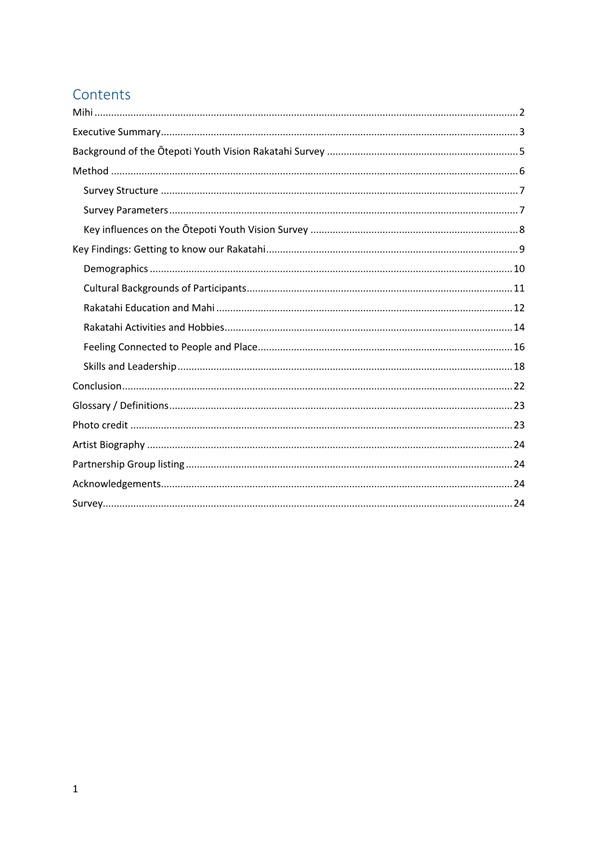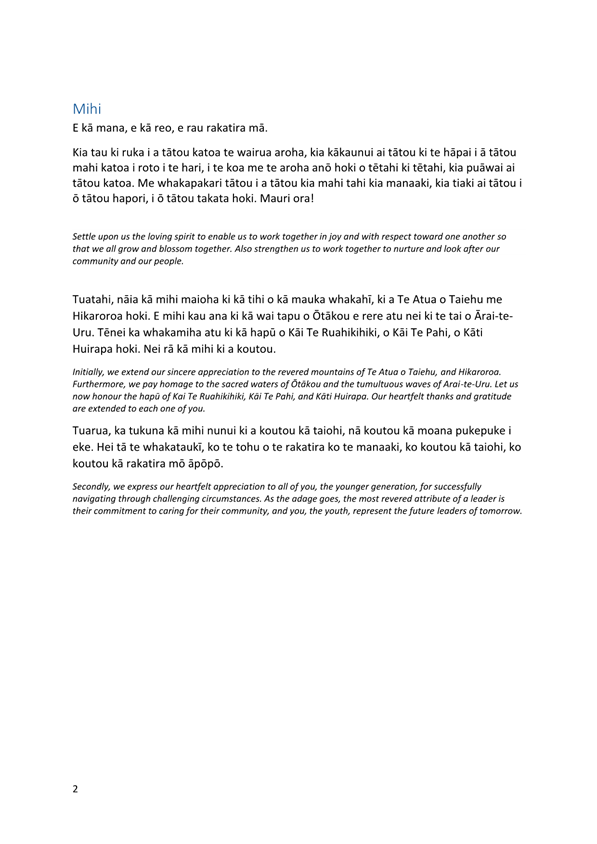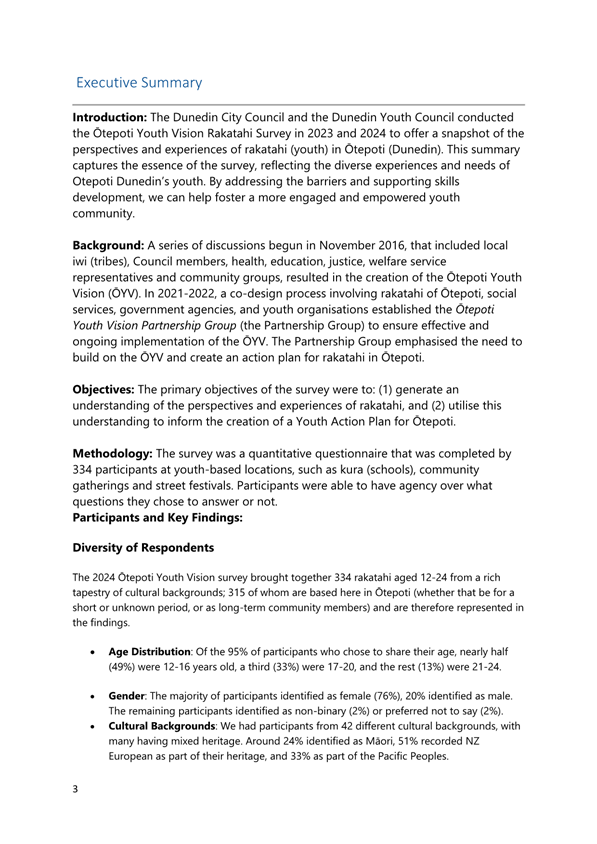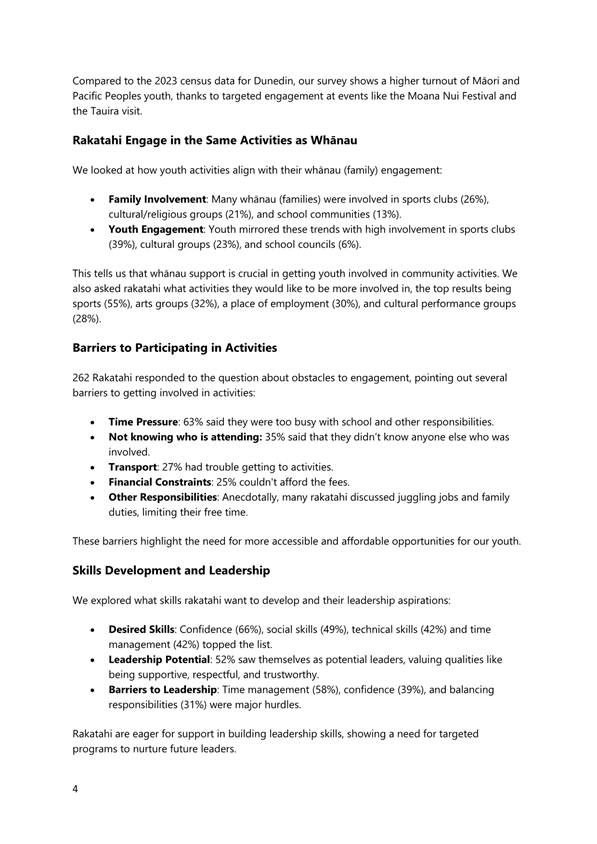
Notice of Meeting:
I hereby give notice that an ordinary meeting of the Dunedin
City Council will be held on:
Date: Thursday
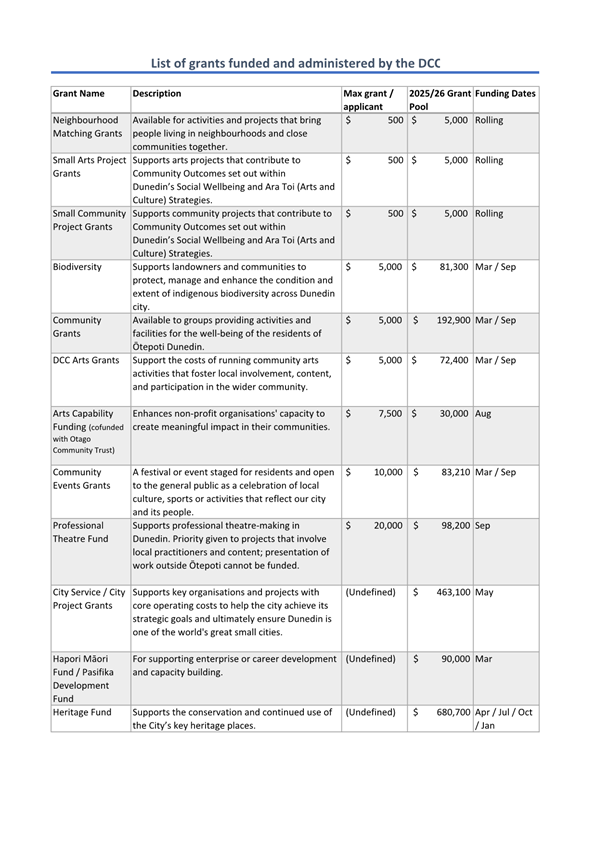
27 November 2025
Time: 10:00
a.m.
Venue: Council
Chamber, Dunedin Public Art Gallery, the Octagon, Dunedin
Sandy Graham
Council
PUBLIC AGENDA
|
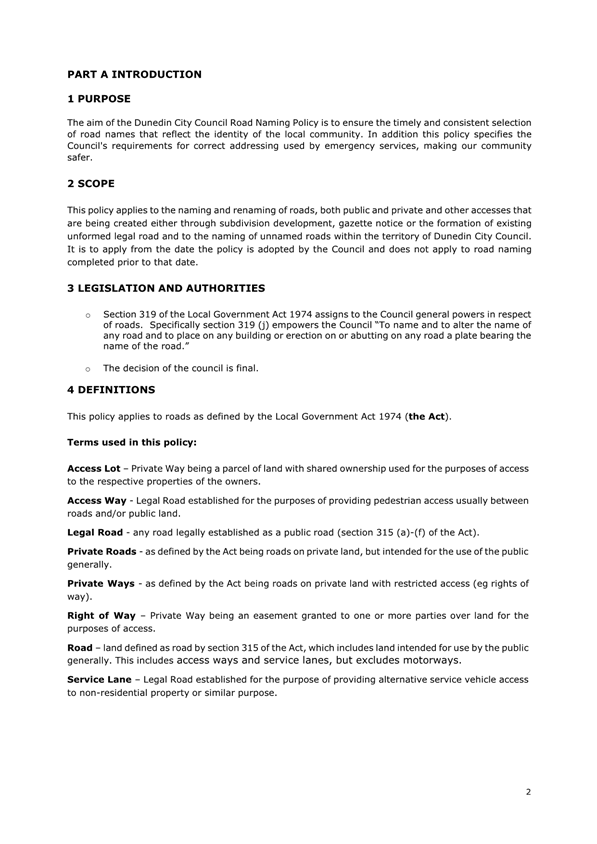
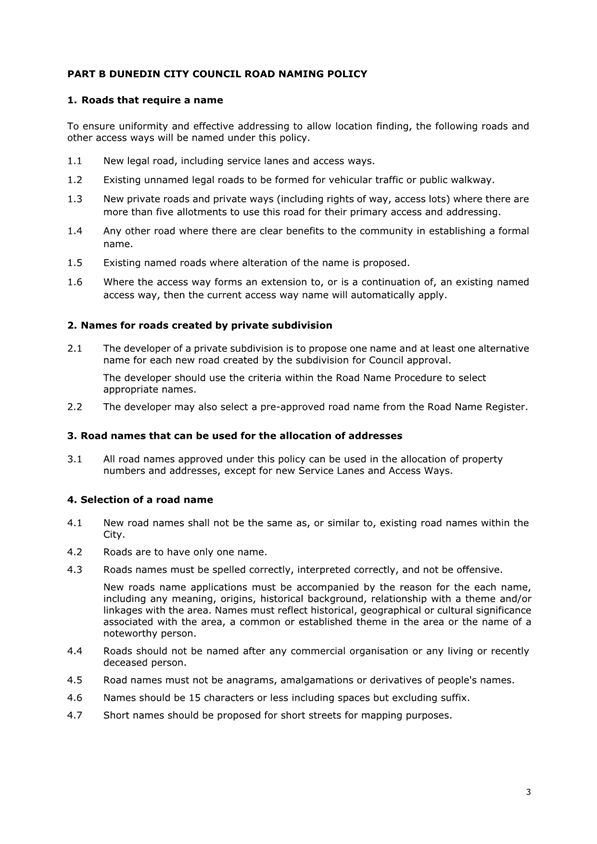
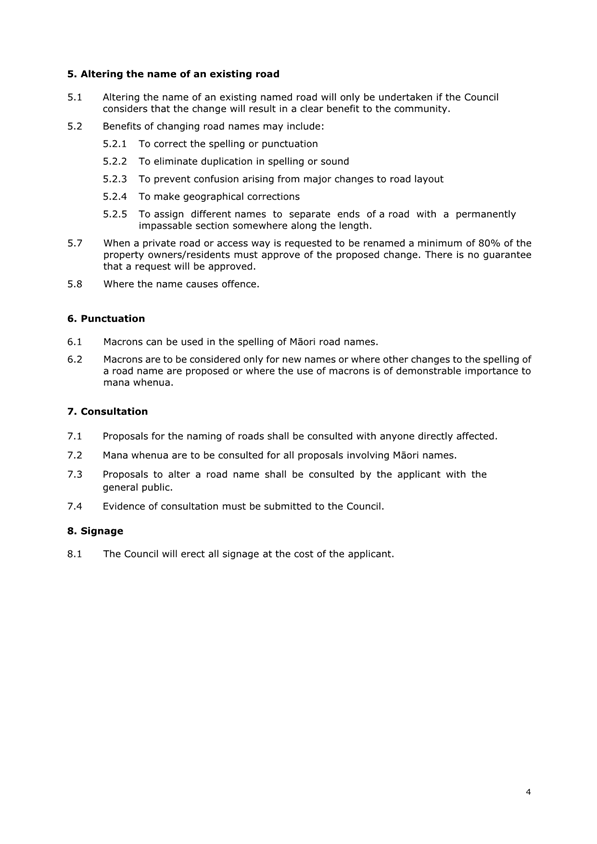
Mayor
|
Mayor Sophie Barker
|
|
|
Deputy Mayor
|
Cr Cherry Lucas
|
|
|
Members
|
Cr John Chambers
|
Cr Christine Garey
|
|
|
Cr Doug Hall
|
Cr Marie Laufiso
|
|
|
Cr Russell Lund
|
Cr Mandy Mayhem
|
|
|
Cr Benedict Ong
|
Cr Jules Radich
|
|
|
Cr Andrew Simms
|
Cr Mickey Treadwell
|
|
|
Cr Lee Vandervis
|
Cr Steve Walker
|
|
|
Cr Brent Weatherall
|
|
Senior Officer Sandy
Graham, Chief Executive
Governance Support Officer Lynne
Adamson
Lynne Adamson
Governance Support Officer
Telephone: 03 477 4000
governance.support@dcc.govt.nz
www.dunedin.govt.nz
The meeting
will be live streamed on the Council’s YouTube page:
https://www.youtube.com/watch?v=Yb4lbTIjPnI
Note: Reports
and recommendations contained in this agenda are not to be considered as
Council policy until adopted.
|

|
Council
27 November 2025
|
ITEM TABLE OF CONTENTS PAGE
1 Opening 4
2 Public
Forum 4
3 Apologies 4
4 Confirmation
of Agenda 4
5 Declaration
of Interest 4
6 Confirmation
of Minutes 5
6.1 Ordinary Council
meeting - 11 November 2025 5
Reports
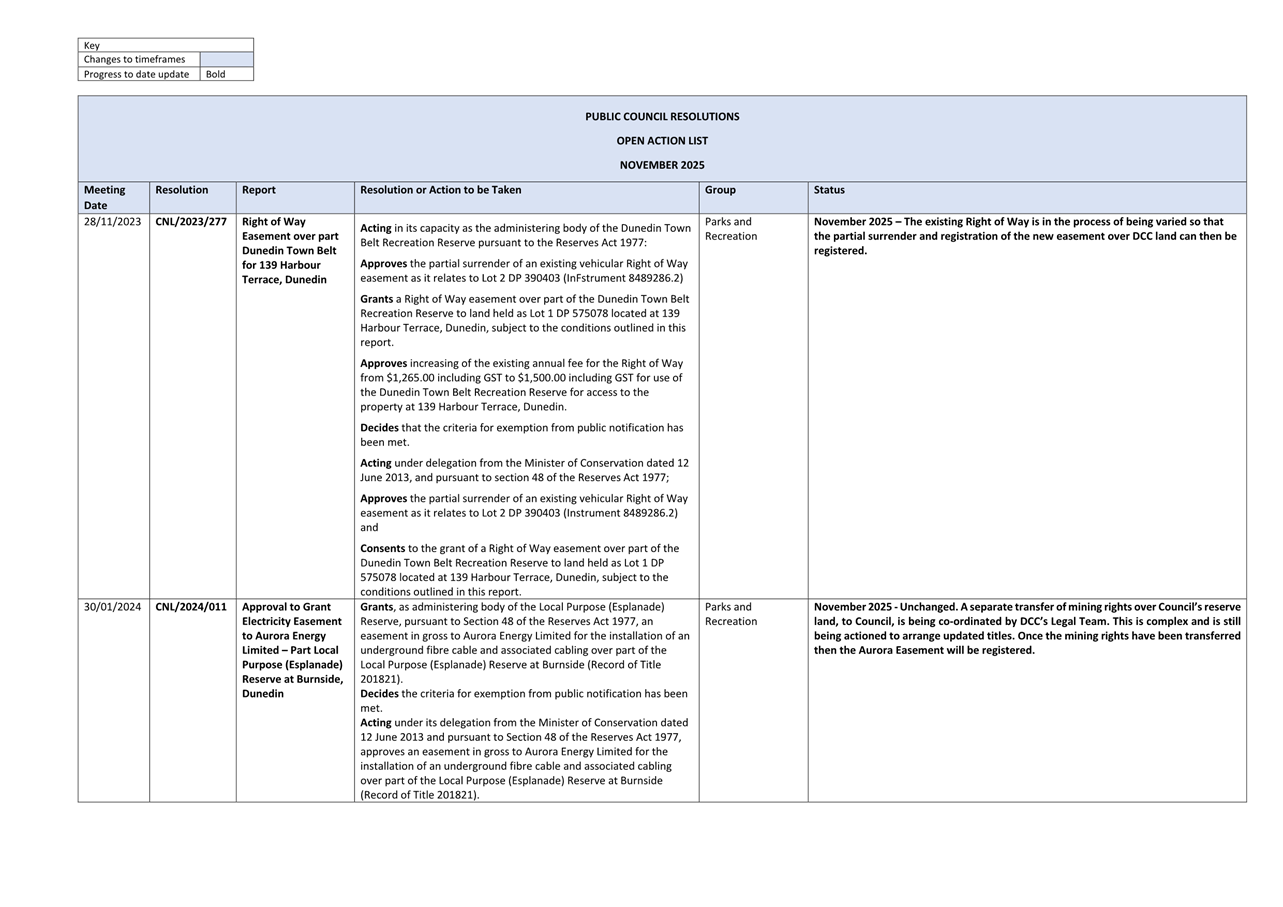
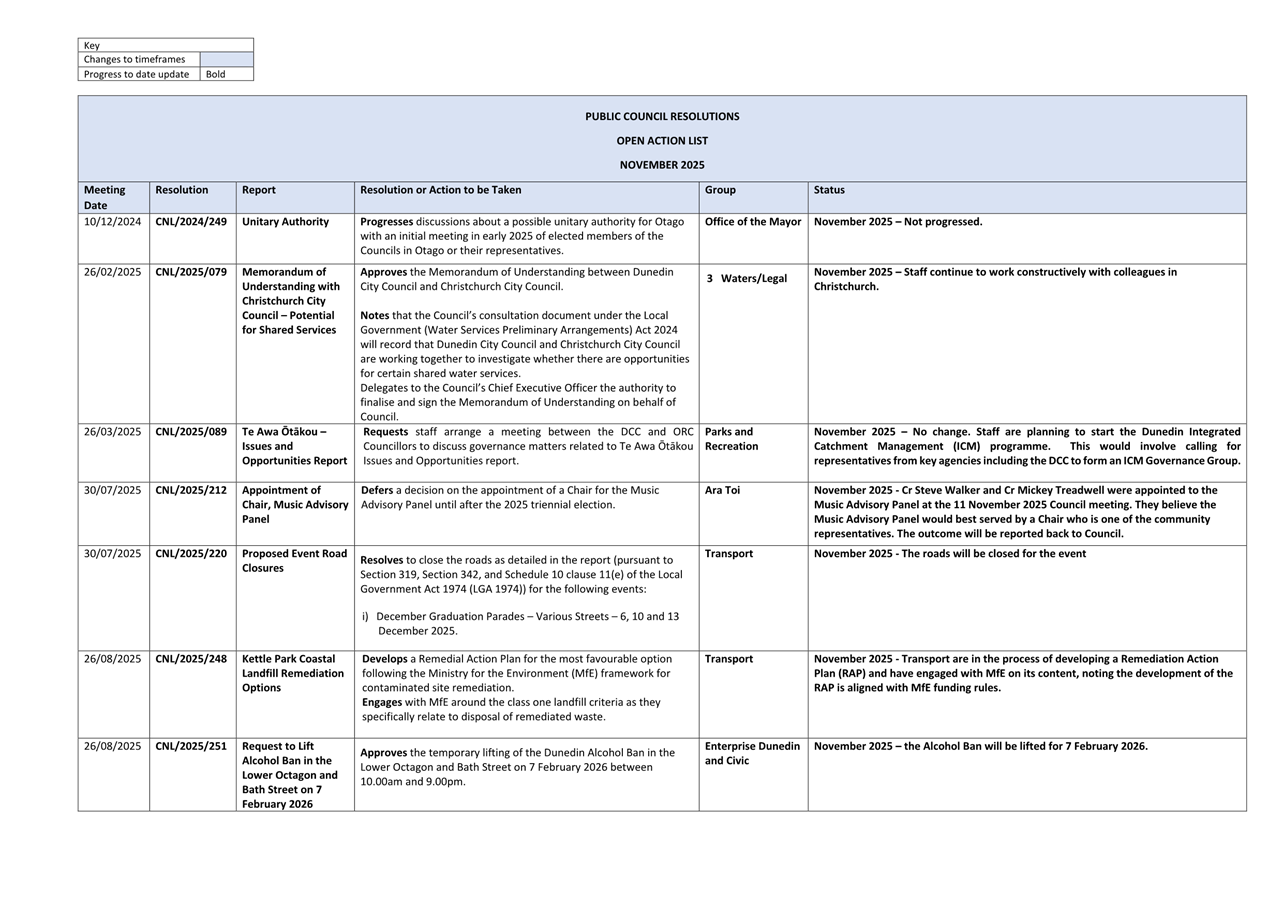
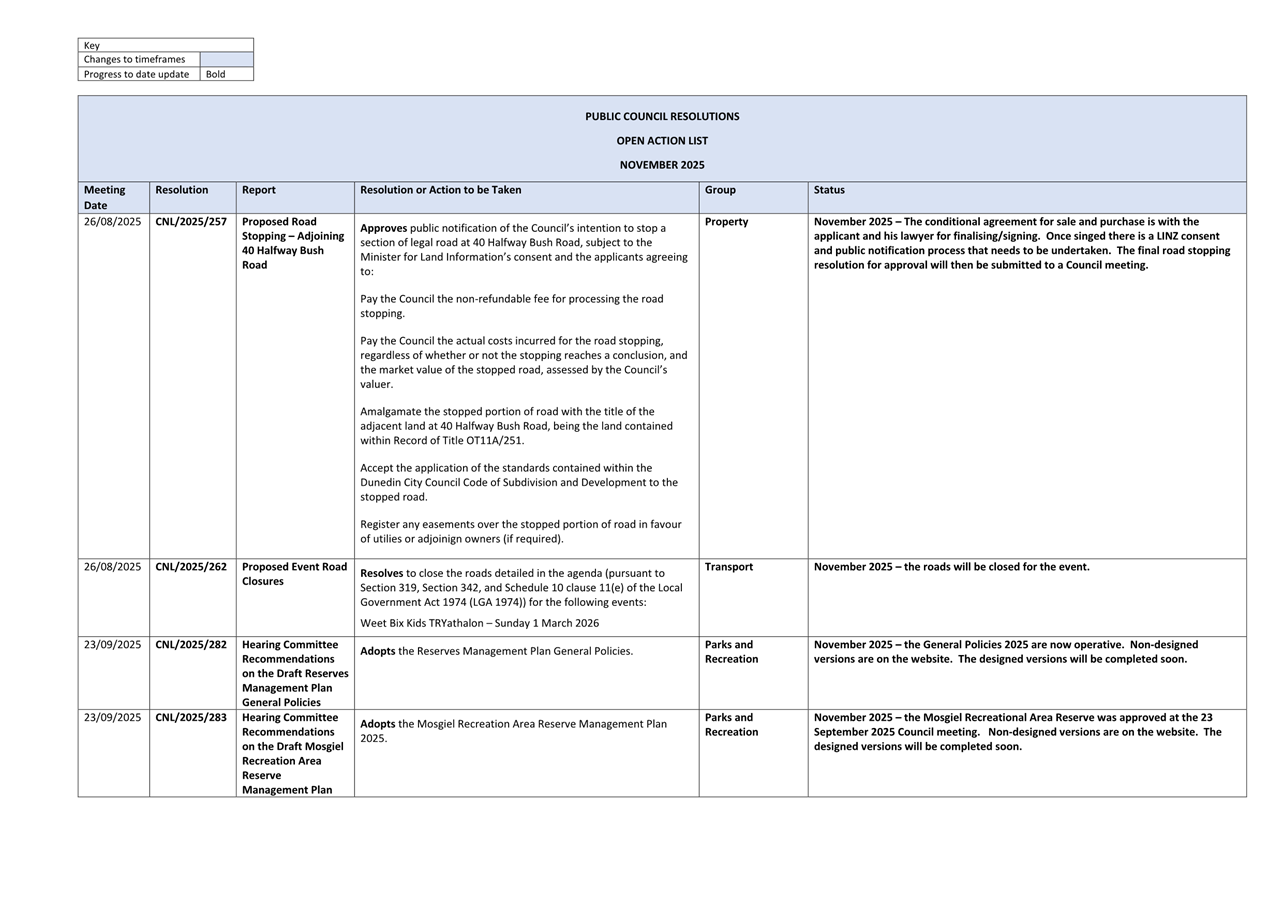
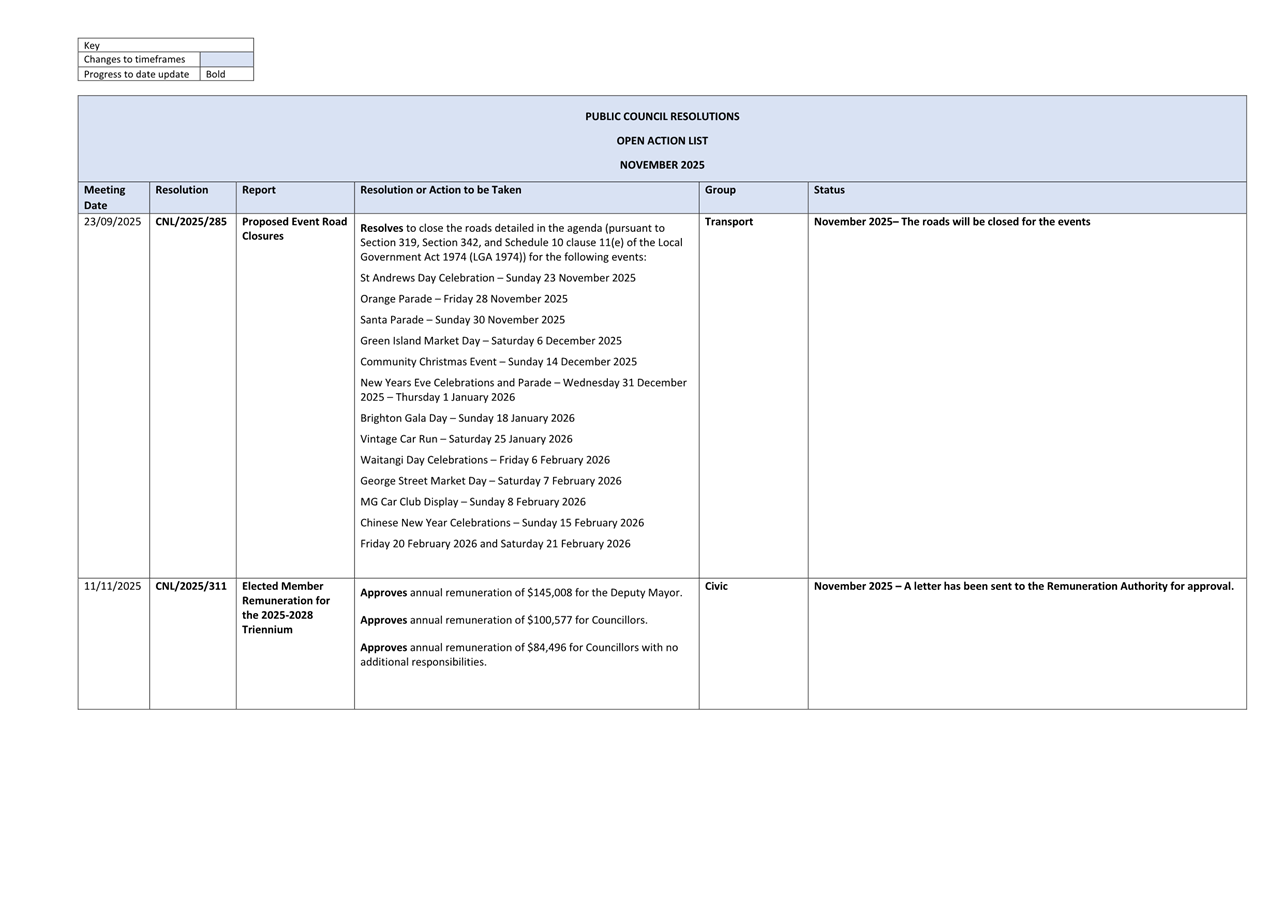
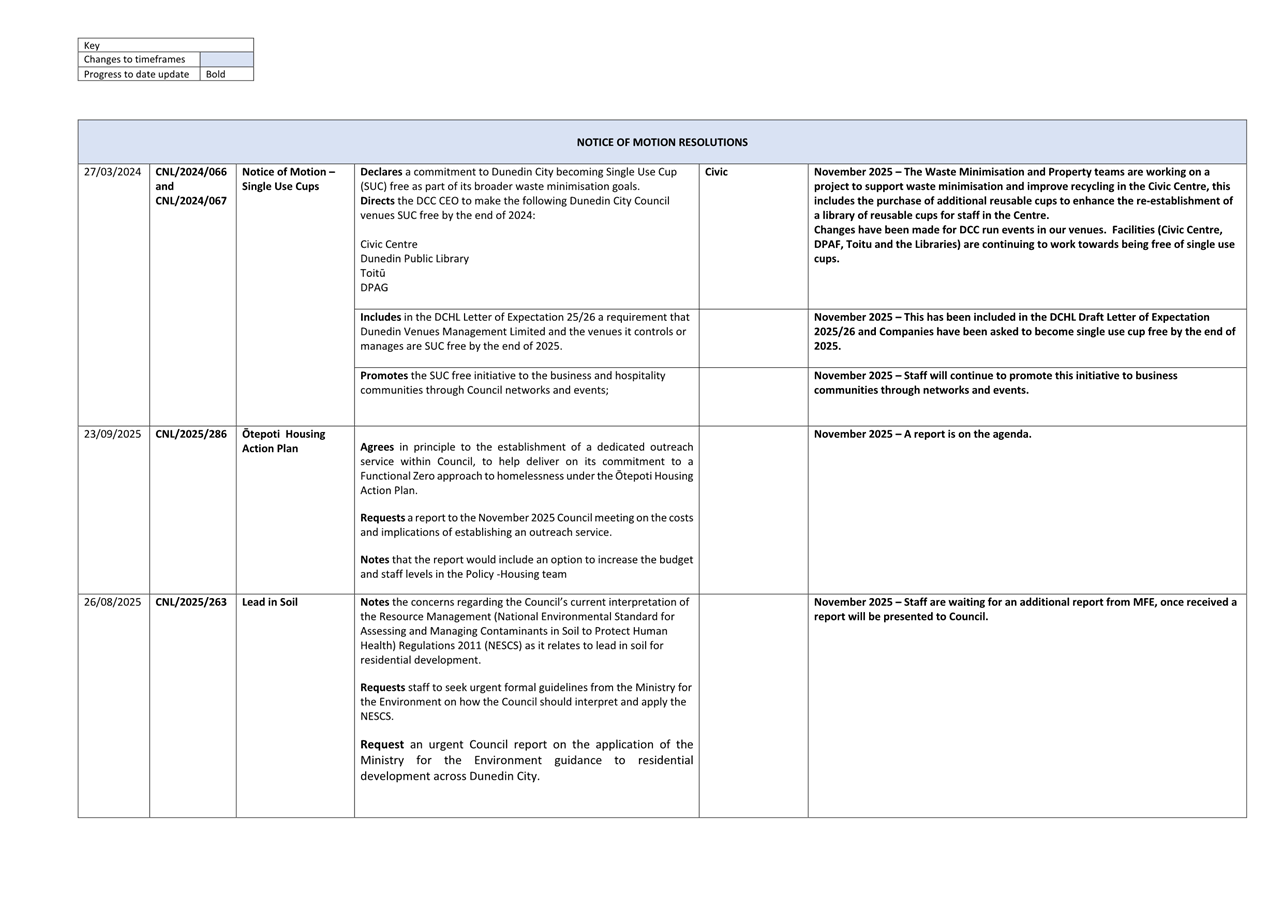
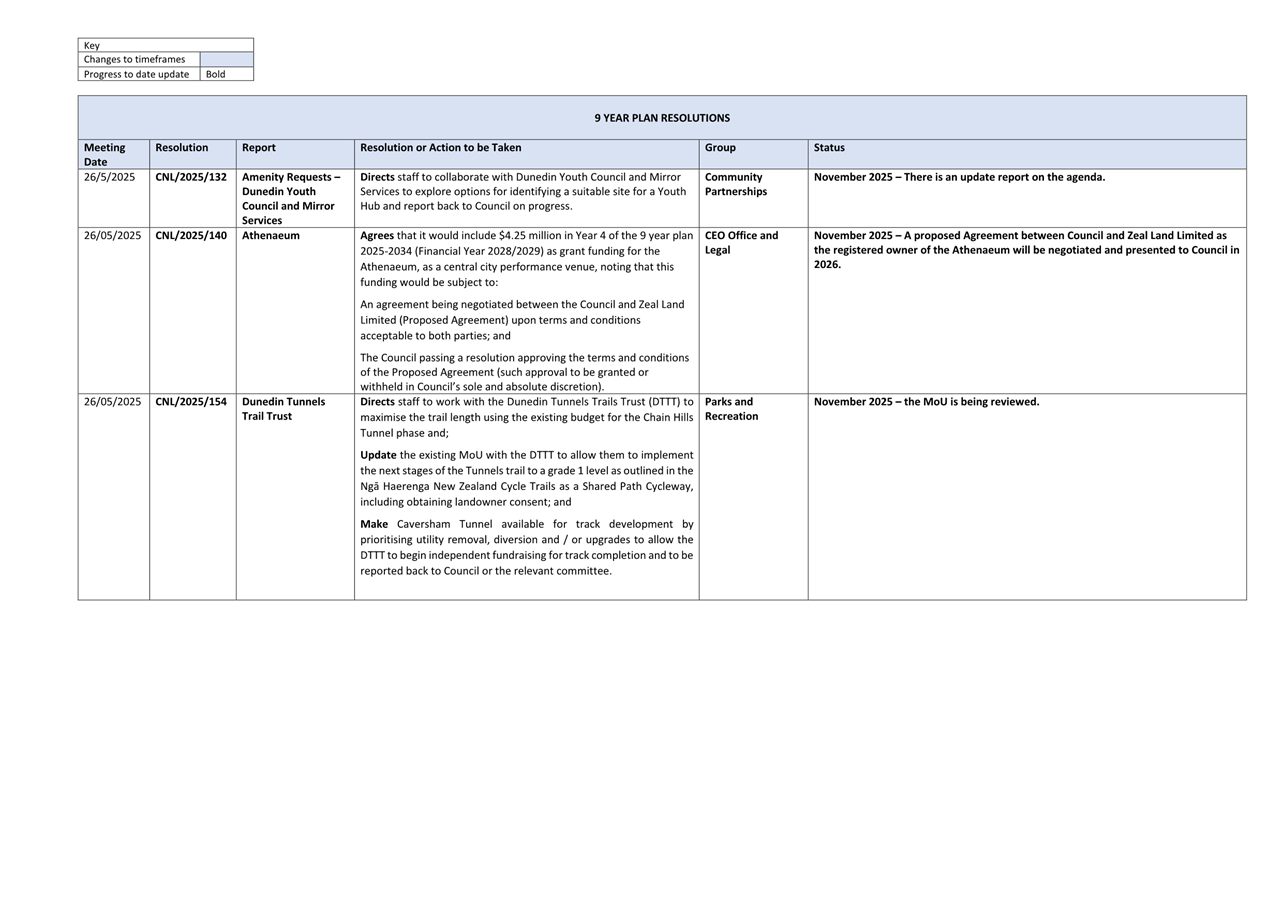
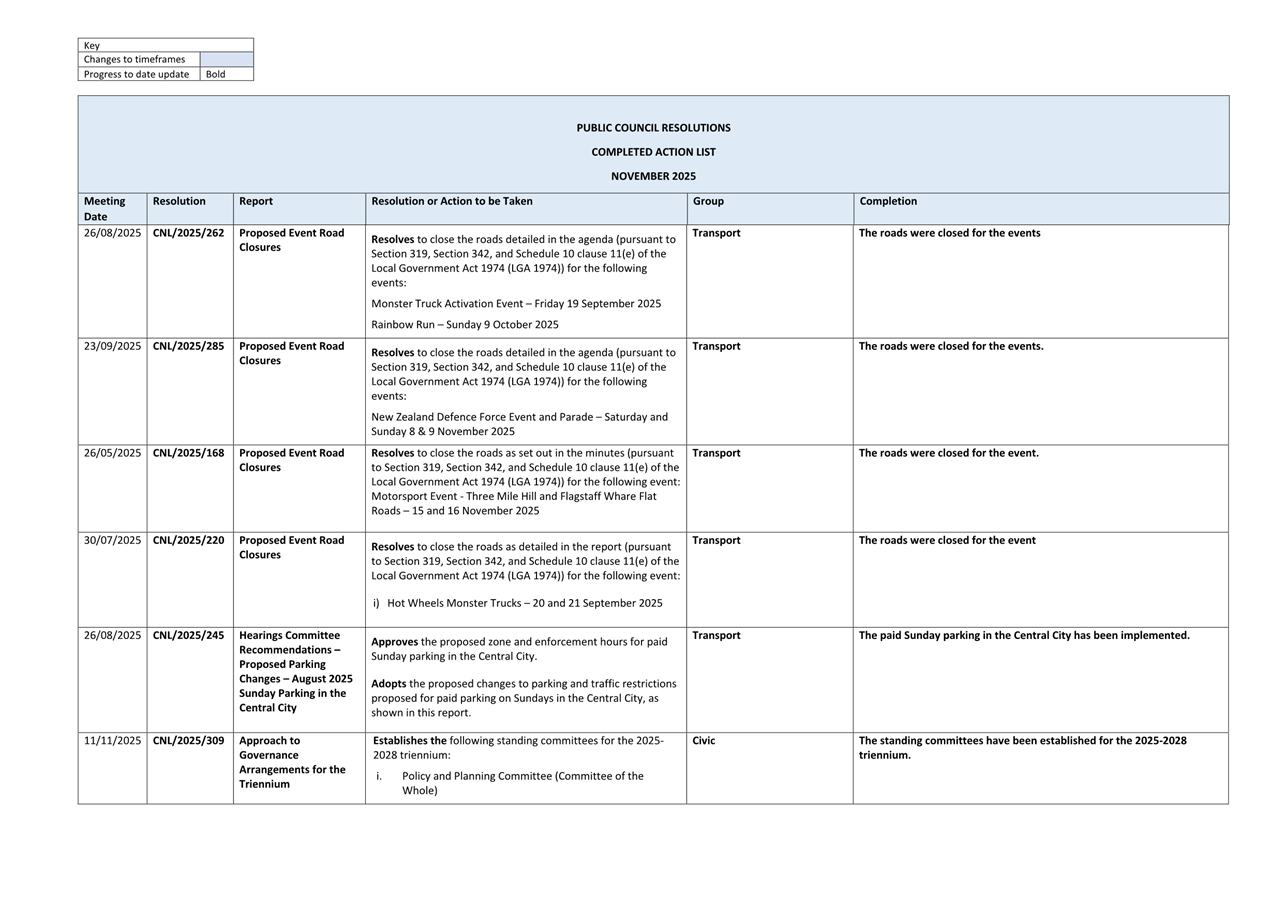
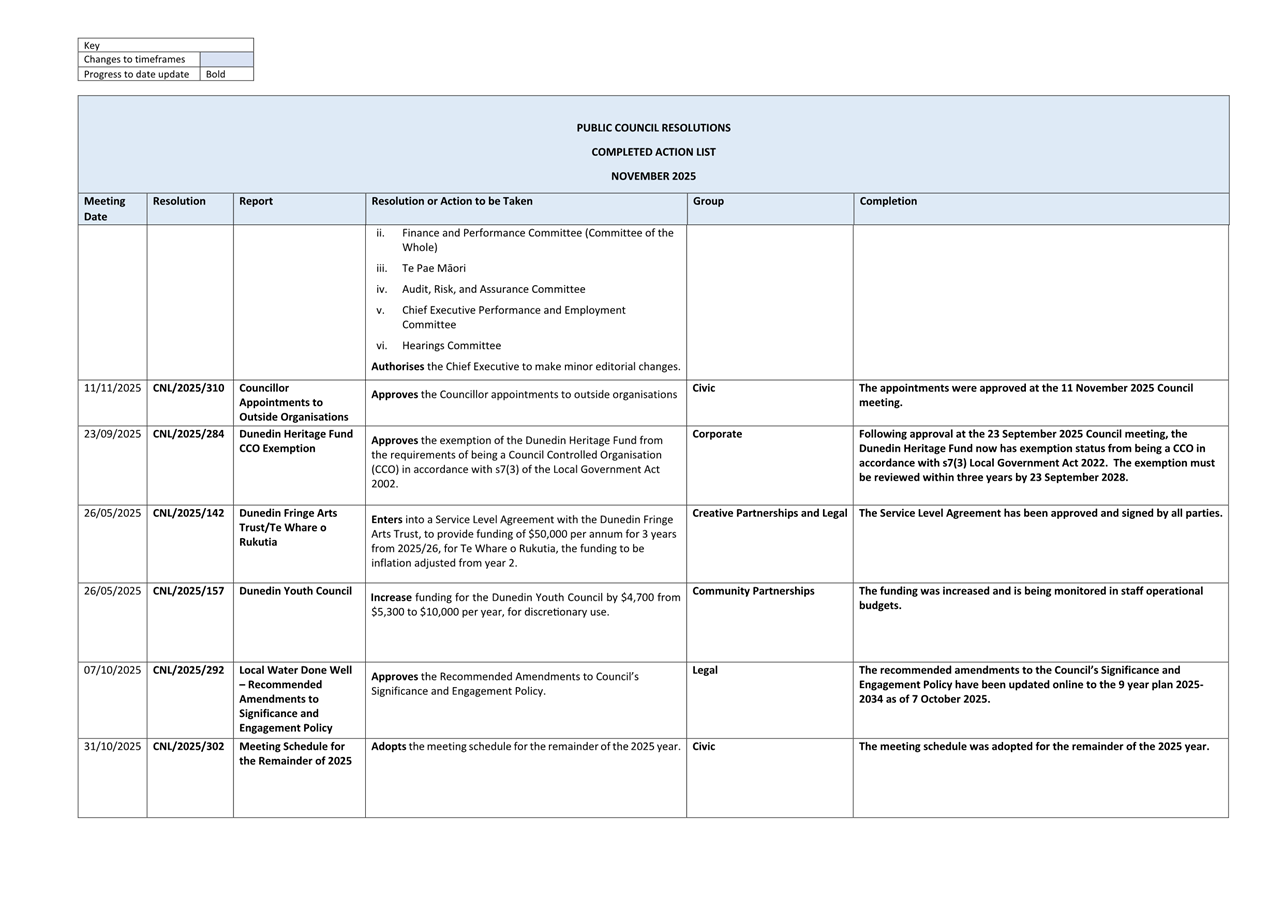
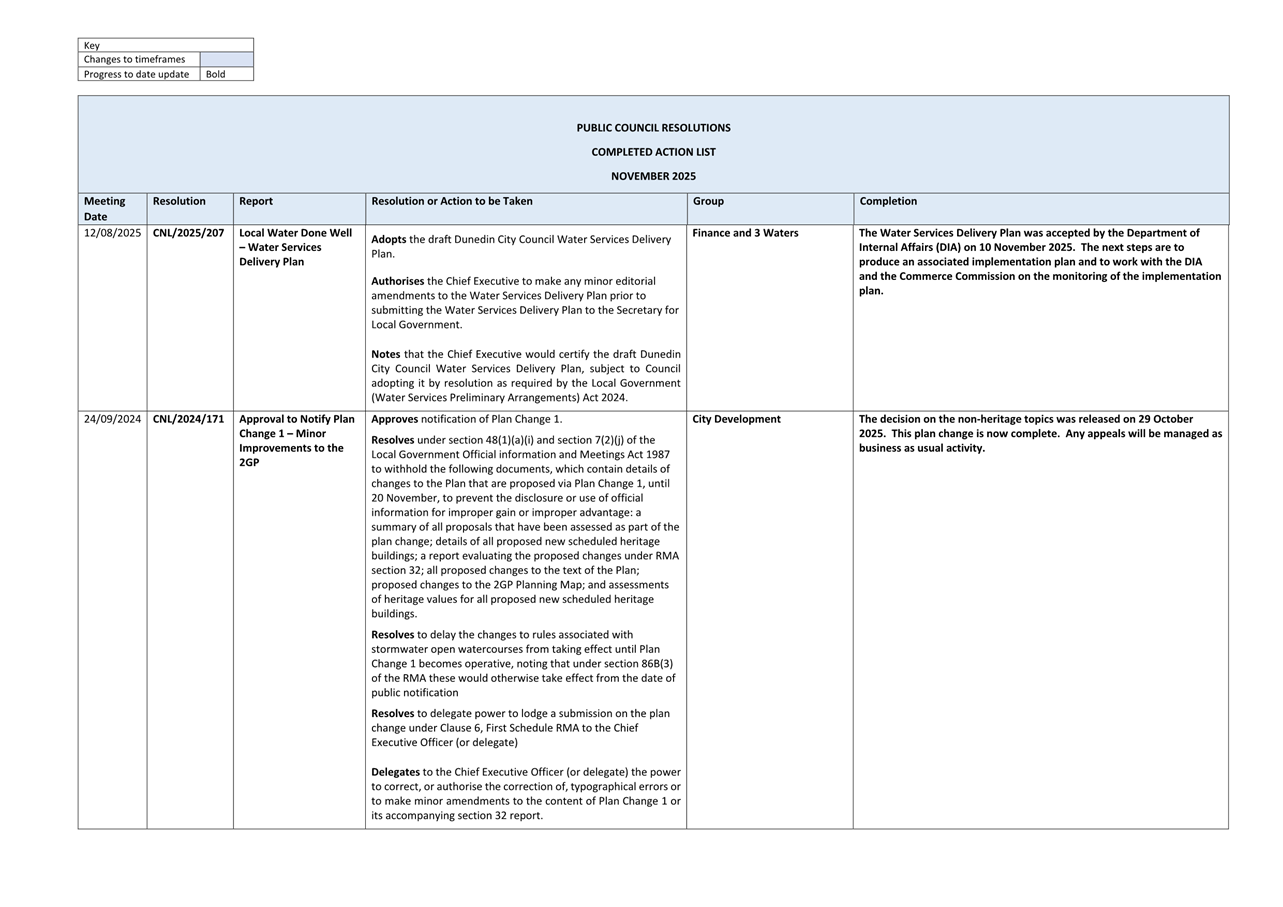
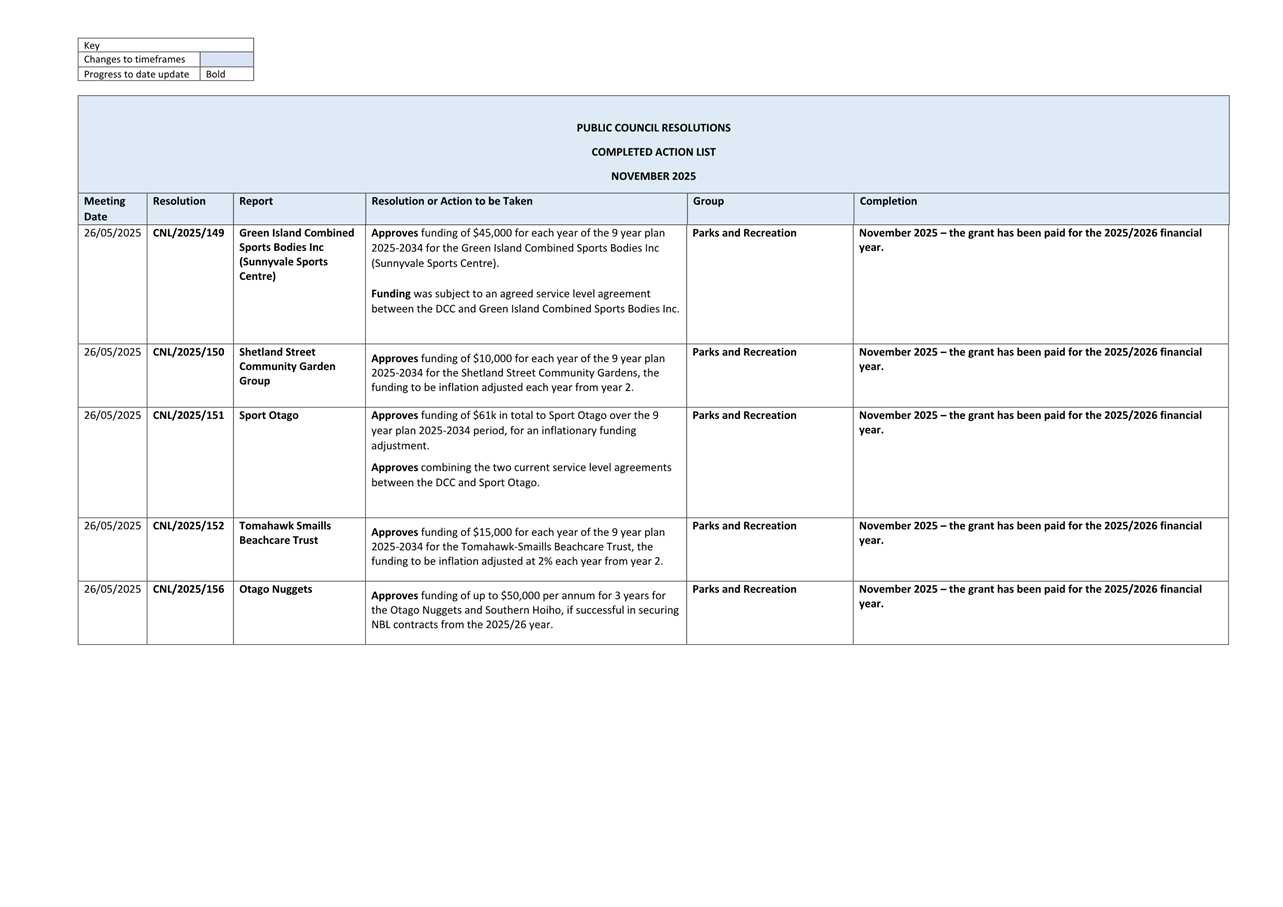
7 Actions
From Resolutions of Council Meetings 16
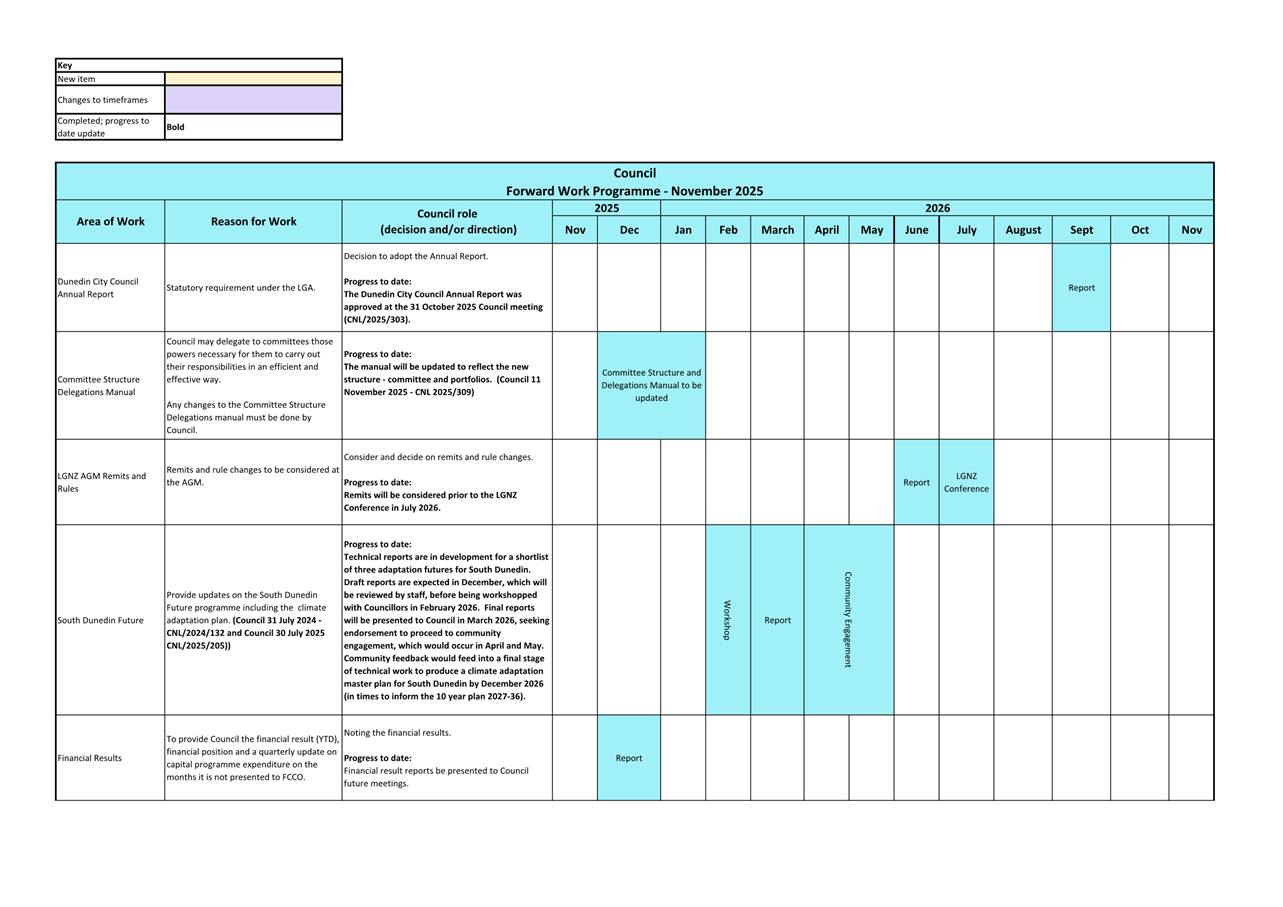
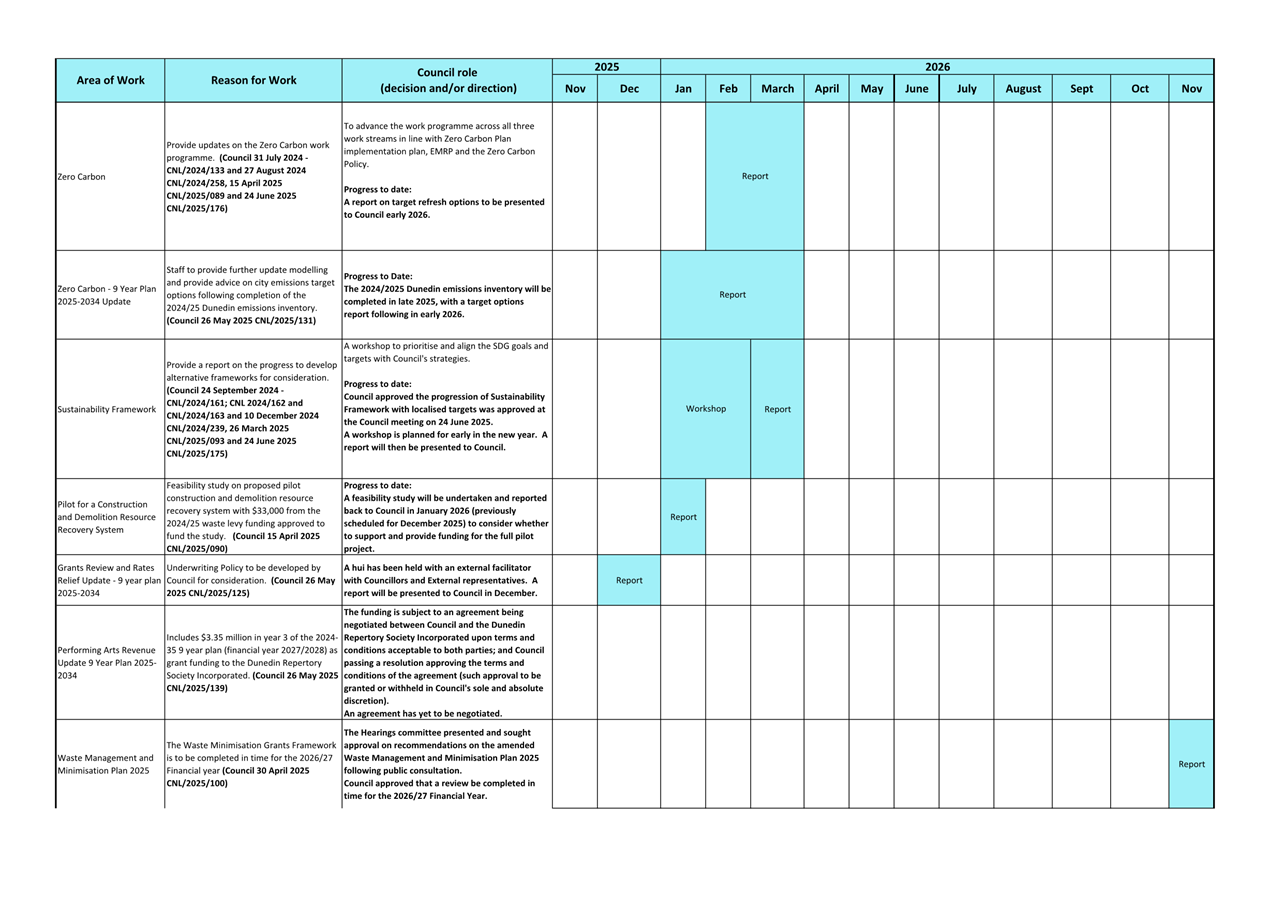
8 Council
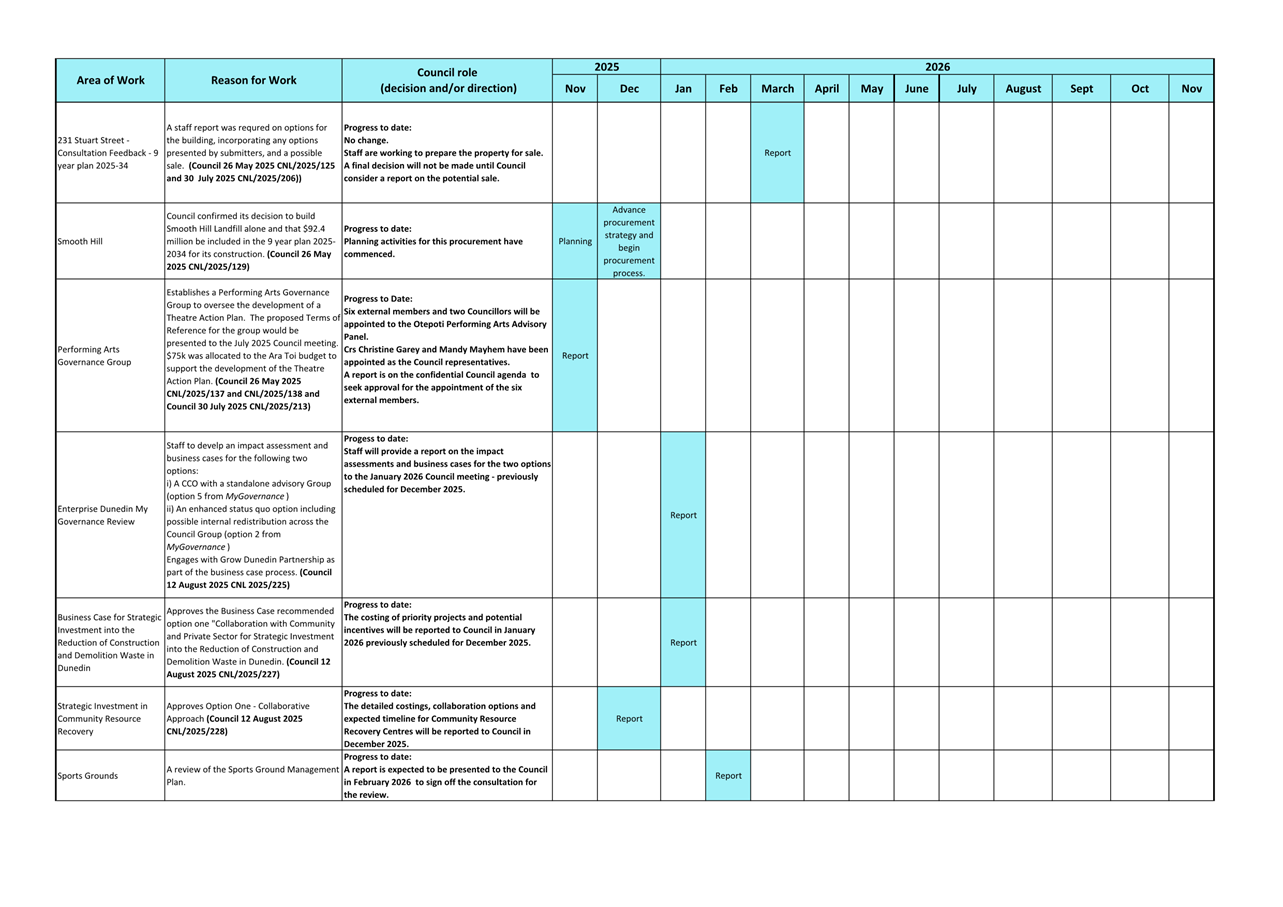
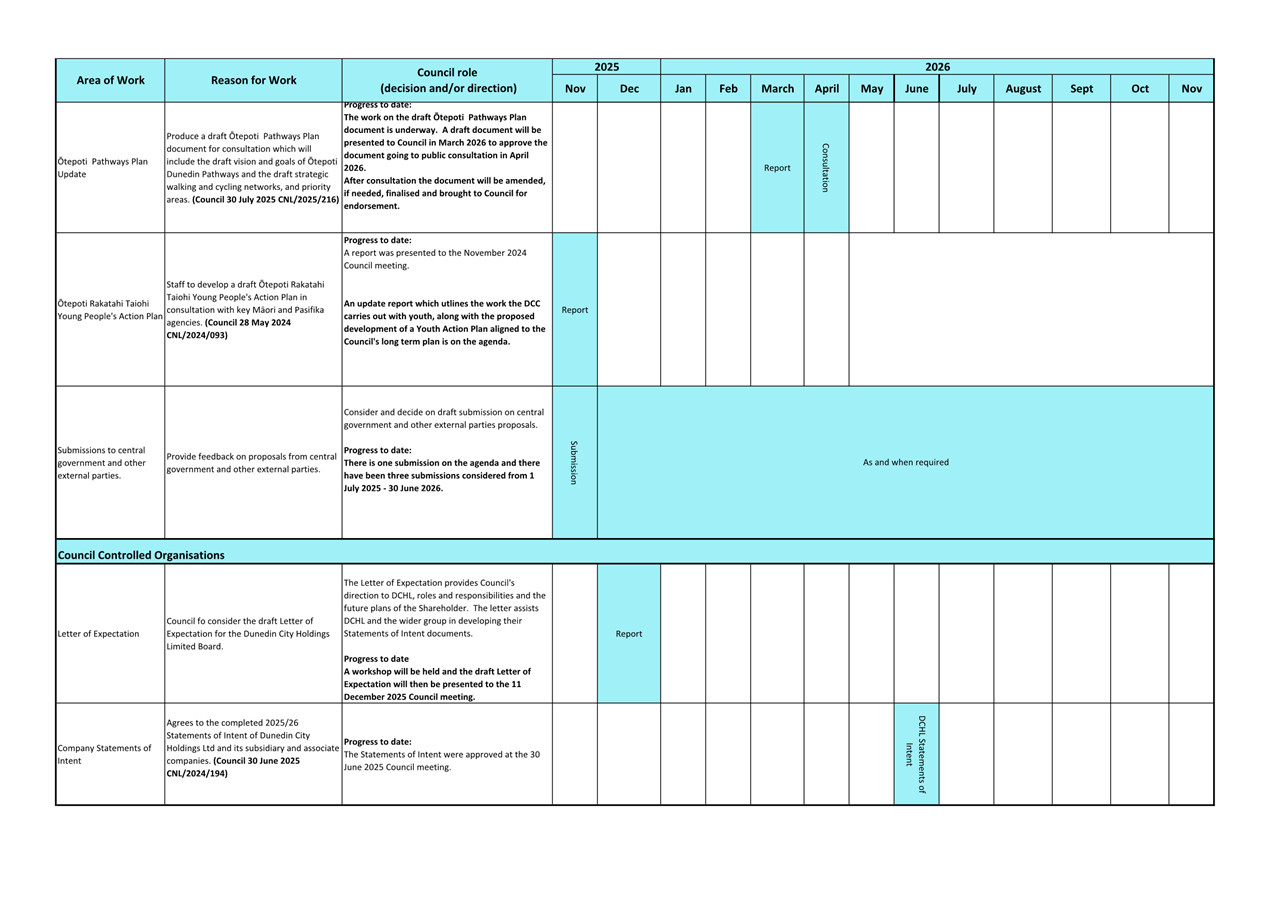
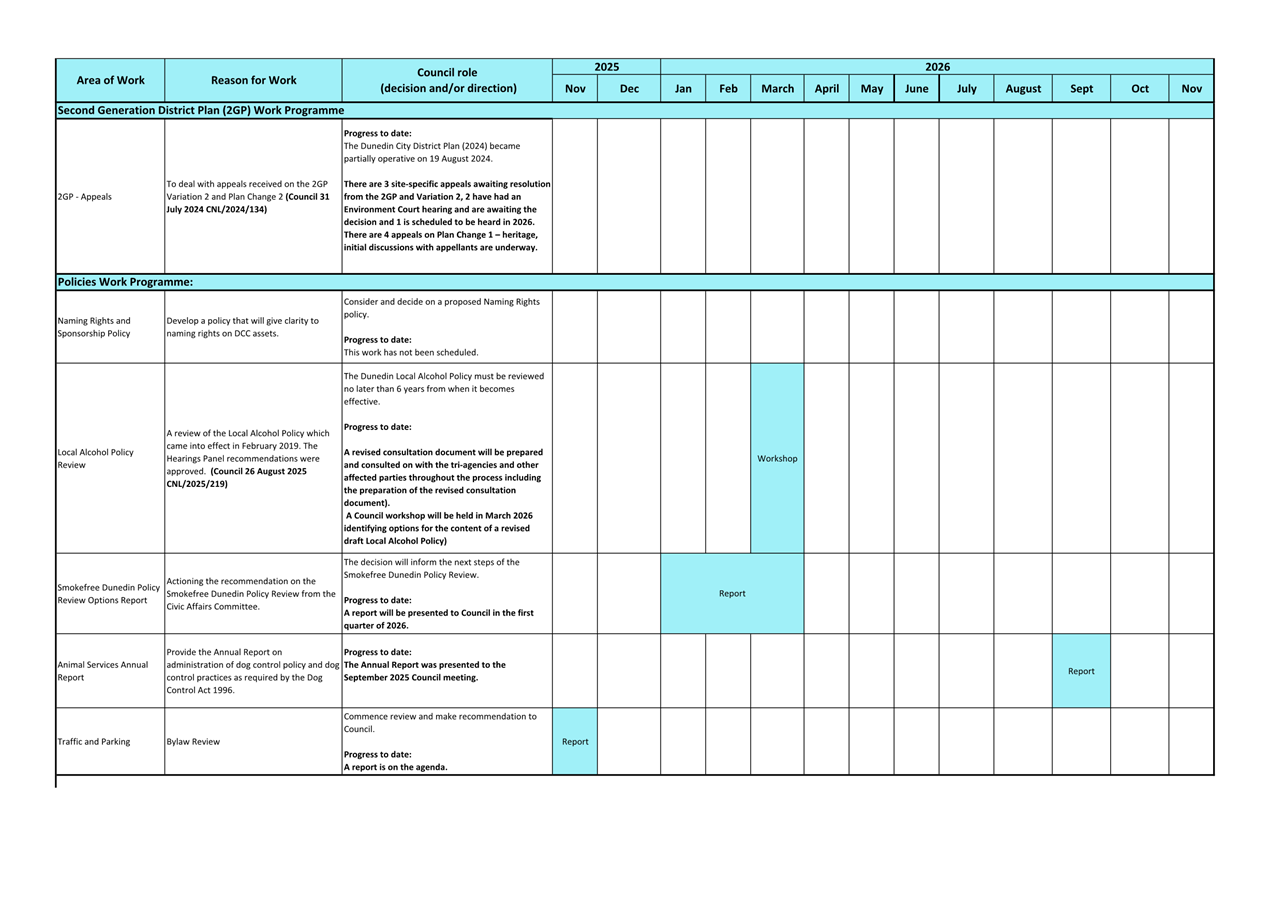
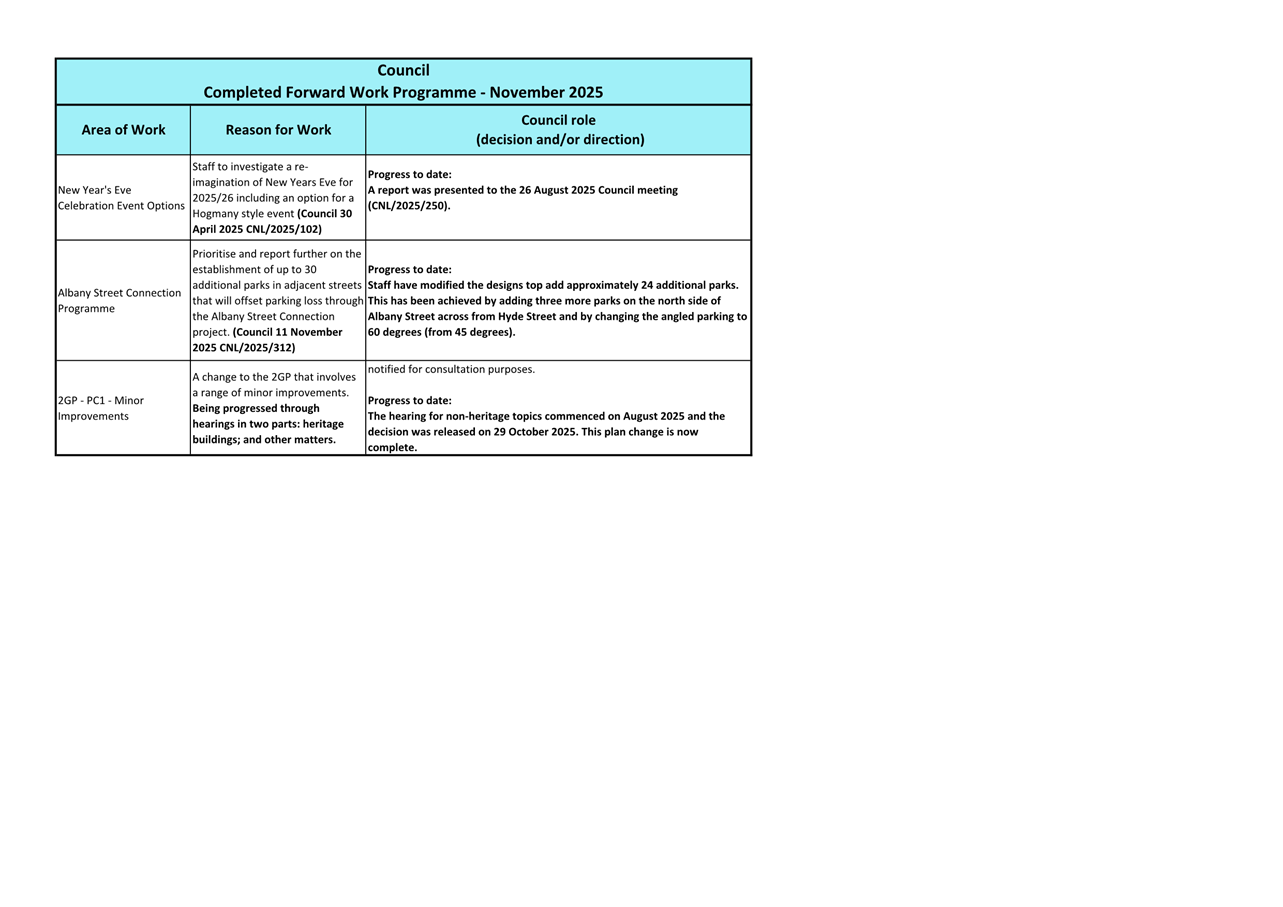
Forward Work Programme 27
9 Amendment
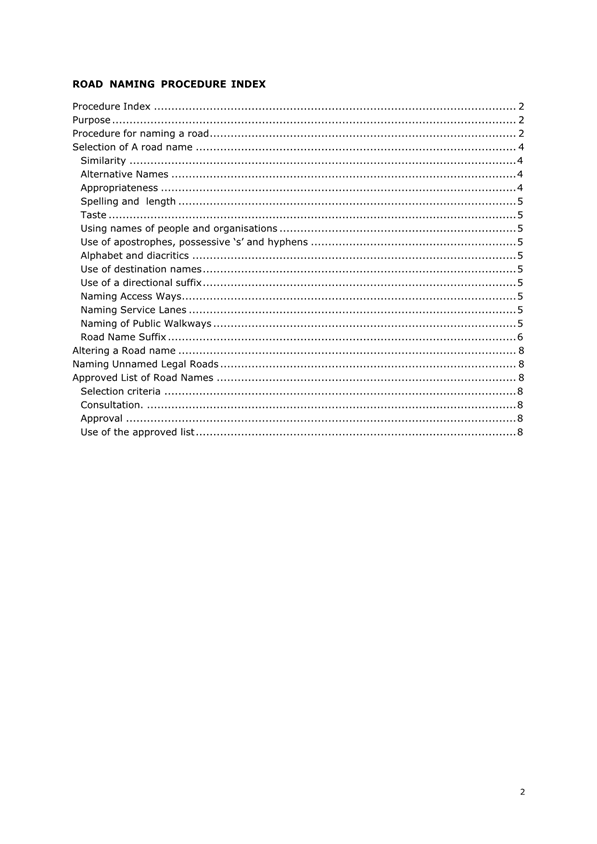
to Road Naming Policy 35
10 Traffic
and Parking Bylaw Review Update 56
11 Taieri
Mouth Road Speed Limit Change Consultation 74
12 Resolution
to Stop Part of Glengyle Street, Vauxhall 80
13 Lower
Value Grants - process amendment 90
14 Housing
Outreach Service Proposal 98
15 Ōtepoti
Youth Action Plan (ŌYP) – update 133
16 Residents'
Opinion Survey Quarterly Update: July - September 2025 169
17 New
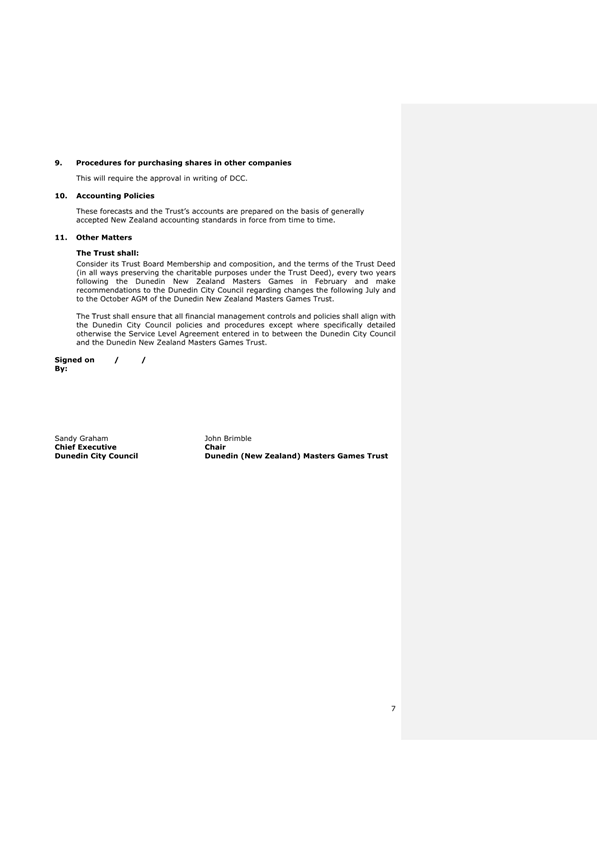
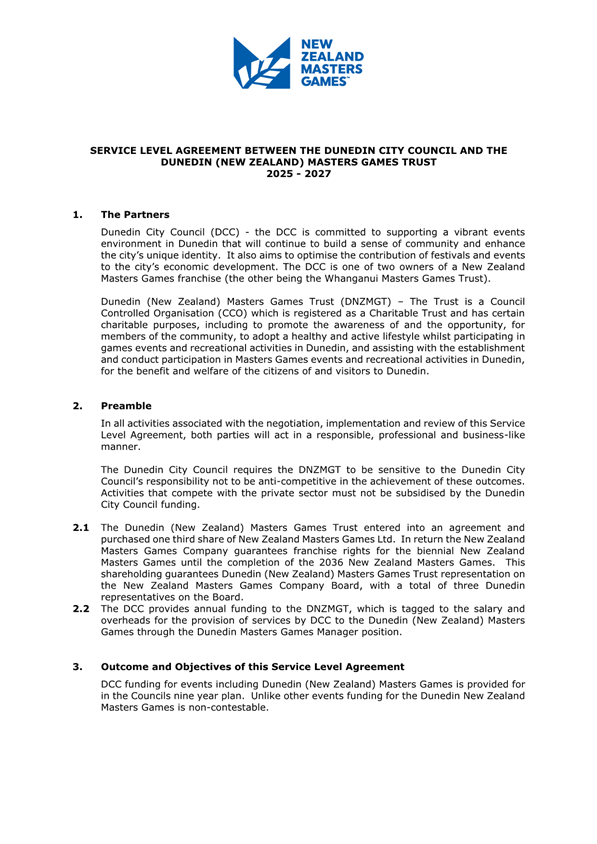
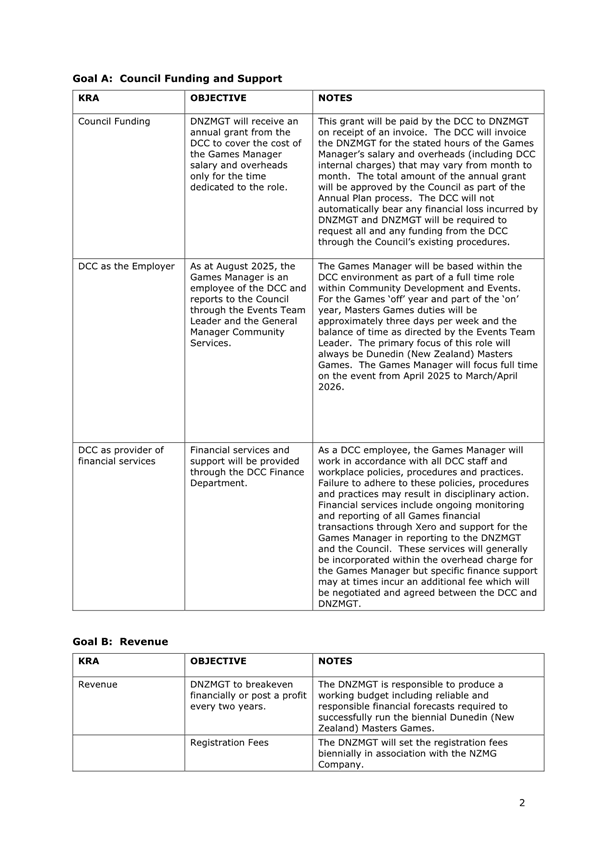
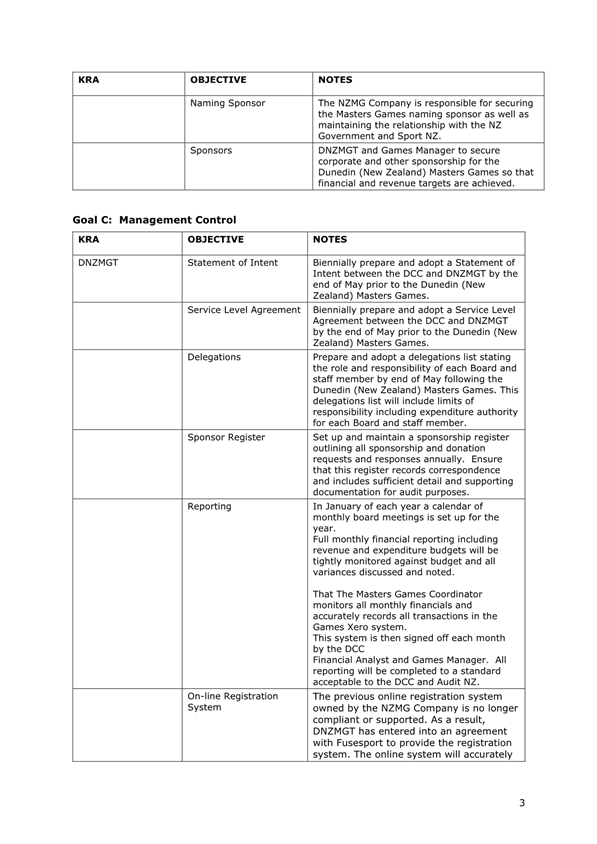
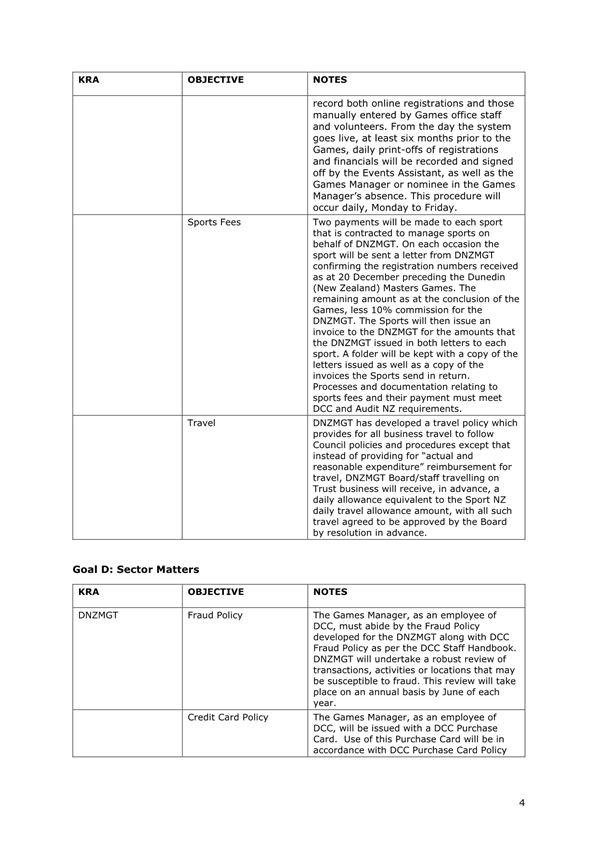
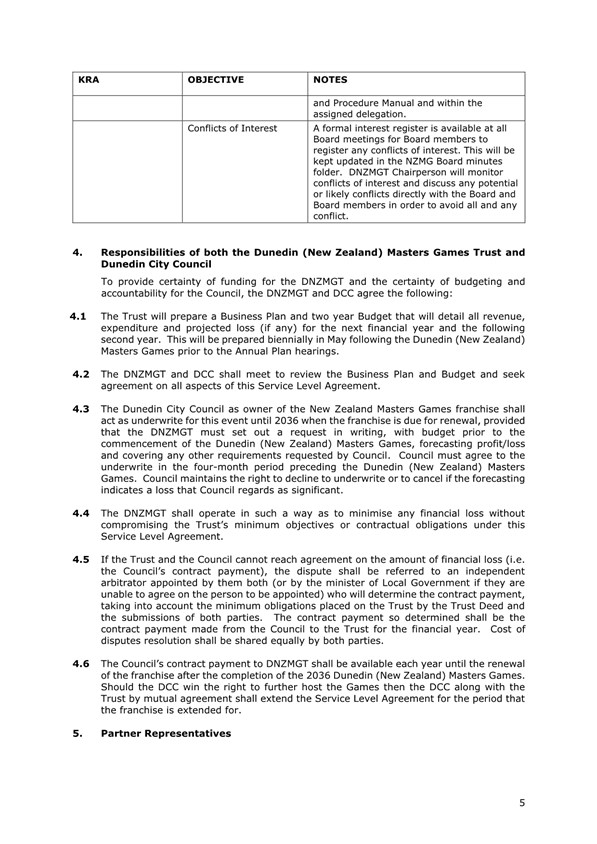
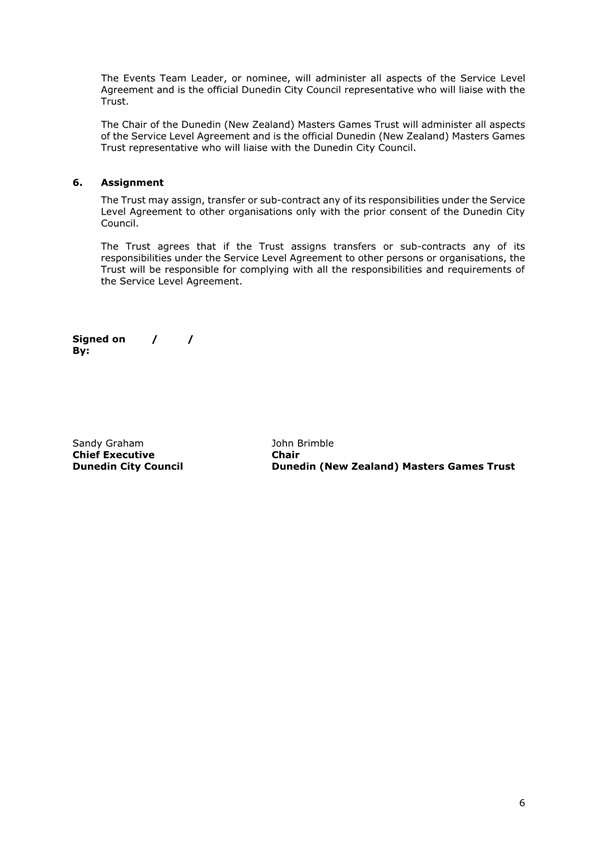
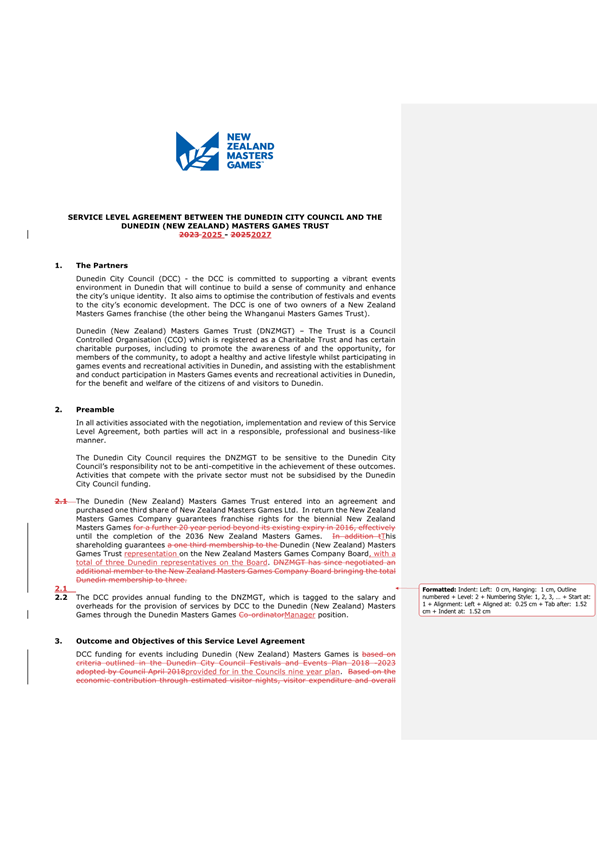
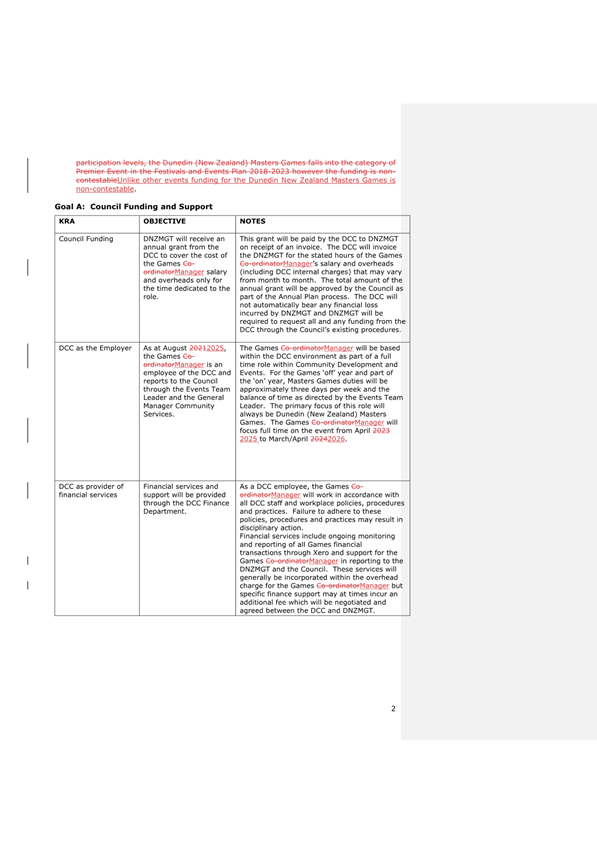
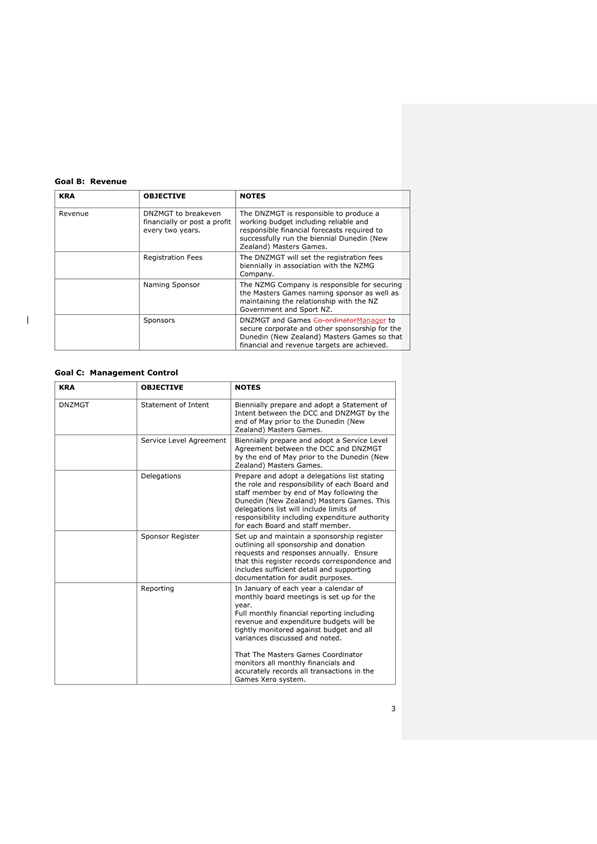
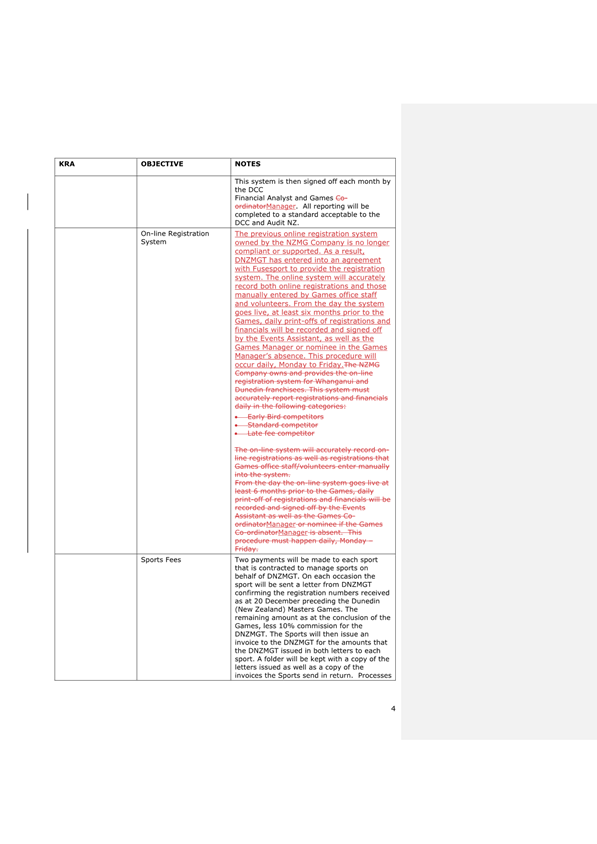
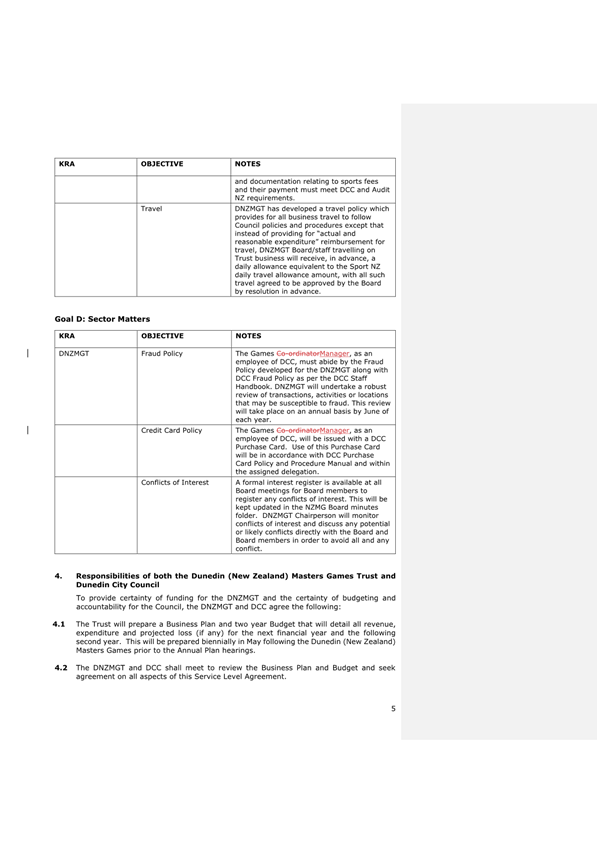
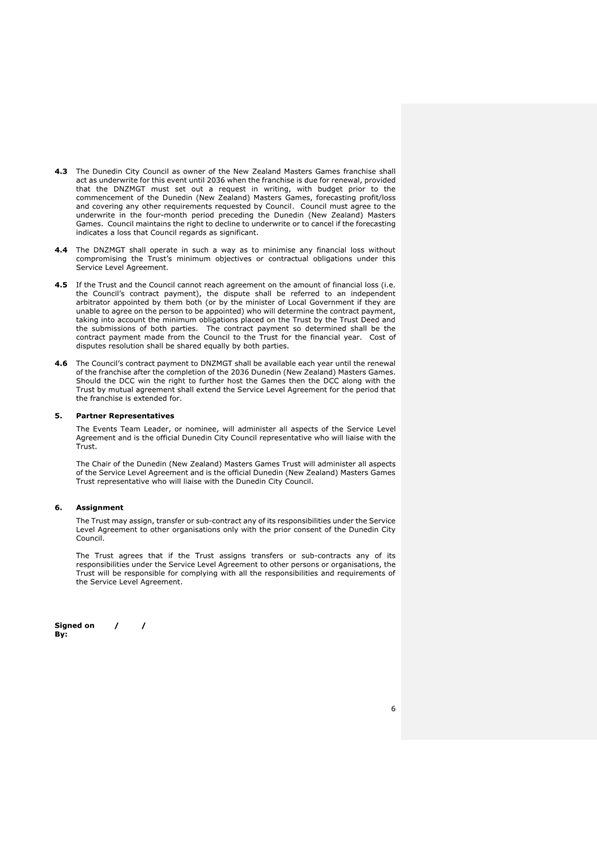
Zealand Masters Games Statement of Intent and Service Level Agreement
2025
- 2027 179
18 2026
New Zealand Masters Games Operational and Financial Update 212
19 Dunedin
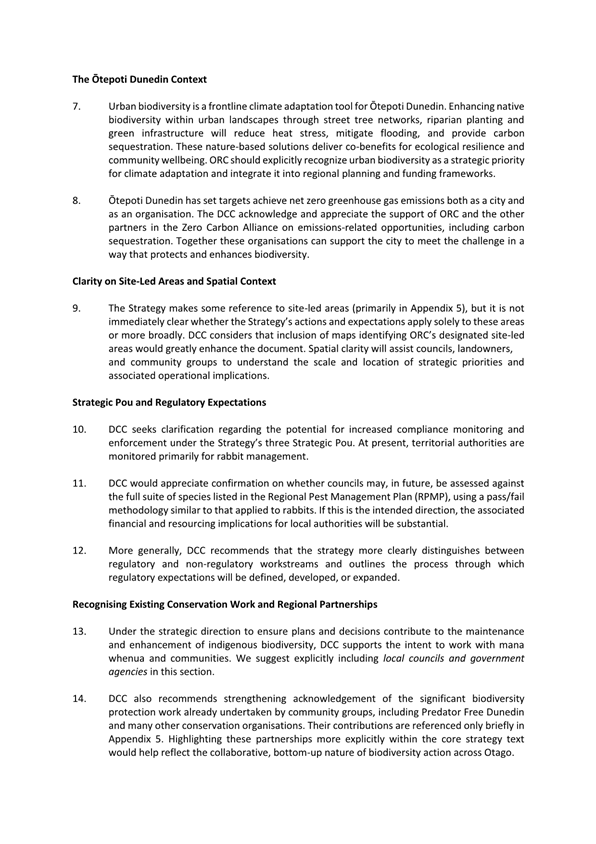
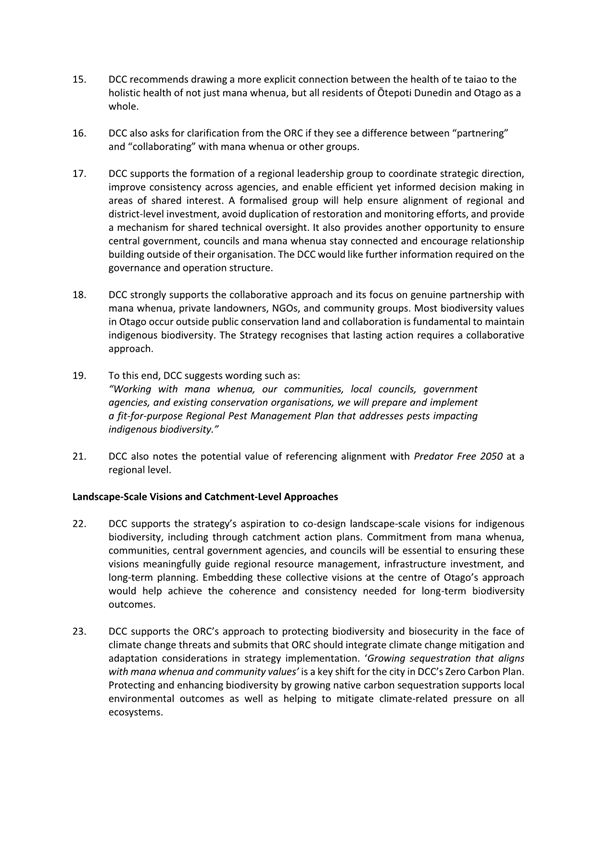
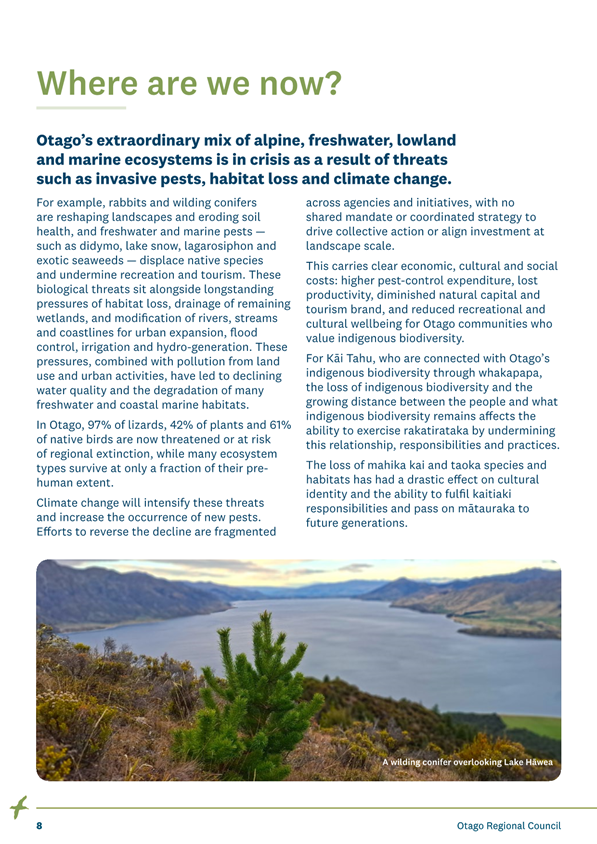
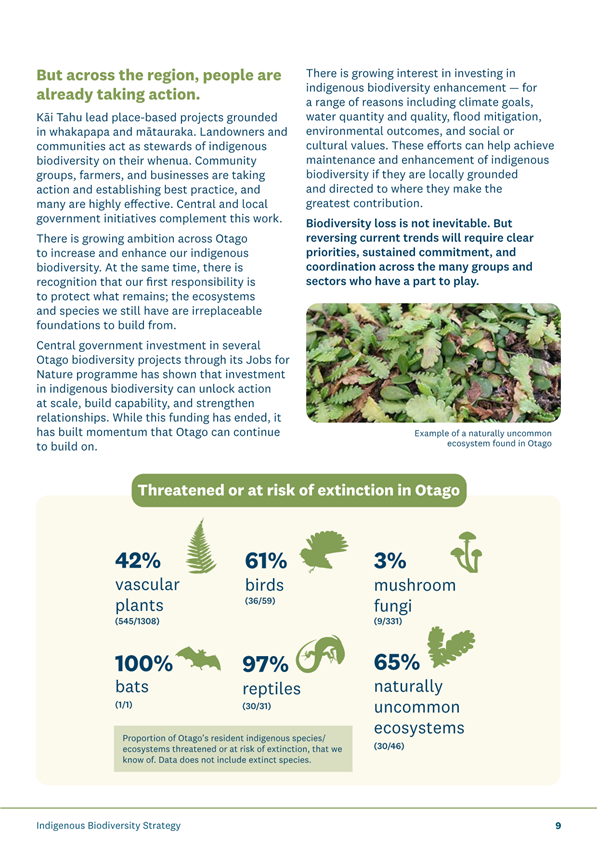
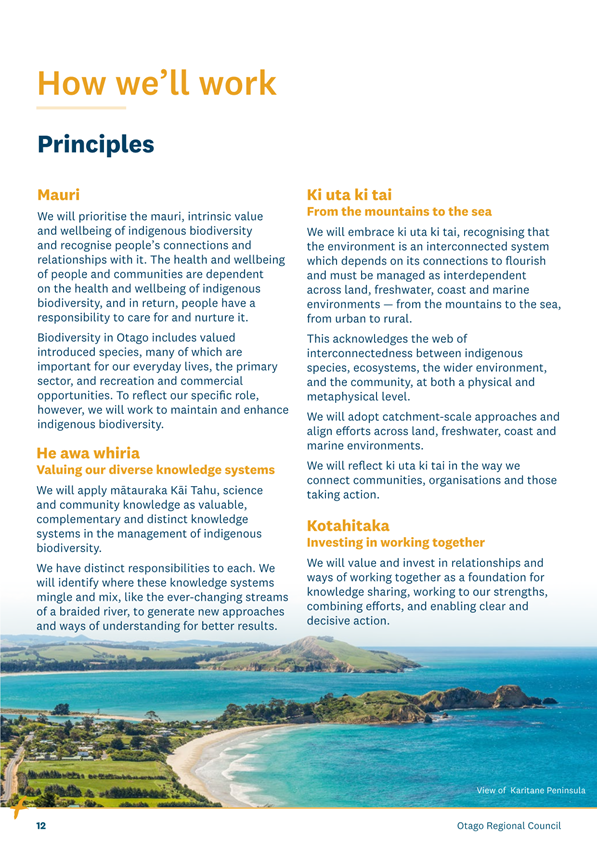
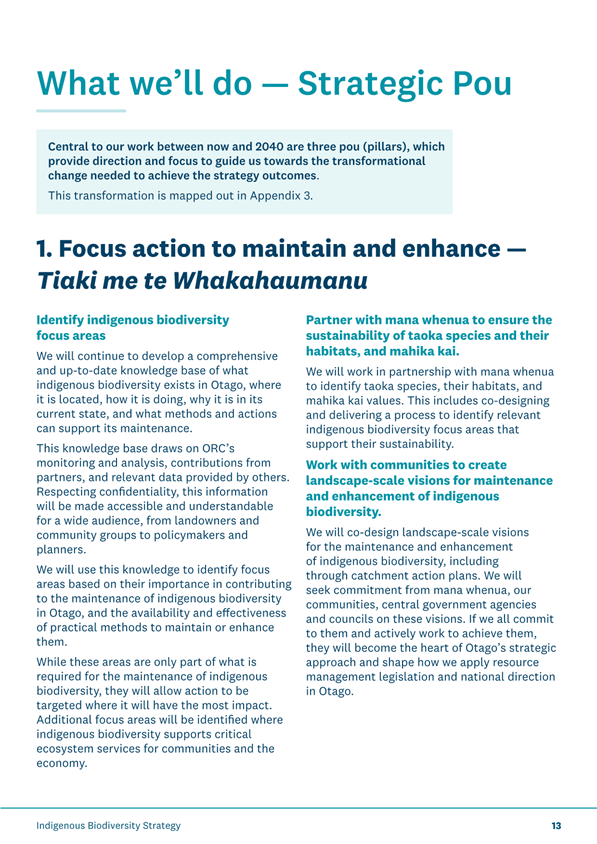
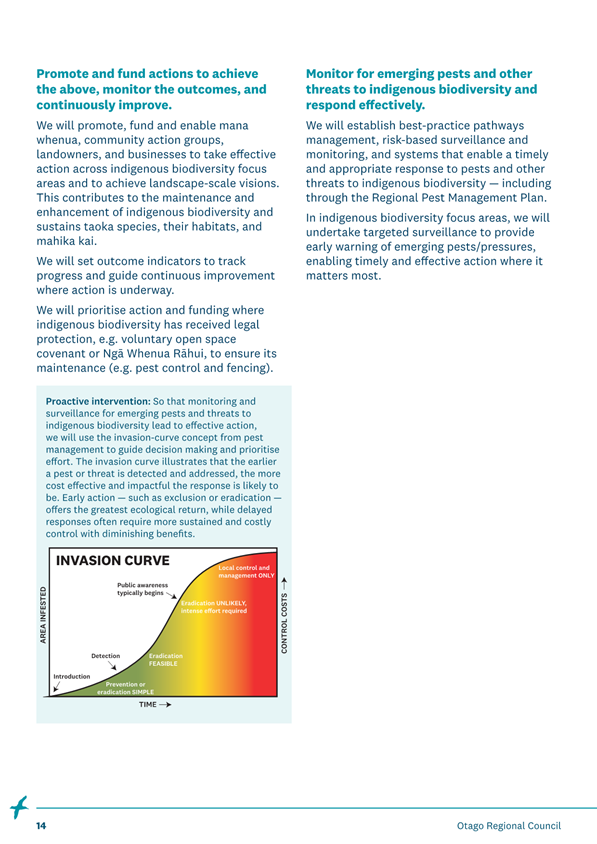
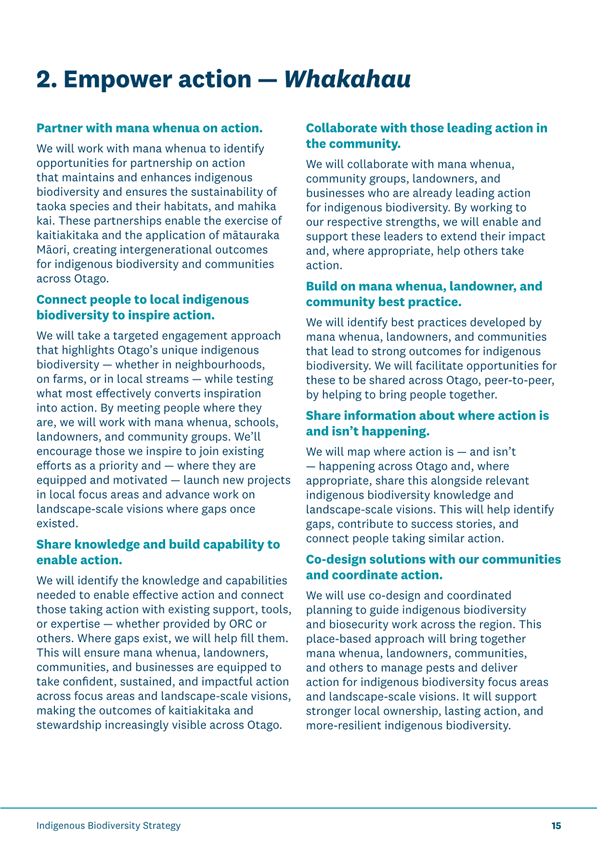
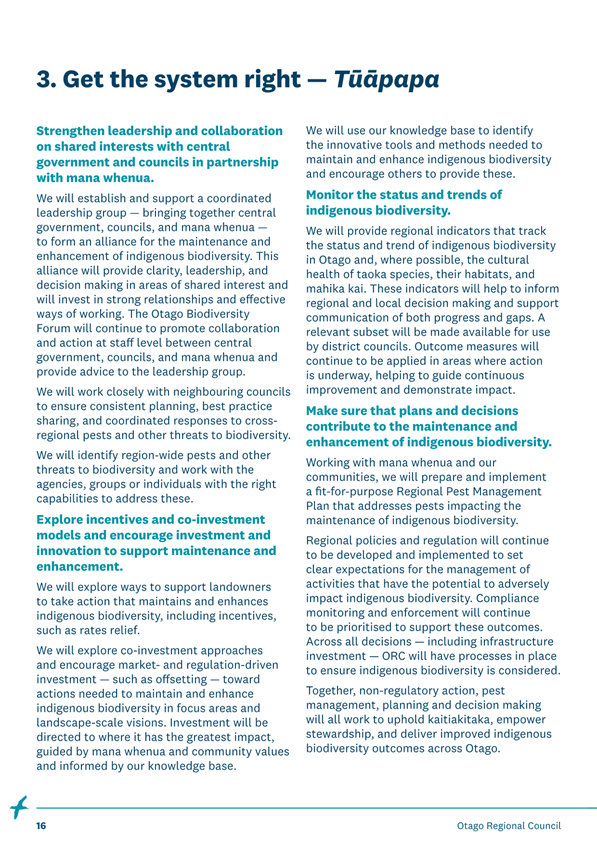
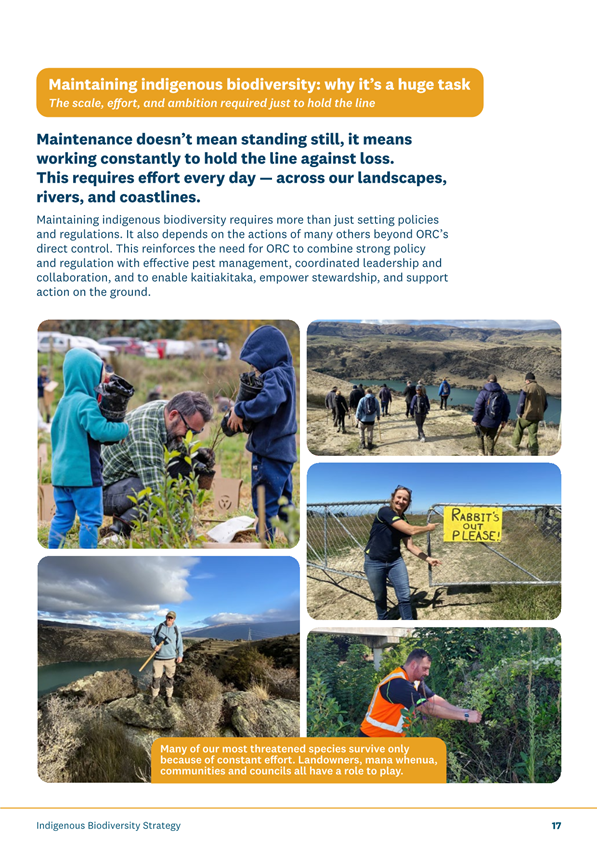
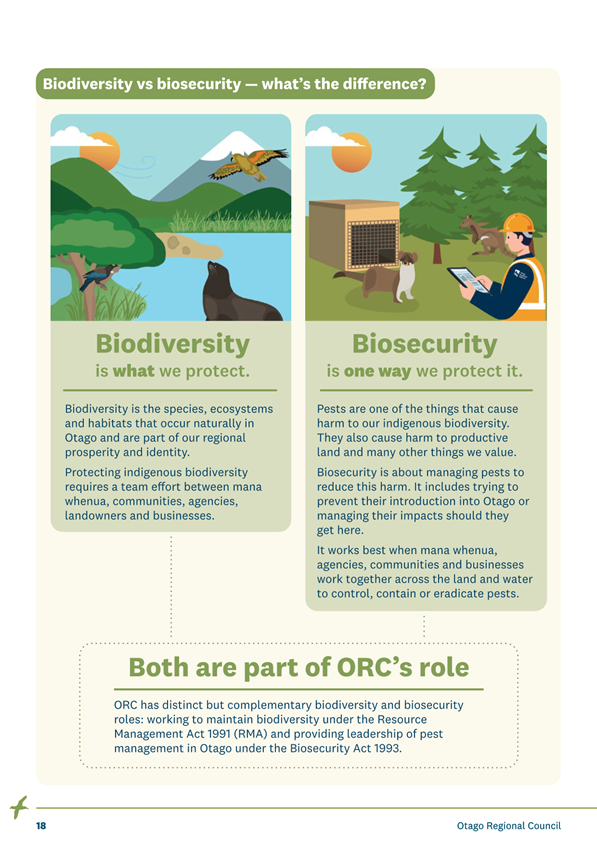
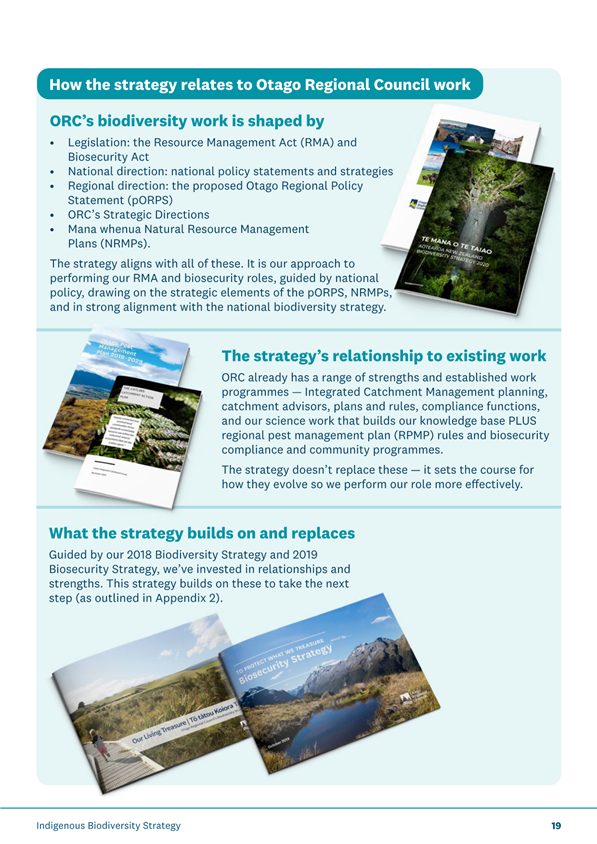
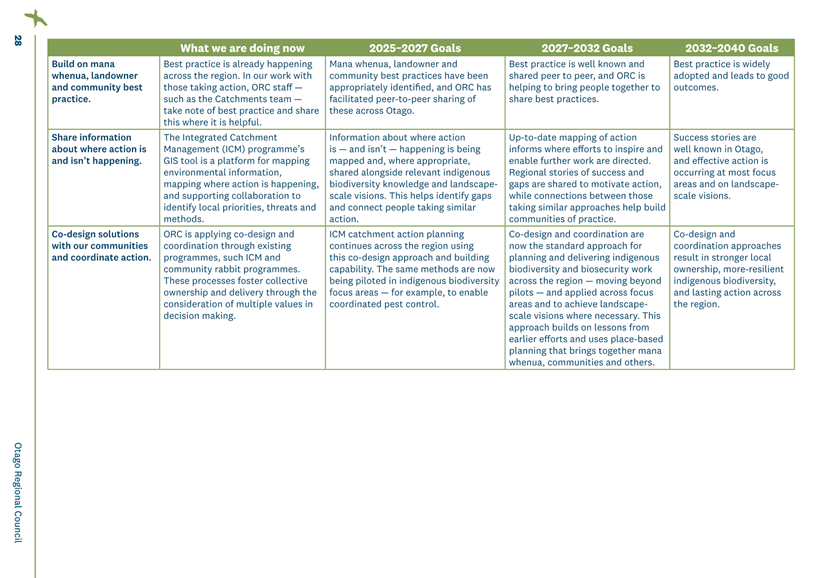
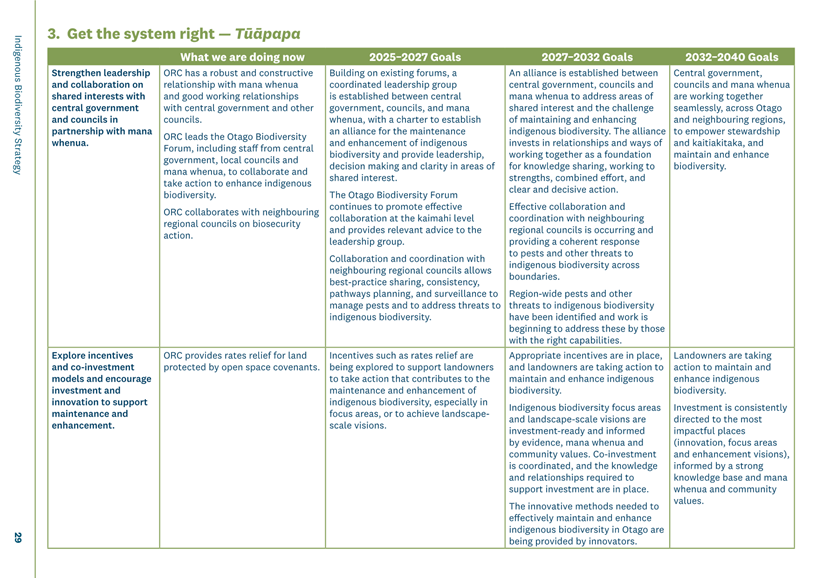
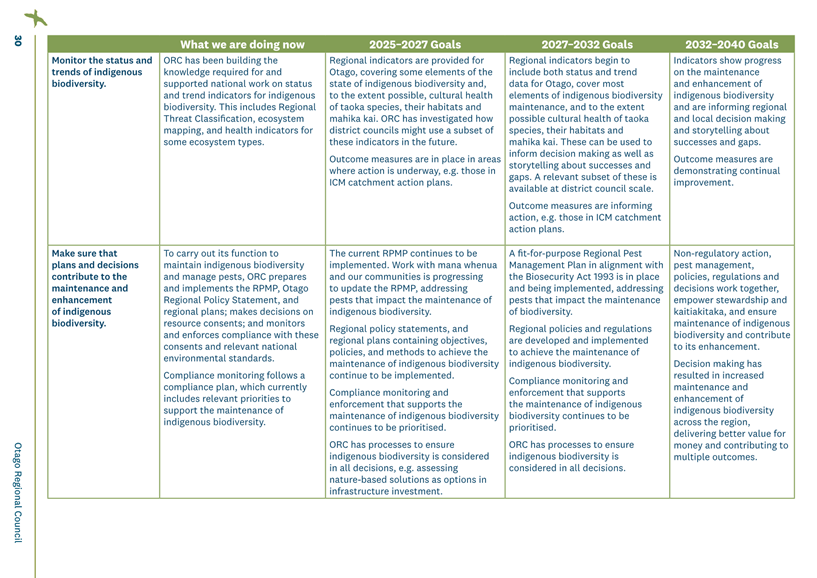
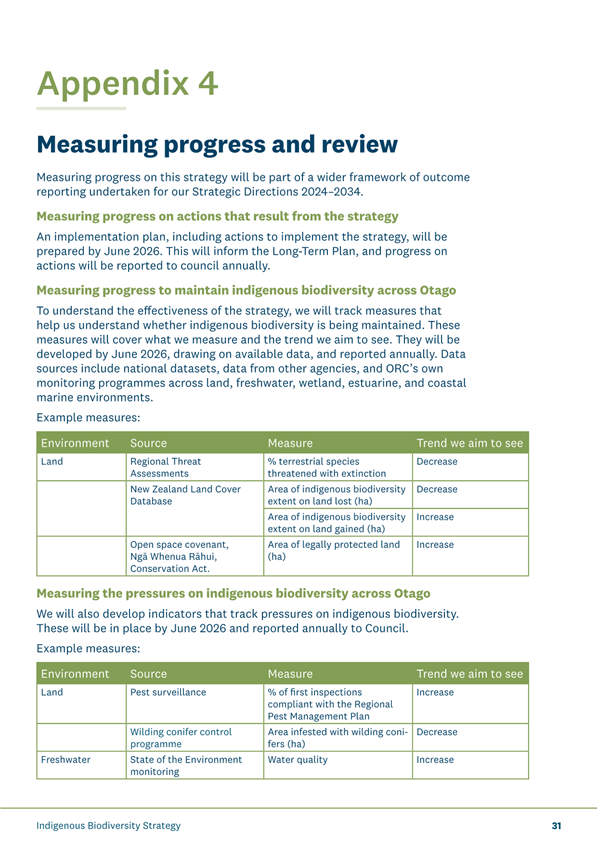
City Council submission on the Otago Regional Council Indigenous Biodiversity
Strategy 2025 219
20 DCC
Professional Theatre Fund Grants 271
Resolution to Exclude the Public 278
|

|
Council
27 November 2025
|
Confirmation
of Minutes
Ordinary
Council meeting - 11 November 2025
RECOMMENDATIONS
That the Council:
a) Confirms the public
part of the minutes of the Ordinary Council meeting held on 11 November 2025 as
a correct record.
Attachments
|
|
Title
|
Page
|
|
A⇩
|
Minutes of Ordinary
Council meeting held on 11 November 2025
|
6
|
|

|
Council
27 November 2025
|

Council
MINUTES
Minutes of an ordinary
meeting of the Dunedin City Council held in the Council Chamber, Dunedin Public
Art Gallery, the Octagon, Dunedin on Tuesday 11 November 2025, commencing at
1.00 pm
PRESENT
|
Mayor
|
Mayor Sophie Barker
|
|
|
Deputy Mayor
|
Cr Cherry Lucas
|
|
|
Members
|
Cr John Chambers
|
Cr Christine Garey
|
|
|
Cr Doug Hall
|
Cr Marie Laufiso
|
|
|
Cr Russell Lund
|
Cr Mandy Mayhem via
zoom audio visual link
|
|
|
Cr Benedict Ong
|
Cr Jules Radich
|
|
|
Cr Andrew Simms
|
Cr Mickey Treadwell
|
|
|
Cr Lee Vandervis
|
Cr Steve Walker
|
|
|
Cr Brent Weatherall
|
|
|
IN ATTENDANCE
|
Sandy Graham (Chief Executive), Carolyn Allan (Chief
Financial Officer), David Ward (General Manager 3 Waters, Property and Urban
Development), Nicola Morand (Manahautū - General Manager Community and
Strategy), Paul Henderson (General Manager Corporate and Regulatory
Services), Mike Costelloe (General Manager, Arts, Culture and Economic
Development) Jeanine Benson (Group Manager Transport), Simon Speirs (Team
Leader Regulation Management), Serge Kolman (Procurement and Contracts
Manager), Karilyn Canton (Chief In-House Legal Counsel) and Michael Garbett
(Partner, Anderson Lloyd), Richard Davey (Treasurer, Dunedin City Treasury
Ltd) and Financial Services Manager (Hayden McAuliffe and Jackie Harrison
(Manager Governance)
|
Governance Support Officer Lynne
Adamson
1 Opening
Rev Margaret Garland (Minister, Knox
Presbyterian Church) opened the meeting with a prayer.
2 Public
Forum
There were four speakers in
public forum.
2.1 Liam
White – Albany Street Connection Project
Liam
White, President – OUSA spoke on their behalf on the proposed changes to
Albany Street. He advised that the core issue for Albany Street was
safety and noted that there were
more than 8,000 movements per day and any further delays meant another year of avoidable
risk.
Mr
White responded to questions.
2.2 Mary
O’Brien – Albany Street Connection Project
Mary O’Brien, Southern
Region Access Coordinator – CCS Disability Action spoke on the importance
the connections that the Albany Street upgrade would create for the whole
community. She spoke of the importance of safety and commented that CCS
Disability Action supported option one in the report – to proceed with
the Albany Street Connection Project.
Ms O’Brien responded to questions.
2.3 Stephen
Macknight – Albany Street Connection Project
Stephen
Macknight spoke on an alternative to the proposed Albany Street Connection
Project. He commented that he did not believe that the proposed project
was the ideal route and the reasons why Council should consider a the
alternative route.
Mr
Macknight responded to questions.
2.4 Gordon
Roy – Albany Street Connection Project
Gordon
Roy, Associate Director, Planning and Development spoke on behalf of the University
of Otago on Albany Street. He commented that this was the fourth time he had
spoken on behalf of the University in support of the current proposed project.
Mr
Roy formally reinstated the University’s stance regarding the Albany
Street Connection Project and commented
that a survey undertaken had shown about 8,000 pedestrian movements per
day. He urged Council to consider the safety aspect and proceed
with the work.
Mr
Roy responded to questions.
|
3 Apologies
|
|
|
There were no apologies.
|
|
4 Confirmation
of agenda
|
|
|
Mr Michael Garbett (Anderson Lloyd) responded to questions
on the delay of some agenda items.
|
|
|
Moved (Mayor Sophie Barker/Cr
Cherry Lucas):
That the Council:
a) Confirms
the agenda with the following alteration:
That Item 12 – Approach
to Governance Arrangements for the Triennium be taken after Item 6 –
Confirmation of Minutes; and
Item 13 Elected Member
Remuneration for the 2025-2028 Triennium and Item 14 – Albany
Connection Project Update be taken after Item 7 – Councillor
Appointments to Outside Organisations.
Motion
carried (CNL/2025/306) with Crs Vandervis and Lund recording their votes
against
|
5 Declarations
of interest
Members were
reminded of the need to stand aside from decision-making when a conflict arose
between their role as an elected representative and any private or other external
interest they might have.
|
|
Moved (Mayor Sophie Barker/Cr Cherry Lucas):
That the Council:
a) Notes the Elected Members' Interest Register; and
b) Confirms the proposed management plan for
Elected Members' Interests.
c) Notes the proposed management plan for the Executive
Leadership Teams’ Interests.
Motion
carried (CNL/2025/307)
|
6 Confirmation
of Minutes
|
6.1 INAUGURAL
Council meeting - 31 October 2025
|
|
|
Moved (Mayor Sophie Barker/Cr Cherry Lucas):
That the Council:
a) Confirms the minutes of the Inaugural Council
meeting held on 31 October 2025 as a correct record.
Motion
carried (CNL/2025/308)
|
Reports
|
12 Approach
to Governance Arrangements for the Triennium.
|
|
|
A report from Corporate
Policy advised that the Mayor had exercised her discretionary power under
Section 41A(3) of the Local Government Act 2002 to establish the
committees of Council.
The report proposed a new
governance approach moved away from the traditional committee structure used
in previous trienniums. The new approach introduced a portfolio model with
Lead and Deputy Councillor roles, and a revised committee structure designed
to strengthen strategic oversight and improve alignment with Council
priorities.
|
|
|
The Chief Executive (Sandy Graham) provided information on
the report. Mayor Sophie then spoke to the report and responded to
questions.
|
|
Moved (Mayor Sophie/Cr Steve Walker):
That the Council:
Adjourns
the meeting.
Motion
carried
The meeting adjourned at 2.15 pm and reconvened at 2.26
pm.
The discussion on the Approach to Governance Arrangements
for the Triennium continued.
Moved (Mayor Sophie/Cr Cherry Lucas):
That the Council:
Adjourns
the meeting until 2.40 pm.
Motion
carried
The meeting adjourned at 2.37 pm and reconvened at 2.40
pm.
|
|
|
Moved (Mayor Sophie/Cr Cherry
Lucas):
That the Council:
a) Notes
the proposed governance structure for the 2025-2028 triennium, including
the introduction of a portfolio model with Lead and Deputy Councillor roles.
b) Notes
the Terms of Reference Portfolio document is adopted with the following
changes:
i) Amend
Point 9 to begin – Lead Portfolio Councillors or their Deputy
will….
ii) Delete
Clause 10 noting that an external Communication Protocol will be bought back
to Council for Consideration before December.
c) Notes
that the Economic Development portfolio would be co-chaired by Cr Andrew
Simms.
d) Establishes
the following standing committees for the 2025-2028 triennium:
i. Policy
and Planning Committee (Committee of the Whole)
ii. Finance
and Performance Committee (Committee of the Whole)
iii. Te
Pae Māori
iv. Audit,
Risk, and Assurance Committee
v. Chief
Executive Performance and Employment Committee
vi. Hearings
Committee
e) Notes
that the governance arrangements would be reviewed after one year of
operation.
f) Notes
that hearings panels would be established as required during the
triennium.
g) Authorises
the Chief Executive to make minor editorial changes.
|
|
Moved (Mayor Sophie/Cr Cherry Lucas):
That the Council:
Adjourns
the meeting.
Motion
carried
The meeting adjourned at 2.50 pm and reconvened at 2.51
pm.
The discussion continued on the portfolios.
|
|
|
An amendment was moved and approved with the leave of the
meeting:
To add:
That the Council
d) Notes
that Cr Lee Vandervis has declined all Deputy roles.
|
|
Moved (Mayor Sophie/Cr Steve Walker):
That the Council:
Adjourns
the meeting for 5 minutes.
Motion
carried
The meeting adjourned at 3.12 pm and reconvened at 3.20
pm.
|
|
|
The substantive motion was then put
(Moved: Mayor Sophie Barker/Cr Cherry Lucas):
That the Council:
a) Notes
the proposed governance structure for the 2025-2028 triennium, including the
introduction of a portfolio model with Lead and Deputy Councillor roles.
b) Notes
the Terms of Reference Portfolio document is adopted with the following changes:
i) Amend
Point 9 to begin – Lead Portfolio Councillors or their Deputies
will….
ii) Delete Clause 10 noting
that an external Communication Protocol will be bought back to Council for
Consideration before December.
c) Notes
that the Economic Development portfolio would be co-chaired by Cr Andrew Simms.
d) Notes
that Cr Vandervis has declined all Deputy roles.
e) Establishes
the following standing committees for the 2025-2028 triennium:
i. Policy
and Planning Committee (Committee of the Whole)
ii. Finance
and Performance Committee (Committee of the Whole)
iii. Te
Pae Māori
iv. Audit,
Risk, and Assurance Committee
v. Chief
Executive Performance and Employment Committee
vi. Hearings
Committee
h) Notes
that the governance arrangements would be reviewed after one year of
operation.
i) Notes
that hearings panels would be established as required during the
triennium.
j) Authorises the Chief Executive to make minor
editorial changes.
Division
The
Council voted by division
For: Crs
John Chambers, Christine Garey, Doug Hall, Marie Laufiso, Cherry Lucas, Mandy
Mayhem, Benedict Ong, Jules Radich, Andrew Simms, Mickey Treadwell, Steve
Walker, Brent Weatherall and Mayor Sophie Barker (13).
Against: Crs
Russell Lund and Lee Vandervis (2).
Abstained: Nil
The division was declared CARRIED by 13 votes to 2
Motion carried
(CNL/2025/309)
|
|
7 Councillor
Appointments to Outside Organisations
|
|
|
A report from Civic noted
that there were a number of organisations throughout the city which the
Council was required or able to appoint representatives to under the terms of
those organisations’ constitutions. The report sought approval
for the recommendations on Councillor appointments to those organisations.
|
|
|
Mayor Sophie spoke to the report and responded to
questions.
|
|
|
Moved (Mayor Sophie Barker/Cr
Cherry Lucas):
That the Council:
a) Approves the Councillor appointments to outside
organisations.
Motion carried (CNL/2025/310)
|
|
13 Elected
Member Remuneration for the 2025 - 2028 Triennium
|
|
|
A report from Civic noted
that the Local Government Act 2002 (LGA) gave the Remuneration Authority (the
Authority) the responsibility for setting remuneration for local government
elected members.
The Authority allocated a
base pay for each councillor, along with a pool for remunerating additional
responsibilities, to a system of allocating a governance pool to each
council. The pool provided the total amount that could be paid in
remuneration to councillors, excluding the Mayor, whose remuneration had been
determined directly by the Authority. This change took effect following
the election.
The purpose of this paper was
to give consideration to the allocation of the pool to remunerate
councillors, and to update the current Rules for Recovery of Expenses.
|
|
|
Mayor Sophie spoke to the report and responded to
questions.
The Chief Executive (Sandy Graham) explained how the rates
of remuneration had been set, spoke to the report and responded to questions.
|
|
|
Moved (Mayor Sophie Barker/Cr Steve Walker):
That the Council:
a) Approves annual remuneration of $145,008 for the
Deputy Mayor.
b) Approves annual remuneration of $100,577 for
Councillors.
c) Approves
annual remuneration of $84,496 for Councillors with no additional
responsibilities.
d) Notes the Rules for Recovery of Expenses.
e) Notes the proposed remuneration levels and Rules for the
Recovery of Expenses will be forwarded to the Remuneration Authority for
approval.
Motion
carried (CNL/2025/311) with Cr Vandervis recording his vote against
|
Moved (Mayor Sophie/Cr Marie Laufiso):
That the Council:
Adjourns
the meeting for 12 minutes.
Motion
carried
Withdraws the reports from the agenda noting they will be
the first item on the November agenda.
Defers
Item 8 – 2025 Annual Reports for the Dunedin City Holdings Ltd Group
The meeting adjourned at 3.33 pm and reconvened at 3.48 pm.
|
14 Albany
Street Connection Project Update
|
|
A report from the Executive Leadership
Team provided an update on the Albany Street Connection Project and sought
direction on next steps.
The report noted that the procurement
period for the construction of the Albany Street Connection Project had now
closed. There had been two responses received and both were over the
budget identified in the 9 year plan 2025-2034.
|
|
|
The Chief Executive (Sandy
Graham), Group Manager Transport (Jeanine Benson), Simon Speirs (Team Leader
Regulation Management), Procurement and Contracts Manager (Serge Kolman)
spoke to the report and responded to questions.
The Chief In-House Legal
Advisor (Karilyn Canton) and Partner, Anderson Lloyd (Michael Garbett)
responded to questions.
|
|
|
Cr Marie Laufiso left the meeting at 4.07 pm and returned
at 4.10 pm.
Cr Christine Garey left the meeting at 5.13 pm and
returned at 5.15 pm.
|
|
|
Moved (Cr
Christine Garey/Cr Steve Walker):
That the Council:
a) Decides
to proceed with the Albany Street Connection Project, with the aim of commencing
construction as soon as possible.
b) Approves
an overspend on the Albany Street Connection Project against line-item Central
City Cycle and Pedestrian Improvements.
c) Notes the
overspend will be managed within the Transport Team’s Total Capital
Expenditure budget (including renewals).
d) Delegates
to Council’s Chief Executive Officer the authority to award the tender
in respect of the Albany Street Connection Project.
e) Notes
that the reseal of Albany Street will be completed in conjunction with the
Albany Street Connection Project.
f) Confirms
Council’s decision of 23 September 2025 regarding parking and traffic
restrictions for the Albany Street Connection Project.
g) Directs staff
to prioritise and report further on the establishment of up to 30 additional
parks in adjacent streets that will offset parking loss through the
Albany Street Connection Project.
Division
The Council voted by division
For: Crs
John Chambers, Christine Garey, Doug Hall, Marie Laufiso, Mandy Mayhem,
Mickey Treadwell, Steve Walker and Mayor Sophie Barker (8).
Against: Crs
Cherry Lucas, Russell Lund, Benedict Ong, Jules Radich, Andrew Simms, Lee
Vandervis and Brent Weatherall (7).
Abstained: Nil
The division
was declared CARRIED by 8 votes to 7
Motion
carried (CNL/2025/312)
|
|
Crs Mandy Mayhem and Christine Garey left the meeting at
5.40 pm.
|
10 Waipori
Fund - Quarter ending 30 September 2025
|
|
|
A report from Dunedin City
Treasury Limited provided information on the results of the Waipori Fund for
the quarter ended 30 September 2025.
|
|
|
The Chief Financial Officer (Carolyn Allan) and Treasurer, Dunedin City Treasury Ltd (Richard Davey)
spoke to the report and responded to questions.
|
|
Cr Mickey Treadwell left the meeting at 5.49 pm and
returned at 5.51 pm.
|
|
|
Moved (Mayor Sophie Barker/Cr
Cherry Lucas):
That the Council:
a) Notes the report from Dunedin City Treasury Limited on the
Waipori Fund for the quarter ended 30 September 2025.
Motion
carried (CNL/2025/313)
|
|
9 Financial
Report - Period ended 30 September 2025
|
|
|
A report from Finance provided the financial results for the
period ended 30 September 2025 and the financial position as at that date.
|
|
|
The Chief Financial Officer (Carolyn Allan) and Financial
Services Manager (Hayden McAuliffe) spoke to the report and responded to
questions.
|
|
Cr Doug Hall left the meeting at 5.53 pm and returned at
5.58 pm.
Cr Cherry Lucas left the meeting at 5.54 pm and returned
at 5.55 pm.
|
|
|
Moved (Mayor Sophie Barker/Cr Cherry Lucas):
That the Council:
a) Notes the Financial Performance for the period ended 30
September 2025 and the Financial Position as at that date.
Motion
carried (CNL/2025/314)
|
The Chief Executive (Sandy Graham) advised that the
remaining reports would be moved to the 27 November 2025 Council meeting under
Section 9.3 of Standing Orders.
Moved (Mayor Sophie/Cr Steve Walker):
That the Council:
Withdraw
the remaining reports from this agenda and move them to the next Council meeting
under section 9 of Standing Orders.
Motion
carried with Cr Vandervis recording his vote against
The meeting closed at 6.20 pm
..............................................
MAYOR
|

|
Council
27 November 2025
|
Reports
Actions From Resolutions of Council Meetings
Department: Civic
EXECUTIVE SUMMARY
1 The
purpose of this report is to show progress on implementing resolutions made at
Council meetings.
2 As
this report is an administrative report only, there are no options or Summary
of Considerations.
|
RECOMMENDATIONS
That the Council:
a) Notes
the Open and Completed Actions from resolutions of Council meetings as
attached.
|
discussion
3 This
report also provides an update on resolutions that have been actioned and
completed since the last Council meetings. Note that items on the Forward
Work Programme are not included in the attached schedules.
NEXT STEPS
5 Updates
will be provided at future Council meetings.
Signatories
|
Author:
|
Lynne Adamson - Governance Support Officer
|
|
Authoriser:
|
Nicola Morand - Manahautū (General Manager Community
and Strategy)
|
Attachments
|
|
Title
|
Page
|
|
⇩a
|
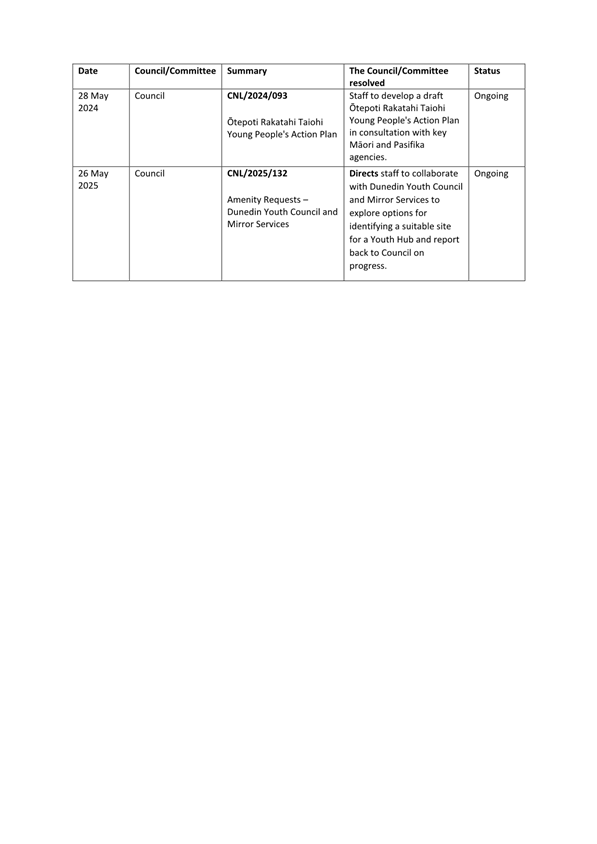
Open Action List
|
17
|
|
⇩b
|
Completed Action List
|
23
|
|

|
Council
27 November 2025
|
Council Forward Work Programme
Department: Civic
EXECUTIVE SUMMARY
1 The
purpose of this report is to provide the updated Council forward work programme
for the 2025 year (Attachment A).
2 As
this is an administrative report only, there are no options or Summary of
Considerations.
|
RECOMMENDATIONS
That the Council:
a) Notes the updated
Council forward work programme as shown in Attachments A and B.
|
DISCUSSION
3 The
forward work programme is a regular agenda item which shows areas of activity,
progress and expected timeframes for Council decision making across a range of
areas of work.
4 The
previous Standing Committee Forward Work Programmes will be integrated into the
current Council Forward Work Programme and presented to the December Council
meeting.
5 As
an update report, the purple highlight shows changes to timeframes. New
items added to the schedule are highlighted in yellow. Items that have been
completed or updated are shown as bold.
NEXT STEPS
6 An
updated report will be presented to future Council meetings.
Signatories
|
Author:
|
Lynne Adamson - Governance Support Officer
|
|
Authoriser:
|
Jackie Harrison - Manager Governance
|
Attachments
|
|
Title
|
Page
|
|
⇩a
|
Council Forward Work
Programme
|
29
|
|

|
Council
27 November 2025
|
Amendment to Road Naming Policy
Department: Transport
EXECUTIVE SUMMARY
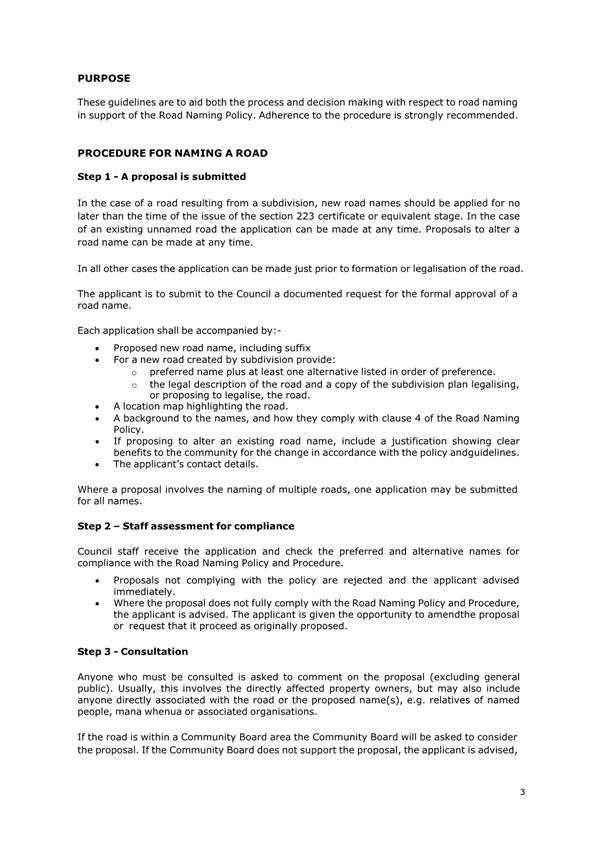
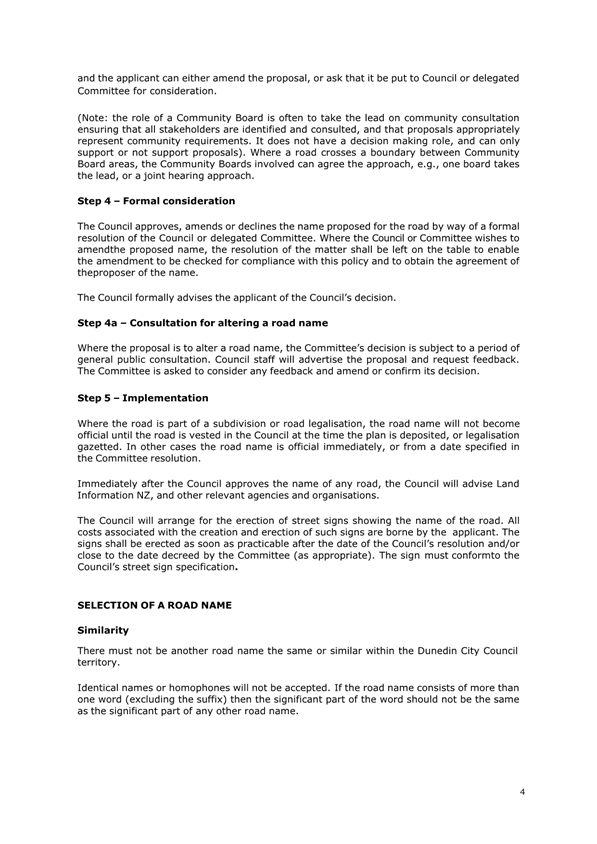
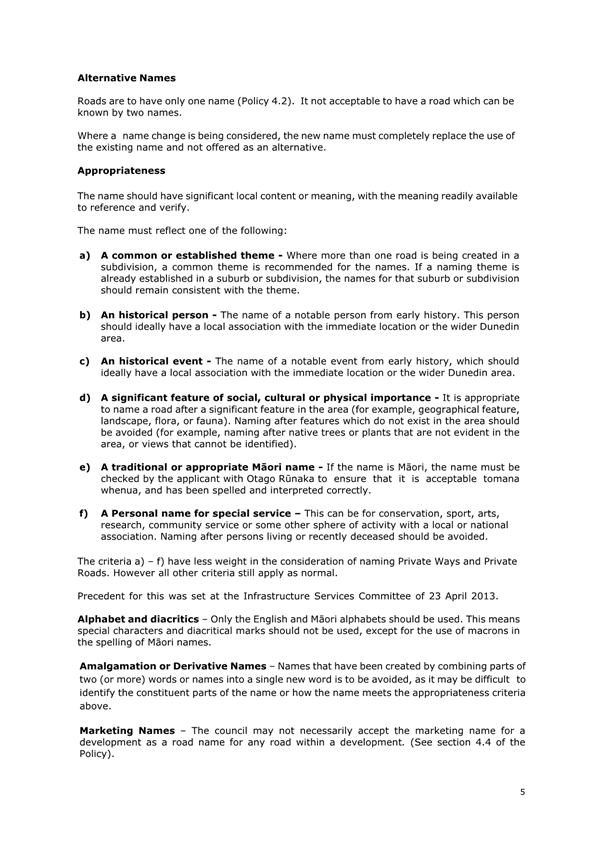
1 This
report proposes an amendment to the Road Naming Policy document adopted by
Council in 2016.
2 Staff
recommend that changes are made to the application of the Road Naming Policy to
allow developers to use pre-approved names from the Road Name Register (the
register), without requiring a second road naming report to be submitted to
Council or a delegated Committee.
3 The
proposed changes were presented to and supported by the Infrastructure Services
Committee on 19 March 2025, and an amended Road Naming Policy is now presented
to Council for adoption.
4 The
proposed changes will:
a) Enable
better use of staff resources by eliminating the need to write an additional
council report for road names that have already been pre-approved.
b) Give
assurance to developers, who will be able to select names from the register and
use them immediately, rather than potentially waiting months for a council
meeting.
c) Add
value to the register and encourage developers to choose names that have
significant local content or meaning.
5 In
addition to the above changes, the Policy has been updated to remove reference
to the Infrastructure Services Committee (ISCOM). References to this committee
have been replaced with “Council or delegated Committee” to ensure
the Policy remains current regardless of committee structure across
triennia.
RECOMMENDATIONS
That the Council:
a) Approves the proposed
amendments to the Road Naming Policy.
BACKGROUND
6 The
Dunedin City Council (DCC) is responsible for the naming of roads and numbering
of addresses in the city under the Local Government Act 1974, Sections 319
(1)(j), 319A and 319B. All road names must be approved by Council prior to
being used.
7 The DCC Road Naming
Policy (the policy), which was adopted in 2016, provides a framework
for the timely and consistent naming
of roads that reflect the
identity of the local community. The policy requires that Community Boards consider proposed names
and give consultation advice for names for roads in their area. The policy can be accessed
on the DCC website at www.dunedin.govt.nz/road-naming.
8 The
register is a list of road names that have been assessed by staff and pre-approved
by Council or delegated Committee for use in Dunedin. In some instances, the
names are only appropriate for certain localities in the city.
9 If
a developer chooses a name from the register, it does not need to be fully
assessed by staff before being presented to Council or a delegated Committee
for approval by resolution. However, staff are required to write a road naming
report and schedule the name to be presented at an upcoming meeting.
10 These
additional steps mean that the register provides few benefits for developers,
who often want roads to be named quicky so that properties can be marketed. It
also means that staff resource is used inefficiently writing road naming
reports for roads that have already been pre-approved.
DISCUSSION
11 This
inefficiency with the application of the policy is created by wording in the
policy which states:
a) “Use
of the Road Name Register. Developers may use names from the list (following
any limitations which may be attached to the road name). Proposals will
otherwise follow the same approval process as other proposals. The
Infrastructure Services Committee may use the Road
Name Register for road names not involving private subdivision, or where no
acceptable name has been provided by a developer”.
12 The current
policy does not encourage developers to choose names from the register even
though it contains names that are often more relevant for the city than new
names proposed by developers.
13 Staff
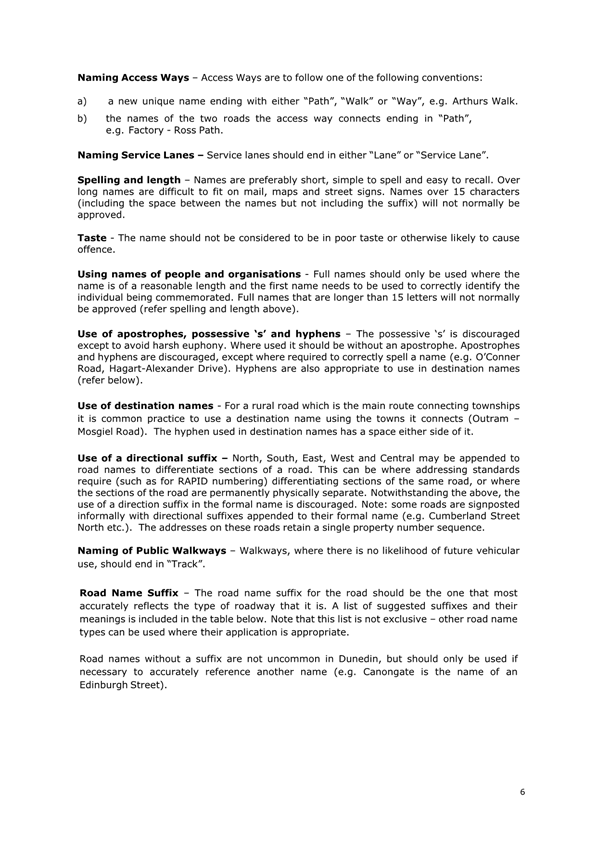
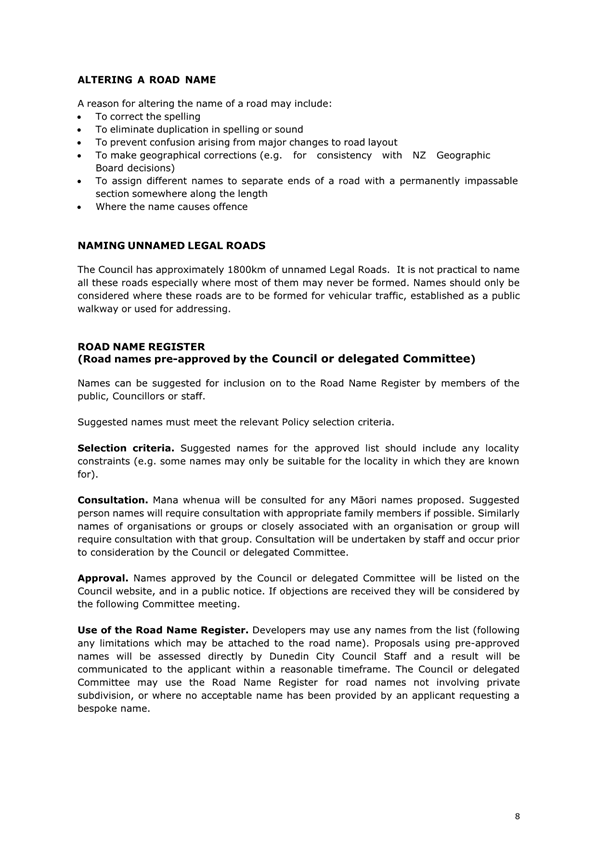
propose to change the section titled “Use of the Road Name
Register” found on Page 8 of the Road Naming Procedure document, within
the Road Naming Policy document (Attachment A) from:
a) Developers
may use names from the list (following any limitations which may be attached to
the road name). Proposals will otherwise follow the same approval process as
other proposals. The Infrastructure Services Committee may use the Road Name
Register for road names not involving private subdivision, or where no
acceptable name has been provided by a developer requesting a bespoke name.
14 To –
a) Developers
may use any names from the list (following any limitations which may be
attached to the road name). Proposals using pre-approved names will be assessed
directly by Dunedin City Council Staff and a result will be communicated to the
applicant within a reasonable timeframe. The
Council or delegated Committee may use the Road Name Register for
road names not involving private subdivision, or where no acceptable name has
been provided by an applicant requesting a bespoke name.
15 Adopting
this amendment will reduce unnecessary work for officers, Council or the
delegated Committee, while allowing applicants to minimise delays that arise
from waiting for names to be approved.
16 The
proposed amendment is minor and does not require public consultation. The
amendment was presented to ISCOM on 19 March 2025 and approved:
“Moved (Cr Christine
Garey/Cr Jim O’Malley):
That the Committee:
a) Approves
the proposed amendments to the Road Naming Policy.
Motion
carried (ISC/2025/013)”
17 Under the
amended policy, staff would assess the proposed name to ensure it still meets
the criteria of the Road Naming Policy and if the name is to be used in a
Community Board area staff would notify the Community Board of the use of a
name from the register.
18 Some names
on the register may be designated for use in particular areas or have greater
significance in specific areas. Where a name is of particular importance to a
Community Board, support may be sought by staff from the Community Board before
the name is granted for use.
a) An
example of an appropriate name selection in Community Board areas is the name
‘Harakeke Lane’, which was recently approved for use in Sawyers
Bay. This name was selected from the register, and the applicants had discussed
the use of the name with mana whenua about its suitability in the area. The
name Harakeke (New Zealand Flax) is appropriate for the area, with its
proximity to Kāpuka-taumāhaka, and the name represents the flora of
the area.
b) Another
example of name selection from the register is ‘Theomin Close’, a
name recently approved for use in North East Valley. The chosen name was
selected by the developers with the intent of streamlining the naming process.
19 Staff
followed the proposed process for both names and the amount of time spent on
processing was less than two hours in total. Compared to other recent road name
applications, where approximately 20 hours of staff time was required to
research suitability, communicate with developers and consultants, liaise with
emergency services and LINZ, seek legal advice and draft a report.
20 Following
the current process for selecting names from the register, it still took seven
weeks for Theomin Close and four weeks for Harakeke Lane from when the
application was received to when it was officially approved, and the developers
notified. The proposed update to the road naming policy will remove almost all
delay from the time of application to the name being granted.
21 Selecting
names from the register provides certainty for developers, quicker timeframes
(especially for well-established developments), reduction in staff time and a
more concise process for naming roads. Allowing the names to be immediately
granted, rather than waiting for Council approval will provide greater
incentive for pre-approved, appropriate names to be selected.
22 When a name
from the register is used by a developer, this will be listed for resolution in
the next relevant Council or Committee report. This report will include the
address where the name is to be used and the road naming register will be
updated to say the name has been allocated.
23 This
amendment does not create any changes to the process required if an applicant
prefers not to use a name from the register.
24 Allowing
road names from the register to be used immediately would provide a tangible
benefit for developers and would give staff options to manage road naming even
when council meetings are delayed, such as after elections.
OPTIONS
25 Two options
are proposed. The recommended option (Option One) is to support the proposed
amendment to the Road Naming Policy 2016. Option Two is maintaining the status
quo.
Option One – Recommended Option
26 That the
Council supports the proposed amendment to the Road Naming Policy 2016
document.
Advantages
· Encourages
developers to use pre-approved names from the Road Name Register which will:
i) Decrease
the time delay for developers to have properties addressed,
ii) Decrease
the time that staff allocate to reviewing and preparing road naming
documentation,
iii) Increase
the use of pre-approved names that are recognised to carry local significance.
Disadvantages
· There
are no disadvantages associated with this option.
Option Two – Status Quo
27 Do nothing.
Advantages
· There
are no advantages associated with this option.
Disadvantages
· Does
not incentivise developers to use pre-approved names from the Road Naming
Register,
· Does
not decrease the time associated for developers to gain addresses,
· Does
not decrease staff workload.
NEXT STEPS
28 If approved
by the Council, the Road Naming Policy will be amended as noted above.
Community Boards will also be updated.
Signatories
|
Author:
|
Abbey Chamberlain - Senior Transport Planner
|
|
Authoriser:
|
Jeanine Benson - Group Manager Transport
Scott MacLean - General Manager, City Services
|
Attachments
|
|
Title
|
Page
|
|
⇩a
|
Road Name Policy - 2025
update for use of the RNR
|
42
|
|
SUMMARY OF CONSIDERATIONS
|
|
Fit with purpose of Local Government
This decision enables democratic local
decision making and action by, and on behalf of communities.
This
decision promotes the social, economic, environmental and cultural well-being
of communities in the present and for the future.
|
|
Fit with strategic framework
|
|
Contributes
|
Detracts
|
Not applicable
|
|
Social Wellbeing Strategy
|
☐
|
☐
|
✔
|
|
Economic Development Strategy
|
☐
|
☐
|
✔
|
|
Environment Strategy
|
☐
|
☐
|
✔
|
|
Arts and Culture Strategy
|
☐
|
☐
|
✔
|
|
3 Waters Strategy
|
☐
|
☐
|
✔
|
|
Future Development Strategy
|
✔
|
☐
|
☐
|
|
Integrated Transport Strategy
|
✔
|
☐
|
☐
|
|
Parks and Recreation Strategy
|
☐
|
☐
|
✔
|
|
Other strategic projects/policies/plans
|
✔
|
☐
|
☐
|
This is an administrative function.
|
|
Māori Impact Statement
There are no known impacts for Māori with the
proposed amendment. Staff continue to work to add Māori names to the
Road Name Register in a way that is meaningful for mana whenua, and with this
amendment, there will be greater incentive for appropriate Māori names
from the register to be selected for new roads.
|
|
Sustainability
There are no implications for sustainability.
|
|
LTP/Annual Plan / Financial Strategy /Infrastructure
Strategy
The are no implications.
|
|
Financial considerations
There are no financial implications
|
|
Significance
The significance of this decision is considered low in
terms of the Council’s Significance and Engagement Policy.
|
|
Engagement – external
No external engagement has been undertaken for this
amendment as the changed proposed is minor and intended to increase
efficiency for both developers and staff.
|
|
Engagement - internal
Internal engagement with Transport, Policy and Legal has
been undertaken.
|
|
Risks: Legal / Health and Safety etc.
There are no known risks.
|
|
Conflict of Interest
There are no known conflicts of interest.
|
|
Community Boards
Where a name is of particular importance to a Community
Board, endorsement may be sought by staff from the Board before the name is
granted for use. Any names selected from the register in a Community Board
area will be notified to the Board through the granting process.
|
|

|
Council
27 November 2025
|
Traffic and Parking Bylaw Review Update
Department: Transport
EXECUTIVE SUMMARY
1 At
their meeting of 30 October 2023, Council approved the review of the Traffic
and Parking Bylaw (the Bylaw).
2 This
report provides an update on the review and outlines the next steps including
development of draft documents and consultation on any proposed changes and
timeframes.
RECOMMENDATIONS
That the Council:
a) Notes the Traffic and
Parking Bylaw review update.
BACKGROUND
Land Transport Act 1998
3 The
Dunedin City Council (DCC) is a road controlling authority (RCA) under the Land
Transport Act 1998 (LTA). As an RCA, the DCC is the authority having control
over roads (excluding state highways) within the district and for those state
highways for which the DCC has received delegated responsibility from NZ
Transport Agency Waka Kotahi (NZTA).
4 Section
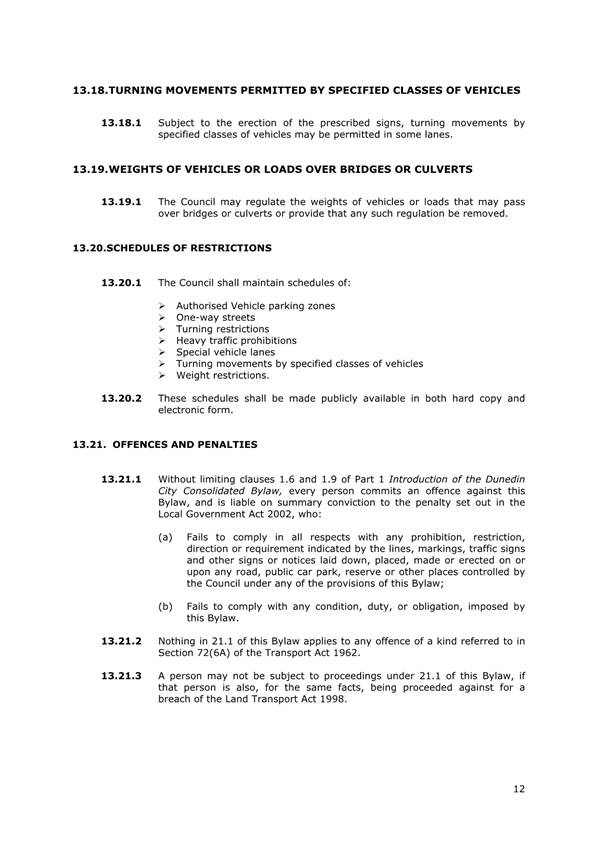
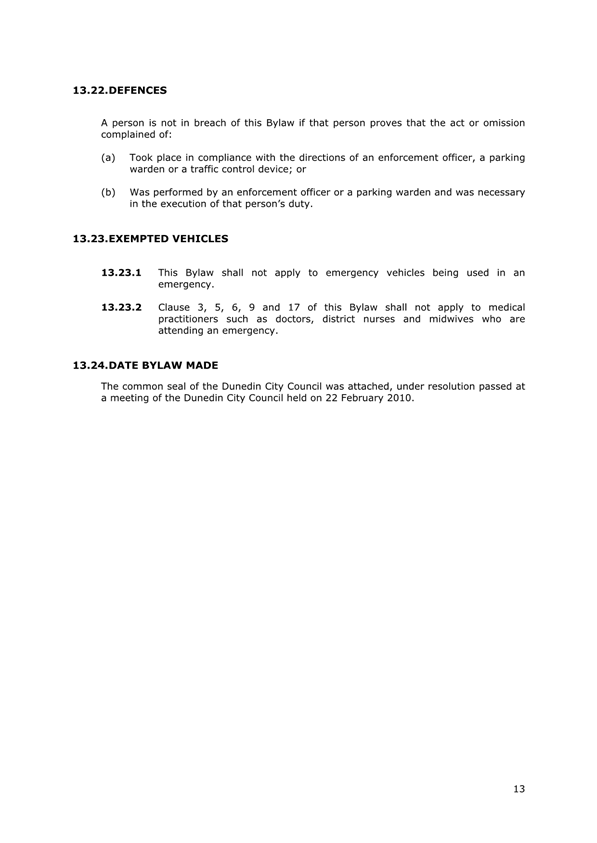
22AB of the LTA empowers RCAs to make bylaws for the purposes of, amongst other
things, making prohibitions and restrictions for parking, prescribing the use
of parking places and transport stations and regulating road-related matters,
such as vehicle and road use and make provision for charges and enforcement.
Dunedin Traffic and Parking Bylaw
5 The
Bylaw was approved by the Council in February 2010 and came into effect on the 1st
of March 2010. See Attachment A for the Bylaw.
6 The
Bylaw sets out the requirements for parking and control of vehicular or other
traffic on any road under DCC control, including those state highways where
control has been delegated to the DCC.
7 A
bylaw made under the LTA, is not subject to the timeframes for review which are
required by the Local Government Act 2002 (LGA). However, the LGA consultation
requirements still apply to a bylaw made under the LTA and the special
consultative procedure is required to review the Bylaw.
8 In
addition to the Traffic and Parking Bylaw, the DCC also has a Roading Bylaw,
with the purpose of protecting health and safety and protecting the public from
nuisance by managing and regulating roads in Dunedin. While the Traffic and
Parking Bylaw focuses on requirements for parking and control of traffic, the
Roading Bylaw focuses on regulating things in roads (for example fences or
goods), as well as regulating stock, vehicle road crossings, road openings,
road numbers and damage to roads.
Council resolution to commence review
9 On
30 October 2023, the Council approved commencement of the Bylaw review:
Moved (Mayor Jules
Radich/Cr Cherry Lucas):
That the Council:
a) Approves commencement
of the review of the Traffic and Parking Bylaw.
b) Determines that a bylaw was the most appropriate way to address issues relating to
managing traffic and parking in Dunedin.
Motion carried (CNL/2023/259) with Cr Lee Vandervis recording his vote against.
DISCUSSION
Progress to date
10 Since the
Bylaw review commenced, staff have made an initial assessment of the Bylaw with
regard to:
a) Updating
legislative references, for example Transport Act 1962 to Land Transport Act
1998
b) Updating
terminology to reflect emerging trends and technology, for example replacing
references to ‘Pay and Display’ parking with ‘Payment
parking’
c) Updating
the Bylaw, for example providing for shared paths, micro-mobility, unformed
roads and engine braking
d) Making
the Bylaw clearer by re-ordering information and modernising the language
11 An initial
draft Bylaw has been developed and has undergone internal and external legal
review.
Next steps
12 Next steps
of the review are detailed in Table 1, which also shows the indicative
timeframe. Note that the timeframe is subject to factors such as resourcing,
consultation calendar availability and Committee structures that are yet to be
determined.
Table
1: Bylaw review milestones and timeframe
|
Bylaw review milestone
|
Indicative timeframe
|
|
Council approves draft bylaw and statement of
proposal for consultation purposes
|
February 2026
|
|
Consultation on draft bylaw and statement of
proposal
|
February/March 2026
|
|
Hearings Committee hears and deliberates
|
May 2026
|
|
Council adopts Bylaw with any amendments
|
June 2026
|
|
Date of effect
|
July 2026
|
OPTIONS
13 As this is
an update for the Council, there are no options.
NEXT STEPS
14 Next steps
are to continue with the review as planned. A report will be presented to the
Council in early 2026 seeking adoption of a draft bylaw and statement of
proposal for consultation purposes.
Signatories
|
Author:
|
Abbey Chamberlain - Senior Transport Planner
|
|
Authoriser:
|
Jeanine Benson - Group Manager Transport
Scott MacLean - General Manager, City Services
|
Attachments
|
|
Title
|
Page
|
|
⇩a
|
Traffic and Parking
Bylaw 2010
|
61
|
|
SUMMARY OF CONSIDERATIONS
|
|
Fit with purpose of Local Government
This decision enables democratic local decision
making and action by, and on behalf of communities.
This decision promotes the social and
economic well-being of communities in the present and for the future.
|
|
Fit with strategic framework
|
|
Contributes
|
Detracts
|
Not applicable
|
|
Social Wellbeing Strategy
|
✔
|
☐
|
☐
|
|
Economic Development Strategy
|
✔
|
☐
|
☐
|
|
Environment Strategy
|
☐
|
☐
|
✔
|
|
Arts and Culture Strategy
|
☐
|
☐
|
✔
|
|
3 Waters Strategy
|
☐
|
☐
|
✔
|
|
Future Development Strategy
|
☐
|
☐
|
✔
|
|
Integrated Transport Strategy
|
✔
|
☐
|
☐
|
|
Parks and Recreation Strategy
|
☐
|
☐
|
✔
|
|
Other strategic projects/policies/plans
|
☐
|
☐
|
✔
|
Traffic and parking restrictions support a safe, efficient
and accessible transport network, and support the social and economic
wellbeing of Dunedin communities.
|
|
Māori Impact Statement
Mana whenua have expressed support for an efficient
transport network.
|
|
Sustainability
Parking control changes improve efficiency and access to
the transport network, and contribute to sustainability goals.
|
|
Zero carbon
Emissions
considerations are not applicable to this report.
|
|
LTP/Annual Plan / Financial Strategy /Infrastructure
Strategy
There are no implications for these documents.
|
|
Financial considerations
There are no financial implications.
|
|
Significance
This report is considered low in terms of the
Council’s Significance and Engagement Policy.
|
|
Engagement – external
There has been no external engagement on this review to
date. The special consultative procedure will be used to consult on any
proposed changes.
|
|
Engagement - internal
There has been internal engagement with In-House Legal
Counsel, Council Communications and Marketing, Business Information Services,
Governance, and Customer and Regulatory.
|
|
Risks: Legal / Health and Safety etc.
There are no identified risks. An initial draft Bylaw has
undergone external legal review.
|
|
Conflict of Interest
There is no identified conflict of interest.
|
|
Community Boards
Community Boards are identified as stakeholders in this
review and will be consulted with as part of the consultation process.
|
|

|
Council
27 November 2025
|
Taieri Mouth Road Speed Limit Change Consultation
Department: Transport
EXECUTIVE SUMMARY
1 This
report proposes an upcoming consultation on a proposed speed limit change on
Taieri Mouth Road between Brighton and Taieri Mouth.
2 A
speed limit reduction from 100km/h to 80km/h along Taieri Mouth Road was
originally proposed in the draft Speed Management Plan that the Dunedin City
Council consulted on in 2023.
3 During
that consultation, 20 Kuri Bush residents signed a submission supporting an
80km/h speed limit on Taieri Mouth Road through the Kuri Bush settlement.
4 Following
the release of the Land Transport Rule: Setting of Speed Limits 2024 (Setting
of Speed Limits Rule 2024), the Dunedin City Council was unable to proceed with
the draft Speed Management Plan as the process for setting speed limits had
changed.
5 Public
consultation on the proposal to reduce the Taieri Mouth Road speed limit from
100km/h to 80km/h in accordance with the Setting of Speed Limits Rule 2024,
will occur in early 2026.
RECOMMENDATIONS
That the Council:
a) Notes the Taieri Mouth
Road Speed Limit Change Consultation report.
BACKGROUND
6 Following
the change in government, the speed setting process was changed. The Setting of
Speed Limits Rule 2024 came into force in October 2024 and outlined the process
that Road Controlling Authorities must follow to set speed limits.
7 Under
the previous Setting of Speed Limits Rule 2023, the Dunedin City Council
consulted on a draft Speed Management Plan which proposed lower speed limits on
rural roads, in rural settlements and some areas within the city. This included
a proposal to reduce the speed limit on a section of Taieri Mouth Road from
100km/h to 80km/h.
8 During
the consultation, 20 residents of Kuri Bush signed a joint submission
requesting an 80km/h speed limit on a 3km section of Taieri Mouth Road from
MacLeod’s Lagoon to the southern end of Kuri Bush, citing safety
concerns.
9 Due
to the implementation of the new speed setting rule, the draft Speed Management
Plan consulted on in 2023 under the previous rule could not be progressed.
10 Staff
propose to consult on a speed limit change for Taieri Mouth Road from the
existing 80km/h sign south of Brighton near the Big Stone Road intersection to
the boundary with Clutha District Council (north of Taieri Mouth), a section of
road approximately 13km in length (see Figure 1 – Map 1).
DISCUSSION
11 Transport
staff propose consulting on a permanent 80km/h speed along the entire stretch
of Taieri Mouth Road, including the Kuri Bush settlement, for the following
reasons:
a) The
road is consistent with many typical coastal roads, with frequent changes in
direction that require drivers to slow down and navigate with caution.
b) The
mean operating speed is between 88-92km/h along Taieri Mouth Road (see Map 1).
c) There
are numerous access points to residential properties on blind corners in the
Kuri Bush settlement.
d) There
are beach accesses along the road with poor visibility of oncoming traffic.
e) Sightlines
are limited at the Dicksons Road and Taieri Mouth Road intersection.
f) Local
farmers in the area use the road for moving heavy machinery.
g) Logging
trucks regularly use Taieri Mouth Road.
h) High
numbers of tourists use the road in the summer months.
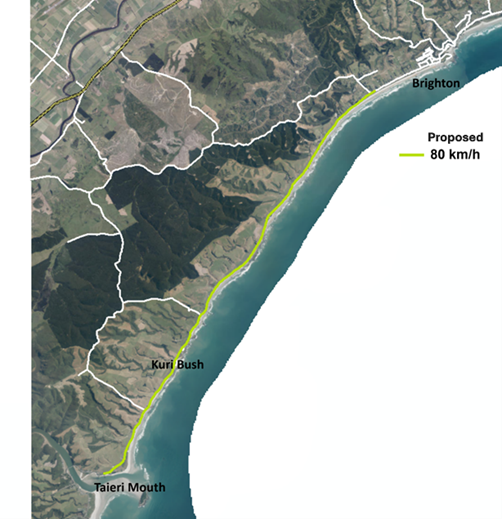
Figure
1 - Map 1
12 The
proposed speed reduction will provide the following benefits:
a) Improved
consistency: Extending the 80km/h limit along the entire 13km length will
result in fewer changes in speed limits which will reduce confusion and likely
improve driver compliance.
b) Safer
access: Reducing speed will make residential and beach access safer along the
full stretch of road.
c) Improved
alignment to current driving behaviour: Better aligning the speed limit to
actual operating speeds, which are consistently lower than the posted 100km/h
limit, will result in safer and more consistent speeds along Taieri Mouth Road.
13 The
proposed speed limit change aims to enhance safety for both Kuri Bush residents
and those travelling through the area. While initial consultation on the 2023
draft Speed Management Plan included these changes and relevant submissions
were received, the Setting of Speed Limits Rule 2024 now requires a formal
public consultation period of at least six weeks.
OPTIONS
14 There are
no options associated with this report.
NEXT STEPS
15 Staff will
prepare consultation documents in accordance with the requirements of the
Setting of Speed Limits Rule 2024. The documents will include a cost-benefit
statement outlining safety impacts, travel time considerations, and
implementation costs.
16 The Setting
of Speed Limits Rule 2024 does not require the use of the Special Consultative
Procedure set out in section 83 of the Local Government Act 2002.
Consultation will take place over a six-week period in early 2026.
17 Following
consultation, a summary of submissions will be prepared detailing how community
input has influenced the final draft proposal. The summary of submissions will
be published on the Dunedin City Council website. The finalised draft proposal
will then be submitted to the Director of Land Transport for approval and
certification in accordance with the Setting of Speed Limits Rule 2024.
Signatories
|
Author:
|
Janet Young - Safe and Sustainable Travel Co-ordinator
|
|
Authoriser:
|
Jeanine Benson - Group Manager Transport
Scott MacLean - General Manager, City Services
|
Attachments
There are no attachments for
this report.
|
SUMMARY OF CONSIDERATIONS
|
|
Fit with purpose of Local Government
This decision enables democratic local
decision making and action by, and on behalf of communities.
This decision promotes the social
well-being of communities in the present and for the future.
This decision promotes the economic
well-being of communities in the present and for the future.
This decision promotes the environmental
well-being of communities in the present and for the future.
This decision promotes the cultural
well-being of communities in the present and for the future.
|
|
Fit with strategic framework
|
|
Contributes
|
Detracts
|
Not applicable
|
|
Social Wellbeing Strategy
|
✔
|
☐
|
☐
|
|
Economic Development Strategy
|
☐
|
☐
|
✔
|
|
Environment Strategy
|
✔
|
☐
|
☐
|
|
Arts and Culture Strategy
|
☐
|
☐
|
✔
|
|
3 Waters Strategy
|
☐
|
☐
|
✔
|
|
Future Development Strategy
|
✔
|
☐
|
☐
|
|
Integrated Transport Strategy
|
✔
|
☐
|
☐
|
|
Parks and Recreation Strategy
|
☐
|
☐
|
✔
|
|
Other strategic projects/policies/plans
|
☐
|
☐
|
✔
|
Ensuring Dunedin is a safe city is prioritised in the
Social Wellbeing Strategy, Spatial Plan and Long-Term Plan as well as the
Integrated Transport Strategy. Safer speeds are one of four pillars under the
Safe System approach to reduce the number of fatal and serious injury crashes
occurring on Dunedin’s road network.
|
|
Māori Impact Statement
During the consultation process, staff will engage with
Mana Whenua regarding the proposed speed limit changes to ensure there is an
opportunity for feedback, and that consultation follows the guidelines set
out in the Setting of Speed Limits Rule 2024 and Speed Management Guidance
provide by NZTA/Waka Kotahi.
|
|
Sustainability
A reduction in mean operating speed along Taieri Mouth
Road could result in a reduction of vehicle carbon emissions.
|
|
LTP/Annual Plan / Financial Strategy /Infrastructure
Strategy
There are no implications.
|
|
Financial considerations
Implementing the proposed speed limit changes would
require minimal costs to change two signs. These costs would be funded out of
the Low Cost Low Risk budget that is allocated for this type of work.
|
|
Significance
The proposed changes to the Taieri Mouth Road speed limit
are assessed to be of low significance.
|
|
Engagement – external
The proposed speed limit changes take into account
feedback received from members of the Kuri Bush community during the draft
Speed Management Plan that was consulted on in 2023. This report is to inform
Council of the upcoming consultation that will engage with numerous
interested parties, in line with the requirements outlined in the Setting of
Speed Limits Rule 2024.
|
|
Engagement - internal
There has been no internal engagement.
|
|
Risks: Legal / Health and Safety etc.
There are no identified risks.
|
|
Conflict of Interest
There are no known conflicts of interest.
|
|
Community Boards
The speed limits proposed in this report pertain to Taieri
Mouth Road, located within the Saddle Hill Community Board area. The Dunedin
City Council received support for the proposed consultation from the Saddle
Hill Community Board in August 2025.
|
|

|
Council
27 November 2025
|
Resolution to Stop Part of Glengyle Street, Vauxhall
Department: Property
EXECUTIVE SUMMARY
1 This
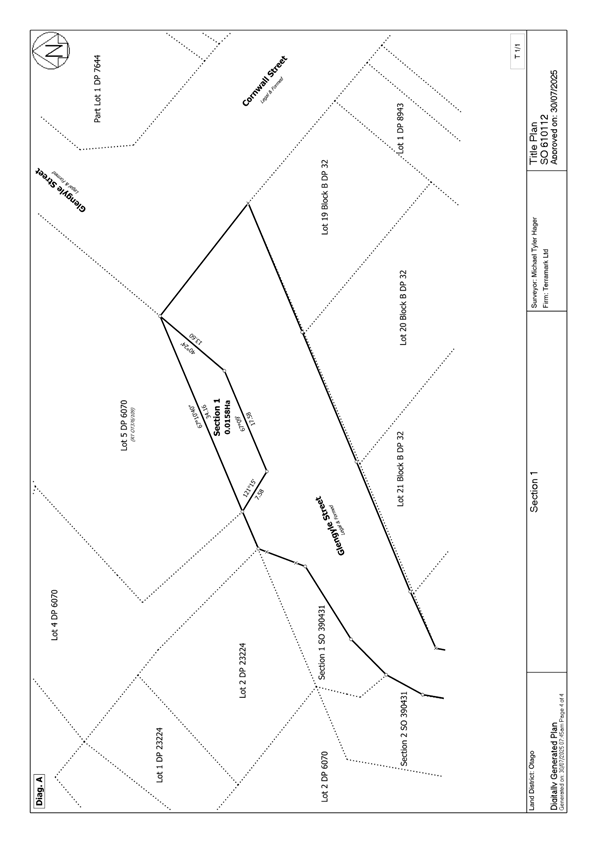
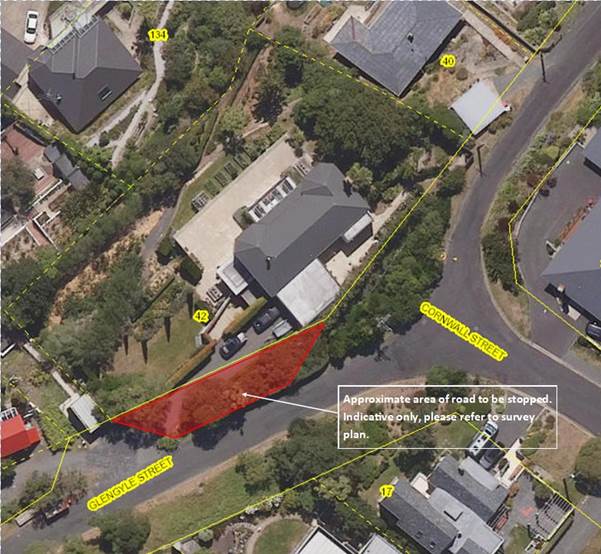
report recommends concluding the road stopping process for 158m2 of land adjoining
42 Glengyle Street, Vauxhall, as the public notification process has been
completed and no objections were received.
2 The
owners of 42 Glengyle Street applied to have a section of unformed legal road
stopped. Council agreed to public notification of its intention to stop a
portion of legal road and subsequently the property has been surveyed, valued
and a sale and purchase agreement has been signed.
3 This
report concludes the formal part of Council’s decision-making process in
this matter.
RECOMMENDATIONS
That the Council:
a) Resolves that under
Section 342 of the Local Government Act 1974 the part of unformed road
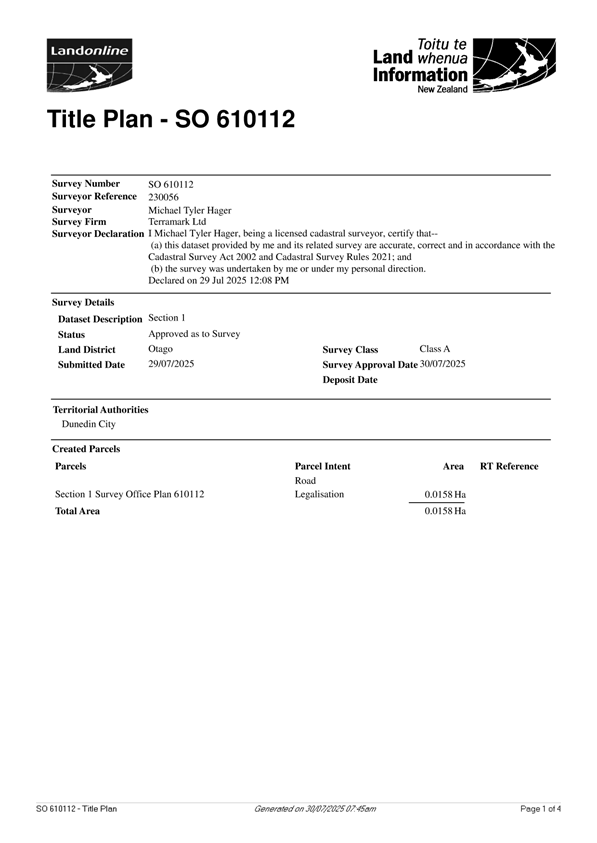
described as Section 1 SO 610112 is stopped.
b) Notes that no
objections were submitted during the public notice period.
c) Authorises a public
notice declaring that the road is stopped.
BACKGROUND
4 The
owners of 42 Glengyle Street, Vauxhall, applied to stop an unformed part of
legal road adjoining their property, in order to better align the boundary of
their section. Their driveway and retaining wall were partially located within
the road stopping area.
5 The
road stopping application was considered by the Customer and Regulatory
Committee on 6 August 2024, which resolved as follows:
Moved (Cr Andrew
Whiley/Cr Christine Garey):
That the Committee:
a) Approves public notification of the Council’s
intention to stop a portion of legal road at 42 Glengyle Street, Vauxhall,
subject to the applicant agreeing to:
i) Pay the Council the non refundable fee for
processing the road stopping.
ii) Pay the Council the actual costs incurred
for the stopping, regardless of whether or not the stopping reaches a
conclusion, and the market value of the stopped road, assessed by the
Council’s valuer.
iii) Amalgamate the stopped portion of road
with the title of the adjacent land that is owned by the applicant, being the
land contained within Record of Title OT376/109
iv) Accept the application of the standards
contained within the Dunedin City Council Code for Subdivision and Development
to the stopped road.
v) Register
any easements over the stopped portion of road in favour of utility companies
(if required by the utility company).
Motion carried (CRC/2024/019)
DISCUSSION
6 The
applicant and Council have entered into a conditional sale and purchase
agreement in accordance with the Committee resolution.
7 The
area of road to be stopped was surveyed and the property has been valued.
8 The
application was publicly notified for 40 days and the notification period
closed on Friday 19 September 2025. No objections were received.
9 The
Council is now able to formally resolve to stop the part of unformed legal road
shown as Section 1 on SO 610112.
OPTIONS
Option One – Recommended Option
10 As no
objections have been received, the Council may declare the part of unformed
legal road to be stopped.
Advantages
· This
option is consistent with the Customer and Regulatory Committee decision of 6
August 2024.
· This
option will enable the adjoining landowners to establish a practical legal
boundary.
· Modest
proceeds of sale (assessed at market value) will be received and the rateable
area of private land will increase following amalgamation of the titles.
Disadvantages
· There
are no disadvantages identified.
Option Two – Status Quo
11 The Council
may decide not to declare the part of unformed legal road to be stopped.
Advantages
· There
are no identified advantages.
Disadvantages
· This
option would be inconsistent with the Customer and Regulatory Services
Committee decision of 6 August 2024.
· This
option would not establish a practical legal boundary for the adjoining
property.
· This
option would result in no receipt of proceeds of sale and no increase in the
rateable area of private land.
NEXT STEPS
12 If Council
resolves that Section 1 SO 610112 is stopped, a public notice formally
declaring the road stopping will be published in the Otago Daily Times. A
new Record of Title will be raised for the land, which will be transferred to
the owner of the adjoining land at 42 Glengyle Street and amalgamated with
their Record of Title.
Signatories
|
Author:
|
Paula Dickel - Strategic Property Advisor
|
|
Authoriser:
|
David Ward - General Manager, 3 Waters, Property and Urban
Development
|
Attachments
|
|
Title
|
Page
|
|
⇩a
|
Survey Plan SO 610112
|
85
|
|
⇩b
|
Aerial Photo
|
89
|
|
SUMMARY OF CONSIDERATIONS
|
|
Fit with purpose of Local Government
This decision enables democratic local
decision making and action by, and on behalf of communities.
|
|
Fit with strategic framework
|
|
Contributes
|
Detracts
|
Not applicable
|
|
Social Wellbeing Strategy
|
☐
|
☐
|
✔
|
|
Economic Development Strategy
|
☐
|
☐
|
✔
|
|
Environment Strategy
|
☐
|
☐
|
✔
|
|
Arts and Culture Strategy
|
☐
|
☐
|
✔
|
|
3 Waters Strategy
|
☐
|
☐
|
✔
|
|
Future Development Strategy
|
☐
|
☐
|
✔
|
|
Integrated Transport Strategy
|
☐
|
☐
|
✔
|
|
Parks and Recreation Strategy
|
☐
|
☐
|
✔
|
|
Other strategic projects/policies/plans
|
☐
|
☐
|
✔
|
There is no contribution to the Strategic Framework.
|
|
Māori Impact Statement
Staff reviewed the District Plan, and the land is not
identified as Wāhi Tupuna. There is no known impacts for
Māori.
|
|
Sustainability
There are no known impacts for sustainability.
|
|
LTP/Annual Plan / Financial Strategy /Infrastructure
Strategy
There are no implications for these plans/strategies.
|
|
Financial considerations
Costs incurred in the process are recovered from the
applicant. A modest financial sum will be received as proceeds from the sale
of land.
|
|
Significance
This decision is considered low in terms of the
Council’s Significance and Engagement Policy.
|
|
Engagement – external
A full public notification process was carried out and no
objections were received.
|
|
Engagement - internal
Transport, Legal Services, Parks and Recreation Services,
Customer and Regulatory Services, City Planning, City Development and Three
Waters were consulted when the process was initiated.
|
|
Risks: Legal / Health and Safety etc.
There are no risks identified.
|
|
Conflict of Interest
No conflict of interest has been identified.
|
|
Community Boards
There are no implications for Community Boards, a full
public notification process was undertaken.
|
|
|
Council
27 November 2025
|
·
|

|
Council
27 November 2025
|
Lower Value Grants - process amendment
Department: Civic and Corporate Policy
EXECUTIVE SUMMARY
1 The
purpose of this report is to seek approval for an amendment to the Chief
Executive Officer’s (CEO) delegations to enable staff assessment and
approval of applications for grants of up to $5,000 (excluding Rates Relief
grants) that are funded and administered by the Dunedin City Council (Council).
2 In
order to satisfy Council’s granting procedures, and to enable applicants
to meet project and event deadlines, it is necessary to make decisions on grant
categories before the end of 2025.
3 Staff
delegations currently allow for decision making on grants of $500 or less.
Without amendment to these delegations, all other grants would be considered
under the adopted governance structure for the new triennium.
RECOMMENDATIONS
That the Council:
a) Amends the Chief
Executive Officer’s delegations to enable approval of Dunedin City
Council–funded and administered grant applications (excluding Rates
Relief) valued at $5,000 or less, as follows:
1. The Chief Executive is delegated the power to approve or
decline applications for grants that are funded and administered by the
Council, provided that:
a) The grant is within an approved budget; and
b) The maximum possible grant value awarded to an
applicant does not exceed $5,000; and
c) The power to approve or decline the grant
has not been reserved to the Council under this Manual or by resolution.
2. The Chief Executive may sub-delegate this authority to
any other officer of the Council, subject to:
a) The sub-delegation being in writing and suitably
recorded; and
b) The grant being signed off by the relevant General
Manager.
3. Staff will report to Council or a Committee of Council twice
per year on all grants approved under delegation.
BACKGROUND
4 Council
funds and administers a range of grants, which are the subject of this report.
A list of grants is at Attachment A.
Previous approval
process
5 Under
the governance structure adopted in the previous triennium, a Grants
Subcommittee was established and delegated responsibility to assess and
determine grant applications.
6 Under
this structure, grant applications were assessed by staff and then submitted to
the Grants Subcommittee for consideration under delegated authority.
7 Staff
reviewed each application against the grant-specific criteria and the DCC
Grants Management Policy and provided recommended amounts to guide
decision-making. Staff who provide recommendations are closely connected to the
communities that each grant is intended to support.
8 While
the Subcommittee occasionally made minor adjustments, it consistently supported
staff recommendations, demonstrating confidence in the assessment process.
Grants Review
9 In
2023, a request was made by Council to undertake a review of grants, to support
the preparation of what was then the 10-year plan 2024-34. Work on the review
is ongoing and most contestable grant pools have been rolled over in the
interim.
10 ‘Rates
Relief’ is a contestable grant that is included in the Grants Review. At
its meeting on 26 May 2025, Council reviewed and amended Rates Relief grant eligibility
and assessment criteria. Grant approval responsibility also shifted from staff
to the Council.
Grant types
and logistics
11 There are
several grant pools administered by Council, but which are funded by an
external organisation. These grants are outside the scope of this report.
12 Additionally,
there are grant pools that involve applications above the $5,000 threshold,
including:
a) Place-Based
Funding
b) City
Services Funding
c) Community
and Major Events Funding
d) Professional
Theatre Fund
e) Rates
Relief
These grant pools have
historically required elected member decision-making due to their scale and
strategic relevance.
13 Some grant
applications are considered at specific times of the year, while others are
considered on a rolling basis.
DISCUSSION
14 Current
delegations allow responsibility to be delegated to staff for assessment and
approval of grants of $500 or less.
15 Council’s
adopted governance structure does not currently include a Grants Subcommittee.
Decisions on grants over $500 would therefore be referred to a meeting of
Council or one of its Committees.
16 There are
approximately 300 lower value applications anticipated in the current funding
round, including events, arts, and community grants. Staff recommendations on
these grants have seldom been overturned by elected members, which means
delegating responsibility for these decisions is considered administratively
efficient.
17 Grant
applicants often work within tight delivery timelines. For many funding
streams, decisions must be made before the end of 2025 to enable programmes and
events to proceed. Maintaining the current delegation threshold would risk
delays, uncertainty for applicants, and additional time pressures on Council
meeting agendas.
18 Under the
proposed amendment, staff would continue to assess all grant applications and
ensure they meet the relevant criteria and policy. Existing grant types,
funding rounds, and due dates would remain unchanged. Staff would also maintain
the current levels of support to applicants. A report-back mechanism would
ensure full transparency to Council regarding all staff-approved grants.
19 This
approach reflects practices employed by other territorial authorities,
including Christchurch City Council, where staff administer lower-value grants,
while elected members retain decision-making for higher-value or strategically
significant funding.
OPTIONS
Option One – Amend the CEO’s delegations (Recommended
Option)
20 This option
would allow staff to assess and approve Council-administered grants valued at $5,000 or less,
excluding Rates Relief grants. All grants would continue to undergo staff
assessment.
21 There would
be no change in the process for higher-value grants and these would still be
referred to Council or a Committee of Council for approval.
22 Staff would
report-back on all grants approved under staff delegations to Council or a
Committee of Council twice annually.
Advantages
· Reduces administrative burden on Council and
Committee meetings.
· Builds on proven past practice where staff
assessments were consistently endorsed by the former Grants Subcommittee.
· Enables timely decision-making and supports
applicants to meet project and event deadlines.
· Maintains continuity of grant types, funding rounds,
and processes.
· Aligns with best-practice models used by other local
authorities.
· Ensures strategic oversight remains with elected
members for higher-value grants (e.g., Place-Based, City Services, Major Events
Funding, etc.).
Disadvantages
· Reduces
direct Council oversight on lower value grants.
Option Two – Status Quo
23 Under this
option, decisions on grants over $500 would be referred to a meeting of Council
or a Committee of Council. Current delegations would allow for staff assessment
and approval of grants of $500 or less.
Advantages
· Direct
Council oversight of all grant decisions.
Disadvantages
· Increase
in Council and Committee workloads.
· Risk
of delays to applicants awaiting time-sensitive funding decisions.
· Reduced
time available for Council to focus on strategic issues.
· Inefficient
use of governance time relative to value and complexity of lower-level grants.
NEXT STEPS
24 Grants will
be assessed and approved in line with delegations, as decided by Council.
25 If Option 1
is approved, staff will assess and determine grants of $5,000 or less
(excluding Rates Relief), and will submit a list of staff-approved grants from
the current granting round in a report for noting at a Council meeting in
December 2025.
26 For grants
outside of staff delegations, assessment and approval will be sought from
Council at a meeting in December 2025.
Signatories
|
Author:
|
Janet Fraser - Corporate Planner
Nicola Morand - Manahautū (General Manager Community
and Strategy)
|
|
Authoriser:
|
Sandy Graham - Chief Executive
|
Attachments
|
|
Title
|
Page
|
|
⇩a
|
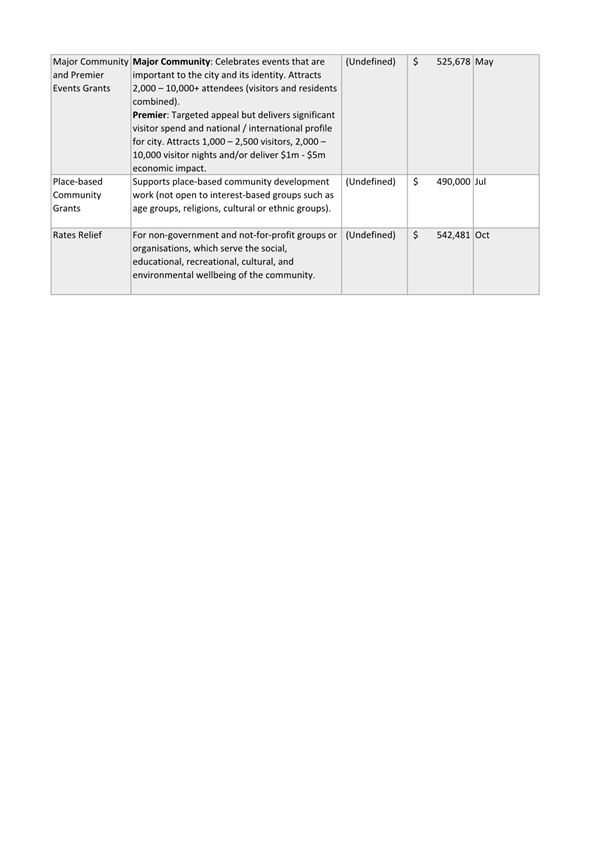
List of grants funded
and administered by the DCC
|
96
|
|
SUMMARY OF CONSIDERATIONS
|
|
Fit with purpose of Local Government
This decision promotes the social,
economic, environmental and cultural well-being of communities in the present
and for the future.
|
|
Fit with strategic framework
|
|
Contributes
|
Detracts
|
Not applicable
|
|
Social Wellbeing Strategy
|
✔
|
☐
|
☐
|
|
Economic Development Strategy
|
✔
|
☐
|
☐
|
|
Environment Strategy
|
✔
|
☐
|
☐
|
|
Arts and Culture Strategy
|
✔
|
☐
|
☐
|
|
3 Waters Strategy
|
☐
|
☐
|
✔
|
|
Future Development Strategy
|
☐
|
☐
|
✔
|
|
Integrated Transport Strategy
|
☐
|
☐
|
✔
|
|
Parks and Recreation Strategy
|
✔
|
☐
|
☐
|
|
Other strategic projects/policies/plans
|
✔
|
☐
|
☐
|
Grants funding contributes to many of the objectives and
priorities of the DCC’s strategies.
|
|
Māori Impact Statement
The distribution of DCC grants has been used to support
and give effect to the Council’s commitment to Māori and to its
obligations under the Treaty of Waitangi. The adoption of Te Taki Haruru
outlines the DCC’s commitment to mana whenua. Te Taki Haruru will guide
the grants review including assessing the potential impacts that grants can
have for Māori.
|
|
Sustainability
DCC grants have been used to support and give effect to
the Council’s commitment to sustainability.
|
|
LTP/Annual Plan / Financial Strategy /Infrastructure
Strategy
Grants are already budgeted as part of the 9 year plan
2025-34.
|
|
Financial considerations
Grants are already budgeted as part of the 9 year plan
2025-34. This report does not propose any change to the grants budget.
|
|
Significance
This report is considered of low significance in terms of
the Council’s Significance and Engagement Policy.
|
|
Engagement – external
Grant delegations have not been part of external
consultation and are assessed as low significance under Council’s
Significance and Engagement Policy.
|
|
Engagement - internal
Relevant internal staff have been consulted with as part
of the development of this report.
|
|
Risks: Legal / Health and Safety etc.
There are no identified legal or health and safety risks.
|
|
Conflict of Interest
There are no known conflicts of interest.
|
|
Community Boards
There are no identified implications for Community Boards.
|
|

|
Council
27 November 2025
|
Housing Outreach Service Proposal
Department: Policy and Partnerships
EXECUTIVE SUMMARY
1 This
report responds to Council’s agreement in principle to establish a
Council-led housing outreach service and outlines the associated implications
and costs.
2 The
report focuses on the resourcing, budget requirements, and strategic rationale
for a DCC outreach model.
3 It
proposes expanding the Housing Policy and Plan function from 1.0 full-time
equivalent (FTE) to 3.0 FTEs, along with a modest operating budget, to support
delivery of a dedicated housing outreach service.
4 It
seeks direction from Council on whether to fund the service as an unbudgeted
overspend in the current financial year to enable immediate establishment, or
to defer establishment until it can be considered through the annual plan
budgeting process.
RECOMMENDATIONS
That the Council:
a) Notes the cost for resourcing for an in-house service is $270,00 which
includes:
· Two additional full-time equivalent (FTE) positions
· A modest operating budget
b) Notes there is
currently no budget allocation for this service.
c) Considers how it
wishes to progress funding, either through
inclusion in the 2026/2027 annual budget process or as an approved overspend in
the current financial year.
BACKGROUND
5 The
Ōtepoti Dunedin Housing Plan was adopted by Council on 30 August 2022:
Moved (Cr
Rachel Elder/Cr Doug Hall):
That the
Council:
a) Adopts the Ōtepoti Dunedin Housing Plan
2022.
b) Authorises the Chief Executive to make any minor
editorial changes to the Ōtepoti Dunedin
Housing Plan 2022.
c) Notes that implementation of the Ōtepoti
Dunedin Housing Plan 2022 would require ongoing
engagement with the community and regular reporting to Council and the community.
The Council voted by
division:
For: Crs
Sophie Barker, David Benson-Pope, Rachel Elder, Christine Garey, Doug Hall,
Carmen Houlahan, Marie Laufiso, Mike Lord, Jim O'Malley, Jules Radich, Chris
Staynes and Mayor Aaron Hawkins (12).
Against:
Cr Lee Vandervis (1).
Abstained:
Nil
The
division was declared CARRIED by 12 votes to 1
Motion
carried (CNL/2022/046)
6 The
guiding principle of the Ōtepoti Dunedin Housing Plan (Attachment A)
is that ‘decent housing is a human right’. The plan outlines key
Council priorities:
· Advocating for
equitable access to housing.
· Taking a solution-focused
approach.
· Helping our
residents access the right information and services they need.
7 The
first Implementation Plan 2023 – 2024 (Attachment B) noted by
Council on 6 March 2023 committed to supporting the city’s most
vulnerable by developing a more co-ordinated and joined-up response to
homelessness.
8 The
second and current Implementation Plan 2024 – 2026 (Attachment C)
was noted by Council on 24 April 2024 reaffirming the direction and committing
to continuing progress toward a functional zero approach to homelessness. Key
actions include:
a) Reviewing
and analysing data to support advocacy and service planning
b) Expanding
engagement with providers and partner agencies
9 On
the 23rd of September 2025 in accordance with Standing Order 26.1, the
following Notice of Motion was received from Cr Marie Laufiso.
|
|
|
Cr Laufiso spoke to the Notice of Motion.
|
|
Moved (Cr Marie Laufiso/Cr Christine Garey):
That the Council:
a) Agrees
in principle to the establishment of a dedicated outreach service within
Council, to help deliver on its commitment to a Functional Zero approach to
homelessness under the Ōtepoti Housing Action Plan.
b) Requests a
report to the November 2025 Council meeting on the costs and implications of
establishing an outreach service.
c) Notes that
the report would include an option to increase the budget and staff levels in
the Policy -Housing team
Motion carried
(CNL/2025/001)
|
DISCUSSION
Homelessness
Statistics – local and national
10 According
to the 2024 Census (Stats NZ Aotearoa Data Explorer), an estimated 267 people
in Otago are experiencing severe housing deprivation. These individuals are
living without shelter, sleeping rough in cars, tents, or makeshift structures.
This number reflects a growing crisis that is increasingly visible across
Ōtepoti Dunedin and which current services are not adequately resourced to
address.
11 Nationally,
the 2023 Census estimates 111,993 people are homeless across Aotearoa New
Zealand. While age-specific regional data is not available, applying
Otago’s share of 3.6% of the total population yields the following
estimates:
|
Age
Group
|
NZ
Total
|
%
of Total
|
Estimated
Otago Total
|
|
Under
15
|
29,805
|
26.6%
|
1,072
|
|
15–29
|
27,351
|
24.4%
|
984
|
|
30–64
|
41,076
|
36.6%
|
1,478
|
|
Over
65
|
13,764
|
12.2%
|
495
|
12 Nationally,
51.4% of people experiencing homelessness in all forms identify as female.
Using the same proportion, approximately 2,103 of Otago’s estimated 4,092
people in housing stress are likely to be women.
13 Homelessness
and housing insecurity are rising among Dunedin’s youth. Service
providers involved in planning for a proposed youth hub have identified growing
concerns about youth homelessness. The city's youth transition home is under
increasing pressure, with a long and growing waitlist, highlighting a critical
gap in supported accommodation for young people.
How other
Councils are responding
14 Wellington
Region (estimated homeless population: 240) has committed $460,000 to grow its
outreach team, including after-hours services, respite beds, and urgent needs (e.g.
temporary accommodation, transport, and health). This is in addition to
long-standing support for providers like Downtown Community Ministry (DCM).
15 Palmerston
North has funded the MASH Trust with $100,000 per year for three years to
employ a dedicated Outreach Worker.
16 Auckland
has allocated $500,000 in its Long-term Plan 2025–2034 to support
outreach services, in addition to existing provider funding.
17 Nelson
Council has provided additional funding to NGO The Male Room to expand outreach
as part of its community response.
18 Christchurch
City Council fund 2 Outreach positions within the Christchurch City Mission.
Strategic
Rationale
19 A
Council-led outreach model provides a practical and proactive way to reduce
risk to individuals experiencing homelessness and to the wider community by
ensuring a consistent and coordinated response across services.
20 It supports
improved data collection and insight. The DCC’s implementation of the
Outcomes Star approach is already building a robust understanding of the needs
of those experiencing homelessness in the city. Over time, this can inform
smarter investment decisions, for example, public toilet placement, rubbish bin
locations, and service accessibility.
21 The
approach also enables more responsive public engagement and improved handling
of community concerns and complaints.
22 It provides
a strong evidence base for future policy and strategy development, including a
Social Housing Strategy and a Homelessness Policy grounded in real-time
insights and lived experience.
23 The model
aligns with best-practice approaches used in other cities and demonstrates
local leadership in addressing homelessness in the absence of long-term,
dedicated central government support.
24 Establishing
a sustainable Council-connected outreach service ensures continuity,
collaboration, and compassion, directly contributing to achieving
Council’s Functional Zero homelessness goals.
Outreach
Services in Ōtepoti Dunedin
25 It is
understood that the Ministry of Social Development (MSD) has very recently
provided funding to Catholic Social Services to assist people experiencing
homelessness in Ōtepoti Dunedin by supporting their connection with MSD
services. This initiative is expected to operate for no longer than one financial
year. Its limited duration highlights the need for a sustainable, locally
connected outreach service that provides continuity and long-term support.
26 In this
context, the DCC is uniquely positioned to provide stability and continuity by
leading a locally tailored, enduring outreach model that complements and builds
on the work already underway.
27 A
Council-connected outreach service offers distinct advantages, including
integration with existing Council functions such as public space management,
safety, environmental health, and community development. It also ensures
continuity of care as temporary services transition or conclude.
28 The
proposed DCC Outreach Team would support any person in need by connecting them
to appropriate support systems.
29 Outreach is
a proven, cost-effective approach for engaging people who are disconnected from
systems of care. Benefits include:
· Building
trust with hard-to-reach individuals and starting the journey toward stability.
· Connecting
people to critical services: emergency shelter, health care, addiction support,
case management.
· Reducing
visible street homelessness through proactive, place-based engagement.
· Preventing
crises and protecting lives, especially during extreme weather or public health
emergencies.
· Improving
public safety and cleanliness, reducing pressure on city infrastructure.
· Lowering
demand on emergency services, hospitals, and law enforcement.
· Promoting
dignity and compassion in how we respond to homelessness.
· Identifying
gaps in services and informing better planning and investment.
· Supporting
long-term housing stability by helping people navigate complex systems.
· Strengthening
collaboration between Council, NGOs, health providers, police, and housing
organisations.
Alignment
with the Ōtepoti Dunedin Housing Plan
30 Council has
already shown leadership in driving a coordinated city-wide response to
homelessness through the Ōtepoti Dunedin Housing Plan. Establishing a
Council-based outreach service would strengthen the delivery of key actions.
31 It is
envisaged that the service would:
Outreach and Engagement
• Proactively engage
with individuals experiencing homelessness in public spaces, including those
who are chronically or visibly homeless.
• Build relationships
with people who may be disconnected from support systems.
• Conduct regular,
place-based outreach across identified hotspots or high-needs areas.
Service Navigation and Referral
• Connect people to appropriate
services such as emergency accommodation, mental health and addiction support,
health care, food provision, and case management.
• Support individuals
in navigating complex service systems, including Work and Income, housing
providers, and health services.
Crisis Response and Prevention
• Monitor and respond
to individuals at high risk of harm, particularly during extreme weather
events, public health emergencies etc.
• Work with emergency
services to de-escalate situations and coordinate emergency responses that
prioritise safety and wellbeing.
Community Safety and Infrastructure Support
• Help reduce the
impact of street homelessness on public spaces by supporting individuals to
move into safer, more stable environments.
• Work alongside other
Council departments and contractors to address issues related to street
presence (e.g. waste, encampments) in a coordinated way.
Data Collection and System Improvement
• Record outreach
contacts, referral outcomes, and emerging trends to support continuous
improvement and service planning.
• Identify gaps or
barriers in current service provision and feed insights back to Council and
partner agencies.
• Contribute to Functional
Zero homelessness initiatives and shared data systems.
Partnerships and Interagency Collaboration
• Maintain strong
working relationships with NGOs, iwi and Māori service providers, health
agencies, Police, Oranga Tamariki, Kāinga Ora, and MSD etc.
• Attend case
coordination or sector meetings and contribute to joint action plans and
wraparound support strategies.
• Promote shared
understanding and aligned responses between agencies.
Budget
32 The
proposed budget for two additional FTEs and a modest operational budget is
identified at $270,000 per annum. If approved, Council would determine
when to apply this.
33 The
proposed budget includes funding for two additional salaries, safety
considerations, staff set-up costs (eg phones), vehicle use allowance,
training, and a small discretionary fund to provide assistance in urgent or
dangerous situations for people experiencing unsafe homelessness where no other
immediate support is available.
34 The
proposed increase in budget for the Housing Policy and Plan function would be
funded by the general rate. An increase in budget of $270,000 would
increase overall rates revenue by 0.1% and increase general rates by 0.2%.
35 If Council
decides to approve the additional resourcing in the current financial year,
this would need to be an approved overspend. This would likely be around half
of the full-year budget.
OPTIONS
Option One – Establish a dedicated Council-led outreach
service effective immediately
36 Under this
option Council would approve an overspend in the current financial year to establish
an in-house outreach service to deliver key actions in the Ōtepoti Dunedin
Housing Plan 2022 and the Implementation Plan 2024–2026.
Advantages
· Responds directly to a critical community need.
· Demonstrates leadership where government funding is
absent.
· Strengthens internal and external coordination with
NGOs, agencies, charities and the community.
· Improves safety, wellbeing, and public trust.
· Enhances long-term planning.
Disadvantages
· Requires new unbudgeted operational
funding.
· Introduces new organisational
functions and complexity.
Option Two – Include the budget in the 2026/2027
annual plan process
37 Under this
option Council would include the budget for an outreach service as part of the
annual plan budget process to establish an outreach service in the next
financial year.
Advantages
· Allows consideration within the normal budget cycle
Disadvantages
· Delays implementation
Option Three– Status Quo
Advantages
· No new funding required.
· No additional operational
responsibilities or organisational change.
Disadvantages
· Limited ability to turn strategy
into effective action.
· Continues reliance on overstretched
NGOs and informal networks.
· Continues reliance on the
relationships held by the Advisor.
· No capacity to proactively support
homeless individuals.
· Limited data gathering which
impacts on the delivery of a strategic response.
· Reputational risk from visible
inaction.
NEXT STEPS
38 If Council
approve option 1 or 2 next steps would include:
a. Confirm
Budget Allocation
· Allocate the
$270,000 operational budget for inclusion in the 2026/27 Annual Plan process
or, alternatively, as a proportionate overspend in the current financial year.
b. Progress
Recruitment or Procurement when the budget has been approved.
· Recruit two
additional FTEs and either immediately or following the annual plan process,
establish the outreach service within the Housing Policy and Plan function.
c. Finalise
Service Design
· Develop a locally
responsive outreach model that aligns with the Ōtepoti Dunedin Housing
Plan and Functional Zero principles.
· Confirm safety
protocols, partnership arrangements, operating procedures, and data-collection
systems.
d. Strengthen
External Partnerships
· Engage with NGOs,
iwi/Māori providers, Police, MSD, health services, and Kāinga Ora to
support coordinated implementation and shared expectations.
e. Establish
Monitoring and Reporting Frameworks
· Develop metrics
for tracking service performance, outreach contacts, referrals, and housing
outcomes.
· Set up quarterly
reporting to Council.
f. Communications
and Engagement
· Prepare a
communications plan to advise stakeholders and the community of the new or
expanded service and manage expectations.
39 If Council
chooses Option 3 (Status Quo)
a. Continue
with the delivery of current housing plan actions
b. Monitor
sector capacity and community impact
c. Report
back to council as required
Signatories
|
Author:
|
Gill Brown - Principal Policy Advisor Housing
|
|
Authoriser:
|
Nicola Morand - Manahautū (General Manager Community
and Strategy)
|
Attachments
|
|
Title
|
Page
|
|
⇩a
|
Housing Plan
|
109
|
|
⇩b
|
Implementation Plan
2023-2024
|
129
|
|
⇩c
|
Implementation Plan
2024-2026
|
131
|
|
SUMMARY OF CONSIDERATIONS
|
|
Fit with purpose of Local Government
This decision promotes the social
well-being of communities in the present and for the future.
|
|
Fit with strategic framework
|
|
Contributes
|
Detracts
|
Not applicable
|
|
Social Wellbeing Strategy
|
✔
|
☐
|
☐
|
|
Economic Development Strategy
|
☐
|
☐
|
✔
|
|
Environment Strategy
|
☐
|
☐
|
✔
|
|
Arts and Culture Strategy
|
☐
|
☐
|
✔
|
|
3 Waters Strategy
|
☐
|
☐
|
✔
|
|
Future Development Strategy
|
☐
|
☐
|
✔
|
|
Integrated Transport Strategy
|
☐
|
☐
|
✔
|
|
Parks and Recreation Strategy
|
✔
|
☐
|
☐
|
|
Other strategic projects/policies/plans
|
✔
|
☐
|
☐
|
This work supports Council’s goals of creating
inclusive, liveable communities, reducing housing inequities, and achieving
functional zero homelessness. The service strengthens alignment across
policy, planning, and frontline delivery, advancing Council’s vision
across all wellbeing strategies and plans, in particular the Housing Action
Plan.
|
|
Māori Impact Statement
The Housing Policy Team contributes to the aspirations of Te Taki Haruru – Māori
Strategic Framework by supporting equitable housing outcomes for
Māori and strengthening partnerships with mana whenua. This includes
supporting kaupapa Māori approaches to housing, collaborating with mana
whenua in strategic planning, and ensuring that Council’s housing
responses contribute to Māori communities in Ōtepoti.
|
|
Sustainability
Sustainability in this context relates to social
sustainability.
|
|
Zero carbon
There
is no discernible impact on our Emissions from the actions in this paper.
|
|
LTP/Annual Plan / Financial Strategy /Infrastructure
Strategy
This report outlies activities that are not currently
included in the LTP.
|
|
Financial considerations
As this report requires investment over that approved
there are financial implications.
|
|
Significance
The approval of this report is identified as low
significance.
|
|
Engagement – external
External engagement has consistently identified the lack
of outreach services in Dunedin as problematic.
|
|
Engagement - internal
Engagement with People and Capability and Finance has been
undertaken
|
|
Risks: Legal / Health and Safety etc.
These positions will have health and safety oversight, utilising
lone worker safety protocols and provisions.
|
|
Conflict of Interest
There is no conflict of interest.
|
|
Community Boards
Not applicable
|
|
|
Council
27 November 2025
|
Ōtepoti Youth Action Plan (ŌYP) – update
Department: Community Services
EXECUTIVE SUMMARY
1 This
report seeks Councils’ approval to develop an Ōtepoti Youth Action
Plan (ŌYP), aligned with the Ōtepoti Youth Vision (ŌYV), and
informed by youth engagement, survey data, and youth sector collaboration.
2 This
report also provides an update on youth-related work undertaken by the Dunedin
City Council (DCC), in relation to the two most recent Council resolutions:
a. CNL/2024/093
(28 May 2024): Directed staff to develop a draft Ōtepoti Rakatahi Taiohi
Young People’s Action Plan in consultation with Māori and Pasifika
agencies.
b. CNL/2025/132
(11 July 2025): Directed staff to work with the Dunedin Youth Council and
Mirror Services to identify a suitable site for a Youth Hub.
3 The
report presents the main findings from the Ōtepoti Youth Vision Rakatahi Survey
2023-2024 (full survey is available in Appendix A).
4 The
report also proposes that the next steps include alignment between ŌYP and
DCC strategies, governance options, and updating the DCC’s Grants Policy
to include youth grants.
5 The
report recommends that Council formally approves the development of the
ŌYP to guide DCC’s operational activities in support of youth,
consistent with the strategic intent of the ŌYV.
6 The
benefits to the Dunedin community in developing an ŌYP include:
· creating
a planned approach to realise the DCC’s commitment to youth and support
professional youth work that leads to positive youth development and help youth
to thrive,
· supporting
youth to work together to lead and develop solutions to youth-specific
challenges,
· creating
opportunities for youth to contribute to the city and Dunedin’s wellbeing
more broadly, and
· upholding
Council’s commitment to prioritise youth in the DCC’s work going
forward.
RECOMMENDATIONS
7 That
the Council:
a) Notes
the progress update on youth-related activities and resolutions.
b) Notes the
attached Summary of Youth Survey Findings (2024).
c) Approves
the process to develop the Ōtepoti Youth Action Plan (ŌYP),
aligned with the Ōtepoti Youth Vision (ŌYV), and informed by
engagement with youth stakeholders and partners.
BACKGROUND
The DCC is
committed to the Ōtepoti Youth Vision (ŌYV)
8 Following
the end of the Social Sector Trial (SST), a series of hui (meetings) that began
in November 2016 at Ōtakou marae produced the Ōtepoti Youth Vision
(ŌYV).
9 The
ŌYV represents the collaborative effort of local iwi, council members,
health, education, justice, welfare, and community groups.
10 The
ŌYV states, “In Ōtepoti (Dunedin) young people are valued,
accepted and empowered to lead fulfilled lives, and wellbeing is nurtured”.
11 The
DCC is committed to the ŌYV and has been a signatory to the ŌYV since
its inception in May 2019. Appendix B summarises the
ŌYV statement, strategic principals, and goals.
Creating
the ŌYV Partnership Group
12 In
2021-2022, the ŌYV Partnership Group was created through a co-design
process involving Dunedin youth, social services, government, and youth
organisations.
13 The
ŌYV Partnership Group recognised the need to bring the voices of rakatahi
(youth) to the forefront to inform youth-led work.
ŌYV
Rakatahi Survey 2023-2024: What did Dunedin’s Youth tell us?
14 The
ŌYV Partnership Group developed a youth survey that aimed at capturing the
experiences and aspirations of young people aged 12-24 in Ōtepoti. The
draft results became available in December 2024.
15 The survey,
jointly delivered by the DCC and the Dunedin Youth Council, engaged 334
respondents aged 12–24. The majority (52%) were aged 12-16, and 77%
identified as female. Nearly a quarter identified as Māori and one-third
as Pacific people.
16 Rakatahi
indicated they are active within their whānau and community groups,
particularly sports and cultural organisations. However, barriers to
participation included time pressures (63%), limited transport (27%), financial
cost (25%), and lack of confidence or familiarity with peers involved (35%).
17 Key
findings also highlight a strong desire for leadership opportunities,
accessible spaces, and support for youth-led projects. Rakatahi expressed that
they wish to build confidence, social skills, and leadership capability.
18 Over half
(53%) saw themselves as potential leaders, emphasising qualities such as
respect, trustworthiness, and community service. At the same time, young people
sought mentorship, visibility of role models, and more accessible information
about pathways into work or volunteering. Most youth also want to connect with
peers and contribute meaningfully to their communities.
Youth
perspectives related to the DCC’s Wellbeing Strategies and ŌYP
19 In
March/April 2025 the DCC engaged with the community and stakeholders during the
refresh of Council’s social, cultural, environmental, and economic
strategies.
20 Engagement
also included comments from youth that relate to the ŌYP. Key insights
include:
a. Embedding youth voice, participation, and partnership in
decision-making
Participants
emphasised that young people should be collaborators, not just consultees.
Calls were made for representation in governance, civic education outside
school, and stronger partnerships with mana whenua, community groups, and small
businesses.
b. Access to inclusive, safe, and
intergenerational spaces — particularly a Youth Hub
The
need for a dedicated Youth Hub was consistently raised as a priority for
connection, creativity, and belonging. Respondents highlighted the importance
of inclusive spaces that support diverse groups, including rainbow youth, new
arrivals, and minority communities.
c. Leadership development, pathways, and
employment opportunities
Respondents
stressed that Dunedin’s future depends on retaining young talent. They
sought expanded work experience opportunities, internships, training pathways,
and mentorship, alongside visible and fair employment opportunities.
d. Connection to environment and cultural
identity is seen as central to youth wellbeing.
Young people
described environmental stewardship as integral to identity and belonging. Many
want to engage in environmental and cultural initiatives that reflect Kāi
Tahu leadership and mātauraka Māori.
e. Simplify language, refresh framing, and make
strategies relatable to youth.
Youth expressed
that council strategies often feel disconnected from their lived reality. They
requested clearer, more relatable communication and a refreshed tone that
reflects youth perspectives.
Summary of
progress updates on youth-related activities and resolutions
21 Council
resolution CNL/2025/132 (11 July 2025) directed staff to work with the Dunedin
Youth Council and Mirror Services to identify a suitable site for a Youth Hub.
22 Progress to
date includes:
a. Staff
continue to support and meet fortnightly with the Dunedin Youth Council (DYC).
b. In
September 2025, the DYC hosted a youth market where feedback on a Youth Hub
concept was gathered. Findings are still being collated, and will be shared with
the DCC by the Youth Hub Collective when it is ready.
c. Staff
met with the Youth Hub Collective, a broad group of youth service providers, to
explore service delivery models and potential sites.
d. Engagement
with the DCC Property Manager has occurred to assess Council-owned buildings
for suitability.
e. Continued
delivery of Enviroschools activities across 35 primary and secondary schools.
23 Appendix C includes
a timeline of updates noted by Council or Committees related to Youth and the
Ōtepoti Youth Vision (ŌYV) since August 2020.
DISCUSSION
The need
to develop a Youth Action Plan for Dunedin
24 The
ŌYV identifies the need for a planned approach to supporting professional
youth work that strengthens positive youth development.
25 A draft
process to develop a ŌYP for Dunedin originated from Council resolution CNL/2024/093
(28 May 2024) as part of the Annual Plan 2024-2025 deliberations. This
resolution directed staff to develop a draft Ōtepoti Rakatahi Taiohi Young
People’s Action Plan in consultation with Māori and Pasifika
agencies.
26 The
development of an ŌYP may have implications for some operational work
programmes across the DCC. Although it is assumed that some of this work can be
included within business as usual, any proposals for ‘new work’
will require Council consideration.
27 The ŌYP
will draw on the knowledge and expertise of Ōtepoti youth, assisting the
DCC to identify meaningful opportunities to support positive outcomes.
Proposed
Focus Areas for the ŌYP
28 The
ŌYV survey highlighted five key aspirations for Dunedin’s youth:
a. accessible
spaces and opportunities to connect
b. support to
develop skills for success
c. more
youth-led projects and events
d. civic
engagement opportunities, and
e. recognition
of youth voices in decision-making.
29 Based on
survey findings and sector feedback, the following priorities are proposed:
a. Growing
youth leadership capabilities.
b. Strengthening
youth input into Council activities and services.
c. Delivering
youth-focused civics education.
d. Supporting
youth-led events via DYC.
e. Continuing
work with youth providers to explore a Youth Hub for inclusion in the Long Term
Plan.
f. Areas
requiring health and social sector support will be addressed through community
grants and advocacy, recognising Council’s limited scope in these
domains.
Development
Approach for the ŌYP
30 The
development of the ŌYP will follow a structured process:
· Establish
a cross-departmental project team.
· Outline
an engagement approach with youth and providers.
· Consult
with ŌYV signatories and Council partners.
· Assess
the need for a Youth Policy to guide grants and programming.
· Define
governance and decision-making structures.
31 This
approach supports Council’s commitments under the ŌYV and recent
resolutions, and complements community-led efforts around investigating the
viability of a Ōtepoti Dunedin Youth Hub.
Financial
Considerations
32 No
additional funding is required in the short term. Resourcing needs will be
assessed during the Long-Term Plan process, based on approved activities.
OPTIONS
Option One – Council formally approves the
development of the ŌYP to guide DCC’s operational activities in
support of youth, consistent with the strategic intent of the ŌYV
Advantages
· creating
a planned approach to realise the DCC’s commitment to youth and support
professional youth work that leads to positive youth development and help youth
to thrive,
· supporting
youth to work together to lead and develop solutions to youth-specific
challenges,
· creating
opportunities for youth to contribute to the city and Dunedin’s wellbeing
more broadly, and
· upholding
Council’s commitment to prioritise youth in the DCC’s work going
forward.
Disadvantages
· there
are no advantages for this option.
Option Two – Status Quo
Advantages
· There
are no advantages for this option.
Disadvantages
· A
missed opportunity to create a planned, coordinated approach that delivers on
the DCC’s commitment to youth and supports activities that enable
positive youth development and help young people to thrive,
· Inadequate
support to youth to work together to lead and develop solutions to
youth-specific challenges,
· Missed
opportunities for youth to contribute to the city and Dunedin’s wellbeing
more broadly, and
· Missed
opportunity to uphold Council’s commitment to prioritise youth in the
DCC’s work going forward.
NEXT STEPS
33 collaborate
with the local Dunedin youth community and services to develop a draft
Ōtepoti Youth Action Plan.
34 design and
produce a public facing version of the Ōtepoti Action Plan.
35 give effect
to the Ōtepoti Action Plan by ensuring it is included in the DCC’s
long term plan and budget processes.
Future reports will address:
36 Updates on
the collaborative effort with the Dunedin youth community and services to
develop the draft ŌYP.
37 Strategic
direction and alignment with the ŌYV and DCC strategies.
38 Governance
options for oversight of an Ōtepoti Youth Action Plan.
39 Updates to
the DCC’s Grants Policy to include youth grants.
Signatories
|
Author:
|
Gina Hu'akau - Community Partnerships Manager
|
|
Authoriser:
|
Nicola Morand - Manahautū (General Manager Community
and Strategy)
|
Attachments
|
|
Title
|
Page
|
|
⇩a
|
Appendix A 2024 Draft
Otepoti Youth Vision survey report
|
141
|
|
⇩b
|
Appendix B Oteptoi
Youth Vision
|
166
|
|
⇩c
|
Appendix C Timeline OYP
Council and Committees
|
167
|
|
SUMMARY OF CONSIDERATIONS
|
|
Fit with purpose of Local Government
This decision enables democratic local
decision making and action by, and on behalf of communities.
This decision promotes the social
well-being of communities in the present and for the future.
This decision promotes the economic
well-being of communities in the present and for the future.
This decision promotes the environmental
well-being of communities in the present and for the future.
This decision promotes the cultural
well-being of communities in the present and for the future.
|
|
Fit with strategic framework
|
|
Contributes
|
Detracts
|
Not applicable
|
|
Social Wellbeing Strategy
|
✔
|
☐
|
☐
|
|
Economic Development Strategy
|
✔
|
☐
|
☐
|
|
Environment Strategy
|
✔
|
☐
|
☐
|
|
Arts and Culture Strategy
|
✔
|
☐
|
☐
|
|
3 Waters Strategy
|
☐
|
☐
|
✔
|
|
Future Development Strategy
|
✔
|
☐
|
☐
|
|
Integrated Transport Strategy
|
☐
|
☐
|
✔
|
|
Parks and Recreation Strategy
|
✔
|
☐
|
☐
|
|
Other strategic projects/policies/plans
|
✔
|
☐
|
☐
|
An ŌYP can strengthen alignment with the DCC’s
Strategic Framework and community outcomes.
Increase youth participation in civic life and
decision-making.
Investing in youth leadership, training, and employment
pathways helps retain local talent and builds a skilled workforce. This
supports long-term economic resilience and the city’s appeal to
tertiary students and the creative industries.
A coordinated framework for the ŌYP can address youth
wellbeing, housing access, and inclusion—aligning with the Social
Wellbeing Strategy and Housing Action Plan.
|
|
Māori Impact Statement
Both survey results and community engagement results
presented a strong Māori voice and a Pacific people voice. The ŌYP
will be a partnership for equity for youth.
|
|
Sustainability
Youth leadership of environmental project will have a
positive impact as they connect more with nature and care for the
environment.
|
|
Zero carbon
There
are no impacts for this work on the city-wide and DCC emissions.
|
|
LTP/Annual Plan / Financial Strategy /Infrastructure
Strategy
The DCC will
continue working with youth providers to explore a Youth Hub for inclusion in
the Long Term Plan.
|
|
Financial considerations
No additional funding is required in the short term to
create and implement the ŌYP. Resourcing needs will be assessed during
the Long Term Plan process, based on approved activities.
|
|
Significance
Low assessment of the significance of the decision.
|
|
Engagement – external
Ongoing engagement with youth, youth services, and across
agencies.
Staff are aware that there are many changes occurring
related to youth services across Dunedin with new services opening such as
Tamariki Together, and other youth services changing or stopping their
services. Staff are planning to engage with all relevant youth services as
part of the broader youth hub work and the development of the ŌYP.
|
|
Engagement - internal
Community partnership has been supporting the process. A
cross-department team to be established to implement the project.
|
|
Risks: Legal / Health and Safety etc.
No recorded legal or health and safety risks.
|
|
Conflict of Interest
There is no conflict
of interest.
|
|
Community Boards
There are no implications for Community Boards.
|
|

|
Council
27 November 2025
|
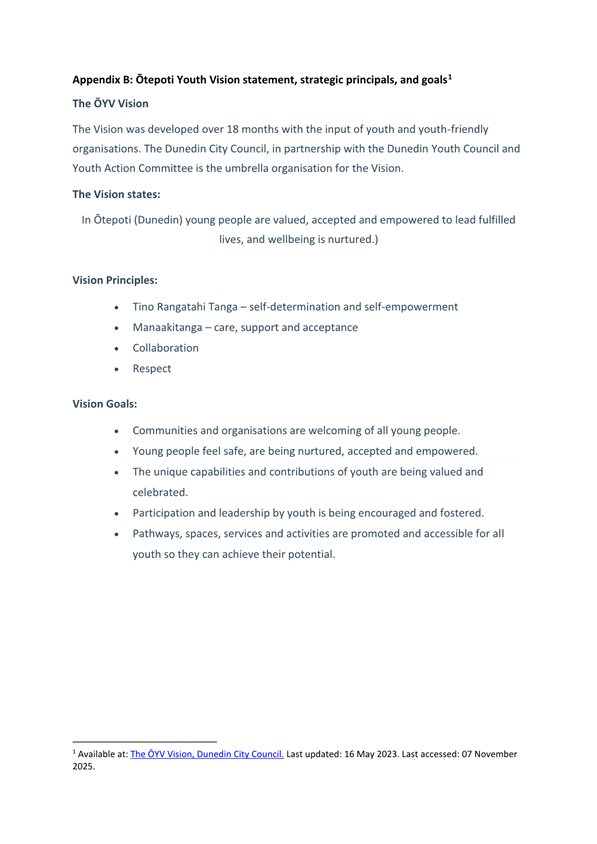
|

|
Council
27 November 2025
|
Residents' Opinion Survey Quarterly Update: July -
September
2025
Department: Corporate Policy
EXECUTIVE SUMMARY
1 This report provides a summary of the Residents’
Opinion Survey (ROS) quarterly results (the Quarterly results) for Quarter One
2025-2026 (July-September 2025), as detailed in Attachment A.
2 The Quarterly results show a comparison between the fourth quarter
of the last financial year (April-June 2025), and the first quarter of the
current year (July-September 2025).
3 The Quarterly results show quarter-on-quarter changes in:
· residents’ overall satisfaction and dissatisfaction
with ten (10) Dunedin City Council (DCC) facilities, service, and
infrastructure areas.
4 residents’ overall satisfaction with five (5) aspects
of the DCC and elected members (the Council).This report also updates
the Council on ROS data collection for the 2025/26 year, ensuring that it
aligns with the adopted Levels of Service (LoS) in the 9 Year Plan 2025-34
(9YP).
RECOMMENDATIONS
That the Council:
a) Notes the Residents’
Opinion Survey quarterly results for the period of July-September 2025 (Quarter
One 2025/26).
b) Notes the previous
contract for the Residents’ Opinion Survey expired on 31 August 2025 with
no further extensions. The open market procurement plan has now been
completed and a new contract has been signed.
c) Notes the ROS
questionnaire has been updated to reflect the measures for LoS statements as adopted
by Council in the 9 Year Plan 2025-34.
BACKGROUND
5 The
DCC utilises the ROS as a measurement tool aiming at collecting statistically
reliable results on residents’ satisfaction with the DCC services and
facilities and their perceptions of the Council’s performance. It has
been commissioned by the DCC every year since 1994 in varying forms and
provides an annual snapshot to the Council.
6 On
13 February 2023, the Strategy, Planning, and Engagement Committee (the
Committee) requested the addition of quarterly updates to the ROS. The
Quarterly results have been prepared by the supplier in consultation with
Corporate Policy and have been delivered regularly since then.
7 A
variation to the five-year contract with the previous supplier (Gravitas OPG)
for the ROS was agreed to in June 2024, and expired on 31 August 2025 after the
delivery of the 2024/25 annual survey results (sampling ended on 30 June 2025).
8 With
no further extension to the contract permitted under the current DCC
Procurement Policy, an open market procurement was entered into prior to 30
June 2025. This process has now been completed and a new contract has been
signed with EnlightenMe Research.
9 This
report is the first to use data provided by EnlightenMe Research.
10 It
should be noted that the first quarter with the new provider also coincided
with the local body election period, potentially impacting public perceptions
during the campaigning period.
DISCUSSION
11 The
annual ROS is based on a sample of randomly selected residents aged 18 years
and over from the general electoral roll, with a target sample size of 1,200
residents each year.
12 The
annual results will be weighted to known population distributions based on the
2023 Census data for age, gender, ethnicity, and location. This is to reduce
sample bias and represent the demographics of Ōtepoti Dunedin. This is the
first time ROS uses the 2023 Census data after the release of ethnic data
earlier this year.
13 Participation
in the ROS is voluntary and the response count to each question varies.
Levels of Service
in the approved 9YP and the ROS’s questionnaire
14 The
Council adopted the 9 Year Plan 2025-34 on 30 June 2025. The approved 9YP
includes 24 LoS with 35 attributed measures to be gauged by the ROS. Prior to
the approval of the 9YP, 40 LoS measures were gauged by the ROS.
15 This
required the questionnaire to be refreshed to stay robust and reflective of the
attributed measures in the 9YP.
16 LoS
no longer measured using ROS, include public toilets, cemeteries and
streetlights, as well as two relating to parking services. These have been
replaced with LoS which are measured by alternative means.
Refreshed
questionnaire
17 The questionnaire has been refreshed to align with the Office of the Auditor General guidelines for
non-financial performance review for local government. The
refreshed questionnaire has improved wording and supplementary questions around
people’s connection to nature have been added.
18 The questions are based on sound market research best
practice. The
questionnaire is simple to complete, uses plain language, and is culturally
inclusive (for example, participants can request the questionnaire in
other languages).
Quarter one sample
and response rate:
19 The
total base (number of respondents who participated in the survey) for the July–September
2025 quarter was 297, compared to a bigger total base during the previous April
– June 2025 quarter (536 respondents).
20 The
response count for each group of questions ranged from 97 to 294. This wide
range of response counts to the questions could be due to any combination of
the following three reasons:
· The
response count for any question does not incorporate the
‘’Don’t know” answer. Only answers on the satisfaction
scale were analysed. For example, the response count to the question about
‘7 Regulatory services’ was 262 out of the total base of 297,
meaning some participants might have clicked on “Don’t know”
for that question.
· A
question was left unanswered, regardless of whether it was on purpose or an
oversight.
· The
question ‘10. Handling enquiries’ was only asked if a respondent
indicated in the previous question that they had contacted the DCC staff in the
last three months.
21 Like
the ROS annual results, quarterly results are statistically tested. The results
for this quarter have a margin of error of +/- 5.7%. It is important to note
that the quarterly results have a greater margin of error because of the
smaller number of accumulative sample and response base, compared to around +/-
2.6% for annual results. To demonstrate, the April—June 2025 quarter had
a bigger response rate and the margin of error was lower (4.2%).
22 Statistically
significant differences from the previous quarter are denoted in quarterly ROS
reports with a red or green arrow.
23 It
is recommended to exercise caution when considering any increase or decrease in
satisfaction ratings that are not statistically significant as they may not be
reliable.
Clarification on
terms
24 ‘Statistically
significant’ means a result is not likely due to a random chance in
sampling and is likely due to some factor of interest (for example, a
meaningful change that requires attention).
25 There
is a strong relationship between determining what is statistically significant,
the sample size and margin of error. The bigger the sample, the smaller the
margin of error (uncertainty about results). In a large sample size, a small
percentage change could be deemed as significant because the level of uncertainty
(margin of error) is small. The change (even if it is small) is deemed
significant as the change is likely due to a factor of interest. This is
particularly notable in this quarter.
26 In
a smaller sample size, a large change may fail to be deemed significant due to
a greater level of uncertainty.
Findings of ROS
Quarter One (July – September 2025)
27 There
were eight areas with statistically significant changes to overall
dissatisfaction or satisfaction in this quarter.
28 Within
facilities and services: Parks, reserves, and open spaces; Water related
infrastructure; Roading related infrastructure; Planning and urban design.
29 Within
the DCC and elected members: Performance of the Mayor and Councillors;
Performance of Community Board members; Overall satisfaction with what the DCC
provides; Value for money of DCC services and activities.
Overall
satisfaction with facilities and service areas:
30 The
level of satisfaction with ‘Parks, reserves, and open spaces’ has
significantly increased from 75% to 86%. This area includes
· Dunedin
Botanic Garden
· Sports playing
fields
· DCC playgrounds
· Walking and biking
tracks
· DCC reserves
31 Although
the analysis and reporting of quarterly data provided by the supplier is not
set up to examine to which facilities this significant change is attributed,
the disaggregated accumulative results for each facility indicate that the
Dunedin Botanic Garden and walking and biking tracks experienced the highest
increases in satisfaction.
32 The
level of satisfaction with ‘Water related infrastructure’ has
significantly decreased from 54% to 46%. Similarly, the level of
dissatisfaction has increased for this area from 16% to 24%. This includes
· Water
pressure and quality
· Sewerage
system
· Stormwater
systems
33 Although
granular analysis is out of scope of the quarterly reporting provided by the
supplier, the accumulative disaggregate monthly results indicate that all elements
showed a decrease in satisfaction over this period, and that dissatisfaction increased
particularly in the stormwater systems. Analysis of community feedback given in
open questions indicates that dissatisfaction likely relates to localised flooding
and infrastructure pressures in South Dunedin. There is a perceived backlog of
infrastructure maintenance in Ōtepoti Dunedin and dissatisfaction with
communications around maintenance.
34 The
level of dissatisfaction with ‘Roading related infrastructure’ has
significantly increased from 29% to 43%. This includes
· Road
conditions
· Cycling
suitability
· Footpath
condition
· Off-peak and
on-peak traffic flow
· Pedestrian
movement
· Parking
availability
35 Although
the analysis and reporting of quarterly data is not set up to examine to which
areas this significant change is attributed, the accumulative monthly results
for each roading related infrastructure indicate that ‘Road
conditions’ experienced the largest increase in dissatisfaction. Overall
satisfaction only declined slightly this quarter (a non-significant
change). Analysis of community comments through open questions indicates
that the dissatisfaction relates mainly to issues with potholes, delayed
repairs, roadworks, and access to parking.
36 The
level of dissatisfaction with ‘Planning and urban design’ has
significantly increased from 12% to 19%.
Overall
satisfaction with the DCC and elected members:
37 The
level of satisfaction with ‘Performance of Mayor and Councillors’
has significantly decreased from 27% to 17%.
38 The
level of satisfaction with ‘Performance of Community Board Members’
has significantly decreased from 40% to 24%.
39 The
level of satisfaction with ‘What the DCC provides” overall has significantly
decreased from 47% to 35%.
40 The
level of satisfaction with ‘Value for money of DCC services and
activities’ has significantly decreased from 33% to 24%.
OPTIONS
41 There are no
options as this report for noting only.
NEXT STEPS
42 Staff
will work with EnlightenMe Research to provide Council with the next quarterly
results (Quarter Two) in early 2026.
Signatories
|
Author:
|
Nadia Wesley-Smith - Corporate Policy Manager
|
|
Authoriser:
|
Nicola Morand - Manahautū (General Manager Community
and Strategy)
|
Attachments
|
|
Title
|
Page
|
|
⇩a
|
DCC Residents' Opinion
Survey - Quarterly Tables July-September 2025
|
177
|
|
SUMMARY OF CONSIDERATIONS
|
|
Fit with purpose of Local Government
This decision enables democratic local
decision making and action by, and on behalf of communities.
|
|
Fit with strategic framework
|
|
Contributes
|
Detracts
|
Not applicable
|
|
Social Wellbeing Strategy
|
✔
|
☐
|
☐
|
|
Economic Development Strategy
|
✔
|
☐
|
☐
|
|
Environment Strategy
|
✔
|
☐
|
☐
|
|
Arts and Culture Strategy
|
✔
|
☐
|
☐
|
|
3 Waters Strategy
|
✔
|
☐
|
☐
|
|
Future Development Strategy
|
✔
|
☐
|
☐
|
|
Integrated Transport Strategy
|
✔
|
☐
|
☐
|
|
Parks and Recreation Strategy
|
✔
|
☐
|
☐
|
|
Other strategic projects/policies/plans
|
✔
|
☐
|
☐
|
The ROS contributes to all aspects of the strategic
framework as it gauges residents’ opinions on the DCC facilities, services,
and infrastructure; overall performance; and perceptions of Ōtepoti
Dunedin.
|
|
Māori Impact Statement
The 2025/26 ROS does not qualify for Māori descent
electoral roll data under section 112 of the Electoral Act 1993. This data
would enable more accurate representation of Māori in the ROS through
targeted sampling. Where response rates are not proportional to the
Ōtepoti population for Māori the results are weighted to known
population distributions based on the 2023 Census data to reduce sample bias.
|
|
Sustainability
The ROS asks about residents’ perceptions of Ōtepoti
Dunedin as a sustainable city, and whether the DCC is a leader in encouraging
the development of a sustainable city.
|
|
Zero carbon
The
ROS has no direct impact on the city-wide and DCC emissions, as greenhouse
gas emissions are likely to stay the same. In procuring and awarding the new
supplier, the DCC Procurement Emissions Standards Guidance was applied.
|
|
LTP/Annual Plan / Financial Strategy /Infrastructure
Strategy
One of the objectives of the ROS is to gauge the extent to
which Council is meeting its 9 year and Annual Plan objectives. The ROS asks
about residents’ satisfaction with the ‘value for money’ of
the services provided by the DCC.
|
|
Financial considerations
There
are no known financial considerations.
|
|
Significance
The significance of this report is low in terms of
Council’s Significance and Engagement policy, as it is for noting only
|
|
Engagement – external
The ROS is a form of external engagement that allows the
DCC to create community-informed improvements.
|
|
Engagement - internal
Reporting of ROS results will be considered as part of
future work on non-financial reporting, levels of services, and community-informed
feedback.
|
|
Risks: Legal / Health and Safety etc.
No risks identified
|
|
Conflict of Interest
There
are no known conflicts of interest.
|
|
Community Boards
The survey includes questions relating to the performance
of Community Boards, ROS result breakdowns are available at a community
level, which includes Community Board areas.
|
|

|
Council
27 November 2025
|
New Zealand Masters Games Statement of Intent and Service
Level Agreement 2025 - 2027
Department: Events
EXECUTIVE SUMMARY
1 This
report presents the Statement of Intent (SOI) and Service Level Agreement (SLA)
for the Dunedin (New Zealand) Masters Games Trust for approval.
2 The
Dunedin (New Zealand) Masters Games Trust is a Council Controlled Organisation
(CCO) and is exempted from the standard reporting requirements of a CCO.
However, the Trust Board voluntarily submits a Statement of Intent and Service
Level Agreement, a Pre-Games report and Post-Games report to Council
biennially.
3 The
report to Council has been delayed as the Trust prioritised completing the
delivery review of the 2026 Games to ensure accurate and informed reporting.
Its submission was further delayed due to the timing coinciding with the local
election process.
4 There
have been minor changes to the SLA (see Attachments A and B) and SOI (see
Attachments C and D) since they were last approved in June 2023.
RECOMMENDATIONS
That the Council:
a) Approves the 2025
– 2027 Dunedin (New Zealand) Masters Games Trust Statement of
Intent.
b) Approves the 2025
– 2027 Dunedin (New Zealand) Masters Games Trust Service Level Agreement.
BACKGROUND
5 The
Dunedin (New Zealand) Masters Games Trust (the Trust) was established in 2007
primarily as a mechanism to attract external funding through grants funders and
corporate sponsorship for the biennial New Zealand Masters Games held in
Dunedin.
6 Although
the Trust has an exempt status as a CCO, it still voluntarily meets the
requirements of a CCO in terms of its reporting and accountability.
7 The
New Zealand Masters Games is owned by The New Zealand Masters Games
Limited. The Dunedin City Council (DCC) is one of two franchisees for the
Masters Games, the other being the Whanganui (New Zealand) Masters Games
Trust. The Dunedin (New Zealand) Masters Games Trust and the DCC have
secured the New Zealand Masters Games for Dunedin until the end of 2036, with
the event held biennially.
8 The
DCC has delegated the management and co-ordination of the Dunedin Games to the
Trust. The Dunedin Masters Games is the largest regularly occurring
premier-level event in Dunedin. The Trust's objectives in managing the
Games reflect the Council's Festivals and Events Plan in relation to
attracting visitors, visitor nights and visitor expenditure, and the Council's
goals relating to recreational activity and participation.
9 The
Trust is dependent on funding from sources external to the Council for the
successful financial management of the Games. Therefore, much of its
operational activity is focused on securing funding as well as attracting
competitors who contribute through a registration fee. The Games attract
repeat visitors to Dunedin and participants report high levels of satisfaction
with the event and their stay in Dunedin. The total economic impact of
hosting the 2026 event in Dunedin, comprising the direct, indirect and induced
efforts, is estimated at $3.2 million.
10 The 2026
Masters Games will be held in Dunedin, 31 Jan – 8 Feb 2026.
DISCUSSION
Statement of Intent
11 The updated
Statement of Intent (SOI) is attached as Attachment A and Attachment B (tracked
changes). In addition to the change of dates, the following changes have
been made:
· Section 6
(Performance Objectives and Measures of Performance) Has been updated to
reflect the definition of a Regional Event in the Festivals and Events Plan.
· The Financial
Table in Section 7 has been updated to reflect the revised budget. (Note: The
2024/25 financial year is an off
year for the Games, meaning limited income is generated during this
period. The majority of funding is received in advance for the on year—2025/26—when
the Games are held, and most expenses are incurred. As a result, a deficit is
shown in year one; however, it is expected that once the Games conclude, the
event will at least break even overall.)
· Section 8
(Reporting to Council) has been updated to align with the Trust Deed.
Service Level Agreement
12 The updated
Service Level Agreement (SLA) is attached as Attachment C and Attachment D
(tracked changes). In addition to the change of dates, the title Games
Coordinator to Games Manager, the following changes have been made:
· Section 2 was
updated to reflect an additional member on the Board of The New Zealand Masters
Games Limited.
· Section 3
updated to reflect changes in the terminology in the Festivals and Events Plan
· Goal C, Objective
– On-line registration System has been updated to reflect the use of a
new registration system as the previous one is no longer compliant or supported.
OPTIONS
13 <Enter
text>
Option One – Recommended Option
14 Council
approves the SOI and SLA 2025 – 2027 which incorporate changes that
reflect the current status of the Games.
Advantages
· The
management and co-ordination of the New Zealand Masters Games would continue as
previously agreed. The Masters Games continues to provide economic value and
add to the profile of the city.
· There
is a clear agreement in place which outlines the roles and responsibilities of
the Dunedin (New Zealand) Masters Games Trust and staff involved in managing
and co-ordinating the Games.
· There
are clear lines of reporting from the Trust to the Council, as outlined in the
SOI and SLA.
Disadvantages
· No
disadvantages have been identified.
Option Two
15 Council
does not approve the updated SOI and SLA for the Dunedin (New Zealand) Masters
Games and the Trust operates without an updated SOI or SLA in place.
Advantages
· No
advantages have been identified.
Disadvantages
· Masters
Games will be operating with out of date documentation which does not reflect
its current status.
NEXT STEPS
16 If the
Council approves the recommendation, the SOI and SLA will be amended and
continue to be implemented.
17 If the
Council does not approve the recommendation, Council staff will work through a
process with the Dunedin (New Zealand) Masters Games Trust to get an agreed SOI
and SLA in place. This would then be presented to Council at a future meeting.
Signatories
|
Author:
|
Vicki Kestila - Master Games Manager
Dan Hendra - Team Leader - Events
|
|
Authoriser:
|
Sian Sutton - Dunedin Destination Manager
Mike Costelloe - General Manager, Arts, Culture &
Economic Development
|
Attachments
|
|
Title
|
Page
|
|
⇩a
|
Statement of Intent
2025 - 2027
|
185
|
|
⇩b
|
Statement of Intent
2025 - 2027 - Tracked Changes
|
192
|
|
⇩c
|
Service Level Agreement
2025 - 2027
|
199
|
|
⇩d
|
Service Level Agreement
2025 - 2027 - Tracked Changes
|
205
|
|
SUMMARY OF CONSIDERATIONS
|
|
Fit with purpose of Local Government
This decision enables democratic local
decision making and action by, and on behalf of communities, and this
decision promotes the social and economic well-being of communities in the
present and for the future.
|
|
Fit with strategic framework
|
|
Contributes
|
Detracts
|
Not applicable
|
|
Social Wellbeing Strategy
|
✔
|
☐
|
☐
|
|
Economic Development Strategy
|
✔
|
☐
|
☐
|
|
Environment Strategy
|
☐
|
☐
|
✔
|
|
Arts and Culture Strategy
|
☐
|
☐
|
✔
|
|
3 Waters Strategy
|
☐
|
☐
|
✔
|
|
Future Development Strategy
|
☐
|
☐
|
✔
|
|
Integrated Transport Strategy
|
☐
|
☐
|
✔
|
|
Parks and Recreation Strategy
|
✔
|
☐
|
☐
|
|
Other strategic projects/policies/plans
|
✔
|
☐
|
☐
|
The New Zealand Masters Games contributes
to three of the Council’s strategies as
well as the Festivals and Events Plan.
|
|
Māori Impact Statement
In August 2022, a mana whenua representative for both
Kāti Huirapa Rūnaka ki Puketeraki and Te Rūnanga o
Ōtākou was appointed. The appointment helps ensure the Trust takes
into account specific views from mana whenua alongside the overall
considerations Te Taki Haruru provides.
|
|
Sustainability
The Dunedin New Zealand Masters Games supports long-term
sustainability by delivering strong economic returns through visitor
spending, social benefits by promoting active ageing, community pride, and
volunteerism, and has the potential to improve its environmental impact by
minimising waste and using existing infrastructure. Continued collaboration
and smart planning will help ensure the event’s future success.
|
|
LTP/Annual Plan / Financial Strategy /Infrastructure
Strategy
There are no implications in noting this report
|
|
Financial considerations
The DCC guarantees to underwrite
the Games should it be required; financial oversight remains a key focus
for the Trust who continue to monitor budgets closely, ensuring spending
aligns with projected revenue and sponsorship contributions.
|
|
Significance
This report is considered low in terms of Council’s
Significance and Engagement Policy.
|
|
Engagement – external
Trust has maintained proactive engagement with a wide
range of stakeholders throughout the planning of the 2026 New Zealand Masters
Games, this includes participants, sponsors, sports partners, accommodation
providers, and community organisations, there was no external engagement in
writing this report, the Trust has made the recommendations.
|
|
Engagement - internal
Although the Trust works closely with Dunedin City Council
teams to coordinate venue planning, budgeting, marketing, and event
operations, there was no internal engagement in writing this report.
|
|
Risks: Legal / Health and Safety etc.
There are no known risks.
|
|
Conflict of Interest
There are no known conflicts of interest.
|
|
Community Boards
There are no known implications for Community Boards.
|
|

|
Council
27 November 2025
|
2026 New Zealand Masters Games Operational and Financial
Update
Department: Events and Finance
EXECUTIVE SUMMARY
1 This
report updates the Council on the operational and financial status of the
biennial New Zealand Masters Games being run in Dunedin (31 January – 8
February 2026).
2 Financially
the 2026 New Zealand Masters Games is on track with 88.31% of budgeted revenue
confirmed. Registrations, open since 9 September 2025, are currently slightly
behind those received at the same time for the 2024 Games.
RECOMMENDATIONS
That the Council:
a) Notes the New Zealand
Masters Games operational and financial update.
b) Approves the 2026 New
Zealand Masters Games proceeding.
BACKGROUND
3 The
Dunedin (New Zealand) Masters Games Trust’s Statement of Intent and Trust
Deed require the Trust to report to Council prior to each Masters Games.
4 The
Dunedin Masters Games (the Games) is the largest regularly occurring event in
Dunedin. The Games meets the Premier criteria within the city’s
Festival’s and Events Plan, contributing to the DCC’s Social
Wellbeing, Parks and Recreation and Economic Development Strategies.
Previous participants experience high levels of satisfaction with the event and
their stay in Dunedin.
5 Masters
Games is owned by New Zealand Masters Games Limited, and the DCC is one of two
franchisees, the other is the Whanganui (New Zealand) Masters Games
Trust. New Zealand Masters Games Limited guarantees franchise rights for
the biennial New Zealand Masters Games in Dunedin until the completion of the
2036 New Zealand Masters Games. The franchise agreement guarantees three
appointments from the Trust on the New Zealand Masters Games Limited Board.
6 As
franchisee the DCC has delegated the Dunedin (New Zealand) Masters Games Trust
to manage the event.
7 Council
has provided grant payments to the Trust of $71,563 (2024/25) and $115,783
(2025/26). The annual grant covers costs for the Games Manager who is an
employee of the DCC. As the Trust is dependent on funding from sources
outside Council for the successful financial management of the Games, much of
the Manager’s role is to secure funding and attract competitors, who contribute
to revenue through their registration fee.
DISCUSSION
8 The
Trust approved the 2026 Masters Games budget at the beginning of 2024/25.
Monthly Board meetings have been held to monitor and closely manage the
expenditure against the budget.
9 The
level of expenditure is directly related to revenue sourced from grants,
sponsorship, and registration fees. The Trust is charged with ensuring
that, at its completion, the Games will achieve at least a break-even result.
10 The main
revenue stream from Games registration begins in September (prior to the
February Games). The Statement of Intent and Trust Deed state that the
Trust is required to report to the Council prior to the Masters Games being
run, confirming whether it has achieved 85% of the biennial Masters Games
budgeted grants and sponsorship revenue.
11 Under the
agreement with Council, if the Board has been unsuccessful in achieving 85% of
the Games grants and sponsorship funding at the time this report is presented,
the Trust will:
· Revise
the Games budget to reduce expenditure to achieve a break even result and/or
request the DCC to underwrite the Games; or
· Gain
approval from the Council for it to underwrite the amount of the anticipated
loss; or
· Agree
to cancel the Games.
12 The
following is an update of funding activity as of 12 November 2025, three months
out from the 2026 event.
Grants and
Sponsorship
13 The
approved budget from Sponsorship is $207,346. Currently 99.04% has been
confirmed. Funding has been confirmed as follows:
|
Sponsorship
|
|
Income
|
Budget
|
Confirmed
|
|
Dunedin City
Council
|
187,346
|
187,346
|
|
Other Sponsors
|
20,000
|
18,000
|
|
Total
|
207,346
|
205,346
|
14 The Trust
has budgeted $169,000 in grant revenue from Gaming Trusts, it has secured
$127,000 (75.15%) to date. Funding from Gaming Trusts is oversubscribed
by community and sporting groups and securing funds has proven difficult.
The Trust continues to make applications.
|
Grants
|
|
Income
|
Budget
|
Confirmed
|
|
Otago Community Trust
|
100,000
|
90,000
|
|
Callis Charitable Trust
|
5,000
|
|
|
Lion Foundation
|
7,000
|
5,000
|
|
NZ Community Trust
|
20,000
|
20,000
|
|
TAB NZ
|
10,000
|
|
|
Kiwi Gaming Foundation
|
5,000
|
|
|
Aotearoa Gaming Trust
|
10,000
|
12,000
|
|
Pub Charity
|
7000
|
|
|
Grassroots Trust Central
|
5,000
|
|
|
Total
|
169,000
|
127,000
|
15 The
combination of grant and sponsorship revenue secured to date is $332,346, which
represents 88.31% of the target Games budget of $376,346. The Trust
continues to seek grant funding and sponsorship to achieve targets.
16 There are currently
two funding applications outstanding that the Trust is waiting for an outcome,
Pub Charity Limited ($12,000) and Grassroots Trust ($10,725).
Registration
Fees
17 The
following fees were approved by the Trust:
· Early Bird $70
· Standard $100
· Late $130
· Supporter $45
18 The budget
for registration revenue is $241,800, this is split into four categories: Early
Bird, $160,000 (closing 27 November 2025), Standard, $52,000 (closing 15
January 2026), Late, $22,000 (close off dependant on sport), and Supporter,
$7,800 (open until the completion of the Games).
19 The
registration fees are an ‘at risk’ component of the budget,
therefore the budget has been set based on participant numbers of 3,800 which
was what was achieved in 2024. As of 12 November 2025, there were 1,337
participant entries, which is tracking 123 behind the same time in 2023. At the
close of Early Bird registrations there will be a clearer idea of where
registrations sit as entrants tend to leave things to the last minute.
20 The Trust
reported to Council 24 June 2025 of the changes to be made in the delivery plan
for the 2026 Games to ensure the events sustainability in response to the
financial loss incurred during the 2024 New Zealand Masters Games. The revised
delivery model has removed the traditional Games Hub, reducing costs by
approximately $100,000.
21 The Trust
is continually monitoring expenses to ensure it does not exceed the budget and
anticipates a break even result due to careful planning and organisation of the
event.
22 As per the
Service Level Agreement between the DCC and the Masters Games Trust, the DCC
acts as the underwriter for the Games. The Trust must submit any underwriting
request within four months of the Games’ commencement, accompanied by
profit and loss forecasts and any other required information. Council reserves
the right to decline underwriting or to withdraw support if the forecasting
indicates a loss, it considers significant.
23 Current
forecasts are projecting that over the two-year cycle, the Games will break
even. If the Council proceeds with the Games and the event exceeds its budget,
the Council will be called upon to approve an underwrite for the Games.
OPTIONS
Option One – Recommended Option
24 That the
Games proceed, and the Trust continues to monitor revenue and expenses to
ensure the event does not exceed its budget.
Advantages
· Positive
economic impact to Dunedin City.
· Growth
in funding and membership for participating sporting organisations.
· Contributes
positively to the health and wellbeing of participating residents.
Disadvantages
· There
is a risk of the Council being called upon to underwrite the Games should the
event suffer a loss.
Option Two
25 The Council
does not approve the Games proceeding and instructs the Trust to cancel the
Games.
Advantages
· There
are no identified advantages to cancelling the event at this stage.
Disadvantages
· Loss
of potential income and wider economic benefit to the city.
· Disadvantages
to business and sporting codes as financial and other commitments have been
made, and benefits will not be realised.
· Additional
costs would be incurred to refund registered participants, and the Trust would
need to seek underwriting of losses from the Council.
NEXT STEPS
26 If Council
approves the Masters Games proceed, the Trust will continue its management and
event planning as delegated by the DCC.
27 A further
report will come to Council in January 2026, providing an update on revenue,
funding, and expenditure against the budget.
Signatories
|
Author:
|
Vicki Kestila - Master Games Manager
Dan Hendra - Team Leader - Events
Lara McBride - Assistant Accountant - Compliance
|
|
Authoriser:
|
Sian Sutton - Dunedin Destination Manager
Mike Costelloe - General Manager, Arts, Culture &
Economic Development
|
Attachments
There are no attachments for
this report.
|
SUMMARY OF CONSIDERATIONS
|
|
Fit with purpose of Local Government
This decision enables democratic local
decision making and action by, and on behalf of communities, and this
decision promotes the social and economic well-being of communities in the
present and for the future.
|
|
Fit with strategic framework
|
|
Contributes
|
Detracts
|
Not applicable
|
|
Social Wellbeing Strategy
|
✔
|
☐
|
☐
|
|
Economic Development Strategy
|
✔
|
☐
|
☐
|
|
Environment Strategy
|
☐
|
☐
|
✔
|
|
Arts and Culture Strategy
|
☐
|
☐
|
✔
|
|
3 Waters Strategy
|
☐
|
☐
|
✔
|
|
Future Development Strategy
|
☐
|
☐
|
✔
|
|
Integrated Transport Strategy
|
☐
|
☐
|
✔
|
|
Parks and Recreation Strategy
|
✔
|
☐
|
☐
|
|
Other strategic projects/policies/plans
|
✔
|
☐
|
☐
|
The New Zealand Masters Games contributes
to three of the Council’s strategies as
well as the Festivals and Events Plan.
|
|
Māori Impact Statement
In August 2022, a mana whenua representative for both
Kāti Huirapa Rūnaka ki Puketeraki and Te Rūnanga o
Ōtākou was appointed. The appointment helps ensure the Trust takes
into account specific views from mana whenua alongside the overall
considerations Te Taki Haruru provides.
|
|
Sustainability
The Dunedin New Zealand Masters Games supports long-term
sustainability by delivering strong economic returns through visitor
spending, social benefits by promoting active ageing, community pride, and
volunteerism, and has the potential to improve its environmental impact by
minimising waste and using existing infrastructure. Continued collaboration
and smart planning will help ensure the event’s future success.
|
|
LTP/Annual Plan / Financial Strategy /Infrastructure
Strategy
There are no implications in noting this report
|
|
Financial considerations
The DCC guarantees to underwrite the Games should it be
required; financial oversight remains a key focus for the Trust who continue
to monitor budgets closely, ensuring spending aligns with projected revenue
and sponsorship contributions.
|
|
Significance
This report is considered low in terms of Council’s
Significance and Engagement Policy.
|
|
Engagement – external
Trust has maintained proactive engagement with a wide
range of stakeholders throughout the planning of the 2026 New Zealand Masters
Games, this includes participants, sponsors, sports partners, accommodation
providers, and community organisations.
|
|
Engagement - internal
The Trust works closely with Dunedin City Council teams to
coordinate venue planning, budgeting, marketing, and event operations.
|
|
Risks: Legal / Health and Safety etc.
There are no known risks.
|
|
Conflict of Interest
There are no known conflicts of interest.
|
|
Community Boards
There are no known implications for Community Boards.
|
|

|
Council
27 November 2025
|
Dunedin City Council submission on the Otago Regional
Council Indigenous Biodiversity Strategy 2025
Department: Corporate Policy
EXECUTIVE SUMMARY
1 This
report seeks consideration and approval of a draft submission (Attachment A) to
the Otago Regional Council (ORC) on ORC Indigenous Biodiversity Strategy 2025
(the Strategy).
2 The
consultation seeks feedback on the need for and design of the Strategy,
including:
· a long-term vision
for the region and shorter-term outcomes to aim for between now and 2040
· ORC’s
approach to supporting and strengthening the collective effort of mana whenua,
communities, landowners, businesses, central government, and local councils
· How the ORC
delivers on its responsibilities and meets community expectations to care for
Otago’s native biodiversity.
3 The
discussion document for the consultation is attached as Attachment B.
4 Consultation
information notes that the draft Strategy does not include budgets or work
plans, and that the ORC will be asking for feedback on these through its Long
Term and Annual Plan processes.
5 The
closing date for submissions on this consultation is 30 November 2025.
RECOMMENDATIONS
That the Council:
a) Approves the draft
Dunedin City Council submission, with any amendments, on the Otago Regional
Council’s Indigenous Biodiversity Strategy 2025.
b) Authorises the Chief
Executive to make any minor editorial amendments to the submission .
c) Notes that the Mayor
or delegate will speak to the submission at any hearings.
BACKGROUND
6 The
Otago Regional Council Indigenous Biodiversity Strategy 2025 responds to
national direction under the National Policy Statement for Indigenous
Biodiversity (NPS-IB) and the Resource Management Act 1991, providing a
regional framework to maintain and enhance indigenous biodiversity across land,
freshwater, and coastal environments.
7 ORC
holds key regional functions for biodiversity, biosecurity, and catchment
management, while territorial authorities such as DCC influence biodiversity
outcomes through land use planning, infrastructure provision, parks and open
space management, and local regulatory tools.
8 Ōtepoti
Dunedin has declared a climate emergency and adopted emissions reduction
targets, with the DCC Zero Carbon Plan identifying nature-based solutions and
native forest regeneration as essential for both climate mitigation and
biodiversity enhancement. Te Ao Tūroa – The Natural World
Environment Strategy, Te Taki Haruru – Māori Strategic Framework,
the Future Development Strategy 2024–2034, and the Parks and Recreation
Strategy 2017–2027 together set a local strategic context in which
biodiversity, climate resilience, and community wellbeing are closely linked.
9 The
DCC plays an active role in supporting and promoting biodiversity activities in
Ōtepoti Dunedin through its Advisory Services team, and its Biodiversity
Fund which distributes grants to projects that protect and enhance native
biodiversity in the city. $81,300 is available annually through this
contestable fund.
10 Urban
biodiversity, including parks, reserves, street trees, riparian planting, green
infrastructure and urban forests, plays a frontline role in climate adaptation
in Ōtepoti Dunedin by reducing heat stress, managing stormwater,
supporting indigenous species, and providing accessible green spaces for
communities.
11 Mana whenua
leadership and mātauraka Kāi Tahu are central to effective
biodiversity outcomes in Otago, and the Strategy’s recognition of
mātauraka as a distinct and equally valid knowledge system creates
opportunities to embed cultural values, te taiao, and the health of taoka species
within regional decision-making.
12 Most
high-value biodiversity in Otago occurs on land outside the public conservation
estate, which makes coordinated action with mana whenua, landowners, community
groups, NGOs, and government agencies essential for achieving durable
biodiversity gains and aligning regional and local investment.
13 A
regionally shared biodiversity knowledge base, supported by robust monitoring
and accessible data, is increasingly important for evidence-based planning,
resource consent decision-making, and targeted restoration, especially for
councils with limited in-house ecological expertise.
DISCUSSION
The DCC
Submission
14 The DCC
submission on exploring an Indigenous Biodiversity Strategy recognises the
potential advantages of a strategy focused on indigenous biodiversity, and also
seeks clarification on how such a strategy would work.
15 The DCC
submission notes:
a) that
the Strategy refers to site-led areas, primarily in an appendix, and that
ORC’s existing Regional Pest Management Plan (RPMP) is operative until
2029 while the Strategy also commits to preparing and implementing a
“fit-for-purpose” RPMP.
b) that the
Strategy’s alignment with the NPS-IB provides an appropriate framework to
guide regional and district planning instruments, and that DCC has a
responsibility to ‘have regard to’ this Strategy in future plan
development, although internal understanding of this obligation may vary.
c) that
DCC supports the intent to work with mana whenua and communities to maintain
and enhance indigenous biodiversity, and supports the aspiration to co-design
landscape-scale visions and catchment action plans as a basis for coherent,
long-term regional outcomes.
d) those urban
ecosystems—parks, street trees, green infrastructure, green
roofs—and Dunedin’s network of parks, gardens, reserves and green
corridors play a critical role in maintaining indigenous biodiversity within
the built environment and in connecting ecological areas across the city.
e) that
DCC’s Parks and Recreation Strategy 2017–2027 highlights both
enhancing Dunedin’s green network and protecting special places while
enabling public enjoyment, and that recreation offers significant opportunities
to align public use of spaces with ecological restoration and environmental
stewardship.
16 The DCC
submission seeks clarification on:
a) whether
the Strategy’s actions and expectations apply only to designated site-led
areas or more broadly across Otago.
b) whether
implementation of the three Strategic Pou will involve increased compliance
monitoring and enforcement beyond current rabbit management, and whether
councils may in future be assessed against the full suite of species listed in
the RPMP using a pass/fail methodology similar to that applied to rabbits, with
associated resourcing implications for territorial authorities.
c) ORC’s
intentions for the RPMP given it is operative until 2029, including whether a
full review is anticipated before 2029, a targeted update is proposed to align
with the new Strategy, or the existing RPMP will be implemented until its
scheduled review, noting the importance of this clarity for budgeting,
programmes and compliance planning.
d) several
conceptual and capability matters, including whether ORC sees a difference
between “partnering” and “collaborating” with mana
whenua and other groups; how the ability to monitor the cultural health of
taoka species, their habitats and mahika kai relates to monitoring indigenous
biodiversity across Otago; and how expertise in mātauranga Māori at
appropriate whānau, hapū and iwi scales will be developed or
supported where there are limited tohunga (specialists).
e) implementation
details in the Strategy and appendices, including how indigenous biodiversity
focus areas will be identified now and in future (Appendix 3); who is captured
by the term “landowners” under the 2025–2027 incentives and
co-investment goals; whether it would be appropriate for ORC to work with Te
Rūnanga o Ngāi Tahu’s Hazardous Substances and New Organisms
(HSNO) Kōmiti on pest management and biosecurity (Appendix 5); and the
proposed governance and operational structure for the regional leadership
group.
17 The DCC
submission supports:
a) the
intent to work with mana whenua and communities to maintain and enhance
indigenous biodiversity.
b) the
aspiration to co-design landscape-scale visions for indigenous biodiversity,
including through catchment action plans, and to use these visions to guide
regional resource management, infrastructure investment and long-term planning.
c) the
Strategy’s focus on landscape-scale and catchment-level approaches as a
means of achieving coherence and consistency in biodiversity outcomes over the
long term.
d) the
Strategy’s alignment with the National Policy Statement for Indigenous
Biodiversity, including the requirement for a Regional Biodiversity Strategy,
and the emphasis on a collaborative approach that recognises enduring
biodiversity outcomes depend on genuine partnership with mana whenua, private
landowners, NGOs and community groups, particularly given most biodiversity
values occur outside public conservation land.
e) the
development of a comprehensive, regionally shared biodiversity knowledge base
(e.g. baseline inventories, geospatial datasets, threat assessments, long-term
monitoring indicators) and the integration of mātauraka Kāi Tahu,
ecological science and community knowledge, as well as the establishment of a
coordinated regional leadership group to align investment, avoid duplication,
provide shared technical oversight and strengthen relationships between central
government, councils and mana whenua.
18 The DCC submission
recommends:
a) including
maps of ORC’s designated site-led areas to provide spatial clarity on the
scale and location of strategic priorities and associated operational
implications for councils, landowners and community groups.
b) more
clearly distinguishing between regulatory and non-regulatory workstreams and
outlining the process through which any new or expanded regulatory expectations
will be defined, developed and implemented.
c) explicitly
including local councils and government agencies, alongside mana whenua and
communities, as key partners in delivering biodiversity outcomes.
d) strengthening
acknowledgement in the core Strategy text of the significant biodiversity
protection work already undertaken by community groups, including Predator Free
Dunedin and other conservation organisations.
e) adopting
wording along the lines of: “Working with mana whenua, our communities,
local councils, government agencies, and existing conservation organisations,
we will prepare and implement a fit-for-purpose Regional Pest Management Plan
that addresses pests impacting indigenous biodiversity,” and referencing
alignment with Predator Free 2050 at a regional level.
f) embedding
co-designed, landscape-scale visions and catchment action plans at the centre
of Otago’s approach to guide regional resource management, infrastructure
investment and long-term planning.
g) strengthening
the Strategy’s climate resilience focus by pursuing adaptive planning and
monitoring frameworks that anticipate future ecological conditions;
prioritising restoration and nature-based solutions with multiple co-benefits
(carbon sequestration, water regulation, erosion reduction, biodiversity
gains); implementing integrated catchment-scale frameworks linking
biodiversity, water and hazard management with human and ecosystem wellbeing;
and enhancing landscape connectivity and network resilience through corridors,
climate refuges and permeability improvements.
h) explicitly
recognising urban biodiversity and the role of local authorities in maintaining
ecological connectivity through green infrastructure, corridors and urban
forest initiatives, and recognising recreation as a mechanism for connecting
people with biodiversity and fostering stewardship through restoration
activities, experiential education and citizen science.
i) drawing
a more explicit connection between the health of te taiao and the holistic
health of all residents of Ōtepoti Dunedin and Otago as a whole, rather
than focusing solely on mana whenua.
oPTIONS
Option One – Approve the draft Dunedin City Council
submission to the Otago Regional Council on the draft ORC Indigenous
Biodiversity Strategy 2025
19 Approve the
draft Dunedin City Council submission.
Advantages
· Opportunity
to contribute to the development of regional initiatives on indigenous
biodiversity.
· Opportunity
to advocate for an effective system that will benefit the unique ecology and
indigenous biodiversity initiatives in Otago and Ōtepoti Dunedin.
Disadvantages
· There
are no identified disadvantages.
Option Two – Do not approve the draft Dunedin City
Council submission to the Otago Regional Council on ORC Indigenous Biodiversity
Strategy 2025
20 Do not
approve the draft Dunedin City Council submission:
Advantages
· There
are no identified advantages
Disadvantages
· Missed
opportunity to contribute to the development of regional initiatives on
indigenous biodiversity.
· Missed
opportunity to advocate for an effective system that will benefit the unique
ecology and indigenous biodiversity initiatives in Otago and Ōtepoti
Dunedin.
NEXT STEPS
21 If the
submission is approved DCC staff will submit it, with any amendments, to the
Otago Regional Council by 30 November 2025.
Signatories
|
Author:
|
Berkay Kocak - Policy Analyst
Danielle Tolson - Policy Analyst
|
|
Authoriser:
|
Nadia Wesley-Smith - Corporate Policy Manager
Scott MacLean - General Manager, City Services
|
Attachments
|
|
Title
|
Page
|
|
⇩a
|
Dunedin City Council
submission on the Otago Regional
|
227
|
|
⇩b
|
Consultation document -
Otago Regional Council draft Indignous Biodiversity Strategy 2025
|
233
|
|
SUMMARY OF CONSIDERATIONS
|
|
Fit with purpose of Local Government
This decision promotes the economic,
environmental, and social well-being of communities in the present and for
the future.
|
|
Fit with strategic framework
|
|
Contributes
|
Detracts
|
Not applicable
|
|
Social Wellbeing Strategy
|
✔
|
☐
|
☐
|
|
Economic Development Strategy
|
✔
|
☐
|
☐
|
|
Environment Strategy
|
✔
|
☐
|
☐
|
|
Arts and Culture Strategy
|
☐
|
☐
|
✔
|
|
3 Waters Strategy
|
✔
|
☐
|
☐
|
|
Future Development Strategy
|
✔
|
☐
|
☐
|
|
Integrated Transport Strategy
|
☐
|
☐
|
✔
|
|
Parks and Recreation Strategy
|
✔
|
☐
|
☐
|
|
Other strategic projects/policies/plans
|
✔
|
☐
|
☐
|
The Indigenous Biodiversity Strategy aligns with several
of the DCC’s strategies including the Te Ao Turoa Environment Strategy;
Te Taki Haruru – Māori Strategic Framework; and the Dunedin
Economic Development Strategy 2013-23. It also supports the Zero Carbon
Plan target of 64% increase in carbon sequestration within Dunedin city
boundaries by 2030, compared to 2018/19 levels
|
|
Māori Impact Statement
The Indigenous
Biodiversity Strategy has impacts for Māori
landowners who could potentially benefit from the system, and in their role
as kaitiaki of the whenua, and of at-risk species and habitats on
this land. There are potential implications for the way in which indigenous
data is expected to be a tool in delivering the Strategy. As an organisation
committed to the Treaty of Waitangi, the DCC has an interest in how the
Strategy is delivered in regard to this. Te Taki Haruru, the
DCC’s Māori Strategic Framework,
includes the principles of Auora (health and wellbeing, including in land and
waterways) and Autikaka (protection of resources and particular areas,
enabling us to look forward sustainably).
|
|
Sustainability
The Indigenous Biodiversity Strategy supports a
sustainable approach to managing the natural environment.
Sustainability is a key component of the DCC’s strategic framework and
a consideration across all of its initiatives.
|
|
LTP/Annual Plan / Financial Strategy /Infrastructure
Strategy
There are implications for LTP/Levels of service.
|
|
Financial considerations
There are no financial implications.
|
|
Significance
This decision is considered low in terms of the
Council’s Significance and Engagement Policy.
|
|
Engagement – external
There has been no external engagement.
|
|
Engagement - internal
This submission has been coordinated by the Corporate
Policy team, with input from the City Development, Parks and Recreation, Zero
Carbon, and Mana Ruruku teams.
|
|
Risks: Legal / Health and Safety etc.
There are no identified risks.
|
|
Conflict of Interest
There are no known conflicts of interest.
|
|
Community Boards
The DCC submission is likely to be of interest to all
communities in Ōtepoti Dunedin including those served by the Community
boards.
|
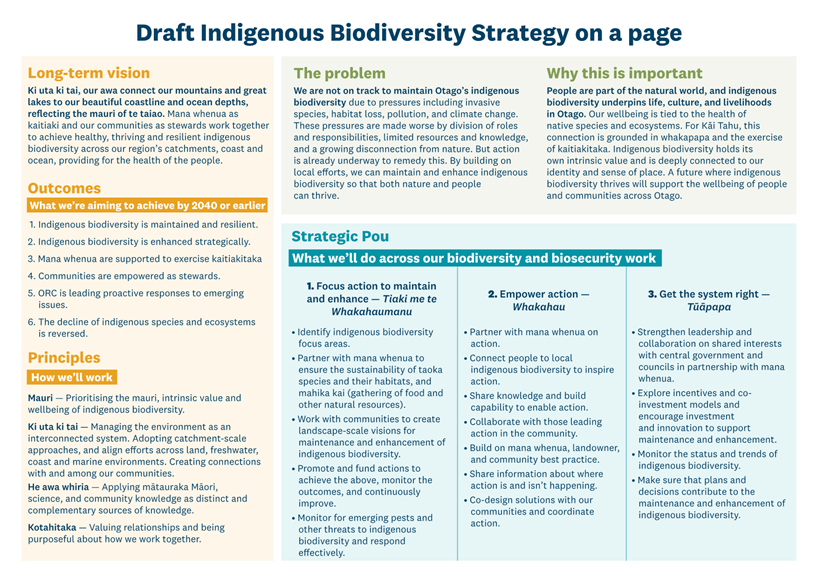
|

|
Council
27 November 2025
|
DCC Professional Theatre Fund Grants
Department: Ara Toi
EXECUTIVE SUMMARY
1 This
report summarises grant applications and includes applicant data and funding
recommendations to the Dunedin City Council (DCC) Professional Theatre Fund for
the September 2025 round.
RECOMMENDATIONS
That the Council:
a) Decides the funding
allocations for the DCC Professional Theatre Fund grants.
BACKGROUND
2 The
DCC Professional Theatre Fund (PTF) was established after the closure of the
Fortune Theatre Company in 2018.
3 At
the time, Council approved the ring-fencing of $95K of City Service funding to
support the ongoing development and provision of professional theatre in the
city. This amount was the average allocated by DCC to the Fortune Theatre
Company per annum.
4 From
2018 to 2020, CNZ provided annual match funding for the PTF; this ceased after
September 2020 and funding rounds were reduced from two to one per annum.
5 Ara
Toi/Creative Partnerships staff are in regular contact with potential and
current grant applicants throughout the year. Applications for PTF closed on 28
September 2025.
6 Grant
applications and relevant report backs are discussed and reviewed by the full
team prior to finalising recommendations; all assessments are reviewed by the
Team Leader.
DISCUSSION
7 Ten
applications were received for this fund (Attachment A). The complete
funding applications will be provided in the confidential section of the
meeting.
8 The
number of applications to the Professional Theatre Fund is the highest in a
single round since the fund was established. While this indicates an
increasingly positive view of the future for theatre in the city, it also
reflects the increasing difficulty theatre practitioners face in funding their
work.
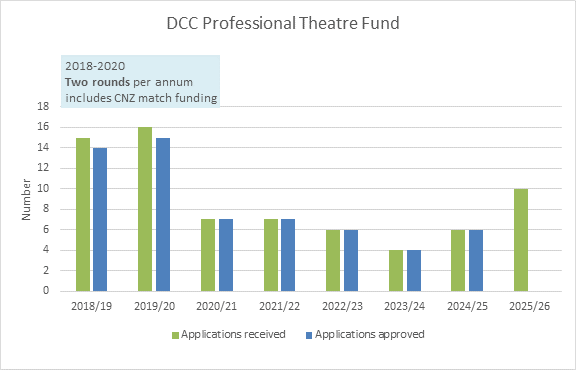
9 Professional
theatre is a resource-heavy medium. This is seen in the total budgets provided,
especially for those seeking funding for the production phase of a project. In
order to bring works to the stage, those involved often forego a portion or all
of their reimbursement and previous projects have resorted to crowdfunding to
make up funding shortfalls.
10 Support for
professional theatre was previously available through the collegial networks
and soft infrastructure of the Fortune Theatre Company, which received $500K
per annum from Creative New Zealand. Since 2018, the loss of this central
government funding has left a $3.5m fiscal hole in the city’s creative
economy.
11 With the
limited funding available, assessors drew upon the following criteria to inform
their funding recommendations. Projects were prioritised if they demonstrated:
- critical,
and conceptual rigour and innovation
-
employment opportunities for local practitioners
- that
they feed into the local performance ecosystem
- the
potential to provide rich outcomes for local audiences
OPTIONS
Option One – Recommended Option
12 Council
decides and approves funding allocations for the DCC Professional Theatre Fund.
Advantages
· Successful
applicants can start contracting performers and technical staff, confirm venue
hire, commence rehearsal, development, and performance schedules.
Disadvantages
· There
are no identified disadvantages.
Option Two – Status Quo
13 Council
does not decide or approve funding allocations for the DCC Professional Theatre
Fund.
Advantages
· There
are no identified advantages.
Disadvantages
· Performances
and script development are further delayed by lack of funding confirmation.
· Staff
cannot be contracted and rehearsals cannot go forward; this is especially
difficult for shows scheduled in the first quarter of the year.
NEXT STEPS
14 Staff will
advise applicants of Council’s decisions and administer the payment of
grants.
Signatories
|
Author:
|
Lisa Wilkie - Kaiārahi – Team Leader Creative
Partnerships
|
|
Authoriser:
|
Mike Costelloe - General Manager, Arts, Culture &
Economic Development
|
Attachments
|
|
Title
|
Page
|
|
⇩a
|
DCC Professional
Theatre Fund Grant Applications
|
277
|
|
SUMMARY OF CONSIDERATIONS
|
|
Fit with purpose of Local Government
This decision enables democratic local
decision making and action by, and on behalf of communities.
This decision promotes the social,
economic, environment and cultural well-being of communities in the present
and for the future.
|
|
Fit with strategic framework
|
|
Contributes
|
Detracts
|
Not applicable
|
|
Social Wellbeing Strategy
|
✔
|
☐
|
☐
|
|
Economic Development Strategy
|
✔
|
☐
|
☐
|
|
Environment Strategy
|
☐
|
☐
|
✔
|
|
Arts and Culture Strategy
|
✔
|
☐
|
☐
|
|
3 Waters Strategy
|
☐
|
☐
|
✔
|
|
Future Development Strategy
|
☐
|
☐
|
✔
|
|
Integrated Transport Strategy
|
☐
|
☐
|
✔
|
|
Parks and Recreation Strategy
|
✔
|
☐
|
☐
|
|
Other strategic projects/policies/plans
|
✔
|
☐
|
☐
|
Funding
decisions made by the Grants Subcommittee allow creative communities to
engage in diverse arts and cultural activities. These activities support a
vibrant and creative city described in strategies, policies, and plans such
as Ara Toi Otepoti, the Festivals and Events Plan, and the Ōtepoti Live
Music Action Plan.
|
|
Māori Impact Statement
Te Taki Haruru, the DCC’s Māori Strategic
Framework outlines the aspirations for Māori living in Ōtepoti
Dunedin. Some of the creative projects supported by grants funding directly
acknowledge and celebrate the cultural and creative traditions of Kāi
Tahu and mataawaka in Ōtepoti. The Grants Subcommittee includes mana
whenua-appointed representation to ensure all grant decisions include mana
whenua perspectives.
|
|
Sustainability
There are no negative implications for sustainability.
|
|
LTP/Annual Plan / Financial Strategy /Infrastructure
Strategy
Grants are part of the DCC’s Levels of Service and
are included in the DCC’s LTP and Annual Plans.
|
|
Financial considerations
There are no financial considerations as grants are
allocated according to the DCC’s grants budget approved by Council.
|
|
Significance
The significance of the decision related to grants has
been assessed as ‘low’
|
|
Engagement – external
Informal external engagement related to grants takes place
throughout the year.
|
|
Engagement - internal
Ara Toi/Creative Partnerships staff consult with the Botanic
Gardens, Events, Community Partnerships, and Waste Minimisation teams.
|
|
Risks: Legal / Health and Safety etc.
The risks related to grants is considered low; applicants
have to provide financial and group information to be eligible to apply.
Applicants submit reports upon completion of the activity; these are assessed
by staff prior to approval before approving further grants to the applicant.
|
|
Conflict of Interest
No Conflicts of Interest have been noted by staff;
perceived Conflicts of Interest have been noted in accordance with the
DCC’s Conflict of Interest policy.
|
|
Community Boards
There are no implications for Community Boards. There are
some applicants who are located within the Community Boards areas.
|
|

|
Council
27 November 2025
|
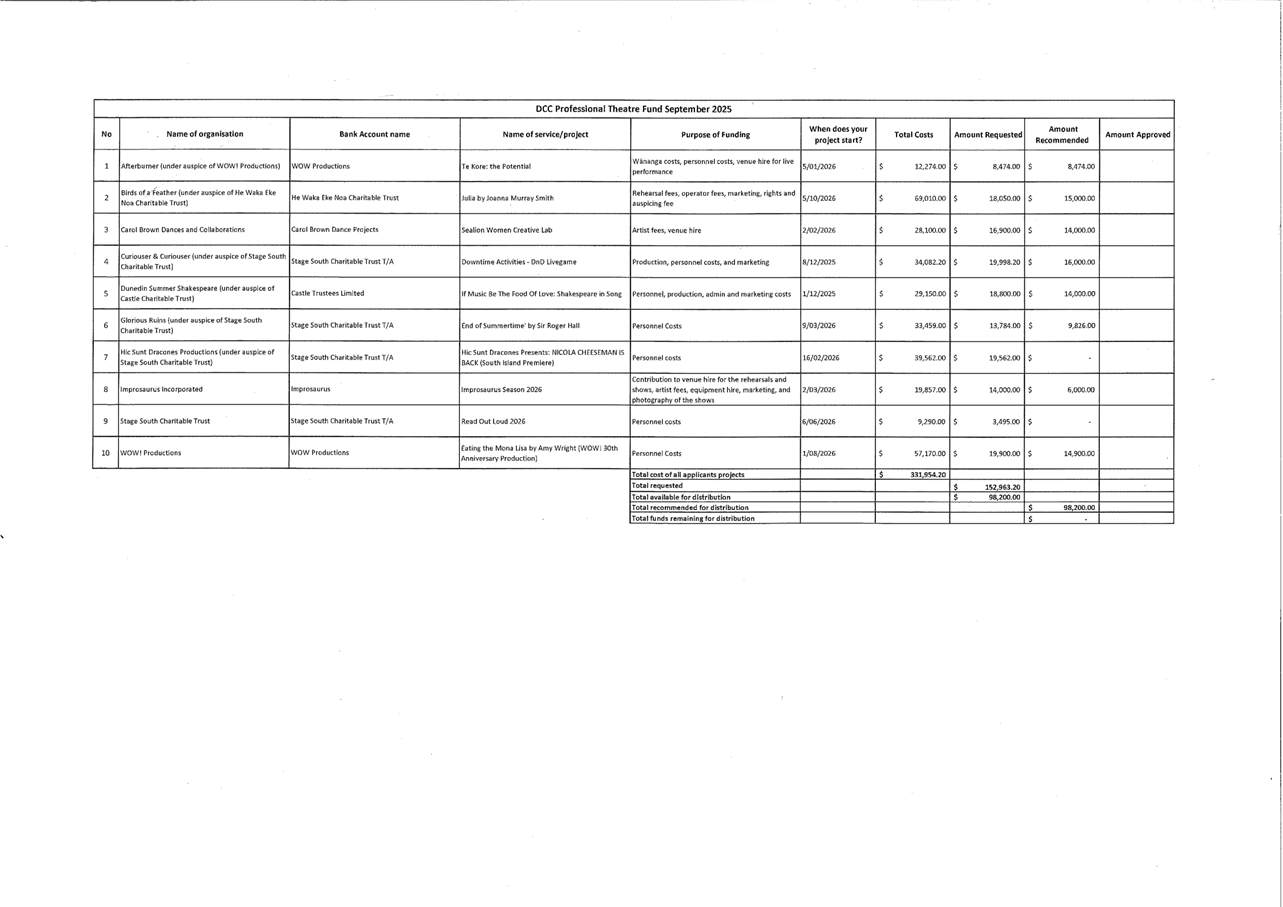
|

|
Council
27 November 2025
|
Resolution to Exclude the
Public
That the Council excludes
the public from the following part of the proceedings of this meeting (pursuant
to the provisions of the Local Government Official Information and Meetings Act
1987) namely:
|
General subject of the matter to be considered
|
Reasons
for passing this resolution in relation to each matter
|
Ground(s) under
section 48(1) for the passing of this resolution
|
Reason for
Confidentiality
|
|
C1
Confidential Council Action List Update
|
S7(2)(b)(ii)
The
withholding of the information is necessary to protect information where the
making available of the information would be likely unreasonably to prejudice
the commercial position of the person who supplied or who is the subject of
the information.
S7(2)(g)
The
withholding of the information is necessary to maintain legal professional
privilege.
S7(2)(h)
The
withholding of the information is necessary to enable the local authority to
carry out, without prejudice or disadvantage, commercial activities.
S7(2)(i)
The
withholding of the information is necessary to enable the local authority to
carry on, without prejudice or disadvantage, negotiations (including
commercial and industrial negotiations).
|
S48(1)(a)
The public conduct of
the part of the meeting would be likely to result in the disclosure of
information for which good reason for withholding exists under section 7.
|
|
|
C2
Confidential Council Forward Work Programme
|
S7(2)(a)
The
withholding of the information is necessary to protect the privacy of natural
persons, including that of a deceased person.
S7(2)(d)
The
withholding of the information is necessary to avoid prejudice to measures
protecting the health and safety of members of the public.
S7(2)(g)
The
withholding of the information is necessary to maintain legal professional
privilege.
S7(2)(h)
The
withholding of the information is necessary to enable the local authority to
carry out, without prejudice or disadvantage, commercial activities.
S7(2)(i)
The
withholding of the information is necessary to enable the local authority to
carry on, without prejudice or disadvantage, negotiations (including
commercial and industrial negotiations).
|
S48(1)(a)
The public conduct of
the part of the meeting would be likely to result in the disclosure of
information for which good reason for withholding exists under section 7.
|
|
|
C3
Investment Property Portfolio - Quarter ending 30 September 2025
|
S7(2)(b)(ii)
The
withholding of the information is necessary to protect information where the
making available of the information would be likely unreasonably to prejudice
the commercial position of the person who supplied or who is the subject of
the information.
|
S48(1)(a)
The public conduct of
the part of the meeting would be likely to result in the disclosure of
information for which good reason for withholding exists under section 7.
|
|
|
C4
Ōtepoti Performing Arts Advisory Panel Membership
|
s48(1)(d)
Check
to make report confidential.
|
s48(1)(d)
The exclusion of the
public from the part of the meeting is necessary to enable the local
authority to deliberate in private on its decision or recommendation.
|
This report and its
attachments include details of individuals that may be discussed by Council
members. Confidentiality is required to protect the privacy of applicants for
positions on the Performing Arts Advisory Panel..
|
|
C5 Appointment
to Otago Museum Trust Board
|
S7(2)(a)
The
withholding of the information is necessary to protect the privacy of natural
persons, including that of a deceased person.
|
S48(1)(a)
The public conduct of
the part of the meeting would be likely to result in the disclosure of
information for which good reason for withholding exists under section 7.
|
|
|
C6
DCC Professional Theatre Fund Grants Applications
|
S7(2)(h)
The
withholding of the information is necessary to enable the local authority to
carry out, without prejudice or disadvantage, commercial activities.
|
S48(1)(a)
The public conduct of
the part of the meeting would be likely to result in the disclosure of
information for which good reason for withholding exists under section 7.
|
|
This resolution is made in
reliance on Section 48(1)(a) of the Local Government Official Information and
Meetings Act 1987, and the particular interest or interests protected by
Section 6 or Section 7 of that Act, or Section 6 or Section 7 or Section 9 of
the Official Information Act 1982, as the case may require, which would be
prejudiced by the holding of the whole or the relevant part of the proceedings
of the meeting in public are as shown above after each item.