|

|
Council
24 February 2026
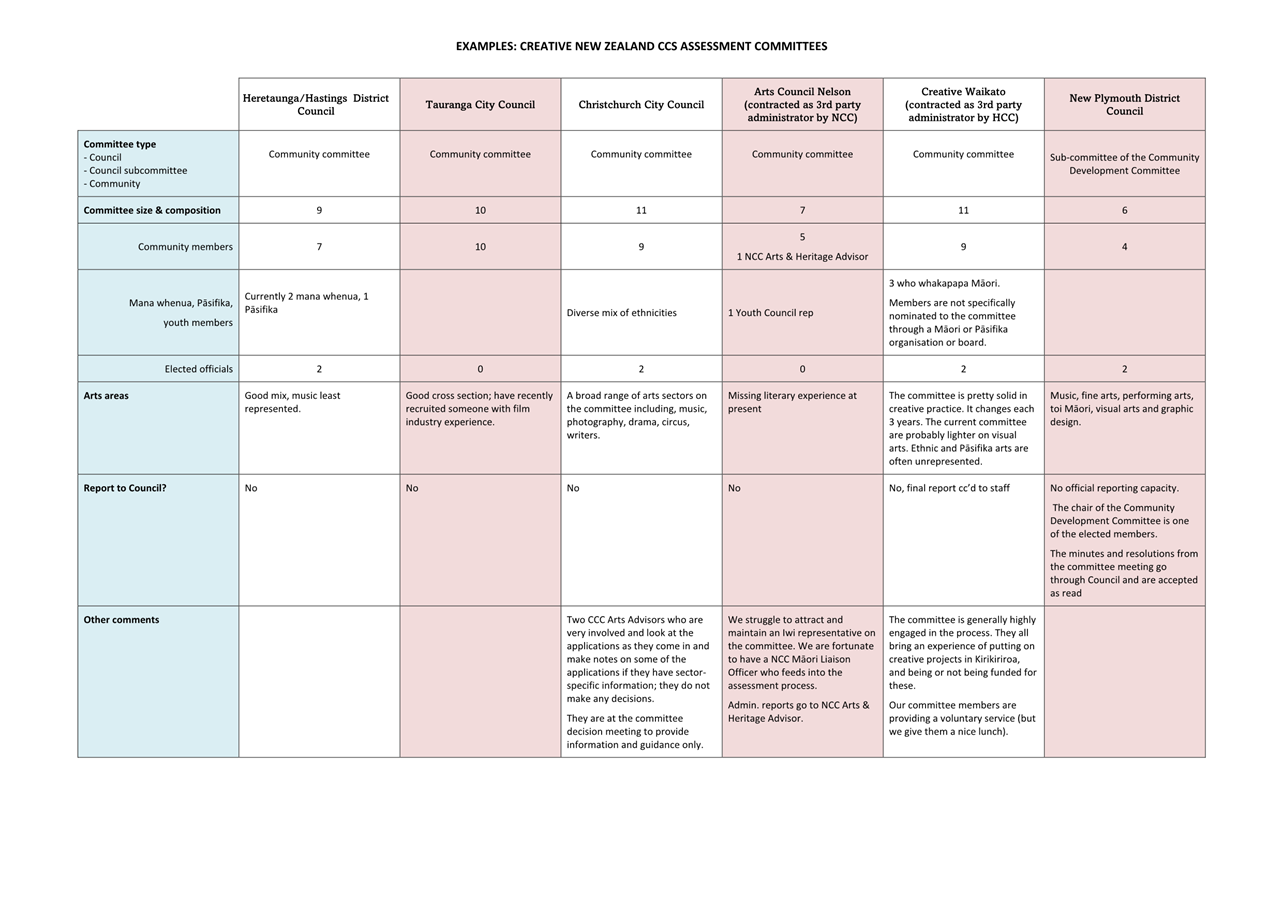
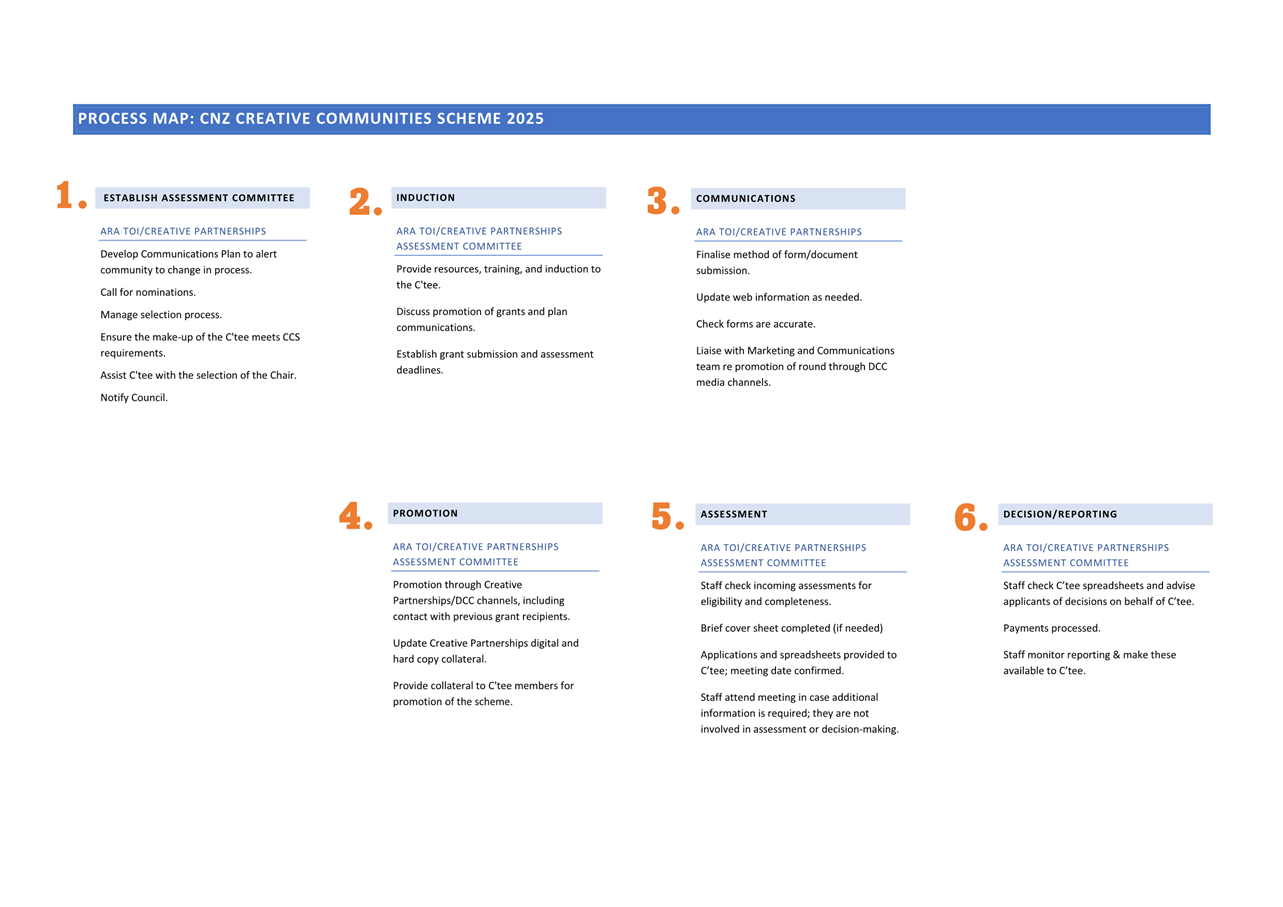
|

Council
MINUTES
Minutes of an ordinary
meeting of the Dunedin City Council held in the Council Chamber, Dunedin Public
Art Gallery, the Octagon, Dunedin on Thursday 12 February 2026, commencing at
9.00 am
PRESENT
|
Mayor
|
Mayor Sophie Barker
|
|
|
Deputy Mayor
|
Cr Cherry Lucas
|
|
|
Members
|
Cr John Chambers
|
Cr Christine Garey
|
|
|
Cr Doug Hall
|
Cr Marie Laufiso
|
|
|
Cr Russell Lund
|
Cr Mandy Mayhem
|
|
|
Cr Benedict Ong
|
Cr Andrew Simms
|
|
|
Cr Mickey Treadwell
|
Cr Lee Vandervis
|
|
|
Cr Steve Walker
|
Cr Brent Weatherall
|
|
IN ATTENDANCE
|
Sandy Graham (Chief Executive),
Carolyn Allan (Chief Financial Officer), Scott MacLean (General Manager City
Services), David Ward (General Manager 3 Waters, Property and Urban
Development), Nicola Morand (Manahautū - General Manager Community and Strategy),
Paul Henderson (General Manager Corporate and Regulatory Services), Mike
Costelloe (General Manager, Arts, Culture and Economic Development), Hayden
McAuliffe (Manager Financial Services), Richard Davey (Treasurer Dunedin City
Holdings Ltd), Gina Hu’akau (Manager Community Partnerships), Manager
Corporate Policy (Nadia Wesley-Smith), Danielle Tolson (Policy Analyst),
Teresa Fogerty (Manager Destination Dunedin), Dan Hendra (Team Leader
Events), Dr Anna Johnson (Manager City Planning), Bede Morrissey (Senior
Planner City Development), Anna Nilsen (Group Manager Property), John
McAndrew (Head of 3 Waters), and Jackie Harrison (Manager Governance)
|
Governance Support Officer Rebecca
Murray
1 Opening
Rev Alofa Lale, Associate Minister, First Church of Otago
opened the meeting with a prayer.
2 Public
Forum
2.1 Aaron
Hawkins spoke on behalf of Housing Alliance regarding Otago Housing and thanked
the Council for its continued support of local home‑insulation
initiatives and provided an update on the strong outcomes achieved through DCC
and OCT funding, noting both the significant number of Dunedin households
assisted and the wider public benefits of improving housing quality.
2.2 Jerome
Cousins and Andrea Liberatore representing NZ International Science Festival
briefed elected members on the positive impact of Council grants on recent
festivals and provided comments regarding the current grants review.
2.3 Joy
Davis and Lois Scott-Muir on behalf of Ōtepoti Community Builders spoke to
elected members about the Grants Review and emphasised the benefits of
establishing a Grants Subcommittee with community and mana whenua
representation.
Moved:
(Mayor Sophie Barker/Cr Cherry Lucas)
That the
Council:
Extend
Public Forum beyond 30 minutes.
Motion
carried
2.4 Haren
Makaea spoke to elected members about experiences of racism in Dunedin,
highlighting concerns about exclusion and the challenges of feeling included as
someone from another country.
|
3 Apologies
|
|
|
There were no
apologies.
|
|
4 Confirmation
of agenda
|
|
|
Moved (Mayor Sophie Barker/Cr Cherry Lucas):
That the Council:
Confirms the agenda
without addition or alteration.
Motion
carried (CNL/2026/012)
|
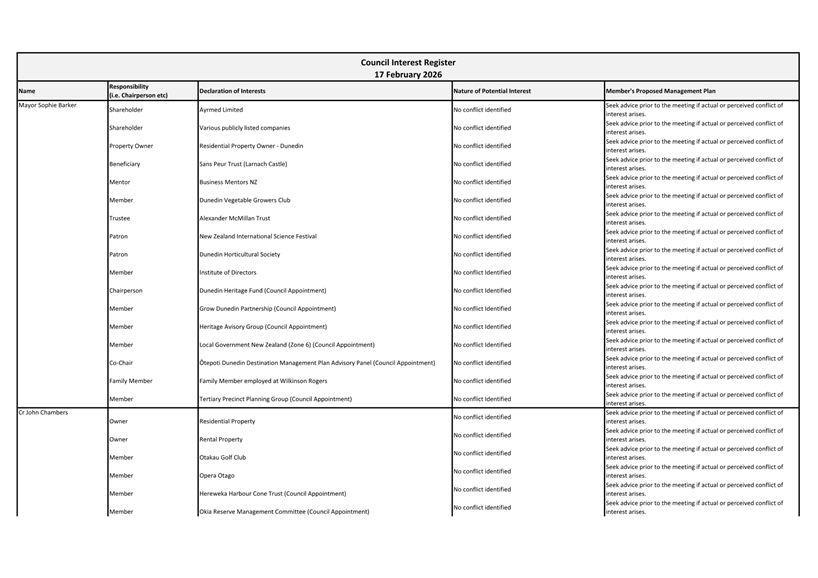
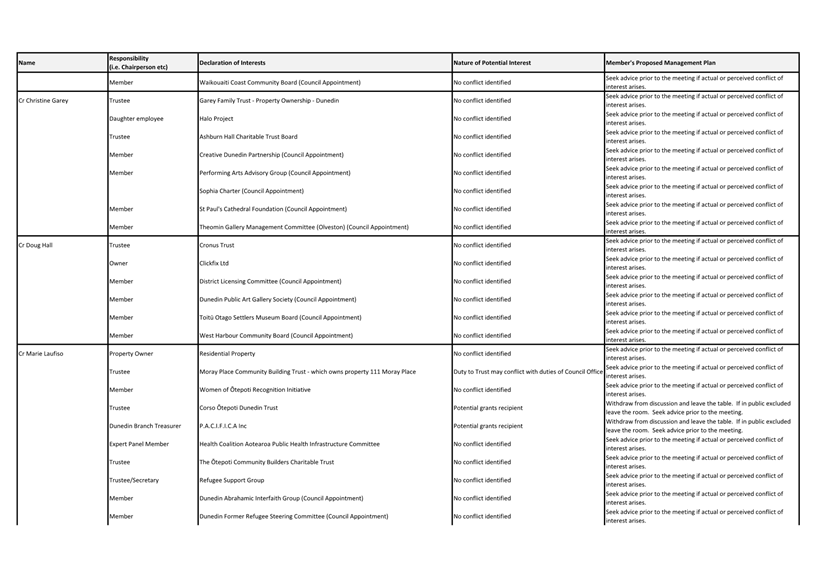
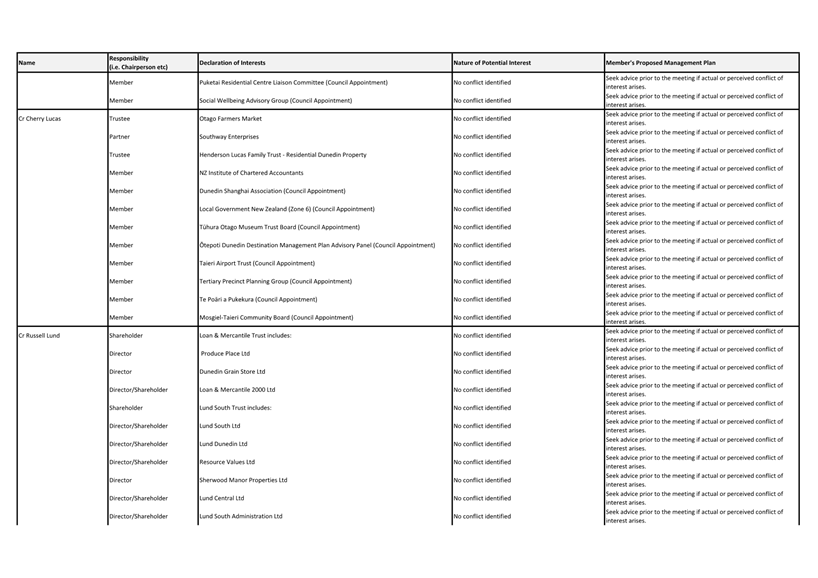
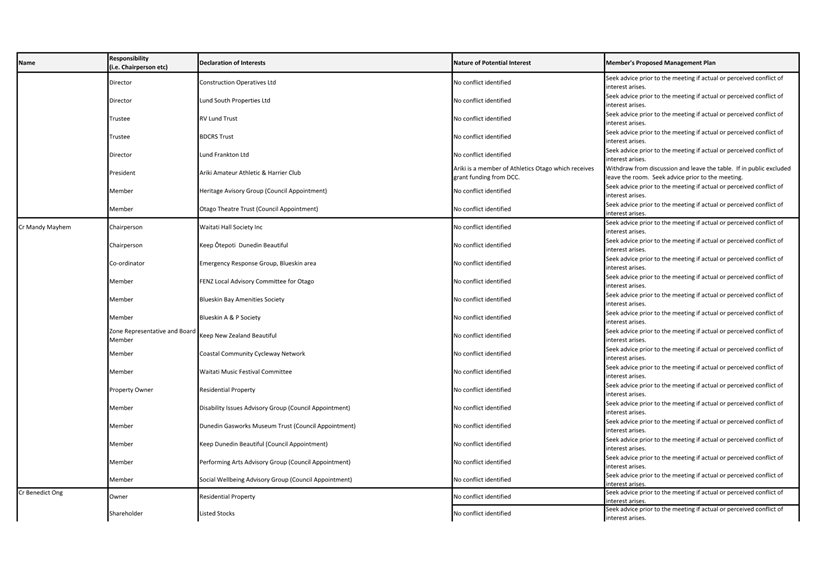
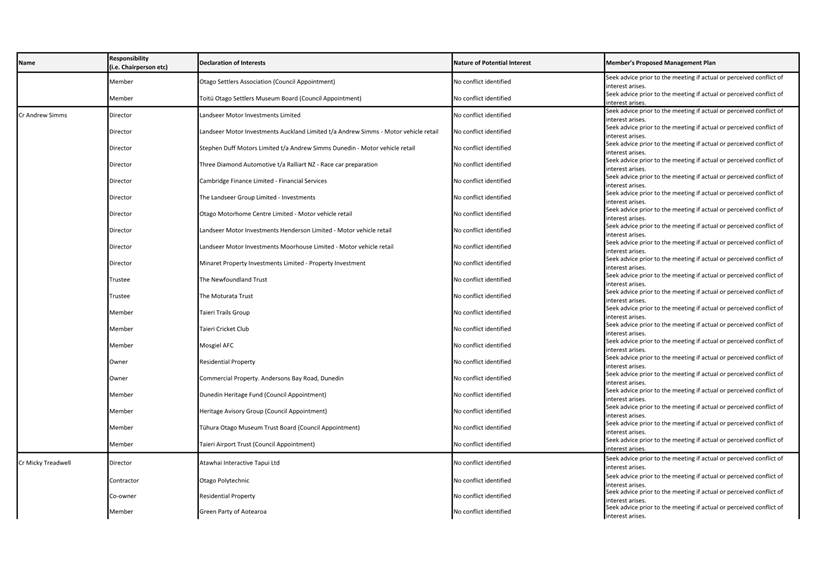
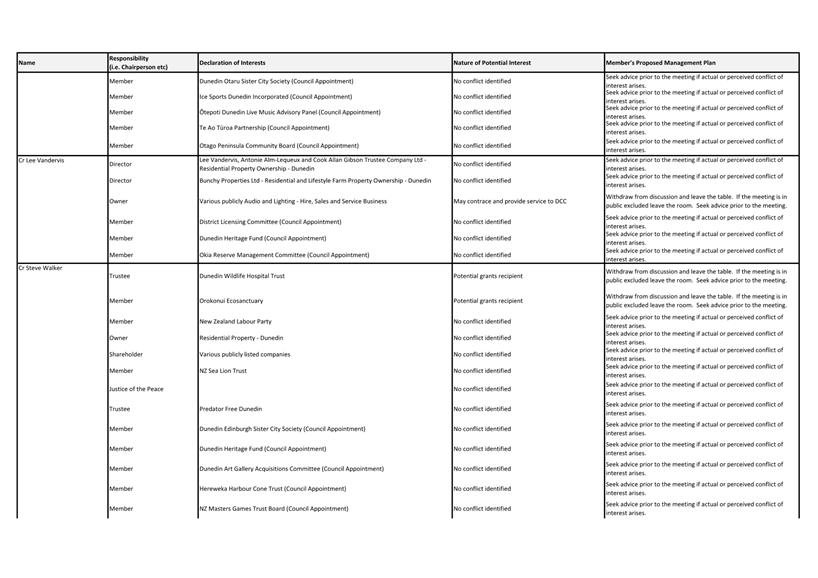
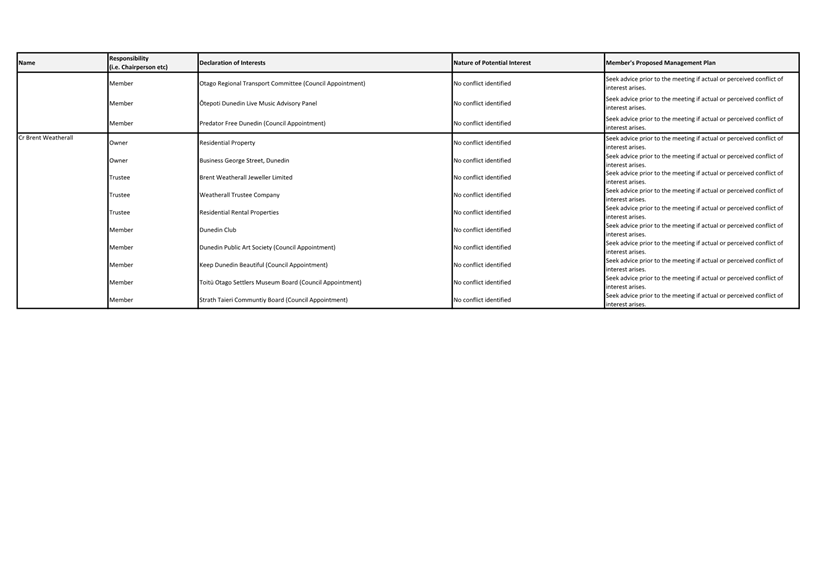
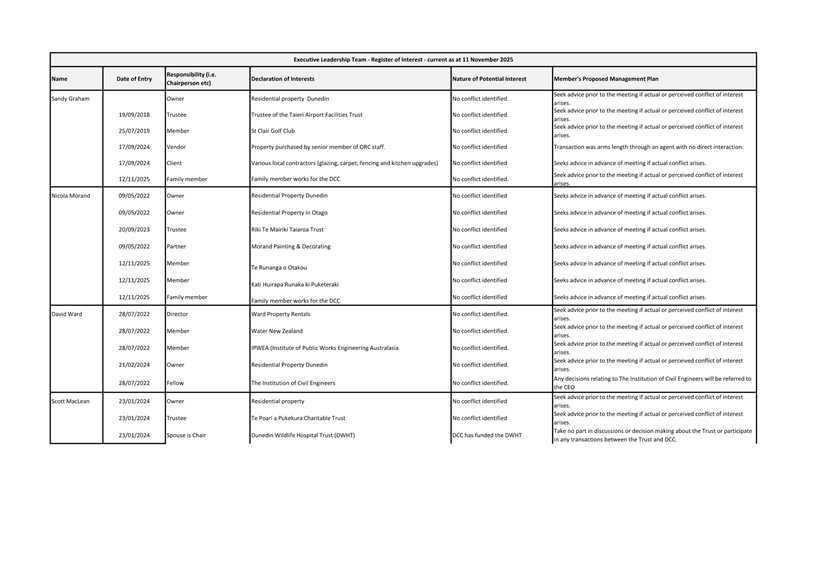
5 Declarations
of interest
Members were
reminded of the need to stand aside from decision-making when a conflict arose
between their role as an elected representative and any private or other
external interest they might have.
|
|
Moved (Mayor Sophie Barker/Cr Cherry Lucas):
That the Council:
a) Notes the Elected Members' Interest Register; and
b) Confirms the proposed management plan for
Elected Members' Interests.
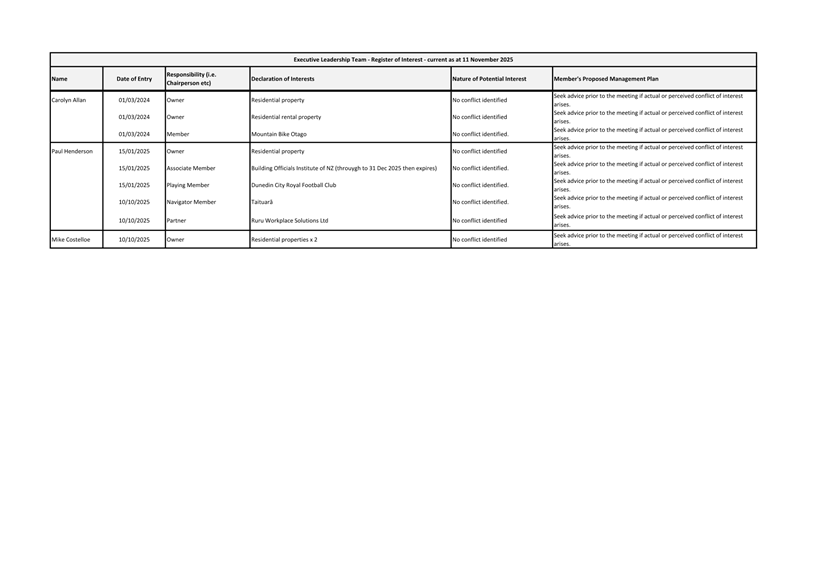
c) Notes the proposed management plan for the Executive
Leadership Team’s Interests.
Motion
carried (CNL/2026/013)
|
6 Confirmation
of Minutes
|
6.1 Ordinary
Council meeting - 26 January 2026
|
|
|
Moved (Mayor Sophie Barker/Cr Cherry Lucas):
That the Council:
Confirms the public part of the minutes of the Ordinary Council meeting held
on 26 January 2026 as a correct record.
Motion
carried (CNL/2026/014)
|
|
6.2 Ordinary
Council meeting - 29 January 2026
|
|
|
Moved (Mayor Sophie Barker/Cr Cherry Lucas):
That the Council:
Confirms the public part of the minutes of the
Ordinary Council meeting held on 29 January 2026 as a correct record.
Motion
carried (CNL/2026/015)
|
Reports
|
9 Planning
Bill and Natural Environment Bill - Submission
|
|
|
This report sought approval
for the draft submission from the DCC to the Environment Select Committee on
the Planning Bill and the Natural Environment Bill.
General Manager 3 Waters, Property and Urban Development
(David Ward), Manager City and Development (Dr Anna Johnson) and Senior
Planner City Development (Bede Morrissey) spoke to the report and responded
to questions.
Cr Doug Hall left the meeting at 12pm and returned to the
meeting at 12.06pm.
|
|
|
|
|
|
Moved (Cr Cherry Lucas/Mayor Sophie Barker):
That the Council:
a) Approves the draft Dunedin City Council
submission on the Planning Bill and the Natural Environment Bill, with any
amendments requested, to the Environment Select Committee.
Addition to Section 7.3 of the
submission:
DCC recommends that the new
planning system explicitly enable territorial authorities to require
developer-provided infrastructure to be designed and constructed to
accommodate the maximum density permitted by the base zoning, rather than the
density proposed by the developer at the time of development. This is
necessary to ensure that infrastructure capacity aligns with the full
development potential anticipated by the planning framework. Where
infrastructure is designed only for the initially proposed density,
subsequent intensification may exceed available capacity, resulting in
additional costs (to councils and ratepayers), disruption, and
inefficiencies.
b) Authorises the Chief Executive to make any minor
editorial amendments to submission.
c) Notes that the Mayor or delegate will speak to any hearings
in regard to this submission.
Motion
carried (CNL/2026/018) with Cr Vandervis recording his vote against.
|
|
|
|
|
|
Moved (Mayor Sophie Barker/Cr Steve Walker):
That the Council:
Adjourns the meeting
until 2.15pm.
Motion carried
|
|
|
|
|
|
The meeting adjourned at 1.28pm and reconvened at 2.16pm.
|
|
10 Inquiry
into the 2025 Local Elections Submission
|
|
|
The report sought approval
for the Dunedin City Council (DCC) draft submission to the Inquiry into the
2025 Local Elections (the Inquiry).
Chief Executive (Sandy Graham), Manahautū - General
Manager Community and Strategy (Nicola Morand), Manager Corporate Policy
(Nadia Wesley-Smith) and Policy Analyst (Danielle Tolson) responded to
questions.
|
|
|
|
|
|
Moved (Mayor Sophie Barker/Cr Cherry Lucas):
That the Council:
Adjourns the meeting for
two minutes.
Motion carried
|
|
|
|
|
|
The meeting adjourned at 2.37pm and reconvened at 2.38pm.
|
|
|
|
|
|
Moved (Mayor Sophie Barker/Cr
Cherry Lucas):
That the Council:
a) Approves the draft Dunedin City Council
submission to the Inquiry into the 2025 Local Elections.
b) Authorises the Chief
Executive to make any minor editorial amendments to the draft submission.
c) Authorises the Mayor or delegate to speak at any
hearings.
Motion
carried (CNL/2026/019) with Cr Vandervis recording his vote against.
|
|
11 Otago
Local Authorities' Triennial Agreement 2026-2029
|
|
|
This
report provided an overview of the 2026–2029 Otago Triennial Agreement,
outlining the statutory requirement for a coordinated regional approach among
Otago’s local authorities and seeking Council approval of the agreement
in its required format.
|
|
|
|
|
|
Moved (Mayor Sophie Barker/Cr Cherry Lucas):
That the Council:
a) Approves the Otago Local Authorities’
Triennial Agreement 2026-2029.
b) Authorises the Mayor to sign the Otago Local
Authorities’ Triennial Agreement 2026-2029 on behalf of the Dunedin
City Council.
c) Notes that the Triennial Agreement requires the Otago Mayoral
Forum to identify and oversee progress on ‘regional focus areas’
– areas where a regional approach is either required or an improve
outcomes for Otago.
Motion
carried (CNL/2026/020)
|
|
12 Grants
Review
|
|
|
This
report provided an overview of the 2025 DCC Grants Review, outlining
recommended core policy settings to improve clarity, transparency, and
strategic alignment across the grants system, and seeking Council agreement
on these settings and the proposed next steps.
Manahautū - General Manager Community and Strategy
(Nicola Morand) and Manager Community Partnerships (Gina Hu’akau)
responded to questions.
|
|
|
|
|
|
Moved (Mayor Sophie Barker/Cr Christine Garey):
That the Council:
Adjourns the meeting
until 3pm.
Motion carried
|
|
|
|
|
|
The meeting adjourned at 2.55pm and reconvened at 3.02pm.
|
|
|
|
|
|
Moved (Mayor Sophie Barker/Cr Cherry Lucas):
That the Council:
Adjourns the meetings
for two minutes.
Motion carried
|
|
|
|
|
|
The meeting adjourned at 3.20pm and reconvened at 3.23pm.
|
|
|
|
|
|
During discussion Mayor Sophie left the meeting at
3.48pm. Deputy Mayor Lucas chaired the meeting.
Mayor Sophie returned to the meeting at 3.53pm and resumed
the Chair.
|
|
|
Following Deputy Mayor Cherry Lucas moving and Mayor
Sophie Barker seconding a motion. Cr Mandy Mayhem moved an amendment to
Item 1 (e). Cr Marie Laufiso seconded the amendment.
|
|
|
|
|
|
Moved (Cr Mandy Mayhem/Cr Marie
Laufiso):
That the Council:
e) Confirms its preferred
Governance Structure for Grant Decisions is a Grants
Subcommittee + Staff Delegations + Council Oversight where:
a)
Staff allocate small grants under delegation.
b) A
Grants Subcommittee (which include community representatives) allocates
mid-tier grants, multi-year and large grants.
Division
The
Council voted by division
For: Crs
John Chambers, Christine Garey, Doug Hall, Marie Laufiso, Mandy Mayhem,
Benedict Ong, Andrew Simms, Mickey Treadwell and Steve Walker (9).
Against: Crs
Cherry Lucas, Russell Lund, Lee Vandervis, Brent Weatherall and Mayor Sophie
Barker (5).
Abstained: Nil
The division was declared CARRIED by 9 votes to 5
Motion
carried (CNL/2026/021)
|
|
|
|
|
|
Moved (Cr Cherry Lucas/Mayor Sophie Barker):
That the Council:
1 Adopts the
following policy settings for Grants:
a) Defines a
Council Grant as:
A
non-repayable financial contribution to an external organisation or
individual for a specific project that advances strategic goals the Council
cannot deliver alone. It supports community-led activities and services that
deliver a measurable public benefit, as outlined in the Council’s
Long-Term Plan, without expectation of commercial return. While primarily
targeting not-for-profit organisations, grants may support for-profit
activities where a clear and distinct community benefit is delivered and is
demonstrably separated from private gain.
b) Confirms Council’s
Role and Purpose in Grant-Making is:
i) Stewardship
– ensuring public funds are allocated fairly, transparently, and
strategically;
ii) Partnership
– working with community organisations as co-deliverers of community
outcomes;
iii) Enabler –
reducing barriers and administrative burden; and
iv) Accountability –
maintaining oversight and alignment with Council priorities
c) Agrees it's
priorities for Grant-Making are to:
i)
Prioritise the development of grant approaches that more directly advance its
community outcomes; and
ii) Refine grant
structures and budget settings over time to strengthen this alignment, with
further options to be considered through a future Annual Plan process.
d) Confirms its
preferred approach to delivering grants is consolidation plus
development of new community outcomes grants, including:
i)
Consolidation of existing grant categories to improve clarity and
consistency; and
ii)
Development of new partnership-based grants aligned to priority community
outcomes (for example housing, youth wellbeing, and health), subject to
future budget and implementation decisions.
f) Notes that
grant funding levels will be set through the Annual Plan and Long-Term
Plan processes.
2 Notes That
the agreed policy settings will inform the update of the Grants Management
Policy (2019) and associated governance, delegations, and operational
arrangements.
3 Requests
that staff
a)
Draft an updated Grants Management Policy reflecting the agreed policy
settings;
b)
Develop implementation and transition arrangements, including any required
updates to delegations and committee terms of reference;
c)
Undertake pre-procurement analysis for a grants management system aligned
with the agreed policy framework; and
d) Report
back to Council through a future Annual Plan process with detailed options to
strengthen alignment between grant-making.
Motion
carried (CNL/2026/022)
|
|
|
|
|
|
Moved (Cr Cherry Lucas/Mayor Sophie Barker):
That the Council:
e)
Confirms its preferred Governance Structure for Grant Decisions is a
Grants Subcommittee + Staff
Delegations + Council Oversight where:
i)
Staff allocate small grants under delegation.
ii) A
Grants Subcommittee (which include community representatives) allocates
mid-tier grants, multi-year and large grants.
Division
The
Council voted by division
For: Crs
John Chambers, Christine Garey, Doug Hall, Marie Laufiso, Mandy Mayhem,
Andrew Simms, Mickey Treadwell and Steve Walker (8).
Against: Crs
Cherry Lucas, Russell Lund, Benedict Ong, Lee Vandervis, Brent Weatherall and
Mayor Sophie Barker (6).
Abstained: Nil
The division was declared CARRIED by 8 votes to 6
Motion
carried (CNL/2026/023)
|
|
|
|
|
|
Moved (Mayor Sophie Barker/Cr Cherry Lucas):
That the Council:
Adjourns for 10
minutes.
Motion carried
|
|
|
|
|
|
The meeting adjourned at 4.17pm and reconvened at 4.25pm.
|
|
13 Grants
Allocated $5k and Under
|
|
|
This report provided details of the Waste Minimisation
Community grants that were awarded under the Chief Executive Officer’s
delegation in the September 2025 round, and the Waste Minimisation Small
grants awarded by the former Grants Subcommittee Chair during the period
March 2025 and October 2025.
|
|
|
|
|
|
Moved (Mayor Sophie Barker/Cr
Mandy Mayhem):
That the Council:
a) Notes that the Waste
Minimisation Grants are funded by Waste Disposal Levy funds provided by the
Ministry for the Environment and are not rates funded.
b) Notes the approved funding allocated to organisations for
Waste Minimisation Small Projects and Waste Minimisation Community grants.
Motion
carried (CNL/2026/024)
|
|
14 Appointment
of Advisory Panel to consider District Licensing Committee Commissioner
applications
|
|
|
This
report provided an overview of the statutory requirements for maintaining the
District Licensing Committee, outlining proposed steps to ensure continuity
and adequate hearing capacity through the recruitment of additional
commissioners and the establishment of an advisory panel to assess
applicants.
|
|
|
|
|
|
Moved (Mayor Sophie Barker/Cr Mandy Mayhem):
That the Council:
a) Notes that applications will be invited for District Licensing
Committee commissioner roles.
b) Appoints an Advisory Panel of Councillor Lucas
(as Chair), Councillor Garey and Councillor Walker to consider the
applications received to be commissioners of the Dunedin District Licensing
Committee.
c) Approves the draft Terms of Reference for the
Advisory Panel (with any amendment).
d) Requires the Advisory Panel to:
i) make recommendations for appointment to
the Chief Executive, and
ii) appoint a chairperson for the District
Licensing Committee and
iii) (if desired) appoint a deputy
chairperson.
Motion
carried (CNL/2026/025)
|
|
15 Review
of Dangerous, Insanitary and Affected Buildings Policy
|
|
|
This
report provided an update on the scheduled review of the Dangerous,
Insanitary and Affected Buildings Policy and sought Council approval to
consult on proposed minor amendments in accordance with statutory
requirements.
Cr Russell Lund entered the meeting at 4.28pm
Cr Andrew Simms entered the meeting at 4.28pm.
|
|
|
|
|
|
Moved (Mayor Sophie Barker/Cr Cherry Lucas):
That the Council:
Adjourns the meeting for
two minutes.
Motion carried
|
|
|
|
|
|
The meeting adjourned at 4.32pm and reconvened at 4.34pm
|
|
|
|
|
|
Moved (Cr Steve Walker/Cr Mandy
Mayhem):
That the Council:
a) Notes the review of the Dangerous, Insanitary and Affected
Buildings Policy
b) Approves the proposed Dangerous, Insanitary and
Affected Buildings Policy at Attachment A and the statement of proposal at
Attachment B for consultation.
c) Notes that Hearings
Committee members to hear and consider submissions for this review will be
appointed by the Chair of the Hearings Committee in due course.
Motion
carried (CNL/2026/026)
|
|
16 Resolution
to Stop Part of Neill Street, Abbotsford
|
|
|
This
report provided an overview of the road stopping process for land adjoining
26 Neill Street, confirming that statutory consultation has been completed
with no objections and seeking to conclude the formal decision‑making
process.
|
|
|
|
|
|
Moved (Cr Brent Weatherall/Cr
Cherry Lucas):
That the Council:
a) Resolves that under Section 342 of the Local
Government Act 1974 the part of unformed road described as Sections 1 & 2
SO 619506 are stopped.
b) Notes that no objections were submitted during the public
notice period.
c) Authorises a public notice declaring that the road
is stopped.
Motion
carried (CNL/2026/027)
|
|
17 Waipori
Fund - Quarter ending 31 December 2025
|
|
|
This report provided an
update from Dunedin City Treasury Limited on the results of the Waipori Fund
for the quarter ended 31 December 2025.
Chief Financial Officer (Carolyn Allan) and Treasurer
Dunedin City Holdings Ltd (Richard Davies) spoke to the report and advised
that DCHL were underway with the review of the SIPO and will provide an
update to Council on 25 March 2026 and responded to questions.
|
|
|
|
|
|
Moved (Cr Lee Vandervis/Cr Cherry
Lucas):
That the Council:
a) Notes the report from Dunedin City Treasury Limited on the
Waipori Fund for the quarter ended 31 December 2025.
Motion
carried (CNL/2026/028)
|
|
18 Financial
Report - Period ended 31 December 2025
|
|
|
This report
provided the financial results for the period ended 31 December 2025 and the
financial position as at that date.
Chief Executive (Sandy Graham), Chief Financial Officer
(Carolyn Allan), General Manager Corporate and Regulatory Services (Paul
Henderson), General Manager City Services (Scott MacLean), Manager
Financial Services (Hayden McAuliffe), Head of 3 Waters (John McAndrew),
Group Manager Property (Anna Nilsen) responded to questions.
|
|
|
|
|
|
Moved (Cr Lee Vandervis/Cr Cherry
Lucas):
That the Council:
a) Notes the Financial Performance for the period ended 31
December 2025 and the Financial Position as at that date.
Motion
carried (CNL/2026/029)
|
|
19 Proposed
Event Road Closures
|
|
|
A report from Transport sought
approval of the temporary road closure applications relating to the following
events:
i) Graduation
Parade
ii) South
Dunedin Street Festival
iii) Three
Peaks Running Race
iv) Baseline
|
|
|
|
|
|
Moved (Mayor Sophie Barker/Cr
Cherry Lucas):
That the Council:
a) Resolves to close the roads detailed below
(pursuant to Section 319, Section 342, and Schedule 10 clause 11(e) of the
Local Government Act 1974 (LGA 1974)):
i) Graduation
Parade
|
Friday, 13 March 2026
|
10.30am to 11.00am
|
· Great King Street, between Frederick Street and
Albany Street
|
|
10.40am to 11.30am
|
· Frederick Street, between Great King Street and
George Street
· Filleul Street, between Moray Place and St Andrew
Street
|
|
10.40am to 12.00pm
|
· Moray Place, between George Street and upper
Stuart Street
· George Street, between Frederick Street and Moray
Place
|
ii) South
Dunedin Street Festival
|
Saturday,
14 March 2026
|
7.00am to 4.30pm
|
· King Edward Street, between Hillside Road and
Macandrew Road
· Lorne Street, between Rankeilor Street and King
Edward Street
· McBride Street, between Rankeilor Street and King
Edward Street
· Sullivan Avenue, between Glasgow Street and King
Edward Street
· Carey Avenue, between Glasgow Street and King
Edward Street
|
iii) Three Peaks Running Race
|
Sunday, 15 March 2026
|
6.00am to 6.10am
AND
9.00am to 9.10am
|
· Woodhaugh Street - entire length
|
|
9.00am to 3.00pm
|
· Leith Valley Road, between Islay Street and Pigeon
Flat Road
|
iv) Baseline
|
Saturday, 28 March 2026
|
10.00am to 11.59pm
|
· Logan Park Drive, between Anzac Avenue and Butts
Road
|
|
Sunday, 29 March 2026
|
12.00am to 10.00am
|
·
Motion
carried (CNL/2026/030)
|
|
20 Terms
of Reference - Council Controlled Organisation Transition Steering Report
|
|
|
This
report provided an overview of the proposed Terms of Reference to guide the
transition and consultation process for potentially establishing Enterprise
Dunedin as a standalone Council Controlled Organisation, ensuring strategic
oversight and alignment with Council priorities.
Chief Executive (Sandy
Graham) and General Manager Arts, Culture and Economic Development (Mike
Costelloe) responded to questions.
|
|
|
|
|
|
Moved (Mayor Sophie Barker/Cr
Andrew Simms):
That the Council:
a) Adopts the terms of reference without
amendment for the Economic Development Agency Transition Steering Group.
b) Appoints Mayor Barker, Cr Simms and three
external advisors as members of the Transition Steering Group.
Motion
carried (CNL/2026/031)
|
The meeting closed at 5.27pm.
..............................................
MAYOR
|

|
Council
24 February 2026
|
Reports
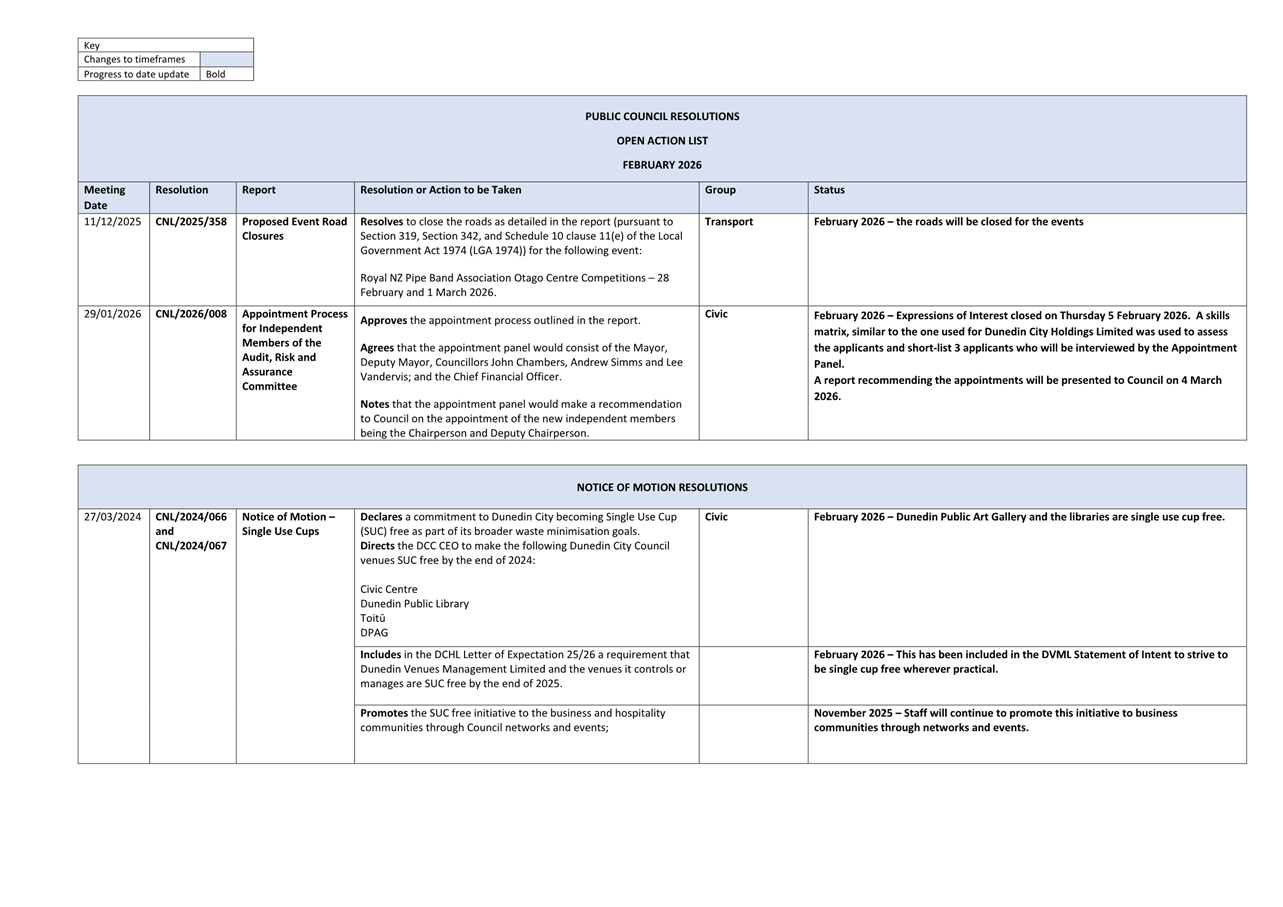
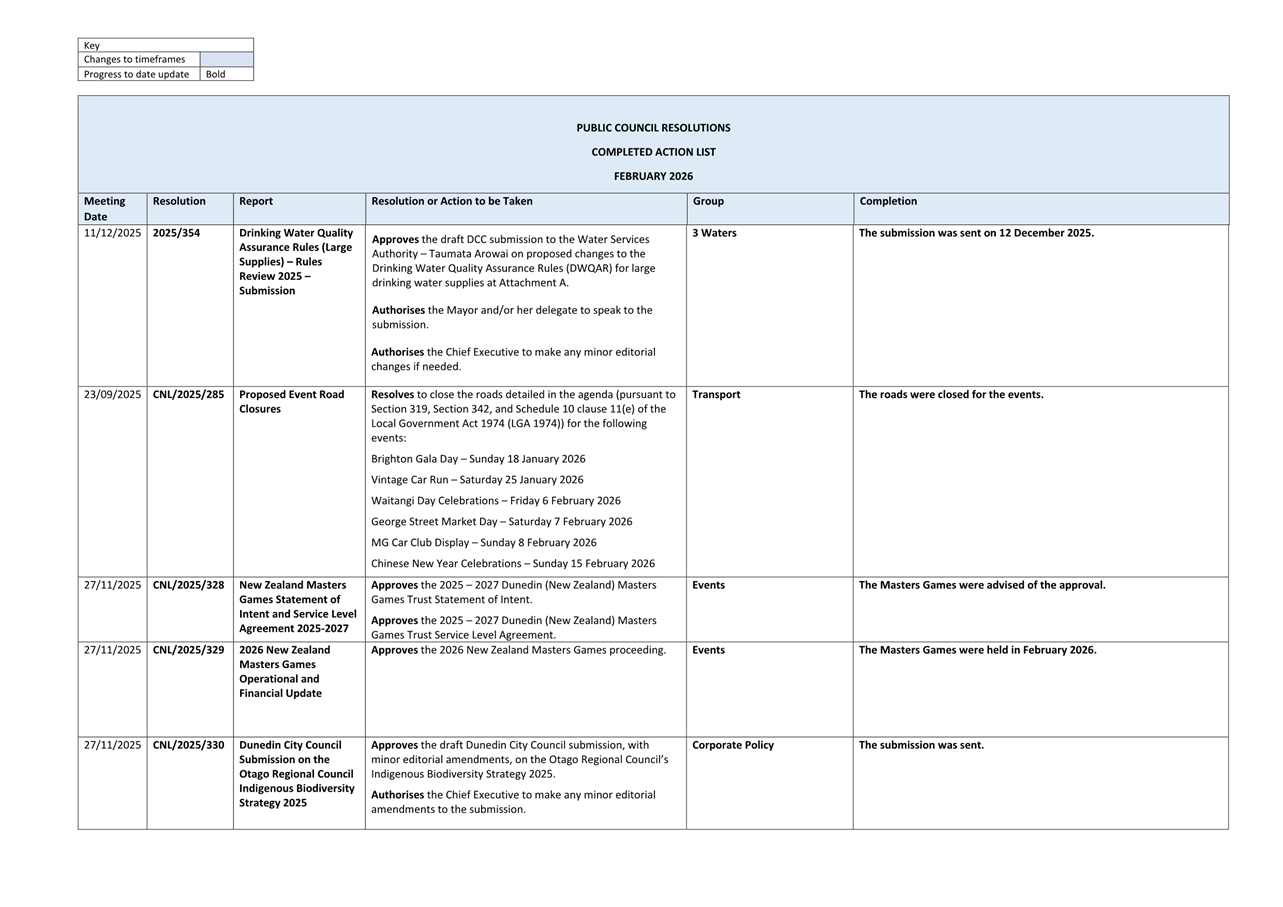
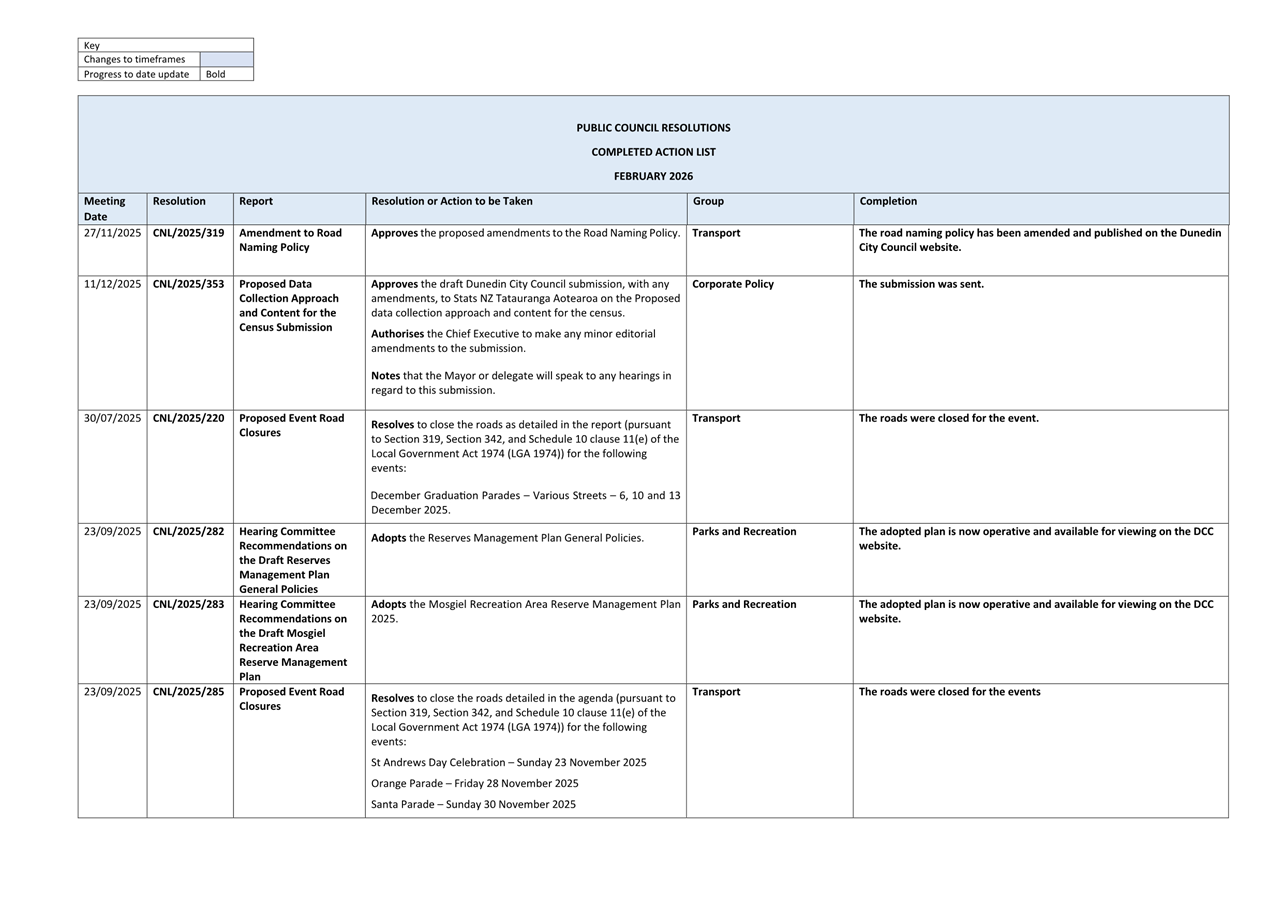
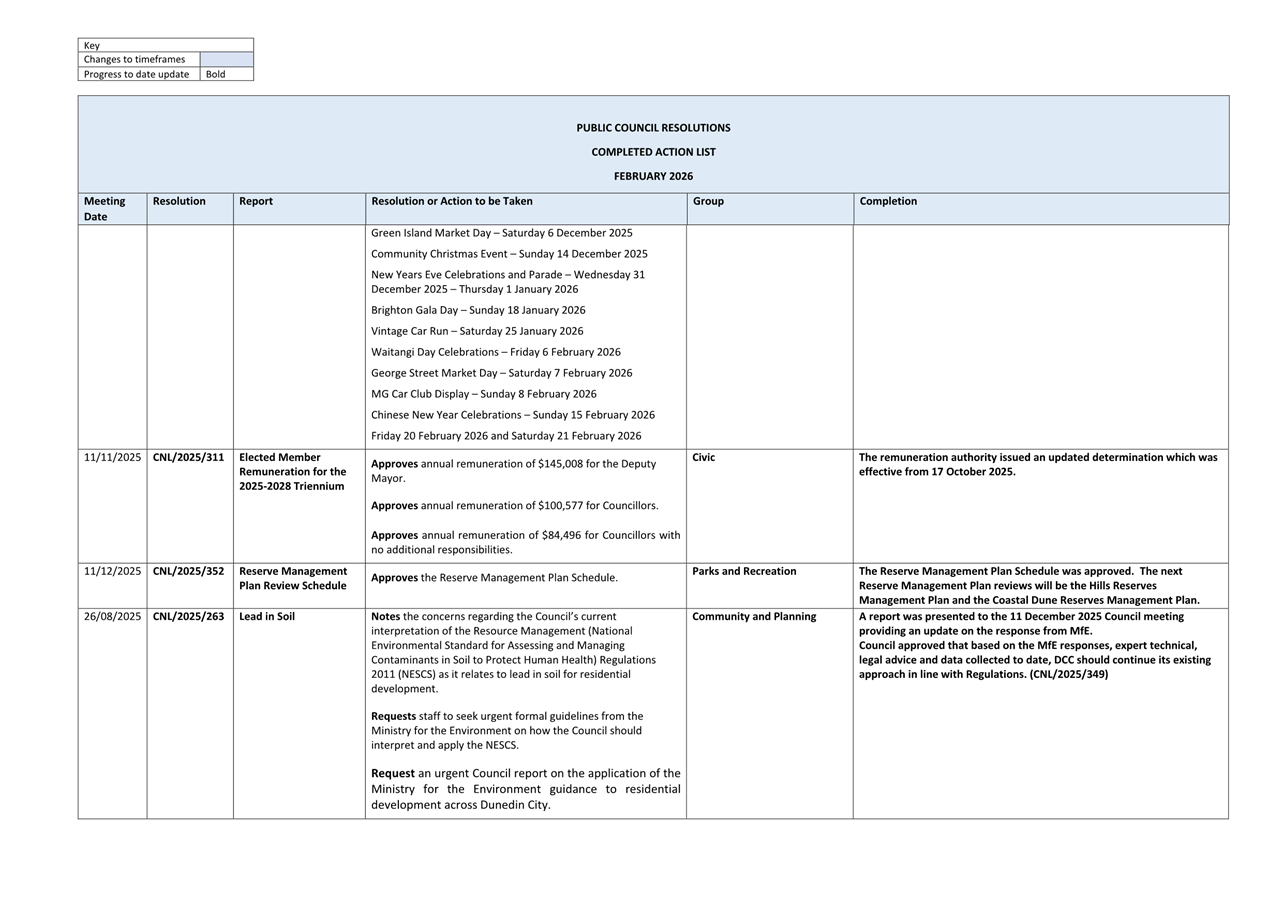
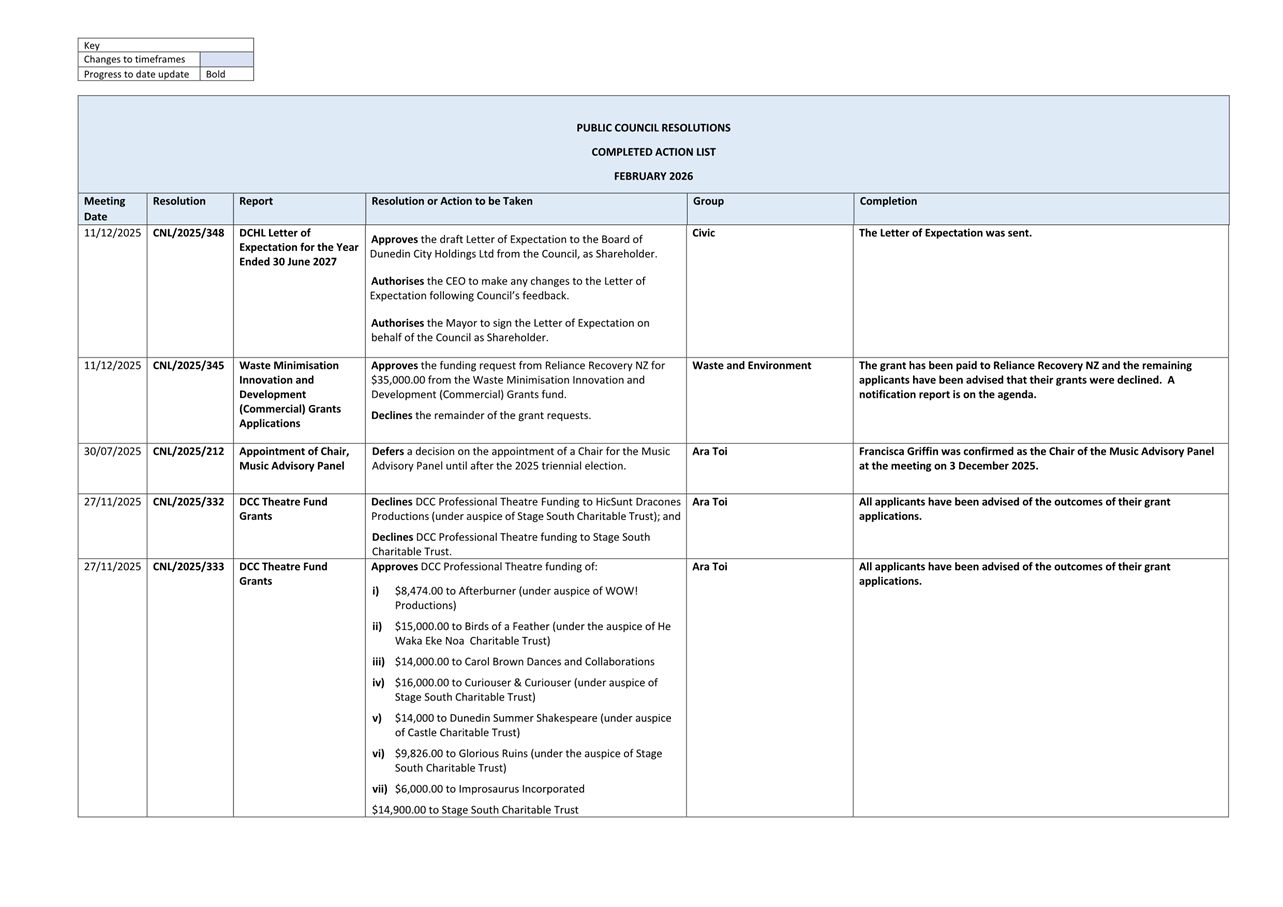
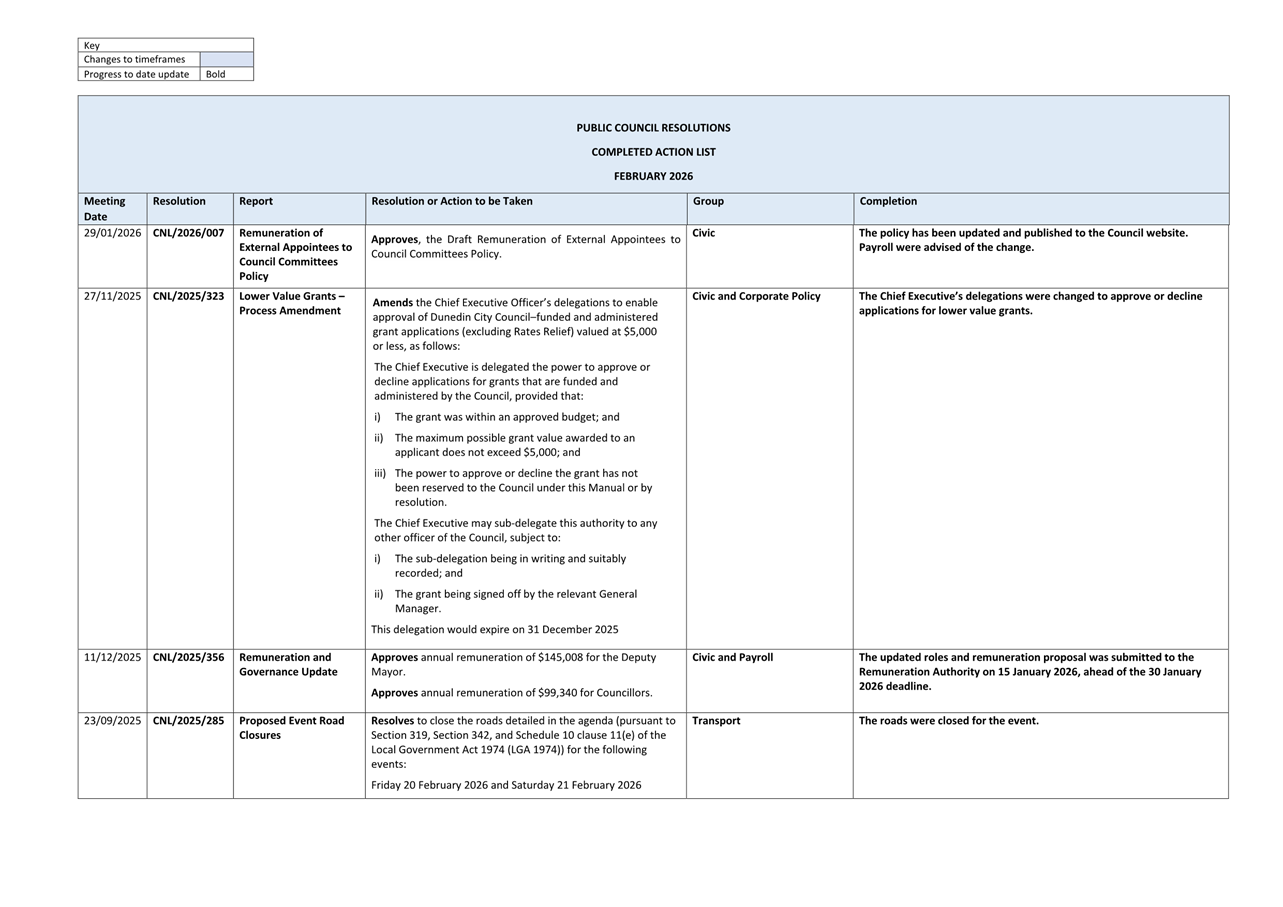
Actions From Resolutions of Council Meetings
Department: Civic
EXECUTIVE SUMMARY
1 The
purpose of this report is to show progress on implementing resolutions made at
Council meetings.
2 As
this report is an administrative report only, there are no options or Summary
of Considerations.
|
RECOMMENDATIONS
That the Council:
a) Notes
the Open and Completed Actions from resolutions of Council meetings as
attached.
|
discussion
3 This
report also provides an update on resolutions that have been actioned and
completed since the last Council meetings. Note that items on the Forward
Work Programme are not included in the attached schedules.
NEXT STEPS
5 Updates
will be provided at future Council meetings.
Signatories
|
Author:
|
Lynne Adamson - Governance Support Officer
|
|
Authoriser:
|
Nicola Morand - Manahautū (General Manager Community
and Strategy)
|
Attachments
|
|
Title
|
Page
|
|
⇩a
|
Open Action List
|
31
|
|
⇩b
|
Closed Action List
|
35
|
|

|
Council
24 February 2026
|
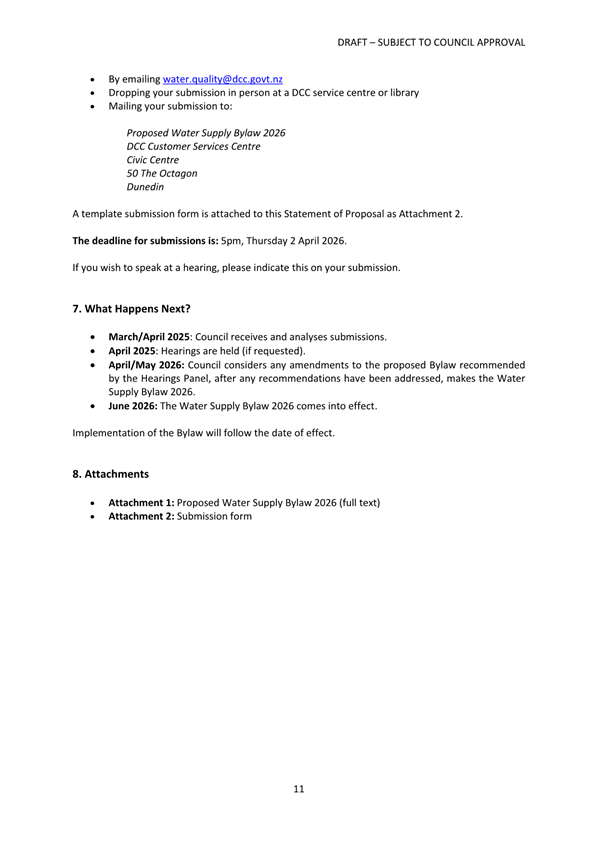
Proposed Water Supply Bylaw 2026
Department: 3 Waters
EXECUTIVE SUMMARY
1 This
report proposes making a new bylaw to manage the use of the Dunedin City
Council (DCC) water supply network as part of Council’s response to
recent legislative and regulatory changes relating to three waters services.
2 Staff
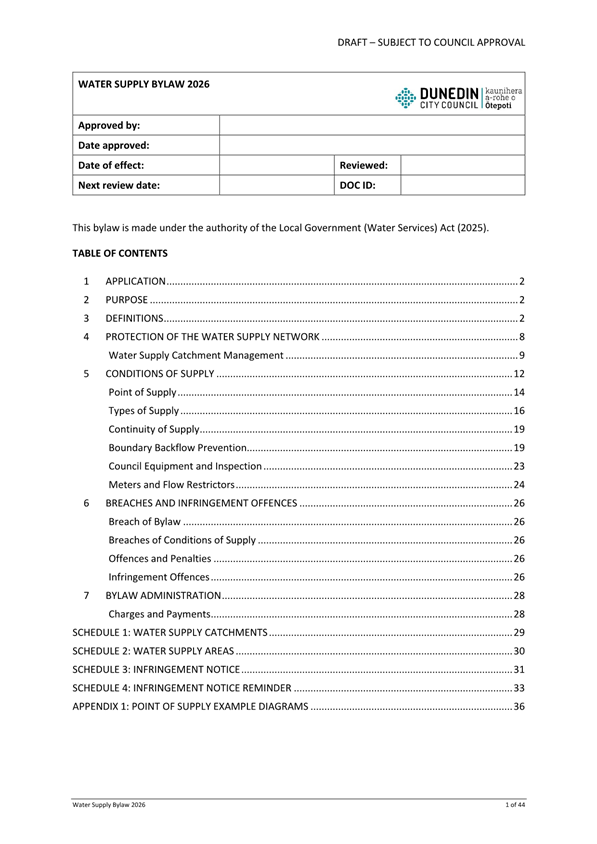
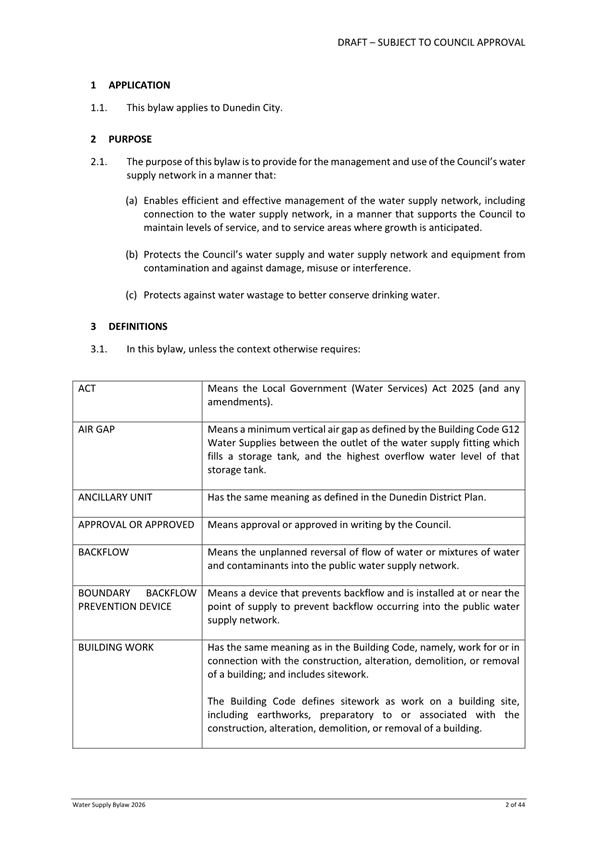
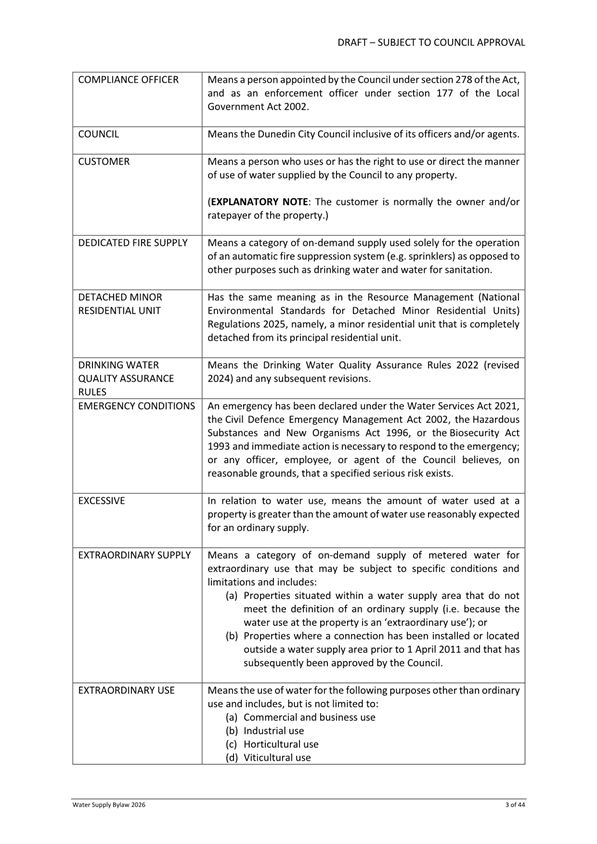
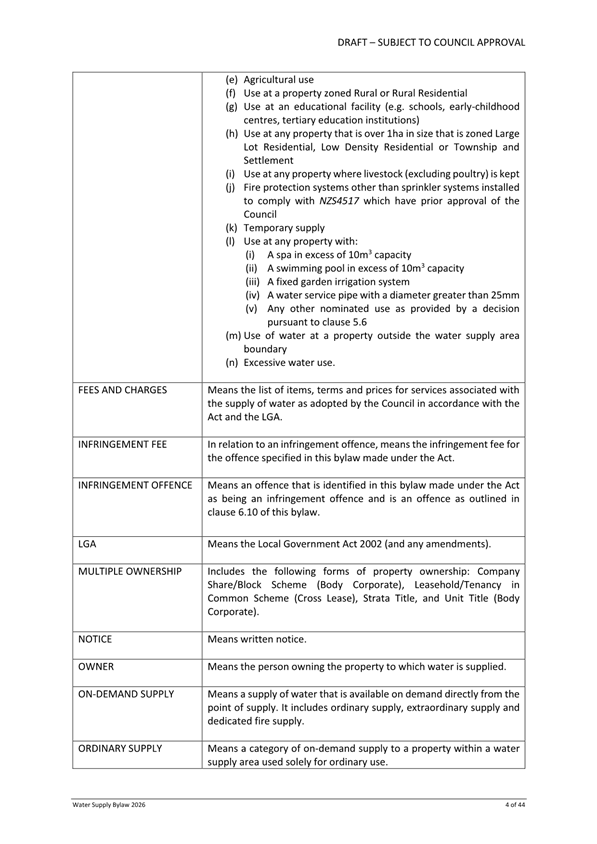
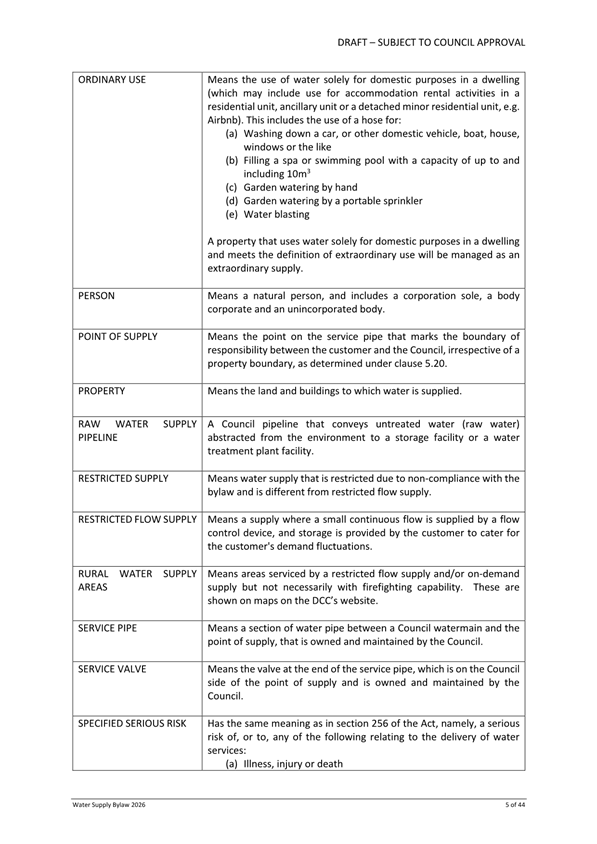
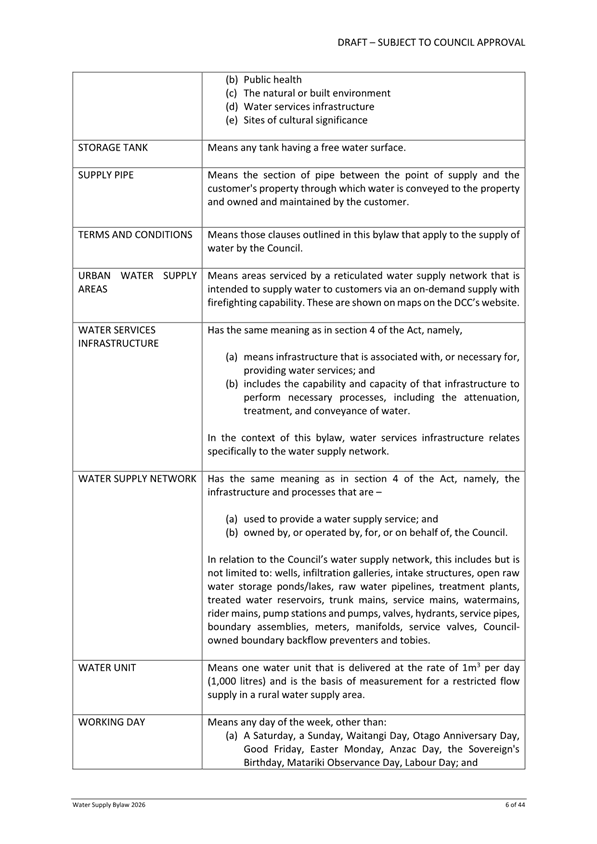
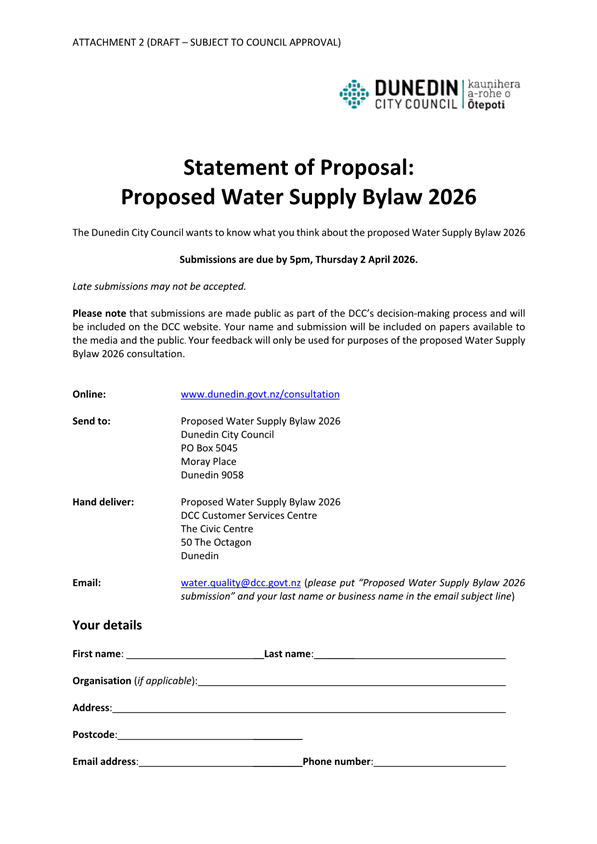
have developed a draft proposed Water Supply Bylaw 2026 (attached to this
report as Attachment A) and a draft Statement of Proposal (attached to this
report as Attachment B) for the Council’s consideration.
3 Although
the proposed Bylaw would be made under the Local Government (Water Services)
Act 2025 (LGWSA), aspects of the bylaw-making process requirements set out in
the Local Government Act 2002 (LGA) still apply. This report recommends that
the Council makes the determinations required by section 155 of the LGA, which
are that:
a) A
bylaw is the most appropriate way to manage the use of the DCC water supply
network;
b) The
proposed Bylaw is the most appropriate form of bylaw; and
c) The
proposed Bylaw does not give rise to any implications under, and is not
inconsistent with, the New Zealand Bill of Rights Act 1990.
4 This
report also recommends the Council approves the draft proposed Water Supply
Bylaw 2026 and the associated draft Statement of Proposal for notification for
public consultation, using the special consultative procedure set out in the
LGA.
RECOMMENDATIONS
That the Council:
a) Determines that a
bylaw is the most appropriate way to manage the use of the Dunedin City Council
water supply network.
b) Determines that the
draft proposed Water Supply Bylaw 2026 at Attachment A is the most appropriate
form of bylaw.
c) Determines that the
draft proposed Water Supply Bylaw 2026 at Attachment A does not give rise to
any implications under the New Zealand Bill of Rights Act 1990 and is not
inconsistent with that Act.
d) Determines that the
special consultative procedure, in accordance with the Local Government Act
2002, be used as part of the process to make the proposed Water Supply Bylaw
2026.
e) Approves the draft
proposed Water Supply Bylaw 2026 at Attachment A and the draft Statement of
Proposal at Attachment B to be notified for public consultation.
f) Authorises the Chief
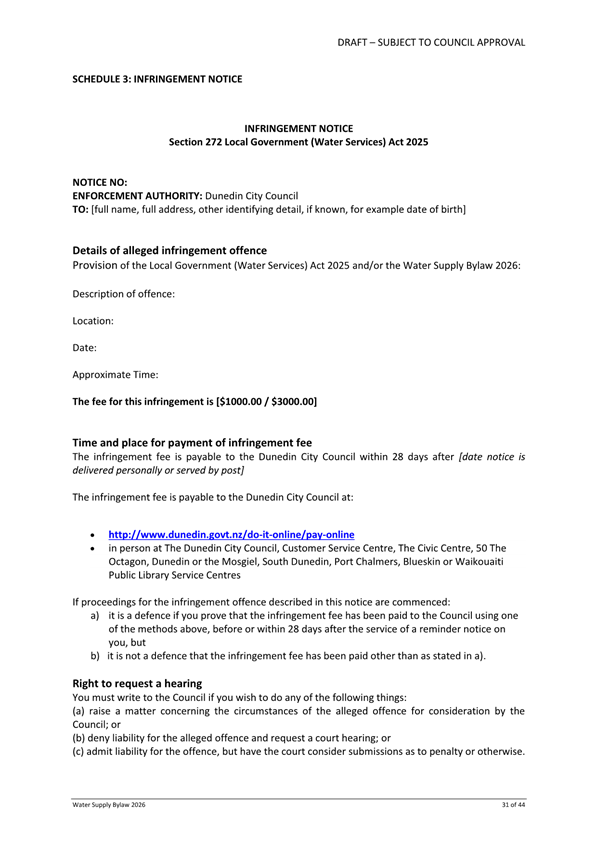
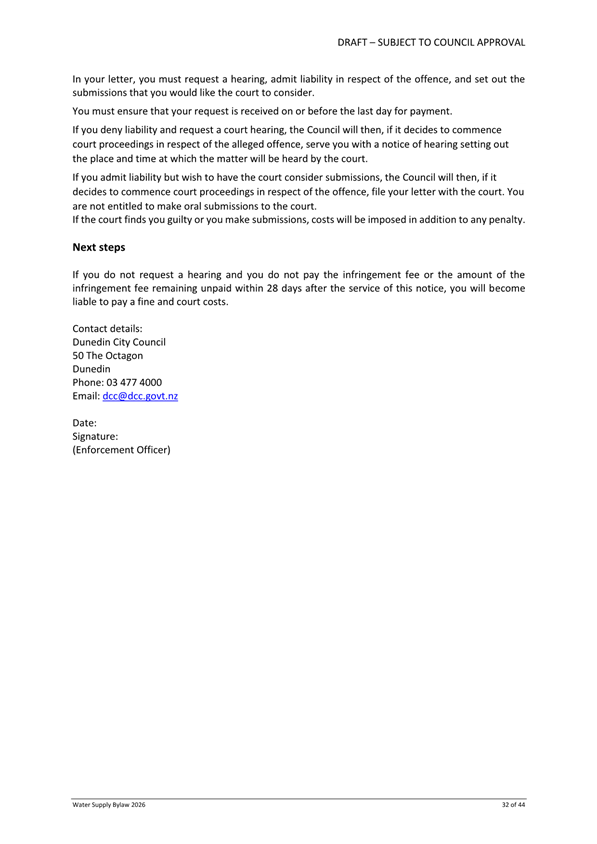
Executive to make any minor editorial changes to the proposed Water Supply
Bylaw 2026 and the Statement of Proposal prior to consultation opening.
BACKGROUND
The DCC water
supply network
5 The
DCC water supply network serves over 45,000 properties, and comprises around
210 km2 of catchment area, 21 consented water abstraction points,
nine water supply dams, 62 treated water reservoirs, over 1700km of pipeline, 21
pumping stations and six water treatment plants. It is important that the
Council manages use of the DCC water supply network to protect public health
and safety and to manage the network efficiently to maintain levels of
service.
6 The
DCC’s activities as a drinking water supplier are directed by and
regulated under national-level legislation and regulations, including the Water
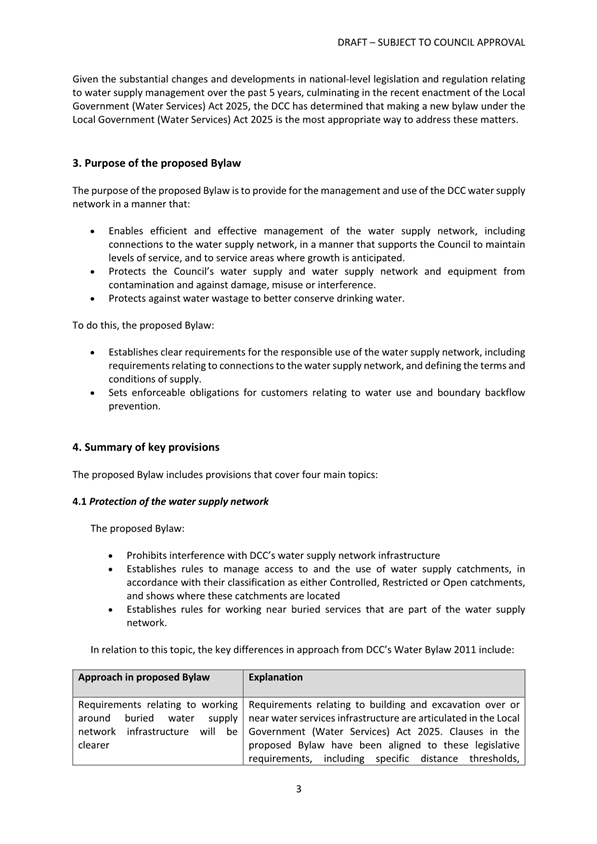
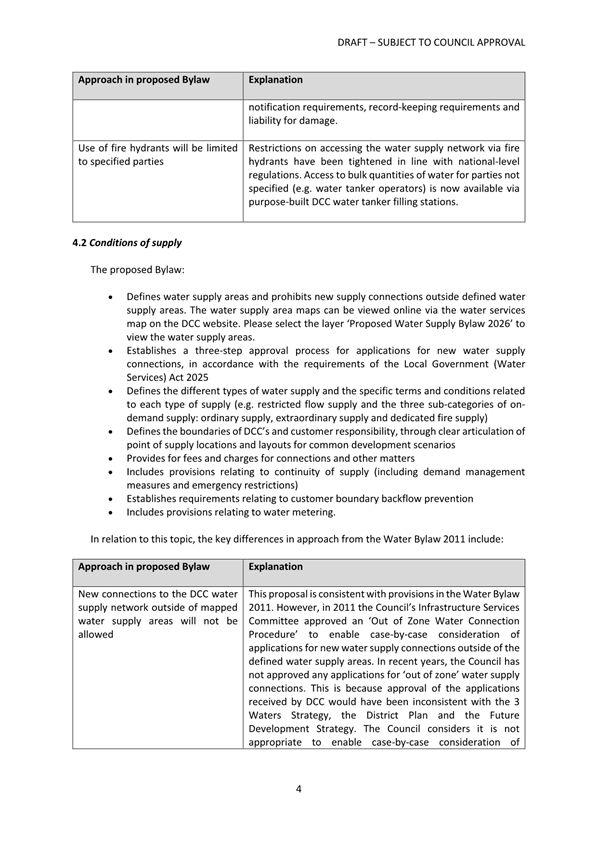
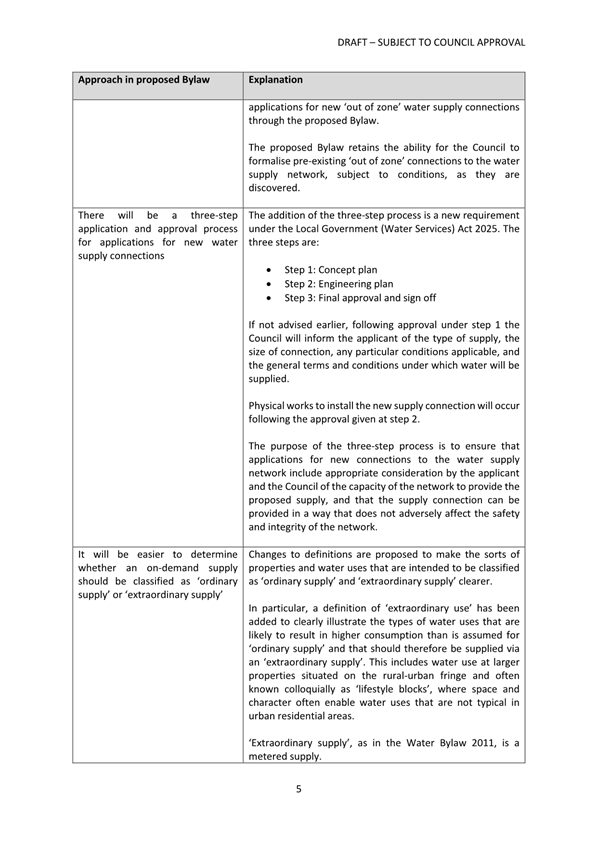
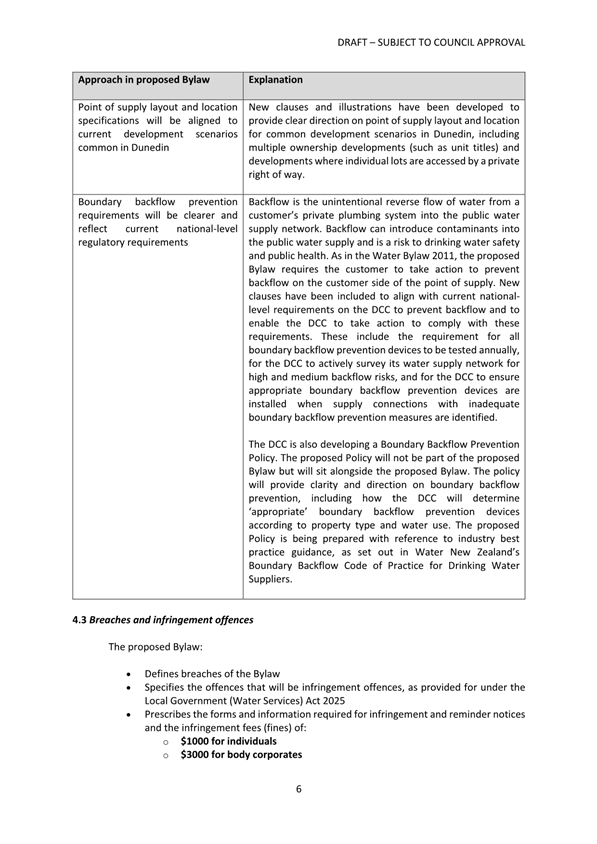
Services Act 2021, the Water Services (Drinking Water Standards for New
Zealand) Regulations 2022, the Drinking Water Quality Assurance Rules 2022 (revised
2024) and the LGWSA.
7 The
DCC and other councils across New Zealand use bylaws to set local rules and
requirements to assist with the regulation of the use of their water supply
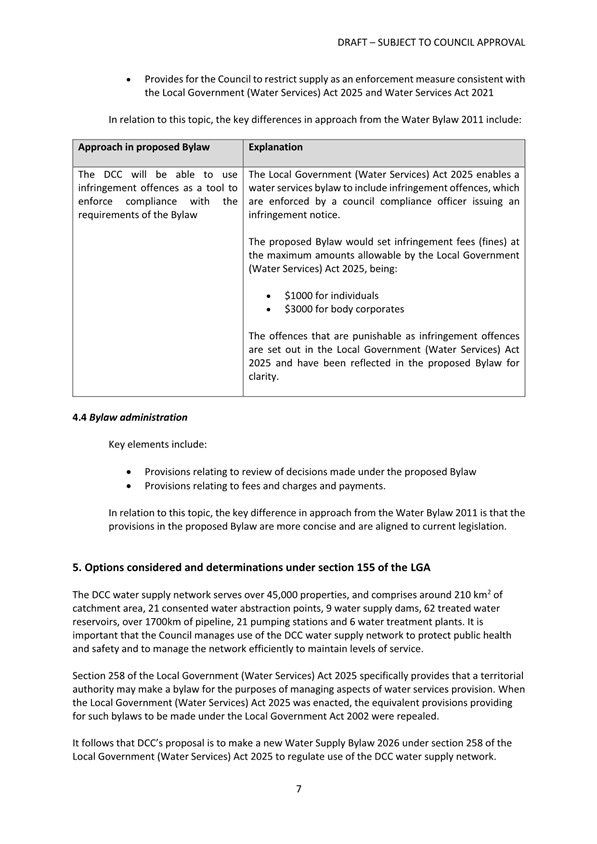
networks by customers and the general public. This is to protect the networks
themselves, to protect the health and safety of those who use the networks, and
to support councils to take the necessary actions to fulfil their duties and
obligations under national-level legislation and regulations. The most recent
iteration of DCC’s water supply bylaw is the Water Bylaw 2011.
LGWSA and LGA
bylaw-making powers and procedure
8 Section
258 of the LGWSA specifically provides that a territorial authority may make a
bylaw for the purposes of regulating aspects of water services provision. When
the LGWSA was enacted, the equivalent provisions providing for such bylaws to
be made under the LGA were repealed.
9 Section
258 of the LGWSA also provides that a bylaw may authorise a water service
provider to grant and administer permits (including charging fees for permits)
for activities that may be undertaken in relation to water services.
10 A water
supply bylaw enables a territorial authority to establish and enforce rules and
requirements to protect the water supply network against damage, misuse,
interference, or contamination that can pose a risk to public health and safety
and/or levels of service.
11 The DCC and
other territorial authorities in New Zealand use bylaws to manage use of their
individual water supply networks. Under the present law, a bylaw is the
most feasible way to efficiently and effectively manage the use of the water
supply network.
12 The LGA
sets out the nature and procedure for the making and review of bylaws. Section
155 of the LGA requires the local authority to determine that a bylaw is the
most appropriate way of addressing the perceived problem (which in this case is
the management of the use of the water supply network), a proposed bylaw is the
most appropriate form of bylaw, and that a proposed bylaw is not inconsistent
with the New Zealand Bill of Rights Act 1990 (NZBORA).
13 In
addition, the LGA requires local authorities to consult the public prior to
making a bylaw.
DISCUSSION
14 Dunedin’s
existing local rules for managing the use of the DCC water supply network have
been in place for many years and need updating to:
a) Align
with the provisions of the LGWSA and the Water Services Act 2021 (and
associated standards and compliance rules)
b) Reflect
current operational, safety and compliance requirements
c) Improve
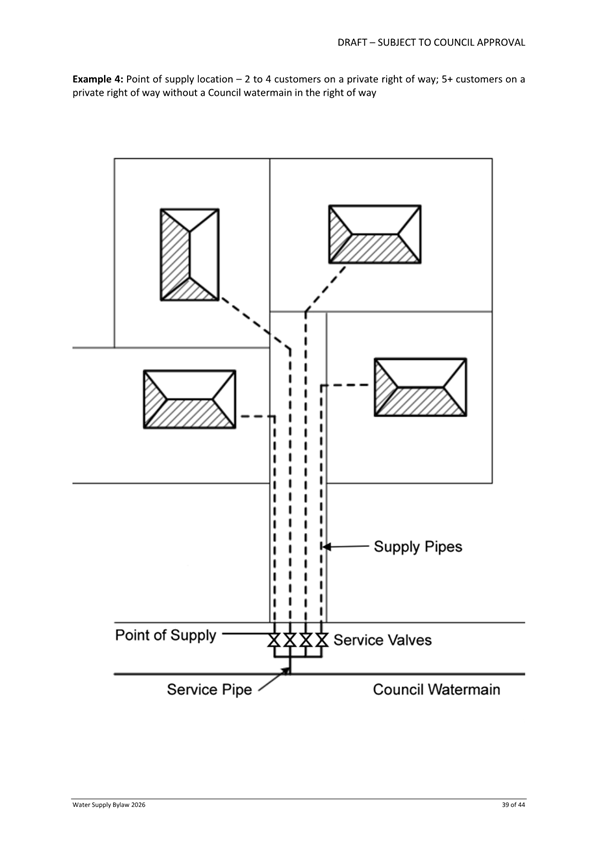
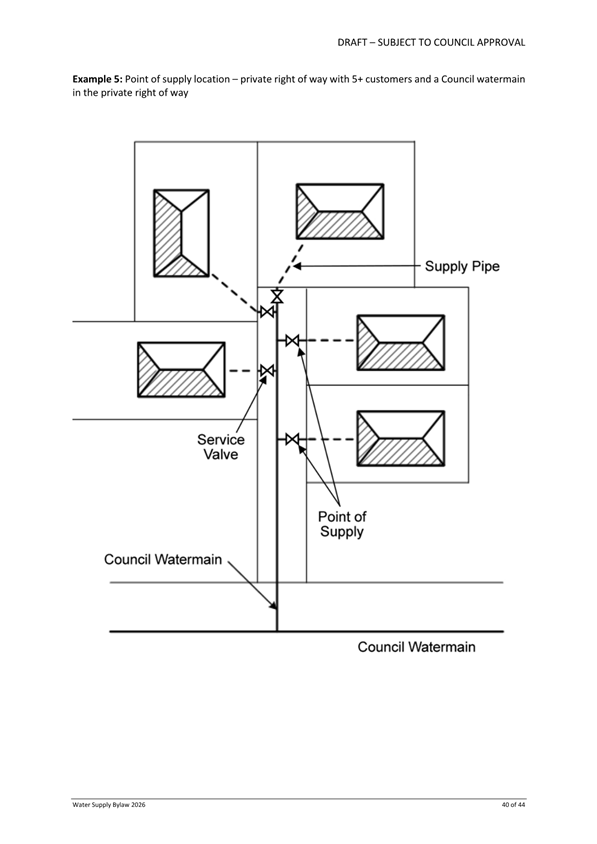
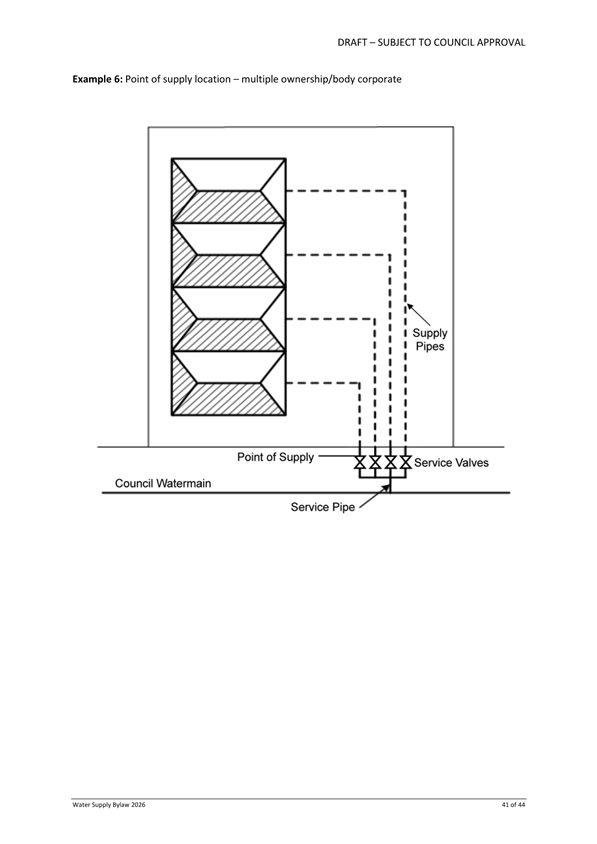
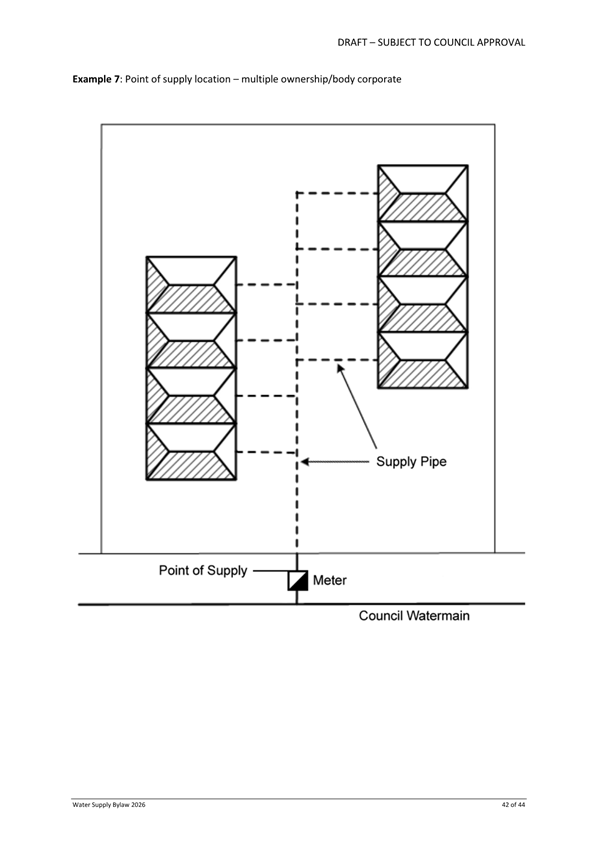
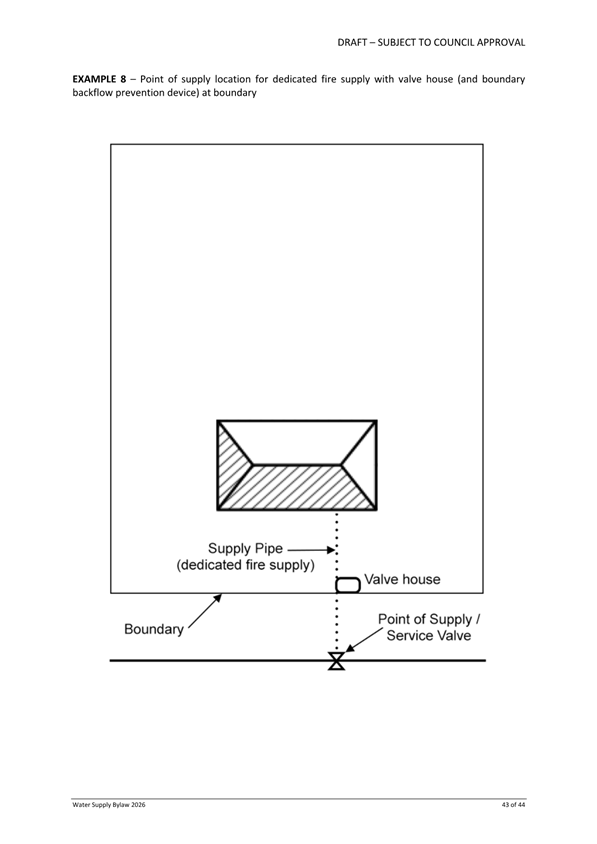
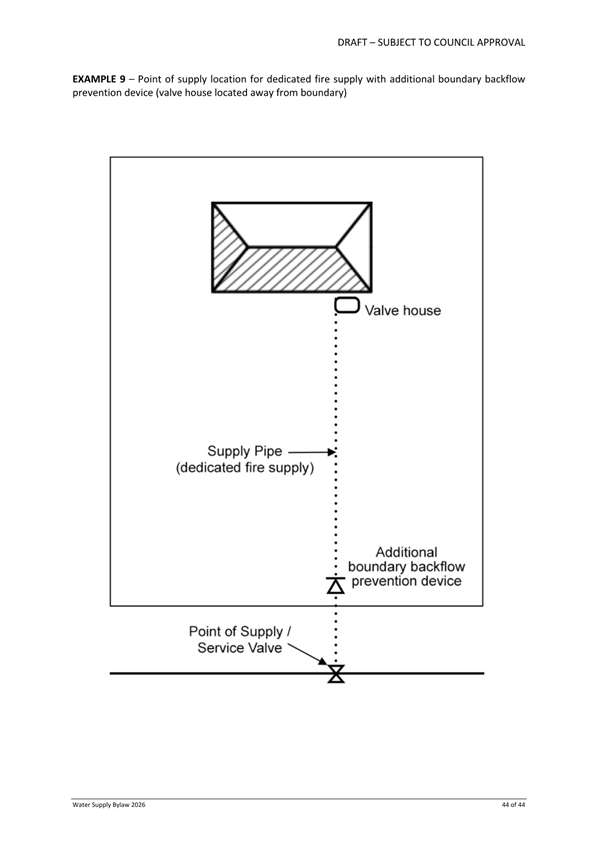
clarity regarding water supply areas, layout and location of points of supply,
metering, boundary backflow prevention requirements and compliance enforcement.
15 Making a
new bylaw under the LGWSA is appropriate due to the substantial changes and
developments in national-level legislation and regulation relating to water
supply management over the past five years, culminating in the recent enactment
of the LGWSA and the acceptance of the DCC’s Water Services Delivery Plan.
16 If a new
bylaw is made, it will need to be reviewed no later than five years after the
date on which it was made.
Overview of
proposed Water Supply Bylaw 2026
17 The purpose
of the proposed Water Supply Bylaw 2026 (the proposed Bylaw) is to manage the
use of the DCC water supply network in a manner that:
a) Enables
efficient and effective management of the water supply network, including
connections to the water supply network, in a manner that supports the Council
to maintain levels of service, and to service areas where growth is
anticipated.
b) Protects
the Council’s water supply and water supply network and equipment from
contamination and against damage, misuse or interference.
c) Protects
against water wastage to better conserve drinking water.
18 To achieve
this, the proposed Bylaw would:
a) Establish
requirements for the responsible use of the water supply network, including
requirements relating to connections to the water supply network, and by defining
the terms and conditions of water supply.
b) Set
enforceable obligations for customers relating to water use and boundary
backflow prevention.
19 The
proposed Bylaw would replace the DCC Water Bylaw 2011. Much of the substance of
the Water Bylaw 2011 would be retained in the proposed Bylaw, but some updated
and new requirements would be introduced to reflect current legislation and
regulations and current operating conditions, including Dunedin’s growth
and development.
20 Section 4
of the draft Statement of Proposal attached to this report at Attachment B
includes an analysis of the proposed Bylaw that highlights aspects of the
proposed Bylaw that are substantively different from the Water Bylaw 2011. The
reasons for taking new approaches generally respond to one or both of:
a) Changes
in national-level legislation and regulations
b) Internal
and external feedback on the application of the Water Bylaw 2011 gathered
during its lifetime.
Analysis: determinations under section 155 of the LGA
21 The
following paragraphs provide analysis to support the Council to consider the
recommended determinations, which section 155 of the LGA requires the council
to make before making a new bylaw.
Section 155(1): Is a bylaw the most appropriate way
to address the perceived problem?
22 The DCC
water supply network is a public asset that enables an essential service for
the community. Most activities related to management and use of the water
supply and the water supply network can be managed adequately using
non-regulatory methods such as education campaigns.
23 However,
there are some instances where it is necessary for the DCC to use a regulatory
instrument like a bylaw to set rules and provide the ability to legally enforce
compliance. These instances relate to:
a) protecting
water supply network infrastructure from misuse and/or damage
b) managing
water demand
c) protecting
the safety of drinking water.
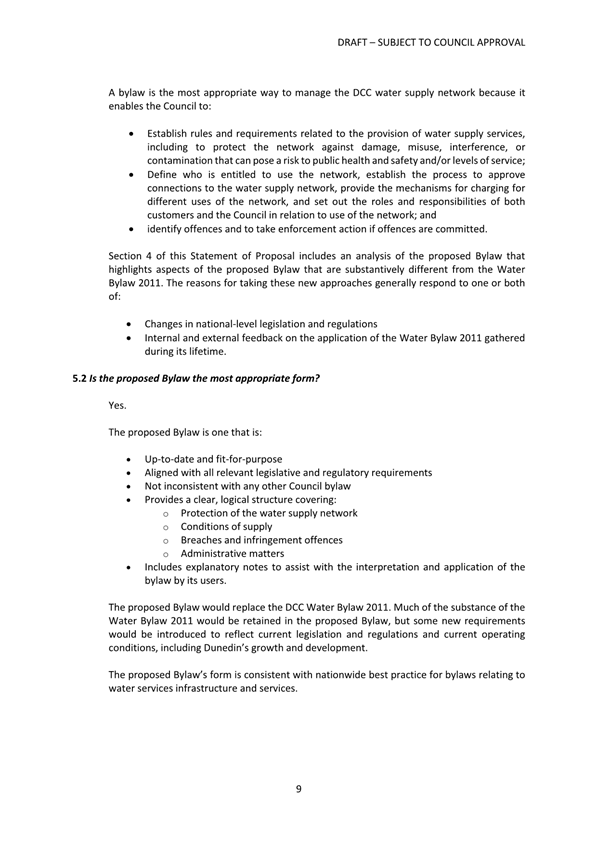
24 A bylaw is
the most appropriate way to manage the DCC water supply network because it
enables the Council to:
a) Establish
rules and requirements related to the provision of water supply services,
including to protect the network against damage, misuse, interference, or
contamination that can pose a risk to public health and safety and/or levels of
service;
b) Define who
is entitled to use the network, establish the process to approve connections to
the water supply system, provide the mechanisms for charging for different uses
of the network, and set out the roles and responsibilities of both customers
and the Council in relation to use of the network; and
c) identify
offences and to take enforcement action if offences are committed.
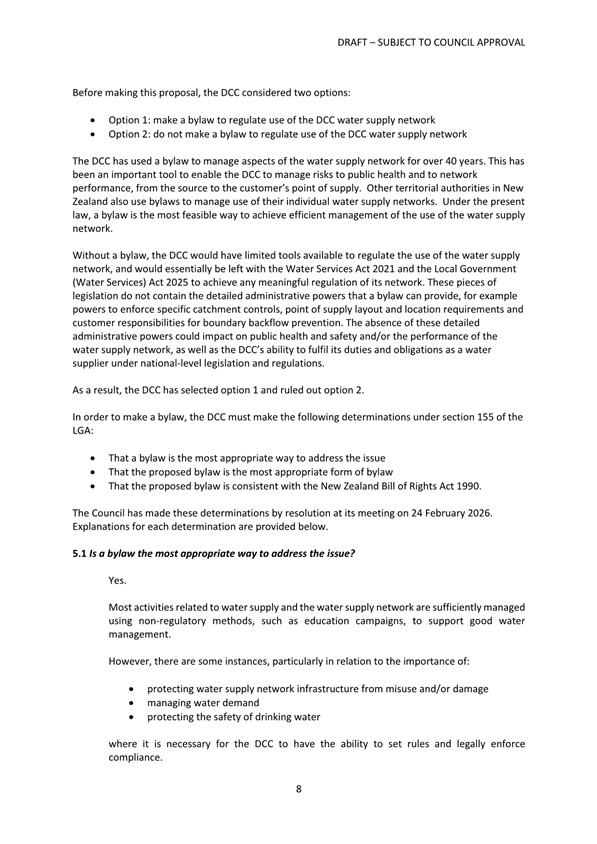
25 Without a
bylaw, the DCC would have limited tools available to regulate the use of the water
supply network, and would essentially be left with the Water Services Act 2021
and the LGWSA to achieve any meaningful regulation of its network. These pieces
of legislation do not contain the detailed administrative powers that a bylaw
can provide, for example specific controls for catchment access and use, point
of supply layout and location requirements, and customer responsibilities for
boundary backflow prevention. The absence of these detailed administrative
powers could adversely impact public health and safety and/or the performance
of the water supply network, as well as the DCC’s ability to fulfil its
duties and obligations as a water supplier under national-level legislation and
regulations.
Section 155(2)(a): Is the proposed bylaw the most
appropriate form of bylaw?
26 Section 258
of the LGWSA specifically provides that a territorial authority may make a
bylaw for the purposes of regulating aspects of water services provision,
including:
a) Connections
to, and disconnections from, a water supply network
b) The
provision of water services
c) Conserving
drinking water provided in the territorial authority’s district
d) The use of
equipment or devices for the purposes of providing water services.
27 The
proposed Bylaw is an appropriate form of bylaw because it addresses these
aspects of water supply provision by the DCC in Dunedin.
28 In
addition, the proposed Bylaw is the most appropriate form of bylaw because it
is:
a) Aligned
with all relevant legislative and regulatory requirements
b) Not
inconsistent with any other Council bylaw
c) Structured
clearly and logically, covering:
i) Protection
of the water supply network
ii) Conditions
of supply
iii) Breaches
and infringement offences
iv) Administrative
matters
d) User-friendly,
with the inclusion of explanatory notes to assist with the interpretation and
application of the bylaw by its users.
29 The
proposed Bylaw’s form is consistent with nationwide practice for bylaws
relating to water services infrastructure and services.
Section 155
(2)(b): Is the proposed Bylaw consistent with the NZBORA?
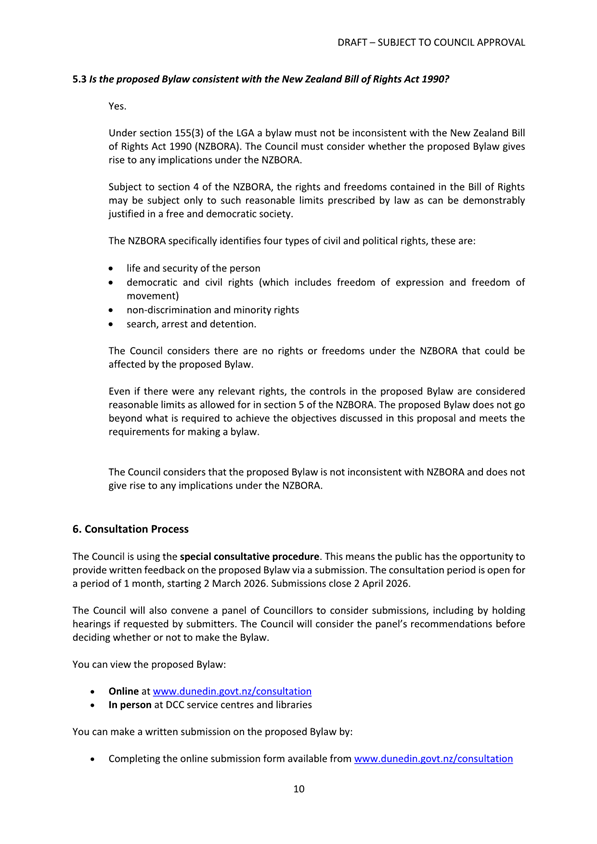
30 Under
section 155(3) of the LGA a bylaw must not be inconsistent with the New Zealand
Bill of Rights Act 1990 (NZBORA). The Council must consider whether the
proposed Bylaw gives rise to any implications under the NZBORA.
31 Subject to
section 4 of the NZBORA, the rights and freedoms contained in the NZBORA may be
subject only to such reasonable limits prescribed by law as can be demonstrably
justified in a free and democratic society.
32 The NZBORA
specifically identifies four types of civil and political rights, these are:
a) life
and security of the person;
b) democratic
and civil rights (which includes freedom of expression and freedom of movement)
c) non-discrimination
and minority rights;
d) search,
arrest and detention.
33 It has been
assessed that there are no rights or freedoms under the NZBORA that could be
affected by the proposed Bylaw.
34 Even if
there were any relevant rights, the controls in the proposed Bylaw have been
assessed as reasonable limits as allowed for in section 5 of the NZBORA. As
such, the proposed Bylaw does not go beyond what is required to achieve its
objectives and meets the requirements for making a bylaw.
Special
Consultative Procedure
35 Section 156
of the LGA requires local authorities to use the special consultative procedure
when making a bylaw if:
a) the
proposed bylaw concerns a matter identified in the local authority’s
significance and engagement policy; or
b) the local
authority considers the proposed bylaw is likely to have a significant impact
on the public.
36 The DCC water
supply network is a significant public asset that enables an essential service
for the community. Schedule 2 of Council’s Significance and Engagement
Policy includes ‘water collection, storage, treatment and distribution system’
in the list of assets considered by the DCC to be strategically important to
achieve and promote the current or future well-being of the community and the
priorities of the Strategic Framework. A bylaw is the most appropriate
regulatory tool to protect this strategic asset and the service it provides, as
well as ensuring it is operated in a manner that complies with national-level
legislative and regulatory requirements.
37 For these
reasons, use of the special consultative procedure as part of the process to
make the proposed Bylaw is appropriate and recommended.
38 As part of
the special consultative procedure, the Council must adopt a draft of the
proposed Bylaw and a statement of proposal. The Council must make these
available for public feedback for a period of not less than one month.
39 This report
recommends the Council adopts the draft proposed Bylaw attached to this report
as Attachment A and the draft Statement of Proposal attached to this report as Attachment
B for public consultation.
40 If
approved, public consultation on the Statement of Proposal and proposed Bylaw
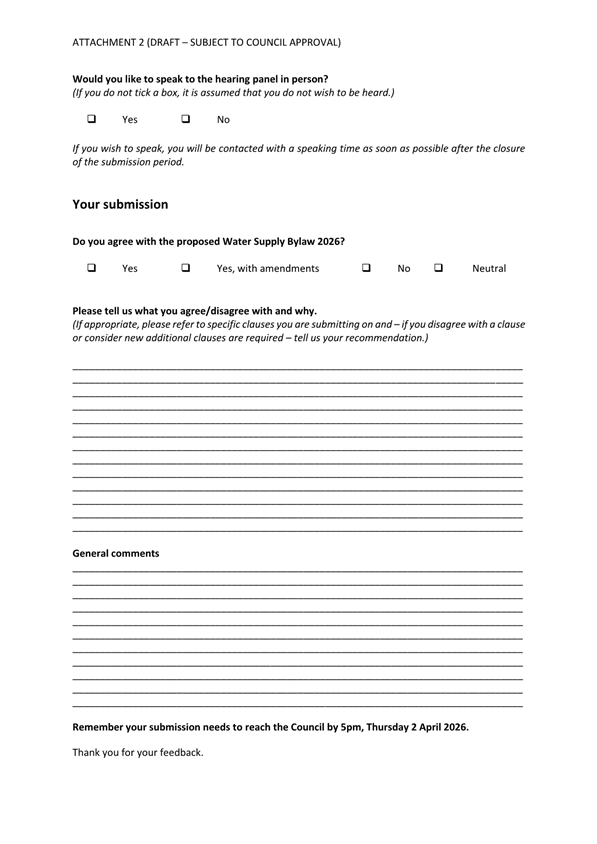
will be open from Monday 2 March 2026 to Thursday 2 April 2026. Provision will
be made for members of the public to view the consultation material both online
(via the DCC website) and at DCC libraries and service centres. Provision will
be made for written submissions to be provided online and via other channels
(e.g. by post).
41 Arrangements
will be made for hearings if requested by submitters. A Hearings Panel will be
convened for the purpose of considering submissions, and for the purpose of
hearings if required. Hearings would likely take place in April 2026.
OPTIONS
Option One – make the recommended determinations and
adopt the attached draft proposed Bylaw and draft Statement of Proposal for
consultation (Recommended Option)
42 This option
involves making the recommended LGA determinations and proceeding with public
consultation on the attached draft proposed Bylaw and Statement of Proposal, as
part of the process towards making a new water supply bylaw for Dunedin.
Advantages
· Complies
with the statutory requirements for bylaw-making and associated public
consultation
· Enables
the DCC to progress towards making a new bylaw to manage use of the DCC water
supply network that reflects current legislative and regulatory provisions
Disadvantages
· None
identified
Option Two – do not make the recommended
determinations and/or do not adopt the attached draft proposed Bylaw and draft
Statement of Proposal for consultation (Status Quo)
43 This option
could involve either:
a) not
progressing towards making a new bylaw to manage use of the DCC water supply
network; or
b) asking
staff to make changes to the draft proposed Bylaw and draft Statement of
Proposal before returning to Council for LGA determinations and approvals at a
later date.
Advantages
· Enables
the Council to request further analysis prior to making decisions
Disadvantages
· Delays
progress towards DCC putting in place a new water supply bylaw that reflects
current legislative and regulatory provisions
NEXT STEPS
44 If the
Council approves the recommended option, the proposed Bylaw and Statement of Proposal
will be notified for public consultation in accordance with the requirements of
the LGA. The consultation will be open from Monday 2 March 2026 to Thursday 2
April 2026.
45 Staff will
summarise feedback received and prepare a report for consideration by the Hearings
Committee. Staff will arrange hearings if requested by submitters.
46 After any
hearings, staff will report back to the Council with the Hearing
Committee’s recommendations and a final proposed Bylaw (incorporating any
recommended amendments) for the Council’s consideration.
Signatories
|
Author:
|
Katherine Quill - Policy Analyst
Scott Campbell - Regulation and Policy Team Leader
|
|
Authoriser:
|
Jared Oliver - Planning Manager
John McAndrew - Head of 3 Waters
David Ward - General Manager, 3 Waters, Property and Urban
Development
|
Attachments
|
|
Title
|
Page
|
|
⇩a
|
Draft Proposed Water
Supply Bylaw 2026
|
51
|
|
⇩b
|
Draft Statement of
Proposal: Proposed Water Supply Bylaw 2026
|
95
|
|
SUMMARY OF CONSIDERATIONS
|
|
Fit with purpose of Local Government
This decision enables democratic local
decision making and action by, and on behalf of communities.
|
|
Fit with strategic framework
|
|
Contributes
|
Detracts
|
Not applicable
|
|
Social Wellbeing Strategy
|
☐
|
☐
|
✔
|
|
Economic Development Strategy
|
☐
|
☐
|
✔
|
|
Environment Strategy
|
☐
|
☐
|
✔
|
|
Arts and Culture Strategy
|
☐
|
☐
|
✔
|
|
3 Waters Strategy
|
✔
|
☐
|
☐
|
|
Future Development Strategy
|
☐
|
☐
|
✔
|
|
Integrated Transport Strategy
|
☐
|
☐
|
✔
|
|
Parks and Recreation Strategy
|
☐
|
☐
|
✔
|
|
Other strategic projects/policies/plans
|
✔
|
☐
|
☐
|
This report has been prepared with reference to
Dunedin’s strategic framework.
|
|
Māori Impact Statement
There are no known specific impacts for Māori related
to this report and the decisions sought. Māori individuals and
organisations will have the opportunity to provide feedback on the proposed
Bylaw via the public consultation process.
|
|
Sustainability
The proposed Bylaw is intended to enable the DCC to manage
use of the water supply network in a manner that supports the long-term
sustainability of the water supply network and the environment.
|
|
LTP/Annual Plan / Financial Strategy /Infrastructure
Strategy
This report and the recommended decisions have no immediate
direct implications for these plans and strategies. However, the proposed
Bylaw is intended to enable the DCC to manage use of the water supply network
in a manner that supports the DCC to achieve the objectives set out in these
plans and strategies (including, for example, level of service performance
targets for water supply).
|
|
Financial considerations
There are no known specific financial implications related to this report and the recommended
decisions. The costs of public consultation and immediate implementation of
the proposed Bylaw (if subsequently adopted) can be met from existing
budgets. Additional funding (if required) for longer-term implementation
activities would be sought through budgets included in the first Water
Services Strategy in 2027.
|
|
Significance
This
report and the recommended decisions have been assessed as medium
significance in terms of the Council’s Significance and Engagement
Policy.
|
|
Engagement – external
The draft proposed Bylaw and draft Statement of Proposal
have been reviewed by an external legal reviewer.
Staff have considered external feedback received on the
Water Bylaw 2011 over a number of years while developing the proposed Bylaw.
|
|
Engagement - internal
Staff
from the following departments have contributed to the development of this
report and/or the attached draft proposed Bylaw and draft Statement of
Proposal: 3 Waters, City Growth, Governance, Building Services, Business
Information Services, Council Communications and Marketing, and In-House
Legal.
|
|
Risks: Legal / Health and Safety etc.
None identified.
|
|
Conflict of Interest
None identified.
|
|
Community Boards
There are no known specific impacts for Community Boards
related to this report and the decisions sought. Community Boards and their constituents
will have the ability to provide feedback on the proposed Bylaw via the
public consultation process.
|
|

|
Council
24 February 2026
|
Administration of CNZ Creative
Communities Scheme grants
Department: Ara Toi
EXECUTIVE SUMMARY
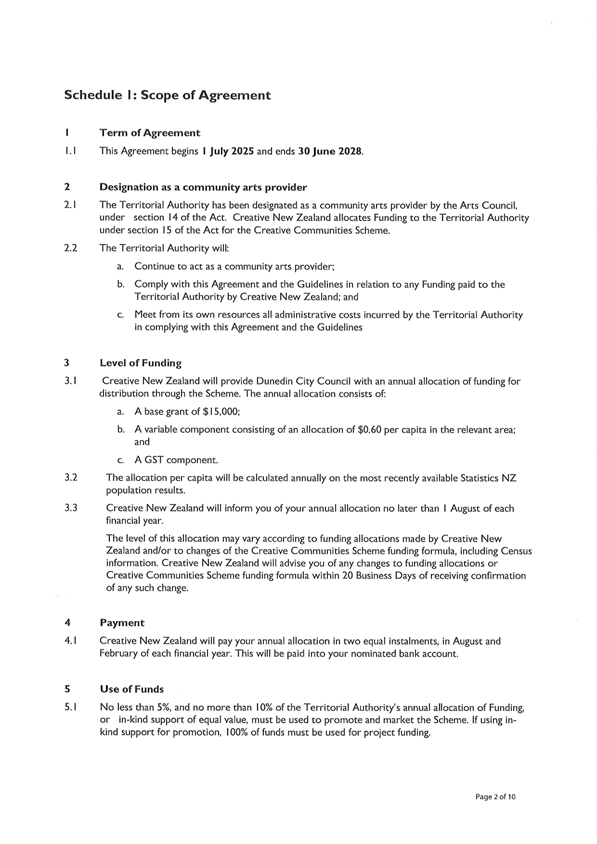
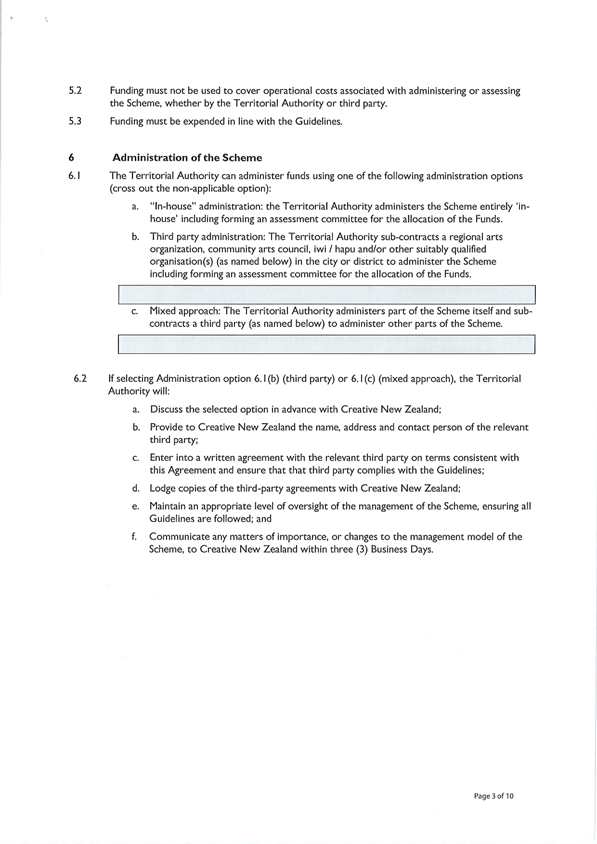
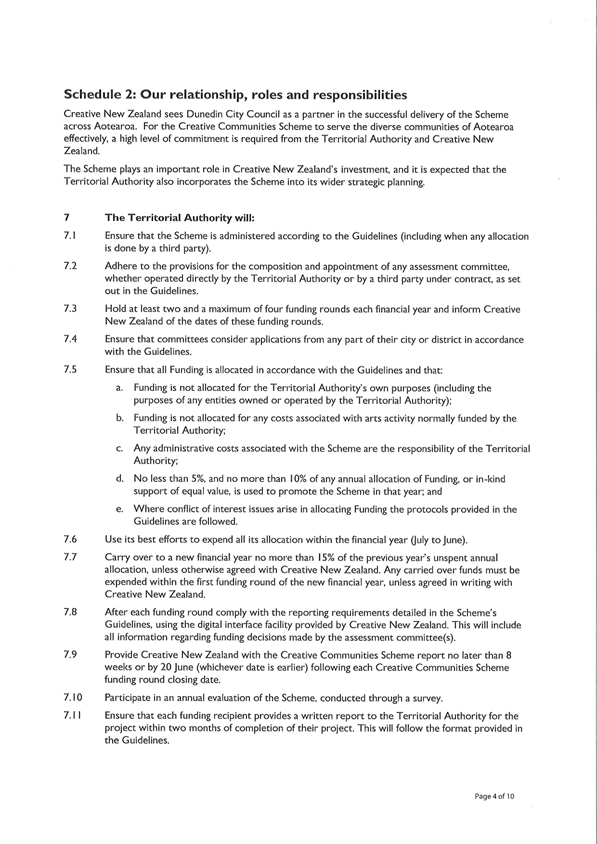
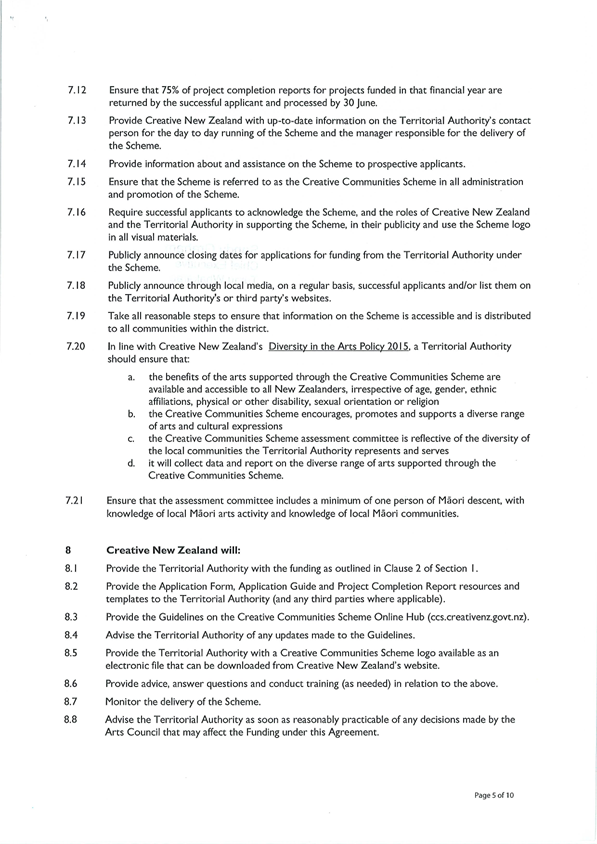
1 This
report recommends establishing a community-led Assessment Committee to be
responsible for the assessment and decision-making for Creative New
Zealand’s Creative Communities Scheme (CCS) grants.
2 This
action ensures that the Dunedin City Council (DCC) meets Creative New Zealand requirements for administration
of the grants scheme.
3 This
action aligns DCC administration of the CCS grants with Creative New
Zealand’s guidelines and with the processes followed by the majority of
territorial authorities that administer CCS grants.
4 The
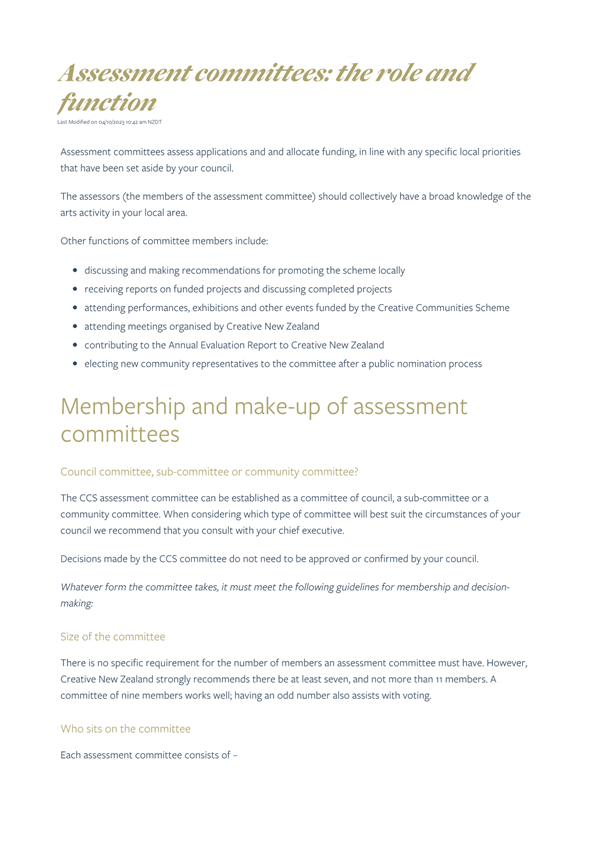
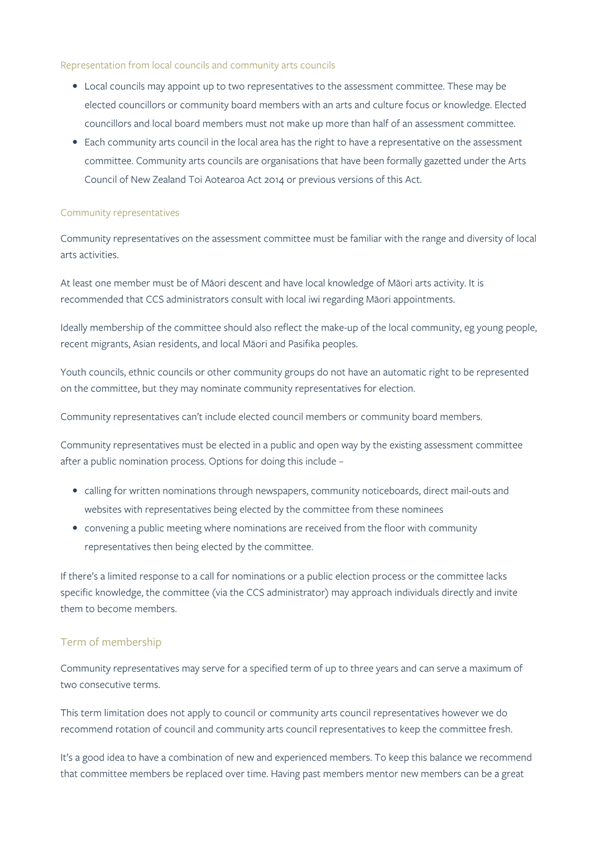
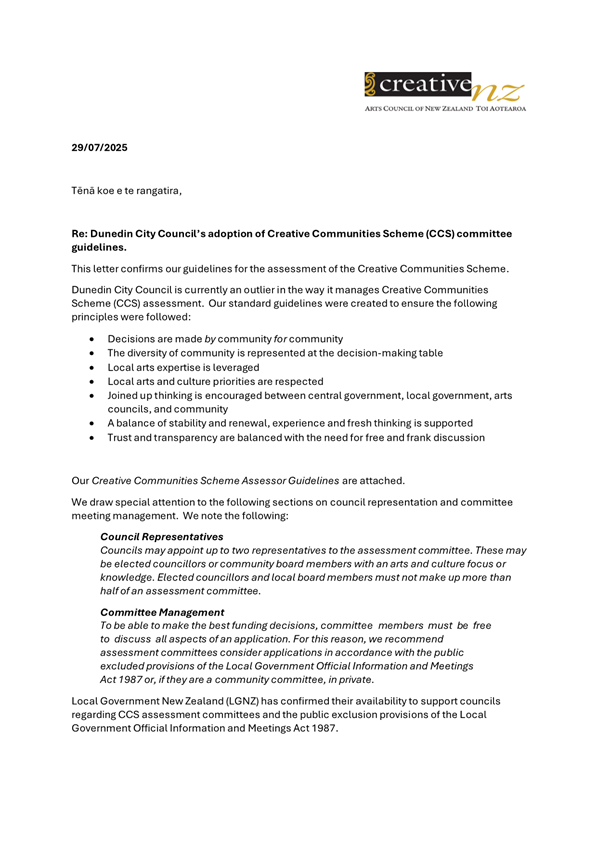
following documents are attached for reference:
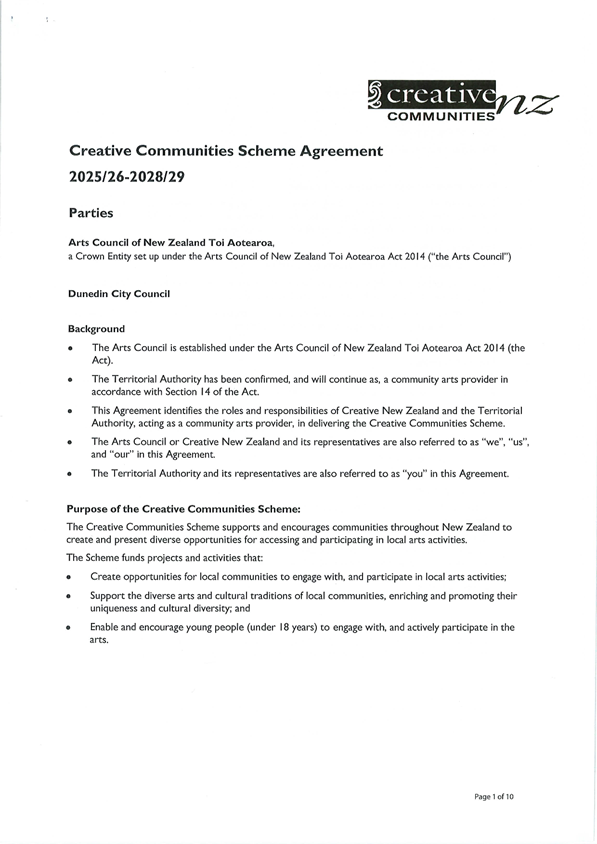
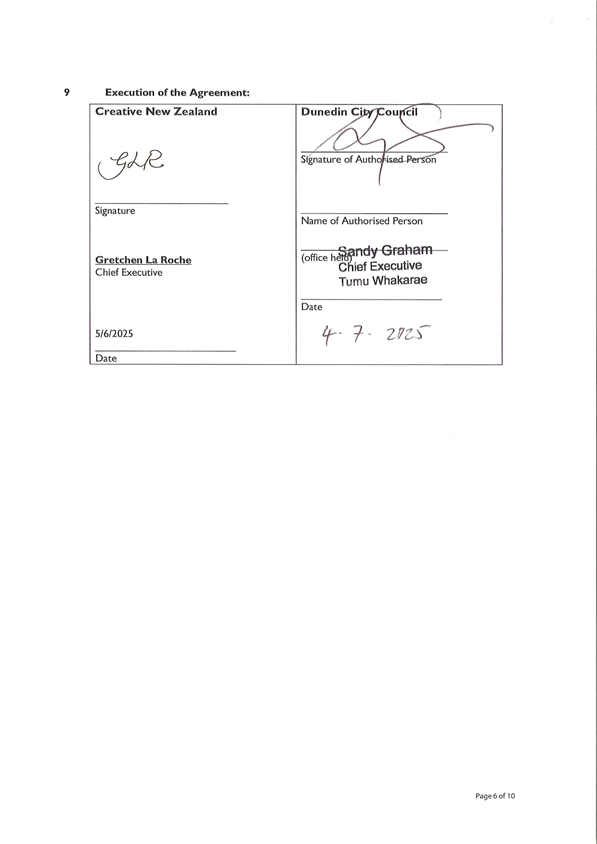
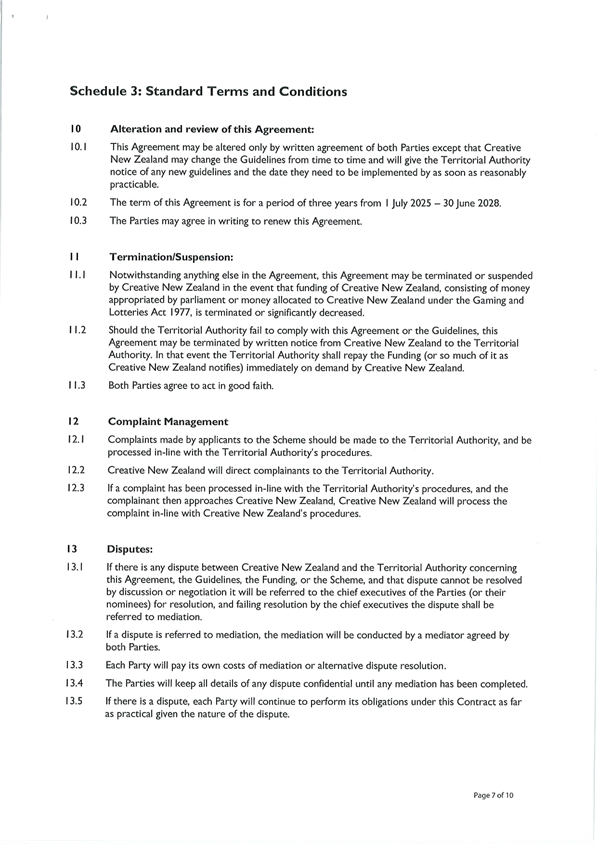
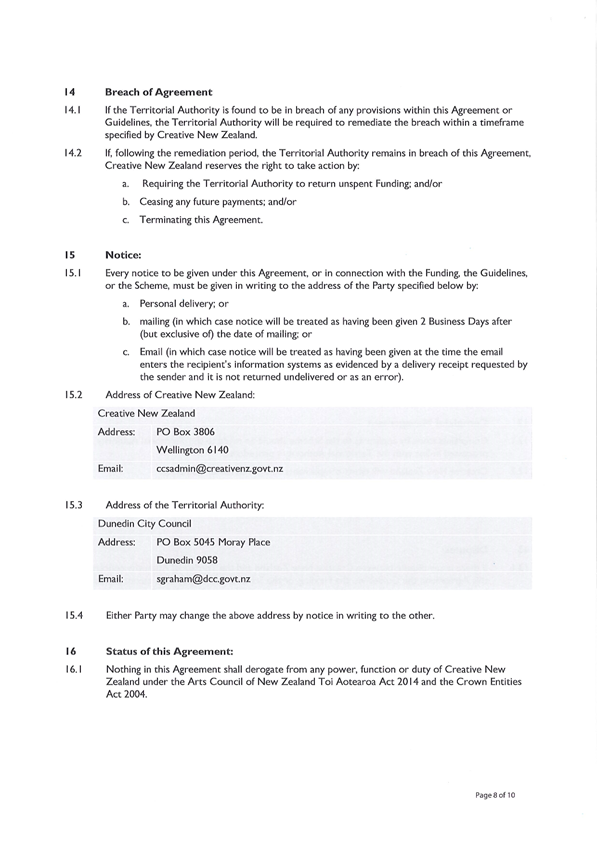
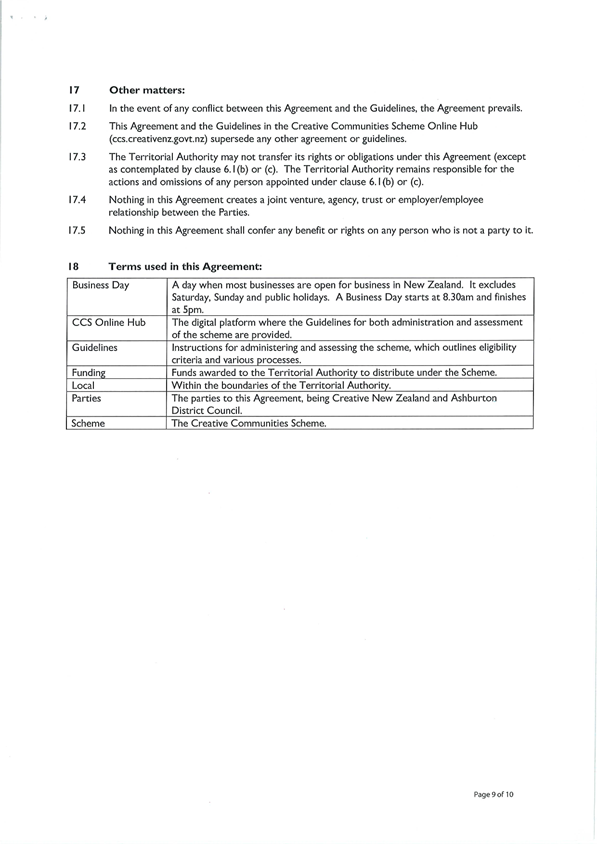
2025-28 DCC-CCS Agreement
– Attachment A
CNZ Guidelines –
Assessment Committees – Attachment B
Examples - CCS Assessment
Committee – Attachment C
CCS Process – DCNZ
Letter of Support – Attachment E
RECOMMENDATIONS
That the Council:
a) Approves the
establishment of a community-based Assessment Committee to undertake CCS
assessment and decision-making, the composition of which is as follows:
i) 4 general community representatives, across a range of
creative disciplines
ii) 1 youth representative (aged 24 or under)
iii) 1 mana whenua representative (or their nominee, if mana
whenua do not have capacity to sit on the committee at the current time)
iv) 1 or 2 elected officials with appropriate arts knowledge
and experience (Mayoral nomination, drawn from Council and/or Community Boards)
b) Notes that CCS administration,
applicant support, assessment of eligibility, and provision of information to
applicants and the Assessment Committee would continue to be done by the Ara
Toi/Creative Partnerships team.
BACKGROUND
5 The
Creative New Zealand Creative Communities Scheme (CCS) was piloted in Dunedin
in 2006.
6 An
agreement to deliver the Creative Communities Scheme is signed between the Arts
Council of New Zealand and DCC every three years. The current agreement runs
from 1 July 2025 until 30 June 2028.
7 Creative
New Zealand (CNZ) transfers funds to the Dunedin City Council to be disbursed
as grants to support eligible creative activities within the Ōtepoti
Dunedin city boundaries.
8 The
allocation is calculated on a per annum base amount of $15,000 plus a per
capita amount of $0.60 for the area and a GST component. In 2025/26 the full
allocation is $93,420.
9 Prior
to September 2025, CCS grants were administered under the same system used for
the allocation of DCC Community Arts grants.
10 Grant
applications, assessments, and recommendations were provided to Grants
Subcommittee members who make the final decision about the allocation of funds.
11 The Grants
Subcommittee was disestablished after the October 2025 local body elections.
DISCUSSION
12 Proposed
structure Council is to consider a new decision-making process for DCC grants
in 2026.
13 CNZ
provides comprehensive guidelines for the composition,
role, and function of an Assessment Committee for the CCS grants and as a
signatory to the funding agreement, DCC agrees to follow these
guidelines.
14 CNZ’s
Creative Communities Scheme Senior Adviser, Rebecca Kunin, has provided a
letter of support confirming the guidelines for assessment of CCS applications.
15 Drawing
upon conversations with CCS administrators in other parts of the country, staff
recommend the following structure for an Ōtepoti Dunedin CCS Assessment
Committee.
16 The CCS
Assessment Committee is set up as a community committee in accordance with CNZ
requirements and comprises:
- 4
general community representatives, across a range of creative disciplines
- 1
youth representative (aged 24 or under)
- 1
mana whenua representative (or their nominee, if mana whenua do not have
capacity to sit on the committee at the current time)
- 1
or 2 elected officials with appropriate arts knowledge and experience (Mayoral
nomination, drawn from Council and/or Community Boards)
17 This
committee composition ensures that decision-making is grounded in
members’ knowledge of the city’s creative ecosystem and provides an
informed and robust forum for decision-making.
18 Creative
Partnerships staff have the knowledge and capacity to provide the necessary
administrative and advisory support to the CCS Assessment Committee.
Timeframe and process
19 The new
committee structure should be set up in time to allocate the second tranche of
Creative New Zealand CCS funding, ie: before the end of the financial year
2025/26.
20 In the
past, this funding round was administered between March and May because it
needed to fit Council’s meeting schedule. There is no requirement to
adhere strictly to this timeframe; CNZ allows grants rounds to be scheduled to
suit individual communities.
21 The timing
of future CCS assessment rounds will be evaluated to ensure that the timeframes
work for applicants, committee members, and staff workloads.
22 Ara
Toi/Creative Partnerships staff will work closely with new CCS Assessment
Committee members to provide induction, support, and advice throughout the
assessment process.
This would include hands-on
workshops and provision of appropriate resources; CNZ also provides training
for committee members.
OPTIONS
Option One – Recommended Option.
Council approves the establishment of a community-based
Creative Communities Scheme Assessment Committee.
Impact assessment
23 This
option has no impact on debt, rates, or city-wide and DCC emissions.
Advantages
· Dunedin
City Council meets Creative New Zealand requirements for the administration,
assessment, and decision-making of the Creative Communities Scheme grants.
· There
is certainty about the grants processes for Creative New Zealand, local creative
practitioners, and staff.
· The
establishment of an Assessment Committee and the induction and training of its
members can start.
· All
members of the Assessment Committee are actively interested in and involved
with diverse arts, creative, and cultural activities of the city.
· Community
involvement in the process has the potential to increase the visibility of
these grants and the creative activities that take place in the city.
Disadvantages
· There
are no identified disadvantages.
Option Two – Status Quo
Council does not approve the establishment of a
community-based Creative Communities Scheme Assessment Committee.
Impact assessment
24 This
option has no impact on debt, rates, or city-wide and DCC emissions.
Advantages
· There
are no identified advantages to this option.
Disadvantages
· Dunedin
City Council does not meet the requirements of its agreement with Creative New
Zealand.
· There
is no certainty about the CCS grants process for Creative New Zealand, local
creative practitioners, or staff.
· The
establishment of an Assessment Committee and the induction and training of its
members are delayed.
· There
is no guarantee of community involvement in the decision-making process as
required by Creative New Zealand.
NEXT STEPS
25 If
approved, Ara Toi/Creative Communities staff will:
· start the process
for setting up a community-based CCS Assessment Committee
· develop and implement
a communications plan to inform creative communities of the changes as early as
possible
Signatories
|
Author:
|
Lisa Wilkie - Kaiārahi – Team Leader Creative
Partnerships
|
|
Authoriser:
|
Mike Costelloe - General Manager, Arts, Culture &
Economic Development
|
Attachments
|
|
Title
|
Page
|
|
⇩a
|
2025-2028 DCC-CCS
Agreement
|
115
|
|
⇩b
|
CNZ Guidelines -
Assessment Committees
|
125
|
|
⇩c
|
Examples - CCS Assessment
Committee
|
129
|
|
⇩d
|
DCC_CCS Process
|
130
|
|
⇩e
|
CNZ Letter of Support
|
131
|
|
SUMMARY OF CONSIDERATIONS
|
|
Fit with purpose of Local Government
This decision enables democratic local
decision making and action by communities.
This decision promotes the cultural and
social well-being of communities in the present and for the future.
|
|
Fit with strategic framework
|
|
Contributes
|
Detracts
|
Not applicable
|
|
Social Wellbeing Strategy
|
✔
|
☐
|
☐
|
|
Economic Development Strategy
|
✔
|
☐
|
☐
|
|
Environment Strategy
|
☐
|
☐
|
✔
|
|
Arts and Culture Strategy
|
✔
|
☐
|
☐
|
|
3 Waters Strategy
|
☐
|
☐
|
✔
|
|
Future Development Strategy
|
☐
|
☐
|
✔
|
|
Integrated Transport Strategy
|
☐
|
☐
|
✔
|
|
Parks and Recreation Strategy
|
☐
|
☐
|
✔
|
|
Other strategic projects/policies/plans
|
✔
|
☐
|
☐
|
The recommended option contributes to the desired outcomes
of the Ōtepoti Live Music Action Plan and the Festivals and Events Plan.
|
|
Māori Impact Statement
The flexibility of the recommended option provides greater
opportunity for Māori involvement in the assessment and decision-making
processes for the Creative Communities Scheme.
|
|
Sustainability
Greater community involvement in the decision-making
process for the CCS grants promotes awareness of and inclusion in the
Ōtepoti Dunedin’s creative eco-system, which encourages the growth
of sustainable and beneficial creative networks.
|
|
Zero carbon
No
impact on city-wide or DCC emissions.
|
|
LTP/Annual Plan / Financial Strategy /Infrastructure
Strategy
No impact on Levels of Service or Performance Measures.
|
|
Financial considerations
No financial implications.
|
|
Significance
This decision is considered low in terms of the Council's
Significance and Engagement Policy.
|
|
Engagement – external
No formal external community engagement has been undertaken,
although staff have spoken with current CCS representatives on the Grants
Subcommittee. Staff have spoken with Creative New Zealand representatives and
staff from other Territorial Authorities individually and in online hui.
|
|
Engagement - internal
Staff have discussed this with Corporate Policy.
|
|
Risks: Legal / Health and Safety etc.
No identified risks.
|
|
Conflict of Interest
No conflict of interest.
|
|
Community Boards
Community Board members may be invited to be part of a
future Assessment Committee and creative activities supported by CCS grants
take place in Community Board areas.
|
|

|
Council
24 February 2026
|
|

|
Council
24 February 2026
|
|

|
Council
24 February 2026
|
Dunedin Heritage Fund - Change of Balance Date
Department: Finance
EXECUTIVE SUMMARY
1 The
Dunedin Heritage Fund (DHF) is a registered charity with the Department of
Internal Affairs - Charities Services. The DHF currently has a reporting period
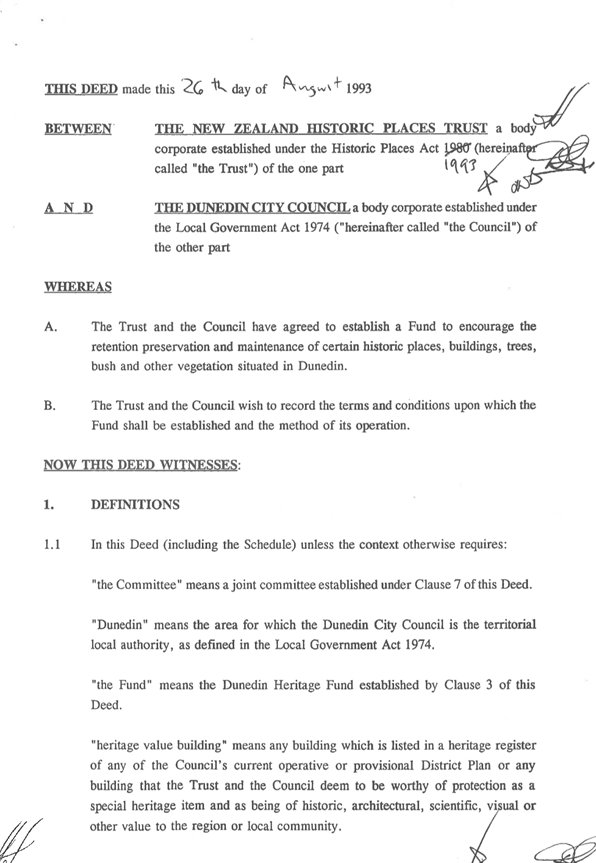
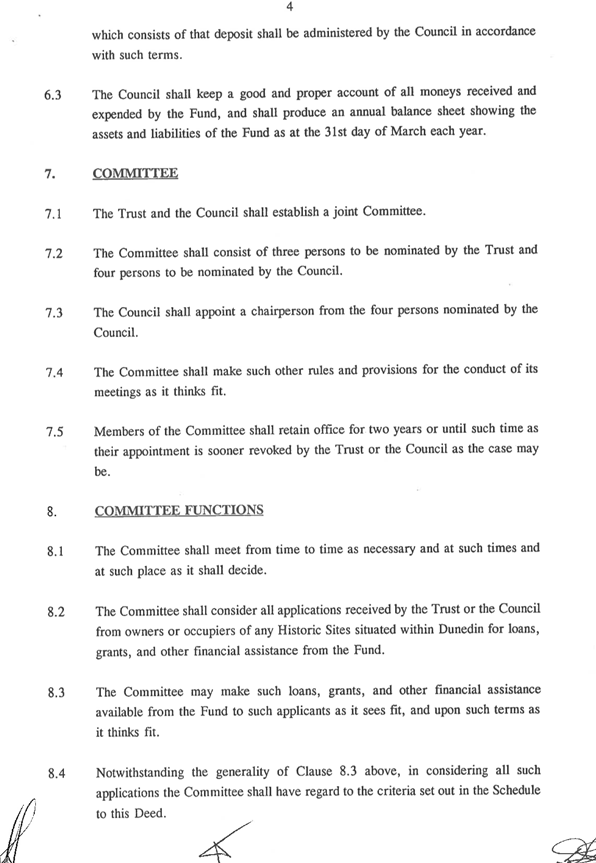
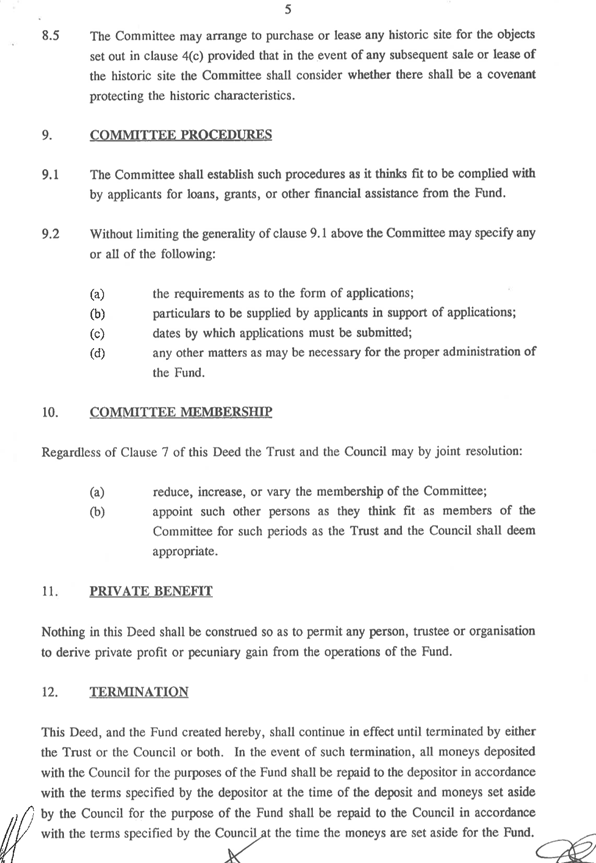
ending 31 March in line with clause 6.3 of the Deed that established the DHF.
This date does not align with the Dunedin City Council, (DCC), balance date of
30 June, and therefore creates inefficiencies for financial reporting.
2 This
report proposes changing the balance date from 31 March to 30 June to align
with the DCC financial year.
3 To
make this change, the Deed requires Heritage New Zealand Pouhere Taonga (The
Trust) and the DCC to agree to change the balance date from 31 March to 30
June.
RECOMMENDATIONS
That the Council:
a) Approves changing the
balance date of the Dunedin Heritage Fund from 31 March to 30 June.
b) Notes that if approved
by Council, staff will seek approval from Heritage New Zealand Pouhere Taonga,
and then will advise the Charities Services of the change in balance date
within three months of the change being approved.
BACKGROUND
4 The
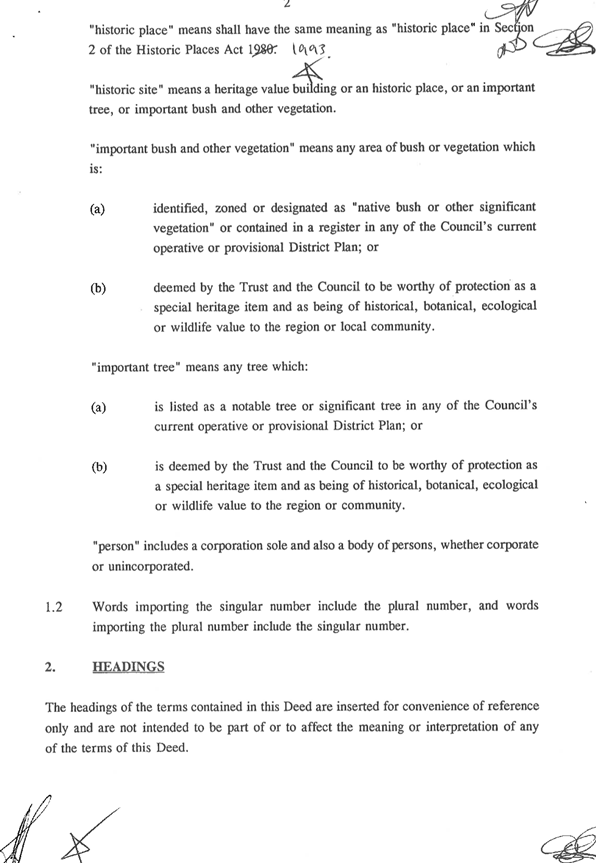
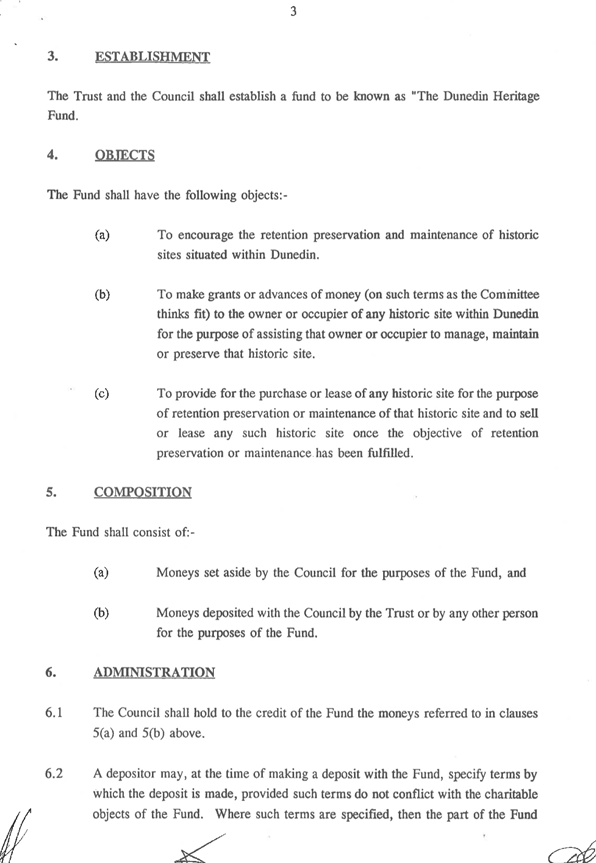
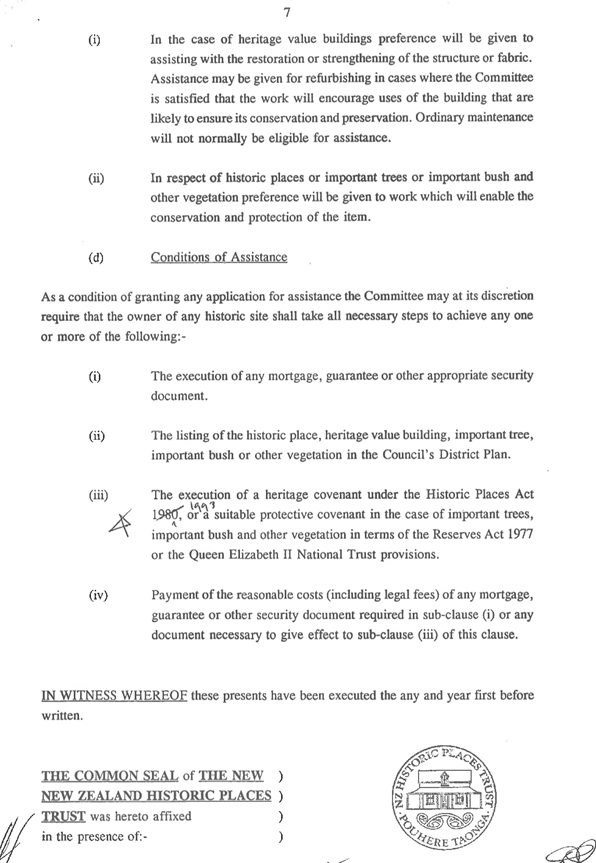
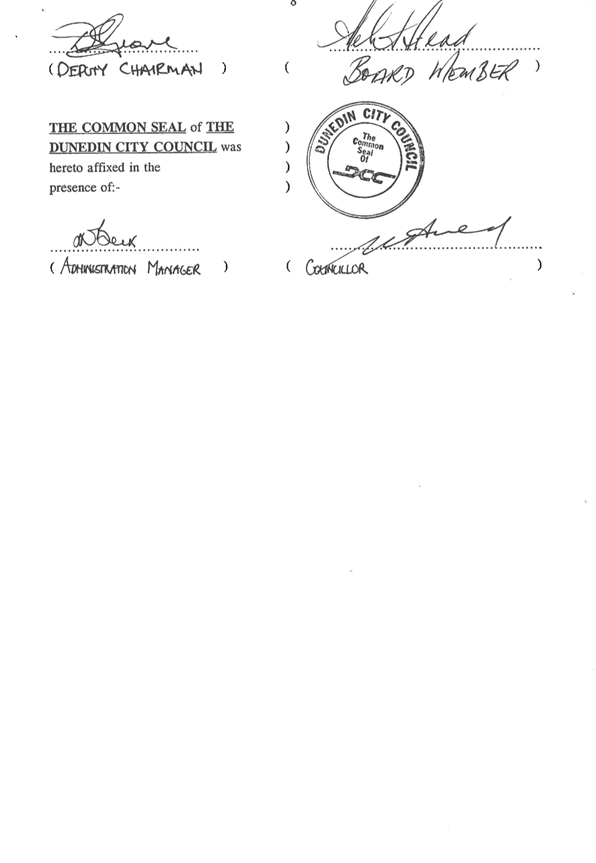
DHF was established on 26 August 1993 by a Deed between the New Zealand Historic
Places Trust and DCC (DHF Deed). A copy of the DHF Deed is attached as
Attachment A.
5 The
DHF Deed is between DCC and the New Zealand Historic Places Trust (now, through
legislation, called Heritage New Zealand Pouhere Taonga).
6 The
DHF is a registered charity with the Department of Internal Affairs - Charities
Services. Charities have legal duties under a range of legislation, including
the Charities Act 2005. Each year DHF is required to submit audited or reviewed
financial statements within 6 months of balance date to Charities Services. The
DHF currently has a balance date of 31 March.
7 As
the DHF is considered a Council Controlled Organisation (CCO) the financial
statements of DHF are consolidated into the Annual Report for the DCC Group.
8 The
DCC has a balance date of 30 June.
DISCUSSION
9 This
report outlines the proposal to change the DHF balance date from 31 March to 30
June, effective for the 2025/26 reporting period.
10 The primary
reason for this change is to align the DHF's financial reporting period with
the DCC Group’s financial year-end. This alignment would streamline
reporting processes and improve administrative efficiency, particularly around
consolidated reporting, and audit/review coordination. Through aligning the balance
dates, the change is expected to reduce duplication of work and enhance the
consistency and comparability of financial information.
11 This
proposed change would mean the 2025/26 financial year will become a one-off,
extended 15-month reporting period covering 1 April 2025 to 30 June 2026. While
this may cause some initial confusion during the transitional year
(particularly in terms of comparative analysis and year-on-year reporting) it
is a one-time adjustment that will result in improved alignment with Group
financial reporting.
12 This change
will also affect the statutory filing deadline for the DHF’s Annual
Performance Report with Charities Services, shifting from the current 30
September deadline to 31 December.
13 This change
will not affect the operations of DHF, including the timing and administration
of funding rounds, which will proceed as currently scheduled.
14 Clause 6.3
of the DHF Deed states that: “Council shall keep a good and proper
account of all moneys received and expended by the Fund, and shall produce an
annual balance sheet showing the assets and liabilities of the Fund as at 31st
day of March each year.”
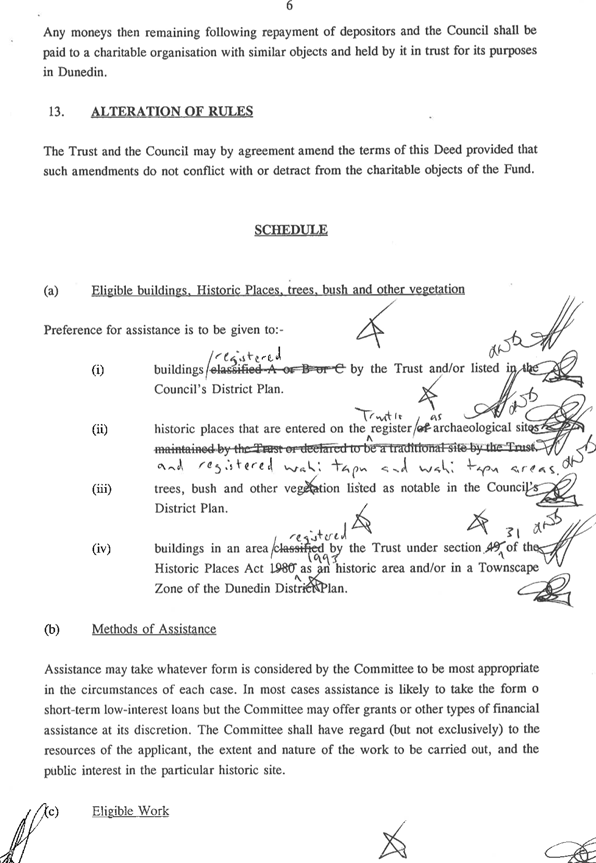
15 Clause 13
of the DHF Deed states: “The Trust and the Council may by agreement amend
the terms of this Deed provided that such amendments do not conflict with or
detract from the charitable objects of the Fund.”
16 The
decision to amend the balance date is effectively an amendment to clause 6.3 of
the Deed and requires approval from both Council and Heritage New Zealand
Pouhere Taonga to amend the balance date from 31 March to 30 June.
17 If Council
approves the change of balance date, staff will also seek approval from
Heritage New Zealand Pouhere Taonga to the change of balance date.
18 Charities
Services is not required to pre-approve this change, as the reporting period
will not exceed 15 months. Staff will notify the Charities Commission of the
balance date within three months of the change being approved, in line with the
Charity Services requirements.
19 The DHF
performance report will continue to be subject to an audit or review.
OPTIONS
20 There are
two options to consider, changing the date to align with the DCC 30 June
balance date or staying with the status quo of the current balance date of 31
March.
Option One – Recommended Option to change the date to
30 June.
Advantages
· Streamlining
reporting processes.
· Improve
administrative efficiency, particularly around consolidated reporting and
audit/review coordination.
· Reduce
duplication of work and enhance the consistency and comparability of financial
information.
Disadvantages
· There
are no identified disadvantages.
Option Two – Status Quo
Advantages
· There
are no identified advantages.
Disadvantages
· The
current balance date requires additional time to process year end
consolidations for the DCC annual report.
NEXT STEPS
21 If Council
approves the change in balance date to 30 June, then approval will be sought
from Heritage New Zealand Pouhere Taonga.
22 If Heritage
New Zealand Pouhere Taonga approves the change in balance date to 30 June,
staff will advise Charity Services of the new balance date.
Signatories
|
Author:
|
Hayden McAuliffe - Financial Services Manager
|
|
Authoriser:
|
David Ward - General Manager, 3 Waters, Property and Urban
Development
Karilyn Canton - Chief In-House Legal Counsel
|
Attachments
|
|
Title
|
Page
|
|
⇩a
|
Dunedin Heritage Fund
Deed - 1993
|
138
|
|
SUMMARY OF CONSIDERATIONS
|
|
Fit with purpose of Local Government
This decision enables democratic local
decision making and action by, and on behalf of communities.
|
|
Fit with strategic framework
|
|
Contributes
|
Detracts
|
Not applicable
|
|
Social Wellbeing Strategy
|
☐
|
☐
|
✔
|
|
Economic Development Strategy
|
☐
|
☐
|
✔
|
|
Environment Strategy
|
☐
|
☐
|
✔
|
|
Arts and Culture Strategy
|
☐
|
☐
|
✔
|
|
3 Waters Strategy
|
☐
|
☐
|
✔
|
|
Future Development Strategy
|
☐
|
☐
|
✔
|
|
Integrated Transport Strategy
|
☐
|
☐
|
✔
|
|
Parks and Recreation Strategy
|
☐
|
☐
|
✔
|
|
Other strategic projects/policies/plans
|
✔
|
☐
|
☐
|
The recommended option would improve alignment with DCC
financial and reporting timeframes.
|
|
Māori Impact Statement
No known impacts for Māori.
|
|
Sustainability
No implications for sustainability.
|
|
Zero carbon
No
impacts for zero carbon.
|
|
LTP/Annual Plan / Financial Strategy /Infrastructure
Strategy
The recommended option would improve alignment with DCC financial
and reporting timeframes.
|
|
Financial considerations
There are no financial implications.
|
|
Significance
This decision is considered low in terms of the
Council’s Significance and Engagement Policy.
|
|
Engagement – external
There has been no external engagement on this report.
|
|
Engagement - internal
Finance, Legal and City Development have been engaged in
preparing this report.
|
|
Risks: Legal / Health and Safety etc.
No known risks.
|
|
Conflict of Interest
No known conflict of interests.
|
|
Community Boards
There are no implications for Community Boards.
|
|

|
Council
24 February 2026
|
Grants Subcommittee Delegation
Department: Corporate Policy
EXECUTIVE SUMMARY
1 This
paper seeks Council approval of the Grants Subcommittee delegation for the
2025/2028 triennium.
2 The
proposed delegation (attachment A) reflects Council’s previously
confirmed governance structure for grants decision-making.
3 If
approved, the 2026 Committee Structure and Delegations Manual will be updated
to reflect the new Committee Structure and associated delegations.
4 As
this is an administrative report, there is no summary of considerations.
RECOMMENDATIONS
That the Council:
a) Approves the Grants
Subcommittee delegation for the 2025-2028 triennium.
BACKGROUND
5 Under
Section 41A of the Local Government Act 2002, mayors have the authority to
establish committees of the Council and appoint their respective Chairs and
Deputy Chairs.
6 Section
41A does not prevent Council from discharging or reconstituting committees,
appointing additional committees, or amending Chairperson appointments in
accordance with Schedule 7 of the Act.
7 Under
the Act, the Mayor is an ex-officio member of every committee of Council, with
full voting rights when present.
8 On
12 February 2026 Council resolved to confirm its preferred governance structure
for grants decisions as:
|
|
Moved (Cr Mandy Mayhem/Cr Marie Laufiso):
That the
Council:
e) Confirms its
preferred Governance Structure for Grant Decisions is a Grants Subcommittee + Staff
Delegations + Council Oversight where:
a) Staff
allocate small grants under delegation.
b) A Grants
Subcommittee (which include community representatives) allocates mid-tier
grants, multi-year and large grants.
Division
The Council
voted by division
For:
Crs
John Chambers, Christine Garey, Doug Hall, Marie Laufiso, Mandy Mayhem,
Benedict Ong, Andrew Simms, Mickey Treadwell and Steve Walker (9).
Against: Crs Cherry
Lucas, Russell Lund, Lee Vandervis, Brent Weatherall and Mayor Sophie Barker
(5).
Abstained: Nil
The division was declared CARRIED by 9 votes to 5
Motion
carried (CNL/2026/021)
|
|
|
Moved (Cr Cherry Lucas/Mayor Sophie
Barker):
That the
Council:
e)
Confirms its preferred Governance Structure for Grant Decisions is a Grants Subcommittee + Staff Delegations + Council Oversight where:
i) Staff allocate small grants
under delegation.
ii) A Grants Subcommittee (which
include community representatives) allocates
mid-tier grants, multi-year and large grants.
Division
The Council
voted by division
For:
Crs
John Chambers, Christine Garey, Doug Hall, Marie Laufiso, Mandy Mayhem,
Andrew Simms, Mickey Treadwell and Steve Walker (8).
Against: Crs Cherry Lucas,
Russell Lund, Benedict Ong, Lee Vandervis, Brent Weatherall and Mayor Sophie
Barker (6).
Abstained: Nil
The division was declared CARRIED by 8 votes to 6
Motion
carried (CNL/2026/023)
|
|
|
|
DISCUSSION
9 the proposed
delegation gives effect to Council’s decision to establish a Grants
Subcommittee with responsibility for allocation mid-tier, multi-yer and large
grants.
10 The delegation
clarifies the respective roles of staff, the Subcommittee, and Council,
ensuring appropriate oversight while enabling efficient and
transparatent grant decision-making.
OPTIONS
11 There are
no options presented in this report. The report gives effect to a previous
Council resolution.
NEXT STEPS
12 Staff will
undertake and Expression of Interest process to seek community representatives
and invite mana whenua to nominate a representative.
13 Selection
of community representatives will be undertaken by the elected members of the
Grants Subcommittee. A recommendation will then be reported to Council for
approval.
Signatories
|
Author:
|
Nicola Morand - Manahautū (General Manager Community
and Strategy)
|
Attachments
|
|
Title
|
Page
|
|
⇩a
|
Delegation
|
149
|
|

|
Council
24 February 2026
|
Resolution to Exclude the
Public
That the Council excludes
the public from the following part of the proceedings of this meeting (pursuant
to the provisions of the Local Government Official Information and Meetings Act
1987) namely:
|
General subject of the matter to be considered
|
Reasons
for passing this resolution in relation to each matter
|
Ground(s) under
section 48(1) for the passing of this resolution
|
Reason for
Confidentiality
|
|
C1
Confirmation of the Confidential Minutes of Ordinary Council meeting -
11 November 2025 - Public Excluded
|
S7(2)(h)
The
withholding of the information is necessary to enable the local authority to
carry out, without prejudice or disadvantage, commercial activities.
|
.
|
|
|
C2
Confirmation of the Confidential Minutes of Ordinary Council meeting -
11 December 2025 - Public Excluded
|
S7(2)(a)
The
withholding of the information is necessary to protect the privacy of natural
persons, including that of a deceased person.
|
.
|
|
|
C3
Confidential Council Action List Update
|
S7(2)(b)(ii)
The
withholding of the information is necessary to protect information where the
making available of the information would be likely unreasonably to prejudice
the commercial position of the person who supplied or who is the subject of
the information.
S7(2)(g)
The
withholding of the information is necessary to maintain legal professional
privilege.
S7(2)(h)
The
withholding of the information is necessary to enable the local authority to
carry out, without prejudice or disadvantage, commercial activities.
S7(2)(i)
The
withholding of the information is necessary to enable the local authority to
carry on, without prejudice or disadvantage, negotiations (including
commercial and industrial negotiations).
|
S48(1)(a)
The public conduct of
the part of the meeting would be likely to result in the disclosure of
information for which good reason for withholding exists under section 7.
|
|
This resolution is made in
reliance on Section 48(1)(a) of the Local Government Official Information and
Meetings Act 1987, and the particular interest or interests protected by
Section 6 or Section 7 of that Act, or Section 6 or Section 7 or Section 9 of
the Official Information Act 1982, as the case may require, which would be
prejudiced by the holding of the whole or the relevant part of the proceedings
of the meeting in public are as shown above after each item.