
Notice of Meeting:
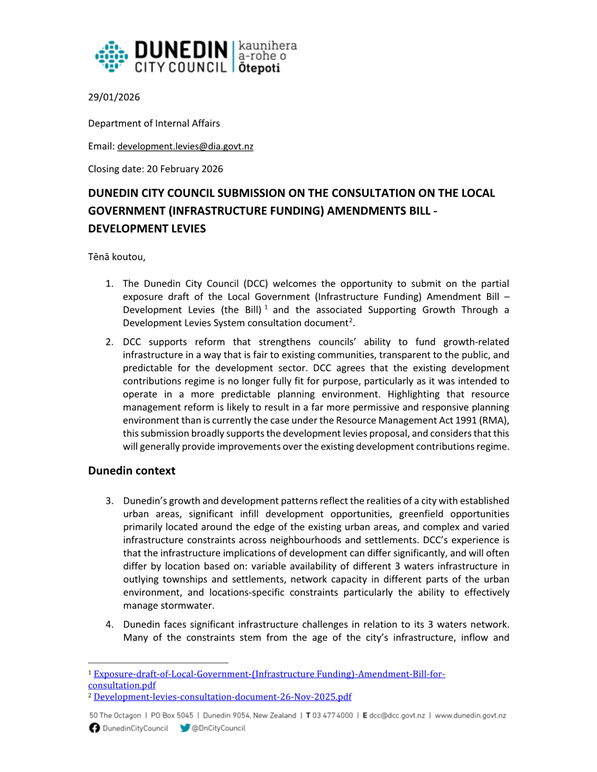
I hereby give notice that an ordinary meeting of the Policy
and Planning Committee will be held on:
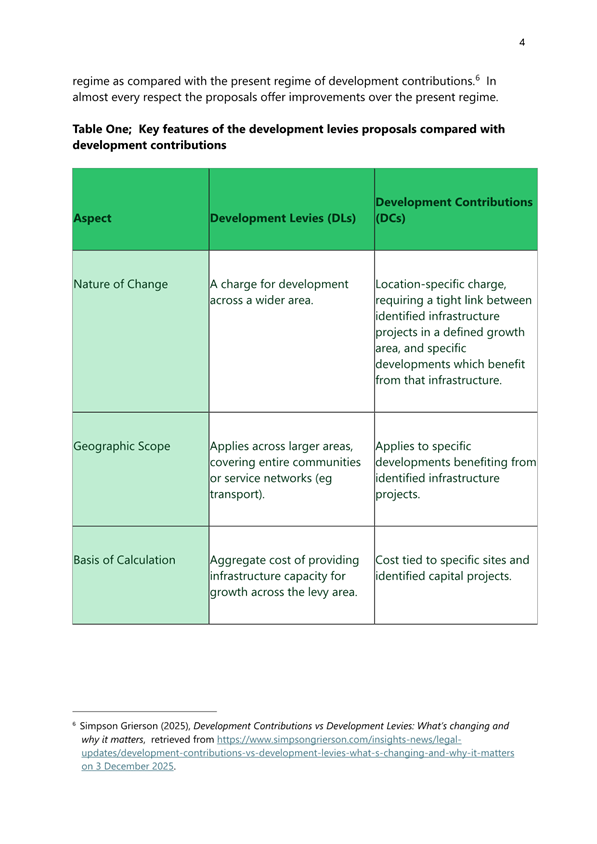
Date: Thursday
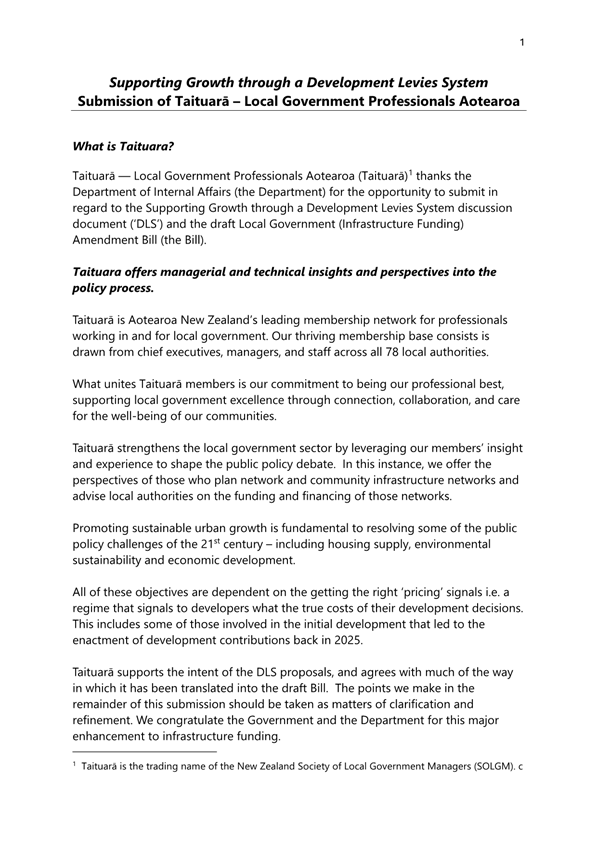
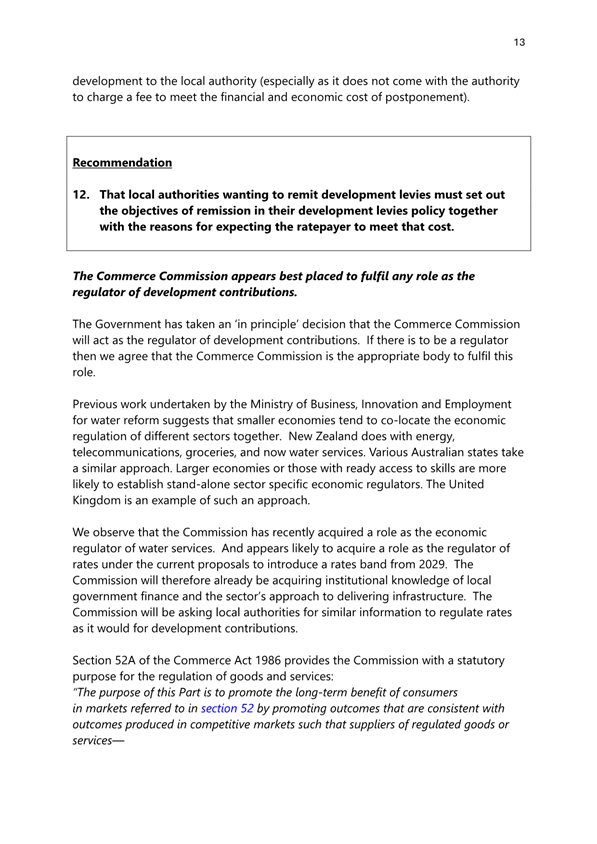
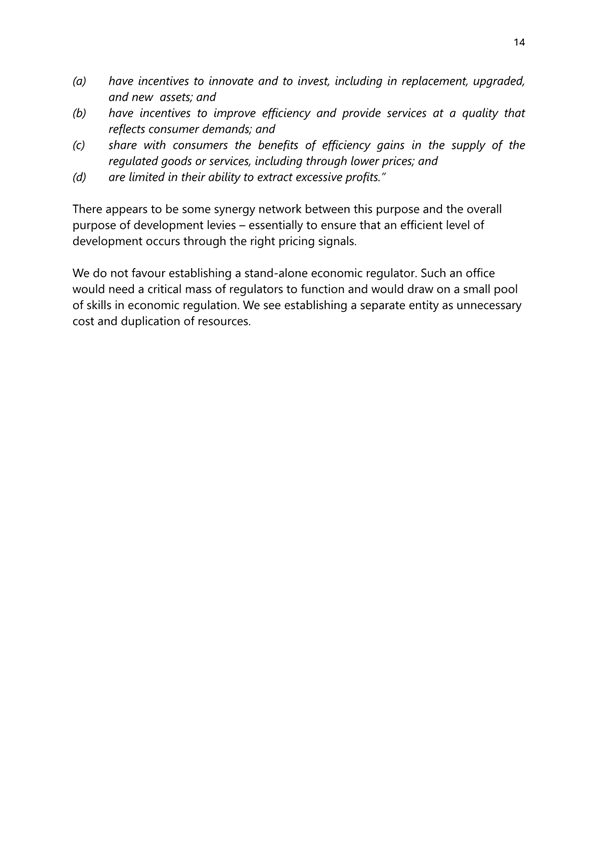
5 February 2026
Time: 9.00
am
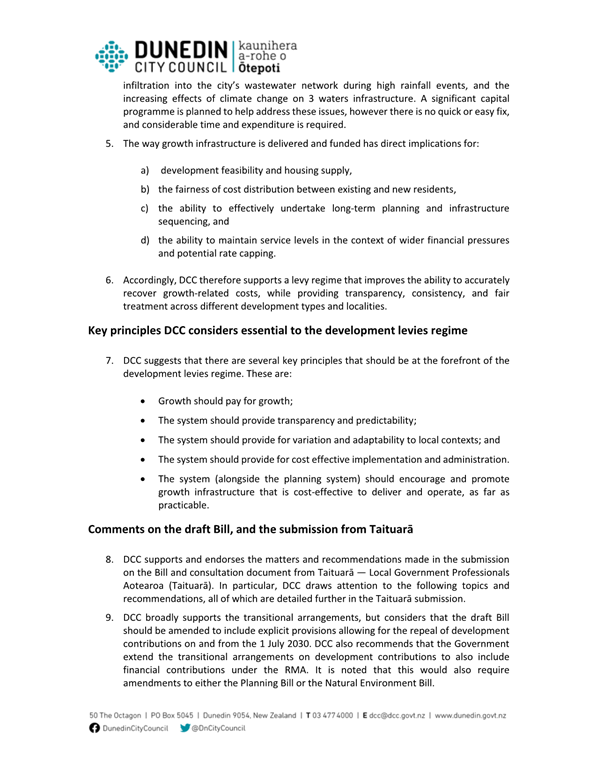
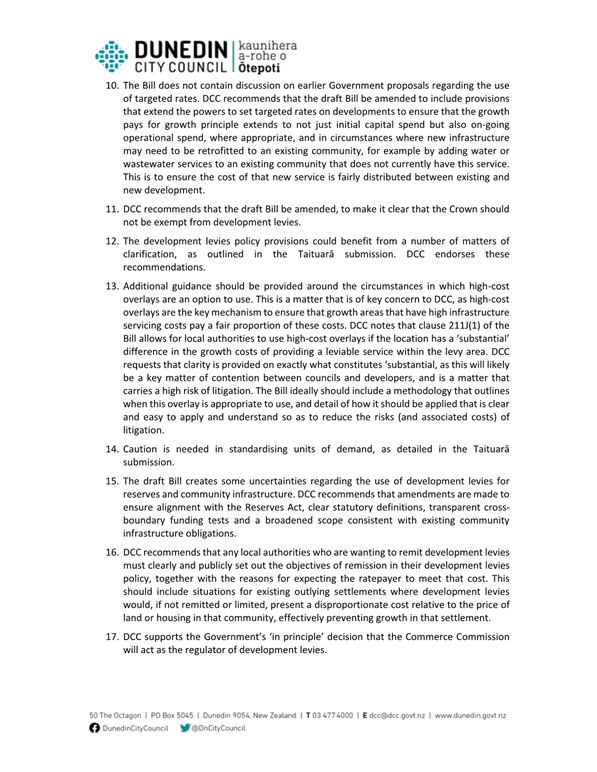
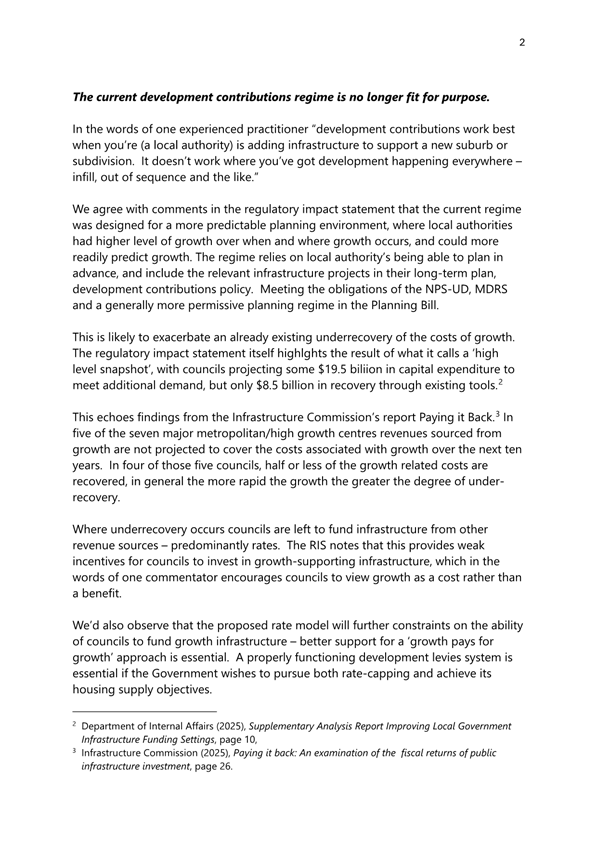
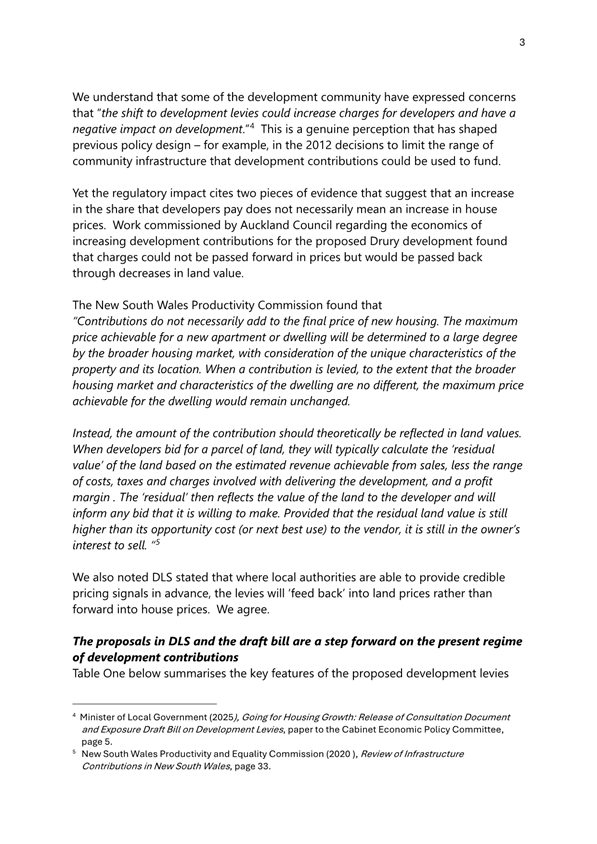
Venue: Council
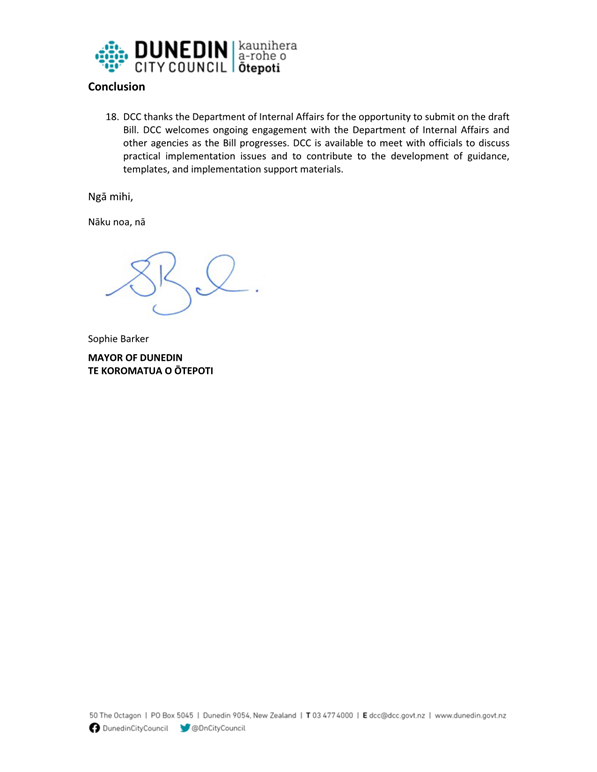
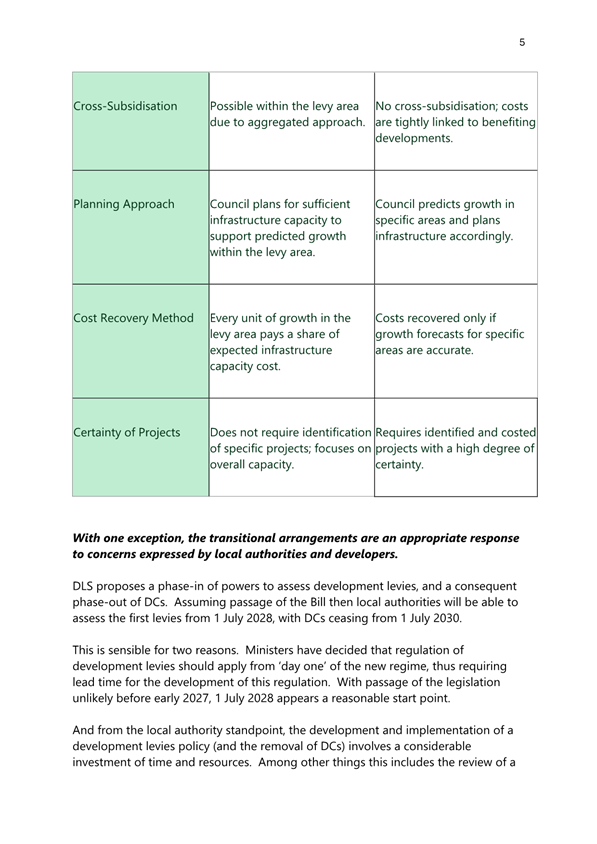
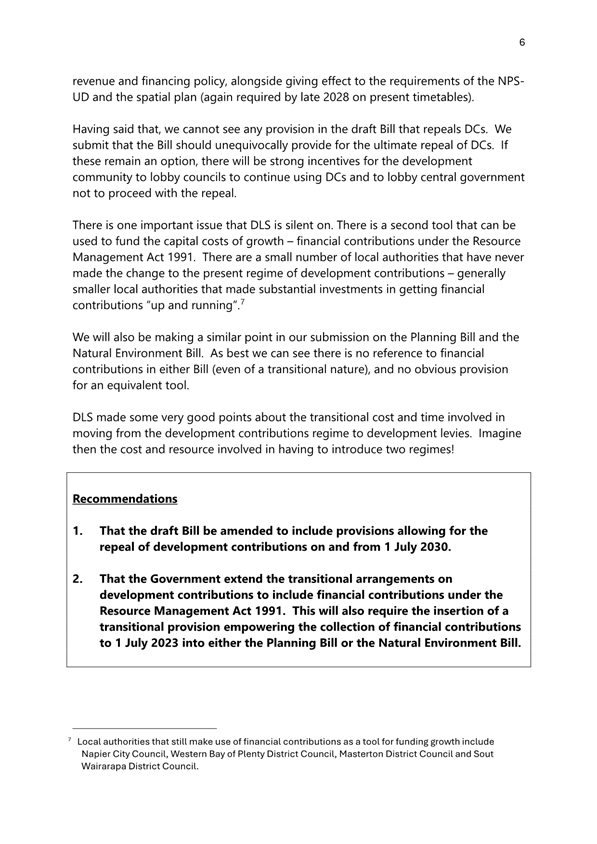
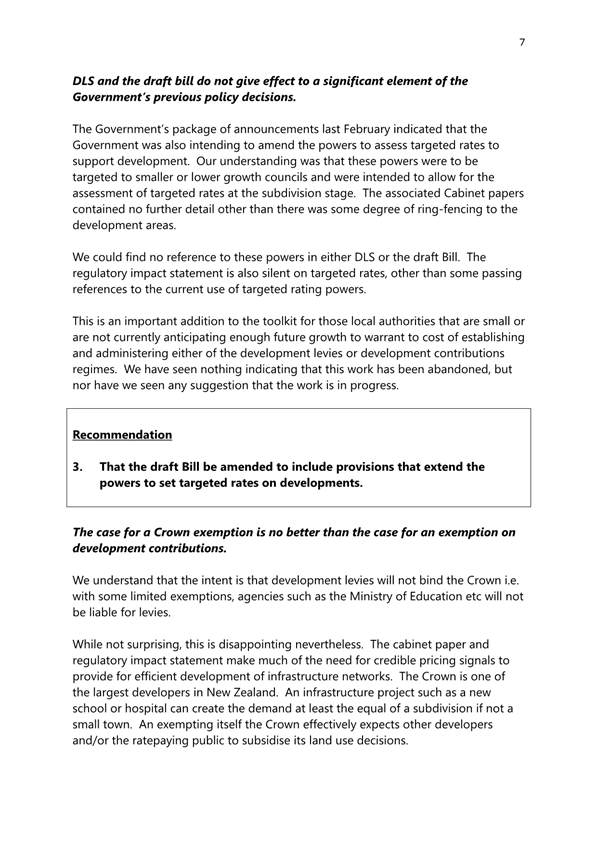
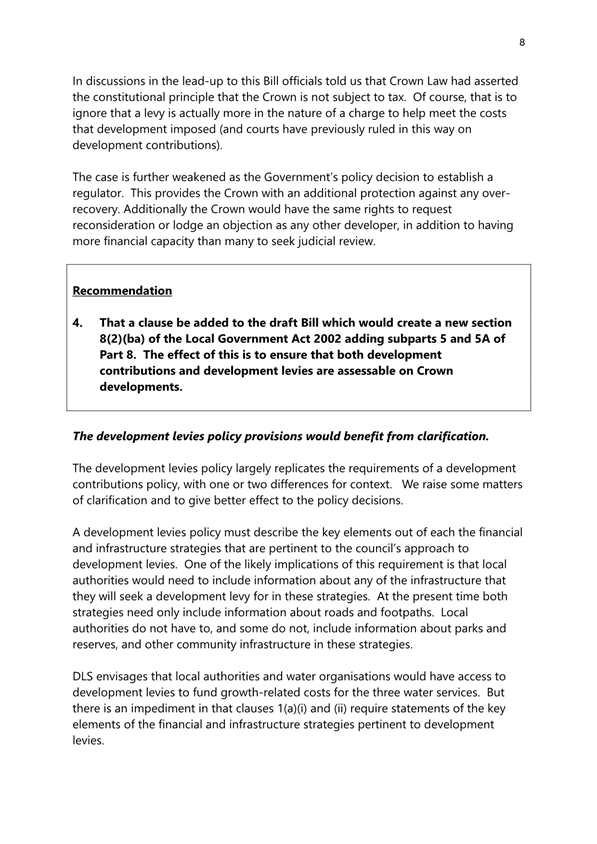
Chamber, Level 2, Dunedin Public Art Gallery, The Octagon, Dunedin
Sandy Graham
Policy and Planning Committee
PUBLIC AGENDA
|
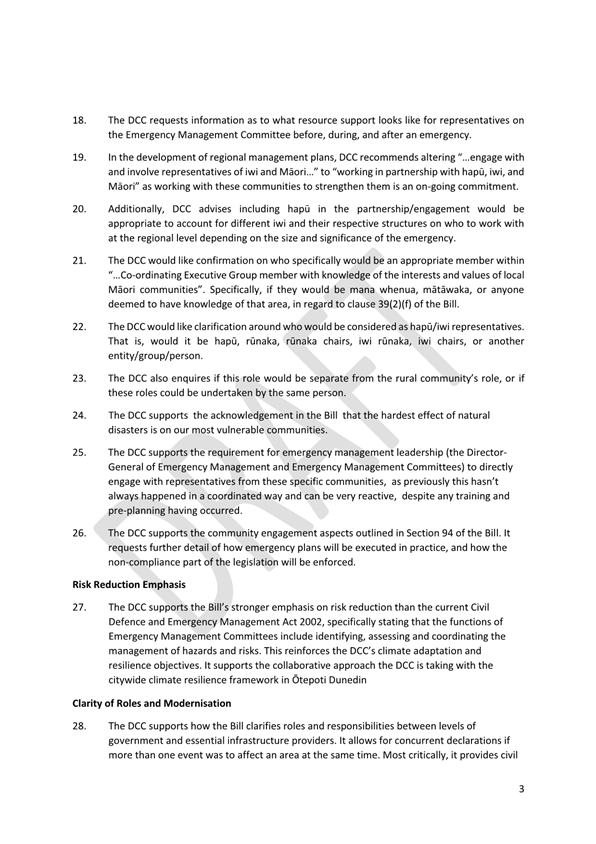
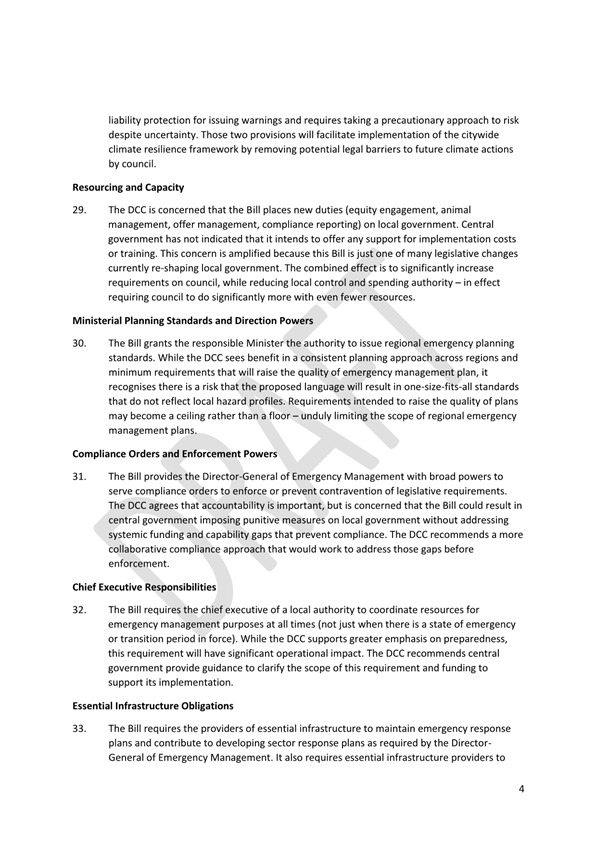
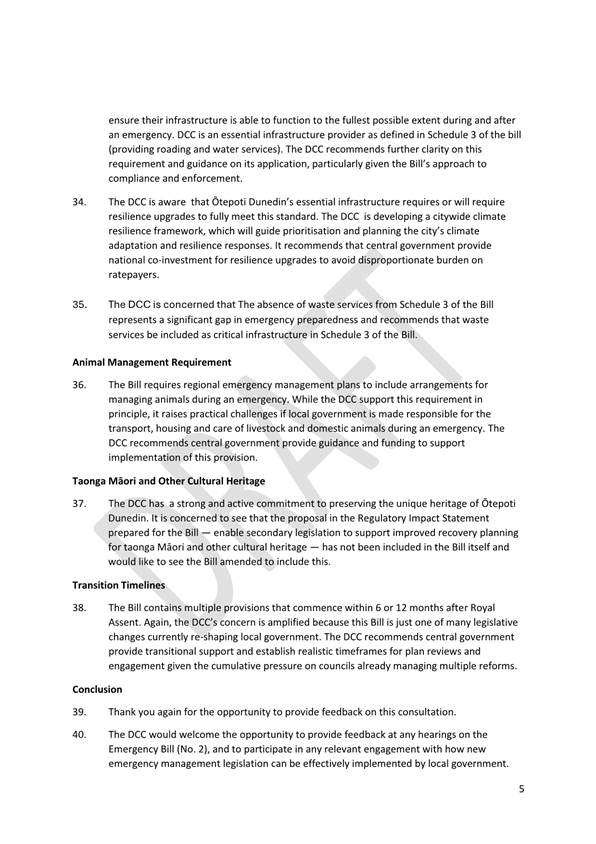
Chairperson
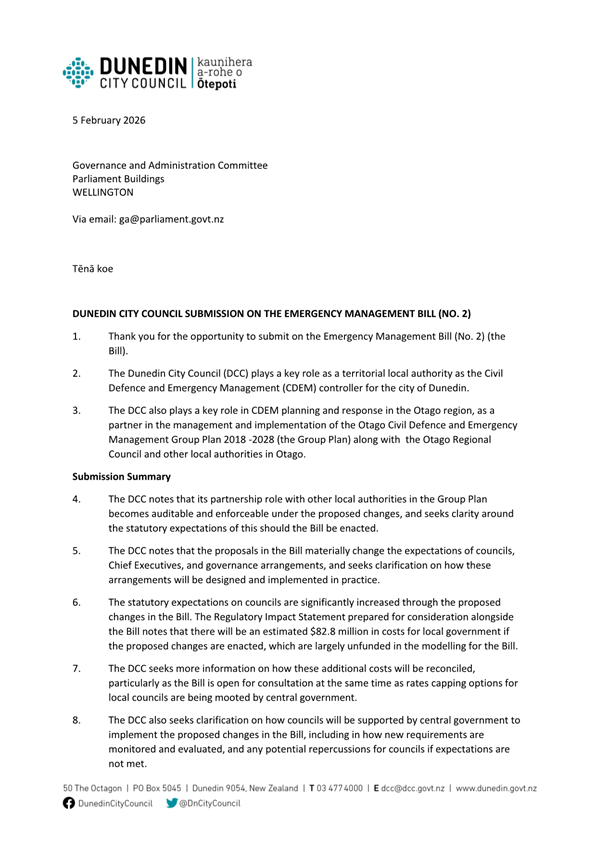
|
Mayor Sophie Barker
|
|
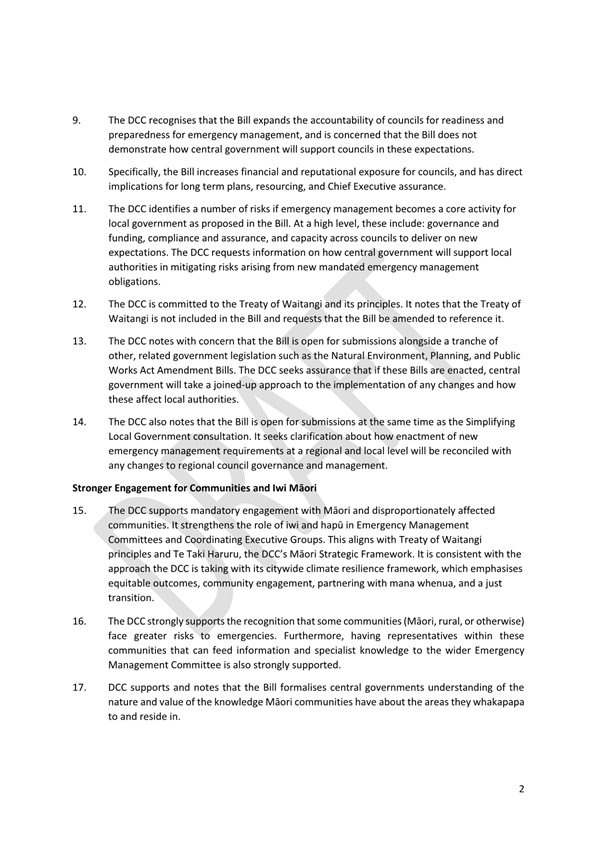
|
Deputy Chairperson
|
Deputy Mayor Cherry Lucas
|
|
|
Members
|
Cr John Chambers
|
Cr Christine Garey
|
|
|
Cr Doug Hall
|
Cr Marie Laufiso
|
|
|
Cr Russell Lund
|
Cr Mandy Mayhem
|
|
|
Cr Benedict Ong
|
Cr Andrew Simms
|
|
|
Cr Mickey Treadwell
|
Cr Lee Vandervis
|
|
|
Cr Steve Walker
|
Cr Brent Weatherall
|
Senior Officer David
Ward, General Manager 3 Waters, Property and Urban Development
Governance Support Officer Rebecca
Murray
Rebecca Murray
Governance Support Officer
Telephone: 03 477 4000
governance.support@dcc.govt.nz
www.dunedin.govt.nz
Note: Reports
and recommendations contained in this agenda are not to be considered as
Council policy until adopted.
|

|
Policy and Planning
Committee
5 February 2026
|
ITEM TABLE OF CONTENTS PAGE
1 Karakia
Timatanga 4
2 Public
Forum 4
3 Apologies 4
4 Confirmation
of Agenda 4
5 Declaration
of Interest 5
Part
A Reports (Committee has power to decide these matters)
6 Dunedin
City Council submission on the Infrastructure Funding and Finance Act Amendment
Bill 13
7 Dunedin
City Council submission on the Local Government (Infrastructure Funding)
Amendment Bill 24
8 Dunedin
City Council submission on the Emergency Management Bill (No 2) 47
9 Items
for Consideration by the Chair 60
10 Karakia
Whakamutunga 61
|

|
Policy and Planning
Committee
5 February 2026
|
1 karakia timatanga
The meeting will open
with a Karakia Timatanga.
2 Public
Forum
At the close of the agenda no
requests for public forum had been received.
3 Apologies
At the close of the agenda no
apologies had been received.
4 Confirmation
of agenda
Note:
Any additions must be approved by resolution with an explanation as to why they
cannot be delayed until a future meeting.
|

|
Policy and Planning Committee
5 February 2026
|
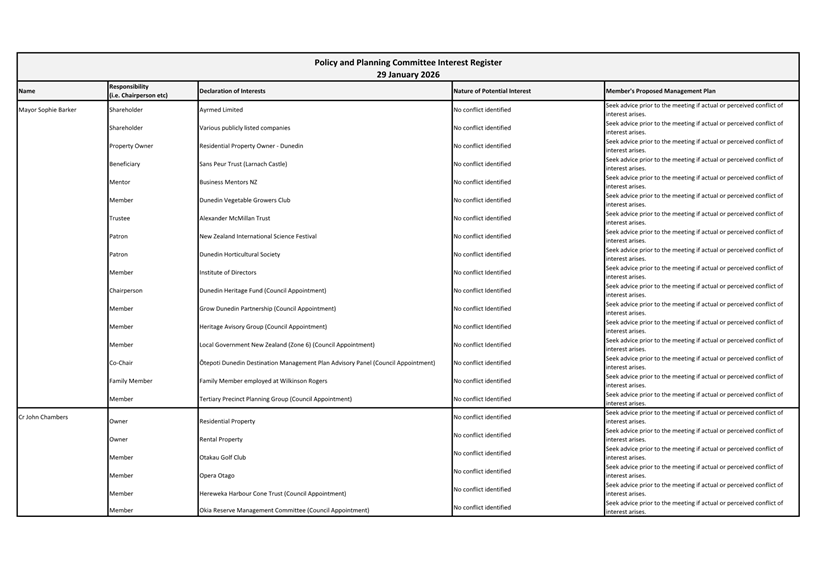
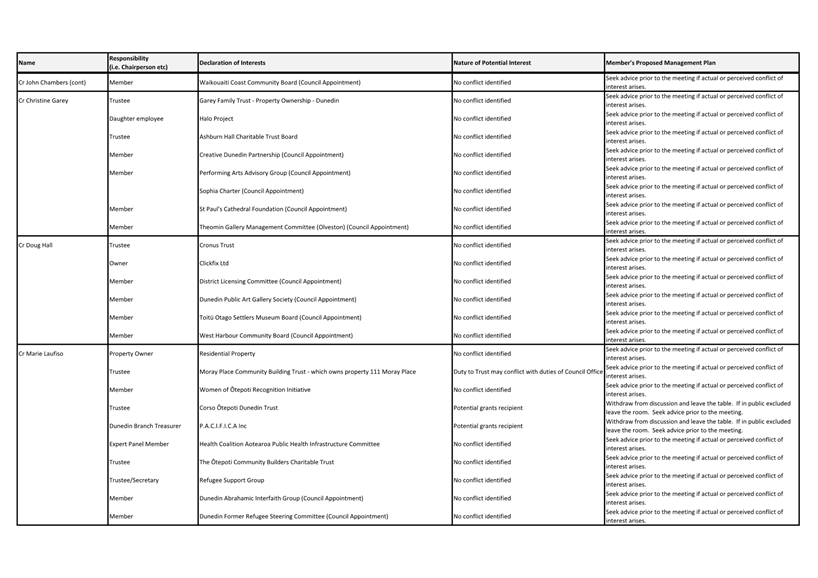
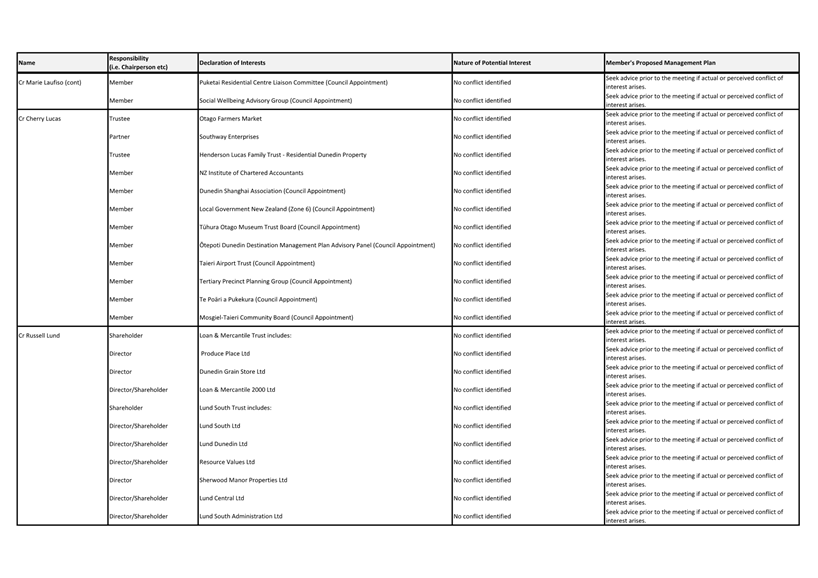
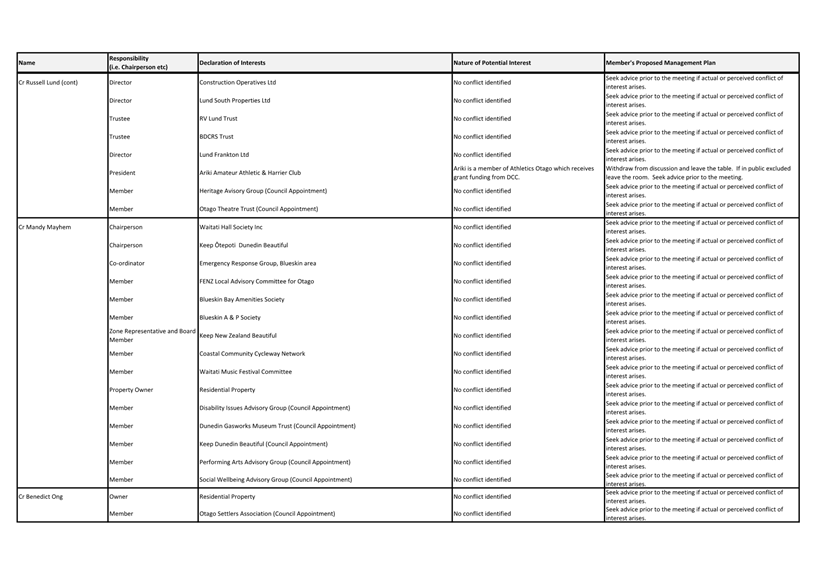
Declaration of Interest
EXECUTIVE SUMMARY
1. Members
are reminded of the need to stand aside from decision-making when a conflict
arises between their role as an elected representative and any private or other
external interest they might have.
2. Elected
members are reminded to update their register of interests as
soon as practicable, including amending the register at this meeting if
necessary.
RECOMMENDATIONS
That the Committee:
a) Notes/Amends if
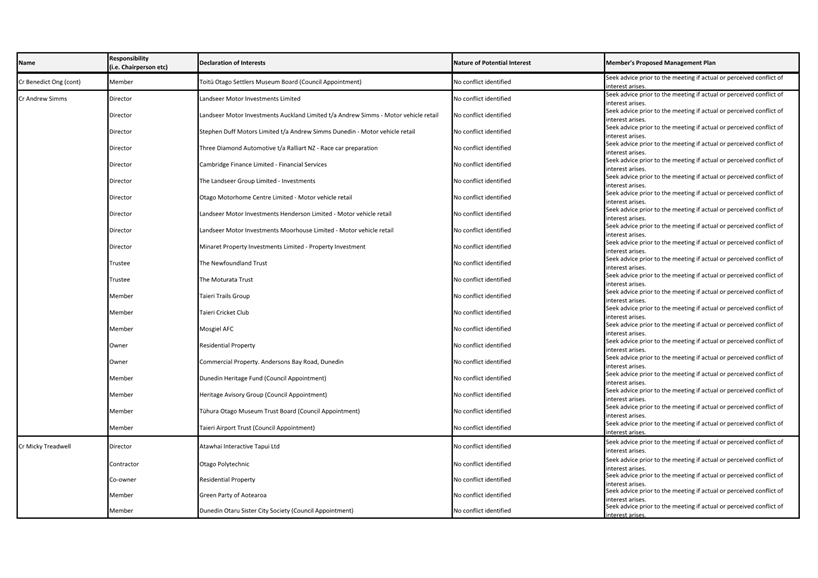
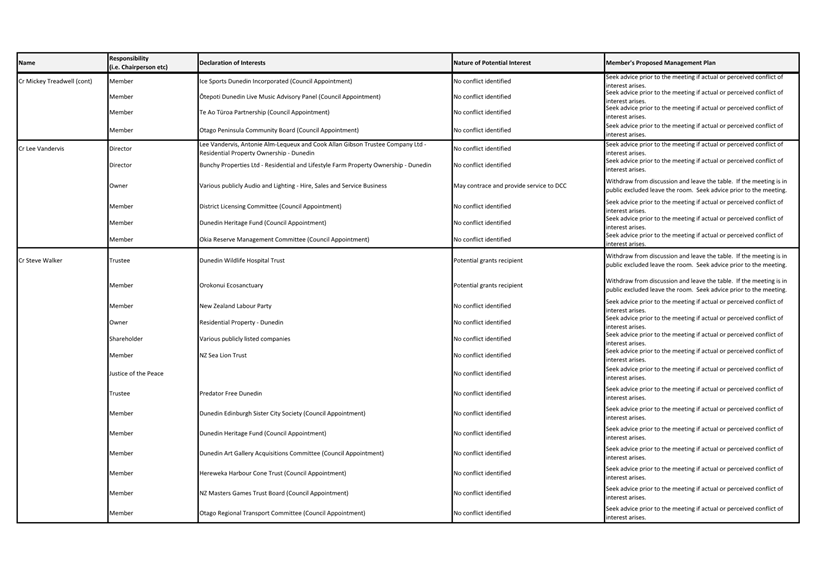
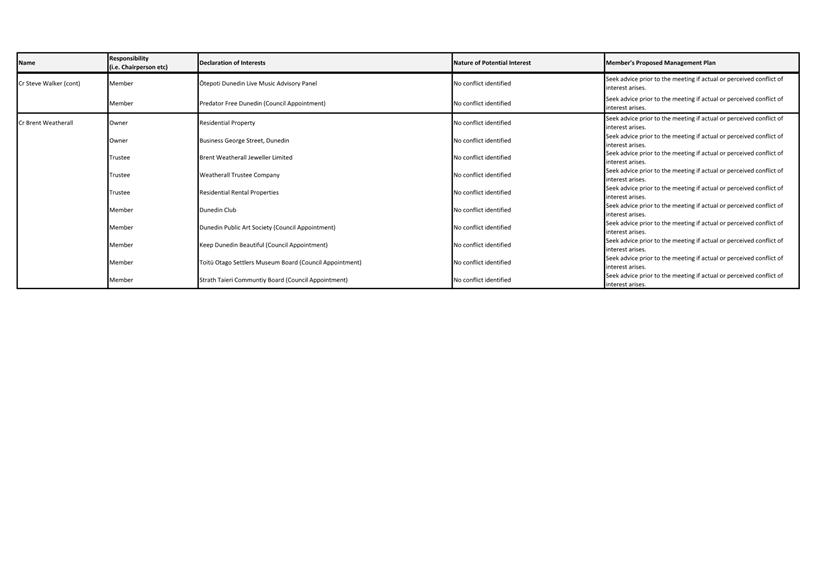
necessary the Elected Members' Interest Register attached as Attachment A; and
b) Confirms/Amends the
proposed management plan for Elected Members' Interests.
Attachments
|
|
Title
|
Page
|
|
⇩a
|
Policy and Planning
Committee Interest Register
|
6
|
|

|
Policy and Planning Committee
5 February 2026
|
|

|
Policy and Planning Committee
5 February 2026
|
Part
A Reports
Dunedin City Council submission on the Infrastructure
Funding and Finance Act Amendment Bill
Department: City Development, Finance and Corporate Policy
EXECUTIVE SUMMARY
1 This
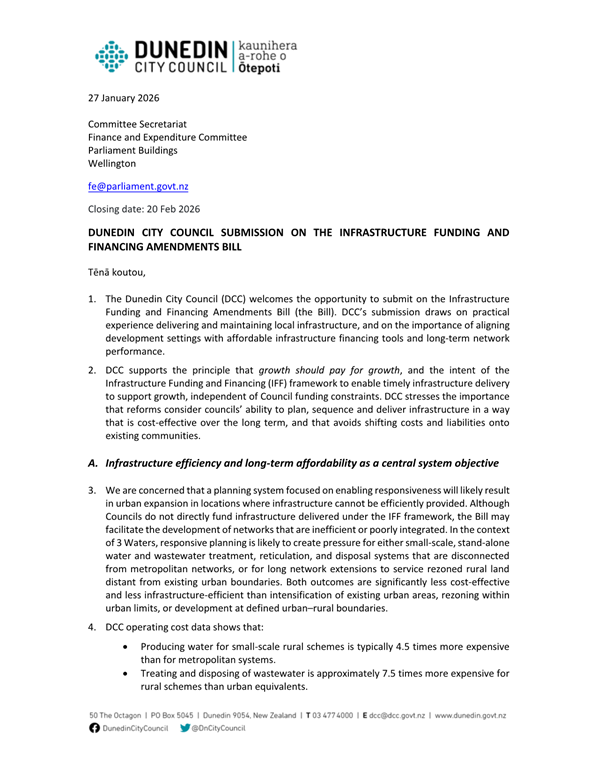
report seeks approval of a draft Dunedin City Council (DCC) submission to
Finance and Expenditure Committee on the Infrastructure Funding and Finance Act
Amendment Bill (the Bill). The draft DCC submission is attached as Attachment
A.
2 The
Bill is positioned as part of the Government’s Going for Housing Growth
programme and is intended to support infrastructure delivery that enables
housing development while ensuring beneficiaries
pay.
3 The
Bill has been introduced to make the Infrastructure Funding and Financing (IFF)
framework more viable and flexible, including by removing barriers to uptake,
broadening eligibility, and enabling faster decisions and levy deferrals to
address affordability concerns.
4 The
draft DCC submission supports the principle that growth should pay for
growth, while emphasising the need for reforms to reinforce infrastructure
efficiency, long-term affordability, planned sequencing, and clear liability
management.
5 Submissions
to the Finance and Expenditure Committee close on 20 February 2026.
RECOMMENDATIONS
That the Committee:
a) Approves the draft
Dunedin City Council Submission, with any amendments, on the Infrastructure
Funding and Finance Act Amendment Bill.
b) Authorises the Chief
Executive to make any minor editorial amendments to the submission.
c) Notes that the Mayor
or delegate will speak to the submission at any hearings.
BACKGROUND
6 The
Infrastructure Funding and Financing Act 2020 was established to enable
growth-related infrastructure to be financed up front and then recovered over
time through levies on the properties that benefit. The intent is to reduce
funding constraints that can delay infrastructure provision and, in turn,
constrain housing development.
7 The
Amendment Bill has been introduced in response to low uptake to date and with
the stated intent of making the tool easier to use, more scalable, and
applicable to a wider range of delivery agencies and project types. The changes
are described as removing unnecessary barriers, broadening eligibility
(including to additional infrastructure agencies), reducing veto risks where
requirements are met, and improving usability through changes such as levy
deferrals.
8 DCC’s
draft submission sits alongside earlier DCC engagement on “Going for
Housing Growth” settings and reflects ongoing local concerns about the
interaction between development responsiveness, infrastructure affordability,
and whole-of-life network performance (refer to the Going for Housing Growth
submission approved by Council on 12 August 2025).
DISCUSSION
9 The
Amendment Bill is intended to increase the uptake and effectiveness of the
Infrastructure Funding and Financing framework by making it easier to use,
expanding who can apply and what projects can qualify, and improving
affordability and delivery settings so infrastructure can be brought forward to
support housing growth.
10 The draft
submission supports “growth pays for growth” in principle, and
seeks to ensure IFF tools reinforce infrastructure efficiency and long-term
affordability rather than embedding high-cost servicing patterns.
11 The
submission notes that highly responsive development settings can drive urban
expansion into locations where infrastructure is costly to provide,
particularly for three waters, and provides Dunedin operating cost evidence
indicating substantially higher costs for small rural schemes relative to
metropolitan systems.
12 The
submission recommends decision criteria and guidance that require clear
demonstration of whole-of-life infrastructure efficiency and long-term
affordability, including consideration of lifecycle operating and maintenance
costs.
13 The
submission emphasises the importance of planned sequencing and avoiding
incentives for leapfrogging, including by strengthening settings that
discourage land banking and focusing responsiveness on areas with existing
reticulated services.
14 The
submission supports location-specific, cost-reflective charging so higher-cost
growth areas bear higher costs and cross-subsidy is minimised, maintaining
stronger price signals for efficient development locations.
15 The
submission also raises implementation risks relating to council decision-making
and long-term liabilities, including risks where privately delivered
infrastructure is accelerated but later integrates into public networks, and
recommends enforceable standards and robust acceptance and vesting processes.
16 Finally,
the submission highlights practical workability issues in funding mixed public
and private benefit infrastructure within planning and budgeting cycles, and
the need for clear coherence between IFF levies and other area-based charging
tools.
OPTIONS
17 Two options
are presented in this report for Council’s consideration.
Option One – Approve and submit DCC’s draft
submission on the Infrastructure Funding and Financing Amendments Bill
(Recommended Option)
18 Approving
the draft submission enables DCC to provide timely feedback to the select
committee on the Bill’s purpose and implementation settings.
Advantages
· Enables
DCC to demonstrate support for the changes proposed but also seek meaningful
changes that will improve the effectiveness of the mechanisms for supporting
cost-effective infrastructure delivery for DCC.
Disadvantages
· None
identified.
Option Two – Do not submit on the Infrastructure
Funding and Financing Amendments Bill
19 Choosing
not to submit avoids taking a formal Council position at this stage.
Advantages
· None
identified.
Disadvantages
· DCC
loses the opportunity to formally express its reservations, reinforce
infrastructure efficiency and long-term affordability expectations, and influence
implementation settings that may affect future costs and liabilities.
NEXT STEPS
20 Any
final amendments to the draft submission will be incorporated following any
additional internal input or Council direction.
21 Subject to
Council approval, the submission will be finalised and lodged with the Finance
and Expenditure Committee by 20 February 2026.
Signatories
|
Author:
|
Bede Morrissey - Policy Planner
Tony Nelmes - Project Accountant
Berkay Kocak - Policy Analyst
|
|
Authoriser:
|
Dr Anna Johnson - Manager City Development
Carolyn Allan - Chief Financial Officer
David Ward - General Manager, 3 Waters, Property and Urban
Development
|
Attachments
|
|
Title
|
Page
|
|
⇩a
|
Attachment A - DCC
Submission on the IFFA Bill
|
19
|
|
SUMMARY OF CONSIDERATIONS
|
|
Fit with purpose of Local Government
Approving the draft submission supports the purpose of
local government by enabling the Council to participate in the development of
national settings that may materially affect local infrastructure delivery,
growth outcomes, and funding responsibilities. The decision supports
democratic local decision-making by ensuring DCC can formally communicate
Dunedin’s interests and practical considerations on how growth-enabling
infrastructure should be financed, sequenced, and managed over time. It also
supports community well-being by advocating for settings that promote long-term
affordability, efficient infrastructure investment, and sustainable servicing
outcomes for current and future communities.
|
|
Fit with strategic framework
|
|
Contributes
|
Detracts
|
Not applicable
|
|
Social Wellbeing Strategy
|
☐
|
☐
|
✔
|
|
Economic Development Strategy
|
☐
|
☐
|
✔
|
|
Environment Strategy
|
☐
|
☐
|
✔
|
|
Arts and Culture Strategy
|
☐
|
☐
|
✔
|
|
3 Waters Strategy
|
☐
|
☐
|
✔
|
|
Future Development Strategy
|
☐
|
✔
|
☐
|
|
Integrated Transport Strategy
|
☐
|
☐
|
✔
|
|
Parks and Recreation Strategy
|
☐
|
☐
|
✔
|
|
Other strategic projects/policies/plans
|
☐
|
☐
|
✔
|
The decision relates to approving a submission on central
government legislation and does not directly implement or amend Council
strategies. The impacts are primarily enabling and indirect, and the decision
is therefore not applicable to most strategies. It is most closely linked to
growth sequencing and infrastructure provision matters within the Future
Development Strategy and linked to DCC’s Housing Implementation Plan.
|
|
Māori Impact Statement
The Infrastructure Funding and Financing Amendment Bill
may have impacts for Māori where levy schemes involve protected Māori land
or Māori land,
including changes to consent settings for including protected Māori land
in levy areas, requirements for prior
written landowner consent where works are constructed on
protected Māori land, and clarifications about levy liability for
Māori land (including limits on trustees’ liability in some
cases). These matters align with Te
Taki Haruru through Autūroa
(Mana) and Autikaka (Tapu/Noa), emphasising
partnership, landholder authority, and protection of people and places in
policy and decision-making.
|
|
Sustainability
There are no implications for sustainability.
|
|
LTP/Annual Plan / Financial Strategy /Infrastructure Strategy
The decision does not amend the LTP, Annual Plan,
Financial Strategy, or Infrastructure Strategy. The proposed policy direction
may have implications for these instruments in future if the model is
implemented.
|
|
Financial considerations
There are no direct financial costs associated with
approving the submission. The proposal itself could have significant future
financial implications for the Council, and the draft submission outlines
concerns about this potential impacts.
|
|
Significance
This decision is of low in terms of the Council’s
Significance and Engagement Policy, as it relates to approving a submission
rather than committing Council to a new policy or expenditure.
|
|
Engagement – external
There has been no external engagement.
|
|
Engagement - internal
The draft submission has been developed internally with
input from relevant staff with financial and policy expertise.
|
|
Risks: Legal / Health and Safety etc.
There are no material legal or health and safety risks
associated with approving the submission.
|
|
Conflict of Interest
No conflicts of interest have been identified.
|
|
Community Boards
There are no implications for Community Boards
|
|

|
Policy and Planning Committee
5 February 2026
|
|

|
Policy and Planning Committee
5 February 2026
|
Dunedin City Council submission on the Local Government
(Infrastructure Funding) Amendment Bill
Department: City Development, Finance and Corporate Policy
EXECUTIVE SUMMARY
1 This
report seeks approval of a draft Dunedin City Council (DCC) submission on the
partial exposure draft of the Local Government (Infrastructure Funding)
Amendment Bill, and the associated Supporting Growth Through a Development
Levies System consultation document. The draft submission is attached as
Attachment A.
2 The
proposed development levy regime is intended to strengthen councils’
ability to fund growth-related infrastructure in a fair and transparent way,
and to provide greater predictability for the development sector.
3 The
draft DCC submission is broadly supportive of the development levy proposals,
and considers that these represent an improvement on the present regime of
development contributions.
4 The
approach taken in the draft DCC submission builds on and endorses the
submission made by Taituarā — Local Government Professionals
Aotearoa (Taituarā), which is attached as Attachment B. The draft DCC
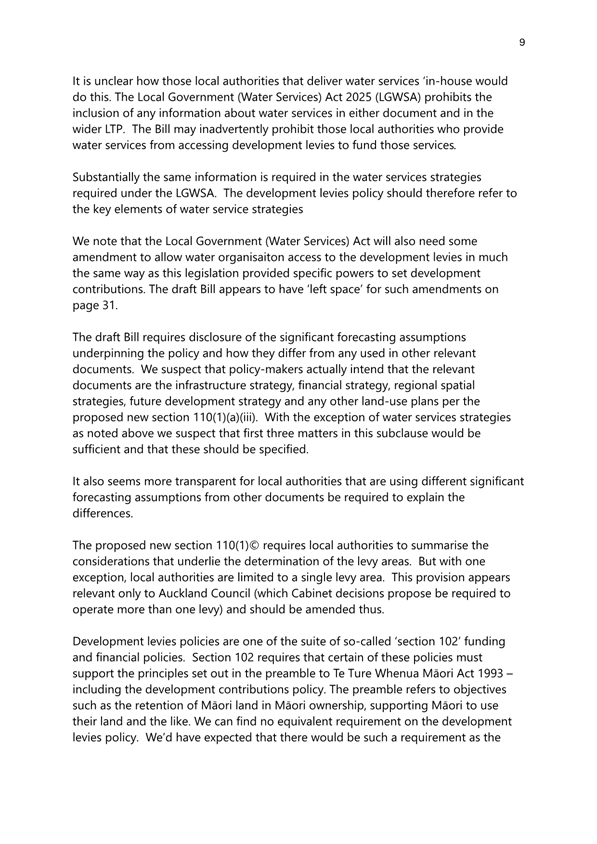
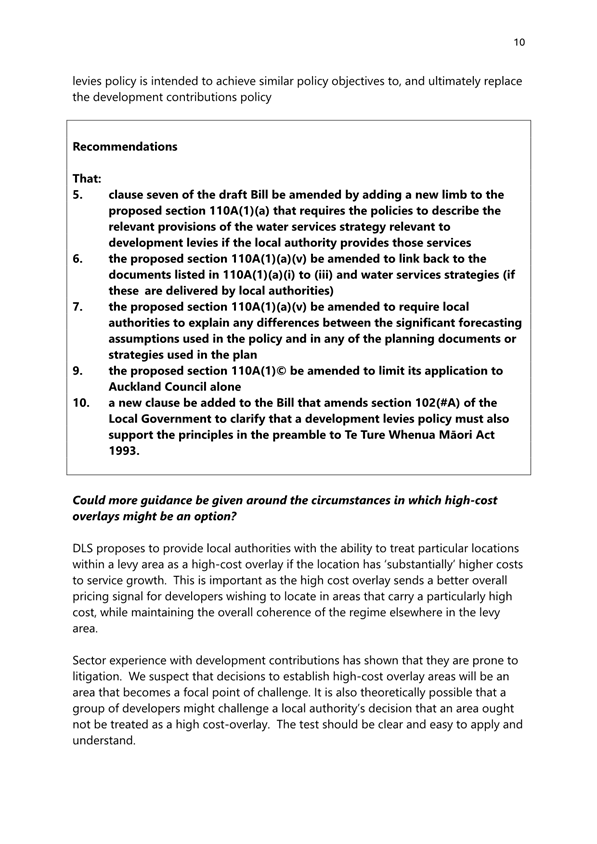
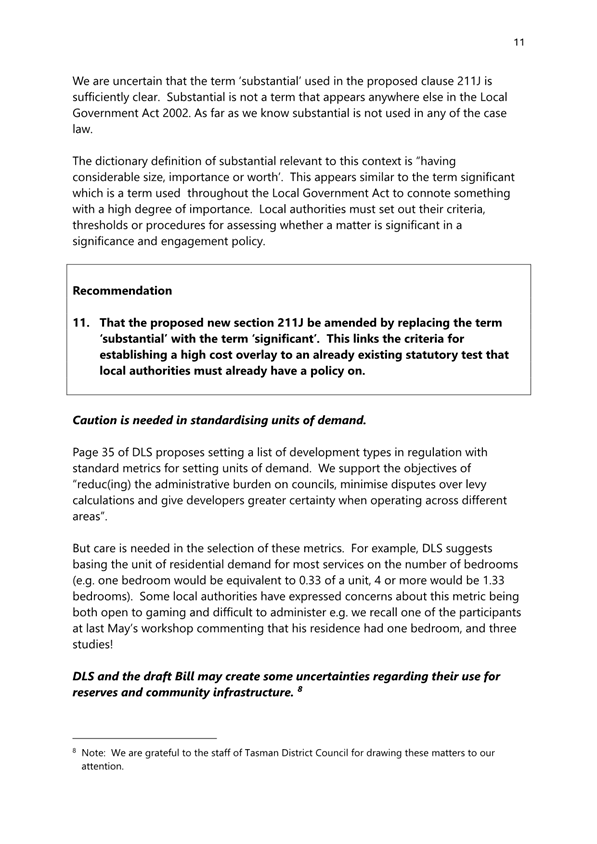
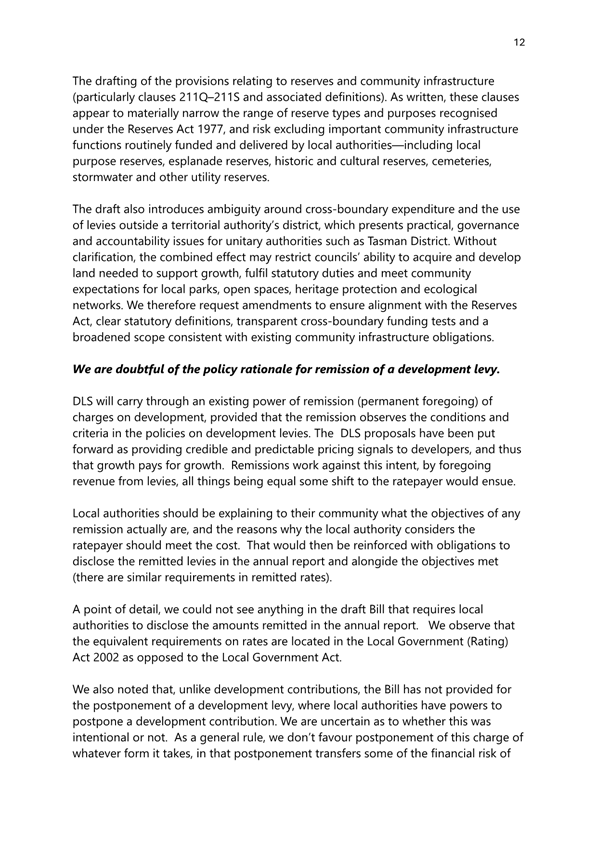
submission highlights and replicates the recommendations from the Taituarā
submission, along with some additional background specific to the Dunedin
context.
5 Submissions
close on 20 February 2026.
RECOMMENDATIONS
That the Committee:
a) Approves the draft
Dunedin City Council Submission on the partial exposure draft of the Local
Government (Infrastructure Funding) Amendment Bill.
b) Authorises the Chief
Executive to make any minor editorial amendments to the submission.
BACKGROUND
6 The
development levies consultation proposes replaces the existing development
contributions as a mechanism to recover growth-related infrastructure costs
from development.
DISCUSSION
7 DCC
supports reform that strengthens councils’ ability to fund growth-related
infrastructure in a way that is fair to existing communities, transparent to
the public, and predictable for the development sector. The existing
development contributions regime was intended to operate in a more predictable
planning environment and resource management reform has created new fast track
approval pathways and long term is likely to result in a more permissive and
responsive planning environment than is currently the case under the Resource
Management Act 1991 (RMA). As a result, development contributions are no longer
a fit for purpose mechanism to ensure growth pays for growth. The DCC agrees
that the development levies proposal will generally improve this situation.
8 The
DCC submission: endorses the matters and recommendations in the attached
Taituarā submission; includes a number of relatively minor recommended
amendments aimed to improve the Bill; and also suggests improvements to the
high-cost overlay method are required to reduce risk of litigation.
OPTIONS
9 Two
options are presented in this report for Council’s consideration.
Option One – Approve and submit DCC’s draft
submission on the consultation (Recommended Option)
Advantages
· Enables
DCC to demonstrate support for the changes proposed but also seek meaningful
changes that will improve the effectiveness of the mechanisms for supporting
cost-effective infrastructure delivery for DCC.
Disadvantages
· None
identified.
Option Two – Do not submit on the consultation
Advantages
· None
identified.
Disadvantages
· DCC
loses the opportunity to participate in the design of the proposed development
levies system.
NEXT STEPS
10 Any
final amendments to the draft submission will be incorporated following any
additional Council direction.
11 Subject to
Council approval, the submission will be finalised, and submitted to the
Department of Internal Affairs by 20 February 2026.
Signatories
|
Author:
|
Bede Morrissey - Policy Planner
Tony Nelmes - Project Accountant
Berkay Kocak - Policy Analyst
|
|
Authoriser:
|
Dr Anna Johnson - Manager City Development
Carolyn Allan - Chief Financial Officer
David Ward - General Manager, 3 Waters, Property and Urban
Development
|
Attachments
|
|
Title
|
Page
|
|
⇩a
|
Dunedin City Council
Submission on the Local Government (Infrastructure Funding) Amendments Bill
|
29
|
|
⇩b
|
Taituara Submission on
Development Contributions
|
33
|
|
SUMMARY OF CONSIDERATIONS
|
|
Fit with purpose of Local Government
Approving the draft submission supports the purpose of
local government by enabling the Council to participate in national policy
development on reforms that may materially affect local infrastructure
funding, growth delivery, and the distribution of costs between existing
ratepayers and new development. The decision supports democratic local
decision-making by ensuring DCC can formally communicate Dunedin’s
experience and concerns, including the need for workable, transparent
settings and clarity on how development levies will interact with other
reforms such as potential rates capping and resource management changes. It
also supports community well-being by advocating for settings that protect
long-term affordability and infrastructure sustainability while maintaining
public confidence in fairness and accountability.
|
|
Fit with strategic framework
|
|
Contributes
|
Detracts
|
Not applicable
|
|
Social Wellbeing Strategy
|
☐
|
☐
|
✔
|
|
Economic Development Strategy
|
☐
|
☐
|
✔
|
|
Environment Strategy
|
☐
|
☐
|
✔
|
|
Arts and Culture Strategy
|
☐
|
☐
|
✔
|
|
3 Waters Strategy
|
✔
|
☐
|
☐
|
|
Future Development Strategy
|
✔
|
☐
|
☐
|
|
Integrated Transport Strategy
|
✔
|
☐
|
☐
|
|
Parks and Recreation Strategy
|
✔
|
☐
|
☐
|
|
Other strategic projects/policies/plans
|
✔
|
☐
|
☐
|
The decision relates to approving a submission on central
government legislation and does not directly implement or amend Council
strategies. However, the outcome of the legislation will have impacts on the
provision and funding of council infrastructure, and is therefore of
relevance to a number of council strategies.
|
|
Māori Impact Statement
There are no known direct impacts for Māori arising
from the development levies consultation itself; however, the subsequent
development levies policy settings (including how levy areas are defined,
what infrastructure programmes are funded, and how any remissions criteria
are designed and reported) may have indirect impacts for Māori,
particularly in relation to Auora
(Mauri) through effects on the wellbeing of land and
waterways, Autikaka
(Tapu/Noa) through protection of resources/places and
customary practice, and Autakata
(Whakapapa) through place-based connections and
intergenerational wellbeing.
|
|
Sustainability
There are no implications for sustainability.
|
|
LTP/Annual Plan / Financial Strategy /Infrastructure
Strategy
Approving the submission does not amend the LTP, Annual
Plan, Financial Strategy, or Infrastructure Strategy. However, the proposed
development levy regime will have significant future implications for how
growth-related infrastructure is funded and programmed.
|
|
Financial considerations
There are no direct financial costs associated with
approving the submission. However, the proposed development levy regime will
have significant future implications for how growth-related infrastructure is
funded and programmed.
|
|
Significance
This decision is of low significance as it relates to
approving a consultation submission rather than adopting a new Council policy
or committing expenditure.
|
|
Engagement – external
There has been no external engagement, however the draft
DCC submission endorses the content and recommendations from Taituarā’s
submission on the Bill.
|
|
Engagement - internal
There has been no internal engagement.
|
|
Risks: Legal / Health and Safety etc.
There are no material legal or health and safety risks
associated with approving the submission.
|
|
Conflict of Interest
No conflicts of interest have been identified.
|
|
Community Boards
There are no specific implications for Community Boards.
|
|

|
Policy and Planning Committee
5 February 2026
|
|

|
Policy and Planning Committee
5 February 2026
|
|

|
Policy and Planning Committee
5 February 2026
|
Dunedin City Council submission on the Emergency Management
Bill (No 2)
Department: Corporate Policy
EXECUTIVE SUMMARY
1 The
purpose of this report is to seek approval of a draft Dunedin City Council
(DCC) submission to the Governance and Administration Committee on the
Emergency Management Bill (No. 2) (the Bill). The draft DCC submission is
attached as Attachment A.
2 The
Dunedin City Council (DCC) plays a key role as a territorial local authority as
the Civil Defence and Emergency Management (CDEM) controller for the city of
Dunedin.
3 The
DCC also plays a key role in CDEM planning and response in the Otago region, as
a partner in the management and implementation of the Otago Civil Defence and
Emergency Management Group Plan 2018 -2028 (the Group Plan) along with the
Otago Regional Council and other local authorities in Otago.
4 The
Bill replaces the current Civil Defence and Emergency Management (CDEM) Act
2002. It gives effect to the Government’s response to the 2023 Inquiry
into severe North Island weather events.
5 The proposed changes in the Bill seek to:
· strengthen the role of communities and iwi Māori in
emergency management
· provide clear responsibilities at the national, regional,
and local levels
· enable a higher minimum standard of emergency management
· minimise disruption to essential services
· ensure agencies have the tools to do their jobs effectively
during an emergency.
6 In
response to requests from
submitters, and in light of recent events, the Governance and
Administration committee has agreed to extend the deadline for submissions
on the Bill to 15 February 2026.
RECOMMENDATIONS
That the Committee:
a) Approves the Dunedin
City Council submission, with any amendments, to the Governance and Administration
Committee on the Emergency Management Bill (No. 2).
b) Authorises the Chief
Executive to make any minor editorial amendments to the submission.
c) Authorises the Mayor
or delegate to speak at any hearings.
BACKGROUND
7 In
2023, central government held an Inquiry (the Inquiry) into the response to the
North Island Sever Weather Events that occurred that year.
8 The
Inquiry found that Aotearoa New Zealand’s emergency management system is
not fit for purpose and change is required.
9 A
discussion paper following the Inquiry was released in April 2025 and
submissions were opened. The DCC did not submit as this consultation was
specific to the North Island.
10 This Bill
results from that consultation and the resulting Cabinet Paper, strengthening
emergency management decisions on legislative reform, released in July 2025.
11 The Cabinet
Paper identifies the most significant proposal in the Bill as:
· clarifying
roles and accountabilities
· improving
CDEM Group plans, and input into them
· representation
on Coordinating Executive Groups (CEG)
· expanding
tools to improve assurance (i.e. through rules or Compliance Orders)
· expanding
infrastructure providers that should be recognised under the legislation.
12 The
DCC submitted on an earlier Emergency Management Bill in October 2023. This was
introduced by the previous government but never progressed beyond the
submission stage, due to timing factors such as a change of government and
running parallel to severe weather events and the Inquiry.
DISCUSSION
The DCC
Submission
13 The DCC
submission addresses issues including: expectations of councils and chief
executives; funding; climate adaptation and infrastructure; expectations of iwi
Māori and communities; and how new emergency management legislation will
align with other proposed changes and reform currently being consulted on be
central government.
14 The
DCC notes that its partnership role with other local authorities in the Group
Plan becomes auditable and enforceable under the proposed changes and seeks
clarity around the statutory expectations of this should the Bill be enacted.
15 The
DCC notes that the proposals in the Bill materially change the expectations of
councils, Chief Executives, and governance arrangements, and seeks
clarification on how these arrangements will be designed and implemented in
practice.
16 The
statutory expectations on councils are significantly increased through the
proposed changes in the Bill. The Regulatory Impact
Statement prepared for consideration alongside the Bill notes that there will
be an estimated $82.8 million in costs for local government if the proposed
changes are enacted, which are largely unfunded in the modelling for the
Bill.
17 In
addition to queries about how funding shortfalls will be reconciled, the DCC
submission also seeks clarification on how councils will be supported by
central government to implement the proposed changes in the Bill, including how
new requirements are monitored and evaluated, and any potential repercussions
for councils if expectations are not met.
18 The
DCC submission notes, with concern, that this Bill is open for consultation at
the same time as a number of other central government consultations, including
the Planning Bill, Natural Environment Bill, rates-capping model, and
Simplifying Local Government (which will have a direct effect on regional
councils). The DCC seeks information and assurance on how these pieces of
legislation and government reform initiatives will align with each other once enacted.
19 The
DCC submission supports increased engagement with iwi Māori and
communities that are disproportionately affected by emergencies, including
rural communities, disabled people and older people, but seeks clarification
about how expectations of this engagement will be managed and supported by
central government, and how involvement in CEG will work at a practical level.
20 The
DCC notes that the emergency management reform, which
is the purpose of the Bill, has as one of its objectives “strengthening
the role of iwi Māori in emergency management”, however there is no
reference to the Treaty of Waitangi in the Bill itself. The DCC asks that the
Bill be amended to include the Treaty.
21 The DCC
submission notes that the DCC has a strong and active commitment to preserving
the unique heritage of Ōtepoti Dunedin. It is concerned to see that the
proposal in the Regulatory Impact Statement prepared for the Bill — to
enable secondary legislation to support improved recovery planning for taonga
Māori and other cultural heritage — has not been included in the
Bill itself and would like to see the Bill amended to include this.
OPTIONS
Option One – Approves the Dunedin City Council draft
submission on the Emergency Management Bill (No. 2)
22 That
Council approves the Dunedin City Council draft submission on the Emergency
Management Bill (No. 2).
Advantages
· Opportunity
to participate in discussions about national legislation that will have direct
impact at a local level for Ōtepoti Dunedin and its residents.
· Opportunity
to advocate for the unique perspective and requirements of Ōtepoti Dunedin
in decisions around emergency management planning and resourcing.
· Opportunity
to present the Dunedin City Council’s view on proposed changes to
legislation that have potential implications for its financial management and
planning processes.
Disadvantages
· There
are no identified disadvantages to this option.
Option Two – Does not approve the Dunedin City
Council draft submission on the Emergency Management Bill (No. 2)
23 That
Council does not approve the Dunedin City Council draft submission on the
Emergency Management Bill (No. 2).
Advantages
· There
are no identified advantages for this option.
Disadvantages
· Missed
opportunity to participate in discussions about national legislation that will
have direct impact at a local level for Ōtepoti Dunedin and its residents.
· Missed
opportunity to advocate for the unique perspective and requirements of Ōtepoti
Dunedin in decisions around emergency management planning and resourcing.
· Missed
opportunity to present the Dunedin City Council’s view on proposed
changes to legislation that have potential implications for its financial
management and planning processes.
NEXT STEPS
24 If Council
approves the draft submission on the Emergency Management Bill (No. 2), with
any amendments, DCC staff will provide it to the Governance and Administration
Committee before 15 February 2026.
Signatories
|
Author:
|
Brandy Saxton - Senior Advisor - Climate Adaptation and
Resilience
|
|
Authoriser:
|
Mike Costelloe - General Manager, Arts, Culture &
Economic Development
|
Attachments
|
|
Title
|
Page
|
|
⇩a
|
draft Dunedin City
Council submission on the Emergency Management Bill (No. 2)
|
54
|
|
SUMMARY OF CONSIDERATIONS
|
|
Fit with purpose of Local Government
This decision enables democratic local
decision making and action by, and on behalf of communities.
This decision promotes the social,
economic, environmental, and cultural well-being of communities in the
present and for the future.
|
|
Fit with strategic framework
|
|
Contributes
|
Detracts
|
Not applicable
|
|
Social Wellbeing Strategy
|
✔
|
☐
|
☐
|
|
Economic Development Strategy
|
✔
|
☐
|
☐
|
|
Environment Strategy
|
✔
|
☐
|
☐
|
|
Arts and Culture Strategy
|
☐
|
☐
|
✔
|
|
3 Waters Strategy
|
✔
|
☐
|
☐
|
|
Future Development Strategy
|
✔
|
☐
|
☐
|
|
Integrated Transport Strategy
|
✔
|
☐
|
☐
|
|
Parks and Recreation Strategy
|
☐
|
☐
|
✔
|
|
Other strategic projects/policies/plans
|
✔
|
☐
|
☐
|
The submission aligns with the DCC’s Heritage Action
Plan, Waste Management and Minimisation Plan, and Te Taki Haruru, the
DCC’s Māori Strategic Framework, Otago Civil Defence and Emergency
Management Group Plan 2018 -2028.
|
|
Māori Impact Statement
Te Taki Haruru, the DCC’s Māori Strategic
Framework, includes the theme of Autūroa and its principles that
“Māori are leaders in the management of our natural resources and
built environment” and that “Māori will participate and
demonstrate leadership in the community”.
The Bill does not include any reference to the Treaty of
Waitangi; the DCC submission requests that the Bill be amended to include
this.
The DCC submission supports increased engagement with iwi
Māori in emergency management; it seeks more information about how this
will be undertaken in practice, including the composition of emergency
management groups and how they will be supported to deliver on expectations.
|
|
Sustainability
Making this submission has no sustainability implications
for the DCC.
|
|
LTP/Annual Plan / Financial Strategy /Infrastructure
Strategy
There are potential implications for the Long Term Plan
and Annual Plan as changes proposed in the Bill are expected to be managed
and funded by local authorities.
|
|
Financial considerations
There are potential financial implications as changes
proposed in the Bill are expected to be managed and funded by local
authorities.
|
|
Significance
This decision is considered low in terms of the
Council’s Significance and Engagement Policy.
|
|
Engagement – external
The DCC’s submission has been informed by a webinar
on this topic presented by Simpson Grierson for Taituarā members; a
workshop prepared by Otago Regional Council staff for its councillors; the
Taituarā draft submission; and the draft submission from the Otago Waste
Network, of which the DCC is a member.
|
|
Engagement - internal
The following DCC teams have contributed to this draft
submission: Climate Adaptation and Resilience; Community Partnerships;
Corporate Policy; Mana Ruruku; and Waste Management and Minimisation.
|
|
Risks: Legal / Health and Safety etc.
There are no identified risks.
|
|
Conflict of Interest
There are no conflicts of interest.
|
|
Community Boards
There are potential implications for Community Boards as
proposed changes in the Bill will affect Community Board areas.
|
|

|
Policy and Planning Committee
5 February 2026
|
|

|
Policy and Planning Committee
5 February 2026
|
Items for Consideration by the Chair
Any items for
consideration by the Chair.
|

|
Policy and Planning Committee
5 February 2026
|
Karakia Whakamutunga
The meeting will
close with a Karakia Whakamutunga.