Notice of Meeting:
I hereby give notice that an ordinary meeting of the Dunedin
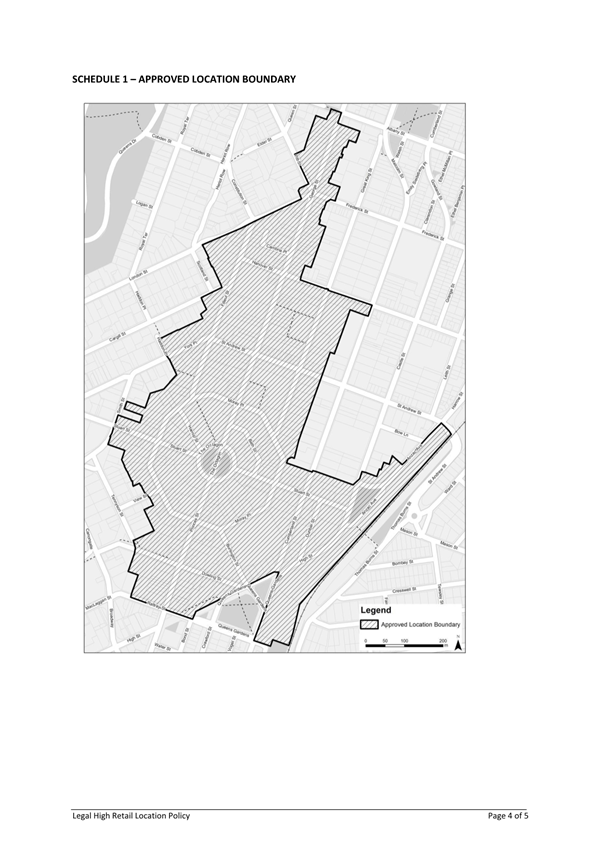
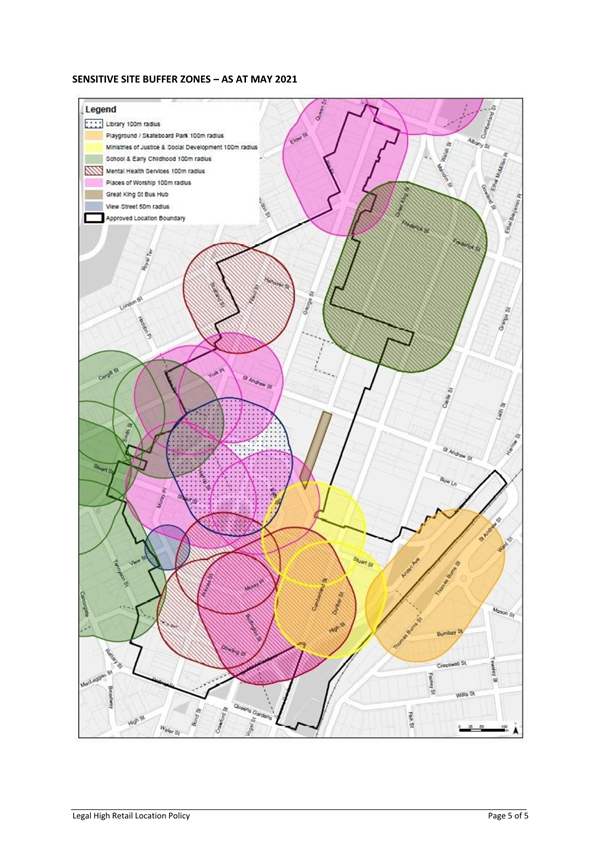
City Council will be held on:
Date: Wednesday
25 March 2026
Time: 9:00
a.m.
Venue: Council
Chamber, Dunedin Public Art Gallery, the Octagon, Dunedin
Sandy Graham
Council
PUBLIC AGENDA
|
Mayor
|
Mayor Sophie Barker
|
|
|
Deputy Mayor
|
Cr Cherry Lucas
|
|
|
Members
|
Cr John Chambers
|
Cr Christine Garey
|
|
|
Cr Doug Hall
|
Cr Marie Laufiso
|
|
|
Cr Russell Lund
|
Cr Mandy Mayhem
|
|
|
Cr Benedict Ong
|
Cr Andrew Simms
|
|
|
Cr Mickey Treadwell
|
Cr Lee Vandervis
|
|
|
Cr Steve Walker
|
Cr Brent Weatherall
|
Senior Officer Sandy
Graham, Chief Executive
Governance Support Officer Lynne
Adamson
Lynne Adamson
Governance Support Officer
Telephone: 03 477 4000
governance.support@dcc.govt.nz
www.dunedin.govt.nz
Note: Reports
and recommendations contained in this agenda are not to be considered as
Council policy until adopted.
|

|
Council
25 March 2026
|
ITEM TABLE OF CONTENTS PAGE
1 Opening 4
2 Public
Forum 4
3 Apologies 4
4 Confirmation
of Agenda 4
5 Declaration
of Interest 5
6 Confirmation
of Minutes 15
6.1 Ordinary Council
meeting - 19 February 2026 15
6.2 Ordinary Council
meeting - 24 February 2026 19
Reports
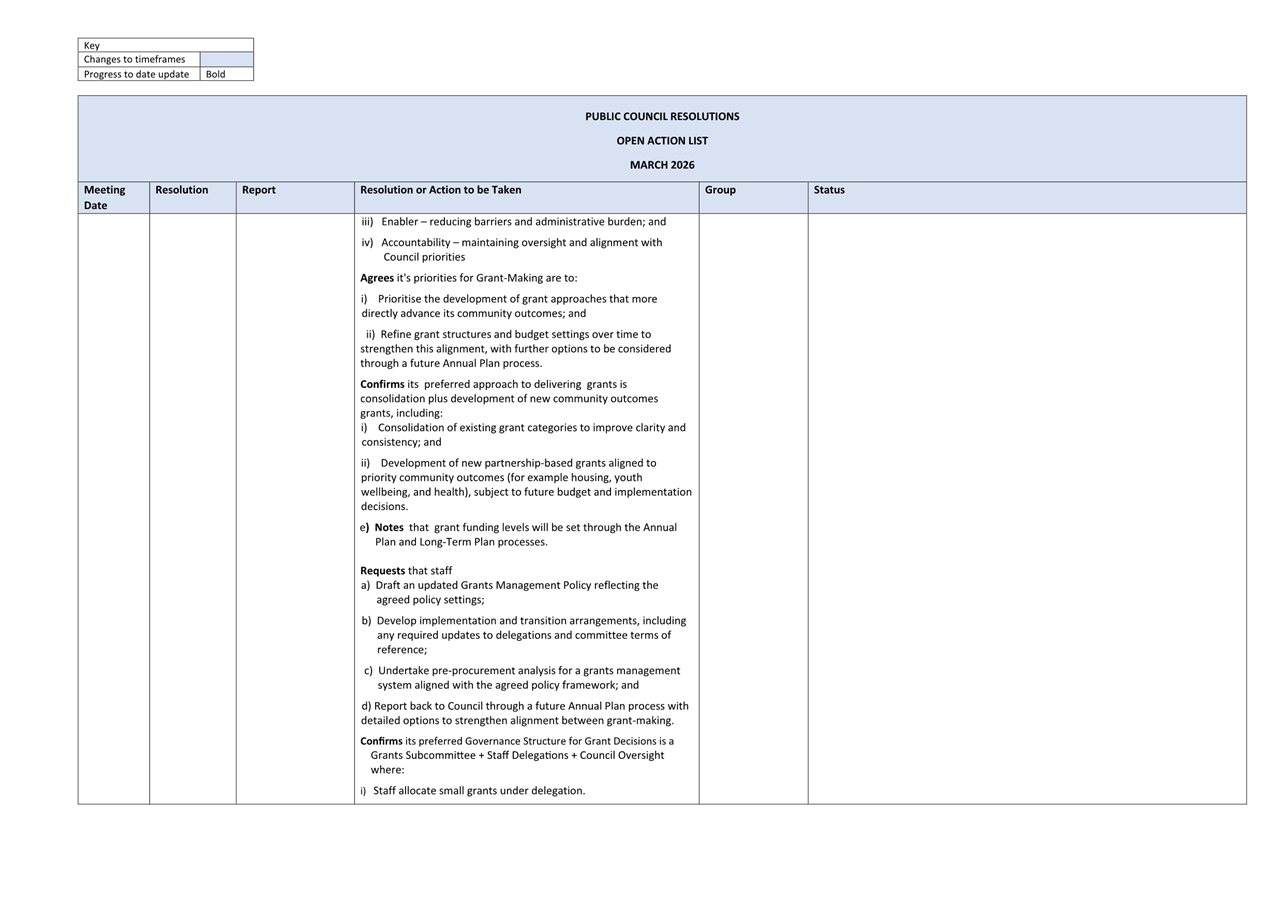
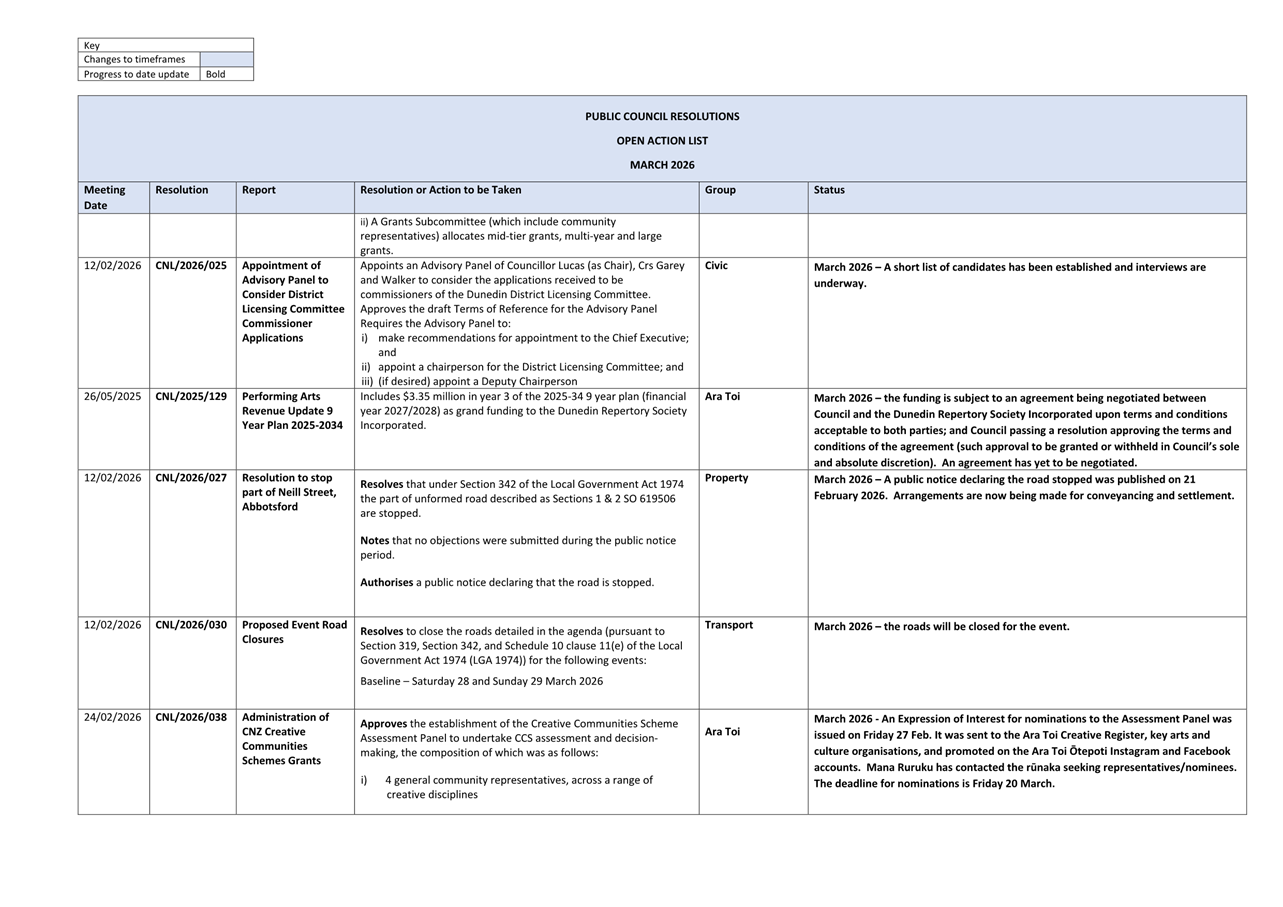
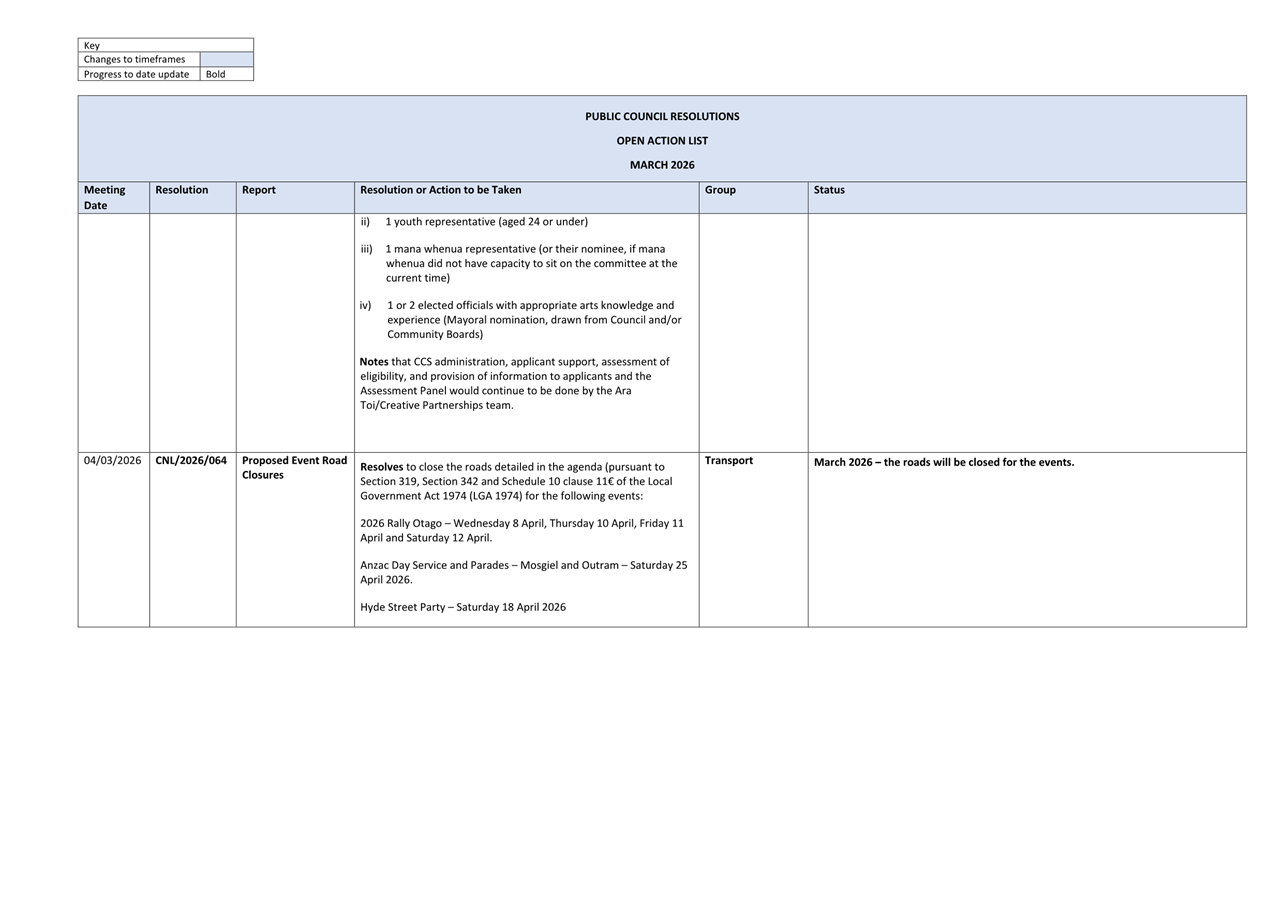
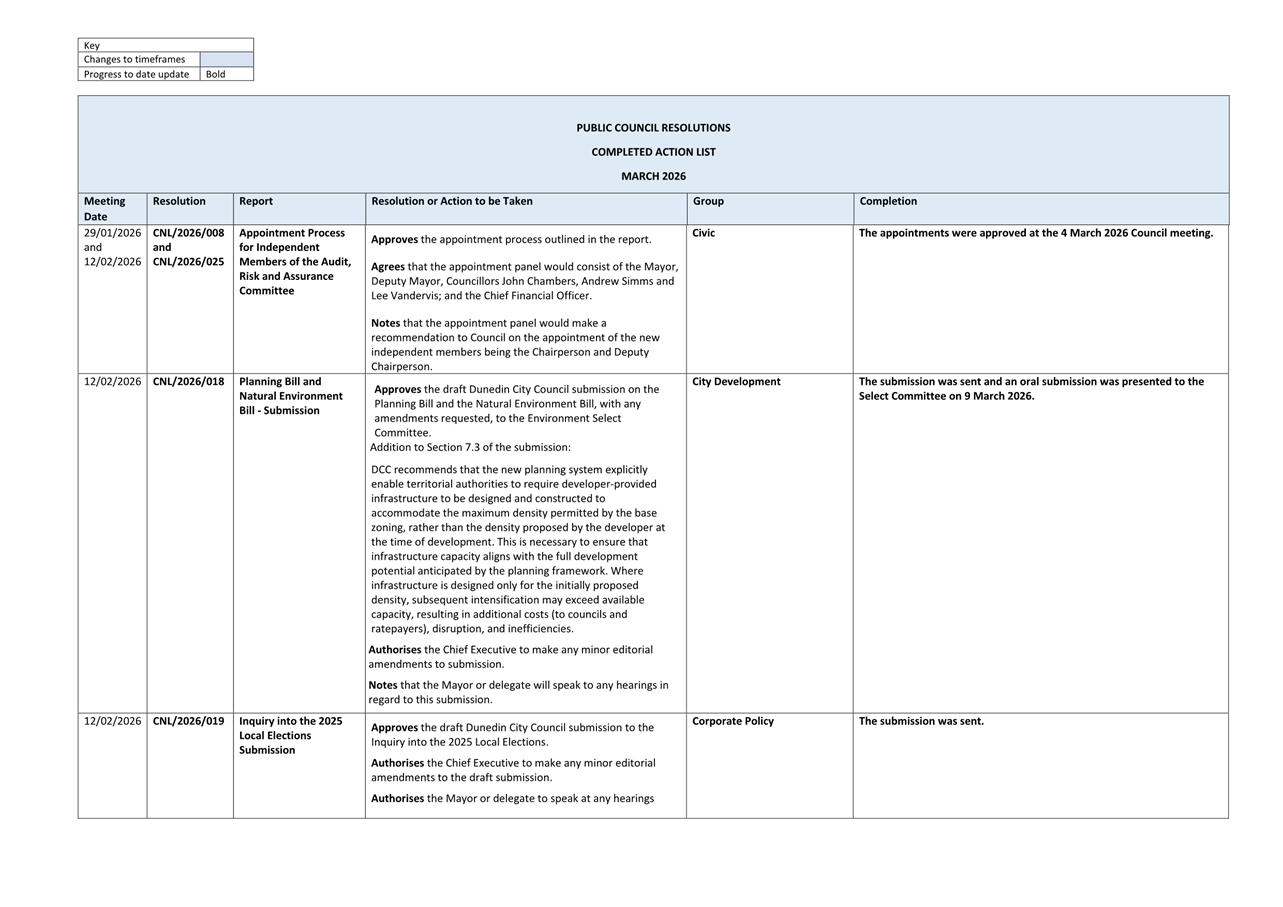
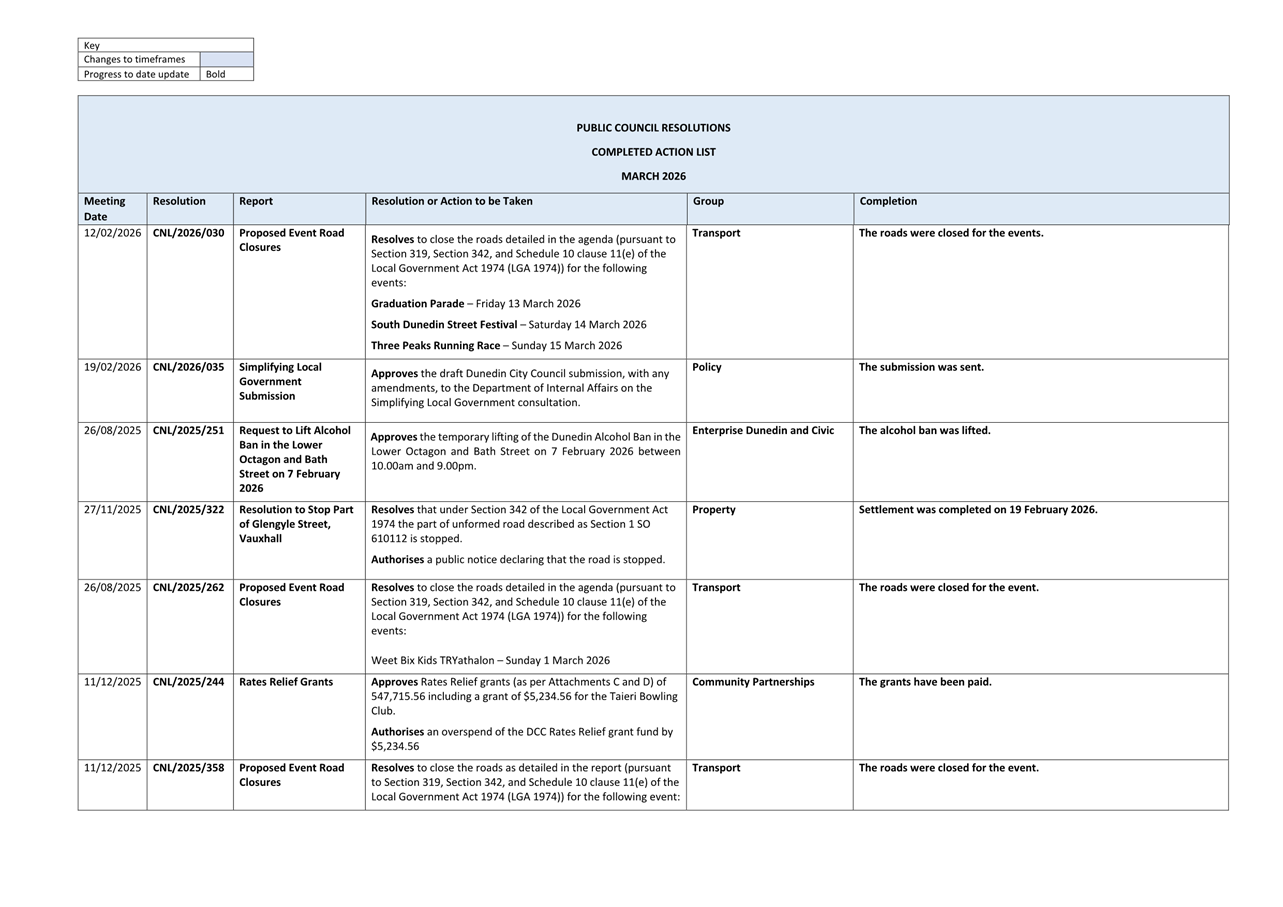
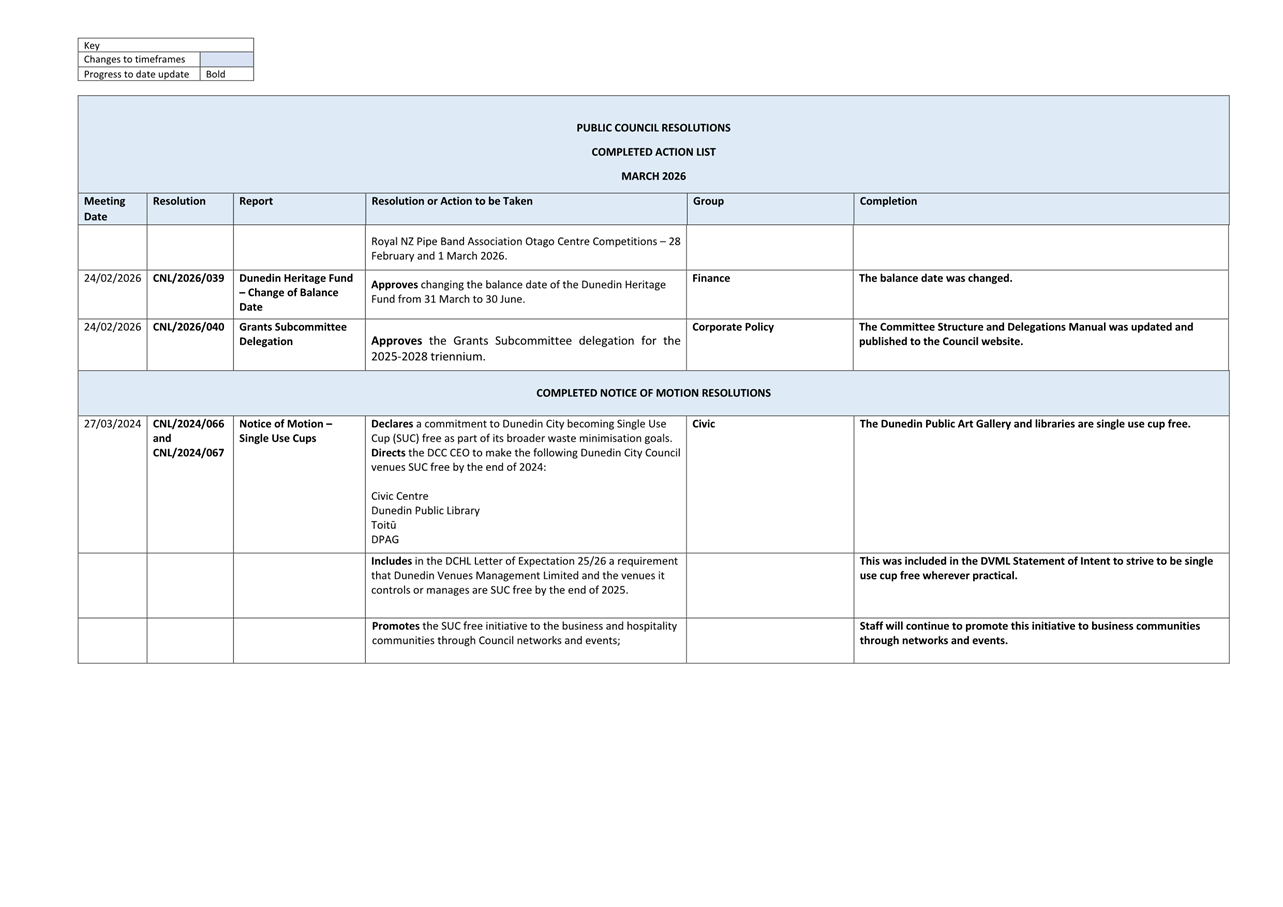
7 Actions
From Resolutions of Council Meetings 28
8 Council
Forward Work Programme 39
9 Code
of Conduct Complaint in relation to Councillor Benedict Ong 51
10 Annual
Plan 2026/27 Consultation Document 84
11 Governance
and Remuneration Update 94
12 Proposed
Road Stopping - Adjoining 59 Creamery Road, Ocean View 98
13 Review
of Keeping of Animals Bylaw 104
14 Legal
High Retail Location Policy review 115
15 Review
of the Traffic and Parking Bylaw 131
16 Review
of Alcohol (Control of Alcohol in Public Places) Bylaw 183
17 Supporting
documents to the Annual Plan 2026/27 Consultation Document 194
Resolution to Exclude the Public 226
|
|
Council
25 March 2026
|
1 Opening
Rebecca Post will open
the meeting with a prayer on behalf of the Baha’i community.
2 Public
Forum
At the close of the agenda
public forum registrations were still being taken. The speakers will be
confirmed following the closure of registrations 24 hours before the meeting
begins i.e. 9.00 am on Tuesday 24 March 2026.
3 Apologies
At the close of the agenda no
apologies had been received.
4 Confirmation
of agenda
Note:
Any additions must be approved by resolution with an explanation as to why they
cannot be delayed until a future meeting.
|

|
Council
25 March 2026
|
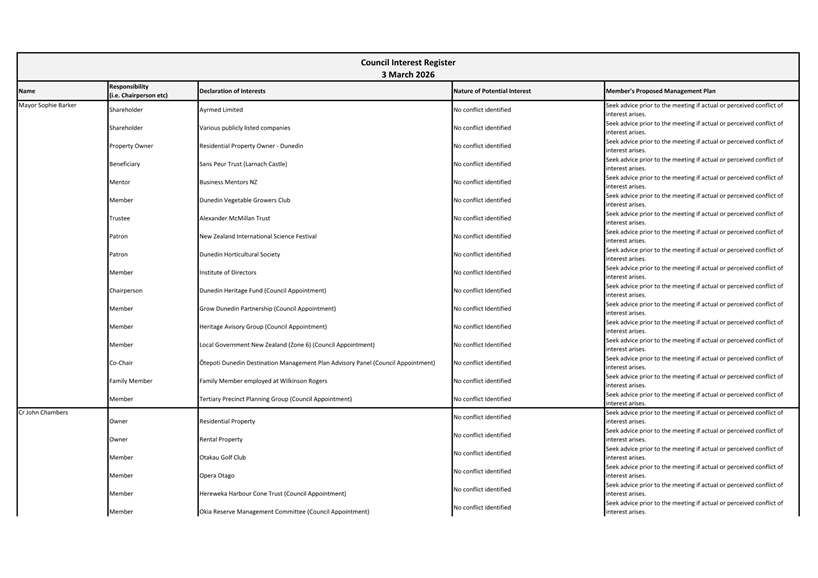
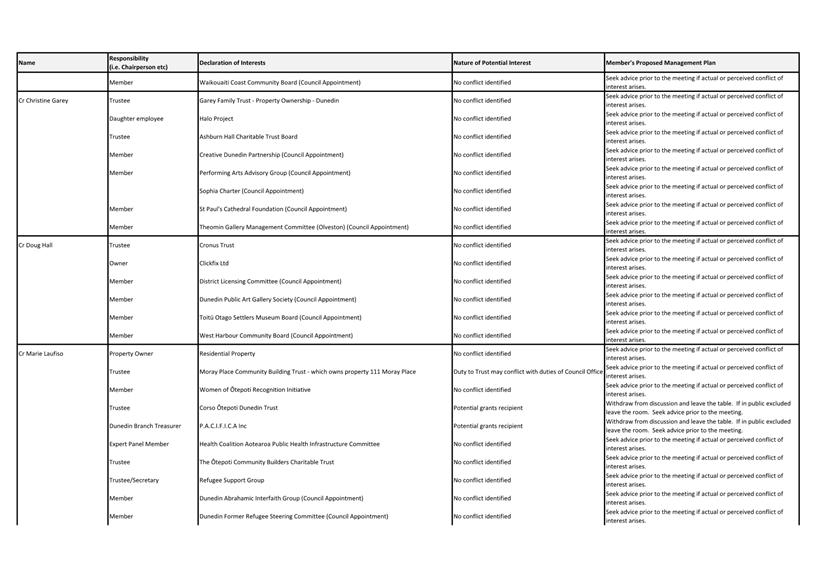
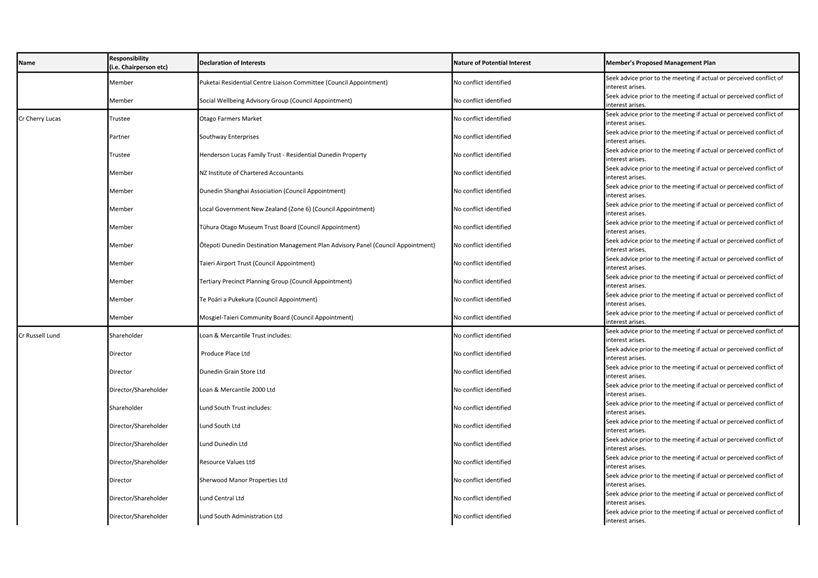
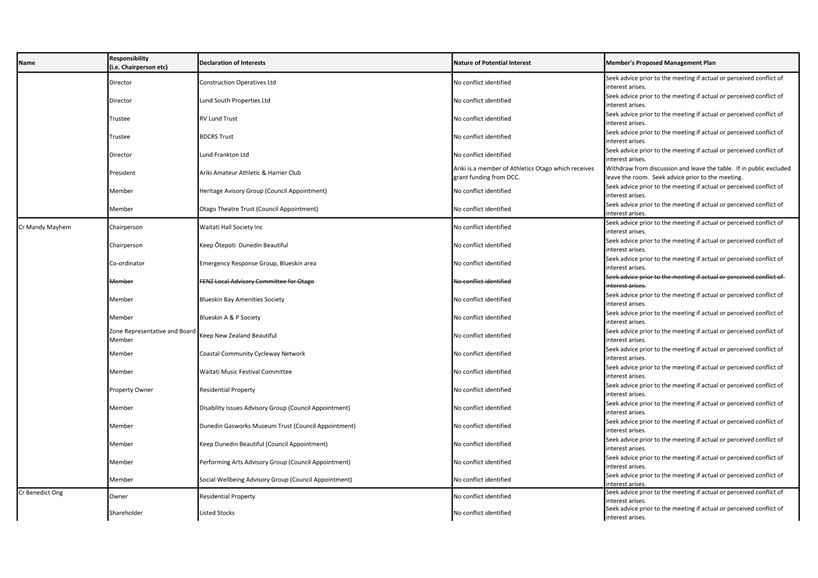
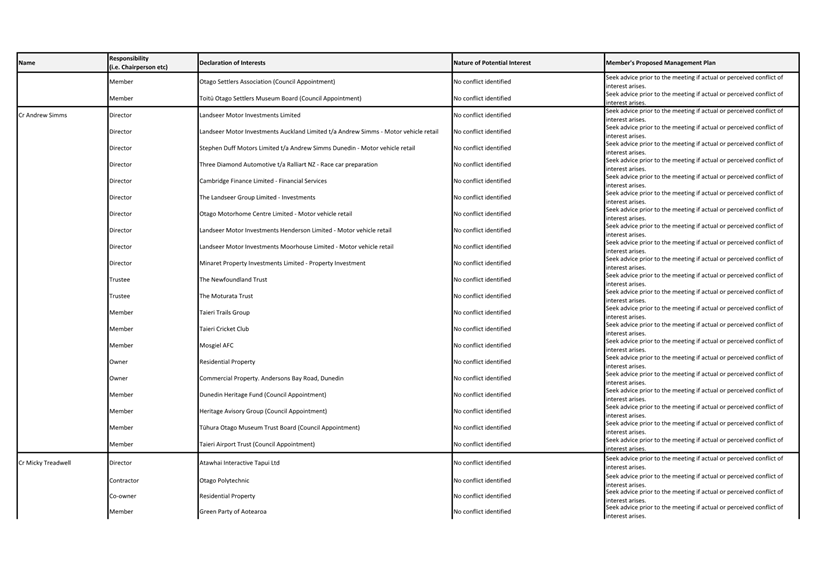
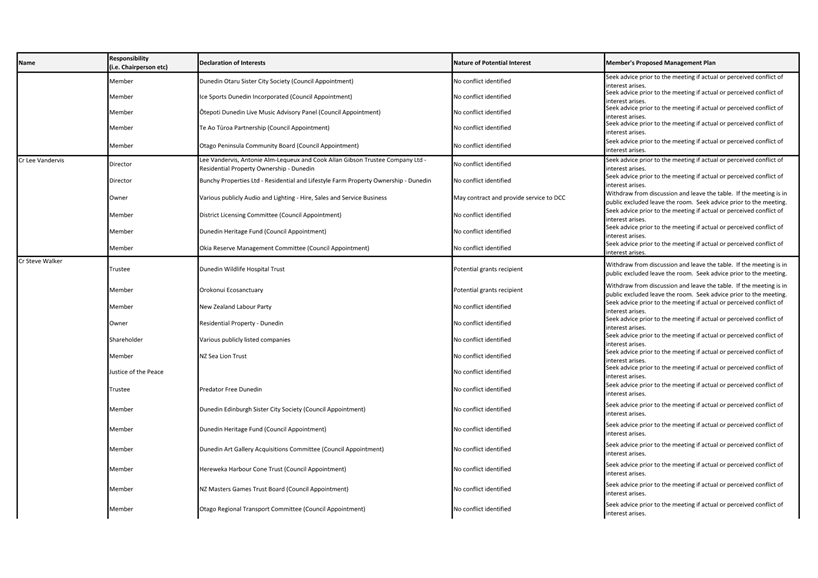
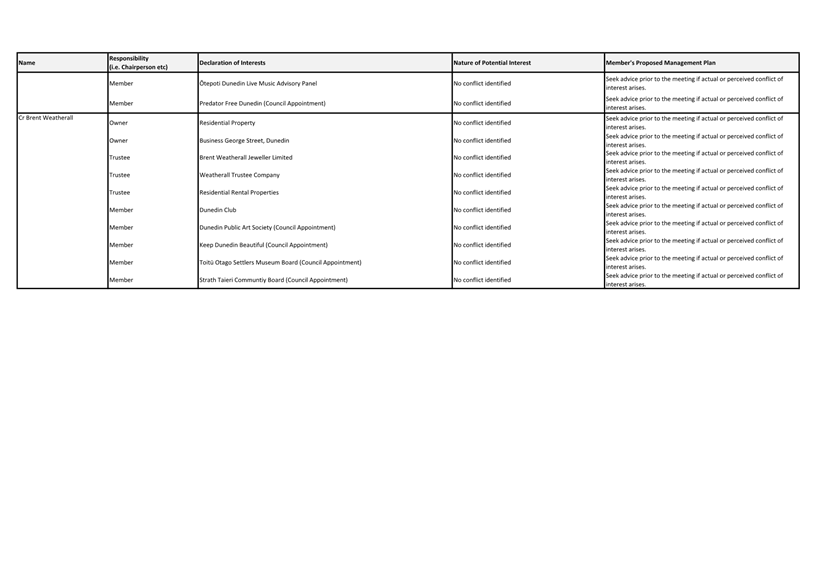
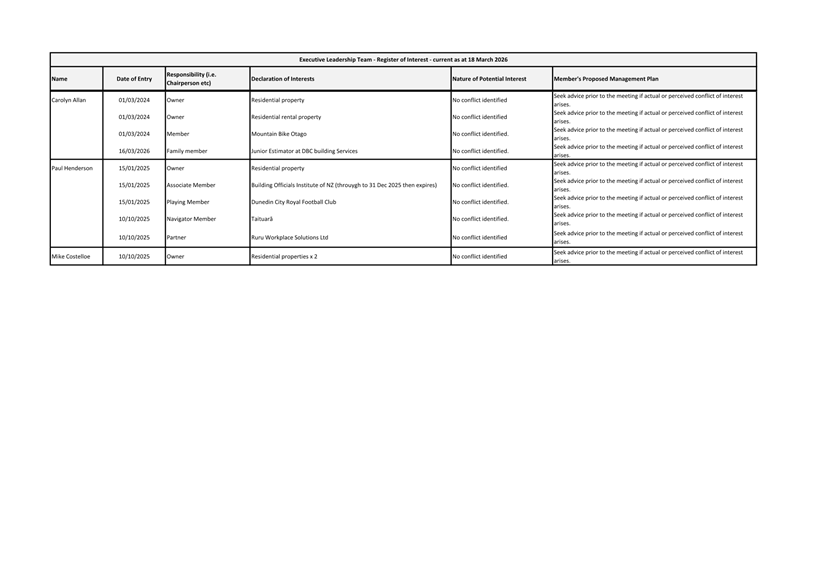
Declaration of Interest
EXECUTIVE SUMMARY
1. Members
are reminded of the need to stand aside from decision-making when a conflict
arises between their role as an elected representative and any private or other
external interest they might have.
2. Elected members are reminded to update their register of interests as soon as
practicable, including amending the register at this meeting if necessary.
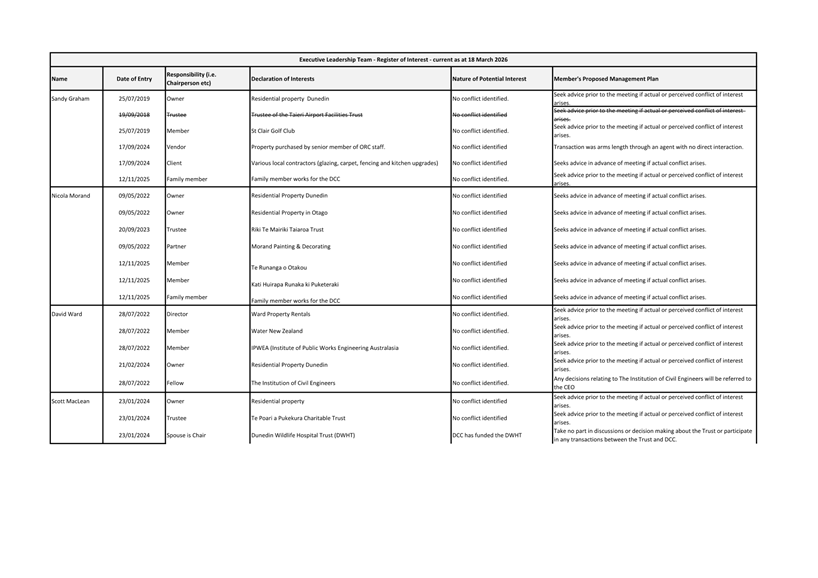
3. Staff members are
reminded to update their register of interests as soon as practicable.
RECOMMENDATIONS
That the Council:
a) Notes/Amends if
necessary the Elected Members' Interest Register attached as Attachment A; and
b) Confirms/Amends the
proposed management plan for Elected Members' Interests.
c) Notes the proposed
management plan for the Executive Leadership Team’s Interests.
Attachments
|
|
Title
|
Page
|
|
⇩a
|
Elected Members'
Interest Register
|
6
|
|
⇩b
|
Executive Leadership
Team's Interest Register
|
13
|
|

|
Council
25 March 2026
|
Confirmation
of Minutes
Ordinary
Council meeting - 19 February 2026
RECOMMENDATIONS
That the Council:
a) Confirms the public
part of the minutes of the Ordinary Council meeting held on 19 February 2026 as
a correct record.
Attachments
|
|
Title
|
Page
|
|
A⇩
|
Minutes of Ordinary
Council meeting held on 19 February 2026
|
16
|
|

|
Council
25 March 2026
|

Council
MINUTES
Minutes of an ordinary
meeting of the Dunedin City Council held in the Council Chamber, Dunedin Public
Art Gallery, the Octagon, Dunedin on Thursday 19 February 2026, commencing at
1:00 p.m.
PRESENT
|
Mayor
|
Mayor Sophie Barker
|
|
|
Deputy Mayor
|
Cr Cherry Lucas
|
|
|
Members
|
Cr John Chambers
|
Cr Christine Garey
|
|
|
Cr Doug Hall
|
Cr Marie Laufiso
|
|
|
Cr Russell Lund
|
Cr Mandy Mayhem
|
|
|
Cr Benedict Ong
|
Cr Andrew Simms
|
|
|
Cr Mickey Treadwell
|
Cr Lee Vandervis
|
|
|
Cr Steve Walker
|
Cr Brent Weatherall
|
|
IN ATTENDANCE
|
Sandy Graham (Chief Executive),
Carolyn Allan (Chief Financial Officer), Scott MacLean (General Manager City
Services), David Ward (General Manager 3 Waters, Property and Urban
Development), Danielle Tolson (Policy Analyst)
|
Governance Support Officer Lynne
Adamson
1 Public
Forum
There was no Public Forum.
|
2 Apologies
|
|
|
There were apologies for lateness from Crs Cherry Lucas
and Russell Lund.
|
|
|
Moved (Mayor Sophie Barker/Cr Mickey Treadwell):
That the Council:
Accepts
the apologies for lateness from Crs Cherry Lucas and Russell Lund.
Motion
carried (CNL/2026/032)
|
|
3 Confirmation
of agenda
|
|
|
Moved (Mayor Sophie Barker/Cr Mickey Treadwell):
That the Council:
Confirms the agenda
without addition or alteration
Motion
carried (CNL/2026/033)
|
4 Declarations
of interest
Members were
reminded of the need to stand aside from decision-making when a conflict arose
between their role as an elected representative and any private or other
external interest they might have.
|
|
Moved (Mayor Sophie Barker/Cr Mickey Treadwell):
That the Council:
a) Notes the Elected Members' Interest Register; and
b) Confirms the proposed management plan for
Elected Members' Interests.
c) Notes the proposed management plan for the Executive
Leadership Team’s Interests.
Motion
carried (CNL/2026/034)
|
Reports
|
5 Simplifying
Local Government Submission
|
|
|
A report from Policy sought
approval of a draft Dunedin City Council submission to the Department of
Internal Affairs on the Simplifying Local Government consultation.
|
|
|
The Chief Executive (Sandy Graham), General Manager City
Services (Scott MacLean) and Policy Analyst (Danielle Tolson) provided a
correction to paragraph 32 in the cover report and noted that it should read
“does not provide an evidence base to support”. They then
spoke to the report and responded to questions.
|
|
During discussion, Cr Cherry Lucas entered the meeting at
1.48 pm.
|
|
|
Moved (Mayor Sophie Barker/Cr Mickey Treadwell):
That the Council:
a) Approves the draft Dunedin City Council
submission, with any amendments, to the Department of Internal Affairs on the
Simplifying Local Government consultation.
b) Authorises the Chief Executive to make any minor
editorial amendments to the draft submission.
c) Notes that there are no hearings for this consultation.
d)
Notes that a briefing paper
on unitary councils would be prepared for a future Council meeting Chief
Executive Dunedin City Council.
Division
The Council voted by
division
For: Crs
John Chambers, Christine Garey, Doug Hall, Marie Laufiso, Cherry Lucas, Mandy
Mayhem, Benedict Ong, Andrew Simms, Mickey Treadwell, Steve Walker, Brent
Weatherall and Mayor Sophie Barker (12).
Against: Cr
Lee Vandervis (1).
Abstained: Nil
The
division was declared CARRIED by 12 votes to 1
Motion
carried (CNL/2026/035)
|
The meeting closed at 2.02 pm.
..............................................
MAYOR
|

|
Council
25 March 2026
|
Ordinary Council meeting - 24 February 2026
RECOMMENDATIONS
That the Council:
a) Confirms the public
part of the minutes of the Ordinary Council meeting held on 24 February 2026 as
a correct record.
Attachments
|
|
Title
|
Page
|
|
A⇩
|
Minutes of Ordinary
Council meeting held on 24 February 2026
|
20
|
|

|
Council
25 March 2026
|

Council
MINUTES
Minutes of an ordinary
meeting of the Dunedin City Council held in the Council Chamber, Dunedin Public
Art Gallery, the Octagon, Dunedin on Tuesday 24 February 2026, commencing at
9.00 am
PRESENT
|
Mayor
|
Mayor Sophie Barker
|
|
|
Deputy Mayor
|
Cr Cherry Lucas
|
|
|
Members
|
Cr John Chambers
|
Cr Christine Garey
|
|
|
Cr Doug Hall
|
Cr Marie Laufiso
|
|
|
Cr Russell Lund
|
Cr Mandy Mayhem
|
|
|
Cr Benedict Ong
|
Cr Andrew Simms
|
|
|
Cr Lee Vandervis
|
Cr Steve Walker
|
|
|
Cr Brent Weatherall
|
|
|
IN ATTENDANCE
|
Sandy Graham (Chief Executive),
Scott MacLean (General Manager City Services), David Ward (General Manager 3
Waters, Property and Urban Development), Nicola Morand (Manahautū -
General Manager Community and Strategy), Paul Henderson (General Manager
Corporate and Regulatory Services), Mike Costelloe (General Manager, Arts,
Culture and Economic Development), Hayden McAuliffe (Financial Services
Manager), Scott Campbell (Regulation and Policy Team Leader), Lisa Wilkie
(Kaiārahi – Team Leader Creative Partnerships) and Jackie Harrison
(Manager Governance)
|
Governance Support Officer Lynne
Adamson
1 Opening
Geshe Lobsang Dhonye and Geshe Losang Gyatso
opened the meeting with a prayer.
2 Public
Forum
2.1 Dog
Behaviour
Ms Watt, owner/head trainer and
behaviour modification specialist of ABC Dogs NZ commented that she was
committed to the prevention of dog bites and tragedies through better
education. Ms Watt and spoke of measures that could be undertaken to help
improve public understanding and of the myths of appropriate behaviour around
dogs.
Cr Benedict
Ong entered the meeting at 9.09 am.
Ms
Watt responded to questions and provided suggestions of the support Council
could provide.
2.2 Dunedin
Hospital Rebuild
Terry Taylor
spoke to his precirculated information requesting Council advocacy support with
respect to a fit for purpose Pathology Lab being included in the new Dunedin
Hospital rebuild. He commented that it was essential that the lab was on
site to ensure quick and efficient diagnosis.
Mr Taylor
responded to questions and urged Council to continue with the advocacy and
ensure that the fit for purpose on site Pathology Lab be included in every
discussion on the rebuild.
|
3 Apologies
|
|
|
There was an apology from Cr Mickey Treadwell.
|
|
|
Moved (Mayor Sophie Barker/Cr Cherry Lucas):
That the Council:
Accepts
the apology from Cr Mickey Treadwell.
Motion
carried (CNL/2026/032)
|
|
4 Confirmation
of agenda
|
|
|
Moved (Mayor Sophie Barker/Cr Cherry Lucas):
That the Council:
Confirms the agenda
without addition or alteration.
Motion
carried (CNL/2026/033)
|
5 Declarations
of interest
Members were
reminded of the need to stand aside from decision-making when a conflict arose
between their role as an elected representative and any private or other
external interest they might have.
|
|
Moved (Mayor Sophie Barker/Cr Cherry Lucas):
That the Council:
a) Notes the Elected Members' Interest Register; and
b) Confirms the proposed management plan for
Elected Members' Interests.
c) Notes the proposed management plan for the Executive
Leadership Team’s Interests.
Motion
carried (CNL/2026/034)
|
6 Confirmation
of Minutes
|
6.1 Ordinary
Council meeting - 12 February 2026
|
|
|
Moved (Mayor Sophie Barker/Cr Cherry Lucas):
That the Council:
a) Confirms the public part of the minutes of the
Ordinary Council meeting held on 12 February 2026 as a correct record.
Motion
carried (CNL/2026/035)
|
Reports
|
7 Actions
From Resolutions of Council Meetings
|
|
|
A report from Civic provided
an update on the implementation of resolutions made at Council
meetings.
|
|
|
The Chief Executive (Sandy Graham) and General Managers
responded to questions.
|
|
|
Moved (Mayor Sophie Barker/Cr Cherry Lucas):
That the Council:
a) Notes
the Open and Completed Actions from resolutions of Council meetings.
Motion carried (CNL/2026/036)
|
|
8 Proposed
Water Supply Bylaw 2026
|
|
|
A report from 3 Waters sought
consideration of the implementation of a new bylaw to manage the use of the
Dunedin City Council (DCC) water supply network as part of Council’s
response to recent legislative and regulatory changes relating to three waters
services.
The report noted that
although the proposed Bylaw would be made under the Local Government (Water
Services) Act 2025 (LGWSA), aspects of the bylaw-making process requirements
set out in the Local Government Act 2002 (LGA) would still apply. It
recommended that the Council makes the determinations required by section 155
of the LGA.
|
|
|
The General Manager, 3 Waters, Property and Urban
Development (David Ward); and Policy Team Leader (Scott Campbell) spoke to
the report and responded to questions.
|
|
|
Moved (Mayor Sophie Barker/Cr Brent Weatherall):
That the Council:
a) Determines that a bylaw is the most appropriate way
to manage the use of the Dunedin City Council water supply network.
b) Determines that the draft proposed Water Supply
Bylaw 2026 at Attachment A was the most appropriate form of bylaw.
c) Determines that the draft proposed Water Supply
Bylaw 2026 at Attachment A did not give rise to any implications under the
New Zealand Bill of Rights Act 1990 and was not inconsistent with that Act.
d) Determines that the special consultative procedure,
in accordance with the Local Government Act 2002, be used as part of the
process to make the proposed Water Supply Bylaw 2026.
e) Approves the draft proposed Water Supply Bylaw
2026 at Attachment A and the draft Statement of Proposal at Attachment B to
be notified for public consultation.
f) Authorises the Chief Executive to make any minor
editorial changes to the proposed Water Supply Bylaw 2026 and the Statement
of Proposal prior to consultation opening.
Motion
carried (CNL/2026/037) with Cr Benedict Ong recording his vote against
|
Crs Doug Hall and Steve Walker left the meeting at 10.23 am.
Cr Steve Walker returned to the meeting at 10.26 am and Cr
Doug Hall at 10.27 am.
|
9 Administration
of CNZ Creative Communities Scheme grants
|
|
|
A report from Ara Toi
recommended the establishment of a community-led Assessment Committee to be
responsible for the assessment and decision-making for Creative New
Zealand’s Creative Communities Scheme (CCS) grants.
This would ensure that the
Dunedin City Council (DCC) met
Creative New Zealand requirements for administration of the grants scheme.
This action would align DCC
administration of the CCS grants with Creative New Zealand’s guidelines
and with the processes followed by the majority of territorial authorities
that administer CCS grants.
|
|
|
The General Manager Arts, Culture & Economic
Development (Mike Costelloe) and Kaiārahi – Team Leader Creative
Partnerships (Lisa Wilkie) provided an update to the report and responded to
questions.
|
|
Moved (Mayor Sophie/Cr Steve
Walker):
That the Council:
Adjourns
the meeting for 15 minutes.
Motion
carried
The meeting adjourned at 10.53 and reconvened at 11.05 am.
|
|
|
Moved (Mayor Sophie Barker/Cr Christine Garey):
That the Council:
a) Approves the establishment of the Creative
Communities Scheme Assessment Panel to undertake CCS assessment and
decision-making, the composition of which was as follows:
i) 4 general community representatives,
across a range of creative disciplines
ii) 1 youth representative (aged 24 or
under)
iii) 1 mana whenua representative (or their
nominee, if mana whenua did not have capacity to sit on the committee at the
current time)
iv) 1 or 2 elected officials with
appropriate arts knowledge and experience (Mayoral nomination, drawn from
Council and/or Community Boards)
b) Notes that CCS
administration, applicant support, assessment of eligibility, and provision
of information to applicants and the Assessment Panel would continue to be
done by the Ara Toi/Creative Partnerships team.
Motion
carried (CNL/2026/038)
|
|
10 Dunedin
Heritage Fund - Change of Balance Date
|
|
|
A report from Finance advised
that the Dunedin Heritage Fund (DHF) was a registered charity with the
Department of Internal Affairs - Charities Services. The DHF currently had a
reporting period ending 31 March in line with clause 6.3 of the Deed that
established the DHF. This date did not align with the Dunedin City Council, balance
date of 30 June, and therefore created inefficiencies for financial
reporting.
The report proposed changing
the balance date from 31 March to 30 June to align with the DCC financial
year.
To make the change, the Deed
required Heritage New Zealand Pouhere Taonga and the DCC to agree to change
the balance date from 31 March to 30 June.
|
|
|
The General Manager 3 Waters, Property and Urban
Development (David Ward) and Financial Services Manager (Hayden McAuliffe)
spoke to the report and responded to questions.
|
|
|
Moved (Cr Lee Vandervis/Cr Steve Walker):
That the Council:
a) Approves changing the balance date of the Dunedin
Heritage Fund from 31 March to 30 June.
b) Notes that if approved by Council, staff will seek approval from
Heritage New Zealand Pouhere Taonga, and then will advise the Charities
Services of the change in balance date within three months of the change
being approved.
Motion
carried (CNL/2026/039)
|
|
11 Grants
Subcommittee Delegation
|
|
|
A report from Corporate
Policy sought approval of the Grants Subcommittee delegation for the
2025/2028 triennium.
|
|
|
Mayor Sophie and the Manahautū (General Manager
Community and Strategy) spoke to the report and responded to questions.
|
|
|
Moved (Mayor Sophie Barker/Cr Cherry Lucas):
That the Council:
a) Approves the Grants Subcommittee delegation for
the 2025-2028 triennium.
Motion
carried (CNL/2026/040)
|
|
Resolution to Exclude the Public
|
|
Moved (Mayor Sophie Barker/Cr Steve Walker):
That the Council:
Pursuant
to the provisions of the Local Government Official Information and Meetings
Act 1987, exclude the public from the following part of the proceedings of
this meeting namely:
|
General
subject of the matter to be considered
|
Reasons for
passing this resolution in relation to each matter
|
Ground(s) under
section 48(1) for the passing of this resolution
|
Reason for
Confidentiality
|
|
C1
Ordinary Council meeting - 11 November 2025 - Public Excluded
|
S7(2)(h)
The withholding of
the information is necessary to enable the local authority to carry out,
without prejudice or disadvantage, commercial activities.
|
.
|
|
|
C2
Ordinary Council meeting - 11 December 2025 - Public Excluded
|
S7(2)(a)
The withholding of
the information is necessary to protect the privacy of natural persons,
including that of a deceased person.
|
.
|
|
|
C3
Confidential Council Action List Update
|
S7(2)(b)(ii)
The withholding of
the information is necessary to protect information where the making
available of the information would be likely unreasonably to prejudice the
commercial position of the person who supplied or who is the subject of the
information.
S7(2)(g)
The withholding of
the information is necessary to maintain legal professional privilege.
S7(2)(h)
The withholding of
the information is necessary to enable the local authority to carry out,
without prejudice or disadvantage, commercial activities.
S7(2)(i)
The withholding of
the information is necessary to enable the local authority to carry on,
without prejudice or disadvantage, negotiations (including commercial and
industrial negotiations).
|
S48(1)(a)
The public conduct of
the part of the meeting would be likely to result in the disclosure of
information for which good reason for withholding exists under section 7.
|
|
This resolution is made in
reliance on Section 48(1)(a) of the Local Government Official Information and
Meetings Act 1987, and the particular interest or interests protected by
Section 6 or Section 7 of that Act, or Section 6 or Section 7 or Section 9 of
the Official Information Act 1982, as the case may require, which would be
prejudiced by the holding of the whole or the relevant part of the
proceedings of the meeting in public are as shown above after each item.
Adjourns the meeting for
five minutes
Motion
carried (CNL/2026/041)
|
The meeting moved into confidential at 11.14 am
..............................................
MAYOR
|

|
Council
25 March 2026
|
Reports
Actions From Resolutions of Council Meetings
Department: Civic
EXECUTIVE SUMMARY
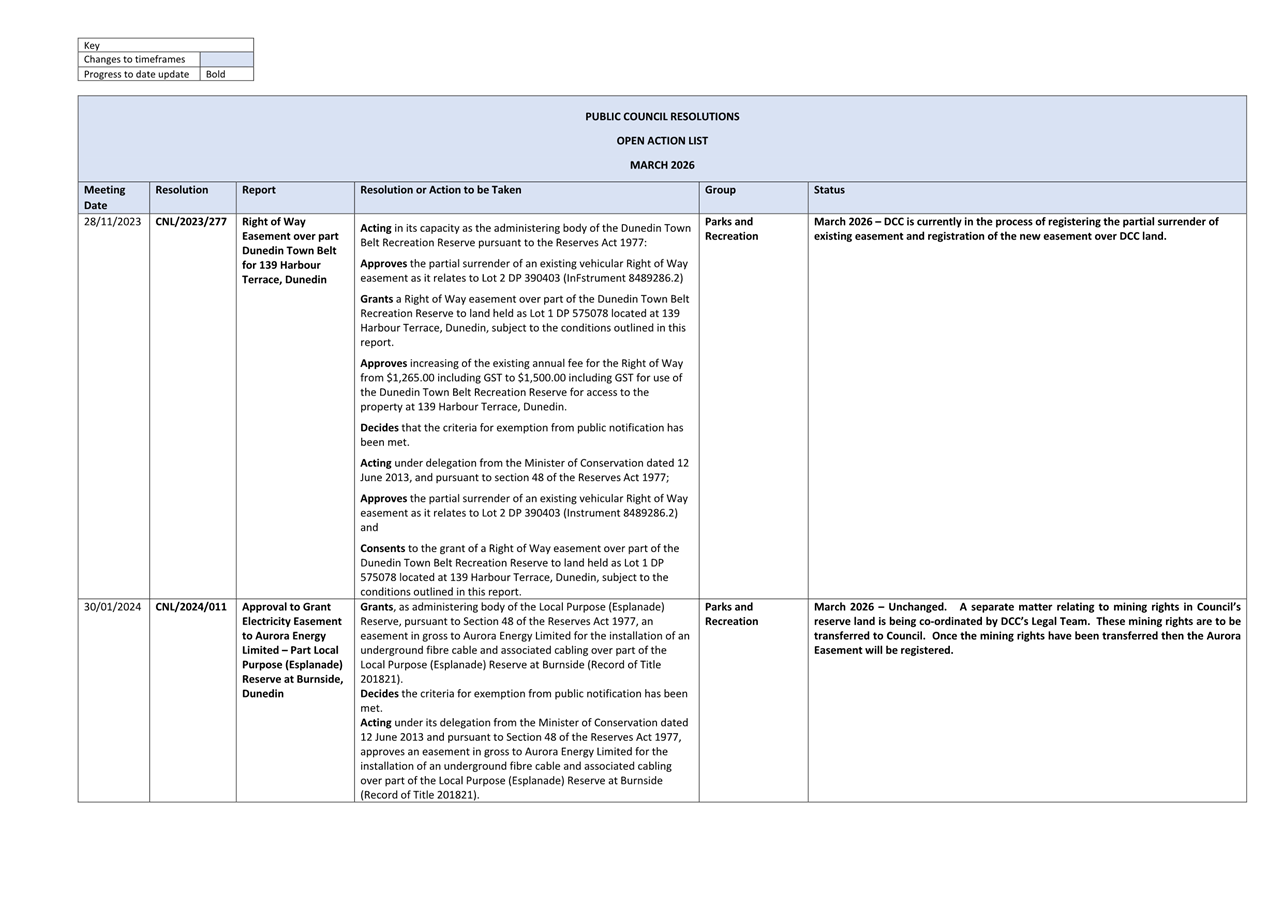
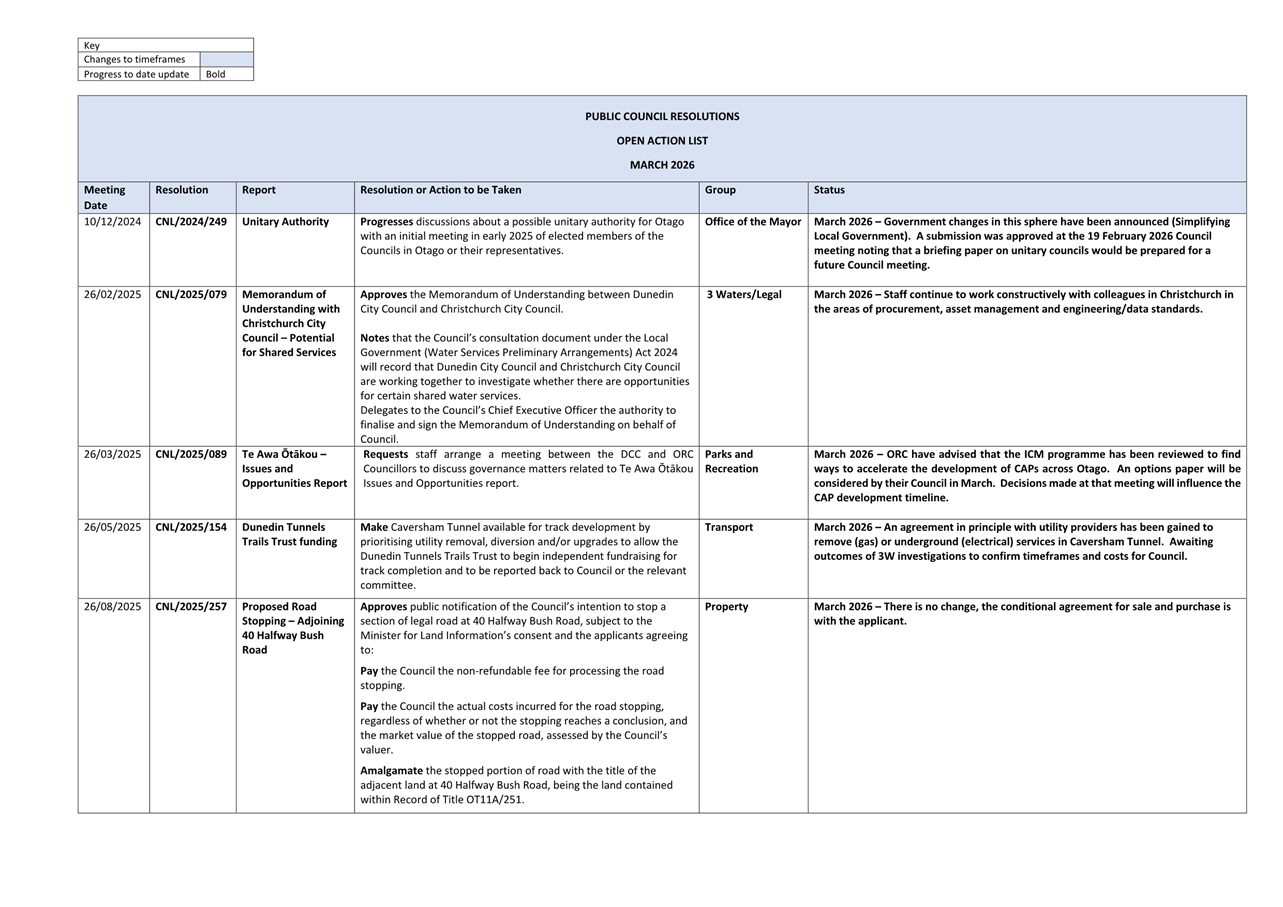
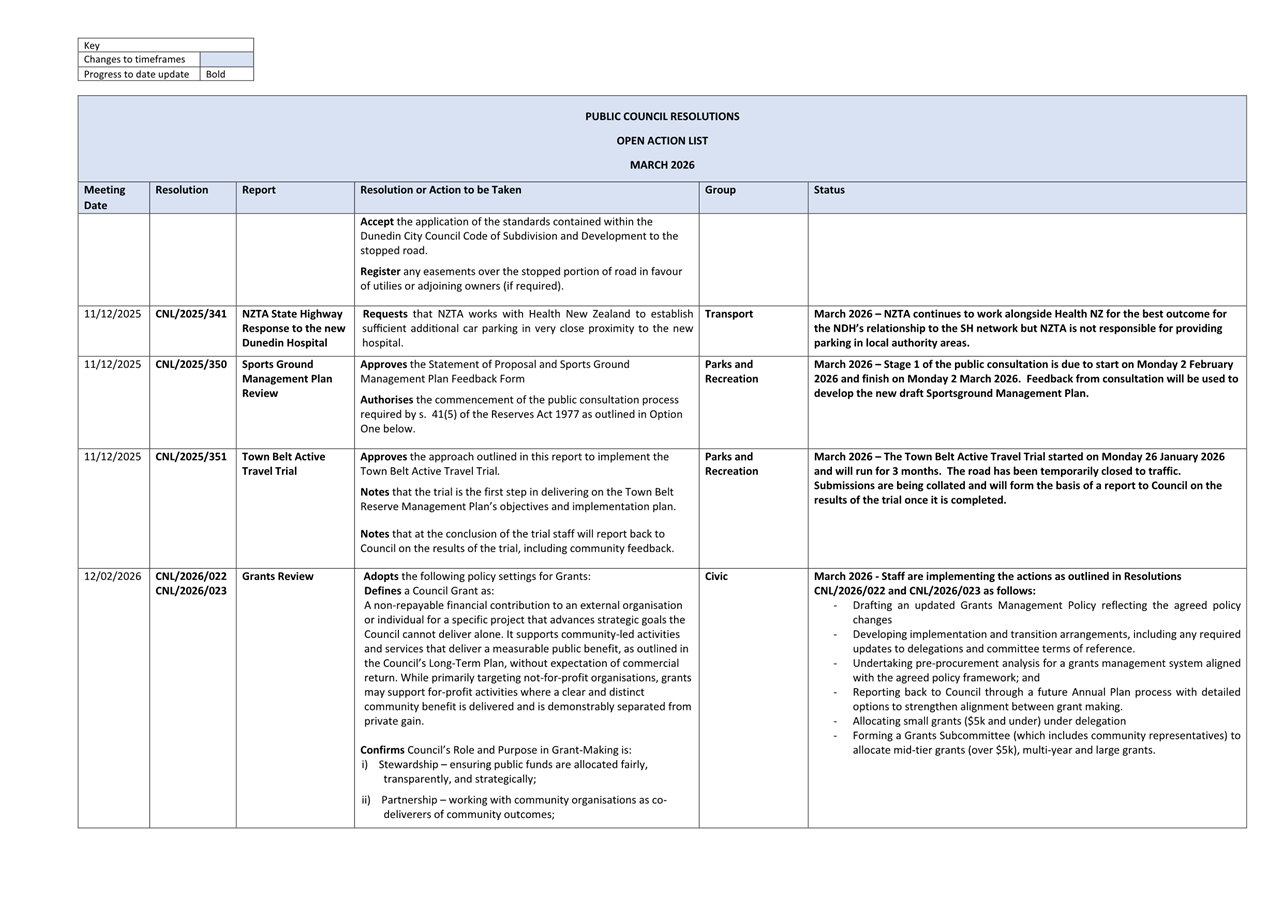
1 The
purpose of this report is to show progress on implementing resolutions made at
Council meetings.
2 As
this report is an administrative report only, there are no options or Summary
of Considerations.
|
RECOMMENDATIONS
That the Council:
a) Notes
the Open and Completed Actions from resolutions of Council meetings as
attached.
|
discussion
3 This
report also provides an update on resolutions that have been actioned and
completed since the last Council meetings. Note that items on the Forward
Work Programme are not included in the attached schedules.
NEXT STEPS
5 Updates
will be provided at future Council meetings.
Signatories
|
Author:
|
Lynne Adamson - Governance Support Officer
|
|
Authoriser:
|
Nicola Morand - Manahautū (General Manager Community
and Strategy)
|
Attachments
|
|
Title
|
Page
|
|
⇩a
|
Public Open Action list
|
29
|
|
⇩b
|
Public Completed Action
List
|
35
|
|

|
Council
25 March 2026
|
Council Forward Work Programme
Department: Civic
EXECUTIVE SUMMARY
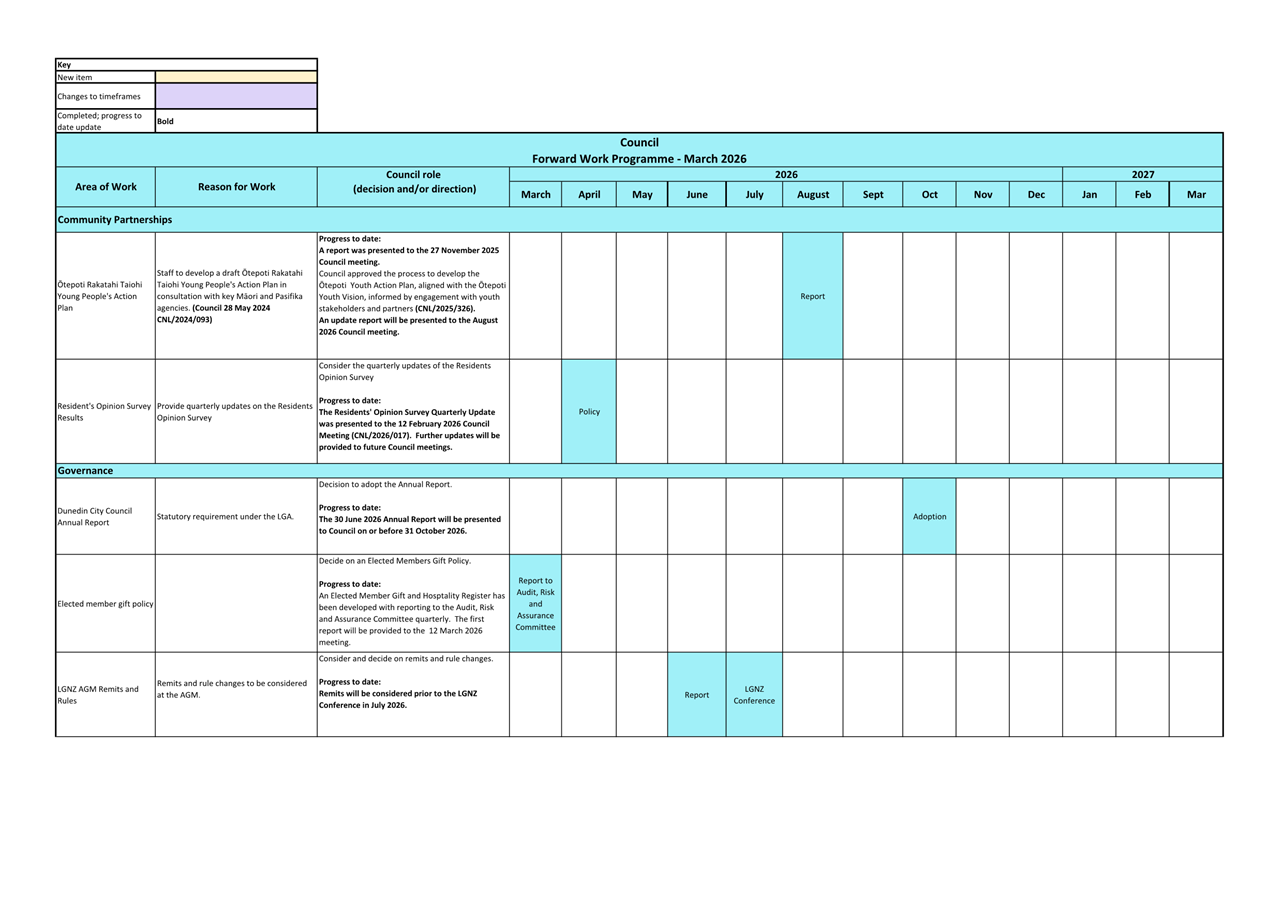
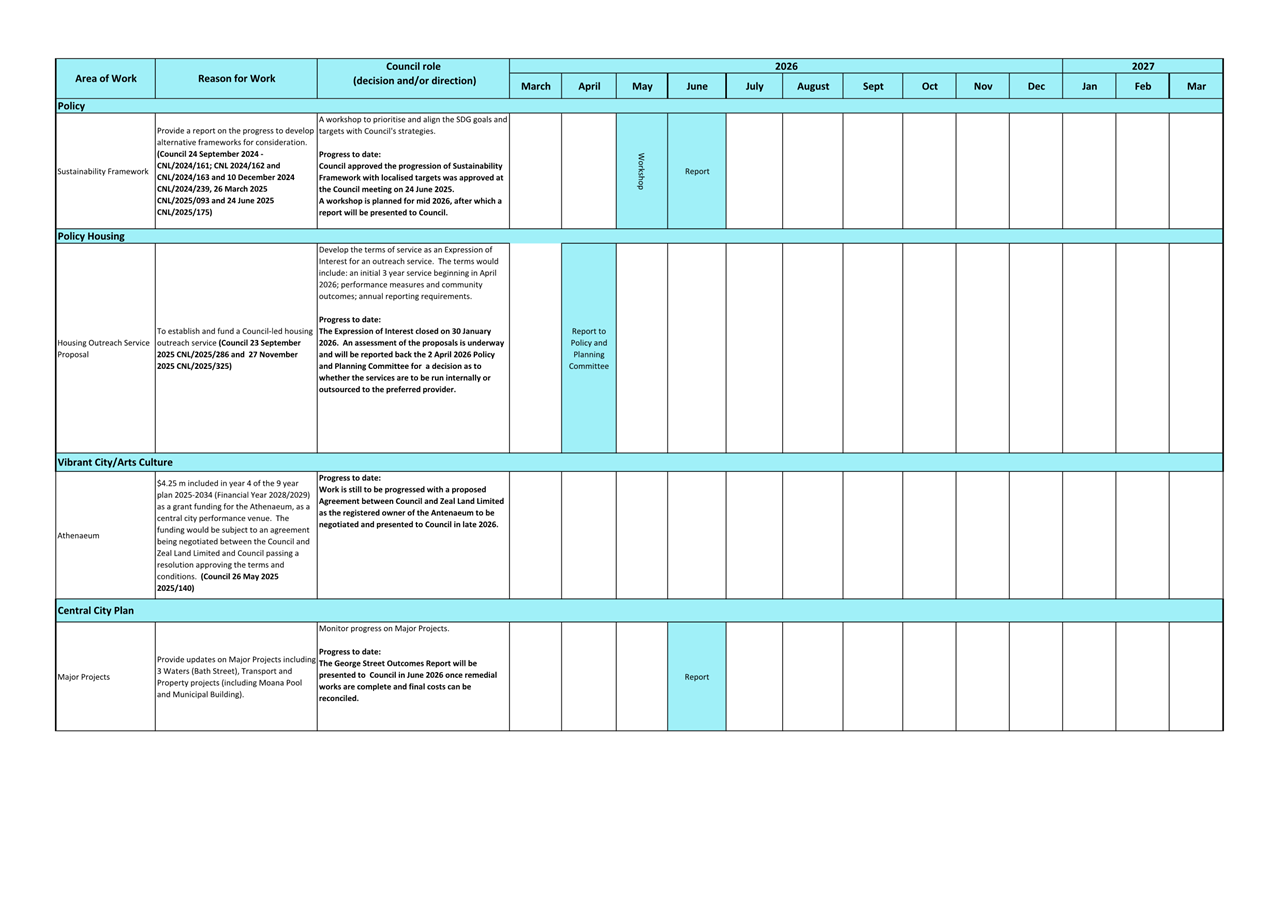
1 The
purpose of this report is to provide the updated Council forward work programme
for the 2025 year (Attachment A).
2 As
this is an administrative report only, there are no options or Summary of
Considerations.
|
RECOMMENDATIONS
That the Council:
a) Notes the updated
Council forward work programme as shown in Attachment A.
|
DISCUSSION
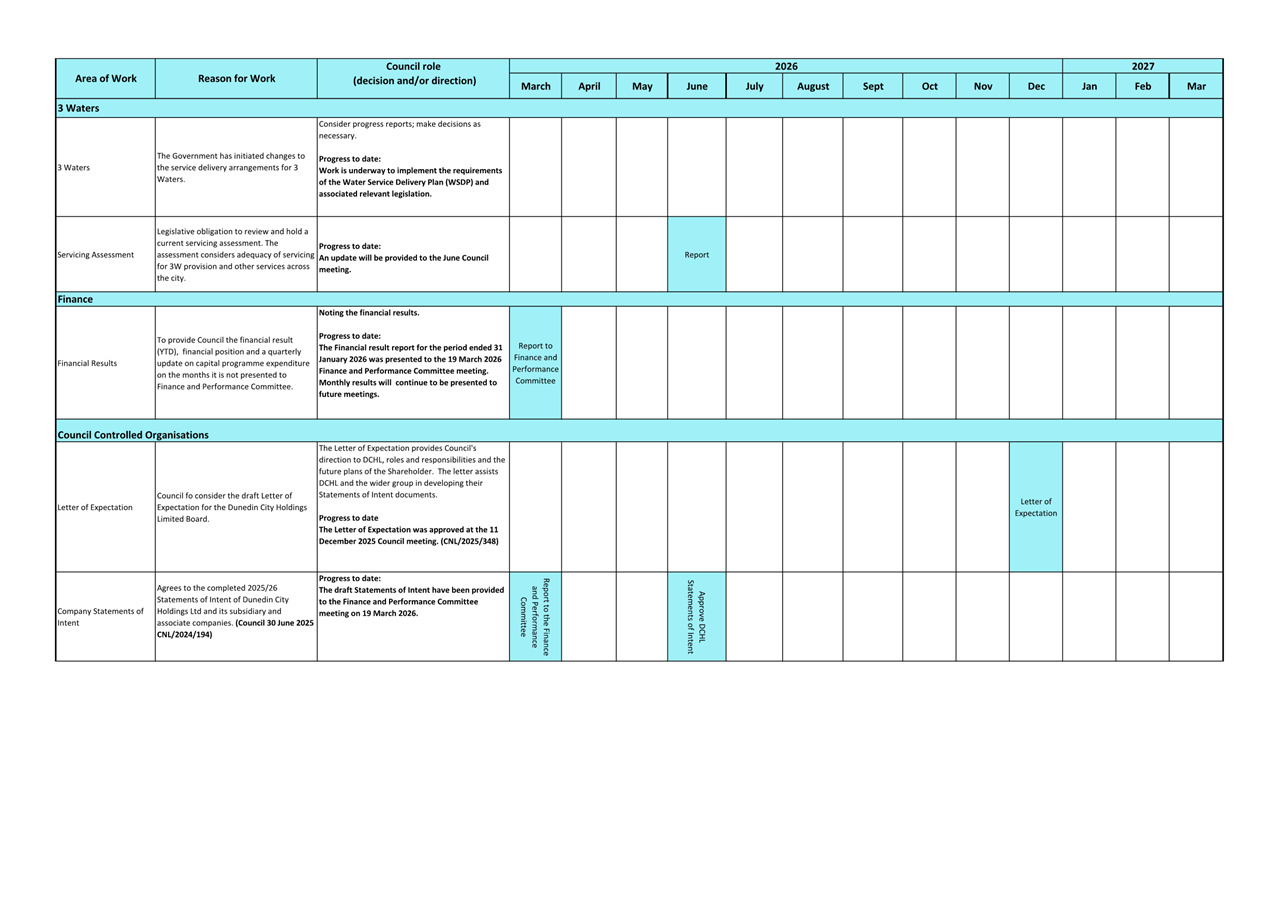
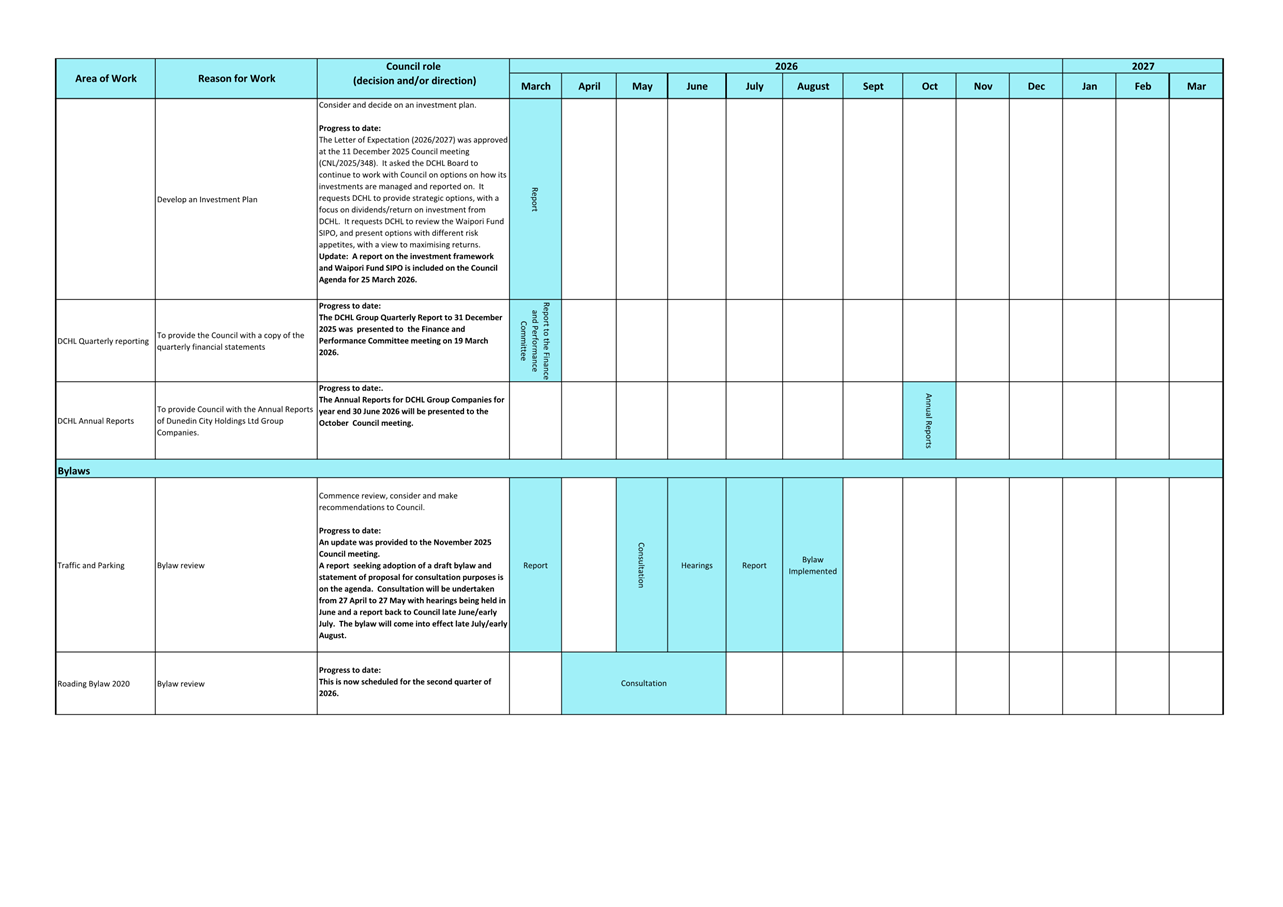
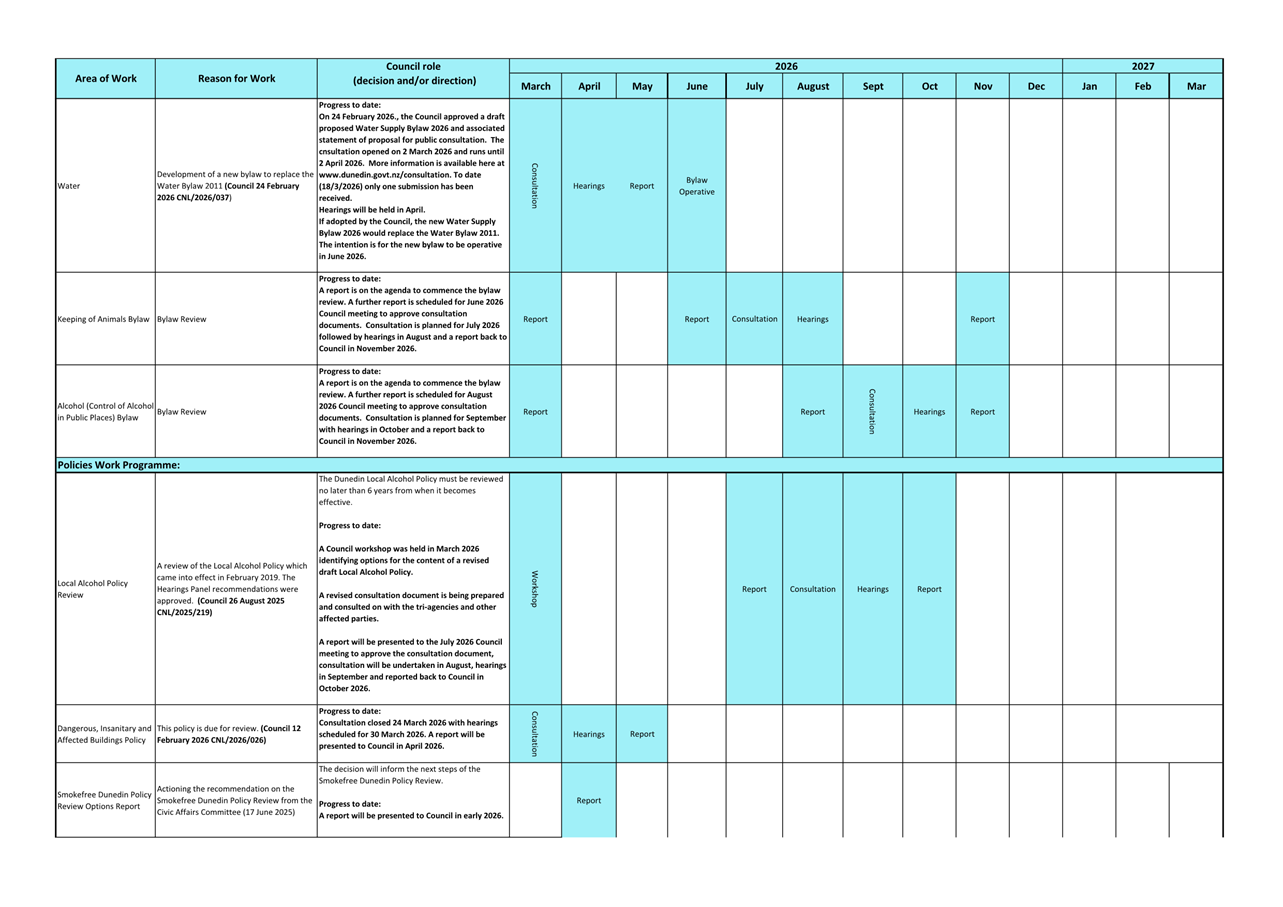
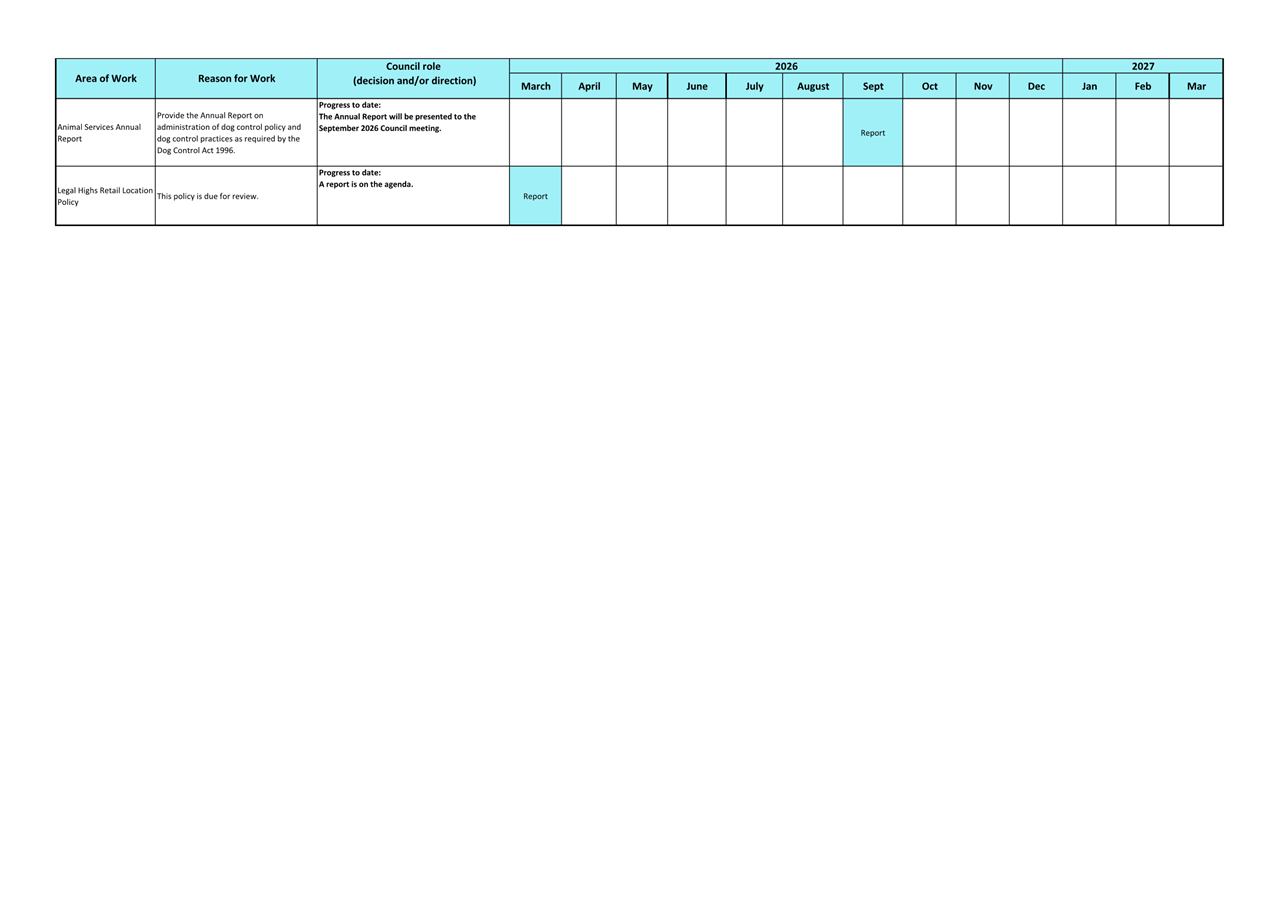
3 The
forward work programme is a regular agenda item which shows areas of activity,
progress and expected timeframes for Council decision making across a range of
areas of work.
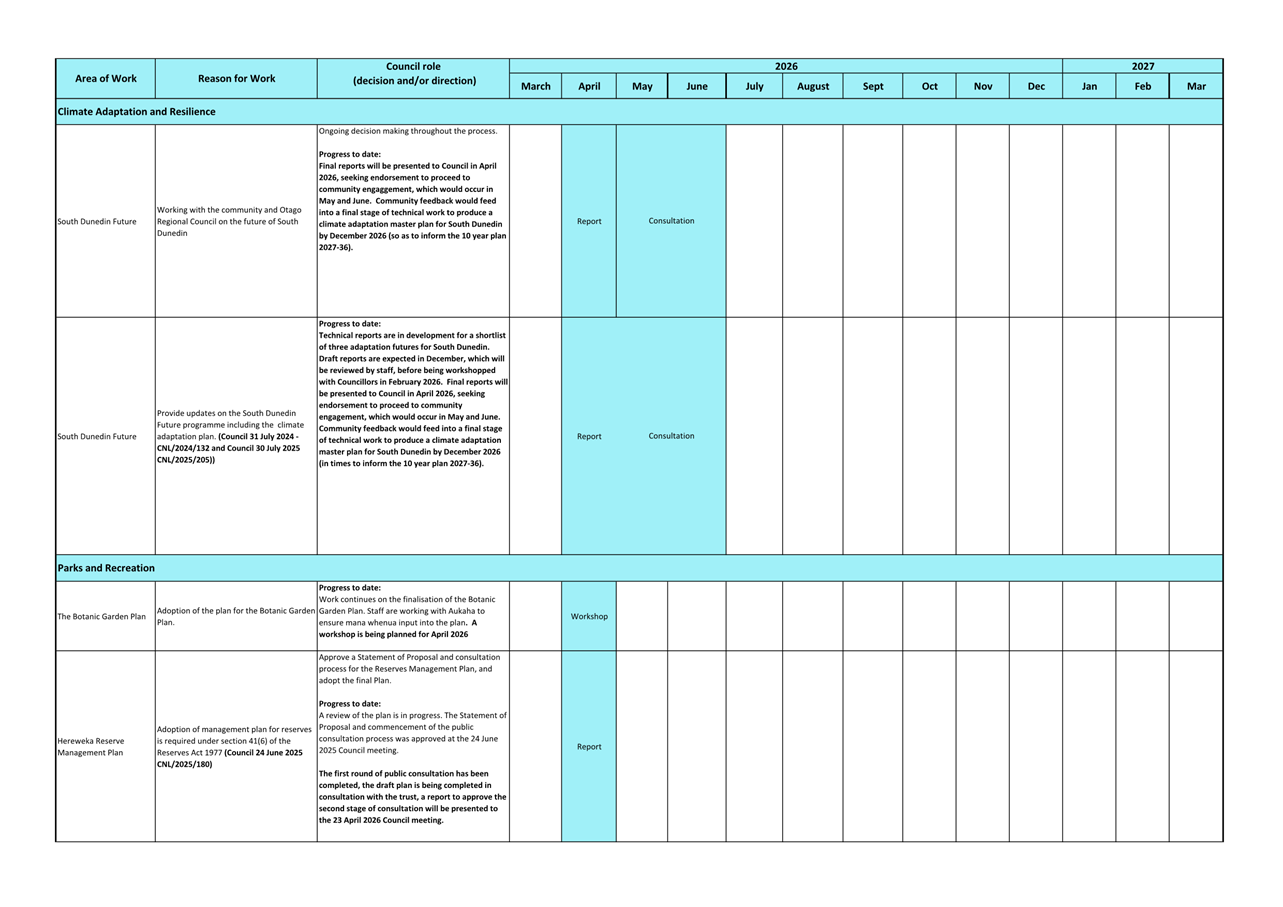
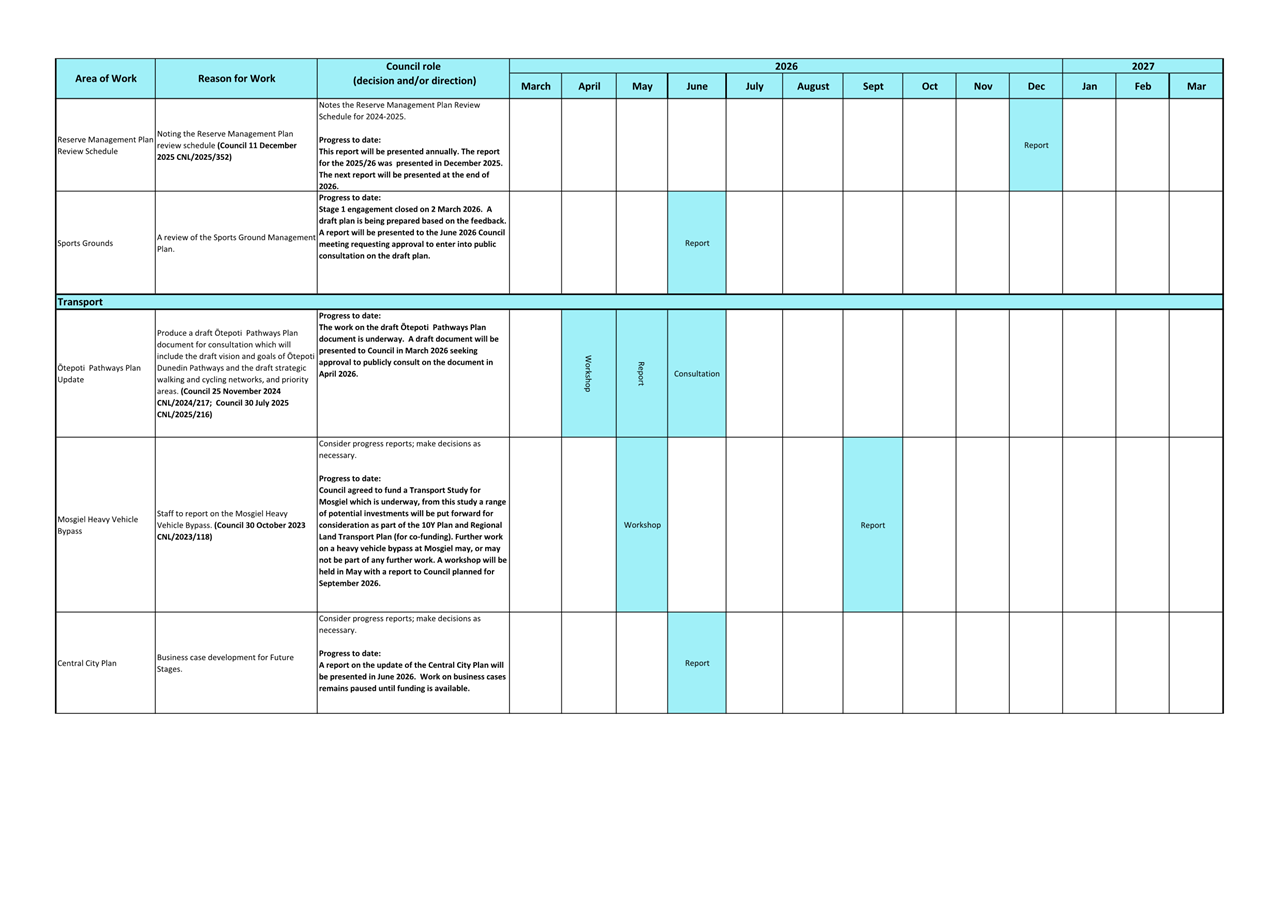
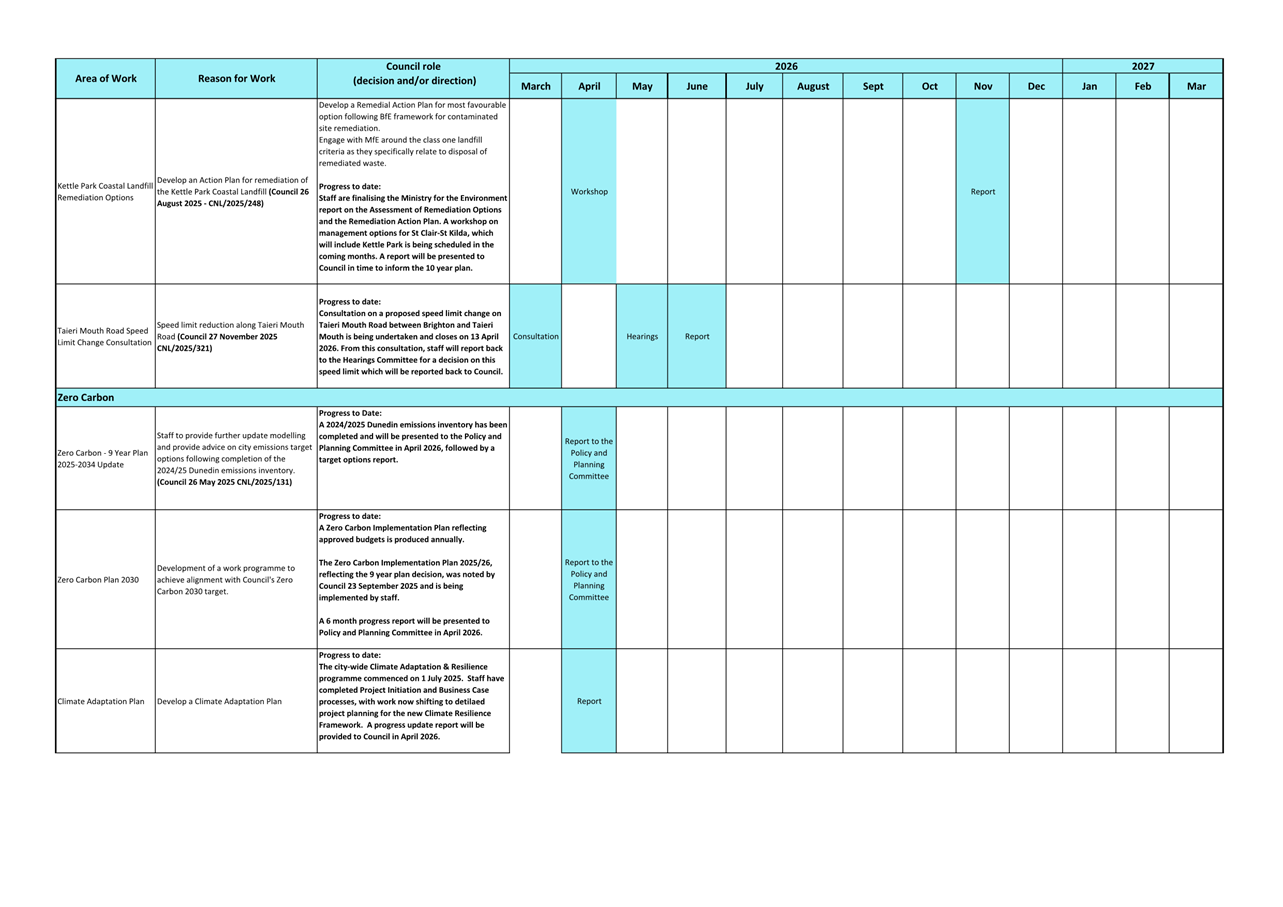
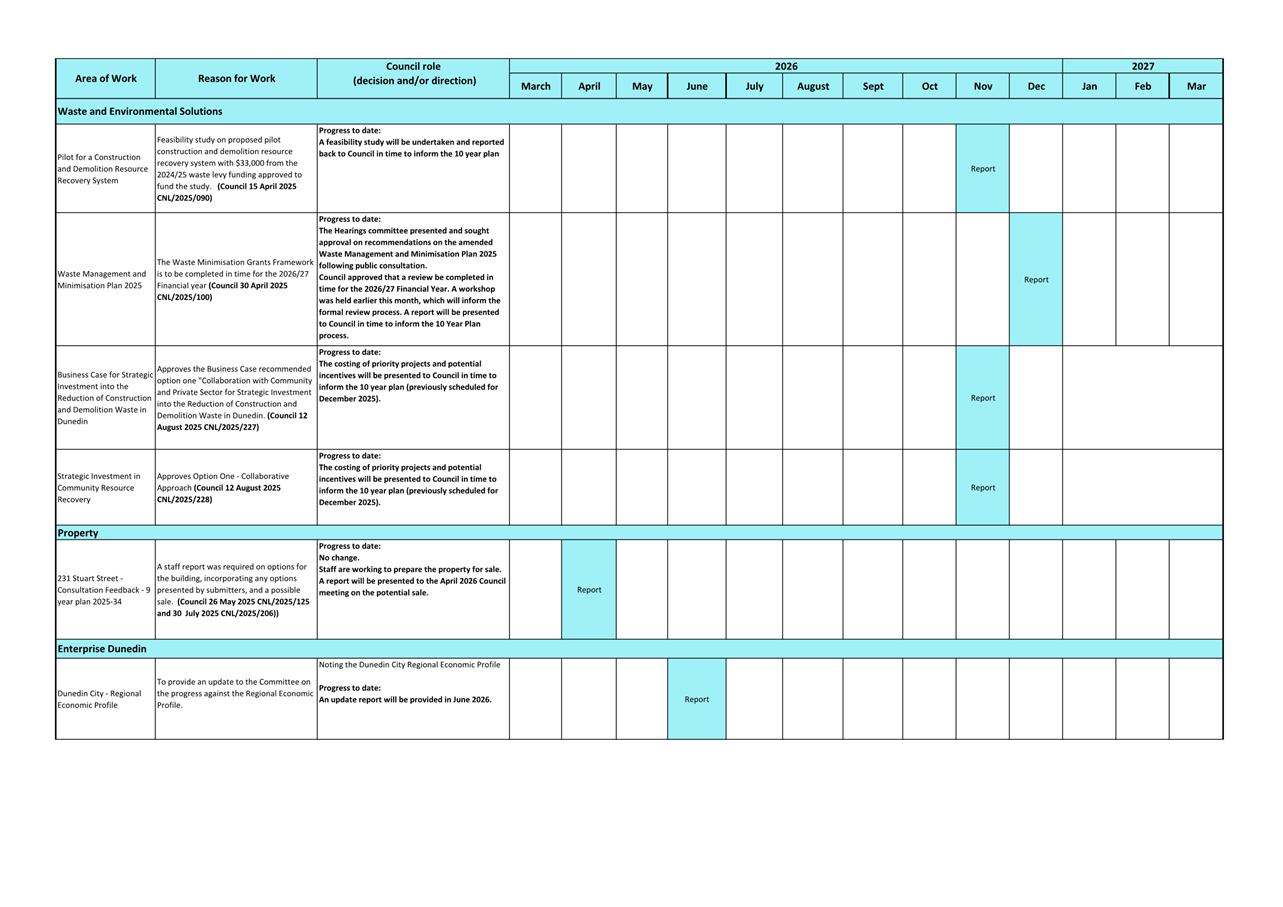
4 As
an update report, the purple highlight shows changes to timeframes. New
items added to the schedule are highlighted in yellow. Items that have been
completed or updated are shown as bold.
NEXT STEPS
5 An
updated report will be presented to future Council meetings.
Signatories
|
Author:
|
Lynne Adamson - Governance Support Officer
|
|
Authoriser:
|
Jackie Harrison - Manager Governance
|
Attachments
|
|
Title
|
Page
|
|
⇩a
|
Public Forward Work
programme
|
41
|
|

|
Council
25 March 2026
|
Code of Conduct Complaint in relation to Councillor
Benedict Ong
Department: Executive Leadership Team
EXECUTIVE SUMMARY
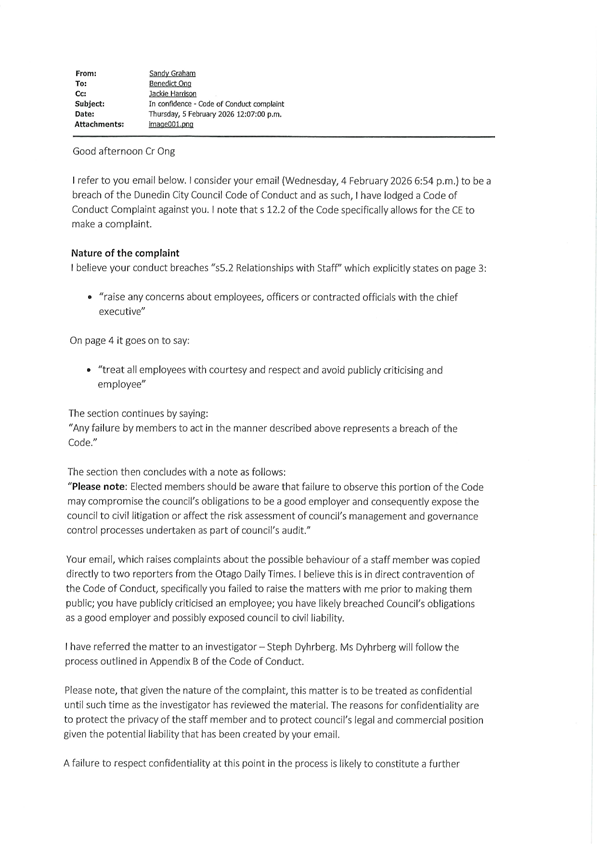
1 A
Code of Conduct complaint was laid by the Chief Executive as per the process
set out in the Code of Conduct. The complaint relates to an email raising
concerns about a staff member, sent by Cr Ong to the Chief Executive and
the media simultaneously. This report presents the Code of Conduct
investigation to the Council
2 The
DCC Code of Conduct sets out the process to be followed in such an
investigation. This process has been followed, and the Council must now decide
on its response
3 As
this is an administrative report, a summary of considerations is not included.
RECOMMENDATIONS
That the Council:
a) Considers the findings
of the investigation of the Steph Dhyrberg Full Investigation into Dunedin City
Council Code of Conduct complaint made by the Chief Executive following an
email from Cr Ong.
b) Provides Councillor
Ong the opportunity to address Council if he wishes to.
c) Suspends standing
order 20.2(c) to enable Councillor Ong more than the usual five minutes to
address Council.
d) Decides whether a breach of the Code of Conduct has occurred, and
if so, which, if any, of the sanctions outlined in the Code of Conduct
that it wishes to impose
BACKGROUND
4 Cr
Ong sent the Chief Executive (CE) an email on 4 February 2026 at 6.54pm. In
that email, he raised concerns about the performance of a staff member. The
email was the first time these concerns had been raised with the CE. The email
was copied to reporters from the Otago Daily Times. On receipt of the email,
the CE laid a Code of Conduct complaint.
DISCUSSION
5 Section
12 and Appendix B of the DCC Code of Conduct (Attachment A) sets out the
process to be followed when such a complaint is laid.
· A
complaint was laid by the CE in writing on 5 February 2026 (Attachment
B).
· An
investigator was appointed by the CE from the approved List of Independent
Investigators
· The
Councillor was advised of the complaint on 5 February 2026.
· The
investigator carried out a preliminary investigation and advised the CE that
the complaint was material and a full investigation was required, on 16
February 2026.
· The
complainant and Councillor were advised of this on 16 February 2026
6 A
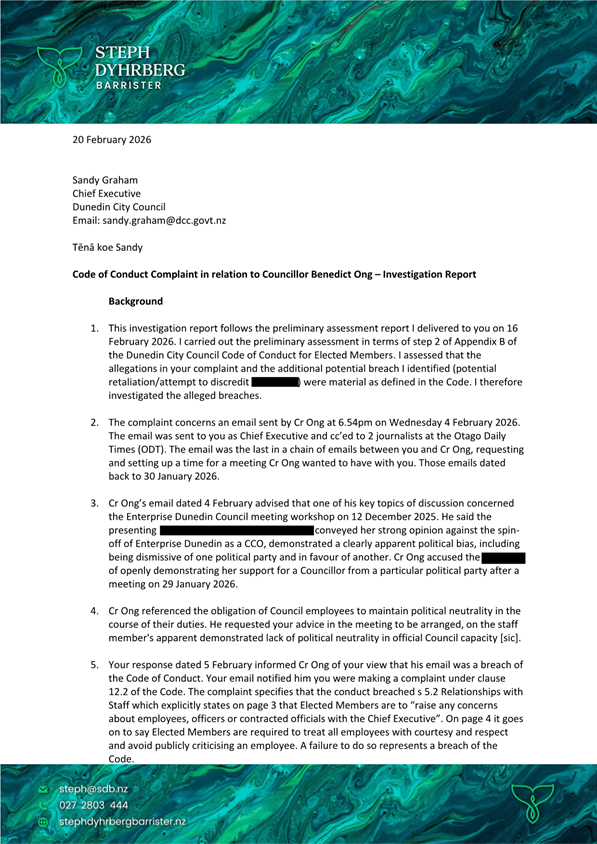
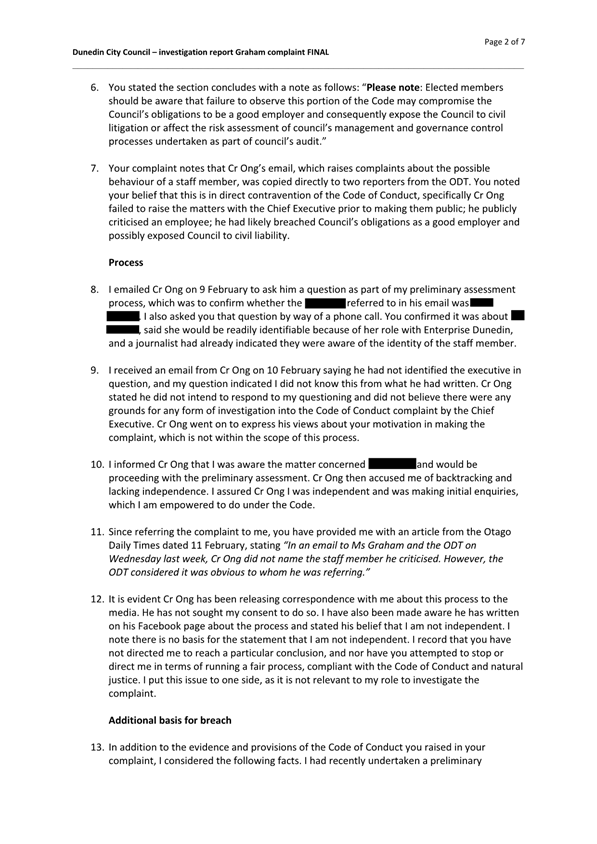
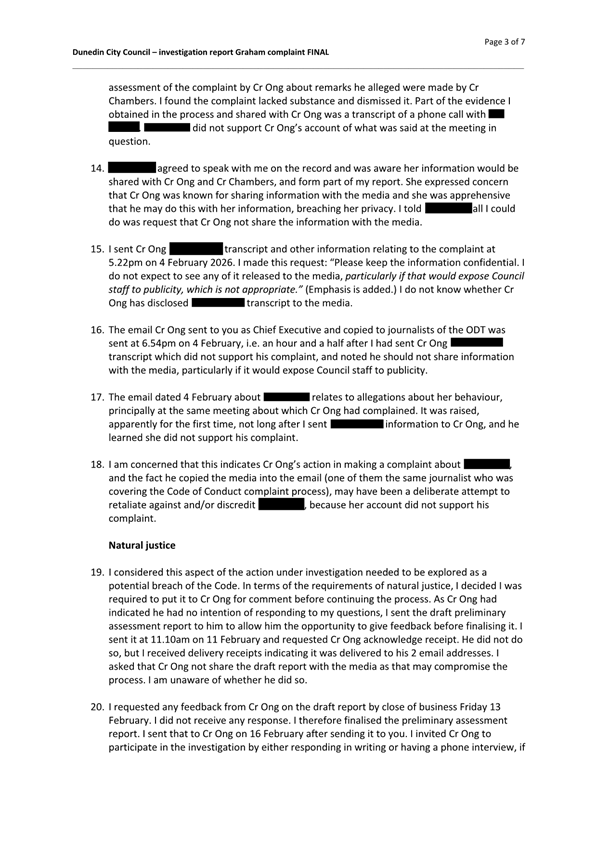
full investigation was carried out and the report, attached (Attachment C), was
sent to the CE on 20 February 2026.
OPTIONS
7 The
Council must now decide what it wishes to do about the complaint. Councillors
must read the report, attached, and must also give Councillor Ong an
opportunity to appear and speak in his own defence.
8 If
the Council accepts the findings in the investigator’s report, and wishes
to apply sanctions, the Council can decide, based on the investigation, to
impose sanctions on the Councillor, as set out in section 13.1 of the Code of
Conduct. The Code of Conduct says the level of the sanction “will depend
on the seriousness of the breach”. Section 13.1 also outlines actions a
respondent may agree to that could enable a Council to not impose any penalty.
Option One – Recommended Option
9 The
investigator found that the Councillor materially breached the Code of Conduct.
The investigator’s report notes that the investigator found the actions
of Cr Ong to be “a very serious breach of the Code” – para
41.
10 As per
section 13.1 of the Code of Conduct, Council should consider the report, hear
from Councillor Ong and decide if it agrees with this report. If Council
considers a breach of the Code of Conduct has occurred, Council can decide to
impose appropriate sanction/s or ask the Councillor to undertake actions that
meant a penalty would not be imposed.
Advantages
· The
Code of Conduct process is followed
Disadvantages
· None
identified
Option Two – Status Quo
11 The Council
could decide to receive the report (or in fact not to receive the report) and
to take no further action.
Advantages
· None
identified.
Disadvantages
· Section
5.2 of the Code of Conduct covers expectations about how Councillors should
treat staff, such as treating them with courtesy and respect. That
section concludes with a note to Councillors that failing to observe this section
of the code may compromise Council’s obligations to be a good employer
and expose Council to risk. Council being seen to not enforce this section of
the code if a breach of the code is found to have occurred could potentially be
seen as failing in its duty as a good employer.
NEXT STEPS
12 The next
steps are for the Council to discuss the investigation, hear the Councillor,
and decide whether the findings of the independent investigation are accepted
and, if so, how to respond
Signatories
|
Author:
|
Sandy Graham - Chief Executive
|
|
Authoriser:
|
|
Attachments
|
|
Title
|
Page
|
|
⇩a
|
DCC Code of Conduct
|
54
|
|
⇩b
|
CE email complaint
|
75
|
|
⇩c
|
Code of Conduct
Complaint in relation to Councillor Benedict Ong – Investigators Report
|
77
|
|

|
Council
25 March 2026
|
Annual Plan 2026/27 Consultation Document
Department: Civic
EXECUTIVE SUMMARY
1 The
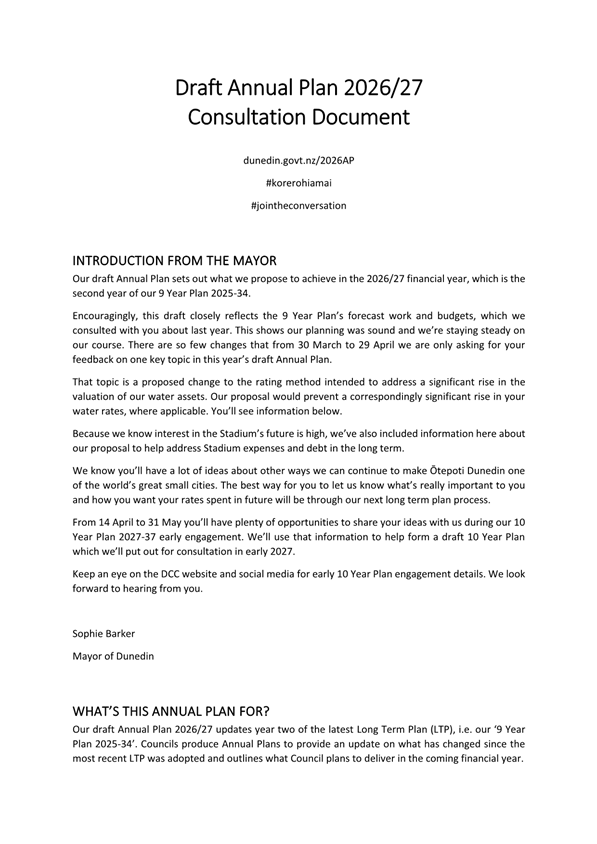
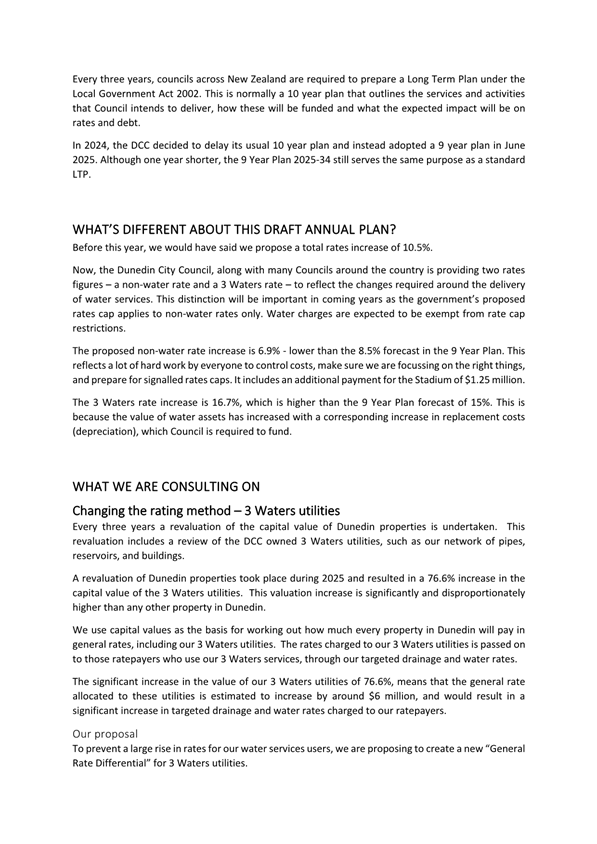
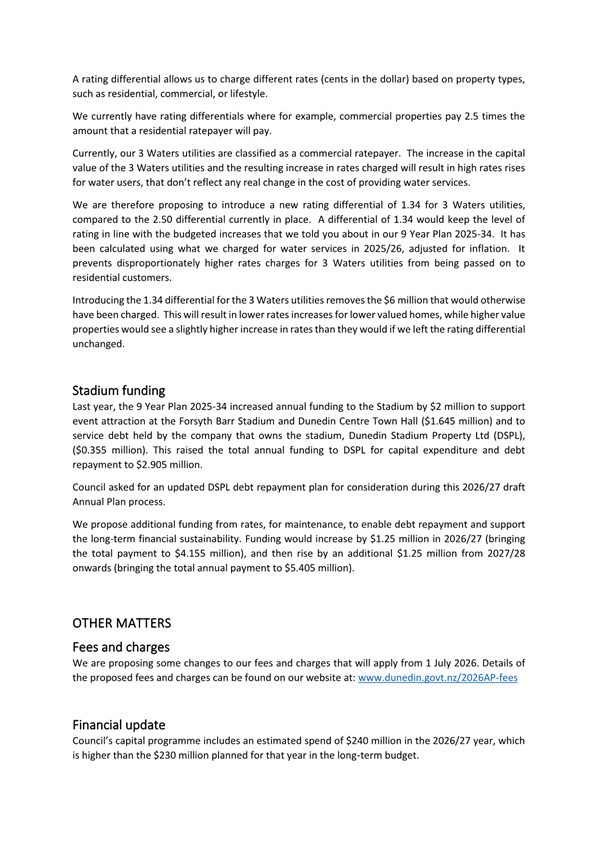
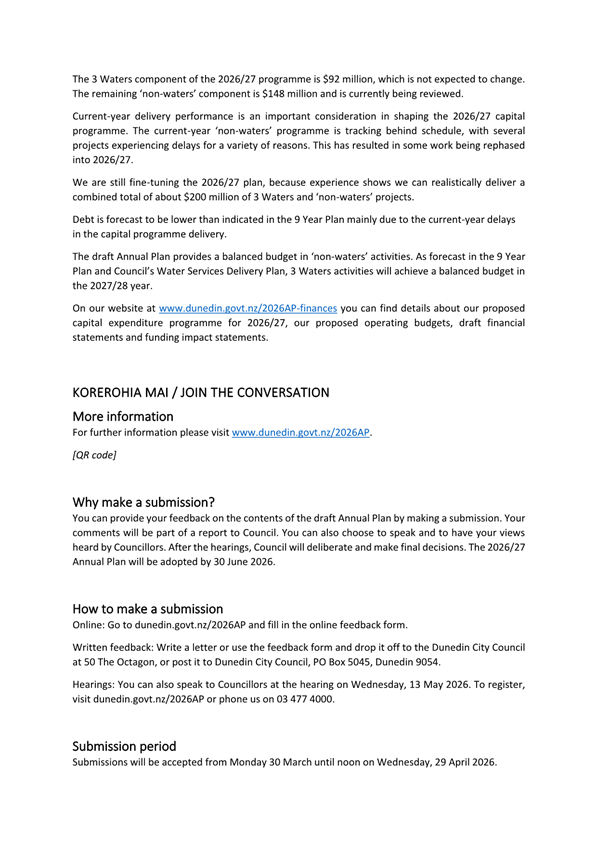
Annual Plan 2026/27 consultation document (the consultation document) explains
any significant or material changes from year two of the 9 year plan 2025-34
(i.e., from 1 July 2026 to 30 June 2027). It is based on the decisions
made by Council at its meeting on 4-5 March 2026.
2 A
copy of the undesigned consultation document is at Attachment A.
RECOMMENDATIONS
That the Council:
a) Approves the ‘Annual Plan
2026/27 consultation document’.
b) Delegates the Chief
Executive the authority to make any minor editing required to the approved
consultation document.
c) Adopts the ‘Annual Plan 2026/27 consultation document’.
BACKGROUND
3 Under
sections 82A and 95A of the Local Government Act 2002, where the Council
consults on an Annual Plan, it must prepare and adopt a consultation document:
a) to
identify and explain any significant or material differences from the corresponding
year of the long term plan; and
b) to support
informed discussions with the community on any impacts on costs and funding.
4 The
consultation document must be concise, easy to understand, and free of
unnecessary technical detail, while pointing people to where they can access
the underlying information that the Council has formally adopted to support the
consultation.
DISCUSSION
5 The
consultation document explains the Council’s proposals for any
significant or material differences from the 9 year plan for the period from 1
July 2026 to 30 June 2027. In the case of the draft Annual Plan 2026/27, this
is based on the decisions made at the Council meetings on 4-5 March 2026, including
a proposed change to rating differentials.
6 There
is no legislative requirement for the consultation document of an Annual Plan
to be audited.
7 The
consultation document, and supporting documents that contain more detailed
information, will be made available on the Council’s website. Physical
copies of the consultation document and supporting documents will be available
at Council service centres and public libraries.
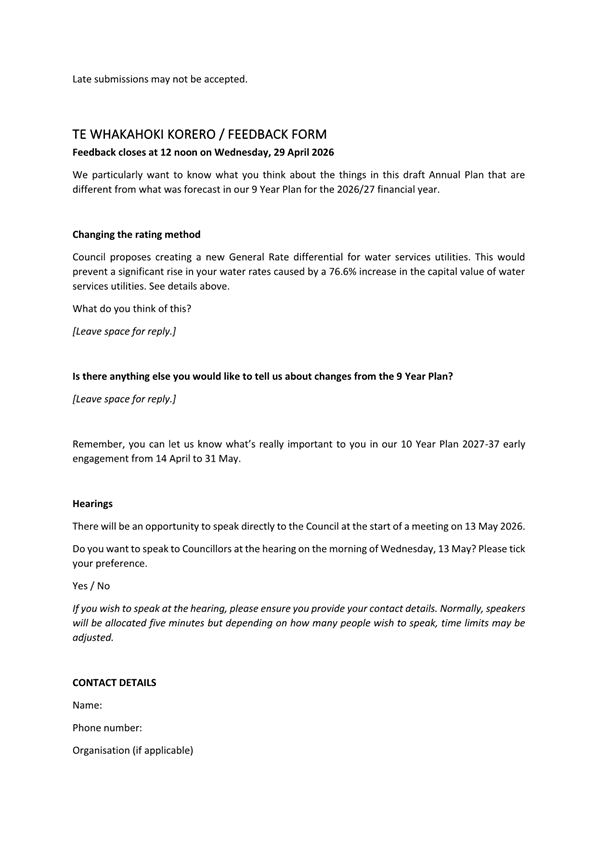
8 Feedback
from the community on the proposals in the consultation document will be sought
from 30 March to 29 April 2026.
9 Submitters
will have an opportunity to speak directly to the Council at its meeting on 13
May 2026.
OPTIONS
10 There are
no options.
NEXT STEPS
11 The
consultation document will be graphically designed.
12 The
consultation document will be printed and made available at Council service
centres, public libraries and on the Council’s website. The consultation
period commences from 30 March to 29 April 2026.
Signatories
|
Author:
|
Janet Fraser - Corporate Planner
|
|
Authoriser:
|
Carolyn Allan - Chief Financial Officer
|
Attachments
|
|
Title
|
Page
|
|
⇩a
|
Annual Plan 2026/27
Consultation Document (undesigned)
|
88
|
|
SUMMARY OF CONSIDERATIONS
|
|
Fit with purpose of Local Government
This decision enables democratic local
decision making and action by, and on behalf of communities, and promotes the
social, economic, environmental and cultural well-being of communities in the
present and for the future.
|
|
Fit with strategic framework
|
|
Contributes
|
Detracts
|
Not applicable
|
|
Social Wellbeing Strategy
|
✔
|
☐
|
☐
|
|
Economic Development Strategy
|
✔
|
☐
|
☐
|
|
Environment Strategy
|
✔
|
☐
|
☐
|
|
Arts and Culture Strategy
|
✔
|
☐
|
☐
|
|
3 Waters Strategy
|
✔
|
☐
|
☐
|
|
Future Development Strategy
|
✔
|
☐
|
☐
|
|
Integrated Transport Strategy
|
✔
|
☐
|
☐
|
|
Parks and Recreation Strategy
|
✔
|
☐
|
☐
|
|
Other strategic projects/policies/plans
|
✔
|
☐
|
☐
|
The consultation document and supporting documentation contain
content that contributes to the objectives and priorities across all areas of
the strategic framework.
|
|
Māori Impact Statement
The adoption of Te Taki Haruru, the DCC’s Māori
Strategic Framework signals Council’s commitment to mana whenua and to
its obligations under the Treaty of Waitangi. Mana whenua and mātāwaka
will be involved in engagement with the Annual Plan 2026/27 consultation
process.
|
|
Sustainability
The proposed changes in the draft Annual Plan 2026/27 will
not have a material impact on the achievement of emissions reduction targets.
|
|
LTP/Annual Plan / Financial Strategy /Infrastructure
Strategy
This report requests approval of the Annual Plan 2026/27
consultation document.
|
|
Financial considerations
Financial impacts are set out in the Annual Plan 2026/27
consultation document and its supporting documents.
|
|
Significance
Approval of the consultation document and supporting
documents is considered to be of low significance in terms of the
Council’s Significance and Engagement Policy. The consultation
document and supporting documents are provided to undertake community
engagement on the Annual Plan 2026/27.
|
|
Engagement – external
There will be external engagement from 30 March to 29
April 2026 on the content of the Annual Plan consultation document, which is
a key tool of the external engagement programme.
|
|
Engagement - internal
Councillors and staff have been involved in the
development of the Annual Plan 2026/27.
|
|
Risks: Legal / Health and Safety etc.
There are no known risks.
|
|
Conflict of Interest
There are no known conflicts of interest.
|
|
Community Boards
Community Boards will have an opportunity to participate
during the consultation and submission phases of the process.
|
|

|
Council
25 March 2026
|
Governance and Remuneration Update
Department: Civic
EXECUTIVE SUMMARY
1 The
purpose of this report is to advise the Council that the Mayor has exercised
her discretionary power under Section 41A(3) of the Local Government Act 2002
(LGA) to remove Councillor Ong from his role as Portfolio Deputy Technology.
2 The
Mayor now seeks Council approval to remove Councillor Ong from his roles as the
Council Representative on the Otago Settlers Association and the Toitū
Otago Settlers Museum Board.
3 This
report also seeks approval to amend the Councillors remuneration proposal
adopted at the Council meeting on 11 December 2025 to reflect the updated roles
of responsibility. If approved, the amended remuneration proposal will be
submitted to the Remuneration Authority (the Authority) for approval.
|
RECOMMENDATIONS
That the Council:
a) Notes Councillor
Ong’s removal as the Portfolio Deputy Technology.
b) Approves the removal
of Councillor Ong from the roles of Council Representative on the Otago
Settlers Association and the Toitū Otago Settlers Museum Board.
c) Appoints Councillor
Chambers as the Council Representative on the Otago Settlers Association and
the Toitū Otago Settlers Museum Board.
d) Notes responsibility for the Portfolio Deputy Technology will
be reconsidered following the completion of the by-election.
e) Approves annual
remuneration of $100,577 for Councillors.
f) Approves annual
remuneration of $84,496 for Councillors with no additional responsibilities.
g) Notes the updated
remuneration proposal reflects changes to Councillor Ong’s
responsibilities.
h) Notes the updated
remuneration proposal will be resubmitted to the Remuneration Authority for approval.
|
background
4 The
Local Government Act 2002 (LGA) gives the Authority the responsibility for
setting remuneration for local government elected members.
5 At
its meeting on 11 December 2025, Council approved remuneration for Councillors
based on the Authority’s guidelines, and a proposal was submitted to the
Authority for approval. Approval was given and gazetted in early March
2026.
6 Given
the change in Cr Ong’s responsibilities, a revised proposal now needs to
be submitted to the Authority for approval and gazetting.
DISCUSSION
7 On
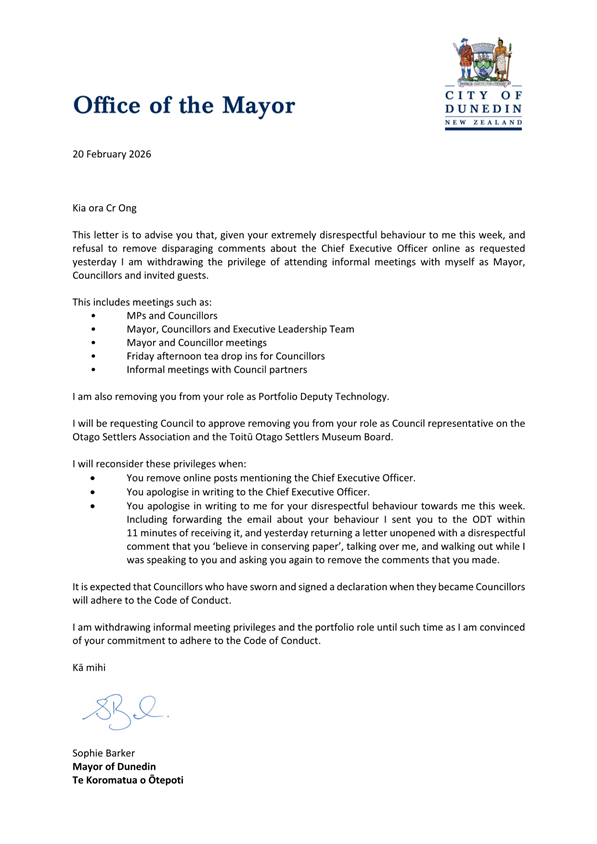
20 February 2026, the Mayor exercised her discretionary power under Section
41A(3) of the Local Government Act 2002 (LGA), and wrote to Councillor Ong
advising he was being removed from his role as Portfolio Deputy
Technology. The Mayor also advised that she would be seeking Council
approval to remove him from his roles as the Council Representative on the
Otago Settlers Association and the Toitū Otago Settlers Museum Board.
8 Council
is asked to approve the removal of Councillor Ong from the roles outlined
above, and that Councillor Chambers represents Council on the Otago Settlers
Association and the Toitū Otago Settlers Museum Board.
9 The
responsibility for Portfolio Deputy Technology will be reconsidered following
the completion of the by-election.
10 The
remuneration model for Councillors now needs to be amended to reflect the
changes in responsibilities. It is proposed that the remuneration model be
updated as follows:
|
Position
|
Number of Councillors
|
Base Rem
|
Additional Rem
|
Total Rem per Councillor
|
Total Annual Rem
|
|
Deputy Mayor
|
1
|
$84,496
|
$60,512
|
$145,008
|
$145,008
|
|
Councillor
|
12
|
$84,496
|
$16,081
|
$100,577
|
$1,206,924
|
|
Councillor (no additional
responsibilities)
|
1
|
$84,496
|
-
|
$84,496
|
$84,496
|
|
Total
|
14
|
|
|
|
$1,436,428
|
11 This
proposed remuneration model fully allocates the remuneration pool for
Councillors as required by the LGA.
NEXT STEPS
12 The updated
roles of responsibility and remuneration rates will be submitted to the
Authority.
13 Following
Authority approval staff will make the necessary adjustments to ensure that
Councillors are being paid at the correct rate.
Signatories
|
Authoriser:
|
Nicola Morand - Manahautū (General Manager Community
and Strategy)
Sophie Barker - Mayor
|
Attachments
|
|
Title
|
Page
|
|
|
⇩a
|
Mayor Sophie letter to
Cr Ong - 20 February 2026
|
99
|
|
|
SUMMARY OF CONSIDERATIONS
|
|
Fit with purpose of Local Government
This decision enables democratic local
decision making and action by, and on behalf of communities.
|
|
Fit with strategic framework
|
|
Contributes
|
Detracts
|
Not applicable
|
|
Social Wellbeing Strategy
|
☐
|
☐
|
☐
|
|
Economic Development Strategy
|
☐
|
☐
|
☐
|
|
Environment Strategy
|
☐
|
☐
|
☐
|
|
Arts and Culture Strategy
|
☐
|
☐
|
☐
|
|
3 Waters Strategy
|
☐
|
☐
|
☐
|
|
Spatial Plan
|
☐
|
☐
|
☐
|
|
Integrated Transport Strategy
|
☐
|
☐
|
☐
|
|
Parks and Recreation Strategy
|
☐
|
☐
|
☐
|
|
Other strategic projects/policies/plans
|
☒
|
☐
|
☐
|
|
|
Māori Impact Statement
This has not been assessed in preparing this report.
|
|
Sustainability
The level of remuneration being proposed is above the base
level remuneration for all Councillors and is aimed to provide a more
sustainable income recognising the mahi that will be required from all
elected members.
|
|
LTP/Annual Plan / Financial Strategy /Infrastructure
Strategy
There are no implications as the increase in the
remuneration pool was included in the Annual Plan.
|
|
Financial considerations
The increase in remuneration was included in the Civic
budget
|
|
Significance
The decision is considered low in terms of the
Council’s Significance and Engagement Policy
|
|
Engagement – external
There has been no external engagement.
|
|
Engagement - internal
There have been discussions with Councillors about
possible levels of remuneration.
|
|
Risks: Legal / Health and Safety etc.
There are no identified risks.
|
|
Conflict of Interest
There are no identified conflicts of interest
|
|
Community Boards
Community Board remuneration is dealt with separately by
the Authority and is not part of the pool.
|
|

|
Council
25 March 2026
|
Proposed Road Stopping - Adjoining 59 Creamery Road, Ocean
View
Department: Property
EXECUTIVE SUMMARY
1 The
owners of 59 Creamery Road, Ocean View, have applied to stop a section of
unformed legal road adjoining their property.
2 This
report seeks a resolution of the Council to publicly notify the Council’s
intention to stop the road, under section 342 and Schedule 10 of the Local
Government Act 1974.
RECOMMENDATIONS
That the Council:
a) Approves public
notification of the Council’s intention to stop a section of legal road
at 59 Creamery Road, Ocean view, subject to the Minister for Land
Information’s consent and the applicants agreeing to:
i) Pay the Council the non-refundable fee for processing the
road stopping; and sign a conditional agreement for sale and purchase upon terms
and conditiosn approved by the Council’s solicitors.
ii) Pay the Council the actual costs incurred for the road
stopping, regardless of whether or not the stopping reaches a conclusion, and
the market value of the stopped road, assessed by an independent registerered
valuer appointed by the Council.
iii) Amalgamate the stopped portion of road with the title of
the adjacent land at 59 Creamery Road, Ocean View, being the land contained
within Record of Title 15937.
iv) Accept the application of the standards contained within
the Dunedin City Council Code of Subdivision and Development to the stopped
road.
v) Register any easements over the stopped portion of road in
favour of utilties or adjoining owners (if required).
BACKGROUND
3 The
owners of 59 Creamery Road, Ocean View have identified a section of unformed
legal road which they wish to own to better consolidate their property
boundary.
DISCUSSION
4 The
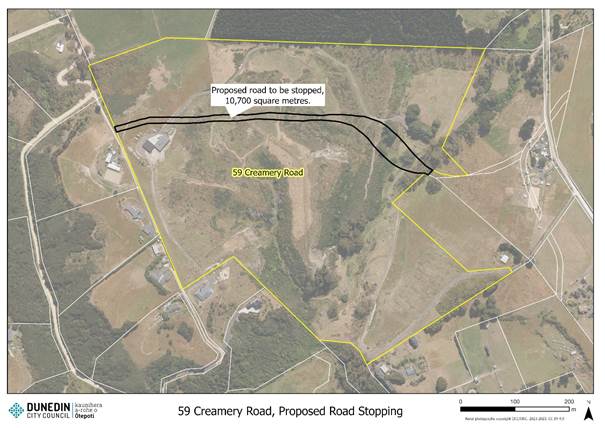
proposed road stopping area is approximately 10,700m2 (subject to survey), and
is shown outlined in black on the aerial photograph below.
5 The
proposed road stopping area is currently occupied by and used in conjunction
with the adjoining property at 59 Creamery Road.
6 There
are no known services within the proposed section of unformed road to be stopped.
7 The
owners of neighbouring land have been consulted at a preliminary stage and did
not raise any concerns. These neighbours will be notified as part of the
public notification process if the Council supports the proposal being publicly
notified.
8 Staff
are satisfied the section of road proposed to be stopped is not required for
current or future transportation needs and support the proposal being publicly
notified.
9 As
the land is zoned Coastal Rural, the proposed road stopping will require the
Minister for Land Information’s consent prior to publicly notifying the
proposal.
10 If the
recommendations in this report are approved:
· The applicants
will be invoiced the non-refundable road stopping fee and will be required to
sign a conditional sale and purchase agreement. One of the conditions
will relate to the Minister for Land Information’s consent.
· In accordance with
Schedule 10 of the Local Government Act 1974, staff will:
o Procure a valuation and survey
of the road to be stopped.
o Publicly notify the proposed
road stopping for a period of not less than 40 days.
· A further report
will be prepared for the Council advising on the outcome of the public
notification process and recommending whether the road stopping should proceed.
· If the road
stopping is concluded, the land will be transferred to, and amalgamated with,
the applicants’ adjoining land (Record of Title 15937). Applicable
adjustments to the applicants’ rates account will be made from the start
of the financial year following the issue of the new amalgamated title.
· The applicants
will pay the Council the actual costs incurred for the road stopping,
regardless of whether or not the stopping reaches a conclusion. If the road
stopping proceeds, the applicants will pay the Council the market value of the
stopped road, assessed by an independent registered valuer appointed by the
Council.
OPTIONS
Option One – Recommended Option – Proceed with
the Road Stopping Process
11 Under this
option, the Council would approve public notification of the Council’s
intention to stop a section of legal road at 59 Creamery Road, subject to the
Minister for Land Information’s consent and the applicants agreeing to:
· Pay the Council
the non-refundable fee for processing the road stopping, and sign a conditional
agreement for sale and purchase upon terms and conditions approved by
Council’s solicitors.
· Pay the Council
the actual costs incurred for the stopping, regardless of whether or not the
stopping reaches a conclusion, and the market value of the stopped road as
assessed by an independent registered valuer appointed by the Council.
· Amalgamate the
section of stopped road with the title of the adjacent land at 59 Creamery
Road, being the land contained within the Record of Title 15937.
· Accept the
application of the standards contained within the Dunedin City Council’s
Code of Subdivision and Development for the stopped road.
· Register any
easements over the section of stopped road as required for any utilities or
adjoining owners (none identified at this point).
Advantages
· The
proposal enables the applicants to own the adjoining area of unformed legal
road, which improves land utilisation and increases the area of rateable land.
· The
extent of public interest in the land will be considered during the public
notification process.
Disadvantages
· The
land would be unavailable for any potential future public use or as a utility
corridor, other than any existing utilities (without the consent of the
landowner).
Option Two – Status Quo
12 The Council
resolves not to proceed to publicly notify the intention to stop the road.
Advantages
· The
land would retain its legal road status and remain available for potential
future public or utility use if required.
Disadvantages
· The
land would retain its legal road status but would remain unformed. Land
utilisation would be restricted and the land would remain non-rateable.
NEXT STEPS
13 If the
recommendation is approved, the applicants will be required to pay the road
stopping processing fee and enter into a conditional sale & purchase
agreement. Staff will seek the Minister for Land Information’s consent,
manage valuation and survey work and publicly notify the proposal before
reporting back to the Council.
Signatories
|
Author:
|
Paula Dickel - Strategic Property Advisor
|
|
Authoriser:
|
Anna Nilsen - Group Manager, Property Services
David Ward - General Manager, 3 Waters, Property and Urban
Development
|
Attachments
There are no attachments for
this report.
|
SUMMARY OF CONSIDERATIONS
|
|
Fit with purpose of Local Government
This decision enables democratic local
decision making and action by, and on behalf of communities.
|
|
Fit with strategic framework
|
|
Contributes
|
Detracts
|
Not applicable
|
|
Social Wellbeing Strategy
|
☐
|
☐
|
✔
|
|
Economic Development Strategy
|
☐
|
☐
|
✔
|
|
Environment Strategy
|
☐
|
☐
|
✔
|
|
Arts and Culture Strategy
|
☐
|
☐
|
✔
|
|
3 Waters Strategy
|
☐
|
☐
|
✔
|
|
Future Development Strategy
|
☐
|
☐
|
✔
|
|
Integrated Transport Strategy
|
☐
|
☐
|
✔
|
|
Parks and Recreation Strategy
|
☐
|
☐
|
✔
|
|
Other strategic projects/policies/plans
|
☐
|
☐
|
✔
|
There is no contribution to the strategic framework.
|
|
Māori Impact Statement
Staff reviewed the District Plan, and the land is not
identified as Wāhi Tūpuna. There are no known impacts for
Māori arising from the proposal.
|
|
Sustainability
Proactive management of the transportation network
supports social and economic sustainability.
|
|
LTP/Annual Plan / Financial Strategy /Infrastructure
Strategy
There are no implications for these Plans/Strategies.
|
|
Financial considerations
There are no significant financial impacts as the process
is cost neutral and proceeds of sale are expected to be relatively modest.
|
|
Significance
This decision is considered of low significance under the
Council’s Significance and Engagement Policy.
|
|
Engagement – external
There has been preliminary engagement with utilities and
adjoining landowners. There will be a full public notification process
which will test wider public interest in the proposal.
|
|
Engagement - internal
Transport, Property Services, Legal Services, City
Development, 3 Waters and City Planning have been contacted in relation to this
application.
|
|
Risks: Legal / Health and Safety etc.
No risks have been identified.
|
|
Conflict of Interest
No conflict of interest has been identified.
|
|
Community Boards
The Saddle Hill Community Board will be notified ahead of
the public notification process.
|
|

|
Council
25 March 2026
|
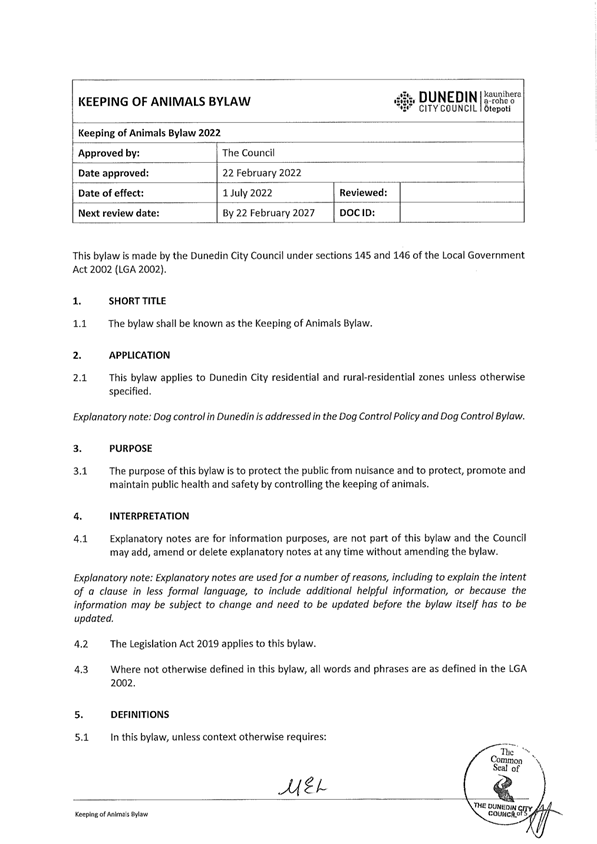
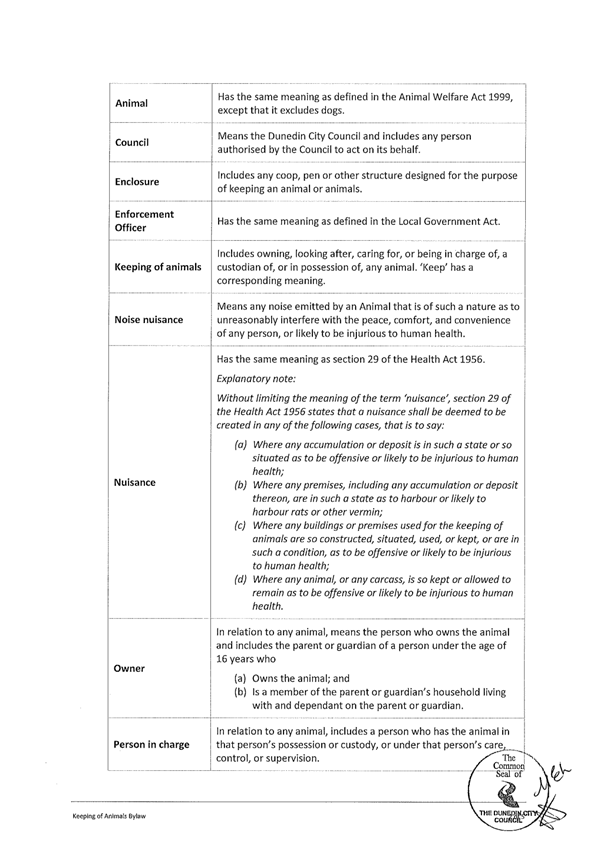
Review of Keeping of Animals Bylaw
Department: Corporate and Regulatory
EXECUTIVE SUMMARY
1 This
report seeks Council approval to commence the review of the Keeping of Animals
Bylaw (the Bylaw). It recommends that the Council determines a bylaw is the
most appropriate way to address issues relating to keeping animals in Dunedin.
2 The
Bylaw was made in 2021 following a review of the previous Keeping of Animals
(excluding Dogs) and Birds Bylaw. At that time provisions to address issues
relating to roosters in Dunedin were included. The Bylaw must be reviewed
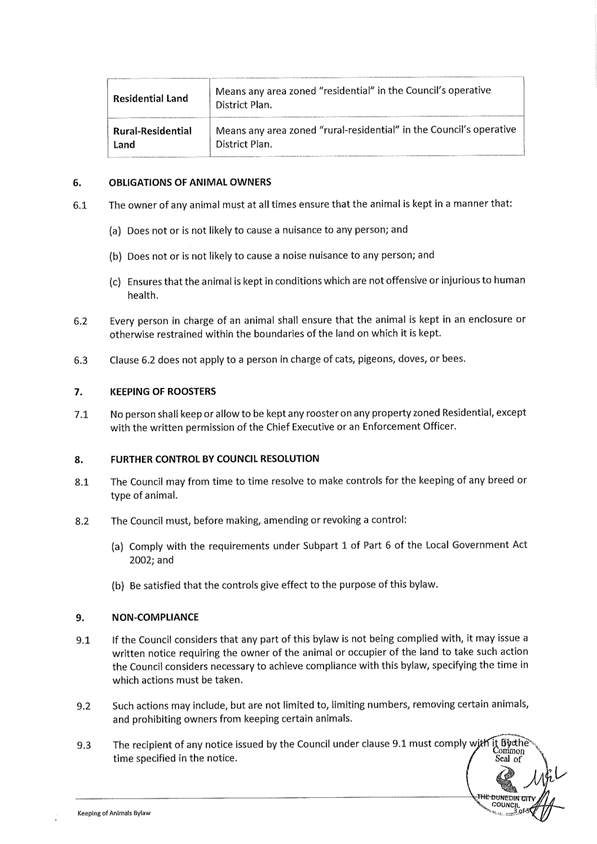
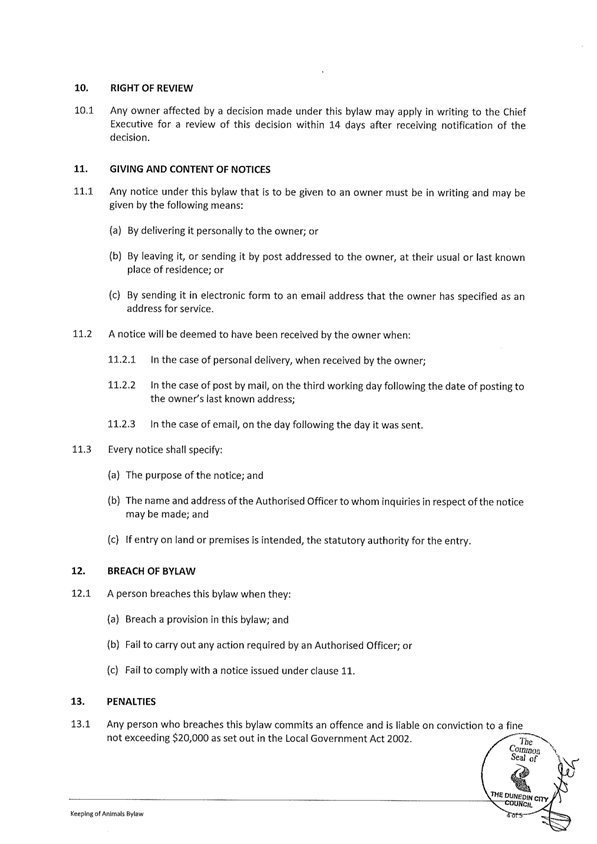
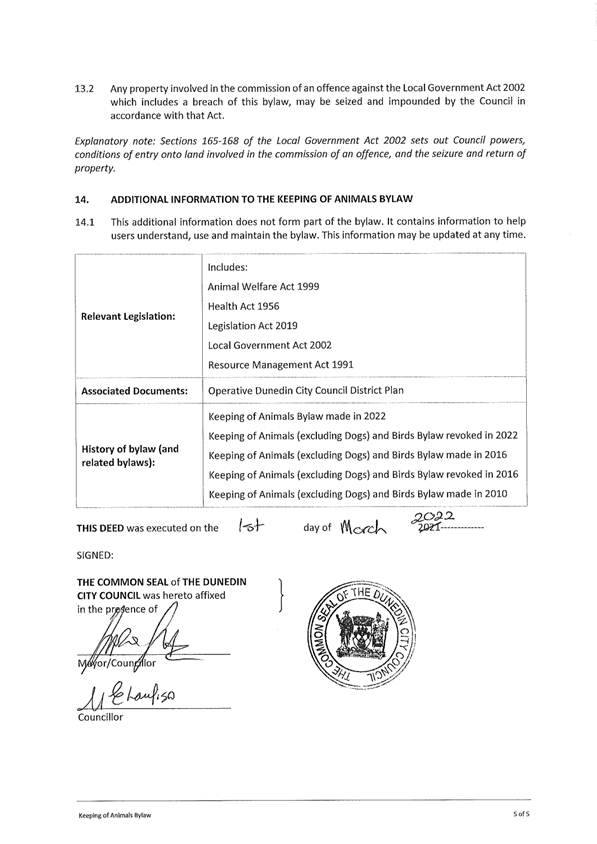
within five years of adoption, and it is now due for review. See Attachment A
for the Bylaw.
RECOMMENDATIONS
That the Council:
a) Approves commencement
of the Keeping of Animals Bylaw review.
b) Determines that a
bylaw is the most appropriate way to address issues relating to keeping animals
in Dunedin.
BACKGROUND
Purposes of bylaws
3 Bylaws
can be made, under the Local Government Act 2002 (the Act) for one or more of
the following general purposes: protecting the public from nuisance;
protecting, promoting and maintaining public health and safety; and minimising
the potential for offensive behaviour in public places (section 145). The Act
also allows bylaws to be made specifically to regulate the keeping of animals,
bees and poultry (section 146(a)(v)).
4 The
Act requires bylaws to be reviewed within five years after adoption and then at
ten-year intervals.
Keeping of Animals Bylaw history and purpose
5 The
Keeping of Animals (excluding dogs) and Birds Bylaw was made in October 2010
under the Act. This bylaw was then reviewed in 2016 with no change.
6 In
2021 that bylaw was reviewed early to address nuisance issues relating to
roosters in Dunedin. Provision was added to ban the keeping of roosters in
residential zone areas unless owners have written permission. This was in
response to feedback about noise nuisance issues.
7 Due
to the changes being significant, a new Keeping of Animals Bylaw was made, and
the previous Keeping of Animals (excluding Dogs) and Birds Bylaw was revoked.
Therefore, the review period for the Bylaw was within five years, rather than
the ten-year review period specified for an existing bylaw.
8 The
purpose of the Bylaw is to “protect the public from nuisance and to
protect, promote and maintain public health and safety by controlling the
keeping of animals”. The Bylaw does not extend to dogs which are
regulated by the Dog Control Act 1996 and the Dog Control Bylaw 2025.
9 The
Bylaw regulates the manner in which animals must be kept; it allows the Council
to impose a limit on the number and/or species of animals kept at a property if
non-compliant; and covers offences and penalties according to the Act. In
practice, the Bylaw has focussed primarily on controlling the nuisance effects
of keeping animals rather than controlling specific actions or limiting
residents to a specific number of animals per property.
DISCUSSION
Bylaw is still appropriate
10 In order to
review a bylaw, a council must make a determination under section 155 of the
Act that a bylaw is the most appropriate way to address potential issues that
arise from keeping animals in Dunedin.
11 Generally,
the Bylaw works well and has good support and compliance from animal owners.
However, complaint data shows the problems that existed in 2010 are still
present and a bylaw is still needed to provide for controls on keeping animals.
For example, in 2025 there were around 70 complaints relating to animal noise
and nuisance (excluding dog related complaints) in the Dunedin area. The Bylaw,
along with public education, is an important tool to ensure that the public is
protected from nuisance.
Roosters
12 From 2021,
provision was added to the Bylaw to ban owners from keeping roosters in
residential zone areas unless owners have written permission. This was in
response to feedback about noise nuisance issues. As of December 2025, 46 Dunedin
rooster owners have permission to keep roosters within the residential zone
areas. There were 29 noise complaints relating to roosters in 2025. The Bylaw
review will check how well the rooster rule is working.
Cats
Cats and the Bylaw
13 There
are no specific bylaw restrictions for keeping cats. The Bylaw allows the
Council to impose a limit on the number and/or species of animals kept at a
property if owners are non-compliant in addressing nuisance issues.
14 A
bylaw is not the most appropriate means of addressing cat issues. While
feedback in the past has shown most issues are with the number of cats, cats
wandering and cats attacking wildlife, these issues do not, in themselves, pose
a nuisance to the public or impact public health and safety. Therefore, this
falls outside the scope of the Act which is aimed at protecting people and
communities rather than wildlife.
15 Where
other issues such as cat fouling can be a nuisance or impact health and safety,
they can be dealt with through nuisance provisions within this Bylaw. For
example, the Bylaw provides for limiting animal numbers, removing certain
animals and prohibiting owners from keeping certain animals if the bylaw is not
complied with.
16 A number of other councils have introduced microchipping and
neutering requirements. However, discussions indicate that these are difficult
to manage, do not fit well within the legislative framework, are problematic to
enforce and are resource intensive. Any enforcement efforts would need to be
funded through general rates as there is no legislation, such as the Dog
Control Act 1996, that requires registration and fees which would fund the
control.
Cats – other mechanisms
17 In the case
of Council reserves, the Reserves Act 1977 allows the Council to seize and
destroy, sell or otherwise dispose of an animal that is trespassing on a
Council reserve and where there is no evidence of ownership. The Health Act can
also be used to address a health nuisance posed by animals, including cats.
18 The
Department of Conservation and other organisations are funded and charged with
protecting wildlife. These entities operate many national programmes and have
the necessary powers under the Wildlife Act 1953 to ensure protection.
19 As
a result of a DCC initiated local government remit, Local Government New
Zealand (LGNZ) adopted a remit in 2017 asking central government to introduce a
national legislative framework for cats. However, this has not been a priority
for central government to date.
20 The
preferred option to address cat issues to date has been to work with local
organisations towards responsible cat ownership through education, information,
and promotion of good practice. The Council also supported local Snip n Chip
campaigns with promotion and funding for two years (2023/2024 and 2024/2025).
Other issues
21 Nuisance
complaints are sometimes received about other animals such as chickens, goats,
pigs, and bees. For example, complaints range from wandering animals, to odour,
noise and fouling nuisances.
Other councils
22 Most other
New Zealand cities have bylaws to regulate keeping animals, for example
controls relating to nuisance and noise nuisance issues.
Community engagement
23 Early
engagement is planned to inform any proposals for change. Any proposals will
then be formally consulted on with interested and affected parties, using the
special consultative procedure, as required by the Act.
24 We will
engage with our mana whenua partners as well as stakeholders such as the
public, animal clubs and organisations, and Community Boards.
OPTIONS
25 As this
review is required by legislation, there are no options.
NEXT STEPS
26 Next steps
are to review the Bylaw and report back to the Council with any proposed
changes in a draft statement of proposal along with any proposed amendments in
a draft Bylaw. The Council will then be asked to approve these documents for
consultation using the special consultative procedure, as required by the Act.
Here is an indicative timeframe for the review:
|
What
|
Indicative
timeframe
|
|
Council report to commence the review
|
March 2026
|
|
Early engagement to identify issues/options
|
April-May 2026
|
|
Draft revised bylaw and statement of proposal on any
proposed changes to Council for approval
|
June 2026
|
|
Consultation on any proposed changes
|
July 2026
|
|
Hearings
|
August 2026
|
|
Council adopts revised bylaw
|
November 2026
|
Signatories
|
Author:
|
Anne Gray - Policy Analyst
Cazna Savell - Team Leader Animal Services
Tanya Morrison - Team Leader Environmental Health and
Alcohol Licensing
|
|
Authoriser:
|
Bonnie Wright - Manager Compliance Solutions
Paul Henderson - General Manager Corporate and Regulatory
Services
|
Attachments
|
|
Title
|
Page
|
|
⇩a
|
Keeping of Animals
Bylaw 2022
|
110
|
|
SUMMARY OF CONSIDERATIONS
|
|
Fit with purpose of Local Government
This decision enables democratic local
decision making and action by, and on behalf of communities.
This decision promotes the environmental
and social well-being of communities in the present and for the future.
|
|
Fit with strategic framework
|
|
Contributes
|
Detracts
|
Not applicable
|
|
Social Wellbeing Strategy
|
✔
|
☐
|
☐
|
|
Economic Development Strategy
|
☐
|
☐
|
✔
|
|
Environment Strategy
|
✔
|
☐
|
☐
|
|
Arts and Culture Strategy
|
☐
|
☐
|
✔
|
|
3 Waters Strategy
|
☐
|
☐
|
✔
|
|
Future Development Strategy
|
☐
|
☐
|
✔
|
|
Integrated Transport Strategy
|
☐
|
☐
|
✔
|
|
Parks and Recreation Strategy
|
☐
|
☐
|
✔
|
|
Other strategic projects/policies/plans
|
☐
|
☐
|
✔
|
This decision contributes to the healthy and safe people
priority of the Social Wellbeing Strategy, and healthy environment priority
of the Environment Strategy.
|
|
Māori Impact Statement
No specific impacts for mana whenua have been identified.
However, in recognition of the Autūroa and Autakata pou in Te Taki
Haruru, our mana whenua partners will be advised of the review and given the
opportunity to provide feedback. Furthermore, this Bylaw is in line with the
cultural key direction of Autikaka in Te Taki Haruru.
|
|
Sustainability
There are no specific implications for sustainability.
|
|
LTP/Annual Plan / Financial Strategy /Infrastructure
Strategy
There are no implications for these documents.
|
|
Financial considerations
There are no financial implications as the review will be
carried out within existing budgets.
|
|
Significance
This decision is considered low in terms of the
Council’s Significance and Engagement Policy.
|
|
Engagement – external
There is no requirement for external engagement for this
preliminary report although previous submissions and complaints have informed
this report. Once the bylaw review commences, there will be engagement with
key stakeholders to inform any proposed options. The special consultative
procedure will then be used to consult on any proposed options and draft
bylaw, as required by the Act.
|
|
Engagement - internal
There has been internal engagement with Mana Ruruku and
Council Communications and Marketing.
|
|
Risks: Legal / Health and Safety etc.
There are no identified risks.
|
|
Conflict of Interest
There are no known conflicts of interest.
|
|
Community Boards
There may be implications for Community Boards. They are identified
as key stakeholders and will be engaged with, as appropriate, during the
bylaw review.
|
|

|
Council
25 March 2026
|
Legal High Retail Location Policy review
Department: Corporate and Regulatory and Civic
EXECUTIVE SUMMARY
1 This
report recommends that the Council continues the Legal High Retail Location
Policy (the Policy) for a further five years, with no substantive changes,
following a staff review.
2 The
Policy restricts legal high (psychoactive substance) retailers to the Dunedin
central city area provided they are more than 100 metres away from sensitive
sites such as education facilities, churches, libraries, hospitals, mental
health facilities and justice premises. Sensitive sites are identified on a map
which forms part of the Policy.
3 The
Policy was adopted in 2015, however it has never been used as there have been
no approved legal high products available for sale in New Zealand during this
time. Currently there are no applications before the Psychoactive Substances
Regulatory Authority for product approval.
4 Under
the Psychoactive Substances Act 2013 (the Act), the Policy must be reviewed
every five years and it is now due for review. With no proposed changes to the
Policy content, and no change in the situation regarding approved legal high
products, there is no requirement to consult as part of this review.
5 The
Council may wish to consider revoking the Policy, however this would leave no
control over where legal highs may be sold should any products be approved.
6 See
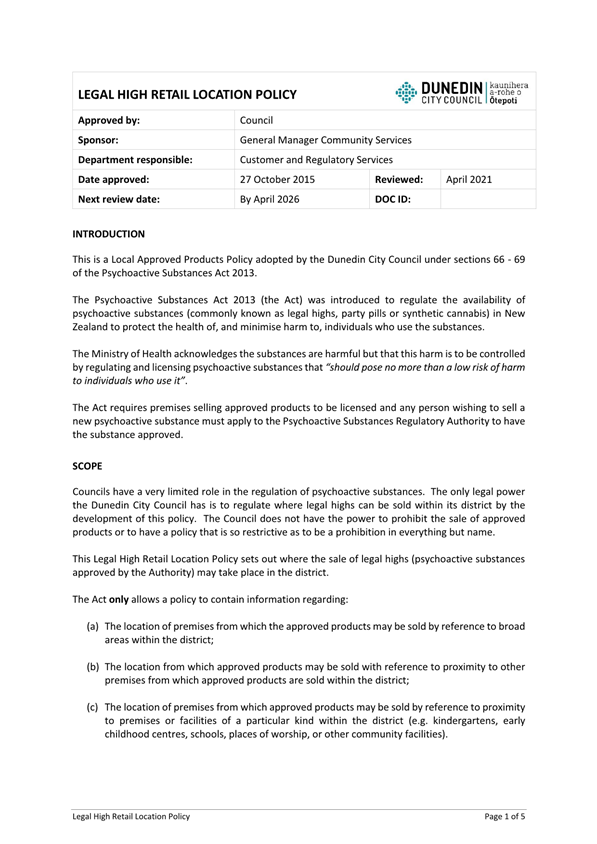
Attachment A for the Policy.
RECOMMENDATIONS
That the Council:
a) Notes the review of
the Legal High Retail Location Policy.
b) Approves retention of
the Legal High Retail Location Policy.
BACKGROUND
Legislation – Psychoactive Substances Act 2013
7 The
Act was introduced to regulate the availability of psychoactive substances in
New Zealand. These products are referred to in the Policy as legal highs.
The Act acknowledges the harm caused by the substances and introduces a process
for psychoactive products that pose no more than a low risk of harm to people
who use them to be approved by the Psychoactive Substances Regulatory Authority
(the Authority).
8 A
psychoactive substance controlled by this Act includes a product approved by
the Authority, and a product or substance that is declared by Order in Council
to be a psychoactive substance.
9 Previously,
psychoactive substances could be manufactured and sold without
restriction. The purpose of the Act was to regulate the availability of
these substances in order to protect the health of and minimise harm to
individuals who used these products.
10 The Act
allows local authorities to have a policy specifying where, in their districts,
legal highs can be sold. It does not permit a council to ban legal highs
outright or to have a policy which is so restrictive as to effectively ban
their sale.
11 In 2013,
there were 64 psychoactive substances that had received interim approval for
sale. To gain approval a product has to be proven to have no more than a
low risk of harm to the user. There are no products approved for sale in New
Zealand and no applications before the Authority for approval. There are
no approved retail outlets anywhere in New Zealand.
12 The Act
requires local authorities to complete a review of the Policy within five years
after the policy is adopted and then at intervals of not more than five
years. A policy does not cease to have effect because it is due for
review or is being reviewed.
Policy development and review
13 In 2015,
the Council chose to adopt a Legal High Retail Location Policy to help minimise
the risk of harm posed by the presence of legal highs in the city. An approved
substance was termed a ‘legal high’. The proposed Policy was
consulted on using the special consultative procedure (SCP) as required by the
Act.
15 The purpose of
the Policy is threefold:
· To
minimise the harm caused to the community resulting from the use of
psychoactive substances by limiting the locations from which the ‘legal
high’ may be sold; and
· To
minimise the exposure and potential harm of legal highs to vulnerable members
of the community; and
· To
ensure the community has influence over the location of the premises licensed
to sell the products, so much as legally possible.
16 The Policy
restricts legal high retailers to the Dunedin central city area provided they
are more than 100 metres away from ‘sensitive sites’ like
schools, churches, Dunedin Public Library, Dunedin Hospital, mental health
facilities and justice premises.
17 The Policy
was reviewed in 2021 using the special consultative procedure, and retained,
with the addition of the bus hub area as a restricted retail site.
DISCUSSION
Policy review
14 Staff have
reviewed the Policy and, apart from minor typographical edits for clarity,
recommend no changes to the content. See Attachment B for the minor edits
tracked.
Consultation
15 As it is
not intended that the Policy is amended or replaced, the special consultative
procedure is not required for this review. Given that there are no proposed
changes to the content, there are still no approved substances, and the same
Policy was consulted on previously, there is nothing new to consult on.
Therefore, no further consultation is proposed.
Option to revoke or lapse the Policy
16 As there
are currently no approved substances in New Zealand, some councils have revoked
their policies (by resolution from a specific date) or allowed them to lapse. If
there is no intention to review the Policy and no action is taken to do this,
then the Policy would lapse after the statutory five year review period. If the
Council decides not to have a Policy (either by revoking the Policy or not
reviewing the Policy), there would be no control on where legal highs could be
sold in the city should any products be approved.
Other councils
17 Councils
are mixed in whether they have developed policies, have continued their
policies or have allowed their policies to become lapsed (or revoked). For
example, Christchurch and Tauranga continue to have policies while Auckland,
Hamilton and Wellington have allowed theirs to lapse.
OPTIONS
18 Options
are to retain the Policy with only minor typographical edits and no changes to
the content, or to revoke the Policy.
Option One – Retain the Legal High Retail Location
Policy with no substantive changes – Recommended (status quo)
19 This option
is to retain the Policy with only minor typographical edits and no substantive
changes.
Advantages
· Potentially
minimises harm caused to the community resulting from the use of legal highs by
limiting the locations where they may be sold.
· Potentially
minimises the exposure and potential harm of legal highs to vulnerable members
of the community.
· Ensures
the community has influence over the location of the premises licensed to sell
legal highs.
· Controls
where legal highs may be sold should any products be approved.
Disadvantages
· The
Policy could continue to be redundant if no products are approved.
Option Two – Revoke the Legal High Retail Location
Policy
20 This option
is to revoke the Legal High Retail Location Policy in Dunedin from a specified
date.
Advantages
· We
would no longer have a policy that is potentially redundant.
Disadvantages
· No
control over where legal highs may be sold should any products be approved.
· Lost
opportunity to minimise harm caused to the community resulting from the use of
legal highs by limiting the locations where they may be sold.
· Lost
opportunity to minimise the exposure and potential harm of legal highs to
vulnerable members of the community.
· Does
not allow the community to influence the location of the premises licensed to
sell legal highs.
NEXT STEPS
21 If the
Council decides to continue with the Policy, staff will update the website, ODT
Noticeboard and advise the Psychoactive Substances Regulatory Authority.
Signatories
|
Author:
|
Anne Gray - Policy Analyst
Kevin Mechen - Alcohol, Psychoactive Substances and
Gambling Advisor
|
|
Authoriser:
|
Bonnie Wright - Manager Compliance Solutions
Paul Henderson - General Manager Corporate and Regulatory
Services
|
Attachments
|
|
Title
|
Page
|
|
⇩a
|
Legal High Retail
Location Policy 2021
|
121
|
|
⇩b
|
Tracked edits Legal
High Retail Location Policy 2026
|
126
|
|
SUMMARY OF CONSIDERATIONS
|
|
Fit with purpose of Local Government
This decision enables democratic local
decision making and action by, and on behalf of communities.
This decision promotes the social and economic
well-being of communities in the present and for the future.
|
|
Fit with strategic framework
|
|
Contributes
|
Detracts
|
Not applicable
|
|
Social Wellbeing Strategy
|
✔
|
☐
|
☐
|
|
Economic Development Strategy
|
✔
|
☐
|
☐
|
|
Environment Strategy
|
☐
|
☐
|
✔
|
|
Arts and Culture Strategy
|
☐
|
☐
|
✔
|
|
3 Waters Strategy
|
☐
|
☐
|
✔
|
|
Future Development Strategy
|
☐
|
☐
|
✔
|
|
Integrated Transport Strategy
|
☐
|
☐
|
✔
|
|
Parks and Recreation Strategy
|
☐
|
☐
|
✔
|
|
Other strategic projects/policies/plans
|
☐
|
☐
|
✔
|
This report on the review of the Policy contributes to
safe and healthy people in the Social Wellbeing Strategy, and compelling
destination in the Economic Development Strategy.
|
|
Māori Impact Statement
Consultation is not proposed as part of this review.
|
|
Sustainability
There are no specific implications for sustainability.
|
|
LTP/Annual Plan / Financial Strategy /Infrastructure
Strategy
There are no implications for these documents.
|
|
Financial considerations
There are no financial implications as consultation costs
are managed within existing operational budgets.
|
|
Significance
This report is considered low in terms of the
Council’s Significance and Engagement Policy.
|
|
Engagement – external
Consultation is not proposed as part of this review.
|
|
Engagement - internal
There has been internal engagement with In-House Legal
Counsel.
|
|
Risks: Legal / Health and Safety etc.
There are no identified risks.
|
|
Conflict of Interest
There are no known conflicts of interest.
|
|
Community Boards
There are no specific implications for Community Boards.
|
|
|
Council
25 March 2026
|
Review of the Traffic and Parking Bylaw
Department: Transport
EXECUTIVE SUMMARY
1 In
October 2023, the Council resolved to commence the review of the Dunedin
Traffic and Parking Bylaw (the Bylaw) and determined that a bylaw is the most
appropriate way to address issues relating to managing traffic and parking in
Dunedin. This review must be carried out under the requirements of the Land
Transport Act 1998 (LTA) and the Local Government Act 2002 (LGA).
2 This
report asks the Council to approve the draft Dunedin Traffic and Parking Bylaw
2026 (see Attachment A) and adopt a statement of proposal (see Attachment B)
for consultation purposes. See Attachment C for the current Bylaw which has
been in effect since 2010.
3 Proposed
changes to the Bylaw are relatively minor. They update technological, social
and legislative changes that have taken place since 2010, by:
a) Inserting
new clauses to improve flow and provide clearer guidance,
b) Updating
clauses to be more specific, provide exemptions, or add a new defence against
parking offences, and
c) Making
minor changes to terminology and improving clarity.
RECOMMENDATIONS
That the Council:
a) Determines that the
proposed Traffic and Parking Bylaw 2026 meets the additional requirements of
section 155 of the Local Government Act 2002 in that:
i) the proposed Bylaw is the most appropriate form of bylaw,
and
ii) the proposed Bylaw does not gives rise to any implications
under the New Zealand Bill of Rights Act 1990.
b) Approves the proposed
Traffic and Parking Bylaw 2026 for consultation purposes, subject to any minor
amendments.
c) Adopts the statement
of proposal for consultation purposes, subject to any minor amendments.
d) Notes that the Chair
of the Hearings Committee has the delegation to appoint Council members to the
Committee that will receive oral submissions on the Traffic and Parking Bylaw.
BACKGROUND
Land Transport Act 1998
4 The
Council is a Road Controlling Authority (RCA) under the LTA. As an RCA, the
Council exercises control over local roads within the territorial authority,
and over state highways for which the Council has received delegated
responsibility from the New Zealand Transport Agency (NZTA) Waka Kotahi.
5 Section
22AB of the LTA provides that an RCA may make bylaws for purposes including
prohibiting or restricting parking, prescribing the use of parking places and
transport stations (areas used by transport services,
e.g. bus hubs or layovers), and regulating other road-related matters. The
LTA also enables the Minister of Transport to amend, replace, or disallow any
bylaw in certain cases (e.g. if a bylaw conflicts with land transport
legislation).
Local Government Act 2002
6 Section
22AD of the LTA sets out that bylaws made under the LTA must follow the Special
Consultative Procedure (SCP) as required under section 156 of the LGA. The
SCP requires:
a) That
a statement of proposal be prepared and made publicly available with a draft of
the proposed amended Bylaw; the reasons for the proposal; and a report on any
relevant determinations by the local authority under section 155 of the LGA,
where the Council has determined:
i) That
a bylaw is the most appropriate way of addressing traffic and parking
restrictions (determined in the 30 October 2023 meeting of the Council: Minutes
of Council - Monday, 30 October 2023),
ii) That
the proposed Bylaw is the most appropriate form of Bylaw (decision sought in
this report), and
iii) That the
proposed Bylaw does not give rise to any implications under the New Zealand
Bill of Rights Act 1990 (decision sought in this report).
b) That a
minimum one-month window be set for receiving submissions from the public, with
opportunities provided to present views verbally to a Hearings Committee either
in person or by way of audio or audio-visual link (section 83 of the LGA).
Purpose of the Traffic and Parking Bylaw
7 The
Council’s Traffic and Parking Bylaw came into effect on 1 March 2010, and
sets out the requirements for parking and control of vehicle or other traffic
on any road under Council authority, including state highways where control has
been delegated to the Council.
8 The Bylaw enables the Council to regulate,
control or prohibit any matter for all classes of vehicles or traffic using a
road, greenspace adjoining the road, building, or transport station under the
control of the Council, for any specified period of time. The Bylaw then
enables the Council to make any subsequent changes to these matters. Overall,
the Bylaw ensures that mechanisms are in place to support and improve the
safety, accessibility and efficiency of the transport network for all road
users.
9 The current traffic and parking restrictions
adopted by the Council are made publicly available in a Geographic Information
Systems (GIS) bylaw database on the Council website: Parking
regulations - Dunedin City Council. The Council regularly consults with the
public on minor general parking changes in the city, and the bylaw database is
then updated with any changes.
10 Since
the Bylaw came into effect in 2010, changes to the technological, legislative
and social context mean that the Bylaw needs to be updated to be fit for
purpose for today and the future. The Council also approved the Shaping Future
Dunedin Transport Programme through the 10 Year Plan process, which resulted in
the creation of the Dunedin Parking Roadmap in 2021. The roadmap’s main
recommendation, which was supported by the Council on 31 May 2021, was to
develop a parking management policy to guide the supply and management of
parking in the city. An up-to-date Bylaw will also support the delivery of a
Dunedin City Parking Strategy, which is currently in development.
DISCUSSION
Review to date
11 The review
of the Traffic and Parking Bylaw 2026 has been led by the Transport Regulation
team. The review has been informed by a desk-top study of traffic and parking
bylaws adopted by other Councils; by feedback received through internal
engagement with Council technical officers; and by an internal and external
legal review of the proposed Bylaw.
12 Proposed
changes to the Bylaw broadly fit into three categories. The detailed chart of
changes is included in the statement of proposal in Attachment B. The
categories are discussed below and are:
· Inserting new
clauses to improve flow and provide clearer guidance
· Updating clauses
to be more specific, provide exemptions and to add a new defence
· Minor changes to
update terminology and improve clarity.
Inserting new clauses to
improve flow and provide clearer guidance
13 Proposed
changes to the Bylaw would introduce new standalone clauses to improve the overall
flow and structure. Some clauses are new (such as
clauses 5 and 6 that put clearer provisions around how the Council can make resolutions
related to traffic and parking, and clearer provisions around permits), while
others re-structure existing information to improve readability.
14 For most
proposed changes, how traffic and parking regulations and restrictions operate
on the ground remains unchanged. Re-naming and re-structuring clauses are
intended to improve access to the Bylaw for both the general public and the
Council, making relevant guidance in the Bylaw easier to find and clearer.
15 Some new
clauses are introduced to align with terminology in updated legislation and
clarify the Council’s role in regulating different types of
infrastructure. New clauses 24: Shared paths and cycle paths and 25:
Shared zones reflect the updated terminology in the Land Transport (Road
User) Rule 2004 and provide more information about the restrictions in place on
these types of infrastructure.
16 Other
clauses strengthen the ability of the Council to regulate issues under this
Bylaw that may affect the community and the environment. Proposed new clause 27:
Unformed roads strengthens environmental and safety protections around
unformed legal roads, and proposed new clause 26: Engine braking would
allow the Council to prohibit or restrict engine braking on roads where the
speed limit is 70 kilometres per hour or less.
Updating clauses to be
more specific, provide exemptions and to add a new defence
17 A
few proposed changes update existing clauses
to be more specific and reflect changes in technology to include vehicles such
as micro-mobility devices, car share vehicles, and electric vehicles as classes
of vehicles in the Bylaw (see Attachment B for the full set of changes).
18 Some
changes add important exemptions to certain clauses to ensure better access to
parking for vehicles providing essential services (e.g. network utility
operators).
19 A new parking
defence is also proposed in clause 30 (where a person proves that their act or
omission was to avoid the death or injury of any person).
Minor changes to update
terminology and improve clarity
20 Many
of the proposed changes would update the Bylaw
to reflect the latest changes to technology, terminology and legislation, and
to improve the overall flow of the Bylaw.
21 Key
proposed changes to improve clarity include adding more definitions into clause
4: Interpretation of the Bylaw, and amending definitions where
technology has changed or where definitions have been updated in the LTA or the
Land Transport (Road User) Rule 2004.
22 “Explanatory
notes” are also proposed for inclusion throughout the Bylaw to improve
the overall readability of the document, providing examples of how clauses
apply.
New Zealand Bill of Rights Act 1990 (NZBoRA) implications
23 Under
section 155 of the LTA, the Council must ensure that any bylaw does not give
rise to any implications under the NZBoRA. A bylaw cannot be inconsistent with
the NZBoRA, which means a bylaw should only limit relevant rights and freedoms
in the NZBoRA if such limits can be demonstrably justified in a free and
democratic society (section 5 NZBoRA).
24 The
intent of the Traffic and Parking Bylaw is to support a transport network that balances
demand and is safe, efficient, and accessible for all users. The Bylaw may have
implications for the right to freedom of movement in the NZBoRA. However,
limiting the movement of vehicles and restricting where they park (in some
places and for specified reasons) is a proportionate response to support a safe
transport network, and is considered a justified limitation for the prevention
of harm.
Consultation
25 As
set out in section 13 of the report, the special consultative procedure must be
used to consult on the proposed Bylaw under section 22AD of the LTA.
26 On adoption
of the statement of proposal, it is proposed that public consultation is
conducted for a period of one month from Monday 27 April – Wednesday 27
May 2026. This timeframe will minimise the degree of overlap with the focused
consultation on the Council’s draft Annual Plan, which runs from 30 March
– 29 April 2026.
27 Engagement
methods will include advertising on the Council website, social media pages, on
the Otago Daily Times noticeboard, and via the Council monthly household
mailout, FYI. Key stakeholders such as the Automobile Association, the Otago
Regional Council, the New Zealand Transport Agency Waka Kotahi, Access for All
Dunedin, Disabled Persons Assembly, Community Boards, rūnaka, emergency
services, and other community groups will be advised and invited to comment.
28 People will
have the opportunity to present their views to a Hearings Committee after consultation
closes at the end of May.
OPTIONS
29 The Council
resolved to review the Traffic and Parking Bylaw in their meeting of 30 October
2023. The two options are to approve the proposed Bylaw and statement of
proposal for consultation with amendments, or without any amendments.
Option One – Approve the draft Bylaw and adopt the
statement of proposal for consultation purposes (Recommended)
30 This option
is recommended by Council officers and seeks approval for the draft Bylaw and
adoption of the statement of proposal for consultation purposes.
Advantages
· The
proposed Bylaw, statement of proposal, and review process comply with the
LTA’s statutory requirements, including the use of the special consultative
procedure.
· Feedback
from public consultation will inform how Dunedin regulates traffic and parking
and decision-making.
· A
refreshed Bylaw will inform the development of the forthcoming Dunedin City
Parking Strategy.
Disadvantages
· There
are no known disadvantages.
Option Two – Approve the draft Bylaw, and adopt the
statement of proposal for consultation, with amendments
31 This is the
same as for Option One, but with any amendments specifically recorded in the
Council’s resolutions.
NEXT STEPS
32 When the
Council approves the Bylaw and statement of proposal for consultation, the
following next steps are proposed:
|
Action
|
Timeframe
|
|
Consultation – using special consultative
procedure
|
27 April – 27 May 2026
|
|
Hearings and deliberations
|
June 2026
|
|
Hearings Committee report to the Council with
proposed final Bylaw
|
July/August 2026
|
33 The next
review of the Traffic and Parking Bylaw is proposed to occur in 2036.
Signatories
|
Author:
|
Rose Wunrow - Policy Analyst Transport Regulation
|
|
Authoriser:
|
Jeanine Benson - Group Manager Transport
Scott MacLean - General Manager, City Services
|
Attachments
|
|
Title
|
Page
|
|
⇩a
|
Attachment A - Draft
Dunedin City Council Traffic and Parking Bylaw 2026
|
139
|
|
⇩b
|
Attachment B -
Statement of Proposal
|
157
|
|
⇩c
|
Attachment C - Dunedin
City Council Traffic and Parking Bylaw 2010
|
170
|
|
SUMMARY OF CONSIDERATIONS
|
|
Fit with purpose of Local Government
This decision enables democratic local
decision making and action by, and on behalf of communities.
This decision promotes the social and
economic well-being of communities in the present and for the future.
|
|
Fit with strategic framework
|
|
Contributes
|
Detracts
|
Not applicable
|
|
Social Wellbeing Strategy
|
✔
|
☐
|
☐
|
|
Economic Development Strategy
|
✔
|
☐
|
☐
|
|
Environment Strategy
|
☐
|
☐
|
✔
|
|
Arts and Culture Strategy
|
☐
|
☐
|
✔
|
|
3 Waters Strategy
|
☐
|
☐
|
✔
|
|
Future Development Strategy
|
✔
|
☐
|
☐
|
|
Integrated Transport Strategy
|
✔
|
☐
|
☐
|
|
Parks and Recreation Strategy
|
✔
|
☐
|
☐
|
|
Other strategic projects/policies/plans
|
✔
|
☐
|
☐
|
Traffic and parking restrictions support
a safe, efficient and accessible transport network, support
the social and economic wellbeing of Dunedin communities, and support the efficient
integration of transport and land use.
The review of the Bylaw also supports the efficient
management of parking supply which the Dunedin City Parking Strategy
(currently in development) will target.
|
|
Māori Impact Statement
Mana whenua have expressed support for a safe and
efficient transport network through previous consultations. Kāti Huirapa
ki Puketeraki and Ōtākou rūnaka, as well as Āraiteuru
marae, will be invited to submit on the proposed Bylaw once it and the
statement of proposal are adopted for consultation purposes.
The Bylaw, and the consultation process, align with three
key directions of Te Taki Haruru (TTH), the Council’s Māori
Strategic Framework. Alignments are across three of the TTH pou –
Autūroa, Autikaka, and Autakata – in line with the cultural key
direction for Autūroa and Autikaka, and the social key direction for
Autakata.
|
|
Sustainability
Parking
control changes improve
efficiency and access
to the transport network for all vehicle types, including more carbon efficient
vehicles like cycles, micro-mobility devices, electric vehicles, and car
share vehicles.
|
|
LTP/Annual Plan / Financial Strategy /Infrastructure
Strategy
The implementation of traffic and parking controls in
Dunedin supports levels of service set out in the 9 Year Plan, e.g.
“The DCC provides the transport network that facilitates safe
travel.”
|
|
Financial considerations
There are no implications as management of the Bylaw is
carried out within existing budgets.
|
|
Significance
The decision to approve documents for consultation is
considered low in terms of the Council’s Significance and Engagement
Policy. The LTA requires that the special consultative procedure is used to
review the Bylaw.
|
|
Engagement – external
An external legal review has been completed of the
proposed Bylaw and statement of proposal. The special consultative procedure
will be used to review the Bylaw.
|
|
Engagement - internal
There has been internal engagement with Transport,
Compliance Solutions, Parks and Recreation, Corporate Policy, Governance, and
Communications and Marketing.
|
|
Risks: Legal / Health and Safety etc.
There are no identified risks. The draft Bylaw and
statement of proposal have been reviewed by external legal counsel.
|
|
Conflict of Interest
There is no identified conflict of interest.
|
|
Community Boards
There are no specific implications for Community Boards.
Community Boards will be notified when the proposed Bylaw is open for public
consultation.
|
|

|
Council
25 March 2026
|
|
TRAFFIC AND PARKING BYLAW 2026 
|
|
Traffic and Parking
Bylaw 2026
|
|
Approved by:
|
The Council
|
|
Date approved:
|
Approved by the Dunedin City Council
in February 2010.
Review approved by the Dunedin City
Council in TBD 2026.
|
|
Date of effect:
|
Original date of effect: 1 March
2010.
Review date of effect: TBD 2026.
|
Reviewed:
|
2026
|
|
Next review date:
|
2036
|
DOC ID:
|
|
Contents
PART 1 – PRELIMINARY PROVISIONS. 1
1. Short title and
commencement 1
2. Scope and application. 1
3. Purpose. 1
4. Interpretation. 1
PART 2 – RESOLUTIONS AND PERMITS MADE
UNDER THIS BYLAW.. 5
5. Resolutions made under
this Bylaw. 5
6. Permits under this
Bylaw. 5
PART 3 – PARKING. 6
7. General provisions for
parking. 6
8. Temporary
discontinuance or restriction of parking spaces 6
9. Parking spaces,
parking places, transport stations, payment parking areas, time restricted
areas, other reserved areas and zone parking areas 7
10. Time-restricted parking. 8
11. Payment parking. 9
12. Residents’
parking. 9
13. Mobility parking. 10
14. Other reserved parking. 10
15. Parking in restricted
and line-marked parking spaces 11
16. No parking on certain
parts of the road. 12
17. Parking for display or
sale. 12
18. Motorhomes, heavy
goods vehicles, immobilised vehicles and trailers 13
PART 4 – VEHICLE AND ROAD USE AND
TRAFFIC MOVEMENT RESTRICTIONS. 13
19. One-way roads 13
20. Left or right turns
and U-turns 13
21. Routes and manoeuvres
on roads 13
22. Control of vehicles on
roads due to size, nature or goods 14
23. Special vehicle lanes 14
24. Shared paths and cycle
paths 15
25. Shared zones 15
26. Engine braking. 15
27. Unformed roads 15
PART 5 – OFFENCES AND PENALTIES. 16
28. Offences and penalties 16
29. Other offences 16
30. Parking defences 17
31. Exempted vehicles 17
PART 6 – MISCELLANEOUS. 17
32. Revocations and
savings 17
ADDITIONAL INFORMATION TO THE TRAFFIC AND
PARKING BYLAW 2026. 17
PART 1 – PRELIMINARY PROVISIONS
1. Short title and commencement
1.1 This Bylaw is the
Dunedin City Council Traffic and Parking Bylaw 2026 (Bylaw).
1.2 This Bylaw comes
into force on TBD 2026.
2. Scope and application
2.1 This Bylaw
applies to all roads under the care, control, or management of Dunedin City
Council.
2.2 This Bylaw is made
under the Land Transport Act 1998 (LTA).
3. Purpose
3.1 The purpose of
this Bylaw is to set out the requirements for parking and control of vehicular
or other traffic on any road or area under the care, control or management of
the Council.
4. Interpretation
4.1 In this Bylaw,
unless the context otherwise requires:
Act
means
the Land Transport Act 1998.
Authorised
Officer means
any person appointed or authorised by the Council to act on its behalf and
includes an Enforcement Officer.
Berm means an area whether
laid out in grass or not, between the roadway, and the footpath or property
boundary and which may include an area behind a kerb.
Car
share vehicle means
a vehicle operated by an organisation approved by the Council to provide its members,
for a fee, access to a fleet of shared vehicles which they may reserve for use
on an hourly or daily basis.
Class
of vehicle means
groupings of vehicles defined by reference to any common feature and includes:
(a) vehicles by type,
description, weight, size or dimension;
(b) vehicles carrying
specified classes of load by the mass, size or nature of such loads;
(c) vehicles carrying no
fewer or less than a specified number of occupants;
(d) vehicles used for
specified purposes;
(e) vehicles driven by
specified classes of persons.
(f) carpool and car share
vehicle; and
(g) vehicles authorised
by, or displaying a permit authorised by the Council.
Corridor
Access Request means
an application to carry out any work or activity that affects the normal
operation of the road, footpath and grass berm prior to performing the work or
activity.
Council
means
the Dunedin City Council (DCC) and may include any person authorised by the
Council to act on its behalf.
Disabled
person has
the same meaning as in section 2 of the Disabled Persons Community Welfare Act
1975.
Electric
scooter is
a vehicle, designed in the style of a traditional push scooter, with a
footboard, two or three wheels, a long steering handle and one or more electric
auxiliary propulsion motors, but the wheels must not exceed 355 millimetres and
the motor cannot have a maximum power output exceeding 300 watts.
Enforcement
Officer means:
(a) any person who has
been appointed as an enforcement officer by the Council under the Local
Government Act 2002; or
(b) any person who is an
enforcement officer under the Land Transport Act 1998.
Micro-mobility
device
means transportation using lightweight vehicles such as wheeled recreational
devices, skateboards or scooters whether electric or not, and other electric
devices whether or not forming part of a self-service scheme in which people
hire vehicles for short-term use within a town or city.
Mobility
parking area means
any reserved parking area for the use of disabled persons as defined by the
mobility parking permit application criteria issued by the relevant authority.
Motorhome
means
any vehicle designed or converted to be used for human habitation, whether
self-contained or not, and includes a caravan, campervan, or house truck.
Oversize
vehicle means
a single vehicle or combination of vehicles and trailers that will not fit into
a standard sized parking space. This includes, for example, motorhomes, trucks
and vehicles towing trailers or other vehicles.
Parking
has
the same meaning as in section 2 of the Land Transport Act 1998 and includes
stopping and standing a vehicle.
Parking
machine means
an electronic or mechanical device used to collect payment for parking and
includes equipment used to monitor the parking of any vehicle.
Parking
place means
a road, part of a road, or group of roads, land or building owned or controlled
by the Council where the Council has authorised vehicles, or any class of
vehicles to wait.
Parking
space means
an area within a parking place whether demarcated or not by markings, in which
a vehicle may park.
1. Payment parking area means a road, part of
a road, or group of roads, land or building owned or controlled by the Council,
to be used for parking subject to payment, by way of a parking meter, a Pay and
Display machine, In-Car Meter, or any other method of payment for parking as
determined by the Council.
1
Permit means an electronic
or paper/card permit, or other written permission provided by the Council under
this Bylaw or a previous bylaw, which authorises certain conduct or activity,
such as authorising the vehicle displaying the permit to be parked in a
particular parking area.
2
Prescribed
fee means
New Zealand coin, token, card, prepaid parking device, or other system of
payment prescribed by the Council pursuant to this Bylaw as the fee payable for
parking in a parking space.
3
Reserved
Parking area
means a road, part of a road, or group of roads, land or building owned or
controlled by the Council, reserved by the Council for
the exclusive use of a particular class or classes of vehicle.
4
Residents
parking permit means
a permit (physical or electronic), authorising a vehicle to park in a parking
space or area that has been authorised by the Council as part of a
“Residents’ only parking area” or a “Residents’
exemption parking area.”
5
Residents’
only parking area means
a road, part of a road or group of roads, land or building owned or controlled
by the Council for the exclusive use of persons who reside in the vicinity.
6
Residents’
exemption parking area is a road, part of a road or group of roads, land or
building owned or controlled by the Council where persons who reside in the
vicinity are exempt from some or all parking restrictions.
Resolution
means
a motion that has been adopted by a meeting of the Council.
7
Road
has
the same meaning as in section 2 of the Land Transport Act 1998, and includes:
(a) parking places and
transport stations,
(b) state highways for
which the New Zealand Transport Agency Waka Kotahi has delegated powers to the
Council, and
(c) unformed roads.
Explanatory Note: In the interests of clarity, while beaches are
classed as roads, permitted activities and regulations related to beaches can
be found in the Dunedin City Council Reserves and Beaches Bylaw.
8
Shared
path means
a cycle path, a cycle track, a footpath, or some other kind of path that may be
used by some or all or of the following persons at the same time:
(a) cyclists;
(b) pedestrians;
(c) riders of mobility
devices;
(d) riders of
micro-mobility devices
9
Shared
zone
means a length of roadway intended to be used by pedestrians and vehicles
(including cyclists).
Taxi
has
the same meaning as a “small passenger service vehicle” under
section 2 of the Land Transport Act 1998.
Time-restricted
parking area means
a road, part of a road, or group of roads, land or building owned or controlled
by the Council, and authorised by the Council for use with a limit on the
length of time for which vehicles may park.
Traffic
means
road users of any type and includes pedestrians, vehicles and driven or ridden
animals.
Transport
station has
the same meaning as defined in section 591 of the Local Government Act 1974.
Traffic
management plan means
a plan that sets out how a safe environment will be created for all road users
while an activity occurs, and which complies with New Zealand Transport Agency
Waka Kotahi’s guidance on temporary traffic management.
Unformed
road means
any legal road that has not been physically formed, laid out, constructed, or
enhanced by adding metal seal, or any other type of surface.
Explanatory Note: Unformed roads may be commonly known as
unformed legal roads or paper roads.
Vehicle
crossing
means the cross-over pads on a footpath or berm that enable a vehicle to access
a property adjacent to the road and covers the area of road from where the
driveway leaves the legal boundary of the property concerned and continues
until the driveway meets the roadway.
2. Zone parking means an area declared
by Council as comprising a number of roads where parking restrictions apply and
in respect of which, persons using vehicles within the zone can reasonably be
expected to be aware of the application of the parking restriction to the area
without the need for the erection of signs at each intersection within the
area, for reasons including:
(a) the nature of the
zone;
(b) the nature of the
parking restriction;
(c) traffic patterns into
and within the zone; or
(d) the nature and number
of entry points to the zone.
The
extent of the zone is defined by signs at the boundaries advising road users of
the control requirements.
4.2 In this Bylaw,
unless the context otherwise requires:
(a) goods service vehicle,
heavy motor vehicle, mobility device, motor vehicle, moped, motorcycle, owner,
parking, small passenger service vehicle, and vehicle have the same meanings as
in section 2(1) of the Land Transport Act 1998; and
(b) bus lane,
cycle, cycle lane, cycle path, driver, electric vehicle, emergency vehicle,
footpath, hours of darkness, pedestrian, pedestrian crossing, power assisted
cycle, road user, roadway, special vehicle lane and wheeled recreational
device, have the same meanings as in clause 1.6 of the Land Transport (Road
User) Rule 2004.
4.3 Any undefined
words, phrases or expressions used in this Bylaw have the same meaning as in
the Act unless the context plainly requires a different meaning.
4.4 The Legislation
Act 2019 applies to the interpretation of this Bylaw.
4.5 Explanatory notes
are not part of the Bylaw, and the Council may add, amend or delete explanatory
notes at any time without amending the Bylaw.
3. Explanatory
Note: for convenience, some of these definitions are reproduced below, in their
form as at the date this Bylaw was made. However, the Act and Rules are subject
to change, and the wording of the definitions at any particular time should be
confirmed in the Act or Rules themselves.
PART 2
– RESOLUTIONS AND PERMITS MADE UNDER THIS BYLAW
5. Resolutions made under this Bylaw
5.1 The Council may make
a resolution under this Bylaw:
(a) to regulate, control
or prohibit any matter or thing generally, or for any specific classes of case,
or in a particular case;
(b) that applies to all
vehicles or traffic or to any specified class of vehicles or traffic using a
road;
(c) that applies to any
road or part of a road, greenspace adjoining the road, building, or transport
station under the care, control, or management of the Council; or
(d) that applies at any
specified time or period of time.
5.2 The Council may
subsequently amend or revoke any resolution made under this Bylaw at any time.
5.3 Where the Council
makes a resolution under clause 9 of this Bylaw, it is deemed to have
authorised the use of the area to which the resolution relates, including any
legal road within that area, as a parking place or transport station under
section 591 of the Local Government Act 1974.
5.4 Where the Council
has made a resolution:
(a) it must install any
signs, markings or other traffic controls that are required under this Bylaw or
the Land Transport Rule: Traffic Control Devices 2004 to give effect to the
resolution; and
(b) the resolution will
have effect only once any such signs, markings and traffic controls have been
installed.
Explanatory Note: All resolutions made by Council under this
Bylaw will be displayed on the Council’s website.
6. Permits under this Bylaw
6.1 This clause
applies to any permit in this Bylaw granted by the Council or an authorised
officer and which may provide for an exemption from any requirements in the
Bylaw.
6.2 Any permit
granted under this Bylaw must be given in writing.
6.3 Any permit given
under this Bylaw may:
(a) include conditions
(including the payment of ongoing fees and charges); and
(b) be granted at the
discretion of the Council or authorised officer.
6.4 The Council may,
at its discretion, at any time, review any permit given under this Bylaw.
6.5 An authorised
officer determining an application may require the applicant to provide further
information, such as (without limitation): a traffic management plan, site
location plan, a corridor access request or any other documentation regarding
the applicant and relevant to the case.
6.6 The Council may:
(a) determine the criteria
for obtaining a permit,
(b) determine the process
for applying for a permit, including the provision of any information to the
Council;
(c) set application fees
for any permit under this Bylaw, and any application for a permit must be accompanied
by the relevant application fee (if any); and
(d) set the procedure for
determining permit applications.
6.7 Any breach of the
conditions of a permit granted under this Bylaw:
(a) may result in the
permit being withdrawn; and
(b) is a breach of this
Bylaw.
6.8 Where a permit is
required to be held for a residents’ only parking area or any other
parking area:
(a) The parking permit
must be displayed and be legible and visible on the vehicle (physical
permit) or held (electronic permit) for the parked vehicle;
(b) The permit applies
only to the motor vehicle described in the permit;
(c) The permit must be
returned to the Council (physical permit) or the Council notified (electronic
permit) immediately after the holder ceases to be entitled to the permit; and
(d) The permit is valid
and effective only during the time specified on the permit and in the street or
area specified on the permit.
PART 3
– PARKING
7. General provisions for parking
7.1 The Council may
by resolution prohibit, restrict or limit the parking of vehicles or any
specified class of vehicle on any road.
7.2 A person must not
park a vehicle on any road contrary to any resolution or permit issued under
clauses 5 and 6.
10
Explanatory Note: Examples of restrictions include:
· prohibiting
parking on any roads (“No Stopping”);
· prohibiting
heavy motor vehicles from parking on roads in residential areas;
· prohibiting
trailers and motorhomes from parking in certain locations (e.g. next to slipway
entrances); and
· providing
for bus stops, taxi stands, etc.
8. Temporary discontinuance or
restriction of parking spaces
8.1 An authorised
officer may temporarily discontinue or restrict the use of any parking space by
placing signage that indicates "No stopping" or installing other
appropriate temporary traffic control measures for the parking area concerned.
8.2 An authorised
officer may temporarily discontinue the use of a parking space or restrict its
use to certain permitted vehicles, classes of vehicle, or items, and, if so,
must place or install appropriate signage or other traffic controls to notify
these parking restrictions.
8.3 Without limiting
clauses 8.1 and 8.2, the type of situations where an authorised officer might
temporarily discontinue a parking space or restrict its use include:
(a) enabling a safe
response to an incident that has occurred on the road;
(b) accommodating road
works;
(c) accommodating an
authorised event;
(d) providing a temporary
bus stop or bus lane;
(e) enabling construction
activity on or adjacent to the road;
(f) where a permit for an
item (such as a container or skip) has been granted; and
(g) ensuring sufficient
numbers of parking spaces for other purposes such as residents’ parking
(clause 12), mobility parking (clause 13), and other reserved parking (clause
14), where existing parking for such purposes has been temporarily impacted.
8.4 In the event that
a parking space has been temporarily restricted, any permitted vehicle using
the parking space must pay any applicable parking fees and charges set by the
Council.
8.5 No person may
park a vehicle contrary to any parking controls placed or installed by an
authorised officer under this clause.
9. Parking spaces, parking places,
transport stations, payment parking areas, time restricted areas, other
reserved areas and zone parking areas
9.1 The Council may
by resolution:
(a) reserve any road, part
of a road, or group of roads, land or building owned or controlled by the
Council (or a combination of these) to be a parking space, parking place, a
transport station, a zone parking area, a payment parking area, a time
restricted area, other reserved area, or any combination of these;
(b) designate an area to
be a zone parking area and the restrictions that apply in that zone parking
area (“zone parking controls”); and
(c) specify the classes of
vehicle that may or must not use the parking space, parking place, transport
station zone parking area, payment parking area, time restricted area, or other
reserved area;
(d) prescribe any
conditions under which a parking space, parking place, transport station, zone
parking area, payment parking area, time restricted area, or other reserved
area must be used, including (without limitation) conditions relating to days
and times for parking, how maximum time periods for parking may be applied, the
number and location of parking spaces, and classes of vehicles exempt from
conditions;
(e) prescribe:
(i) any charges to be paid
for the use of a parking space, parking place, transport station, zone parking
area, payment parking area, time restricted area, or other reserved area;
(ii) the manner by which
parking charges may be paid; and
(iii) the way fees are
applied when a vehicle re-parks within a payment area.
(f) prescribe any other
condition the Council considers necessary for the efficient management and
control of a parking space, parking place, transport station, zone parking
area, payment parking area, time-restricted area, or other reserved area.
9.2 Any restrictions
imposed under this clause do not apply to parking spaces or other areas within
that parking place or zone where other specific parking restrictions apply.
9.3 The Council may
grant a permit under clause 6 of the Bylaw, as an exception to any prohibition,
restriction or limitation made by resolution under clauses 9.1, 10.1
(Time-restricted parking), 11.1 (Payment Parking), 12.1 (Residents’
parking), 13.1 (Mobility parking) and 14.1 (Other reserved parking).
9.4 A person must not
park a vehicle in a parking space, parking place, transport station, within a
payment parking area, a time-restricted area, zone parking area or other
reserved area in contravention of any prescribed fee, prohibition or
restriction made by the Council, under clauses 9.1, 10.1 (Time restricted
Parking), 11.1 (Payment Parking), 12.1 (Residents’ parking), 13.1
(Mobility parking) and 14.1 (Other reserved parking), or in contravention to
any permit issued under clauses 6 and 9.3.
9.5 When a permit is
required to be held under this clause and clause 6, it must be displayed
prominently inside the vehicle to which the permit relates so that it can be
read from outside the vehicle (if a physical permit is being used), or the driver
must hold a valid electronic permit for the parked vehicle.
Explanatory Note 1: Clause 9 provides for both on-street and
off-street parking that is subject to restrictions. Examples of restrictions
include prescribing:
11
· the
number and location of parking spaces;
· when
restrictions apply and the length of those restrictions; and
· parking
charges and the method of payment for those charges.
If the Council designates an area as a zone parking area, the
parking restrictions in that zone may apply to a number of roads.
Explanatory Note 2: Zone parking restrictions apply within the
area where people using vehicles can reasonably be expected to be aware of the
application of the parking restriction to the area where the area is marked and
signs installed at reasonable intervals, without the need for signs at each
intersection within the area.
10. Time-restricted parking
10.1 Where the
Council has made a resolution under clause 9 to create a time-restricted parking
area and prescribe applicable conditions to this area,
other specific conditions to the type and nature of this area also apply as
set out in this clause.
10.2 The maximum time
period set under this clause will also apply to any vehicle that moves between
parking spaces within the same time-restricted parking area within that period.
10.3 The maximum time
period set for a time-restricted parking area will not apply to any parking
space (or other area) within the time-restricted parking area that has been
reserved by the Council for a particular class or description of vehicle under
clauses 12 (Residents’ parking), 13 (Mobility parking), and 14 (Other
reserved parking).
Explanatory
Note 1: Any space or part of a time-restricted parking zone may be concurrently
part of a payment parking zone.
Explanatory Note 2: If a vehicle leaves a parking space within a
time restricted parking zone and re-parks in the same zone more than 30 minutes
after leaving, the maximum time period prescribed in this case starts from the
time that the vehicle is re-parked.
11. Payment parking
11.1 Where the
Council has made a resolution under clause 9 to create a payment parking area
and prescribe applicable conditions to this area, other specific conditions to
the type and nature of this area also apply as detailed below.
11.2 A vehicle will be
deemed to have remained parked within a payment parking area if it leaves a
parking space within that zone, but within 30 minutes of doing so either:
(a) re-occupies the same
parking space; or
(b) moves to a different
parking space within the same payment parking area.
11.3 If a vehicle leaves a
parking space within a payment parking area and re-parks in the same area more
than 30 minutes after leaving, the applicable fees and charges start again from
the time that the vehicle is re-parked, and any first hour free or other
similar resolutions made by the Council under this clause do not apply.
11.4 The fees and charges
set for a payment parking area under this clause will not apply to any parking
space (or other area in a road or parking place) in the payment parking area
that has been reserved by the Council for a particular class of vehicle under
clauses 12 (Residents’ parking), 13 (Mobility
parking), 14 (Other reserved parking).
11.5 Any part of a payment
parking area can concurrently also be part of a time-restricted parking area.
12. Residents’ parking
12.1 The Council may by
resolution specify any road, or part of a road, or group of roads, land or
building owned or controlled by the Council to be:
(a) a residents’ only parking area for the exclusive
use of persons who reside in the vicinity and hold a resident’s parking
permit; or
(b) a residents’
exemption parking area where persons who reside in the vicinity and hold a
residents’ parking permit are exempt from general parking restrictions
within this exemption area.
12.2 The Council may by
resolution prescribe:
(a) any fees to be paid
annually or otherwise, by persons holding a residents’ parking permit;
(b) the manner by which
any such fees may be paid;
(c) the days and times
applying to the reservation of parking spaces or exemption from parking
requirements referred to in clause 12.1;
(d) which parking,
stopping and standing restrictions permit holders are exempt from within a
residents’ exemption parking area; and
(e) any other conditions
the Council considers necessary or desirable for the efficient management and control of
all or any part of the reserved residents’ parking scheme.
12.3 A person applying for
a residents’ parking permit must meet the terms, conditions, and
eligibility criteria set by the Council as made available on the website.
12.4 Any person who parks a
vehicle in a residents’ only parking area must pay the prescribed
residents’ parking permit fee and display (physical permit) or hold (electronic
permit) an approved residents’ parking permit.
12.5 To be exempt from
parking restrictions, including parking charges, any person who parks a vehicle
in a residents’ exemption parking area must pay the prescribed
residents’ parking permit fee and to display (physical permit) or hold
(electronic permit) a current approved residents’ parking permit.
12.6 A person must not park
a vehicle in a residents’ only parking area or in a residents’
exemption parking area in
contravention of a prohibition or restriction made by the Council under clauses
12.1 to 12.5.
12.7 Despite clauses 12.3,
12.4 and 12.6, the following types of vehicles may be parked in a
residents’ only parking area:
(a) a service vehicle used
by a person providing services to a residence or premises within the
residents’ only parking area (such as dog control officers, building
inspectors, electricians, plumbers, professional carers or health workers);
(b) a vehicle used by a
network utility operator while carrying out maintenance on the network utility
operators within the residents’ only parking area; or
(c) vehicles being used to
pick up or deliver goods to, or in connection with emergency maintenance of,
residences or premises within the residents’ only parking area.
13. Mobility parking
13.1 Where the Council has
made a resolution under clause 9 to create a mobility parking area and
prescribe applicable conditions to this area for the exclusive use of disabled
persons, no person may park a vehicle that does not hold or display a current
approved disabled person’s parking permit in this area, unless the
vehicle is being used to pick up or drop off a disabled person and the vehicle
is not parked in excess of any time limits imposed under this clause.
14. Other reserved parking
14.1 Where the Council has
made a resolution under clause 9 to create a reserved parking area for the
exclusive use of a particular class or classes of vehicle and prescribe
applicable conditions to this area, no person may park in this area except in
the specified class of vehicle for which that area is reserved, unless the
person holds a permit from the Council for that parking.
14.2 Classes of vehicles
include (without limitation):
(a) motorcycles;
(b) cycles, including
power assisted cycles;
(c) electric scooters,
wheeled recreational devices and other micro-mobility devices;
(d) electric vehicles,
while in the course of being recharged at an electric vehicle charging station;
(e) goods service
vehicles;
(f) taxis and other small
passenger service vehicles;
(g) buses and coaches,
both public and commercial;
(h) vehicles in the course
of loading or unloading goods or passengers (regardless of the denomination
used for the zone such as, but not limited to loading zone, authorised vehicles
area, or other);
(i) vehicles used by
pregnant persons or by persons accompanied by infants or young children;
(j) car share vehicles;
(k) oversize vehicles,
trailers, boats or caravans;
(l) diplomatic or consular
corps vehicles;
(m) members of the
judiciary vehicles;
(n) medical practitioner
vehicles; and
(o) mobile traders using
stands or stalls.
15. Parking in restricted and line-marked
parking spaces
15.1 When parking in a
parking space, a person must:
(a) park the vehicle
entirely within the markings that indicate the limits of the parking space, so
that no part of the vehicle is outside of or overhangs the markings; and
(b) not park the vehicle
in a parking space that is already occupied by another vehicle; and
(c) if the parking space
is parallel to the kerb or footpath, park the vehicle (except a motorcycle or
moped) so that it is headed in the same direction as traffic on the side of the
road on which it is parked; and
(d) if the parking space
is an angle park, ensure the front or rear of the vehicle (as the case may be)
is as near as is practical to the kerb or footpath (or as near as wheel stops
permit) but does not overhang the kerb or footpath.
15.2 Despite clause 15.1, a
person may park an oversize vehicle or a vehicle that has a trailer attached in
two adjacent parking spaces that are in the same alignment, provided it does
not overhang any kerb or footpath and the fees are paid as required for both
spaces.
15.3 Despite clause 15.1, a
person parking a motorcycle or moped may park in a parking space that is
already occupied by another vehicle where more than one motorcycle or moped may
be parked in a parking space.
15.4 Where more than one
motorcycle or moped occupies a parking space, or are within a parking zone,
each motorcycle or moped is required to pay the relevant parking fee for the
space.
15.5 A motorcycle or moped
may be parked otherwise than parallel to the kerb or footpath if there are no
specific signs or markings that do not allow this and provided that during the
hours of darkness the motorcycle or moped is sufficiently illuminated to be visible
from at least 50 metres.
16. No parking on certain parts of the
road
16.1 No person may wholly
or partially park a vehicle on a berm, verge, kerb, lawn, garden, or other
cultivation forming part of a road in an urban area.
16.2 No person may wholly
or partially park a vehicle on that part of any road which has been separated
from the roadway by a kerb that is a paved or other surfaced landscaped area,
with or without a planted area, and whether or not it is designed for use by
pedestrians.
16.3 No person may park a
vehicle off a roadway in any reserve, park or similar land used for public
recreation, and which is under the Council’s control.
16.4 A person may park a
vehicle in contravention of this clause if:
(a) that part of the road
is designed and constructed to accommodate a parked vehicle; or
(b) the vehicle has run
out of effective motive power or is in such a state that it cannot be safely
driven, in which case the person shall proceed to take action to remediate the
situation as soon as possible giving notice to the Council as to when the
vehicle is planned to be removed; or
(c) the Council or an
authorised officer has otherwise given written permit to park a vehicle in that
part of the road; or
(d) the vehicle enables
maintenance or construction work to be carried out on a network utility
operator’s asset; or
(e) the Council, by
resolution, has allowed motor vehicles to stop, stand, or park in that part of
the road.
12
Explanatory Note: This clause still allows a person to stop,
stand or park a motor vehicle off the roadway where there is no kerb unless
otherwise restricted by signs and/or markings. For example, a person may park a
motor vehicle off the roadway on a rural road on the grass verge.
17. Parking for display or sale
17.1 No person may park a
vehicle on any road or parking place for the purpose of:
(a) advertising a good or service; or
(b) offering the vehicle for sale
unless the vehicle is being used for day-to-day travel.
Explanatory Note: Clause 17 is made under section 22AB(1)(zk) of
the Land Transport Act 1998: “regulating any road-related matters not
addressed by paragraphs (a) to (zj), including (but not limited to) enhancing
or promoting road safety or providing protection for the environment.”
18. Motorhomes, heavy goods vehicles,
immobilised vehicles and trailers
18.1 No person may stop,
stand or park a motorhome, heavy goods vehicle, immobilised vehicle or trailer,
whether or not the trailer is attached to another vehicle, on any road for a
continuous period exceeding five days without the prior written permit of an
authorised officer.
18.2 Parking on any road
for a continuous period exceeding five days in clause 18.1 includes parking on
any road within 500 metres of the original parking place, at any time during
that time.
Explanatory Note: The restriction on the parking of trailers to
a maximum of a five-day continuous period is consistent with Rule 6.19 of the
Land Transport (Road User) Rule 2004.
PART 4
– VEHICLE AND ROAD USE AND TRAFFIC MOVEMENT RESTRICTIONS
19. One-way roads
19.1 The Council may by
resolution:
(a) require vehicles on a
specified road to travel in one specified direction only; and
(b) specify that cycles
may travel in the opposite direction on a one-way road.
19.2 A driver of a vehicle
must travel only in the direction specified on a one-way road.
20. Left or right turns and U-turns
20.1 The Council may by
resolution prohibit or restrict turning movements, including:
(a) vehicles or classes of
vehicles on any road from turning to the right, or to the left, or from
proceeding in any other direction; and
(b) vehicles turning from facing
or travelling in one direction to facing or travelling in the opposite
direction (performing a U-turn) on specified roads.
20.2 A person must not turn
a vehicle to the left, or to the right, or perform a U-turn, or proceed in any
other direction on any road where the Council has prohibited or restricted such
movements.
20.3 Any resolution made
under this clause may be made for a partial restriction that specifies the
hours or days of the week that a restricted turning movement may be made.
21. Routes and manoeuvres on roads
21.1 The Council may by
resolution prescribe for traffic or specified classes of vehicles routes that
must be followed or any turning movements or manoeuvres that must be undertaken
at an intersection, or on a road, cycle path or shared path.
21.2 A person must not use
a road, shared path or cycle path in a manner contrary to a prohibition or
restriction made by the Council.
22. Control of vehicles on roads due to
size, nature or goods
22.1 The Council may by
resolution prohibit or restrict, subject to such conditions as the Council
thinks fit, any specified class of traffic or any specified motor vehicles or
class of vehicle that, by reason of its size or nature or the nature of the
goods carried, is unsuitable for use on any road or roads.
22.2 Notwithstanding any
resolution made under this clause and as specified in clause 6 of this Bylaw,
the Council may give written permit to contractors in respect of specified
construction or similar contracts or projects on restricted roads, subject to
conditions if required.
22.3 A permit for a vehicle
to be used in contravention of any resolution under this clause may be issued
for the purposes of:
(a) loading or unloading
goods or passengers at any property whose access is by way of the road; or
(b) undertaking
maintenance on a road from which it has been prohibited and for which
alternative access is not available; or
(c) undertaking
maintenance of a network utility operator’s assets on or near a road from
which it has been prohibited and for which alternative access is not available;
or
(d) undertaking
maintenance of public transport infrastructure on or near a road from which it
has been prohibited and for which alternative access is not available.
22.4 A person must not use
a road in a manner contrary to any resolution made under clause 22.1 (unless a
permit under clause 22.2 applies).
22.5 No
stock shall be transported in heavy motor vehicles through urban areas except
over the state highway system.
Explanatory Note: Under clause 22, the Council could, for
example, prohibit heavy motor vehicles from using certain roads in the city, or
cycles from using busy roads in the city.
For any restrictions or conditions for the driving of stock,
refer to the Council’s Roading Bylaw.
23. Special vehicle lanes
23.1 The Council may by
resolution prescribe a road, or a part of a road, as a special vehicle lane
that may only be used by a specified class or classes of vehicle.
23.2 Any resolution made
under this clause must specify:
(a) the type of special vehicle lane
and classes of vehicle that may use the special vehicle lane; and
(b) the hours of operation of the
special vehicle lane (if any) when it is restricted to specific classes of
vehicles.
23.3 A person must not use
a special vehicle lane contrary to any restriction made under this clause.
24. Shared paths and cycle paths
24.1 The Council may by
resolution determine:
(a) the length, route
and/or location of a shared path, cycle path or cycle lane; and
(b) priority for users on
a shared path, cycle path, or cycle lane.
24.2 No person may use a
shared path, cycle path, or cycle lane in a manner that is inconsistent with a restriction
or priority determined by the Council.
24.3 Despite clause 24.2 a
person may drive over a shared path, cycle path, or cycle lane where it is
necessary to do so in order to access a property that does not otherwise have
road access.
25. Shared zones
25.1 The Council may by
resolution specify any road or part of a road to be a shared zone.
25.2 Any resolution made
under this clause may specify:
(a) whether the shared
zone may be used by specified classes of vehicles;
(b) the days and hours of
operation of the shared zone (if they differ from 24 hours per day, 7 days per
week); and
(c) any other restrictions
on how the shared zone is to be used by the public, including how traffic and
pedestrians will interact.
25.3 Except where the
Council has by resolution specified otherwise, no person may stand or park a
vehicle in a road specified as a shared zone.
25.4 A person must not use
a shared zone in a manner contrary to any resolution made by the Council.
26. Engine braking
26.1 The Council may by
resolution prohibit or restrict engine braking on any road where the permanent
speed limit does not exceed 70 kilometres per hour.
26.2 A person must not use
engine braking on any road contrary to a prohibition or restriction made under
this clause.
27. Unformed roads
27.1 The Council may by
resolution restrict the use of motor vehicles on unformed legal roads for the
purpose of protecting the environment, the road and adjoining land, and/or the
safety of road users.
27.2 A person must not use
a motor vehicle on an unformed road contrary to a restriction made by the
Council under this clause.
Explanatory Note: Clause 16 still allows a person to stop, stand
or park a motor vehicle off the roadway where there is no kerb unless otherwise
restricted by signs and/or markings. For example, a person may park a motor
vehicle off the roadway on a rural road on the grass verge.
Explanatory Note: Other temporary use of the road and items
on roads. No person may carry out a temporary act that affects the normal
operating conditions of a road by operating or leaving any item (such as
machinery, equipment, materials, portaloos, skips, waste receptacles, freight
containers or other items), on any road unless with the prior written
permission of the Council or an authorised officer. The Dunedin City Council
Roading Bylaw contains provisions relevant to the use of the road and things on
roads and vehicle and object removal.
PART 5
– OFFENCES AND PENALTIES
28. Offences and penalties
28.1 The operation,
driving, using or parking of any vehicle in breach of any of the provisions of
this Bylaw or any resolution made under this Bylaw is a breach of this Bylaw.
28.2 A person who breaches
any provision in this Bylaw commits an offence under the Land Transport Act
1998 and is liable to the penalties set out in that Act and the regulations and
rules made under that Act.
29. Other offences
29.1 In addition, every
person breaches this Bylaw and commits an offence who:
(a) breaches this Bylaw in
relation to any permit by:
(i) making a false
application or supplying false details in an application;
(ii) displaying, placing or
using a permit on a vehicle for which it was not issued; or
(b) interferes with any
parking or charging machine (or any part of it) including:
(i) causing to be inserted
in any parking or charging machine anything other than the prescribed currency
or cards;
(ii) misusing the parking
or charging machine;
(iii) tampering with the
working or operation of the parking or charging machine;
(iv) operating or
attempting to operate any parking or charging machine by any means other than
as prescribed by this Bylaw or contrary to notice, traffic sign, or marking
indicated for the correct operation of that machine;
(v) without written
authority from the Council, affixing any placard, advertisement, notice, list,
document, board or thing on, or painting or writing upon, any parking or
charging machine (or part of it); or
(vi) wilfully damaging any
traffic control sign or parking or charging machine (or part of it).
30. Parking defences
30.1 It shall be a defence
to any person who is the driver, or is in charge of any vehicle and who is
charged under this Bylaw with an offence concerning parking, if such person
proves that the act (or omission) complained of was done:
(a) in compliance with the
directions of the Council or an enforcement officer or a traffic control device
or sign;
(b) by an enforcement
officer or a parking warden and was necessary in the execution of that
person’s duty; or
(c) to avoid the death or
injury of any person.
31. Exempted vehicles
31.1 This Bylaw shall not
apply to emergency vehicles being used in an emergency.
31.2 Clauses 7 to 16 of
this Bylaw shall not apply to:
(a) a vehicle operated by
medical practitioners such as doctors, district nurses and midwives who are
attending an emergency;
(b) a vehicle operated by
the Council or for the Council such as waste collection vehicle collecting
waste during the necessary fulfilment of Council’s statutory functions,
duties or powers; or
(c) a vehicle operated by
utility providers whilst engaged in emergency or repair work to a public
utility service.
PART 6
– MISCELLANEOUS
32. Revocations and savings
32.1 The Dunedin City
Council Traffic and Parking Bylaw 2010 is revoked.
32.2 Despite previous
clause 32.1, the schedules of the Dunedin City Council Traffic and Parking
Bylaw 2010 remain in force for the purposes of this clause.
32.3 Any approval, permit
or other act of authority which originated under or was continued by either of
the Bylaw revoked in clause 32.1 that is continuing at the commencement of this
Bylaw, continues to have full force
and effect for the purposes of this Bylaw, but is subject to the application of
any relevant clauses in this Bylaw.
32.4 The resolutions of the
Council made or continued under the Bylaw revoked under clause 32.1 continue to
have full force and effect for the purposes of this Bylaw as if they were
resolutions made under this Bylaw.
32.5 The revocation of the
Bylaw under clause 32.1 does not prevent any legal proceedings, criminal or
civil, being taken to enforce the Bylaw and such proceedings continue to be
dealt with and completed as if the Bylaw had not been revoked.
ADDITIONAL
INFORMATION TO THE TRAFFIC AND PARKING BYLAW 2026
This additional
information does not form part of the Bylaw. It contains information to help
users understand, use and maintain the Bylaw. This information may be updated
at any time.
|
Relevant
Legislation:
|
Land Transport Act and the
regulations and rules made under that Act
Legislation Act 2019
Local Government Act 2002
Disabled Persons Community Welfare
Act 1975
Dunedin City Council Roading Bylaw
2020
Dunedin Reserves and Beaches Bylaw
2017
|
|

|
Council
25 March 2026
|

Traffic
and Parking Bylaw 2026
Statement
of Proposal

INTRODUCTION
The Dunedin City
Council has reviewed and is proposing amendments to the Traffic and Parking
Bylaw 2010 and welcomes your feedback on the proposed changes.
BACKGROUND
The Dunedin City
Council’s Traffic and Parking Bylaw (the Bylaw) was established in 2010.
The Bylaw is made under the Land Transport Act 1998 (LTA) and enables the
Dunedin City Council (the Council) to balance competing demands for road space
and keep people safe by establishing and enforcing traffic and parking
restrictions within the Council’s district, including on delegated state
highways.
The current Bylaw
is supported by a Geographic Information System (GIS) bylaw database that
includes all on-street parking prohibitions, restrictions, and limitations, as
indicated by traffic control devices, signs, and road markings. This database
is available for public viewing on the Council’s website. When parking
restrictions are updated, these changes are added to the database so that the
public is informed. Dunedin’s current parking controls are available
online at: Map of different parking controls around
Dunedin - Dunedin City Council.
Between 2010 and
today, changes in the technological, social, and legal context mean that some
sections of the Bylaw need to be brought up to date. The Council is also currently
developing a Parking Strategy that will guide the supply and management of
parking in the city. The amendments proposed following our review will make
sure the Bylaw is fit for purpose for future changes and well aligned with the
forthcoming Strategy.
PROPOSAL
Overall, the Bylaw
is working well to regulate traffic and parking restrictions in Dunedin. The
proposed changes in the Traffic and Parking Bylaw 2026 are relatively minor in
nature, and provide greater clarity, remove redundancy, and update terminology
with the latest changes in technology and legislation. New clauses in the Bylaw
add important clarifications around how resolutions are made and conditions
under which permits are granted. Some proposed changes add more guidance to
existing clauses and clarify some exemptions to traffic and parking
restrictions. Changes proposed to the Bylaw are summarised in three categories
below.
1. Inserting new clauses to improve
flow and provide clearer guidance
· Proposed changes to the Bylaw will introduce new standalone
clauses to improve the flow of the Bylaw, make clearer provision for
resolutions on matters in the Bylaw, and make clearer provision for the types
of parking permits and types of parking areas.
· In practice, these proposed changes do not change how
traffic and parking regulations and restrictions operate on the ground, but
they are intended to provide a clearer structure and guidance in the Bylaw.
· For some of the proposed changes, new clauses are
introduced to either align with terminology in updated legislation (e.g.
proposed new clause 25: Shared zones), or to strengthen the ability of the
Council to regulate issues that may affect the community (e.g. proposed new
clause 26: Engine braking).
2. Updating clauses to be more
specific, provide exemptions and to add a new defence
· A few of the proposed changes update existing clauses to be
more specific (e.g. about the types of vehicles that can access reserved
parking).
· Some changes add important exemptions to certain clauses to
ensure better access to parking for vehicles providing essential services (e.g.
network utility operators).
· A new parking defence is also proposed in clause 30 (where
a person proves that their act or omission was to avoid the death or injury of
any person).
3. Minor changes to update
terminology and improve clarity
· Many of the proposed changes will update the Bylaw to
reflect the latest changes to technology, terminology and legislation, and to
improve the overall flow of the Bylaw.
· Key proposed changes to improve clarity include adding more
definitions into clause 4: Interpretation of the proposed Bylaw, and amending
definitions where technology has changed or where definitions have been updated
in the LTA or the Land Transport (Road User) Rule 2004.
· 
“Explanatory notes” are also proposed for
inclusion throughout the Bylaw to improve the overall readability of the
document.
OPTIONS
1. Inserting new clauses to improve
flow and provide clearer guidance
|
Status quo
|
|
Option
|
Pros (√) and cons (X)
|
|
1A
|
No structural changes
or new clauses introduced into the Bylaw.
|
X Does not
reflect current technology, terminology or updates to legislation
X Does not
provide clearer guidance to road users about provisions in the Bylaw,
including resolutions, permits and parking areas
X Does not
provide opportunities to regulate engine braking where noise issues are
causing a significant disturbance
|
|
|
|
|
Proposed changes
|
|
Option
|
Pros (√) and cons (X)
|
|
1B
|
Part 1: Preliminary
provisions
Add new explanatory
note under the definition of “road” noting that while beaches are
classes as roads, the Dunedin City Council Reserves and Beaches Bylaw sets
out permitted activities and regulations related to beaches
Reason: Clarifies
that there is an existing Council Bylaw that regulates reserves and beaches
|
√ Provides
more clarity on how beaches are regulated
√ Avoids
duplication with an existing Council Bylaw
|
|
1C
|
Part 2: Resolutions
and permits made under this Bylaw (new section)
Add new clauses on:
- Resolutions (clause
5)
- Permits (clause 6)
Add that a traffic
management plan, site location plan, and corridor access request may be
required when applying for a permit (subclause 6.5)
Reason: To provide
greater clarity about the process for Council resolutions and permits (which
is important to align with the future Dunedin City Parking Strategy).
|
√ Provides
more clarity about how resolutions are made (and what a resolution may cover)
and provides process and other requirements for certain types of permits
√ Aligns
with the intent of the future Dunedin City Parking Strategy
X Adds
additional administrative requirements when applying for certain permits
|
|
1D
|
9. Parking spaces,
parking places, transport stations, payment parking areas, time-restricted
areas, other reserved areas and zone parking areas (new clause,
building on clause 13.3 Stopping, standing and parking of the current Bylaw)
Add “parking
spaces,” “parking places,” “time-restricted
areas,” and “other reserved areas” to those current areas
that Council may by resolution reserve, and make provision for conditions and
possible charges.
Reason: To provide
greater clarity and provide for emerging needs such as designated parking for
mobile trading places, micro-mobility parking, and oversized vehicle parking.
|
√ Provides
more clarity about the types of areas that Council can, by resolution, reserve
for particular types of parking and the restrictions that may apply
√ Updates
the Bylaw to provide for emerging parking needs
|
|
1E
|
10. Time-restricted
parking (new clause, building on subclause 13.3.2 of the current
Bylaw)
Add new clause setting
out conditions for time-restricted parking.
Reason: To provide
greater clarity of the circumstances for time-restricted parking.
|
√ Provides
more clarity about conditions for time-restricted parking
|
|
1F
|
11. Payment parking
(new clause,
building on clause 13.4 Metered areas, parking meter zones, and zone parking
of the current Bylaw)
Update terminology to
“payment parking” to reflect current technology (removing
references to “metered parking”).
Add a control to
proposed subclause 11.3 that fees start again should a vehicle be moved and
reoccupy a parking space within the zone within 30 minutes.
Reason: To update
definitions with current technology and terminology, and to provide added
clarity on how fees are applied.
|
√ Updates
the Bylaw to align with updated parking technology
√ Adds a
control to ensure vehicles are not re-occupying the same parking space within
30 minutes without payment (which helps encourage parking turnover)
X May require
additional engagement and education to ensure road users understand
restrictions in place
|
|
1G
|
12. Residents’
parking (new clause)
Add a new clause to
provide more clarity on how residents’ parking is developed and
regulated, including terms and conditions for available permits. Allow
specific classes of vehicles to park in residents’ only parking areas
(subclause 12.7).
Reason: To provide
greater clarity of the circumstances for residents’ parking and where
exemptions apply.
|
√ Provides
more clarity about conditions for residents’ parking and the types of
residents’ parking areas
√ Improves
parking access for vehicles providing essential services to residential areas
|
|
1H
|
14. Other reserved
parking (new clause)
Add different classes
of vehicle that reserved parking may include, e.g. micro-mobility devices,
buses, mobile traders, etc. (subclause 14.1).
Allow specific classes
of vehicles such as cycles, electric scooters, other micro-mobility devices,
electric vehicles, small passenger service vehicles, distribution goods
vehicles, car share vehicles, mobile traders, etc. to park in other reserved
parking areas (subclause 14.2).
Reason: To provide
greater clarity on other parking areas that Council could reserve, and update
with latest vehicle types.
|
√ Provides definitions of the different
classes of vehicles that may be considered for reserved parking areas
√ Improves
opportunities for parking for existing and emerging classes of vehicles
|
|
1I
|
18. Motorhomes,
heavy good vehicles, immobilised vehicles and trailers
(new clause,
building on subclause 13.3.3 of the current Bylaw)
Incorporate current
subclause 13.3.3 (which specifies a 7-day parking limit unless the vehicle
can be easily moved) into new clause 18. Motorhomes, heavy goods vehicles,
immobilised vehicles and trailers, and change day limit to 5 days instead
of 7.
Reason: To provide
more clarity on how these vehicles are regulated, and to update the Bylaw to
align with the 5-day requirement in the Land Transport (Road User) Rule 2004,
section 6.19.
|
√ Provides more clarity on how these vehicles
are regulated, and aligns with updated legislation
|
|
1J
|
Part 4: Vehicle and
road use and traffic movement restrictions
24. Shared paths and
cycle paths (new clause)
Insert new clause 24 on
resolution and restrictions surrounding shared paths, cycle paths and cycle
lanes, and add “shared path” as a new term.
Reason: To provide
greater clarity about how these paths are provided for, and to reflect
current terminology.
|
√ Provides
more clarity for both road users and the Council, and aligns with current
legislation
|
|
1K
|
25. Shared zones (new
clause)
Insert new clause 25 on
resolutions and restrictions surrounding shared zones, and add “shared
zone” as a new term.
Reason: To provide
greater clarity about how these paths are provided for, and to reflect
current terminology.
|
√ Provides
more clarity for both road users and the Council, and aligns with current
legislation
|
|
1L
|
26. Engine braking (new
clause)
Insert new clause
specifying that Council may prohibit or restrict engine braking where the
permanent speed limit does not exceed 70 kilometres per hour.
Reason: To ensure
provisions are in place to address noise issues caused by engine
braking.
|
√ Improves
opportunities for engine braking to be restricted or prohibited in areas
where noise issues are causing a significant disturbance
X May require
additional engagement and education to ensure road users understand
restrictions in place
|
|
1M
|
27. Unformed roads (new
clause, but currently regulated under other Council Bylaws)
Add that Council may
restrict motor vehicle use on unformed roads (which is currently restricted
under the Council’s Restriction of Traffic Bylaw and Restriction of Traffic on part of Halfway Bush Road and
Friends Hill Road).
Reason: To provide
more guidance on use of unformed roads and consolidate guidance under one
Council Bylaw.
|
√ Provides
the logical setting for unformed legal roads to be regulated, given this
Bylaw has as a purpose the control of vehicular or other traffic on any road.
√ Strengthens
environmental and safety protections around unformed roads
√ Allows
the Council to consider whether the two additional bylaws are necessary, and
consider streamlining how unformed roads are regulated
|
2. Updating clauses to be more
specific, provide exemptions and to add a new defence
|
Status quo
|
|
Option
|
Pros (√) and cons (X)
|
|
2A
|
No updates made to add
more specific detail to certain clauses, include exemptions or provide a new
possible defence against a parking offence
|
X Does not
provide additional clarity on how certain clauses apply
X Does not provide opportunities for a parking
offence committed to avoid endangering others’ safety to be
reconsidered
|
|
|
|
|
Proposed changes
|
|
Option
|
Pros (√) and cons (X)
|
|
2B
|
Part 3: Parking
8. Temporary
discontinuance
(clause 13.6 of the
current Bylaw)
Add types of situations
where temporary discontinuance of a parking space may occur (subclause 8.3).
Reason: To
give clear examples of how this clause applies to real-world
situations.
|
√ Provides
more clarity on the scenarios in which parking spaces could be temporarily
discontinued under this clause
|
|
2C
|
16. No parking on
certain parts of the road
(clause 13.3
Stopping, standing and parking of the current Bylaw)
Add types of exemptions
for no parking on certain parts of the road (subclause 16.4), e.g. if a
vehicle has run out of motive power.
Reason: To provide
greater clarity and guidance on exemptions to no parking restrictions.
|
√ Provides
more guidance on scenarios where exemptions apply to no parking restrictions
|
|
2D
|
Part 5: Offences and
penalties
30. Parking defences
(clause 13.22 of the
current Bylaw)
Add to the list of
parking defences “to avoid the death or injury of any person”
(proposed subclause 30.1(c)).
Reason: To provide
more provisions for reviewing a parking offence committed to avoid
endangering others’ safety.
|
√ Improve
opportunities for an offence committed to avoid endangering others’
safety to be reconsidered
|
3. Minor changes to update
terminology and improve clarity
|
Status quo
|
|
Option
|
Pros (√) and cons (X)
|
|
3A
|
No updates made to the
Bylaw to update terminology or improve clarity.
|
X Does not
reflect current technology, terminology or updates to legislation
|
|
|
|
|
Proposed changes
|
|
Option
|
Pros (√) and cons (X)
|
|
3B
|
Part 1: Preliminary
provisions
4. Interpretation
(subclause 13.1.2 of
the current Bylaw)
Add:
- Act
- Berm
- Car share vehicle
- Class of vehicle
- Corridor access request
- Disabled person
- Electric scooter
- Micromobility device
- Motor home
- Oversized vehicle
- Parking
- Parking space
- Payment parking area
- Permit
- Prescribed fee
- Reserved parking area
- Resolution
- Shared path
- Shared zone
- Taxi
- Time restricted parking
area
- Traffic
- Traffic management plan
- Unformed road
- Vehicle crossing
Amend:
- Mobility parking area
(replace “Operation mobility parking space”)
- Parking machine
(replacing “Pay and display parking meter”)
- Zone parking (expand the
definition in the current Bylaw)
Reason: To provide
greater clarity and to update with current technology and terminology, with
definitions aligned with the Land Transport Act 1998 and the Land Transport
(Road User) Rule 2004.
|
√ Provides
more clarity about how terms are defined, aligns with current legislation and
reflects up-to-date technology and terminology
|
|
3C
|
15. Parking in
restricted and line-marked parking spaces (clause 13.3 Stopping,
standing and parking and clause 15. Parking in restricted and line-marked
parking spaces, of the current Bylaw)
Add “or
moped” to subclauses specific to motorcycle parking.
Reason: To include
updated reference to mopeds as subject to the same parking criteria as
motorcycles.
|
√ Reflects
up-to-date technology and terminology
|
|
3D
|
27.2 Explanatory
note (subclause 13.3.4 of the current Bylaw)
Move current subclause
13.3.4 into an “explanatory note” linked to proposed subclause
27.2 regarding regulation of machinery, equipment, materials, etc. in the
road.
Reason: To remove
unnecessary duplication with the Council Roading Bylaw, which regulates
“things in the road.”
|
√ Removes
duplication with what is enforced under the Roading Bylaw
|
|
3E
|
Throughout the Bylaw
Add “explanatory
notes” to provide examples and use cases of certain clauses.
Add subclause 4.5:
“Explanatory notes are not part of the Bylaw, and the Council may add,
amend or delete explanatory notes at any time without amending the
Bylaw.”
Reason: To add
additional clarity for the reader on how parts of the Bylaw work in practice,
and provide the ability for these to be updated as needed
|
√ Improves
the readability of the Bylaw and gives the Council flexibility to add, amend
or delete explanatory notes at any time without amending the Bylaw, which
helps keep the Bylaw up to date
|
LOCAL
GOVERNMENT ACT 2002 CONSULTATION PROCESS
The Council is making this Bylaw
under the Land Transport Act 1998 (LTA). Section 22AD of the LTA sets out that
bylaws made under the LTA must be consulted on as provided for in section 156
of the Local Government Act 2002 (LGA). If a special consultative
procedure is used, that provides for the statement of proposal to include a
report on any relevant determinations made under section 155 of the LGA.
The Council made those determinations at the following meetings:
· At
their meeting of 30 October 2023, the Council determined that a bylaw is the most appropriate
way to address issues relating to managing traffic and parking in Dunedin.
· At their meeting
of 25 March 2026, the Council determined that the proposed Traffic and Parking
Bylaw 2026:
1. is the most appropriate form of bylaw, and
2. does not give rise to any implications under
the New Zealand Bill of Rights Act 1990.
The intent
of the Bylaw is to support a transport network that is safe, efficient, and accessible
for all users. The Bylaw may have implications for the right to freedom of
movement in the New Zealand Bill of Rights Act 1990. However, limiting the
movement of vehicles and restricting where they park (in some places and for
specified reasons) is a proportionate response to support a safe transport
network, and is considered a justified limitation for the prevention of harm.
RELATED
DOCUMENTS
Proposed Traffic and Parking Bylaw 2026
Traffic and Parking Bylaw 2010
HAVE YOUR
SAY
The Council wants to know what
you think about the proposed changes to the Traffic and Parking Bylaw 2026, and
the options we’ve set out above.
Please fill out the feedback
form so we can take your views into account.
Where to from here?
· The public submission period closes at 5pm, 27 May
2026.
· Hearings will be held in mid to late June. During
hearings, you can verbally present your position to the Councillors.
· The Council considers submissions and decides on any
changes to the Bylaw.
· The Council adopts the reviewed Bylaw.
Submissions are due by 5pm, 27 May
2026.
Late submissions may not be accepted.
The provision of your personal
information is optional. However, should you provide this information please
note your name and organisation may be included in papers for the public and
media. Information you have provided will only be used for the purpose of the
consultation on the review of the Traffic and Parking Bylaw. The Council will
collect, use and store your information in accordance with the Privacy Policy
which can be found on the Council website: www.dunedin.govt.nz/privacy-policy.
If you would like a copy of
the personal information we hold about you, or to have the information
corrected, please contact us at dcc@dcc.govt.nz or 03 477 4000.
Send to: Traffic & Parking Bylaw Review
c/o Transport Regulation
Team
Dunedin City Council
PO Box 5045
Dunedin 9054
Deliver to: Traffic
& Parking Bylaw Review
c/o Transport Regulation
Team
Dunedin City Council
Customer Services Centre
50 The Octagon Dunedin
Online: www.dunedin.govt.nz/consultation
Email: transport.regulation@dcc.govt.nz
First name: Last
name: _______
Organisation
(if applicable):
Address:
Postcode:
Email
address: Phone
number:
Would you like to speak
to the Hearings Committee in person?
(If you do not tick a box, it is
assumed that you do not wish to be heard.)
q Yes q No
If you wish to speak, you will be
contacted with a speaking time as soon as possible after the closure of the
submission period. (Note: You may also be able to present your views by
audio or audio-visual link.)
You may answer as many
or as few questions as you wish.
1. Overall,
do you agree with the proposed Traffic and Parking Bylaw 2026?
q Yes q No
Why or why
not? (max 500 words)

q
2.
General comments (If you
have a comment about a specific clause in the Bylaw, tell us which clause, your
recommended change, and why the change is important) (max 1000 words)
Please attach any
supporting information you would like included with your submission.
Remember your
submission needs to reach the Council by 5pm, 27 May 2026.
Thank you for your feedback.
|

|
Council
25 March 2026
|
Review of Alcohol (Control of Alcohol in Public Places)
Bylaw
Department: Corporate and Regulatory and Civic
EXECUTIVE SUMMARY
2 1 This
report seeks Council approval to commence the review of the Alcohol (Control of
Alcohol in Public Places) Bylaw 2004 (the Bylaw). It recommends that the
Council determines a bylaw is the most appropriate way to address some alcohol
related issues in Dunedin. The Bylaw prohibits people from bringing alcohol
into, possessing alcohol in, or consuming alcohol in a specified place within
Dunedin’s central city area (with some exemptions). The Bylaw also
provides the Council with the power to specify additional periods and public
places, for example temporary restrictions in relation to a planned public
event. The Bylaw is enforced by the Police.
3 The
Bylaw was last reviewed in 2016 and is now due for review. See Attachment A for
the Bylaw.
RECOMMENDATIONS
That the Council:
a) Approves commencement
of the Alcohol (Control of Alcohol in Public Places) Bylaw 2004 review
b) Determines that a
bylaw is the most appropriate way to address some alcohol related issues in
Dunedin.
BACKGROUND
Local Government Act 2002
4 The
Local Government Act (the Act) provides the power for councils to make bylaws
for specific alcohol control purposes (section 147). A bylaw may prohibit
people from bringing alcohol into, possessing alcohol in, or consuming alcohol
in a specified place for a specified period. A bylaw may also prohibit or
control the presence or consumption of alcohol in vehicles in public places.
5 Exemptions
to any prohibition are set out in the Act and include, for example,
transporting unopened alcohol through a prohibited area from a licensed
premises, and delivering unopened alcohol to a licensed premises.
6 The
Act also provides the power to make bylaws for the following general purposes
(section 145):
· protecting
the public from nuisance
· protecting,
promoting and maintaining public health and safety, and
· minimising
the potential for offensive behaviour in public places.
7 Before
continuing an alcohol control bylaw, the relevant council must be satisfied
that:
· a
bylaw is the most appropriate way to address the perceived problem
· there
is evidence that the area to which the bylaw applies has experienced a high
level of crime and disorder that can be shown to have been caused or made worse
by alcohol consumption in the area, and
· a
high level of crime or disorder (being crime or disorder caused or made worse
by alcohol consumption in the area concerned) is likely to arise in the area to
which the bylaw is intended to apply if the bylaw is not made
· the
bylaw is appropriate and proportionate in the light of that likely crime or
disorder
· the
bylaw can be justified as a reasonable limitation on people’s rights and
freedoms.
8 The
Act requires bylaws to be reviewed within five years of being made, and
thereafter within ten years of the previous review.
Dunedin’s Bylaw
9 Dunedin’s
Bylaw was made in 2004 after the Act took effect in 2002 providing for councils
to make such bylaws, and following a request from the Police. At that time the
Bylaw prohibited people from bringing alcohol into, possessing alcohol in, or
consuming alcohol in an area of the central city at any time, along with
exemptions as set out in the Act. The Bylaw also allowed the Council to make
temporary restrictions such as for planned events.
10 In 2008,
the community was consulted on a proposal to extend the restriction area into
North Dunedin permanently. The extension was not adopted at that time because
there were other initiatives, such as campus patrols, being undertaken to
address the alcohol matters in the area. The bylaw was still found to be
appropriate for the control of alcohol related issues in the central city.
11 In 2016,
the Bylaw was reviewed in response to a request from the Police. At that time,
it was amended to include the main carparks and streets immediately adjacent to
the controlled area. The Police provided evidence of reported incidents in
these areas.
DISCUSSION
Bylaw is still appropriate
12 Although
the Bylaw alcohol restrictions are not the only answer to address alcohol
related harm issues in the city, they do provide the Police with an early
intervention tool to help minimise alcohol related harm in a particular area
and at a time when there is increased risk to people.
Review
13 The review
will consider all clauses of the Bylaw, looking specifically at the current
restricted area, and working closely with the Police, Ministry of Health and
licensing inspectors.
14 It will
consider evidence of crime and disorder in the current restricted area as well
as other areas as relevant, and as required by the Act.
Local Alcohol Policy
15 While the
scope for the Bylaw is quite specific and provided for by the Act, Dunedin also
has a Local Alcohol Policy (LAP). The LAP has a different scope provided for by
the Sale and Supply of Alcohol Act 2012 and applies only to licensing matters.
The Dunedin’s LAP is also currently under review.
Other councils
16 Most other
larger New Zealand cities have alcohol control bylaws that prohibit the
possession or consumption of alcohol in specified public places during certain
times to reduce alcohol related harm.
Community engagement
17 Early
engagement is planned to inform any proposals for change. Any proposals will
then be formally consulted on with interested and affected parties, using the
special consultative procedure as required by the Act.
18 We will
engage with our mana whenua partners as well as key stakeholders such as the
Police, Ministry of Health, Health NZ | Te Whatu Ora, the public, tertiary
organisations and licensed premises.
OPTIONS
19 As this
review is required by legislation, there are no options.
NEXT STEPS
20 Next steps
are to review the Bylaw and report back to the Council with any proposed
changes in a draft statement of proposal along with any amendments in a draft
Bylaw. The Council will then be asked to approve these documents for
consultation using the special consultative procedure, as required by the Act.
Here is an indicative timeframe for the review:
|
What
|
Indicative
timeframe
|
|
Council report to commence the review
|
March 2026
|
|
Early engagement to identify issues/options
|
April-May 2026
|
|
Draft revised bylaw and statement of proposal on any
proposed changes to Council for approval
|
August 2026
|
|
Consultation on any proposed changes
|
September 2026
|
|
Hearings
|
October 2026
|
|
Council adopts revised bylaw
|
November 2026
|
Signatories
|
Author:
|
Anne Gray - Policy Analyst
Kevin Mechen - Alcohol, Psychoactive Substances and
Gambling Advisor
Tanya Morrison - Team Leader Environmental Health and
Alcohol Licensing
|
|
Authoriser:
|
Bonnie Wright - Manager Compliance Solutions
Paul Henderson - General Manager Corporate and Regulatory Services
|
Attachments
|
|
Title
|
Page
|
|
⇩a
|
Alcohol (Control of
Alcohol in Public Places) Bylaw 2004
|
189
|
|
SUMMARY OF CONSIDERATIONS
|
|
Fit with purpose of Local Government
This decision enables democratic local
decision making and action by, and on behalf of communities.
This decision promotes the social and
economic well-being of communities in the present and for the future.
|
|
Fit with strategic framework
|
|
Contributes
|
Detracts
|
Not applicable
|
|
Social Wellbeing Strategy
|
✔
|
☐
|
☐
|
|
Economic Development Strategy
|
✔
|
☐
|
☐
|
|
Environment Strategy
|
☐
|
☐
|
✔
|
|
Arts and Culture Strategy
|
☐
|
☐
|
✔
|
|
3 Waters Strategy
|
☐
|
☐
|
✔
|
|
Future Development Strategy
|
☐
|
☐
|
✔
|
|
Integrated Transport Strategy
|
☐
|
☐
|
✔
|
|
Parks and Recreation Strategy
|
☐
|
☐
|
✔
|
|
Other strategic projects/policies/plans
|
☐
|
☐
|
✔
|
This review contributes to the safe and healthy people
priority of the Social Wellbeing Strategy, and the compelling destination
theme of the Economic Development Strategy.
|
|
Māori Impact Statement
No specific impacts for mana whenua have been identified.
However, in recognition of the Autūroa and Autakata pou in Te Taki
Haruru, our mana whenua partners will be advised of the review and given the
opportunity to provide feedback. Furthermore, this Bylaw is in line with the
cultural key direction of Autikaka in Te Taki Haruru.
|
|
Sustainability
There are no implications for sustainability.
|
|
LTP/Annual Plan / Financial Strategy /Infrastructure
Strategy
There are no implications for these documents.
|
|
Financial considerations
There are no financial considerations. The review will be
carried out within existing budgets.
|
|
Significance
This decision is considered low in terms of the
Council’s Significance and Engagement Policy.
|
|
Engagement – external
The NZ Police have been advised of the review and asked to
provide information that is required by the Act for this review. The Act
requires use of the special consultative procedure and there will be thorough
engagement with interested and affected parties during the review.
Stakeholders include the Police, Ministry of Health, Health NZ | Te Whatu
Ora, tertiary organisations, retailers, licensed, and the public. A draft
revised bylaw will be reviewed by external legal counsel.
|
|
Engagement - internal
There has been internal engagement with In-House Legal
Counsel, Mana Ruruku, Governance and Council Communications and Marketing.
|
|
Risks: Legal / Health and Safety etc.
There are no identified risks. A draft revised bylaw will
be reviewed by external legal counsel.
|
|
Conflict of Interest
There are no identified conflicts of interest.
|
|
Community Boards
There are no specific implications for Community Boards.
|
|

|
Council
25 March 2026
|
Supporting documents to the Annual Plan 2026/27
Consultation Document
Department: Civic
EXECUTIVE SUMMARY
1 This
report seeks approval of the remaining supporting document to the Annual Plan
2026/27 consultation document, to support upcoming community engagement.
2 Other
supporting documents have already been considered and adopted by the Council at
its meeting on 4-5 March 2026.
RECOMMENDATIONS
That the Council:
a) Adopts the 2026/27
rating method funding impact statement at Attachment A, for the purposes of
developing the Annual Plan 2026/27 and consulting with the community.
BACKGROUND
3 Under
sections 82A and 95A of the Local Government Act 2002 (LGA), where the Council
consults on an Annual Plan, it must prepare and adopt a consultation document:
a) to
identify and explain any significant or material differences from the corresponding
year of the long term plan; and
b) to support
informed discussions with the community on any impacts on costs and funding.
4 Information
that supports the content of the consultation document must be publicly
available. Some of the content is legislatively required under the LGA.
5 The
Council has already adopted and approved most of the supporting documentation
at the Council meeting on 4-5 March 2026, including draft financial statements.
6 The
Council is legislatively required under the LGA to adopt the supporting
documents before adopting the consultation document.
DISCUSSION
7 Council
considered draft 2026/27 budgets and rating method, including a proposal to
change rating differentials, at its meeting on 4-5 March 2026.
8 A
draft 2026/27 rating method funding impact statement is at Attachment A. This was
prepared following the 4-5 March 2026 Council meeting to reflect the decisions
made.
9 The
2026/27 rating method funding impact statement makes up part of the supporting
information to the Annual Plan 2026/27 consultation document, and so is
presented for adoption by the Council.
OPTIONS
10 There are
no options.
NEXT STEPS
11 All of the
supporting documents will be made available on the Council’s website and
at the DCC’s Civic Centre, libraries and service centres. The
consultation period commences from 30 March to 29 April 2026.
Signatories
|
Author:
|
Janet Fraser - Corporate Planner
|
|
Authoriser:
|
Carolyn Allan - Chief Financial Officer
|
Attachments
|
|
Title
|
Page
|
|
⇩a
|
2026/27 Rating Method
Funding Impact Statement
|
198
|
|
SUMMARY OF CONSIDERATIONS
|
|
Fit with purpose of Local Government
This decision enables democratic local
decision making and action by, and on behalf of communities. It
promotes the social, economic, environmental and cultural well-being of
communities in the present and for the future.
|
|
Fit with strategic framework
|
|
Contributes
|
Detracts
|
Not applicable
|
|
Social Wellbeing Strategy
|
✔
|
☐
|
☐
|
|
Economic Development Strategy
|
✔
|
☐
|
☐
|
|
Environment Strategy
|
✔
|
☐
|
☐
|
|
Arts and Culture Strategy
|
✔
|
☐
|
☐
|
|
3 Waters Strategy
|
✔
|
☐
|
☐
|
|
Future Development Strategy
|
✔
|
☐
|
☐
|
|
Integrated Transport Strategy
|
✔
|
☐
|
☐
|
|
Parks and Recreation Strategy
|
✔
|
☐
|
☐
|
|
Other strategic projects/policies/plans
|
✔
|
☐
|
☐
|
The consultation document and supporting documentation
contain content that contributes to the objectives and priorities across all
areas of the strategic framework.
|
|
Māori Impact Statement
The adoption of Te Taki Haruru, the DCC’s Māori
Strategic Framework signals Council’s commitment to mana whenua and to
its obligations under the Treaty of Waitangi. Mana whenua and
mātāwaka will be involved in engagement with the Annual Plan
2026/27 consultation process.
|
|
Sustainability
The proposed changes in the draft Annual Plan 2026/27 will
not have a material impact on the achievement of emissions reduction targets.
|
|
LTP/Annual Plan / Financial Strategy /Infrastructure
Strategy
This report requests approval of the supporting documents
to the Annual Plan 2026/27 consultation document.
|
|
Financial considerations
Financial impacts are set out in the Annual Plan 2026/27
consultation document and its supporting documents.
|
|
Significance
Approval of the consultation document and supporting
documents is considered to be of low significance in terms of the
Council’s Significance and Engagement Policy. The consultation
document and supporting documents are provided to undertake community
engagement on the Annual Plan 2026/27.
|
|
Engagement – external
There will be external engagement from 30 March to 29
April 2026 on the content of the Annual Plan consultation document and its
supporting documents, which is a key tool of the external engagement
programme.
|
|
Engagement - internal
Councillors and staff have been involved in the
development of the Annual Plan 2026/27.
|
|
Risks: Legal / Health and Safety etc.
There are no known risks.
|
|
Conflict of Interest
There are no known conflicts of interest.
|
|
Community Boards
Community Boards will have an opportunity to participate
during the consultation and submission phases of the process.
|
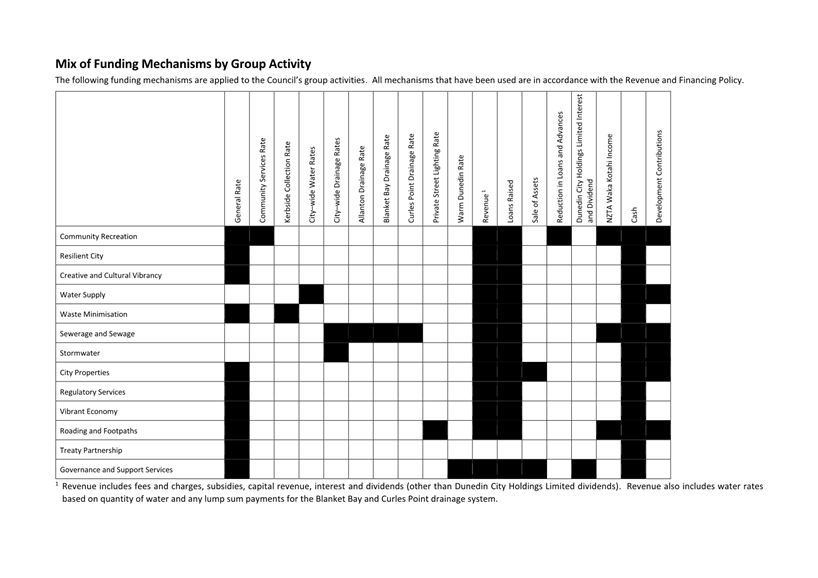
|

|
Council
25 March 2026
|
Resolution to Exclude the Public
That the Council excludes
the public from the following part of the proceedings of this meeting (pursuant
to the provisions of the Local Government Official Information and Meetings Act
1987) namely:
|
General subject of the matter to be considered
|
Reasons
for passing this resolution in relation to each matter
|
Ground(s) under
section 48(1) for the passing of this resolution
|
Reason for
Confidentiality
|
|
C1
Confirmation of the Confidential Minutes of Ordinary Council meeting -
24 February 2026 - Public Excluded
|
S7(2)(b)(ii)
The
withholding of the information is necessary to protect information where the
making available of the information would be likely unreasonably to prejudice
the commercial position of the person who supplied or who is the subject of
the information.
S7(2)(g)
The
withholding of the information is necessary to maintain legal professional
privilege.
S7(2)(h)
The
withholding of the information is necessary to enable the local authority to
carry out, without prejudice or disadvantage, commercial activities.
S7(2)(i)
The
withholding of the information is necessary to enable the local authority to
carry on, without prejudice or disadvantage, negotiations (including
commercial and industrial negotiations).
|
.
|
|
|
C2
Confidential Council Action List Update
|
S7(2)(b)(ii)
The
withholding of the information is necessary to protect information where the
making available of the information would be likely unreasonably to prejudice
the commercial position of the person who supplied or who is the subject of
the information.
S7(2)(g)
The
withholding of the information is necessary to maintain legal professional
privilege.
S7(2)(h)
The
withholding of the information is necessary to enable the local authority to
carry out, without prejudice or disadvantage, commercial activities.
S7(2)(i)
The
withholding of the information is necessary to enable the local authority to
carry on, without prejudice or disadvantage, negotiations (including
commercial and industrial negotiations).
|
S48(1)(a)
The public conduct of
the part of the meeting would be likely to result in the disclosure of
information for which good reason for withholding exists under section 7.
|
|
|
C3
Confidential Council Forward Work Programme
|
S7(2)(a)
The
withholding of the information is necessary to protect the privacy of natural
persons, including that of a deceased person.
S7(2)(d)
The
withholding of the information is necessary to avoid prejudice to measures
protecting the health and safety of members of the public.
S7(2)(g)
The
withholding of the information is necessary to maintain legal professional
privilege.
S7(2)(h)
The
withholding of the information is necessary to enable the local authority to
carry out, without prejudice or disadvantage, commercial activities.
S7(2)(i)
The
withholding of the information is necessary to enable the local authority to
carry on, without prejudice or disadvantage, negotiations (including commercial
and industrial negotiations).
|
S48(1)(a)
The public conduct of
the part of the meeting would be likely to result in the disclosure of
information for which good reason for withholding exists under section 7.
|
|
|
C4
Investment Framework
|
s48(1)(d)
Check
to make report confidential.
|
s48(1)(d)
The exclusion of the
public from the part of the meeting is necessary to enable the local
authority to deliberate in private on its decision or recommendation.
|
Commercial sensitivity.
|
|
C5
DCHL Update
|
s48(1)(d)
Check
to make report confidential.
|
s48(1)(d)
The exclusion of the
public from the part of the meeting is necessary to enable the local
authority to deliberate in private on its decision or recommendation.
|
Commercial sensitivity.
|
This resolution is made in
reliance on Section 48(1)(a) of the Local Government Official Information and
Meetings Act 1987, and the particular interest or interests protected by
Section 6 or Section 7 of that Act, or Section 6 or Section 7 or Section 9 of
the Official Information Act 1982, as the case may require, which would be
prejudiced by the holding of the whole or the relevant part of the proceedings
of the meeting in public are as shown above after each item.