|

|
Consultation Hearings
1 July 2026
|
Summary of consultation on Proposed Traffic
and Parking Bylaw 2026 and staff recommendations on matters raised
Department: Transport
EXECUTIVE SUMMARY
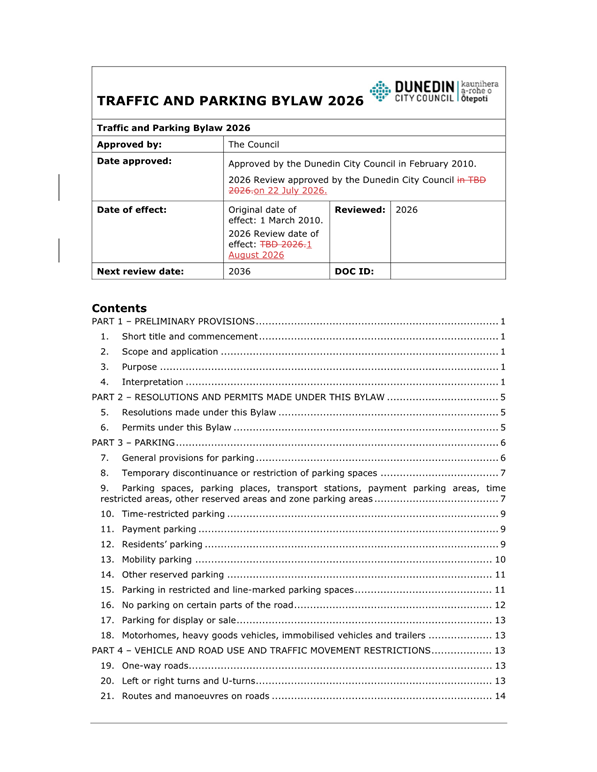
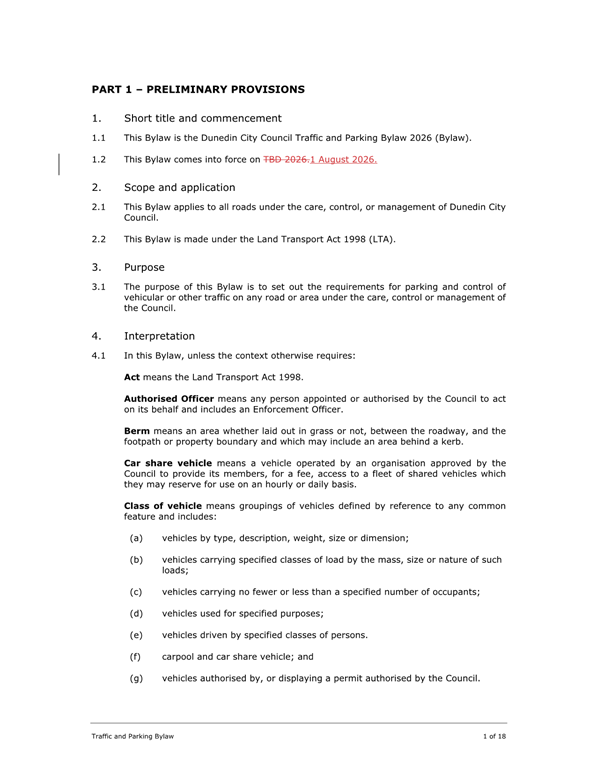
1 This
report provides a summary of the submissions and feedback received during
consultation on the proposed Traffic and Parking Bylaw 2026 (the Bylaw) and
provides staff analysis and recommendations related to the matters raised by
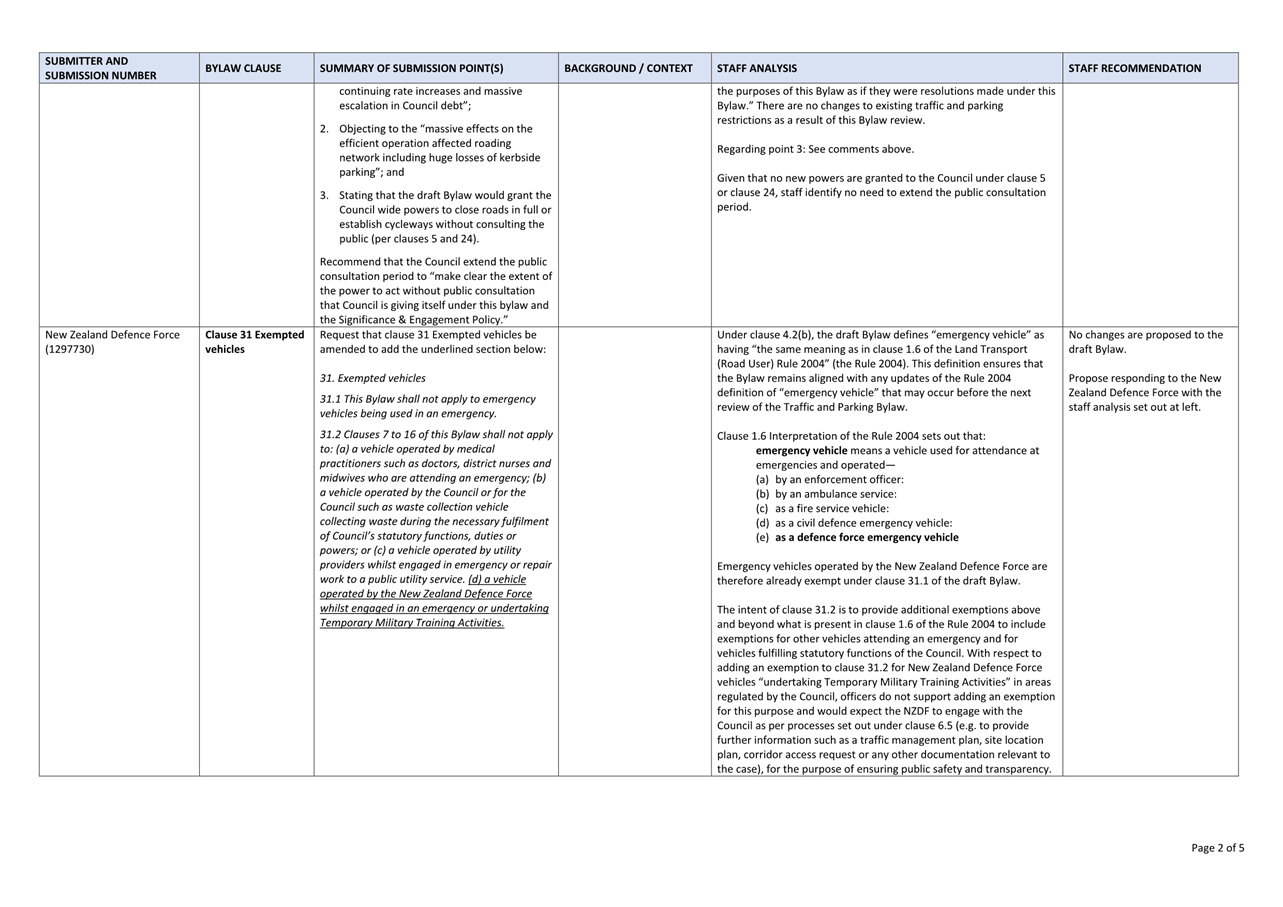
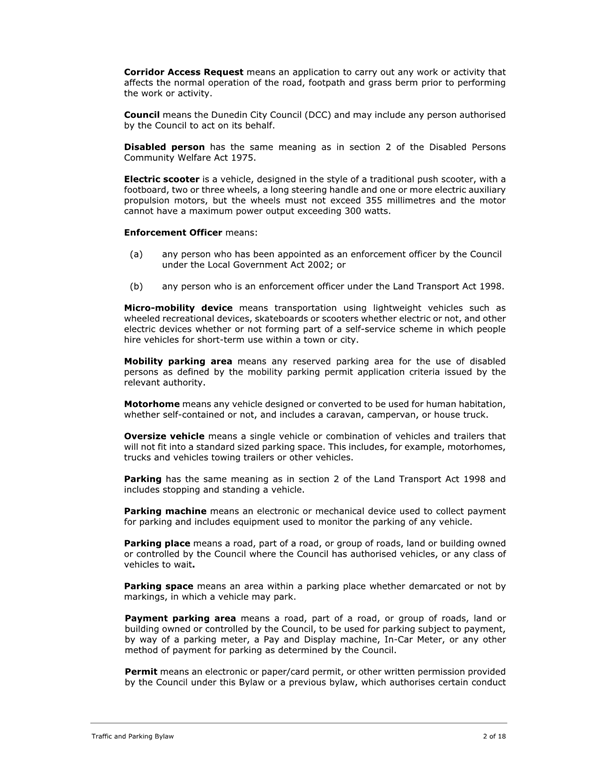
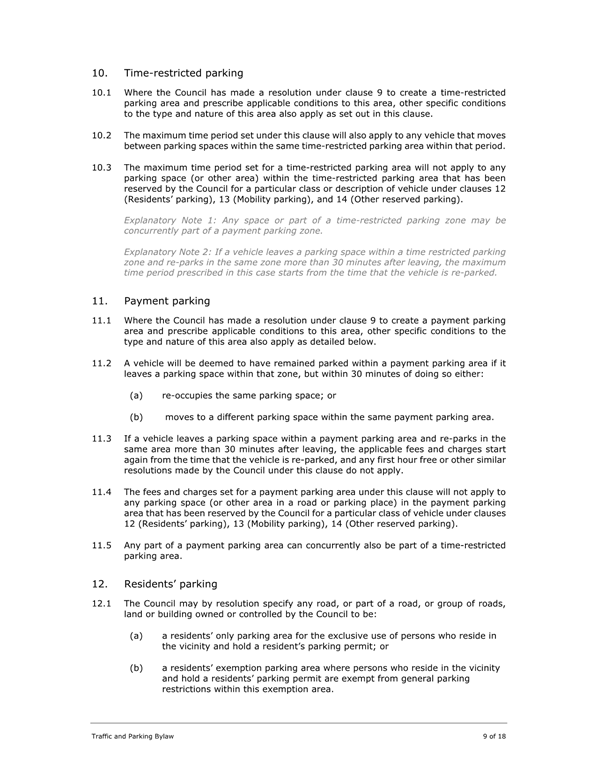
submitters. Attachment A provides the summary of submissions and
associated staff analysis and recommendations. The full original submissions
can be viewed at: Submissions
received on the Traffic and Parking Bylaw - Dunedin City Council.
2 The
purpose of this report is to assist the Hearings Committee with its
deliberations on the proposed Bylaw and the formulation of recommendations it
will make to the Council.
3 At
its 25 March 2026 meeting, the Council approved a statement of proposal and the
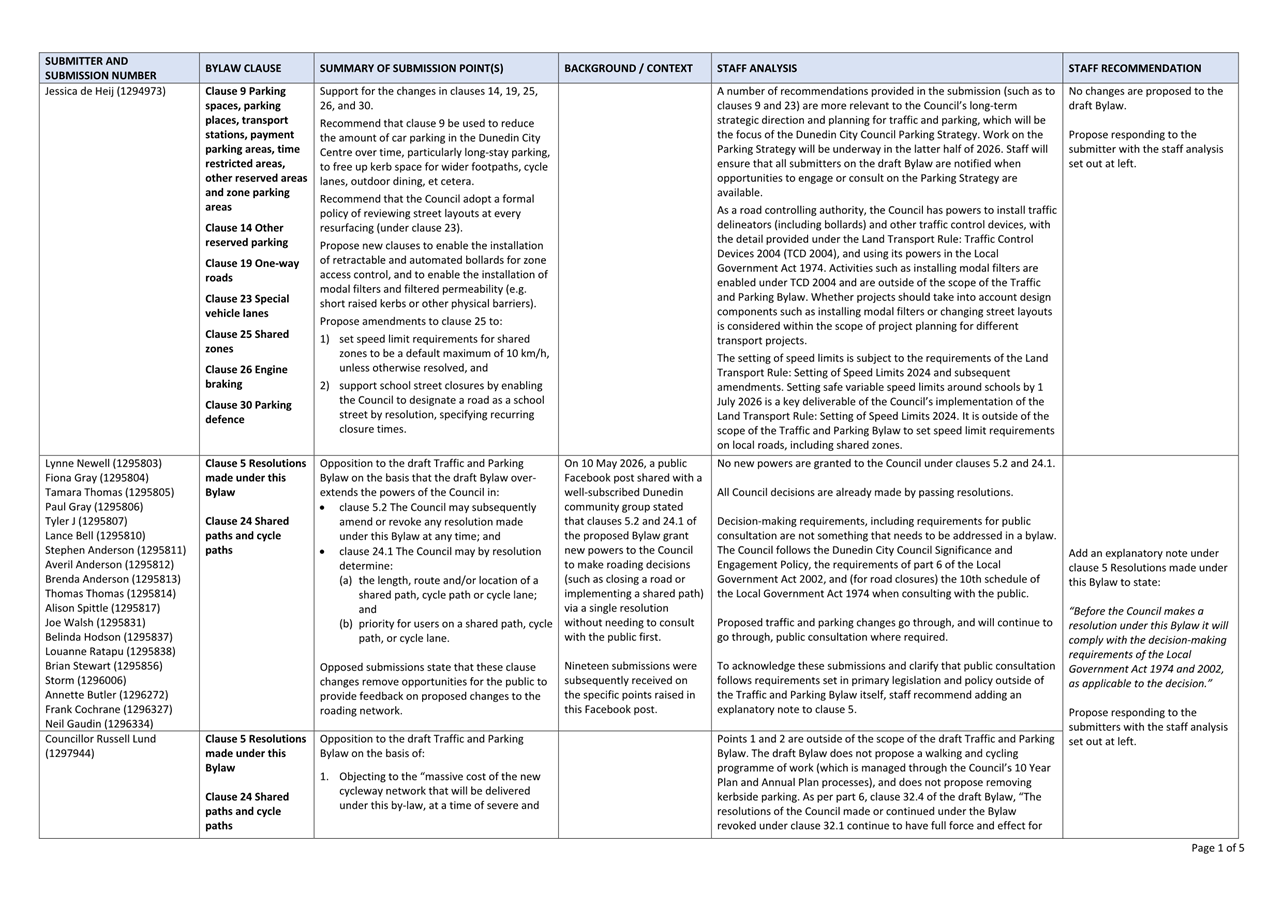
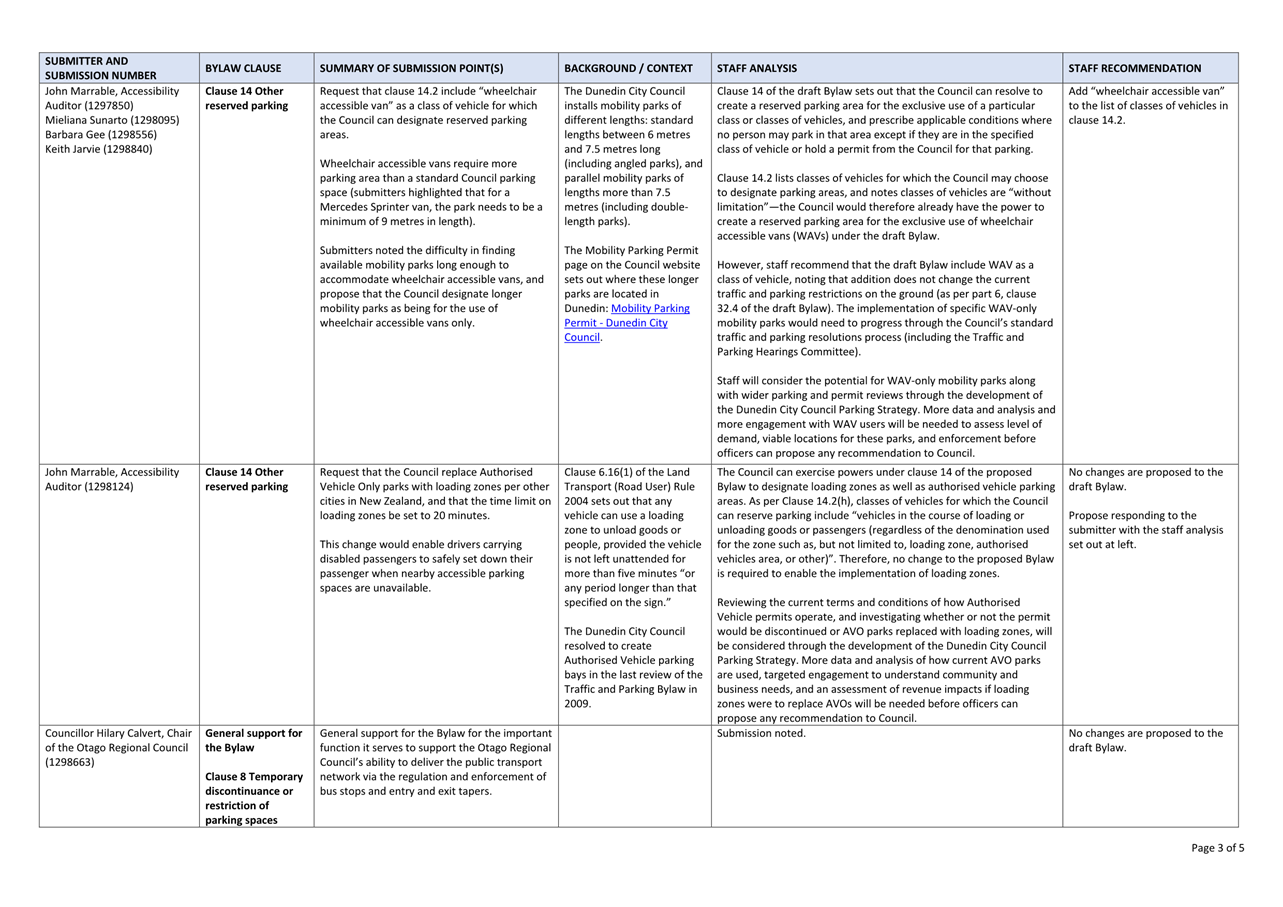
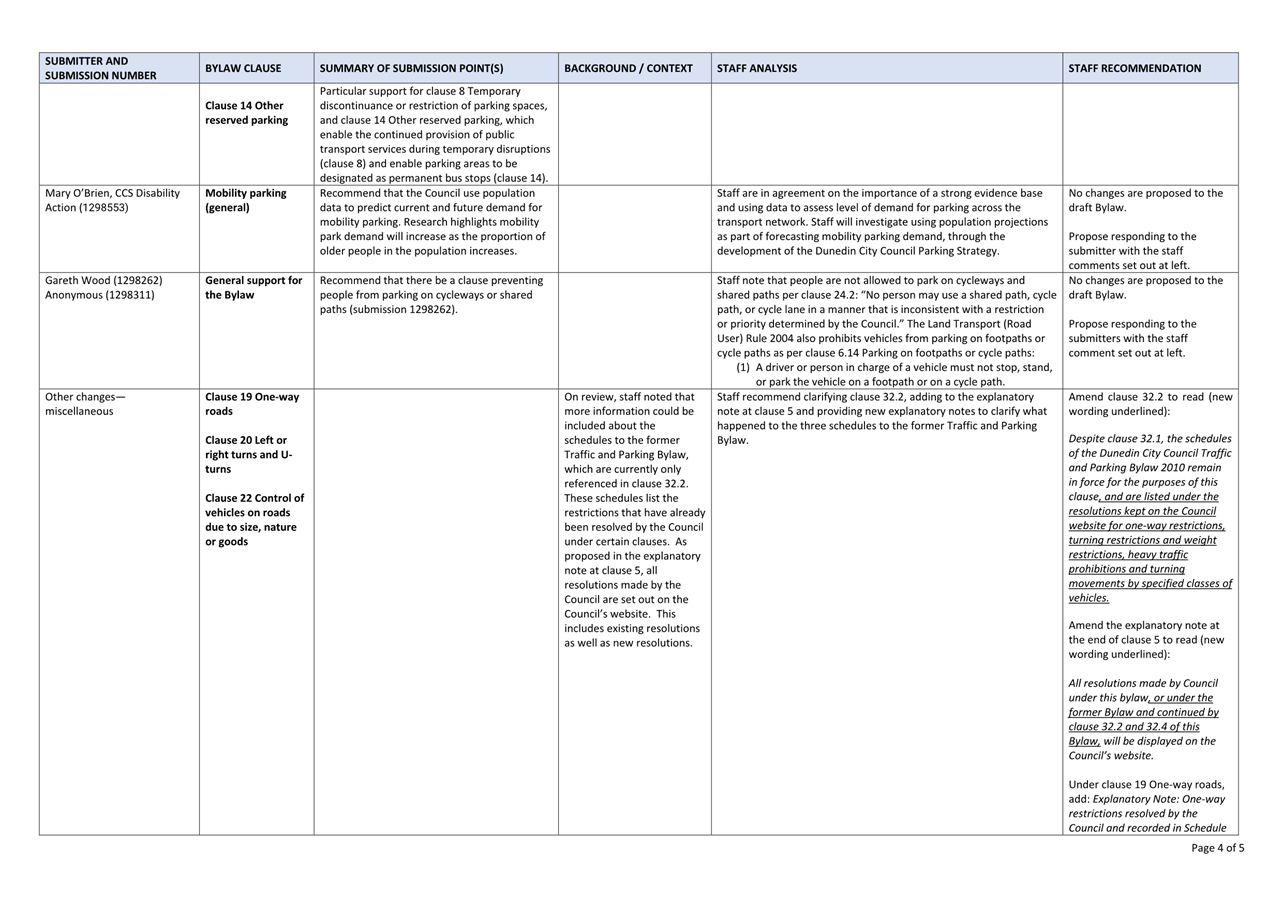
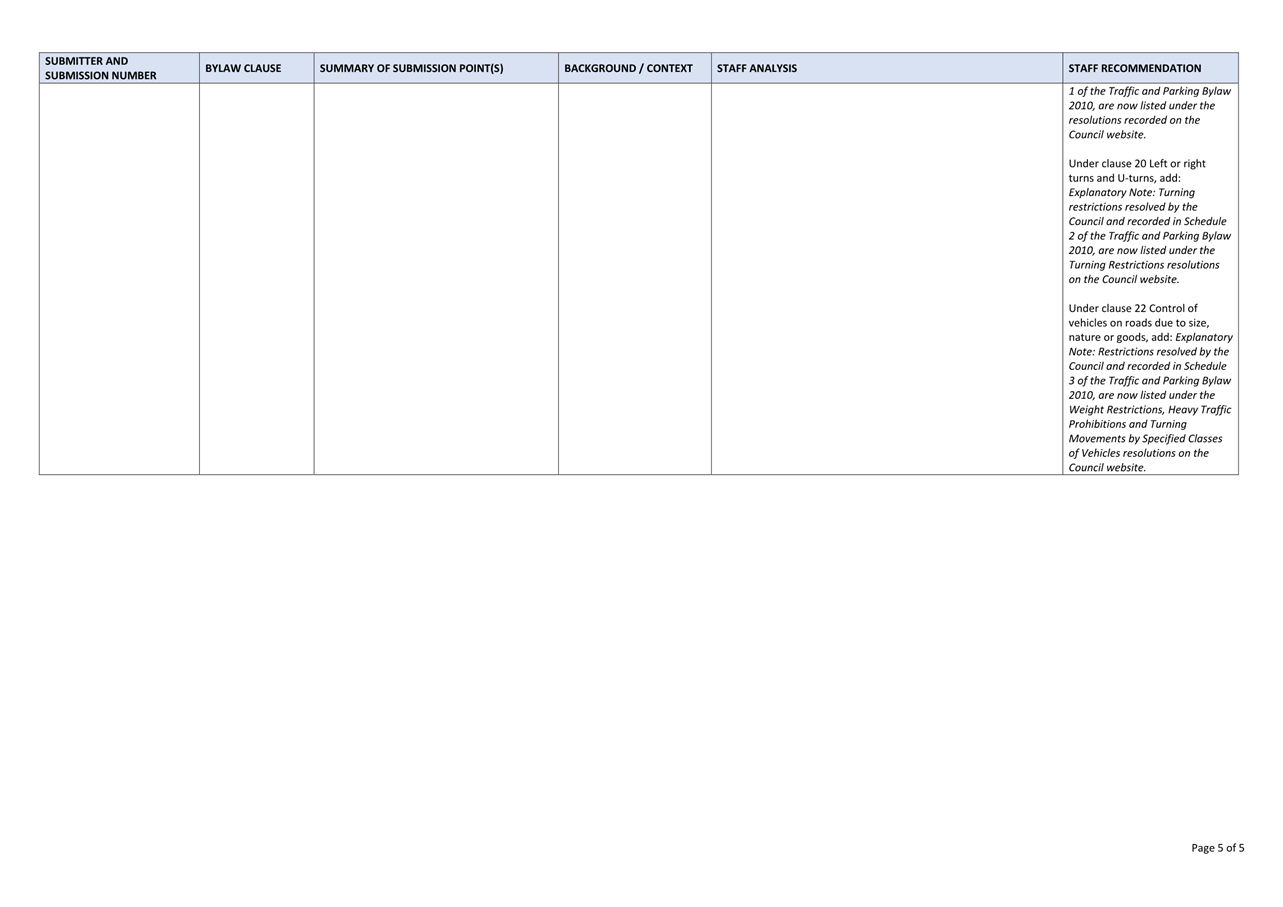
draft proposed Traffic and Parking Bylaw 2026 for the purpose of public
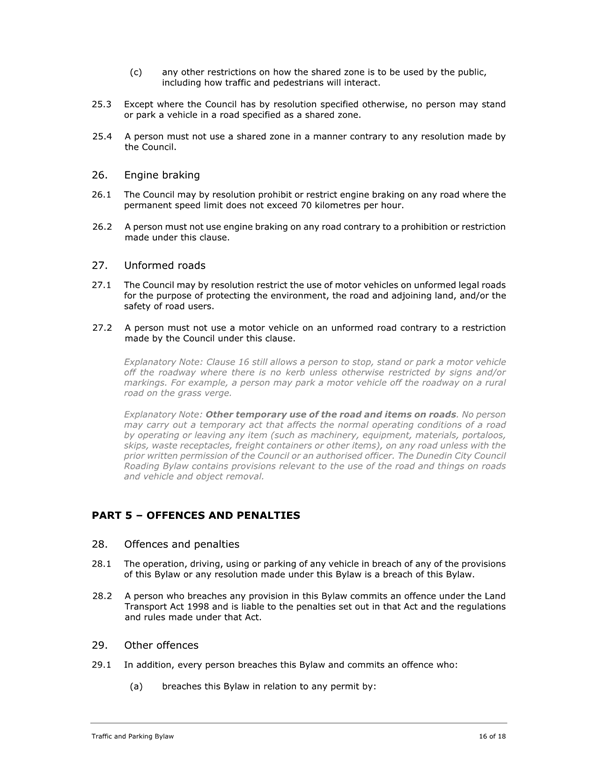
consultation.
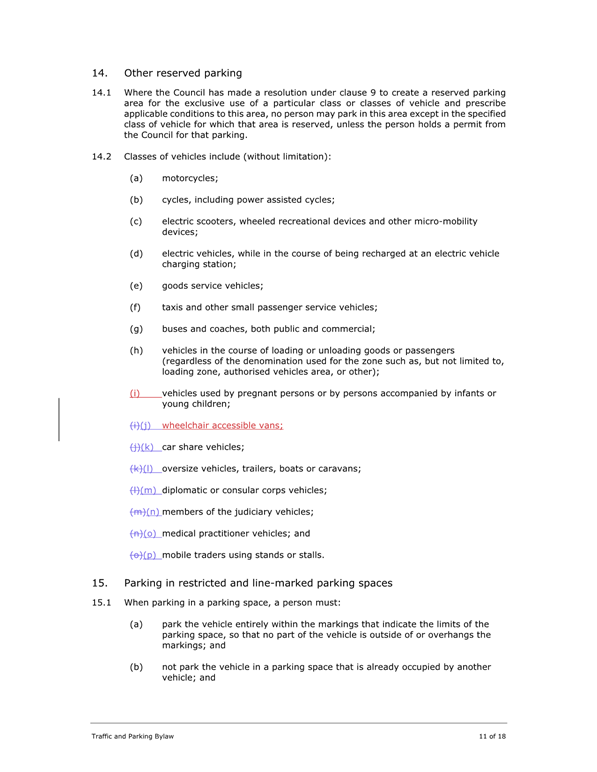
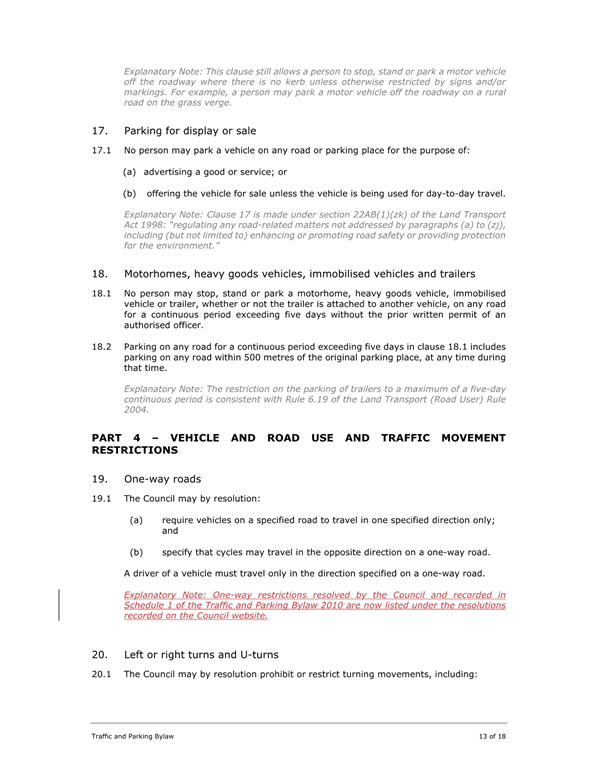
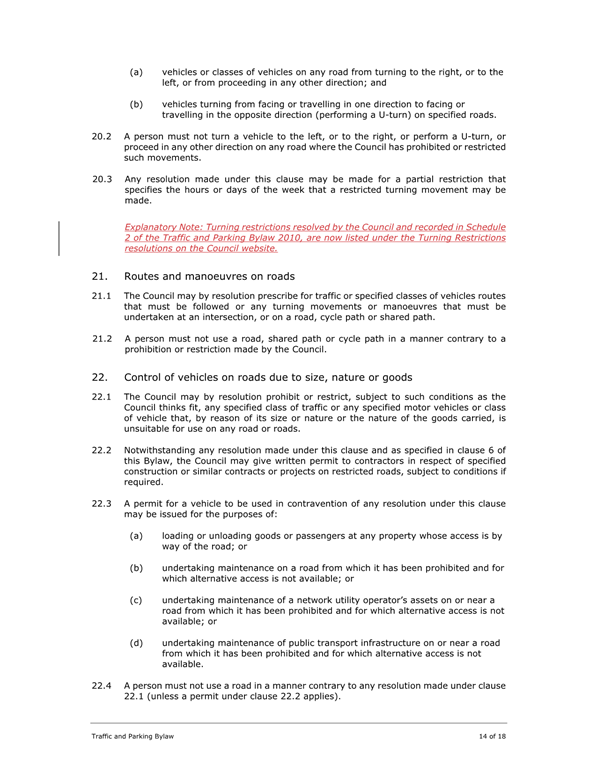
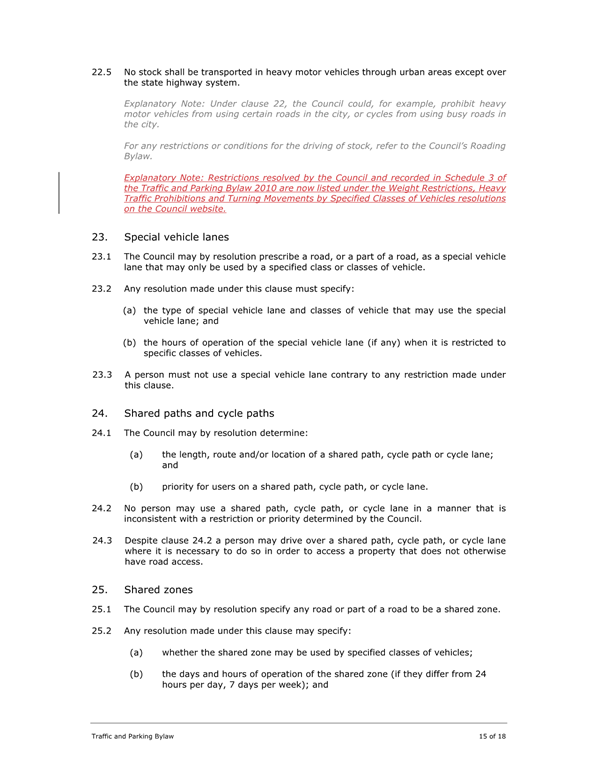
4 Consultation
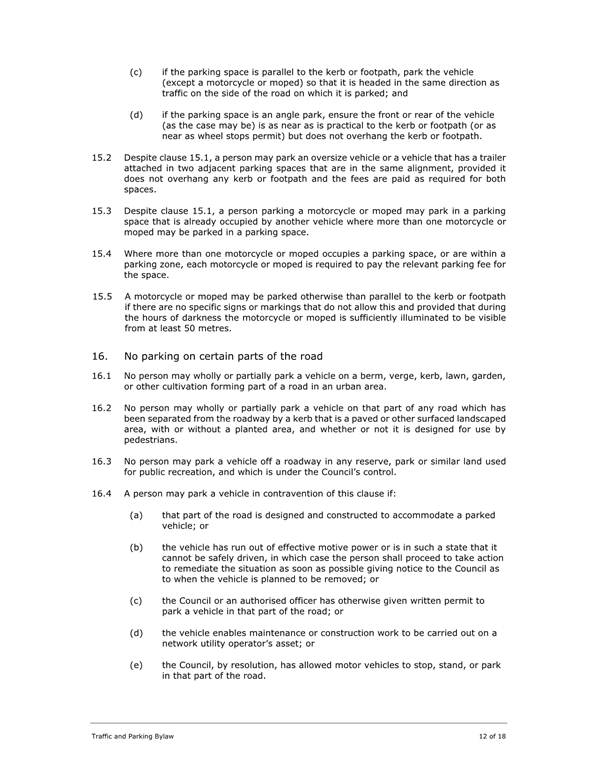
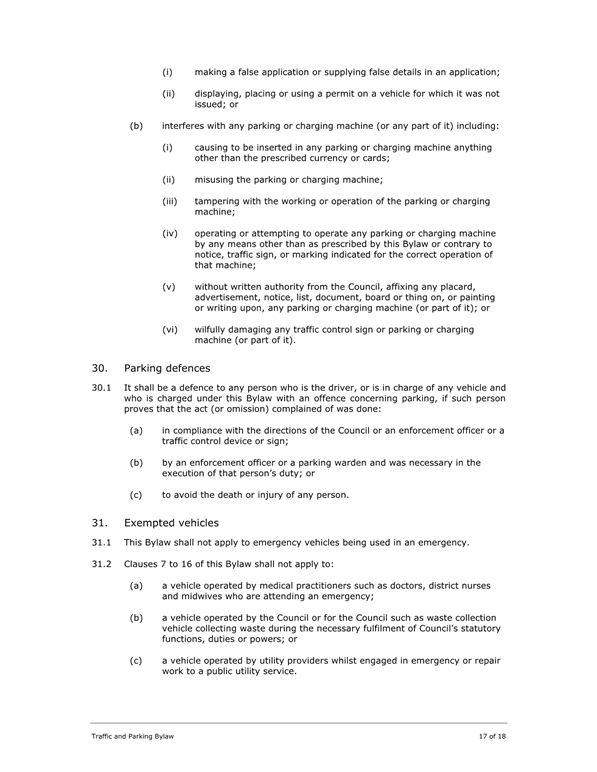
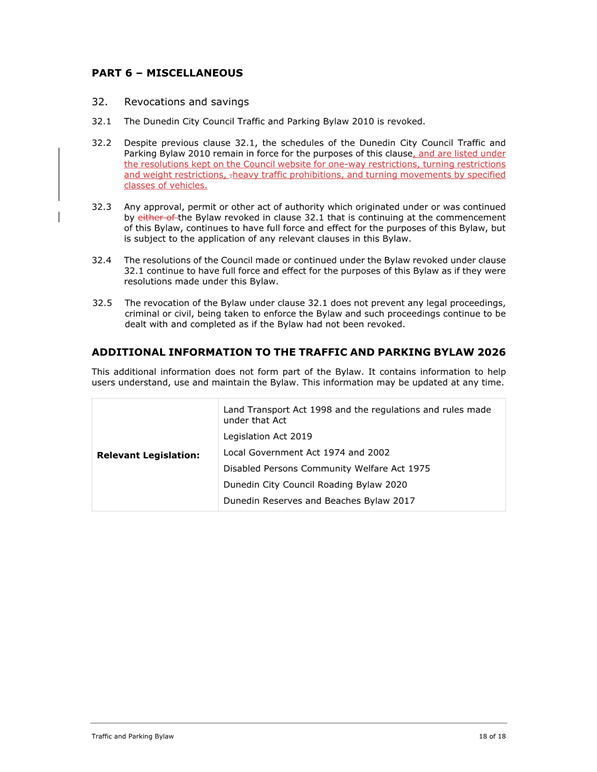
ran for one month from 27 April 2026 to 27 May 2026. Thirty-one submissions
were received, with 28 submissions from individual submitters and organisation
submissions received from the New Zealand Defence Force, the Otago Regional
Council, and CCS Disability Action.
5 Submitters
raised a range of topics, with the majority of feedback related to:
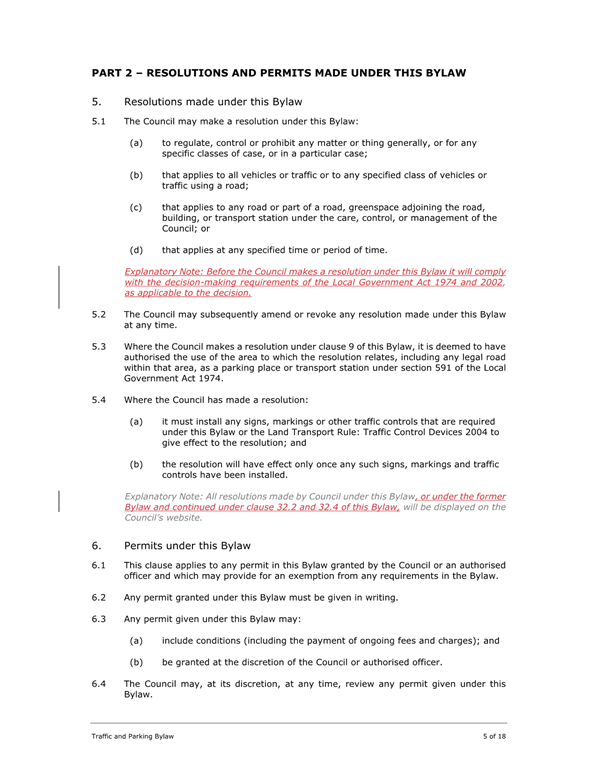
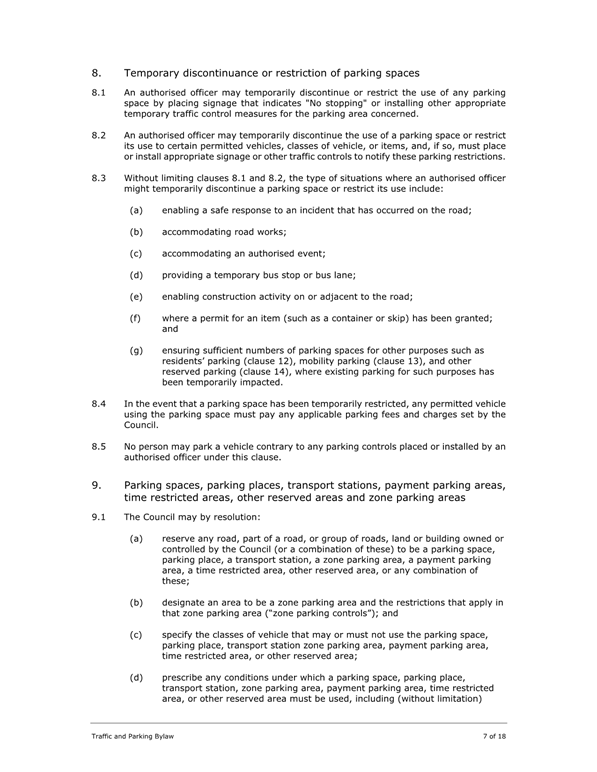
· Clause
5 (Resolutions made under this Bylaw) and clause 24 (Shared paths and cycle
paths) of the proposed Bylaw– in particular, concerns that the
revisions proposed in these two clauses would reduce public consultation
requirements for network changes such as road closures or the implementation of
cycle lanes (20 submissions received), and
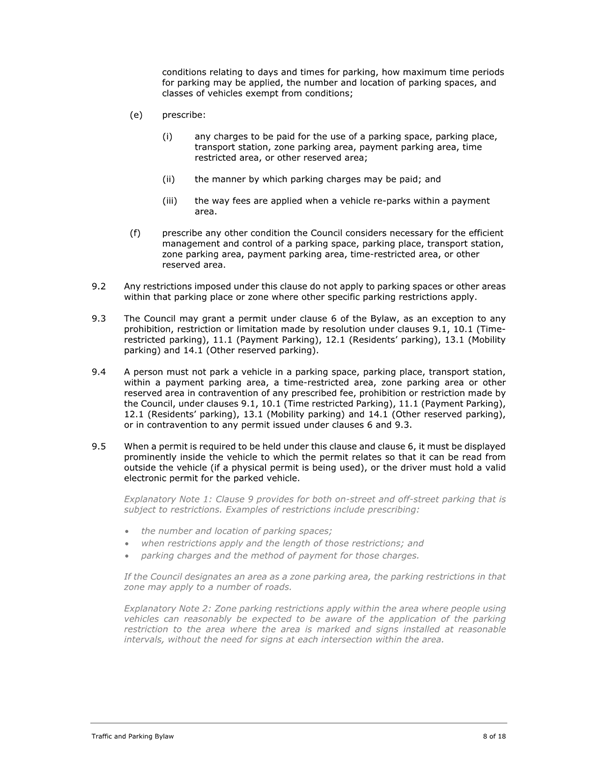
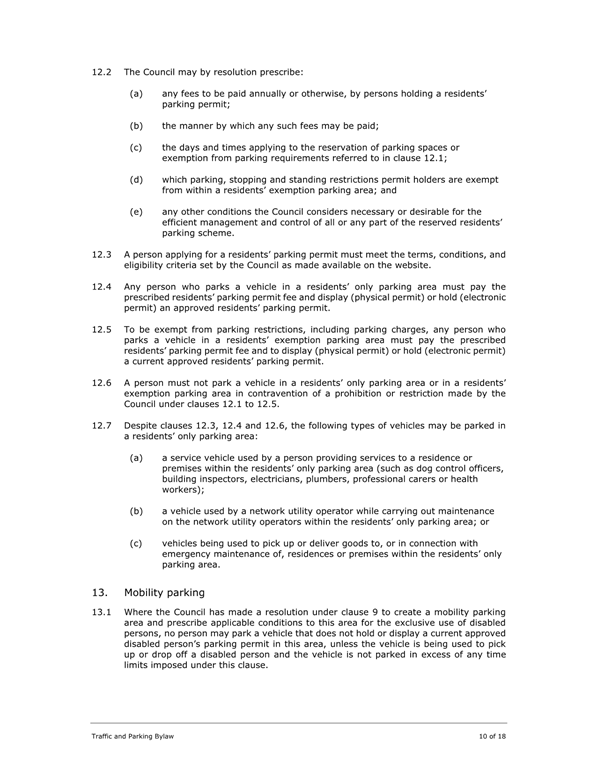
· Clause
14 (Other reserved parking) of the proposed Bylaw – in particular,
recommending that the Council add “wheelchair accessible van” to
the list of vehicle classes, and designate longer mobility parks as wheelchair
accessible van (WAV)-only parks (four submissions).
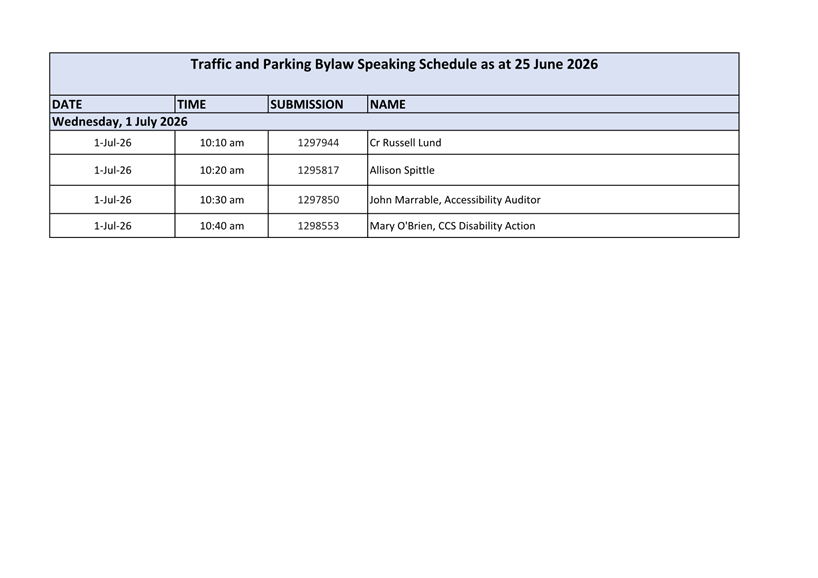
6 Four
submitters indicated they wished to be heard.
RECOMMENDATIONS
That the Committee:
a) Considers the
submissions and associated staff analysis and recommendations, and deliberates
on the amendments to the proposed Traffic and Parking Bylaw 2026 requested by
submitters both in written submissions and during the hearing.
b) Makes a recommendation to
the Council on amendments to the proposed Traffic and Parking Bylaw 2026.
BACKGROUND
Purpose of the Traffic and Parking Bylaw
7 The
Dunedin City Council is a Road Controlling Authority (RCA) under the Land
Transport Act 1998 (LTA). As an RCA, the Council exercises control over local
roads within the territorial authority (including regulatory powers to manage
traffic and parking), and over state highways for which the Council has
received delegated responsibility from the New Zealand Transport Agency (NZTA)
Waka Kotahi.
8 Section
22AB of the LTA provides that an RCA may make bylaws for purposes including
prohibiting or restricting parking, prescribing the use of parking places and
transport stations (areas used by transport services,
e.g. bus hubs or layovers), and regulating other road-related matters. The
LTA also enables the Minister of Transport to amend, replace, or disallow any
bylaw in certain cases (e.g. if a bylaw conflicts with land transport
legislation).
9 The
Council’s Traffic and Parking Bylaw came into effect on 1 March 2010, and
sets out the requirements for parking and control of vehicle or other traffic
on any road under Council authority, including state highways where control has
been delegated to the Council.
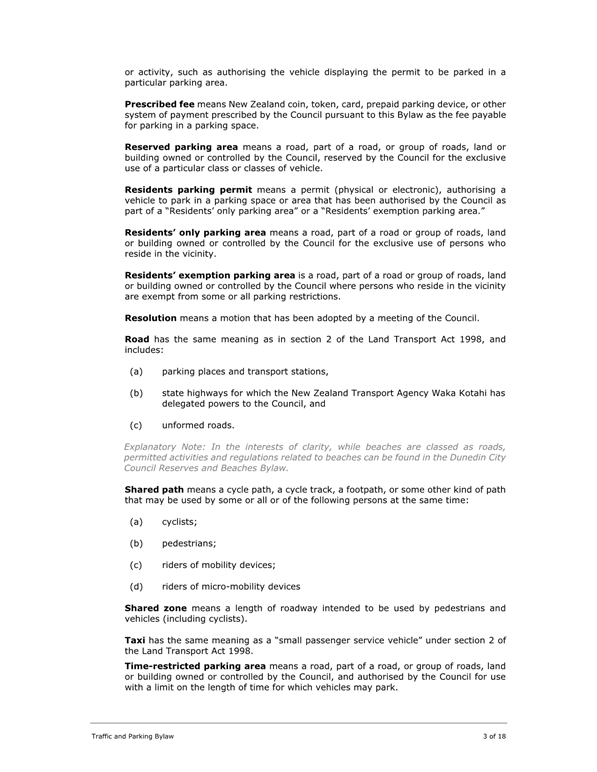
10 The Bylaw enables the Council to regulate,
control or prohibit any matter for all classes of vehicles or traffic using a
road, greenspace adjoining the road, building, or transport station under the
control of the Council, for any specified period of time. The Bylaw then
enables the Council to make any subsequent changes to these matters. Overall,
the Bylaw ensures that mechanisms are in place to support and improve the
safety, accessibility and efficiency of the transport network for all road
users.
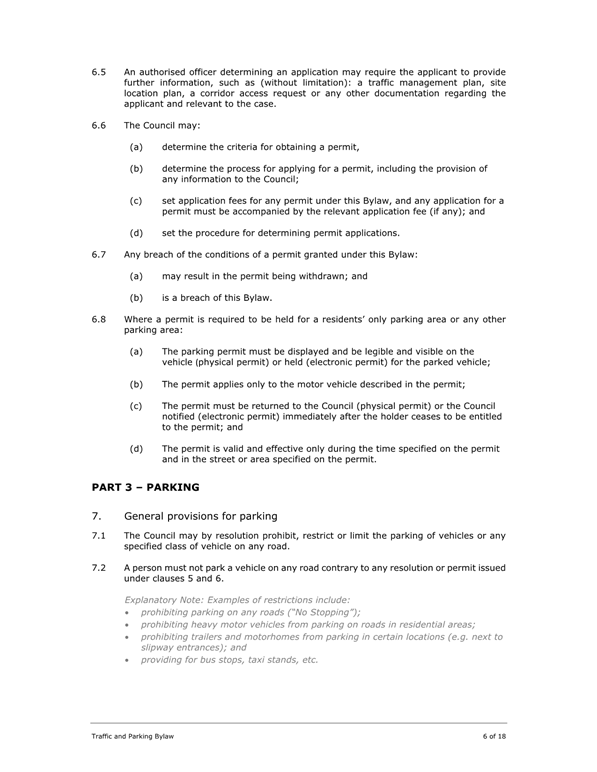
11 The current traffic and parking
restrictions adopted by the Council are made publicly available in a Geographic
Information Systems (GIS) bylaw database on the Council website: Parking
regulations - Dunedin City Council. The Council regularly consults with the
public on minor general parking changes in the city, and the bylaw database is
then updated with any changes.
Proposed
Traffic and Parking Bylaw 2026
12 Since
the Bylaw came into effect in 2010, changes to the technological, legislative
and social context mean that the Bylaw needs to be updated to be fit for
purpose for today and the future. The Council also approved the Shaping Future
Dunedin Transport Programme through the 10 Year Plan process in 2021,
which resulted in the creation of the Dunedin Parking Roadmap in 2021. The
roadmap’s main recommendation, which was supported by the Council on 31
May 2021, was to develop a parking management policy to guide the supply and
management of parking in the city. An up-to-date Bylaw will also support the
delivery of a Dunedin City Parking Strategy, which is currently in development.
13 Proposed
changes are minor, and do not affect how current traffic and parking
restrictions are operating on the ground. Proposed changes to the Bylaw broadly
fit into three categories:
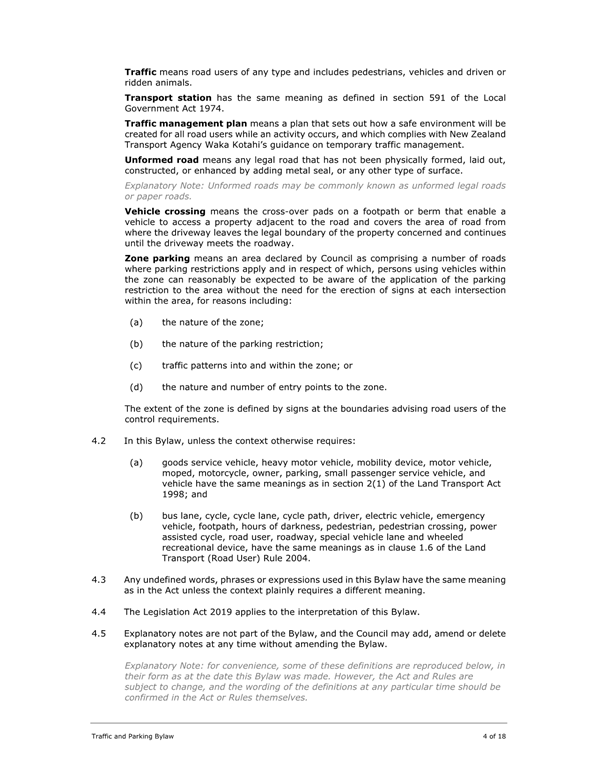
· Inserting new
clauses to improve flow and provide clearer guidance (e.g. a new section 2 on
resolutions and permits to clarify how resolutions are made, and requirements
for certain types of permits);
· Updating clauses
to be more specific, provide exemptions and to add a new parking defence (i.e.
under clause 30, adding “to avoid the death or injury of any
person” to the list of parking defences); and
· Minor changes to
update terminology and improve clarity (e.g. adding more definitions to clause
4 to clarify how terms are defined, adding explanatory notes throughout the
Bylaw to provide additional clarity on how parts of the Bylaw work in practice,
and removing out-of-date references like “pay and display”).
14 The
detailed list of changes is set out in the statement
of proposal included in the materials for public consultation.
Consultation
on the proposed Traffic and Parking Bylaw
15 At its 25
March 2026 meeting, the Council approved a statement of proposal and draft
proposed Traffic and Parking Bylaw 2026 for public consultation purposes.
16 Public
consultation followed for one month, beginning on 27 April and ending on 27 May
2026.
17 Methods
used to inform the public about the proposal and the opportunity to make
submissions included information on the Council website, two social media posts
on the Council Facebook page, information on the Dunedin City Council Public
Noticeboard published in the Otago Daily Times on two occasions, and two
rounds of targeted emails to a range of partners and stakeholders including the
New Zealand Transport Agency Waka Kotahi, the Automobile Association, all
Community Board chairs, freight companies, Transporting NZ, the University of
Otago, Hato Hone St John’s, New Zealand Police, Fire and Emergency New
Zealand, Emergency Management Otago, Kāti Huirapa Rūnaka ki
Puketeraki, Te Rūnanga o Ōtākou, Āraiteuru marae, Access
for All, Disabled Persons Assembly, CCS Disability Action, and the Dunedin
Tracks and Trails Trust.
18 The Otago
Daily Times and The Star also published a story on the review of the Traffic
and Parking Bylaw on 30 April 2026, with a link to public consultation
information.
19 The public
could submit on the proposed Bylaw via an online form on the Council’s
website, via email, or via a print form. Submitters were asked whether they
agreed with the proposed Traffic and Parking Bylaw overall; why or why not; and
to provide any general comments with references to the specific clause in the
Bylaw, the change they would recommend, and why the recommended change is
important. The consultation documents included the statement of proposal with
the detailed list of proposed changes, and a full text draft of the proposed
Traffic and Parking Bylaw 2026.
20 Throughout
this consultation period, 31 submissions were received in total, comprising:
· 28
submissions from individuals, including a submission from a Dunedin City
Councillor, and
· Organisation
submissions from the New Zealand Defence Force, the Otago Regional Council, and
CCS Disability Action.
21 Two of the
submissions agreed with the proposed Bylaw without any changes; three agreed
with the proposed Bylaw and recommended changes; 25 did not agree with the
proposed Bylaw; and one submission was neutral and also recommended changes.
22 Four
submitters wish to be heard by the Hearings Committee.
DISCUSSION
23 A summary
of the key points from all submissions, along with staff analysis and
recommended changes to the proposed Traffic and Parking Bylaw 2026, are
presented in the table in Attachment A.
24 Key issues
raised in submissions included:
a) Clause
5 (Resolutions made under this Bylaw) and clause 24 (Shared paths and cycle
paths) of the proposed Bylaw (20 submissions received) – in particular,
concerns that the revisions proposed in these two clauses would allow the
Council to implement network changes such as road closures or cycle lanes
without requiring public consultation, and
b) Clause 14
(Other reserved parking) of the proposed Bylaw – in particular,
recommending that the Council add “wheelchair accessible van” to
the list of vehicle classes for the purpose of designating longer mobility
parks as wheelchair accessible van (WAV)-only parks (4 submissions).
25 On
reviewing the feedback received, and with a review and advice provided by
external legal counsel with expertise in traffic and parking bylaws, officers
propose making the following changes to the draft Bylaw:
a) To
resolve the concerns raised about whether clause 5 and clause 24 remove
requirements for public consultation, add an explanatory note after clause
5.1(d) to clarify that there are no changes to public consultation
requirements, as these are set elsewhere in legislation:
Explanatory Note: Before the
Council makes a resolution under this Bylaw it will comply with the
decision-making requirements of the Local Government Act 1974 and 2002, as
applicable to the decision.
b) Add
“wheelchair accessible vans” as a class of vehicle for which the
Council could resolve to create a reserved parking area under clause 14.2(i).
c) Add
in explanatory notes under clauses 19 (One-way roads), 20 (Left or right turns
and U-turns), and 22 (Control of vehicles on roads due to size, nature or
goods) to specify that the relevant restrictions already resolved by the
Council are made available on the Council website in schedules 1, 2 and 3
respectively.
26 Further
analysis and rationale are presented in Attachment A, and a marked-up version
of the proposed Traffic and Parking Bylaw 2026 showing all edits proposed to
the draft Bylaw is presented in Attachment B.
Out of scope
submission matters
27 A number of
submissions raised topics that are outside of the scope of the Traffic and
Parking Bylaw 2026, but which may benefit from further consideration in the
context of the development of the upcoming Dunedin City Council Parking
Strategy. Submission topics evaluated as being out of scope are noted in the
analysis and staff recommendations in Attachment A.
28 Staff will
ensure that submitters on the Bylaw are notified when opportunities for
engagement on the Parking Strategy arise.
OPTIONS
Option One – Proceed to make recommendations to the
Council based on proposed amendments in this report.
29 The Hearings
Committee may choose to make recommendations to the Council to address matters
raised by submitters based on the advice provided in this report. This would be
subject to any minor amendments the Committee determines are necessary in
response to matters raised by submitters at the hearing, or as agreed by the Committee
during deliberations.
Advantages
· A
recommendation to Council could be made promptly.
· Aligns
with the advice provided by external legal counsel with expertise in traffic
and parking bylaws.
Disadvantages
· No
disadvantages are identified.
Option Two – Request that staff provide further
advice and draft amendments to address additional matters raised in
submissions, beyond what is recommended in this report.
30 Should the
Hearings Committee consider there are outstanding matters of concern raised by
submitters that are not satisfactorily addressed by advice provided in this
report, or during the hearing process, the Committee may request that staff
further evaluate those concerns and develop additional recommended responses.
Advantages
· Any
outstanding concerns will be considered.
Disadvantages
· May
delay a recommendation to Council.
NEXT STEPS
31 If the
Committee recommends Option One, the recommendations of the Hearings Committee
will be brought to the 22 July 2026 meeting of the Council for decision.
32 All
submitters on the proposed Traffic and Parking Bylaw 2026 will be updated on
the Committee and Council decisions.
Signatories
|
Author:
|
Rose Wunrow - Policy Analyst Transport Regulation
|
|
Authoriser:
|
Jeanine Benson - Group Manager Transport
Scott MacLean - General Manager, City Services
|
Attachments
|
|
Title
|
Page
|
|
⇩a
|
Analysis of Proposed
Traffic and Parking Bylaw 2026 submissions and recommended actions
|
17
|
|
⇩b
|
Recommended changes to
the Proposed Dunedin City Council Traffic and Parking Bylaw 2026
|
23
|
|
SUMMARY OF CONSIDERATIONS
|
|
Fit with purpose of Local Government
This decision enables democratic local
decision making and action by, and on behalf of communities.
This decision promotes the social
well-being of communities in the present and for the future.
This decision promotes the economic
well-being of communities in the present and for the future.
|
|
Fit with strategic framework
|
|
Contributes
|
Detracts
|
Not applicable
|
|
Social Wellbeing Strategy
|
✔
|
☐
|
☐
|
|
Economic Development Strategy
|
✔
|
☐
|
☐
|
|
Environment Strategy
|
☐
|
☐
|
✔
|
|
Arts and Culture Strategy
|
☐
|
☐
|
✔
|
|
3 Waters Strategy
|
☐
|
☐
|
✔
|
|
Future Development Strategy
|
✔
|
☐
|
☐
|
|
Integrated Transport Strategy
|
✔
|
☐
|
☐
|
|
Parks and Recreation Strategy
|
✔
|
☐
|
☐
|
|
Other strategic projects/policies/plans
|
✔
|
☐
|
☐
|
Traffic and parking restrictions support
a safe, efficient and accessible transport network, support
the social and economic wellbeing of Dunedin communities, and support the efficient
integration of transport and land use.
The review of the Bylaw also supports the efficient
management of parking supply which the Dunedin City Parking Strategy
(currently in development) will target.
|
|
Māori Impact Statement
Mana whenua have expressed support for a safe and
efficient transport network through previous consultations. Kāti Huirapa
ki Puketeraki and Ōtākou rūnaka, as well as Āraiteuru
marae, were invited to submit on the proposed Bylaw.
The Bylaw, and the consultation process, align with three
key directions of Te Taki Haruru (TTH), the Council’s Māori
Strategic Framework. Alignments are across three of the TTH pou –
Autūroa, Autikaka, and Autakata – in line with the cultural key
direction for Autūroa and Autikaka, and the social key direction for
Autakata.
|
|
Sustainability
Parking
control changes improve
efficiency and access
to the transport network for all vehicle types, including more carbon efficient
vehicles like cycles, micro-mobility devices, electric vehicles, and car
share vehicles.
|
|
LTP/Annual Plan / Financial Strategy /Infrastructure
Strategy
The implementation of traffic and parking controls in
Dunedin supports levels of service set out in the 9 Year Plan, e.g.
“The DCC provides the transport network that facilitates safe
travel.”
|
|
Financial considerations
There are no implications as management of the Bylaw is
carried out within existing budgets.
|
|
Significance
The review of the Traffic and Parking Bylaw 2026 followed
the special consultative procedure as required under the LTA.
|
|
Engagement – external
An external legal review has been completed of the
feedback received and the proposed recommended changes to the Bylaw.
The report sets out the organisations contacted with notification
of public consultation being open.
|
|
Engagement - internal
There has been internal engagement with Transport,
Compliance Solutions, Parks and Recreation, Corporate Policy, Governance, and
Communications and Marketing.
|
|
Risks: Legal / Health and Safety etc.
There are no identified risks. The draft Bylaw has been
reviewed by external legal counsel.
|
|
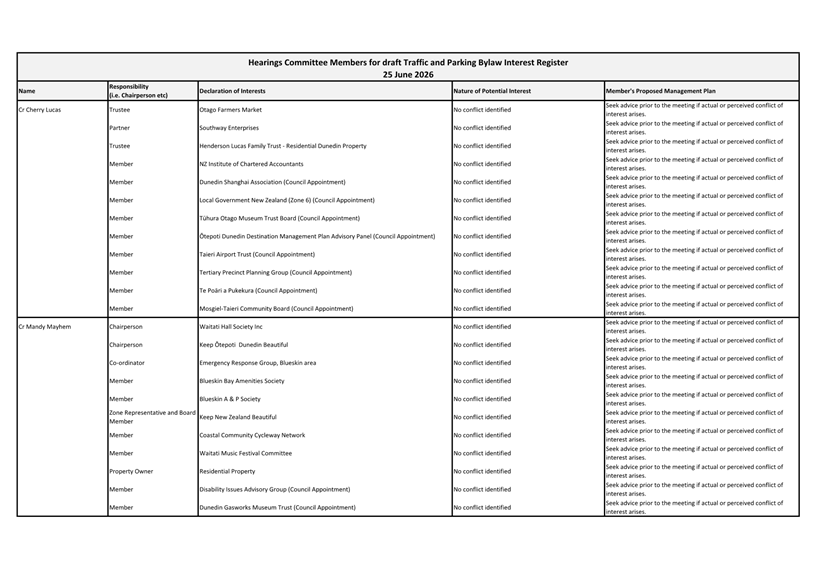
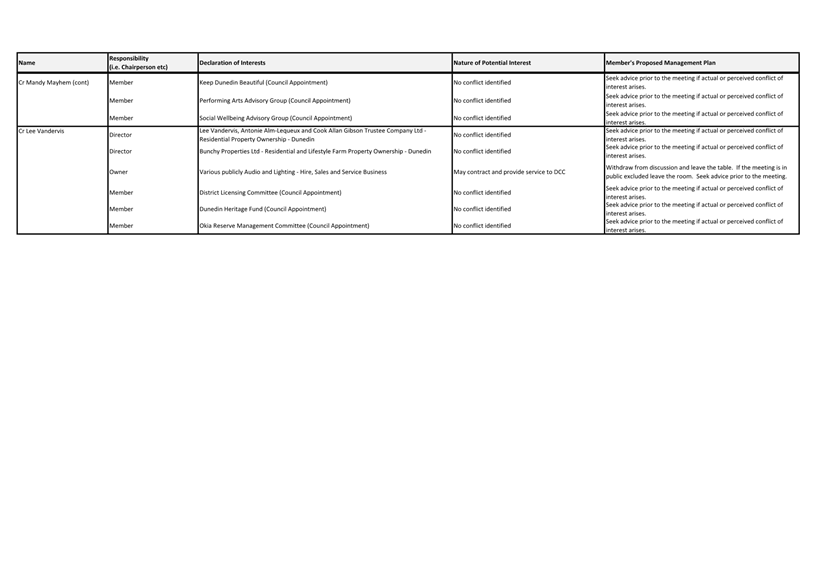
Conflict of Interest
Councillor Lund made a written submission and intends to
speak to his submission at the Hearings Committee.
|
|
Community Boards
All Community Board chairs were invited to submit on the
proposed Traffic and Parking Bylaw.
|